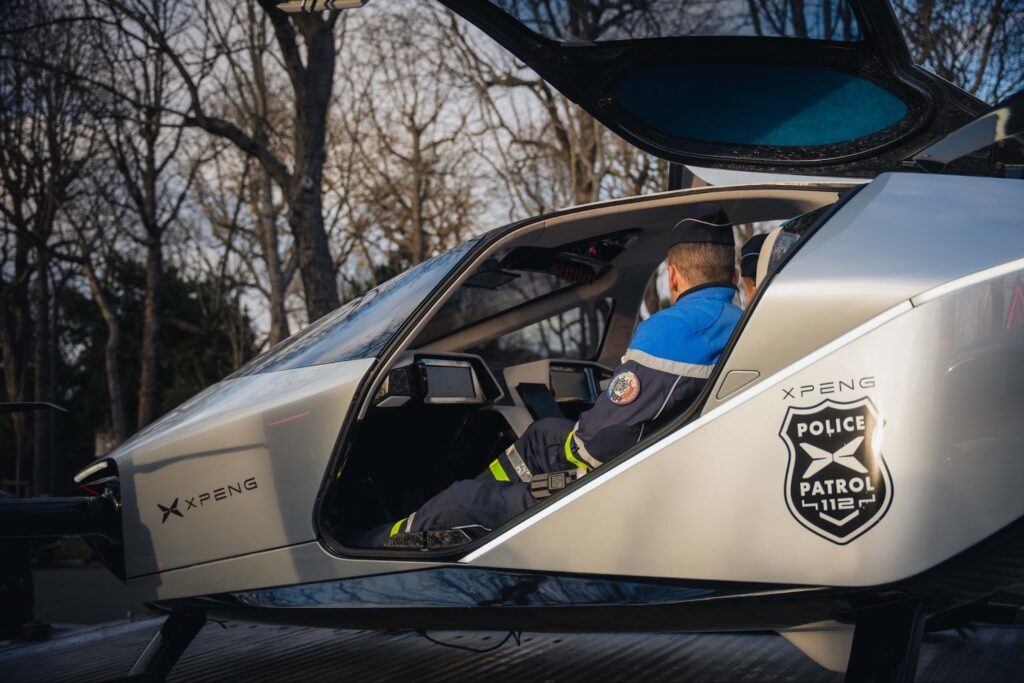
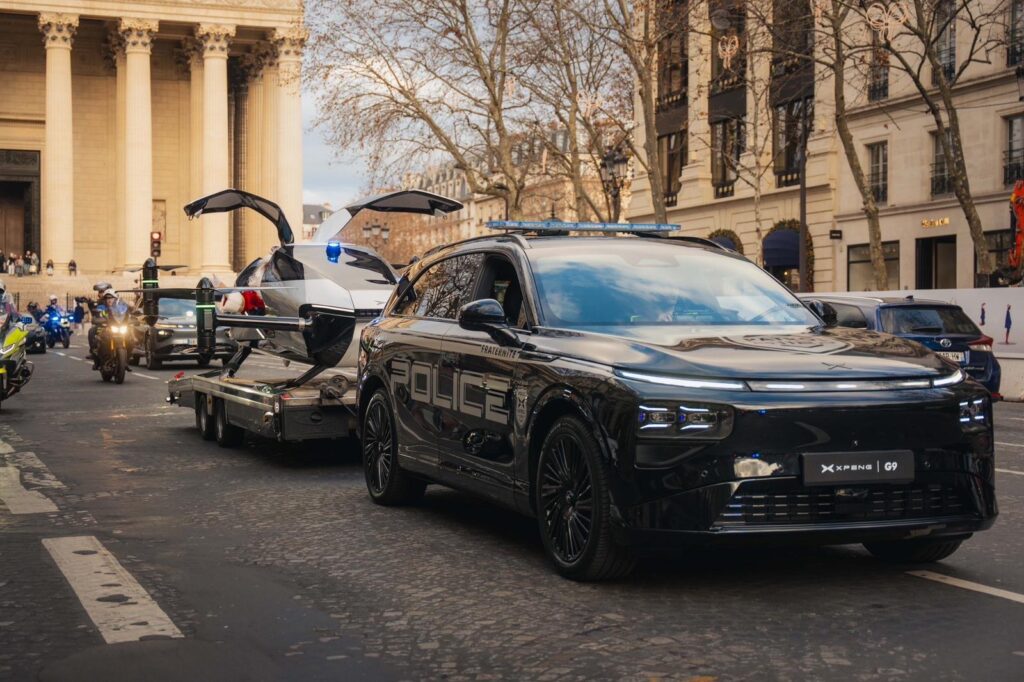
It’s Christmas, and XPeng hasn’t just released a snowy SUV advert to mark the occasion. This year, the Chinese manufacturer has chosen a setting worthy of a science fiction film: a parade in which Father Christmas swaps his traditional sleigh for an XPeng drone. The flying machine was set up on a platform and towed by an XPeng G9 electric SUV, creating a spectacular tableau calibrated for social networks and the festive imagination.
source : XPeng
XPeng X2: the eVTOL ‘sled’ of the future
The drone used is not just a Christmas decoration. XPeng is showcasing its X2, an eVTOL electric aerial vehicle developed by its aerial mobility division, the former XPeng AeroHT.
Of course, the aim of the parade was not simply to amaze passers-by; one of the objectives was to showcase the vehicles developed by the brand. Indeed, behind this festive display lurks a very serious demonstrator:
two-seater configuration designed for low-altitude urban mobility
100% electric propulsion
autonomous or piloted flight capability, depending on usage scenarios
architecture designed to be integrated over time into an intelligent urban mobility ecosystem.
As stated earlier, XPeng’s role in the parade was strictly event-based: the X2 did not fly, but served as a rolling showcase for these new forms of air mobility, under control and without regulatory risk-taking.
source : XPeng
Subtle promotion of the G9
XPeng also took advantage of this exhibition to showcase one of its flagship vehicles: the XPeng G9, its top-of-the-range electric SUV. Already on sale in several markets, it focuses the brand’s strategy on the premium technology segment.
Here, the G9 acts as a symbolic link between today’s terrestrial mobility and tomorrow’s aerial ambitions. In this case, it’s not just an SUV towing a trailer, but the electric car that is literally taking along the prototype of future aerial mobility for the general public.
source : XPeng
Technology still in the demonstration phase
Despite the spectacular images and the impression of an operational means of locomotion, XPeng is not yet promising an X2 drone in every garage. At this stage, the device remains an R&D demonstrator, intended to show what the brand is capable of, rather than a product ready for delivery.
At the same time, XPeng is pushing ahead with an even more ambitious project: the “Land Aircraft Carrier”, a concept combining a land-based electric vehicle and a removable eVTOL module, with a market launch date of around 2026. Eventually, this type of Christmas scene will become a preview of a real commercial offer, rather than a simple experiment.
Christmas storytelling to support XPeng’s vision
So this operation is more than just an end-of-year marketing stunt. By giving Father Christmas a parade on board a futuristic drone, towed by one of its electric SUVs, XPeng is telling a story: the story of integrated, electric, autonomous and, tomorrow perhaps, aerial mobility, at the heart of everyday life.
By capitalising on a universal imagination (the sleigh, the presents, the parade), the brand is seeking to make its innovations more familiar, less abstract, and to anchor its vision of multimodal mobility in the minds of the general public. It remains to be seen whether, in a few years’ time, this type of scene will be seen as a marketing wink… or as the first images of a new normality.
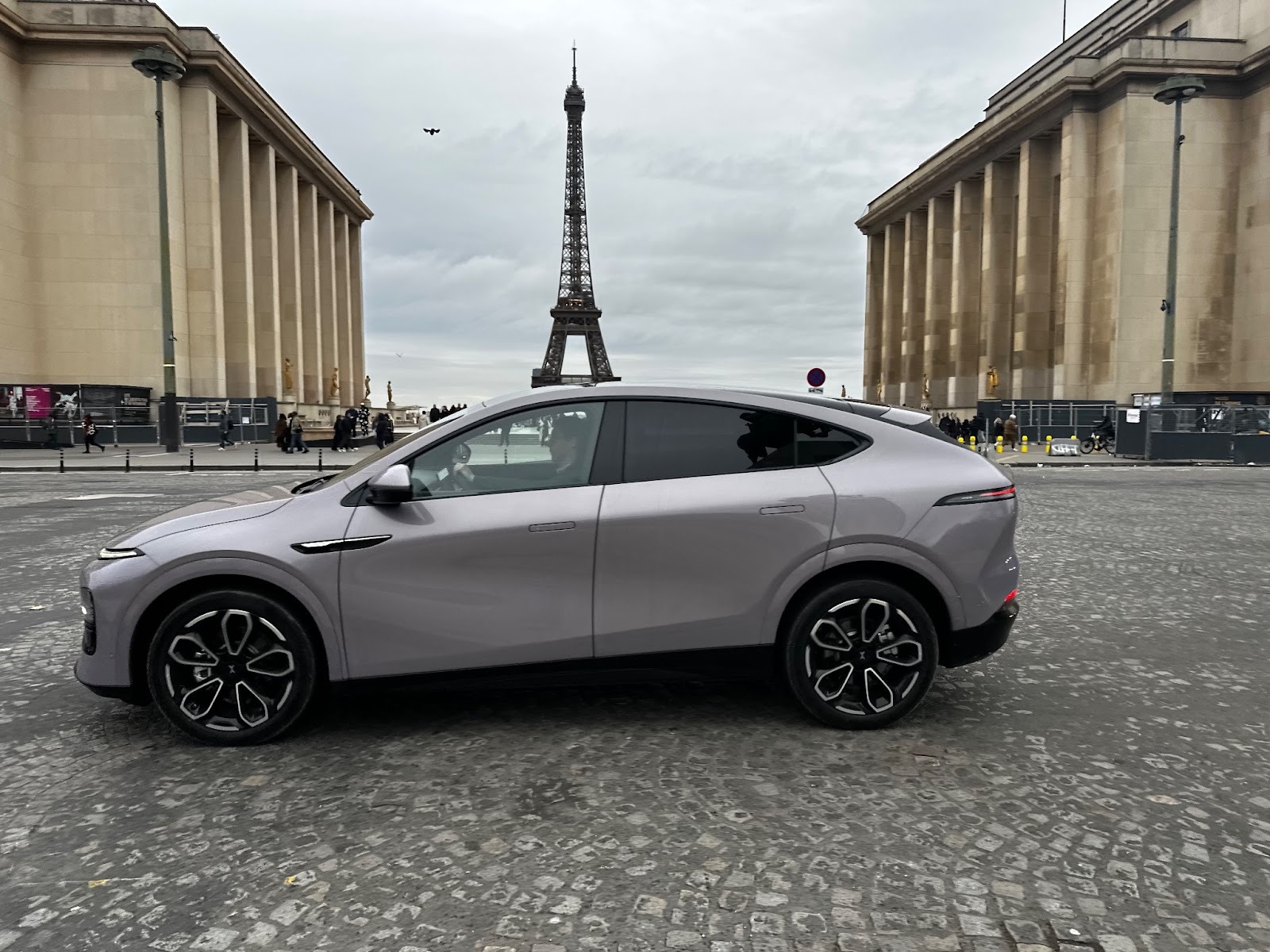
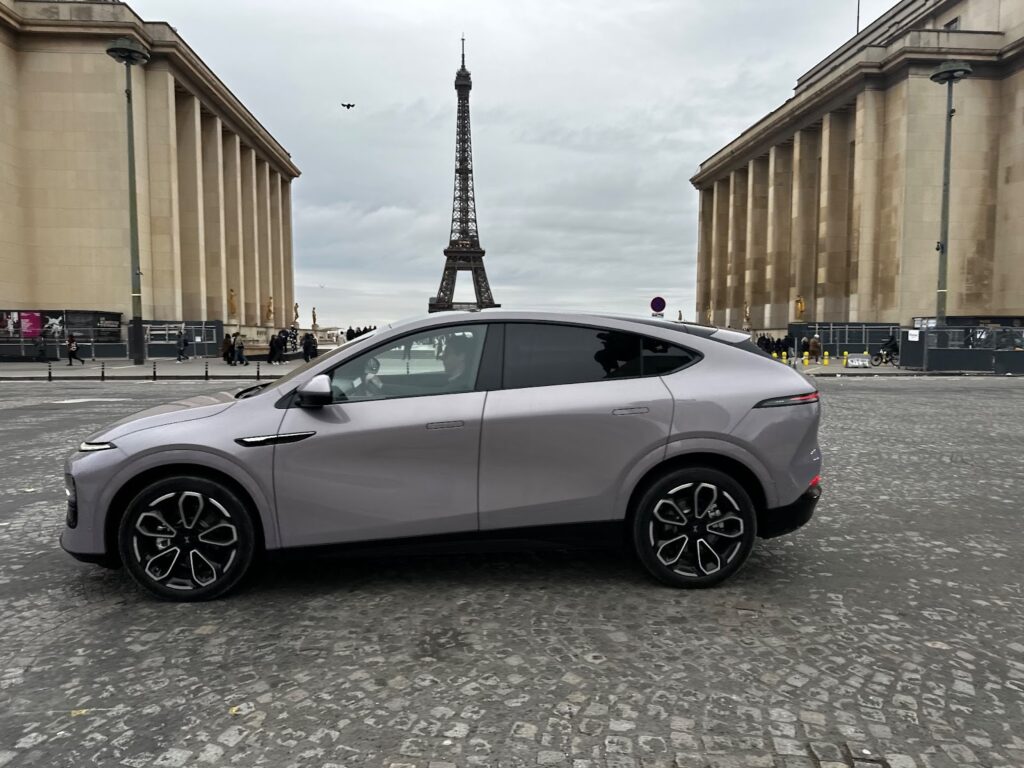
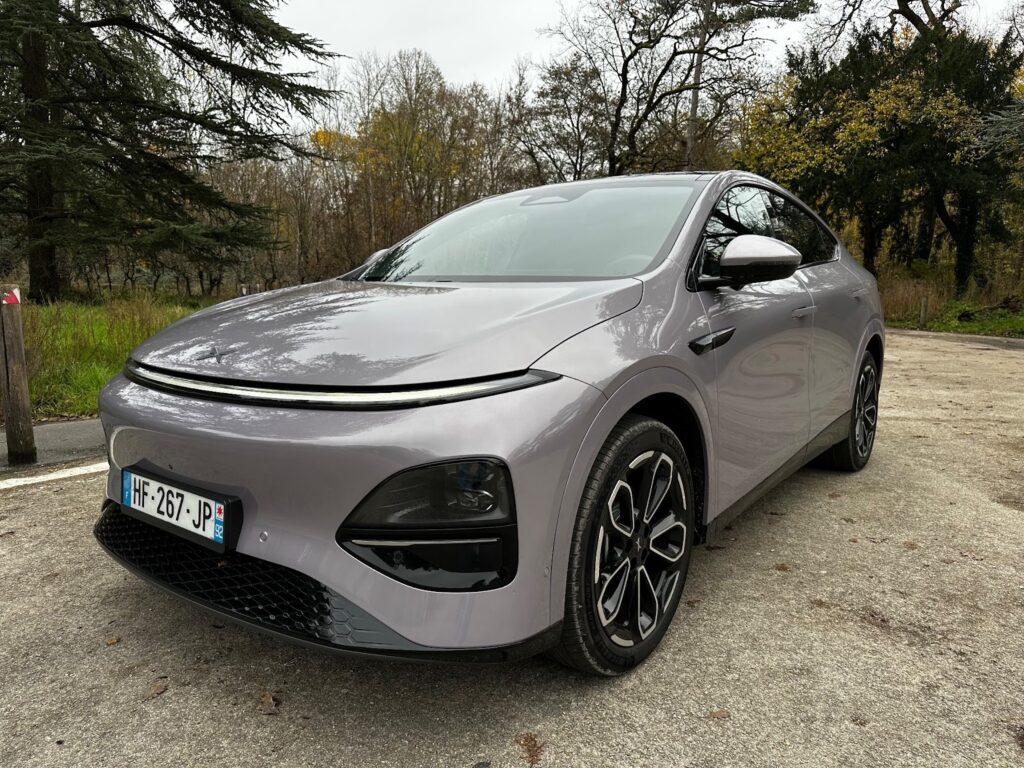
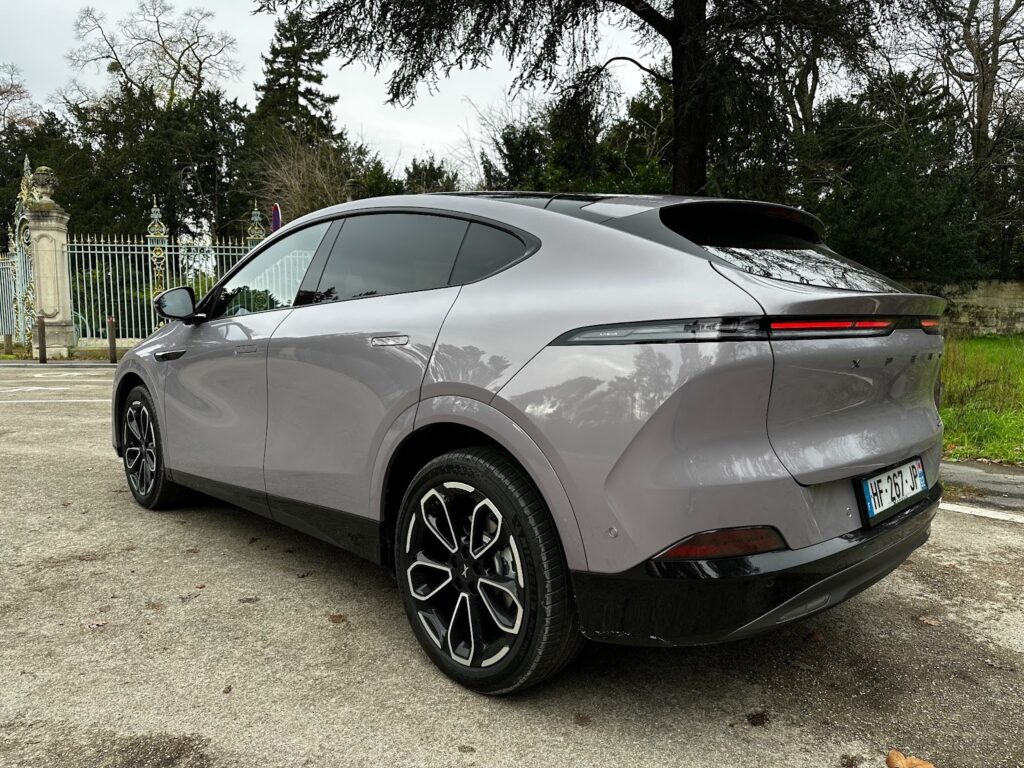
ECO MOTORS NEWS got behind the wheel of the XPeng G6 Performance, the Chinese manufacturer’s 100% electric SUV coupé, which is clearly targeting European benchmarks… and above all the Tesla Model Y. For two days, we put it through its paces in the Paris region: city, ring road, dual carriageway, motorway and country roads. It was an opportunity to see if this futuristic SUV lived up to its promises in terms of performance, range and on-board comfort.
First impressions: an assertively futuristic SUV
At first glance, the XPeng G6 Performance displays a strong styling bias, and it’s no coincidence that it catches the eye. The front end features a wide horizontal LED strip that stretches across the entire width of the vehicle, giving the whole vehicle a highly futuristic lighting signature.
With its generous dimensions (4,753 mm in length, 1,920 mm in width, 1,650 mm in height and a wheelbase of 2,890 mm), it has a dynamic presence, firmly planted on its wheels despite a kerb weight of around 2,120 kg. All in all, it’s a winner in terms of exterior design: XPeng offers something different from the classic European codes, while retaining a real coherence of style.
A sleek, high-tech interior… with almost no buttons
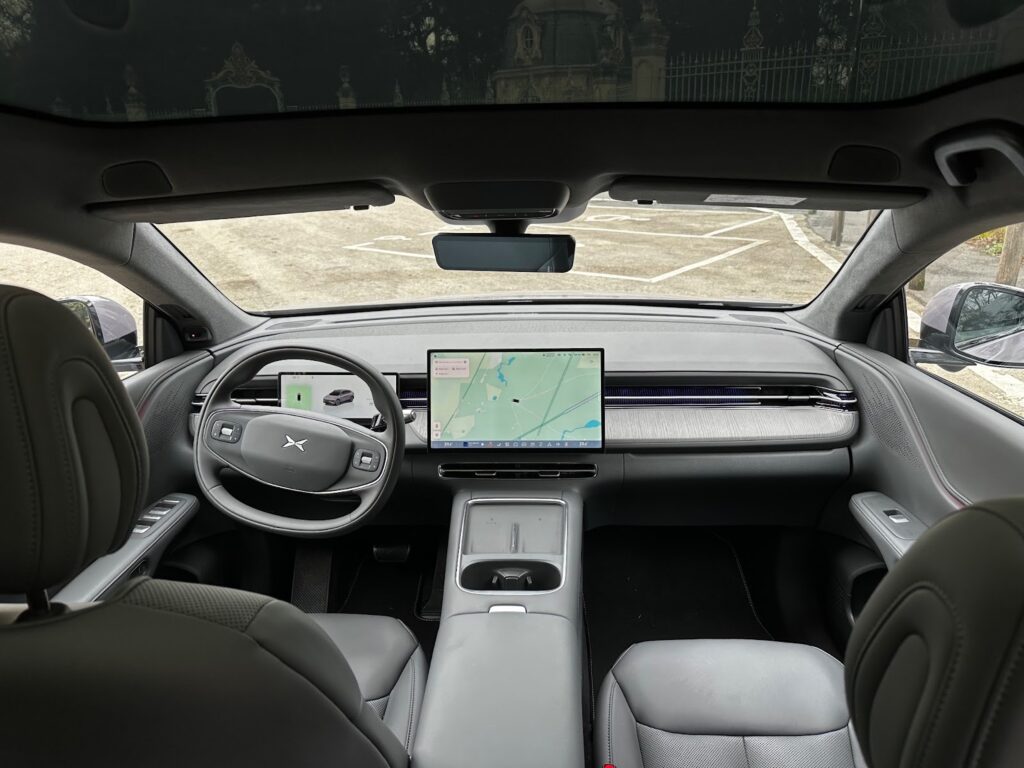
When you step inside, the futuristic look continues. The G6’s interior is refined and minimalist, with very few physical controls. Almost everything is displayed on two large screens: the 10.2-inch instrument panel behind the steering wheel and the 14.96-inch central screen, both of which are well integrated and easy to read, providing rapid access to all the vehicle’s functions.
When first used, the absence of buttons can be surprising and even frustrating, but once you’ve got to grips with the overall ergonomics of the interface, it more than makes up for this radical choice.
One of the strong points of the cabin is XPeng’s choice of a well thought-out interior lighting signature: the different lighting strips, which can be chosen and adapted to suit the music, contribute greatly to this high-tech, immersive ambience.
In terms of perceived quality, XPeng has clearly opted for the top end of the range, with meticulous materials, reliable assembly, heated, ventilated and massaging seats, and very good quality front and rear seats. You really get the feeling that you’re in a premium electric SUV, with a level of presentation that has nothing to be ashamed of when compared with the benchmarks in the segment.
Life on board: space for all the family
Let’s stay on board the G6, where there’s no shortage of space. Up front, driver and passenger enjoy a comfortable, well-supported seat, with a driving position that’s easy to find despite the cabin’s very digital philosophy.
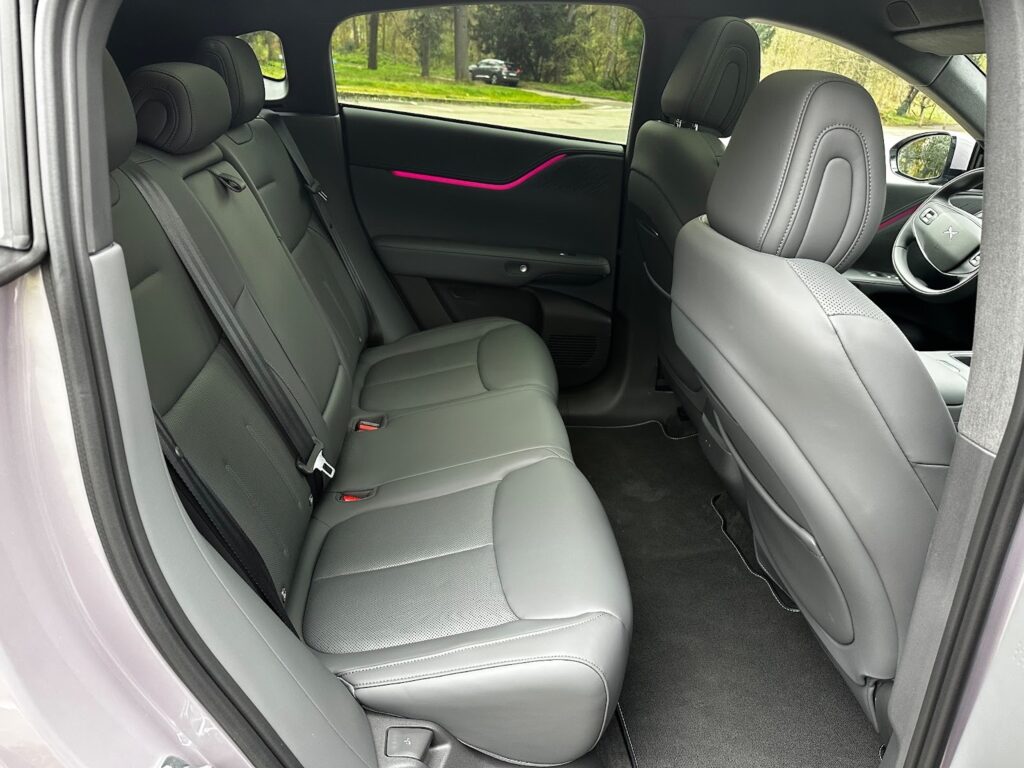
At the rear, the G6 offers three real seats that can be used on a daily basis: there’s plenty of legroom, the headroom remains decent despite the SUV coupé silhouette, and the bench seat makes it easy to envisage journeys with family or friends.
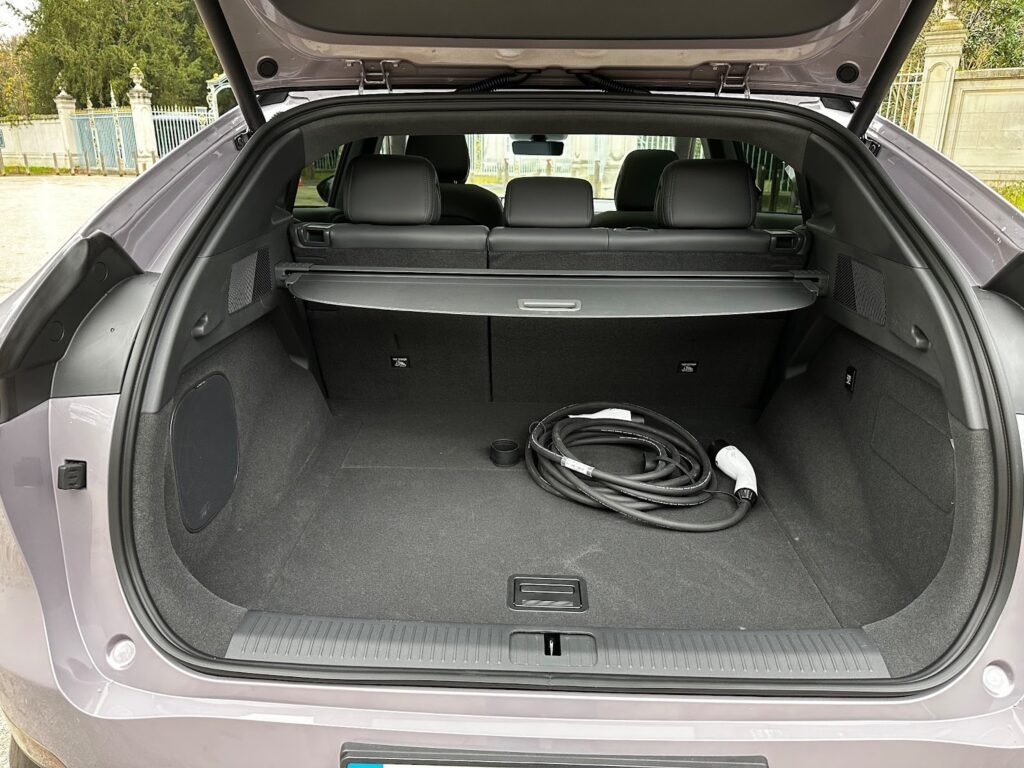
The boot, meanwhile, is fully in line with this electric family SUV positioning: 571 litres of volume (extendable to 1,374 litres with the seats folded down), more than enough for everyday use as well as for weekend getaways or holidays. Clearly, the XPeng G6 ticks all the essential boxes when it comes to versatility.
Behind the wheel: a truly powerful electric SUV coupé
It’s when you’re on the move that the G6 Performance fully justifies its name. In everyday driving, with Eco or Normal modes selected, acceleration is linear but already very much in evidence. Reacceleration is crisp and progressive, perfectly suited to relaxed driving in town or on the fast lane. You’ll enjoy the silence typical of an electric vehicle, with only the presence of a low-velocity external sound to warn pedestrians. A good idea on paper, but in use this ‘music’ becomes a little intrusive over time, even though several tones are available.
Switching to Sport mode, the G6 Performance clearly changes face: with its maximum power of 350 kW (476 bhp) in AWD mode, torque of 660 Nm and 0-100 km/h time of 4.1 s (top speed 200 km/h), you can feel the instant responsiveness that is typical of EVs. Acceleration becomes downright aggressive, in the good sense of the word: perfect for hard acceleration, high-speed overtaking and fast lane acceleration.
The steering, meanwhile, remains artificial in its feel, and is very fluid in use. In practice, it’s a pleasure to use on a daily basis, even if purists would no doubt have liked a little more feedback.
However, the suspension is not the G6’s strong point: on rough or ‘uneven’ roads, our driving experience revealed a certain firmness. On good road surfaces, however, the ride is taken up a notch, and the G6 offers real driving comfort, especially on long journeys. Finally, in town, the car’s size means you have to remain vigilant, but all the manoeuvring aids and numerous parking ‘gadgets’ mean you can park without any particular stress.
Battery, range and recharging: one of the best in its category
Let’s talk about one of the strong points of this Chinese SUV. It boasts a battery that clearly places it among the best in its segment in terms of efficiency and range. It is fitted with an 87.5 kWh NCM battery (800 V architecture), offering a range of up to 550 km WLTP for an average consumption in mixed use of 18 kWh/100 km, and over the two days of the test, the on-board estimates proved to be consistent with the official figures. On motorways and expressways, average fuel consumption was around 23 kWh/100 km.
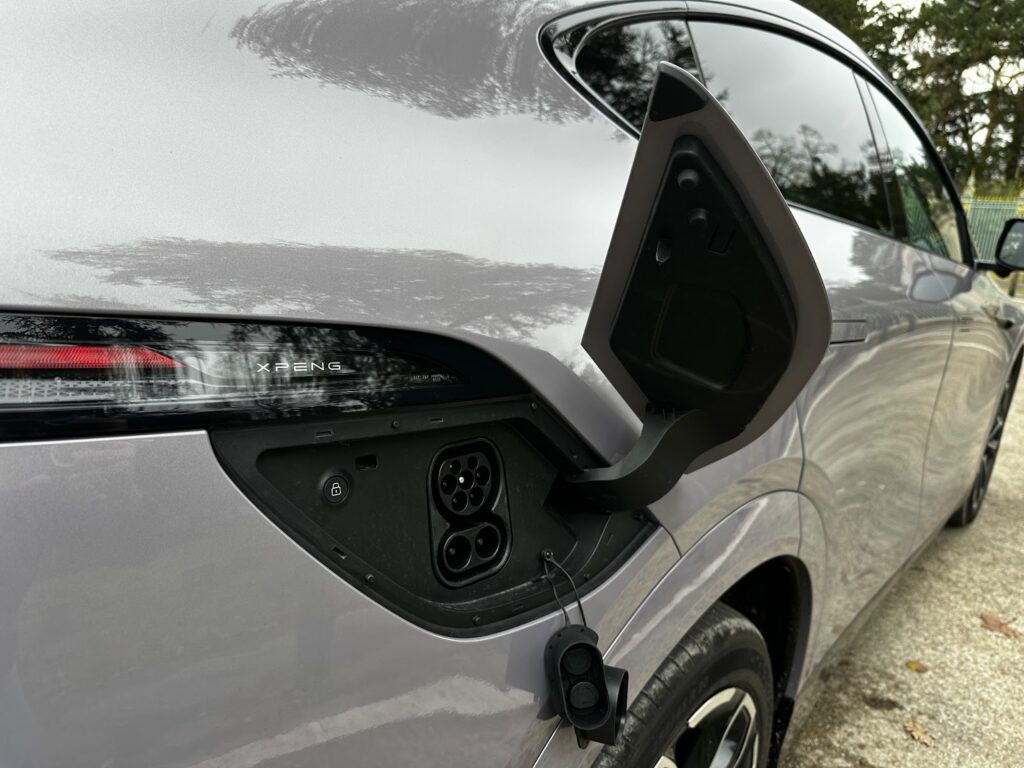
Recharging is equally impressive on paper and in practice: up to 280 kW DC (10-80% in ~20 min), very competitive times for the category.
Conclusion: a highly accomplished electric SUV coupé, built for range
After two days behind the wheel of the XPeng G6 Performance, it’s hard not to recognise the seriousness of the proposition. As far as we’re concerned, it ticks almost all the boxes: a bold, futuristic exterior design, a refined, top-of-the-range interior, a generous, family-friendly interior, first-class performance and a range that’s among the best in its category.
It’s not perfect, however: the suspension is a little firm on poor surfaces, the steering has an artificial feel and the low-speed warning music gets tiresome, reminding you that this is a vehicle with a strong character. However, as long as you embrace its very digital world and its radical ergonomic choices, you’re in for a real treat.
On 22 December 2025, the Union Française de l’Électricité (UFE) officially published its “Plan d’électrification des usages”, a strategic roadmap containing more than 50 measures aimed at making electricity the linchpin of France’s energy transition. A significant number of these measures relate directly to electromobility, from driver training and the adoption of electric vehicles to recharging infrastructure and the second-hand market.
UFE credit
Who is UFE and why this plan?
UFE is the trade association that brings together the players in the electricity sector in France, including producers, grid operators, electricity suppliers and energy service providers. Its mission is clear: to promote electricity as the low-carbon power solution to meet the country’s energy, economic and climate challenges.
This plan is part of the very serious reflection on the Pluriannual Energy Programme (PPE3) and the National Low-Carbon Strategy (SNBC3), which are strategic documents designed to guide French energy policy up to 2030 and beyond. The PPE3 and SNBC3 were due to be adopted in 2025, but at this stage the strategic framework has not yet been finalised.
UFE would like to see the electrification of uses, including transport, placed at the heart of public decisions and national investments.
A turning point for electromobility?
Electromobility is a key vector in the energy transition, but it still faces structural obstacles in France: access costs for low-income families, fragmented support, lack of clarity when it comes to installing charging stations, and a second-hand market that is still unstructured. UFE intends to respond to these challenges with a proposal for measures that outline a coherent vision for accelerating the adoption of electric vehicles. Here are those that directly concern this subject.
1. Electric driving licence: a gateway to EV
UFE is proposing the widespread introduction of an “electric driving licence”, a concept that may seem harmless but has a well-thought-out logic behind it. The idea is to incorporate specific modules on electromobility (driving, recharging, efficiency) into the driving licence course, while reducing costs for the instructor thanks to the savings made by using an EV rather than a combustion vehicle, which is more expensive and polluting.
Specifically, the association recommends :
require driving schools to offer driving licences for electric vehicles;
to link this licence to subsidised vehicles (for example via a zero-interest loan);
extend support to include the leasing of a first EV, thereby reducing the outlay for low-income households.
This measure is intended to be both an incentive and an educational tool: it aims to standardise the use of electric vehicles from the moment drivers learn to drive, creating a generation of drivers who are more familiar with these technologies.
2. Creating an accessible market for social leasing of electric vehicles
In the publication of its plan for the electrification of uses, UFE calls for the introduction of a multi-year trajectory for social leasing for EVs from 2026. In practical terms, this measure is proposed to give visibility to players in the sector and encourage the financing of electric mobility solutions accessible to the most modest households.
The aim is twofold:
Encourage access to zero-emission vehicles without relying on immediate purchase, which is often costly;
Create a socially inclusive operational leasing market, which could become a powerful lever for accelerating the penetration of EVs in both urban and rural areas.
3. Supporting the second-hand market
UFE points out that 85% of cars sold in France are sold on the second-hand market, a segment that is often neglected by public policy. As part of the drive for greater electrification, the association is proposing to launch working groups dedicated to structuring the second-hand market for EVs, with a particular focus on educating people about the condition of the battery.
This could reduce uncertainty for potential buyers and develop standardised valuation mechanisms, making the purchase of a second-hand electric car more attractive and less risky.
4. Extended sustainable mobility package
Yes, the sustainable mobility package, a tax scheme introduced by the French government to encourage less polluting modes of transport for home-to-work journeys, already exists to encourage cleaner behaviour (cycling, car-pooling, public transport).
But UFE wants to go further by extending the scheme to include journeys made in individual electric vehicles. With the democratisation of charging points in company car parks, this is an appropriate solution for democratising low-carbon vehicles.
5. Charging stations
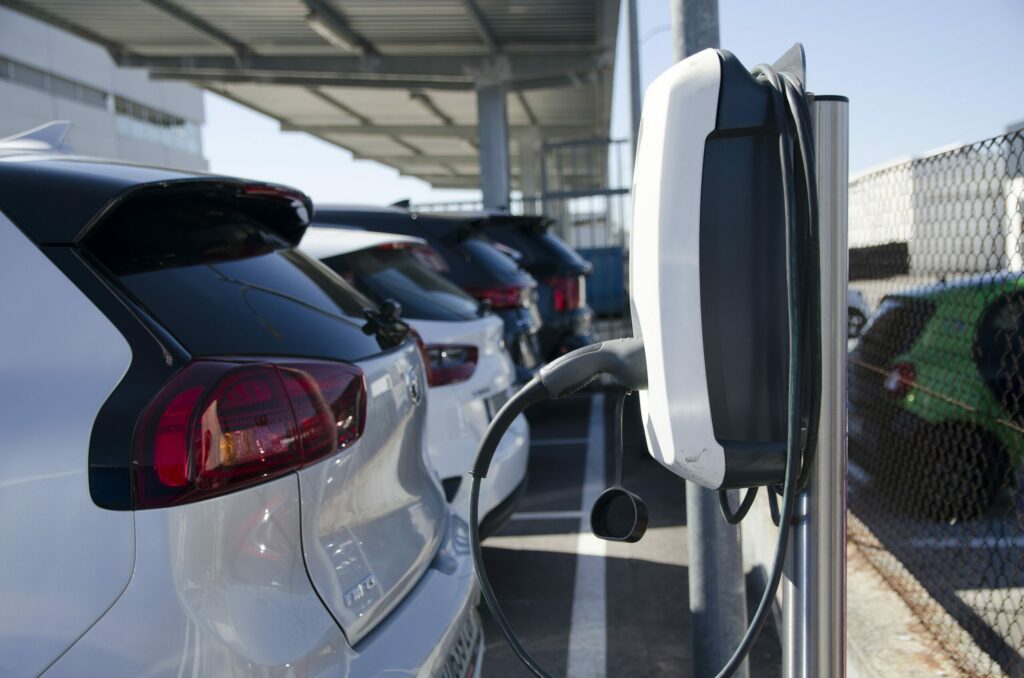
Obviously, as we at ECO MOTORS NEWS reiterate, if an electromobility revolution is to succeed, it must be accompanied by an appropriate recharging network. On this point, UFE proposes several avenues:
Support the installation of home-controlled terminals;
Linking the purchase of an EV to information on the support available for the installation of a charging point;
Accelerate the deployment of charging points in condominiums, in particular by making a feasibility study mandatory for every general meeting of condominium owners;
Train co-ownership associations in the management of recharging infrastructure.
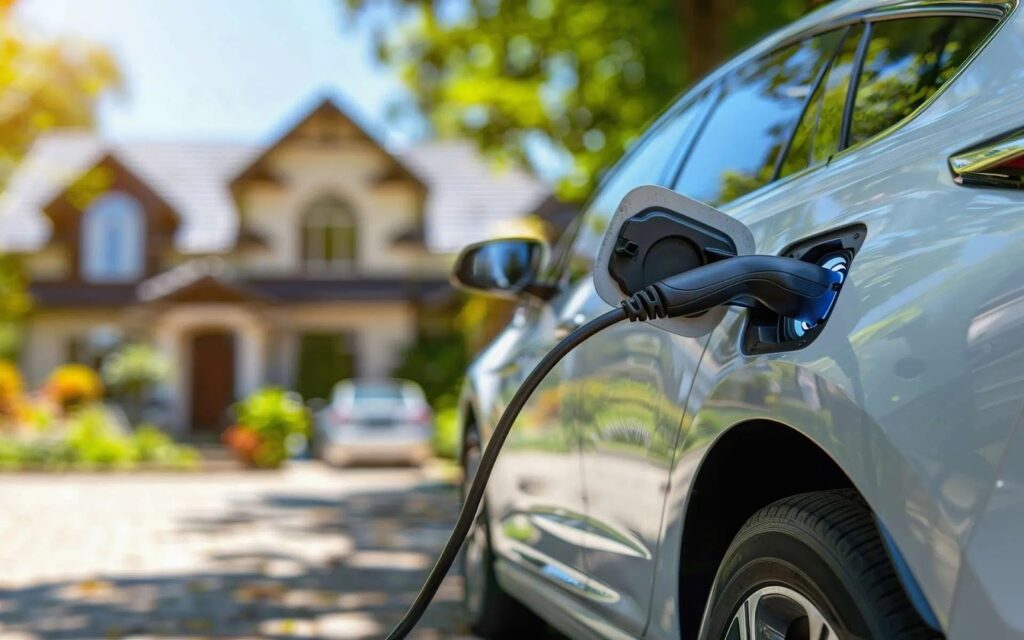
source : Qmerit
It’s a direct response to the administrative and technical obstacles that continue to slow down the uptake of home equipment, the main place where the French recharge their batteries.
A logical plan, but still consultative
UFE’s electrification plan is strategic and ambitious on paper, incorporating a global vision that goes beyond simple financial incentives to address education and market structuring.
However, the plan remains a contribution and a technical and political proposal that is simply subject to government arbitration and integration into the texts of the EPP3 and the SNBC3.
It remains to be seen whether the government will follow this roadmap, as its practical impact will depend on how these proposals are translated, or not, into operational public policies, particularly in the face of budgetary constraints and competing priorities (housing, industry, networks).
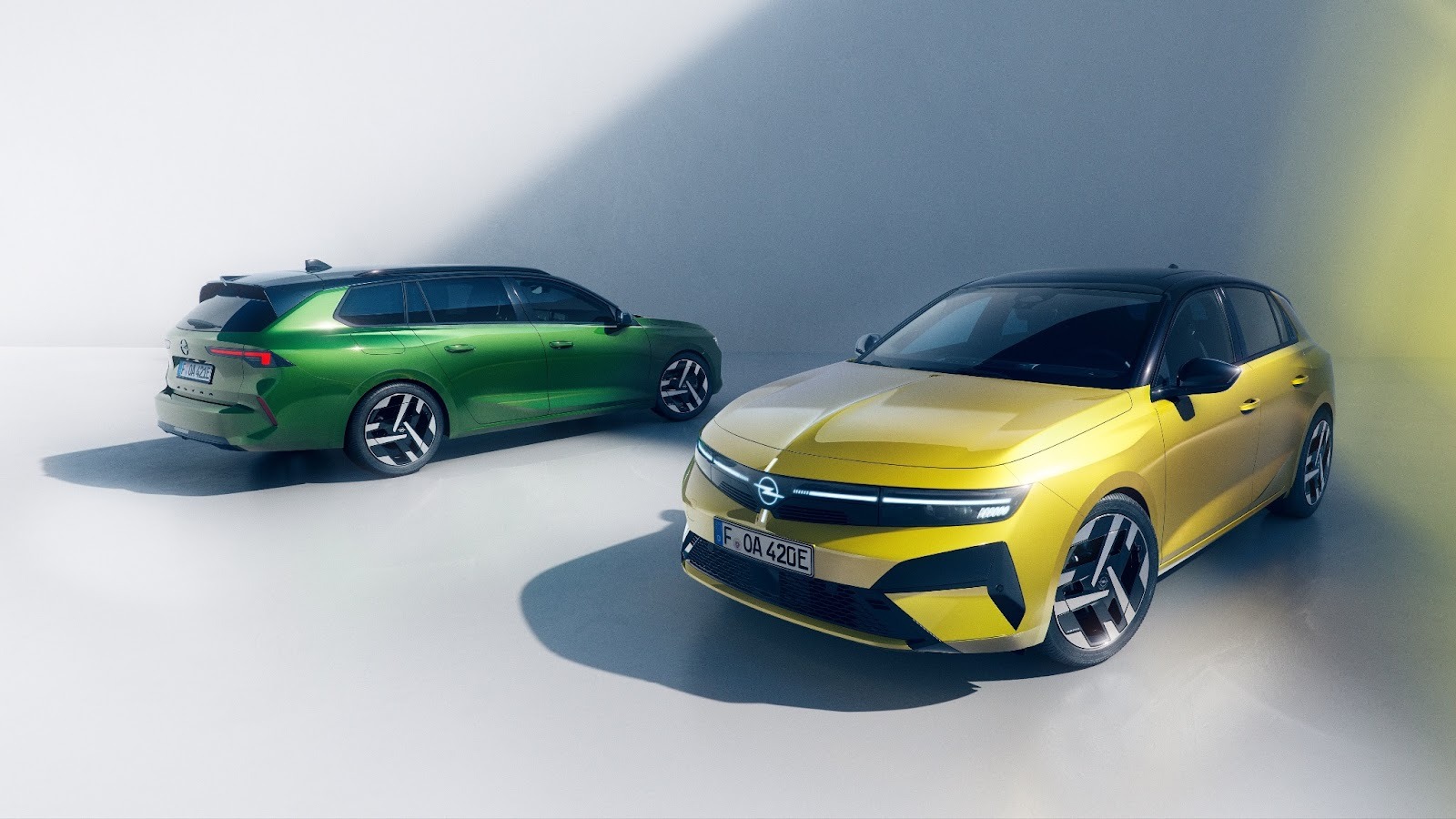
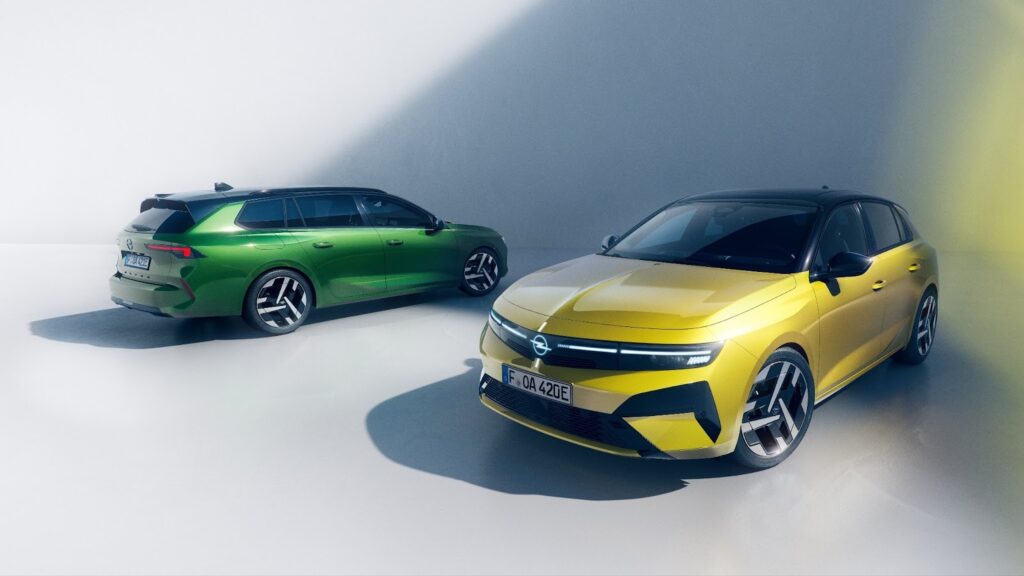
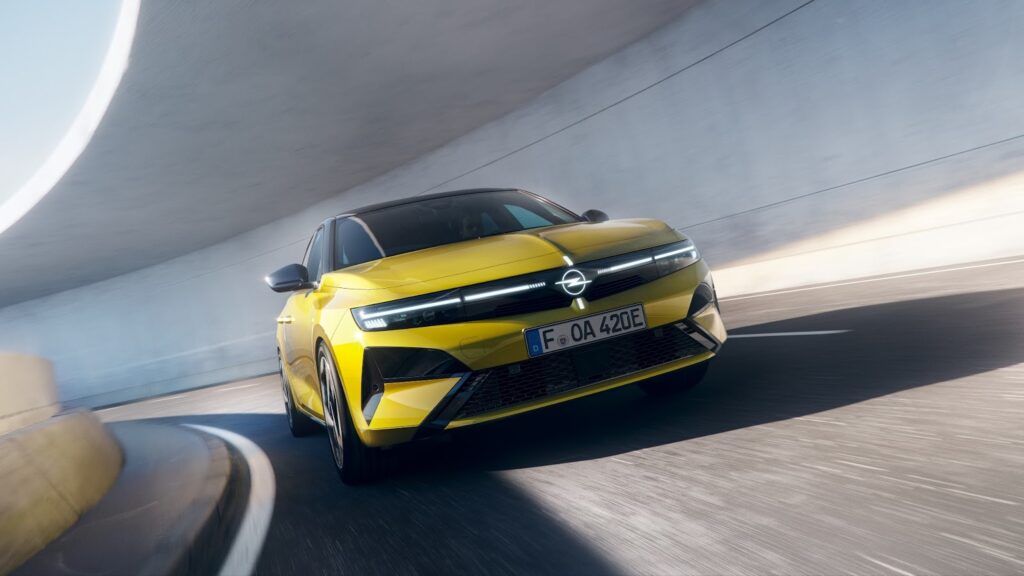
The Stellantis Group officially lifted the veil on the new Opel Astra and Astra Sports Tourer a few days ago, an announcement that comes a month before their world premiere scheduled for the 2026 Brussels Motor Show. For the German manufacturer, this is an opportunity to continue the evolution of its flagship compact model in a context of accelerated energy transition.
source: Opel
An announcement ahead of the 2026 Brussels Motor Show
The manufacturer has confirmed the arrival of these two new versions, designed to succeed the current generation, in a number of official announcements. The first public appearance will take place from 9 January 2026 at the Brussels Motor Show, where visitors will be able to see these models in their final configuration for the first time. With this early announcement, Opel intends to prepare the ground and highlight the main styling and technological developments of its new compact cars.
A modernised design and a new lighting signature
Aesthetically, the new Astra and Astra Sports Tourer evolve and adopt an all-new styling language for the brand, inspired by the design of the Opel Corsa GSE Vision Gran Turismo high-performance concept car. It features a reworked Vizor grille and, above all, the introduction of Intelli-Lux HD headlamps, an adaptive lighting technology that improves visibility and reduces glare for other road users.
source: Opel
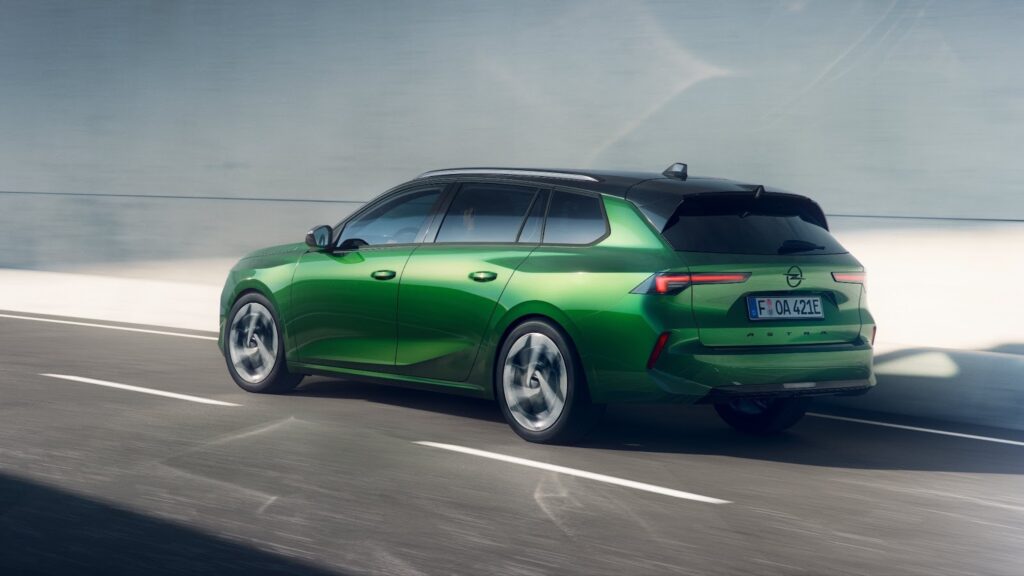
Where these two vehicles differ is in terms of format and use. The Opel Astra remains the five-door compact we know, designed for urban and everyday use, while the Astra Sports Tourer is the estate version of the iconic German model, offering more cargo space and modularity, ideal for families or users with larger transport needs.
The compact five-door version offers up to 1,339 litres of boot capacity with the seats folded down. The Astra Sports Tourer offers 1,634 litres with the seats folded.
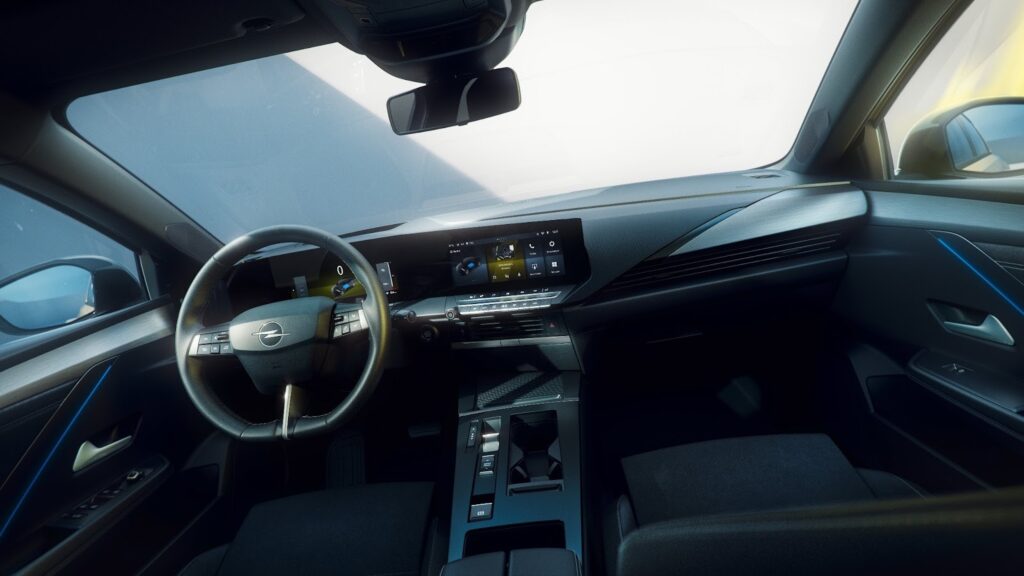
The press release makes a point of showing that the brand is moving towards ever more environmentally friendly practices: “Developers and designers have also remained true to Opel’s ‘Greenovation’ approach: the interior of the new Astra is made from 100 percent recycled materials.”
source: Opel
A 100% electric engine
The most interesting news is that the press release confirms that the new Astra and Astra Sports Tourer will be available in a 100% electric version. And on the performance front, the electric version of the Astra boasts a claimed range of up to 454 km WLTP and is equipped with V2L technology, which allows users to charge an electric device while driving, such as a bicycle.
The press release focuses exclusively on this electric powertrain, illustrating that Opel is highlighting its new energy transition technologies, which, it should be remembered, have officially announced a total switch to electric power in Europe by 2028.
source: Opel
Strategically positioned in the compact segment
With these new models, Opel is seeking to strengthen its presence in the C segment, which designates compact cars in the European car classification. This is a highly competitive sector, with rivals already well established in the electric segment. The aim is clear: to offer a versatile range, combining design, on-board technologies and sustainable mobility solutions.
A key step in Opel’s strategy
The announcement marks a new milestone for Opel, which aims to become a 100 percent electric brand in Europe by the end of the decade. The new Astra and Astra Sports Tourer embody this transition. See them at the Brussels Motor Show from January 9, 2026.
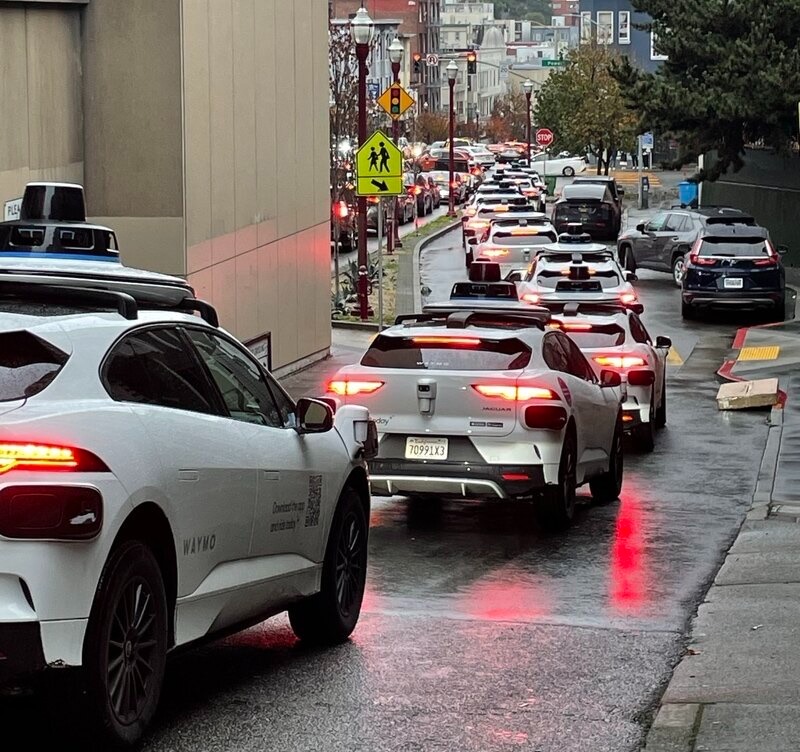
On Saturday 20 December 2025, a major blackout plunged San Francisco into darkness, the fault of a fire that broke out in a Pacific Gas and Electric (PG&E) electrical substation. The incident left around 130,000 homes and businesses without power, bringing parts of the city to a standstill, including autonomous cars.
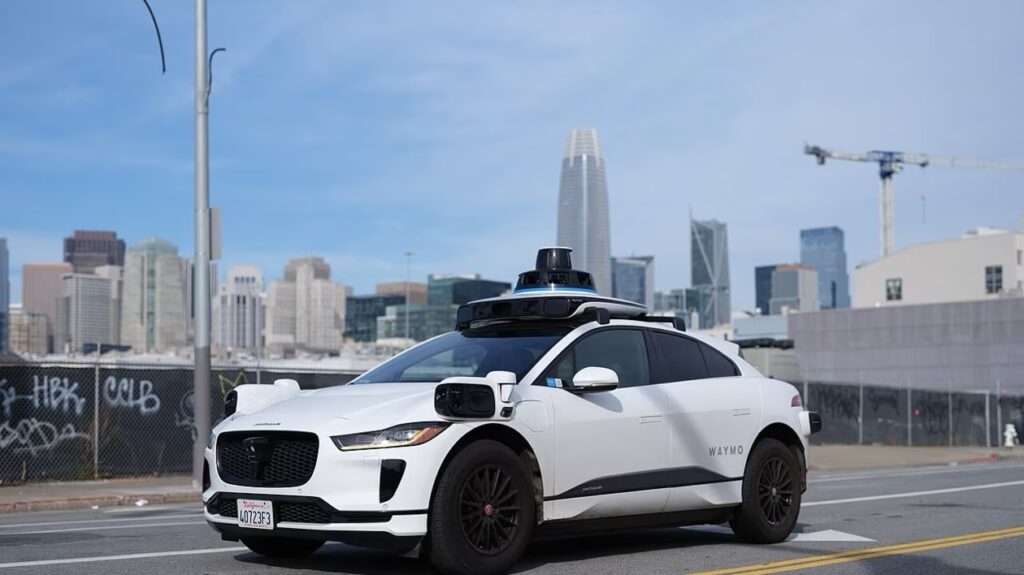
Autonomous taxis have turned into immobile obstacles. At intersections with no traffic lights, these normally fluid vehicles came to a screeching halt with their blinkers on, forcing other motorists to manoeuvre around them as best they could. This rare and comical situation highlights the city’s dependence on ageing infrastructure, even as it adopts cutting-edge technologies.
According to a PG&E press release, the fire damaged essential substation equipment, causing massive power outages in the city centre, South of Market and surrounding areas. To isolate the incident and begin repairs, emergency crews were dispatched to the site and worked throughout the night, in coordination with the municipal emergency services. The authorities have confirmed that there were no casualties and that the cause of the incident is still under investigation.
Intersections without traffic lights, traffic rapidly coming to a standstill
The breakdown had an immediate and visible impact on the streets of San Francisco. More than a dozen intersections were left without traffic lights and quickly became gridlocked, making traffic dangerous for motorists and pedestrians alike. To deal with this unusual situation, the police were mobilised to regulate traffic in the most critical areas, and residents were asked to avoid all non-essential travel until the network was fully restored. The fire that broke out in a PG&E electricity substation also had an impact on the entire public transport network, which suffered significant delays.
Sources: @AnnTrades
Waymo forced to temporarily suspend its robot taxis
As briefly mentioned above, one of the most striking effects of the blackout was the immobilisation of Waymo’s autonomous vehicles. Waymo is an American brand that has been operating in San Francisco since August 2021 with the launch of its robotaxi service for “trusted testers”. Since June 2024, the autonomous robotaxi service has been available to everyone in San Francisco.
As a result of the power cut, many autonomous and therefore driverless taxis became stuck at intersections due to a lack of traffic lights, leading the company to temporarily suspend its operations in San Francisco as a safety precaution. This interruption exacerbated the traffic disruption in the city.
The dependence of autonomous vehicles on urban infrastructure
The local authorities stressed that this incident highlighted the fragility of certain infrastructures in a city that claims to be a world showcase for technological innovation. For the time being, the majority of users had their electricity back after several hours, although thousands of customers remained without power until the following day. Many shops were forced to close early, restaurants struggled to save perishable foodstuffs, and residents dependent on medical equipment required assistance from the emergency services.
When power was restored, attention turned to issues of preparedness and coordination between energy operators, municipal services and technology companies. Officials announced an audit to assess response protocols and consider measures to reduce the risk of similar outages in the future. For many residents, the blackout was a reminder that at the heart of even the most advanced cities, a reliable power supply remains the foundation of public safety, transport and daily life.
In just a few years, Brazil has gone from being a niche market to the driving force behind electromobility in Latin America. Buoyed by an explosion in sales of electrified vehicles, an aggressive industrial policy and the massive arrival of Chinese players, the country is speeding up its transition, even though combustion engines remain ultra-dominant and a number of structural obstacles persist.
A fleet that is electrifying at high speed
The Brazilian dynamic can only really be seen if you look at the figures for the last few years. In 2020, electric vehicles were still anecdotal in a market dominated by internal combustion engines. Four years on, the landscape has changed radically.
According to ABVE and various market analyses, sales of plug-in vehicles (100% electric and plug-in hybrids) will rise from around 19,300 units in 2023 to 61,600 in 2024, an increase of more than 200% in one year.
If we extend this to all electrified vehicles, market studies estimate that the total exceeds 150,000 units over the year, and this trend is set to continue in 2025. The market share of electrified vehicles reached around 4% of new registrations in the January-November total, in a global market of around 2.5 to 2.7 million vehicles.
Some months in 2025 broke records, with more than 24,000 electrified vehicles (BEV + PHEV + HEV) sold in a single month. This is a clear sign that electric vehicles are becoming more widespread in Brazil, even if combustion engines remain the dominant mode.
BYD, GWM and the others: a market dominated by the Chinese
If there is one striking feature of Brazilian electromobility, it is the central role played by Chinese brands, far ahead of the traditional manufacturers.
The figures speak for themselves:
In 2024, BYD and GWM (Great Wall Motor) will together account for 81.6% of plug-in electric vehicle sales (BEV + PHEV) in Brazil.
BYD alone has around 70% of the BEV market and more than 50% of the PHEV market, confirming its almost hegemonic domination of trendy models.
In May 2025, BEV sales reached a monthly record: BYD accounted for more than 80% of all 100% electric registrations, well ahead of Volvo and GWM.
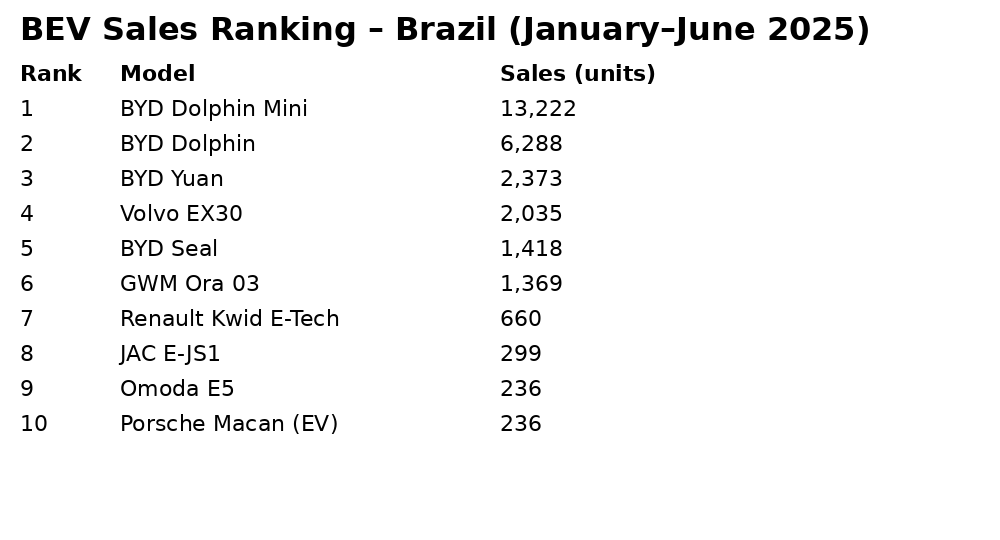
As this table shows, Chinese manufacturers dominate the ranking of the best-selling 100% electric vehicles in Brazil, although Volvo does manage to stand out:
A recharging network that’s catching up fast
To continue the development and democratisation of EVs, the development of recharging infrastructure is vital. Although it has a long way to go, the charging system for electrified vehicles in Brazil is keeping pace with the adoption of these vehicles.
In 2019, Brazil had just a few hundred public chargepoints; today, the country has a network that, while not yet homogeneous, is beginning to cover its main axes. In fact, an analysis of the growth of the infrastructure shows that by summer 2025, there will be almost 17,000 charge points with general or restricted access, covering more than 1,500 municipalities, demonstrating the gradual extension of the infrastructure beyond just the state capitals.
The figures reveal a clear trend: the Brazilian network is expanding rapidly, particularly on the major motorways linking São Paulo, Rio de Janeiro, Belo Horizonte, Curitiba and the south of the country. But also in dense urban areas where the first adopters and professional fleets (VTC, delivery, services) are concentrated.
Industry projections estimate that at least 150,000 charging points will be needed by 2035 to support a fleet of around 3 million electric vehicles, which means a sustained rate of investment over the coming decade.
A proactive industrial policy: MOVER and taxation
Obviously, as in every country with a clear desire to make progress in terms of electromobility, the government has put in place measures and aid to support and help this change.
One of the major turning points in Brazilian electromobility is the entry into force of the MOVER programme (National Programme for Green Mobility and Innovation). Launched in 2024 as part of the Lula government’s industrial policy, this programme aims to modernise the automotive sector around climate and innovation criteria.
MOVER introduces a bonus-malus system on the IPI (tax on industrialised products), which favours low-emission vehicles and penalises the most polluting models.
It provides direct financial incentives to reduce the purchase price of electrified vehicles.
It provides for around 19.3 billion reals (nearly 4 billion euros) in incentives for innovation between 2024 and 2028, focusing on R&D, electrification, energy efficiency and the use of recycled materials.
The programme also imposes improved carbon accounting throughout the vehicle life cycle, with increasing requirements in terms of recyclability and recycled content.
As a result, manufacturers from around the world have announced investments of more than €23 billion in Brazil over the next few years, including several projects directly linked to electromobility.
On the trade front, customs policy has been tightened to regulate imports and encourage domestic production:
After a period of reduced import duties to launch the market, the government has decided to gradually raise tariffs on imported electric vehicles (BEVs, PHEVs, HEVs) to converge towards the 35% ceiling, which is the maximum rate authorised by the rules of MERCOSUR (the South American Common Market).
This trajectory is clearly intended to encourage manufacturers, particularly BYD and GWM, to locate part of their production in Brazil in order to maintain their price competitiveness.
Source: BYD
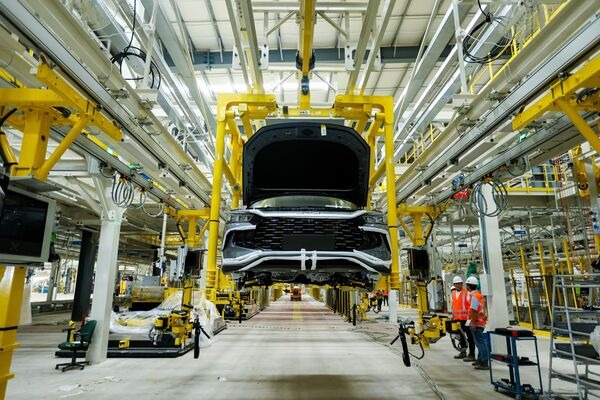
And the result of all these efforts to promote Made in Brazil is hard-hitting and effective. BYD plans to transform the former Ford plant at Camaçari (Bahia) into a production hub for electric vehicles and batteries, while GWM is investing in the local assembly of hybrid and electric models in the state of São Paulo. Volkswagen and Stellantis have also announced packages dedicated to the gradual electrification of their locally produced ranges.
WEG, Tupi Mob and a structuring local ecosystem
While the majority of electric vehicles sold in Brazil still come from China, national players are emerging in the field of recharging infrastructure and services.
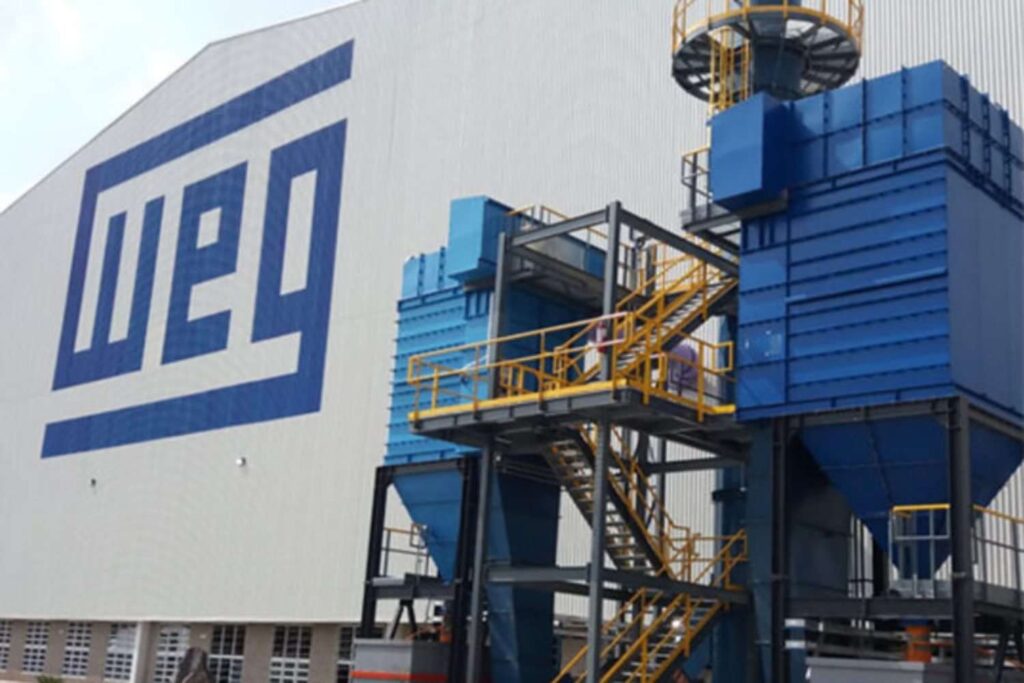
The most emblematic case is that of WEG, an industrial giant from the state of Santa Catarina. Historically renowned for its electric motors and industrial automation systems, WEG has gradually extended its expertise to electromobility, developing a comprehensive range of recharging solutions: home chargers, public DC charging points and energy management tools.
In October 2025, WEG announced the acquisition of 54% of Tupinambá Energia (Tupi Mob), which operates one of the country’s leading recharging platforms. The Brazilian group is now not only an equipment supplier, but also and above all a player in the recharging ecosystem.
Thanks to this acquisition, WEG now combines hardware, software and network or fleet management services, a positioning that is still rare in Brazil. The group intends to play a leading role in the energy transition in the transport sector.
Source : WEG
Other players are developing around this hub:
Energy companies such as Raízen are committed to the deployment of electric fleets, with a partnership aimed at integrating 20,000 electric vehicles into the fleet of VTC 99 by the end of 2025.
Private operators, property developers and infrastructure managers are developing networks of charging points in car parks, shopping centres and service stations, capitalising on the massive arrival of Chinese models and the growing interest of business fleets.
Persistent obstacles to mass adoption
Despite this momentum, Brazil is still a long way from achieving majority electromobility. And for good reason: there are a number of obstacles to scale-up.
Still high purchase price: even if Chinese models are driving prices down, the gap with a combustion vehicle remains significant for a large proportion of the population, especially in a very sensitive market.
Interest rates and purchasing power: car financing relies heavily on credit. High interest rates and under-pressure purchasing power make it more difficult to buy recent vehicles, especially electric ones.
Uneven infrastructure: the major cities are benefiting from a growing density of charging points, but a large part of the country remains poorly equipped, fuelling “autonomy anxiety” for inter-city journeys and business use outside the main roads.
Electricity grid and reliability: even though Brazil’s electricity mix is largely decarbonised thanks to hydroelectricity, some regions suffer from grid capacity and reliability constraints, making it difficult to roll out fast charging on a large scale.
A large region in transition, but still breaking in
Brazil is proving to be one of the most interesting laboratories for electromobility in the world, with an assertive industrial policy, a mass market, the importance of flex-fuel (ethanol), a Chinese offensive and the emergence of local players in recharging. The figures show a real and palpable take-off, but the market share is still modest in terms of the national fleet.
Brazil has laid the foundations to become a regional pillar of electric mobility. All that remains now is to build on this success: accelerate the reduction in costs, increase the density of the network of charging points outside the major cities and remove the cultural and financial obstacles that still stand in the way of truly mass-market electromobility.
Why EVs outperform hybrids in America’s auto revolution
The year 2025 marks a defining moment in the American automotive journey. For decades, the internal combustion engine dominated U.S. roads, shaping cities, economies, and lifestyles. Then came hybrids an important transitional technology designed to soften fuel consumption without fully abandoning gasoline. Now, electric vehicles (EVs) stand firmly at the center of the future.
As American consumers weigh their choices between electric vehicles (EVs) and hybrid vehicles in 2025, the answer is becoming increasingly clear: fully electric vehicles are the superior choice for performance, cost efficiency, environmental responsibility, and long-term value.
Hybrids once represented progress. Today, they represent compromise.
This comprehensive comparison explores why EVs are no longer just an alternative but the dominant automotive solution for America.
The shift is no longer coming — it’s here
Five years ago, EVs were often discussed as “the future.” In 2025, they are the present.
Electric vehicles are now widely available across nearly every segment sedans, SUVs, trucks, crossovers, and even performance cars. American roads are increasingly populated by vehicles that are quieter, faster, cleaner, and cheaper to operate than their gasoline-based predecessors.
Hybrids still exist, but their role has changed. What was once a stepping stone has become a technological halfway house neither fully efficient nor fully future-ready.
Purchase price: The gap is closing fast
One of the longest-standing arguments in favor of hybrids has been their lower upfront cost. In 2025, that argument is rapidly losing strength.
EV Affordability
Electric vehicles now span a wide price range, from affordable entry-level models to premium luxury offerings. Increased domestic manufacturing, improved battery technology, and economies of scale have pushed EV prices down year after year.
Additionally:
Many EV buyers qualify for financial incentives at the point of sale
EV leasing options are often more favorable than hybrid leases
This is a major turning point in European climate policy. Yesterday in Brussels, the European Commission put an end to one of the symbols of the Green Deal: the total ban on the sale of combustion engine vehicles from 2035. The principle of “zero grams of CO₂ from the tailpipe” will disappear in favour of a target deemed more realistic: a 90% reduction in average emissions from new cars compared with 2021.
In other words, Brussels is maintaining the trajectory towards carbon neutrality in 2050, but introducing a limited margin of flexibility after 2035. Internal combustion and hybrid vehicles will still be allowed to be sold, provided they offset their emissions using synthetic fuels, sustainable biofuels or low-carbon industrial processes. This is not a renunciation, but an adjustment between climate ambitions and economic reality.
Why Brussels is changing its strategy
Fortunately for the climate objectives, this apparent retreat is not ideological. In fact, it’s in line with industrial realism. In 2025, even if sales of 100% electric vehicles increase in France, they will stagnate in several markets, notably Germany, Italy and certain Central European countries. The high price of models, the fact that we are still too dependent on China for batteries and the delay in infrastructure are undermining the initial plan.
European Commissioner Stéphane Séjourné refers to a “pragmatic approach”: the forced all-electricity, imagined in 2023, comes up against the economic realities of 2025.
The initial framework of the Green Deal
Let’s go back to the text that governed this vision of the future car industry: the “European Green Deal”. It stipulated that from 2035, all new cars would have zero direct emissions. In short, petrol, diesel and plug-in hybrid cars could not be sold new. Logically, that left 100% electric or hydrogen.
It’s an ambitious target, but one that will be difficult to meet without breaking up the industry. And indeed, faced with the cost of batteries and pressure from Asia, Brussels admits that the pace needs to change. The new -90% target maintains the direction, but gives a little breathing space to an industry under stress.
-90% reduction in emissions: what’s the difference?
With this new target, the vast majority of sales will remain electric or zero-emission direct. However, a small margin of flexibility could be granted: manufacturers would be able to include a limited share of combustion or hybrid models, provided that the average CO₂ emissions of their fleet complied with the 90% reduction compared with 2021.
These few models, tolerated at the margin, would have to rely on synthetic fuels, biofuels or low-carbon production processes to offset their impact. For carmakers, this scenario would provide a transitional lever, giving them time to make their hybrid platforms profitable and support the rise of all-electricity.
Berlin and Rome on the front line
Germany and Italy pulled out all the stops behind this compromise. German decision-makers had been arguing for months for recognition of e-fuels. Rome, for its part, wanted to preserve its thermal production sites, which are essential to its industrial fabric.
On the French side, reticence prevailed at first, but France finally agreed, on condition that European investment in the electric sector was protected. Emmanuel Macron stressed the need to strengthen the European industry rather than weaken it.
Electrics remain at the heart
However, despite a decision that could dampen the enthusiasm of electric car manufacturers, Brussels is not turning its back on zero-emission mobility. On the contrary, the Commission intends to maintain electric vehicles as a central pillar of the decarbonisation of road transport, while adjusting its industrial strategy.
The new framework is accompanied by increased support for small electric cars made in Europe, to counter low-cost Chinese models.
The Commission is also promising to simplify industrial procedures, such as approval procedures, to make State aid more flexible in order to encourage investment in battery factories, and to speed up gigafactory projects. In addition, the idea is to encourage innovation in solid batteries, two-way recharging and recycling.
source : netcarshow
Angry NGOs, relieved industry
But this more realistic reorientation, largely geared towards European competitiveness, has not met with unanimous approval. NGOs are denouncing it as a step backwards for the climate and a blurred signal to industry. Greenpeace calls it a “historic step backwards”.
Conversely, carmakers are welcoming the compromise as a breath of fresh air: it gives them extra time to finance the ramp-up to all-electricity without jeopardising their financial equilibrium.
What’s next?
The proposal will have to be approved by the European Parliament and the Member States during 2026. If it is adopted, the transition will remain largely electric, but will be more sustainable for industry.
For manufacturers, the challenge is clear: to offer electric cars that are competitive, desirable and affordable, while continuing to innovate.
This European decision marks the end of a transition designed without shock absorbers, and the beginning of a more pragmatic era.
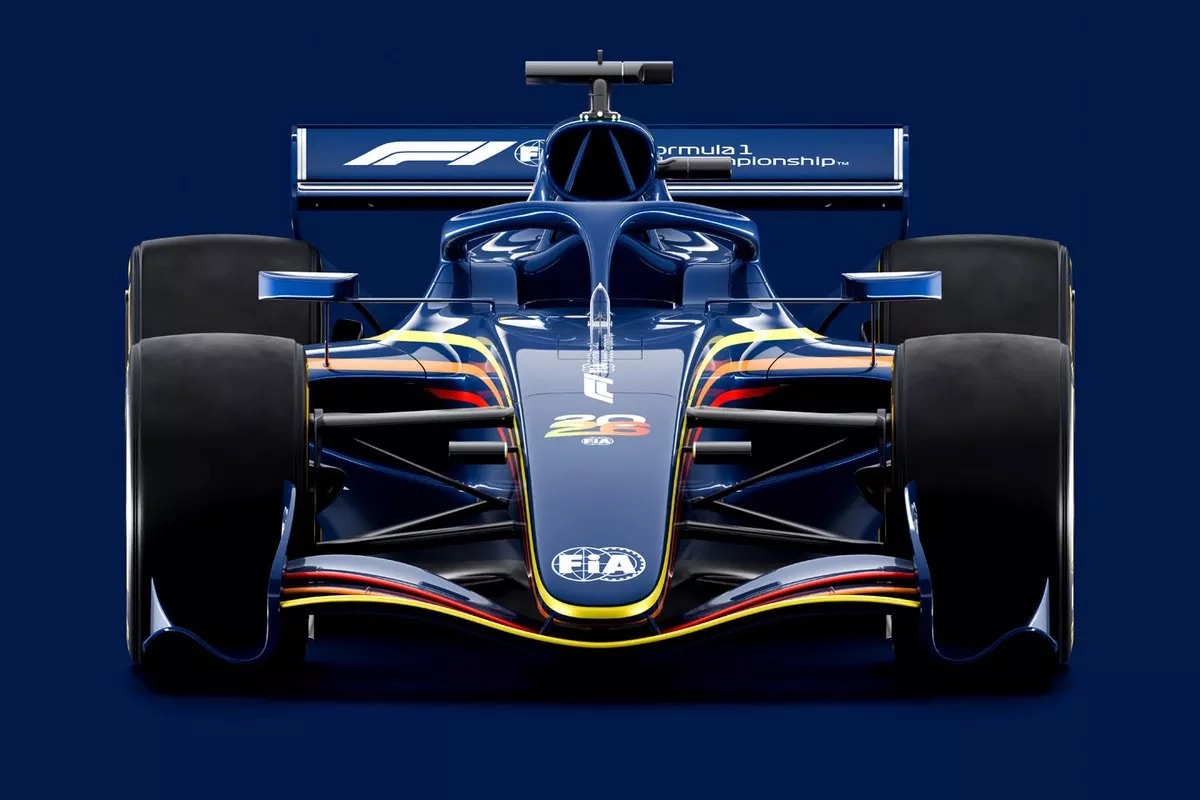
The 2025 Formula 1 season, which has just come to a close, will go down in history as McLaren driver Lando Norris clinched his first-ever world title after a thrilling championship. For the British team, it was a historic triumph, but behind the celebrations, another major turning point is taking shape: the end of ‘classic’ engines and the start of a reinforced hybrid era, from the 2026 season.
source: FIA
A revolution under the bonnet
The single-seaters will continue to be powered by a 1.6-litre V6 turbo engine, as they are today, but with a radically altered energy/power split. The central element of this change? Electric power will triple from around 120 kW to around 350 kW, or 475 bhp, via the MGU-K system. In practical terms, the electrics will be able to provide almost 50% of the total power.
The old MGU-H unit is a small motor that converts the heat from the exhaust gases into electrical energy to help the car go faster. The 2026 rules do away with this part. But even without it, the car becomes simpler and more efficient: thanks to the other hybrid systems, every time the car brakes or accelerates, it can recover much more energy than before, up to 8.5 MJ per revolution, almost double that of current systems.
Total power preserved
Obviously, these innovations are being produced with the clear aim of maintaining performance, and therefore enhancing the spectacle that is motor racing. With these changes, the overall power of the 2026 engines remains extremely high, with an estimated total of just under 1,000 bhp (combustion + electric).
What has changed is the reduction in engine power. Its power has been slightly reduced to around 400 kW, compared with 550 kW at present.
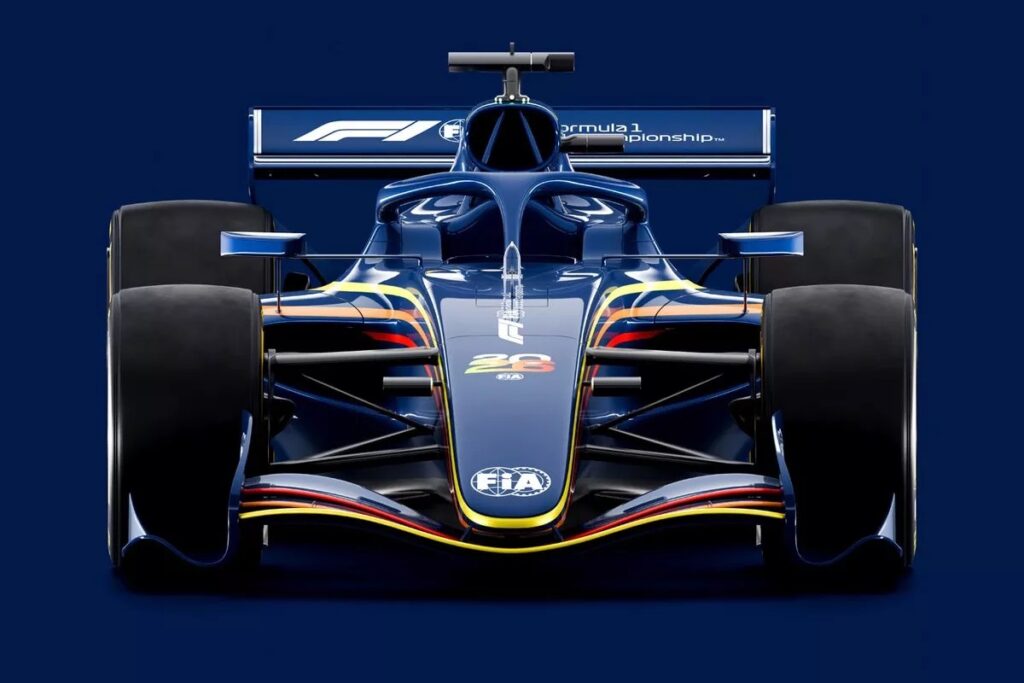
Other innovations modifying the car itself will appear as early as next season. The aerodynamics of the single-seaters are being extensively modified, with a clear objective: to reduce drag, limit excessive downforce and improve fuel efficiency.
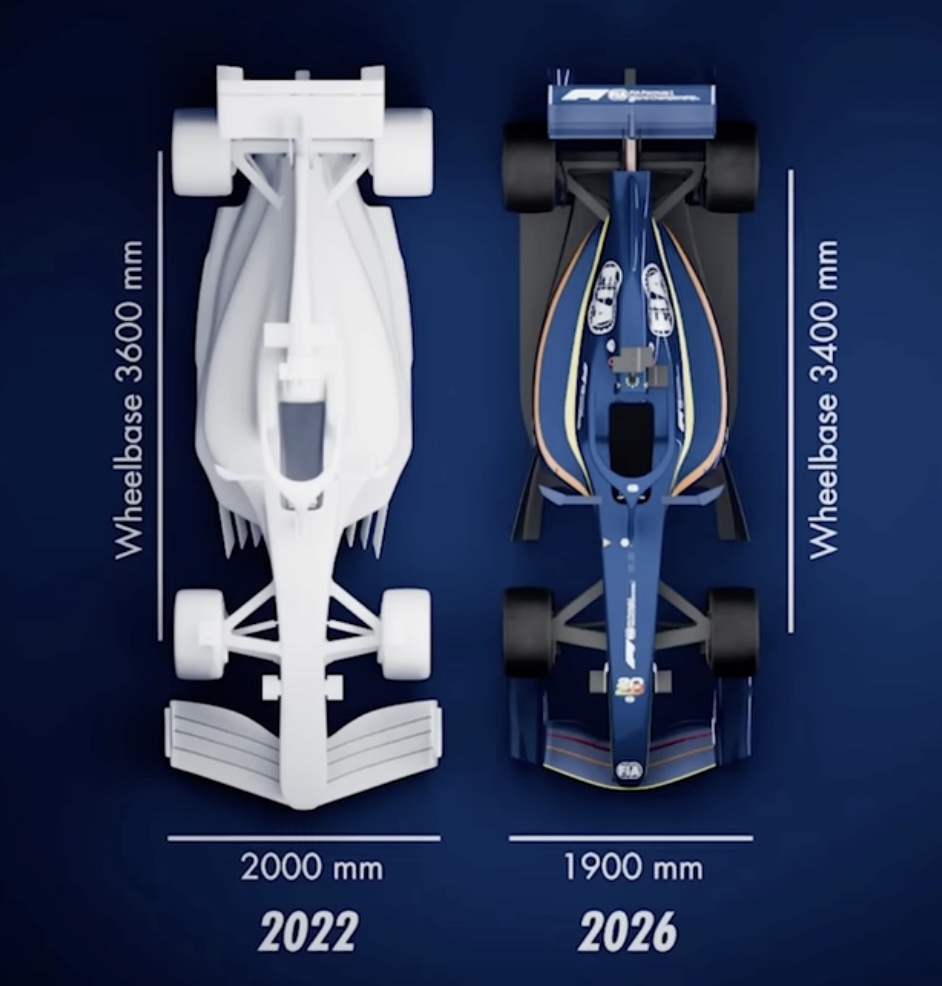
To illustrate this, the F1 cars of 2026 will be more compact and lighter, with a reduction in width (1.90 m compared to 2 m today) and wheelbase, according to the latest FIA guidelines. But the real revolution comes from the introduction of active aerodynamics, a first on this scale in the recent history of the sport. The single-seaters will have two distinct aerodynamic modes:
a low-drag mode for straight lines,
a high downforce mode for cornering and braking.
The aim of these changes is to make the Grands Prix more competitive and more exciting for drivers and spectators alike.
source: FIA
Following initial tests, Mercedes has revealed that the 2026 single-seaters could reach top speeds of up to 400 km/h. That’s quite a feat when you consider that the speed record so far has been held by Valtteri Bottas at the 2016 Mexican Grand Prix, when his car reached 372.6 km/h.
An economic objective for manufacturers
The 2026 regulations are not just about performance, but also about rationalisation. By simplifying several vehicle components, the FIA intends to drastically reduce development costs. This move makes Formula 1 more attractive to new engine manufacturers, by lowering the technological entry barrier. As a result, Audi has officially joined the grid, Ford is making a comeback by joining forces with Red Bull Powertrains, and Cadillac is also set to become an engine manufacturer in 2029. The elite of motor sport is thus opening up to renewed, more diversified and sustainable competition.
Sustainable fuels and the ecological transition
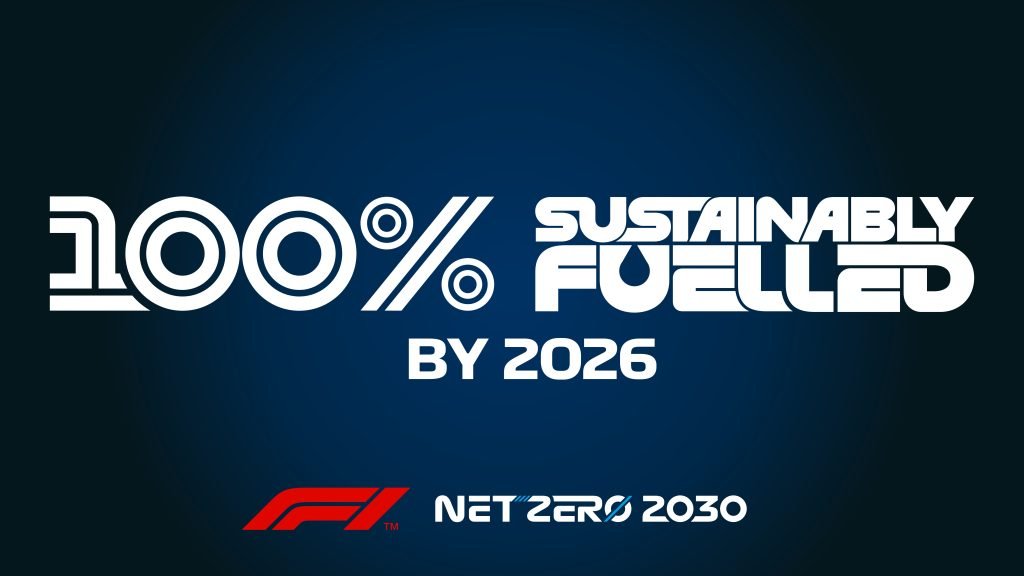
But the revolution doesn’t stop at power. In fact, these hybrid engines will be powered by 100% sustainable fuels, and the amount of petrol is reduced from the 100 to 110 kg needed today to 70 to 80 kg.
Produced from non-fossil sources, these fuels will be based on advanced biofuels or synthetic drop-in fuels, meaning that they can be used directly in engines without major modifications. They will drastically reduce carbon footprints while remaining compatible with current engine architecture.
source: FIA
A strategic turning point for F1
Mohammed Ben Sulayem, President of the FIA, justifies this strong choice to increase the proportion of electric power in F1 engines: “The FIA continues to push innovation and sustainability across our motorsport portfolio. The powertrain regulations for 2026 are the most visible example of this.”
This technological shift shows that Formula 1 is no longer content to be a showcase for the performance of the world’s best engine engineers: it is foreshadowing the future of global mobility, where electrification and sustainability are becoming the norm. Mercedes, Red Bull Powertrains, Honda and Audi are using the championship as an extreme testing ground.
This overhaul is part of a wider environmental ambition: to achieve carbon neutrality by 2030. This “Net Zero Carbon” objective, set by the FIA and F1, is based on three pillars: the use of 100% sustainable fuels, the reduction of emissions over the entire lifecycle of the races and the compensation of residual impacts.
source: FIA
F1 reinvents its DNA
With the abolition of the old MGU-H, more electric power, optimised energy recovery and the use of sustainable fuels, Formula 1 is reinventing itself.
The 2025 season therefore concludes with two victories: Lando Norris’, and that of a Formula 1 team entering a new era, ready to demonstrate that the future of motor sport is hybrid… and sustainable.
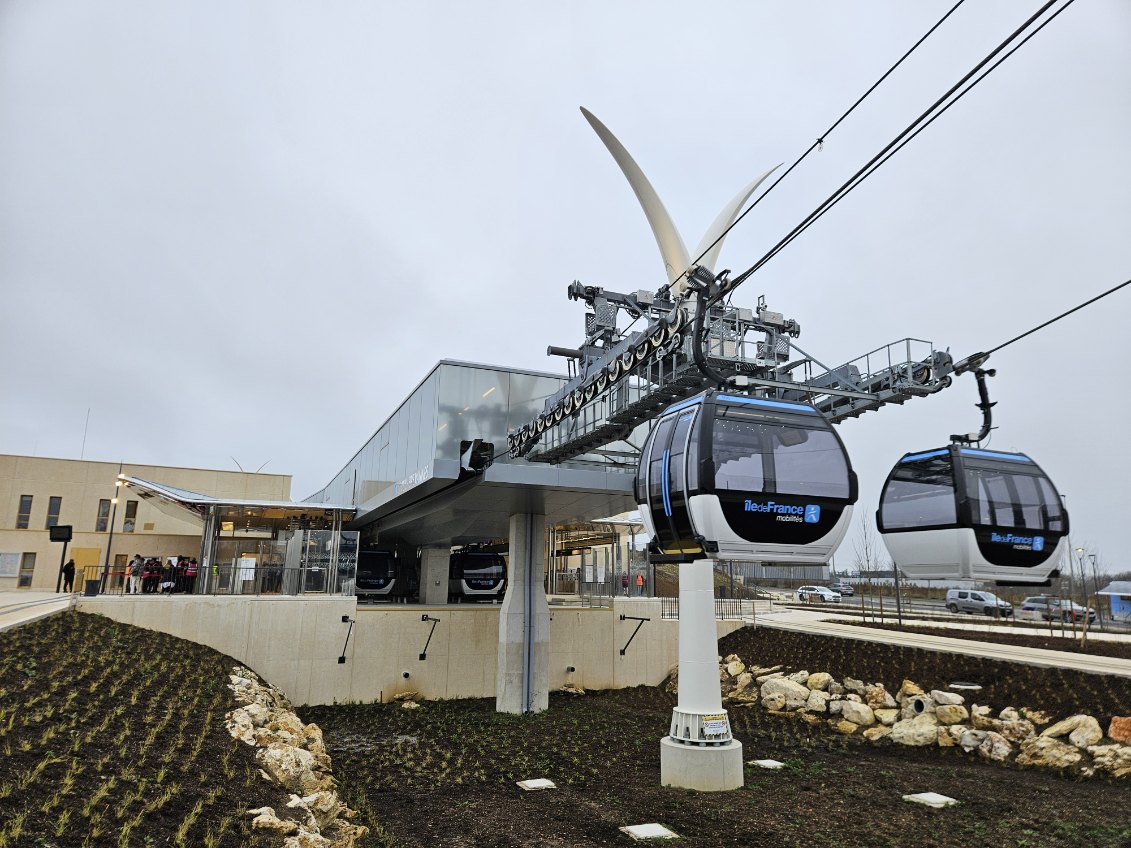
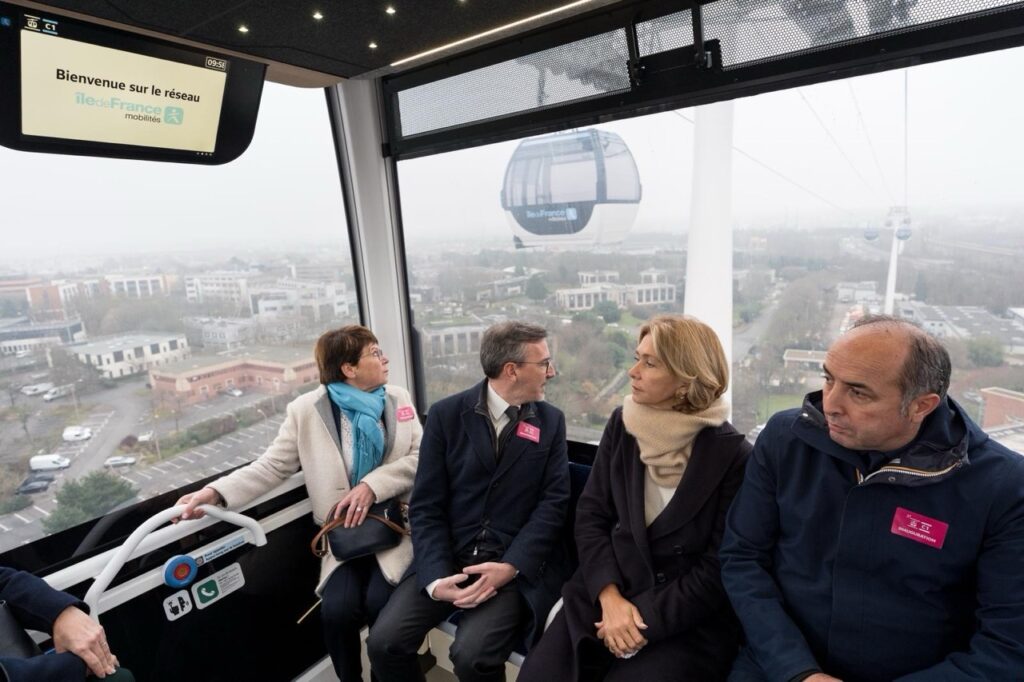
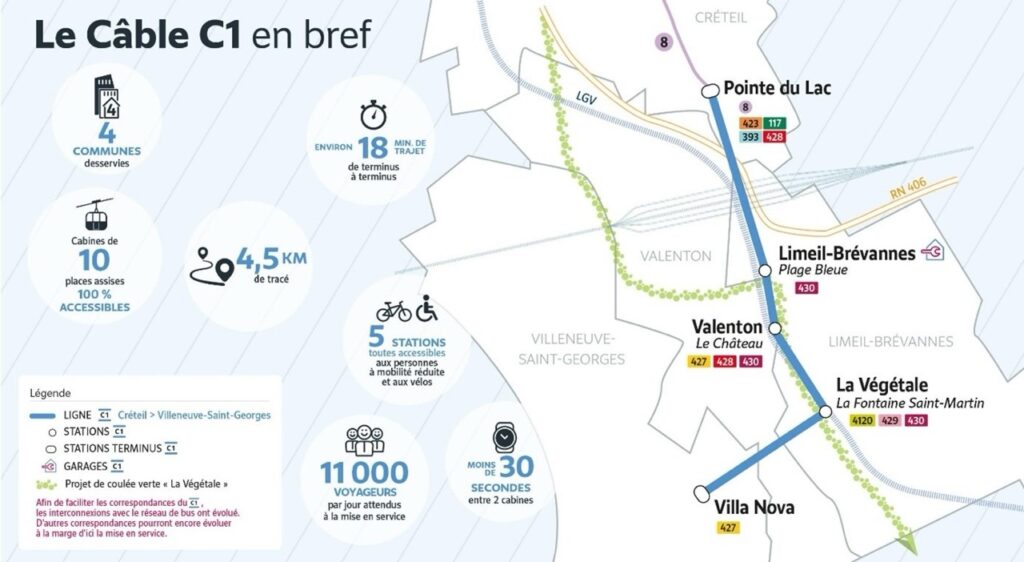
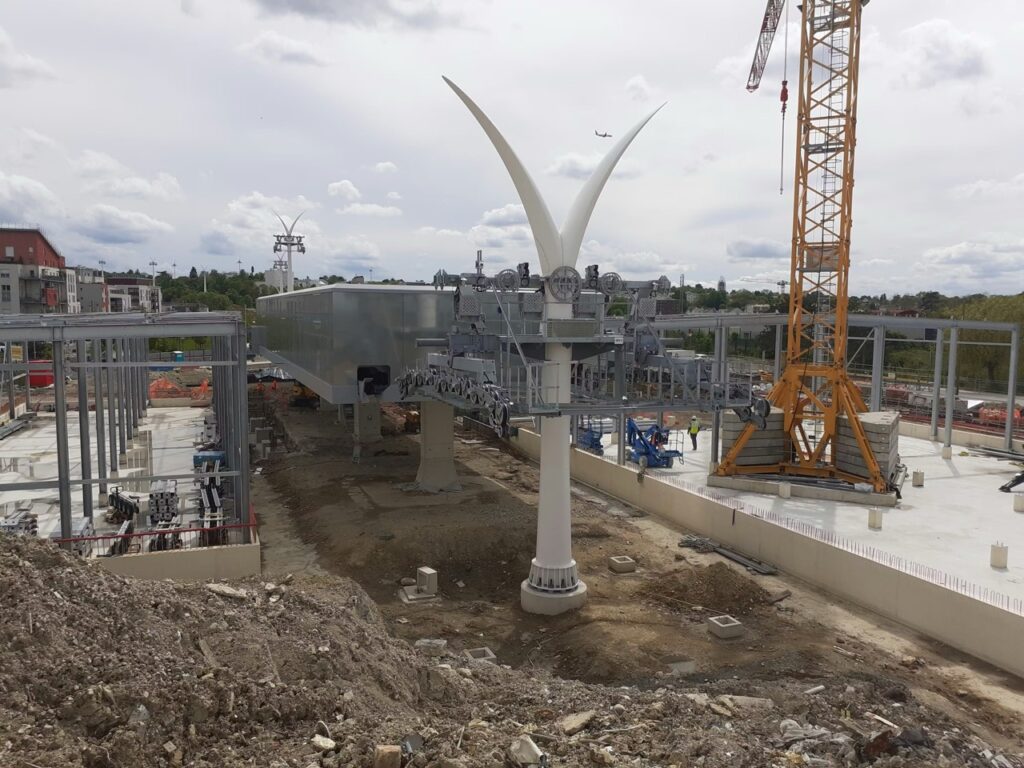
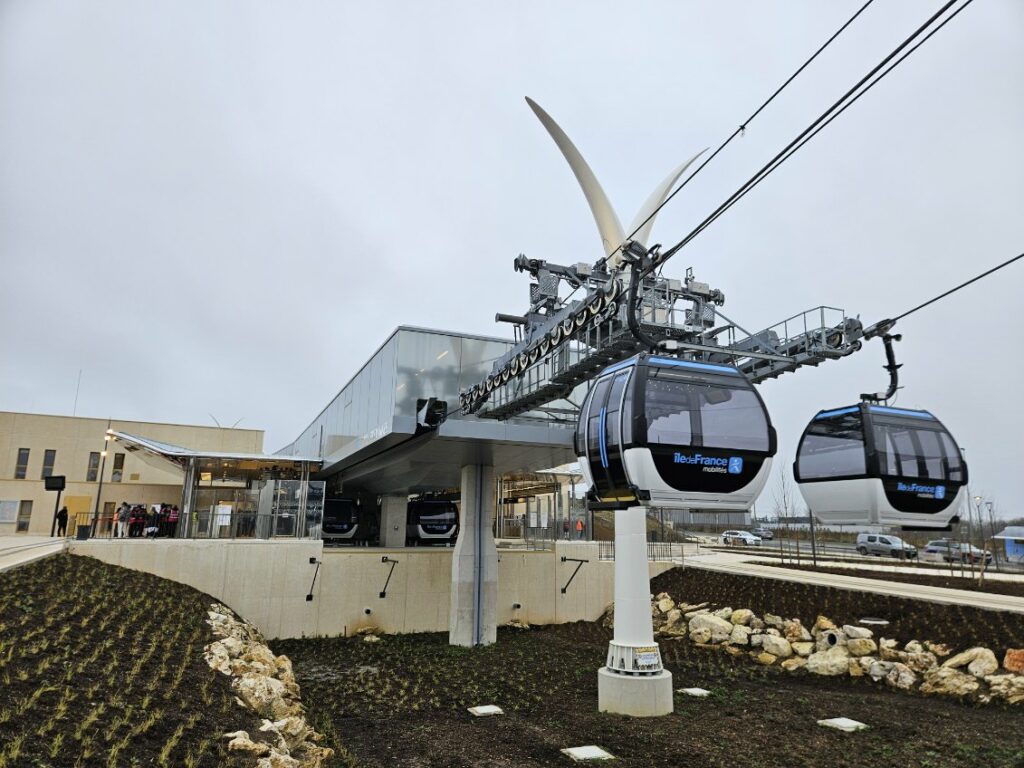
On Saturday 13 December 2025, Valérie Pécresse and various elected representatives inaugurated Câble C1, the largest urban cable car in the Paris region. At 4.5 km long, this 100% electric project will halve journey times between Créteil and Villeneuve-Saint-Georges. A suspended revolution that redefines sustainable mobility in over-burdened urban environments.
credit: Département du Val-de-Marne
A grand opening in Limeil-Brévannes
The inauguration ceremony was held in Limeil-Brévannes on Saturday morning. Families, elected representatives and curious onlookers flocked to the five Cable C1 stations to be among the first to board these cabins suspended at heights of over 40 metres above several Val-de-Marne communes. In all, no fewer than ten people can travel in a single cabin, seated and enjoying a panoramic view of the area.
The morning was attended by many of the elected representatives and decision-makers involved in this project, which was launched 12 years ago in 2013. Valérie Pécresse, President of the Île-de-France Region and of Île-de-France Mobilités, was present alongside Marie Gautier-Melleray, Prefect and General Secretary for Public Policy, Étienne Stoskopf, Prefect of Val-de-Marne, Olivier Capitanio, President of the Val-de-Marne Department, Louis Boyard, Member of Parliament for Val-de-Marne, and the mayors of the municipalities through which the project passes: Françoise Lecoufle (Limeil-Brévannes), Kristell Niasme (Villeneuve-Saint-Georges), Métin Yavuz (Valenton) and Édouard Hénault, representing Créteil. Jessica Larsson, Head of the European Commission Representation in France, was also present to symbolise the European co-financing of the project.
“It’s the Alpes sur Marne!” said Valérie Pécresse. “We’re coming to the end of an obstacle course that’s lasted more than 10 years. We had to find the funding, convince the local residents… For the people of Val-de-Marne, this is a sign of consideration.”
18 minutes against 40
So why decide to create an urban cable car? Well, the initial data is demonstrative: before C1, the journey from Villeneuve-Saint-Georges to Pointe du Lac station, the terminus of the metro 8, took over 40 minutes by bus or car, stuck in traffic jams on the RD 101 and the RN 6. The cable car, on the other hand, makes the journey in 18 minutes, over obstacles such as the TGV high-speed train line, the Valenton marshalling yard, the RN 406 and high-voltage power lines.
What’s more, the service operates from 5.30am to 11.30pm on weekdays, and until 12.30am at weekends. A cabin runs every 30 seconds during rush hour, which means that 11,000 passengers are expected to use the service every day. To take advantage of this new urban improvement, you need to have a Passe Navigo or, for occasional travellers, buy a Bus-Tram-Câble ticket worth €2 (€1.64 with Liberté+). Access is free for children under the age of 4.
credit: Ile de france mobilité
While the C1 Cable is a fast, environmentally-friendly alternative to the car, its limited capacity of just over 10,000 passengers per day shows that it is still a complementary solution to other modes of transport. Intermodality with the metro and bus remains essential to meet all mobility needs on the route.
An ecological project
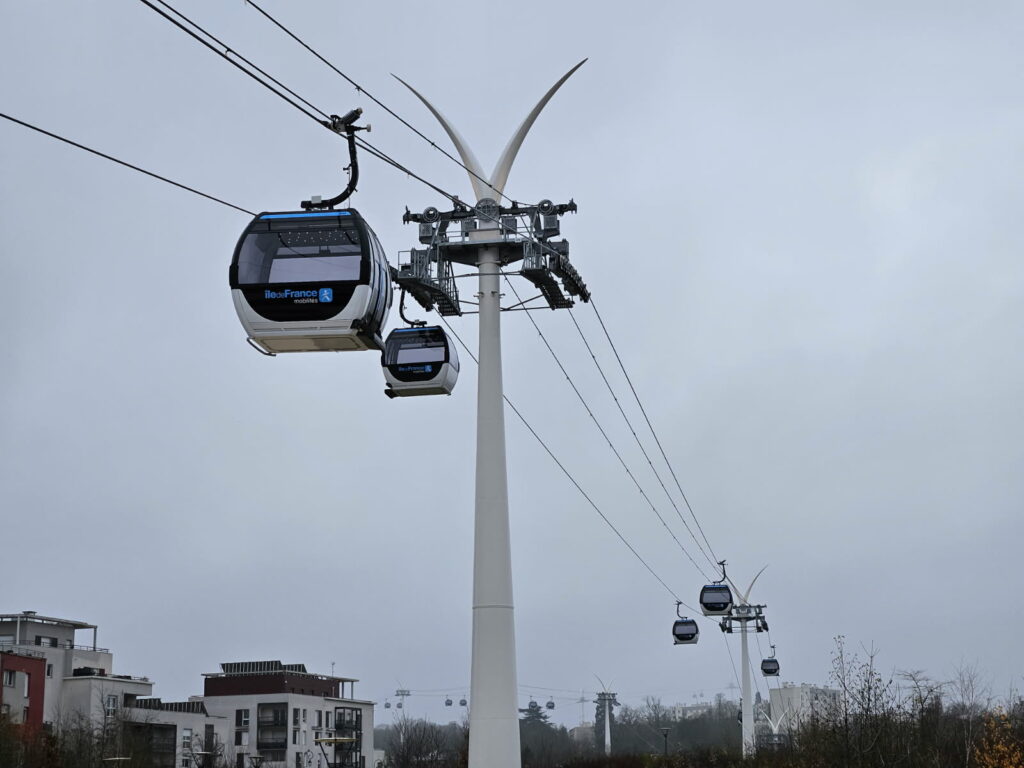
The C1 Cable is 100% electrically powered and has been awarded HQE Sustainable Infrastructure certification. Its 30 pylons have a reduced footprint, preserving the green spaces they cross, in particular the Tégéval green corridor.
This monocable carrier-tractor technology is less invasive than a metro or tramway, since it avoids the construction of heavy engineering structures and reduces the duration and intensity of the work, and therefore the pollution and emissions associated with conventional worksites.
credit: Ile de France Mobilité
By offering a fast, regular alternative to the car on a route that is currently saturated, the C1 should help to reduce traffic jams and, in turn, CO₂, NOx and particulate emissions linked to daily road traffic in the area.
C1 has a total cost of 138 million euros (132 million for the infrastructure, 6 million for the 105 cabins). “An underground metro would never have seen the light of day because the budget of over a billion euros could never have been financed,” explains Grégoire de Lasteyrie, vice-president of the regional council in charge of transport. Just three years of construction work, from the ground-breaking ceremony in 2022 to the inauguration on Saturday, have also made it possible to limit the impact of a major transport project on the quality of life of local residents.
Financing: a tripartite arrangement
One of the sinews of war when it comes to financing this kind of project is often finding the funds needed to make it a success. And the €132 million needed to build the infrastructure is 49% funded by the Île-de-France Region, 30% by the Val-de-Marne Department, and 21% by the State and the European Union. The cabins (6 million euros) and operations are financed 100% by Île-de-France Mobilités.
The 21% EU funding underlines Brussels’ commitment to innovative electric mobility in dense urban areas. And the Câble C1 is the perfect embodiment of this European priority: a 100% electric, HQE-certified mode designed to replace car journeys on congested roads and reduce emissions. The presence of representatives from the European Commission at the inauguration, including Jessica Larsson as Head of the Representation in France, illustrates this desire for visibility: Europe is concretely financing low-carbon alternatives that are suited to constrained areas like Val-de-Marne.
There are several reasons for the EU’s support:
Decarbonisation objective: C1 pools energy on cables for lightweight cabins, optimising consumption per passenger-km compared with the predominant combustion-powered cars on the RD 101/RN 6.
European scale: this funding is part of the Green Deal and the sustainable mobility funds (CEF Transport, Connecting Europe Facility), which prioritise low-carbon air projects in urban areas.
Replicable model: with a total cost of €138m (compared with €250m/km for the metro), the C1 is becoming a textbook example for other European cities.
Safety and acceptability
Cable cars are considered to be one of the safest means of transport in the world, according to the Ministry of Transport’s technical department. In France, the last fatal accident occurred in 1999 in the Hautes-Alpes region.
For this new investment in environmentally-friendly transport, each cabin is equipped with video surveillance, an intercom linked to the control centre at Limeil-Brévannes, and staff on hand at the station. The system works in snow and winds of up to 70 km/h. Sensors continuously monitor weather conditions.
And if Parisian transport, like the metro for example, is poorly equipped with access for people with disabilities, leaving out people who cannot move around freely, with the Câble C1, this problem has been solved. The cable car is 100% accessible for people with disabilities:
level stations
wheelchair-friendly cabins
human assistance at the station
audio and visual information
call intercoms
guide strips from the public space to the boarding platform
credit: Département du Val-de-Marne
A laboratory for the future of mobility
C1 proves that it is possible to open up the region effectively without sinking a billion euros into an underground metro. But capacity remains limited (11,000 passengers/day compared with 500,000 for a conventional metro line), and the technology is not suitable everywhere. It excels in constrained areas, where there is a strong need for intermodality and where there are major height differences or obstacles.
More than just a technological gimmick, this urban cable car embodies a pragmatic vision of decarbonising transport: providing a fast, reliable, electric alternative to combustion-powered cars in congested areas. With the C1, electric mobility now comes from above.