Blog

  • Electric cars in mountain: what you need to know

    Electric cars in mountain: what you need to know

    With the festive season just around the corner, many people are already dreaming of the snowy slopes. But when you set off in an electric car, the cold, the uneven terrain and charging in the mountains require more rigorous preparation than for a combustion vehicle. If you want to avoid breakdowns, understanding how winter really affects your autonomy is essential.

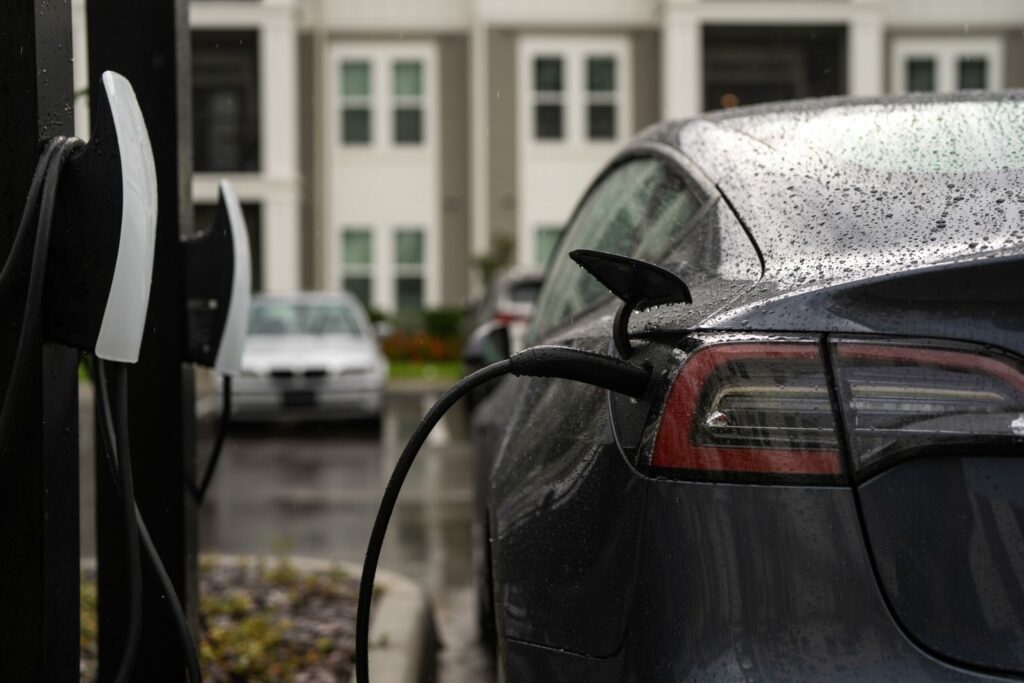
    Electric car charging in the snow in the mountains
    An electric car plugged into a charging point in the middle of winter to maintain its range. (Credit: Envato / By simbiothy)

    Anticipating the impact of cold weather

    Below zero, the chemistry of the battery slows down. The movement of lithium ions is slower, which increases internal resistance: the battery delivers less energy. According to several studies, range losses can reach between 10% and 30% in winter conditions. In very cold conditions, especially if you use the cabin heater, the loss of range can even be as much as 40%, according to real-life simulations. So, as is often the case, the best solution is to think ahead. Find the charging points on your route. Applications such as Chargemap, ABRP (A Better Route Planner) or other EV route planning tools will help you identify compatible charging points and anticipate your stops.

    Do a full charge before the final climb to the station: when the journey gets tough, the increase in altitude combined with the drop in temperature causes consumption to soar. The cold consumes more energy than you might think. Once you’ve arrived, recharge as soon as possible, ideally while the battery is still warm, to maximise charging speed and reduce losses. Take advantage of the charging phases to warm up your car before setting off. This heats up the battery without drawing on your reserve of driving energy. Many cars allow you to programme the heater just before setting off: switch it on while the vehicle is still plugged in, to save the battery.

    Smart, economical driving

    When going downhill, remember to activate regenerative braking to recover energy. When driving uphill, the Eco mode can also limit fuel consumption. Heating the passenger compartment in an EV consumes a lot of fuel, so opt for heated seats and a heated steering wheel. These options consume much less energy than central heating. If your car is fitted with a heat pump, that’s even better: it consumes much less energy than conventional heating elements, and can improve range by 8 to 10% in very cold weather.

    Aerodynamics also play a decisive role. In winter, driving very fast costs a lot more energy, because air resistance increases, and you use more fuel to compensate. Take care when accelerating too: smooth driving saves energy, especially when the battery is already weakened by the cold.

    When the temperature is very low, batteries may be less able to accept a rapid charge: it takes time for the battery to ‘warm up’ or for the thermal management system (BTMS) to do its job. Some models automatically slow down their charging speed when it’s very cold, to protect the battery. So plan longer charging times when you’re in the mountains, and check that the charging points you target are compatible. If possible, park your car in a covered garage or a covered car park. This limits the cooling of the battery at night or during your breaks, which reduces the loss of range. When charging, keep the car plugged in for as long as possible to take advantage of pre-heating and use the energy from the charger, not the battery.

    Close-up of a snow-covered electric recharging point
    Close-up of a snow-covered charging point, essential for journeys in the mountains (Credit: Envato / By GroundPicture)

    No more nasty surprises

    Going skiing with an electric car is perfectly feasible if you plan ahead, and it’s not just a question of recharging more often. By planning your recharging before you leave, preheating the battery while it’s plugged in and modulating your driving to save energy, you can largely minimise the risk of breakdowns or other unpleasant surprises. In winter, anticipation is really the key: freezing temperatures significantly reduce battery efficiency, and careful management of your stops and consumption can make all the difference.
    In short, by combining careful planning, optimised driving and compliance with winter safety requirements, you can turn what could be a challenge into a controlled journey. With these best practices, your journey to the slopes will not only be more serene, but also more economical and totally compatible with your electric vehicle.

  • Electromobility in Dubai: an ecosystem taking off

    Electromobility in Dubai: an ecosystem taking off

    Electric Porsche SUV in Dubai  Credit: Porsche.

    The Emirate of Dubai is establishing itself as a major regional player in electromobility in the Middle East. Backed by a proactive political strategy and rapid infrastructure deployment, Dubai is attempting to chart its course toward carbon neutrality by 2050. However, this transition faces challenges posed by the desert climate and a market still dominated by combustion engine vehicles.
    A clear political ambition

    Dubai is part of the United Arab Emirates’ overall strategy, the “Clean Energy Strategy 2050,” which aims to achieve carbon neutrality by 2050. To this end, government authorities, primarily the Dubai Electricity and Water Authority (DEWA) and the Roads and Transport Authority (RTA), launched the “Green Mobility Strategy 2030” in 2015 with the “EV Green Charger” program.
    The stated objective is clear: to adopt cleaner mobility in private and public transportation. The RTA aims to completely eliminate emissions from its transport network by 2050, including the gradual conversion of buses, taxis, and public fleets to electric or hydrogen power. This strong political commitment places the city nicknamed the “Tiger of the Gulf” among the most influential territories in the Gulf in terms of electromobility.

    A rapidly growing fleet

    In Dubai, the number of electric vehicles continues to rise. At the end of 2022, Dubai had 15,100 electric vehicles. By the end of 2023, this number had climbed to 25,929 vehicles, representing a 72% increase in one year. By the end of the first half of 2025, Dubai is expected to have more than 40,600 EVs out of a total fleet of ~2.5 million vehicles. These figures are certainly on the rise, but they seem low when you consider that

    484,223 vehicles (all types combined) were registered in Dubai in 2024, according to figures from the UAE Ministry of Interior.

    This rapid growth reflects a market that is clearly moving towards electric vehicles, driven by public policy, infrastructure, and growing user interest. The United Arab Emirates as a whole is not limited to 100% electric vehicles: more than 147,000 electric vehicles were registered in 2023, a figure that is also on the rise.

    A study by PwC Middle East indicates that electric vehicles will account for 15% of new sales in the Emirates by 2030, and 25% by 2035. For Dubai, the goal is to reach 42,000 electric cars by 2030. This is certainly an ambitious goal, but the market is showing strong annual growth of +30% between 2022 and 2028.

    Tesla dominates, the Chinese are coming

    As everywhere else in the world, the giant EV manufacturers are battling it out to sell the most cars. Tesla still reigns supreme in this game, with 43% of the electric vehicle market share in the Emirates at the beginning of 2025. The Model Y retains its top spot in Dubai.

    Tesla Model Y, the best-selling model in 2025.

    But as everywhere else, Chinese competition is gaining momentum. BYD, Geely, Chery, MG, Jetour, Nio, and Haval have established themselves in the Gulf country with the same ambition: to offer motorists affordable models. And it’s working: internet searches for Chinese electric vehicles have increased by 64%. For example, global leader BYD offers the Atto 3, a compact SUV starting at 149,900 dirhams (around €37,000), and the Seal. These models are adapted to the desert climate with better thermal management, the menus are adapted and delivered in Arabic, and, as always, they offer competitive range.

    A rapidly expanding charging network

    Of course, zero emissions and an increase in low-carbon vehicles mean charging infrastructure. With this in mind, the EV Green Charger program (Dubai’s first public charging infrastructure for electric vehicles) was launched in 2015. While it had only 14 users and a few charging stations when it started, by the end of 2025 there were 1,270 EV Green Charger stations available in Dubai. The goal for 2030 is 10,000 public charging stations.

    DEWA, the organization that manages and deploys the EV Green Charger program in Dubai, offers attractive rates to encourage the population to switch to electric vehicles. The government organization offers a charging rate of 29 fils per kilowatt-hour (€0.075), as well as free charging to encourage adoption.

    The American giant TESLA is also present with its Supercharger network, which has more than 20 stations in the Emirates.

    The conversion of public transport

    While private individuals are gradually adopting electric vehicles, the RTA is preparing to convert its public fleets, a major technical challenge in the desert. That is why, in June 2025, the RTA signed a 1.1 billion dirham ($270 million) agreement to purchase 637 new buses, including 40 fully electric buses, the largest order ever placed in the Emirates.

    These Chinese buses, manufactured by Zhongtong, are designed for Gulf conditions and will be delivered between late 2025 and early 2026. They are responsibly produced, as they comply with European “Euro 6” standards. This huge purchase is not a leap into the unknown, as in April 2025, the same organization (RTA) launched a test of a Volvo bus. With a 470 kWh battery offering a range of 370 kilometers, it convinced local authorities that electric mobility is suitable for all types of transportation.

    A major technical challenge: climate

    Gulf countries experience high temperatures in summer, with readings sometimes exceeding 95°F. As we know, these harsh conditions put lithium-ion batteries to the test. Thermal management is crucial to prevent premature degradation or reduced range, which could discourage drivers. Tests show that some vehicles lose 10% of their range in extreme heat. Even though concrete solutions are slow to emerge, manufacturers are committed to enabling drivers around the world to switch to cleaner four-wheeled transportation. This is the case, for example, with BYD, whose Blade battery limits this loss to 5%.

    View of Dubai at night.

    In the coming years, solid-state batteries are expected to become more widespread. They are resistant to high temperatures and more chemically stable, but their production is limited and they are likely to be used in high-end EVs over the next five years.

    For electric buses, continuous air conditioning consumes a lot of energy, so the RTA tests each model and favors the most resistant vehicles.

    Attractive incentives

    With the goal of achieving carbon neutrality by 2050, the Dubai government has introduced several incentives:

    • Free parking: Electric vehicle owners benefit from free parking spaces in many public areas.
    • Fee exemptions: Reduced registration fees and exemption from tolls on certain roads.
    • Subsidized charging: controlled charging rates and periods of free charging.
    • Priority lanes: access to reserved lanes to facilitate traffic flow.

    These measures, combined with a relatively clean electricity mix, largely supplied by imports from neighboring countries and a growing share of local renewable energy, enable electric vehicles to have a carbon footprint well below the regional average.

    A burgeoning local industry

    On the local industry side, M Glory Holding Group launched what is billed as the first electric vehicle production plant in the Emirates in 2022, located in Dubai Industrial City. The plant has an ambitious capacity of up to 55,000 electric vehicles per year. These are encouraging figures for Dubai, although in reality, the situation is less clear-cut, as since 2023, no public data on production, sales, etc. has been released by the company.

    In terms of charging infrastructure, local companies are developing. UAEV, an EV infrastructure company, obtained its license as an independent charging station operator in Dubai in October 2024, giving it the right to operate public charging stations autonomously. Since then, the company has been fully active and is collaborating with several companies and local authorities.

    UAEV charging station.
Credit: UAEV.

    Major distributors such as Al-Futtaim play a key role in distributing brands such as BYD, Tesla, and other international manufacturers, contributing to the democratization of electric vehicles in the emirate.

    But while a few local players are developing to support this transition, the market remains largely dominated by international distributors and importers. The role of local companies remains limited, focusing more on assembly and infrastructure development than on the mass production of electric models.

    The challenges ahead

    Despite rapid progress in the electrified mobility ecosystem, several obstacles remain: The still small share of electric vehicles: despite strong growth, electric vehicles still represent a minority share of the total vehicle fleet in the emirate. The road to maturity for electromobility remains long.

    Purchase cost: even with incentives, electric vehicles remain more expensive than their combustion engine equivalents, limiting access to these vehicles, even the most affordable ones.

    Accelerated battery wear: the hot climate accelerates battery degradation, reducing their lifespan and increasing maintenance costs.

    Dependence on robust infrastructure: the continued expansion of the charging network remains essential to remove barriers to adoption, particularly for long journeys and interurban travel.

    A region taking flight

    Dubai is no longer in the experimental stage. The city is positioning itself as a spearhead for carbon-free mobility in the Gulf thanks to a proactive strategy, rapid infrastructure deployment, and growing adoption, although still too modest.

    However, the city is working on this transition: incentives, conversion of public fleets, and planning towards 2050 are essential levers for democratizing this means of transportation.

    However, the city is working on this transition: incentives, the conversion of public fleets, and planning for 2050 are essential levers for democratizing this means of transportation.

    Dubai is a fertile ground for electromobility: strong growth potential, political support, and a need for innovation to adapt electromobility to the local context. Despite the natural difficulties linked to climatic conditions in particular, the path forward has been laid out.

  • UK to tax EVs and PHEVs per kilometre

    UK to tax EVs and PHEVs per kilometre

    From April 2028, drivers of electric vehicles and plug-in hybrids in the UK will pay a tax based on the number of kilometres driven. In this way, London is seeking to compensate for the gradual collapse in revenue from fossil fuels, without breaking the momentum of the electric market.

    Electric car charging with UK flag
    An electric car recharges in the UK, a symbol of the future kilometre tax (Credit: Envato)

    A tax designed to avoid a shock

    The UK government is planning to introduce a kilometre charge for all electric and plug-in hybrid vehicles. The measure will come into force in April 2028, marking the transition from a fuel-based tax model to one based on usage. This new logic responds to a clear budgetary challenge: the continuing decline in sales of combustion-powered cars is leading to an equivalent fall in tax on petrol and diesel. The future rate will be set at around half of the fuel tax currently applied to drivers of petrol or diesel cars. To be more concrete, 100% electric cars will pay 3 pence per mile, while plug-in hybrids will pay 1.5 pence. According to the Office for Budget Responsibility (OBR) estimate, an EV driver travelling around 8,500 miles a year will pay around £255 in mileage tax in 2028-29.

    Added to this is the fact that the annual Vehicle Excise Duty (VED) has been payable on EVs since 2025. The new levy therefore does not replace existing taxes, but complements them. The money raised by this new tax will go directly towards road maintenance: the government has promised to allocate this revenue to maintaining and improving the local road network, with a target of around £2 billion a year by 2029-30. To minimise concerns about surveillance, the system will not rely on real-time tracking. Drivers will have to estimate their annual mileage, pay the tax in advance, and then regularise their contribution according to the meter at the end of the year.

    Electric car charged at a charging point
    An electric car being recharged, a symbol of the booming electric market (Credit: Envato).

    A response to a colossal revenue shortfall

    TheOBR predicts that the loss of revenue due to falling fuel taxes (VAT, excise duty, fuel duty) will be major by 2050. Per-kilometre tax could offset around a quarter of this loss, generating an extra £1.4 billion a year according to government projections. The government also intends to maintain other sources of revenue, in particular via the annual Vehicle Excise Duty (VED), which has been applied to EVs since 2025, and taxation of public charging at standard VAT rates.

    The UK is trying to reconcile two contradictory imperatives: finding new sources of revenue while continuing to encourage motorists to abandon internal combustion engines. The tax is therefore intended to be measured, almost diplomatic, to avoid discouraging those who are still hesitating to switch to electric cars. But the measure raises an even more important fundamental question. According to the OBR, it could reduce demand for EVs by an estimated 440,000 fewer sales over the next few years. At the same time, the government is maintaining incentives to buy EVs, such as subsidies to support the market despite the increased tax burden.

  • Fuel prices: why your fill-up will cost more

    Fuel prices: why your fill-up will cost more

    French motorists can expect further fuel price rises from 2026. The energy transition is adding to the bill. Between additional taxes and European regulations, the price of petrol could exceed levels already considered high by the public. Some experts suggest that anticipating the switch to electric vehicles could limit the additional costs for drivers on a day-to-day basis.

    Total Beuzeville Nord service station with cars and petrol pumps
    The Total station at Beuzeville Nord, where prices at the pump will rise from January 2026 to finance the transition to electric vehicles.

    An inevitable increase from January 2026

    From 1 January 2026, prices at the pump will rise by between four and six centimes per litre. This increase is the result of a tax on energy saving certificates. Fuel and gas suppliers will be affected. Francis Pousse, President of service stations at Mobiliance, told RMC Story: “We’re not affecting our margins. The tax is paid upstream. The average price of SP98 is currently stable at €1.821/l, while diesel is at €1.712/l, despite the slight increase announced.

    Motorists under pressure

    For many people, the ever-increasing cost of energy is a real burden. French people are seeing their spending curtailed, while fuel prices remain high overall in relation to average incomes. The distributors remain clear: the increase does not benefit the service stations. Margins remain fixed and the additional cost is passed on in full. So it is directly the owners of combustion-powered vehicles who are helping to finance the ecological transition.

    A tax to finance electric mobility

    Energy saving certificates will now be used to finance the purchase of electric vehicles, in line with the polluter pays principle. This sixth period will see contributions increase from 3 cents in 2019 to a total of 15 cents from January 2026. The Cour des Comptes has criticised this diversion, which was initially intended for the energy renovation of buildings. The financing of electric cars is a consequence of this. The ecological bonus will be maintained and could reach €5,700 in 2026, to encourage the purchase of electric vehicles.

    Petrol pumps at a service station
    A close-up look at the petrol pumps affected by the increase from four to six centimes per litre in 2026, impacting motorists.

    ETS2 and rising fuel prices in 2027

    In 2027, Europe will extend its ETS2 carbon quota system to road transport and fuels, including E85. If suppliers pass on all the costs, a litre could rise by up to 17 centimes excluding tax, or around €8 for a standard tank of petrol. These regulations apply to all Member States, but the increases will vary from country to country. Spain could see faster adjustments, while France could see its price rise more quickly, accentuating the interest in recharging across the border.

    What impact will this have on motorists?

    For a motorist consuming 6.5 litres per 100 km and driving 25,000 km a year, the extra cost could be around €200 a year, or just under €17 a month. Admittedly, this is not dramatic financially, but the increase remains symbolically heavy, especially in an already tense context for purchasing power. It remains unclear exactly how prices will change, depending on the allowances purchased and their actual cost. The experts recommend that you start thinking about electric cars now, especially for those without regular recharging facilities, in order to anticipate future price rises.

    Energy transition: between constraints and opportunities

    The transition to electric vehicles is not just environmentally friendly: it could represent real savings in the long term. However, take-up is still being held back by the lack of charging infrastructure in buildings and by the initial cost of electric cars. Additional support and practical assistance are needed to make electric cars accessible on a daily basis, while limiting dependence on fossil fuels.

    Electric charging points for electric vehicles
    Focus on electric charging points partly financed by owners of combustion-powered vehicles, as part of the 2026 ecological bonus. (Credit: Le Parisien / Arnaud JOURNOIS)

    Conclusion: anticipate to better manage rises

    The 2026 increases and the 2027 European regulations are forcing motorists to rethink their mobility. Switching to electric vehicles could limit future additional costs, while contributing to the energy transition and reducing CO2 emissions. Even if the initial investment may seem high, making the switch now can represent a significant financial and ecological gain in the medium term.

  • BYD aims to turn the European premium market on its head by 2026

    BYD aims to turn the European premium market on its head by 2026

    The Chinese brand BYD is preparing a muscular arrival in Europe with Denza, its new premium brand. Its design, power and technologies demonstrate BYD’s ambition to take on the benchmarks of the European market from 2026. Denza is not intended to be a sub-label, but a showcase for top-of-the-range electric vehicles made in China.

    BYD Denza Z electric supercar in Europe 2026
    BYD’s Denza Z, a top-of-the-range electric supercar ready to conquer the European market from 2026. (Credit: Denza)

    An electric supercar developed to challenge Europe

    The Denza Z is BYD ‘s sporting showcase and is already in the final stages of development. The brand is testing the model on the Nürburgring circuit to fine-tune its handling and performance. Its claimed power exceeds 1,000 bhp, making the Z one of the most muscular electric supercars in the making. The intelligent magnetic-fluid suspension, known as Disus-M, promises great finesse in chassis management. The electric steering (steer-by-wire) improves responsiveness, a necessary asset for a model that aims to be both track and road-legal.

    The styling of the Denza Z was entrusted to Wolfgang Egger, Audi’s former design boss. The result is a sculpted, low-slung coupé designed to optimise every air flow, with taut lines and studied aerodynamic surfaces. The concept features retractable handles and steering wheel, a rare technological feat in this segment. Braking performance is enhanced by an imposing braking system, adapted to the likely power and weight of the machine. This attention to design and engineering is clearly intended to appeal to a demanding public, ready to give an electric sports car from China a chance.

    An arrival to compete with European premium

    The manufacturer is aiming for a European launch in 2026, with the Denza brand scheduled to be launched in France in the spring. However, according to the latest information, the Z model could actually arrive in 2027, giving BYD a little time to fine-tune the details. Denza wants the Z to be the equivalent of an ‘electric 911’, a direct rival to the Porsche 911 and Mercedes-AMG GT, but in electric form. There could also be a convertible version, which would broaden the range. But for the moment, the focus is on the coupé.

    At the same time, BYD is preparing to roll out a network of ultra-fast charging points (up to 1,000 kW) in Europe, to accompany Denza models from 2026. This network, dubbed “Flash Chargers”, could enable a compatible car to be recharged in just a few minutes, a major technological argument to win over demanding customers.

    BYD Flash Chargers in Europe
    BYD’s Flash Chargers, capable of recharging an electric car in just a few minutes, to accompany the Denza Z and premium models. (Credit: BYD)

    The future of electric cars according to BYD

    Other new models follow, such as the Denza Z9 GT, an electric (or hybrid) hunting estate or grand tourer capable of competing with models such as the Porsche Panamera or the Taycan Sport Turismo. According to Chinese technical specifications, the electric version of the Z9 GT has 965bhp and a CLTC range of 630km. The plug-in hybrid version of the Z9 GT combines an internal combustion engine with electric motors to achieve close to 1,000 hp, depending on the configuration. When the Denza models arrive in Europe, they will mark BYD’s entry into the premium segment, based on modern technologies, a sophisticated design and a diversified range.

    The Denza Z is the figurehead of this ambitious strategy. It embodies BYD’s desire to combine extreme performance, meticulous design and cutting-edge technology in a prestigious electric car. This supercar symbolises the audacity of Chinese manufacturers: to compete directly with historic European sports cars. With the rise of Denza, the arrival of an ultra-fast recharging network and a variety of models, BYD intends to make its mark in the premium electric segment in Europe. The offensive appears to be well structured, and the Denza Z is a clear demonstration of this.

  • Ecological bonus: greater support for electric cars from 2026

    Ecological bonus: greater support for electric cars from 2026

    The French government has confirmed that the ecological bonus for electric vehicles will be maintained in 2026. The maximum amount will be increased to €5,700. This decision is designed to support French and European production.

    Happy family in front of an electric car
    A family enjoying their new electric vehicle, supported by the 2026 environmental bonus.

    An extended and reinforced helping hand

    The French Minister for the Economy, Roland Lescure, announced on France Inter on Wednesday that the ecological bonus would be extended. According to him, it will even be increased for certain categories of vehicle. This measure is part of the drive to promote electrification and local production. In 2025, the bonus will reach €4,200 for low-income households and €3,100 for others. In 2026, it could exceed these amounts for vehicles manufactured in Europe.

    This increase should benefit a greater number of buyers, particularly those who are still hesitating for financial reasons. The eligibility criteria will remain the same: only new electric cars that comply with the eco-score and are produced in Europe will be eligible. What’s more, the additional bonus for European batteries could bring the total aid up to €6,700.

    Encouraging French and European production

    Roland Lescure insists on the importance of supporting local industry. According to him, “the best-selling electric vehicle in France is a Renault 5 manufactured in Douai”. This success underlines the role of national production in the ecological transition. The government’s aim is to stimulate both responsible purchasing and the development of low-carbon electricity.

    Support for European manufacturing is also part of a wider industrial strategy. By favouring vehicles produced on the continent, the government hopes to reduce dependence on imports and secure jobs in the automotive sector. This approach is accompanied by support for households to make the switch to electric cars easier.

    Renault 5 electric made in France
    The Renault 5, the best-selling electric model in France, is manufactured in Douai (Credit: Renault).

    Assistance modulated according to income and vehicle characteristics

    Since July 2025, the ecological bonus has been reformed in the form of the “coup de pouce véhicules particuliers électriques” bonus. The amount varies according to income, and can be as much as €4,200 for low- and middle-income households. The most affluent households receive a smaller bonus of €3,100.

    From October 2025, an additional bonus of €1,000 will be added for cars fitted with a European battery. By 2026, support could rise to €5,700 for low-income households, €4,700 for low-income households not on low incomes, and €3,500 for others. If the European battery bonus is maintained, the total amount could exceed €6,000.

    A strategic lever for the energy transition

    The extension and increase in the ecological bonus is part of France’s drive to reduce CO₂ emissions and modernise the car fleet. The financial incentives encourage the adoption of electric vehicles and promote investment in decarbonised energy.

    At the same time, the government is betting on the electrification of uses, including individual and professional mobility. The measures adopted aim to combine ecology, industrial competitiveness and economic accessibility. Households, manufacturers and the energy industry are being invited to participate in this transformation.

    Automotive plant in Douai producing electric vehicles
    The Douai plant manufactures electric vehicles, supported by ecological bonuses to encourage local production. (Credit: La voix du Nord)

    Towards a more accessible electric future

    This announcement should boost sales of electric cars and reinforce France’s image as a player in the energy transition. The combination of the ecological bonus and the additional premium could make electric vehicles more affordable for many French people.

    By supporting national and European production, the government hopes to create a virtuous circle: more sales, more local production, and a reduced environmental impact. The measure, which comes into force in 2026, promises to send out a strong signal to industry and consumers alike.

  • BYD SEAL 6 DM-i Super-Hybrid: the Chinese hybrid that shakes things up

    BYD SEAL 6 DM-i Super-Hybrid: the Chinese hybrid that shakes things up

    ECO MOTORS NEWS had the opportunity to get hands-on with the BYD SEAL 6 DM-i Super-Hybrid, the Chinese manufacturer’s plug-in hybrid saloon that aims to shake up European standards. A vehicle that embodies the new generation of electrification: accessible and with a long range. For two days, we put it to the test in a variety of conditions: local roads, city centres, motorways and expressways.

    BYD SEAL 6 DM-i front view in slight profile
    Front view of the BYD SEAL 6 DM-i, revealing its elegant, dynamic design (Credit: Marceau NIO)

    First impressions: dynamic elegance, Chinese style

    At first glance, the SEAL 6 shows its ambitions. At 4.84 metres long and almost 1.88 metres wide, it is positioned in the large saloon segment. What sets it apart from its competitors is its fastback silhouette, which gives it a resolutely dynamic look. Even though it ends in a conventional boot rather than a hatchback, this rearward-sloping line gives the car a sporty character.

    True to what BYD calls ‘Ocean Aesthetics’, the design remains modern and uncluttered. At the front, the SEAL 6 is adorned with sharp, double-L-shaped LED headlights that catch the eye and give it the air of a large European sports saloon, which is quite successful. The flowing, taut lines of the bonnet reinforce this impression of dynamism, while the active grille optimises aerodynamics with a drag coefficient of just 0.25 Cx.

    At the rear, it’s modern, recognisable and as faithful as ever to the brand’s maritime inspirations, even if personally, we’re still a little divided on the fastback/classic hatchback combination, as a matter of taste.

    A detail that could make all the difference to city-dwellers: the 18-inch wheels with their ‘Flying Axe’ design are set slightly lower than the tyres, which have particularly thick sidewalls. It’s a detail we found pleasing, since this configuration favours comfort and protection for the rims when manoeuvring in town.

    BYD SEAL 6 DM-i full profile view
    Side view of the BYD SEAL 6 DM-i, highlighting its fluid lines and modern style. (Credit: Marceau NIO)

    The boot has a volume of over 490 litres, which is certainly appreciable and generous, but – and there is a but – access is a little narrow. When it comes to stowing bulky items, such as a large suitcase, this quickly becomes a problem. This is due to the fastback design: you gain in aesthetics, but lose a little in practicality. But that’s far from being a problem: everyday needs are largely covered, and weekends away or holidays are still perfectly feasible for a family.

    The interior: sleek, digital and efficient

    Let’s climb aboard, where the BYD philosophy is immediately apparent: sobriety, minimalism and everything done digitally. The first thing that strikes you when you get behind the wheel is how accessible the controls are. The controls fall quite naturally to hand. Whether it’s starting the car, operating the electric windows (a classic, but one that can sometimes get lost) or opening the panoramic sunroof fitted to our test model, everything is intuitive and logical.

    As with most modern vehicles, everything is centralised on a large touchscreen. Here, BYD has fitted a large 15.6-inch screen, compatible with Android Auto and Apple CarPlay, positioned right in the centre of the dashboard. Compared to what’s available on the market, what I found particularly appreciable was being able to navigate the interface at the click of a button, without plunging into complex menus. Our Comfort version is equipped with heated seats that can be adjusted directly from this same panel. It’s ergonomically designed for real-life use, so there’s no need to fiddle around. On the other hand, as part of the ongoing development process, you have to accept the almost total absence of physical buttons: only a few controls remain, notably on the steering wheel.

    BYD SEAL 6 DM-i dashboard, rear view
    Rear-seat view of the digital dashboard and 15.6-inch touchscreen (Credit: Marceau NIO)

    As far as the quality of materials is concerned, BYD is pretty well off the mark. There are very few hard plastics in the cabin. The seats are made of perforated textile, are ventilated and heated, and also have a memory function. The materials are sober and of a frankly very satisfactory quality, even if you can imagine that you won’t find the level of finish of a German premium saloon or a British SUV; in any case, that’s not the brand’s ambition. A package perfectly suited to the vehicle’s price positioning.

    At the rear, for a vehicle almost 5 metres long, there’s plenty of room to spare. And the SEAL 6 delivers. Thanks to a generous wheelbase of 2.79 metres, three real seats are available, with a bench seat of the same quality as up front. Long journeys are no torture. There’s plenty of legroom and decent headroom, so when it comes to transporting children, friends or even belongings, it clearly gets the job done.

    Behind the wheel of the BYD SEAL 6 DM-i Super-Hybrid

    This 2ᵉ hybrid model from BYD that we tested benefits from Dual Mode Super Hybrid technology, which intelligently combines pure electric propulsion and a combustion engine in series or parallel. The system features a combustion engine developing around 98 bhp, combined with an electric motor delivering up to 212 bhp in Comfort trim, for a combined output of 217 bhp.

    In pure electric mode, it’s silent and smooth when you ramp up the power – exactly what you’d expect from city driving in a hybrid. It also handles well for its size. The range in 100% electric mode can reach up to 140 km WLTP thanks to the 19 kWh battery, which more than covers the daily needs of most motorists.

    BYD SEAL 6 DM-i logo on bonnet
    Close-up of the BYD logo and elegant bonnet design (Credit: Marceau NIO)

    But as soon as you apply a little more pressure to the accelerator, the vehicle reveals its true character. The SEAL 6 DM-i has the punch of an electric car, with very strong instantaneous power. Personally, I really enjoyed driving the SEAL 6. BYD has clearly aimed for the best of both worlds: the range and versatility of the combustion engine combined with the power, smoothness, silence and environmental credentials of electric motors. The system intelligently manages the transition between modes, and most of the time you don’t even feel when the combustion engine takes over.

    Driving the SEAL 6 on fast roads is just as enjoyable. It’s well anchored to the ground, thanks in particular to its high weight (over 1.7 tonnes), and its 2.79-metre wheelbase gives it reassuring stability, even at high speeds. Handling is firm and confident. Dynamic handling is well-balanced, and the steering is sufficiently precise, even if it can sometimes lack a little sparkle in tight sequences.

    In terms of fuel consumption, the hybrid system is extremely efficient. The combined range can reach around 1,350 kilometres WLTP, with a claimed fuel consumption of around 1.5 to 1.7 L/100 km in the combined cycle. In reality, in a variety of driving conditions (city, road, motorway), fuel consumption remains very low, well below what an equivalent internal combustion vehicle would achieve: another point for the hybrid.

    BYD SEAL 6 DM-i rear view in slight profile
    Back view of the BYD SEAL 6 DM-i, showing its fastback styling and classic boot (Credit: Marceau NIO).

    Conclusion: the affordable hybrid that keeps its promises

    It’s hard to remain unmoved after this test drive. The BYD SEAL 6 DM-i Super-Hybrid brilliantly combines efficiency, range, versatility and a formidable price tag. With an entry-level price of under €40,000, it is clearly aimed at customers looking for efficiency and rationality, without sacrificing driving pleasure or comfort. It’s not perfect, but its qualities far outweigh its faults. It was a very pleasant test drive: we enjoyed ourselves, and driving pleasure is ‘almost’ the most important thing.

    Admittedly, the interior materials don’t rival those of a Mercedes E-Class, BMW 5 Series or Audi A6. But for the price on offer, the value for money is undeniable. BYD is true to its ambitions: to be the market leader by focusing on technology, range and price.

    ECO MOTORS NEWS notes

  • The forward march of Tesla’s robotaxis

    The forward march of Tesla’s robotaxis

    Demand is exploding and waiting times are getting longer in Austin, one of the two cities where the service is in place, along with San Francisco. In response, Tesla plans to double its fleet of robot taxis from next month, according to founder Elon Musk’s announcement on X. This significant increase confirms Austin’s central role in Tesla’s roll-out strategy, which aims to turn the city into a showcase for its autonomous technology launched last June.

    Outside view of Tesla robotaxi in service in Austin
    Exterior view of a Tesla robotaxi used in pilot areas such as Austin and San Francisco (Credit: Tesla)

    A service still under development

    The American billionaire claims that the fleet of robot taxis in Austin, Texas, should “roughly double in the next month”. He did not give a precise figure, but his statement confirms the strong pressure on the service since its launch. Many users report having to wait a long time for a ride, with some citing unavailability in the evenings or at peak times. These reports show that current capacity is no longer sufficient.

    The service currently operates in two areas: Austin and the San Francisco Bay Area. Tesla presents its vehicles as robotaxis, but they still operate with a safety driver at the wheel. The authorities point out that Tesla cannot charge for an autonomous taxi service and that the current framework remains that of a VTC service using advanced driver assistance, but not legally recognised fully autonomous driving. This supervision remains essential until the software is deemed totally reliable in all situations. However, Tesla is promising rapid progress towards more complete autonomy. It says it wants to remove Safety Drivers from large areas of Austin by the end of the year, which would be a major turning point for Tesla.

    Interior of a Tesla robotaxi seen from the rear seat
    View from the back seat of a Tesla robotaxi, showing the modern interior and the central screen used for the service. (Credit: Tesla)

    A geographical and technological ambition

    It also plans to extend the service to eight or ten major US metropolitan areas. Tesla has just obtained a licence to operate a VTC service in Arizona. This authorisation paves the way for an extension of the robotaxi beyond Texas and California. The company could test larger areas and different road environments in order to validate the robustness of its system. This new testing ground promises to be the first step in a wider national roll-out.

    This ambition marks a turning point for Tesla, which has long been trying to fulfil its promise of making the robotaxi a core activity in its business model. The carmaker is also repositioning part of its technical resources towards improving its FSD (Full Self-Driving) software, which has become a strategic priority. Musk regularly describes autonomy as “the real edge” of Tesla’s future. If Tesla manages to accelerate at this rate, Austin could become the first full-scale laboratory for a truly operational autonomous service. But success will also depend on two key factors: the ability of the software to handle complex scenarios and the speed with which regulators grant the necessary authorisations. It remains to be seen whether technology and regulation will move fast enough to keep pace with this highly ambitious timetable.

  • Avatr 06: the Chinese electric saloon challenging Tesla and BYD

    Avatr 06: the Chinese electric saloon challenging Tesla and BYD

    The new Avatr 06 is attracting attention for its exceptional range and futuristic design. It could quickly win over the European market. With a competitive price and advanced Huawei technology, it is positioned as an ambitious model for 2025.

    Avatr 06 electric saloon front view and profile
    The Avatr 06 electric saloon reveals its futuristic design and elegant lines seen from the front and in profile. (Credit: Avatr)

    Record range to appeal to demanding drivers

    Avatr 06 will be available as a 100% electric vehicle or as a range-extending hybrid. The BEV version features a 72.88 kWh LFP battery supplied by CATL, offering up to 650 km on the CLTC cycle. The single-motor model delivers 252 kW, while the dual-motor version develops 440 kW, with a range of 600 km.

    This EREV (extended-range electric vehicle) version combines a 231 kW electric motor with a 1.5-litre turbocharged combustion engine. This configuration acts as a generator to extend the range to 800 km. Thanks to the 800-volt architecture, rapid recharging is also possible, considerably reducing waiting times and improving driving comfort.

    Futuristic design and luxurious interior

    The design of the Avatr 06 is inspired by the Avatr 2.0 concept, with modern, balanced lines. Its dimensions are adapted to European roads: 4.85 m long, 1.96 m wide and 1.45 m high. Recessed handles and optional rear-view mirrors with screens improve the Cx (coefficient of drag) and give it a very futuristic look.

    Avatr 06 electric saloon rear view
    The Avatr 06 offers a sleek rear design with LED light signature and elegant sporty lines. (Credit: Avatr)

    Inside, the 7m² cabin features premium materials and zero-gravity front seats with 16-point massage. The 25-speaker Meridian audio system delivers immersive sound, while Huawei’s Harmony OS provides a seamless interface. ADS 3.0 assisted driving is based on high-precision lidar and 27 sensors for optimum safety.

    A clear international strategy

    Since its appearance at the Munich Motor Show in 2024, Avatr has been demonstrating its European ambitions. This car is designed to meet the expectations of Western drivers, with dimensions adapted to their needs and a practical hybrid option. The brand is targeting a public that appreciates technology, comfort and long range.

    The trio of Changan, CATL and Huawei are each contributing their expertise to create a competitive saloon. Changan provides the automotive know-how, CATL supplies reliable batteries, and Huawei develops the on-board technology and driving aids. This combination could make the Avatr 06 a direct rival to the Tesla Model 3 and BYD Han.

    Avatr 06 dashboard with HarmonyOS screens
    The cockpit of the Avatr 06 combines panoramic screen, central screen and Huawei HarmonyOS technology for a premium experience. (Credit: Avatr)

    Performance, technology and comfort: a winning trio

    The Avatr 06 stands out for its range, power and ultra-connected cabin. Its twin electric motors rival those of Western models, while the EREV version provides extended range for long journeys. Huawei components offer an advanced multimedia system and powerful semi-autonomous driving, enhancing the user experience.

    Its sleek design, luxurious materials and comfort-enhancing technologies will appeal to discerning drivers. Scheduled for launch in China in the second quarter of 2025, the Avatr 06 could quickly become a benchmark among premium electric saloons. In Europe, its optimised dimensions and range-extending hybrid technology could appeal to a wide audience, offering a credible alternative to Western vehicles.

    A look at the competition

    The Avatr 06 enters an already highly competitive market, with established models such as the Tesla Model 3, BYD Han and Nio ET5. These cars offer ranges close to 600 km, but often at higher prices or with less on-board technology. The Avatr 06 is an attractive alternative, thanks to its range/price ratio and powerful engine.

    Compared with Tesla, the 06 offers a comparable technological experience, notably with Harmony OS and ADS 3.0 assisted driving. Compared with BYD Han and Nio ET5, it offers a reliable CATL battery and a hybrid version with range extender. This combination of range, performance and comfort could appeal to a demanding European public, ready to try out an innovative Chinese manufacturer.

  • Electricity for delivery: Chronopost makes its deliveries faster and cleaner

    Electricity for delivery: Chronopost makes its deliveries faster and cleaner

    A year has passed since the first tests between Chronopost and Electra (November 2024) and the assessment seems to have given ambition. More deliveries, less CO₂ and a sustainable fleet with a target of 43% low-emission vehicles by 2030. In Paris, 100% “clean” delivery is already a reality.

    Chronopost electric van in profile on the Champs-Élysées
    A Chronopost 100% electric van drives along the Champs-Élysées, illustrating clean urban delivery (Credit: Coworkcom & Chronopost).

    Ultra-fast terminals and a dense network

    Since November 2024, Chronopost has been experimenting with Electra charging stations of up to 400 kW, which is rare in the French ecosystem. With this level of power, vehicles can regain their range in just 12 to 20 minutes, compared with several hours at conventional charging points. This time saving is a real game-changer: delivery drivers can do more rounds without having to take long breaks. And the results are clear to see: with these kiosks, the number of daily deliveries has risen from thirty to almost 100, according to internal figures. For its part, Electra offers an already solid network: more than 579 stations open today and powerful charging stations capable of recharging up to 400 km of range in 20 minutes. These stations can be accessed via the Electra app, which allows users to reserve their charging point in advance, guaranteeing a charging point when their vehicles need it.

    The Electra network covers a large area, giving Chronopost ultra-fast terminals close to its depots. This logistical density offers considerable flexibility: delivery drivers don’t waste time going too far to recharge, and branches can plan their rounds more fluidly. Feedback from the teams on the ground is largely positive: the stations are well located, access is controlled and operational support is responsive. At the same time, Chronopost is strengthening its urban infrastructure via its Espaces Logistiques Urbains (ELU) and its “ChronoCity” miniboutiques, located in the heart of neighbourhoods. These sites enable parcels to be centralised and then delivered using light vehicles, further reducing the carbon footprint of urban distribution.

    Chronopost electric van seen from the back during an urban delivery
    The Chronopost electric van seen from the back, demonstrating the efficiency of the sustainable urban fleet. (Credit: Coworkcom & Chronopost)

    Towards an ever-greener fleet

    Currently, 21% of the Chronopost fleet is electric, i.e. around 1,345 vehicles. The ambition is to reach 3,188 electric vehicles by 2030, i.e. 43% of the fleet. This is a real gamble on “sustainable delivery” and carbon footprint. Chronopost is not starting from scratch, however: for several years it has been investing in low-emission vehicles (electric, NGV, bicycles). In Paris, for example, 100% “clean” delivery is already a reality, with a fleet of electric and NGV (natural gas for vehicles) vehicles. In Nantes too, Chronopost has installed terminals and put 100% electric vehicles on the road. In some branches, such as Valence, recharging stations have been added to support this transition. Electrifying deliveries significantly reduces emissions: in Paris, transport by “clean” vehicles avoids 560 tonnes of CO₂ and 99% of fine particles. Chronopost is thus aiming for a greener logistics model while maintaining fast delivery times.

    Finally, in terms of CSR, the company is confirming its commitment: it recently obtained the Platinum EcoVadis rating, one of the highest scores in its sector. The electrification of deliveries has a real impact on CO₂ emissions and urban pollution. In Paris, the project has already significantly reduced street pollutants while maintaining reliable delivery times. This model proves that ecology and logistics performance can go hand in hand. In terms of social and environmental responsibility, Chronopost has a solid commitment: the company renewed its Platinum EcoVadis certification in 2024, with a score of 81/100. This score reflects not only its efforts to green its fleet, but also progress in ethics, responsible purchasing and governance.

    Electra ultra-fast charging stations for electric vehicles
    Electra terminals enabling Chronopost’s electric vehicles to recharge quickly and continue their rounds. (Credit: Electra)

    Limits and future challenges

    Although the results are largely positive, a few challenges remain. The maximum power of Electra terminals depends on vehicle compatibility: not all vehicles can take full advantage of this speed. Another constraint is that the possible saturation of the charging points can temporarily reduce their efficiency. Finally, to ensure the long-term viability of this strategy, Chronopost must continue to invest in its infrastructure and in optimised recharging solutions, while ensuring that these investments are profitable or at least viable in the long term. But so far, the company seems to be making good progress in this direction. Thanks to its partnership with Electra, Chronopost is succeeding in a twofold challenge: increasing the speed of its deliveries while significantly reducing its carbon footprint. While there are still many technical and logistical challenges, the initiative is a good illustration of how electric vehicles can transform the last mile of delivery, making cities cleaner and routes more efficient.