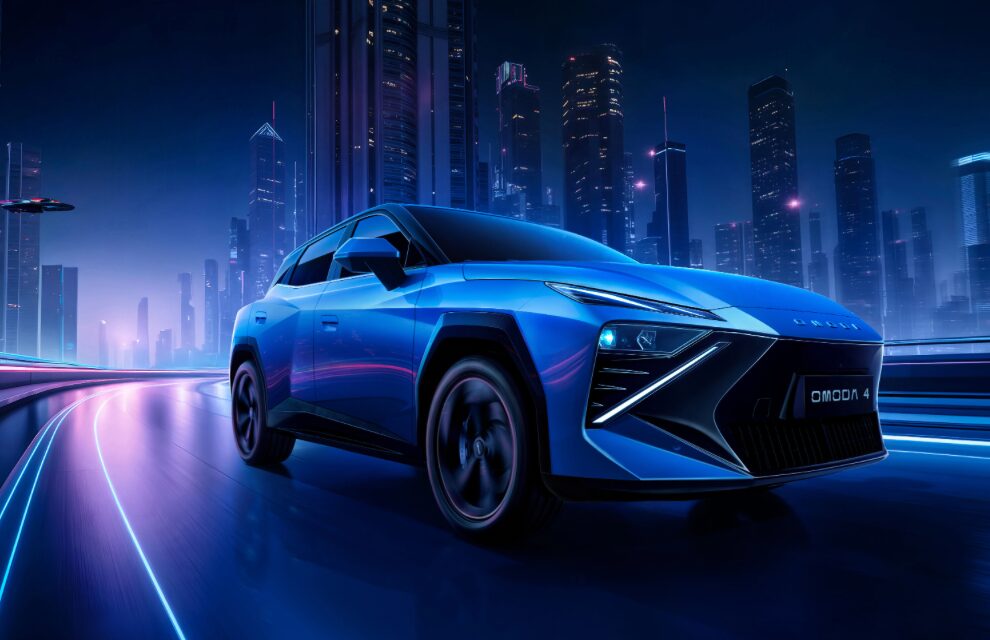
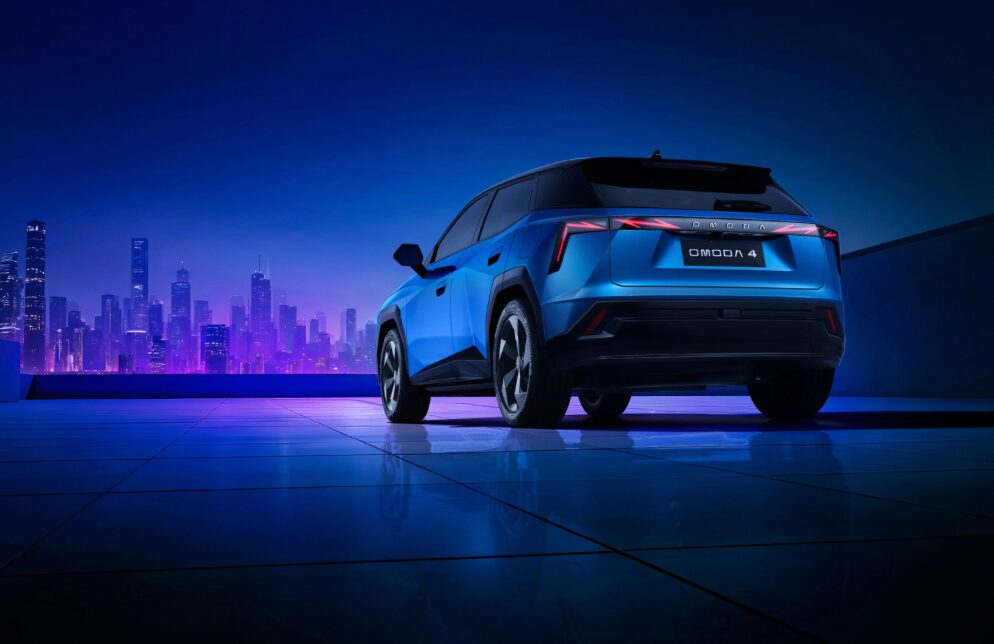
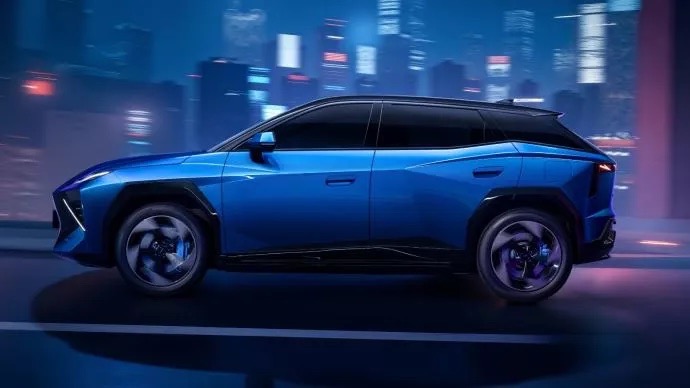
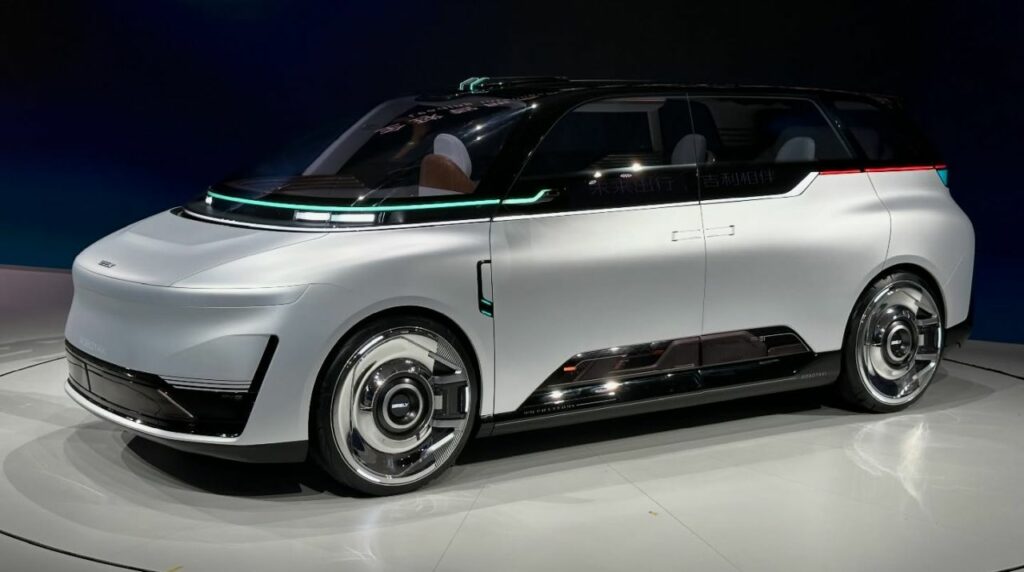
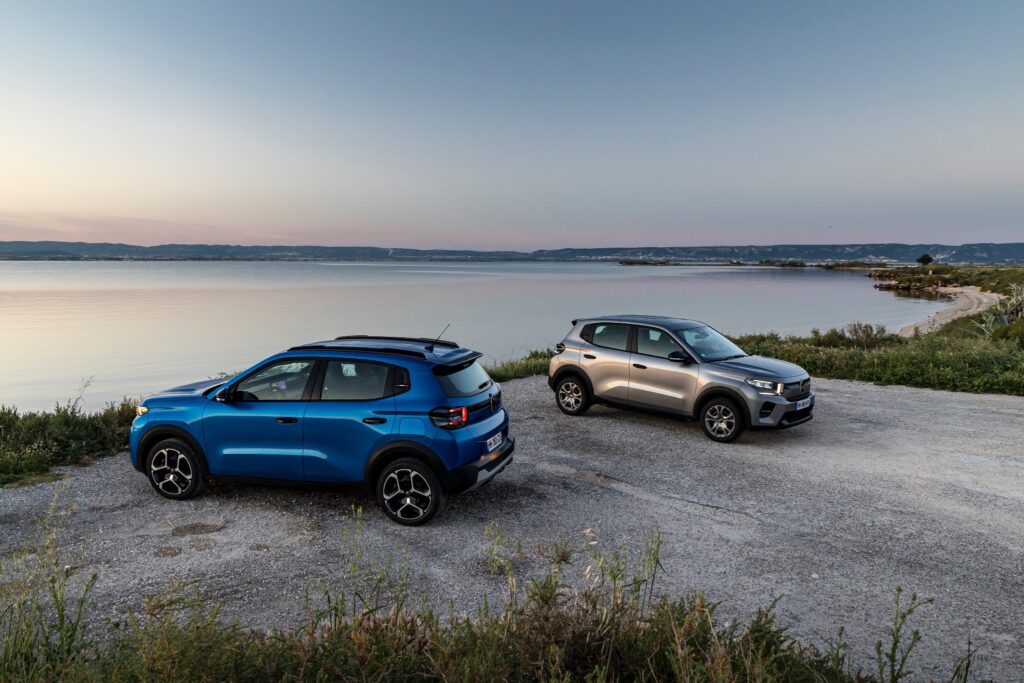
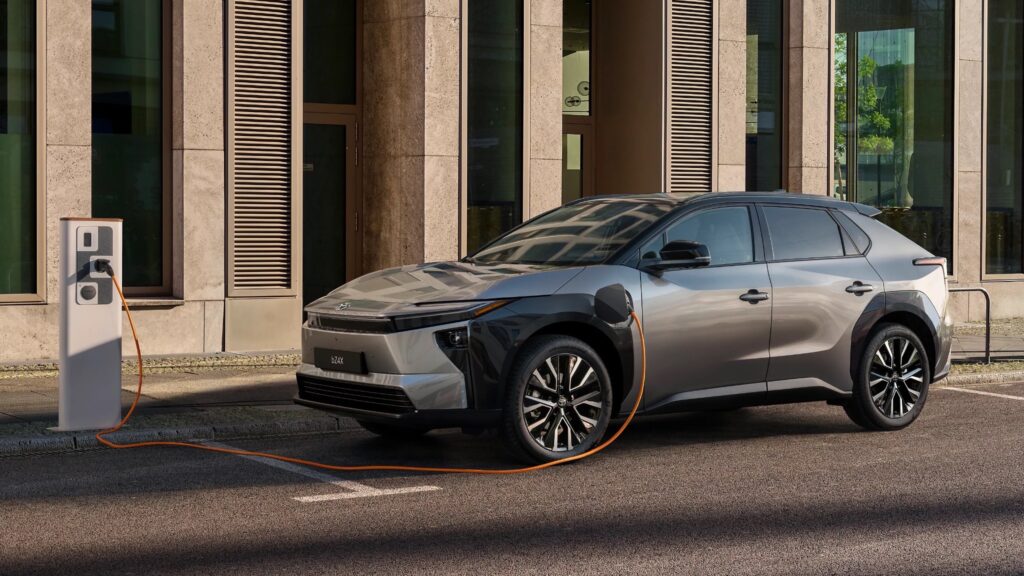
At the 2026 Beijing Motor Show, OMODA & JAECOO officially unveiled a new model in its range: the OMODA 4. This B-segment crossover is designed for international distribution, and its launch in France has already been announced for the coming months. This announcement ties in with the Chery Group subsidiary’s overall strategy for European expansion
source: OMODA & JAECOO
A key model in the development of the range
Measuring 4.42 metres in length, 1.87 metres in width and 1.57 metres in height, the OMODA 4 is positioned in a key segment of the European market: that of compact crossovers.
This positioning is by no means insignificant. For a brand in its launch phase, this type of vehicle is often strategic: affordable enough to generate sales volume, yet prestigious enough to enhance the brand’s image. Furthermore, as the first (and only) two vehicles currently on sale in France from OMODA & JAECOO belong to the C-segment, the number 4 model therefore brings fresh momentum to the manufacturer.
Let’s talk about design now. It is characterised by angular lines and a striking lighting signature. OMODA draws inspiration from the digital world, with the aim of creating a link between digital usage and the motoring experience. This is a concept already widely used in the industry, but here it translates into a visual identity that is deliberately distinctive.
source: OMODA & JAECOO
An interior design focused on the user experience
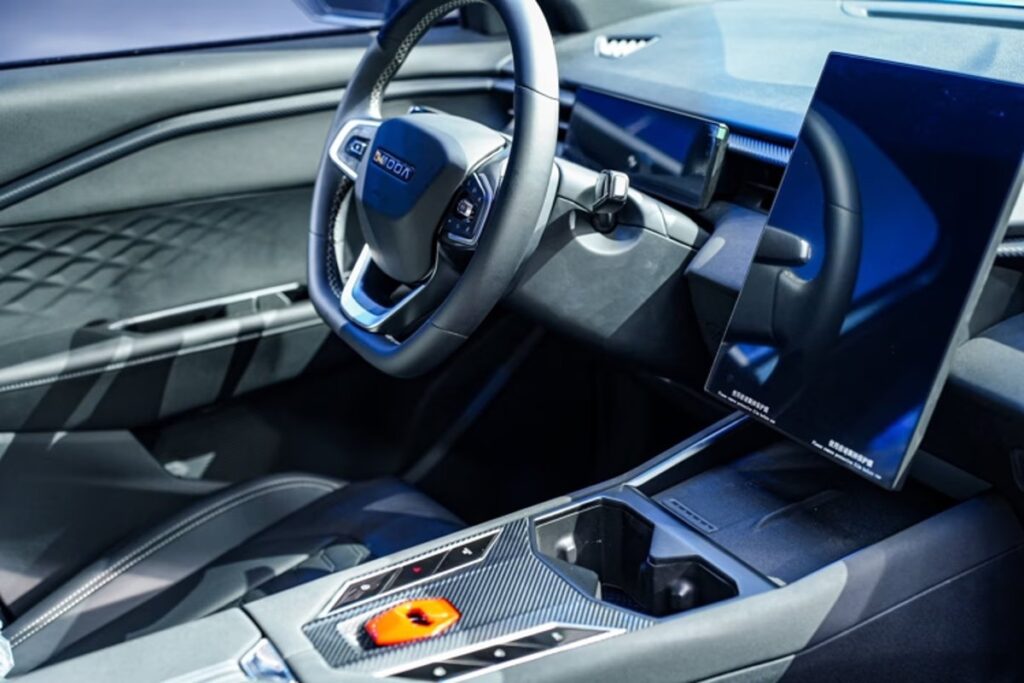
The interior reinforces this positioning. The OMODA 4 focuses on an immersive digital interface and sophisticated ambient lighting, creating “an atmosphere reminiscent of the world of video games.” The Chery Group subsidiary really emphasises this digital aspect, recognising that the current generation sees such brightly lit environments as an integral part of our daily lives. This is certainly true, even if it remains a bold move for a mainstream vehicle.
source: moniteurautomobile
A pragmatic hybrid approach
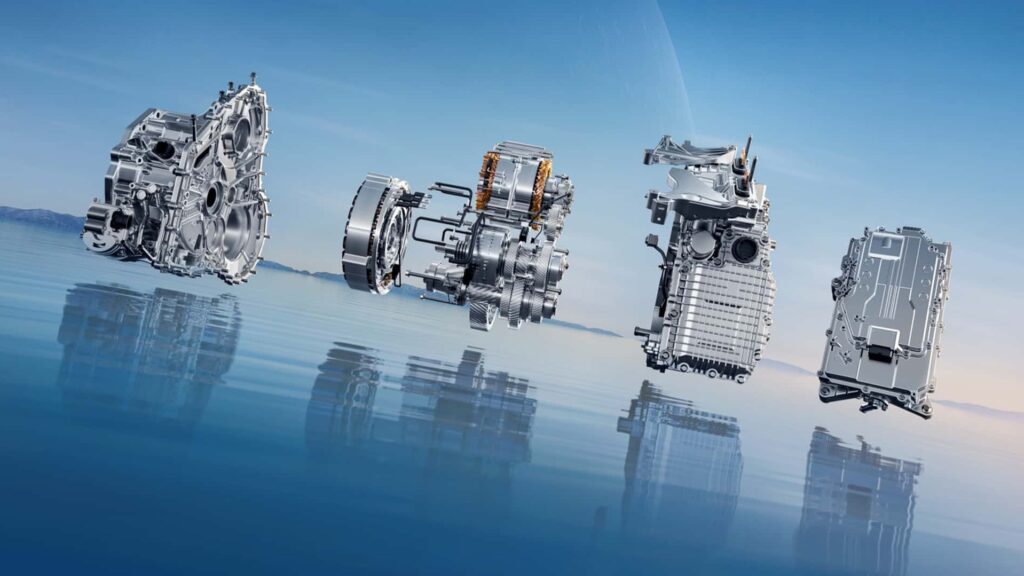
As for the powertrain, although the certification process is still ongoing, the OMODA 4 will be available with SHS (Super Hybrid System) technology. The system delivers 165 kW, or 224 horsepower, with torque of 295 Nm.
According to the press release, the system is based on a 1.5-litre turbocharged engine paired with a 1.83 kWh lithium iron phosphate battery. It is therefore a conventional hybrid system, with limited electric range but sufficient to optimise fuel consumption and improve overall efficiency.
Like many manufacturers, this technical choice confirms that the brand is taking a pragmatic approach. Rather than switching directly to 100% electric, the brand is adapting to a European market that is still in transition, where hybrid remains the dominant solution.
source: OMODA & JAECOO
A quick arrival in France
One of the key points of this announcement is the timeline. Whilst the model has been unveiled to the general public, this does not guarantee that it will be available on the market any time soon. As for the OMODA 4, we already know more: it will go on sale in France in the coming months.
This launch comes at a significant juncture: OMODA & JAECOO has been officially present on the French market since April 2026, with a well-established strategy already in place. From the roll-out of a distribution network and logistics partnerships to long-term warranties and an electrified range, the brand has made a series of announcements to consolidate its foothold in the market.
The OMODA 4 thus rounds off a growing range, with a model designed for higher sales volumes in a key segment. It competes with major models such as the Peugeot 3008, Volkswagen T-Roc and Hyundai Kona.
source: OMODA & JAECOO
A rise in form yet to be confirmed
OMODA & JAECOO is experiencing rapid growth, with over a million vehicles sold worldwide and a presence in 69 markets. In Europe, the brand has already sold over 200,000 units.
With the OMODA 4, the brand ticks all the right boxes: clear positioning, a promising and crucial segment, a pragmatic approach to electrification and a fast-track launch schedule. It now remains to be seen how this model will fare in an already highly competitive European market.
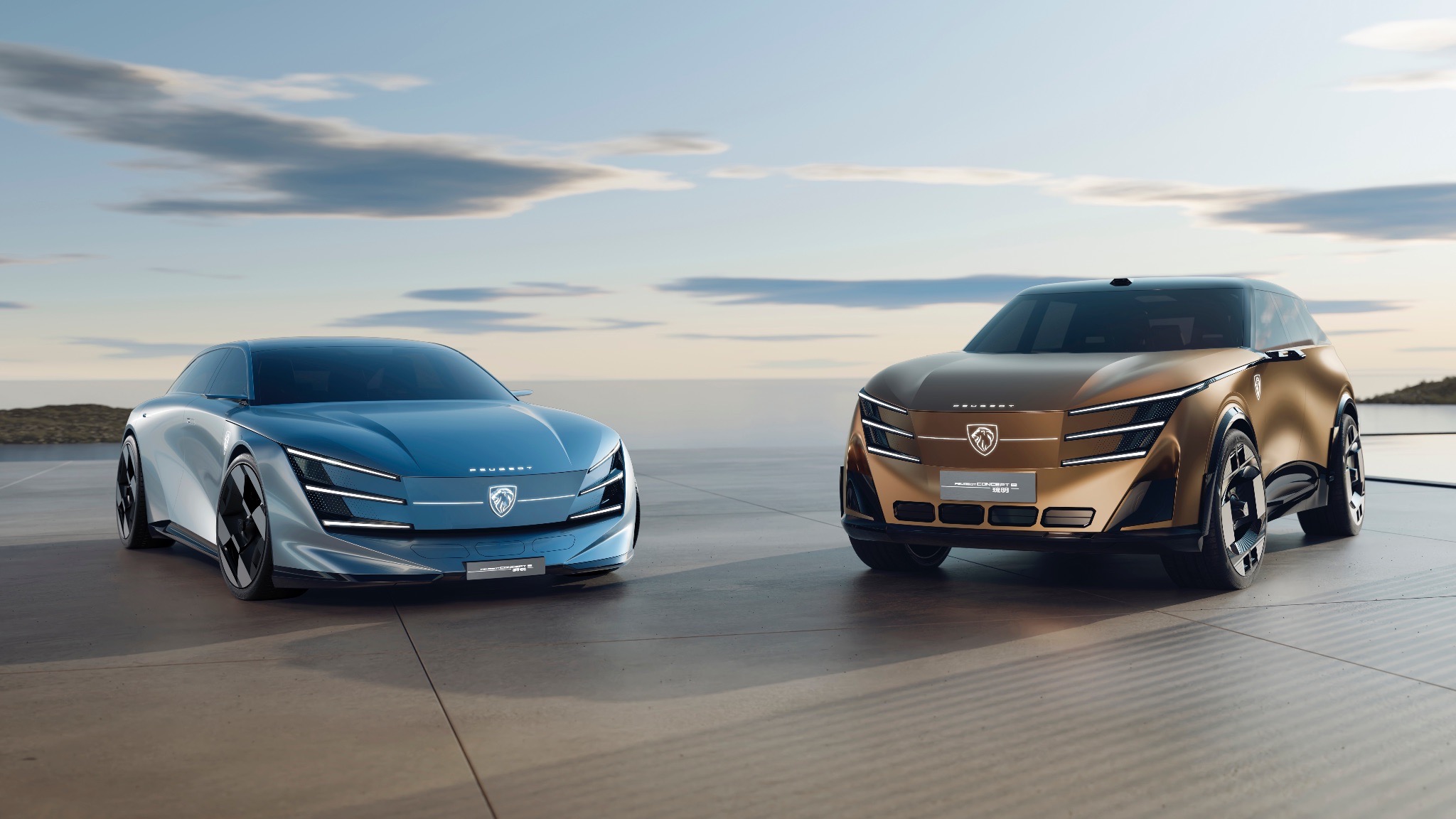
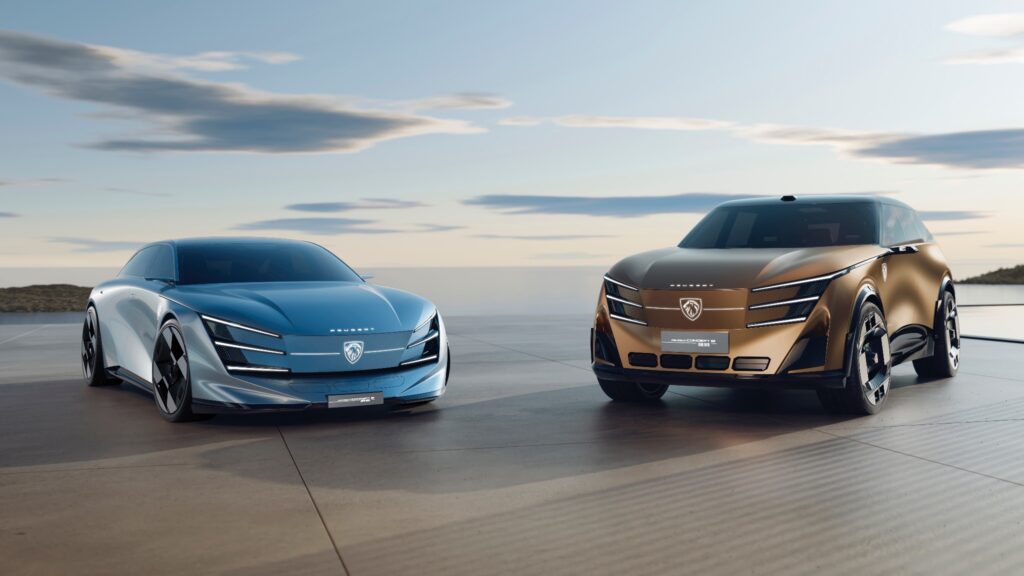
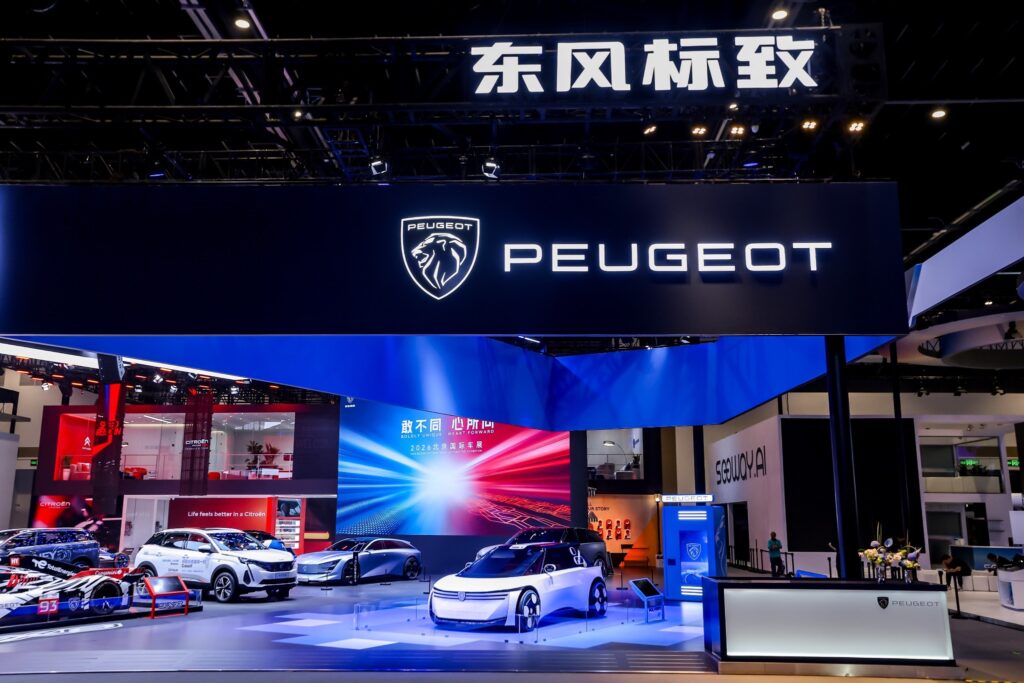
Returning to the iconic stage of the 2026 Beijing Motor Show with two concept cars, Concept 6 and Concept 8, the French brand is not content merely to showcase prototypes. It is laying the foundations for a strategic plan for the years to come. Behind these two models lies a fairly clear message: China is becoming an industrial, technological and strategic hub for the group.
source: Peugeot
Beijing, the hub of the automotive industry
The Beijing Motor Show is now one of the most important events on the global automotive calendar. It serves as a platform where manufacturers come to test out their global strategies. The reason is simple: China has been the world’s largest automotive market for over 15 years and has become a real trendsetter.
Indeed, Beijing has been the setting for the launch of iconic models from the world’s leading brands, as well as several generations of models from Chinese manufacturers that have become key players on the global market.
The 2026 edition once again confirms that technology will be the watchword, with a flurry of announcements, often centred on models designed specifically for the Chinese market.
A return that forms part of a global strategy
Peugeot’s presence in Beijing is not merely a matter of timing. It forms an integral part of the brand’s overall strategy.
source: Peugeot
In its press release, the manufacturer explains that China is both a market – as it remains the world’s largest – and a catalyst for change, as it now influences the development of the group’s future models.
Alain Favey, CEO of PEUGEOT, puts it succinctly: “The Beijing Motor Show is now a key event for PEUGEOT. […] China is a major driving force behind our global transformation, particularly in the areas of electrification, innovation and the brand’s move upmarket.”
The two concept cars on display (Concept 6 and Concept 8) are designed for the Chinese market – ‘in China, for China’ – but not exclusively, as the aim is to roll them out to the group’s other markets.
source: Peugeot
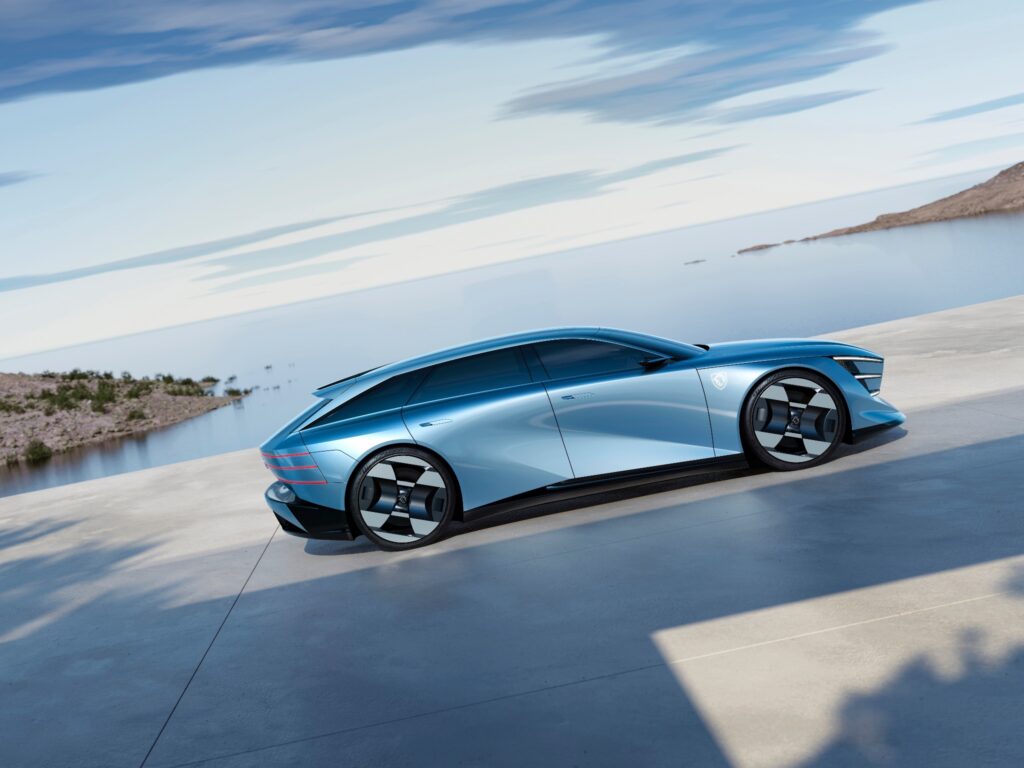
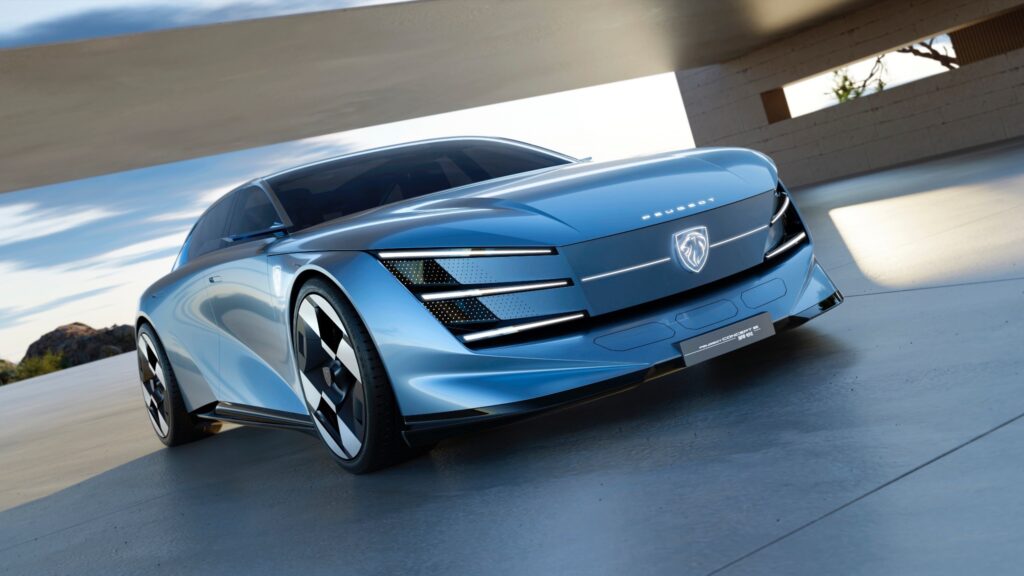
Concept 6: Peugeot returns to the large saloon
First concept presented: Concept 6. A large saloon with a highly refined, futuristic silhouette, halfway between a classic saloon and a dynamic estate car. The design follows a fairly clear rationale: to reaffirm the brand’s identity in a segment where styling is becoming increasingly uniform.
source: Peugeot
In reality, this is very much a true estate car, with a sleek design that visually evokes the Instinct concept unveiled in 2017. Its slender silhouette is defined by a long bonnet, a high waistline and striking proportions. The press release speaks of a certain ‘French-style’ elegance and, above all, a desire to stand out visually in a highly conventionalised market. The front and rear light signatures feature the brand’s characteristic three claws, whilst the new Peugeot logo is prominently displayed, here reimagined with an LED display that reinforces the futuristic look.
source: Peugeot
But that is not the main point. Concept 6, beyond being a design exercise, offers a glimpse of a future production saloon. It will be manufactured in China in partnership with Dongfeng, at the Wuhan plant. Peugeot is working directly with its local partner to design a model intended for the Chinese market, as well as for export.
Concept 8: the SUV, blending premium styling with a bold design statement
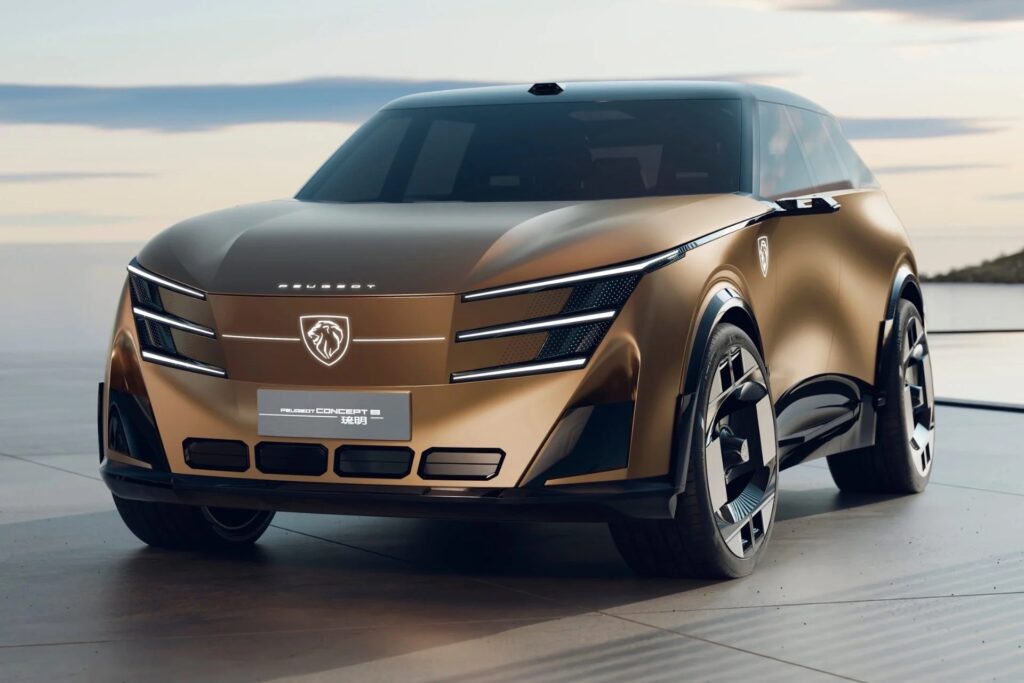
With the Concept 8, Peugeot is targeting the most strategic segment of the global market: that of large SUVs.
The model features a modern design, though one that is deliberately more conventional than the Concept 6. Its appearance is clearly reminiscent of a blend between a Peugeot SUV and a Range Rover, with a commanding silhouette and proportions typical of the segment.
source: Peugeot
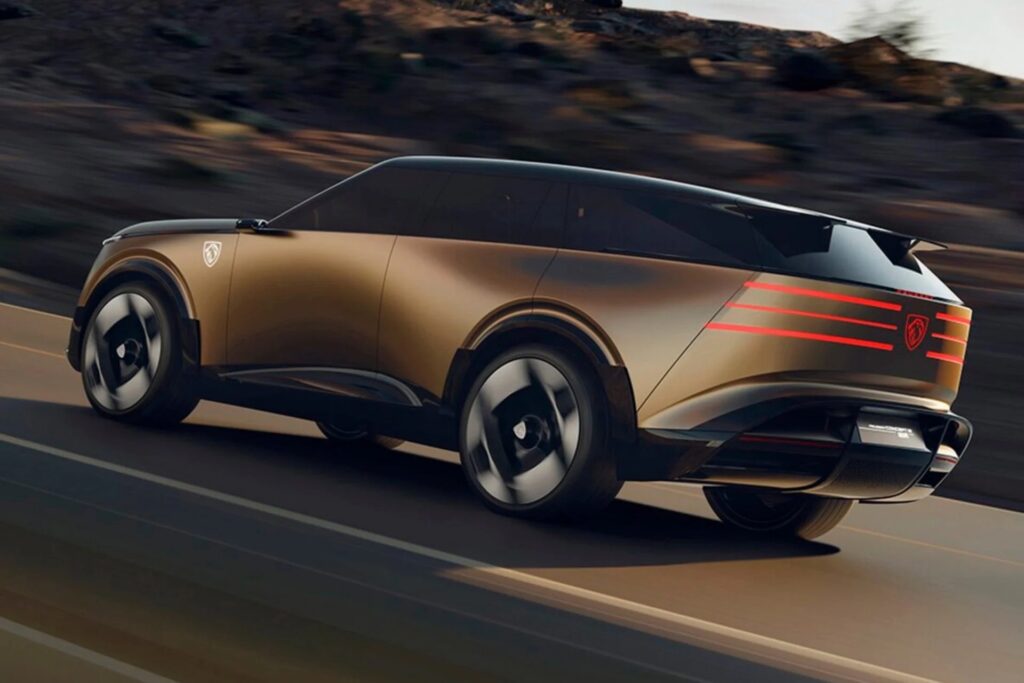
Looking at the details, the design is meticulously executed. The wheel arches are sculpted, whilst the heavily tinted glass surface stretches uninterrupted from the windscreen to the rear of the vehicle.
At the rear, Peugeot has incorporated a distinctive diffuser and a spoiler that extends a sweeping line into the Concept 8, lending a more dynamic touch to an overall design that is quite substantial.
Peugeot
As with Concept 6, this is more than just a design exercise. Concept 8 heralds a future production SUV, set to be manufactured in China in partnership with Dongfeng, to cater both to the local market and to international ambitions.
An ambition that remains purely theoretical
There is, however, one significant caveat: at this stage, all of this remains purely conceptual. There are no detailed specifications, no specific launch schedule, and no pricing strategy.
We understand the strategy, but not yet the execution. And in a market as competitive as China’s, that is often where everything hinges. There can be a significant gap between the intention and the final product.
What Beijing says about Peugeot
The French giant’s return to Beijing shows that Peugeot has identified the right strategies. We already knew this, but it confirms a clear commitment to electrification, a gradual move upmarket and, above all, deeper integration into the Chinese market.
The brand is no longer content simply to adapt its models. It is seeking to develop a strategy in which China serves as a springboard for its global expansion, under the motto ‘in China, for China’. It remains to be seen whether this ambition will soon translate into actual vehicles capable of competing with the fierce competition in the Middle Kingdom.
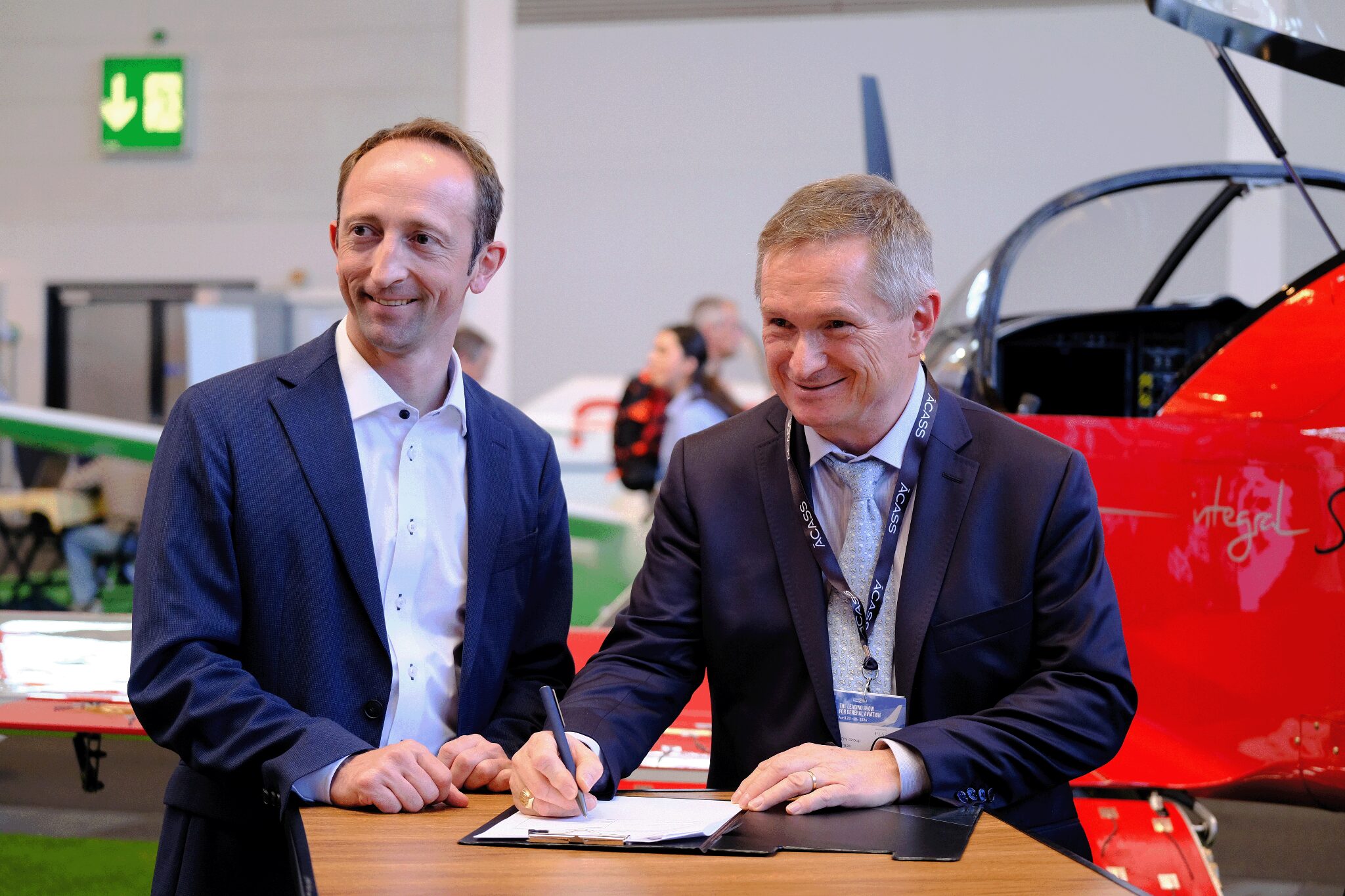
From 22 to 25 April 2025, AERO2026 took place in Friedrichshafen, the world’s leading trade fair for general aviation. AURA AERO signed the first firm order for its INTEGRAL S with the Czech operator OK AVIATION. This marks a concrete commercial milestone for a new-generation training aircraft which, until now, had mainly attracted interest. This time, it has led to a purchase.
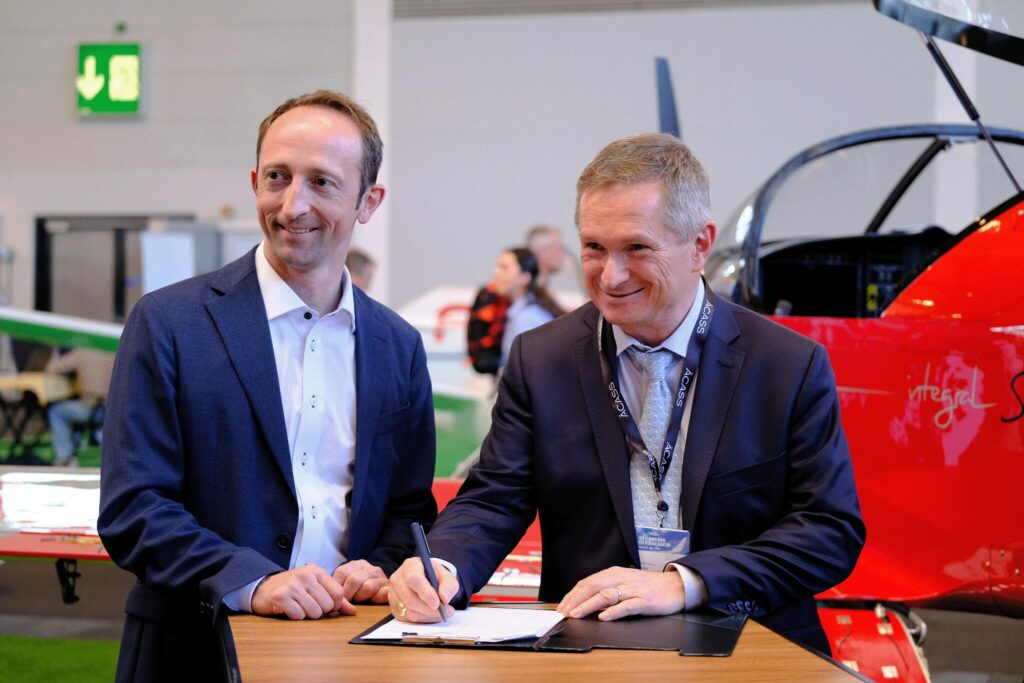
Jérémy Caussade, Chairman and Co-founder of AURA AERO, and Lubomir Cornak, Chairman and CEO of OK AVIATION Group – source: AURA AERO
An iconic trade fair
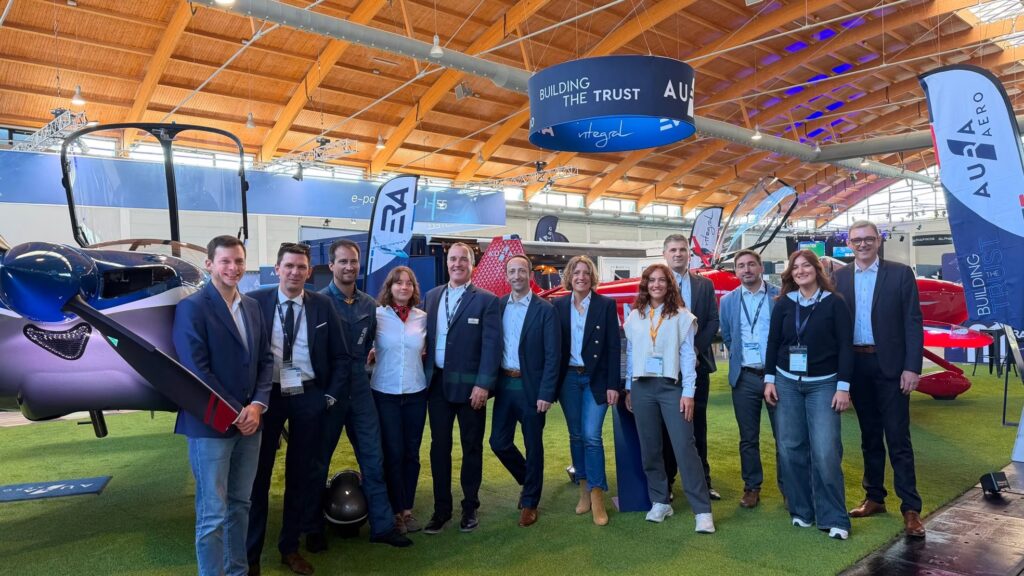
AERO Friedrichshafen is one of the key events in the general aviation sector in Europe (excluding commercial aviation such as Airbus and Boeing). AURA AERO was present at the event with two aircraft: the INTEGRAL R and the INTEGRAL S. Whilst the main aim was to showcase its latest technologies to as wide an audience as possible, the Toulouse-based company exceeded expectations, returning home with a firm order.
Jérémy Caussade, Chairman and co-founder of AURA AERO, is in no doubt about the significance of the moment: “This first firm order for the INTEGRAL S is a major milestone for AURA AERO. It confirms the market’s genuine interest in this new-generation training aircraft, designed to meet the practical needs of flight schools. In Friedrichshafen, we are seeing a great deal of interest in the INTEGRAL family, and this contract transforms that interest into tangible commercial momentum.”
This is precisely where something important is at stake. AURA AERO had already demonstrated its ability to attract attention, with over 700 letters of intent recorded across all its programmes, valued at $12 billion, including 20 firm orders for the ERA. With the INTEGRAL S, a new milestone has been reached: the range of light aircraft is also entering a phase of genuine commercial viability.
source: AURA AERO
INTEGRAL S: a training aircraft designed as a comprehensive tool
Behind this first order lies the INTEGRAL S. Billed as a side-by-side two-seater, it is designed to cover the entire spectrum of training, including aerobatics. It forms part of the manufacturer’s INTEGRAL range, alongside the INTEGRAL R, which is geared towards aerobatics and leisure, and the INTEGRAL E, a fully electric version.
Under the bonnet is a 180-horsepower Lycoming IO-360 engine, a tried-and-tested powerplant that guarantees both reliability and ease of maintenance. In terms of performance, the aircraft has a cruising speed of around 260 km/h, a range of 1,006 km and an endurance of approximately 3.5 hours. When we talk about training, we might think of shorter secondary runways – which is just as well, as this aircraft’s take-off run is also short (318 metres).
Finally, the aircraft incorporates high safety standards: a fuselage parachute, explosion-proof fuel tanks and a reinforced structure. The aim is clear: to provide an aircraft capable of supporting a student from their first flight right through to the most demanding stages, without any interruption in their progress.
source: AURA AERO
OK AVIATION: a buyer who knows what they want
INTEGRAL S’s first client is OK AVIATION Group. Based at Příbram Airport in the Czech Republic, the group has been offering a comprehensive range of private aviation services for over thirty years, including aircraft sales, training, maintenance and charter services. It is an experienced operator that understands the practical realities of the industry and does not buy on the basis of mere promises.
Lubomir Cornak, Chief Executive Officer of OK AVIATION, explains the rationale behind this order in no uncertain terms: “We are seeing strong demand for a modern, multi-purpose training aircraft equipped with UPRT training capabilities and other advanced features. We look forward to establishing a long-term partnership with AURA AERO.” UPRT (Upset Prevention and Recovery Training) is a training discipline that teaches pilots to manage unusual flight situations. This is precisely the niche that INTEGRAL S fills.
source: OK AVIATION Group
A company that’s getting down to business
To gauge the significance of this order, one needs to look at where AURA AERO stands today. Founded in 2018 in Toulouse-Francazal, the company has already reached several key milestones: nearly 250 employees, and design and production approvals in hand – a stage that many aerospace start-ups never reach.
In terms of funding, the group has now raised a total of €340 million, including a recent €50 million funding round involving Bpifrance, the European Innovation Council and Safran, amongst others. Most importantly, the company is moving on to the next stage. The Aura Factory in Toulouse has been launched, whilst a second site is being prepared in Daytona Beach, in the United States.
source: Brunerie
From interest to sale
What is unfolding in Friedrichshafen in April 2026 marks a turning point. Just a few months ago, AURA AERO was receiving a string of positive developments: letters of intent, institutional backing, industrial approvals and European funding.
For Jérémy Caussade, who had summed up his company’s ambition by saying, “We are building much more than just aeroplanes: we are building a new European industrial player”, this agreement is further proof of that vision.
The next step is now a commercial one, as the press release states: CS-23 certification and the first deliveries of the INTEGRAL S are expected this year.
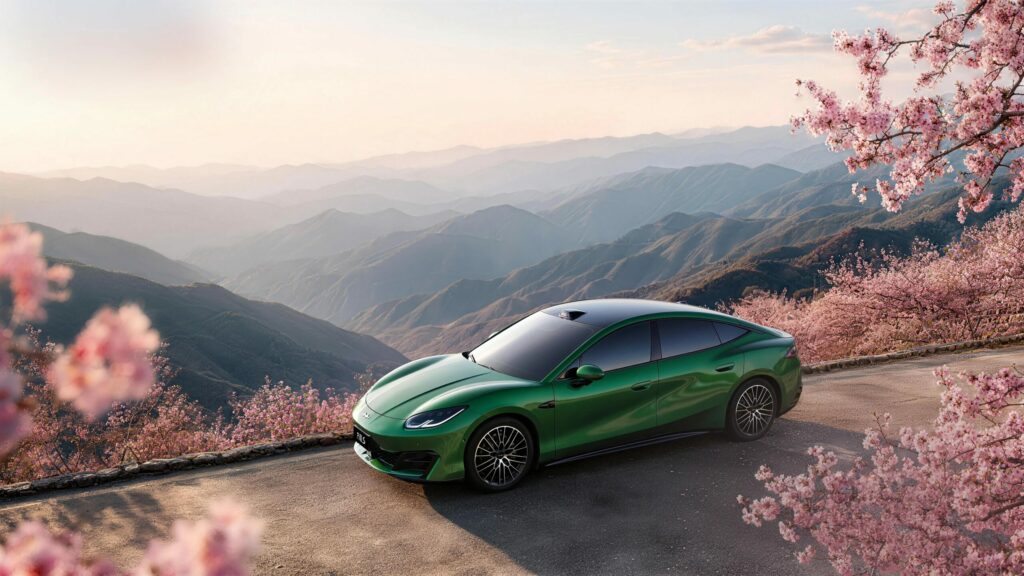
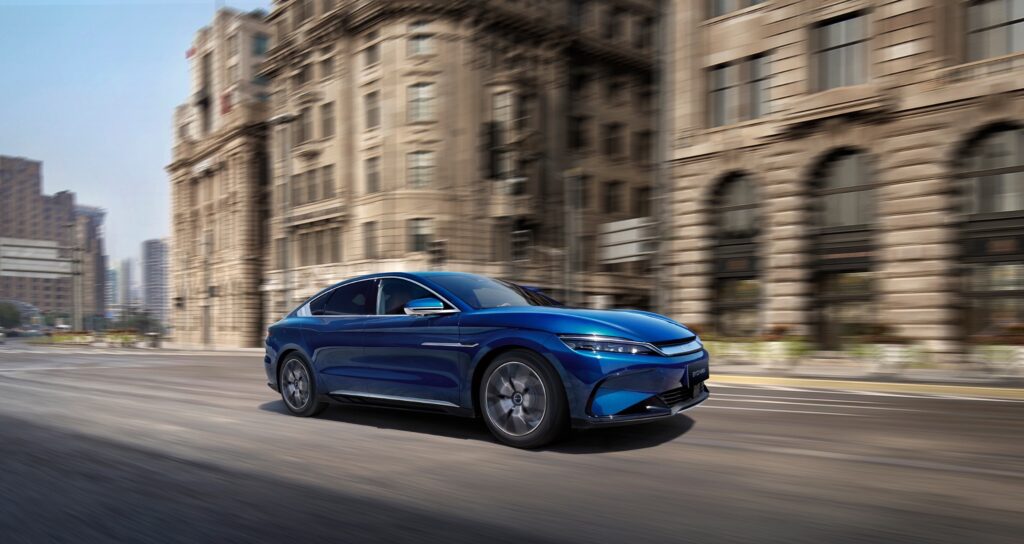
Auto China, the world’s largest motor show, has just opened its doors to the public in Beijing. The 2026 edition marks a turning point in the international automotive sector, as local brands are now setting the pace with a flurry of innovations and fresh ideas for the cars of tomorrow – and, more broadly, for the mobility of the future. If you feel this doesn’t concern you here in France, think again, because the new models unveiled today in Beijing will soon be appearing in our showrooms, within 18 to 36 months.
Auto China in figures
The Beijing Motor Show (held every two years, alternating with the Shanghai Motor Show) welcomes the global automotive industry for around ten days. 1,400 vehicles from some 100 Chinese and international manufacturers are on display in huge exhibition halls covering 380,000 m² (the equivalent of 50 football pitches). 170 world premieres, 70 concept cars. Naturally, Chinese brands are playing to their strengths: electric cars, high-capacity batteries, tenfold increases in charging speeds, integration of AI software, development of autonomous driving, comfort and in-car innovations. Faced with this avalanche of new developments being rolled out at record speed, European manufacturers are not giving up, but must forge partnerships with Chinese firms to bridge an obvious technological gap (BMW-CATL, Audi-Huawei, Volkswagen-Xpeng…).
Chinese dominance in the automotive industry is growing
The Beijing Motor Show is primarily aimed at Chinese customers, but also indirectly at European motorists. The world’s largest market (with over 34 million vehicles sold in 2025) accounts for one in three new car registrations worldwide. Half of these are electric cars. China accounts for two-thirds of global electric vehicle sales, and, crucially, production continues to rise: nearly 35 million vehicles were manufactured last year, with one-seventh of these destined for export (Europe, America, Asia). These foreign markets are all the more important as domestic demand is slowing: a 17% drop in passenger car sales in the first quarter in China. There are now too many local manufacturers competing with one another and driving down prices, even at the cost of reduced profits. International expansion is therefore inevitable.
BYD, Xiaomi and Xpeng are pushing ahead with AI
Faced with fierce competition, manufacturers are therefore focusing on software, in-car technological innovations and the ability to create a cohesive ecosystem. Meanwhile, Chinese customers now need to be retained and encouraged to move upmarket, through large, modern and well-equipped SUVs or sporty, powerful models.
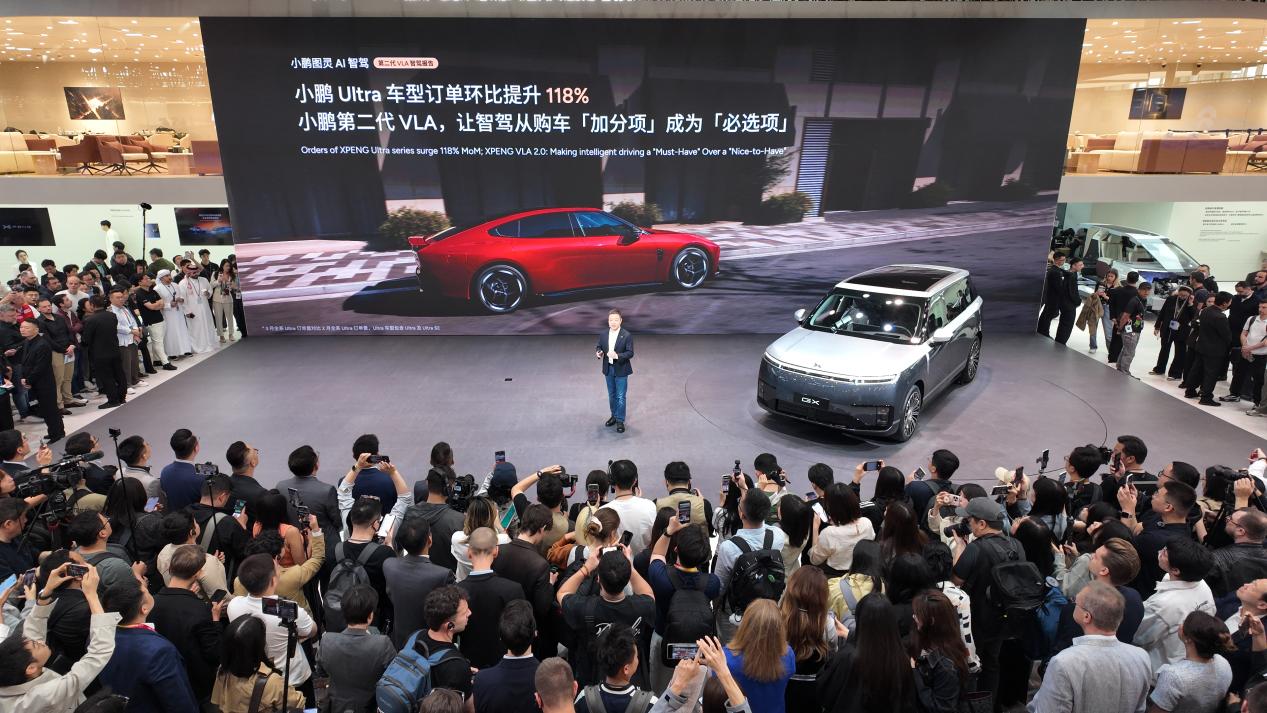
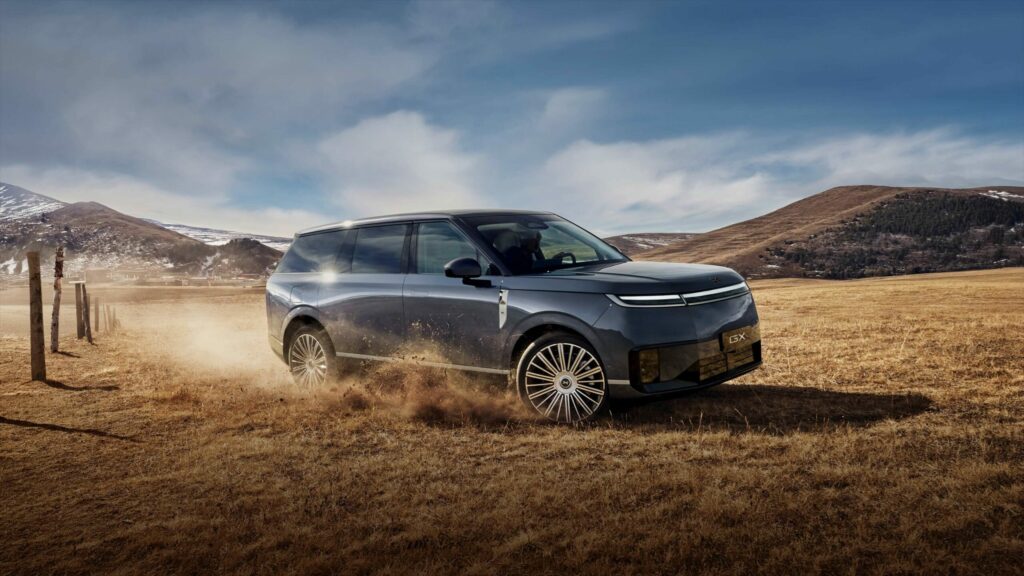
Xpeng unveils the GX, an imposing luxury SUV featuring complex and highly accurate on-board AI designed to streamline autonomous driving: its on-board computing power is equivalent to that of 100 high-end smartphones, or 10 times more powerful than the FSD system developed by Tesla. Put simply, the car detects obstacles, continuously analyses all peripheral cameras and makes decisions in a matter of milliseconds, without needing an internet connection.
BYD Yuan Plus III: it will be launched in Europe under the name Atto 3, a compact electric SUV that will benefit from BYD’s new ultra-fast charging technology, known as Flash Charging: from 10% to 70% in 5 minutes. These specialised charging points are gradually being rolled out in China and could appear in Europe by 2027.
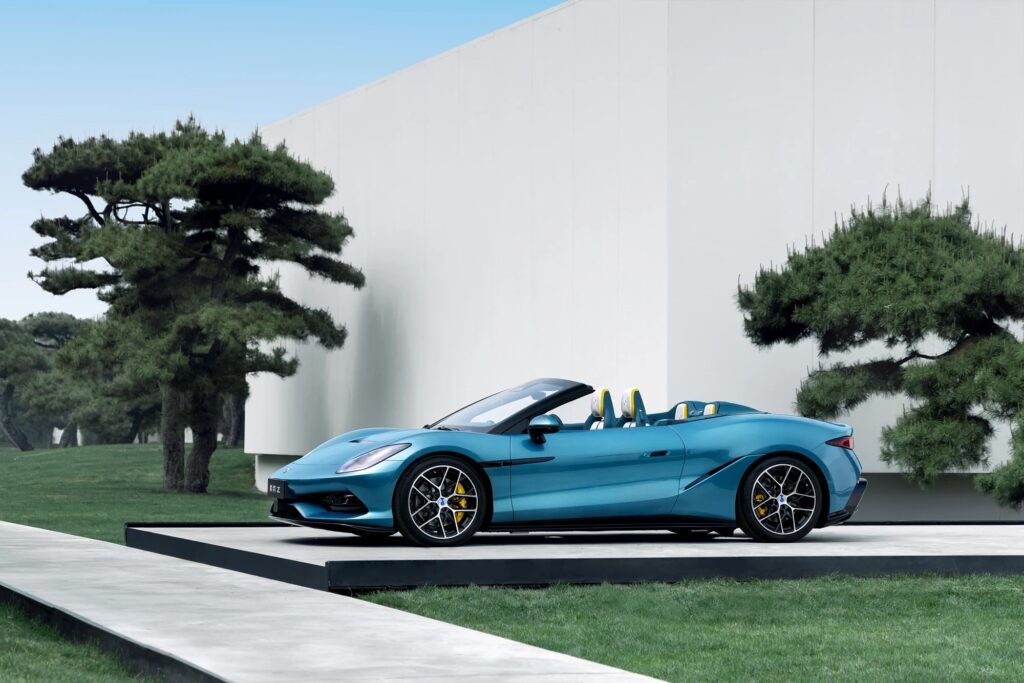
Denza Z (BYD Group): An electric convertible supercar with three motors capable of delivering a total output of 1,000 hp and accelerating from 0 to 100 km/h in under 2 seconds. The aim: to dethrone the best European supercars. To optimise its handling, the Z is fitted with intelligent suspension that balances the chassis every 10 milliseconds. The steering and braking are electronically controlled via ‘steer-by-wire’, meaning there is no longer any physical connection between the driver and the road. The steering wheel is square and retracts into the dashboard in the event of a collision.
Fang Cheng Bao (BYD Group): a Chinese domestic brand specialising in SUVs and off-road vehicles, it is expanding its range with a sports saloon (similar to a Porsche Panamera) called the Formula S. Equipped with Lidar and multiple cameras for autonomous driving, an intelligent chassis and four-wheel steering, this GT coupé is designed to be highly dynamic (1,000 hp and three motors) and could arrive in Europe soon.
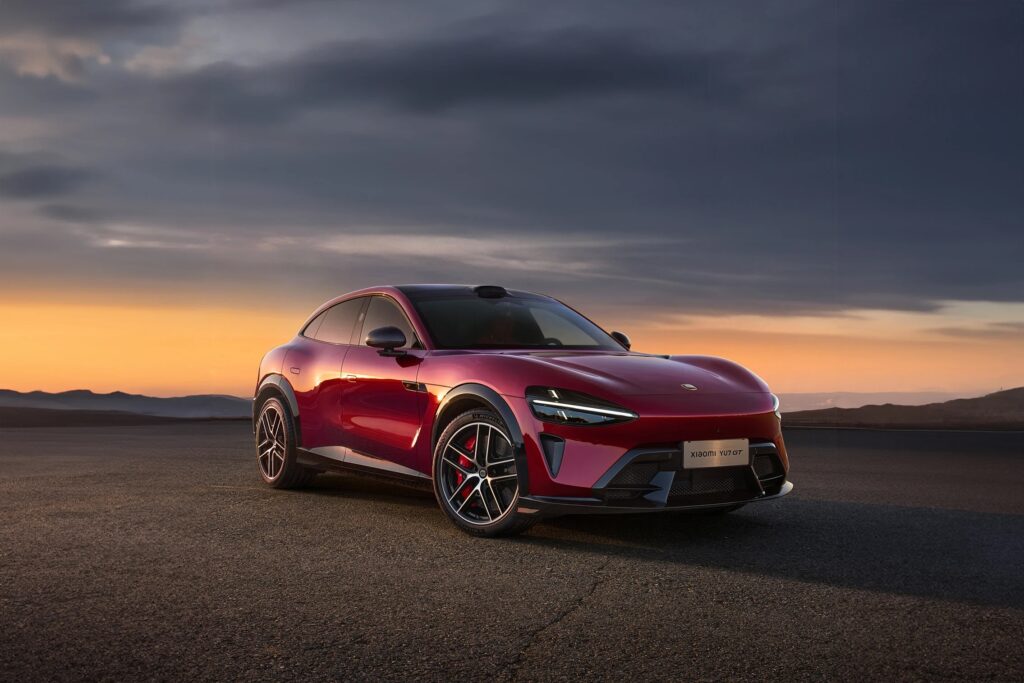
Xiaomi YU7 GT: This is Xiaomi’s sporty SUV, positioned as a rival to the electric Porsche Macan. With a battery capacity of over 100 kWh, a range of 700 km and 990 hp, it will initially be launched in China before likely taking on the European premium brands.
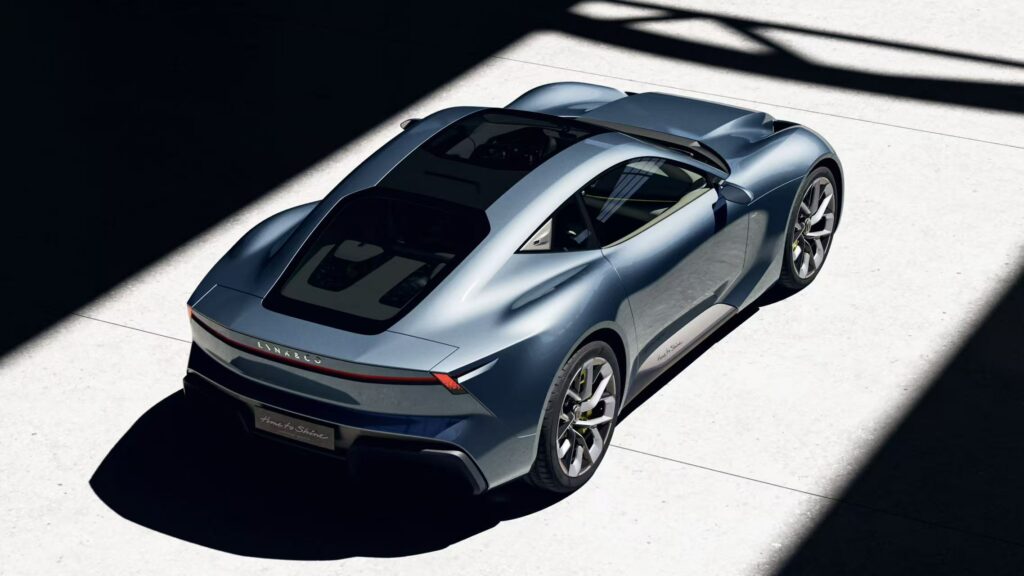
Lynk & Co: Geely Group’s premium brand is entering the luxury GT segment with the ‘Time to Shine’ concept, developed in the group’s Swedish design studios (Geely owns Volvo). This sculptural prototype heralds an upcoming electric sports car whose digital chassis is controlled by AI. Configured for the track, the computer uses advanced control systems to assist all body movements, thereby enhancing the dynamism of this rear-wheel-drive model, which promises a 0 to 100 km/h time of under 2 seconds.
NIO ES9: At 5.36 metres long, it is China’s largest SUV (larger than a Rolls-Royce Cullinan) and features three LiDAR sensors for autonomous driving. Under the floor lies a battery with a capacity of over 100 kWh and a range of up to 620 km.
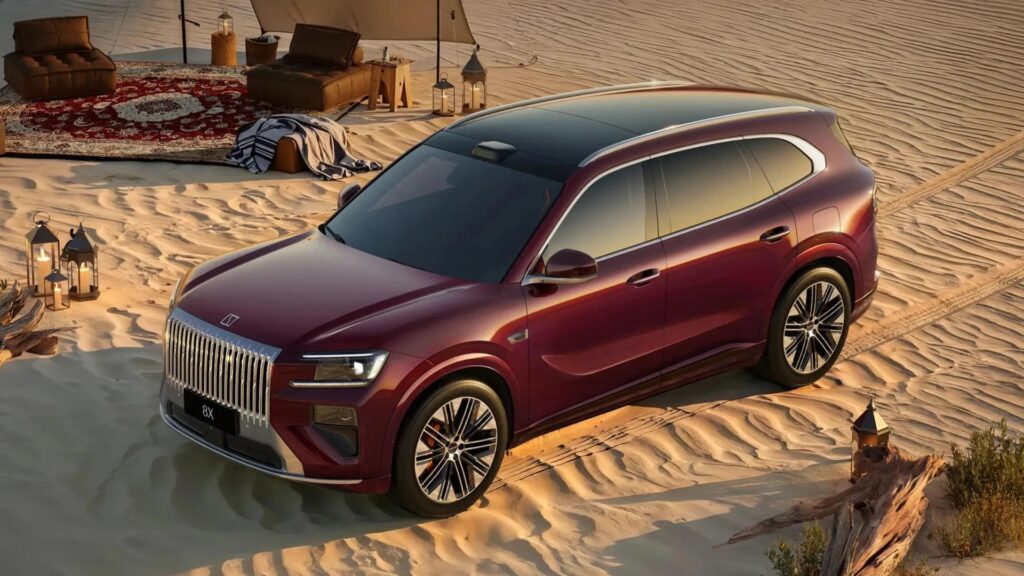
Zeekr SUV 8X: this high-end hybrid SUV aims to be as powerful as a supercar, delivering nearly 1,400 hp in its most extreme configuration. 0 to 100 km/h in under 3 seconds. The electric-thermal combination offers a range of up to 1,400 km, whilst fast charging (on this 900 V architecture) can take less than 10 minutes to go from 20% to 80%.
Alongside the expansion of its Galaxy range (a generation of smart cars featuring integrated AI for autonomous and assisted driving), the Geely Group has unveiled its first robotaxi, the Eva Cab, as a concept car. This vehicle, which has no steering wheel or controls, is equipped with a processor whose decision-making capabilities are three times faster than those of an experienced human driver. The World Action Model (WAM) is a brain (with three levels of 360° perception) that enables the vehicle to think and judge instantly (95% of everyday driving situations are handled automatically, such as making a U-turn, for example).
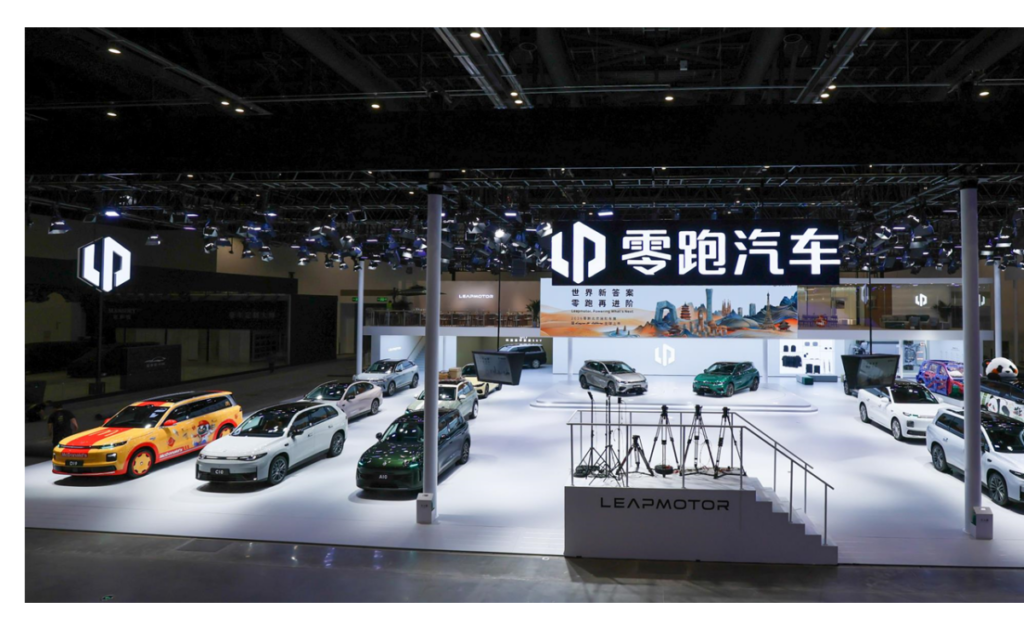
Leapmotor is launching the B05 in Europe. This compact model (4.43 m) is designed to achieve high sales volumes, with prices starting at €26,900. It will join the production line alongside the compact B10 SUV (assembled at the Stellantis plant in Zaragoza, Spain). A slightly sportier B05 Ultra version is currently reserved for the Chinese market.
The ‘low-altitude’ economy is really taking off
Beyond road transport, the Beijing Motor Show also highlights the future of ‘airborne’ mobility. What is described as the ‘low-altitude economy’ encompasses drones, flying taxis and other aerial vehicles operating at altitudes lower than those of traditional commercial airspace. For instance, the start-up AutoFlight is refining its eVTOLs (Electric Vertical Take-Off and Landing), a kind of 10-seater shared taxi, remotely piloted to cover urban and suburban distances. Such shuttles are also under development at Geely and Xpeng, as this new mobility economy is a priority for the Chinese authorities.
Our global tour of electric mobility continues, and today we’re looking at Taiwan. In 2025, the Taiwanese car market contracted by 6.4% to 399,194 registrations, whilst sales of electric vehicles fell by 17.3%. At the same time, however, the island is pressing ahead with its transition through government subsidies, strong support for electric scooters and a long-term strategy.
An automotive market under pressure
The Taiwanese market is currently experiencing a slowdown. After several years of recovery, vehicle sales stalled in 2025, falling by 6.4% year-on-year. Among the most popular manufacturers, Toyota remains well ahead with a 31.6% market share, far ahead of Lexus at 7.2%. CMC nevertheless performed well, climbing to third place with a 20.4% increase, whilst Volkswagen grew by 12.9% to reach ninth place.
As explained earlier, following several years of growth, the market contracted by 17.3% in 2025. Taiwan is therefore not experiencing pure acceleration, but rather a more mixed phase, in which the structural gains of electromobility coexist with a generally hesitant market.
The electric scooter: a real local workhorse
In Taiwan, electromobility cannot be understood without two-wheelers. In fact, this is where the country has built its most compelling model. Scooters are part of everyday life, urban traffic and the social fabric of the island. This is also why the transition to electric vehicles is taking a very distinctive form there, focusing on mass transport rather than just private cars.
The electric scooter support scheme is a good illustration of this approach. Over five years, the government has allocated TWD 7.2 billion to this policy (approximately €205–215 million), increasing the fleet from 110,000 to 610,000 electric scooters. Purchase subsidies range from 5,100 to 7,000 TWD, with an additional 1,000 TWD for trading in an old petrol-powered scooter. The message is clear: it is not just about making the fleet greener, but about making the transition economically viable for as many people as possible.
A highly structured public policy
Taiwan has chosen to support the transition through very concrete measures. Since 2022, the scheme to replace older vehicles has resulted in 124,798 replacements, with a cumulative reduction of 529,212 metric tonnes of CO2 equivalent by the end of 2025. This approach to replacement is particularly noteworthy, as it directly tackles the fleet of the most polluting vehicles rather than relying solely on new car sales.
The government is also supporting this strategy through tax measures. The exemption from purchase tax for electric vehicles has been extended until 31 December 2030. This sends an important signal: Taiwan’s transition is not intended to be a passing fad, but a lasting transformation. The government has also set long-term targets, including the gradual electrification of public buses by 2030 and the planned end to sales of petrol-powered motorcycles in 2035, followed by petrol-powered cars in 2040.
These facts clearly show that this country possesses a level of consistency that many markets have yet to achieve. The subsidies are not isolated measures; they form part of a broader strategy to modernise practices and reduce emissions.
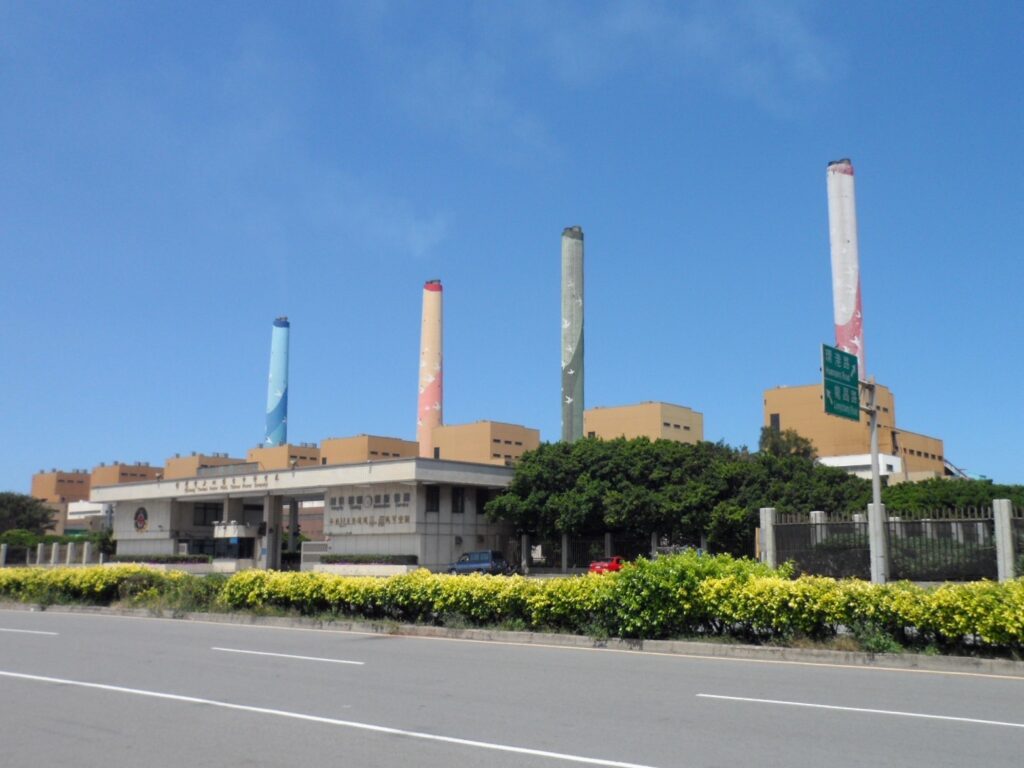
source: Wikipedia – Presidential Office Building, Taiwan
An infrastructure that is already well established
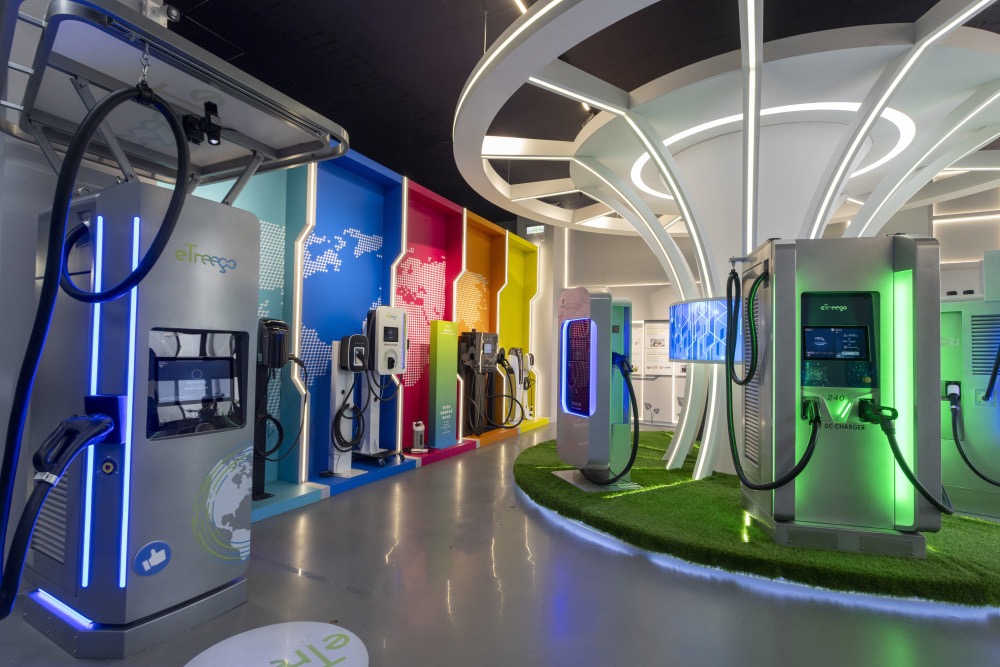
So, naturally, electric vehicles go hand in hand with charging infrastructure. In this regard, the country is not starting from scratch when it comes to charging. By 2022, Taiwan already had 1,399 charging stations and 4,380 charging points. Whilst these figures are a few years old, they show that the island already had a solid foundation in place to support the rise of electric vehicles.
This is a key point, as charging remains one of the main barriers to adoption. In Taiwan, the situation is favourable because the high population density makes the installation and use of charging infrastructure more feasible. The country has therefore been able to achieve a more tangible transition, driven by both the public authorities and industry players.
source: eTreego
Tangible results, but still limited
Progress is being made, and it is measurable. By the end of February 2025, the number of electric cars in Taiwan had reached 99,980, representing a 65% increase year-on-year. This accounts for 1.3% of the total vehicle fleet. The figure is far from insignificant, but it also shows that electric cars are still in the minority in the overall picture.
In other words, Taiwan is making progress, but the transition remains incomplete. The country has laid solid foundations, introduced effective incentives and found a particularly effective model for scooters. Electric cars, however, have not yet entered a phase of dominance or even widespread adoption.
This is where the contrast becomes interesting. Taiwan is neither a ‘lagging’ market nor a ‘booming’ market. It is a market undergoing a structured transition, where progress is real but where momentum still depends heavily on the broader economic climate.
Energy: the real fundamental constraint
The main obstacle remains energy-related. Taiwan remains heavily reliant on fossil fuels for its electricity generation. In 2024, 83.16% of electricity generation came from fossil fuels, compared with 11.55% from renewables and 4.22% from nuclear power. This fact completely changes the picture regarding electric mobility: an electric car only makes full environmental sense if the electricity powering it is also decarbonised.
This is undoubtedly the most significant challenge facing Taiwan. The island wants to electrify its energy use, but remains trapped in an energy mix that is still heavily reliant on carbon. The transition to electric vehicles cannot therefore be separated from the national electrification strategy.
source: Chongkian
Structural barriers that remain very much in place
In Taiwan, the transition to electric vehicles is progressing, but it remains hampered by a number of very real constraints. The first obstacle is economic: the car market contracted in 2025, and the electric vehicle segment also declined, demonstrating that electromobility still relies heavily on public support to remain attractive. The second is energy-related: as long as electricity continues to be generated predominantly from fossil fuels, the electric car cannot be presented as a fully carbon-free solution.
Added to this is the very layout of the territory. Taiwan is densely populated and urbanised, with little space available in cities to easily install charging points, particularly in apartment blocks and residential car parks. Roads, heavy traffic and the already dominant role of scooters also limit the growth of electric cars, which must carve out a place for themselves in an environment that is already very constrained.
The climate adds a further layer of difficulty. Heat, humidity, heavy rain and typhoons necessitate robust infrastructure and resilient transport systems, which in turn reinforces the need for a reliable and well-distributed charging network. In other words, Taiwan’s transition is well underway, but it is progressing within a framework where cost, energy, geography and everyday habits continue to slow its pace.
Local players who are already well established
Electric mobility in Taiwan is underpinned by a well-established industrial ecosystem, with a number of key players covering the entire value chain.
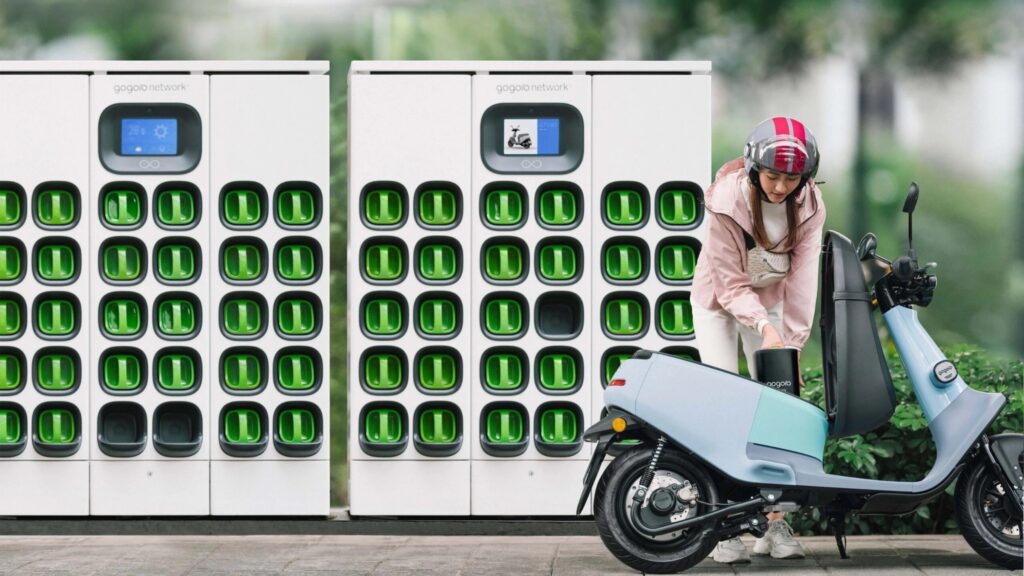
The most iconic example remains Gogoro. Founded in 2011, the company has revolutionised urban mobility with its electric scooters, but above all with its system of interchangeable batteries. In practical terms, users do not need to recharge: they swap their battery in a matter of seconds at one of the numerous stations in the extensive network. This model has removed one of the main barriers to electric vehicles and largely explains the success of electric two-wheelers on the island.
In the automotive sector, Taiwan is seeking to establish an industry cluster with Foxtron, a joint venture between Foxconn, a global electronics giant, and Yulon Motor, a long-standing player in the local automotive industry. The aim is to design electric vehicle platforms and manufacture them for other brands, with a strong focus on exports.
In the two-wheeler sector, Kymco remains a major player. Historically specialising in petrol-powered scooters, the manufacturer is now developing its own electric solutions, adopting a different approach to Gogoro’s, particularly when it comes to charging. Furthermore, brands such as Yamaha and Aeon rely directly on Gogoro’s technology, which reinforces its status as an industry standard.
Finally, a whole network of local companies is involved in the core technological components: batteries, power electronics and semiconductors. Taiwan benefits here from its long-standing expertise in electronics, which enables it to play a key role at the upstream end of the value chain, even though these players are less visible to the general public.
source: Gogoro
Conclusion
Ultimately, Taiwan illustrates a genuine yet still constrained transition. In 2025, the car market contracted by 6.4%, and sales of electric vehicles fell by 17.3%, demonstrating that electromobility remains closely linked to overall market trends.
At the same time, the growth of the electric vehicle fleet and, above all, the massive success of electric scooters show that the transition is well underway, albeit in a way that is tailored to local conditions and focuses more on two-wheelers than on private cars.
Nevertheless, several limitations remain: an energy mix that is still heavily reliant on fossil fuels, a fragile automotive market, and significant urban constraints. In other words, Taiwan is making progress, but without any major breakthroughs. The transition is structured and coherent, but still dependent on economic and energy factors that are holding back its acceleration.
Renault Group has made a strong start to 2026. In a press release dated 23 April 2026, the group announced that in the first quarter of 2026, the manufacturer recorded revenue of €12.53 billion, up 7.3% year-on-year, despite a 3.3% decline in sales volumes. The message is clear: growth now relies more on value, product mix and electrification than on sales expansion alone.
source: Renault
Growth driven by the product mix
With 546,183 vehicles sold over the quarter, the Renault Group has certainly seen a decline in sales volumes, but this apparent underperformance is largely offset by the quality of the product mix. Revenue is rising thanks to a favourable product mix, a pricing strategy that remains positive, and the ramp-up of sales to partners, notably through Nissan and Geely.
In other words, the group is selling slightly fewer cars, but at higher prices. This is precisely what Renault has been aiming for over the past few quarters: increasing the proportion of higher-margin models, maintaining profit margins and managing its distribution channels more effectively.
Renault holds its ground, Dacia falls behind, Alpine picks up speed
Looking at the figures in detail, the group’s three brands are following very different trajectories. Renault remains the group’s driving force with 397,602 sales, up 2.2%, buoyed by the renewal of its range, the strong performance of its electric models and growth in commercial vehicles. In Europe, the brand has even moved up a place to become the number two in the passenger car and light commercial vehicle market.
Dacia, on the other hand, saw a sharp decline, with 145,335 units sold, down 16.3%. However, this drop is largely attributable to the fact that January and February were severely disrupted by “exceptional logistical difficulties” linked to very poor weather conditions that affected maritime traffic in the Strait of Gibraltar. The manufacturer has, however, begun to turn things round in March. Indeed, the press release states that Dacia’s order book remains well-filled. It remains to be seen whether the trend will actually reverse or whether these figures are merely a PR stunt.
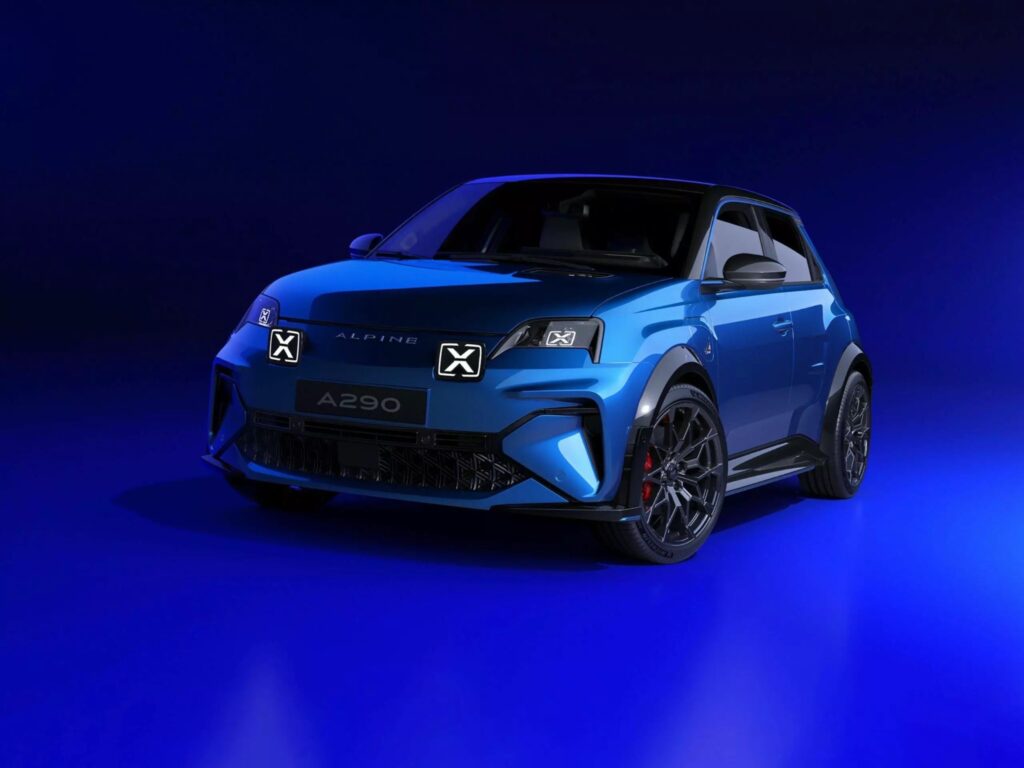
Alpine, for its part, saw sales rise by 54.7% in the first quarter, driven in particular by the A290, which has become its best-selling model with 2,452 registrations worldwide out of a total of 3,246.
source: Alpine
Electrification is becoming the cornerstone
The most striking aspect of these results is undoubtedly the significant share of electrified powertrains. In Europe, they now account for 52.3% of the group’s sales, up 9.1 percentage points year-on-year. Fully electric vehicles have grown by 20.9%, whilst hybrids continue their upward trend, accounting for 35.3% of the mix.
This trend confirms the effectiveness of Renault’s ‘dual’ strategy, which does not rely solely on all-electric vehicles but combines EVs and hybrids depending on the market. Duncan Minto, the group’s chief financial officer, sums it up: “We are making the most of our dual powertrain offering, with electric vehicles on one side and hybrids on the other, both delivering strong performance.”
source: Renault Group
A pivotal year for the group’s three brands
Another key factor at the start of this year is the particularly packed product schedule. The Renault Group is entering a phase of strategic renewal, with a flurry of high-stakes launches for Renault, Dacia and Alpine alike.
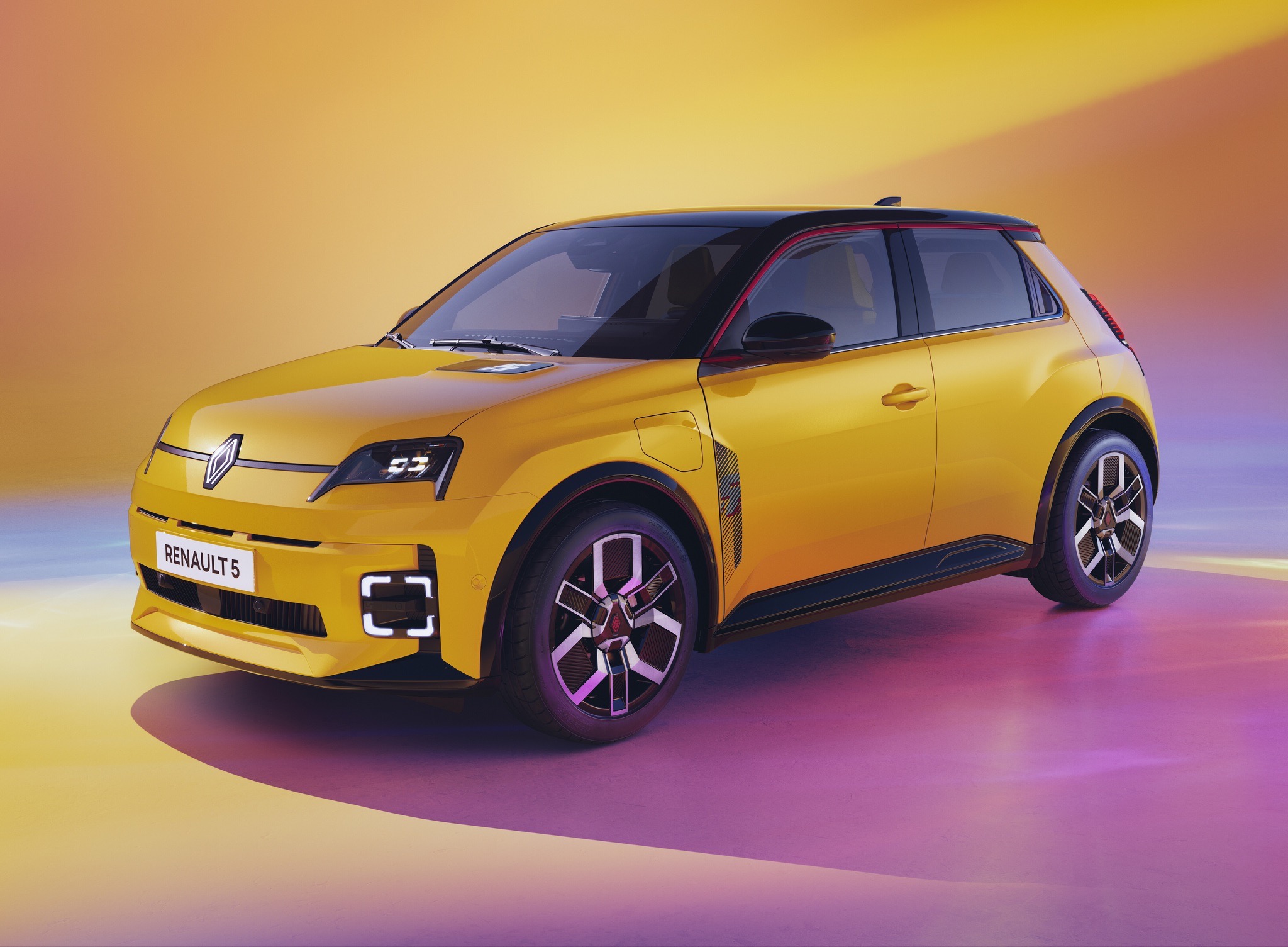
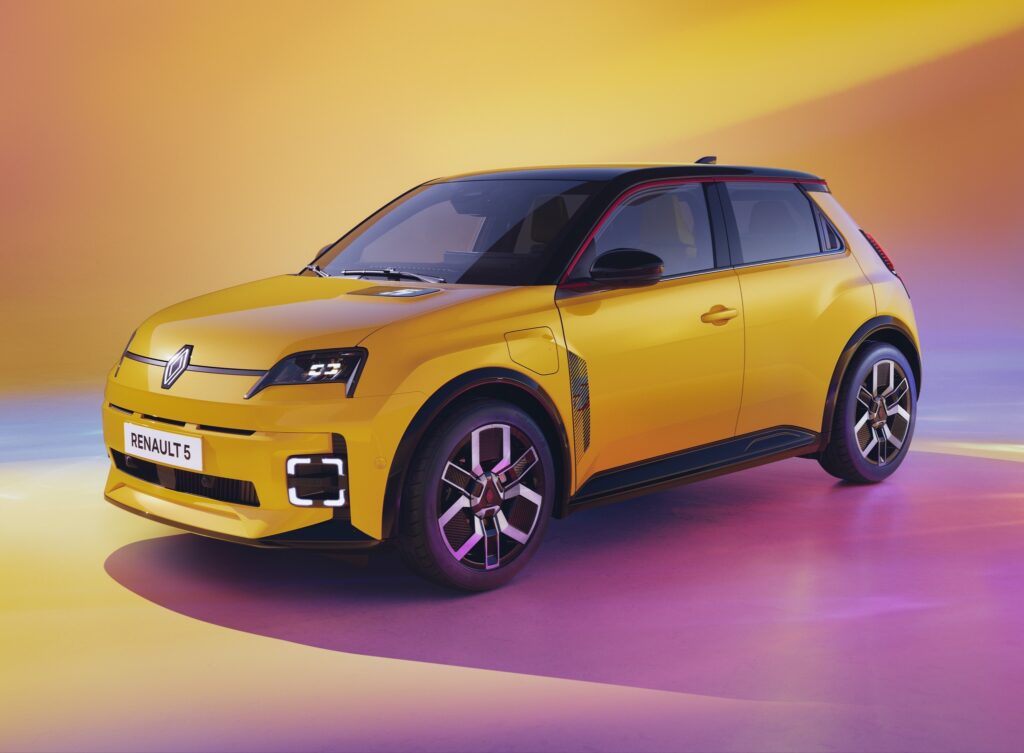
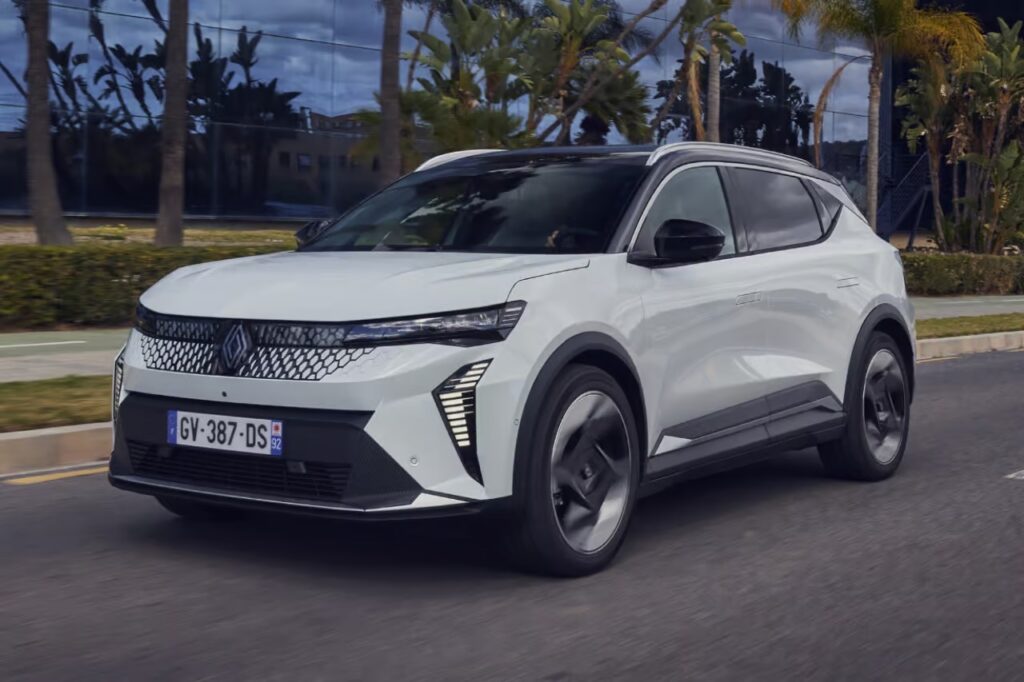
For Renault, the momentum clearly lies in electrification. The growing popularity of the Renault 5 E-Tech electric, already the leader in the electric B-segment across several European markets, is accompanied by the gradual rollout of the Renault 4 E-Tech electric, whilst the Renault Scenic E-Tech electric continues to perform well commercially. At the same time, hybrid models such as the Renault Austral, the Renault Rafale and the Renault Espace continue to underpin a product mix focused on more profitable segments, with 36.5% of sales in the C and D segments.
source: Renault
At Dacia, the strategy remains different but complementary. Despite a temporary decline in sales volumes to 145,335 units (-16.3%), the brand is building on a strong product line-up, notably with the Dacia Duster and the new Dacia Bigster, whose hybrid and LPG versions are proving particularly successful. The Hybrid-G 150 4×4 powertrains and the automatic LPG versions of the Dacia Sandero illustrate this gradual move upmarket, whilst retaining the brand’s price-performance DNA.
source: Dacia
Finally, at Alpine, the transformation is well under way. The 54.7% increase in sales in the first quarter, to 3,246 units, is largely driven by the new Alpine A290, which alone accounted for 2,452 registrations (+63.9%). Meanwhile, the end of the Alpine A110’s production run (545 units before production ceased) is paving the way for a new, fully electric generation, whilst the Alpine A390 is beginning to expand into several European markets.
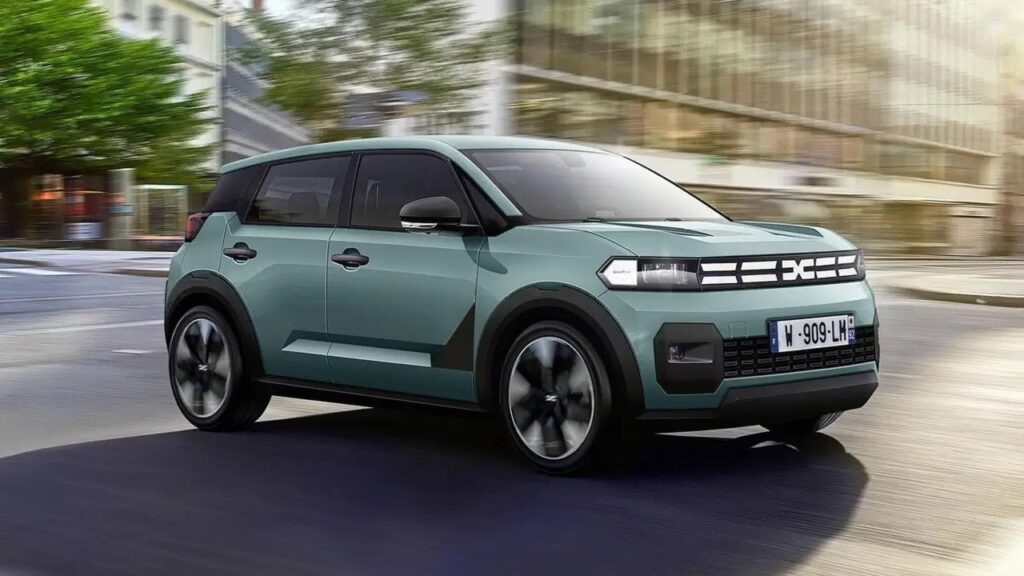
All in all, this product offensive is accompanied by a packed pipeline for 2026, including a new Renault Clio, the Renault Twingo E-Tech electric, a new electric city car from Dacia, and new international models such as the Renault Boreal.
Conclusion
The first quarter of 2026 paints a picture of a group that is more selective, more electrified and, ultimately, more resilient than it appears. Behind an apparent decline in volumes (-3.3% to 546,183 units), the reality is more nuanced: turnover rose by 7.3% to €12.5 billion, the product mix improved, and electrification reached a milestone with 52.3% of sales.
In other words, the Renault Group is continuing to shift its focus: lower volumes, higher value, and a growing reliance on electric and hybrid powertrains as drivers of performance.
The rest of the year will be crucial in confirming this trajectory. But at this stage, the indicators are all pointing in the right direction: a solid order book (two months’ worth of sales), double-digit growth in new orders, a major product push and financial targets remaining on track. It remains to be seen whether, in an increasingly competitive environment, this strategy will be enough to deliver the goods for the full 2026 financial year.
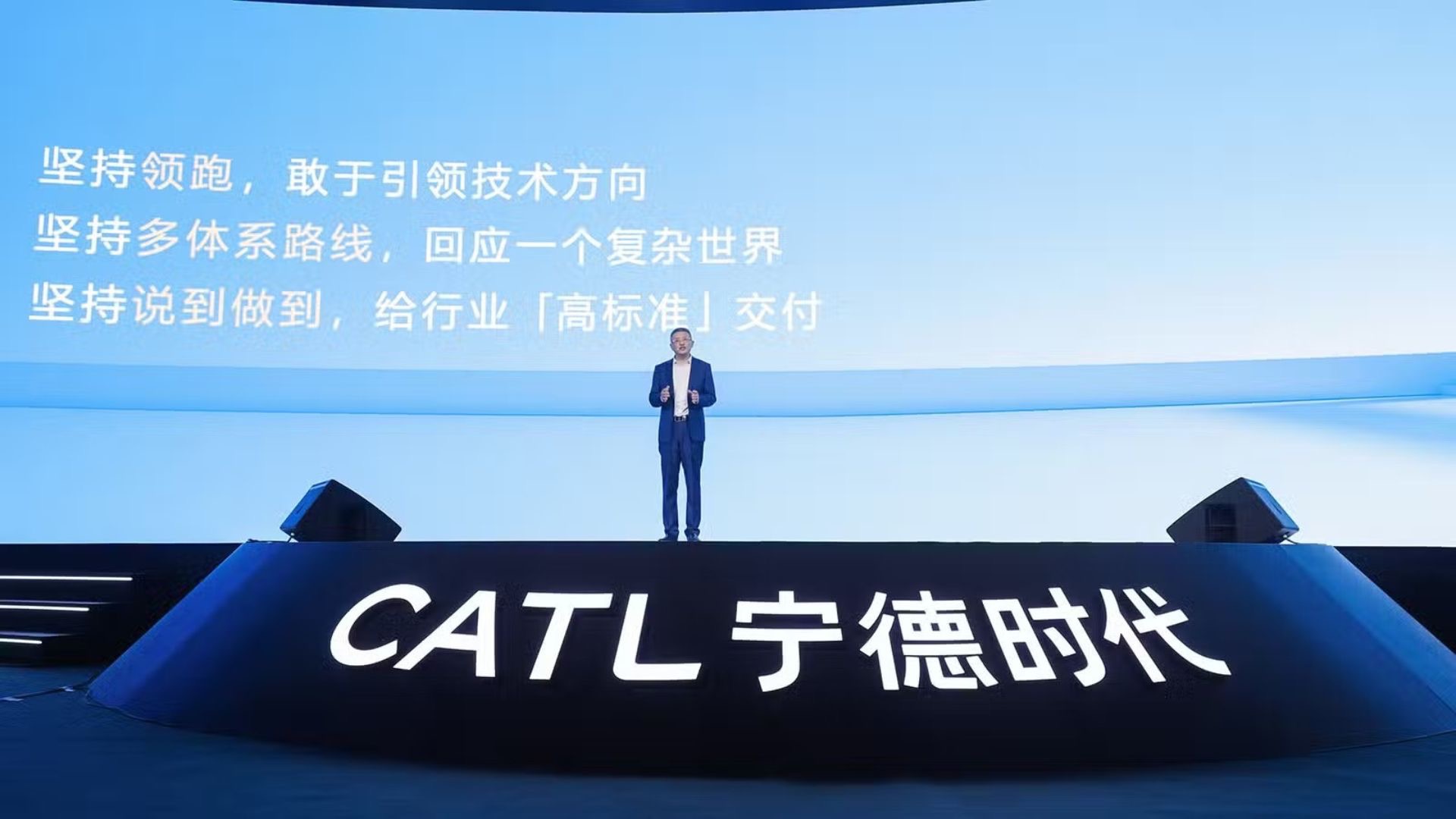
At its Super Technology Day held on 21 April 2026 in Beijing, the world’s leading battery manufacturer made a series of major announcements that are sure to redefine the standards for electric vehicles. Ultra-fast charging, record-breaking range, new sodium-based chemistry… In a single conference, the Chinese group laid the foundations for a new generation of electric vehicles, offering far superior performance and potentially much greater affordability.
source: CATL
A charging time that finally comes close to that of a combustion engine
There were three announcements on the agenda, but the one that made the biggest impression was undoubtedly the third generation of the Shenxing LFP battery.
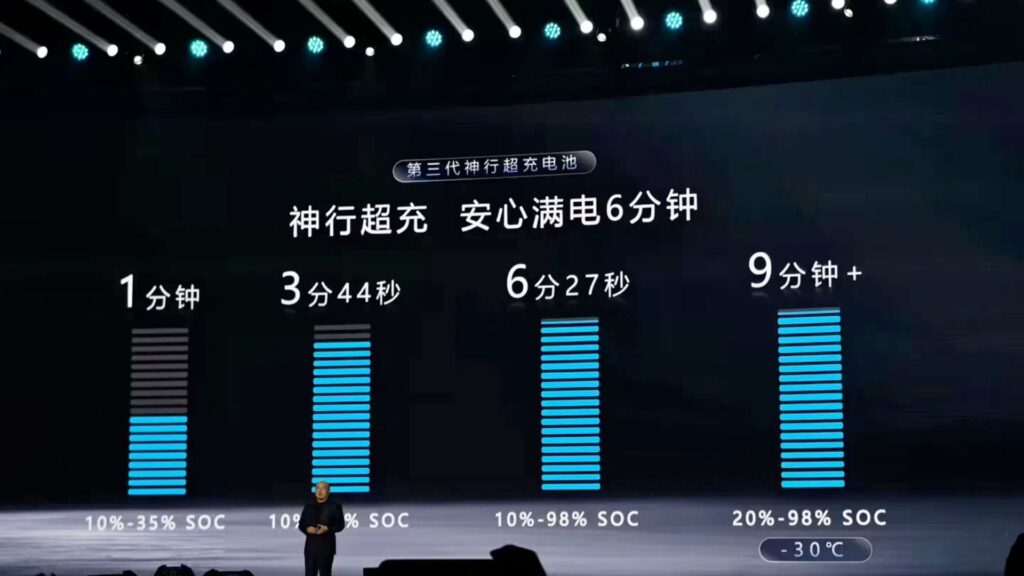
Whilst it’s commonly thought that charging an EV is still a tedious and time-consuming ordeal, that’s now a thing of the past, once and for all. On paper, the figures are almost hard to believe, as CATL (Contemporary Amperex Technology) claims a charge from 10% to 80% in 3 minutes and 44 seconds, and up to 98% in just 6 minutes and 27 seconds. The global leader clearly wants to impress, which is why the symbolic 1-minute mark allows for a 25% recovery in battery range. At this rate, even a coffee break at a motorway service station becomes too long.
At the conference, it was revealed that performance remains robust even under extreme conditions. At -30 °C, it would take around 9 minutes to go from 20% to 98%.
source: CarNewsChina
And if there’s one criticism that often comes up regarding battery wear caused by ultra-fast charging, that’s a thing of the past. CATL claims over 90% of the battery’s capacity remains after 1,000 fast-charging cycles – that’s impressive.
With performance levels like these, electric cars are clearly starting to overcome one of their main drawbacks: charging time.
Up to 1,500 km of range: another impressive feat
But CATL didn’t stop at charging. The group has also tackled the issue of range head-on. With its new “Qilin” battery and, in particular, its so-called “condensed material” version, the manufacturer claims an energy density of 350 Wh/kg. This figure exceeds current standards, which generally range between 250 and 300 Wh/kg for high-end batteries.
source: CATL
The result: a claimed range of up to 1,500 km for a saloon, and over 1,000 km for an SUV. To put that into perspective, imagine driving from Paris to Rome or Paris to Vienna without needing to recharge your vehicle.
Although these announcements are breathtaking and cement CATL’s position as a leader in the battery sector, Robin Zeng, CATL’s founder, has no intention of stopping there: “The limits of electrochemistry are still far from being reached, and the possibilities of materials science are still far from being exhausted.”
These figures obviously need to be taken with a pinch of salt, as they are often based on the Chinese CLTC cycle, which is more optimistic than the European WLTP. But even with a realistic adjustment, the increase remains considerable.
source: CATL
Sodium-ion technology is finally becoming a commercial reality
Another announcement that takes a technology out of the theoretical phase: this is likely to mark the practical arrival of sodium-ion batteries. Indeed, with its new technology, dubbed Naxtra, CATL is no longer talking about prototypes, but about mass production from the end of 2026.
The principle is simple: replace lithium with sodium, a material that is far more abundant, less expensive and less susceptible to geopolitical tensions.
Whilst the benefits mentioned above are clearly good news for the industry, the planet and motorists in general, other technical features mean that Naxtra technology is being widely praised:
Production costs are around 30% lower
Better resistance to cold (down to -40 °C)
Enhanced security
In terms of performance, the energy density stands at 175 Wh/kg, which is close to that of current LFP batteries. This is sufficient to achieve a range of between 400 and 600 km, depending on the model.
source: CATL
Are electric cars finally becoming more affordable?
Given that the battery currently accounts for between 30% and 40% of the cost of an electric vehicle on average, a 30% reduction in the cost of this component could therefore lead to a 10% to 15% reduction in the final price.
On a car costing €20,000, this represents a potential saving of over €2,000. It is a significant factor in making electric vehicles more accessible.
Whilst this represents a tangible revolution for China, the situation in Europe is more complex. This is because, between tariffs on Chinese vehicles, regulatory constraints and the conditions attached to the eco-bonus, some of these benefits may never reach consumers directly.
The most likely scenario remains a gradual adoption by European manufacturers, with these technologies being integrated locally by the end of the decade.
source: BYD
A comprehensive strategy that confirms China’s dominance
Beyond the technical announcements, what CATL demonstrates is a perfectly structured strategy. The group is not relying on a single technology, but on several:
LFP for ultra-fast charging
Qilin for high density and battery life
Sodium-ion for cost and durability
As if that weren’t enough, add to that the fact that CATL is undertaking a massive expansion of its infrastructure in China, with tens of thousands of charging stations, and is developing a battery-swapping service, which is scheduled for 2028.
If you hadn’t realised it yet, we are witnessing the rise of a player that doesn’t just want to follow the market, but to define it. Almost instant charging, battery life on a par with – or even better than – that of internal combustion engines, falling costs… All the historical barriers are starting to come crashing down at once. And whilst China is accelerating, Europe remains held back by its industrial and regulatory constraints.
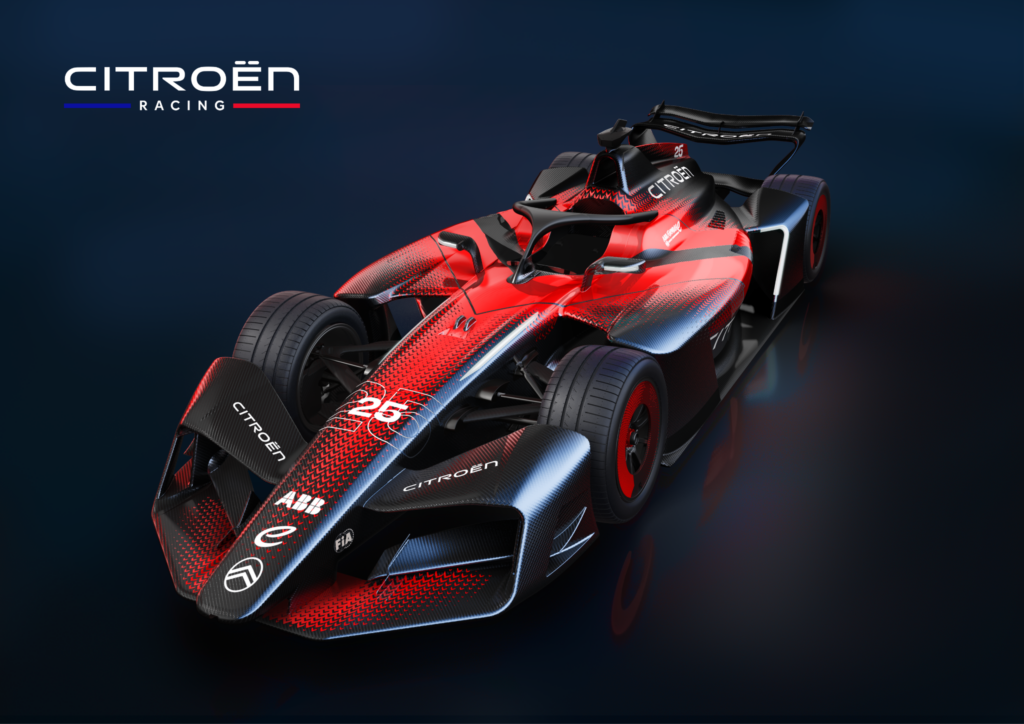
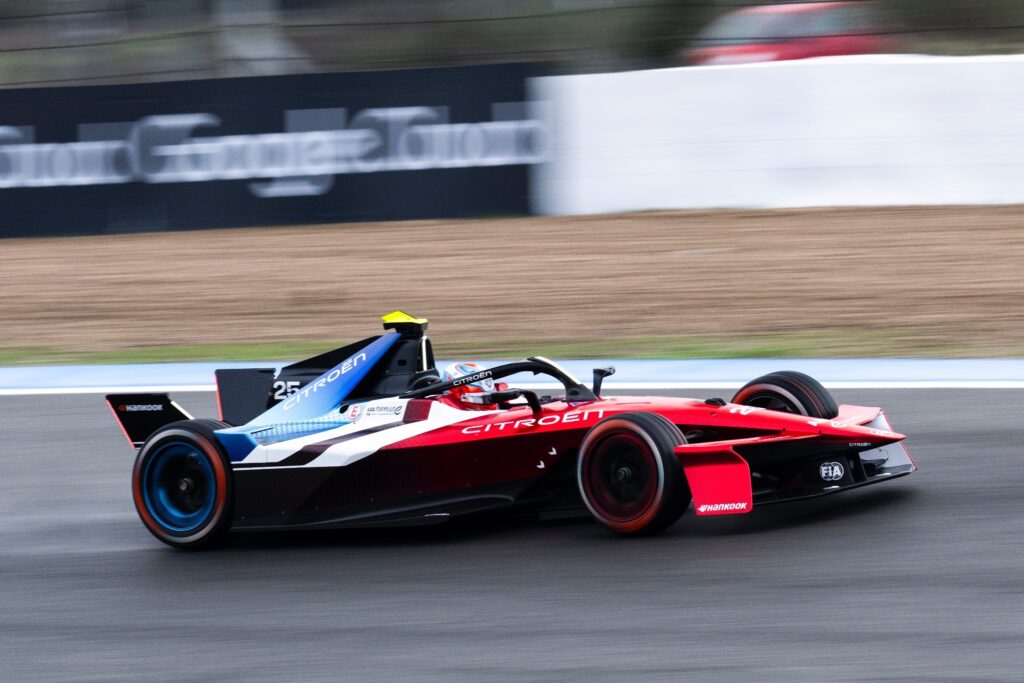
Following Porsche’s unveiling of the first GEN4 single-seater a few days ago, it is now official: Formula E is accelerating its transition into a new era. This time, it is Citroën and Opel – manufacturers owned by the Stellantis group – who are unveiling their first designs, confirming that the 2026/2027 season is no longer just a concept, but a reality already taking shape.
source: Stellantis
Citroën unveils a meticulously designed transitional livery
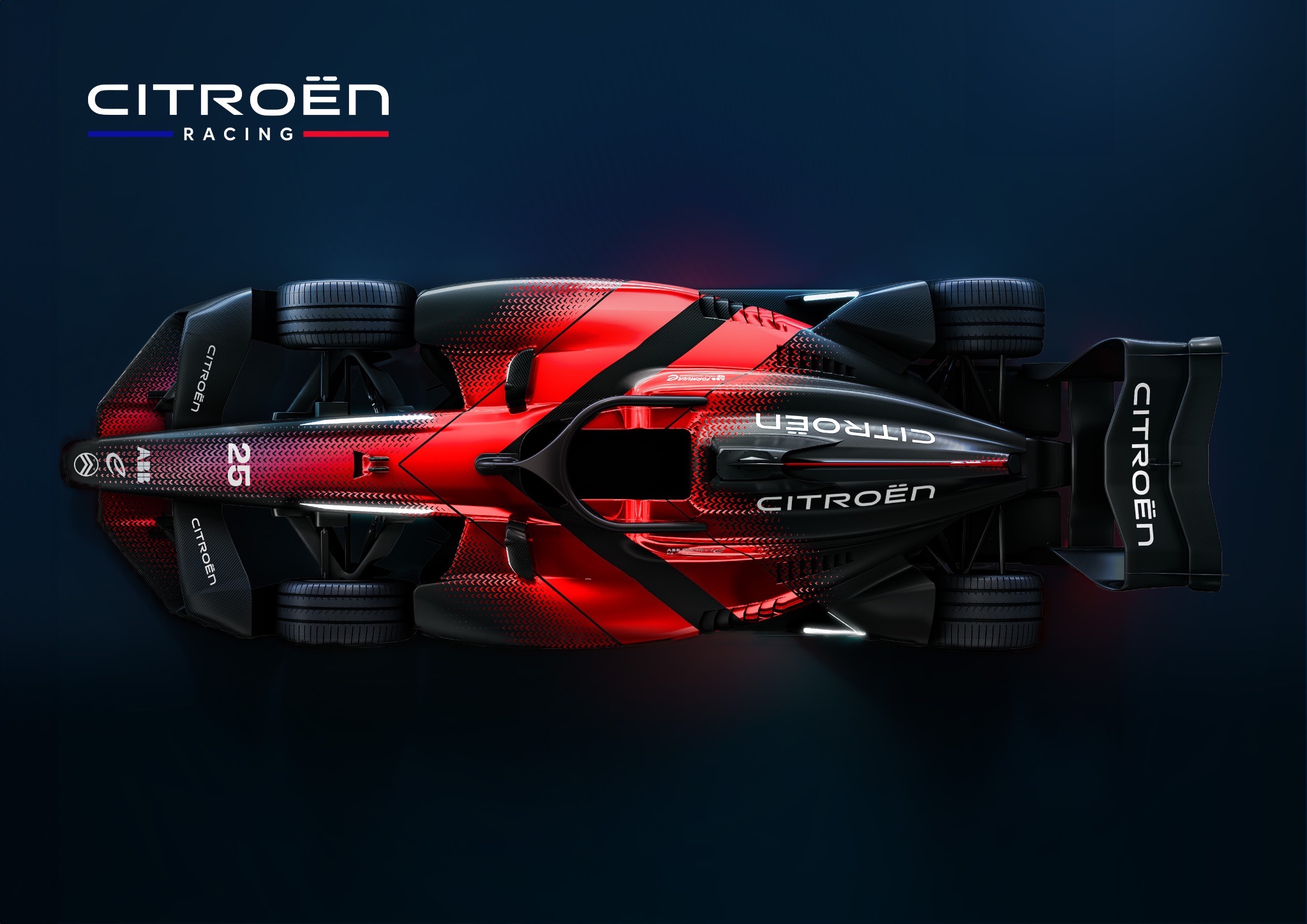
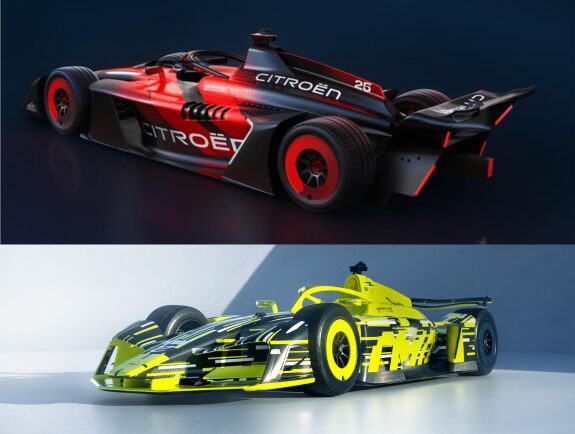
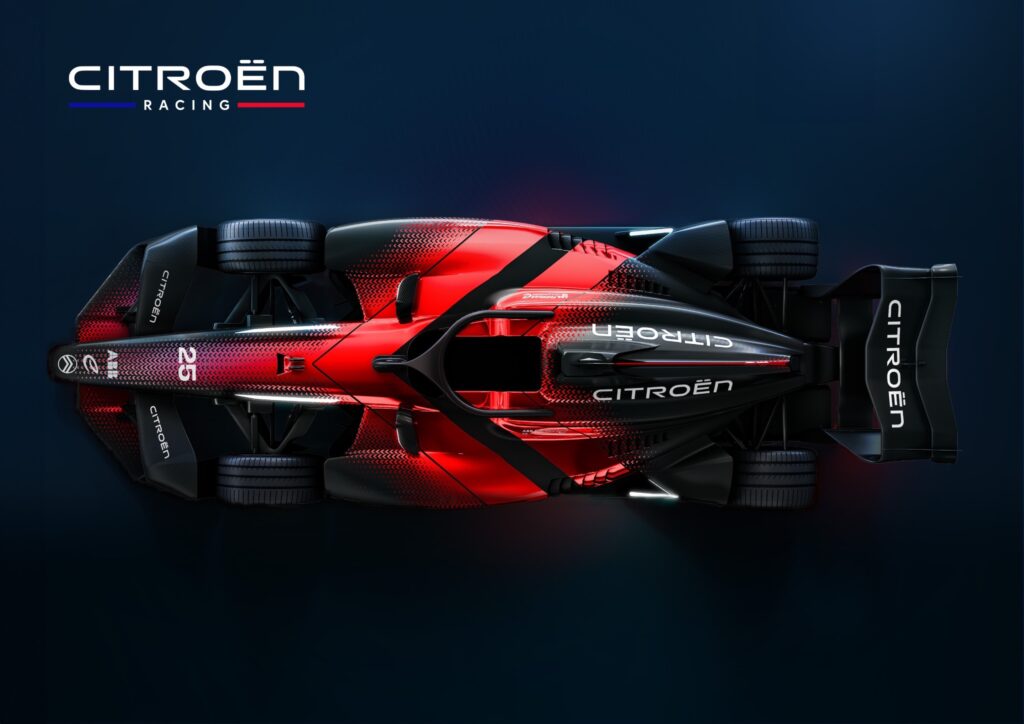
Just a few weeks after confirming its commitment to the GEN4 era at the Madrid E-Prix, Citroën has just unveiled the first visual renderings of its single-seater.
This is a so-called “camouflage” livery, intended as an interim step before the final version. But despite its temporary status, the design is already very distinctive.
In terms of design, it centres on the double chevrons, the brand’s historic signature, which serve as the graphic starting point. Pierre Leclercq, Citroën’s Design Director, sums up this intention: “With this livery, the aim was to continue developing the graphic language of the chevrons. The two central chevrons lend the car a more dynamic look, and it is from this point that we developed a gradient that extends across the entire bodywork.”
source: Stellantis
The brand also emphasises a progressive interpretation of the design, intended to change depending on the distance and the angle from which it is viewed: “This design builds on the one introduced for the 2025/26 season, creating a layered visual effect that gradually reveals itself as you get closer to the car.”
As explained, this ‘camouflage’ version gives a glimpse of the French brand’s design concepts, although, as we know, in the automotive world, last-minute changes are always a possibility.
A single-seater that truly marks the arrival of GEN4
Behind this initial aesthetic reveal, Citroën’s press release highlights technical developments designed to meet the increasing demands of Formula E. These requirements are in line with the new restrictions introduced by GEN4. Key features include permanent all-wheel drive, with power delivered to all four wheels at all times, as well as advanced traction control to optimise grip. Aerodynamics have also evolved, with two distinct configurations: one with high downforce for qualifying and another with low drag for the race.
source: Stellantis
The increase in power is significant: 450 kW in race conditions and up to 600 kW in qualifying and Attack Mode, compared with 300 to 350 kW in the previous generation. Added to this is energy recovery, which has been increased to 700 kW.
This isn’t news, but rather confirmation: the package as a whole will be faster, more complex and more strategic – in short, a real departure from GEN3.
source: Stellantis
Opel makes its debut with a prototype that’s already in action
At Opel, the tone is quite different. Whilst Citroën is rolling out its programme gradually, the German brand has opted for a much more direct approach for its debut in Formula E.
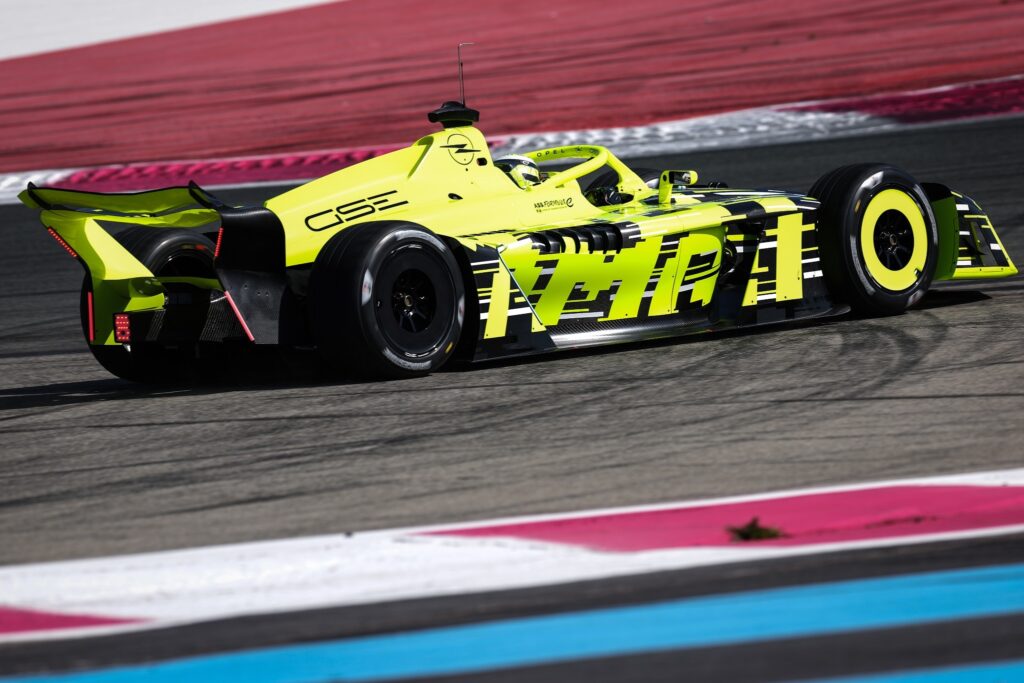
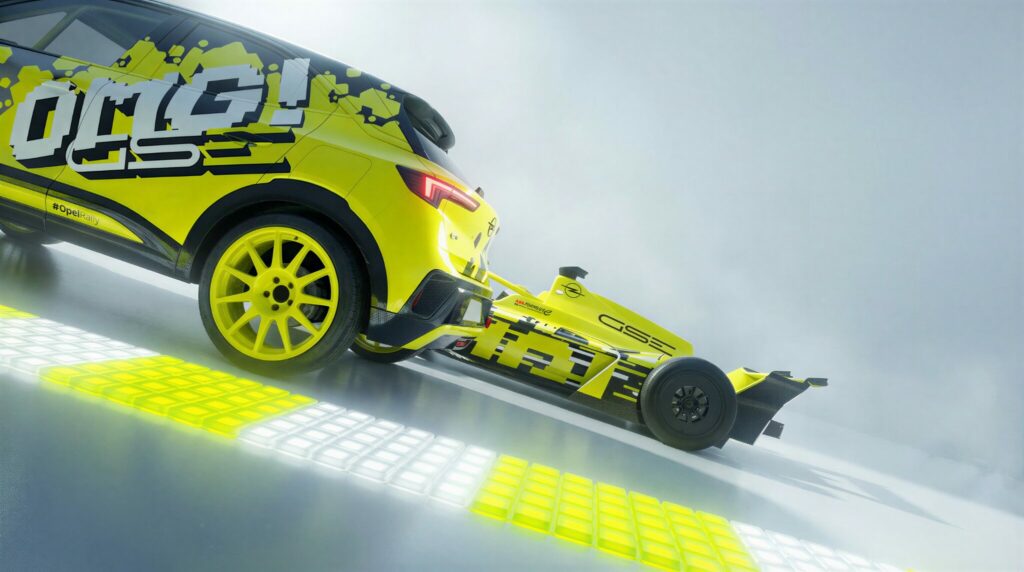
The first piece of news is that we now know the prototype’s name: “GSE 27FE”. It was unveiled at the Paul Ricard circuit, under real-world conditions, having already completed its first laps. This is a very clear way of positioning the project: Opel isn’t just showing off a car, but is launching a programme and making it clear that they’re ready to take on their future competitors.
Visually, Opel has adopted an expressive approach. The single-seater incorporates the “Lightspeed” design language, featuring bright yellow accents that stand out sharply against a darker base. Pierre-Olivier Garcia, Head of Global Design at Opel, explains the aim: “We want speed and performance to be instantly apparent, even before our GEN4 hits the track.”
source: Stellantis
As with Citroën, we can expect only minor changes to the car’s styling, as its final design will be unveiled in October when Opel attends the 2026 Paris Motor Show, where the entire GSE range will take centre stage.
A first step in the right direction and a very clear ambition
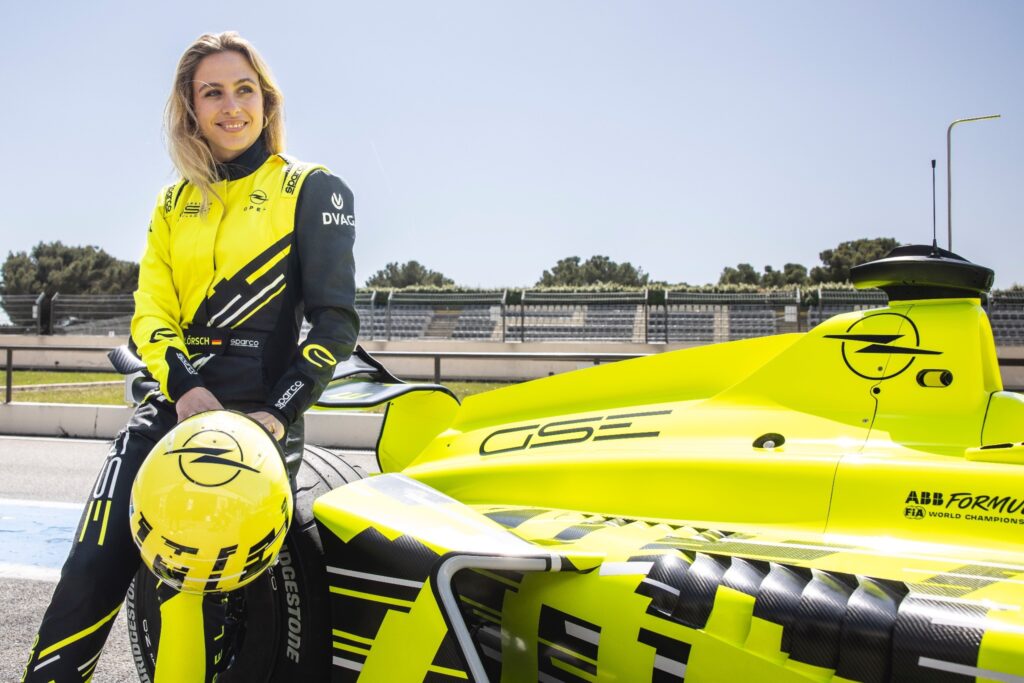
As explained earlier, Opel has already entered an operational phase, and it was Sophia Flörsch who took the wheel of the prototype for the first track tests at Le Castellet. A highlight for both the driver and the brand: “After the initial simulator tests, getting behind the wheel of Opel’s GEN4 Formula E car for the first time on the track is an indescribable moment. The instant acceleration, this completely new level of performance… we’re touching the future of motorsport and I’m ready to push the boundaries.”
source: Stellantis
Technically speaking, it boasts over 800 hp, permanent all-wheel drive and up to 700 kW of energy recovery. These figures immediately place Opel on a par with the expected standard for this new generation, which is reassuring for a brand that, as we’ve said before, is preparing to compete in its first Formula E World Championship.
Formula E as an industrial showcase
The German brand had already announced it: beyond performance, the all-electric single-seater is part of a clear strategy. “We are demonstrating just how exciting and relevant electric performance can be for Opel,” said Rebecca Reinermann, Vice-President of Marketing.
source: Stellantis
The significance lies in the fact that the GEN4 programme is presented as a genuine technology showcase for the GSE (Grand Sport Electric) range, with direct applications to production models. The message is clear: racing is becoming a tool for development and brand image.
Jörg Schrott, the programme’s Team Principal, emphasises this point: “What we are presenting today goes far beyond a simple prototype. The Opel GSE 27FE is a genuine rolling laboratory: every technology tested in racing will feed directly into our future production models.”
source: Stellantis
GEN4 is now a reality
Following Porsche, then Citroën and Opel, the 2026/2027 season is beginning to take on a much more concrete form. GEN4 is no longer just a set of regulations or a technical promise. It is becoming a reality, tested by drivers and brought to life by manufacturers who are beginning to establish their identities.
With over 240,000 electric cars registered in March and nearly 560,000 across the first quarter as a whole, the European market continues to grow and is even picking up pace. Data published by E-Mobility Europe and New Automotive, which track EV adoption in Europe, show not only an increase but also a shift in the pace of the electric transition in transport.
source: Stellantis
+51% in a month: a milestone reached
In March 2026, registrations of fully electric cars surged by 51.3% across 15 key European markets, exceeding 240,000 units. Over the quarter, growth reached 29.4%, with nearly 560,000 vehicles registered.
Market share is following the same trend: around 22% of new cars sold in March are now electric. Over the quarter, it has exceeded 20%.
Chris Heron, Secretary General of E-Mobility Europe, describes this as one of the “most significant recent advances in energy security during a month in which dependence on oil has become a real vulnerability”. Behind this statement lies a concrete reality: the half a million electric vehicles registered over the quarter will reduce oil consumption by around two million barrels a year.
source: E-Mobility Europe
Fuel prices as a trigger
We’ve already discussed this, and you’ve no doubt seen it in the media: this surge hasn’t come out of nowhere. The energy situation in the Middle East at the start of 2026 played a decisive role, with soaring fuel prices. Between February and April, the price of diesel rose from around €1.67 to over €2.27 per litre, whilst 95-E10 unleaded petrol approached €2.
For many motorists, the need to switch to electric vehicles in order to keep running costs down became apparent very quickly. And, for once, this was no longer a long-term consideration, but a direct response to a budgetary constraint.
Ben Nelmes, CEO of New Automotive, sums up this shift: “Every electric car registered means one less dependency on imported oil.”
Widespread growth across Europe
What sets March 2026 apart from previous months is the geographical scope of the trend. France stands out with a nearly 28% share of the electric vehicle market in March, driven in particular by social leasing. Germany is regaining momentum, with one in four cars sold being electric.
But the most striking signs are coming from markets that have historically been slower to grow. Italy is recording growth of over 65%, whilst Poland is growing by nearly 80%. These two countries, which appeared to be lagging behind, demonstrate that no market is truly off-limits.
A transition that is changing in nature
March 2026 marks a turning point, because whilst the European transition to electric vehicles has so far relied heavily on public incentives and regulatory requirements, things are now different. Electric vehicles are now gaining ground because, in certain situations, the economic case for them is becoming clear.
There is no doubt that fuel prices act as a catalyst, but they are not the only factor driving this change. Indeed, the range of options has expanded, prices have become more affordable, and people have a better understanding of how to use them.
source: Stellantis
The American paradox
What is ironic is that, in this context, a real paradox has emerged. This paradox concerns Donald Trump’s administration, which, since returning to the White House, has decided to cut or scrap several forms of support. Indeed, the $7,500 federal tax credit was scrapped in October 2025, and certain subsidies for charging points and equipment are also set to be phased out gradually.
Despite this, in the United States, following a very poor start to the year for EV sales, the market recorded over 100,000 sales in March 2026. This is where the paradox in question really comes into its own: it is the highest monthly figure since the tax credits were scrapped at the end of the third quarter of 2025.
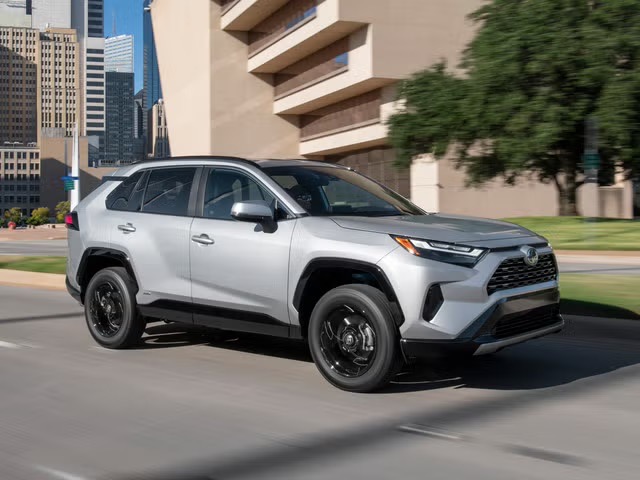
source: Toyota
A turning point rather than a peak
One question remains: is March 2026 merely a cyclical peak or a genuine turning point? Part of the rise can be attributed to orders placed before the energy crisis, which puts the immediate impact of fuel prices into perspective. However, consumer interest indicators are rising sharply. Indeed, the Centrale’s quarterly survey reports that 60% of respondents say the current geopolitical situation is increasing their interest in electric vehicles.
For the first time, electric cars are gaining ground for environmental, regulatory and immediate economic reasons. In an increasing number of situations, they are becoming the most sensible option available today.
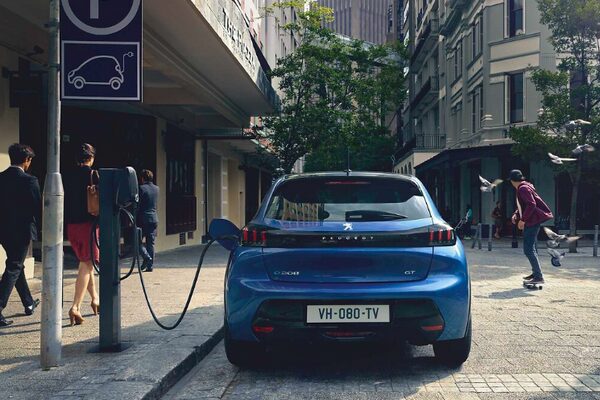
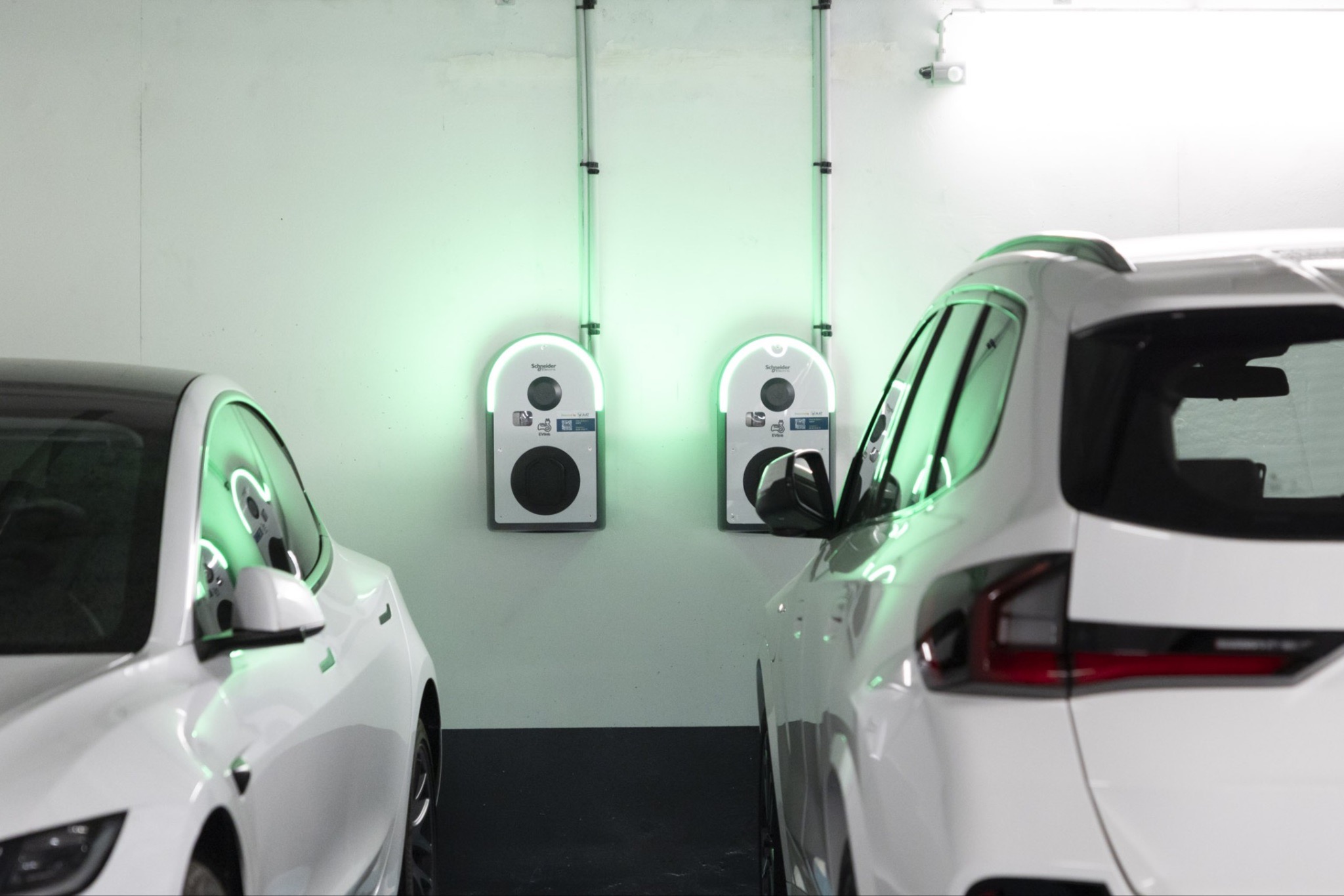
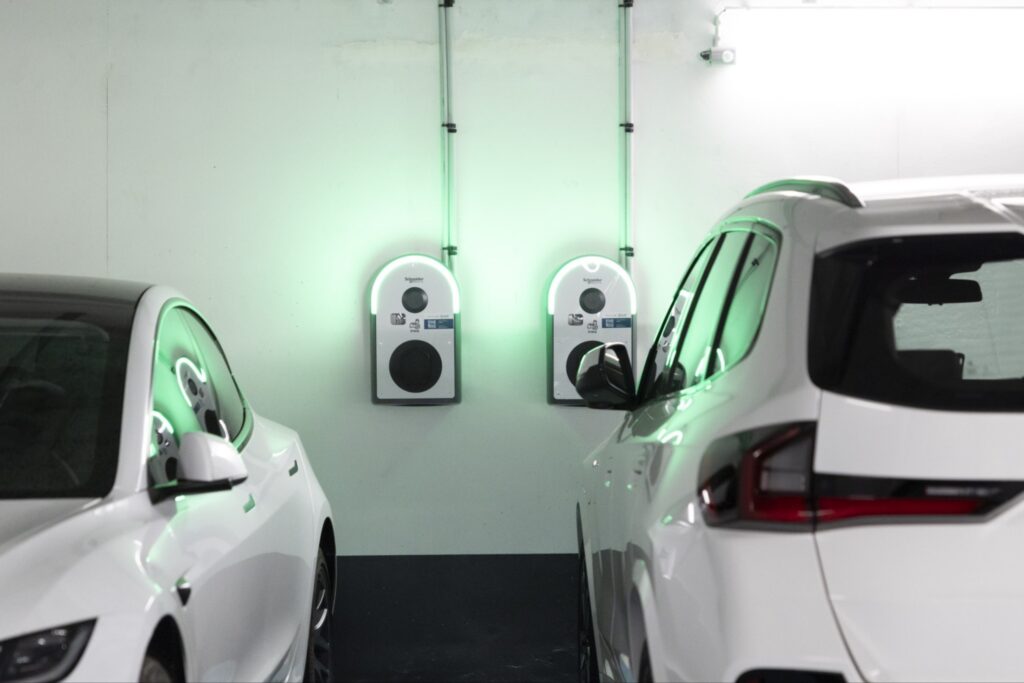
The government is stepping up its efforts on charging infrastructure in multi-occupancy buildings. Roland Lescure, Minister for the Economy, announced on Tuesday 21 March 2026 on RTL that the aim is to install electric charging points at 1.7 million parking spaces in block-of-flats by 2035. This addresses one of the main barriers to the adoption of electric vehicles in France.
source: Waat
The announcement: 1.7 million seats, 1.2 million more connections
By 2035, the government aims to enable the installation of charging facilities at 1.7 million parking spaces in residential blocks. Of these, 1.2 million will be new electric charging points – that is, spaces which currently have no charging facilities.
Roland Lescure made a blunt assessment on RTL: in this matter, “the real issue” is “often charging points”. “We’re told there aren’t enough charging points. What I can tell you today is that, thanks to the Caisse des dépôts et consignations, we’re going to increase the number of charging points in apartment blocks.”
The sentence is simple. But it conveys something important: the government recognises that the issue is no longer just the vehicle itself – since electric cars already exist, their prices are falling and their range is increasing – but rather the residential charging infrastructure in apartment blocks.
Source: RTL
Logivolt: the component that changes everything
The key mechanism is Logivolt. This subsidiary of the Caisse des dépôts not only provides grants but also advances funds to housing associations.
This is important for residents because, until now, installing charging points in a block of flats meant convincing a general meeting to approve the work, securing collective funding, and dividing the costs among owners in very different circumstances. The result: projects stalled for years, votes against the proposal, and entire blocks of flats left without access to home charging.
With Logivolt, the housing association funds the communal infrastructure without having to advance the funds. Only those owners who decide to install a charging point on their own property then pay a share of the cost. The others pay nothing. It is this model that makes voting at general meetings much simpler, because it removes the main obstacle: why should I pay for a charging point that I won’t use?
In practice, Logivolt does not install the charging points itself. The subsidiary of Caisse des Dépôts finances the communal infrastructure, then relies on approved operators to carry out the feasibility studies, construction work, connection and, subsequently, the operation of the charging points. For co-ownership estates, this is a key point: the scheme allows the project to be launched without having to advance the full amount of funds, and also allows residents to choose their own operator.
source: Logivolt
Increased support since 1 April
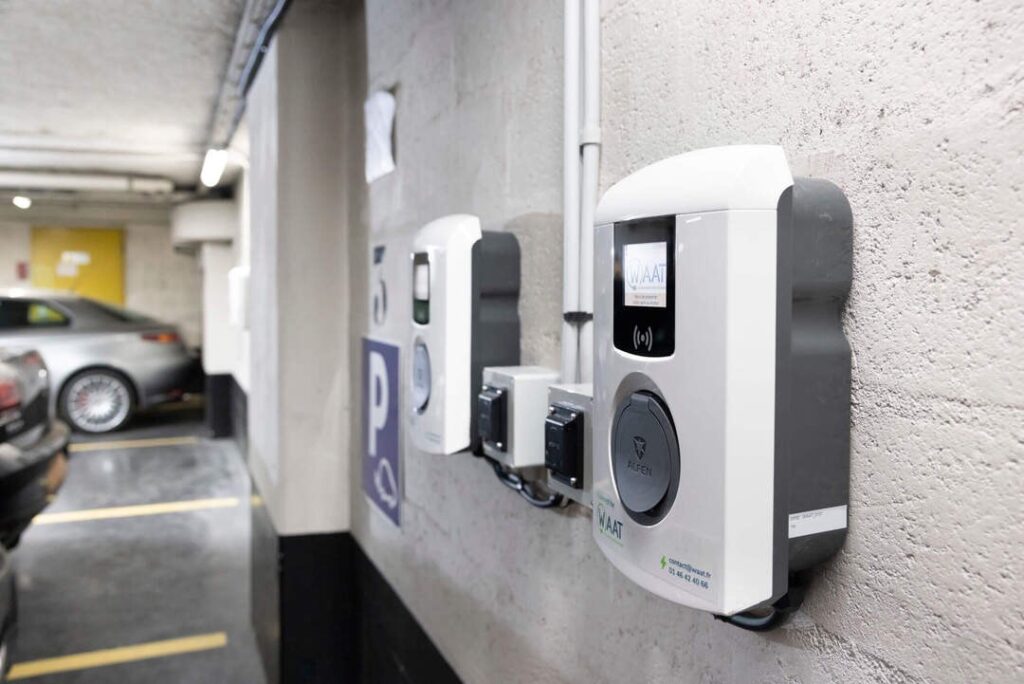
The minister’s announcement is part of a wider initiative. Since 1 April 2026, the grants available to housing estates wishing to install charging points in their car parks have been significantly increased. They now cover up to 50% of installation costs.
The subsidy for installing electrical infrastructure has seen its ceiling rise from €8,000 to €12,500 per building for car parks with up to 100 spaces. For car parks with more than 100 spaces, the subsidy increases to €125 per additional space, compared with €75 previously. To put these figures into perspective, for a large car park with 200 spaces, the difference between the two scales amounts to several thousand euros in additional public funding.
source: Waat
How is France doing when it comes to charging?
To understand why this plan specifically targets co-ownership properties, we need to look at the current state of the French network.
According to Enedis, by the end of 2025 there were around 185,000 publicly accessible charging points in France (municipal charging points, petrol stations, public car parks), 1.1 million in company car parks and 1.6 million at private homes.
These figures are encouraging for the development of electric mobility in France, but they mask a structural imbalance. In fact, home charging is almost exclusively limited to owners of detached houses, who can install a charging point at home without needing anyone’s permission. For the millions of French people who live in flats, the situation is radically different. Their car park is communal, decisions are not theirs alone to make, and the process is infinitely more complex. It is this gap that the government is now attempting to bridge.
The real obstacle to the transition to electric vehicles
The lack of charging points remains, alongside range and charging time, one of the main barriers to buying an electric vehicle. And among these, home charging is a particularly significant factor: without a simple solution at home, using an electric vehicle becomes a hassle and leaves drivers reliant on the public charging network.
For residents of apartment blocks – of whom there are many in France – the plan announced by Roland Lescure will not solve everything straight away: the target of 1.7 million parking spaces by 2035 still requires convincing co-ownership associations and getting the work underway.