Category: News

  • Porsche sets the lap record at the Nürburgring with the Taycan Turbo GT

    Porsche sets the lap record at the Nürburgring with the Taycan Turbo GT

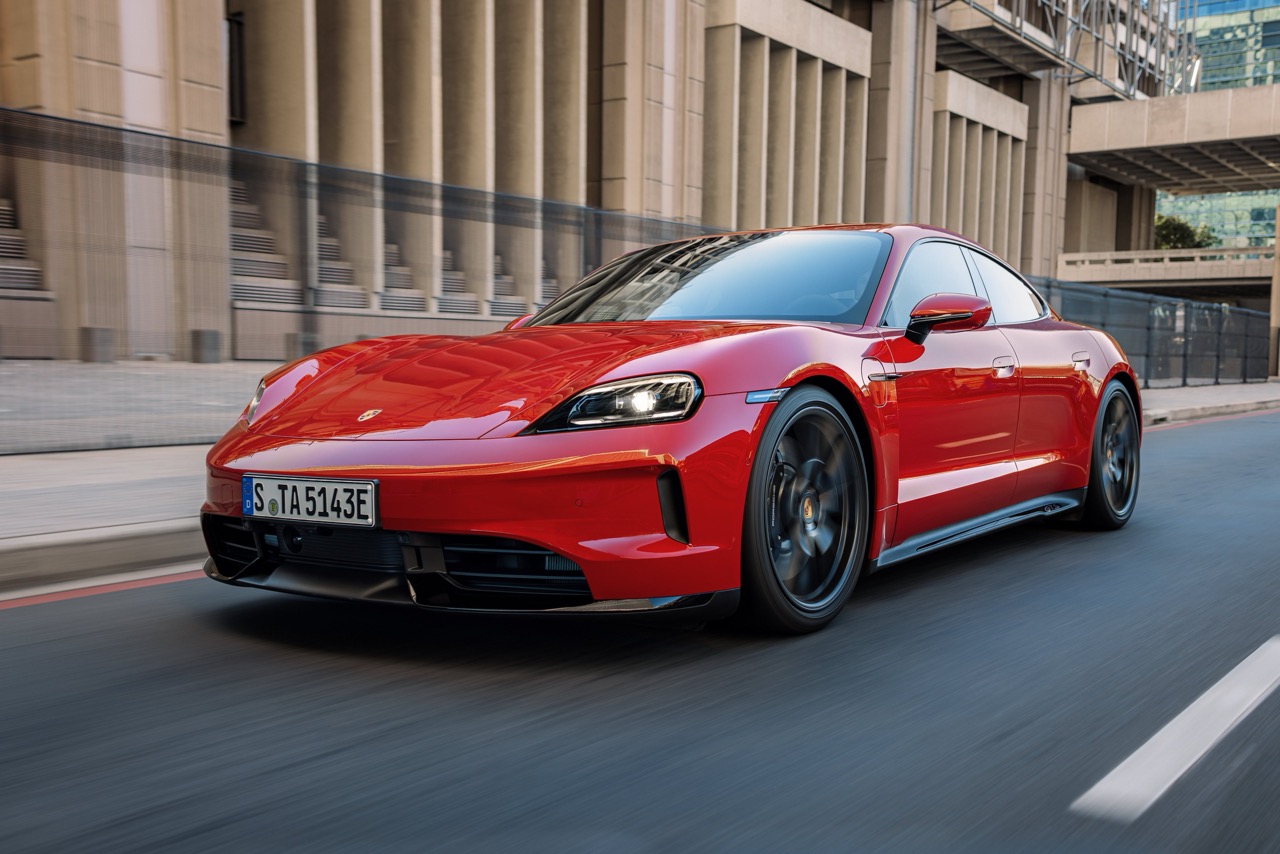
    With a time of 6’55’’533, the Taycan Turbo GT—specially prepared for the occasion (Weissach package and Manthey kit)—has broken the lap record on the Nürburgring Nordschleife in Germany. On this long and demanding benchmark track, the Stuttgart-based manufacturer is thus reigniting the battle for ‘symbolic’ supremacy among high-end electric supercars, in which Chinese brands have been actively participating for several years.

    9 seconds faster

    Porsche can proudly celebrate its success. The Taycan Turbo GT, fitted with the Weissach package and an aerodynamic kit from tuning firm Manthey, has set a record lap time of 6’55’’533 on the Nürburgring Nordschleife in the high-end electric vehicle category. The German sports car has beaten the previous record set by a model of similar power – the Xiaomi SU7 Ultra (7’04’’957, set in April 2025) – by 9 seconds. This achievement is no small feat, given the fierce rivalry that has developed between Western and Chinese manufacturers in the field of electric performance.

    The Northern Loop, a benchmark route

    The title of the fastest production electric car on the demanding German circuit is synonymous with expertise and excellence, and allows manufacturers to highlight the exceptional dynamic capabilities of their models. It is a matter of credibility for this cutting-edge technology. The Nordschleife, nicknamed the Green Hell, is a 20.832 km track, winding through the Black Forest. With over 70 bends, a surface that is sometimes uneven and a rugged terrain, this track has become a mecca for sports cars and supercars from around the world. Setting a lap record here is therefore a benchmark.

    Optimised aerodynamic design

    Three years after setting a previous record, Porsche has repeated the feat by specifically tuning its Taycan Turbo GT. The car, fitted with the Weissach package developed by Porsche’s motorsport department, features several enhancements. Combined with the kit from tuning firm Manthey Racing, the package delivers increased power, improved suspension, a more efficient drivetrain and enhanced aerodynamics. Downforce is more than tripled compared to the standard model. The engine’s power (600 kW) can gain an additional 130 kW in ‘Attack’ mode, bringing the total to nearly 1,000 hp. The top speed reaches 310 km/h and launch control torque is 1,270 Nm. “On the Nordschleife, you can really feel how much more stability and confidence the car offers in the fast sections and under braking,” explains Lars Kern, the Taycan Turbo GT driver. 

    With this ‘honorary’ title on this legendary track, Porsche is, of course, promoting this technology to its customers, but the aim of such a record is primarily a form of soft power, at a time when Chinese manufacturers – experts in electric powertrains – are regularly putting their cars through their paces on the Nordschleife to establish their credentials.

    YangWang’s previous record has been broken

    In August 2025, YangWang, the high-performance subsidiary of the automotive giant BYD, became the first production electric car to break the 7-minute barrier (6’59’’157), with the U9 Xtreme, a four-motor supercar boasting over 3,000 hp. The same car that had beaten the Bugatti Chiron’s speed record (496 km/h) added another feather to its cap. This new record at the Nürburgring, on European soil, allowed BYD to show the world that its technology is just as at home on the straights as it is in the corners, and that it has no qualms about pushing the boundaries with a car weighing over 2.4 tonnes. A truly symbolic achievement.

    Tesla had paved the way

    This spring, by setting an even faster lap time with a car that, on paper, has less power, Porsche has made a major impact and reignited the battle in the electric sports car segment between Western and Asian brands. In June 2023, Tesla had paved the way with the Model S Plaid and an already remarkable time of 7’25’’231. Since then, a race has been underway between engineers, drivers and aerodynamics specialists to beat the lap times, attempt after attempt. It is worth noting that the fastest car of all time on the Nordschleife remains… a Porsche with a hybrid engine: the 919 Hybrid Evo prototype (in 5’19’’546), an absolute record set in 2018.

  • Tesla is quietly raising the price of its Superchargers

    Tesla is quietly raising the price of its Superchargers

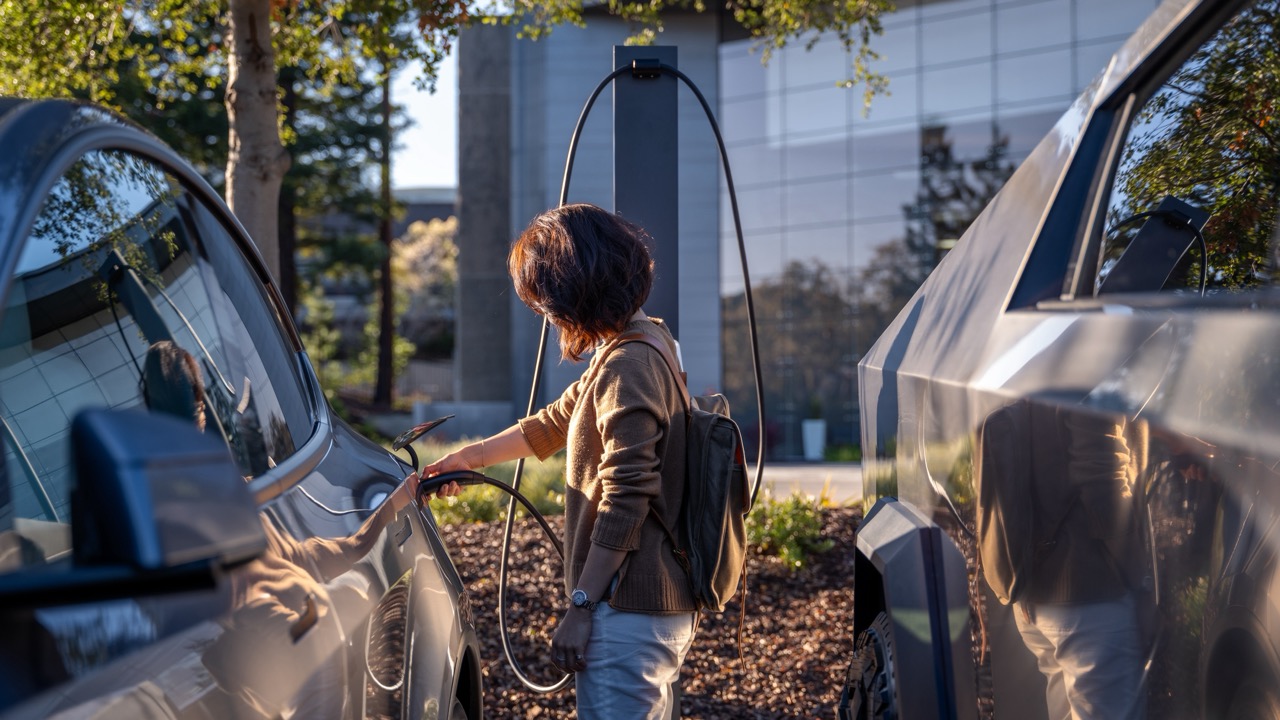
    Long regarded as the most competitive fast-charging stations on the market, Tesla Superchargers are seeing their prices rise in France. At some stations, the price now exceeds €0.70/kWh during the day for non-subscribers. This is a subtle but significant increase, which could reshuffle the deck in the face of increasingly aggressive competition.

    source: Tesla

    Price rises are now evident at many resorts

    Tesla has been using dynamic pricing across its network for several years. The price of charging varies depending on the time of day, how busy the station is, its location and electricity market conditions.

    Until now, this strategy has mainly enabled the company to offer very competitive rates, particularly in the face of competition from players such as Ionity and TotalEnergies. However, over the past few weeks, a significant rise in prices has been observed at many French charging stations.

    In the Paris region, for example, some charging points now charge particularly high rates during the day. Our colleagues at Génération-nt have noted that at the Parly 2 station in the Yvelines, the price can rise to €0.74/kWh between 10am and 7pm for drivers without a subscription. Other stations, such as Livry-Gargan, also reach €0.70/kWh at certain times, compared with around €0.45 previously. This represents an increase of up to 55% at some sites.

    source: Tesla 

    In practical terms, fast charging at Tesla can now cost as much, or even more, than at some competitors traditionally regarded as premium brands.

    Charging has become much more expensive for non-Tesla owners

    However, not all users are affected in the same way. Tesla owners automatically benefit from the network’s best rates. Drivers of electric vehicles from other brands can access these same terms via the Supercharger subscription, which costs €11.99 per month.

    The cost difference quickly becomes significant when charging a full battery. For a 60 kWh battery charged from 10% to 80%, the bill can range from around €17 to nearly €30, depending on the user’s status and the time of day chosen.

    On a long journey, the cost becomes even more apparent. A journey from Paris to Lyon requiring two quick charges can now cost a driver using a Tesla Supercharger without a subscription and charging during the day as much as €40.

    source: Tesla-mag

    Tesla is now focusing on “two-speed” charging

    Tesla’s strategy now seems much clearer: to make charging during peak hours more expensive whilst maintaining extremely competitive rates at night.

    For despite this overall increase, the American manufacturer continues to offer particularly competitive rates during off-peak hours. Between approximately 10 pm and 8 am, the rate drops to around €0.30/kWh for standard users, and can fall as low as €0.20/kWh for Tesla owners and subscribers. At these levels, Tesla remains virtually unbeatable in the ultra-fast charging market.

    Charging a 60 kWh battery from 10% to 80% therefore costs a subscriber around €8. Few competing networks are able to offer such competitive rates at fast-charging stations.

    This pricing policy is clearly designed to even out visitor numbers at the stations and encourage overnight charging, when energy demand is lower.

    The Supercharger subscription is becoming almost essential

    With this new pricing structure, the €11.99 monthly subscription takes on a much more strategic importance. Tesla estimates that it becomes cost-effective once you’ve used around 80 kWh from the grid per month, which is the equivalent of two to three fast charges a month. 

    The savings can quickly add up. With an average difference of around 15 to 30 pence per kWh between subscriber and non-subscriber rates.

    Competition is now much more aggressive

    This price rise is also taking place at a time when rival networks are becoming more established. Indeed, operators such as Electra, Atlante, Ionity and Fastned now offer more powerful infrastructure, modern charging stations and, above all, subscriptions that are often cheaper.

    Electra, for example, offers a subscription for €9.99 per month, allowing customers to charge at €0.29/kWh on its network. Atlante follows a similar strategy, offering preferential rates across several partner networks.

    source: Electra

    The result is that Tesla no longer automatically enjoys the cost advantage it had just a few years ago. For some electric vehicle drivers, checking price comparison apps before plugging in has now become essential.

    Why is Tesla raising its prices?

    There are several factors that may explain this trend.

    Firstly, the gradual opening up of Superchargers to vehicles from other manufacturers has significantly increased usage of the network. More vehicles means more peaks in energy consumption and, consequently, higher supply costs for Tesla.

    Furthermore, the manufacturer continues to invest heavily in expanding its charging infrastructure across Europe. These costs must be covered.

    Finally, this increase is also part of a broader commercial strategy: to make owning a Tesla or subscribing to the company’s service even more appealing.

    openings that have taken place or are due to take place in 2026 – source: BlogTesla

    Tesla remains formidable but is no longer unbeatable

    Despite this increase, Tesla retains several key advantages: the reliability of its charging points, the simplicity of the payment process, the density of its network and its charging performance.

    But Tesla’s dominance is far less clear-cut these days. During the day, Superchargers can now be among the most expensive options on the market for non-subscribers. Conversely, at night, Tesla remains one of the most competitive operators in Europe.

  • Lexus TZ: the new Japanese electric SUV that aims to turn the journey into a mobile lounge

    Lexus TZ: the new Japanese electric SUV that aims to turn the journey into a mobile lounge

    On Thursday 7 May 2026, Lexus unveiled the Lexus TZ, the Japanese brand’s new large, all-electric SUV. It heralds a new vision of luxury for the Japanese manufacturer: transforming the car into a true ‘Driving Lounge’, a space designed as much for the journey as for the drive itself. With this 5.10-metre-long model and its three rows of seats, Lexus is not simply seeking to launch a new electric family SUV. Above all, the manufacturer wants to demonstrate how electrification can redefine the in-car experience, combining silence, comfort, refinement and immersive technologies.

    source: Lexus

    A new chapter in Lexus’s electrification

    The launch of the TZ is part of the far-reaching transformation Lexus has been undertaking for several years. Following the Lexus UX 300e, the Lexus RZ and the various hybrid models in the range, the brand is now stepping up its efforts in the premium all-electric vehicle segment.
    The TZ is thus the largest electric SUV ever produced by Lexus and demonstrates the manufacturer’s ambition to move upmarket in the sector for large, premium electric family cars. The Japanese manufacturer is no longer just talking about electric mobility, but about a new way of travelling.

    Chief Engineer Takeshi Miyaura sums up this philosophy:

    “We have sought to offer a new Lexus experience (…) In addition to the traditional ‘seeing, riding and driving’ experience, we now offer the pleasure of ‘spending time’ inside the vehicle.”

    An approach that stands in stark contrast to conventional electric SUVs, which often focus on performance or pure technology.

    source: Lexus

    An SUV designed as a true ‘Driving Lounge’

    At the heart of the TZ project lies this new concept, dubbed the ‘Driving Lounge’. The idea is simple: to transform the cabin into a premium relaxation space, inspired by traditional Japanese architecture and the principle of Omotenashi hospitality, which is so dear to Lexus.

    In practical terms, the TZ features a six-seat layout with three rows of seats and two individual ‘captain’s’ seats in the second row.

    source: Lexus

    In terms of dimensions, the vehicle measures 5.10 metres in length, 1.99 metres in width and 1.70 metres in height. These dimensions give the SUV a wheelbase of 3.05 metres, resulting in a particularly spacious interior. The press release states that the absence of a transmission tunnel or fuel tank has allowed the rear seats to be lowered, thereby improving passenger comfort.

    Even the third row offers plenty of legroom and headroom – a feature that is rarely impressive in seven-seater electric SUVs. The large panoramic sunroof, billed as the largest ever fitted to a Lexus, plays a major part in creating this sense of space.

    source: Lexus

    A high-tech and ultra-refined interior

    Lexus goes to great lengths to perfect the interior ambience.

    The TZ features a new generation of slimmer, more sculpted seats; those in the front and second rows are heated and ventilated, whilst the third row can also be fitted with heating, depending on the model.

    source: Lexus

    The interior design takes a minimalist approach, featuring an extremely slim dashboard that incorporates the new ‘Responsive Hidden Switch’ controls. Hidden when not in use, they appear when a hand approaches the surface.

    The 12.3-inch digital instrument cluster works in conjunction with a 14-inch central multimedia screen based on the new Arene software platform.

    In particular, the system enables connected cloud navigation;

    • advanced management of electric vehicle journeys;
    • smart charging planning;
    • remote updates;
    • a digital key that can be shared with six users;
    • advanced streaming and connectivity features.
    source: Lexus

    The package can be complemented by a 21-speaker Mark Levinson audio system with 3D sound. This truly creates an interior designed for spending time in and for making every journey, long or short, a pleasant experience.

    An exterior design that combines power and aerodynamics

    Visually, the TZ boasts an imposing yet very fluid silhouette. Lexus refers to this as ‘Provocative Simplicity’, a new design direction that blends minimalist elegance with a confident presence.

    Despite its substantial size, the aerodynamic design achieves a drag coefficient of just 0.27, which is particularly low for an SUV of this size.

    The front end features the new Lexus design language, with a modernised interpretation of the grille and double-L light signatures. Viewed from the side, the semi-flush door handles, large, taut surfaces and aerodynamic 20- or 22-inch wheels reinforce the model’s premium feel. At the rear, the sloping roofline and flared wings give the TZ a very imposing, almost stately stance.

    source: Lexus

    Up to 408 horsepower and a range of 530 kilometres

    Let’s now turn to the technical specifications of this Lexus TZ. It will be available with two electric powertrains featuring DIRECT4 all-wheel drive.

    The first will be the Lexus TZ 450e, which will produce 313 horsepower (230 kW). The second, the Lexus TZ 550e, will be equipped with a 408-horsepower (300 kW) engine and will accelerate from 0 to 100 km/h in just 5.4 seconds.

    As for the battery, both versions are powered by the same 95.8 kWh lithium-ion battery. The claimed range varies between 480 and 530 kilometres, depending on the version. 

    When it comes to charging – a key factor for an EV – the SUV supports AC charging up to 22 kW and, more importantly, DC fast charging up to 150 kW. This means the battery can be charged from 10% to 80% in around 35 minutes.

    source: Lexus

    A driving experience designed with comfort as the top priority

    Although the TZ produces up to 408 horsepower, Lexus places greater emphasis on comfort and control than on pure sportiness.

    The SUV features a reinforced chassis, a specially designed suspension, rear-wheel steering, advanced electronic braking, and energy recovery with five adjustable settings.

    The DIRECT4 system automatically distributes torque between the axles to improve stability and traction. It also features the ‘Interactive Manual Drive’ system, previously seen on the RZ, which simulates the operation of a virtual eight-speed manual gearbox.

    source: Lexus

    Lexus aims to reinvent the large premium electric SUV

    With the TZ, the Japanese manufacturer is seeking to offer an alternative that differs from the ultra-technological or highly showy approaches already on the market.

    Whilst some competitors focus primarily on performance or maximum range, Lexus places the time spent on board, quietness, comfort and serenity at the heart of the project. A very Japanese vision of luxury that is now going electric. The TZ will go on sale in France in early 2027.

  • Opel is relaunching the sporty Corsa as a fully electric model

    Opel is relaunching the sporty Corsa as a fully electric model

    The return was eagerly anticipated, and we already know more about it. With the new Opel Corsa GSE, the German brand is marking the return of its sporty city car, but with a radically different approach. Gone are the combustion engines of the old GSi and OPC models; in their place is a high-performance electric compact. It is part of the manufacturer’s wider transformation, as it now seeks to combine electrification with driving pleasure in a segment where ‘small sports cars’ had almost disappeared.

    source: Opel

    A radical Corsa… and the most powerful ever produced

    A few weeks ago, the first details and images of the Opel Corsa GSE were revealed during testing at the Nürburgring, and we now know a little more about it. On paper, this Corsa GSE marks a real generational leap. With 207 kW (281 hp) and 345 Nm of torque, it is quite simply the most powerful production Corsa in history.

    Whilst the manufacturer had already predicted impressive performance figures, with 0–100 km/h in 5.9 seconds, this sporty little city car will actually reach that mark in 5.5 seconds. This figure places it firmly in the territory of much larger sports hatchbacks. Top speed is limited to 180 km/h, a standard choice to preserve range and manage thermal efficiency.

    There are three driving modes to suit your preferences:

    • a Sport mode that unleashes the full power,
    • a Normal mode limited to 231 hp,
    • and an Eco mode limited to 150 km/h to prioritise fuel efficiency.

    Opel has fitted a 54 kWh battery under the floor, combined with a dedicated thermal management system, which is essential for maintaining performance over the long term.

    source: Opel

    A bold design, blending tradition and modernity

    Visually, too, we know more, and the least we can say is that Opel isn’t going for a low-key look. The Opel Corsa GSE boasts a distinctly sporty design, crafted to be instantly recognisable.

    At both the front and rear, the bumpers feature a sharper design, with redesigned air intakes and vertical elements that visually emphasise the car’s width. The wider wheel arches, highlighted by black trim, reinforce this more aggressive stance.

    The look is dominated by 18-inch alloy wheels, fitted with Michelin Pilot Sport 4S tyres (215/40 R18), which are clearly performance-oriented. Behind these specially designed wheels, the apple-green Alcon brake callipers bearing the GSE logo are clearly there to catch the eye – a small detail, certainly, but one that immediately emphasises the car’s sporty character. The black roof and rear spoiler visually lower the car’s profile.

    source: Opel

    Inside, the German brand pays homage to its classic sports cars whilst updating the design language. The sports seats feature Alcantara inserts with integrated headrests, finished in a black, grey and yellow chequered pattern – a direct nod to the classic GSi models. The yellow seatbelts further reinforce this identity.

    source: Opel

    The atmosphere is both more high-tech and more immersive. The driver is faced with a customisable digital instrument cluster, complemented by a 10-inch central touchscreen. According to the brand’s press release, these interfaces incorporate data specific to the GSE world: G-forces, acceleration performance, battery management and real-time dynamic information.

    source: Opel

    The return of a historic crest in a new era

    Behind this Corsa GSE lies an image issue as well. The GSE label – which stands for “Grand Sport Electric” – is gradually replacing the brand’s former sports designations, namely GSI and OPC.

    A repositioning that has already begun with the Opel Mokka GSE, and which reflects a clear ambition: to make electric vehicles a source of excitement.

    The Corsa GSE thus follows in the footsteps of the Corsa GSi of the 1980s and the OPC models of the 2000s, but with a new challenge: to prove that driving pleasure can survive the move away from the internal combustion engine. This is, in fact, what the sceptics of electric technology are trying to convince us of.

    source: Opel

    An electric strategy that’s all about enjoyment too

    With this model, Opel is confirming a major trend: the return of high-performance small sports cars, made possible by electric power. The absence of penalty charges, instant torque and high performance are breathing new life into a segment that had virtually disappeared under regulatory pressure. It will be positioned in the same segment as the Peugeot e-208 GTI, the Lancia Ypsilon HF, the Abarth 600e from Fiat, and the future Volkswagen ID.Polo GTI.

    The Corsa GSE, along with the rest of the Blitz brand’s sports range, will be officially unveiled at the 2026 Paris Motor Show, ahead of its expected launch by the end of the year. However, the price has not yet been announced. 

  • The ID Polo: an icon set to launch Volkswagen into the electric city car segment

    The ID Polo: an icon set to launch Volkswagen into the electric city car segment

    Volkswagen is banking on the reputation of its legendary Polo to make its debut in the rapidly expanding market for electric city cars. The ID Polo embodies the brand’s DNA: a universally appealing design, remarkable interior space, versatility and a starting price of €24,995 for the ‘small battery’ version (325 km range). Manufactured in Spain, the Renault R5’s new rival will hit the roads at the end of the summer.

    The Polo: over 20 million units sold in 50 years 

    With the launch of the ID Polo, Volkswagen is continuing the legacy of a popular and world-renowned car, with over 20 million units produced since 1975. The Polo has long been nicknamed ‘the Ant’ for its robustness and reliability, all packed into the unassuming body of a small car. The 100% electric ID Polo aims to capture these qualities of versatility. “The ID Polo is arriving at just the right time in a rapidly expanding market: that of electric city cars,” says Sylvain Charbonnier, Managing Director of VW France. “When you see it, you immediately recognise the VW style through its design and the quality of its materials. We’ve included plenty of nods to the original Polo, such as the speedometer. This ID Polo carries on the brand’s legacy and, without being presumptuous, we’re very confident in its ability to appeal to electric car drivers.” 

    The spaciousness of a Golf in the size of a Polo

    Measuring 4.05 m in length (2 cm shorter than the petrol-powered Polo, which remains available in the range), the ID. Polo is built on the new MEB+ platform used across the Volkswagen Group (notably the Cupra Raval and Skoda Epic). This architecture creates more space on board, including rear legroom and a boot with 25% more capacity: 441 litres (up to 1,240 litres with the seats folded down). It offers the interior space of a Golf within the dimensions of a Polo. Five people can therefore be accommodated on board and should be more comfortable than in a Renault R5, its designated rival. This is a factor that should weigh heavily in users’ decisions. The quality of the materials and the redesigned ergonomics, with more physical controls (one button, one function), mark a correction of the flaws previously noted on the ID models.

    Two battery capacities

    The VW city car will be available with two battery capacities: a ‘small’ 37 kWh battery (LFP chemistry) offering a range of 325 km, paired with either a 116 hp or 135 hp motor. However, from launch, it is the “large” 52 kWh battery version (NMC chemistry), with a range of 450 km and a 211 hp motor, that will be available to order. “Unlike our competitors, we offer fast charging as standard across the entire ID Polo range,” explains Sylvain Charbonnier. “As customers become increasingly interested in electric technology, it is important to provide this charging convenience. For the small battery, it takes 24 minutes to charge from 20% to 80%, and 3 minutes longer with the large battery.”

    From €24,995

    Already available to order, the entry-level ID Polo (37 kWh battery and 116 hp) starts at €24,995. Volkswagen manufactures the batteries and assembles the car in Europe, so the model is eligible for the ‘Electric Vehicle Incentive for Private Individuals’, bringing the price down to €19,825. In terms of price, it sits in the lower-middle range of European electric city cars. However, it is not yet clear whether the ID Polo will be eligible for the government’s relaunched social leasing scheme, although the model is expected to receive the eco-score, according to ADEME criteria.

    The start of a long list of IDs

    This launch marks the start of a major wave of electrification across the VW range. Eight models will be rolled out gradually. The ID.3 Neo (a revamped version of the ID.3) – a rival to the Renault Megane e-Tech – arrives next July. The ID. Polo will feature a sporty GTI variant. The Paris Motor Show will be the venue for the unveiling of the ID. Cross (an SUV derivative of the ID. Polo). “This expanded range is justified in the French market,” emphasises the CEO of VW France. “The geopolitical context encourages us to continue with electrification, although our electric sales were already doing well even before the crisis. By 2025, 30% of Volkswagens sold were electric, with the ID 3 and ID 4 leading the way.” 

    The Polo ID is set to amplify this trend, particularly as the German brand is under pressure from the arrival of more affordable Chinese models. “This competition must challenge us and push us to perform better and listen to our customers. Did you know that 2 million motorists in France drive a VW? We must therefore continue to satisfy them with today’s technologies, says Sylvain Charbonnier.

  • BMW has produced over 2 million electric cars and is cementing its industrial growth

    BMW has produced over 2 million electric cars and is cementing its industrial growth

    BMW has reached a milestone that is symbolic, but above all significant in industrial terms. The German group has announced that it has produced its two-millionth fully electric vehicle at its Dingolfing plant in Germany. Behind this figure lies a significance that goes far beyond mere publicity: it says a great deal about the manufacturer’s gradual shift towards electric vehicles, without abandoning its multi-energy strategy.

    source: BMW Group

    A symbolic milestone, and above all an industrial one

    According to a press release from the BMW Group, the lucky winner is a Tansanite Blue BMW i5 M60 xDrive, assembled at the Dingolfing plant and destined for a Spanish customer. The figure speaks for itself and is highly symbolic: with 2 million electric vehicles produced, BMW confirms that it is a major player in the energy transition within the transport sector.

    Although the group remains far behind the sales volumes of the global leaders – led by BYD, Tesla and the Volkswagen Group – the pace is clearly picking up. This milestone illustrates a steady rise in momentum, driven by the expansion of the product range and the gradual transformation of the German group’s factories.

    source: BMW Group

    An old strategy, but one that has long been progressive

    Unlike other manufacturers, BMW did not wait for the recent trend to take off. In fact, the group has been mass-producing fully electric cars since 2013 with the BMW i3, which is assembled in Leipzig.

    This pioneering model laid the foundations for the “i” range, but its popularity grew only gradually over several years, as the brand’s hallmark has always been its high-performance combustion engines.

    It is particularly since the early 2020s that the manufacturer has stepped up a gear, with a proliferation of models and a more far-reaching transformation of its manufacturing facilities.

    source: BMW Group

    Dingolfing, BMW’s industrial heartland for electric vehicles

    The press release issued on 5 May 2026 highlights Dingolfing, and this is no coincidence. The Lower Bavarian site is now BMW’s main industrial showcase for electric vehicles. Since 2021, it has been producing models such as the BMW iX, the BMW i7 and the BMW i5, all of which are electric.

    In four years, more than 320,000 electric vehicles were assembled there, accounting for nearly one-sixth of the total. More recently, in 2025, more than a quarter of the site’s production was already 100% electric.

    Above all, Dingolfing is not just an assembly plant. The site has produced over 1.5 million electric motors and more than a million high-voltage batteries. In other words, it is a key hub in the group’s electric vehicle value chain.

    source: BMW Group

    An industrial network that is already largely electrified

    But whilst the Dingolfing plant is being highlighted, it is in fact just one key part of a wider network. BMW now produces electric vehicles at all its major German plants, including those in Munich, Regensburg and Leipzig.

    Internationally, production also relies on sites such as Shenyang in China and Spartanburg in the United States, depending on the model and components.

    This structure enables the group to scale up its operations without relying on a single site, whilst preparing the next generation of “Neue Klasse” vehicles.

    A conscious choice for multi-energy

    This is the other key message in the press release. BMW is not opting for an abrupt switch to all-electric vehicles. The manufacturer continues to produce petrol, hybrid and electric models on the same assembly line.

    source: BMW Group

    This ‘mixed production’ approach allows production to be tailored to demand on a market-by-market basis. It is a more flexible approach than that of some competitors, who completely separate their production lines, thereby running the risk of overproducing in the face of demand that can fluctuate depending on various factors. In other words, BMW is safeguarding its transition by keeping all options open.

    Electrification that will continue to gather pace

    The German giant’s strategy is well known: it aims for around 50% of its sales in Europe to be electric by 2030. And some sites will make the switch more quickly than the rest of the group; a prime example is the Munich plant, which is set to become 100% electric from 2027.

    source: BMW France

    Reaching the 2 million vehicle milestone confirms a fundamental trend: at BMW, electric vehicles are no longer a separate segment, but a core part of the business.

  • Uber is cutting its fares and supporting its drivers in the face of soaring fuel prices

    Uber is cutting its fares and supporting its drivers in the face of soaring fuel prices

    The energy crisis is hitting the ride-hailing model hard. Faced with soaring fuel prices since the start of the conflicts in the Middle East, Uber is rolling out an emergency plan in France: lower fares, reduced commission rates and new incentives to speed up the switch to electric vehicles. Behind these announcements, the American firm’s aim is to keep drivers in business at a time when their costs are skyrocketing.

    source: MOZCO

    A fuel crisis that is undermining the entire sector

    The job of a private hire driver is often seen as precarious, but this is now more true than ever. Indeed, for several weeks now, there has been a sharp rise in petrol prices. As everyone knows, this increase is linked to geopolitical tensions in the Middle East; the price per litre has now risen above €2, which is having a direct impact on drivers’ incomes.

    For the approximately 30,000 private hire drivers active on ride-hailing platforms in France (Uber, Heetch, Bolt), the impact is immediate. Drivers using petrol-powered vehicles are seeing their running costs rise sharply, whilst their working conditions are also deteriorating: longer waiting times at petrol stations mean fewer journeys are completed, leading to a drop in profitability.

    source: Maxime JEGAT

    Uber is banking on a 30% reduction in fares to boost demand

    Very recently, the US ride-hailing giant announced several measures to address these issues. The first is to adjust prices to boost business. Uber has announced a 30% reduction in fares for its Uber X Share carpool service. This measure is described as temporary.

    The idea is simple: to attract more customers to offset the decline in drivers’ earnings. And the solution is already in place. Since early March, these shared rides have surged by 54%, demonstrating strong demand for cheaper journeys in an inflationary climate. In other words, Uber is seeking to offset squeezed margins by increasing volume.

    source: Uber

    Lower commission rates for the most active drivers

    At the same time, the platform is also adjusting its own model. Around 1,000 of its most active drivers will benefit from a “significant reduction” in service fees through the Uber Pro programme.

    The aim is clear: to directly offset the rise in fuel costs for those who drive the most. This is a targeted measure that prioritises those who are most dependent on their private hire work.

    Electric vehicles are becoming an economical solution, not just an environmentally friendly one

    But beyond these emergency measures, Uber is above all accelerating its fundamental transformation: moving away from combustion engines. It is important to note that, since 2022, it has no longer been possible for new drivers to register with a diesel-powered vehicle. The platform has announced: “a one-off subsidy of €1,500 towards the hire of new or used electric vehicles, with unlimited mileage via Flexifleet”.

    This initiative already appears to be having an impact. Between February and April, enquiries about switching to electric vehicles rose by 60%, whilst the uptake of electric vehicles increased by five percentage points.

    This strategy is backed by a €75 million fund, launched in 2020 and partly financed by customers, to support drivers’ transition.

    source: Uber

    A fleet that is already largely electrified

    The results are clear. In just a few years, Uber’s fleet in France has changed dramatically:

    • diesel, which accounted for over 85% of vehicles in 2020, now accounts for less than 5%;
    • 93% of vehicles are now hybrid or electric;
    • and around 25% are fully electric.

    In the same vein, the company recently announced the acquisition of HysetCo’s fleet of hydrogen-powered taxis in Paris, adding a further 800 vehicles to its ecosystem.

    source: Uber/HysetCo

    These measures appear to be an immediate response to the fuel crisis. But they also reflect a more fundamental shift in the Uber model. The sharp rise in oil prices is acting as a catalyst: it is undermining the viability of petrol and diesel vehicles and making electric vehicles a more economically attractive option for drivers. One key question remains: will these adjustments be enough if the energy crisis becomes a long-term issue?

  • Allan Swan appointed as ACC’s new chief executive to revitalise the industry

    Allan Swan appointed as ACC’s new chief executive to revitalise the industry

    ACC is entering a new phase in its development. The European manufacturer of electric vehicle batteries has announced the appointment of Allan Swan as Chief Executive Officer with effect from 1 May 2026, with a clear mandate: to accelerate industrial ramp-up in a challenging environment. This change in leadership comes as the group faces operational difficulties at its site in the Hauts-de-France region and increased pressure from Asian competitors.

    source: ACC

    A change of leadership at a critical juncture

    ACC is changing leadership at a pivotal moment in its industrial development. Indeed, the joint venture (between Stellantis, Mercedes and TotalEnergies) has so far failed to turn its ambition into a tangible industrial reality. 

    And to achieve its goals, the company has decided to appoint a new leader. The man chosen for the role, Allan Swan, is no ordinary figure: he was previously head of Panasonic Energy USA, where he oversaw the ramp-up of two gigafactories supplying Tesla, amongst others. His expertise is directly relevant to ACC’s current challenge: moving from industrial promise to controlled mass production.

    Allan Swan said he was “honoured by the trust placed in me by ACC’s shareholders and excited to be joining the company at such a crucial time for the electric vehicle industry.”

    source: The Business Journals

    Yann Vincent, the project’s architect, is stepping down

    This change also marks the end of an era. Allan Swan is taking over from Yann Vincent, who is retiring after six years at the helm of the company, having been there since its inception.

    Under his leadership, ACC laid the foundations for the European battery industry: launching the first gigafactory, establishing an industrial ecosystem and developing clean technologies through its R&D centre in Bordeaux-Bruges.

    But the role of a builder is not that of large-scale industrial production. The handover precisely reflects this shift: after the construction phase comes the industrial production phase.

    source: Lionel Vadam

    A ramp-up that proved more difficult than expected

    That is the crux of the matter. ACC itself acknowledged last February that ramping up production at its plant in northern France is “taking longer and costing more than anticipated”.

    In this industry, everything hinges on process control: production volumes, scrap rates and line stability. Yet it is precisely these factors that determine profitability.

    The group nevertheless reports progress: module production has doubled in the space of a few months and the rate of unusable batteries is falling. However, these advances are still insufficient to fully stabilise the business model.

    source: ACC

    Increasing external pressure

    These internal difficulties are occurring against the backdrop of a tighter market.

    On the one hand, demand for electric vehicles continues to grow, albeit at a slower pace than expected. On the other hand, European manufacturers – ACC’s main customers – are taking a more cautious approach to their investments.

    Above all, competition from Asia is a major challenge. Companies such as BYD and CATL largely dominate global battery production, benefiting from low costs and a high level of industrial maturity. Against this backdrop, ACC must both catch up in terms of industrial capacity and secure its markets.

    A strategic project for European sovereignty

    Despite the challenges, the stakes remain high: ACC is at the heart of the European strategy for industrial sovereignty.

    Today, almost all the batteries used in Europe are produced by Asian manufacturers. ACC’s ambition is precisely to reduce this dependence. The joint venture’s new CEO is confident on this point: “I look forward to working with the ACC teams to accelerate growth, expand our manufacturing capacity, and support Europe’s ambition for clean, competitive and energy-independent mobility.”

    But this ambition comes at a cost. The group has, in fact, put its plans for new factories in Germany and Italy on hold

    A new, more demanding phase

    The appointment of Allan Swan appears to be a logical choice. He is taking over a well-structured but vulnerable company that is making its own energy choices, as ACC has chosen to focus on the NMC (nickel-manganese-cobalt) segment, a battery chemistry valued for its energy density but more expensive than LFP (lithium-iron-phosphate). 

    source: ACC

    That is precisely what this new phase is all about: turning an industrial ambition into a sustainable economic reality. And it is precisely in this area that the new leader is expected to deliver.

  • April 2026: a real surge in EV adoption, but still subject to certain conditions

    April 2026: a real surge in EV adoption, but still subject to certain conditions

    The French electric car market is reaching a new milestone. Sales volumes are rising significantly, certain models are establishing themselves firmly at the top of the sales charts, and the market share continues to exceed a quarter of all new registrations. Yet despite this momentum, some consumers remain sceptical.

    source: Renault 

    A clear improvement, but in a challenging market

    The figures for April 2026 confirm that the genuinely positive trend observed over the past few months is continuing.

    With 36,216 registrations, electric car sales have risen by 41.8% year-on-year and now account for 26.2% of the market, according to data provided by industry players.

    In the first four months of the year, the market has seen cumulative sales of over 148,000 electric vehicles, compared with around 100,000 during the same period in 2025. However, this increase must be put into perspective straight away.

    The global car market, meanwhile, remains relatively stable (-0.26%).

    Models that are finally shaping the market

    This shift in scale is evident in the sales figures.

    In April, the Renault 5 topped the market with 3,418 registrations. It was ahead of the Renault Scénic E-Tech, with 2,114 units, and the Citroën ë-C3, which recorded 1,611 units. The Tesla Model Y, long the market leader, slipped to fourth place with 1,456 units.

    This ranking shows that the electric vehicle market is no longer driven solely by a handful of premium or high-profile models. More affordable vehicles are beginning to drive the market, with sales volumes reaching significant levels.

    Another interesting point is that French models now occupy a prominent position at the top of the rankings, reflecting a rebalancing of the industry and the market.

    source: Renault

    Growth largely driven by

    This acceleration is not spontaneous. It is the result of a combination of very specific factors.

    According to AAA Data and industry analysis, this growth is primarily due to a fall in prices across several segments, with some city cars seeing price reductions of around 10% to 12%.

    This is also due to the rapid expansion of the range, with over 180 models now available, compared with just over 110 two years ago.

    Added to this are public policies, which continue to play a decisive role, whether through incentives, energy-saving certificate schemes or social leasing schemes.

    This point is key to understanding the market: growth is happening, but it remains partly driven by external factors.

    source: AAA Data

    The crucial role of fleets

    Another driving force, often less visible, plays a significant role in this trend: businesses. According to data published by AAA Data, company fleets are accelerating their transition, driven by a combination of tax incentives and regulatory requirements.

    They now account for a growing proportion of electric vehicles, with figures well above those seen among private individuals.

    This trend has a major indirect effect: by rapidly replacing their vehicles, fleets are feeding the second-hand market, which in turn facilitates the wider adoption of electric vehicles over time.

    source: MobilyGreen

    Private individuals remain cautious

    But whilst the figures seem to suggest that things are moving in the right direction for the world of electric mobility, a study carried out last January by the Institut Mobilités en Transition and IDDRI challenges this view.

    French people who still drive petrol or diesel cars aren’t ruling out electric vehicles, but they aren’t switching over in droves either.

    Their stance is more nuanced: they are waiting for assurances.

    According to the findings of these interviews, which were conducted in four major French cities (Paris, Bordeaux, Saint-Étienne and Dijon), the price of a new EV remains a key factor, as do range, charging facilities and the resale value of their electric vehicles.

    This discrepancy helps to explain some of the current dynamics of the market. Demand exists, but it is most evident when economic conditions become favourable, particularly in the context of social leasing schemes.

    It should also be noted that these interviews were conducted before the rise in fuel prices caused by the conflicts in the Middle East

    A transition that is well underway, but not yet self-sustaining

    The French market is therefore in a transitional phase. Electric vehicles are gaining ground, driven by more competitive models, proactive government policies and the leading role played by businesses.

    However, it does not yet rely entirely on households’ own choices. This is what creates the current paradox: volumes are rising sharply, but the transition remains dependent on external factors.

    Key takeaways

    Electric cars are increasingly establishing themselves as a major player in the French car market. Sales figures are strong, the range of models is growing, and the momentum is clearly building.

    But this growth remains limited. It still depends on prices, subsidies and regulatory constraints. The real shift will come when these factors become secondary.

  • BYD expects its profitability to fall in early 2026 following a significant decline in 2025

    BYD expects its profitability to fall in early 2026 following a significant decline in 2025

    Chinese car manufacturer BYD has seen a sharp decline in profitability. Following a 19% drop in net profit in 2025, the group is facing an even tougher start to 2026, with a 55% fall in profit in the first quarter. This sequence of events confirms growing pressure on margins, against a backdrop of intense competition and massive investment.

    source: BYD

    Profitability down despite a strong year in terms of volume in 2025

    In 2025, however, BYD maintained strong sales momentum. The group sold 2.26 million vehicles worldwide – a record high – whilst generating revenue of 804 billion yuan (approximately 101 billion euros), up 3.5%.

    However, at the same time, net profit fell to 32.6 billion yuan (approximately 4.08 billion euros), a year-on-year decline of 19%.

    The picture is clear: BYD continues to grow, but this growth is becoming less profitable. The manufacturer is selling more, but profit growth is no longer keeping pace.

    source: BYD

    The price war in China is putting pressure on profit margins

    This shift can largely be attributed to the situation in the Chinese market. Competition there is particularly fierce, with a growing number of players and constant pressure on prices. Against this backdrop, manufacturers have launched a full-blown price war to maintain their sales volumes. BYD is no exception, offering substantial discounts on part of its range.

    The direct consequence is that margins are shrinking. Whilst the group is maintaining its sales, this is at the expense of reduced profitability. This phenomenon extends beyond BYD alone. It reflects a broader trend in the Chinese electric vehicle market, where growth remains strong but competition is becoming increasingly cut-throat on prices.

    source: Geely

    A slowdown already evident in the second half of 2025

    The decline in results did not happen overnight. It unfolded gradually throughout 2025. The first quarter still posted a very strong performance, with a net profit of 9.15 billion yuan, up by more than 100% year-on-year.

    However, the trend then reversed. In the third quarter, net profit fell by 32.6% to 7.82 billion yuan, whilst turnover also fell by 3.05%.

    source: BYD

    A deterioration that is set to worsen in early 2026

    The initial results for 2026 confirm and reinforce this trend. In the first quarter, BYD reported a 55% year-on-year fall in net profit to 4.08 billion yuan. At the same time, turnover fell by 11.8%.

    This is a significant sign. In 2025, BYD was still managing to maintain its sales volumes despite falling profitability. By early 2026, the pressure had spread to the business itself, with a decline in revenue. In other words, the downturn was beginning to affect business performance.

    Heavy investment that is also weighing on results

    Beyond competitive pressure, BYD is also feeling the effects of its own strategy. The group is investing heavily in its manufacturing capacity, technologies and international expansion. This ramp-up, which is essential to sustain its growth, comes at a cost that is weighing on profitability in the short term.

    The business model remains focused on volume, innovation and international expansion. However, this strategy entails a phase in which margins are inevitably under pressure. The decline in profit can therefore also be attributed to this combination of external pressure on prices and internal pressure linked to investment.

    source: BYD

    A group that remains dominant, but is under strategic pressure

    Despite this backdrop, BYD remains one of the world’s leading electric vehicle manufacturers, ahead of Tesla in terms of sales volume. Its industrial position remains strong, with the capacity to produce on a large scale and cover a wide range of electrified vehicles.

    But the situation is changing. It is no longer simply a matter of growing rapidly, but of maintaining a balance between volume, margins and expansion. Pressure on profitability is mounting just as BYD is stepping up its international expansion, particularly in Europe. This gap between global ambition and economic constraints represents a key strategic challenge for the coming years.

    Growth remains steady, but is becoming more challenging

    BYD is not in crisis. The group remains profitable, continues to sell on a large scale and retains a dominant position.

    But the 2025–2026 period marks a turning point. Growth in volumes no longer guarantees a corresponding increase in profits, and pressure on margins becomes a defining factor.