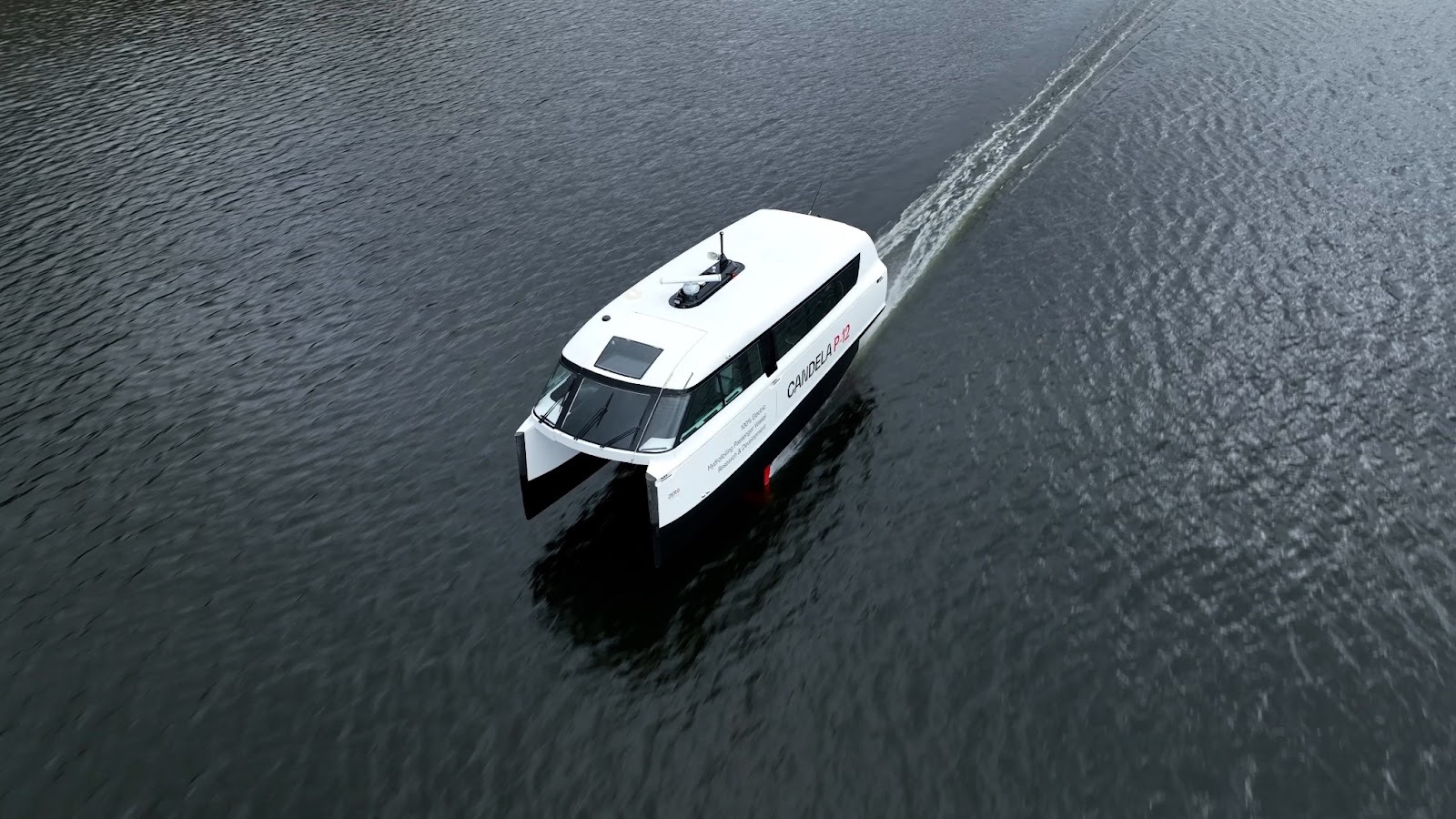
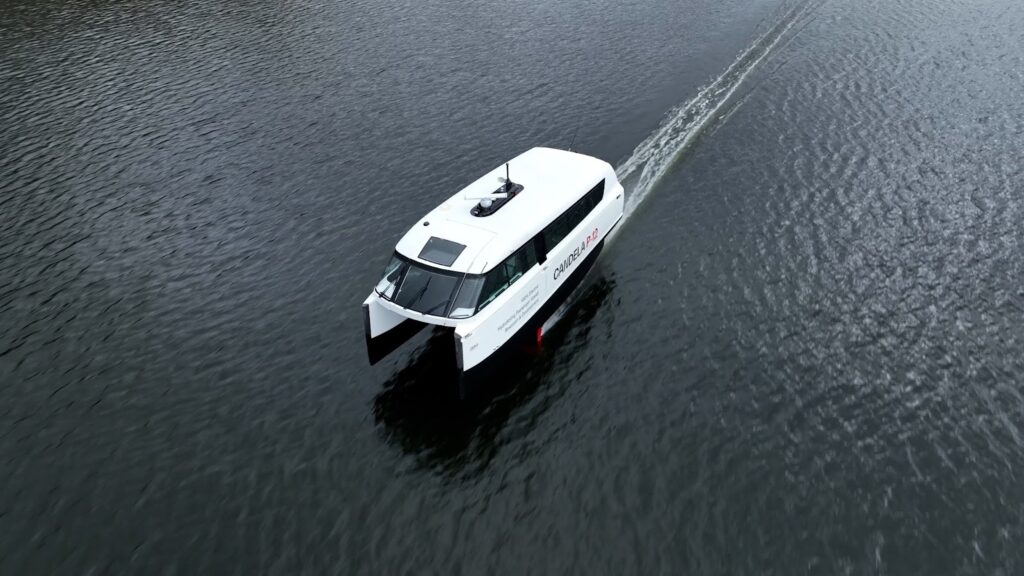
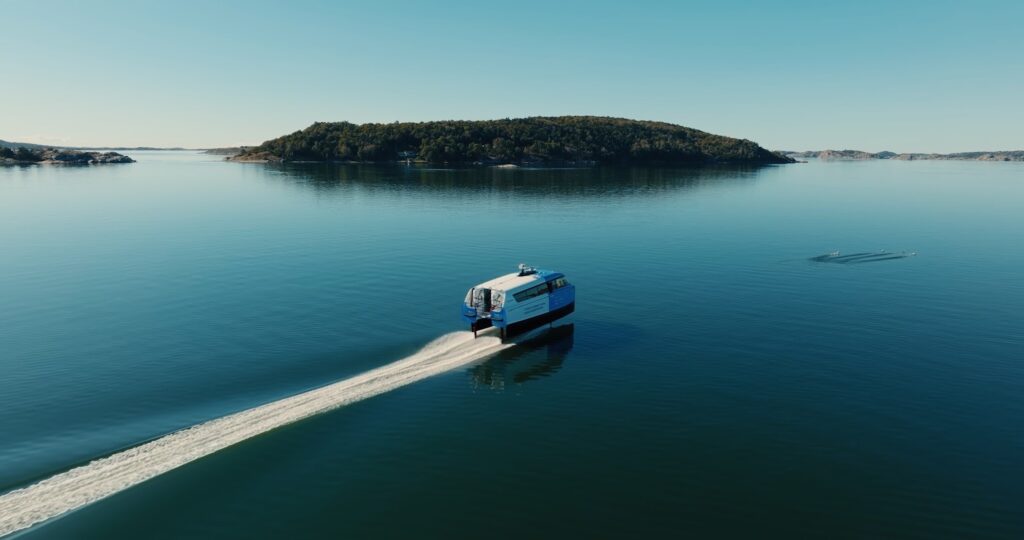
At the end of January 2026, a Swedish electric ferry set the world record for the longest voyage ever made by an electric ship, by sailing almost 300 kilometres from Gothenburg to Oslo. But beyond the symbolic performance of the Candela P-12, this crossing above all marks a strategic breakthrough: that of maritime electrification that can be operated without heavy infrastructure.
source : Candela
A record, but above all a commercial demonstration
The journey took place over three days, between 30 and 31 January 2026, along the coasts of Sweden and Norway. In total, the boat, which can carry up to 30 seated passengers plus a captain, covered 160 nautical miles (296 km), with simple stops made at public quays to demonstrate recharging, without a dedicated megawatt station or battery exchange.
source : Candela
At the helm of the operation was Gustav Hasselskog, founder and CEO of Candela Technology. For the Swedish entrepreneur, the message of this event is not just about performance:
“Charging infrastructure is the hidden cost of electrifying conventional ships. In many cases, building multi-megawatt chargers costs as much as the ships themselves. Our breakthrough is that the P-12 charges quickly and can operate anywhere.
The figures back up this claim. The total energy cost of the trip was no more than 200 euros, or around 0.12 €/km, with three to four partial recharges of 20 to 60 minutes via conventional DC charging points (150 to 350 kW).
The secret: flying over water
The Candela P-12’s performance is the result of a radically different architecture to traditional ferries. The ship is based on hydrofoils controlled by artificial intelligence, capable of lifting the hull from 50 centimetres to one metre above the water at speeds of up to 16 knots. The result is simply stunning in every way:
80 to 90% less consumption,
virtually no wake,
silent navigation,
and a massive reduction in seasickness (up to -90% according to Candela).
source : Candela
The Candela P-12 is a true racing car of the seas, powered by two C-POD electric motors developing up to 340 kW continuously, fed by a lithium-ion battery with a usable capacity of around 336 kWh. This performance is comparable to that of a traditional thermal ferry, with a cruising speed of 25 knots and peak speeds of 30 knots, but with a zero environmental footprint in use.
An already credible business model
Priced at €1.7 million, the Candela P-12 costs no more to buy than an equivalent diesel ferry. On the other hand, its operating costs are up to 50% lower, thanks to simplified maintenance and an obviously derisory energy cost, thanks to electric power.
Obviously, this economic equation changes the game for local authorities and shipping operators. Whereas some countries rely on heavy, bulky and expensive recharging infrastructures, or on battery exchange systems costing hundreds of millions of euros, Candela offers a more accessible approach that can be deployed immediately.
Scandinavia: laboratory for flying electric ferries
This is no stroke of luck for the Nordic brand, since the Candela P-12 has already been integrated into public transport projects, notably around Stockholm. There, it links the island of Ekerö to the city centre of the Swedish capital in 25 minutes, compared with almost an hour by bus.
source : Candela
What’s more, in neighbouring Norway, several local authorities are testing the P-12 on short coastal routes – a necessity for this country, which is aiming for 50% zero-emission ferries by 2025. The electric hydrofoil ferry is thus becoming a strategic tool for reconciling mobility, the environment and geographical constraints.
Towards clean shipping on a daily basis?
This record is more than just a technological achievement for Candela. It validates a concept that is destined to become more widespread: electric ferries capable of providing regular services of up to 50 nautical miles, with controlled costs and a minimal environmental footprint.
At a time when the International Maritime Organisation is aiming for carbon neutrality by 2050, the Candela P-12 shows that this transition is achievable without any loss of quality.
Electric propulsion is beginning to find practical applications in military aviation. In 2026, several armed forces around the world have already integrated electric light aircraft, motor gliders or eVTOL (electric vertical take-off and landing) into their systems, mainly for training, logistics or special missions. France, on the other hand, is taking measured steps forward.
legendary aircraft
In France, electrification limited to instruction
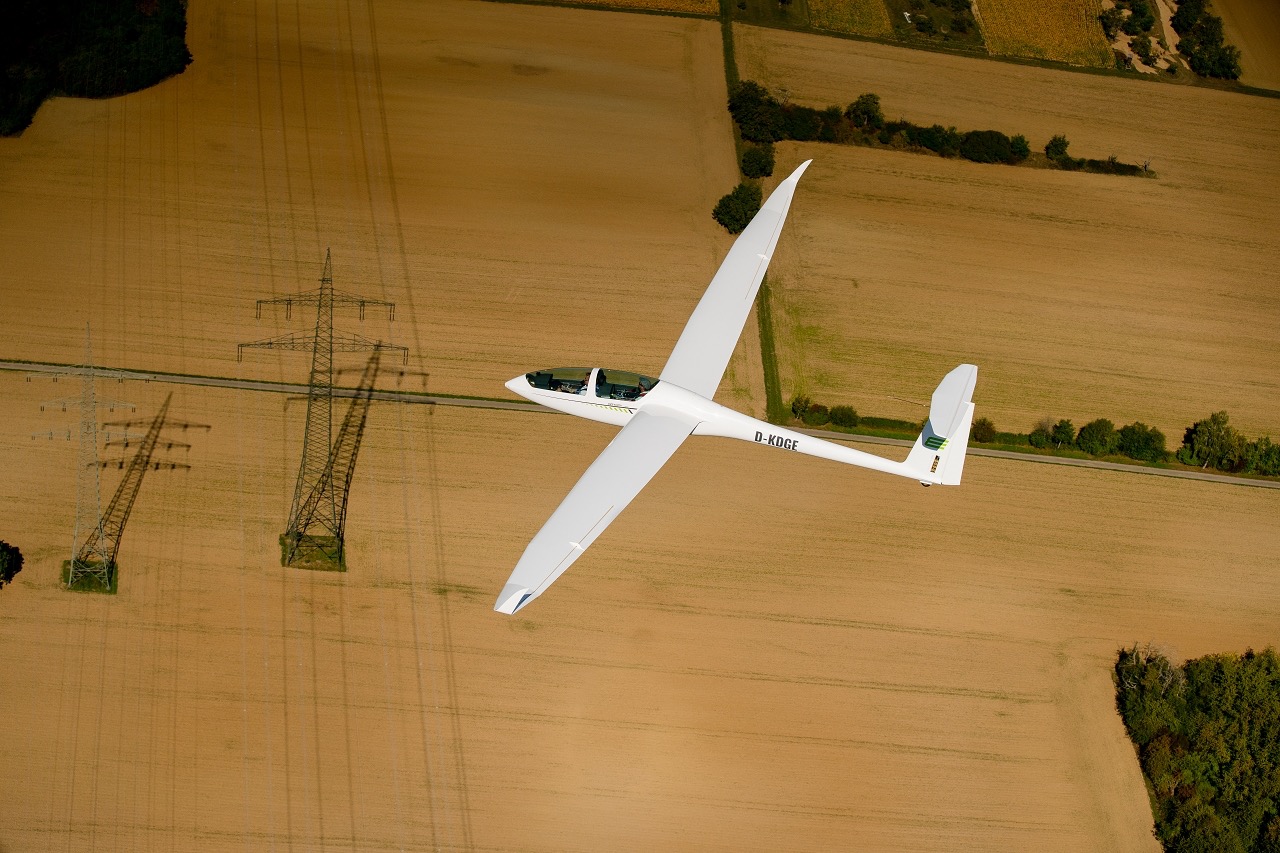
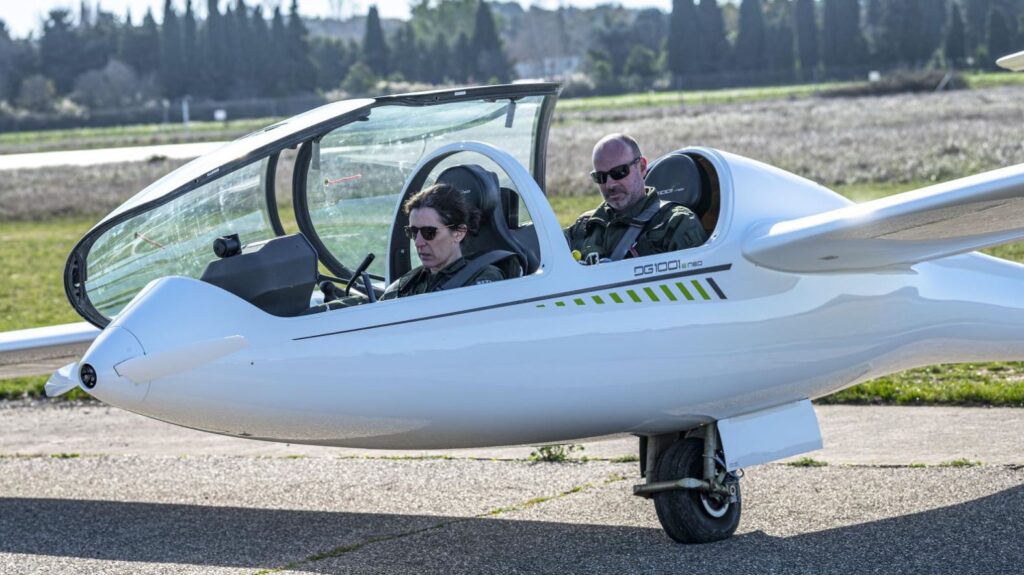
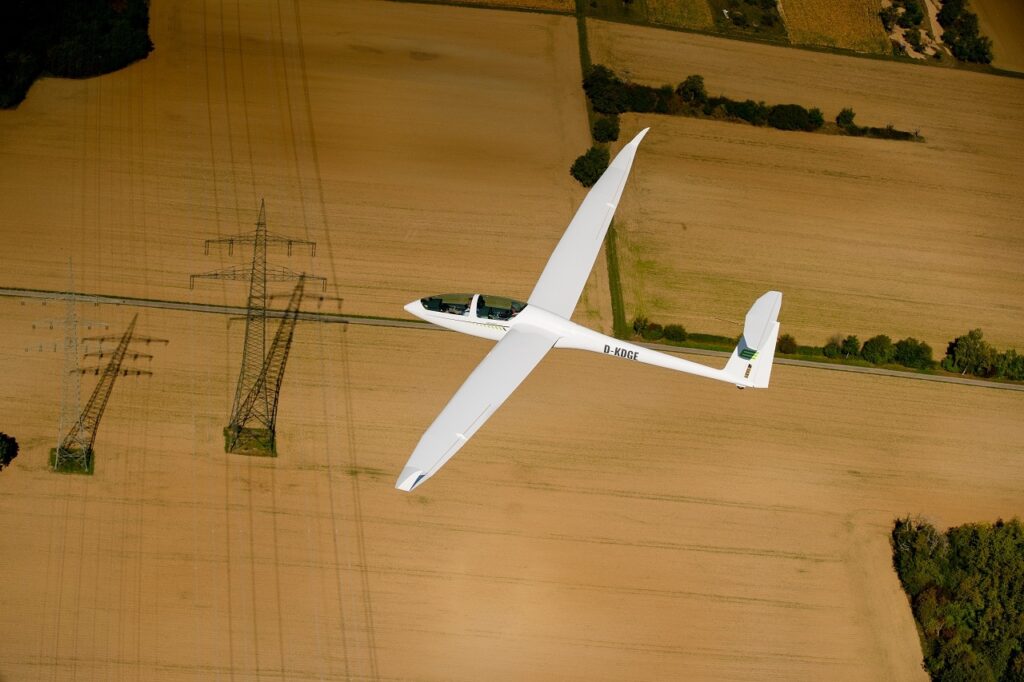
As far as the French Air and Space Force is concerned, the use of electric propulsion is currently strictly confined to training. In March 2024, the AAE (l’Académie de l’Air et de l’Espace) took delivery of its first electric motorglider, a DG Flugzeugbau DG-1001e neo, which has since been based at the École de l’Air in Salon-de-Provence.
source: cumulus soaring
This two-seater is equipped with an 85 kW electric motor and lithium-ion batteries. Its range is not out of the ordinary, offering up to 90 minutes of flying time. That’s still an hour and a half more than a conventional glider. It has been purchased by the army for a very specific purpose: to introduce future pilots to the specifics of electric propulsion, while reducing the operating costs and carbon footprint of initial training.
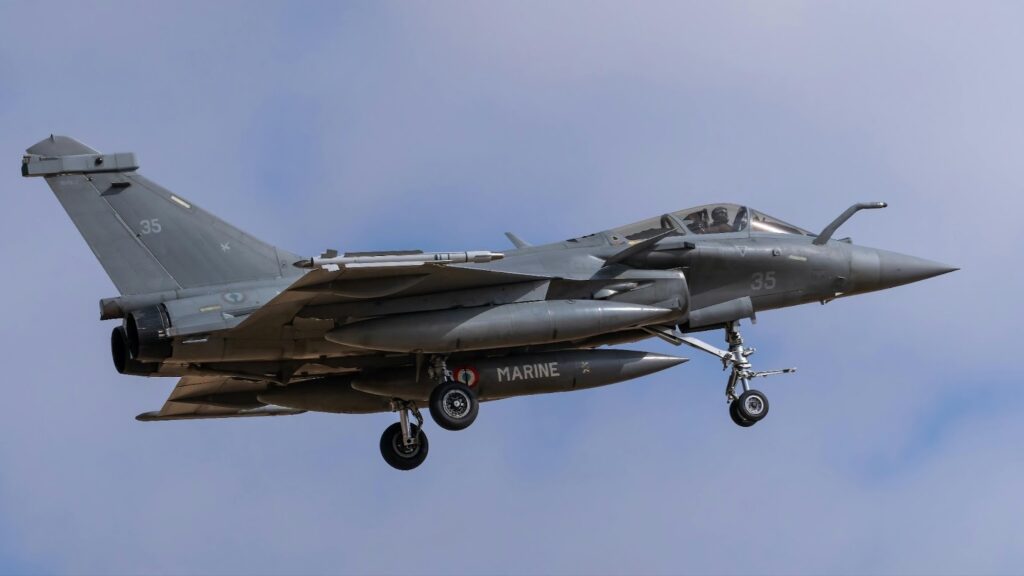
However, no operational applications are envisaged at this stage. French military aviation programmes continue to focus on heavy thermal platforms (Rafale, A400M), while electrification is being studied in the long term through prospective work carried out with ONERA, notably as part of the SCAF. French civil projects, such as INTEGRAL-E or Aura Aero’s ERA, are not currently intended for military use.
Northern Europe and Germany already more advanced
On a European scale, some of our neighbours have made more aggressive choices in the development of electrified air mobility.
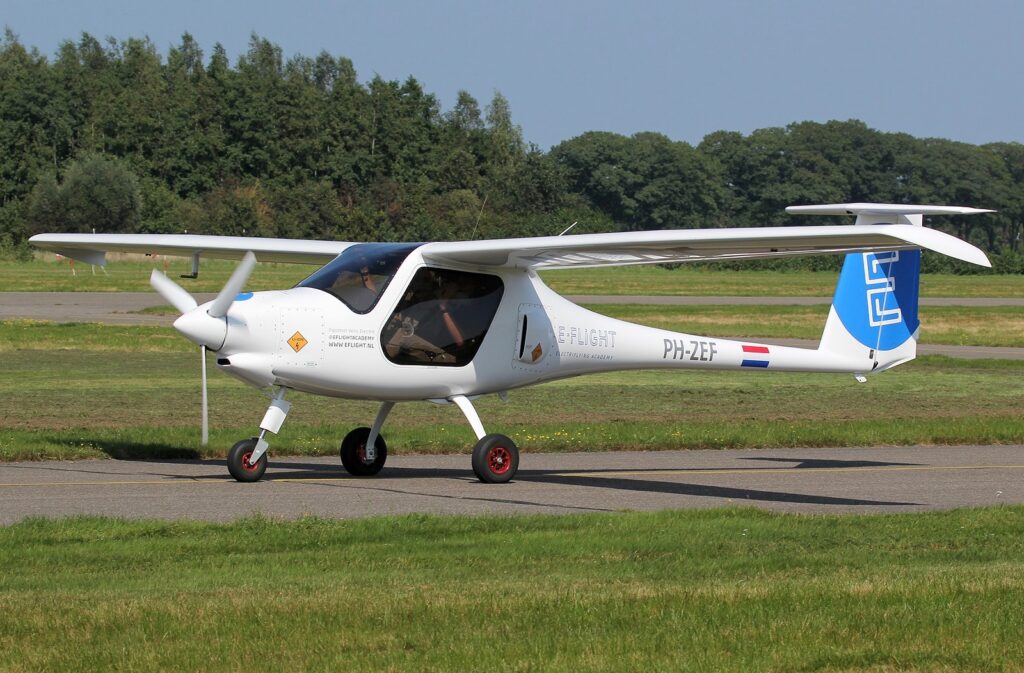
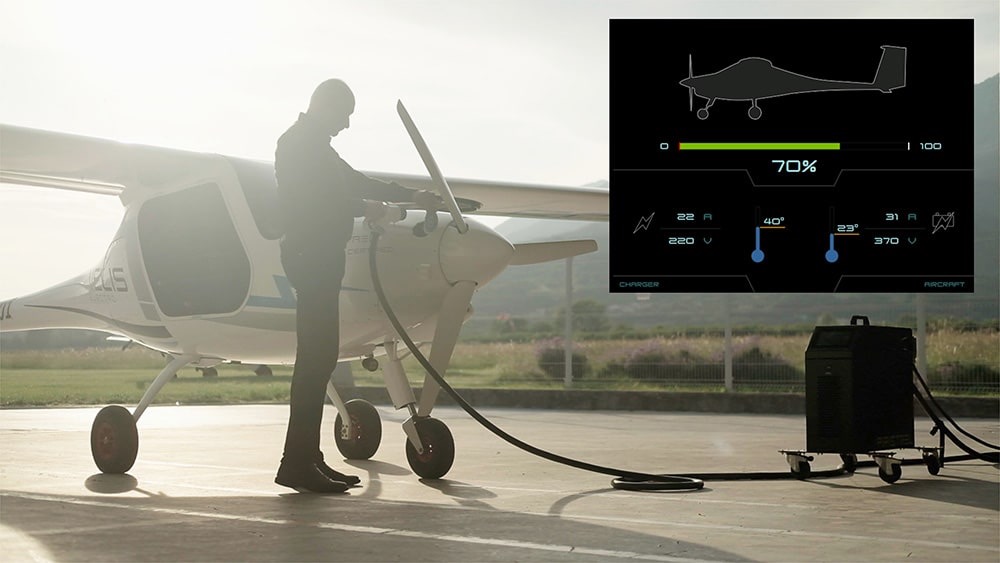
In Germany, the Luftwaffe (the air component of the German army) has been operating the Pipistrel Velis Electro, a two-seater 100% electric aircraft certified by the European Aviation Safety Agency (EASA), since 2022. Used for initial training, it reduces emissions by up to 95% compared with equivalent combustion-powered aircraft. By 2026, the fleet will comprise five aircraft, as part of the ‘Luftwaffe 2030’ strategy, which aims to electrify 20% of training hours.
source: Ronald Vermeulen
The UK is following a similar trajectory. The Royal Air Force is also using the Velis Electro for basic training, and has already accumulated several hundred flying hours. The stated aim is to reduce training costs and initiate an energy transition without compromising operational availability.
Further north, Norway and Sweden are exploring hybrid-electric solutions for extreme environments. The Norwegian P-Volt and the future Swedish ES-19 are being tested for low-emission regional military transport missions, particularly on short runways and in Arctic conditions.
North America: electric vehicles as a strategic lever
However, it is in North America that adoption is most structured.
In the United States, the US Air Force has been experimenting for several years with electric and hybrid propulsion aircraft through AFWERX, which helps the US Air Force to collaborate with start-ups, SMEs and researchers, as well as the Air Force Research Laboratory. By 2026, eVTOLs such as the Electra and demonstrators from NASA programmes will be used for training, light logistics and some short-range ISR missions. The objective is clear: to halve operating costs and significantly reduce noise pollution around bases.
source : electra
Canada, for its part, is betting on electrification to respond to climatic constraints. The eBeaver, an electric version of the legendary De Havilland Beaver, is being tested for liaison and surveillance missions in the far north. Quiet, robust and requiring less maintenance, it illustrates a pragmatic approach to electric military aviation.
Asia-Pacific and Middle East: electric vehicles as a tactical advantage
In Australia, the air force is testing hybrid eVTOLs for tactical logistics and medical evacuation in isolated desert areas, where infrastructure is scarce. In this vast country, electric power is seen as a multiplier of flexibility.
In Israel and China, the rationale is more directly operational. There, eVTOLs and hybrid drones are being considered for special insertion, reconnaissance or discreet troop transport missions. Silence, thermal stealth and vertical take-off capability are becoming military assets in their own right.
Technical and logistical limitations of electrification
While the electrification of military aviation is making progress, there are some very real technological limitations. The main one is the low energy density of current batteries. The best lithium-ion batteries have an energy density of around 250 to 300 Wh/kg, almost 50 times less than the energy contained in conventional paraffin (~12,000 Wh/kg), which considerably limits the range and payload of electric aircraft.
This constraint imposes compromises on range, passenger numbers and operational performance, particularly for long or demanding missions. Additional challenges include the complex thermal management of electrical systems and the need for new recharging infrastructures adapted to military operations.
source: pipistrel
A discreet but very real revolution
In 2026, electric military aviation will obviously not replace fighters or strategic transport aircraft. But it is gradually developing in well-identified niches: training, light logistics, tactical liaison and special operations.
France is observing, testing and anticipating, but has not yet taken the operational step. Other countries, on the other hand, have already integrated electricity as a fully-fledged military tool. This difference in tempo illustrates two visions: industrial prudence on the one hand, and operational pragmatism on the other.
The French car market is off to a paradoxical start in 2026. In January, registrations of new passenger cars were down by around 6.6% compared with January 2025, with 107,157 cars sold. However, once again, the proportion of 100% electric cars is at an all-time high.
A shrinking but not uniform market
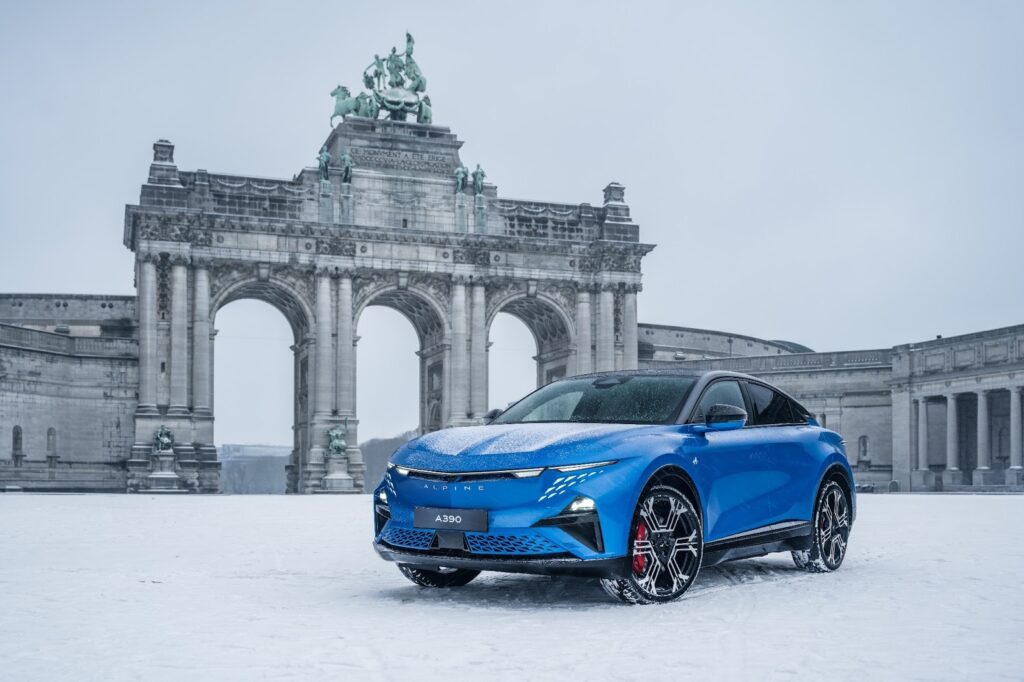
In January 2025, 118,400 new passenger cars were registered in France, more than 6% more than in the previous month. Against this backdrop of a drastic fall in EV sales, performances vary widely from one manufacturer group to another. Some groups, such as Stellantis, are limiting the decline to around 2.7% year-on-year. Conversely, the Renault group managed to post a slight increase (+1.1%), driven by the Renault brand, while Dacia fell back sharply and Alpine made marginal progress.
source : Alpine
In Japan, Toyota had a difficult January, with registrations down by an estimated 15%. But the most striking fall concerned Tesla, whose volumes plummeted by more than 40% compared with January 2025, a sign that the American brand is no longer the leader it once was.
Electric vehicles buck the trend
While the overall market is shrinking, it is 100% electric cars that are doing well and continuing their upward momentum. In January 2026, 30,307 electric vehicles were registered in France, representing 28.3% of new car sales. An all-time record.
By way of comparison, in January 2025, EVs had a market share of around 19%. This means that in one year, the segment has grown by around 52% in terms of volume, confirming a rapid and strong change in the motoring choices of some French people, who now prefer electric to combustion-powered vehicles.
Justifiable figures
And this growth is no accident. It is the result of an unprecedented convergence between public policies, financial mechanisms and developments in industrial supply.
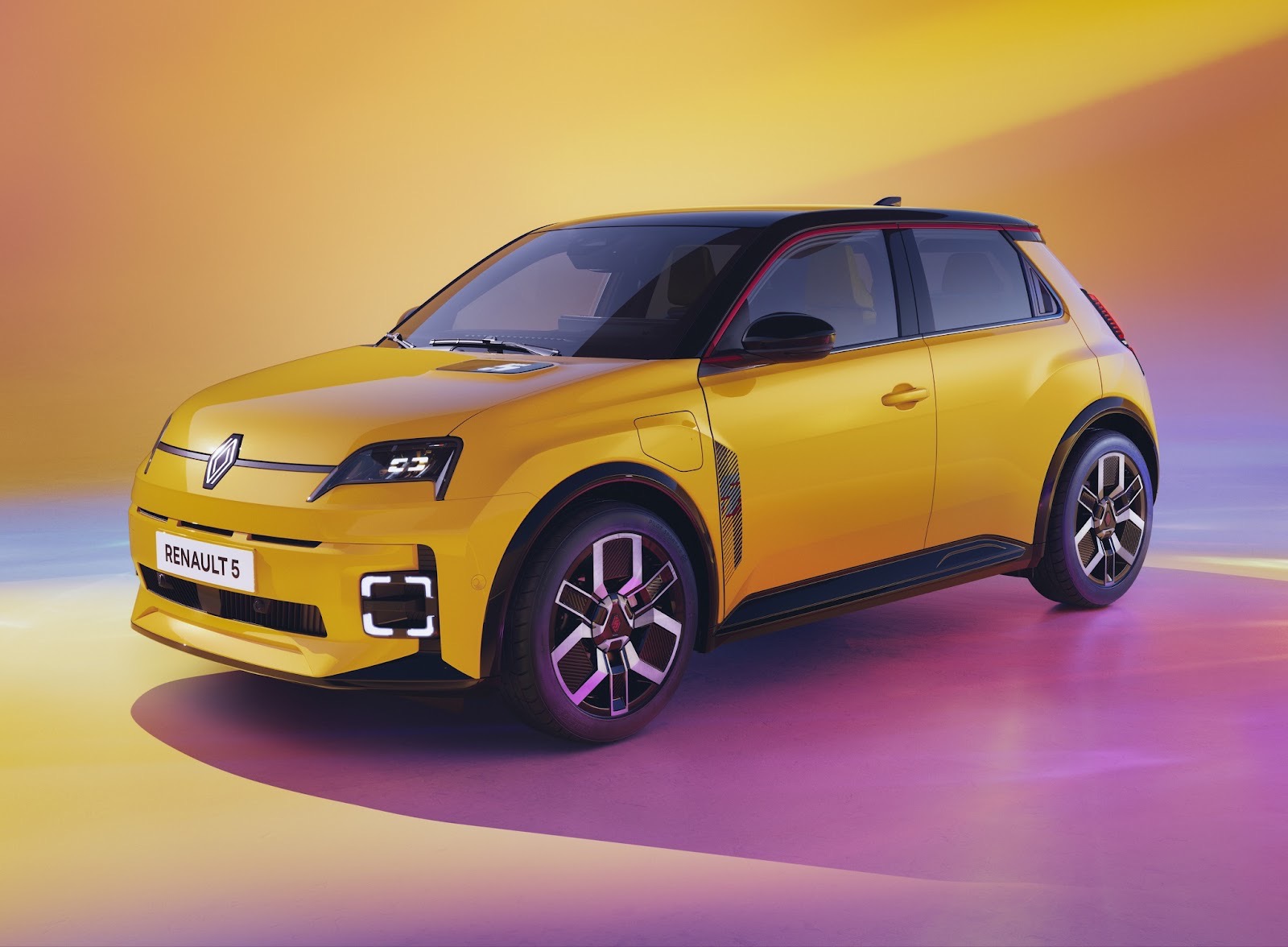
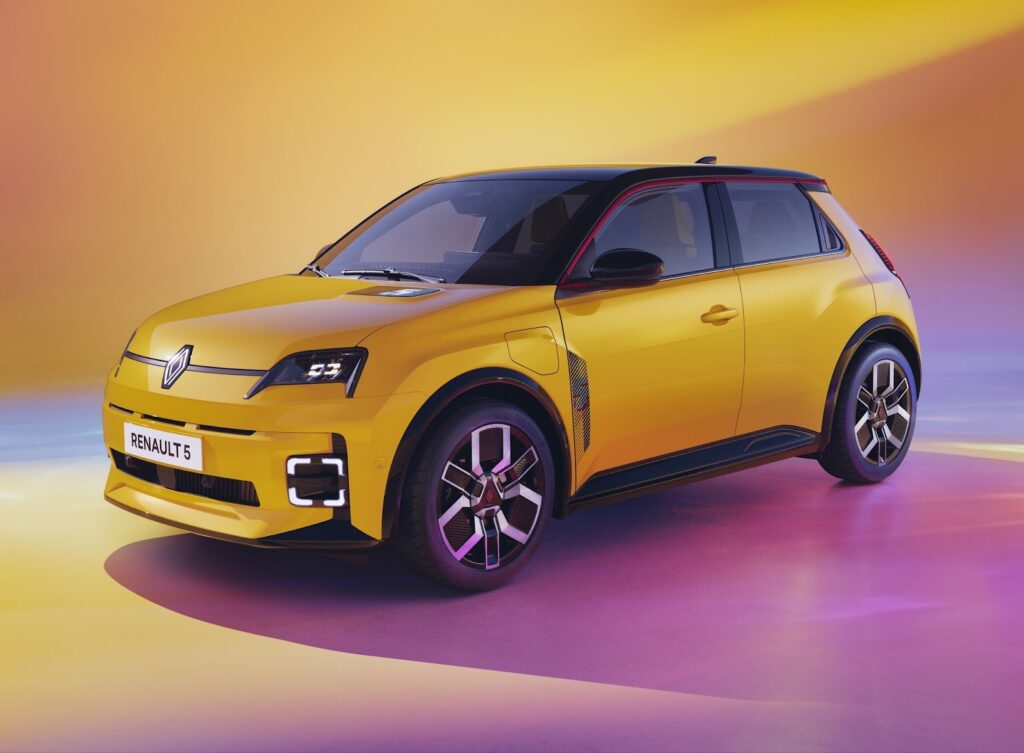
The first driver of this dynamic is social leasing. By enabling households to buy an electric car for less, this scheme has acted as an accelerator. Eligible models, mainly in the B segment, accounted for a significant proportion of the month’s volumes, starting with the Renault 5, which has become a symbol of this democratisation.
source : Renault
source : Renault
In addition to this leverage, there are increased incentives linked to energy saving certificates (CEE). When combined with the ecological bonus, CEEs can significantly reduce the remaining cost of purchasing or leasing a car.
Lastly, this increase is due to a tangible broadening of the offer in the affordable segments, long considered to be the main barrier to adoption.
Renault crushes the electric ranking
In the electric vehicle market alone, the leadership is indisputable. Renault captured around 26% of the EV market in January, with almost 7,900 registrations.
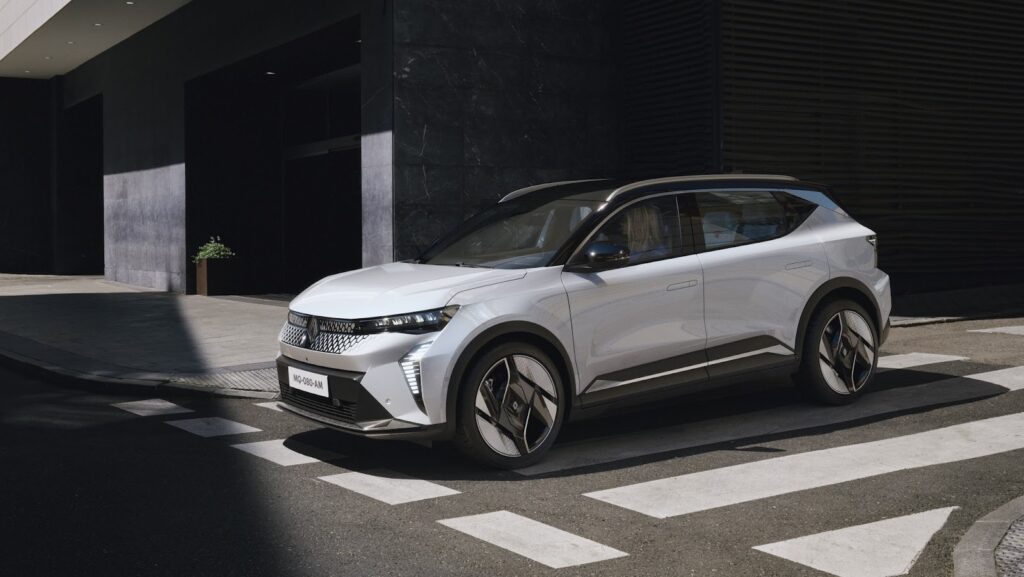
The Renault 5 electric was the best-selling electric car of the month, with 3,952 units, well ahead of the competition. It came in ahead of the Renault Scénic E-Tech (1,945) and the Peugeot e-208 (1,666). The top 10 is largely dominated by French manufacturers, confirming a recovery in the domestic market.
source : Renault
Tesla, on the other hand, is in sharp decline. The American brand registered just 661 vehicles in January, including 613 Model Ys and just 36 Model 3s. As a result, Tesla has fallen well behind Renault in the French electric vehicle market, a strong signal after several years of dominance.
Hybrids in the majority, combustion engines in free fall
In addition to electric vehicles, hybrid vehicles continue to become the norm. In January, hybrid vehicles (all technologies combined) accounted for 52.3% of registrations, up by more than three points over one year.
Conversely, traditional combustion engines continue to decline. Petrol’s market share has fallen to 14.3%, while diesel’s has plummeted to 2.4%, with volumes down by almost 50% year-on-year for both fuels.
A pivotal month for electromobility
In a generally ailing market, electric vehicles now appear to be the only engine for growth, driven by a more accessible range and targeted public schemes.
Whether or not the coming months will confirm this trend, one thing is certain: the EV segment is, as of January 2026, a central pillar of the French car market.
This weekend, Paris is alive with the world of classic cars. From Wednesday until the evening of Sunday 1 February, the Rétromobile show is celebrating its 50th edition at the Parc des Expositions at Porte de Versailles. It’s a symbolic anniversary for an event that, over the decades, has become the global benchmark for automotive heritage.
With more than 120,000 visitors expected over five days, 550 exhibitors and almost 1,200 vehicles on display in an area of 120,000 m², Rétromobile 2026 confirms its status as a not-to-be-missed event for enthusiasts, collectors, professionals and the simply curious who come to celebrate the history of motoring.
source : retromobile
From a meeting place for enthusiasts to a global showcase
Created in 1976 by a handful of enthusiasts, including Patrick Tenderini, Rétromobile originally met a very real need: to bring together collectors, dealers and enthusiasts at a time when spare parts and old vehicles were becoming rare.
Fifty years on, the show has changed radically in scale. Since coming under the aegis of Comexposium in 2000, Rétromobile has become a veritable celebration of motoring heritage. Themed tributes, international club stands, auctions and an opening up to youngtimers have gradually shaped its identity.
An anniversary edition rich in symbols
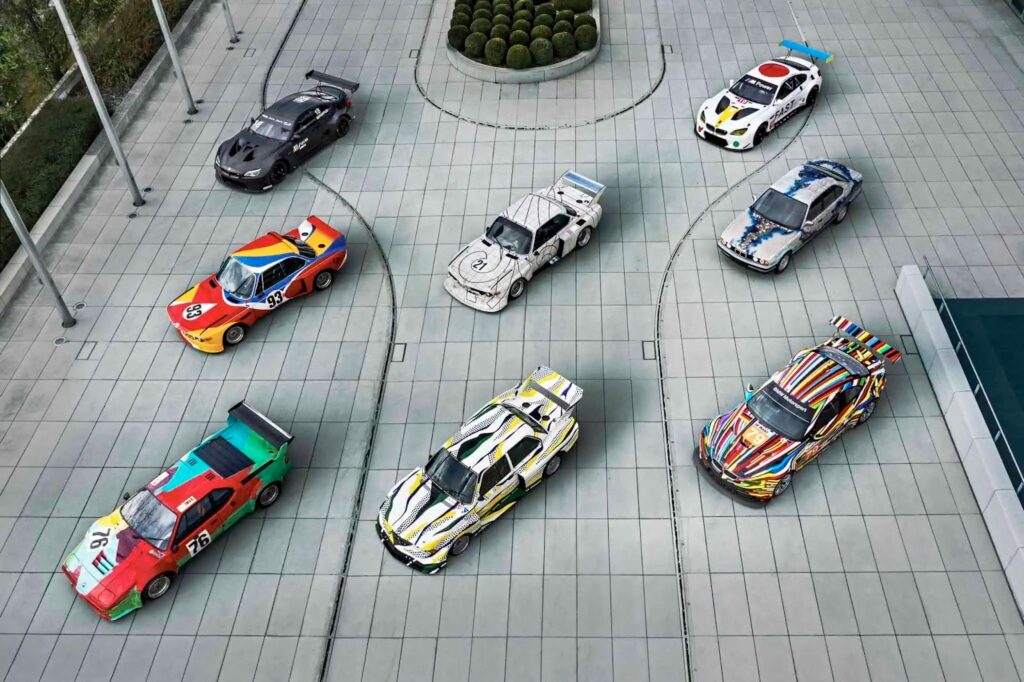
For its 50th edition, the show has pulled out all the stops. One of the highlights of the week is the joint celebration of 50 years of Rétromobile and 50 years of BMW Art Cars. An exceptional retrospective brings together twenty legendary models, from the BMW 3.0 CSL painted by Alexander Calder in 1975 to the most recent creations, such as the M3 GT2 decorated by Jeff Koons or the M Hybrid V8 by Julie Mehretu.
source : BMW
Other much-anticipated tributes revolve around this flagship exhibition: the DS 19, which is celebrating its 70th anniversary, emblematic MG models, and a selection of rare supercars and prototypes that are usually invisible to the general public.
Supercars and exclusive new models
One of the new features of this year’s show is the Ultimate Supercar Garage, which opened in Hall 7 on Thursday and will remain open until Sunday. This dedicated space brings together Bugatti, Ferrari, Koenigsegg, Pagani and Lamborghini in an immersive setting that deliberately contrasts with the more traditional ambience of the show. It’s a well-considered choice that adds a contemporary touch, attracting a younger audience.
Electromobility, present and exciting
While Rétromobile remains above all an ode to the internal combustion engine and vintage mechanics, electrification is becoming an increasingly visible presence in the show’s aisles. A number of retrofit specialists, including Lunaz, Electrogenic and Transition-One, are presenting electric conversions of iconic models. Electrified Jaguar E-Type, Porsche 356 and Range Rover Classic all illustrate this trend, which aims to extend the life of historic vehicles while adapting them to today’s environmental and urban constraints.
source : Lunaz
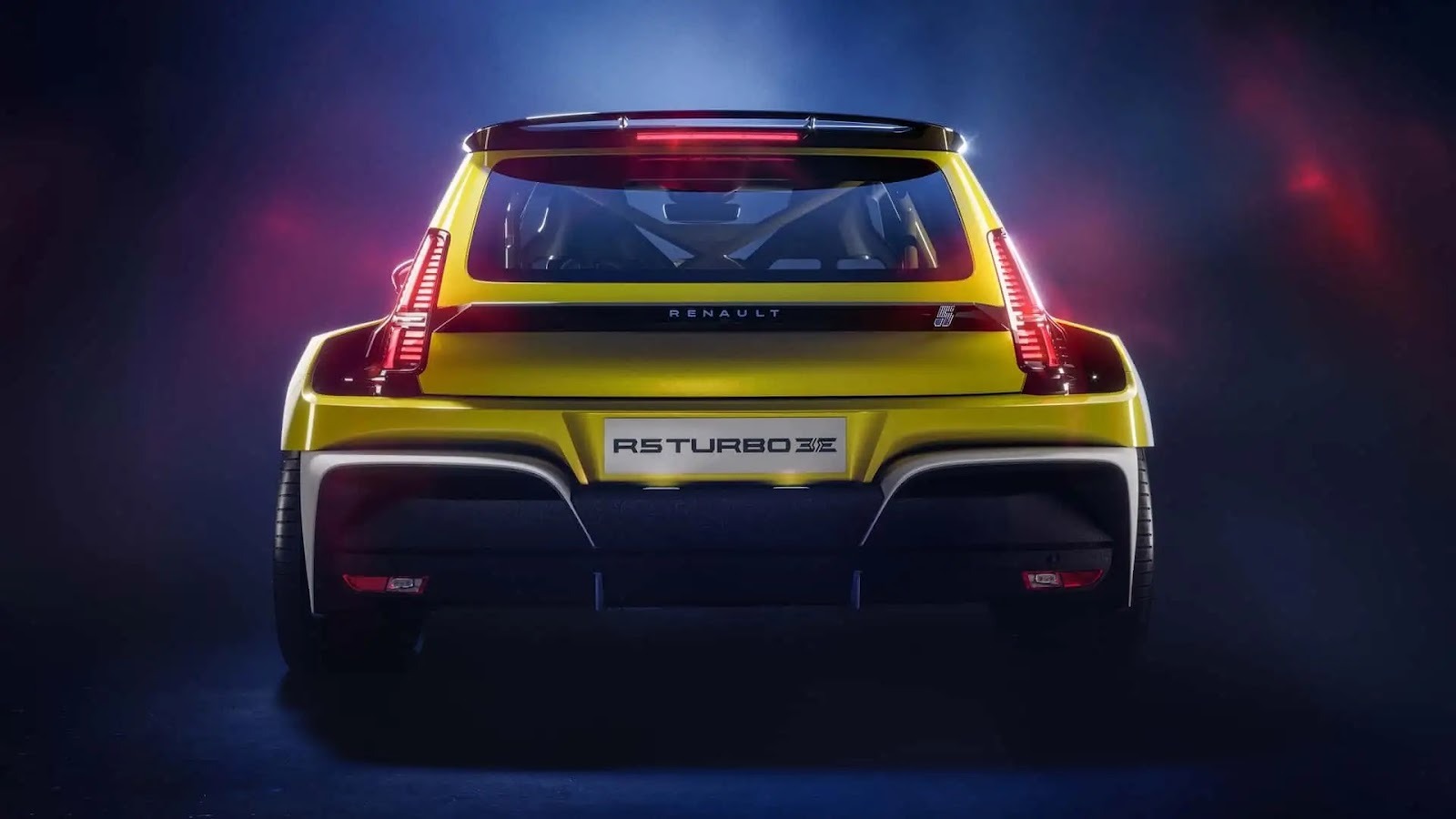
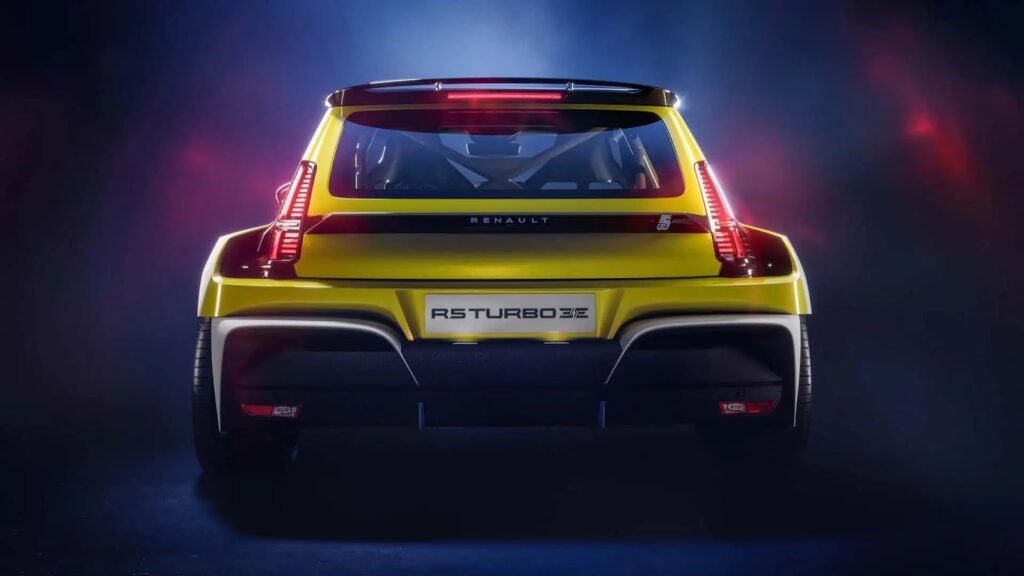
More traditionally, the world’s biggest manufacturers are taking advantage of this event to showcase their latest electric creations. This is the case with Peugeot, which is presenting the e-208 GTI, Opel, which is presenting the electric Opel Astra for the first time, and Renault, which is showcasing the near-final version of the Renault 5 turbo 3E.
source : Renault
The show will also be highlighting the pioneers of electric vehicles, with prototypes and production models from the 1990s and 2000s, which have long been kept under wraps. Vehicles such as the Citroën AX Electric, the Peugeot 106 Electric, the Renault Clio Electric and the first-generation Toyota RAV4 EV are reminders that electromobility is nothing new, and that it has a much longer history than that of today’s models.
Hybrid youngtimers will also be on show, with models from Toyota, Honda and Lexus, which marked the beginnings of hybridization for the general public in the 2000s. BMW, a long-standing partner of the event, is also exhibiting a number of recent BMW Art Cars, including electrified and hybrid competition models, such as the BMW M Hybrid V8, entered in endurance racing and a symbol of the link between artistic heritage, motor sport and modern technology.
Far from a radical shift, these initiatives sketch out a form of “retro electromobility”, where technological innovation, the preservation of automotive heritage and the ecological transition attempt to coexist. It’s a measured approach, in keeping with the DNA of Rétromobile, which prefers the transmission of history to a sudden break with it.
Last day, last opportunities
On Sunday, the last day of the show, crowds are expected to be at their peak. As regular visitors know, it’s best to arrive early to make the most of the stands and exhibitions before the show closes at 7pm. Tickets are still available online, with prices ranging from €19 to €25 depending on the conditions.
At fifty years old, Rétromobile is proving that it has lost none of its ability to bring people together. Year after year, the Paris show continues to write the living history of the motor car, bringing together automotive memorabilia, exceptional objects and glimpses of the future.
On 30 January 2026, on the urban track of the Miami International Autodrome, Formula E is organising its annual Rookie Test session. Between measured performances and strategic ambitions, this day reveals how the electric championship has become a magnet for young talent in world motorsport.
source: FIA
On paper, there will be no trophies to lift or points to score on Friday January 30. However, this day specially dedicated to rookies, scheduled on the eve of the Miami E-Prix, could have a major impact on the careers of several young drivers. For six hours, 11 rookies from F2, F3, INDY NXT and simulator programmes will take the wheel of 100% electric Gen3 Evo single-seaters, in conditions similar to those of an official qualifying session.
And while the exercise may seem technical, it actually reflects a profound transformation in the motorsport landscape. Today’s young drivers are no longer just looking to Formula 1. They are also increasingly looking to Formula E.
source : Stellantis
A championship that has changed dimension
When Formula E kicked off in 2014 in Beijing, with its urban races and mid-race car changes, many saw it as an experimental series, sympathetic but anecdotal. A decade later, the picture has changed radically. The championship has become an FIA World Series, with 11 manufacturers entered and 22 drivers, and a B Corp certification that makes it the first motor racing championship to receive official recognition for its social and environmental impact.
source: Wikipedia
The year 2025 is highly representative of a booming craze. Indeed, the previous year generated more than 580 million viewers worldwide, an increase of more than 25% compared to 2024. The Miami GP, which takes place this weekend, is expected to attract over 5 million viewers.
This move upmarket is reflected in the technology. The Gen3 Evo, introduced in 2024, offers levels of acceleration and energy regeneration that rival those of the first Formula 1 single-seaters.
In this context, the Rookie Tests are a selection tool, a moment when the teams concretely evaluate the adaptability, maturity and learning speed of young drivers who have never, or rarely, driven in Formula E. In Miami, the 3.07km circuit, with its long acceleration phases and technical sections, will provide a particularly demanding testing ground.
Profiles that speak volumes about the attractiveness of the championship
Several teams have confirmed their drivers for the session on 30 January:
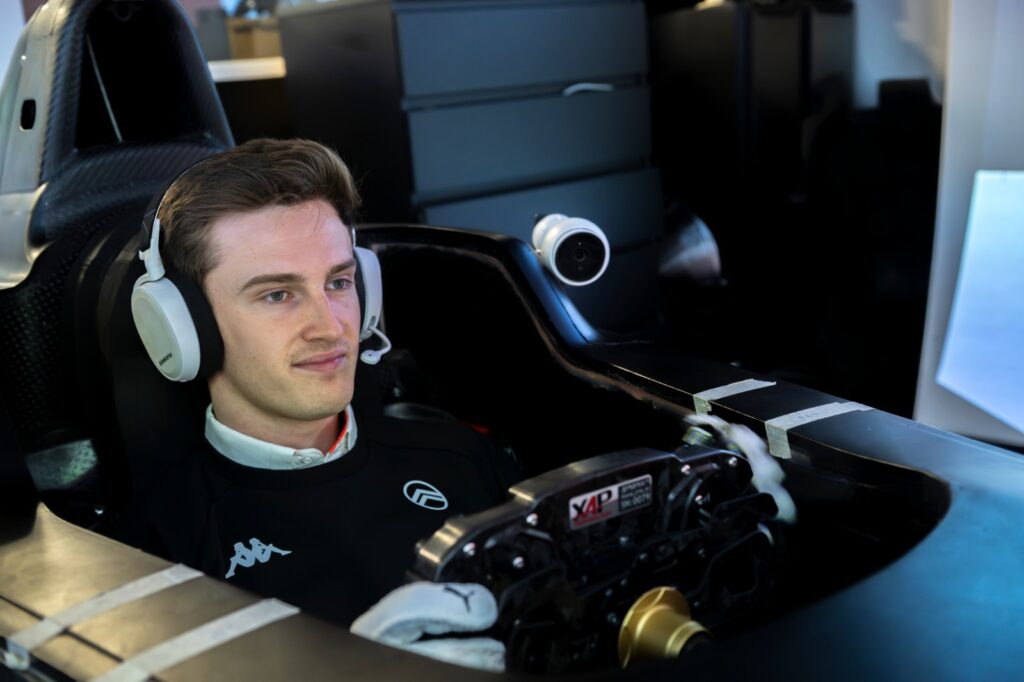
Théo Pourchaire (Citroën Racing) – F2 champion and former FE test driver, returns to strengthen the team and assess the adaptation to Miami.
Zak O’Sullivan (Envision Racing) – This young British driver, who is already at the top of the simulator programmes, will be back at the wheel of the Gen3 Evo.
Dennis Hauger (Andretti) – F3 champion and current INDY NXT driver, put on track to progress in electrics.
Hugh Barter (Lola Yamaha ABT) – The driver has already worked on the previous tests and will provide valuable feedback on the car.
Alessandro Giusti (Jaguar TCS Racing) – One of the youngest entrants, ready to demonstrate his growing power.
Abbi Pulling and Gabriele Minì (Nissan) – Experienced in past tests, they are continuing their integration into the discipline.
Nikita Bedrin (DS Penske) – Remains in the programme after previous appearances.
Chloe Chambers (Mahindra Racing) – Top of the list after a convincing performance in tests.
Pepe Martí (Cupra Kiro) – Driver from the international single-seater circuit.
Ayhancan Güven (Porsche) – Official Porsche endurance and GT driver, invited to discover the Gen3 Evo.
source : Stellantis
This diversity of profiles shows that Formula E is no longer a simple alternative, but a destination in its own right, with its own codes, its own opportunities and its own career paths.
A strong signal for the future of motor sport
The Miami Rookie Tests will probably not make the headlines in the general press. Yet they tell us a lot about the state of motor sport in 2026.
In Miami, these young drivers won’t be racing just to impress an engineer or land a contract. They will be racing to take their place in a championship that is still in the making.
Formula E is no longer trying to convince. It’s moving forward. And judging by the interest generated by these tests, the drivers of tomorrow are already moving forward with it.
For Paris Classic Car Week, the City of Lights transforms itself into a living museum of the automobile, where vintage bodies, legendary engines and legendary stories come together. For several days, through exhibitions, auctions and led by the heart of the programme, the Rétromobile show at Paris Expo Porte de Versailles, collectors, enthusiasts and the curious celebrate the most iconic and timeless products of the automobile.
This is precisely the spirit in which Artcurial Motorcars, the renowned auction house specialising in classic cars, youngtimers, motorbikes and exceptional motoring objects, has once again this year taken over one of the most emblematic venues in Parisian luxury: The Peninsula Paris.
Automobile Legends: the automobile as a work of art
This event, Automobile Legends, organised by Artcurial at the prestigious palace “The Peninsula Paris”, is not just a simple auction. The event has been designed as an immersive exhibition, with some sixty exceptional vehicles on display in the hotel’s Garage Privé, transformed for the occasion into a car gallery.
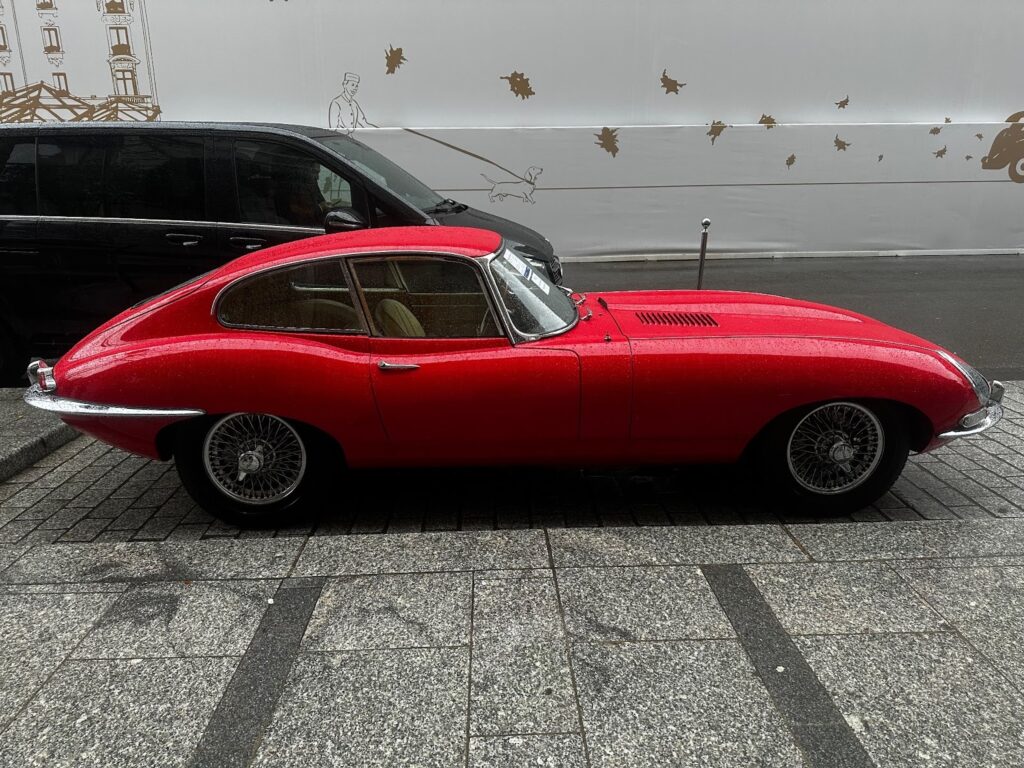
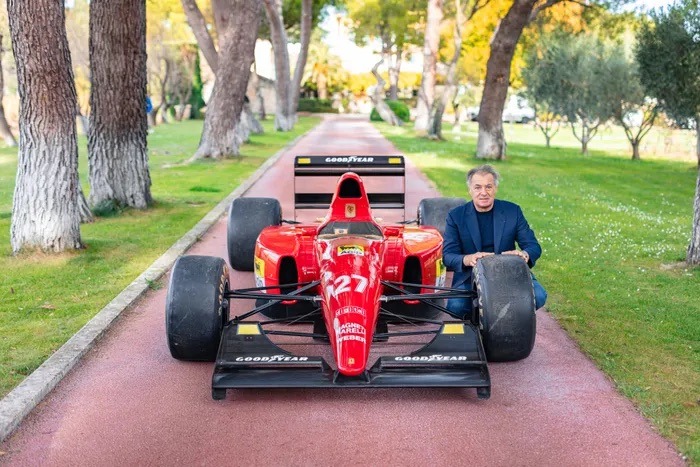
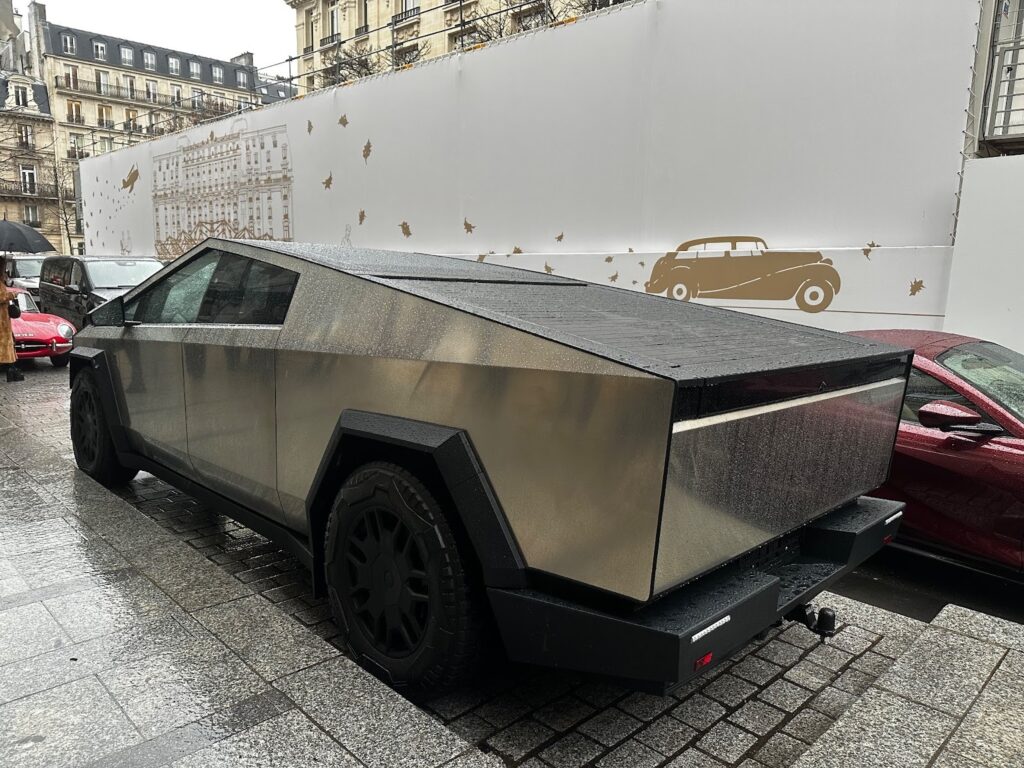
Among the vehicles on display are a number of exceptional automobiles, including a Mercedes-Benz 300 SL ‘Gullwing’, a Jaguar E-Type and a number of iconic sports models. The centrepiece is the legendary Ferrari F92A driven by Jean Alesi in the 1992 Formula 1 World Championship. During that season, he finished on the podium twice, results that led to the Frenchman receiving this single-seater as a gift from the Scuderia. And yet, in the midst of these icons of the past, one object stands out.
source : Artcurial
Cybertruck takes its place among the legends
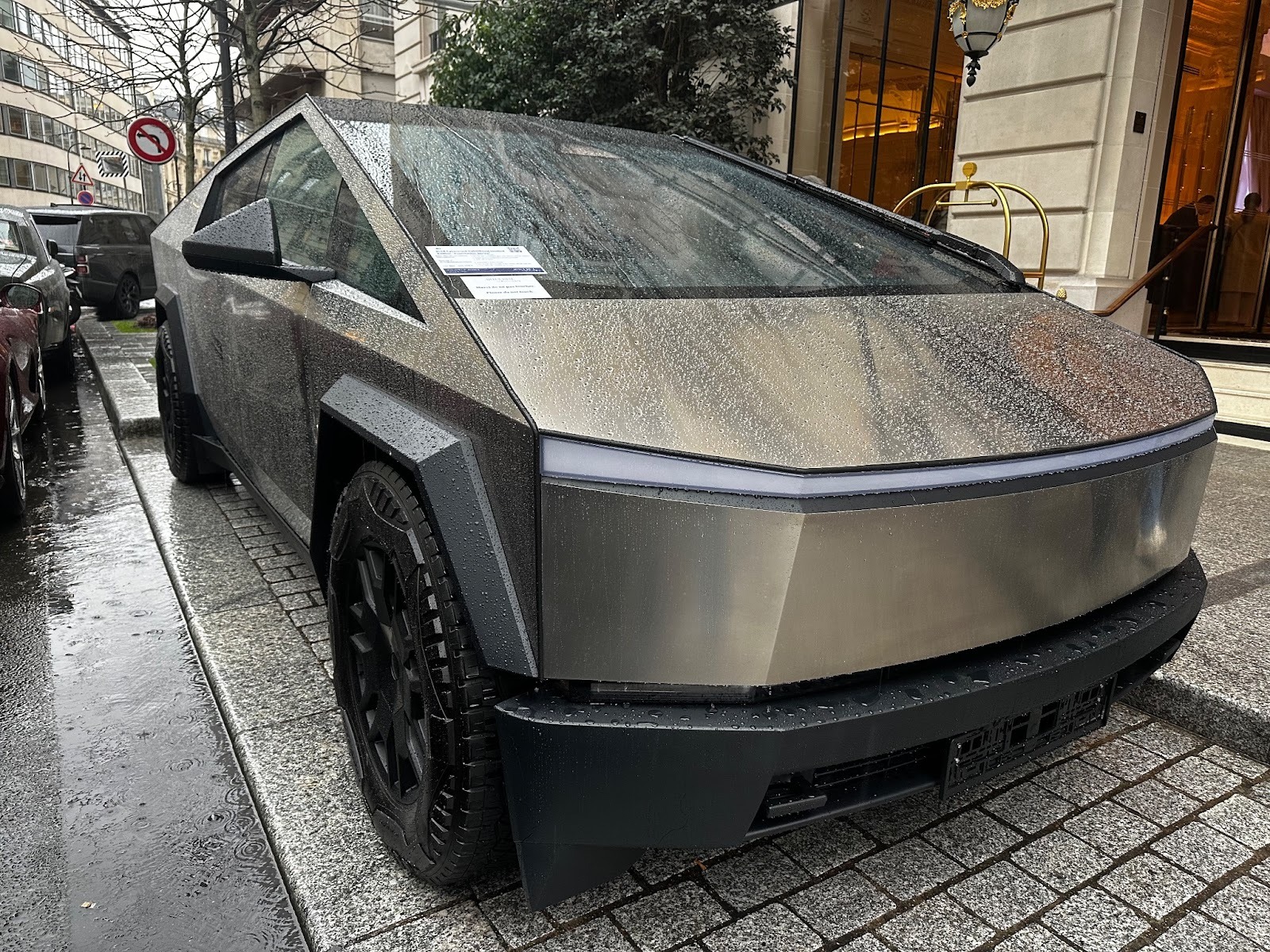
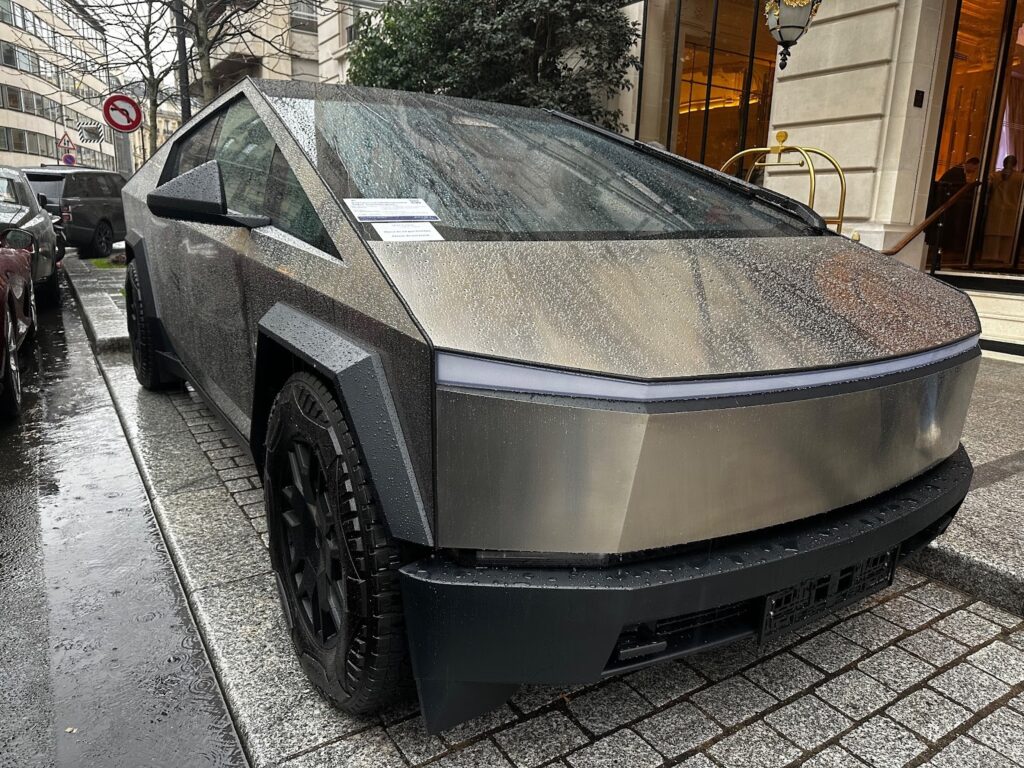
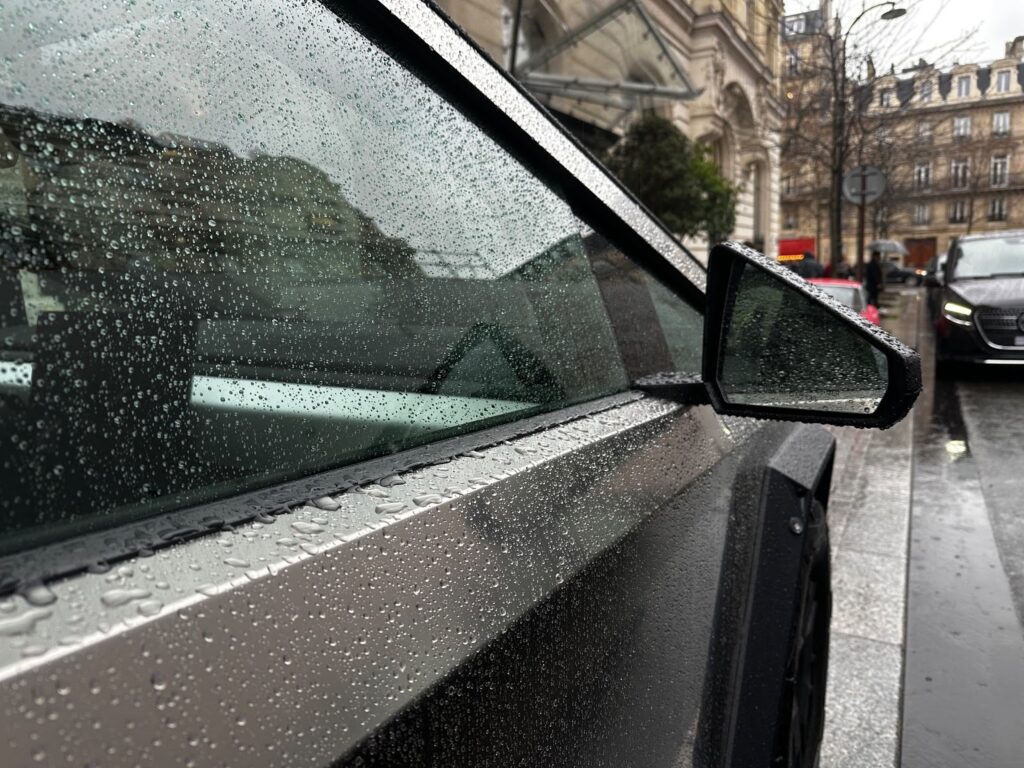
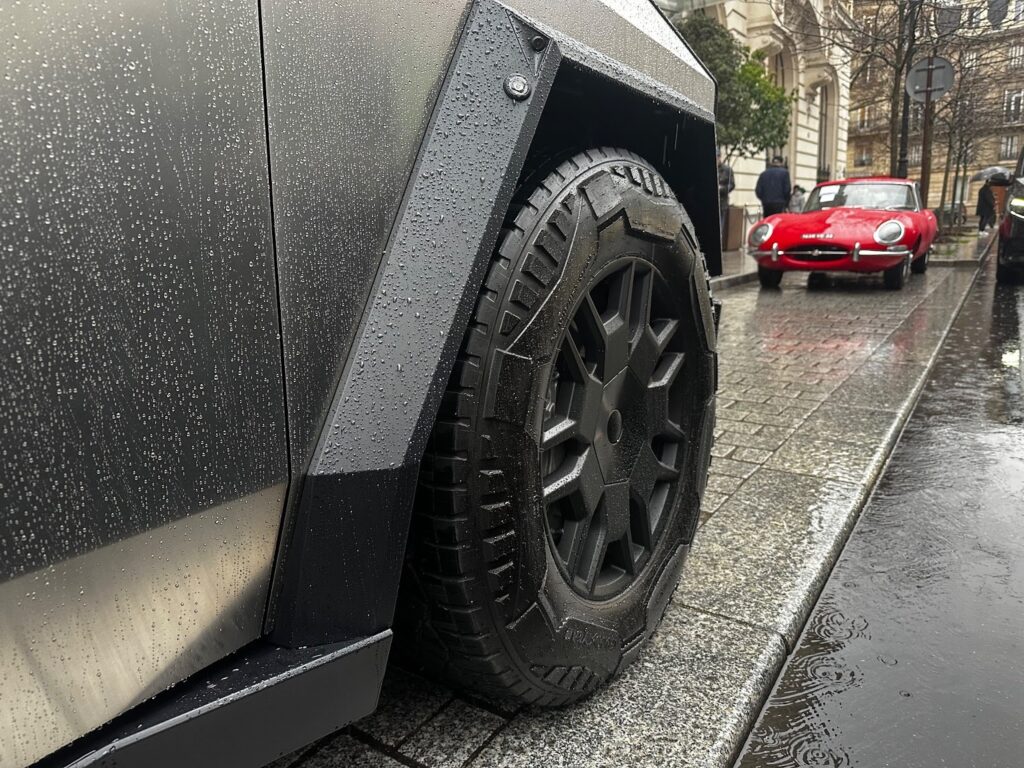
In the Automobile Legends sale catalogue, one vehicle immediately catches the eye, as much as it raises questions: a Tesla Cybertruck CyberBeast Limited Edition “Foundation Series”, vintage 2024.
This vehicle is the exact opposite of what we usually expect here. Where classic cars celebrate curves and historic combustion engines, Tesla’s pick-up boasts raw, almost industrial lines, but above all an ultra-vitamin 100% electric engine. Where the models on display often recount a glorious past, the Cybertruck speaks exclusively of the future, and yet it is precisely this contrast that makes sense.
In its CyberBeast version, the Cybertruck represents the pinnacle of Tesla’s offering: a three-motor electric architecture, unprecedented power for a vehicle of this size, and performance worthy of certain supercars (0-100 km/h in 2.7 seconds). What makes it unique? It’s one of just 400 Foundation Series cars, unobtainable in Europe and sold without reserve at Artcurial. It’s a truly futuristic collector’s item for visionaries.
A strong signal for electromobility
To see a Cybertruck being auctioned alongside historic Ferraris, Jaguars and Mercedes at an event dedicated to automotive legends says a lot about the changing face of electromobility.
For a long time, electric vehicles were seen as rational solutions, devoid of passion and rarely desirable in the eyes of collectors. The presence of the Cybertruck at Paris Classic Car Week has changed all that.
Electromobility, through this Tesla, becomes a marker of the era, a potential collector’s item. The Cybertruck is not yet a legend in the classical sense of the term, but it is already a cultural symbol, which is what historically forges automotive icons.
Artcurial is sending out a clear message: the history of the automobile and the passion it inspires did not stop with internal combustion engines. It continues to be written, from now on, in electricity.
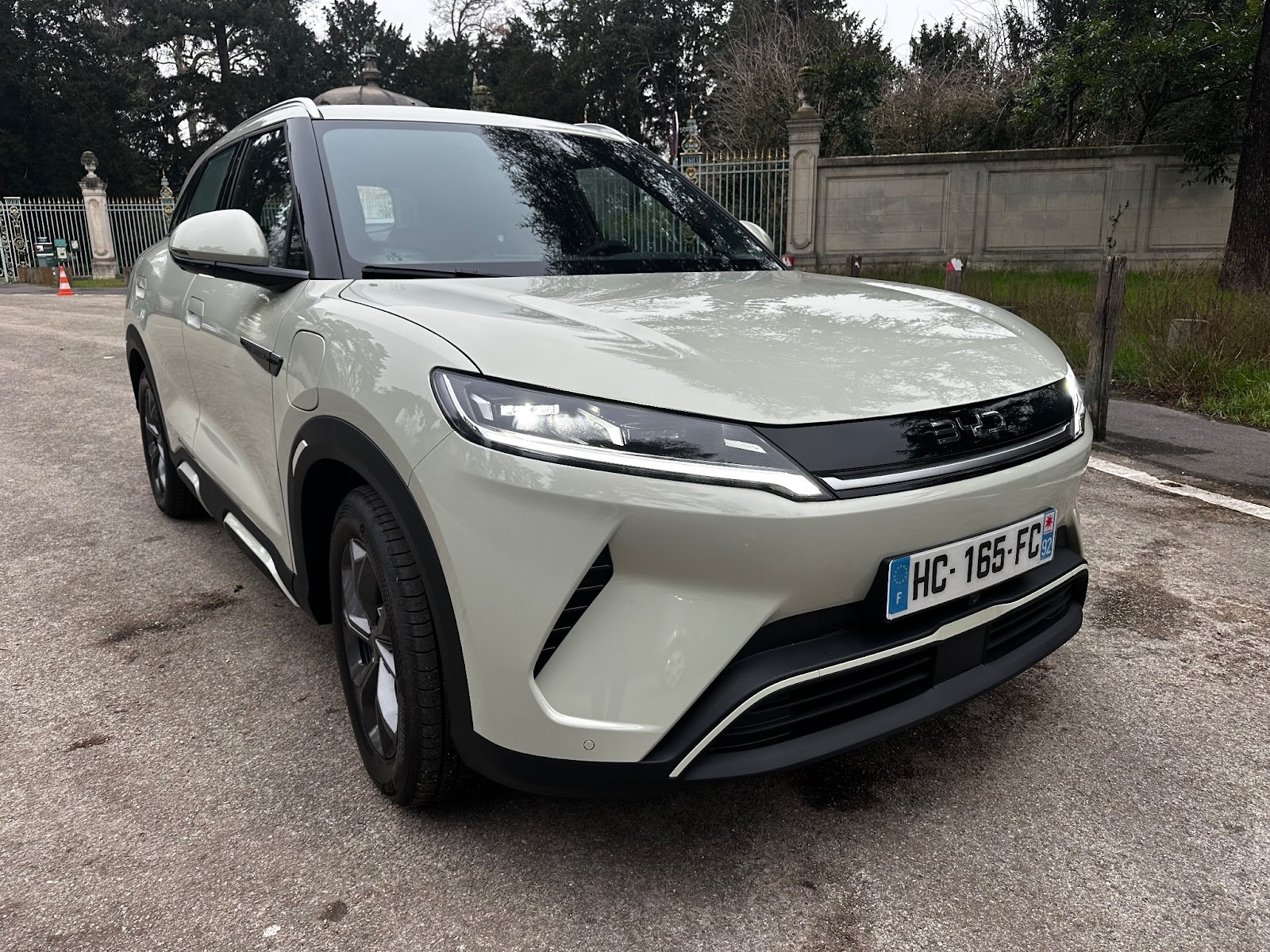
ECO MOTORS NEWS got behind the wheel of the BYD ATTO 2 Boost, the Chinese manufacturer’s compact 100% electric SUV, designed for unrestricted urban and suburban use. For three days, we put it through its paces on all kinds of roads: Inner Paris, the ring road, motorways, towns and country roads. The aim was to check whether this small, accessible electric SUV lived up to its promises in terms of comfort, driveability and everyday versatility.
A small SUV that embraces its size
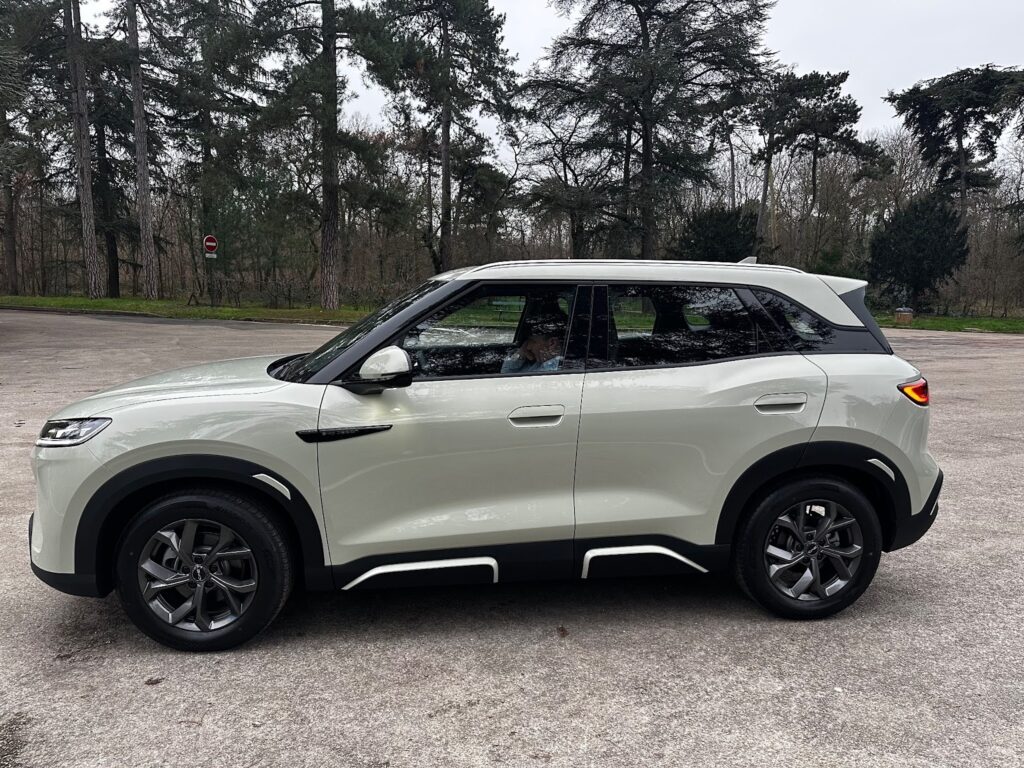
At first glance, the BYD ATTO 2 presents the driver with a slight dilemma. The vehicle isn’t exactly bulky, but it doesn’t try to pass itself off as a simple city car either. At 4.31 m long, 1.83 m wide, 1.67 m high and with a wheelbase of 2.62 m, the ATTO 2 is positioned right between the two worlds: compact enough for the city, but with a real urban SUV stance.
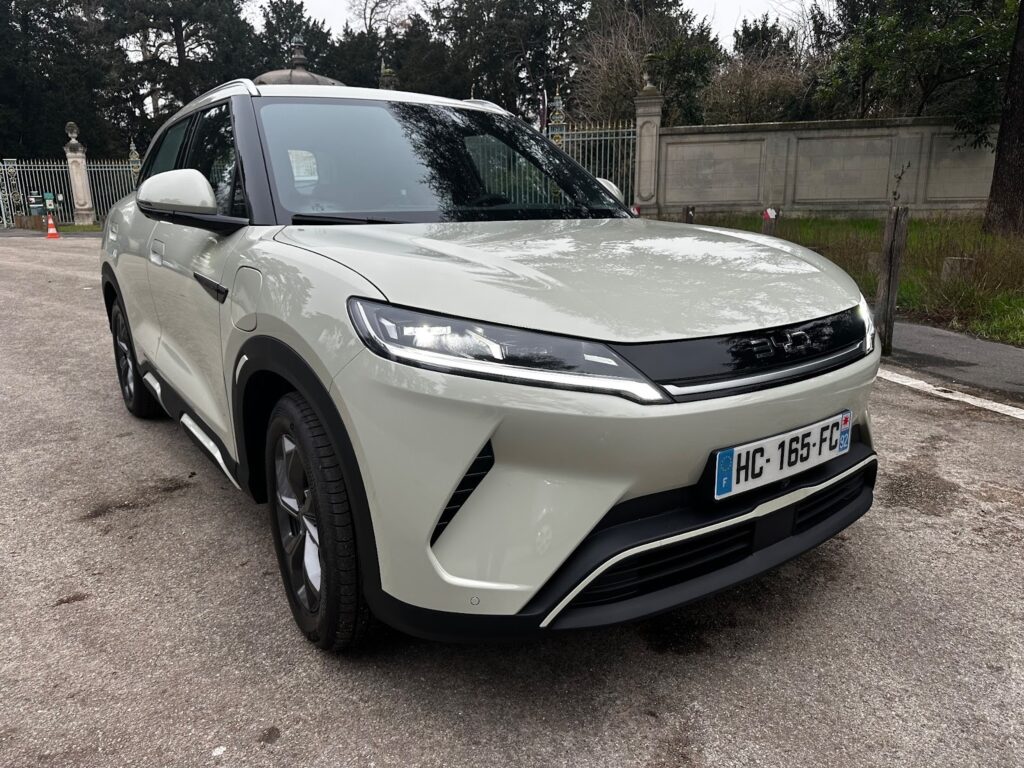
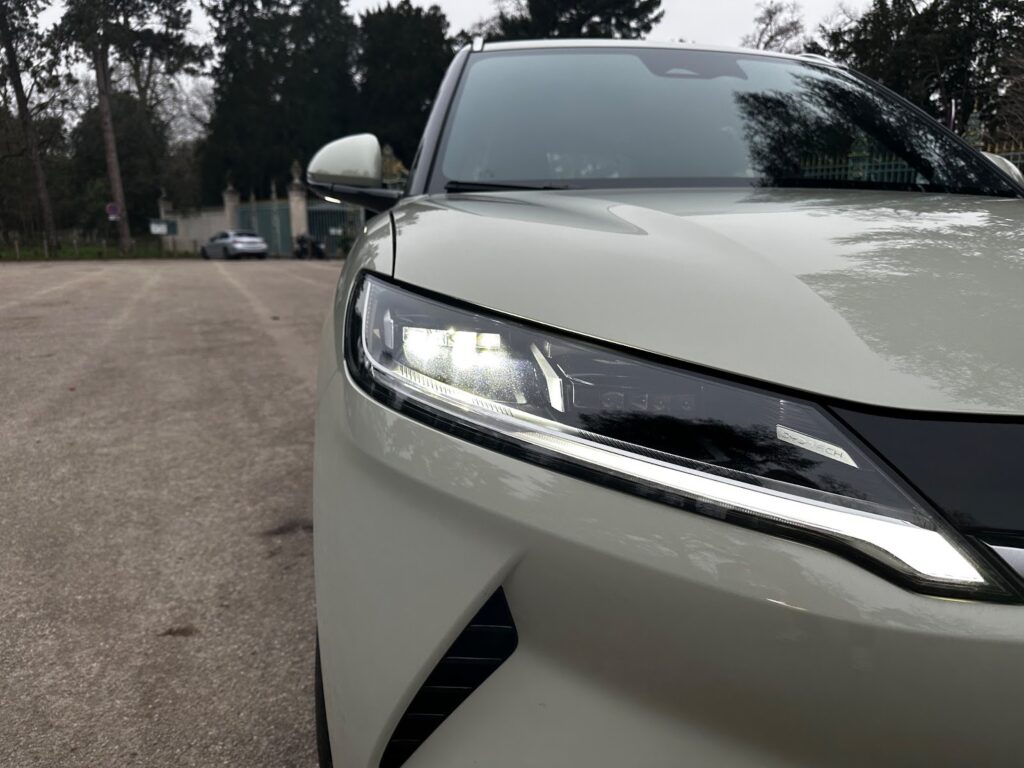
This impression is reinforced by the design of the front end. BYD has applied its ‘Dragon Face’ styling language here, with slim, tapering LED headlights that give the vehicle an aggressive facial expression. The overall effect is dynamic, modern and rather successful. It really stands out from what a Chinese electric vehicle represents in the collective imagination.
In profile, the ATTO 2 confirms its identity as a boosted city car. The proportions are well-balanced, and certain details add a real personality, notably the small white contrasting element in the lower part of the doors, which breaks the general sobriety and avoids any visual monotony.
At the rear, BYD has also taken the decision to create a unique vehicle. There is a real lighting signature, with an LED strip running the full width of the tailgate, which visually structures the whole. The upper section of the rear is more elaborate and stylised than on many of its rivals, avoiding the overly classic ‘trunk-plate’ effect. It’s modern, identifiable and consistent with the rest of the vehicle.
Our test version came in Hiking Green. An original colour on paper, but one that we found a little bland and lacking in pizzazz. It has the merit of being discreet, without really enhancing the lines. A choice that will appeal to some, less so to others.
On board: BYD quality, controlled ergonomics
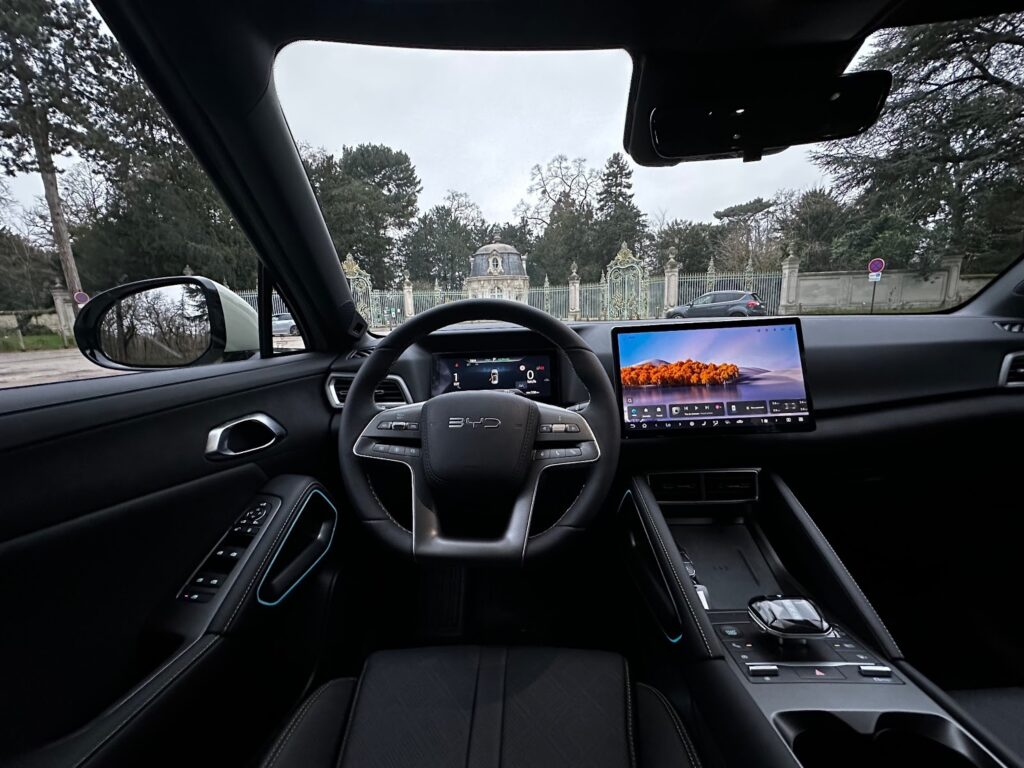
Now that the exterior has been analysed, let’s take a closer look at the interior. Once you’ve settled in, you’ll immediately see what BYD is good at. The cabin is clean, uncluttered and reassuring, with very good perceived quality for the price. The detail that always makes the difference is that the vehicle is equipped with a panoramic roof that floods the cabin with light and is accompanied by an electrically adjustable sun visor. All in all, the materials are well put together, the controls fall naturally to hand, and the whole package inspires confidence.
Special mention must go to the Drive Selector, which is both pleasant to use and, above all, beautifully designed. Visually, the knob looks a bit like a large diamond, a detail we liked.
The central screen is clearly one of the ATTO 2’s strong points, featuring a 12.8-inch touchscreen (which can be rotated), well positioned in the field of vision and offering excellent legibility. It’s also very responsive, with fast response times and smooth menu navigation. While some vehicles equipped with this type of screen sometimes require you to scroll around the interface to find the various settings, BYD has incorporated a permanent shortcut strip at the bottom of the screen. This gives one-click access to essential functions such as air conditioning, vehicle settings and driving aids, making for a real improvement in everyday ergonomics. Of course, Apple CarPlay and Android Auto are also compatible, making daily use even more enjoyable.
One of the most important details when it comes to choosing a vehicle is the seating: here too, it’s not bad at all. The seats are covered in vegan leather (eco-friendly imitation leather), an elegant, supple and environmentally-friendly material that BYD uses throughout the cabin. They are heated and electrically adjustable, which is an appreciable feature in this segment.
Rear: decent, but clearly child-oriented
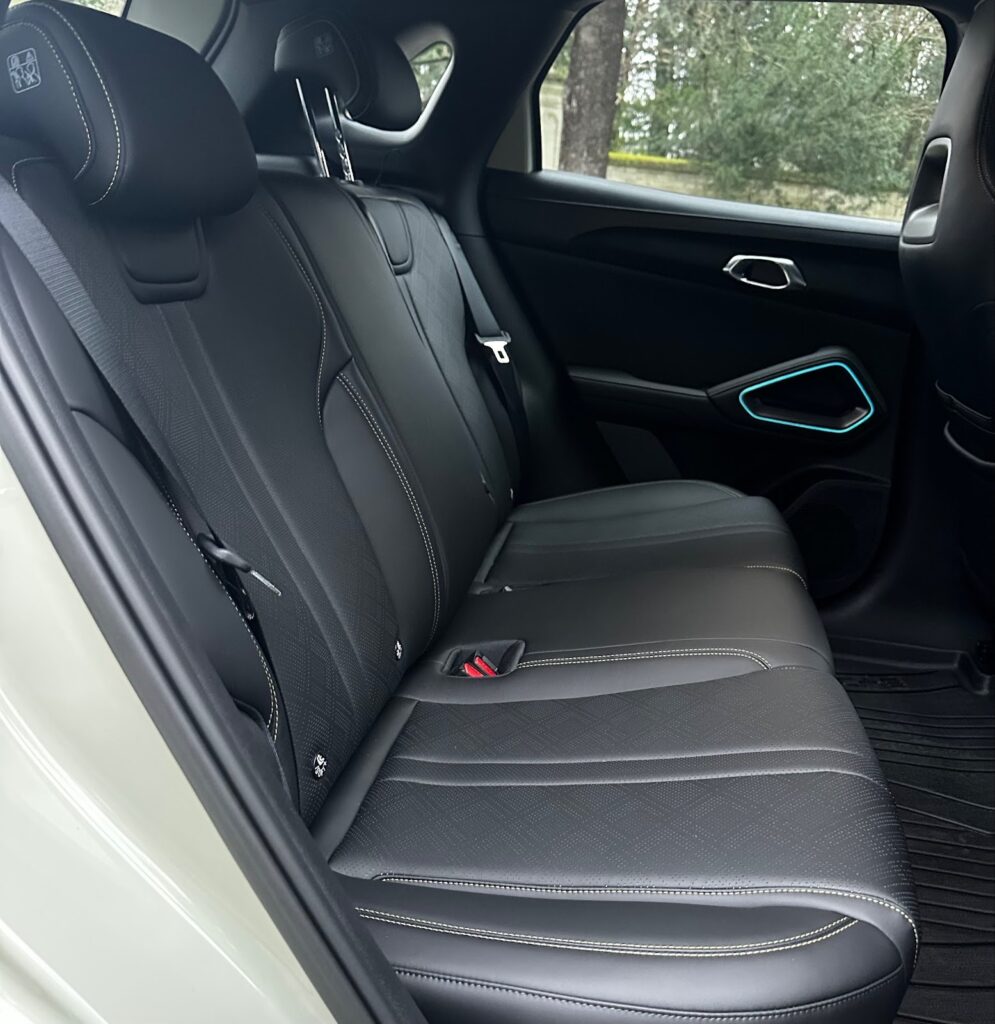
Unsurprisingly, the rear is not the ATTO 2’s strong point. The space is adequate but not immense, especially for adults on long journeys. The seats are still comfortable, including the middle one, which doesn’t have a real seat but is surprisingly soft.
There are, however, two USB sockets (USB-C and conventional USB), as well as the blue outline reminders on the doors, which add a little pizzazz. The front seat backs, with their bucket-type design and headrest opening, are visually pleasing and well finished. Overall, the rear is designed more for children than adults, which is in keeping with the vehicle’s light family vocation.
Trunk: functional, no surprises
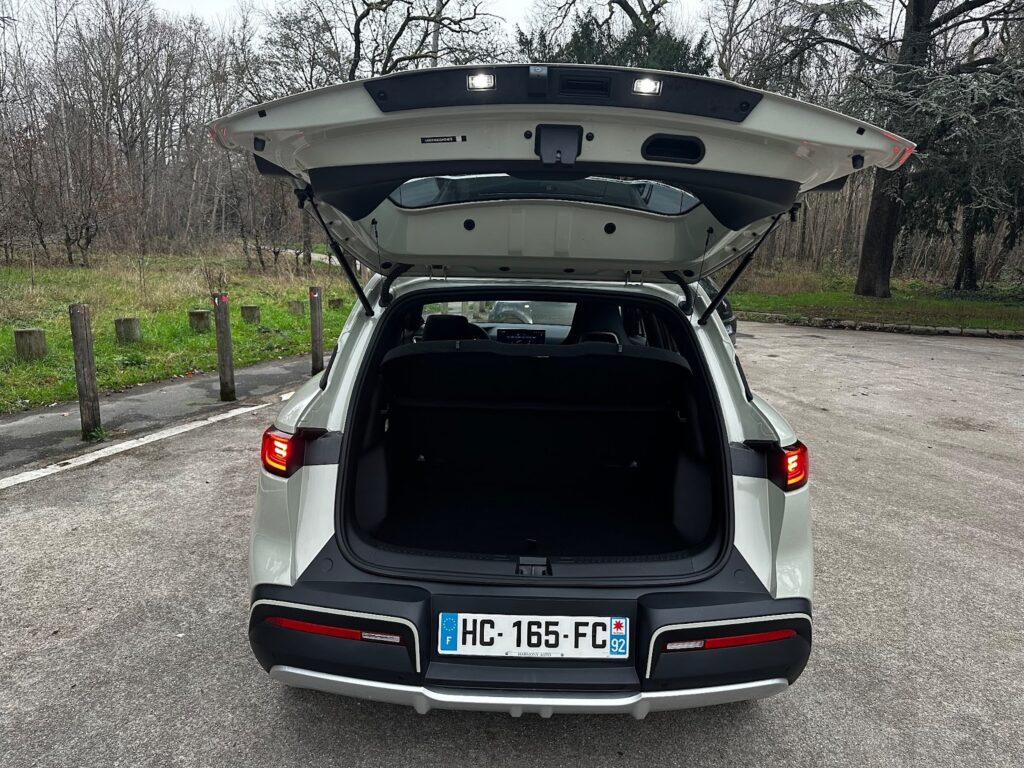
The boot offers around 400 litres in standard configuration, and up to 1,340 litres with the rear seats folded down. These figures are consistent with its size, but confirm that the ATTO 2 is not a champion of volume; in any case, that’s not what the manufacturer is selling!
There is one surprising detail, however: for a vehicle due to go on sale in France in 2025, the boot can be opened and closed entirely manually. That’s not a problem, but it is a little surprising for such a modern, technologically-equipped model.
On the road: fluidity first and foremost
Once behind the wheel of this compact SUV, you’ll feel it from the very first kilometres: it’s a very fluid car that’s a pleasure to drive. The ATTO 2’s compact size is a clear advantage. In Paris, where traffic and lack of space can quickly turn a journey into an ordeal, BYD’s electric SUV copes very well.
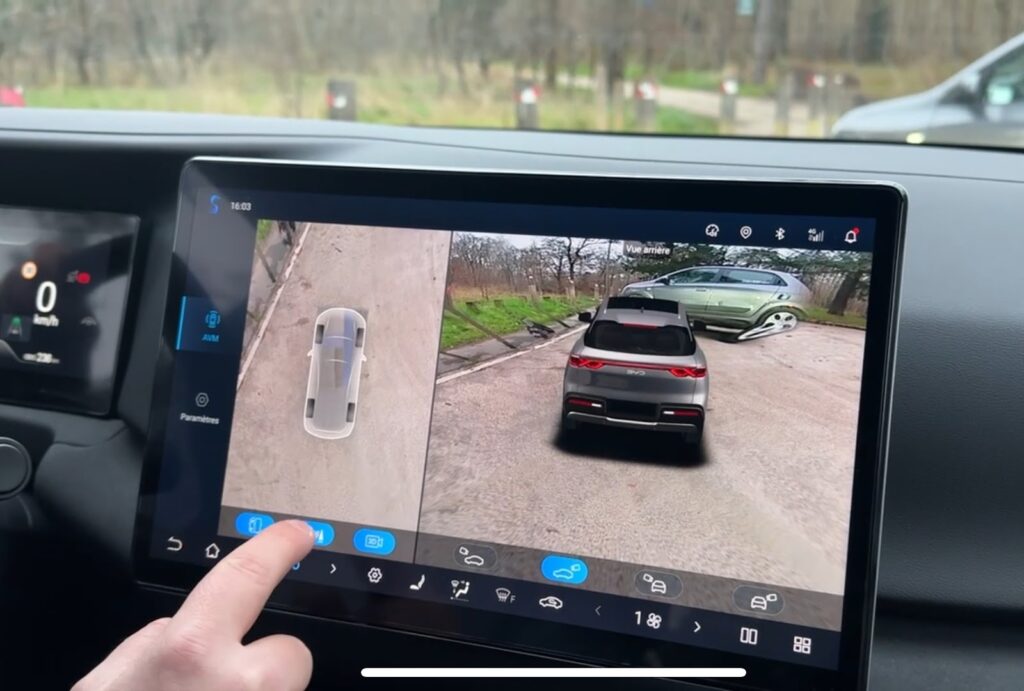
So, of course, and we at ECO MOTORS NEWS know all about it, the electrics obviously play their part in this smoothness. What’s more, the turning circle of around 10.7 m, combined with the numerous cameras and sensors, makes manoeuvring and parking much easier.
On fast roads and country lanes, the ATTO 2 remains firmly planted on the road, with reassuring handling and effective responsiveness. It’s obviously not a ‘pleasure’ car that will give you thrills at the wheel, but it’s a healthy compact SUV that’s comfortable and enjoyable, even on longer journeys.
It’s not all fun and games, but this little car’s got the pedal to the metal, and that’s decided by the different driving modes (Snow, Eco, Normal, Sport). Acceleration is highly dependent on the mode selected: in Eco mode, for example, power is clearly smoothed out to preserve range. In Sport mode, on the other hand, acceleration becomes crisp and responsive, making it easier to overtake, insert or even have a bit of fun, but without ever becoming too brutal.
The regenerative braking, which can be adjusted in two stages via the centre console, lacks a little bite, even in the most pronounced mode. That’s a shame when you’re used to hardly touching the brake pedal at all.
Power, range and recharging
Under the floor, the BYD ATTO 2 Boost features a 130 kW electric motor, giving it 177 bhp. The SUV accelerates from 0 to 100 km/h in around 7.9 seconds and has an electronically limited top speed of 160 km/h.
As for the battery, the engine is paired with a 45.1 kWh Blade LFP battery. The claimed WLTP range is around 312 km, not an extremely high figure, but consistent with its urban and suburban positioning. Recharging is possible at up to 11 kW AC, and up to 65 kW DC, enabling the battery to recover between 10% and 80% of its charge in around forty minutes under the right conditions.
Driving aids: well balanced, except for one detail
BYD is starting to get us used to an extensive range of driving aids. For this model and this version, it’s the same thing: adaptive cruise control, lane keeping, blind spot detection, sign recognition, emergency braking, attention and fatigue detection, pedestrian monitoring, etc.
The whole system is effective and not very intrusive, which deserves to be emphasised. But during our test drive, only one detail really disrupted the experience: the noise of the indicator, which was very robotic and overly present. A detail, to be sure, but significant enough to be worth noting.
Verdict: accessible, coherent and reassuring
Priced at just over €30,000 in France, the BYD ATTO 2 Boost ticks a lot of boxes. It’s not trying to impress with exaggerated figures, but to put people at ease, simplify electric power and offer a credible alternative for everyday use. Once again, this shows that BYD now knows how to talk to European motorists without compromising on the essentials.
Long limited to simple manoeuvring aids, car parking is now becoming a veritable field of innovation for manufacturers. Mercedes-Benz, BMW, Volkswagen and the new Chinese giants are all vying with each other to develop technologies that will enable vehicles to park themselves, without a driver on board. It’s a playing field that is still tightly controlled by regulations, but one that is strategic in the race for the autonomous car.
source: entrapeer
From simple assistant to fully autonomous parking
The first parking aids appeared in the 2000s with ultrasonic systems, followed by semi-automated devices capable of managing the steering wheel or pedals under the driver’s supervision. These technologies are part of the SAE (Society of Automotive Engineers) classification, an international scale that defines six levels of driving automation, from level 0 (no automation) to level 5 (fully autonomous vehicle). The first automated parking systems fall into SAE levels 1 to 2, where the driver remains in charge of the manoeuvre.
source: SAE International
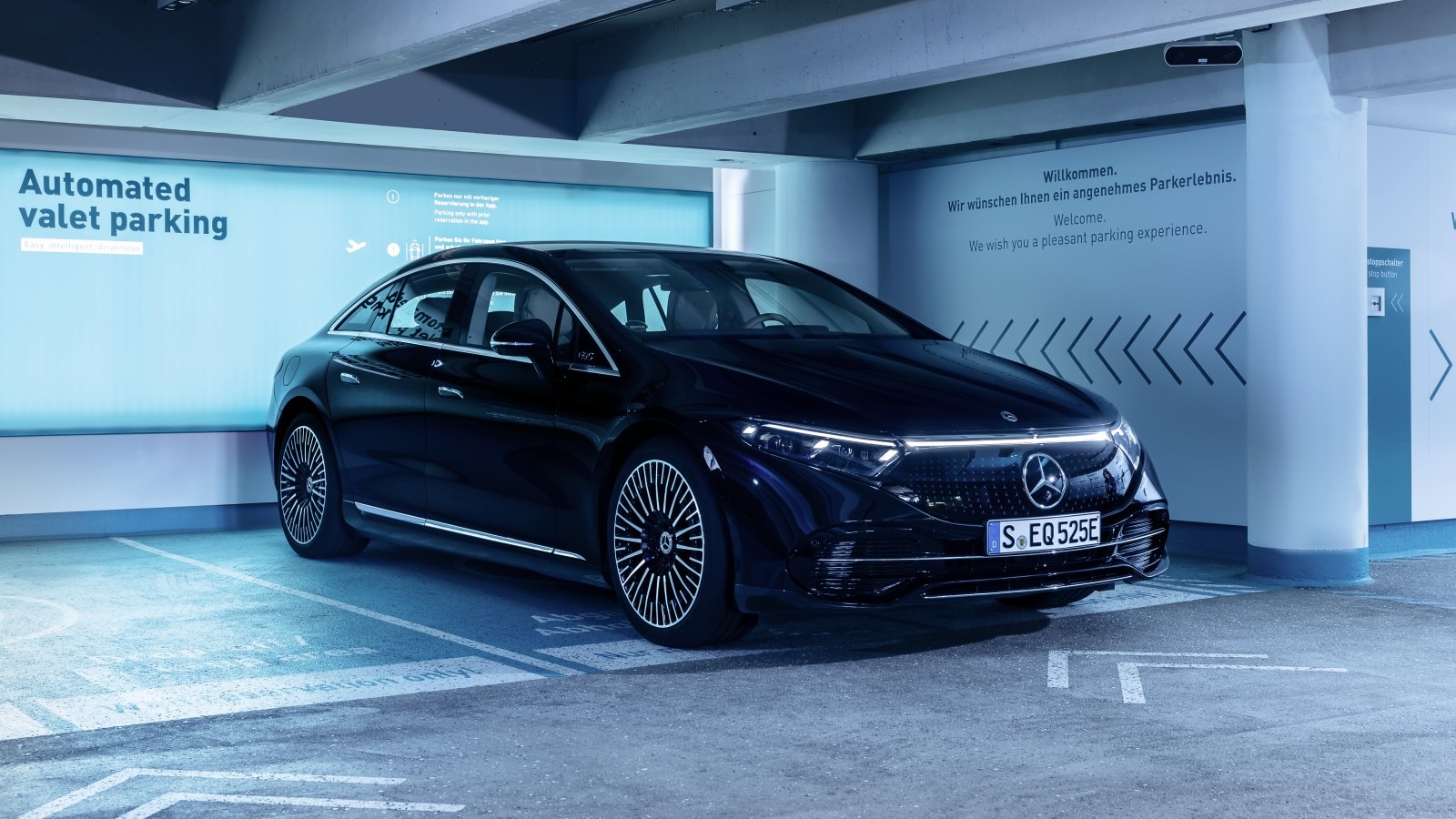
Volkswagen marked a first turning point in 2006 with Park Assist, democratising the partial automation of manoeuvres. But the real breakthrough came in 2015, when Mercedes-Benz and Bosch launched fully automated parking trials. In 2019, at the Mercedes Museum in Stuttgart, the two partners achieved a world first: a saloon car parked itself, without anyone on board, in a real car park. In 2022, this technology becomes the first SAE level 4 autonomous parking system approved for commercial use, called Intelligent Park Pilot, where the vehicle takes charge of the entire manoeuvre, without a driver, in a strictly defined environment.
source : Bosch
How does Level 4 autonomous parking work?
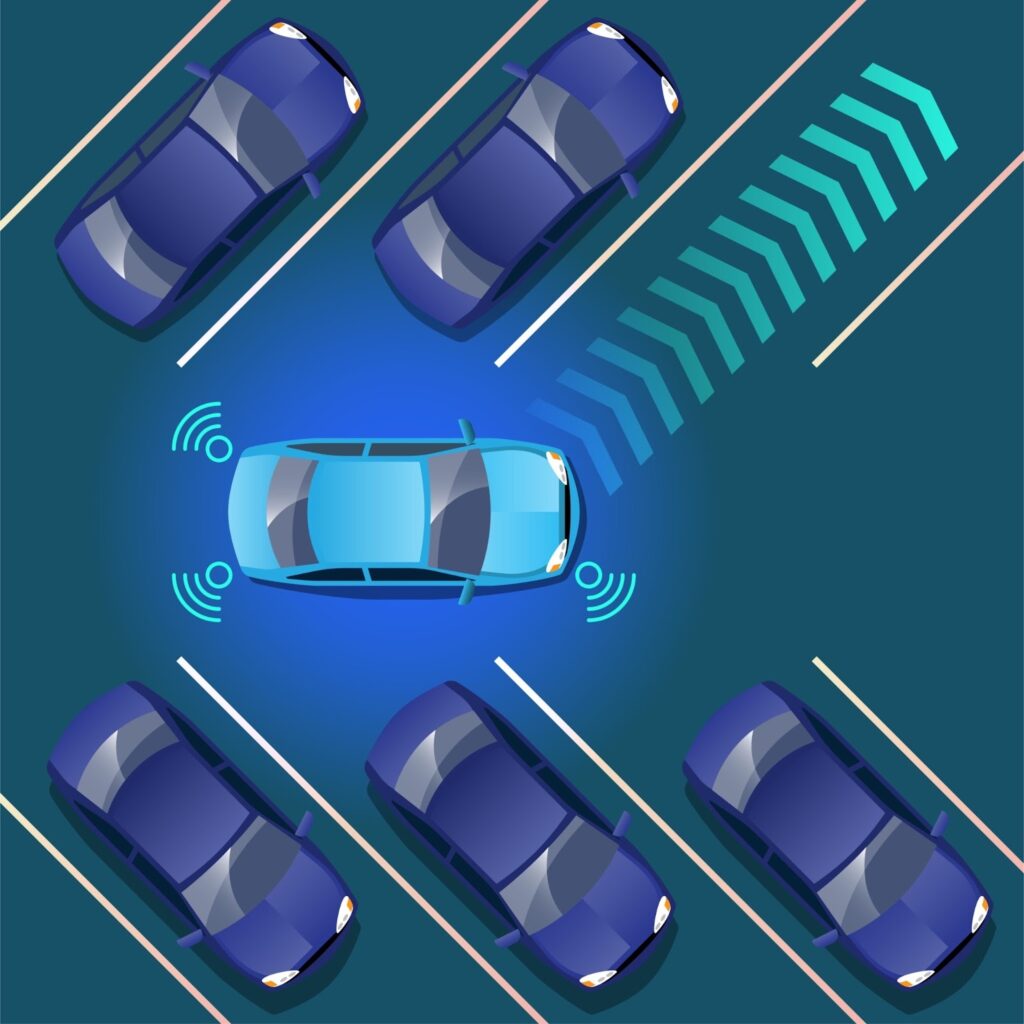
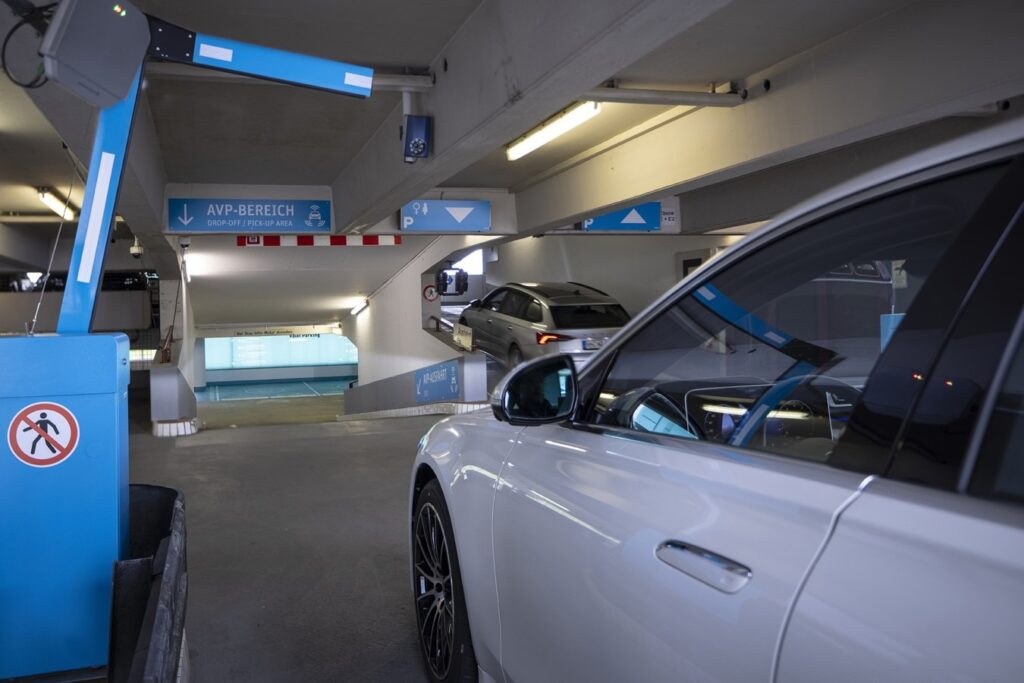
Unlike conventional on-board systems, SAE 4 autonomous parking is based on a vehicle-infrastructure combination. The vehicle uses 360° sensors (cameras, radar, ultrasound and sometimes LIDAR – a perception sensor that precisely maps the environment in 3D), while the car park is equipped with fixed sensors and a supervision system.
Artificial intelligence provides dynamic mapping (SLAM), obstacle detection (pedestrians, vehicles, objects), decision-making and low-speed manoeuvring. In the event of an unforeseen event, the system must be capable of performing a manoeuvre with minimal risk, such as stopping safely.
Some brands, particularly Chinese, are exploring approaches that do not require heavy infrastructure. Changan (APA 5.0) and Xpeng are banking on visual memory and on-board learning to enable the vehicle to reproduce on its own a journey already made, over several hundred metres.
Manufacturers in the driver’s seat
In the field of autonomous parking, manufacturers are moving forward at very different speeds and with very different strategies.
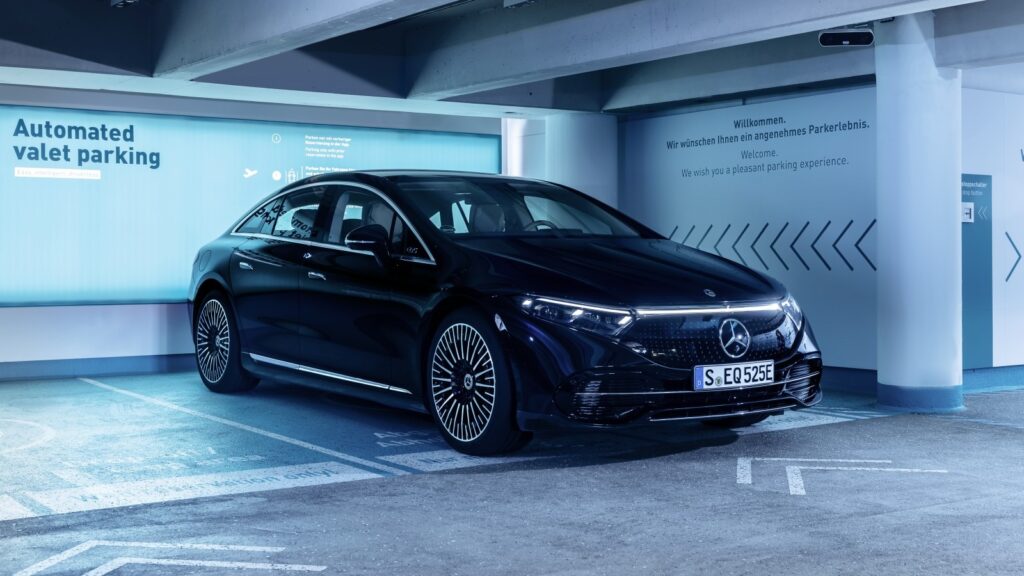
Mercedes-Benz and Bosch are undisputed pioneers. Their Intelligent Park Pilot system is currently the only SAE level 4 autonomous parking system approved for commercial use in Europe. Deployed in a number of car parks in Stuttgart, it enables models such as the EQS and S-Class to park on their own, without a driver on board, thanks to a specially equipped connected infrastructure.
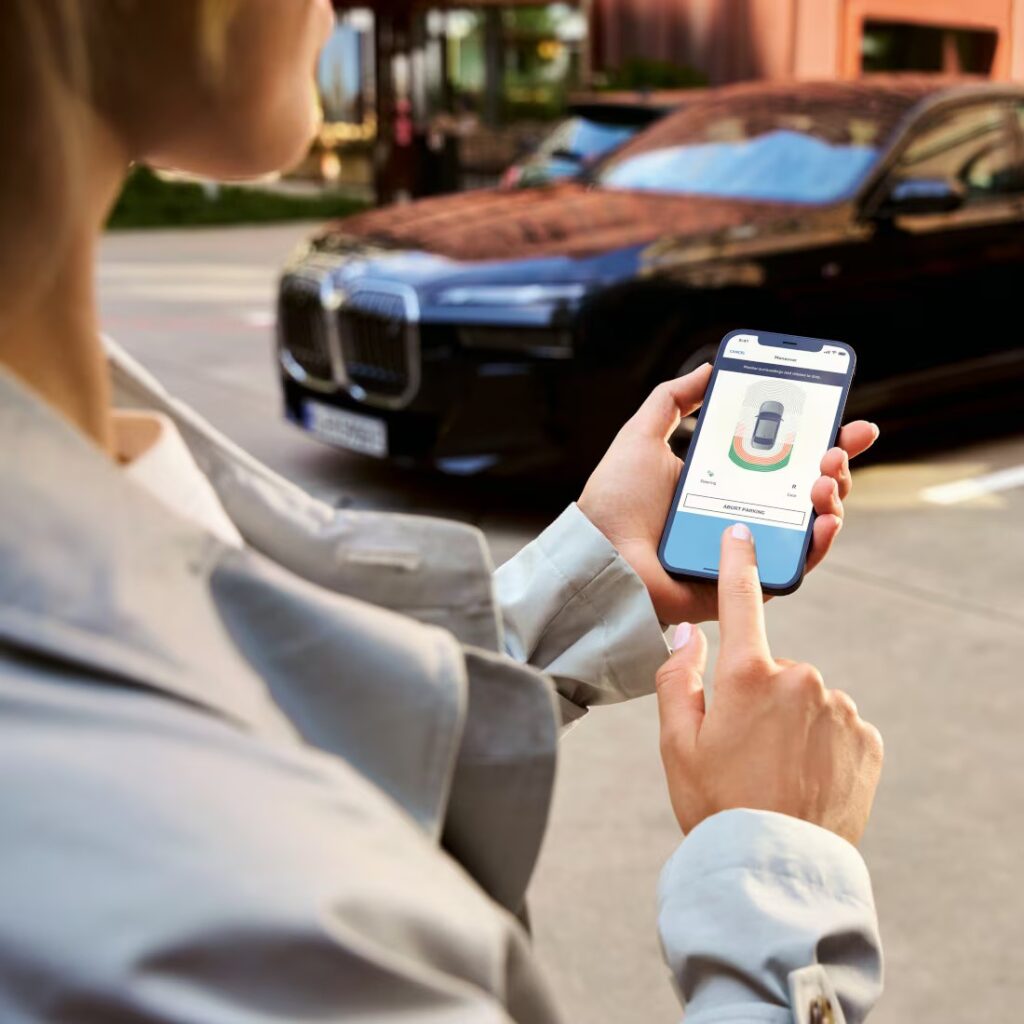
BMW, for its part, is not offering an SAE 4 system as such, but a highly automated parking solution that is already on the market. Parking Assistant Professional, available via the BMW ConnectedDrive Store, enables remote parking from a smartphone and the memorisation of recurring journeys of up to several hundred metres. Although impressive, these functions are still classified between SAE levels 2+ and 3, as the driver remains responsible for the vehicle and the system cannot operate fully autonomously in an open environment. So this is not a prototype, but a real technology with uses that are still restricted.
source : BMW
The Volkswagen Group, including Audi, is taking a gradual approach. The Park Assist Plus and Remote Park systems aim to increase autonomy in successive stages, building on existing driving aids, with the aim of evolving as regulations and infrastructures allow.
However, the fastest-growing trend is coming from China. Manufacturers such as Xpeng, BYD, FAW Hongqi and Changan are stepping up the number of highly automated parking solutions, sometimes approaching SAE 4 level, by relying on on-board artificial intelligence and HD cardless approaches. A more flexible regulatory framework and widely connected commercial car parks are enabling them to accelerate where Europe is moving more cautiously.
Finally, Hyundai, Volvo and Toyota are continuing their developments, often in partnership with specialist players such as Parkopedia, to integrate indoor navigation and intelligent car park management, key technological building blocks in preparation for the wider deployment of autonomous parking.
Is it legal? Yes… but not everywhere
The legal issue is central. In Europe, EU Regulation 2022/1426, adopted in application of General Safety Regulation 2019/2144, provides a framework for the approval of automated driving systems, including “automated valet parking”, a function enabling a vehicle to park itself, without a driver on board, in a predefined, secure SAE level 4 car park. As a reminder, for the time being, use is authorised only in predefined areas, known as Operational Design Domain (ODD), such as closed or controlled car parks.
source : Bosch
Germany is currently the most advanced country. A law passed in 2021 allows driverless driving, and the federal authority (KBA) has approved the Mercedes/Bosch system for real commercial use.
In France, the framework exists but remains more restrictive. The decree of June 2021 and the Mobility Orientation Law (LOM) authorise self-driving vehicles in geolocated areas, mainly for experiments or specific services. In practice, no autonomous SAE 4 parking is authorised on the public highway in 2026.
Is it possible to park alone in the street in front of your home?
The answer is clear: no. Even if the vehicle is technically capable of doing so, autonomous driverless parking is not authorised on public roads, either in France or in most other European countries. The Highway Code requires a driver to be responsible for the vehicle on the open road, and SAE 4 systems are restricted to closed or specially equipped car parks.
Only private garages, equipped public or private car parks or compatible infrastructures can currently accommodate this type of technology.
A revolution still under control
Autonomous parking represents a major step forward, both technologically and symbolically, towards the driverless car. But its deployment remains deliberately gradual. Safety, legal liability, social acceptance and infrastructure adaptation are all challenges to be met before widespread use.
In the short term, the closed car park remains the ideal laboratory for autonomous parking. In the longer term, the whole relationship between the car, the city and the user could be redefined.
The electrification of the French car fleet is not only transforming vehicles and their uses. It is also profoundly redefining the repair professions, undermining traditional mechanical expertise while at the same time giving rise to new skills linked to electronics, software and high voltage. It’s a rapid transformation, often underestimated, that presents garages (especially independent garages) with a major economic and human challenge.
A structural shock for traditional mechanical engineering
The electric vehicle marks a clear break with the mechanical architecture that has structured workshop activity for decades. By eliminating entire components (internal combustion engine, complex gearbox, clutch, exhaust system, etc.), it mechanically reduces the number of interventions required throughout its life. Institutional studies estimate that an electric vehicle requires up to 40% less labour than an equivalent internal combustion model, a figure that translates into fewer trips to the workshop, much to the delight of consumers.
The countries pioneering electrification offer a glimpse of what lies ahead for France. In Norway, a benchmark in the field, overall vehicle servicing has already fallen by 12%, while certain emblematic traditional mechanical operations have dropped by 43%, notably oil changes, belts and brake pads. By 2035, this trend could lead to the loss of between 35,000 and 65,000 jobs in France, mainly in the manufacturers’ networks and with equipment suppliers.
Photo credit: Manual gearbox not used on electric vehicles – AP boites.com
Changing skills
As well as the number of jobs created, the very nature of the skills involved is being radically altered. Engine-related skills, long the core business of mechanics, are gradually becoming marginal in a fleet of vehicles that is set to change rapidly. Engine tuning, injection, timing and exhaust systems are losing their economic centrality, in favour of systems that are mechanically simpler but technologically more complex. Many experienced professionals are facing the risk of their know-how becoming obsolete, without always having the resources or time to retrain. According to projections, job losses could reach between 1,500 and 3,000 a year by 2035, making the electricity transition not just an industrial issue, but also a social one.
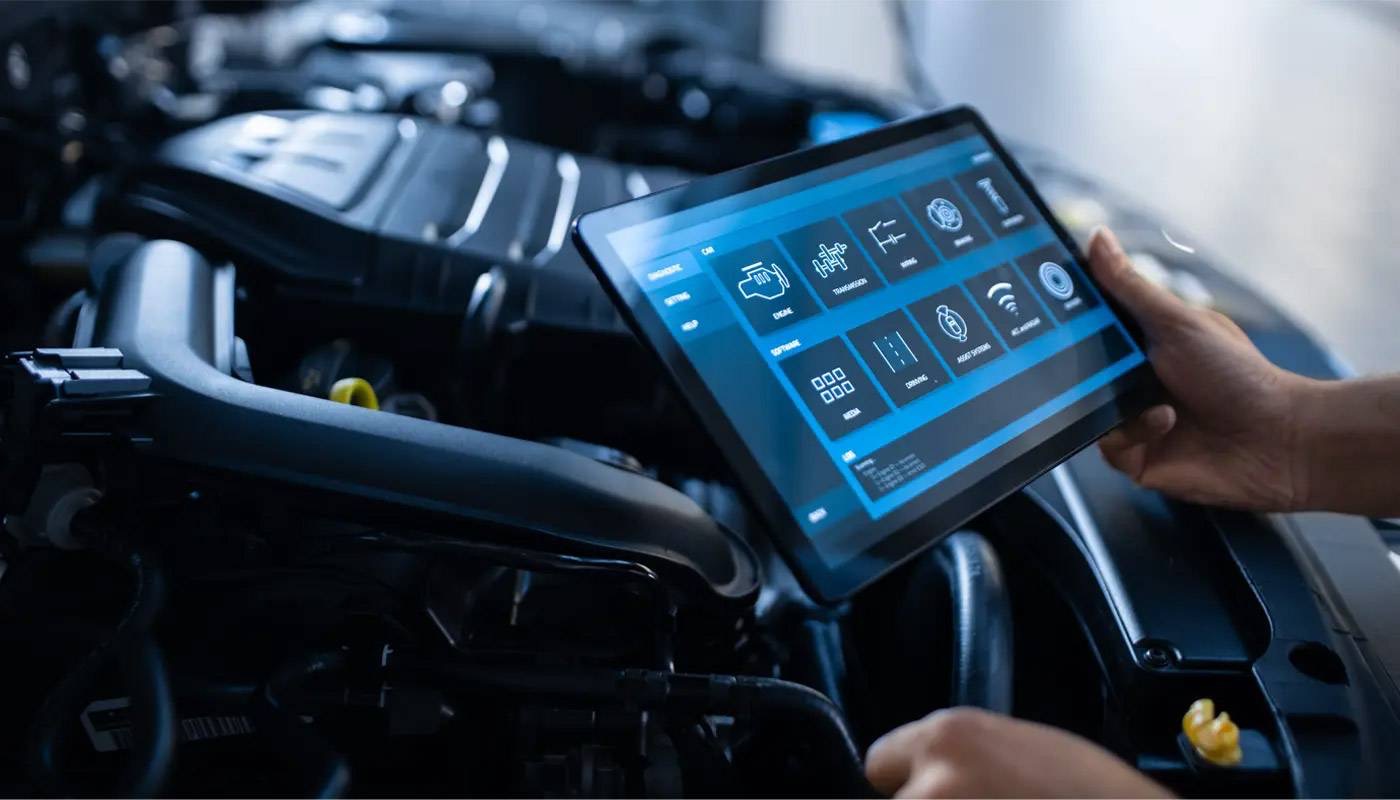
As mechanics take a back seat, electronics and software are becoming the new heart of automotive repair. Diagnosis is now taking precedence over physical intervention, and understanding energy management systems is becoming essential. But these developments are opening up new prospects. On a European scale, the rise of the electrical sector could generate more than 200,000 jobs in areas such as winding, wiring and power electronics. But these new jobs will not automatically compensate for the losses, because they require hybrid profiles at the crossroads of mechanics, electricity and IT, which are still all too rare in the current industry.
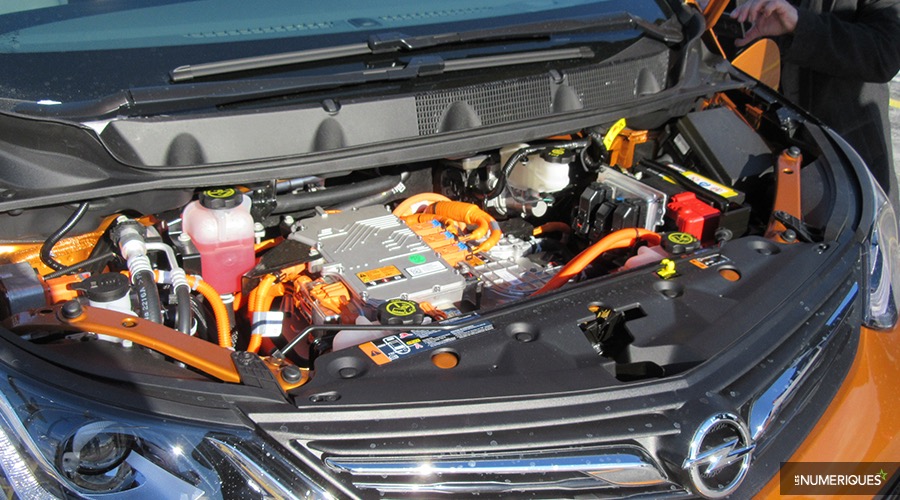
Photo credit: The electric motor of the Opel Ampera-e – Les Numériques
An asymmetrical transition towards more training
Independent car mechanics find themselves in a paradoxical situation. In the short term, they are relatively protected by an ageing vehicle fleet, with an average age of over 12 years, still largely dominated by combustion engines. This gives them economic breathing space, but it can also delay a much-needed adaptation. Access to technical data on electric vehicles remains complex and costly, specialised training courses on batteries or high voltage represent a heavy investment, often between €1,500 and €3,000 per module, and competition from manufacturer networks is increasing. Without support, the risk is that the self-employed will be confined to maintaining a fleet at the end of its life, while the added value of electric vehicles is concentrated elsewhere.
In this context, training appears to be the main lever for avoiding a lasting break in the industry. According to projections published by the ANFA and the French Senate, up to 75,000 net jobs could be at risk if skills development does not keep pace with electrification. Specialised establishments, such as GARAC, are already experimenting with courses dedicated to electric and hybrid vehicles. But without massive public investment and a coherent national strategy, these initiatives risk remaining marginal. It’s not just about technology: it’s also about making changing professions more attractive again, by showing that the electric car can offer skilled, sustainable and rewarding careers.
A transition to be managed, not subjected to
The electrification of the French car fleet does not signal the end of car repair, but rather a change in its nature. It is redistributing value, transforming skills and requiring rapid adaptation throughout the industry. If the transition is not anticipated, there is a risk that the network of workshops, particularly independent ones, will be weakened over the long term, to the detriment of proximity and local employment. Conversely, if supported, structured and financed, this change can become an opportunity. The energy transition can only be fully successful if it is as social as it is professional. The future of electric mobility lies as much in the batteries and software as in the ability of the men and women in the automotive repair industry to make these new tools their own.
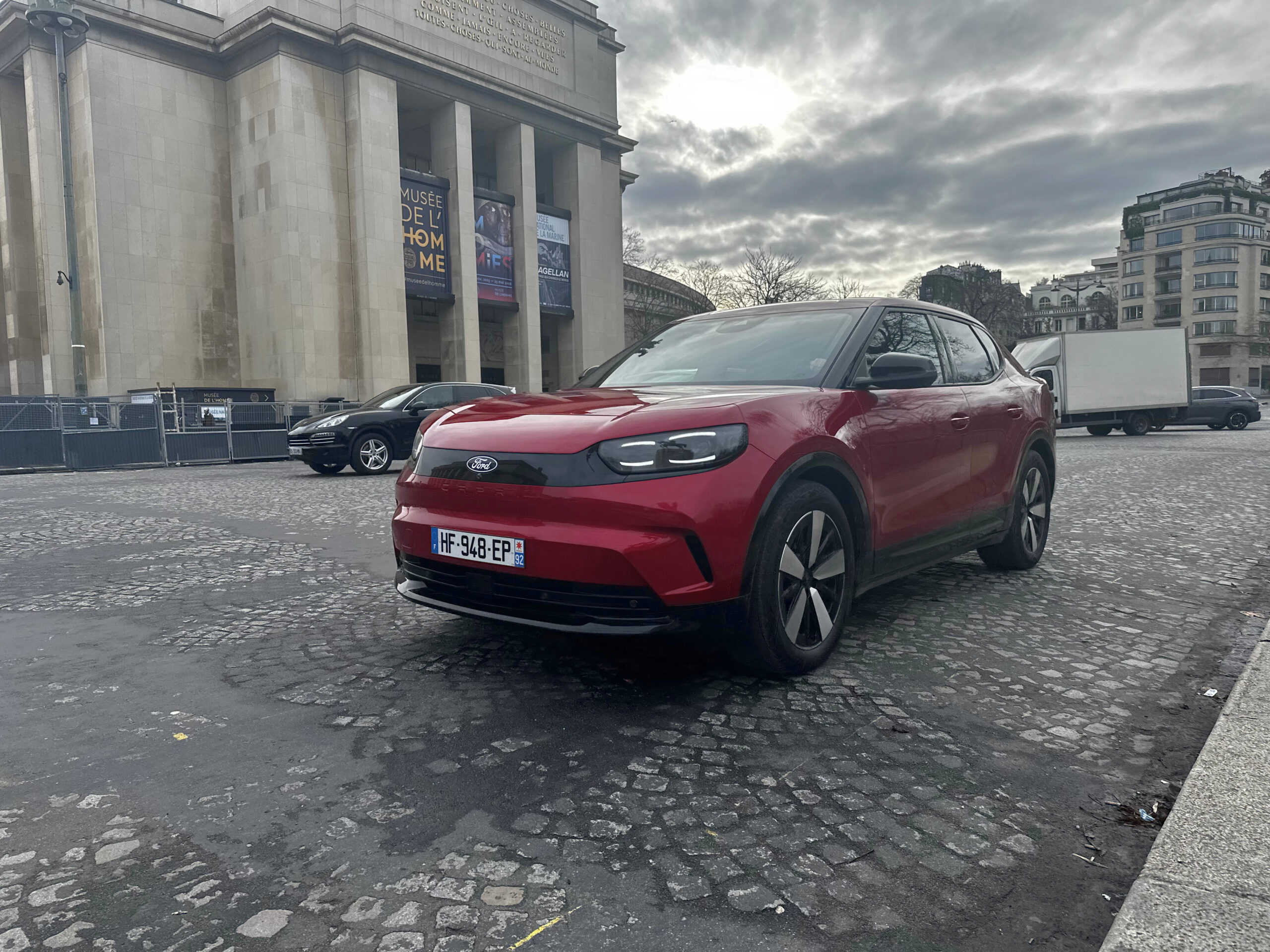
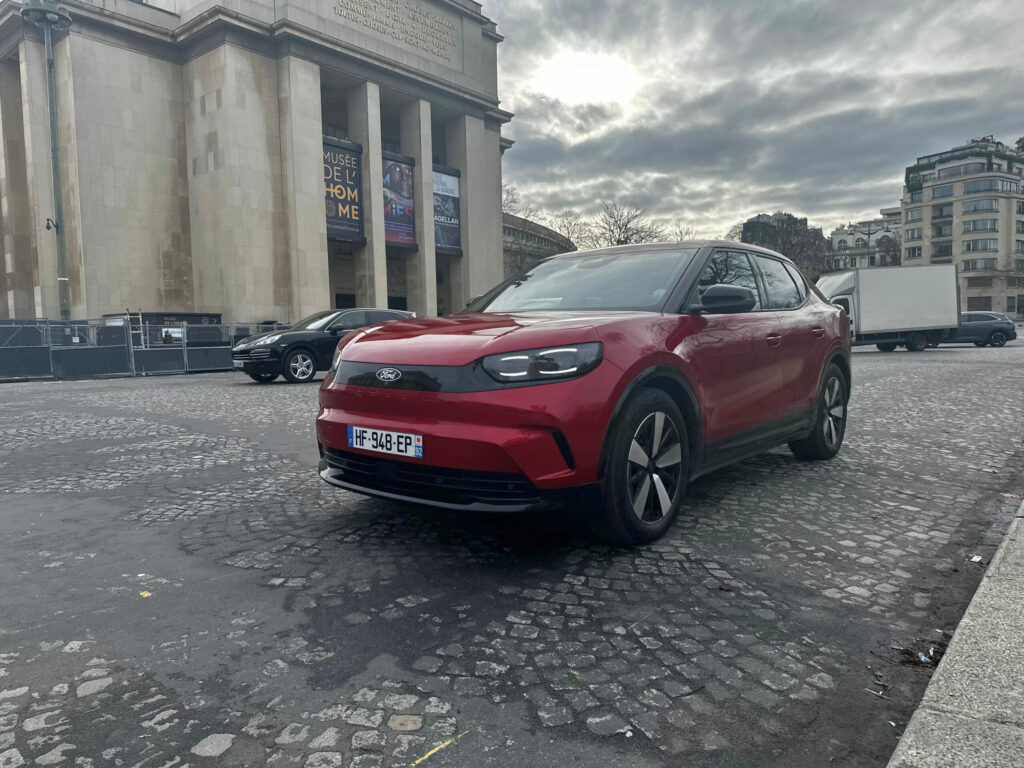
ECO MOTORS NEWS got behind the wheel of the Ford Capri 100% electric Extended Range Premium, in an eye-catching Lucid Red colour. For three days, we put it through its paces in real-life conditions: Paris, the ring road, motorways, small roads in the Paris region and country lanes. The aim was to assess the car’s handling, interior space and real-world usability… and, above all, to check whether this electric SUV coupé lives up to its promises in everyday life.
An assertive design… but with a contrasting physique
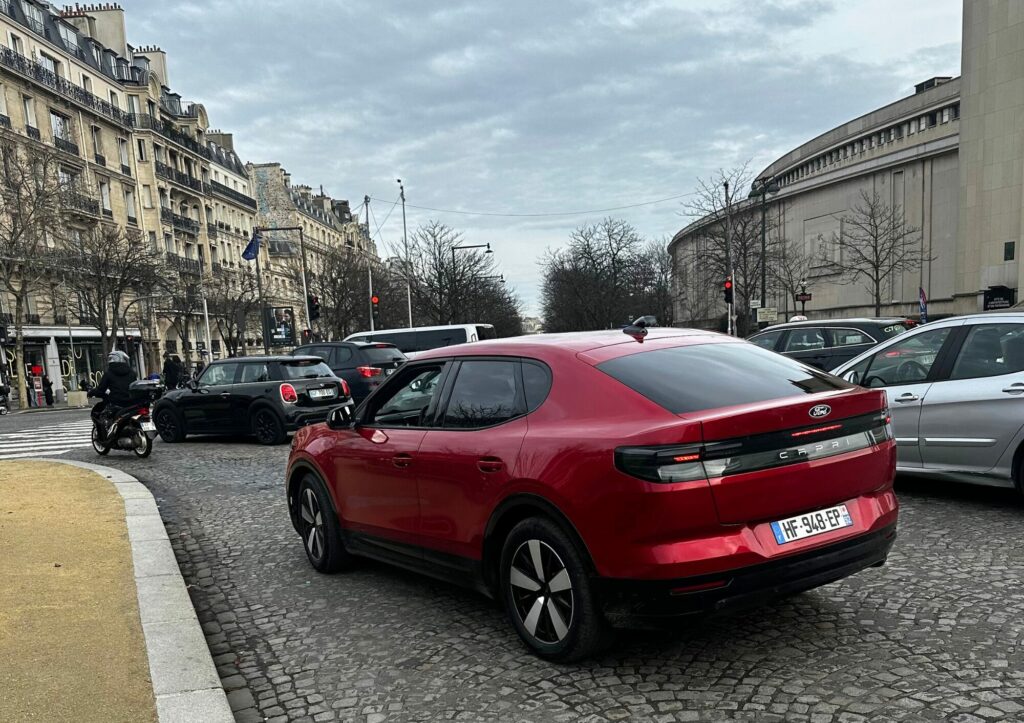
At first glance, it’s clear that the electric Capri has the proportions of a true compact SUV. Indeed, with a length of around 4.63 m, a width of 1.95 m and a height of around 1.63 m, it’s quite imposing. The Lucid Red colour we tried out highlights its volumes and curves particularly well.
The front end, typical of an electric vehicle, is full and closed, without a large thermal grille, giving it a modern look, but also a little massive and, for our taste, perhaps too visually heavy for what it claims to be: a sports coupé. The slim LED headlamps, linked by a horizontal light signature, add an appreciable technological touch.
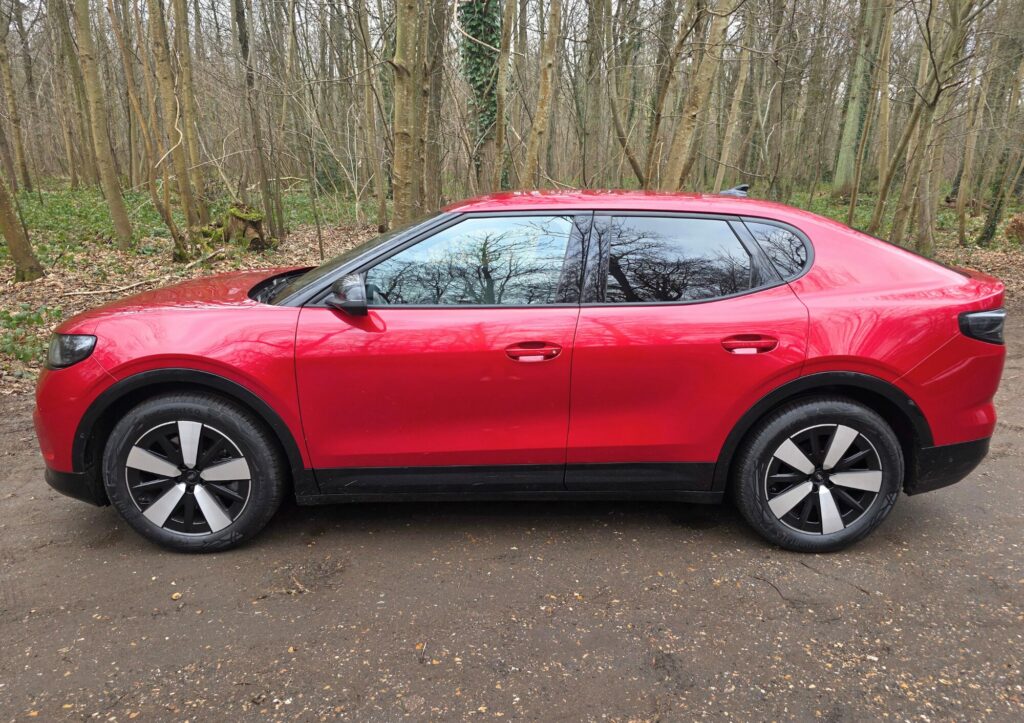
From the side, it’s really the fastback that catches the eye: a roofline that gradually slopes down towards a steeply raked tailgate, reinforcing the impression of a raised coupé rather than a simple family SUV.
At the rear, there is also a strong identity in terms of lighting, with a wide strip of light that brings real coherence to the whole.
Aesthetically, it’s a success on the whole, even if the front end lacks a little of the lightness that’s so convincing in the sporty spirit it claims.
On board: clean lines and well-thought-out comfort, but average quality
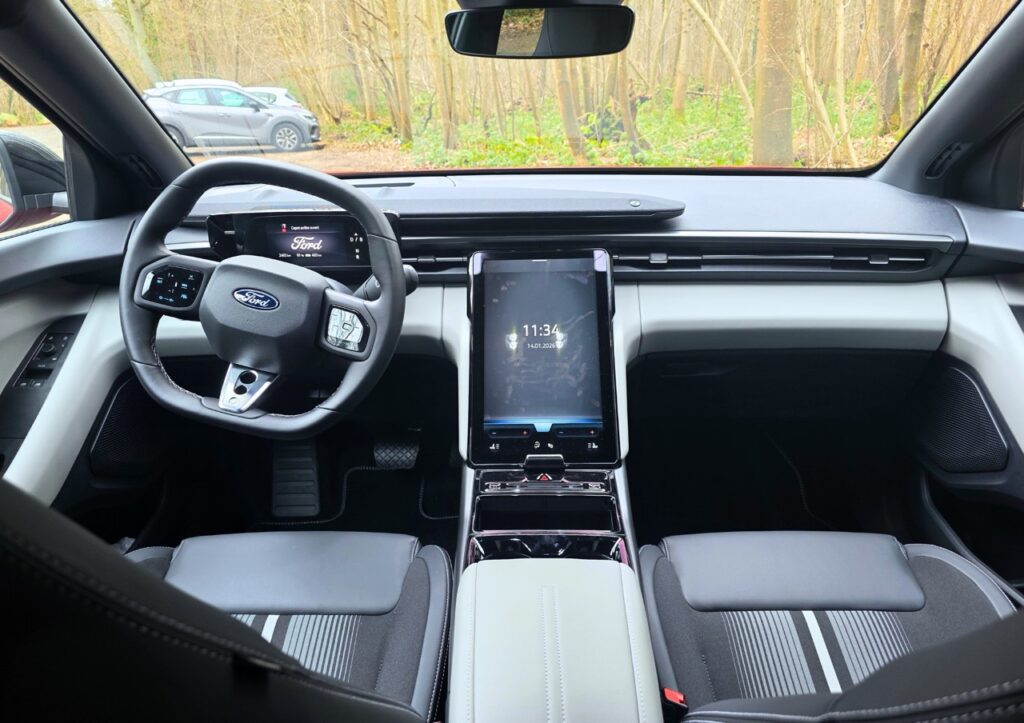
The Capri’s cabin has a very minimalist, digital philosophy. Once you’ve settled in, the overall atmosphere is bright and uncluttered, reinforced by deliberately simple ergonomics. The quality of the materials is average, with a lot of hard plastic rubbing shoulders with parts of the cabin fitted with leather upholstery.
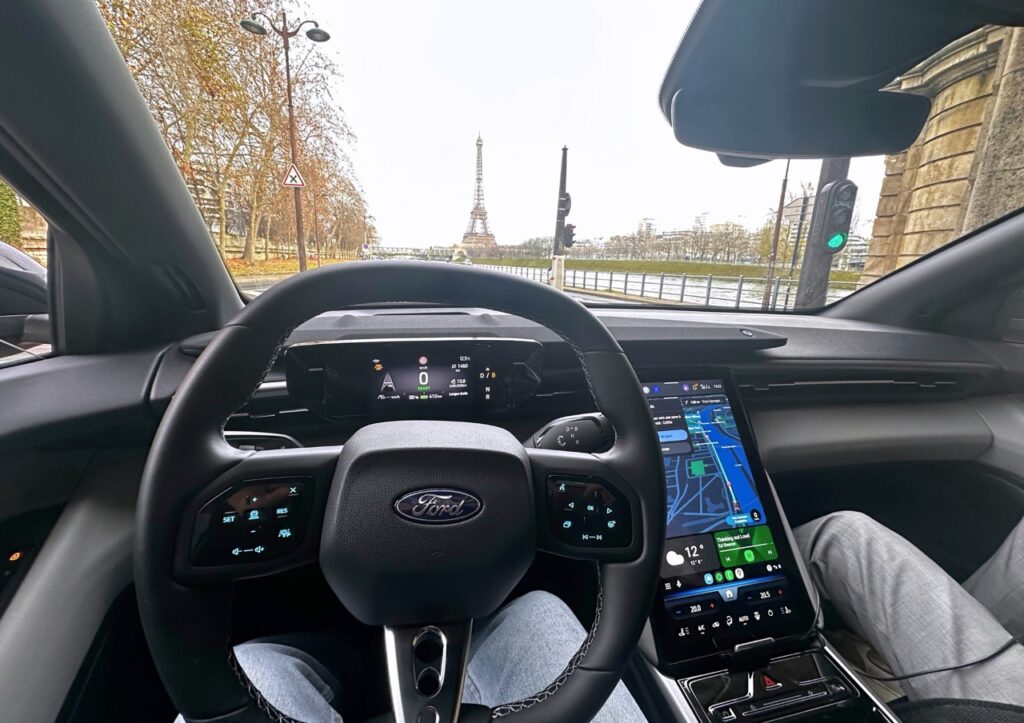
The seats, meanwhile, are very comfortable. On our version, the front seats were heated, as was the steering wheel, a real plus that makes all the difference. There are hardly any traditional physical buttons: everything is controlled via the large 14.6-inch vertical central screen, which houses all the essential functions. This screen, which is the central part of the vehicle, is removable and can be adjusted to suit your driving position.
This streamlined approach to the interior is appreciated by those who like a sober technology: the pivoting central screen is a clever idea that avoids visual overload. The fact that it’s removable and frees up a storage space where you can plug in a phone is a practical little find that I personally appreciated.
However, not everything is perfect. I was disappointed by the software interface and the ergonomics of the operating system, which lacks intuitiveness, and the connection to Apple CarPlay was laborious, which is a shame for such a technology-oriented vehicle.
Behind the steering wheel, the digital display that serves as the instrumentation is clear and easy to read, but does not revolutionise the way in which information is consulted. The ‘digital’ buttons integrated into the steering wheel are attractive and original, but their sensitivity is sometimes too high – I’ve had cases of controls being activated inadvertently during manoeuvres, which can become irritating.
Another surprising ergonomic choice is the management of the rear windows. Only two buttons on the front control all the windows, and you have to activate a ‘rear’ mode to switch between front and rear. It’s a logic that takes some getting used to, but I really liked its originality. Rest assured, of course, that the passengers behind have their own controls.
Overall, the interior is well thought out and above all original. There’s plenty of storage space in the central part of the front of the vehicle, as well as two induction charging points – in short, everything you need to travel efficiently.
In the rear: generous, practical space
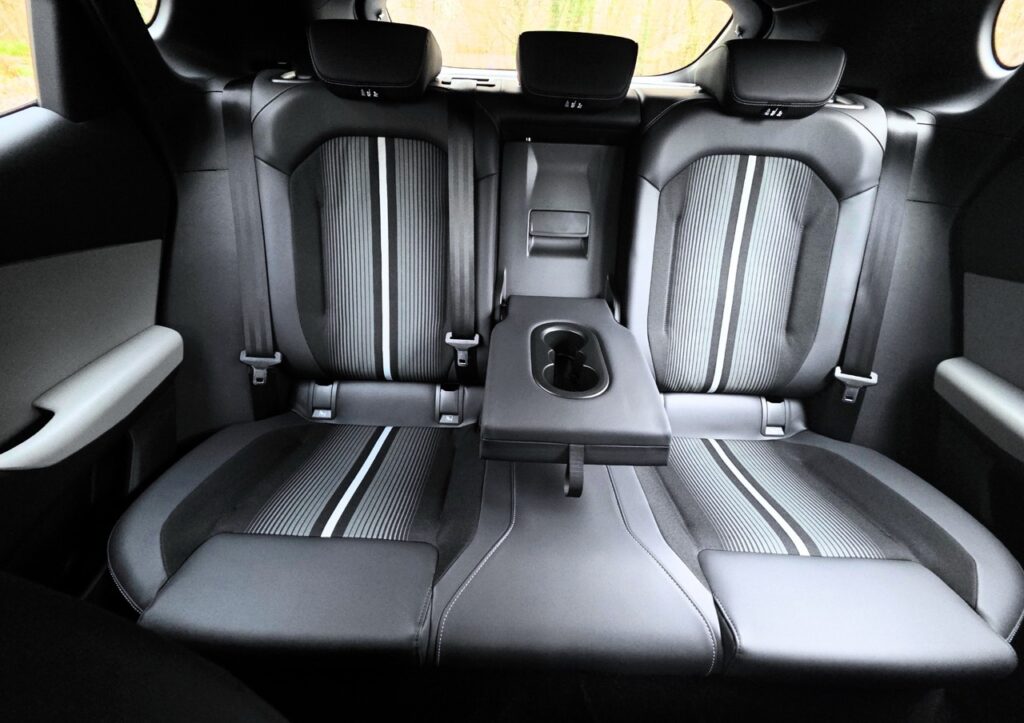
Thanks to a generous wheelbase of 2.77 m, rear-seat space is not to be outdone. Whether for children or full-size adults, the rear seats offer more than adequate comfort for medium-distance journeys.
The Capri even adds a ski hatch integrated into the middle seat, which converts into a glass rest – a clever detail that’s particularly useful on long journeys or for transporting skis without losing any useful space.
The boot is one of the Capri’s practical strengths. With over 570 litres in standard configuration and over 1,500 litres with the seats folded, it offers generous capacity for a compact SUV coupé.
On a personal note, I find the boot opening aesthetically pleasing. Of course, it’s also pleasant and wide enough to handle luggage, bags and equipment with ease.
Smooth, fluid ride with a personality all of its own
From the very first kilometres, the Capri impresses with its fluidity. In town, it’s silent, the steering is precise and the sensation is very pleasant. On the other hand, forward visibility is sometimes hampered by a bulky central rear-view mirror that invades the field of vision. At some traffic lights, you had to bend over slightly to see the traffic lights properly, a small detail that sometimes bothered us.
On fast lanes and motorways, the handling is pleasant. The comfortable seats, combined with a chassis that absorbs imperfections well, allow you to cover mile after mile without excessive fatigue. In Sport mode, the Capri is even more lively, making overtaking and merging into traffic stress-free and truly serene.
In tight bends or at sustained speeds, you feel the weight of the vehicle, which nevertheless remains firmly planted on the ground. There’s a slight perceptible roll, but nothing that’s prohibitive once you get used to its size.
Technique & autonomy: a serious proposition
Under the bonnet, the Capri Extended Range boasts an electric motor producing around 210 kW (286 bhp) combined with 545 Nm of torque, enabling it to accelerate from 0 to 100 km/h in around 6.4 seconds and reach a top speed of 180 km/h.
Its battery has a useful capacity of around 77 kWh, and the WLTP range can reach up to 627 km in mixed use when the battery is fully charged. In use, this generous range translates into real peace of mind on long journeys, although it logically varies according to driving style and road type.
Charging is well thought-out: up to 11 kW AC for home charging, and up to 135 kW DC fast, which means you can go from 10% to 80% in around 28 minutes at a suitable charging point.
Driving aids: useful but need to be tamed
As we’ve said, this is a car that’s very well equipped technologically, and in this respect, it doesn’t neglect its assistance systems. Adaptive cruise control, lane keeping, blind spot detection and multi-angle cameras are all present and function in a way that is useful on a daily basis. The rear camera is oriented according to the direction of the steering wheel, which really makes manoeuvring easier and made us forget how wide it is. The head-up display is well thought out and provides real visual comfort, whether you’re in town or on the motorway.
Some of the aids may seem a little intrusive at first, but they are easy to deactivate if you prefer a more traditional driving style.
A generous, fluid electric Capri… with a few compromises
The Ford Capri 100% electric Extended Range is a solid proposition in the compact electric SUV segment. It impresses with its smooth ride, convincing interior space, generous boot space and reassuring range. The Sport mode is lively, and the well thought-out driving aids make everyday life easier.
However, some compromises have been made. Forward visibility is not optimal, the screen interface is not very intuitive, and the digital buttons on the steering wheel are too sensitive.
The Capri is a coherent, enjoyable car that combines comfort, style and versatility. It doesn’t try to impress with extreme performance or ostentatious luxury, but succeeds in offering a practical, dynamic electric SUV coupé that is a pleasure to drive every day, true to its identity.