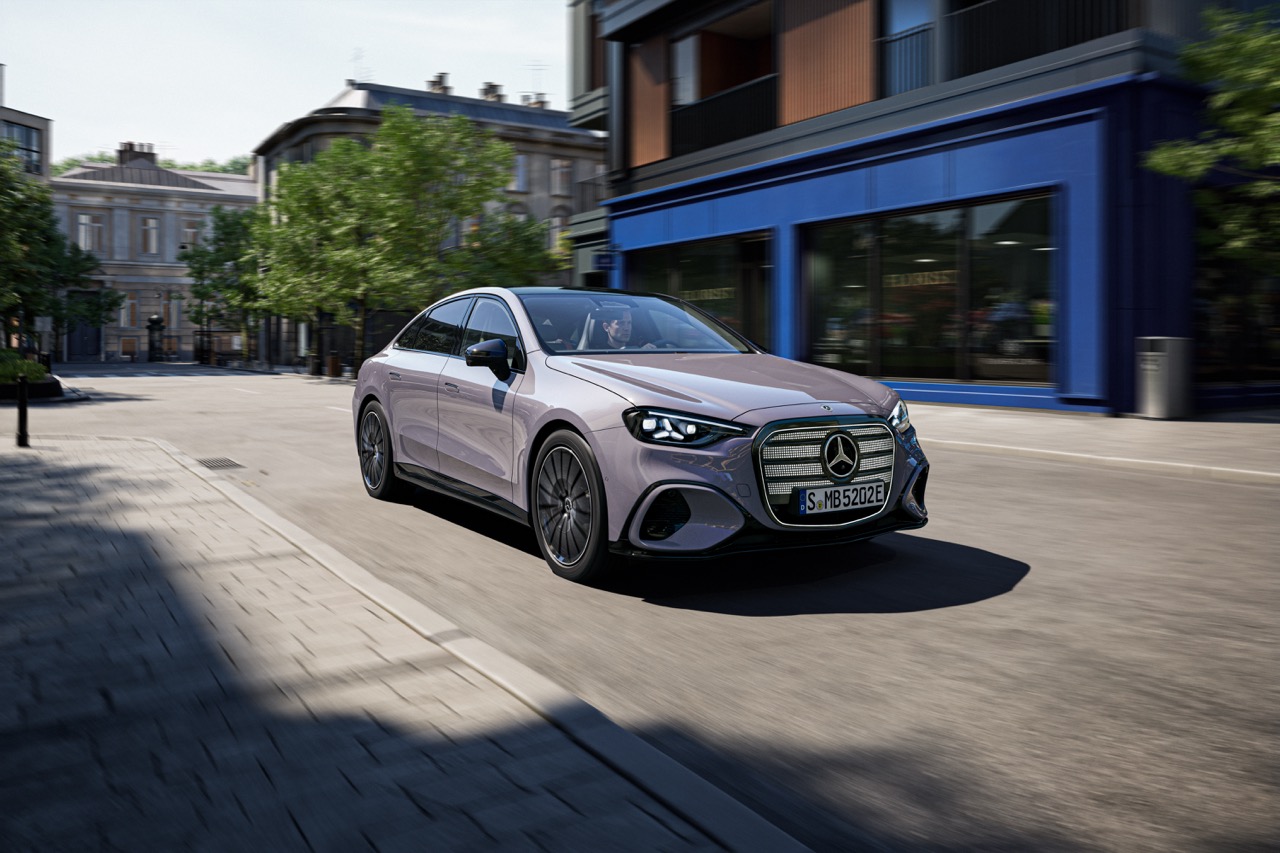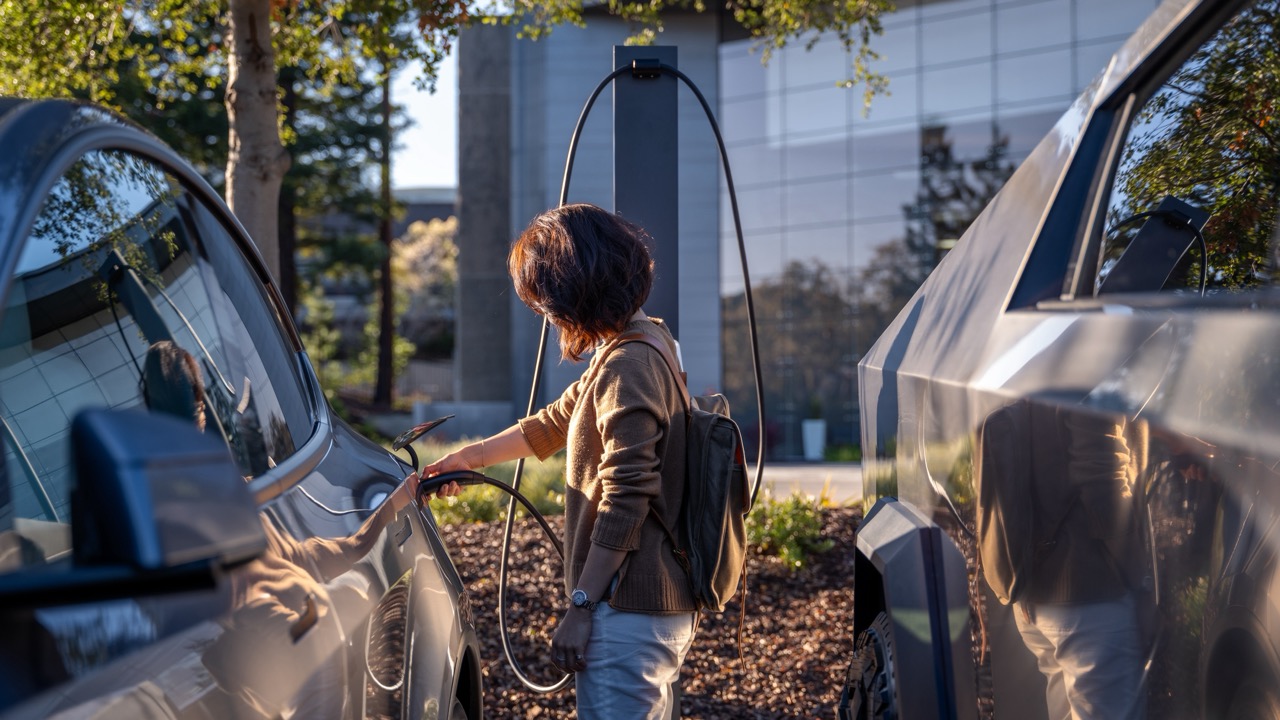
The French car market has once again shown its fragility at the start of 2026. According to AAA Data, 153,842 passenger cars were registered in March, a fall of around 1.5% compared with March 2025.This decline is less severe than in February (-14.7%), but it confirms an underlying trend: the market remains under pressure. Against this backdrop, however, one segment continues to grow significantly: electric vehicles.
source: Tesla
A market struggling to regain its momentum
With nearly 154,000 new registrations, March 2026 managed to limit the damage, though it did not mark a genuine recovery. For the first quarter as a whole, the market recorded around 414,000 passenger cars, down by approximately 8% compared with 2025.
To be more specific, the use of internal combustion engines continues to decline:
diesel's market share has fallen below 3%,
petrol prices are falling sharply,
whilst hybrids now dominate the mix… without managing to sustain overall volumes.
The conclusion is clear: the energy transition is making progress, but it has not yet offset the market downturn.
The electric vehicle sector is maintaining its momentum but remains dependent on the economic climate
Indeed, in this market, it is electric vehicles that, as in previous months, continue to perform well. In March, they accounted for around 27% of new registrations, representing just over 40,000 electric vehicles for the month.
Looking at the first quarter, the trend is even more pronounced, with over 100,000 EVs already registered – an increase of around 20% – representing a market share of nearly 25%.
A clear upward trend, which, as we know, is driven by factors that are now well established, such as social leasing deliveries, increased government subsidies and regulatory constraints on vehicle fleets.
But of course, nothing lasts forever (normally)… Behind these positive figures, there is a caveat: some of this growth is cyclical, so the peak observed since January may not last as certain measures lose momentum.
There is no shortage of opportunities
We don’t talk about it often enough, yet this trend isn’t limited to the new-car market. It’s also becoming increasingly evident in the used-car market.
In March 2026, 476,979 used car sales were recorded, an increase of 2% year-on-year. In the first quarter, the market totalled 1,330,132 sales, a slight decrease of 2%.
But here too, the market landscape is changing rapidly. Electrified powertrains are growing rapidly:
Sales of second-hand electric cars have surged by 47%, reaching a 4% market share,
mild hybrids (MHEVs) are up by 35% (5% market share),
Plug-in hybrids (HEVs) have seen a 27% increase (6% market share).
source: Renault
Conversely, internal combustion engines are on the decline:
Diesel has fallen by 4%, but remains dominant with a 42% market share,
petrol prices have fallen by 2% to 38%.
Fleets: the quiet but vital driving force behind the transition
Behind these developments, one key player stands out: corporate fleets. As they are more responsive to public policy than private individuals, companies are quick to adapt their choice of powertrain. For them, a car primarily serves an immediate operational need, which severely limits the scope for postponing purchasing decisions.
In this context, current regulations, particularly greening requirements, have a direct and significant impact. They automatically steer vehicle replacements towards electrified powertrains, and are likely to continue doing so in the short and medium term.
But their role is not limited to the new car market. By regularly renewing their vehicles, fleets supply the used car market with a huge number of recent models. As a result, they have become a key driver in the uptake of electric vehicles by households, enabling a more gradual yet broader transition across the entire vehicle fleet.
source: Toyota
A trend to watch over the coming months
The start of 2026 thus highlights a two-tier market. Whilst the overall market is in decline, the electric vehicle segment is growing strongly.
As always, the question remains: is this trend sustainable? With the gradual phasing out of social leasing, a challenging economic climate and prices that remain high, the coming months will be decisive. One thing is certain: whilst electric vehicles are gaining ground, they are still doing so in a market that is still struggling to find its footing.
It’s now official. Following several weeks of speculation since the fourth-quarter 2025 results briefing, Tesla is discontinuing production of two of its most iconic models: the Model S and Model X. This is a momentous decision, marking both the end of an industrial cycle and a profound strategic shift for the American manufacturer.
source: Tesla
A decision that had already been hinted at as early as January 2026
It all began in late January 2026, during the Q4 conference. At that time, Elon Musk stated: “It is time to put a definitive end to the Model S and X programmes.” “If you want to buy a Model S or X, now is the time to place your order. ” The CEO spoke of a reallocation of resources, a desire to optimise production lines and, above all, a repositioning of Tesla towards projects deemed more strategic. “We are going to focus on the products that have the greatest impact,” he explained in essence, suggesting that certain historic models are no longer a priority.
source: Caradisiac
At the same time, another development has gone almost unnoticed: the gradual transformation of the factory in Fremont, California. As Tesla’s historic site, long dedicated to the Model S and Model X, Fremont is now set to take on a new role.
The aim is to house part of the production of the Optimus humanoid robot, which is billed as one of the group’s most ambitious projects. Elon Musk himself has stated that Tesla could eventually produce “millions of units” of this robot.
source: Tesla
Production has come to a halt… and stocks are already running low
Production of the Model S and Model X has been permanently halted since early April 2026. The vehicles still available come solely from existing stock, and they are selling out fast. Indeed, according to EV-CPO data from seven days ago, there are currently approximately:
295 new Model S cars
301 brand-new Model Xs
And this is true on a global scale.
This is a particularly telling figure, especially given that almost all of these vehicles are located in the United States. In Europe and Canada, stocks have already run out. In practical terms, this means that these models are, in real time, transitioning from being available new to being end-of-life models, which will only be available second-hand.
Volumes that have become marginal in the face of industrial priorities
Behind the symbolic significance of this decision lies a far more pragmatic reality: that of sales volumes. In recent years, the Model S and Model X have accounted for only a marginal share of Tesla’s sales. Indeed, in 2025, the manufacturer’s high-end models, grouped under the ‘other vehicles’ category, totalled barely 50,850 units, compared with over 1.6 million Model 3s and Model Ys. A colossal gap, which clearly illustrates the shift in scale at Tesla.
source: Tesla
In this context, maintaining production lines dedicated to low-volume vehicles is becoming increasingly irrelevant. The strategy now lies elsewhere: optimising production capacity for mass-market models, reducing costs and ramping up production of the Model 3 and Model Y, which are the true pillars of the group’s profitability.
Added to this is a more profound transformation: the reallocation of resources towards new technological projects, particularly robotics. The Fremont factory, historically dedicated to the Model S and Model X, is thus set to play a key role in the development of the Optimus humanoid robot. This shift confirms that Tesla is no longer content merely to produce cars, but is reorganising its industrial infrastructure around its future priorities.
source: Tesla
Pioneers who have redefined electric vehicles
Beyond the business announcement, it is above all the symbolic significance of this decision that stands out. When it was launched in 2012, the Model S entered a market where electric cars were still a niche product, often perceived as underperforming and limited. Tesla completely changed the game.
The American saloon immediately sets new standards:
a range of over 400 km from the very first generations,
acceleration worthy of a sports car,
a fully digital interface,
and, above all, over-the-air (OTA) updates that transform the car over time.
source: Tesla
A few years later, the Model X rounded off this vision with an electric SUV that combines performance, technology and family-friendly practicality, whilst introducing standout features such as the Falcon Wing doors.
source: Tesla
These two models have played a key role in driving the global market forward: they have demonstrated that an electric vehicle can compete with, or even outperform, premium combustion-engine models. They have also forced established manufacturers to respond, leading to a massive acceleration in their investment in electric vehicles.
A new chapter begins and a bold rebranding
With the discontinuation of the Model S and Model X, the strategy is now clear:
focus on high-volume models such as the Model 3 and the Model Y,
optimise costs and production,
and, above all, invest heavily in disruptive technologies such as artificial intelligence and robotics.
This shift reflects a profound transformation at Tesla, which is gradually moving away from its status as a ‘traditional’ car manufacturer to become a multi-sector technology company.
Just a few days after the official launch of OMODA & JAECOO on the French market, the Chery Group has taken a further step in establishing its presence. In a press release issued on 7 April 2026, the Chinese manufacturer announced the signing of a strategic partnership with DHL Supply Chain. This three-year agreement, far from being insignificant, demonstrates a clear ambition: to establish a long-term presence in France by building a comprehensive ecosystem from the outset, rather than simply offering a range of vehicles. In this context, after-sales logistics becomes a key priority.
Source: OMODA & JAECOO
A partnership to ensure after-sales support from day one
It is precisely this point that forms the basis of the agreement with DHL Supply Chain. Indeed, the press release states that the aim is to establish a comprehensive supply chain dedicated to spare parts, even before the first deliveries to customers. This approach is endorsed by Hanbang Yu, CEO of the Chery Group in France:
“Customer satisfaction is our top priority. It begins long before the first delivery. By choosing DHL Supply Chain, we are equipping ourselves to offer after-sales service that matches our ambitions from day one. This partnership is a cornerstone of our commitment: we are not just here to sell cars in France; we are here to build a sustainable brand, working with local partners, for French customers.”
So it’s clear: Chery regards after-sales service as a cornerstone of its launch in France.
source: Hanbang Yu
A logistics infrastructure designed to support growth
Specifically, DHL will handle all operations, ranging from the storage of spare parts and order fulfilment to distribution to the network of OMODA & JAECOO dealerships and authorised repairers
The operation will be based at a logistics centre in Meung-sur-Loire, near Orléans, with several thousand parts already planned, ranging from small components to bodywork parts and batteries.
The service also includes the management of international shipments and customs clearance, ensuring delivery across the whole of France within 24 hours.
source: APM
Six models available from launch… with the range set to expand
Another key point in the press release is the scale of the scheme from the outset. Indeed, at launch, the scheme will cover six vehicle models, with significant potential for expansion to accommodate the arrival of several additional models by 2028.
This forecast confirms that the launch of OMODA & JAECOO is not limited to a small range. The manufacturer is already preparing for the arrival of new models in the coming years, at a time when the electrification of vehicle ranges is becoming a necessity in the European market.
Source: OMODA & JAECOO
A direct response to the needs of the French market
This partnership addresses a clearly identified issue: the credibility of new entrants. In the French market, as in Europe, expectations are no longer limited to the product itself; they also extend to:
the availability of parts
the quality of after-sales service
network reliability
These are factors that are often highlighted as weaknesses when new brands enter the market. To address these potential shortcomings and remove these obstacles from the outset, Chery has therefore partnered with a company such as DHL. This approach has been praised by Nico Schütz, CEO of DHL Supply Chain France:
“Chery Group’s entry into the French market is part of a phase of particularly rapid growth, which requires a flexible, reliable and immediately operational supply chain. We are proud to be supporting the launch of the OMODA & JAECOO brands at this stage of their development, with a logistics system designed to grow in step with their ambitions.”
source: DHL Supply Chain France
A launch that is already well organised in France
This partnership comes at a time when the roll-out of OMODA and JAECOO is already well underway in France. From spring 2026, the brand will be supported by a network of 74 dealerships, with a target of 130 sales outlets by the end of the year, in order to rapidly expand its presence across the country.
As for the product range, the line-up remains limited for now, comprising the OMODA 5 and JAECOO 7 SUVs, which have been available to order since April 2026, but the strategy is clear: to rapidly expand the range in the coming months.
Source: OMODA & JAECOO
A key milestone in Chery’s European strategy
Through this partnership, Chery is doing more than simply supporting the launch of OMODA and JAECOO. The group is laying a crucial foundation for its expansion in Europe.
By setting up its after-sales network today with the help of a leading logistics provider, just a few days after the brand’s very first vehicles went on sale in France, the manufacturer is sending a clear signal: its ambitions go far beyond a mere trial phase on the French market.
It now remains to be seen whether this industrial and logistical organisation will lead to rapid adoption in a particularly competitive market.
It is well known that, at first glance, EVs make no noise at all. No roaring engine, no vibrations when starting up, no revving. Electric cars have long been associated with a single concept: silence. But this is no longer really the case, because behind this quiet exterior lies a very different way of operating… and European regulations that require manufacturers to ‘recreate’ noise.
source: Izy
A radically different operating principle from that of a combustion engine
To understand this silence, we need to go back to basics. Unlike internal combustion engines, an electric motor does not operate by combustion.
No combustion in the cylinders, no exhaust, and, above all, far fewer moving parts. Whereas a petrol or diesel engine generates noise through its mechanical and thermodynamic cycles, an electric motor operates on the principle of electromagnetism and is virtually silent.
The result is that at low speeds – below 20 to 30 km/h – an electric car produces almost no mechanical noise. All that remains is a faint electronic hum, the sound of the air conditioning, or the tyres touching the road. But this silence soon becomes a problem.
source: CNET
A real danger in urban areas
Very quickly, this quietness raised safety concerns, particularly in urban areas. Indeed, at low speeds – where interactions with pedestrians are most frequent (pedestrian crossings, junctions, densely populated urban areas) – an electric car can take people by surprise. Even before any regulations were introduced, several organisations, including the French Federation of the Blind and Visually Impaired, were already warning of an increased risk of accidents.
It was against this backdrop that Europe decided to take action.
source: French Federation of the Blind
AVAS: when Europe imposes noise limits on electric cars
Since 1 July 2019, European legislation under Regulation (EU) No 540/2014 has required all new electric and hybrid vehicles to be fitted with an acoustic warning system: the AVAS (Acoustic Vehicle Alerting System).
In practical terms, every vehicle must emit an artificial sound:
Active from start-up up to 20 km/h, as well as when reversing
Noise level between 56 and 75 decibels
Variation in sound as a function of acceleration
Automatic switch-off at speeds above 20 km/h, when tyre noise becomes sufficiently loud
Without this system, a vehicle simply cannot be type-approved in Europe. In other words, the complete silence of electric cars is now prohibited.
Distinctive sounds that have become a defining feature
Whilst the law imposes a strict framework, it nevertheless allows manufacturers a degree of freedom. As a result, each brand develops its own distinctive sound.
Some models have become instantly recognisable to the ear:
The Renault Zoe offers a futuristic experience designed in collaboration with IRCAM and Jean-Michel Jarre
The BMW i4 and BMW iX feature an orchestral soundscape composed by Hans Zimmer
The Porsche Taycan stands out with a higher-pitched sound, reminiscent of a turbine
Conversely, some models, such as the Tesla Model 3 or the Tesla Model Y, remain much more understated, featuring simple, minimalist design cues. This diversity is gradually transforming sound into a design element in its own right.
source: BMW
How can you tell if a car is electric when you see it on the street?
Even without being an expert, there are now a few tell-tale signs that can help you spot an electric vehicle nearby.
Firstly, the sound: unlike a combustion engine, the noise is continuous, smooth and seamless. It changes gradually with speed, often taking on more electronic or ethereal tones.
Next, the context: these vehicles are hardest to spot when travelling at low speeds. High-risk areas therefore include pedestrian crossings, town centres and when reversing, where a specific audible warning is always active.
Finally, above 30 km/h, the difference becomes almost imperceptible. At this speed, it is mainly the tyres and the wind that generate noise, regardless of the type of engine.
Progress… though still imperfect
Whilst AVAS represents a major step forward, particularly for people with visual impairments, it does not solve every problem. The minimum sound level remains relatively low (56 dB) and can be drowned out by ambient noise in urban areas. For deaf people, however, this system makes no difference.
Complementary solutions are therefore beginning to emerge: vibration systems, connected apps and research into new types of sound, such as ‘pink noise’, which is easier to detect.
Silence: a myth that has long since been debunked
Ultimately, electric cars were only completely silent for a short while. Today, due to regulatory constraints and safety concerns, noise is making a comeback… but in a completely new form, carefully controlled and designed from the outset.
A development that perfectly illustrates the transition currently underway: even the silence of electric vehicles now needs to be managed and harnessed.
Whilst the car market remains fragile at the start of the year, one player is cementing its dominance. In a press release issued on 1 April 2026, Stellantis announced that it had taken the lead in the French market for the first three months of the year, across all segments: passenger cars, light commercial vehicles (LCVs) and the combined passenger car and LCV market. In total, the group claims a market share of nearly 31% for the quarter, a level that allows it to maintain a solid lead in an environment that remains uncertain.
source: Stellantis
A proven leader despite a challenging market
The key takeaway from the start of this year is that Stellantis has maintained its leading position in France, with a balanced mix of passenger cars and commercial vehicles.
More specifically, the group boasts a market share of 29.4% in passenger cars and around 36% in light commercial vehicles, confirming its strong foothold in the commercial vehicle sector.
This performance should be viewed against the backdrop of an overall decline. The French market remains on a downward trend, continuing the pattern seen in recent months. Indeed, the French car market has fallen by a further 2.1% compared with 2025, despite a slight rebound in March (+12.9%).
In this context, Stellantis emphasises the strength of its market position. “Stellantis has confirmed its leadership with a market share of nearly 31% in the first three months of the year. We are the market leader in transition energy technologies, with a dominant position in hybrid powertrains, and we hold the top spot in the 100% electric passenger car market,” says Xavier Duchemin, Managing Director of Stellantis France.
source: Stellantis
Electrification and hybrid vehicles as drivers of growth
Beyond the figures, the press release highlights a key point: the group’s positioning in the field of electrified powertrains.
Indeed, Stellantis claims to be a leader in hybrid vehicles, as well as the market leader in fully electric passenger cars. The figures clearly illustrate this, as Stellantis holds a 24% market share in this segment.
A dual strategic approach, at a time when the market remains divided between a gradual transition (hybrid) and a shift towards all-electric vehicles.
Key models that remain well-positioned
And the reason the group continues to perform at this high level is that it relies on a broad range of models that enjoy a strong presence in the French market. Indeed, several of the group’s vehicles regularly feature in the top 10 best-sellers, namely:
Peugeot 208
Peugeot 2008
Peugeot 3008
Peugeot 308
Citroën C3
Models that enable the group to remain highly competitive in the retail market, which is obviously a key strategic focus in the race for sales.
source: Stellantis
Brands that drive performance
This momentum is largely driven by the performance of the group’s various brands, which are generally on an upward trajectory. The press release provides detailed statistics on these manufacturers.
As for Peugeot, the brand has reaffirmed its position as a mainstay. It leads the hybrid powertrain market across all segments (passenger cars, light commercial vehicles and a combined total of both) and dominates the SUV market, with the 2008, 3008 and 5008 topping their respective categories. It also has several models in the top 10, including three in the overall market and four in the B2B segment.
Citroën, for its part, continues to make headway. In March 2026, the brand ranked third in the French market, with sales volumes up by 20% and a particularly sharp rise in electric vehicle sales (+68%). Over the quarter, it consolidated its third-place position with a 9.2% market share, driven in particular by the growing popularity of the C3 Aircross and C5 Aircross.
source: Stellantis
At Fiat, momentum remains strong, with growth of 44% since the start of the year. City cars are performing particularly well (up 45% in passenger cars), whilst the brand has achieved a 7.2% market share in light commercial vehicles, up 1.2 percentage points.
Jeep has also seen growth, with registrations up 4.5% in March. The rise of its electric range is continuing, with a 49% increase in sales of fully electric models, driven in particular by the electric Compass and the Avenger.
source: Stellantis
Finally, Leapmotor is significantly stepping up its expansion. The brand recorded 594 registrations in March, an increase of 88.5% year-on-year, and achieved a 1.1% share of the electric vehicle market.
Commercial vehicles: still a strategic pillar
Another key strength highlighted by the group is its dominance in the commercial vehicle sector.
“Stellantis Pro One has once again established itself as the leader in commercial vehicles,” says Xavier Duchemin.
With a market share of nearly 36%, the group is cementing its key role in the commercial vehicle sector, a strategic segment at a time when fleets need to accelerate their transition to electric powertrains, particularly in response to Low Emission Zones (LEZs).
source: Stellantis
A trend to be confirmed
The start of 2026 thus confirms Stellantis’s strong position in the French market, with a strategy based on the diversity of its brands, its focus on hybrid and electric vehicles, and its dominance in the commercial vehicle sector.
It now remains to be seen whether this momentum can be sustained in a market that remains unstable, amid pressure on prices, the energy transition and changing consumer habits.
Electric mobility in Europe did not take hold overnight. Behind the current boom in electric vehicles lies a comprehensive regulatory framework that has been gradually put in place over the last fifteen years. From the initial CO₂ standards to the planned phase-out of internal combustion engines by 2035, the European Union has, step by step, shaped the transition of the automotive sector.
From the first CO₂ standards to the rise of electric vehicles
It all began in 2009, with the first binding legislation adopted by the European Union. The CO₂ emissions regulation set a target of an average of 130 g/km by 2015, rising to 95 g/km by 2020 for new cars, with penalties of up to €95 per gramme over the limit per vehicle.
At this stage, electric vehicles are not yet a priority, but they are gradually becoming a viable option for manufacturers looking to meet these targets.
At the same time, the European Union is beginning to shape its long-term vision. The White Paper on Transport published in 2011 sets a clear target: to reduce emissions from the sector by 60% by 2050. For the first time, the transition to low-emission vehicles is officially mentioned.$
2014–2019: Europe lays the groundwork
A new milestone was reached in 2014 with the first directive specifically dedicated to infrastructure. The EU requires Member States to plan the roll-out of charging points, with one key requirement: transparent, accessible and non-discriminatory pricing.
But it was in 2019, above all, that the current framework took shape. With the European regulation on light-duty vehicle emissions, Brussels has set much more ambitious targets:
-15% reduction in emissions from 2025
-37.5% by 2030 for cars
-31% for commercial vehicles
This text also introduces the first measures to promote electric vehicles, with tax credits specifically for zero-emission models.
For the first time, heavy goods vehicles are also being included in the equation, with a target of a 30% reduction in emissions by 2030.
2021–2023: a major turning point with the end of the combustion engine era
The real turning point came in 2021 with the European Commission’s “Fit for 55” climate package. The aim is clear: to align all European policies with a 55% reduction in CO₂ emissions by 2030.
In this context, a landmark decision was taken in 2023: to end the sale of new petrol and diesel cars by 2035.
A conscious choice, as MEP Pascal Canfin explains: “If we want to be carbon neutral by 2050, we must ensure that no new cars put on the road from 2035 onwards emit CO₂.”
In practical terms, this means that all new vehicles sold in the EU must be 100% zero-emission by that deadline.
source: Bloom
Infrastructure is finally becoming a necessity
At the same time, the European Union is no longer focusing solely on vehicles. It is now turning its attention to a key issue: charging.
Since 2024, the AFIR regulations have imposed very specific obligations:
A fast-charging station every 60 km along major European routes
A minimum power output of 150 kW for cars
Up to 350 kW for heavy goods vehicles
Payment by credit card is required; no subscription is needed
Price displayed in €/kWh before charging
Added to this is another key element: open data (location, availability, price), to enhance the user experience and promote interoperability.
The aim is clear: to make electric charging as simple and widespread a service as petrol is today.
source: Ionity
2024–2026: a more pragmatic adjustment phase
Following the major announcements, the European Union is now entering a more operational phase.
As evidence of this more realistic approach, a flexibility mechanism has been introduced for manufacturers between 2025 and 2027, to avoid immediate penalties whilst maintaining the overall targets.
At the same time, ambitions in the heavyweight division have been stepped up:
-45% emissions by 2030
-65% by 2035
-90% by 2040
Another key milestone: by the end of 2026, the European Union plans to carry out an initial comprehensive review of its strategy, with the possibility of adjusting its objectives in line with industrial and technological realities.
source: Geneviève Colonna d’Istria
A transformation that is already visible, but still under strain
Today, the effects of this strategy are beginning to bear fruit:
There are now over 10 million fully electric cars on the roads across Europe.
Over 175,000 public charging points installed
Massive industrial investment estimated at over €500 billion in Europe
Nevertheless, a number of challenges remain: price pressure, competition from China, dependence on raw materials and social acceptance.
A path that is now irreversible
In just over fifteen years, the European Union has moved from a policy of incentives to a structural transformation of the car market.
CO₂ standards, the phase-out of fossil fuels, and the roll-out of infrastructure: all the levers are now in motion. The question now is whether this strategy will be able to deliver on its promises against an increasingly tense industrial and geopolitical backdrop.
By the end of April, the Chinese firm Geely will be launching several models in France under its own brand. The aim is to conquer a major market and not fall behind its rivals BYD, SAIC (MG) and Xpeng, which are already well established. Having acquired Volvo, Lotus and Smart, Geely Auto Group presents itself as the most European of the Chinese manufacturers. With nearly 20 million cars sold since its inception, it is now aiming to be among the world’s top five by 2030, and this will be achieved through Europe.
Geely’s bold move
Although Geely Holding Group was established in 1986, the car manufacturer was founded ten years later in Hangzhou (south of Shanghai) and began by producing simple, affordable cars. The Chinese authorities soon recognised it as the country’s leading private car manufacturer, at a time when many brands were directly controlled by the state.
The brand is gradually specialising in hybrid and electric cars, but made a name for itself worldwide in 2010 by acquiring Volvo Cars, to everyone’s surprise. This unexpected acquisition proved to be a shrewd move: it enabled Geely to gain credibility, raised the calibre and quality of its models, and gave its vehicles a more European and technologically advanced image. These were significant assets for a Chinese manufacturer seeking to establish itself beyond its borders.
A quiet giant in the automotive industry
Today, the Geely Group is an automotive giant that sells over 4 million cars a year worldwide and has developed a multi-brand strategy by launching brands such as Lynk & Co (aimed at an urban, tech-savvy audience) and Zeekr (a premium EV brand), as well as acquiring Lotus and Smart, European manufacturers that were losing momentum but were well recognised by the public. The Geely Group has thus become the most ‘European’ of Chinese manufacturers, but must now succeed in establishing its products on the Old Continent.
Models tailored to the European and French markets
With one in ten new cars sold in Europe now being Chinese-made, the Geely Group could no longer delay establishing a presence under its own name. This is particularly true given that the brand boasts a global range comprising around ten electric and hybrid models (SUVs, saloons and compact cars). The French market is set to welcome the compact E5 SUV (4.61m) first, which boasts a highly efficient drag coefficient. With a modern interior and a sleek dashboard, the E5 is equipped with 60 or 76 kWh batteries, offering a range of up to 530 km. The entry-level 218 hp rear-wheel-drive version will be available from €32,000, a very competitive price.
The other model announced is a plug-in hybrid SUV, the Starray EM-i (4.74 m), which is set to rival the MG EHS and BYD Seal U DM-i.
In the medium term, the EX2 electric city car (4.14 m), fitted with a 39.4 kWh LFP battery (offering a range of up to 289 km), could be launched at a price of under €20,000.
An industrial strategy to establish a leading position
These models seem tailor-made for a rather discerning French clientele. However, neither the E5 nor the Starray and EX2 are manufactured in Europe and will therefore not be eligible for any purchase subsidies or incentives. This is why Geely is in talks with Ford to have its cars manufactured at the American company’s European plants (Cologne, Valencia or Craiova), whose assembly lines are not operating at full capacity.
Ultimately, Geely will draw on its joint European R&D and design centre – which brings together Volvo’s operations in Gothenburg (Sweden), Frankfurt (Germany) and Coventry Lotus (UK) – to design future cars that are more closely aligned with the preferences of the European market. In the meantime, the Chinese manufacturer aims to export its vehicles to Europe just six months after they go on sale in China.
Geely is intensifying competition among Chinese brands
In addition to their technological lead over established European EV brands, Chinese manufacturers now find themselves competing against one another. Each with their own strengths.
Market leader BYD is making a strong push with highly competitive prices and an already comprehensive range of models, including fully electric vehicles and long-range plug-in hybrids. SAIC (through MG) can rely on its industrial strength, exporting a million cars every year. XPeng focuses more on high-tech products, autonomous and connected vehicles, and is working on energy efficiency, fast-charging solutions and even flying cars.
The Geely Group’s main strength lies in the distinct identities of its various brands: Lynk & Co targets a young, urban and tech-savvy audience; Zeekr positions itself as a premium rival to Tesla; Polestar is Volvo’s luxury sports division; whilst Lotus remains a brand with a sporting heritage. Under its own logo, Geely can therefore position itself as a mainstream offering aimed at the general public and families seeking more affordable electric mobility. It still lacks visibility and needs to build brand awareness, but its 40-year heritage makes Geely the most dangerous competitor for Chinese manufacturers setting out to conquer Europe and France.
Against an international backdrop where the price of a barrel of Brent crude has reached $110, the new car market is beginning to see significant gains for electric models. Their market share stood at 28% in March, the highest level ever recorded in France. Whilst it is too early to gauge the effects of the war in the Middle East, leasing schemes and corporate tax policies are bearing fruit and serving as a catalyst for an acceleration in EV registrations. Not to mention the ongoing development of charging infrastructure and the easing of psychological barriers among motorists. 2026: the tipping point for electric vehicles?
Source: Tesla
Electric vehicle sales hit a record high in the first quarter, with Tesla performing strongly
In the first quarter of 2026, the market share of electrified vehicles (electric + hybrid, including plug-in hybrids) stood at 80%. This proportion has never been higher in France for passenger cars. More specifically, fully electric vehicles accounted for 28% of new registrations during this period: a record! More than 112,000 electric cars have already been put on the road in 2026. Looking at the details, it is worth noting that Tesla is back on form: 9,570 vehicles sold, representing a 200% increase compared to March 2025. The Model Y SUV in particular has benefited from a trade-in incentive and attractive pricing. The trend towards the electrification of the vehicle fleet is therefore accelerating. Is this due to the international context and rising oil prices? It is too early to say.
Is it time to wake up to the reality?
But with petrol prices exceeding €2 per litre, many are asking themselves: is it time to switch to a different energy source? Could the crisis benefit electric cars? “Unfortunately, in this global context, the time has come for prospective buyers of electric vehicles to wake up to the reality,” predicts François Gatineau, president of Mobileese, which supports businesses in their green transition. “Switching to electric cars is no longer just an environmental issue. It has become a matter of purchasing power. Every surge in oil prices acts as an invisible tax on households.”
EX40 Sand Edition
Driving a petrol car costs five times as much as driving an electric car
According to his estimates, driving a petrol car currently costs five times more than driving an electric vehicle. A household living in the countryside that travels 500 km a week has to pay €240 a month on fuel for a combustion engine vehicle *, compared with just €48 a month for an EV (provided it is charged during off-peak hours). A difference of nearly €200 every month, or almost €2,500 by the end of the year. The bill is becoming a heavy burden for petrol car users, whilst, conversely, the electric vehicle market is shifting into high gear with numerous compelling arguments in its favour.
Sales of electric vehicles are expected to pick up pace
The range of options is growing ever wider and extending into lower price brackets to make electric cars more accessible. “Increasingly strict European regulations are forcing manufacturers to take action,” explains Nicolas Raffin, spokesperson for the NGO Transport & Environment. “We are therefore seeing the emergence of smaller, more affordable electric cars such as the Citroën eC3, Dacia Spring, Fiat 500e, Renault Twingo and much cheaper Chinese models. ” There is no doubt that manufacturers will step up their promotional campaigns and commercial offers in the coming weeks to attract new customers. Kia, for example, is offering its small urban SUV, the EV2, for under €20,000, provided buyers meet the requirements to qualify for government support (up to €5,700 in aid for low-income households).
Source: Renault
Social leasing for individuals and tax incentives for businesses
Another factor that helped boost sales at the start of the year was the social leasing scheme introduced by the government last September (a maximum monthly payment of €200 for up to 12,000 km per year). Many private individuals have taken out these contracts (for three years or more). On the other hand, among businesses, the shift towards electric vehicles in company fleets is slow to materialise, despite tax incentives. The TVS (company car tax) is waived, there is a higher tax deduction on the purchase of a clean vehicle, and a 70% tax allowance on the benefit in kind for electric company cars… “The advantage is shifting. Business leaders are primarily looking at the TCO (total cost of ownership), i.e. how much their fleet costs them each year. It has become significantly higher for combustion engines than for electric vehicles, and this is guiding their choices when renewing their fleets,” notes Nicolas Raffin of T&E. Not to mention that fleets of over 100 vehicles must currently comprise at least 15% EVs (this will rise to 48% by 2030), failing which a tax of €2,000 per missing vehicle will be levied.
Electricity and energy independence
Energy independence is also becoming a major factor in the rise of the electric car. France’s nuclear power stations generate 70% of the country’s electricity, whilst all the oil consumed is imported. “In recent years, motorists no longer wish to be dependent on global conflicts (Russia-Ukraine, the Middle East) to fill their tanks, as price fluctuations and supply difficulties have a direct impact on their professional activities and daily lives,” says François Gatineau of Mobileese. “What’s more, electric vehicles are becoming more convenient to use. There are fewer queues at charging stations; you can charge at home; you can plan ahead.” Not to mention that the government will only provide specific subsidies in a targeted manner to offset price rises at the pump (for private nurses, road hauliers, farmers, etc.) and will soon present its Grand Electrification Plan. The aim is to reduce fossil fuel imports from 60% to 40% by 2030 and to make electric vehicles mainstream.
Source: Kia
Charging infrastructure and charging points under development
That leaves the issue of electricity supply infrastructure. AVERE currently lists 190,878 publicly accessible charging points (excluding private installations at home or in businesses), including 31,000 fast and ultra-fast chargers, which allow vehicles to be recharged in 20 to 30 minutes on the motorway. The network is expanding rapidly, with nearly 300 charging points per 100,000 inhabitants. Gradually, the fear of running out of power is fading from users’ minds, whilst efforts continue to convince potential future buyers. This was not the case five years ago.
Tipping point
The price of oil is not the main factor driving motorists to switch to electric vehicles: sales of EVs also rose last year when petrol prices were low. However, the current crisis could mark a decisive turning point, particularly as psychological barriers are being overcome one by one (improved range, faster charging, more accessible technologies).
*(For a vehicle with a fuel consumption of 6 litres per 100 km: €12 per 100 km at €2 per litre / For an electric vehicle costing €2.40 per 100 km: 15 kWh × €0.16 during off-peak hours)
Whilst 2023 and 2024 were defined by the boom in electric vehicles, and 2025 has become the year when EVs became a reality, 2026 looks set to be the year of genuine competition in the electric vehicle market in the United States.
The US EV market did not collapse once the initial euphoria had subsided. On the contrary, it has matured. Buyers have become more selective, focusing on affordability, access to charging, reliability and long-term running costs. Brands that offered real value, rather than just ambitious promises, have continued to dominate sales.
Industry data from Cox Automotive and Kelley Blue Book show that the strong momentum seen in the EV market in 2025 continued into 2026, confirming that electric vehicles are no longer a niche segment of the US car market.
The uptake of EVs has settled into a phase of steady growth rather than the explosive surge seen in the early years. The market is no longer driven by speculation; it is driven by competition.
Here is the story of who led EV sales during the most recent cycle, what these figures reveal about the industry, and what they suggest for the future of electric mobility in America.
The big picture: EV sales in the US on the cusp of 2026
By the end of 2025, the US EV market had reached one of its strongest periods on record. Several major trends were shaping the industry as 2026 began:
Sales of electric vehicles reached record quarterly levels in 2025.
Electric vehicles have captured a double-digit market share nationwide.
SUVs and crossovers have dominated EV sales.
Competition between manufacturers has intensified dramatically.
Tesla remained the number one EV brand in the United States, but its market share declined as traditional manufacturers and international brands launched competitive models.
Tesla’s share of the US EV market has fallen to around 38%, a significant shift from its previous dominance of over 70% at the start of the decade.
This decline did not mean that Tesla was selling fewer cars. It meant that the rest of the industry had finally caught up.
EV sales by brand: who led the market
One of the clearest snapshots of competition in the EV market emerged in late 2025, when sales soared ahead of changes to federal incentive schemes.
Representative monthly sales figures showed the following performance by brand:
These figures reveal a major structural shift in the industry: Tesla remains in the lead, but the established manufacturers are now collectively rivalling Tesla’s scale.
TESLA: still the king, but no longer alone
Tesla began 2025 as the undisputed leader in the EV market and has maintained that position as we enter 2026.
The company’s dominance rests largely on two factors:
Tesla Model Y
Tesla Model 3
The Model Y remained the best-selling electric vehicle in the United States and one of the best-selling vehicles overall.
Preliminary sales figures for the third quarter of 2025 showed:
Model Y: approximately 114,897 units
Model 3: approximately 53,857 units
But Tesla’s leadership is no longer unchallenged.
The company has faced increasing pressure from:
Aggressive price competition.
Traditional car manufacturers are expanding their ranges of electric vehicles.
Changes to eligibility for the federal tax credit.
A slowdown in demand growth compared with previous boom years.
Tesla responded with price cuts designed to maintain sales volumes, a strategy reflecting a more competitive market environment.
GENERAL MOTORS: the surprising return of EVs
If any traditional car manufacturer has emerged as a major success story in the EV sector, it is General Motors.
Chevrolet has become Tesla’s closest direct competitor, largely thanks to one vehicle: the Chevrolet Equinox EV.
Sales of the Equinox EV reached around 25,085 units in the third quarter of 2025, making it one of the best-selling non-Tesla EVs in the United States.
Chevrolet has been successful in targeting mainstream buyers with:
A recognisable brand.
Competitive prices.
A practical battery life.
Strong support from the dealer network.
The result marked a turning point for the established manufacturers, who had previously been left far behind by Tesla.
source: Chevrolet
FORD: pick-up trucks, performance and power from the brand
Ford has maintained a strong presence in the EV market at the start of 2026, underpinned by two flagship models:
Mustang Mach-E
F-150 Lightning
Sales of the Mach-E reached approximately 20,177 units in the third quarter of 2025, reflecting strong brand loyalty and the strength of Ford’s nationwide dealer network.
Rather than competing directly in the smaller EV segments, Ford has focused on high-performance SUVs and electric pick-up trucks, closely aligning itself with traditional American vehicle preferences.
source: Ford
HYUNDAI AND KIA: the leaders in value
Hyundai and Kia have quietly continued to gain market share.
Hyundai’s range of electric vehicles – particularly the Ioniq 5 – has received high praise from consumers for its value, range and reliability.
Sales of the Ioniq 5 reached around 21,999 units in the third quarter of 2025, making it one of the most successful non-Tesla EVs.
Analysts have frequently cited Hyundai and Kia as leaders in the design and engineering of affordable EVs, helping to broaden the uptake of EVs beyond luxury car buyers.
source: Hyundai
Emerging players: the new competition
In addition to the traditional brands, several new players have helped to diversify the EV market.
Notable models included:
Honda Prologue — approximately 20,236 units sold in the third quarter of 2025.
Rivian R1S — nearly 19,687 units in 2025.
Volkswagen ID.4 — steady sales as a European alternative.
These vehicles demonstrate that the EV market is no longer dominated by a single company or strategy.
Instead, it becomes a fully-fledged ecosystem of competing brands and technologies.
source: Honda
The best-selling EV models
The best EV models on the US market included:
Tesla Model Y
Tesla Model 3
Chevrolet Equinox EV
Hyundai Ioniq 5
Honda Prologue
Ford Mustang Mach-E
Kia EV6 / Chevrolet Blazer EV
Rivian R1S
Volkswagen ID.4
Ford F-150 Lightning
SUVs and crossovers topped the rankings, reflecting the preferences of American consumers.
source: Rivian
Incentives and economic reality
Government policy has remained a major factor influencing demand for EVs.
Changes to the $7,500 federal tax credit for EVs sparked a surge in consumer purchases throughout 2025, as buyers rushed to secure the incentives before eligibility rules were tightened.
At the same time, higher interest rates have made affordability a key factor.
Brands that offered competitive prices or aggressive financing gained an advantage.
Charging infrastructure: still the big question
Access to charging remains one of the biggest barriers to the wider adoption of EVs.
States that have invested heavily in infrastructure, particularly California, have continued to lead the country in terms of EV adoption rates.
Tesla’s charging network remains a major strategic advantage, although partnerships between manufacturers are expanding access to charging facilities nationwide.
source: Tesla
What 2026 means for the future of EVs
The outlook for EVs at the start of 2026 is clear.
Electric vehicles are no longer an experimental technology or the subject of over-the-top speculation. They are now a permanent fixture on the American automotive scene.
But the industry is entering a new phase in which success will depend on:
Affordability.
The expansion of infrastructure.
Trust in brands.
Usability in the real world.
Tesla remains the market leader, but the era of unchallenged dominance is over. The EV revolution did not stall after the initial wave of enthusiasm; it has simply matured, and the real competition is only just beginning.
How did the MMTLP scandal expose Wall Street, the regulators and a rigged system working against ordinary Americans? There are moments in history when Americans suddenly see what lies behind the curtain, when the comforting illusion of fairness crumbles and the machinery of power is laid bare. For millions of retail investors, that moment came in December 2022. The stock symbol was MMTLP. What followed was not merely a suspension of trading. It was a breach of trust so severe that, three years on, the US financial system is still struggling to explain it.
MMTLP was supposed to be a routine transaction. A preference share linked to oil and gas assets, resulting from a spin-off from Meta Materials, it was marketed as a temporary bridge, soon to be converted into private shares in a new company, Next Bridge Hydrocarbons. Investors believed they would either be able to exit their positions by selling or receive fair value through the spin-off. Instead, they were trapped. Without warning, resolution or accountability, the market was frozen. And it never really reopened.
An unprecedented ruling
On 9 December 2022, trading in MMTLP was suspended just a few days before the final settlement period. Retail investors, many of whom were veterans, pensioners and middle-class Americans, were denied the fundamental right to participate in the market: the ability to sell.
No emergency announcements.
No penalties for fraud.
No clear explanation.
The decision came from FINRA (Financial Industry Regulatory Authority), the self-regulatory body responsible for maintaining ‘fair and orderly markets’. But the markets were neither fair nor orderly that day. They were selectively closed.
source: FINRA
What made this ruling extraordinary was not only its timing, but its permanence. MMTLP never resumed negotiations. Investors were forced into a private company structure with no liquidity, no way out and no timeline for resolution.
To many Americans, it felt less like regulation and more like confiscation.
The shadow of naked short selling
Almost immediately, investors began asking a question that was taboo on Wall Street: What if there were more shares in circulation than were legally authorised?
Suspicion centred on naked short selling, a practice long denied by institutions but widely practised by retail traders. The theory was simple and explosive: if huge short positions existed and could not be closed out once trading had ceased, the suspension of trading prevented the revelation of a catastrophic imbalance.
Instead of ensuring accountability, the system has frozen the evidence.
Documents obtained under the Freedom of Information Act (FOIA) subsequently suggested that there was an internal realisation within the regulatory agencies that something was seriously amiss. Emails, timelines and internal alerts revealed that senior officials had been brought up to speed very quickly. Yet nothing was done to protect investors. Nothing was disclosed publicly. Silence became policy.
source: FOIA
Regulators are closing ranks
As pressure mounted, investors turned to the courts. Lawsuits were filed in several federal courts, including those in Texas, Nevada, Connecticut and Vermont. The defendants were not only hedge funds, but also the very regulators responsible for oversight.
The SEC (Securities and Exchange Commission) and FINRA responded with a joint defence: procedural immunity.
The judges were asked not to assess the evidence, but to dismiss the cases on technical grounds. Time and again, the judges ruled that retail investors had no right to bring a private action. Requests for discovery were blocked. FOIA requests were refused. The evidence was sealed.
Not because the allegations had been refuted, but because there was never any opportunity to examine them. Justice was not blind. It was simply unavailable.
The human cost
Behind every stock market symbol are real people. The MMTLP community comprises:
Military veterans who had faith in the market they had served to defend.
Pensioners who had invested their retirement savings.
Families who believed in American fairness and free enterprise.
For them, it wasn’t just a loss on paper; it was a life-changing event.
Some had to put off medical procedures. Others had to delay paying their university tuition fees. Many simply wanted answers. What they received instead was gaslighting: assurances that the split had been ‘successful’, that the markets were functioning as intended, and that nothing untoward had taken place.
Yet, three years on, the shares remain illiquid, the questions unanswered and the regulators unmoved.
Next Bridge: a locked door
Next Bridge Hydrocarbons, the private company into which investors were forced to invest, filed repeated disclosures revealing severe financial distress. Losses were mounting. ‘Going concern’ warnings emerged. Assets remained unexploited. There was no initial public offering (IPO). No buyback. No repayment mechanism.
Retail investors have been told to wait. To wait for value, to wait for transparency, to wait for justice. But in this system, waiting seems to be the very point.
source: Next Bridge Hydrocarbons
A pattern, not a coincidence
What makes MMTLP so dangerous in this situation is that it is not an isolated case. The same themes are evident in other small-cap stocks driven by retail investors:
Trading halts at critical moments.
Transparency rules delayed.
Endless extensions granted to powerful market players.
Courts are reluctant to override regulatory immunity.
In December 2025, the SEC quietly delayed the transparency rules on short selling once again, pushing back the disclosure requirements until 2028. The message was clear: Wall Street would be protected. Retail investors would have to wait.
For many Americans, MMTLP has become the Rosetta Stone of stock market corruption – the case that explained all the others.
Why the media turned a blind eye
Perhaps the most damning aspect of the MMTLP scandal is not what happened, but the fact that the mainstream financial media – ever quick to report on celebrities’ stock picks and the craze for cryptocurrencies – have largely ignored the story.
Why? Because MMTLP challenges the narrative that US markets are the fairest in the world. It exposes uncomfortable truths about regulatory capture, institutional favouritism and the erosion of equal protection under the law. It reveals that in modern America, some investors are more equal than others.
A constitutional issue
Ultimately, the MMTLP scandal is no longer about a single action. It is about rights.
The right to property.
The right to due process.
The right to transparent governance.
When regulators can drain liquidity without explanation, refuse to disclose evidence, suppress evidence and evade judicial scrutiny, the question inevitably arises: who is the market really for?
The Silent Revolt
Despite everything, the MMTLP community has not disappeared. It has organised itself. Thousands of letters have been sent to Congress. Dozens of lawmakers have signed petitions. Independent journalists have investigated the matter. FOIA battles have continued. Discussion forums, calls, dashboards and evidence submissions have multiplied.
That wasn’t mob behaviour. It was civic engagement. The sort that our system claims to encourage—until it threatens those in power.
The day the market crashed
History will remember December 2022 not merely as a trading halt, but as a turning point. The day when ordinary Americans realised that the promise of free markets no longer applied across the board.
MMTLP has shown that when losses are small, individuals are allowed to gamble. When losses threaten institutions, the game stops. And when the game stops, the referees close ranks.
The shadow cast over electric mobility
This same two-tier system, which sacrificed MMTLP retail investors to protect Wall Street, now looms over the US energy transition. Whilst the Trump administration has been advocating a ‘free market’ approach to electric vehicles since its 2025 reset, one crucial question remains: who will protect the small players when the shift to electric vehicles threatens the established giants?
The parallel is disturbing. The same regulators (SEC, EPA) that turned a blind eye to MMTLP are now overseeing massive subsidies (IRA, tax credits) and the supply chains for lithium, a critical mineral dominated by China. If MMTLP revealed that ‘some investors are more equal than others’, the battle for electromobility risks demonstrating that some transitions are freer than others.
What comes next
The story of MMTLP is still unfolding. Appeals are still ongoing. FOIA disclosures continue. Public pressure is mounting. And trust, once lost, is hard to restore.
But one thing is already certain: the myth of a fair market has not survived MMTLP.
The only question now is whether America will face up to what this has revealed, or whether it will sweep it under the carpet like so many truths before it.