Blog

  • Major electrification plan: what we know (and what we don’t know) about France’s strategy

    Major electrification plan: what we know (and what we don’t know) about France’s strategy

    Originally expected at the end of April, the government’s ‘major electrification plan’ will finally be unveiled next week. Against a backdrop of soaring fossil fuel prices linked to the war in the Middle East, the government aims to accelerate the reduction of France’s dependence on imported hydrocarbons. 

    source: dominiopublico

    A plan put forward amid the geopolitical crisis

    With oil and gas prices having soared since late February 2026 due to the current conflicts in the Middle East, the government has decided to bring forward the presentation of its electrification plan to next week, announced government spokesperson and Minister of State for Energy, Maud Bregeon, on 27 March.

    • “We must ensure a long-term supply of stable, carbon-free energy that is accessible to all and produced in France. This solution has a name: electrification.”

    The stated aim is clear: to reduce France’s dependence on imported fossil fuels from 60% today to 40% by 2030, through the widespread electrification of energy use. This ambition follows on from the third Multi-Annual Energy Plan (PPE3), published on 13 February 2026 after a three-year wait.

    source: French government

    The PPE3: a roadmap for an all-electric France by 2035

    Indeed, to understand the electrification plan, it is necessary to consider the broader context in which it is set. The Multi-Year Energy Plan (PPE3) sets out France’s energy strategy for the period 2026–2035 and charts the path towards carbon neutrality by 2050.

    It sets out the following objectives:

    • Share of fossil fuels: 40% by 2030, less than 25% by 2035
    • Share of electricity: 60% by 2030, over 75% by 2035
    • Emissions from the energy sector: 55% reduction by 2030, 80% reduction by 2035
    • Electric vehicle fleet: 15 million by 2030, 30 million by 2035

    To achieve these key objectives, the PPE3 relies on a carbon-free electricity mix. Specifically, it combines the revival of nuclear power – namely the continued operation of the 56 existing reactors – with an extension of their operational life by at least a further 50 years. In addition, between 6 and 14 new EPR2 reactors are to be commissioned by 2035. 

    source: ABACA

    In addition to nuclear power, the government plans to expand renewable energy, with the aim of tripling solar and wind power capacity by 2035. Finally, the electrification of energy use across several sectors forms part of this strategy: transport, the built environment, industry and the digital sector.

    Promises that lead to immediate action, as announced by Roland Lescure, Minister for the Economy, Finance and Industrial, Energy and Digital Sovereignty, during the presentation of the PPE3:

    • “That’s it. The decree has been published. It was about time. We’ve made our decision today, and we’ll be launching the investments as early as tomorrow.”

    A development that now extends beyond the environmental sphere alone. As Prime Minister Sébastien Lecornu puts it:

    • "It is no longer just a climate issue; it is now a matter of national interest."
    source: AFP

    Indirect funding, via Energy Saving Certificates

    That leaves the key issue of funding. At this stage, the plan does not provide for any new direct budgetary allocations. The government is relying primarily on Energy Saving Certificates (ESCs).

    In practical terms, this scheme requires energy suppliers to fund measures to reduce energy consumption, particularly in the transport sector and in the electrification of end-use applications.

    These investments do not place a direct burden on the state budget. However, the cost is indirectly passed on to the energy bills of households and businesses, which raises the question of whether this is acceptable in the medium term.

    Some uncertainties ahead of the official presentation

    Despite these broad outlines, several details remain unclear just a few days before the official presentation.

    Firstly, the specific measures to be implemented in the transport sector have not yet been set out in detail. The objectives are in place, but the practical arrangements (such as funding, requirements or a specific timetable) have yet to be clarified.

    Furthermore, the question of governance remains unresolved. The appointment of a dedicated lead for electrification, a proposal frequently raised by industry stakeholders, has not yet been confirmed.

    Finally, industrial capacity is a key challenge. Behind the goal of large-scale electrification lies a simple question: will France and Europe be able to produce enough batteries, vehicles and infrastructure to keep pace?

    source: ACC

    A strategy caught between sovereignty and industrial dependencies

    For that is precisely the paradox of this plan. In seeking to reduce its dependence on imported fossil fuels, France is exposing itself to another form of dependence, this time linked to electrical technologies.

    Today, around 60% of electric vehicle batteries come from Asia, whilst the majority of key components are still manufactured outside Europe.

    In light of this, the government plans to introduce so-called ‘resilience’ criteria from September 2026, with the aim of promoting equipment assembled in Europe.

    source: L’argus

    Key points to bear in mind ahead of the announcements

    One thing is certain: the electrification plan is due to be unveiled in the coming days, with a clear focus on transport and electric mobility.

    The objective is clear: to reduce dependence on fossil fuels from 60% to 40% by 2030, as set out in the PPE3.

    It now remains to be seen how these ambitions will be put into practice: support for electric vehicles, the development of charging infrastructure, the electrification of commercial fleets, and the transformation of logistics.

  • Leapmotor unveils the hybrid version of the B10: electrification without compromise

    Leapmotor unveils the hybrid version of the B10: electrification without compromise

    Leapmotor has unveiled a new version of its compact SUV, developed in collaboration with Stellantis: the B10 Hybrid EV. This model is designed to meet growing demand for a predominantly electric driving experience, offering extended range and flexibility that may appeal to those who are not yet ready to switch to a fully electric vehicle. 

    source: Leapmotor

    A compact SUV designed with electric power in mind… featuring a range extender

    According to Stellantis’ press release, the Leapmotor B10 Hybrid EV is based on an architecture known as a “range-extended Hybrid EV”, which places electric propulsion at the heart of the vehicle’s operation. Unlike conventional hybrids, where the combustion engine can drive the wheels directly, here the wheels are always driven by an electric motor. The on-board petrol generator, a 1.5-litre unit producing around 50 kW, serves only to recharge the battery when necessary, ensuring a smooth electric driving experience without the constraints of purely battery-powered ranges. 

    In terms of range, the B10 Hybrid EV is fitted with an 18.8 kWh battery, offering up to 86 km of range in electric mode, whilst combining this with the vehicle’s combustion engine allows for a total range of up to 900 km. The press release emphasises that the vehicle can be used on a daily basis as an electric car whilst retaining the ability to cover long distances without relying solely on charging stations. An attractive solution for motorists who are still hesitant about making the switch to 100% electric. 

    source: Leapmotor

    Once on board, there are four power modes to choose from, tailored to different driving needs:

    • EV+ and EV: to maximise battery usage in urban areas or on daily commutes,
    • Fuel: to start the generator and extend its running time,
    • Power+: to combine electric power with generator assistance during acceleration or on hilly roads. 

    Design, interior and technology 

    Externally, the B10 Hybrid EV retains the silhouette of the B10 electric compact SUV unveiled in late 2025, with dimensions designed for versatile use: 4.53 metres long, 1.87 metres wide, just under 1.7 metres high and a wheelbase of over 2.7 metres. It is therefore a fairly spacious SUV that promises users plenty of room without being too imposing on the roads. 

    source: Leapmotor

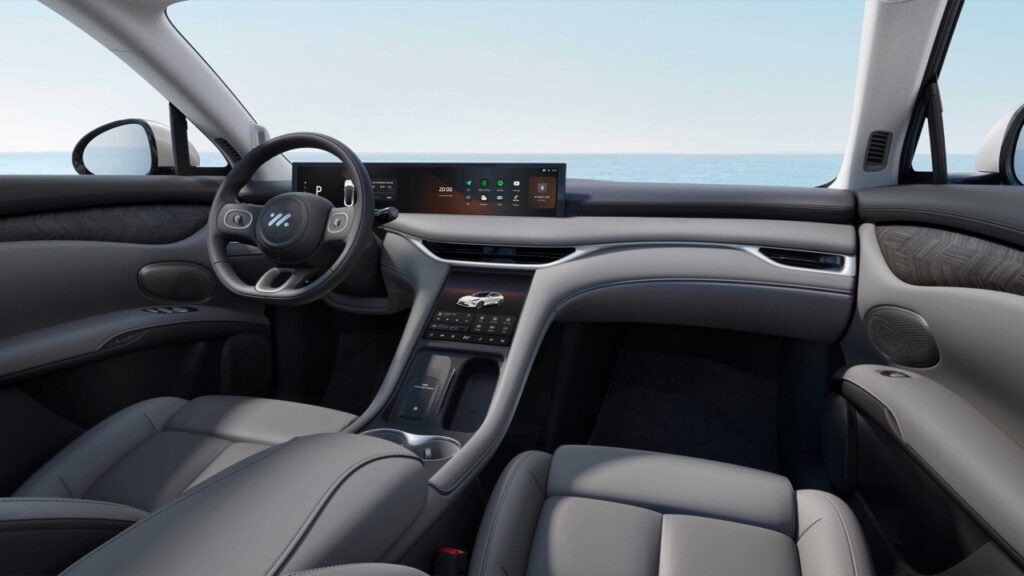
    As for the interior, Leapmotor describes it as modern and functional. This is now standard for a modern vehicle; at the centre of the dashboard is a 14.6-inch touchscreen that brings together infotainment, connectivity and vehicle functions. The LEAP OS 4.0 Plus system, paired with a Qualcomm 8155 processor, offers a smooth interface, whilst connectivity includes Apple CarPlay and Android Auto, available via wired or wireless connection. 

    Comfort hasn’t been overlooked: heated and ventilated eco-leather front seats and a refined interior complete the understated yet pleasant cabin atmosphere. 

    source: Leapmotor

    Safety and support: a comprehensive package

    Stellantis also places a strong emphasis on active and passive safety. The B10 Hybrid EV features 17 advanced driver-assistance systems (ADAS). Several of these systems have been updated to enhance driving fluidity and confidence, such as adaptive cruise control (ACC) and lane-keeping assist (LCC). 

    As an added bonus, this vehicle features energy recovery technology and one-pedal driving. These features were introduced via the latest OTA updates. 

    Leapmotor has sought to make its technology more accessible with a starting price of €29,900, which is very reasonable for the C-segment. The range has been streamlined into two main trim levels, Life Hybrid EV and Design Hybrid EV, with a choice of six exterior colours and three interior themes. 

    source: Leapmotor

    Leapmotor: who is the brand behind the B10?

    Leapmotor is no stranger to the electric vehicle market, but its partnership with Stellantis has propelled it onto the European stage since September 2024 with its all-electric T03 and C10 models.

    source: Leapmotor

    Indeed, founded in China in 2015, this manufacturer quickly established itself as a specialist in smart electric cars, with a strategy focused on technological innovation, competitive pricing and a connected user experience. 

    The brand has experienced remarkable growth in recent years. In 2025, Leapmotor achieved an exceptional annual performance, selling nearly 600,000 vehicles and ranking first among Chinese new energy vehicle (NEV) start-ups. It now has more than 1,700 sales and service outlets worldwide, with a presence in over 40 markets, including a rapidly expanding presence in Europe with nearly 250 sales outlets. 

    source: Leapmotor

    A strategy of openness towards customers

    The Leapmotor B10 Hybrid EV, as well as being a variant of the BEV version, represents a genuine attempt to balance range, comfort and affordability, whilst offering an experience close to that of an electric vehicle. With an attractive price, sophisticated technology and a positioning that appeals to a wide customer base, sales of this SUV are worth keeping an eye on, as it seems to have everything going for it.

  • When electric mobility is also taking hold along the Seine in Paris

    When electric mobility is also taking hold along the Seine in Paris

    In Paris, the shift to electric transport is no longer confined to the roads. Indeed, the River Seine is gradually emerging as a new strategic corridor for decarbonising transport, whether in urban logistics, passenger transport or even tourism. Thanks to a combination of private initiatives, public investment and technological trials, electric transport is now gaining ground on the water.

    source: HAROPA PORT

    River-electric logistics is becoming a feature of the Parisian landscape

    What if the next revolution in Parisian electric mobility were to come not from the roads, but from the river? One thing is certain: the movement is already well underway. Indeed, for example, since late 2025, HAROPA PORT has formalised a 15-year partnership with the start-up ULS (Urban Logistic Solutions) to develop a river and cycle logistics network in Paris.

    source: HAROPA PORT

    It may sound abstract put like that, but in practice it’s simpler. Goods are transported by boat between Charenton-le-Pont and strategic locations such as the ports of Javel-Bas or Gros-Caillou, before being delivered to the city centre via electric cargo bikes. According to an article in Le Figaro published in March 2026, it takes just 37 minutes to travel from Charenton to the Alexandre III Bridge, followed by a further six minutes to reach the Champs-Élysées by bike.

    source: Les Echos

    This model makes it possible to drastically reduce the use of combustion-engine commercial vehicles in urban areas, where their impact remains particularly high: in Paris, delivery vehicles (commercial vans and lorries) account for up to 40% of emissions linked to road traffic in densely populated areas, whilst also being responsible for a significant proportion of noise pollution and congestion. 

    In this context, ULS aims to replace up to 150 diesel lorries with this logistics system. Furthermore, the vessel used is built in modular sections in Portugal, illustrating the emergence of a genuine European value chain centred on these new forms of transport.

    source: HAROPA PORT

    A regulatory framework that clearly drives towards net-zero emissions

    The development of these solutions does not rely solely on private initiatives. It is, in fact, taking place within a more restrictive regulatory framework for transport, which is forcing companies to rethink their business models.

    In fact, in Paris, the Low Emission Zone (LEZ) already bans the most polluting vehicles, with restrictions being gradually tightened. By 2030, the capital aims to phase out diesel almost entirely, which is why river transport is emerging as the solution.

    At European level, the “Fit for 55” climate package sets a target of a 55% reduction in CO₂ emissions by 2030. At the same time, the Alternative Fuels Infrastructure Regulation (AFIR) requires the development of charging infrastructure, including for inland waterway transport.

    source: Fit for 55

    Tourism and passenger transport are also going electric

    The electrification of the Seine is not limited to freight transport. Passenger transport is also evolving rapidly.

    Les Vedettes de Paris, for example, have begun transforming their fleet, with the first vessel to be retrofitted to run entirely on electricity due to be ready by 2024. Each vessel is equipped with two 550 kWh battery packs, allowing for rapid recharging in around 15 minutes during stopovers. The stated aim was to achieve an 80% zero-emission fleet by mid-2025, with an estimated saving of 460 tonnes of CO₂ avoided per year per vessel. This is an ambitious target, which above all illustrates the operators’ determination to accelerate electrification, even though the actual level of deployment has not yet been officially specified at this stage.

    On a different note, the event vessel La Perle Noire, launched in June 2025 at the Port of Grenelle, features an innovative electro-hydraulic propulsion system. Measuring 22 metres in length and capable of carrying 70 passengers, it is based on technology developed in collaboration with several French companies, illustrating the emergence of an industrial sector centred on electric river transport.

    Finally, plans for flying water taxis are back in the spotlight with SeaBubbles. These electric vessels, capable of reaching 25 knots (46 km/h), could be deployed as early as 2026 with a fleet of 10 to 20 units. Several operators, such as G7 and Uber, have been mentioned, although regulatory issues are still under discussion.

    source: French Marine Industries Federation

    Infrastructure: the cornerstone of this transformation

    As with electric cars, the development of these applications depends largely on infrastructure.

    Since 2018, HAROPA PORT and Voies Navigables de France have been gradually rolling out the Borne & Eau® network, which is set to comprise 110 charging points by 2026 between Le Havre, Rouen and Paris. These stations provide both electricity (up to 63A) and water.

    And as mentioned earlier, just as with land vehicles, this network of charging points is key to the development of transport modes. It will need to be expanded significantly if electric boats are to flourish.

    source: HAROPA PORT

    A transformation still in progress

    Whilst the number of projects is growing, the logistics of electric river transport are still in the early stages of development. The momentum is certainly there. Driven by regulatory constraints, technological innovations and changing patterns of use, the Seine is gradually emerging as a solution – albeit a niche one – for reducing CO₂ emissions.

  • Opel Corsa GSE: final preparations at the Nürburgring ahead of its launch

    Opel Corsa GSE: final preparations at the Nürburgring ahead of its launch

    Unveiled in mid-February, the upcoming Opel Corsa GSE is now entering the final phase of development. The German brand’s all-electric sporty compact is currently undergoing further testing at the Nürburgring, a key step ahead of its market launch.

    source: Opel

    Technical specifications: a sporty drive

    The Corsa GSE marks a real turning point for Opel, as this all-electric sporty city car heralds the return of the GSE badge – the direct successor to the former OPC models – with a focus now firmly on electrified performance.

    It produces around 280 hp (206 kW) and 345 Nm of torque, enabling the German car to accelerate from 0 to 100 km/h in under 6 seconds (estimated at 5.9 s), with a top speed limited to 200 km/h. These figures place this model well above the standard Corsa Electric (156 hp) and even the previous petrol-powered Corsa OPC.

    source: Opel

    As for the battery, Opel has opted for a 54 kWh pack, offering a range of around 336 km on the European WLTP cycle. Fast charging is available at up to 100 kW, allowing the battery to go from 10% to 80% in just under 30 minutes.

    With its 280 horsepower, it not only outperforms its direct rivals, such as the upcoming Peugeot e-208 GTI. At the same time, it shares its technical platform with other models from the Stellantis group, such as the Alfa Romeo Junior Elettrica Veloce and the Abarth 600e, whilst retaining its own distinct identity thanks to its decision to stick with front-wheel drive.

    A choice that may seem surprising given that most electric sports hatchbacks opt for rear-wheel drive (or all-wheel drive) to better channel the power. With 280 hp, the instant torque of an electric motor can quickly exceed the grip capabilities of the front wheels.

    source: Opel

    Development in its final stages at the Nürburgring

    The project is entering its final stages. Opel has confirmed that the Corsa GSE is currently undergoing final tuning at the Nürburgring. At 20.8 kilometres long, with 170 bends and an elevation change of over 300 metres, the circuit is considered one of the most demanding in the world. This test at the German circuit is therefore one of the key stages in the development process.

    And the brand with the lightning bolt isn’t the only one to use the track. In fact, every year, nearly 3,000 vehicles are tested there, covering an estimated total of over 500,000 kilometres. Under these conditions, manufacturers can simultaneously validate chassis behaviour, braking performance and thermal management – a particularly critical aspect for high-performance electric vehicles.

    In the case of the Corsa GSE, engineers are focusing in particular on steering calibration, chassis tuning and dynamic handling. Battery management under heavy use is also one of the key areas of this development phase. As Marcus Lott, a member of Opel’s Executive Board, explains:

    • “Our aim is to enable everyone to enjoy the performance of a fully electric sports hatchback and a dynamic driving experience. That is precisely why we went to the Nürburgring to fine-tune the final settings.”

    A model expected at the 2026 Paris Motor Show

    This development phase forms part of a broader timeline. Opel has very recently confirmed its return to the 2026 Paris Motor Show, where the Corsa GSE is expected to take centre stage alongside its sister model, the Mokka.

    Having exhibited at the world’s leading trade fairs, this Paris event will give the brand the opportunity to showcase this exciting and environmentally conscious new range in person.

    source: Opel

    An electric strategy that’s all about enjoyment too

    With the Corsa GSE, Opel is continuing its transition to electric vehicles, whilst striving to retain an emotional appeal in its models.

    It now remains to be seen how these promises will translate on the road, as development nears completion and the model gradually approaches its production version. They are expected to hit the roads before the end of the year.

  • The new electric models are expected in April 2026.

    The new electric models are expected in April 2026.

    Between the opening of order books, market launches and the first deliveries, several all-electric models are set to hit the European market in April 2026. From compact SUVs to luxury saloons, we’ve rounded up the vehicles that will actually be arriving at dealerships in the coming weeks.

    source: BYD

    Denza Z9 GT: a premium electric estate car from BYD

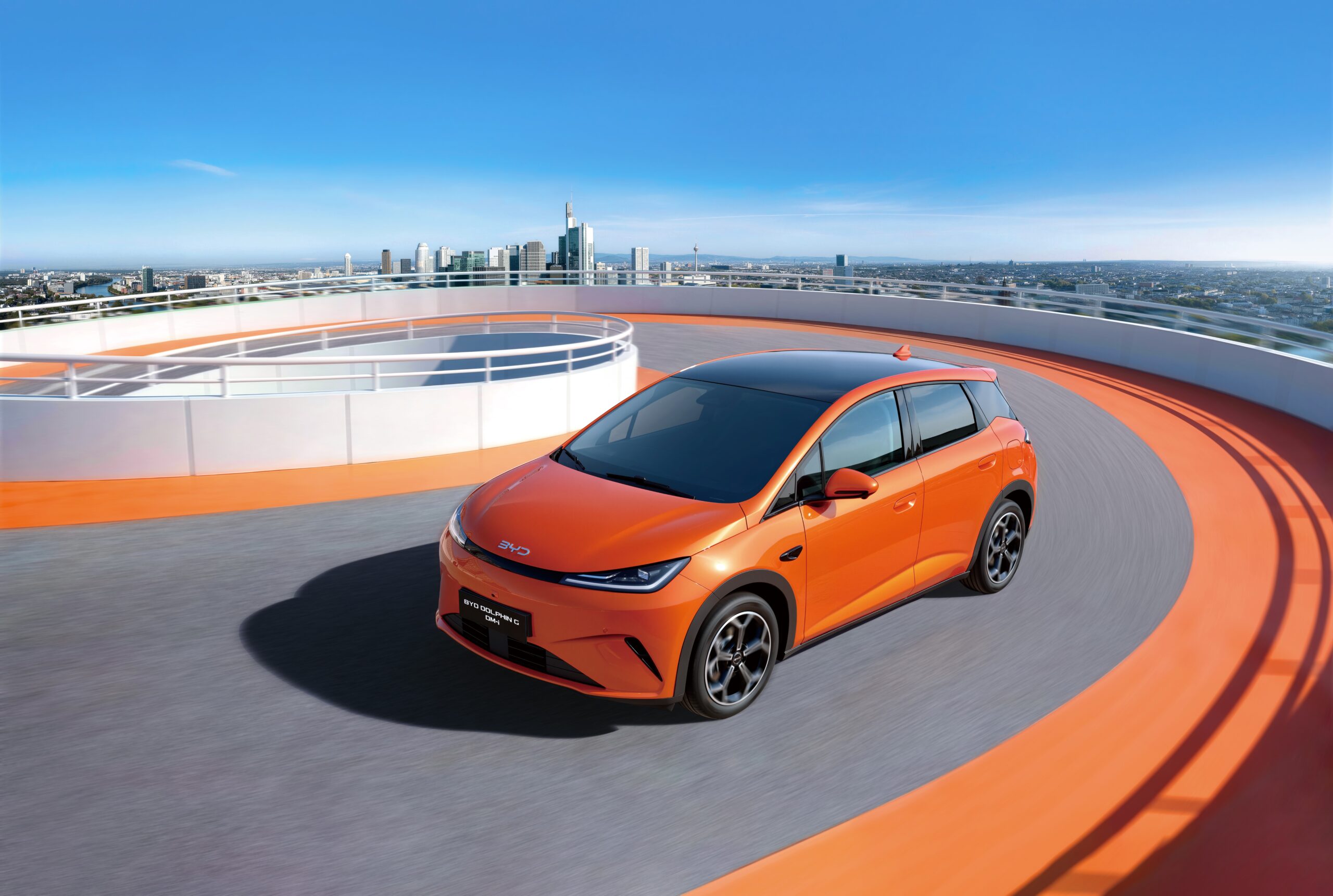
    The first vehicle to be featured belongs to Denza, the BYD Group’s premium brand. It is set to officially launch the Denza Z9 GT in Europe on 8 April in Paris.

    This model features a format that is still rare in the electric vehicle market: a large estate car measuring 5.18 metres in length, positioned firmly in the premium segment. Its design focuses on a low, flowing silhouette, with taut lines and sophisticated aerodynamics, whilst the interior offers a luxurious, tech-focused environment.

    Technically speaking, the Z9 GT is based on a three-motor architecture delivering up to around 960 horsepower via all-wheel drive. It features a 100 kWh LFP Blade battery and boasts a WLTP range of nearly 600 km. The 800 V architecture enables rapid charging, with the battery going from 10% to 80% in around fifteen minutes. The price is expected to start at around €90,000.

    source: BYD

    Geely E5: a compact SUV coming to France

    Next up is the Geely Group, which is preparing to enter the French market with the Geely E5. Orders are expected to open at the end of April.

    This compact SUV, measuring 4.61 metres in length, is positioned in a particularly competitive segment. It features a modern design with a drag coefficient of 0.269 and a sleek interior that is heavily focused on digital functionality.

    The Chinese brand’s E5 is available with two battery options: 60 kWh or 76 kWh, offering a range of between 440 and 530 km (WLTP). The rear-wheel-drive version produces 218 horsepower, whilst the all-wheel-drive variant delivers over 300 horsepower. The starting price is estimated at around €32,000, making it a competitive offering in this segment, typical of Chinese SUVs.

    source: Geely

    DS No. 7: an electric SUV to strengthen its premium positioning

    Well done, the third vehicle is French. DS Automobiles is launching the all-electric version of its family SUV, the DS N°7, in April.

    Based on the STLA Medium platform, this model features a design that stays true to the brand’s identity, with a sculpted front end, distinctive lighting signatures and an interior focused on comfort and finish. DS is no longer holding back; with the quality of the materials and equipment on offer, the brand is clearly aiming for a premium positioning.

    On the technical side, the vehicle is fitted with a 98 kWh battery and boasts a WLTP range of up to 700 km. The power outputs range from 210 to 350 horsepower, with all-wheel-drive versions available. The 800 V fast-charging system allows the battery to go from 10% to 80% in around 20 minutes. Prices are expected to start at around €55,000.

    source: DS Automobiles

    Volkswagen ID. Polo: start of the pre-launch phase

    Another launch is on the cards, this time from Volkswagen, which is set to unveil the Volkswagen ID. Polo in April, with an official presentation and the opening of pre-orders.

    This electric B-segment model takes its cue from the petrol-powered Polo, featuring a retro-inspired yet modernised design and a streamlined interior centred around floating screens. The aim is to offer an affordable electric city car with a view to becoming, like its predecessor, one of the market leaders.

    Two battery options are expected, with capacities of 45 and 58 kWh, offering a range of around 350 km on the entry-level model. Fast charging is rated at 100 kW, and the target price is reported to be around €25,000. As for the first deliveries, these are scheduled for later this year.

    source: Volkswagen


    Kia EV2: first deliveries of a city SUV manufactured in Europe

    Now for a South Korean model: the Kia EV2 goes into production in Slovakia in April, with the first deliveries expected shortly afterwards in Europe.

    This small urban SUV incorporates the brand’s latest design language, featuring a compact silhouette and a front end inspired by the EV3 concept. The interior emphasises simplicity and recycled materials, and features a panoramic screen.

    The model is powered by a 58 kWh battery and boasts a WLTP range of over 400 km, which is impressive for this segment. Fast charging allows the battery to go from 10% to 80% in around 30 minutes. Priced from €30,000, it is manufactured in Europe, making it eligible for the eco-bonus in France.

    source: KIA

    Suzuki e-Vitara: first deliveries of the brand’s first electric model

    Suzuki will begin delivering its Suzuki e-Vitara in France in April, following its European launch in March.

    This compact crossover retains a rugged design, with high ground clearance and a silhouette similar to that of the petrol-powered Vitara. It marks a significant milestone for the manufacturer, which is launching its first fully electric model.

    Two battery options are available, with capacities of 49 and 61 kWh, offering a range of between 320 and 450 km (WLTP). The engines range from 140 to 180 horsepower, with all-wheel drive available as an option. The starting price is estimated at around €28,000.

    source: Suzuki

    Volvo EX60 Cross Country: deliveries begin

    Finally, Volvo Cars is continuing to roll out its electric range with the first deliveries of the Volvo EX60 Cross Country in April.

    This Cross Country variant retains Volvo’s signature design cues, with a more practical focus. For this model, the ground clearance has been slightly increased, the bodywork incorporates additional protective features, and the overall aim is to broaden the model’s scope of use beyond strictly on-road driving. As the manufacturer puts it: “The Volvo EX60 Cross Country is designed to go off the beaten track”.

    In technical terms, the model produces around 510 horsepower and is powered by a 95 kWh battery, with a claimed range of around 640 km (WLTP). Fast charging can reach up to 400 kW. Prices start from €72,500.

    source: Volvo

    Several sectors affected

    All in all, April 2026 is notable above all for the simultaneous launch of models across a wide range of segments, from city cars to luxury vehicles.

    Between the start of pre-orders, market launches and the first deliveries, these models will gradually appear on the European market over the coming weeks, with a wide range of options in terms of price, range and features.

  • Corporate fleets: commercial vehicles are becoming an unexpected driver of electrification

    Corporate fleets: commercial vehicles are becoming an unexpected driver of electrification

    The latest report published by the Arval Mobility Observatory confirms a marked acceleration in the energy transition within corporate fleets. But beyond the overall trend, one trend stands out clearly: commercial vehicles are now emerging as a key driver of electrification, even though just a few years ago they were still considered a segment that would be difficult to transform.

    source: Renault

    A transition that is now well underway in companies

    It is a fact that French companies have reached a milestone. Indeed, according to the 2026 edition of the barometer, 84% of them say they are already engaged in an energy transition initiative or plan to do so within the next three years.

    More specifically, we learn that 65% of fleets already include electric vehicles, whether fully electric or plug-in hybrid models. This growth is accompanied by a rapid rise in market share: electric vehicles now account for 26% of company registrations, an increase of 4.4 percentage points in a year.

    source: Peugeot

    However, this trend is taking place against a backdrop of greater global tension. The fleet market contracted by 8.6% in 2025, with around 723,000 vehicles added.

    Commercial vehicles: the new cornerstone of electrification

    The key point of the report lies elsewhere, because whilst the uptake of electric vehicles by businesses has long been held back by constraints relating to range, payload or cost, these commercial vehicles are now seeing a sharp rise in adoption. According to several analyses reported in the trade press, they now appear to be the most dynamic segment in fleet electrification.

    This trend can be attributed to changes in business practices. The rapidly growing last-mile delivery sector naturally favours vehicles suited to short, urban journeys. In these circumstances, electric vehicles are not only a viable option, but often prove more cost-effective in practice.

    In addition to this, this shift is being driven by restrictions on access to city centres. With the increasing number of low-emission zones (LEZs), combustion-engine commercial vehicles are becoming less and less suitable for certain uses, prompting businesses to speed up their transition.

    An increasingly influential regulatory framework

    In France, companies with more than 100 vehicles must include a minimum proportion of low-emission models when renewing their fleets. This quota currently stands at 20%, with targets set to rise to 40%, then 70%, by 2030.

    So yes, it’s clear that these regulations play a decisive role in shaping fleet strategies. This is all the more true given that tax policies are changing in tandem, with tougher penalties for CO₂ emissions, which further penalises internal combustion engines.

    source: Watea

    Increasingly streamlined fleet management

    Beyond electrification, the barometer highlights a more comprehensive transformation of mobility policies. Against a backdrop of economic uncertainty, companies are seeking to optimise their costs. This involves streamlining their fleets, but also a rise in the popularity of solutions such as long-term leasing, which now accounts for up to 64% of new vehicle registrations among large companies.

    Total cost of ownership is becoming a key factor. And in this area, electric vehicles are gaining ground. Although the purchase price remains high, they offer lower running costs, particularly in terms of energy and maintenance, which boosts their long-term competitiveness.

    A transition on a whole new scale

    The 2026 edition of the Arval Mobility Observatory has highlighted that fleet electrification is no longer limited to passenger cars. It now extends to all business uses, with commercial vehicles driving this transformation.

    In practice, this development marks a key milestone. By targeting this strategic segment, companies are automatically accelerating the decarbonisation of their operations.

  • War, oil and petrol: Americans grappling with soaring prices and Trump’s decisions

    War, oil and petrol: Americans grappling with soaring prices and Trump’s decisions

    The war in the Middle East is reigniting a concern all too familiar to Americans: the price at the pump. Since the strikes carried out by the United States and Israel against Iran in late February 2026, followed by Iranian retaliation and the blockade of the Strait of Hormuz, energy markets have been under strain. The immediate result: a surge in oil and petrol prices, which is unpopular with the public and has reignited the debate over switching to clean-energy vehicles. 

    A geopolitical shock that is driving prices back up

    In reality, the impact of the conflict was almost immediate. The Strait of Hormuz, through which around 20% of the world’s oil passes, was partially blocked. As a direct consequence, the price of a barrel of Brent crude broke the $100 mark, even reaching $120 at times – a level not seen since 2022, according to several analyses published in early March. Indeed, the price per barrel fluctuated between $55,000 and $64,000 between 2020 and 2023.

    In the United States, this tension was quickly reflected at the pump. According to data reported by Reuters and several international media outlets, the average price of petrol rose from around $2.85 per gallon in February to between $3.63 and $4 in early March, with peaks of up to $4.40 in some states. This represents an increase of between 21% and 24% in just a few weeks.

    A sudden spike, less severe than that of 2022, when prices had risen above $5 a gallon, but significant enough to reignite concerns about purchasing power.

    source: Zonebourse

    A very real concern in the daily lives of Americans

    On the ground, the impact is immediate. Accounts gathered by AFP and reported by USA Today in early March 2026 point to growing discontent at petrol stations, particularly in California and several southern states. Some motorists speak of a direct impact on their household budgets: “Prices are rising really fast”, “I’m unemployed, it’s getting difficult”, or “This war is making life more expensive”. 

    Polls confirm this trend. A Reuters/Ipsos survey indicates that 67% of Americans expect petrol prices to continue rising over the course of the year. At the same time, 49% believe the war is already having a negative impact on their personal finances.

    Household confidence has been directly affected. The University of Michigan’s consumer confidence index fell to 55.5 in March 2026, one of its lowest levels in several months.

    Growing political pressure on Donald Trump

    Against this backdrop, the energy issue has become a key political concern. According to several surveys reported by Reuters and Le Monde, only 27% of Americans approve of Donald Trump’s handling of petrol prices, whilst 66% disapprove.

    source: JULIA DEMAREE 

    More broadly, managing the cost of living has become a major point of vulnerability for the government. Nearly two-thirds of those surveyed say they are critical on this issue, even as the mid-term elections approach in autumn 2026.

    This situation is reminiscent of the crisis in 2022, when soaring prices following the invasion of Ukraine had taken their toll on the popularity of the US administration at the time.

    Trump’s energy policy put to the test

    Since returning to the White House, Donald Trump has radically changed US energy policy. Several measures supporting electric vehicles have been scrapped, starting with the $7,500 tax credit, which is set to end in late September 2025. Funding for the NEVI programme, intended for the roll-out of charging points, has also been frozen, whilst certain emissions standards have been relaxed.

    At the same time, the government has stepped up its support for fossil fuels, with a strategy focused on increasing domestic production and exports of liquefied natural gas, which are expected to rise by 50% by 2027.

    In practice, this decision indirectly favours combustion-engine vehicles. This approach automatically increases households’ dependence on fluctuations in oil prices.

    An ironic twist in the energy sector that is reigniting interest in electric vehicles

    The irony is that, whilst public policy is holding back the development of electric vehicles, rising petrol prices are making them more attractive in the short term.

    According to several sector-specific analyses, searches for electric vehicles now account for between 22% and 24% of all automotive searches, a figure that represents an increase of several percentage points since the start of the conflict. This trend was already observed in 2022, when sales of electric vehicles rose sharply, with their market share increasing from 2.7% to 5.6% amid soaring oil prices.

    But unlike back then, the current political climate is now holding back this momentum. Indeed, the withdrawal of subsidies and the rise in the price of new vehicles – which now average over $50,000 – are limiting access to electric vehicles for some consumers.

    source: Tesla

    A strategy that could backfire on its initiator

    The question now clearly arises: has Donald Trump fallen into his own trap?

    By favouring fossil fuels and holding back the transition to electric vehicles, the administration has increased Americans’ vulnerability to oil price shocks. In the short term, rising petrol prices are fuelling discontent and eroding purchasing power.

    In a rapidly changing automotive market, the war in the Middle East serves as a wake-up call. It serves as a reminder that, despite record domestic production estimated at over 13 million barrels a day, the United States remains vulnerable to international tensions.

    And in this context, clean energy for our transport is proving to be the best option for keeping costs down.

  • Tesla’s unexpected solution to speed up the roll-out of charging points: the foldable Supercharger

    Tesla’s unexpected solution to speed up the roll-out of charging points: the foldable Supercharger

    Tesla continues to innovate, not with a car or a battery, but with a new way of charging our electric vehicles. The American manufacturer has just unveiled a new generation of charging stations, dubbed the ‘Folding Unit Supercharger’. It’s a solution that’s as simple as it is original: prefabricated, foldable stations that drastically reduce installation costs and time.

    source: Tesla

    A foldable terminal for faster delivery and lower costs

    In fact, Tesla is not only seeking to improve the power output of its charging stations, but also to rethink how they are deployed. These new V4 Superchargers come as factory-assembled units that can be transported in a folded state and then deployed directly on site. 

    In practical terms, each unit features eight charging points and sits on a hinged metal base. Once on site, the structure is simply unfolded, as the cables have already been installed beforehand. 

    This choice significantly simplifies on-site operations, with less electrical and civil engineering work required. As a result, Tesla reports a cost reduction of around 20% and installation times cut in half. In an industry where the race for profitability is constant, the American firm has made a major breakthrough.

    source: Tesla

    Optimised logistics to roll out more charging points

    It’s not just the installation that’s being rethought – the entire supply chain is being overhauled. Thanks to this foldable design, two units can be transported on a single lorry, allowing for up to 33% more charging points per delivery. 

    In practice, this makes it possible to increase the number of charging points deployed across the country whilst reducing transport costs – a major challenge as Tesla continues to rapidly expand its network. Indeed, by way of comparison, the older prefabricated units allowed up to 12 charging points to be transported per lorry, compared with up to 16 with this new generation. 

    Another notable development is that these stations require less human intervention. Once installed, they can be commissioned without the need for a dedicated technician, which further reduces lead times and costs and simplifies operation. 

    Up to 500 kW: a significant boost in performance

    As the design evolves, so does the power output. These new Superchargers are based on V4 technology, capable of delivering up to 500 kW of power – double that of the previous V3 stations, which were limited to 250 kW. 

    This expansion is a direct response to market developments, with electric vehicles increasingly capable of handling fast charging, particularly on 800 V architectures. In practice, this further reduces charging times and improves the user experience on long journeys. Each V4 cabinet can power up to eight charging points. 

    source: Tesla

    A strategic lever to accelerate the Tesla network

    With this innovation, Tesla is not only seeking to improve its technology, but also to address a key issue: the speed at which its network is rolled out.

    Today, the manufacturer already has several thousand stations worldwide, with a network comprising over 75,000 charging points. With the rapid rise of electric vehicles, the issue is no longer just the performance of the charging points, but their availability.

    In this context, these foldable Superchargers appear to be a direct response. By reducing costs, installation times and complexity, Tesla is enabling itself to open new stations more quickly, and, of course, the quality of the infrastructure is becoming ever more efficient.

    source: Tesla

    A new approach to charging infrastructure

    Tesla is changing the way it approaches charging. Until now, innovation has mainly focused on the power output and technology of charging stations. From now on, it will also focus on their industrial design and deployment.

    In practice, this approach could set a precedent. For in a market where all manufacturers are stepping up their efforts in the electric vehicle sector, the ability to rapidly roll out a charging network is becoming a key competitive advantage.

    source: Michael Wolf, Penig

    The first European trials are already underway at the Berlin Gigafactory. According to several sources, the first roll-outs in France are expected to take place in the second quarter of 2026, targeting major motorways (A6, A7, A10) – a timetable that would help ease pressure on the network ahead of the summer holiday rush.

  • Trump’s electric vehicle reset continues in 2026: how the US President is prioritising consumers, workers and common sense

    Trump’s electric vehicle reset continues in 2026: how the US President is prioritising consumers, workers and common sense

    In 2025, President Donald J. Trump launched what many now describe as the most significant shift in modern US automotive policy. By 2026, the results of this reset were becoming clear. Whilst the Biden administration had spent years attempting to impose electric vehicle mandates on Americans, regardless of cost, infrastructure or practicality, President Trump had chosen a different path: one rooted in freedom, economic realism and consumer choice.

    source: Le rouleur électrique

    Contrary to the narrative pushed by the media, President Trump did not ‘kill’ electric vehicles. On the contrary, he saved the EV sector from government overreach, restoring balance, innovation and consumer confidence to an industry that had been stifled by mandates, subsidies and ideological pressure.

    Trump’s reset of EV policy, launched in 2025 and continued in 2026, represents a strategic realignment that prioritises American consumers, American workers and American manufacturers.

    The problem Trump has inherited: forced electrification

    Even before President Trump returned to the White House, the electric vehicle market was already facing serious challenges. Despite massive federal subsidies, EV adoption had stalled. Prices were rising, dealerships’ stockyards were filling up with unsold electric cars, and the charging infrastructure was lagging far behind the promises made by policymakers in Washington.

    Middle-class families felt increasingly pressured to buy cars they neither wanted nor could afford.

    The Biden administration’s EV strategy was based on coercion rather than consumer choice. Through aggressive Corporate Average Fuel Economy standards, EPA regulations and global climate commitments, Americans were essentially being told: buy electric or pay the price.

    This price included:

    • Higher vehicle costs
    • A reduction in consumer choice
    • Production inconsistencies
    • Concerns about the electricity grid
    • Growing public scepticism towards EV policy

    President Trump has changed his stance: technological transitions cannot be imposed by government decree.

    Trump’s core philosophy: let the market decide

    From the start of his second term in 2025, Trump made his position clear. Electric vehicles must succeed, but only if they succeed in the market.

    His EV framework was based on several key principles:

    • No compulsory mandate
    • No artificial demand created by regulation
    • No penalties for petrol or hybrid vehicles
    • No bureaucratic micromanagement of consumers

    Instead, the Trump administration has focused on restoring competition, affordability and technological innovation.

    By 2026, this approach had begun to stabilise the EV industry. Car manufacturers can plan effectively, consumers can choose freely, and the development of EVs continues without the distortions caused by government mandates.

    source: AFP

    The “Freedom Means Affordable Cars” initiative

    One of the most significant policies introduced in 2025, and which is now shaping the market in 2026, is the Trump administration’s ‘Freedom Means Affordable Cars’ initiative.

    The programme has revised the fuel economy and emissions standards that had previously been used to indirectly encourage the adoption of electric vehicles.

    By resetting the CAFE standards to realistic and technology-neutral levels, the administration:

    • Has reduced regulatory costs for car manufacturers
    • Has helped to bring down vehicle prices
    • Has enabled EVs, hybrids and petrol-powered vehicles to compete on a level playing field
    • Has eliminated disguised EV mandates
    source: US Department of Transportation

    Federal transport estimates predicted that the reform would save US consumers more than $100 billion over five years.

    Equally important, the lifting of government pressure has helped to reduce the political stigma attached to EVs.

    Why might lower costs speed up the uptake of EVs?

    Many climate activists argued that the adoption of EVs needed to be enforced. Trump’s approach proved the opposite.

    By reducing regulatory costs across the automotive sector, manufacturers have gained greater flexibility to:

    • Improving battery technology
    • Increase autonomy
    • Reduce purchase prices
    • Focus on designs that consumers actually want

    As EV technology improves and costs naturally fall, consumer adoption becomes sustainable. Throughout 2026, innovation in EVs and hybrid vehicles continues within the industry without the instability caused by rigid government mandates.

    “America First” manufacturing

    A key pillar of Trump’s economic strategy is the revitalisation of domestic manufacturing.

    The government has introduced policies designed to encourage Americans to buy vehicles manufactured in the United States. A key measure allows buyers to deduct up to $10,000 a year in car loan interest for domestically assembled vehicles.

    Politics:

    • Encourages the purchase of vehicles manufactured in America
    • Strengthens domestic supply chains
    • Reward manufacturers who invest in American workers

    Unlike previous subsidy schemes, which often benefited foreign supply chains, Trump’s policies aim to keep the economic value of EV production within the United States.

    source: Ford

    Ending dependence on foreign countries

    The production of electric vehicles relies heavily on critical minerals such as lithium, cobalt, nickel and rare earth elements, many of which are currently dominated by China.

    In response to this vulnerability, the Trump administration has stepped up policies focused on energy and mining independence, including:

    • Streamlining domestic mining permits
    • Expansion of strategic minerals development
    • Investment in battery research in the United States
    • Reducing reliance on Chinese supply chains

    This strategy ensures that America’s electric vehicle future does not become a national security vulnerability.

    source: China Stringer Network

    Infrastructural realism 

    The Biden administration had promised millions of charging points across the country but has delivered far fewer.

    Trump has taken a different approach, focusing on practical infrastructure development rather than ambitious federal promises.

    How to take it:

    • Encouraged private-sector investment in charging networks
    • Has reduced approval delays
    • Has concentrated infrastructure along the main travel corridors
    • Has given Member States greater flexibility in planning

    This market-driven model has begun to expand access to charging more effectively, particularly in suburban and rural areas that had previously been neglected.

    source: Tesla

    Protecting working-class Americans

    Perhaps the most politically significant aspect of Trump’s EV policy is his rejection of what critics describe as EV elitism.

    Previous mandates disproportionately affected:

    • Rural families
    • Farmers
    • The craftspeople
    • Van owners
    • Pensioners on a fixed income

    By safeguarding consumer choice – including petrol, diesel, hybrid and electric vehicles – the Trump administration has ensured that Americans are not penalised for their transport needs.

    This fairness has helped to restore public confidence in the automotive market as a whole.

    source: entraid

    A stronger automotive industry by 2026 

    Car manufacturers had repeatedly warned that aggressive EV mandates could destabilise the industry.

    On the contrary, the Trump administration has worked closely with:

    • American car manufacturers
    • Dealer associations
    • Trade unions
    • Independent suppliers

    The result is an automotive industry with greater flexibility to:

    • Balancing the production of EVs and conventional vehicles
    • Protecting American jobs
    • Adapting to actual consumer demand
    • Competing on a global scale

    The EV reset continues

    As 2026 unfolds, the effects of President Trump’s electric vehicle reset are becoming increasingly apparent.

    The development of electric vehicles continues. Innovation remains strong. But the market is now driven by consumer choice rather than government mandates.

    President Trump hasn’t given up on electric vehicles – he’s repositioned them.

    By rejecting coercion, restoring affordability, defending consumer freedom and prioritising American workers, Trump has laid the foundations for an EV future built on economic strength and national sovereignty.

    And under this model, innovation – rather than government pressure – will determine which technologies ultimately prevail.

  • The era of clean energy: why rising oil prices and global conflicts are accelerating the electric vehicle revolution

    The era of clean energy: why rising oil prices and global conflicts are accelerating the electric vehicle revolution

    The ongoing tensions between the United States and Iran serve as yet another reminder to the world of just how deeply intertwined global politics and the oil markets are. Whenever instability arises in major oil-producing regions, the effects quickly ripple out across the global economy. Rising oil prices, higher fuel costs and supply disruptions are often the first signs of such crises. As petrol prices soar and uncertainty spreads across energy markets, a key question is once again being asked around the world: is the future of transport electric?

    Here are the main reasons why the current oil crisis and geopolitical instability are strengthening the case for electric vehicles.

    1. Oil wars have always shaped the global economy

    For over a century, oil has been one of the most strategically important resources on Earth. Countries have formed alliances, waged wars and shaped their foreign policies around energy supplies.

    When conflicts break out in major oil-producing regions, the markets react immediately. Shipping routes become vulnerable, supply chains are threatened and energy prices rise sharply.

    The Middle East remains one of the world’s most important oil-producing regions. A large proportion of global oil exports passes through strategic narrow sea lanes such as the Strait of Hormuz. Any military escalation in the region immediately raises concerns about disruptions to oil supplies.

    source: FMM Graphic Design Studio

    History has repeatedly shown that global conflicts in oil-producing regions can lead to significant price rises. These price rises affect transport, manufacturing, agriculture and almost every sector of the economy.

    2. Rising oil prices have a direct impact on consumers

    When oil prices rise, the most immediate impact is felt at the petrol pump. Drivers suddenly find themselves facing higher fuel costs, which can significantly increase household expenditure.

    Higher petrol prices also affect the cost of goods and services. Transport companies have to spend more on fuel, airlines face higher operating costs, and freight rates are rising. These increased costs often feed through to the wider economy, contributing to inflation.

    Families who rely heavily on petrol-powered vehicles feel the pinch most acutely. Long commutes, transport needs and daily journeys become more expensive when oil prices rise.

    This cycle has repeated itself time and again throughout modern history whenever geopolitical tensions have disrupted energy markets.

    3. Electric vehicles are breaking our dependence on oil

    Electric vehicles offer a key advantage over traditional petrol cars: they do not rely on oil.

    Instead of petrol or diesel, EVs run on electricity, which can be generated from a variety of energy sources, including natural gas, nuclear power, hydroelectricity, solar power and wind power.

    This flexibility significantly reduces the impact of oil market volatility on transport. When oil prices rise due to a conflict, drivers of electric vehicles are largely shielded from these price shocks.

    Electromobility enables countries to rely more on domestic energy production rather than on imported oil, thereby strengthening national energy security.

    4. Lower operating costs for drivers

    One of the main advantages of electric vehicles is that they are cheaper to run than petrol cars.

    Electricity is generally cheaper than petrol on a per-kilometre basis. Even when electricity prices fluctuate, they rarely experience the dramatic spikes that oil markets often face.

    EV drivers can also charge their vehicles at home, avoiding the need for frequent stops at petrol stations.

    In the long term, fuel savings can add up to a significant amount, particularly during periods when petrol prices rise due to geopolitical crises.

    5. Electric vehicles require less maintenance

    Traditional petrol engines contain hundreds of moving parts, including pistons, valves, exhaust systems and complex mechanical components.

    These systems require regular maintenance, such as oil changes, engine servicing and exhaust repairs.

    Electric vehicles are much simpler mechanically. They use electric motors with far fewer moving parts and do not require engine oil, spark plugs or complex transmission systems.

    This reduced mechanical complexity means that EV owners often incur lower maintenance costs over the vehicle’s lifetime.

    source: LaCentrale

    6. Battery technology has improved rapidly

    The first electric vehicles were criticised for their limited range and long charging times. However, battery technology has advanced dramatically in recent years.

    Modern EVs can now travel hundreds of kilometres on a single charge, making them practical for both daily commutes and long-distance journeys.

    Fast-charging networks are expanding rapidly, enabling drivers to recharge a significant portion of their battery in a short space of time.

    As battery costs continue to fall and efficiency improves, electric vehicles are becoming more affordable and accessible to a wider range of consumers.

    source: Ionity


    7. Expanding charging infrastructure

    One of the main challenges to EV adoption in the past was the lack of charging infrastructure. This situation is changing rapidly.

    Governments and private companies are investing billions of dollars in expanding charging networks in cities, on motorways and in rural areas.

    Public charging stations are becoming more common in shopping centres, office buildings, car parks and residential areas.

    As charging networks expand, owning an electric vehicle is becoming more convenient and accessible for millions of drivers.

    source: Driveco

    8. Environmental benefits of electric vehicles

    Electric vehicles produce no exhaust emissions, which helps to reduce air pollution in cities.

    Transport is one of the biggest contributors to global carbon emissions, and the switch to electric vehicles can significantly reduce the environmental impact.

    Cleaner transport also improves public health by reducing harmful pollutants that contribute to respiratory diseases.

    As renewable energy sources continue to expand, the environmental benefits of electric vehicles will increase even further.

    9. Economic opportunities in the EV industry

    The electric vehicle revolution is creating major economic opportunities around the world.

    New industries are emerging in the fields of battery manufacturing, charging infrastructure, software systems and electric mobility services.

    Countries that invest heavily in EV technology can secure leading positions in the future automotive market.

    Battery manufacturing, in particular, is becoming a strategic industry, as batteries power both electric vehicles and renewable energy storage systems.

    10. Energy independence for nations

    Reducing dependence on imported oil can strengthen national security and economic stability.

    Countries that are heavily reliant on oil imports are often vulnerable to international conflicts and supply disruptions.

    Electric vehicles enable countries to power their transport systems using locally generated electricity, thereby reducing their dependence on global oil markets.

    This change could lead to more stable energy systems and reduce geopolitical vulnerabilities.

    source: econord

    11. Consumer demand is growing rapidly

    Public interest in electric vehicles has grown significantly over the past decade.

    Many drivers are attracted by the combination of lower running costs, environmental benefits and advanced technology.

    Car manufacturers are responding to this demand by expanding their ranges of electric vehicles and investing heavily in electrification.

    As more models become available, consumers have more choice when switching to electric vehicles.

    source: BYD

    12. Geopolitical conflicts are accelerating the transition

    Whenever the oil markets are disrupted by conflict or political instability, the appeal of electric vehicles increases.

    Rising petrol prices highlight the vulnerability of transport systems that rely on oil.

    Electric vehicles offer a path towards more stable and predictable transport costs.

    For many consumers, repeated oil crises reinforce the view that moving away from petrol-powered vehicles could be the wisest choice in the long term.

    Conclusion

    The current tensions affecting global oil markets serve as a reminder of just how vulnerable traditional energy systems can be. When geopolitical conflicts disrupt oil supplies, the economic consequences are felt around the world.

    Electric vehicles offer a powerful alternative to this cycle. By reducing dependence on oil and enabling transport to run on a variety of energy sources, EVs can help create a more resilient and stable energy future.

    Technological advances, infrastructure expansion and growing consumer interest are already driving the global shift towards electric mobility.

    As global conflicts continue to affect the oil markets, the transition to electric vehicles could accelerate even further.

    What began as a technological innovation is now becoming a cornerstone of the future transport system. The electric vehicle revolution is no longer a distant possibility; it is rapidly becoming a defining feature of the modern energy era.