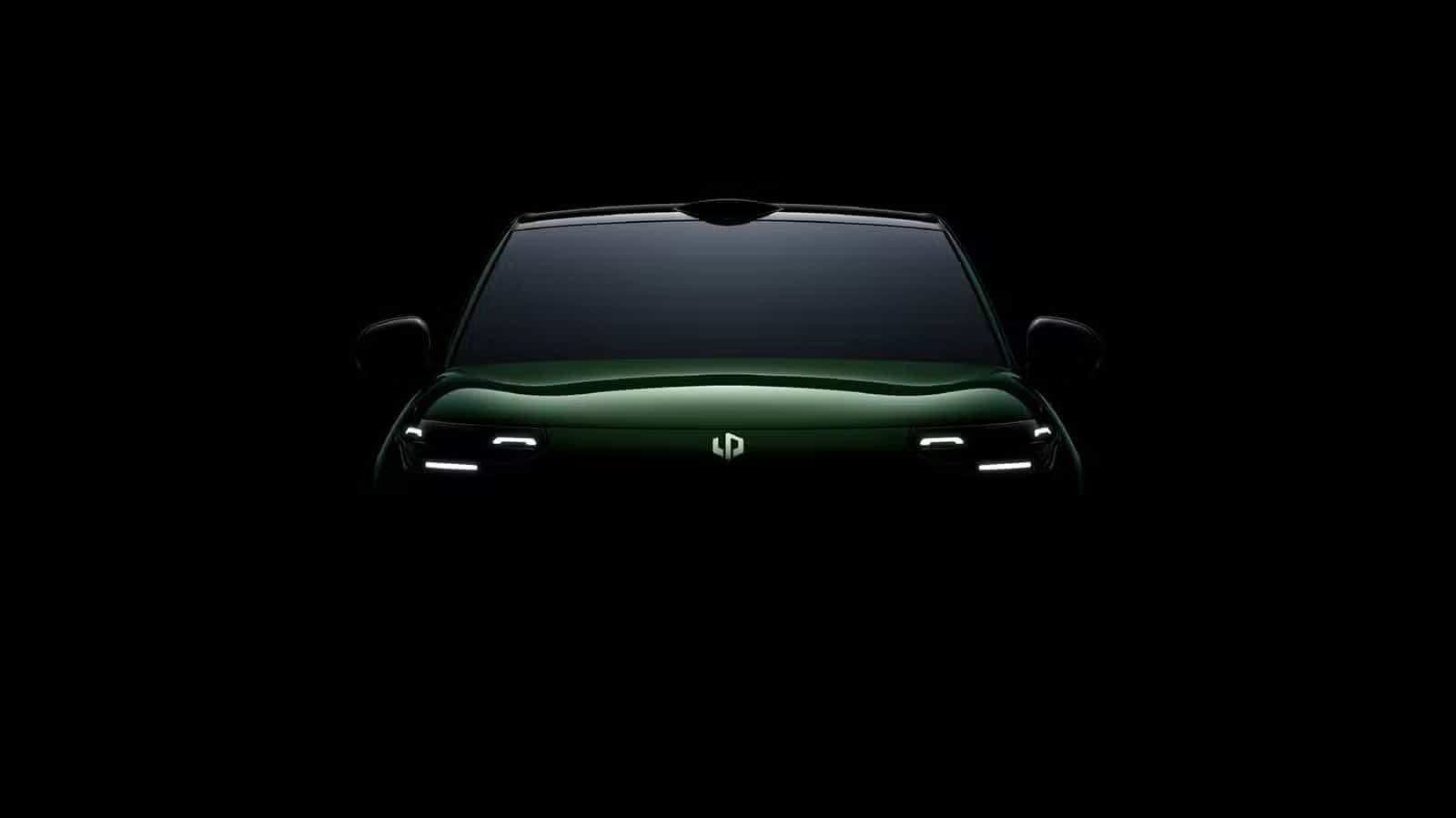
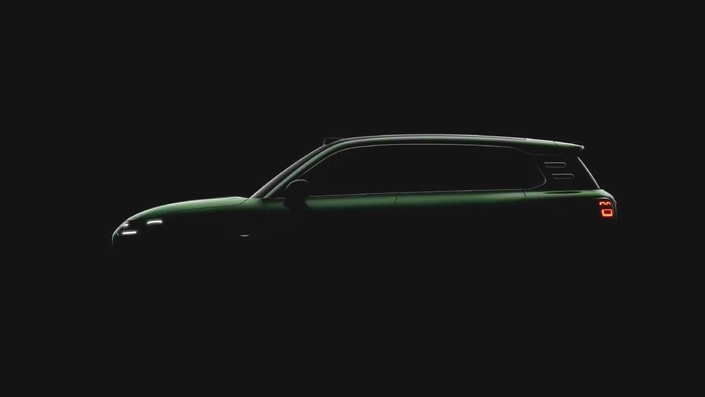
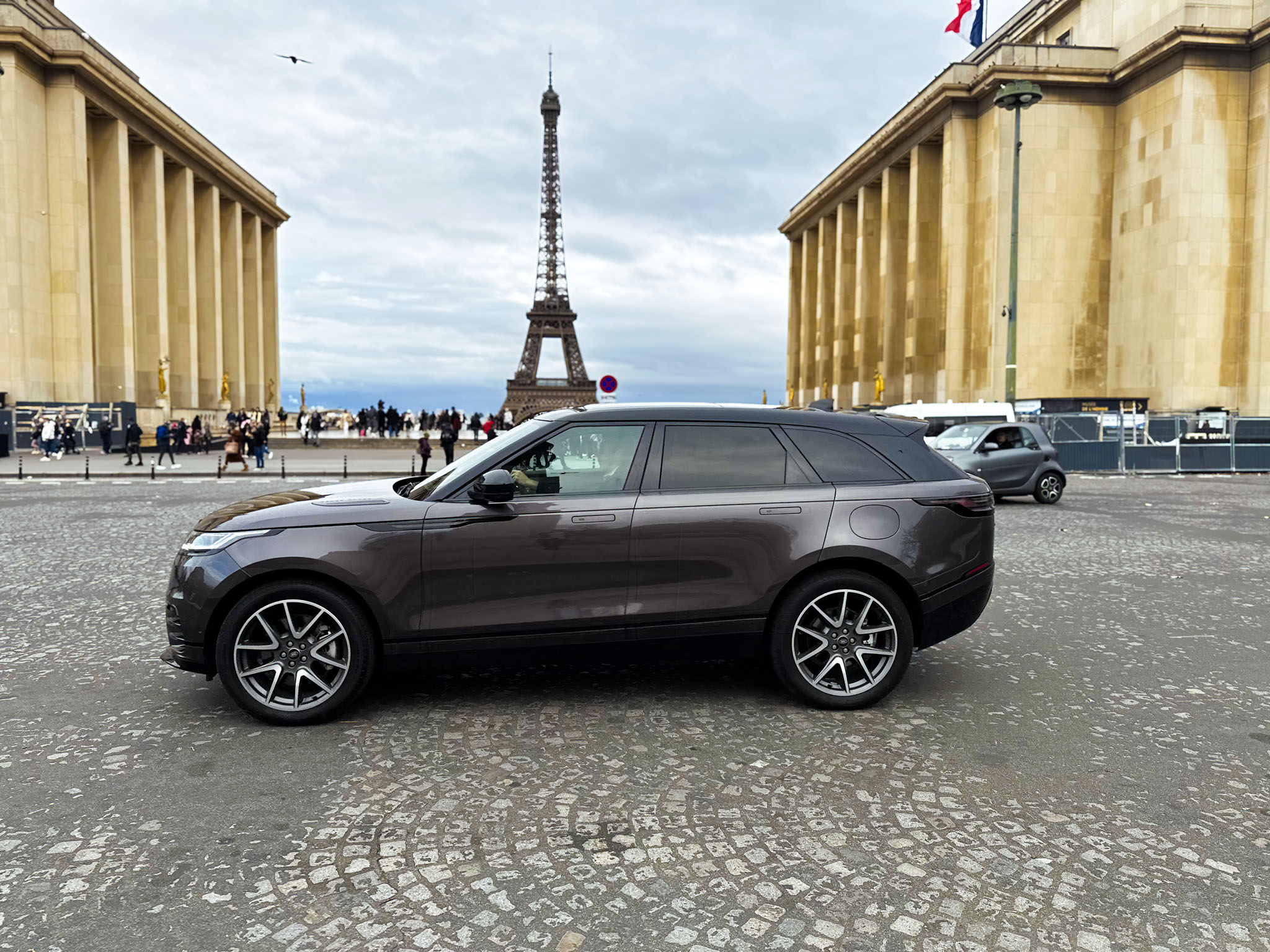
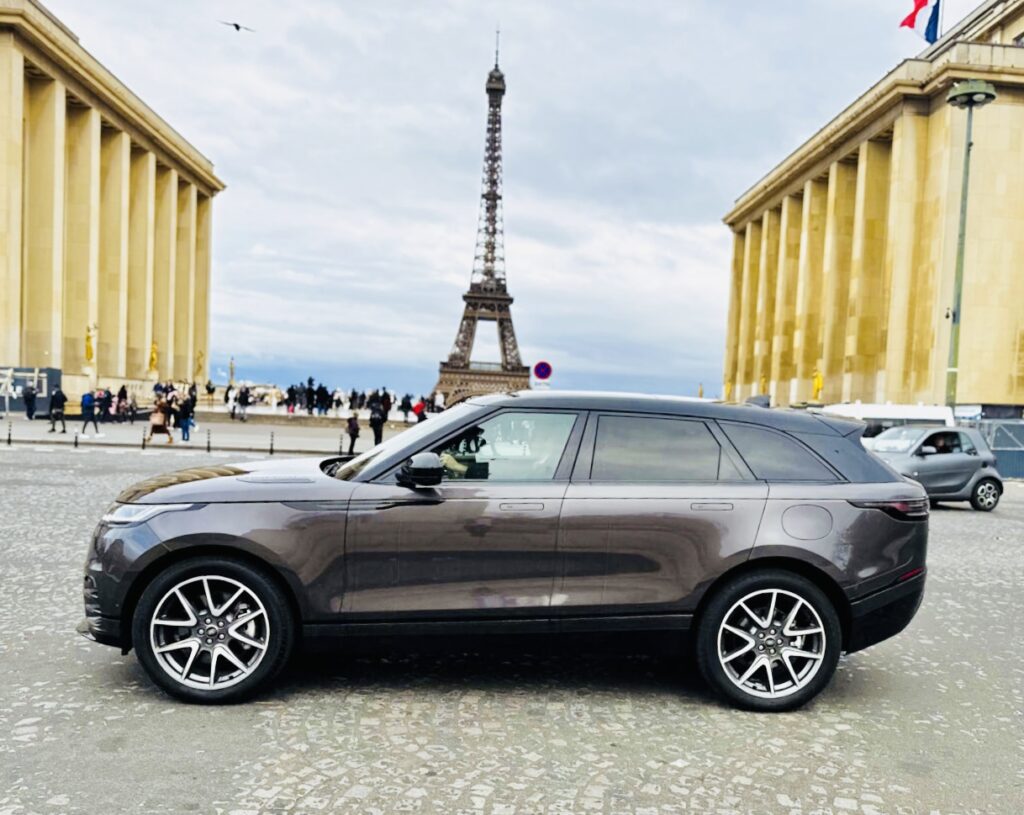
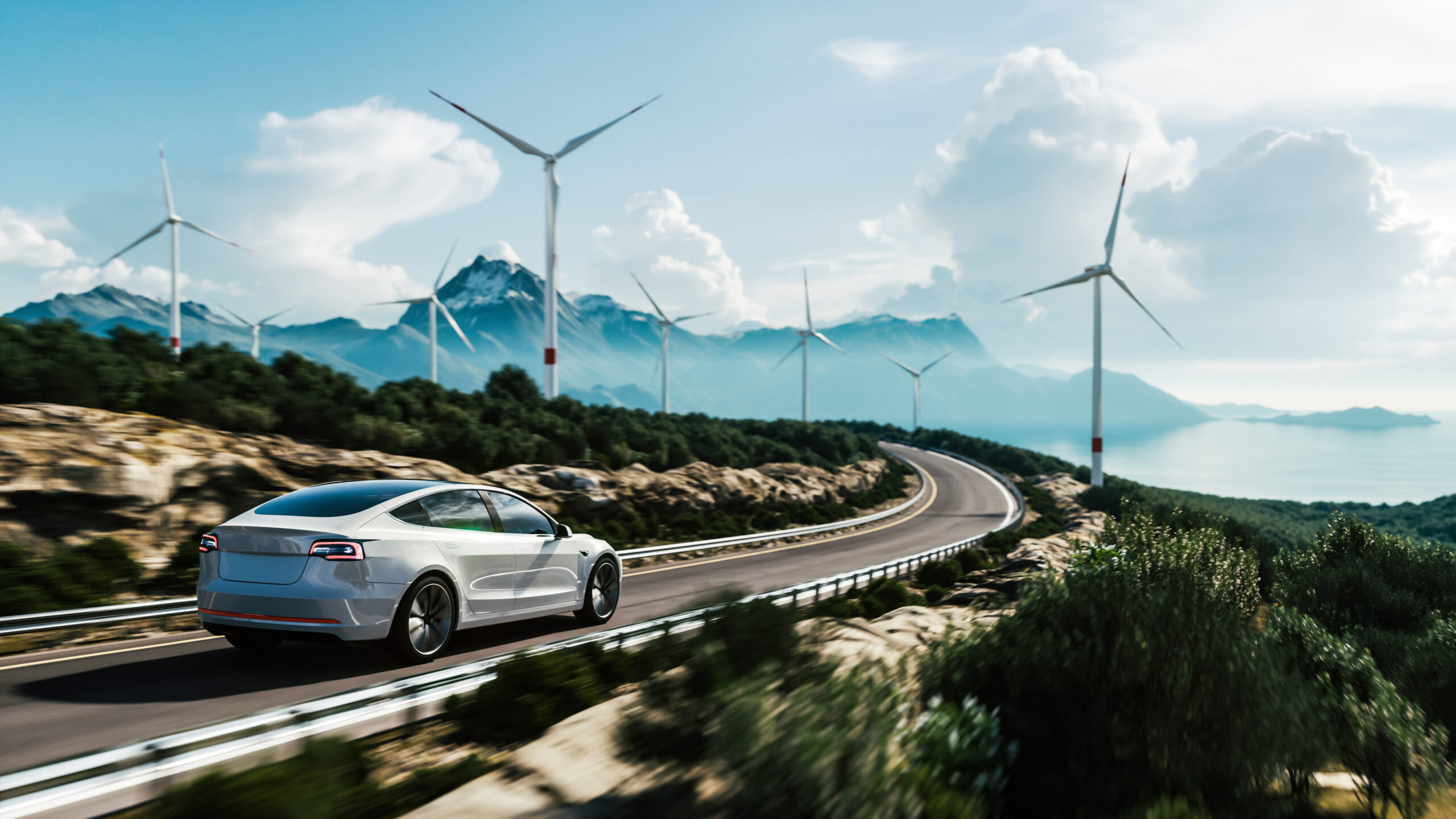
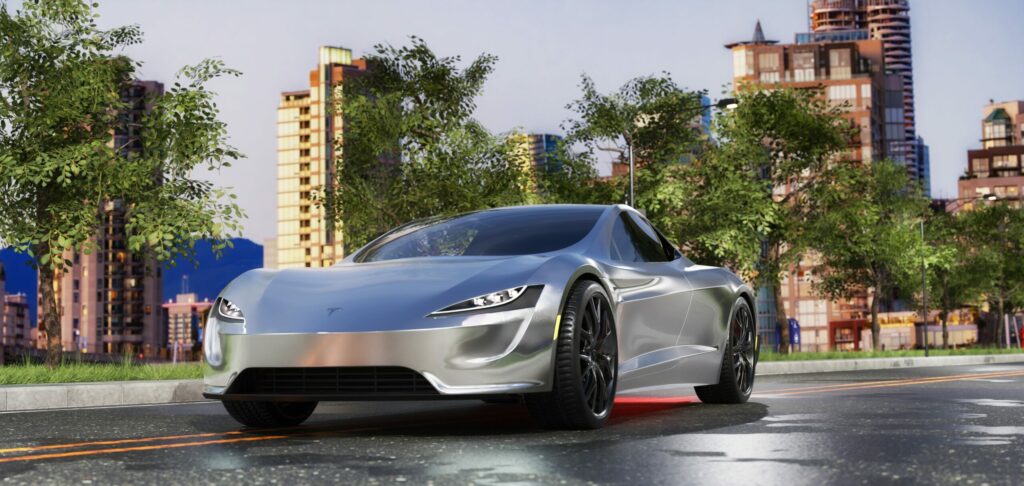
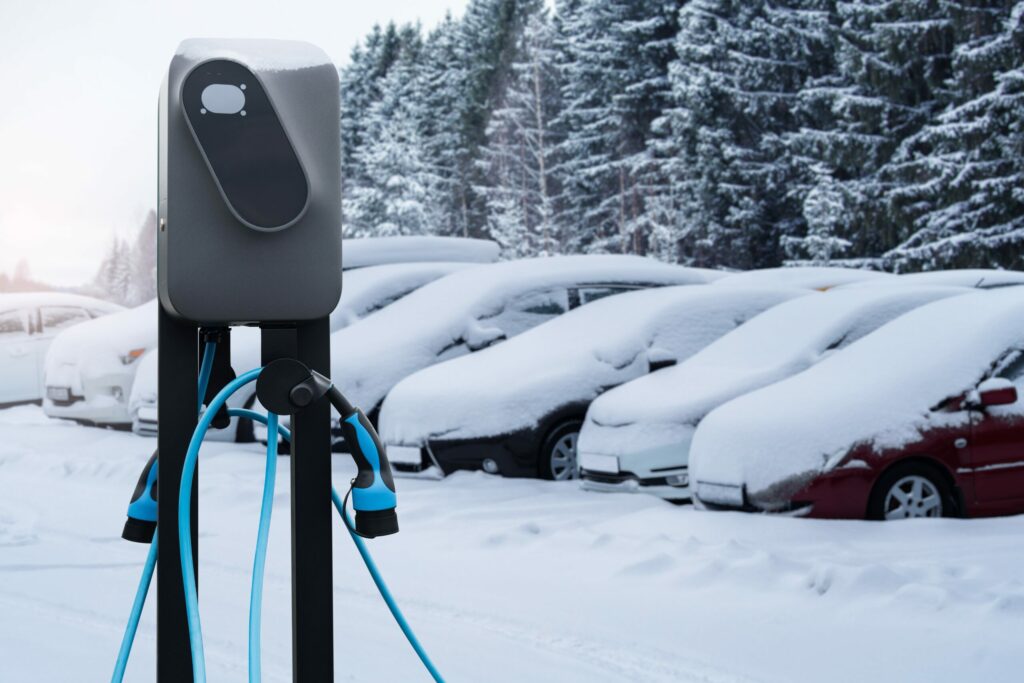
The XPeng P7+ saloon, the Chinese rival of the Tesla Model 3, is facing a massive recall. More than 47,000 units are affected in China. The problem: a fault in the power steering system that represents a safety risk.
The XPeng P7+ reveals its elegant lines on the road, rivalling the Tesla Model 3 (Credit: Xpeng).
Power steering problem threatens P7+
Chinese manufacturer XPeng has announced that the recall concerns exactly 47,490 P7+ vehicles produced between August 2024 and April 2025. According to the Chinese market regulator, faulty wiring in the steering system can trigger a warning light and cause a malfunction. As a result, this fault could pose a danger to drivers and passengers.
XPeng has specified that the steering systems at risk will be replaced free of charge on all the vehicles concerned. This measure comes ahead of the European launch of the P7+, scheduled for France and Germany next year. Despite this recall, the brand is trying to reassure future customers.
A high-performance hatchback in spite of everything
Despite this setback, the P7+ remains competitive thanks to its advanced technology. It offers intelligent AI-assisted driving and two LFP batteries, with capacities of 60.7 and 76.3 kWh. Its rear engine develops between 245 and 320 bhp. Range varies between 540 and 630 km according to the WLTP cycle, while the 800-volt architecture enables ultra-fast recharging from 10 to 80% in just 12 minutes.
Designed with the family in mind, the P7+ boasts a boot capacity of 725 litres, expandable to 2,221 litres with the seats folded down. These features position it as a serious rival to the Tesla Model 3, while offering space comparable to that of the Model S. Prices in China start at 186,900 yuan, or around €22,400, and are expected to rise to around €47,000 in Europe.
The XPeng P7+ offers a spacious boot and a modern design, ideal for family use. (Credit: XPeng)
A serious warning for XPeng
This recall comes at a crucial time for the brand, which is seeking to establish itself on the European market. It highlights the challenges faced by Chinese manufacturers in marketing advanced electric vehicles. Nevertheless, XPeng’s responsiveness demonstrates its seriousness and ability to take on large-scale recalls, which is a sign of confidence for European customers.
The Korean manufacturer has announced that, from 2026, the new K4 compact hatchback will replace the iconic Ceed in European catalogues. This marks the start of a new electrified era for Kia on the Old Continent, as the Ceed will also be offered as a hybrid.
In 2007, when Kia launched the Ceed, then spelt ‘cee’d’, it was with the aim of taking on the Golf, Focus and Mégane, then the reigning champions of compact budget hatchbacks. Mission accomplished, because although we don’t know the sales figures for the third and latest generation, the first two were produced in excess of 600,000 units each. Above all, it enabled Kia to make a name for itself in Europe. Now, almost two decades later, the Ceed is preparing for a well-deserved retirement.
A new string to Kia’s bow
Already ‘rivalled’ by its electric cousin, the EV4, the Ceed now sees the arrival on the Old Continent of the K4, which will replace it definitively in 2026. This is the hatchback version of the classic K4 saloon already sold in other markets.
2026 K4 Hatchback
While this K4 hatchback remains in the C segment (cars between 4.10 m and 4.50 m long) at 4.44 m, it is still almost 20 cm longer than the first Ceed. Above all, it offers a design that we now associate with electric cars. In fact, it looks a lot like the EV4, with its plunging roof, receding grille, knife-edge lines, ultra-modern light signature and large glazed sections. The Ceed seems to have turned the page…
A hybrid version of the Kia K4 coming soon
Kia has chosen to present its K4 hatchback to Europeans with… combustion engines! Petrol engines with outputs ranging from 115 to 180 bhp… Strange, given that a ban on the sale of combustion engines is on the horizon, but it’s understandable, 10 years is a long time, and it will give Kia time to sell a good number of units of its new K4.
Credit: Kia
So why are we talking about it on ECO MOTORS NEWS? Well, because a HEV or full hybrid version – non-rechargeable hybrids for those who haven’t read the electromobility glossary – is planned for 2026. This is the real revolution at Kia: the Korean manufacturer will be able to position itself in two strategic markets, particularly in Europe: the compact saloon market and the non-rechargeable hybrid market. Enough to make the 308, its announced nemesis, tremble?
Tesla continues to face big issues. It seems like everything that could go wrong went indeed like that, and at the same time. First it was Elon Musk’s risky public involvement in politics. Then it came the model changeover for the Tesla Model Y. All these happened while the competition from China and Europe, and even USA, Japan, and Korea, started to catch up rapidly.
Tesla struggles in Europe as competitors gain BEV market share
Elon Musk’s Risks and Tesla’s Decline
Although it is hard to tell how good or bad his bet on Donald Trump’s campaign did to his companies, when you participate in politics you’re taking a clear position. This might have split the opinion around him and therefore around his cars. As his role within the new government became clear, the company was in the process of updating its top-selling product – the Model Y. Any update, facelift, or new generation takes time and usually has an initial negative impact on sales.
Meanwhile other players were catching up. In Europe it was mainly the case of the Volkswagen Group, the region’s largest carmaker. According to data from JATO Dynamics, the German maker increased its market share within the BEV (Battery Electric Vehicle) market from 18.9% in January-July 2024 to 28.6% in January-July 2025. That’s an increase of almost 10 percentage points!
Volkswagen Group’s Rise in the European BEV Market
In fact, Volkswagen’s solid position is now looking better than its market share in the overall European passenger car market (including all powertrains). During the first seven months of this year, the German manufacturer posted a 26.7% share.
Volkswagen Group expands its BEV lineup in Europe, overtaking Tesla
In contrast, Tesla reduced its market share in the BEV segment by 7.8 percentage points from 16.4% in 2024 to 8.6% this year. It was the biggest loser in Europe. The updated Model Y is taking longer to take off in terms of sales, and the rest of the lineup is getting old.
There is a big gap in terms of the size of the BEV lineup and its age in Europe between Tesla and Volkswagen Group. The former only offers two models for the region with an average age of 8 years old (counted between the date of the official reveal and September 2025). In contrast, the Volkswagen group currently sells 21 different models across its many brands with an average age of 3.3 years old.
However, it was Ford the carmaker to post the highest BEV share within its own sales. In Jan-Jul 2024, only 4.4% of its sales in the region corresponded to BEVs. One year later, they represented 14.1%. Volkswagen Group and Hyundai-Kia also posted big increases. On the other hand, BYD saw its BEVs with a lower share within its own sales as it has introduced several plug-in hybrid models throughout the year.
BEVs have still big challenges ahead. In the meantime, big changes are happening.
The sixth generation of the Nissan Micra arrives on the market with a 100% electric powertrain. Available from €28,000, it promises a range of up to 416 km according to the WLTP cycle. With its distinctive design, connected technologies and fast recharging, it aims to stand out from the Renault 5 and the Peugeot e-208.
The new Nissan Micra Electric 2025 boasts compact, assertive styling designed to appeal to urban drivers (Credit: Nissan).
A city car designed for urban agility
The new Micra is based on the AmpR Small platform, developed in partnership with Renault and Ampere. Its 2.54-metre wheelbase and low weight make it easy to manoeuvre and fuel efficient. Thanks to its low centre of gravity and multi-link suspension, it offers a stable, precise ride, whether in the city or on the open road.
Two batteries, two powers
Nissan is offering two versions to suit different uses. The first combines a 40 kWh battery with a 120 hp engine, providing a range of up to 317 km. The second, more powerful version combines a 52 kWh battery with a 150 hp engine, giving a range of 416 km WLTP. Both models can be fast-charged up to 100 kW, recovering 65% of the battery in around 30 minutes.
The interior of the electric Micra 2025 combines elegance and technology, with two 10.1-inch screens and a customisable ambience. (Credit: Nissan)
A sober but assertive design
Visually, the Micra adopts a modern, compact style, a far cry from the retro look of the Renault 5. Fluid lines, pronounced wheel arches and 18-inch wheels give it a dynamic look. Its bodywork has been reworked to optimise aerodynamics and improve range.
A connected, customisable cabin
On board, sobriety goes hand in hand with technology. Two 10.1-inch screens group together most of the information, while physical controls remain for ventilation. Ambient lighting is available in 48 colours, and native integration of Google Maps and Google Assistant simplifies everyday use. The NissanConnect application can also be used to control the charge and cabin temperature remotely.
Competitive prices and a wealth of equipment
The range starts with the Engage trim level at €28,000 for the 40 kWh version. The Advance is available from €30,000 or €33,500 with the large battery, while the Evolve tops the range at €36,000. From the very start of the range, the Micra includes a heat pump, rapid recharging and driving aids. A number of options are available to personalise the city car, including two-tone paintwork and sports wheels.
With its flowing lines and 18-inch wheels, the electric Nissan Micra 2025 asserts its character while optimising its range. (Credit: Nissan)
An electrical offensive underway
With this new generation, Nissan is relaunching the Micra in the highly competitive electric city car segment. With a three-year warranty and eight years on the battery, the Japanese carmaker is banking on its attractive price, competitive range and comprehensive equipment to win over urban Europeans.
Linktour Automotive is entering the European market with its L6e and L7e electric models. The launch event at IAA Mobility 2025 marked a new era in urban driving. The brand is banking on avant-garde design, unique personalisation and intelligent technologies to win over city dwellers.
The Linktour L6e “Urban Sprite” and L7e “Urban Elite” models mark the brand’s arrival in Europe (Credit: Linktour).
A strategic arrival in Europe
Linktour aims to transform the urban experience with its compact, agile vehicles. The L6e and L7e models combine performance, comfort and futuristic styling to meet the expectations of modern drivers. By incorporating strict European production standards, the brand ensures quality, safety and durability.
Four pillars of innovation
Design is at the heart of the Linktour philosophy. Futuristic silhouettes, frameless doors and a panoramic roof create a unique visual experience. Customisation is taken to a whole new level with the ‘Art Window’, transforming each car into a space for creative or commercial expression. Smart features include a 10.25-inch touchscreen and a 5-inch control panel. The Linktour mobile application lets you control the vehicle remotely, manage the air conditioning and monitor battery charging. Finally, the Urban Pioneer approach ensures manoeuvrability, safety and comfort thanks to an aluminium chassis and Cell to Body technology.
The interior of the Linktour L offers a modern design with a 10.25-inch touch screen and connected controls. (Credit: Linktour)
Two models for two experiences
The Alumi L6e “Urban Sprite” is compact and manoeuvrable, perfect for narrow streets and traffic jams. It appeals to young drivers and families looking for a second urban vehicle. The interior features eco-friendly materials and sporty seats with four-way adjustment. The Alumi Elite L7e ‘Urban Elite’, on the other hand, offers sporty driving with a 23 kW electric motor and acceleration from zero to 50 km/h in 5.5 seconds. Its 180 km range and D and S driving modes guarantee an experience to suit every need.
A global strategy with local support
Linktour is planning a gradual expansion of its international sales and service network. The aim is to provide easy access to spare parts, maintenance and batteries. According to Dr. Tang, CEO of Linktour, mobility must go beyond mere transport and become an extension of lifestyle. The brand doesn’t just launch vehicles: it offers a platform that inspires individual expression.
The world of electromobility, like all new markets, is full of abbreviations and jargon that can sometimes confuse consumers. To help you find your way around, ECO MOTORS NEWS presents the electromobility glossary, which will evolve over time.
The electromobility glossary provides a better understanding of the key terms used in the world of electric and plug-in hybrid cars.
To get a clearer picture, we first need to identify the different categories in this glossary of electromobility. Starting with the types of electric vehicle, through to everything to do with recharging and batteries, not forgetting the terms used to describe the societal changes associated with the energy transition.
The different types of electric vehicles :
BEV: Abbreviation for Battery Electric Vehicle, covering all 100% electric vehicles. Sometimes simplified to EV or VE.
EREV: Abbreviation for Extended Range Electric Vehicle. An electric vehicle with a small petrol-powered generator to extend its driving range. Also called REEV for Range Extended Electric Vehicle.
FCEV: Abbreviation for Fuel Cell Electric Vehicle, generally refers to hydrogen-powered vehicles. More specifically, the vehicle’s electric motor is powered by a fuel cell, which produces electricity through oxidation.
HEV: Abbreviation for Hybrid Electric Vehicle, used to describe non-rechargeable hybrids whose electric motor is powered by a battery that is recharged by the internal combustion engine and sometimes during braking and deceleration.
PHEV: Abbreviation for Plug-in Hybrid Electric Vehicle, this is a hybrid vehicle that can be recharged at a terminal or plug socket.
MHEV: Abbreviation for Mild Hybrid Electric Vehicle, this is a vehicle that benefits from light hybridisation, with electric assistance during the famous “start and stop” or to power some of the electronics.
Designations you need to know
TCO: Total Cost of Ownership. It already existed with internal combustion engines, particularly for professional use, but it has come back to the fore with electric vehicles, as it is often used as an argument in favour of electrified vehicles.
Crit’Air: Rating and classification of vehicles from 0 to 5 according to their emissions, fuel used and age. Only 100% electric or hydrogen-powered cars qualify for the green sticker equivalent to 0.
ZFE: Zone à Faibles Émissions or Low Emission Zones, sources of heated debate and still unstable status, are urban areas where the circulation of Crit’Air 3 vehicles and above is regulated or even banned.
WLTP: The Worldwide harmonized Light vehicles Test Procedures is one of the standards used to determine, after a series of tests, the range advertised by manufacturers to the public. For internal combustion cars, it determines fuel consumption.
NEDC: Long used in Europe, the New European Driving Cycle disappeared in 2018, giving way to the WLTP.
CLTC: The China Light-Duty Vehicle Test Cycle is the Chinese equivalent of the WLTP. Adopted in 2021 as the national standard, it is sometimes considered to be more lenient. For example, 500 km on the CLTC is equivalent to 410 km on the WLTP.
Glossary of batteries and recharging
Lithium-ion: This is the most common type of battery, chosen for its relatively low cost, good energy-to-weight ratio, efficiency and long life. As the name suggests, it consists of an anode and a cathode that exchange lithium ions.
Solid state battery: Unlike the lithium-ion battery, here the electrolyte between the anode and cathode is solid. This inevitably makes them more compact, increasing their capacity for the same volume and, de facto, extending the vehicle’s range. At the moment they are too expensive to manufacture, but their democratisation is eagerly awaited.
AC (Alternating current): Often associated with so-called slow charging stations, such as home charging stations, which use alternating current that must then be converted to direct current to be stored in the battery.
DC (Direct Current): In contrast to AC terminals, DC terminals, known as fast terminals, are often found in service areas. They supply direct current directly to the battery and range in power from 50 to over 500 kW.
CCS connector: Combined Charging System. Type of charging point combining AC and DC charging, used mainly in Europe and a direct competitor to Tesla Superchargers.
V2G : Abbreviation for Vehicle-to-Grid, a technology that allows energy from a vehicle’s battery to be fed back into the grid when it is plugged in. This preserves the life of the battery while taking the strain off the grid.
V2H : Abbreviation for Vehicle-to-Home, this enables a vehicle to power a home.
A problem with an incorrectly positioned sensor has forced Renault and its subsidiary Dacia to recall several recent models. Hybrid and electric vehicles are particularly affected, including the Mégane E-Tech and Scénic E-Tech. The authorities are warning of an increased risk of accidents.
The Renault Mégane E-Tech is one of the models recalled for a parking brake problem. (Credit: Renault)
Poorly positioned sensor to blame
The fault is caused by a sensor on the parking brake actuator being at the wrong angle. This fault sometimes prevents the locking pin from locking properly in “P lock” mode. In practice, the brake may lock or fail to activate, especially when the driver turns off the engine, unbuckles the seatbelt or opens the door. If the assisted parking brake (APB) continues to hold the vehicle, the risk of accidents and injuries is considered real by the authorities.
New, electrified models in the sights
The alert, published at the beginning of September on the government platform Rappel Conso, affects a large number of Renault models produced between April 2024 and January 2025. These include vehicles emblematic of the brand’s electric and hybrid strategy: Mégane E-Tech, Scénic E-Tech, Austral and Espace VI. The Rafale, a top-of-the-range SUV, is also included. At Dacia, the Duster Pays Grand Froid, manufactured until the end of October 2025, is also on the list.
Quick steps for homeowners
Renault recommends that affected motorists contact their dealer to check whether their vehicle is part of the campaign. The intervention, which is free of charge, will enable the sensor to be corrected and ensure safety. The authorities specify that it is not necessary to immobilise the vehicle, but call for immediate action to avoid any dangerous situation.
Increased vigilance around electric models
This massive recall is a reminder that the transition to electric vehicles also brings technical challenges. The Mégane and Scénic E-Tech, the spearheads of Renault’s electric range, are directly affected. However, the manufacturer says that corrections will be made quickly, in order to maintain customer confidence in its electrified models.
Chinese manufacturer XPeng is taking a decisive step in its expansion strategy. Thanks to an unprecedented agreement, its electric SUVs will soon be assembled in Europe by Magna Steyr in Graz, Austria. This marks a turning point for the brand, and reflects a wider trend towards localising Chinese production to avoid heavy taxes in the European Union.
The XPeng G9 electric SUV will be manufactured at the Magna Steyr plant in Austria.
A strategic partnership in Austria
Magna, a Canadian subsidiary with over 300 production sites worldwide, has been chosen to manufacture the G6 and G9. These models, already sold on the continent, will now come directly from the Austrian factory. According to XPeng, this decision represents a first step towards a sustainable commitment in Europe, while accelerating its conquest of the market.
Getting around European surcharges
The European Union imposes high taxes on vehicles imported from China, reaching 31% for XPeng. By localising its production, the company is considerably reducing these costs, while at the same time gaining greater responsiveness to local demand. This strategy is part of a wider movement: several Chinese manufacturers, including BYD, Chery and Leapmotor, have already announced similar projects on European soil.
The Magna Steyr plant in Graz is now assembling the XPeng G9 electric SUV for the European market.
GAC and other players are following suit
XPeng is not the only company to benefit from Magna’s expertise. Chinese manufacturer GAC, with its Aion brand, has also entrusted the assembly of its electric models to the Graz plant. Recently presented in Munich, this brand plans to start sales in Poland, Portugal and Finland, before expanding across the continent by 2028.
A new lease of life for Magna Steyr
For Magna Steyr, this contract comes at just the right time. The Austrian plant had lost several major programmes, notably with BMW and Jaguar. The arrival of XPeng and GAC has given a significant boost to this historic site, already renowned for its production of the Mercedes G-Class. This momentum illustrates the determination of Chinese carmakers to integrate rapidly and sustainably into the European automotive landscape.
Interview with Jean-Luc Coupez and Daniel Kovacs, founders of E-Mobility Expert
Created in 2021, E-Mobility Expert is a consultancy dedicated to electromobility. Its ambition is to guide companies through the transition, from CSR analysis to the practical deployment of charging stations and sustainable mobility solutions. Meet its two passionate directors: Jean-Luc Coupez, founder, and Daniel Kovacs, associate general manager.
Credit: Eva Pellerin
Can you introduce yourself in a few words? Jean-Luc Coupez: I’m the founder of E-Mobility Expert, a consultancy specialising in the world of electric mobility. After more than 15 years in the electric mobility sector, I wanted to continue to contribute by embarking on this new adventure after my retirement.
Daniel Kovacs: I’m a consultant in electromobility and recharging infrastructures. One year later, I joined Jean-Luc with the desire to bring a global and agile vision.
How did the E-Mobility Expert adventure come about? Jean-Luc Coupez: I launched the company in 2021, with the idea of broadening the technical approach to include a CSR and sustainable development dimension. The partnership with the Auddicé group enabled us to bring in this expertise.
Daniel Kovacs: For me, it was an opportunity to move from a large group to a more flexible structure, while retaining a real sense of rigour. Three years on, the gamble has paid off: we have the responsiveness of a small team and the solidity of a group.
What sets you apart in the market? JL.C: Experience. I took part in the first interministerial working groups that led to the European Type 2 standard, and then to the Combo CCS for fast recharging.
Our expertise covers both the technical side – developing, installing and upgrading bollards – and the regulatory side – helping foreign manufacturers to comply with French regulations.
Why did you join the Auddicé group? JL.C: Because it allows us to offer comprehensive support. With Auddicé, we carry out carbon audits, travel plans, analysis of usage… right through to implementation and training. We are currently the only company in France that can follow a company from A to Z.
Credit: Eva Pellerin
The demonstrator: all recharging solutions combined
You’ve installed a demonstrator on your site. What does it involve? D.K: We’ve transformed our car park (30 spaces) into a showcase for recharging solutions:
Slow charging points for daily charging
Normal terminals (7 to 22 kW) for half a day
Fast charging points (25 kW) for recharging in two hours
In all, 14 terminals – more than enough to showcase the full range of technologies. It’s unique in France.
JL.C.: We’ve also worked on education: explanatory panels, QR codes, fun training courses like our “charging stations aperitif”, which raises awareness of good usage practices.
How do your customers react to this demonstrator? D.K: With surprise and curiosity. Few have seen so many solutions grouped together in one place. It triggers discussions, ideas and often projects. As for our staff, they have taken to the tool perfectly.
Did you also think about cycling? D.K : Absolutely. Low-carbon mobility starts with walking and cycling. We have created a garage equipped for electric bikes, with recharging points and a repair workshop, as well as an inflation station, open to all employees.
“Electric vehicles will undoubtedly be a bridge to other technologies such as hydrogen or new generations of batteries.“
Showcasing electric mobility for all uses
What user profiles are you targeting? D.K: Company employees, visitors and customers, but also staff from other agencies. The idea is to show a variety of uses, with several makes of kiosk and several real-life scenarios.
What do you see as the main obstacles to the electrification of fleets? D.K: The first is range. Employees are worried:“Will I make it through the day?” The answer depends on the right choice of vehicle and battery. Then there are the issues of recharging: on site, when out and about, and at home.
JL.C : On the business side, the challenge is also to correctly size the infrastructure: number of terminals, power, possible integration of photovoltaics or storage, software control… All this needs to be optimised.
How do you see electric mobility evolving in the future? D.K.: We’re at a turning point. Batteries will become faster to recharge, rather than more autonomous. Induction will develop, as it has for telephones. And electric vehicles will serve as a bridge to other technologies such as hydrogen.
JL.C : Our role will be to help companies make the right choices, because once a solution is adopted, it’s a long-term commitment. We help them compare costs, take advantage of subsidies and build tailor-made solutions.
Rimac, known for its electric hypercars, has just unveiled a new solid battery and ultra-powerful electric axles. The idea? To become a major technological player in the electric car industry.
Since its creation in 2009 by the young Croatian engineer Mate Rimac, the brand of the same name has rapidly established itself as a key player in the world of electric sports cars. With the Concept One and its 1,200bhp, followed later by the Nevera, which flirts with 2,000bhp, Rimac has made its mark and proved that electrification doesn’t close the door on thrills. The problem? Making a profit selling hypercars isn’t the easiest thing in the world! So the idea of its founder is to add another string to Rimac’s bow by becoming a technology supplier for other manufacturers, using its cars as a showcase.
Very promising solid state batteries
This autumn, the manufacturer has announced a new solid-state battery. Developed in partnership with ProLogium and Mitsubishi Chemical Group, it has a capacity of 100 kWh and an energy density of around 260 Wh/kg. That’s not bad, but it’s even better when you consider Rimac’s promise of a recharge time of 10-80% in less than seven minutes.
Credit: Rimac
And this is not just a concept or a manifesto, but a presentation ahead of the commercial launch in 2027. While solid batteries are still relatively rare on the market, if Rimac meets the deadline, it will be one of the pioneers in this segment. This is a strategic positioning, since solid batteries are more compact and therefore offer greater range for the same weight as lithium-ion batteries. For many observers, solid batteries represent the future of the electric car.
A major commercial power?
In addition to its future solid-state batteries, Rimac also presented its new generation of electric axles called Sinteg 300 and 550. These are engineering monsters that can deliver up to 11,000 Nm of torque to the wheels. It’s totally insane, and once again, it could convince many manufacturers, especially those looking for high performance, to choose the Croatian manufacturer.
Credit: Rimac
Starting out by producing spectacular hypercars and making a name for himself in the sun, Mate Rimac, like a good engineer, has decided to use the fame he has gained from his cars to start designing parts, starting with batteries, axles and engines. It’s certainly more profitable than selling fifty Nevera…