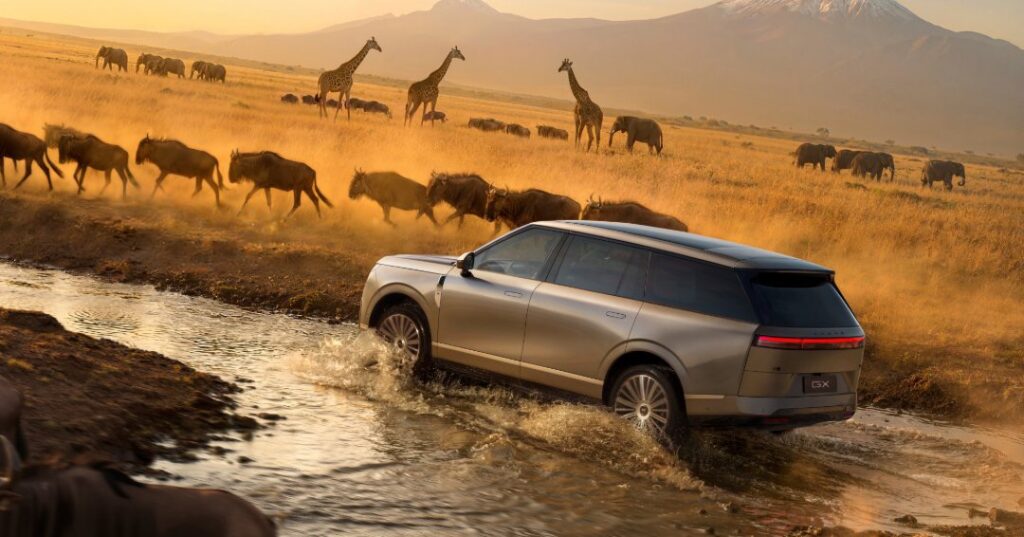
At the beginning of February 2026, XPeng lifted the veil on its new flagship: the GX, for eXploration. An electrified SUV over 5.26 metres long, with 6 seats, ultra-technological… and a design that clearly evokes the Range Rover Electric still under development. The message is clear: it’s possible to build a massive, high-tech SUV with status… for half the price.
source : Xpeng
A large, ultra-technological electric (and hybrid) SUV
The real difference between the GX and the G9 (in the same segment) is not immediately apparent: it lies beneath the bodywork. The SUV is based on the SEPA 3.0 platform (Smart Electric Platform Architecture), the most advanced technological base developed by XPeng to date. It’s not just an electric platform: it’s an architecture designed from the outset to integrate artificial intelligence at the very heart of the vehicle.
With the GX, artificial intelligence is not limited to screens or voice commands. It plays a direct role in the way the vehicle handles. Indeed, the GX adopts 100% steer-by-wire steering combined with four-wheel steering capable of turning the rear wheels by up to 10 degrees. In addition, the air suspension, steering and engine torque management are controlled in real time by algorithms capable of anticipating body movements, road conditions and driving style.
source : Xpeng
Two engines are planned:
a 100% electric version, with rear-wheel drive or all-wheel drive, 800 V architecture and ultra-fast 5C recharging (10 to 80% in around 15 minutes under optimum conditions);
an EREV (Extended Range Electric Vehicle) version, combining a battery with a combustion engine that acts solely as a generator. Cumulative range: over 1,000 km in the Chinese CLTC cycle.
An obvious target: the Range Rover
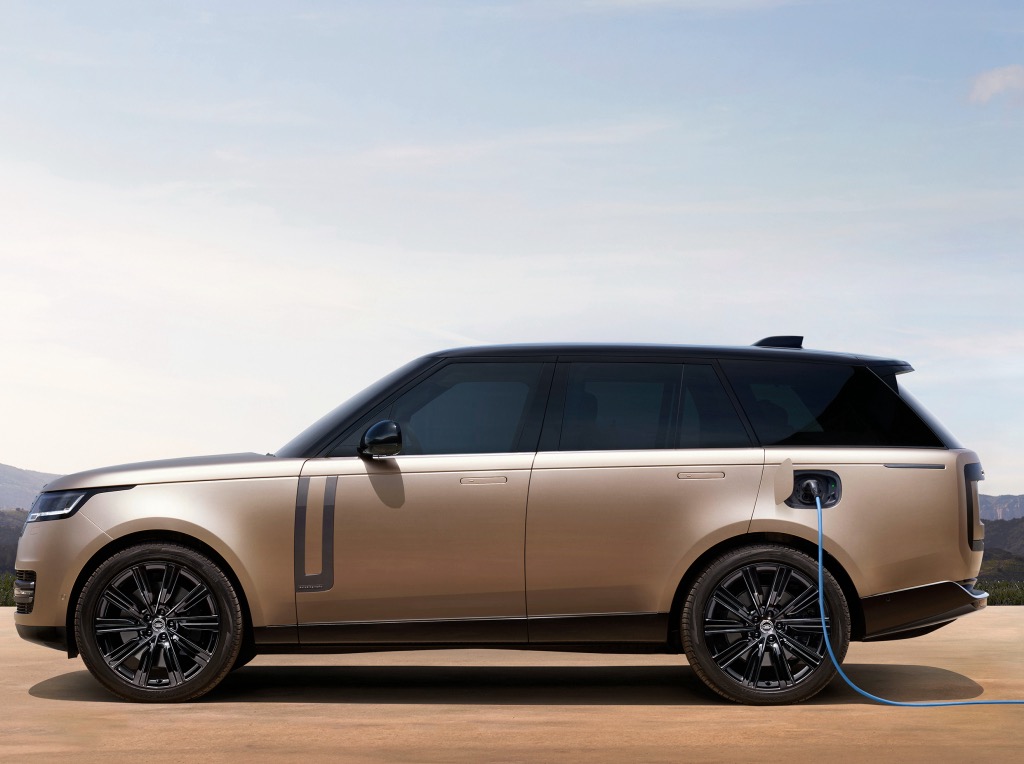
It’s hard not to see the inspiration. With its upright front end, massive proportions and perfectly horizontal roofline, the GX takes its cues from the benchmark British SUV, the Range Rover.
We’re starting to get used to it: it’s not just on technology that the Chinese are hoping to compete with the market leaders, but on price. Positioned above the G9 (China price: ~350,000-460,000 yuan, or €35,000-46,000), XPeng’s current top-of-the-range SUV, the GX starts at ~400,000 yuan (< €50,000 in China) according to CnEVPost, three times cheaper than an electric Range Rover expected to cost at least €140,000.
source : Range Rover
Behind the GX, a clear international strategy
The GX does not stand alone in the range. It is part of XPeng’s global expansion. After a record year in China in 2025, with 429,445 sales worldwide (up 126% on 2024), including 45,008 export sales (up 96%), the brand is preparing its European offensive (factories in Germany and Hungary from 2026). XPeng has set an ambitious target: to generate 50% of its sales outside China by 2028.
The idea is clear: to show that a Chinese manufacturer can produce a large premium SUV that is credible in the face of European benchmarks such as the BMW iX or the Tesla Model X, while retaining a price advantage.
The presence of an EREV version also illustrates a pragmatic approach to international markets. XPeng knows that not all countries yet have a uniform recharging network. Offering a cumulative range of over 1,000 km removes a major psychological barrier, particularly in rural Europe and certain emerging countries.
source : Xpeng
When will it be released?
The official world premiere is expected at the Beijing Motor Show in April 2026. The commercial launch in China is scheduled for late 2026 or early 2027.
As far as Europe is concerned, nothing is less certain. If it were to cross borders, between homologation, regulatory adaptation of steer-by-wire and organisation of the after-sales network, an arrival before 2028 seems unlikely.
But one thing is certain: if XPeng manages to maintain a competitive price positioning outside China, the GX could become one of the models that symbolise the Chinese offensive in the premium segment.
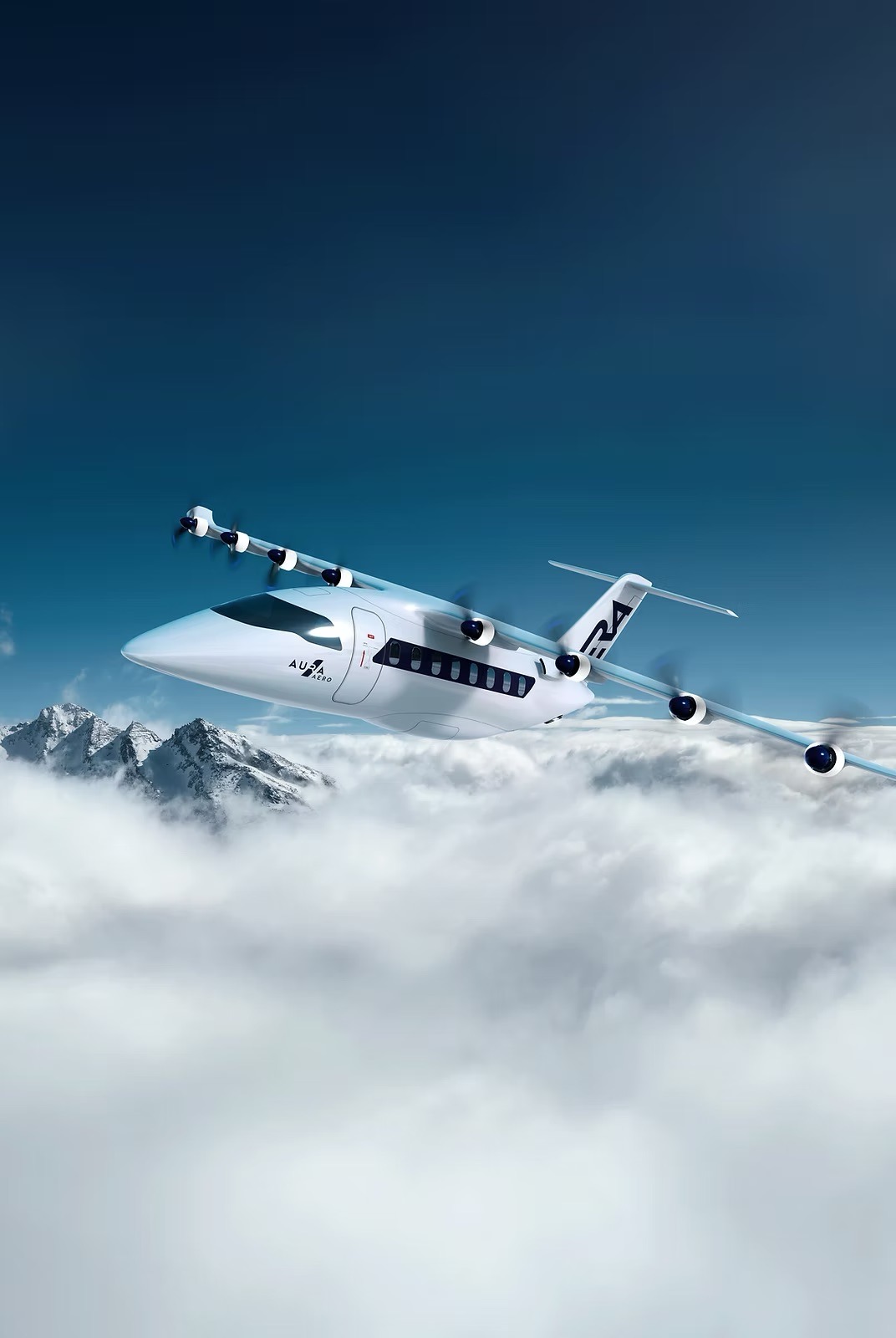
On 2 March 2026, AURA AERO officially signed the first order for its ERA hybrid-electric regional aircraft. The lucky buyer, Pan European Air Service (PEAS), becomes the first customer to make a contractual commitment for this 19-seater aircraft designed to decarbonise regional aviation. With nearly 700 order intents, valued at $12 billion, ERA has reached a significant milestone.
Source: AURA AERO
ERA: an aircraft designed to revive regional aviation
In the same press release, ERA is presented as a lever for transforming regional air transport. This flying machine is based on a hybrid architecture.
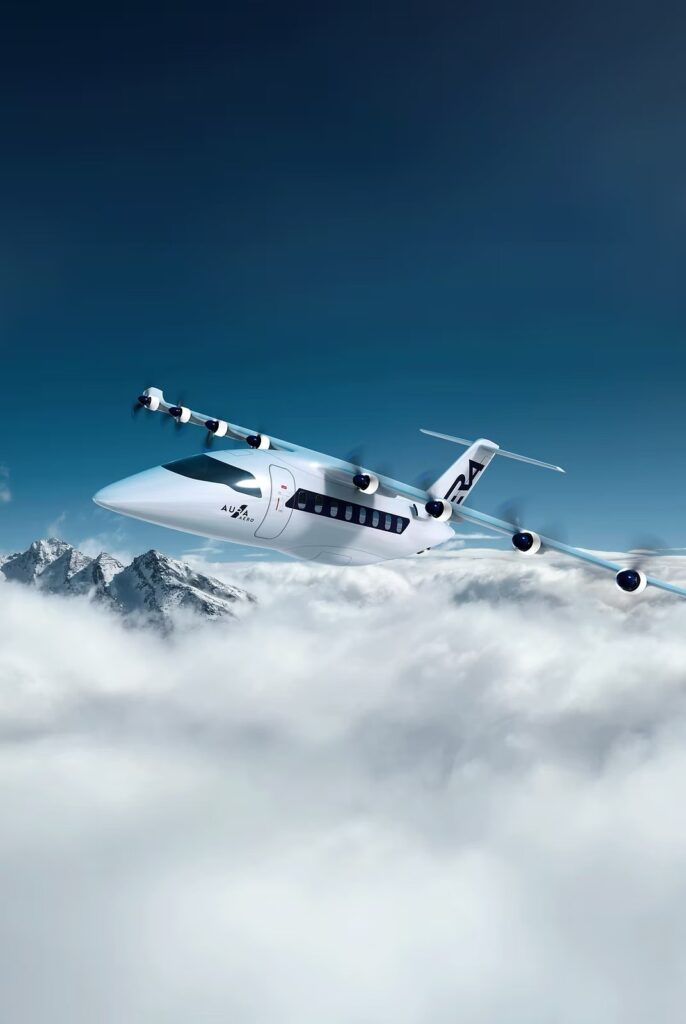
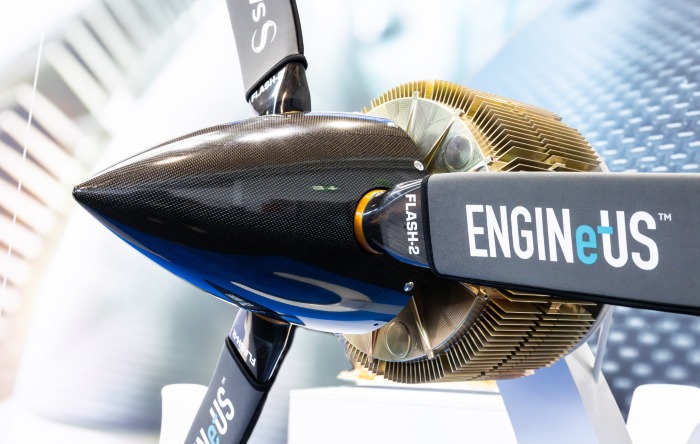
The aircraft will be equipped with 8 ENGINEUS electric motors developed by Safran and 2 SAF (Sustainable Aviation Fuel) compatible turbogenerators. This configuration enables the aircraft to alternate automatically between electric and hybrid phases depending on the flight profile. The announced range is 900 nautical miles (around 1,500 kilometres), covering a large part of intra-European routes.
source : Safran
According to the manufacturer, the ERA could reduce CO₂ emissions by up to 80% compared with combustion-powered aircraft in the same category. In addition to reducing carbon emissions, the aircraft also aims to revitalise a weakened segment: regional routes.
Versatility at the heart of the business model
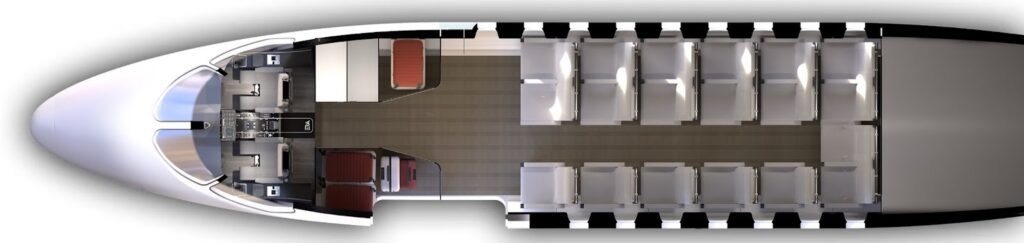
The ERA is not just positioned as a conventional regional aircraft. It can be configured for passenger transport, business aviation and light freight, as well as critical operations and emergency response.
This modularity broadens the field of application and enables the manufacturer to address a wider range of operators than just the traditional regional companies.
Source: AURA AERO
Pan-European, first committed operator
The press release highlights AURA AERO as the first buyer. Based in Chambéry and Lyon, Pan Européenne Air Service currently operates five Embraer aircraft (from 5 to 49 seats) and serves up to 500 destinations in Europe, North Africa and the Middle East.
The company has been supporting the ERA programme since its inception. It recently took part in electric flight tests with INTEGRAL E, another AURA AERO programme.
In the press release, Antoine Foessel and Clément Jacquot, co-directors and owners of Pan Européenne, explain:
“AURA AERO’s ambition and values are perfectly aligned with our vision of tomorrow’s aviation. The technological and industrial choices made in the design and production of the ERA since the company was founded have always proved to be extremely relevant, and it is only natural that we should have chosen this aircraft in order to be able to offer the first carbon-free air transport in history.
As well as enjoying a state-of-the-art, ethically responsible aircraft, the objective is clear: to become one of the first airlines in the world to operate a hybrid-electric aircraft with fare-paying passengers.
A strategic turning point for AURA AERO
For AURA AERO, this order is more than just a commercial opportunity. Together, they seem to be working hand in hand to drive forward the French and global aeronautics industry.
Jérémy Caussade, chairman and co-founder of the manufacturer, stresses in the press release:
“Pan Européenne is much more than a launch customer; it is a trusted partner that has been with us since the start of the ERA programme. We are very proud to count on the commitment of a company that chooses to support a French manufacturer, because we share the same values and the same vision.”
source : Laref
A regulatory environment favourable to hybridisation
And this sale is taking place against a backdrop of increasing regulatory pressure on European air transport in 2026.
Indeed, the sector accounts for around 2-3% of global CO₂ emissions, and European mechanisms such as the extension of the EU ETS or the Fit for 55 target are pushing operators to speed up their transition.
In this context, regional aviation appears to be a realistic area for experimentation:
shorter distances,
more controlled energy needs,
infrastructures that can be adapted more quickly than for long-haul flights.
An industrial equation yet to be demonstrated
While this first firm order marks a major symbolic milestone, a number of unknowns remain. The ERA programme still has to pass the crucial certification stage, a long and demanding process for an aircraft incorporating a hybrid-electric architecture unprecedented on this scale.
The industrial timetable will also be decisive. AURA AERO is aiming for entry into service by 2028-2029, but whether this trajectory is met will depend as much on regulatory approvals as on the industrial ramp-up.
Another major challenge is controlling costs and the supply chain. The integration of eight electric motors, complex hybrid systems and sustainable fuels requires efficient and intelligent industrial coordination.
Source: AURA AERO
From prototype to market
Signing with Pan Européenne does not in itself guarantee the industrial success of ERA, but it does mark a change in status: the programme is moving from a dynamic of innovation to one of commercial realisation.
If the aircraft lives up to its promise in terms of performance, emissions reduction and operating costs, it could open up a new path for European regional aviation.
In Aachen, researchers at the PEM (Power Electronics and Machines) laboratory at RWTH Aachen, one of Germany’s leading technical universities, are developing a new generation of electric motors capable of operating without rare earths. Called NAFTech, the aim of the project is to design a compact, high-performance traction motor that can be industrialised, completely eliminating the need for neodymium- or dysprosium-based magnets. The project has a number of objectives: to reduce production costs, secure supplies of critical materials and reduce environmental impact.
source: PEM
Why do we want to do away with rare earths?
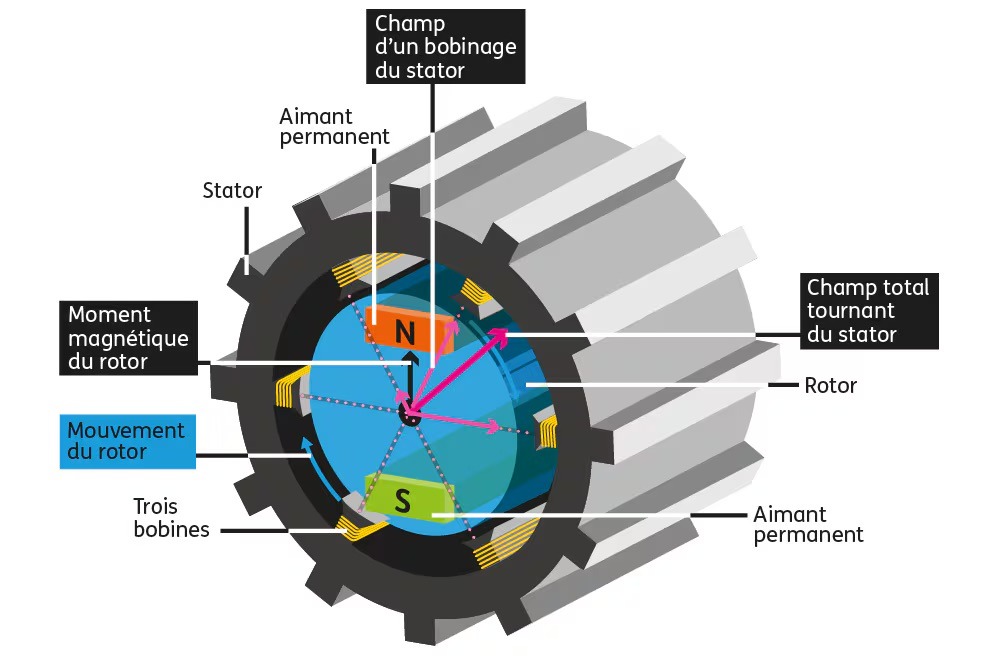
Today, the majority of electric vehicles use so-called “permanent magnet” motors. The problem is that these magnets are made from rare earths, magnets that enable the motor to achieve excellent power in a reduced volume.
source: Florent Robert for I&T
This technological choice poses a number of problems:
Rare earths are expensive, and their price can fluctuate wildly depending on geopolitical tensions and global demand. Neodymium and dysprosium, used in electric motor magnets, have seen spectacular price rises in recent years.
Oil extraction is concentrated in a few regions of the world, creating a strong geopolitical dependence. Today, it is mainly located in China, which accounts for almost 70% of global production and controls the vast majority of refining capacity.
The production of rare earths requires the extraction of large quantities of ore and complex chemical refining. These processes can generate toxic waste and polluting residues if they are not strictly controlled.
source : mineralinfo
For manufacturers and equipment suppliers, this represents an industrial risk. This is precisely what the NAFTech project seeks to avoid.
As far as funding is concerned, we learn that the project is being financed over two years by the German Federal Ministry for Economic Affairs, an investment that seems appropriate given that the programme aims to offer a credible alternative suitable for mass production.
A different motor, without magnets
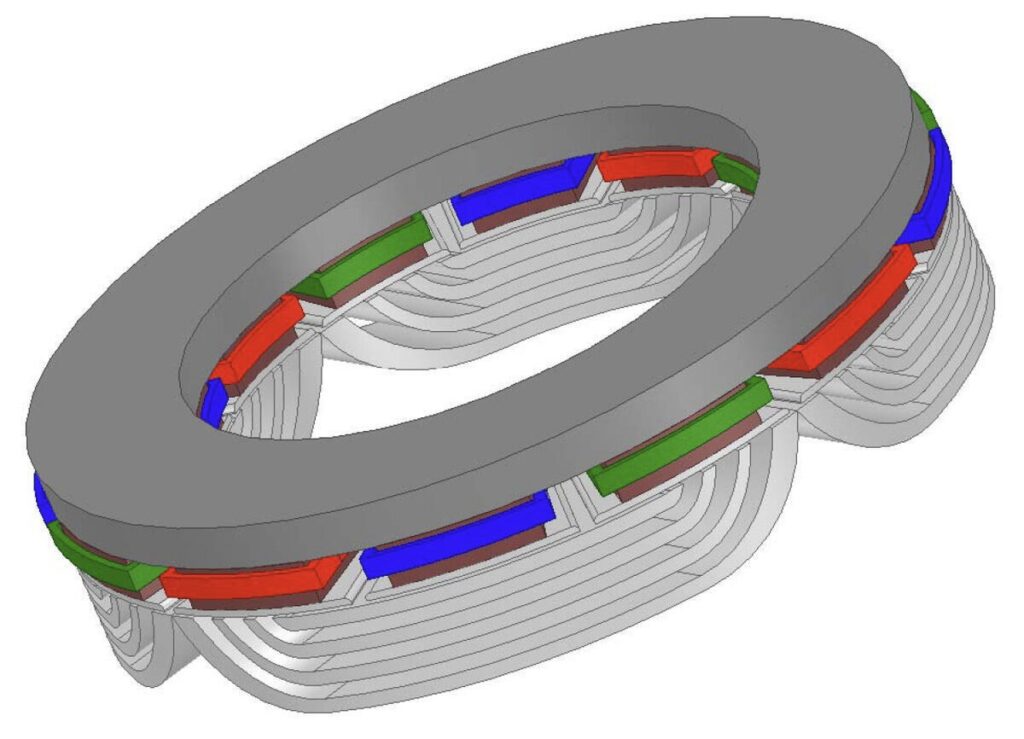
Instead of using permanent magnets, the team at RWTH Aachen is working on an architecture known as an axial flux reluctance synchronous machine. A complex name, but what does it change in practice?
In a conventional magnet motor, the magnetic field is generated by magnets integrated into the rotor. In the solution developed by NAFTech, the rotor contains neither magnets nor windings. The torque (the rotational force) is generated by the very shape of the rotor and the way in which the magnetic field circulates inside the motor. So it’s the geometry and control electronics that replace the magnets.
There are many advantages:
Less dependence on critical materials.
Lower raw materials costs.
Better long-term industrial stability.
According to estimates by German researchers, this approach could reduce material costs by up to 50% compared with a magnet motor.
An industrial challenge first and foremost
As well as the technology, NAFTech is focusing on one key point: mass production. Axial-flow motors are still not widely used in the automotive industry, because their production remains complex. The aim of the project is therefore to integrate industrial constraints from the outset: simplifying the architecture, controlling manufacturing tolerances and developing processes compatible with high volumes.
The idea is to offer a solution that can be used not only by major groups, but also by smaller SMEs and equipment manufacturers, who are often more sensitive to variations in raw material prices.
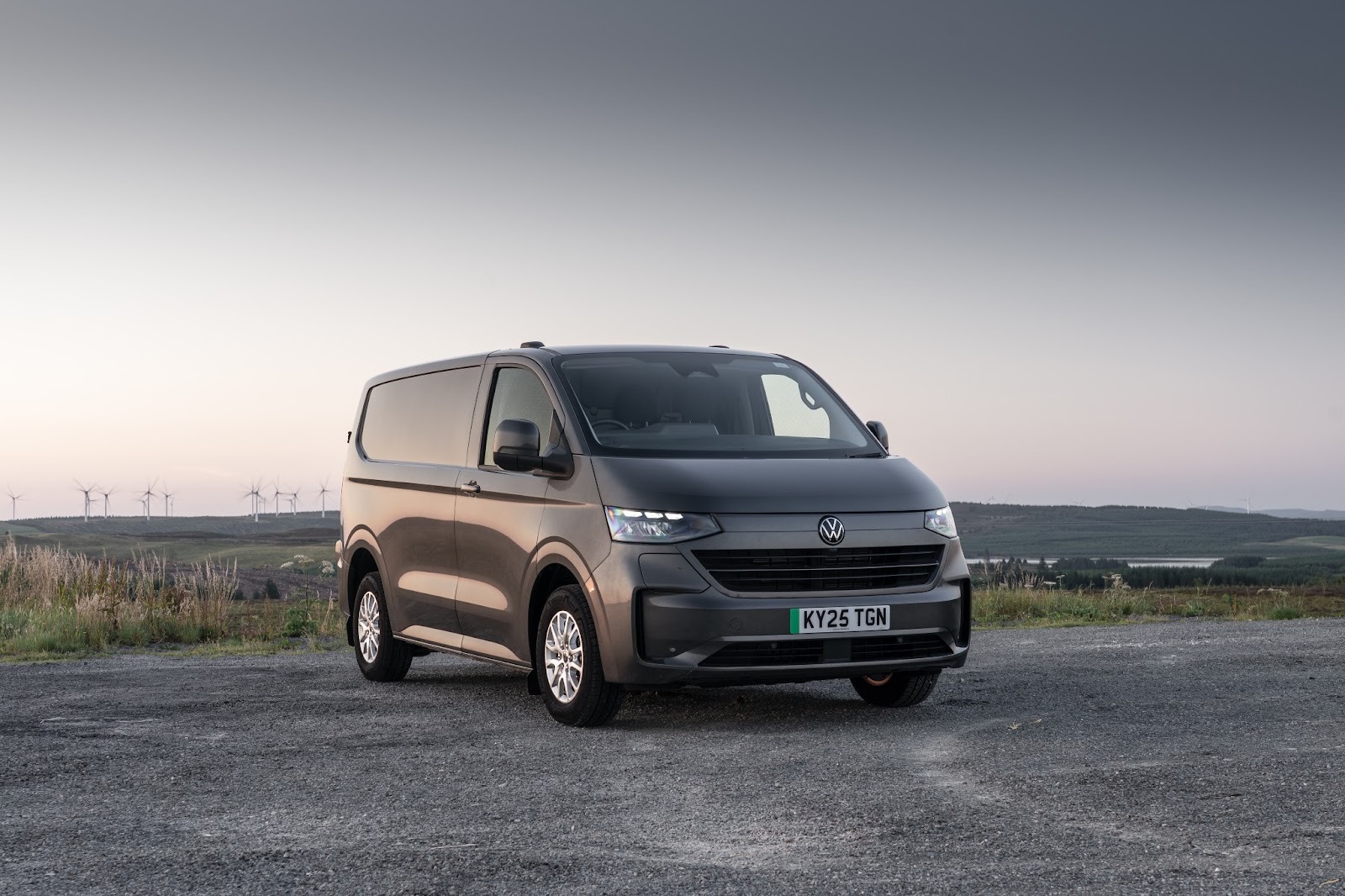
But when we talk about vehicle engines, we are thinking mainly of passenger cars. For this project, the PEM laboratory is already working on the electrification of commercial vehicles and heavy goods vehicles. A motor without magnets, which is robust and less dependent on international markets, could represent a relevant solution for these segments.
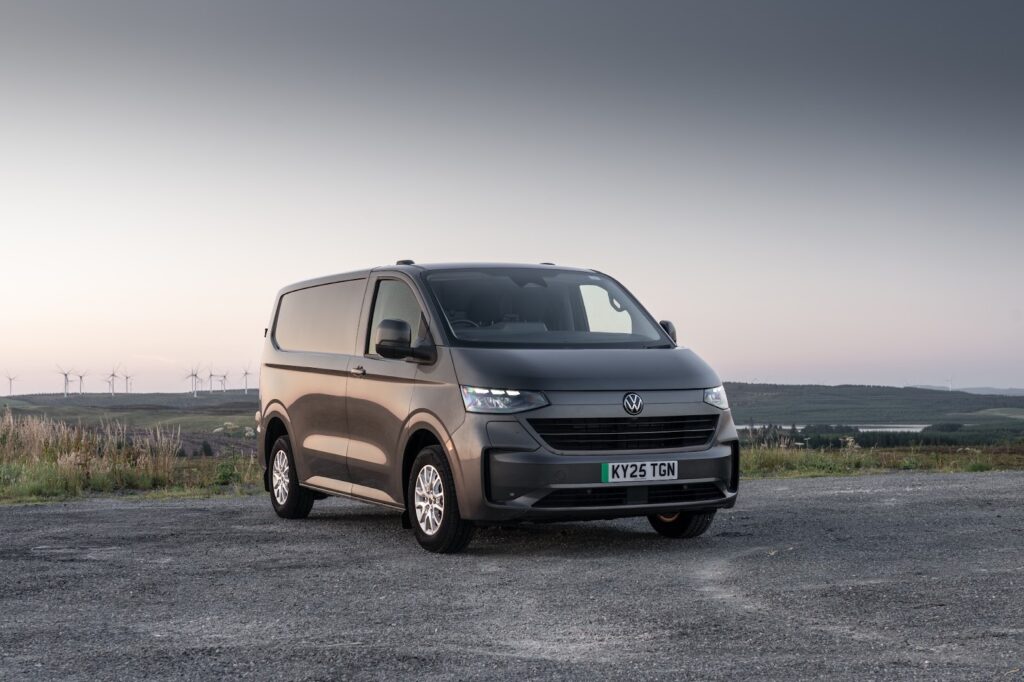
source: Volkswagen
NAFTech, a key step for the European electrical industry
RWTH Aachen is more than just a laboratory exercise. The project is part of a wider strategy already underway with FEV to develop high-performance, modular ‘rare-earth-free’ powertrains.
source: IEEE Xplore
The stakes are many: reducing material costs and securing supplies in the face of the volatility of rare earths, ensuring performance comparable to that of permanent magnet motors for light vehicles, commercial vehicles and heavy goods vehicles, preparing the industry for mass production accessible to both large groups and European SMEs, and reducing the ecological impact by limiting the need to extract and refine rare metals.
If NAFTech achieves its objectives, it could become a serious alternative to current motors, helping to make the e-motor value chain greener, more stable and more strategic for Europe.
Italy is moving towards electrification, but progress remains slow and uneven. While hybrids largely dominate the market, 100% electric vehicles are still struggling to gain mass acceptance, despite various support schemes.
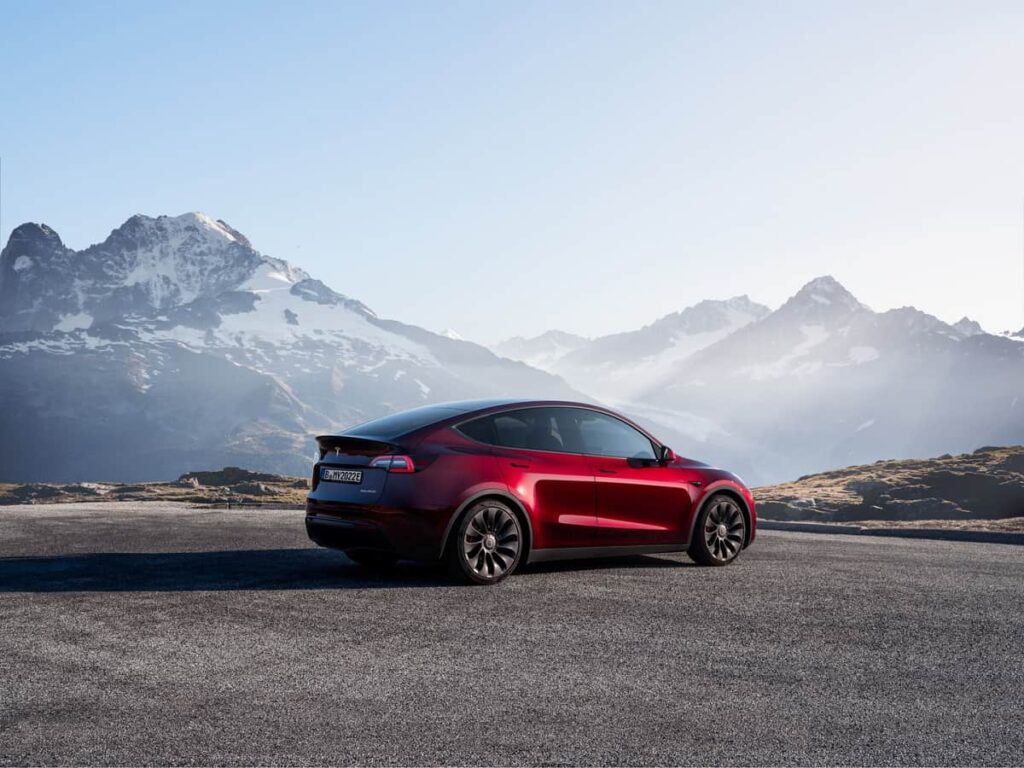
The Tesla Model Y will still be the best-selling electric car in Italy in 2025. (Credit: Tesla)
A declining car market
Overall, the Italian new car market recorded 125,826 registrations in October 2025, down 0.6% on the same month last year. For the first ten months of the year, the total stands at 1,293,366 units, down 2.7% on 2024.UNRAE forecasts that the number of registrations will close the year 2025 at around 1,520,000, down 2.5% on 2024. For 2026, projections anticipate a very slight recovery of 1.3%, but the market would still be almost 20% below the levels of six years ago.
Hybrids: the undisputed champions of the Italian market
Italy is the most ‘hybrid’ country in Europe. In October 2025, hybrid vehicles accounted for 45.5% of the market, confirming a trend that has been in place for several years. Over the first ten months of 2025, the share of hybrid vehicles stood at 44.7%. By way of comparison, over the same period in 2024, hybrids accounted for 39.9% of the market.
This dominance of hybrids can be explained by a number of factors: an electric recharging network that is still inadequate, purchase prices that are more affordable than pure electrics, and a certain cultural reluctance to completely abandon the internal combustion engine in a country where the traditional car is still deeply entrenched.
Pure electrics: modest growth
All-electric vehicles (BEVs) accounted for 5.0% of the market in October 2025, down slightly from 5.6% in September, but up from 4.0% in October 2024. In the first nine months of 2025, BEVs totalled 61,249 registrations, up 26.5% on 2024. Compared with the rest of the vehicle fleet, these figures give 100% electric vehicles a 5.2% share of the market in the current year.
This growth, while real, puts Italy well behind the European average. By way of comparison, the European Union’s market share for BEVs was around 15% over the same period. A survey by Istituto Piepoli for the ECO-Festival of Sustainable Mobility & Smart Cities in September 2025 shows that 59% of Italians say they are not interested in buying an EV in the coming year.
Although the data on the best-selling 100% electric models from January to October 2025 is partial, from January to April the best-selling models remain the same as last year: the Tesla Model Y dominates the market, followed by the Fiat 500e, the symbol of electric “Made in Italy”, then the Dacia Spring, the MG4 and the Renault Megane E-Tech. Combined with plug-in hybrids, electrified vehicles with external charging (BEV + PHEV) will account for 12.7% of the market in October 2025.
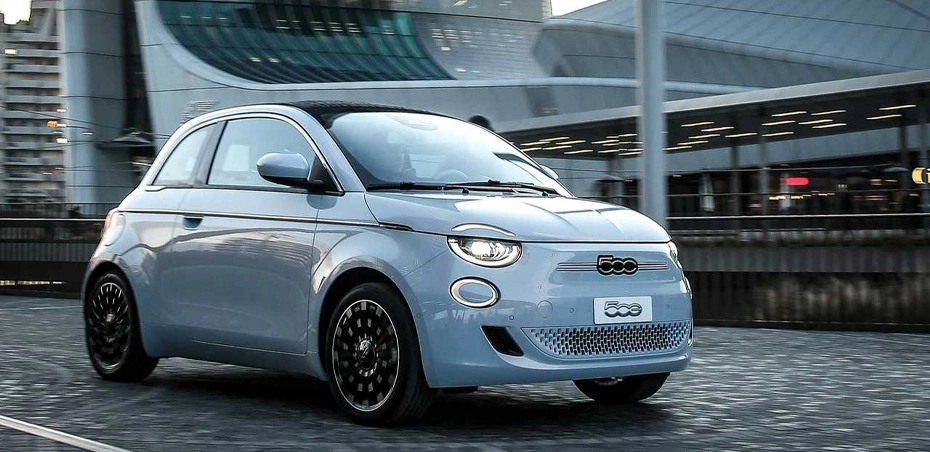
The Fiat 500e is the embodiment of electric ‘Made in Italy’ and remains a benchmark in its segment. (Credit: Fiat)
An unconvincing aid strategy
To encourage people to switch to electric cars, the Italian government has been offering a series of purchase subsidies since 2021. These schemes are often one-off and massive, but they are also, and above all, characterised by chronic instability.
The latest scheme is the spectacular October 2025 support programme. The first grants, launched in 2021, offered up to €8,000 for the purchase of a new electric vehicle, which could be combined with a scrappage bonus, subject to income conditions. Two years later, in 2023, the amounts were reduced and the eligibility criteria tightened.
A support scheme that failed to deliver, leading to a slowdown in sales. The year 2024 saw a drastic reduction in the funds allocated, prompting strong criticism from manufacturers and industry associations.
Faced with this setback, in 2025 the government reactivated an ambitious incentive plan, supported by European funds, culminating in the October programme. This latest aid programme saw no less than €597 million released thanks to the European recovery plan. How does it work? Up to €11,000 for households with an ISEE < €30,000, subject to strict conditions. The results are convincing: in less than 24 hours, more than 55,000 vouchers were distributed, depleting the funds.
Thanks to this plan, certain vehicles such as the Dacia Spring or the Leapmotor T03 have become accessible for less than €5,000, a record in Europe. It was a lightning success that highlighted the limitations of the Italian model: a prolonged waiting period on the part of Italians, rapid saturation of schemes and uncertainty for market players. To date, no structural reform has been announced to stabilise this aid, which continues to operate in fits and starts.
A recharging network that is still inadequate
Italy will have around 65,000 public charging points by 2025, according to a study by Motus-E, and no less than 22% of them will be fast charging points (over 50 kW). For a country of its size, with a road network of almost 500,000 km, Italy is below the European average in terms of the density of public charging points.
Regional disparities are also marked: more than 60% of the network is concentrated in the north of the country (Lombardy, Emilia-Romagna, Veneto), while the south remains largely under-equipped.
To offset this, the National Recovery Plan (PNRR), partly financed by European funds, provides for the installation of 21,000 additional public charging points by 2026. However, the installation of charging points on motorways, which is crucial for a country with frequent inter-regional travel, has been slow to materialise.
The main player in the Italian recharging market is Enel X Way, a subsidiary of Italian energy giant Enel. The group alone has developed more than 16,000 charging points, and is also building charging hubs for business fleets and certified green energy charging points. An obvious choice for a country where around 40% of electricity production already comes from renewable sources (solar, hydro, wind).
The Italian recharging network is still being developed, but with significant regional disparities.
Stellantis: a major player in the Italian automotive industry
The Stellantis Group is the driving force behind the automotive industry. In October 2025, the group registered 33,721 vehicles, up 5.01% on October 2024.
Fiat, the Group’s flagship brand, continues to drive the market with the Fiat 500e, the first 100% electric model to be produced by Stellantis in Italy. It is maintaining its market presence, but is facing increasingly aggressive Chinese competition in the affordable electric city car segment.
Italy produces locally: the Mirafiori plant in Turin, historically a symbol of the Italian car industry, has been transformed into a centre dedicated to electric vehicles and battery production. An industry that is doing well, and one that is enabling manufacturers to plan new models: the electric Fiat Panda and the Alfa Romeo Milano should see the light of day in 2026.
Structural challenges persist
Like every country involved in this transition, Italy faces a number of major obstacles:
Purchase price: despite temporary subsidies, electric vehicles are still considerably more expensive than their combustion or hybrid equivalents.
Dependence on public subsidies: when subsidies stop, sales immediately plummet.
Regional inequalities: the north, which is richer and has better infrastructure, is adopting electricity more quickly than the south.
Cultural reticence: Ferrari, Lamborghini and Maserati are the embodiment of thermal automotive excellence, and attachment to the traditional engine remains strong, even though these brands are developing more and more electrified vehicles.
Outlook: a slow transition
UNRAE believes that the next few months should see an increase in the market share of BEVs thanks to registrations linked to the October subsidies. But as the past has shown, this increase will be temporary, and there is a risk of a further slowdown once the effect of the subsidies has worn off.
The government’s target is to have 6 million electrified vehicles (BEV + PHEV + HEV) on the road by 2030. While hybrids will probably continue to dominate in the medium term, pure electrics are expected to grow thanks to a gradual fall in prices, improved infrastructure and European regulatory constraints.
A country in transition…
Italy is embodying the automotive transition at its own pace: hybrids dominate and have prepared the ground, pure electrics are making slow but steady progress, and infrastructure is developing unevenly. The country is not a leader in European electromobility, nor is it seeking to be. It is following a unique path, adapted to its geographical, economic and cultural constraints.
But this strategy carries a risk: that of accumulating a backlog that will be difficult to make up when European regulatory pressure increases.
South Korea has passed a symbolic milestone in 2025 by exceeding a 10% market share for electric vehicles for the first time. With 220,177 registrations over the year, the market grew by 50.1% in one year, reaching a historic market share of 13.1%. This growth can be attributed to a solid industrial ecosystem and a strong cultural appetite for new technologies.
But behind this flattering dynamic, South Korea’s transition reveals a paradox: the country, the world’s 7ᵉ largest automotive producer, boasts undeniable industrial power while maintaining domestic adoption that is still measured against the most advanced European markets.
A recent but spectacular acceleration
Until the early 2020s, electric vehicles remained marginal in South Korea. By 2023, registrations had peaked at around 120,000 units (7.9% market share). Two years on, the situation has changed radically. The acceleration was confirmed throughout 2025: by 31 August, 141,986 units had already been registered (+48.4%), with a remarkable peak of 23,000 vehicles in August alone, representing 18.1% of total sales.
This increase is part of a stable automotive market of around 1.68 million vehicles sold annually. The most notable factor is the rise in sales of “eco-vehicles” (electric, hybrid, hydrogen): 813,000 units sold, representing almost 50% of the vehicle mix. This is real momentum, but still lags behind a number of European countries where electric vehicles often have a market share in excess of 20%.
Hyundai-Kia dominant but challenged
The transition depends above all on national champions. Hyundai and Kia are among the world leaders in electric vehicles, with 488,673 units exported in 2023 (242,664 for Hyundai, 246,009 for Kia).
Hyundai is investing massively: 24,300 billion won by 2025 (€16.1 billion), of which 7.9 billion will be devoted to EV production and 7.6 billion to R&D (batteries, hydrogen, autonomous driving, AI). The goal is to have 1.51 million EVs produced annually in Korea by 2030, and 3.6 million worldwide.
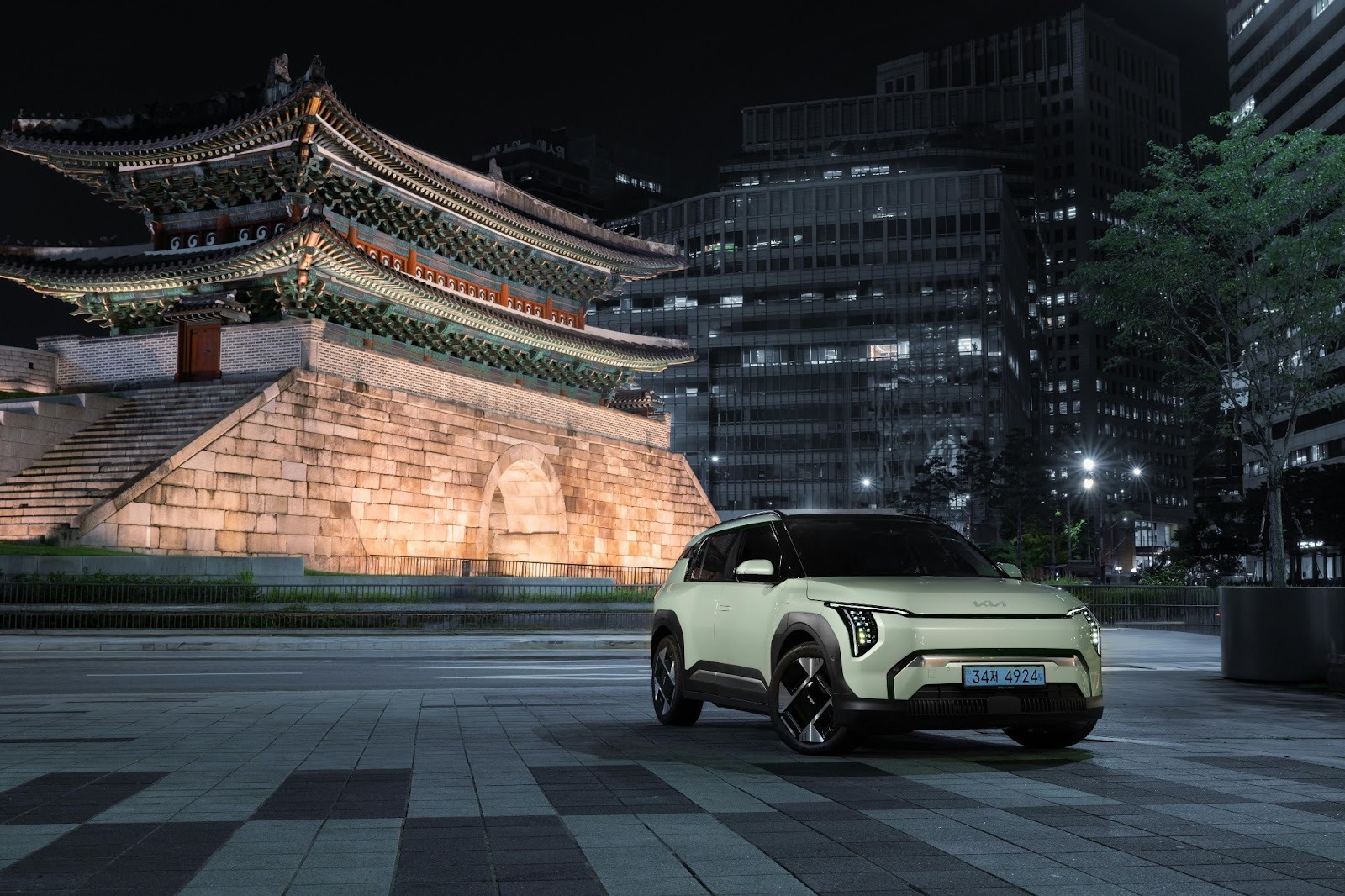
However, on their domestic market, their domination is less overwhelming than expected. In 2025, Kia will lead the way with 60,609 units (27% of the EV market), immediately followed by Tesla with 59,893 units (27%), including 50,397 Model Ys (+169.2%). Hyundai follows with 55,461 units (25%). Between them, they account for 80% of the national market.
The real upheaval comes from Chinese manufacturers: with 74,728 units sold, they will capture 42% of the EV market in 2025, compared with just 25% in 2022. This meteoric rise is reshuffling the deck and undermining the historical balance in favour of national brands.
A pragmatic public policy
The country has a well-honed strategy for transforming its vehicle fleet. Unlike some European countries, South Korea is opting for a gradual approach rather than radical bans. The government is counting on subsidies of up to 14 million won per vehicle, with the aim of reducing the effective cost by 10 million won over four years, supplemented by substantial tax exemptions.
source: Ahn Young-Joon
The national plan targets a 25% market share for EVs by 2030, with annual growth forecasts (CAGR) of between 28.61% and 30.75% until 2035, putting the market at $266 billion.
Paradoxically, imports are exploding: in August 2025, they accounted for 40% of the EV market (up 100% on 2024).
Recharging: rapid progress, persistent challenges
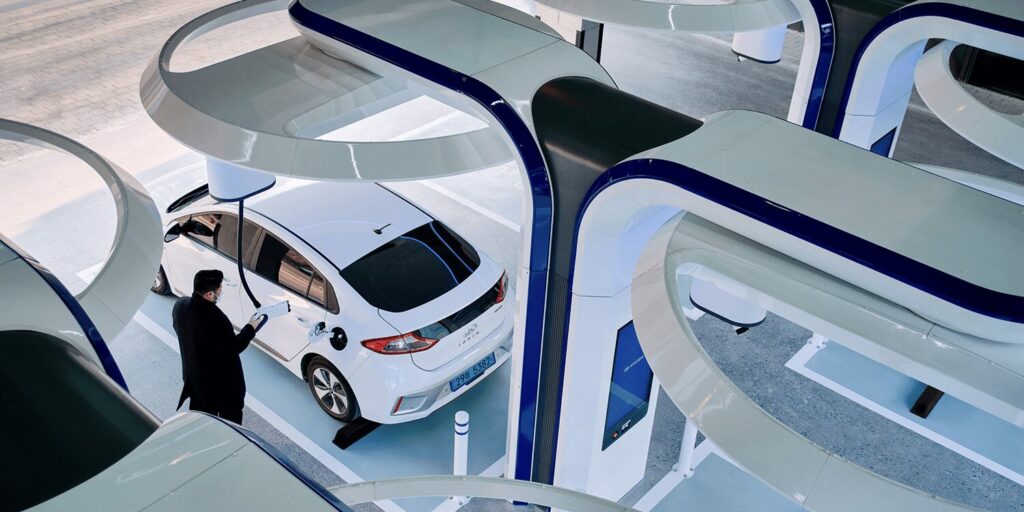
The recharging network in South Korea is expanding rapidly. Although the figures for 2025 have not yet been revealed, the growth seen in previous years is indicative. In 2024, more than 405,000 charging points were installed, surpassing the 394,000 at the end of 2023 and the 288,000 in 2022, representing an annual growth rate of 40%, driven by national operators.
Of these, around 10 to 12% are fast chargers (i.e. around 40,000 to 48,000 units, compared with 21,000 in 2023), which have become the norm on motorways and in major cities where 82% of the population lives, such as Seoul, with its plans for 220,000 streetlight charging points by 2026.
The world-record ratio of 1.7 EVs per public charging point (compared with a global average of 10) reflects this density, optimised by “smart charging” solutions integrated by the major players to manage peaks in demand.
However, high levels of urbanisation complicate the equation. In apartment blocks, which dominate the residential landscape, access to an individual charging point remains problematic: only 94,000 domestic charging points will be available by the end of 2024 (compared with 400,000 public ones), putting the brakes on adoption by a significant proportion of the population.
Rural areas, which are a minority in terms of population but extensive, face coverage challenges despite well-equipped motorways; technical breakdowns and maintenance remain weak points.
Seoul is aiming for an additional 140,000 points by 2026 for its 4 million vehicles, but the residential mismatch still limits the potential despite a world-leading public network.
An energy mix in transition
South Korea’s energy mix remains heavily dependent on coal and gas, limiting the real environmental impact of electric vehicles. However, the country is betting on the development of nuclear power and renewable energies to improve this balance in the medium term.
At the same time, South Korea is establishing itself as a strategic pillar in the global battery chain. LG Energy Solution, SK On and Samsung SDI play a central role in international supply, positioning the country as a “global battery hub” and a technological leader in the sector.
Barriers to adoption
As elsewhere in the world, a number of structural obstacles remain. In South Korea, the high purchase price despite subsidies remains a major obstacle, as does the impossibility of shared charging and growing commercial pressure from Chinese imports.
The Korean paradox
The Asian country produces 4.1 million vehicles a year. Exports of eco-vehicles are worth $25.8 billion (+11%), including $14.8 billion for hybrids alone (+30%), testifying to the industry’s international competitiveness.
South Korea is therefore exporting massively, while domestic adoption is growing steadily, but is still limited to 13.1%, well below the 20% figure seen in Europe.
Massive investment is continuing, infrastructure is progressing and demand is growing steadily. Professional fleets and leasing are promising levers. It remains to be seen whether this industrial power will translate into a sustainable shift in the domestic market between now and 2030-2035, reconciling the country with its status as world leader.
South Korea has passed a symbolic milestone in 2025 by exceeding a 10% market share for electric vehicles for the first time. With 220,177 registrations over the year, the market grew by 50.1% in one year, reaching a historic market share of 13.1%. This growth can be attributed to a solid industrial ecosystem and a strong cultural appetite for new technologies.
But behind this flattering dynamic, South Korea’s transition reveals a paradox: the country, the world’s 7ᵉ largest automotive producer, boasts undeniable industrial power while maintaining domestic adoption that is still measured against the most advanced European markets.
A recent but spectacular acceleration
Until the early 2020s, electric vehicles remained marginal in South Korea. By 2023, registrations had peaked at around 120,000 units (7.9% market share). Two years on, the situation has changed radically. The acceleration was confirmed throughout 2025: by 31 August, 141,986 units had already been registered (+48.4%), with a remarkable peak of 23,000 vehicles in August alone, representing 18.1% of total sales.
This increase is part of a stable automotive market of around 1.68 million vehicles sold annually. The most notable factor is the rise in sales of “eco-vehicles” (electric, hybrid, hydrogen): 813,000 units sold, representing almost 50% of the vehicle mix. This is real momentum, but still lags behind a number of European countries where electric vehicles often have a market share in excess of 20%.
Hyundai-Kia dominant but challenged
The transition depends above all on national champions. Hyundai and Kia are among the world leaders in electric vehicles, with 488,673 units exported in 2023 (242,664 for Hyundai, 246,009 for Kia).
Hyundai is investing massively: 24,300 billion won by 2025 (€16.1 billion), of which 7.9 billion will be devoted to EV production and 7.6 billion to R&D (batteries, hydrogen, autonomous driving, AI). The goal is to have 1.51 million EVs produced annually in Korea by 2030, and 3.6 million worldwide.
However, on their domestic market, their domination is less overwhelming than expected. In 2025, Kia will lead the way with 60,609 units (27% of the EV market), immediately followed by Tesla with 59,893 units (27%), including 50,397 Model Ys (+169.2%). Hyundai follows with 55,461 units (25%). Between them, they account for 80% of the national market.
The real upheaval comes from Chinese manufacturers: with 74,728 units sold, they will capture 42% of the EV market in 2025, compared with just 25% in 2022. This meteoric rise is reshuffling the deck and undermining the historical balance in favour of national brands.
A pragmatic public policy
The country has a well-honed strategy for transforming its vehicle fleet. Unlike some European countries, South Korea is opting for a gradual approach rather than radical bans. The government is counting on subsidies of up to 14 million won per vehicle, with the aim of reducing the effective cost by 10 million won over four years, supplemented by substantial tax exemptions.
source: Ahn Young-Joon
The national plan targets a 25% market share for EVs by 2030, with annual growth forecasts (CAGR) of between 28.61% and 30.75% until 2035, putting the market at $266 billion.
Paradoxically, imports are exploding: in August 2025, they accounted for 40% of the EV market (up 100% on 2024).
Recharging: rapid progress, persistent challenges
The recharging network in South Korea is expanding rapidly. Although the figures for 2025 have not yet been revealed, the growth seen in previous years is indicative. In 2024, more than 405,000 charging points were installed, surpassing the 394,000 at the end of 2023 and the 288,000 in 2022, representing an annual growth rate of 40%, driven by national operators.
Of these, around 10 to 12% are fast chargers (i.e. around 40,000 to 48,000 units, compared with 21,000 in 2023), which have become the norm on motorways and in major cities where 82% of the population lives, such as Seoul, with its plans for 220,000 streetlight charging points by 2026.
The world-record ratio of 1.7 EVs per public charging point (compared with a global average of 10) reflects this density, optimised by “smart charging” solutions integrated by the major players to manage peaks in demand.
However, high levels of urbanisation complicate the equation. In apartment blocks, which dominate the residential landscape, access to an individual charging point remains problematic: only 94,000 domestic charging points will be available by the end of 2024 (compared with 400,000 public ones), putting the brakes on adoption by a significant proportion of the population.
Rural areas, which are a minority in terms of population but extensive, face coverage challenges despite well-equipped motorways; technical breakdowns and maintenance remain weak points.
Seoul is aiming for an additional 140,000 points by 2026 for its 4 million vehicles, but the residential mismatch still limits the potential despite a world-leading public network.
An energy mix in transition
South Korea’s energy mix remains heavily dependent on coal and gas, limiting the real environmental impact of electric vehicles. However, the country is betting on the development of nuclear power and renewable energies to improve this balance in the medium term.
At the same time, South Korea is establishing itself as a strategic pillar in the global battery chain. LG Energy Solution, SK On and Samsung SDI play a central role in international supply, positioning the country as a “global battery hub” and a technological leader in the sector.
Barriers to adoption
As elsewhere in the world, a number of structural obstacles remain. In South Korea, the high purchase price despite subsidies remains a major obstacle, as does the impossibility of shared charging and growing commercial pressure from Chinese imports.
The Korean paradox
The Asian country produces 4.1 million vehicles a year. Exports of eco-vehicles are worth $25.8 billion (+11%), including $14.8 billion for hybrids alone (+30%), testifying to the industry’s international competitiveness.
South Korea is therefore exporting massively, while domestic adoption is growing steadily, but is still limited to 13.1%, well below the 20% figure seen in Europe.
Massive investment is continuing, infrastructure is progressing and demand is growing steadily. Professional fleets and leasing are promising levers. It remains to be seen whether this industrial power will translate into a sustainable shift in the domestic market between now and 2030-2035, reconciling the country with its status as world leader.
Venezuela has the world’s largest proven oil reserves, but its car market is on the verge of collapse: 20,000 to 30,000 new vehicles were registered in 2025, compared with almost 500,000 before 2014. Electromobility remains marginal, with around 0.1% of the total car fleet, or around 6,000 EVs at the end of 2024. At the beginning of 2026, the capture of Nicolás Maduro by the United States reshuffles the deck and opens up new scenarios: possible lifting of certain sanctions, imports of EVs. Against this shifting backdrop, the question remains: is electromobility viable or just a green showcase?
source: Wikipedia
A slow market
The Venezuelan car market has collapsed since 2014, following a major economic and social crisis. Prior to that date, nearly 500,000 vehicles were registered each year. The combination of falling local production, imports blocked by strict exchange controls (CADIVI) and economic sanctions has resulted in new car sales falling to a few thousand units a year.
Rising inflation (+200% by 2025) and the collapse in purchasing power have made it almost impossible for the average citizen to buy a new car, while political instability and massive demonstrations against the Maduro government have made matters worse.
Between 2023 and 2026, small EV initiatives emerged: pilot tests of micro EVs by Corpoelec and PDVSA, and grey imports from China and Colombia. By the end of 2024, the electric vehicle fleet is estimated at around 6,000 units.
However, out of the 25,000 vehicles sold in 2025, new EVs will account for just 0.4% of the market. These sales are concentrated among government fleets and the elite in Caracas, the capital of this country of 916,445 km². For the average citizen, the cost of an EV is still astronomical compared with the average monthly salary of around USD 195 to 200, and the fact that petrol is virtually free (USD 0.01/litre) continues to put the brakes on any mass adoption.
The EV market: symbolic rather than strategic
The electric vehicle fleet remains marginal. Fewer than 100 new EVs will be sold in 2025, with an estimated cumulative fleet of between 6,000 and 10,000 vehicles if all grey registrations are taken into account (purchased abroad – China, Colombia, Mexico, United States – then imported by a private individual, an independent dealer or an intermediary). The BEV/PHEV split is around 90/10%, with hybrids still very rare.
Compared with its South American neighbours, Venezuela has the worst record: in Brazil, the share of EVs is 5%, in Chile 3%, while Venezuela is stagnating at less than 0.1%.
Despite the low number of sales, official data show which EV models will be most popular in Venezuela in 2025:
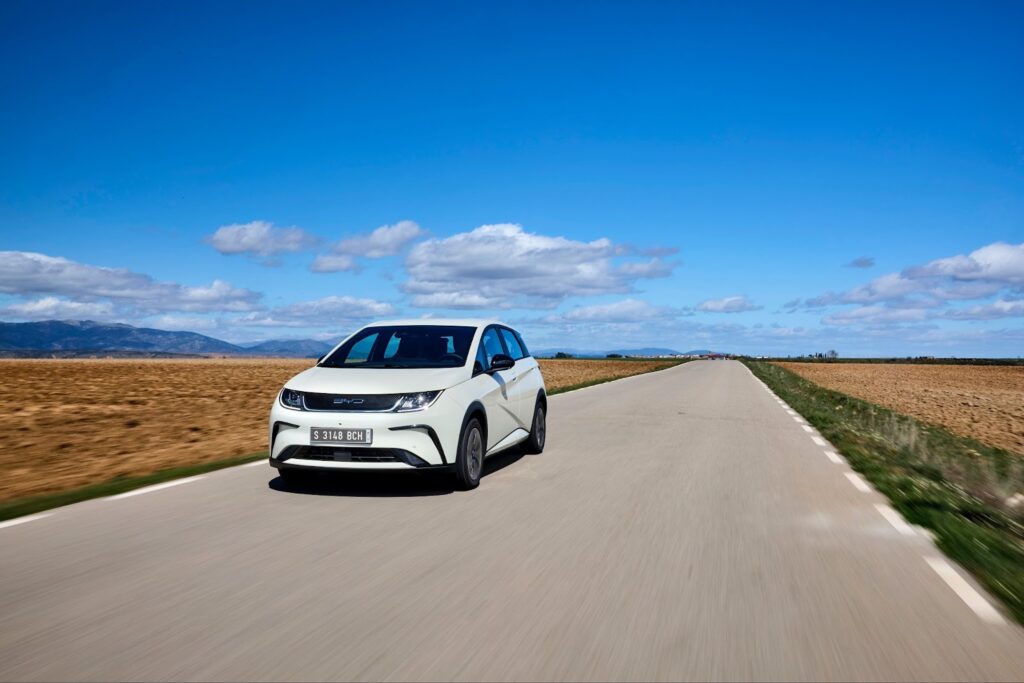
BYD (Seagull/Dolphin): around 50 units, mainly for Corpoelec/PDVSA fleets, priced at USD 15,000 to 20,000.
Tesla Model 3/Y: around 20 units reserved for the elite of Caracas, price > USD 50,000.
ZEV Motors: few units, used in particular for urban tests in Maracay, price ~ USD 10,000.
source : BYD
Players and industrial offer
On the industrial front, Venezuela has no battery production facilities. ZEV Motors assembles Chinese kits (City One), with a theoretical capacity of 500 units per year, but fewer than 50 vehicles are actually produced each year.
The foreign manufacturers present are limited: BYD and MG via Corpoelec, Tesla imported through grey channels from the United States or Colombia. Korean giants Hyundai and Kia are absent, despite their presence in Latin America.
Public policy and taxation: green rhetoric, oil reality
From a political point of view, there are no subsidies or bonuses for EVs. What’s more, almost free petrol remains the No. 1 cultural and economic brake. In 2024 and 2025, President Maduro made numerous public statements at international forums (COP29, the United Nations General Assembly and other summits), promoting a “transition to alternative energies” and “post-oil diversification”.
In fact, the Venezuelan economy remains dominated by oil: in 2024, the state-owned company PDVSA exported an average of more than 800,000 barrels per day, consolidating its position on Asian markets and beyond. These exports, which make up an essential part of the country’s income, remained at very high levels in 2025.
source: PDVSA
As for actions to democratise EVs in Venezuela, Corpoelec has tested 50 EVs in 2023 and PDVSA 10 Prius hybrids, but there is no target figure for 2035 or 2040. Customs exemptions favour the elite (Tesla), while taxes on conventional EV imports are as high as 100%. The policy remains focused on Caracas and Maracay, with oil-rich regions such as Maracaibo largely ignored.
Charging infrastructure: the bottleneck
The main drawback is that Venezuela has fewer than 20 public charging points, mainly in luxury hotels in Caracas. The ratio is one for every 300 EVs, an absurd figure for even an embryonic market.
Most domestic recharging is done on 110 V/220 V. Adaptation is essential, as most of these installations are equipped with back-up generators, due to power blackouts that can last up to 12 hours a day.
Innovative stations remain experimental: Swing Energy is testing solar micro-stations. There is no DC fast charging or smart charging, and the energy mix (hydro 60% unstable + gas/oil 40%) makes the CO₂ balance of an EV unfavourable in the local context.
Obstacles, paradoxes and challenges
As in many countries, a number of challenges persist, further delaying the adoption of zero-emission vehicles. The first is cost, which exceeds 1,500 times the average wage, widening inequalities: the elites drive Tesla cars, while the majority travel by motorbike or internal combustion engine. Added to this are poor roads, the scarcity of new tyres, energy blackouts and free petrol, all of which reduce the incentive to change.
Venezuela is still the world’s biggest holder of oil reserves, but its electricity grid is regularly failing. Green ambitions remain largely symbolic, dependent on China for EVs and constrained by US sanctions. Scaling up Tesla or BYD therefore remains illusory in the short term.
A political turning point with possible consequences for electromobility
The beginning of 2026 marked a political earthquake in Venezuela, likely to profoundly alter the country’s economic and industrial context, including electromobility. On 3 January 2026, Venezuelan President Nicolás Maduro was captured by the US armed forces and transferred to New York to face federal charges including narco-terrorism and drug trafficking. This event ushered in a period of major uncertainty for Caracas.
source : CNN
If this situation were to lead to an easing of US sanctions, imports of Chinese EVs (BYD) and Tesla could be unblocked, enabling an immediate micro take-off (500 to 1,000 units in 2026, compared with less than 200 previously).
Under external supervision, strategic partnerships between local and foreign companies, and even industrial projects involving lithium and batteries, could be envisaged. Finally, pressure to rehabilitate the electricity grid could reduce blackouts, increase the number of public charging points and improve EV charging.
This is not a prediction, but a potential scenario in which the policy could profoundly transform the country’s automotive landscape.
Outlook and scenarios for 2030
In the short term, if the structural imbalances persist, the fleet of electric vehicles could remain very limited, at less than a few hundred units, concentrated in Caracas and certain institutional fleets.
Conversely, a change in the political and economic framework, in particular a gradual normalisation of trade and investment, could pave the way for a more dynamic scenario: partial lifting of sanctions, the return of Asian industrial players, or even the establishment of local assembly plants.
Failing such an upheaval on several scales, Venezuela could follow an alternative, more informal path, inspired by other countries: electric and solar retrofitting of motorbikes and micro-vehicles.
On 17 February 2026, Uber Technologies announced a major investment of more than $100 million to develop dedicated charging infrastructure for its future fleet of vehicles, including autonomous robotaxis. This initiative is part of a global strategy to support both the electrification of its fleet and the transition to large-scale autonomous transport services.
source: Le Parisien Matin
Objective: recharging infrastructure dedicated to robotaxis and electric fleets
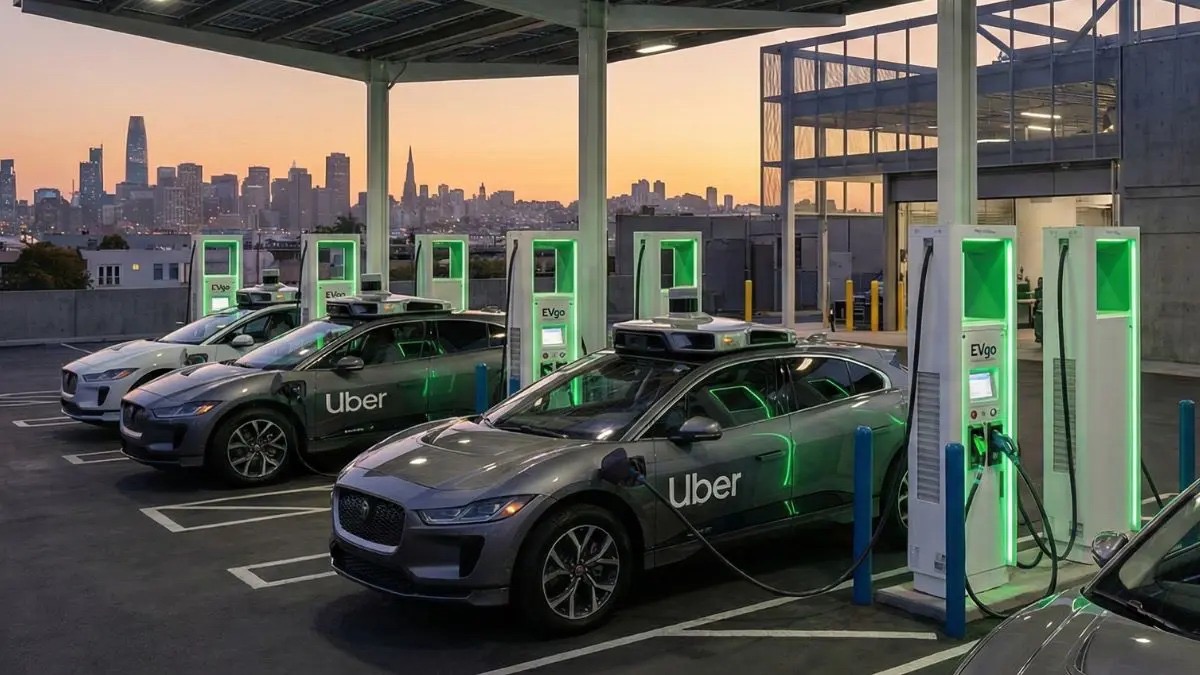
“Cities can only fully exploit the promise of autonomy and electrification if the right charging infrastructure is built on a large scale,” said Pradeep Parameswaran, global head of mobility at Uber. This is where Uber’s investment makes sense. Specifically, it aims to finance the construction of fast-charging stations within its autonomous vehicle depots, logistics hubs where its future robotaxis will be maintained, recharged and prepared for traffic. Uber is currently running such operations in Atlanta and Austin as part of its partnership with Waymo, as well as in Abu Dhabi and Dubai for WeRide vehicles. These stations should also be located in strategic urban locations, particularly in large metropolitan areas.
source : Uber
An announcement that seems to have convinced, since the company’s shares rose by 2.9% following the publication of a press release explaining that it will concentrate on building these new high-capacity charging centres, starting with the San Francisco Bay area, Los Angeles and Dallas, before extending the programme internationally in the months and years to come.
Partnerships with global recharging operators
To speed up the expansion of these infrastructures, Uber has signed collaboration agreements with several recharging operators around the world. Among the players involved are networks that are already well established in fast charging:
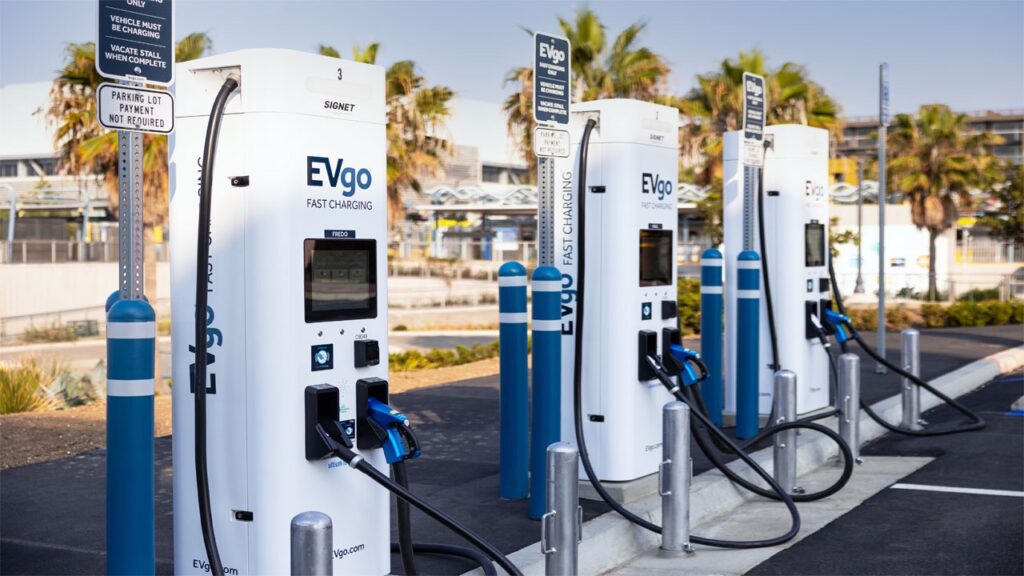
EVgo in the United States (New York, Los Angeles, San Francisco, Boston),
Electra in Europe (with facilities in Paris and Madrid),
Hubber and Ionity in the UK (London).
These partnerships mean that hundreds of new chargers can be deployed, reinforcing the infrastructure where demand is strongest.
source : EVgo
A dual strategy: driver support and autonomous transition
The investment is not limited to autonomous robotaxis. Uber also wants to optimise the infrastructure for existing drivers, many of whom use conventional (non-autonomous) electric vehicles to meet the demand for ridesharing.
To achieve this, the company is committed, for example, to offering incentives to partners such as EVgo to install kiosks in areas where drivers work or live. These districts are densely populated areas, frequent pick-up zones, airports or strategic locations for the VTC business. The American giant’s strength lies in its database. It uses this to direct its deployments towards areas of high demand.
source : Lucid
Uber and the race for autonomous mobility
And it’s no coincidence that we’re talking about robotaxis. Uber’s involvement in charging infrastructure is part of a wider strategy to transform towards large-scale autonomous services. The company is already working with more than 20 international partners to develop, test and deploy these technologies, and is at the forefront of a competitive market that includes Waymo, Tesla, WeRide and other major players in the sector.
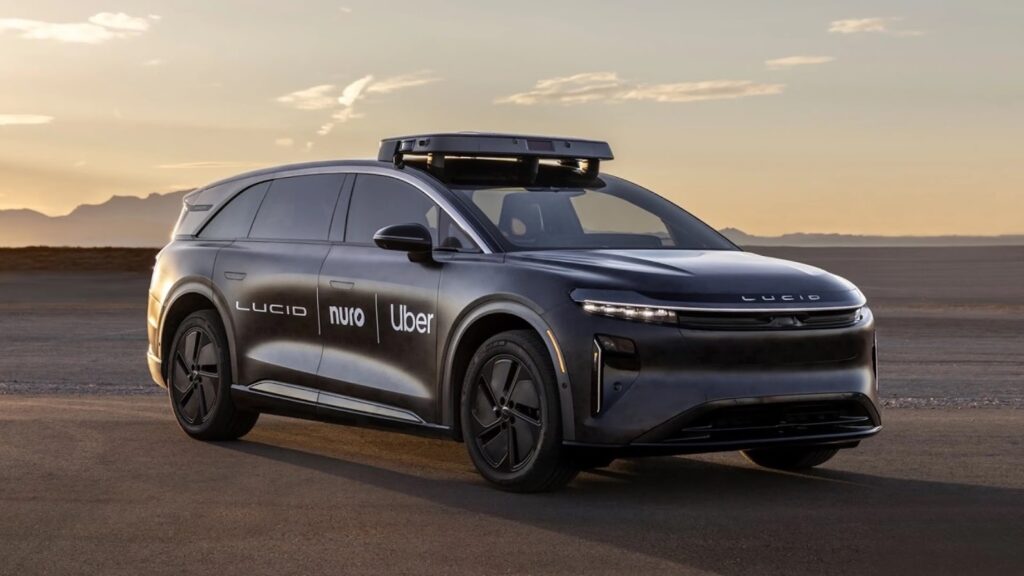
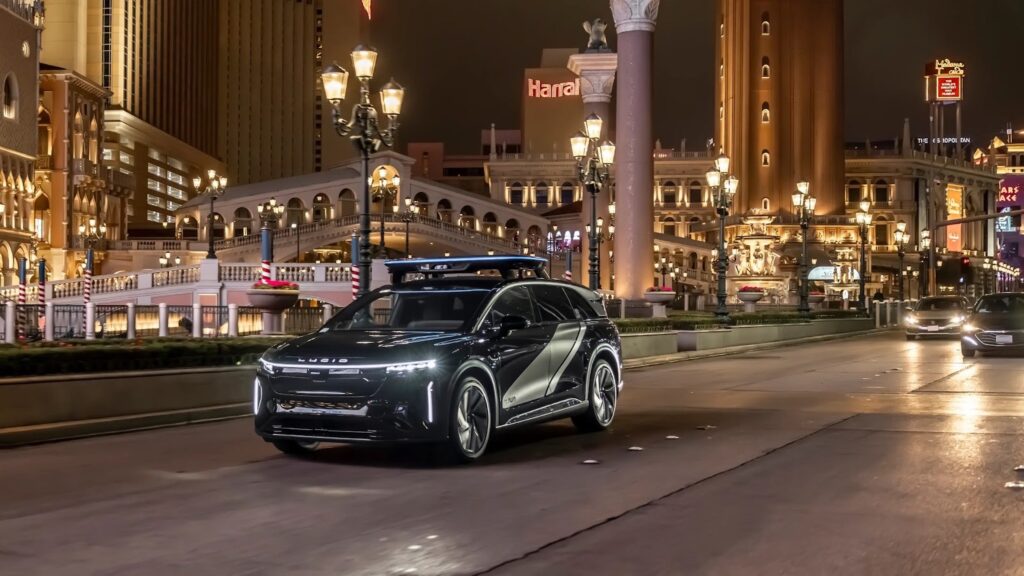
In concrete terms, Uber’s future robotaxi will be based on the Lucid Motors Gravity, a top-of-the-range electric SUV officially presented at CES 2026 in Las Vegas. This strategic programme is based on a three-way partnership between Uber, Lucid and Nuro, with the integration of autonomous driving software based on the Nvidia platform.
source : Lucid
The target is ambitious: 20,000 units deployed over six years, with the first operational launch planned for San Francisco in the fourth quarter of 2026. It is with this development project in mind that this $100 million investment in charging infrastructure has been raised, specifically for these future autonomous Lucid Gravity vehicles.
The IONITY European ultra-fast charging network has just announced a major step in the deployment of its infrastructure: the activation of its first Alpitronic HYC1000 “megawatt” charging systems in France, while reaching 6,000 high-power charging points (HPC) across Europe. This is the perfect response to the growing number of electric vehicles on the road.
source: IONITY
Alpitronic HYC1000 “megawatt”: powerful and flexible charging technology
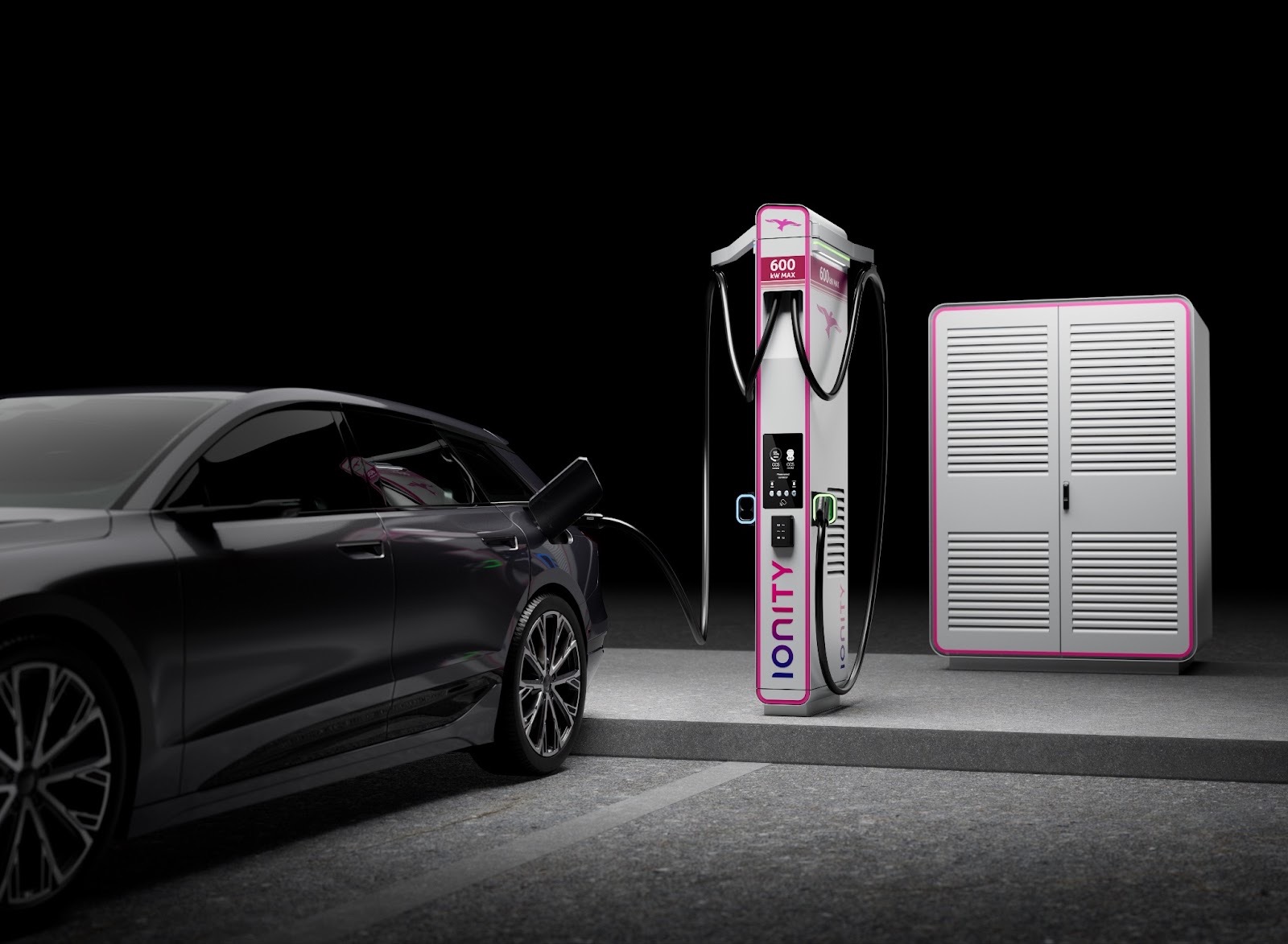
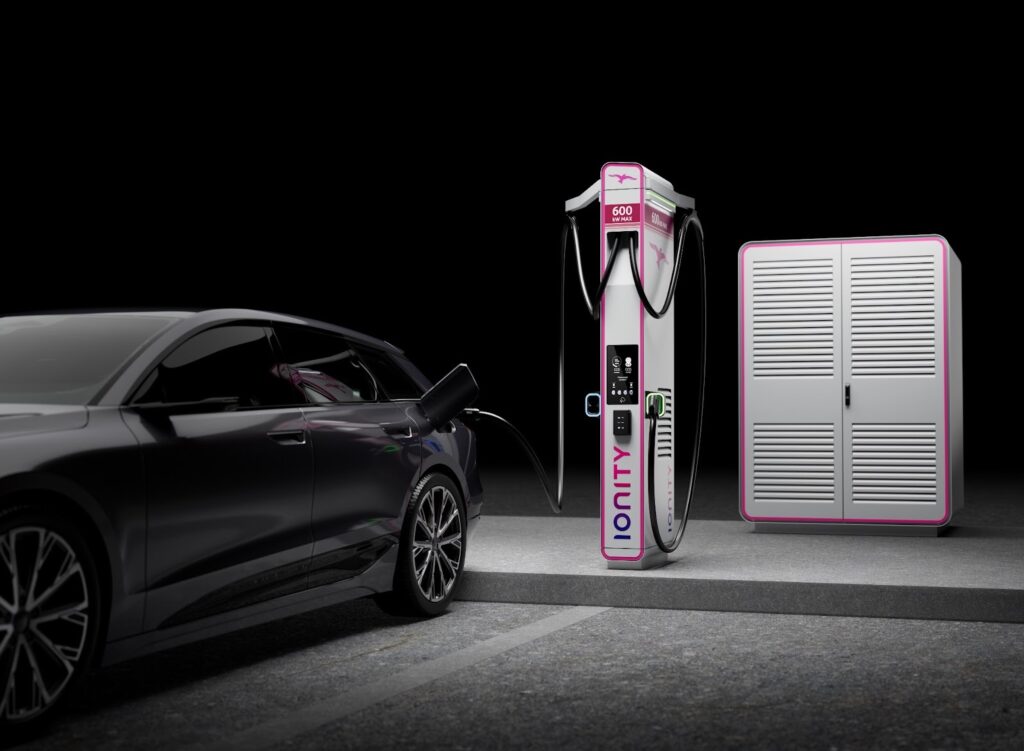
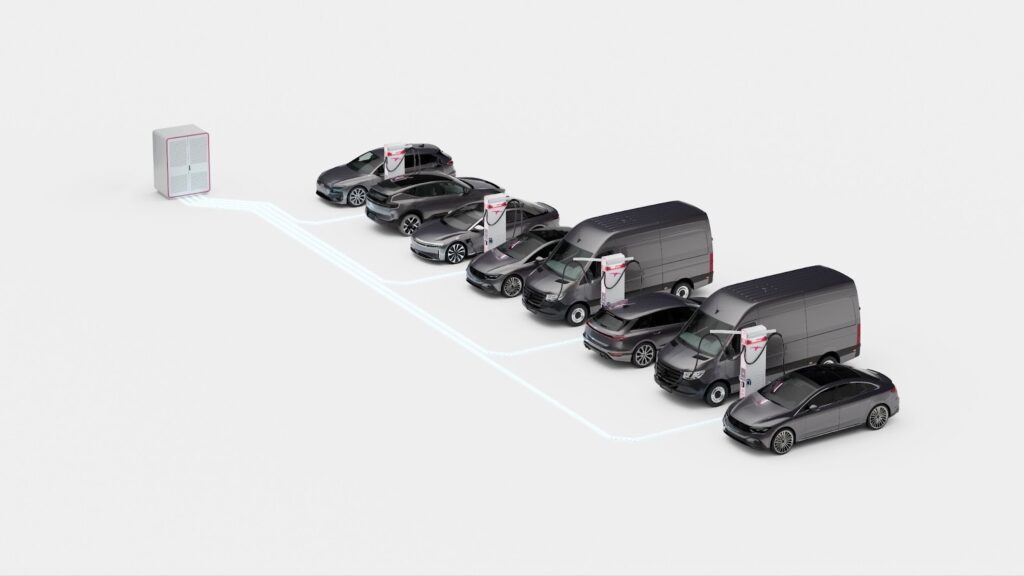
If this complex name didn’t mean anything to you, it does now, because it has just arrived in France. The HYC1000 system, developed by Alpitronic, an Italian manufacturer specialising in high-power recharging solutions, is a so-called “megawatt” recharging architecture. Its principle is based on a central electrical cabinet with a total power of 1,000 kW, capable of intelligently distributing energy between several connected charging points.
In practical terms, this is what the system represents:
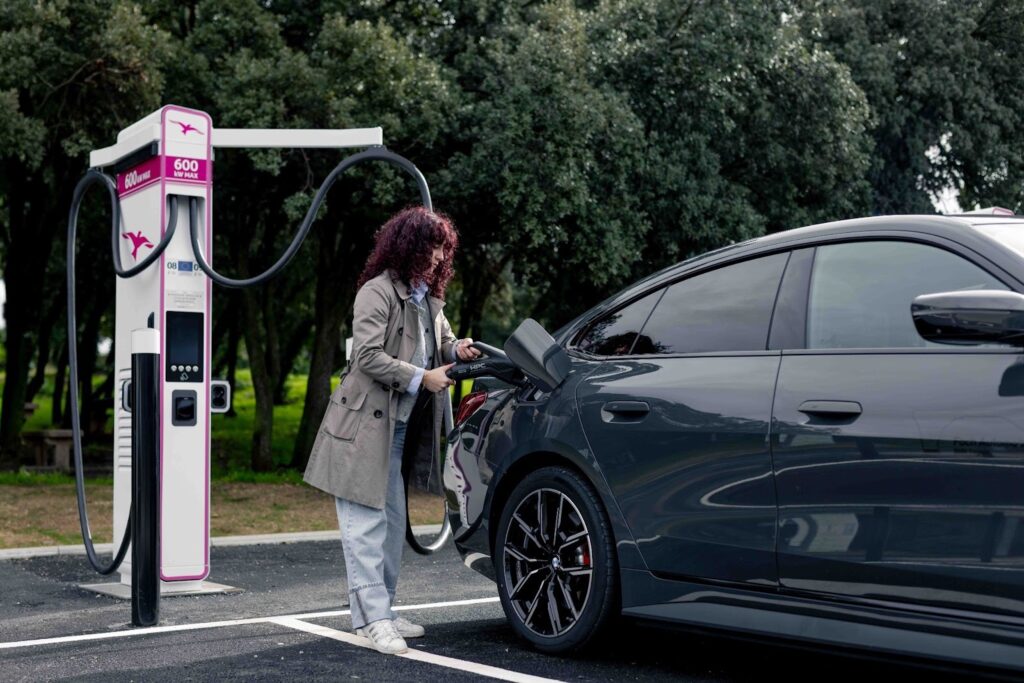
When a single vehicle is connected, the system can provide up to 600 kW of electrical recharging power.
With this power, a compatible electric vehicle can recover up to around 300 km of range in less than eight minutes via a standard CCS2 connector, according to Ionity.
What’s more, if several EVs are charging simultaneously, the power is distributed intelligently between the charge points to optimise flows.
source: IONITY
This technology represents a significant step forward compared with conventional HPC charging points (often up to 350-400 kW), offering a real prospect of ultra-fast charging on motorways, close to the time it takes drivers to stop for a break.
And its arrival in France is not just a test phase. In fact, Jeroen van Tilburg (CEO of IONITY) stated in a press release that the Alpitronic HYC1000: “has undergone extensive testing at IONITY’s dedicated test centre near Munich, to ensure its long-term performance, compatibility and reliability in real-life conditions”.
IONITY in France and Europe: a rapidly expanding network
Since its launch in 2017, IONITY has established itself as one of Europe’s leading ultra-fast charging networks for electric vehicles. The brand is backed by a number of major carmakers, including BMW, Mercedes-Benz, Audi, Porsche, Ford and Hyundai-Kia.
The other major piece of information revealed in the press release is that, simultaneously, on the European continent, the network has now reached a total of 6,000 ultra-fast charging points in 24 countries.
In France, the operator has developed a dense network around motorways, in partnership with VINCI Autoroutes and Avia Thévenin & Ducrot:
IONITY currently operates 60 sites deployed with VINCI Autoroutes and 15 with Avia Thévenin & Ducrot Autoroutes on French motorway networks.
The Alpitronic HYC1000 terminals recently installed include :
At the IONITY Sorgues station, on the A7 motorway (a strategic route linking northern Europe to the Mediterranean).
But also on the IONITY Maison-Dieu website.
source: IONITY
This location is not insignificant: the A7 is one of the busiest routes in France, particularly during the peak holiday season.
Faced with growing demand and increasing waiting times
The arrival of these new charging points is a response to the growing demand for recharging power, as the number of electric vehicles in France in 2026 continues to grow rapidly:
The total number of 100% electric vehicles on the road by the end of 2025 will be 1,663,365, according to the European Alternative Fuels Observatory. The number of plug-in hybrids continues to grow, with around 850,000 units, giving a total of 2.5 million electrified vehicles on the road. Combining these two figures, we arrive at a market share for new EVs (BEV + PHEV) of 26.7% in 2025, of which 20% for 100% electric vehicles alone.
source : Renault
This rapid growth means that waiting times at HPC chargepoints can be long, especially on the busiest roads. The Alpitronic HYC1000 chargepoints meet this need by reducing charging times and increasing capacity.
Looking ahead: a key step for European electromobility
With this press release announcing the brand’s progress, IONITY is anticipating future recharging needs, while consolidating its position as the benchmark network for long-distance electric mobility in Europe. These charging points will meet the growing demand of millions of French and European drivers, while preparing the infrastructure for the next generation of ultra-high-power electric vehicles.
On 19 February 2026, Renault Group presented its financial results for 2025 during an online conference call with journalists and analysts. The message from François Provost, CEO, and Duncan Minto, CFO, was clear: 2025 remains a solid year in a market under pressure, but 2026 promises to be more cautious, due to the price war and industrial reorganisation.
source : Renault
A solid 2025 performance in a deteriorated environment
François Provost began by emphasising the context: 2025 is part of a more difficult global market, marked by increased competitive pressure, particularly in the electric segment, where Asian carmakers are gaining more and more ground. “The 2025 results, against a difficult market backdrop, demonstrate the commitment of our teams to delivering a consistent performance of the highest order in the automotive industry”, he said.
In financial terms, the Renault Group still expects an operating margin of 6.3% in 2025, down on the record level of 7.6% achieved in 2024. In terms of operating profit, the CEO has announced a year-on-year decline of around 14.8%. Finally, in terms of sales, the Group sold 2,336,807 vehicles worldwide in 2025, up 3.2% on the 2,264,815 units sold in 2024. Nevertheless, the Group remains one of the most profitable generalist carmakers in Europe.
source : Renault
The CEO of Renault Group described a particularly tense environment:
Intensification of price wars on electric vehicles, with Asian players on the offensive.
Slowdown in the European retail market.
Underperformance in the light commercial vehicle (LCV) segment.
Against this backdrop, Renault is highlighting the resilience of its post-restructuring model: reducing fixed costs, refocusing the range and ramping up platforms dedicated to electric vehicles.
2026: a cautious approach and lower margins expected
And if 2025 has been more discreet, this may also be the case for 2026. Renault Group executives have been much more cautious for the current year.
Renault anticipates an operating margin of around 5.5%, down on 2025. This is justified by the Group, which cites an environment that remains “complex”, marked by international economic uncertainty and ever-increasing pressure on prices. But while this estimate gives us an idea of how the brand is approaching this year, we will have to wait for the new strategic plan, due on 10 March 2026.
source : Renault
Palencia: a strong signal on industrial electricity allocation
Before the March strategy, however, it was during the Q&A session of this video conference that the most strategic announcement was made.
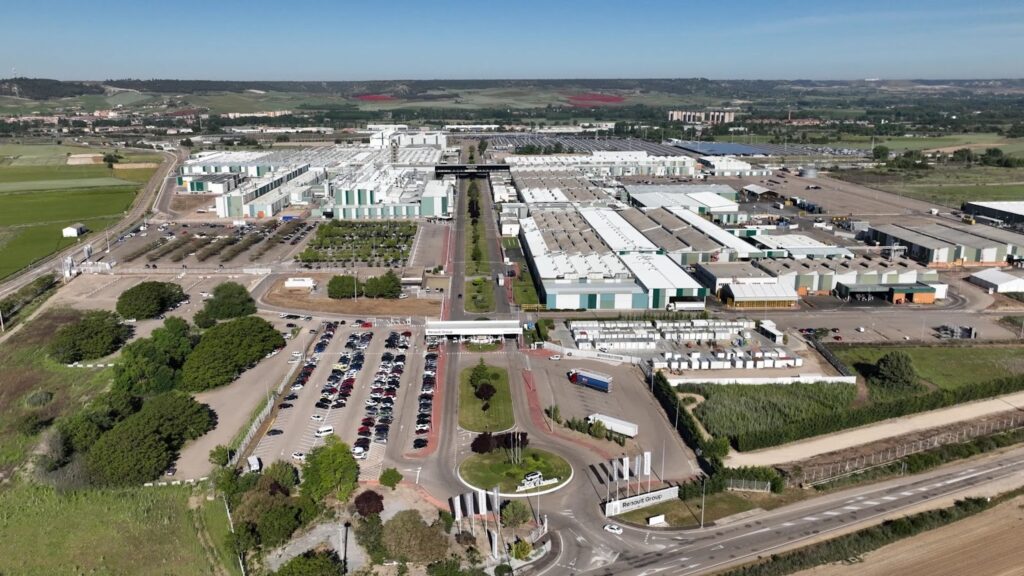
Asked about the industrial allocation of future electric models, François Provost said: “We need to find the competitiveness, find the economic equations, so no final decision has been taken, but in terms of industrial allocation, it is natural to use Palencia as a reference for the renewal of the C and D segments, including electrics.
This statement clearly places the Palencia plant at the heart of the Group’s future industrial strategy for the compact C and D segments, including electric vehicles. Currently dedicated mainly to the Captur, the Spanish plant could become a pillar of mid-range electric production, with a current capacity of around 250,000 units per year and the potential to ramp up production.
source : Renault
European competitiveness and rebalancing of sites
Palencia was chosen because of its industrial competitiveness. Spain has lower labour costs than France, and benefits from recent social agreements that favour flexibility. The agreements signed in recent years between Renault and the Spanish trade unions, particularly at the Valladolid and Palencia sites, allow for more flexible working hours and shifts, greater versatility among employees and better control of production costs.
This move is also a continuation of the geographical specialisation undertaken since the Renaulution plan. Until the recent launch of the new Twingo in Slovenia, the French plants at Douai and Maubeuge were the Group’s only European sites dedicated to 100% electric models, while Spain had become the hub for hybrid models, including the Austral, Espace and Rafale.
According to our colleagues in “Les Echos”, Palencia is set to be the site of the group’s next medium and large electric family models from 2028.
source : Renault
A profitable group in strategic transition
The main conclusions of this teleconference are twofold. Renault remains profitable in a difficult environment, but is entering a more cautious phase. The expected fall in margins in 2026 reflects a realistic anticipation of future tensions. At the same time, the potential allocation of the C and D electric segments at Palencia marks a structuring step: the industrial shift towards electric vehicles is now fully integrated into the group’s strategy.
The 10 March plan will set out this roadmap, which aims to ensure profitable growth in the second half of the decade.