Blog

  • Electric cars: everything you need to know about home recharging

    Electric cars: everything you need to know about home recharging

    Practical and economical, home recharging is the preferred solution for electric car owners, nearly 90% of whom have one. Whether conventional or wall-mounted, in the garage or the car park of a condominium, it’s always advantageous and sometimes lucrative. Here’s everything you need to know about home charging.

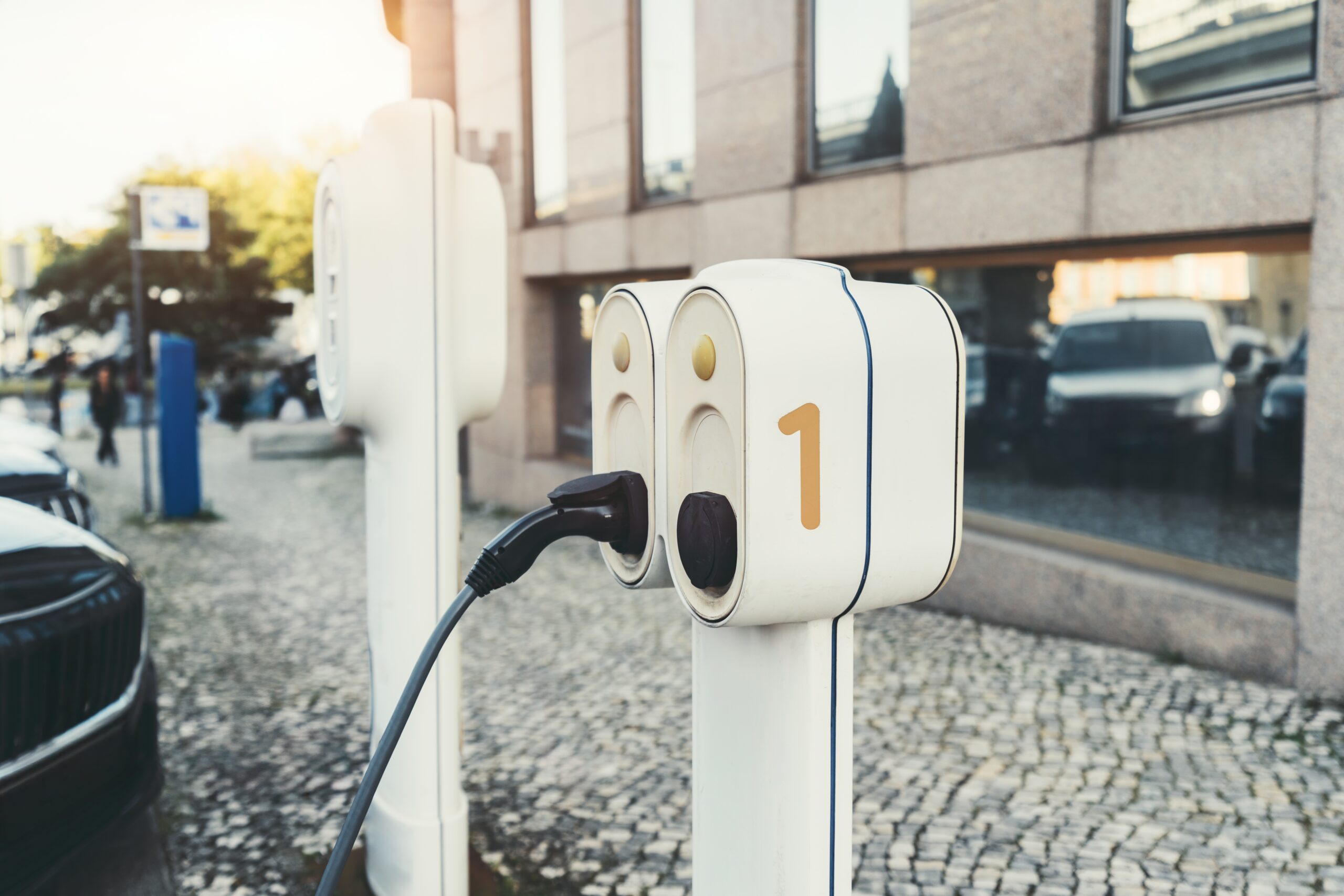
    When it comes to recharging your electric car at home, the most obvious solution is the domestic socket. With a power of 2.3 kW, it’s the perfect bad idea! Not only do you only get about ten kilometres per hour out of the socket, but you also lose energy – up to 30% according to Engie. The owner then has the option of a reinforced socket. After a specific installation, generally in the form of a box, the power is increased to 3.7 kW and it is possible to recover up to 20 kilometres per hour of charging while limiting energy losses. This may be enough for everyday use, since a night’s charge recovers just over 100 kilometres of range, and slow charging is less aggressive on the battery. But the most recommended solution is the wall-mounted charging point. Even though they sometimes require some work, wall-mounted charging points have the advantage of offering ‘à la carte’ power, up to 22 kW three-phase, so you can recover up to 40 km of range per hour while optimising charging and preserving the battery by adjusting and programming your charging point according to your needs. There are stand-mounted alternatives if it is not possible to install a wall-mounted charging point. The main disadvantage of home charging points is the cost, but there are solutions for that too…

    Credit: Thomas Reaubourg


    Financial aid to facilitate the installation of charging points

    As part of France’s policies to speed up the transition to electromobility, there are two ways of reducing the bill for those who install a home charging point. On the one hand, the famous tax credit for energy transition (CITE) allows you to benefit from aid of up to €300 for the purchase and installation of a charging point. The only condition? Use an RGE (Reconnu Garant de l’Environnement) certified company. There is also a grant called ADVENIR, which “reimburses” up to 50% of the cost of the operation. Capped at €600, it is reserved for private individuals living in collective housing and companies wishing to recharge their fleets. It also has the added advantage of being paid directly to the installer, saving electric car owners a lot of paperwork. At local level, some local authorities offer additional incentives, so it’s worth finding out what the policy is in your département or region before installing your charging point.

    The impact on bills

    Installing a home charging point for your electric car inevitably leads to an increase in electricity consumption. ChargeGuru carried out a study and found that the average increase was 21%. Depending on the supplier, this translates into an increase of €30 to €40 on the monthly bill, or €500 a year. That may sound scary when you put it like that, but the savings compared with combustion engines are substantial. In fact, the average fuel budget in Europe is around €100 per month, i.e. 2 to 3 times more than for electric cars.

    Playing the eco-responsibility game

    It’s not just the economic aspect that comes into play when consumers decide to swap their petrol-powered car for an electric one. The environmental aspect also comes into play, and home charging points, powered mainly by decarbonised energy (in France at any rate), tick this box. But you can go even greener by opting for a guaranteed 100% renewable energy supplier, like Ilek, Enercoop or Ekwateur, among others. And to really drive the point home, you can choose a programmable charging point that will allow you to plug in only during off-peak hours, thus relieving congestion on the grid and saving money at the same time… a win-win situation!

    Credit: Thomas Reaubourg


    The right to take

    One of the biggest problems with the electrification of the French car fleet is the lack of charging points in communal housing. And yet, in France, every resident in a condominium has what is known as the right to a plug. In other words, they can have a charging point installed in their parking space. To do so, all you have to do is inform the syndic, who can only object if the necessary work jeopardises the integrity of the building. There are even organisations like Zeplug that can take care of the administrative and billing procedures. When it comes to installing shared charging points, a vote at a general meeting and the pooling of costs can simplify the installation even further, as well as making it easier for more residents to switch to electric vehicles.

    Bidirectional charging, a solution for the future?

    Finally, we look a little further into the (near) future and conclude with a technology that is certain to become increasingly widespread, and which has already made its appearance on the latest Renault 5 electric car: Vehicle-to-Grid (V2G) or ‘two-way charging’ technology. The principle is relatively simple: at any given time of day, more than 9 out of every 10 cars on the road are parked. In order to take advantage of this immobility, bidirectional charging enables the vehicles being charged to “return” energy to the grid during peak hours, after having recovered some during off-peak hours. This saves even more energy and money, while helping to stabilise the grid.

  • Our advice before buying a used electric car

    Our advice before buying a used electric car

    The market for used electric cars is growing every year. And while buying a used EV isn’t radically different from buying a combustion-powered car, there are a number of features specific to electric cars that require special attention before you buy.

    Electric cars were marginal for a long time, but they are now an integral part of the French automotive landscape, and this trend is set to increase in the years ahead, until the sale of new combustion-powered vehicles is completely banned in 2035. This boom is having a direct impact on the second-hand market, which, although still a niche market, continues to grow year on year. In France, for example, the volume of transactions involving used electric cars rose by 54% between 2024 and 2025. So it’s important to be aware of best practice and to adopt the right reflexes before taking the plunge and benefiting from a good deal that’s as environmentally friendly as it is economical.

    Checking the condition of the battery in a used electric car

    The battery is the heart of an electric car, far more important than the motor. A (very) expensive component, it is necessary to know exactly how healthy it is, or State of Health (SoH), generally expressed as a percentage. If the SoH is above 85%, the range is still optimal. Below 75%, you should move on. To obtain this information, you can use a dedicated manufacturer’s application, or even a tool that connects to the OBD port via Bluetooth.

    Credit: Priscilla Du Preez


    Check the ownership of the battery

    Some models, generally the older ones, have been sold with a leased battery. This implies a monthly subscription fee, and can somewhat distort the price offered by the seller. If the seller doesn’t provide this information, it’s a question that absolutely must be asked, because if the battery isn’t included in the sale, it’s a good lever for negotiating the price downwards.

    Request a service history for your used electric car

    It’s a classic when buying a second-hand car, regardless of the energy it consumes. Just because an electric car requires less maintenance than a combustion-powered vehicle doesn’t mean it doesn’t need it. It’s essential to ask for invoices, check for software updates, and pay particular attention to the parts that suffer most on an electric car: tyres and brakes.

    Inspect accessories

    When it comes time to inspect the vehicle, it’s important to check that the charging socket is in good condition, that the cables supplied are compatible and in good condition, and that the on-board electronic equipment – GPS, touch screen, cameras, driver assistance – and lighting are working properly.

    Credit: Waldemar


    Running away from the first generation of electric cars

    As is the case with many electrical and electronic products, the first generations to leave the factory are generally quickly overtaken by the following models, before the situation evens out after a few years and the gap narrows. So a model that came out 10 years ago, with its short-lived batteries, basic equipment and sometimes even incompatibility with modern recharging points, will be much less attractive than the same model from 5 or 6 years ago, fitted with lithium-ion batteries, for example.

    Try before you buy

    It’s obvious: a test drive is essential before you take out the chequebook. It allows us to assess comfort, silence (and therefore any potentially suspicious noises), power under acceleration, and above all the effectiveness of regenerative braking, which is characteristic of electric cars. Another special feature is the electronics, in particular the control screen, which is checked for fluidity.

  • Electric retrofit, pleasure without the hassle

    Electric retrofit, pleasure without the hassle

    Long confined to the margins of electromobility, electric retrofitting, which refers to the electrification of internal combustion vehicles, is attracting more and more private individuals and professionals. Arnaud Pigounides, founder of Retrofuture and a pioneer of the sector in France, talks to ECO MOTORS NEWS about the technical, economic and regulatory challenges that lie behind the vintage elegance of old cars that have been retrofitted with watts.

    Retrofitting means keeping the pleasure, but getting rid of the problems “. That’s how Arnaud Pigounides sums up the electrical retrofit of old vehicles. It’s a phrase that perfectly embodies the philosophy of this entrepreneur who, for nearly 10 years and with the launch of Retrofuture, has been giving a second life to old vehicles by replacing their internal combustion engine with a 100% electric motor. At the time, the practice was not even legally regulated in France. Today, it is governed by a strict framework, the fruit of a long process of awareness-raising and industrial alliances. ” I was the first to do it in France, long before it was officially recognised. It has its advantages… and its disadvantages “, smiles the man who has now expanded his business by creating the REV Mobilities group, whose activities also include retrofitting buses, commercial vehicles and worksite vehicles.

    Electrical retrofitting of older vehicles, for which profiles?

    Arnaud Pigounides identifies three main types of customer for classic car retrofits. Firstly, wealthy enthusiasts, often collectors, who want to enjoy their prestige vehicle without the mechanical and environmental constraints of combustion engines. “Then there are those who want to drive a retrofitted Aston Martin or Rolls on a daily basis. These are often people from upper-income brackets, bankers and executives, who also have the internal combustion version in their garage. Then there are the professionals. And not just for recent buses and vans. Hirers of vintage vehicles, which are used for public events, are looking for a retro look while being able to rely on a reliable, economical vehicle that complies with low-emission zones (ZFE). ” For example, we have a customer who has converted an old Volkswagen Combi into an electric beer tapping machine for weddings and festivals. It’s economical, reliable and fits into Paris. Finally, the entrepreneur is seeing a new audience emerge: private customers who are convinced that electric retrofitting makes more sense – economically and ecologically – than buying a new vehicle. ” Some people would rather retrofit a Fiat 500 or Defender for €20,000 or €30,000 than invest in an electric city car, which can be more expensive and full of electronics, which they consider useless.

    Small steps towards democratisation

    Despite its potential, retrofitting remains a niche sector. The main obstacle to large-scale expansion? Speed. You don’t retrofit a car the same way you change a tyre – you may have to wait six or even nine months. Behind this difficulty lies the sinews of war: money. ” We can’t stock kits in advance in every garage. A stock of 1,000 kits at €20,000 each means €20 million tied up. No French player yet has this capacity “. Especially when the vast majority of customers use a third party to finance their purchase on credit. For the moment, then, the cash in the coffers of retrofitters doesn’t allow them to move any faster.

    Another obstacle is certification. Each kit has to be certified for a specific model. ” Even between a Citroën Jumper and a Renault Master, you can’t use exactly the same batteries. Three centimetres difference in the chassis and everything changes “. As a result, only a few models, chosen by each retrofitter according to its suppliers, are available today.

    But can we ever imagine a universal kit, adapted to any model? Modular batteries and adaptable engines are being studied, but 100% standardisation is out of the question: ” A 2CV can’t be fitted with a 200bhp engine. You have to respect the structure and weight of the vehicle.

    European harmonisation, for which Arnaud Pigounides and his colleagues are currently fighting, could also make a big difference. ” Today, a Fiat 500 bought in Portugal and retrofitted in France is only approved for France. This is absurd. In 2026, we’ll have common regulations, at least for commercial vehicles and heavy goods vehicles. That will open up the market. Then, we hope, it will be extended to all vehicles “.

    There is also one final difficulty, but above all it is the guarantee for the customer that he is buying a vehicle that will stand the test of time and not be a financial drain: the ten-year guarantee. Then, unlike some foreign retrofitters who install second-hand batteries and motors from damaged vehicles, in France we use new batteries made to order and motors specially designed for electrical retrofitting. No do-it-yourself, which is reassuring, but it is also a further brake on rapid large-scale development in Europe.

    Revenge for the unloved, without the smell of petrol

    Retrofitting is also an opportunity to give cars that have been unfairly sidelined a second lease of life. At Rétrofuture, the focus is on forgotten models from the 80s and 90s. ” Theres a huge demand for Jaguar XJs, even Rolls-Royces from the 90s. These cars were disparaged because of their engines and their ratings are relatively low, but once electrified, they become desirable, reliable and unique.

    The same goes for small convertibles, which, with very few exceptions, are now shunned by manufacturers who prefer to produce SUV after SUV. By retrofitting MGBs or Triumph Spitfires, an entire lifestyle and driving philosophy can be revived.

    So, is retrofitting a viable solution? According to Arnaud Pigounides, the answer is yes, as long as you understand its limits and potential. Retrofitting won’t replace mass production by manufacturers, but it does offer a credible alternative for specific uses, targeted populations and, above all, more rational mobility. ” The average daily journey for a French person is 20 km. Our customers aren’t looking to tour France. So why buy a new vehicle that you don’t like, when you can have a car that looks good, is electric, reliable and doesn’t smell of petrol ? In short, it’s a way of reconciling the past and the future on four wheels.

  • 5 Chinese electric cars to know

    5 Chinese electric cars to know

    Within the electromobility ecosystem, China is the biggest manufacturer, the biggest seller and the biggest market, thanks in particular to its manufacturers – led by BYD, which could rapidly become the world’s leading manufacturer of
    electric vehicles – whose models are gradually arriving on the Old Continent, particularly in France. So here are five Chinese electric car models you need to know about before you find them on every street corner!

    BYD Atto 3

    Available in France from 2022

    The BYD Atto 3 is a compact 100% electric SUV equipped with an in-house Blade LFP 60.5 kWh battery offering a range of around 420 km (WLTP). It is powered by a 200 bhp engine that accelerates from 0 to 100 kph in 7.3 seconds. Available in France from the end of 2022, this model illustrates BYD’s determination to make its mark in Europe with a range that is accessible, well finished and technically reliable. The manufacturer is actively developing its distribution network in France to support this ambition.

    Price: €38,990

    Credit: BYD Atto 3

    BYD Dolphin

    Available in France from 2023

    As leader of the field, BYD is entitled to two mentions in this selection. The Dolphin is a 100% electric compact car with a range of between 340 and 427 km, depending on whether it is fitted with a 44.9 or 60.4 kWh Blade LFP battery. This versatile city car will be available in France from the end of 2023, and BYD is using it to enter the ‘accessible’ electric car market. Priced at less than €30,000, it is aimed at a wider audience than the Atto 3. The Dolphin will certainly spearhead BYD’s dream of conquering Europe.

    Price: €29,990

    Credit: BYD Dolphin

    Leapmotor T03

    Available in France from 2022

    The Leapmotor T03 is a small city car (3.62 metres) that boasts a range of 265km, thanks to a 37.3 kWh battery. Although Leapmotor had hoped to ‘get around’ the customs measures taken by France to counter Chinese manufacturers by partnering with Stellantis to assemble the T03 in Europe, this may prove more complicated than expected. The fact remains that Leapmotor still intends to flood the European market by the end of 2025, fulfilling its initial objective of offering an electric city car for under €20,000.

    Price: €19,500

    Credit: Leapmotor T03

    NIO ET5

    Available in Scandinavia, the Netherlands and Germany

    A change of category with the NIO ET5. This electric saloon is powered by two engines delivering a combined output of 490 bhp and promises a range of up to 1,000 km – yes, yes – with its largest available battery (150 kWh). For the moment, NIO is targeting markets with a strong appetite for electric vehicles and high purchasing power – Norway and Scandinavia in general, the Netherlands and Germany – but it is not ruling out a move into France as early as 2025. The aim? To conquer the premium segment currently dominated by Tesla!

    Price: €47,500

    Credit: NIO ET5

    XPeng P7 / P7+

    Gradual European roll-out from 2021

    We’re staying with saloon cars with the XPeng P7. A close cousin of Tesla’s Model 3 and Model S, it offers a range of over 550 km and performance well in excess of 400 bhp thanks to its two engines. Renowned for its many on-board technologies, it features the XNGP system, an advanced semi-autonomous driving platform. The manufacturer has already conquered the Norwegian market,
    So it was via the fjords that XPeng entered Europe a few years ago, gradually making a name for itself and appearing on the French market in spring 2024. Although the P7 is unlikely to be marketed in France, its upgraded version, the P7+, could well arrive.

    Price: €42,500

    Credit: XPeng P7 /P7+
  • What is electromobility?

    What is electromobility?

    Over the last few years, the term electromobility has become part of our conversations, in the media, but also – and above all – on our roads. But what exactly does it mean? In addition to the electric cars we see on the road more and more, electromobility refers to a profound change in the way we think about travel, placing electricity at the heart of sustainable mobility. Let’s take a closer look at the history, principles and prospects of this silent revolution.

    Credit: Senivpetro

    An idea over 100 years old

    Contrary to what you might think, electromobility is not a recent idea. At the end of the 19th century, electric vehicles were already competing with steam and petrol cars. The first vehicle in history to break the symbolic 100 km/h barrier was designed in 1899 by Belgian engineer Camille Jenatzy. Known as the Jamais Contente, this car was powered by electricity.

    At the time, electric vehicles were appreciated for their silence and ease of use. In the United States, they even accounted for a third of the car market between 1900 and 1910.

    However, during the 20th century, the rise of internal combustion engines – which were cheaper to produce and had greater range thanks to cheap oil – pushed electromobility into the background. It was only at the turn of the 21st century, in the face of climate change and the need to reduce our dependence on fossil fuels, that electric mobility
    is making a comeback.

    The foundations of electromobility

    Electromobility encompasses all transport solutions using electrical energy. This includes not only cars, but also bicycles, scooters, electric buses and even some regional trains.

    More broadly, electromobility is based on a complete ecosystem: intelligent charging stations, low-carbon electricity networks, optimised energy management, integration of renewable energies, etc. The principle is simple: replace fossil fuels with electricity to power our journeys.
    our journeys.

    But behind this apparent simplicity lies a major technological transformation, far more profound than a simple change of fuel. It involves rethinking mobility as a whole, incorporating concepts of energy efficiency, reducing CO2 emissions and respect for the environment.

    Why electromobility is the way forward

    ● Reducing greenhouse gas emissions
    According to the French Environment and Energy Management Agency
    (ADEME), an electric vehicle emits on average three times less CO2 than a combustion vehicle over its entire life cycle, provided that the electricity used comes from renewable sources.

    Reduced noise pollution
    Electric vehicles are almost silent, offering greater driving comfort for users and a quieter environment for local residents. This silence is gradually transforming the soundscape of our cities.

    ● Energy independence

    By diversifying our energy sources and encouraging the local production
    (solar, wind, hydro), countries can reduce their dependence on oil imports.
    reduce their dependence on imported oil.

    ● Efficient and responsible batteries
    Technological advances in lithium-ion batteries have also played a key role in this renaissance. They enable vehicles to achieve much greater ranges, and contrary to popular belief these batteries are 95% recyclable.

    ● An expanding recharging network

    In recent years, recharging electric vehicles has become more accessible.
    become more accessible. Numerous innovative projects have been launched at all levels to democratise and improve charging infrastructure.

    Towards an electromobile future

    Today, electromobility is an essential pillar of the energy transition. It is more than just a technological development; it represents a genuine change in society.

    Tomorrow’s mobility will be smoother, cleaner and smarter. By adopting electromobility on a massive scale, we are helping to build more breathable cities, preserve our natural resources and shape responsible mobility for future generations.

  • Electric boats: when pleasure boating becomes gentler

    Electric boats: when pleasure boating becomes gentler

    Quiet and clean, electric boats are undoubtedly the future of pleasure boating. But while they embody a new way of sailing, there are still a number of obstacles to their widespread development.

    Credit: beneteau

    According to studies by Data Bridge Market Research and Mordor Intelligence, the global market for electric boats is set to grow by 11.2% to 12.65% a year between now and the end of the decade. This global momentum is also reflected in France, particularly in Paris, where the famous Vedettes have recently embarked on their energy transition. But despite these promises, yachting – if we compare its transition to that of the car industry – still seems to be standing still. The Association Française pour le Bateau Électrique (AFBE) and AKWA Experience, which hires out electric boats in Paris, give ECO MOTORS NEWS a realistic yet optimistic look at the state of electric boats in France.

    Boats that are still too costly and infrastructure that is in short supply

    It’s a small-scale industry, which makes the energy transition much more complex and costly “, explains Yannick Wileveau, Chairman of the AFBE. Like cars, electric boats still suffer from the high cost of engines and batteries, to which must be added the “made-to-measure” aspect that adds a little more to the bill.

    In fact, the price of electric boats remains one of the major obstacles to the energy transition in recreational boating. To address this, the AFBE is promoting co-ownership models or membership of yacht clubs. “ Sharing a boat makes the initial investment profitable, while reducing the need for harbour berths “, Brusset points out.

    It’s enough to shake up the habits of boat owners. And that’s not the only thing that needs to change! In fact, according to Christophe Brusset, Secretary General of the AFBE, the challenge is not just a technical one: ” Going electric also means changing the way you sail. Less speed, more calm, and more attention to the environment. This environmental aspect is not just about zero emissions, but also about preserving aquatic flora and fauna.

    Another lever for convincing boat owners to switch to electric power is the development of recharging infrastructures, which are still largely inadequate. And it’s a vicious circle, because fewer boats mean fewer infrastructures, and fewer infrastructures mean fewer boats. So, just as was done for the car industry, which was in the same situation a few years ago, the AFBE believes that local authorities, the State and Europe need to use subsidies and tax breaks to encourage the purchase of electric boats on the one hand, and the installation of recharging stations on the other.

    Credit: RIva

    In Paris, an experience that’s sure to win you over

    It’s clear: the development of electric boats will require a change in user philosophy. And it’s this change in mentality that AKWA Experience is working on from the Canal de l’Ourcq, in the 19th arrondissement of Paris. Its fleet of 100% electric, licence-free boats is proving a great success. “ Our customers often talk about a magical, timeless experience. They rediscover Paris from another angle, in the heart of the city, but far from its hustle and bustle “, says Rodrigue Faleme, the company’s managing director.

    Offering prices tailored to young people, pensioners, local residents and the underprivileged, AKWA Experience sets its sights high: ” Our objective is clear: to democratise electric navigation and raise awareness of the need to protect our river heritage. The company regularly organises events at its base, including canal clean-ups.

    Credit: Akwa

    Optimism as a course

    While there are still many obstacles to the acceleration of the electrification of the yachting industry, the momentum is well underway. Proof of this is the arrival of 100% electric and hybrid models in the catalogues of the major marine brands, such as Bénéteau’s Four Winns H2e and the Riva El-Iseo: ” It is these models, designed from the outset for electric power, that will drive the market in the years to come ,” predicts Yannick Wileveau.

    In the meantime, pioneers like AKWA Experience, as well as their competitors in Paris and elsewhere, are leading the way and playing an active part in changing attitudes. By 2035, the AFBE even believes that electric yachting could well be the norm rather than the exception. In the meantime, it’s already a nice glimpse of what silent, less polluting boating could be like… and it feels good!

    And what about the sea?

    While electric river navigation is gaining ground, it is also beginning to make inroads at sea. Several shipyards are now developing electrically-powered catamarans and coastal launches, some of them hybrids, suitable for short sea trips. Autonomy is still limited by battery capacity, but innovations such as solar recharging and hydroelectricity are opening up new prospects. In sensitive coastal areas, such as marine reserves, electric boats help to preserve ecosystems. In Scandinavia, electric ferries have been developing for 10 years, notably the MV Ampere in Norway, the world’s first 100% electric ferry, launched in 2015.


  • Electric cars: how much does recharging really cost?

    Electric cars: how much does recharging really cost?

    While the ecological virtues of the electric car are often extolled, its economic benefits are just as attractive. But at a time when energy prices are fluctuating and recharging points are springing up all over the place, there’s one question that keeps coming back
    : on a day-to-day basis, is recharging your car really cheaper than filling up with petrol?

    Credit: Pexels

    At home: the most wallet-friendly recharging option

    It all depends on where, when and how you connect your vehicle. The majority of motorists who opt for home recharging via an individual charging point choose the most economical solution. An electric car consumes between 15 and 20 kWh per 100 kilometres, or around €3.75 to €5 (based on an average rate of €0.25/kWh).

    A word of warning, however: installation requires the services of an IRVE-approved electrician, and represents an initial investment of between €1,400 and €4,000, depending on the type of charging point chosen.

    Credit: Pexels

    On the road: faster charging stations… but more expensive

    As soon as you leave home, the cost of recharging increases. Conventional public charging points, often located in urban areas, charge between €0.25 and €0.50/kWh, which works out at between €5 and €10 per 100 kilometres – still less than the cost of a full tank for a combustion-powered city car.

    On the other hand, ultra-fast chargers such as Tesla Superchargers or those from TotalEnergies (150 to 350 kW) are considerably more expensive. They can cost up to €0.80/kWh, or around €15 per 100 km, which is close to the cost of a petrol or diesel car.

    A full charge (80% battery) for an average electric car at these stations costs around €50, but offers unbeatable charging times: between 8 and 10 minutes to go from 20% to 80%, depending on the vehicle and the station.

    Credit: Mathis Miroux

    Smart recharging: saving money if you think ahead

    On the whole, an electric vehicle is cheaper to run than a combustion model. But this requires a certain amount of organisation: recharging at home, choosing the right time slots (especially off-peak hours) and avoiding public charging points without a subscription are essential reflexes.

    Because while driving electric saves money and reduces your carbon footprint, it also requires a bit of forethought… and a plug socket close at hand.

  • Which countries are leading the electromobility race?

    Which countries are leading the electromobility race?

    Electric cars, charging points, state-of-the-art batteries:
    electromobility is everywhere. But not all countries are moving at the same pace: which are the most committed to this revolution? Between industrial strategies, public policies and technological innovations, the battle for electromobility is being fought on a global scale.

    Credit: frimufilms

    China, the locomotive of electromobility

    It’s hard to compete with China. The Middle Kingdom has not only theorised electromobility, it has industrialised it at lightning speed. Since the early 2000s, the Chinese government has invested heavily in this technology, with massive subsidies, quotas imposed on manufacturers and support for local companies such as BYD, NIO and CATL.

    The result: with a market share of almost 28%, China is the world leader in electric vehicles. What’s more, the country already has more than 13 million charging points and is exporting cars, batteries and charging points to Europe on a massive scale. We’re no longer talking about a local market, but a global industrial powerhouse.

    Europe: ambitious… but heterogeneous

    In Europe, electromobility is making great strides, driven by clear objectives: an end to sales of new combustion-powered cars by 2035, increasingly strict CO2 standards, purchase subsidies and the deployment of charging stations across the continent. Europe also stands out for its innovation ecosystem, particularly in recharging infrastructure (Spark Alliance) and batteries (Verkor, ACC).

    But behind these ambitions lie very different realities:

    ● Norway is the all-round champion: over 90% of new cars are electric.

    ● France, Germany and the Netherlands are making steady progress, with a growing network of charging points and increasingly accessible vehicles.

    ● Other European countries, such as Italy and Spain, are still lagging behind, held back by the cost of electric vehicles.
    held back by the cost of vehicles or the lack of infrastructure.

    For the European Union, the battle is not over. The Old Continent remains dependent on Asia for some of its components, and there are still major differences between countries. To catch up, Europe is counting on its start-ups and industrial innovation.

    Credit: Freepik

    United States: Tesla in the lead, but mixed fortunes

    When it comes to electromobility, the United States is often associated with Tesla, the powerhouse of the global market. But beyond Elon Musk’s company, the country is lagging behind in a number of areas. Although the adoption of electric vehicles is growing (around 15% of sales), it is still held back by a network of charging points that is still inadequate, particularly outside the major cities.

    With the election of Joe Biden in 2020, the situation has changed. The government introduced a number of key measures, including purchase subsidies, support for local battery manufacturing and a target of 50% electric vehicles by 2030.

    But the US territory is vast, and the States are uneven in their commitments: while California is pushing hard, other States such as Wyoming remain cautious. What’s more, competition between manufacturers is still dominated by Tesla, in the absence of a genuine made-in-the-USA alternative… for the time being.

    Electromobility is no longer an option: it’s a global trend. And basically, everyone is moving in the same direction. What’s changing is the method: China is imposing itself, Europe is supervising and innovating, and the United States is relying on its leader. But one thing is certain: the race is on, and more and more countries are getting involved in this battle, which will be won not just by the number of cars sold, but also by batteries, charging stations, innovation and the ability to involve an entire population in this change.

  • Electric cars: 5 essential applications for owners

    Electric cars: 5 essential applications for owners

    Here’s our selection of five must-have applications to improve your journeys and manage your charging as well as your expenses when you own an electric car.

    A Better Routeplanner (ABRP) – Pay options

    ABRP, for A Better Route Planner, is one of the most highly rated of all the electric mobility apps. By entering the model name of your electric car and your destination, you can plan your journey. Is that all there is to it? No, because it takes into account a number of factors that are often overlooked by other map apps, including the car’s actual range, the weather, available recharging points and… the type of road! For those who live in the mountains, for example, that’s a detail that really doesn’t matter! The paid premium version also allows you to connect your vehicle directly to the app to get real-time information and the most accurate remaining range estimate possible, adjusted in real time according to your driving style, right down to wind speed.

    Credit: abetterrouteplanner.com

    Chargemap – Chargeable options

    Chargemap, a French application, makes it easy to locate charging points all over Europe, but what sets it apart above all is the interactive aspect of its map. You can find out immediately whether a charging point is available or not, or whether it has broken down (but that never happens…), as well as its power or compatibility with your car. Using this information, drivers can plan a journey directly from the app. A chargeable option, Chargemap Pass, lets you use your account to pay for your top-up.

    Credit: en.chargemap.com

    ChargePrice – Free

    While switching to electric power generally saves money, the price from one charging point to another often varies much more than from one petrol pump to another. This is mainly due to the multiplication of subscriptions, energy suppliers, the energy source itself and the location of the charging point – in short, so many factors that can lose the consumer. This is where the ChargePrice application comes in, acting as a price comparator. It locates the cheapest charging points around the driver and even goes so far as to provide an estimate of the total cost of recharging, taking into account the type of car and the user’s subscription.

    Credit: en.chargeprice.app

    Dreev – Free

    Dreev is the result of a collaboration between EDF and the Californian company Nuvve, which specialises in Vehicle-to-Grid (V2G) recharging. In other words, cars that can send electricity back to the grid. So it’s only natural that Dreev should specialise in the ‘intelligent management’ of electric vehicle recharging. This means you can control and programme your charging point to optimise it as much as possible, both in terms of energy used and expenditure, as well as deciding whether or not to send energy back to the grid to discharge it (and save money in the process).

    Credit: dreev.com

    PlugShare – Pay-per-click ad-free option

    PlugShare is one of the best-rated applications for quickly locating charging points around the world. It’s all powered by users themselves, who share their opinions and photos of almost 500,000 charging points. It also lets you plan your journey according to your subscription and the type of socket you are looking for.

    Credit: www.plugshare.com
  • BYD sets its sights on the European supercar market

    BYD sets its sights on the European supercar market

    Presented at the Shanghai Motor Show from 23 April to 2 May 2025, the new Denza marks a turning point for the top-of-the-range subsidiary of Chinese giant BYD.

    Credit : Denza®

    With its sleek design and low-slung silhouette worthy of a GT sports car, this newcomer is impressive. But where it comes as a surprise is its price, estimated at around 60,000 euros including tax in France… a price well below that of the rivals against which it intends to compete, starting with the Porsche 911 and its many variants. With its sharp lines, aggressive front blade and oversized rear spoiler, BYD reveals a clearly assertive sporty style.

    Performance

    The Chinese firm is remaining discreet about its technical specifications, but everything suggests that it intends to hit hard. Its parent company, BYD, which is well on the way to dethroning Tesla as the world’s biggest seller of electric cars, has been developing top-quality batteries for some years now. This latest model could be inspired by the Denza Z9GT, a 950-horsepower station wagon developed entirely by BYD.

    Credit : Denza®

    Technical side

    For the moment, what we do know is that this technological jewel, unveiled in Shanghai, features a new adaptive magnetic suspension capable of reacting in less than 10 milliseconds. This new sports car also features ‘steer-by-wire’ steering, an innovative system with no direct mechanical link between the steering wheel and the wheels. Everything is managed with the help of artificial intelligence. The result is greater precision when cornering, making the car more accessible on the racetrack, and enhanced suppleness, whether driving in the city or on the motorway. It can also adjust the resistance of the steering wheel according to the situation and reduce vibrations, for unprecedented driving comfort. Still at the concept stage, the latest Denza could go into production as early as 2026.

    Credit : Denza®