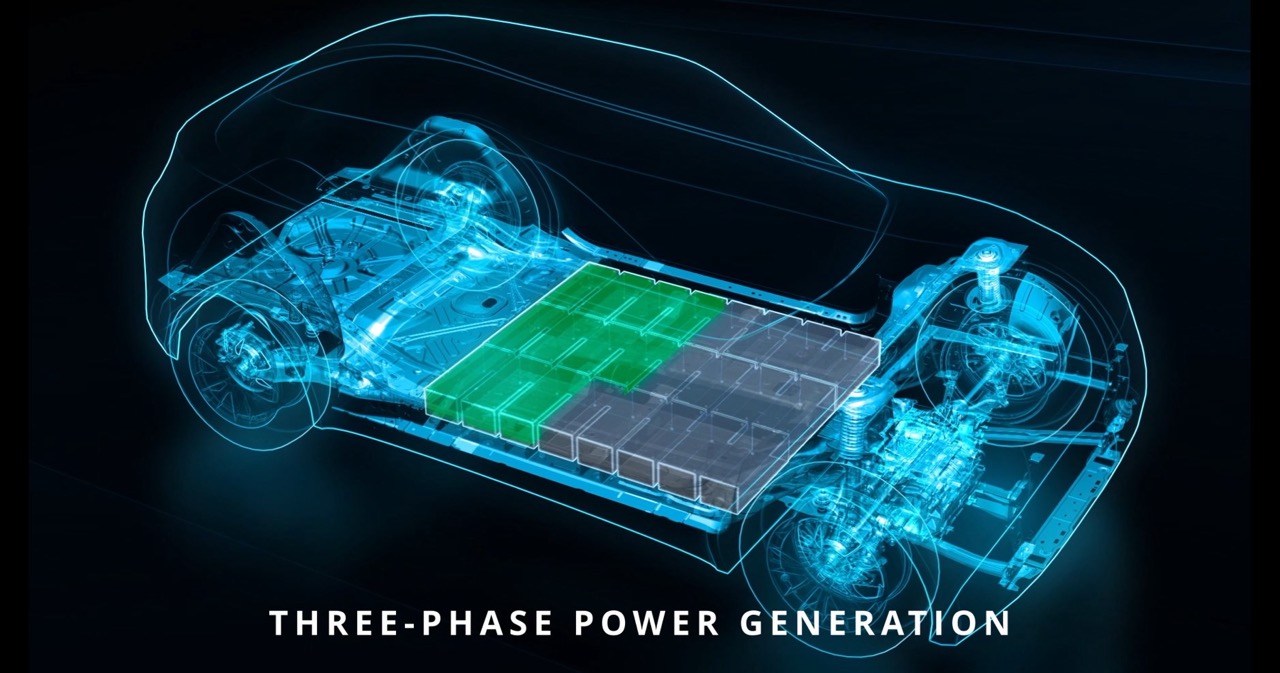
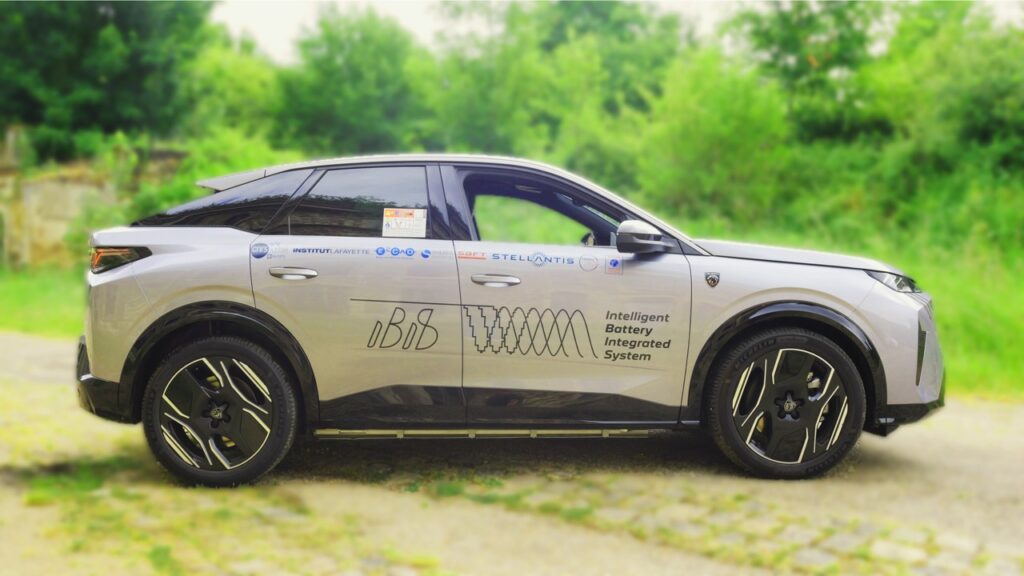
While the issue of batteries for electric cars remains central, Stellantis unveiled its new battery prototype in September, a technology called IBIS (Intelligent Battery Integrated System). The aim is to make tomorrow’s cars simpler, lighter and, of course, more efficient.
Credit Stellantis
A simplified, more efficient battery
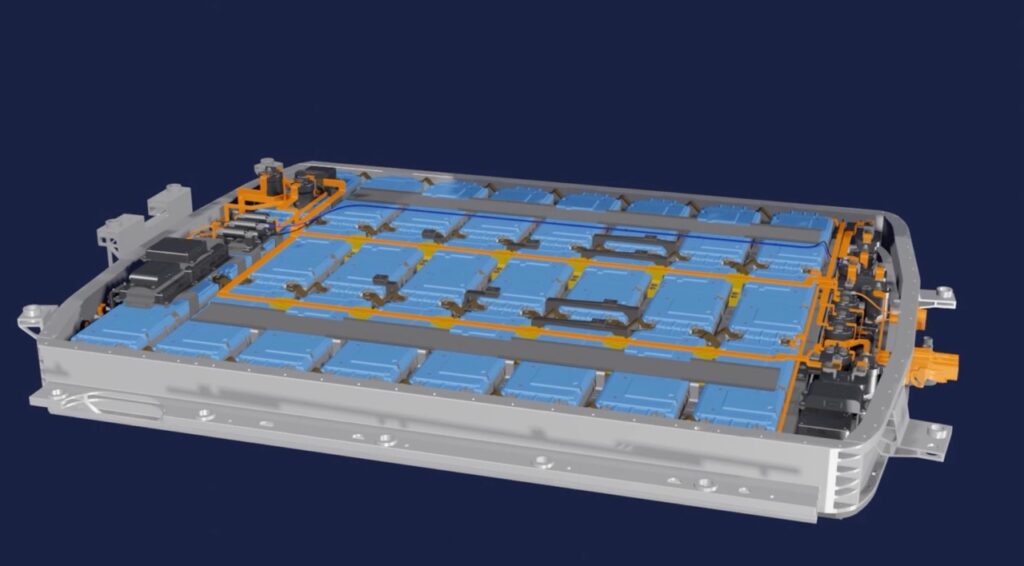
Designed in partnership with Saft, a subsidiary of TotalEnergies, this innovation is currently being tested on a prototype Peugeot e-3008. Unlike conventional batteries, where the inverter and charger are independent components of the battery, the IBIS prototype integrates them directly into the battery pack. This combination delivers a 10% gain in energy efficiency, reduces the vehicle’s weight by 40 kg and frees up 17 litres of extra space. Based on initial results, the Stellantis Group has announced that recharging times could also be reduced by around 15%, i.e. one hour less than a standard AC recharge.
Challenges to solve
While this project looks convincing on paper, there are still some questions to be answered. With so many components in the same block, there is the question of how to manage the heat generated. Another challenge is to move from prototype to industrial production, a costly and complex stage, even if the Group can rely on its European battery production partners to support them in this probable ramp-up.
Credit Stellantis
A future yet to be written
While Stellantis plans to test these batteries in a demonstration fleet as early as 2026, we will have to wait until the end of the decade to see them developed in series.
With IBIS, Stellantis hopes to catch up with Asian giants BYD and CATL, who still largely dominate the sector.
More than a year after the success of the 2024 social leasing scheme, this aid scheme is making a comeback on 30 September. The government’s stated aim is to widen access to electric cars for the poorest households, but with a stricter framework and rethought financing.
A project not funded by the State.
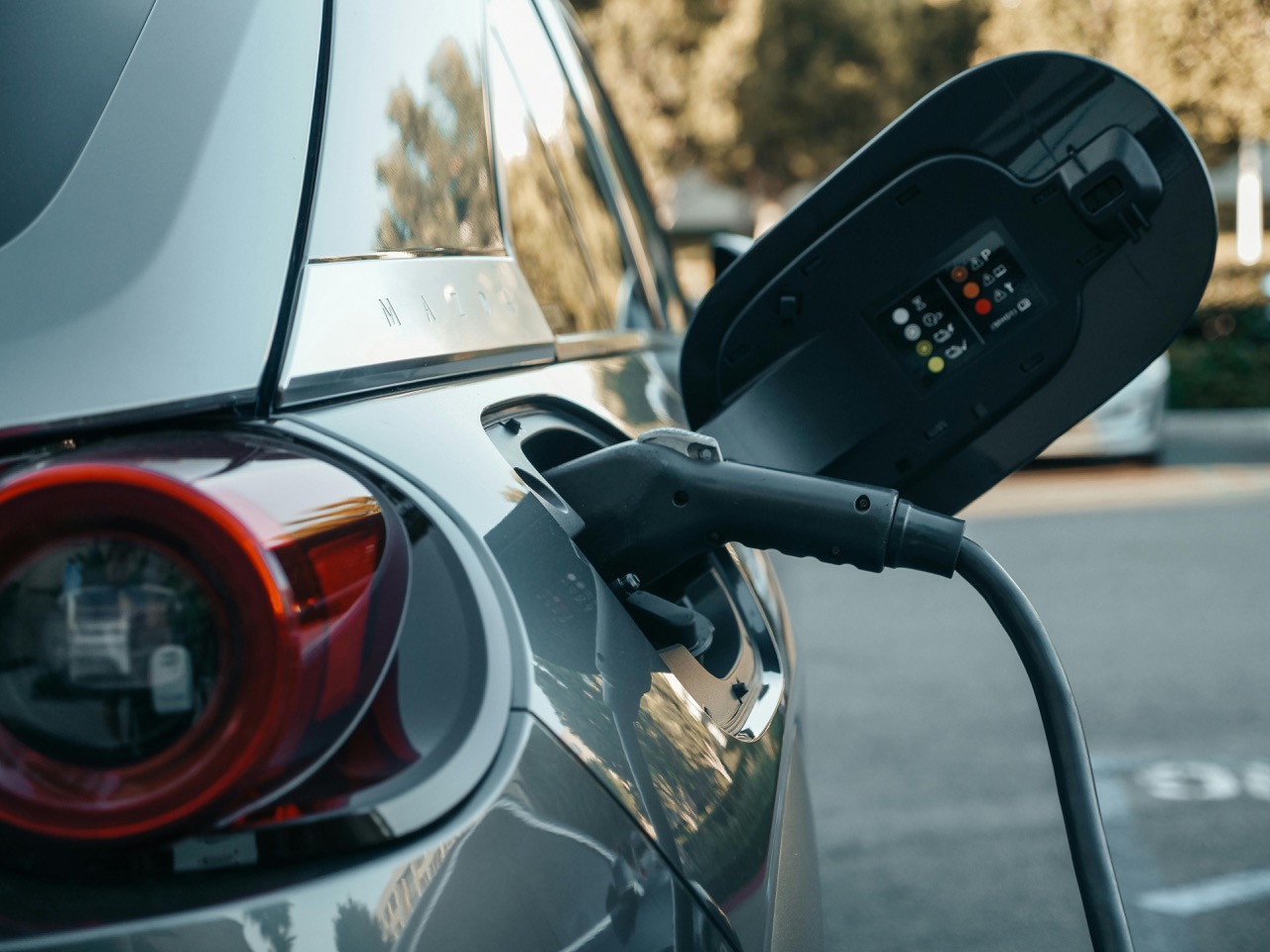
Until now, it was the State that put its hand in the pocket. From 30 September 2025, the scheme will come under the CEE (Certificats d’Économie d’Énergie) umbrella. To put it simply, from now on it will be the energy suppliers who finance it, for a total budget of €370 million over 2025-2030, with maximum support per vehicle estimated at €7,000 (compared with €13,000 previously).
Stricter eligibility conditions.
The conditions remain tight: you need to have a reference tax income per unit of less than €16,300, be over 18, live in France, and prove that your car is used for a journey of at least 15 km between home and work, or at least 8,000 per year for business reasons.
Another rule is that this aid cannot be combined with the ecological bonus or the conversion premium. To compensate for this, and to remain true to its promise of accessibility, the scheme ensures that rental prices will remain controlled: maximum €200/month, and each supplier will have to offer at least one product at €140/month or less.
Eligible vehicles.
This year, eligible vehicles will have to meet certain criteria: they must be 100% electric, cost less than €47,000 and weigh less than 2.4 tonnes. The possibilities are therefore limited, and certain models such as the electric Citroën C3, the Renault 5 E-Tech and the Fiat e500 are expected to qualify.
Crédit: Pexels
An almost obvious success.
Following on from the success of its predecessor in 2024, social leasing 2025 is likely to be a runaway success, with Stellantis claiming to have already received more than 120,000 applications, and Renault, tens of thousands. The government is making 50,000 vehicles available under this social leasing scheme, and this quota is likely to be reached quickly.
With this new framework, social leasing aims to remain a gateway to electricity for low-income households, while reducing the public bill. The new scheme is more structured, less generous and, above all, designed to last.
Mercedes-Benz has just obtained a long-awaited authorisation to build its own wind farm, the blades of which are due to start turning in 2027.
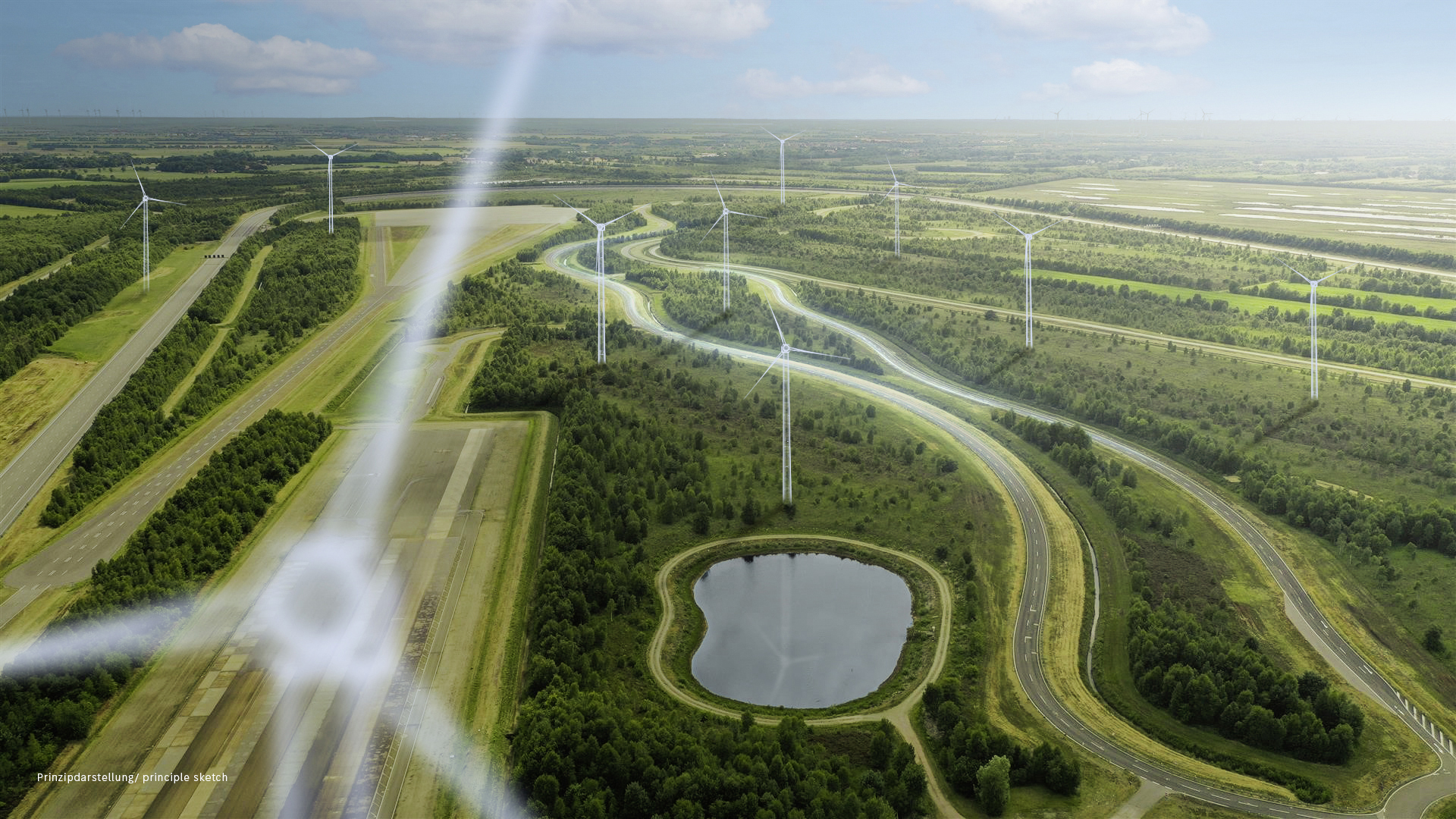
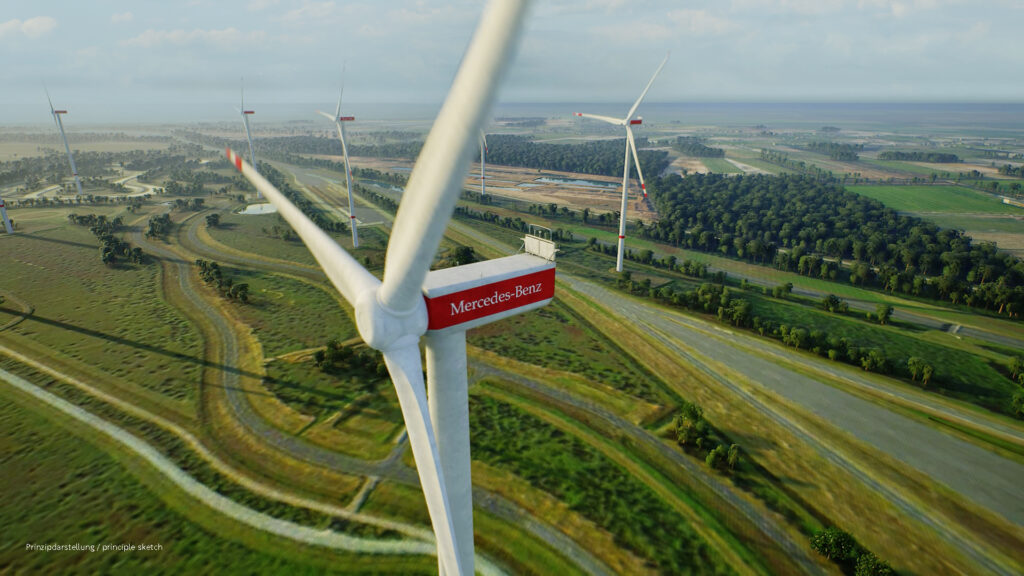
In 2022, a piece of news slipped under the radar. Mercedes-Benz announced that it wanted to add a large wind farm to its legendary Papenburg test track in northern Germany. This will not only enable the company to meet its carbon neutrality targets, but also reduce its dependence on energy suppliers. This internalisation of energy production is about to become a reality, as the German authorities have given the go-ahead for work to begin.
Aiming for carbon neutrality
It will be a 140 MW wind farm, corresponding to around twenty 165 m high wind turbines, capable of powering almost 30,000 homes and, above all, covering 20% of Mercedes’ electricity needs across the Rhine. The group’s aim is to inaugurate its wind farm in 2027, as part of its plan to achieve the sacrosanct goal of carbon neutrality. Mercedes-Benz has pledged to achieve a 70% share of renewable energy in its consumption, and even intends to reach 100% by 2039.
Of course, wind power is not the automotive group’s speciality. So it has joined forces with UKA, an operator specialising in the construction and management of wind farms, to sign a Power Purchase Agreement (PPA) for the supply of electricity. A partnership signed for the next 25 years! Enough to ensure low-cost renewable energy for a long time to come.
Credit: Mercedes-Benz
With this announcement, the Mercedes-Benz Group is grasping the nettle by the horns, avoiding not only the stress of ambitious carbon neutrality targets, but also the much less manageable stress of highly volatile energy prices. By taking advantage in this way of an area that already belongs to the group, and by teaming up with a market specialist, we would like the German group to serve as a model for its competitors. And the closer you look at the Mercedes logo, the more it resembles a wind turbine… Now that’s foreshadowing !
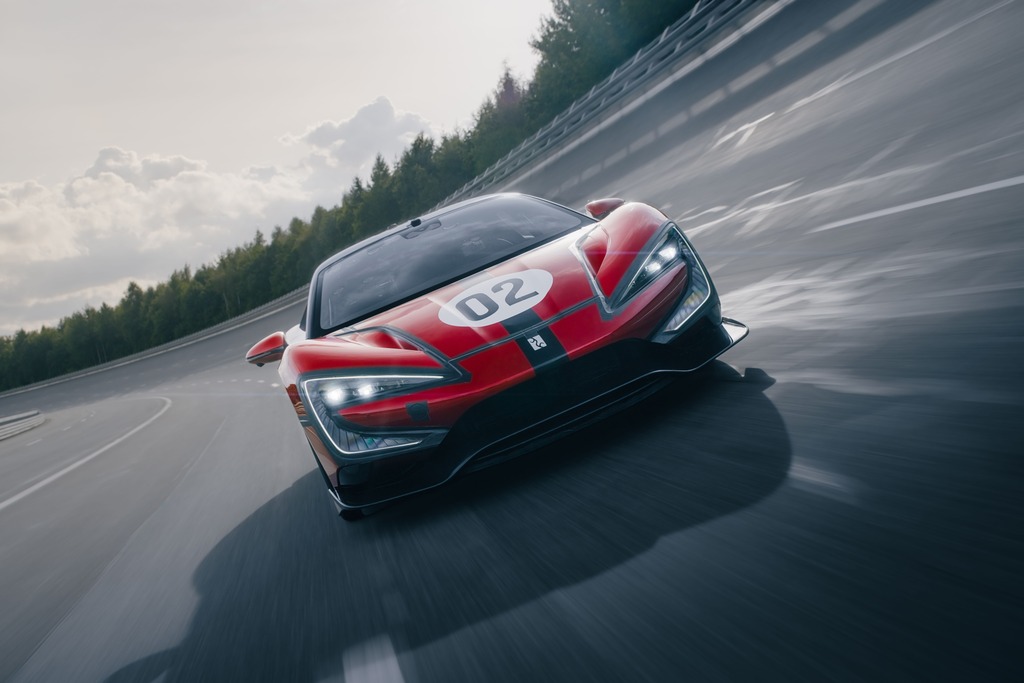
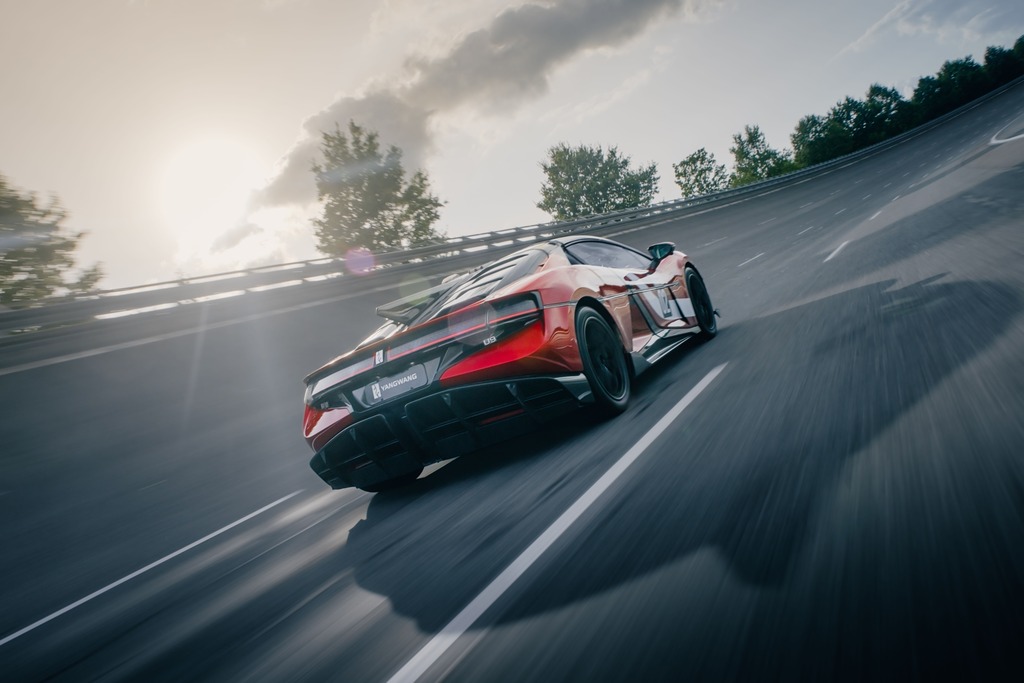
The BYD Group has scored a major coup by breaking two speed records in quick succession with its Yangwang U9 Xtreme, the most important of which is that of the world’s fastest production car.
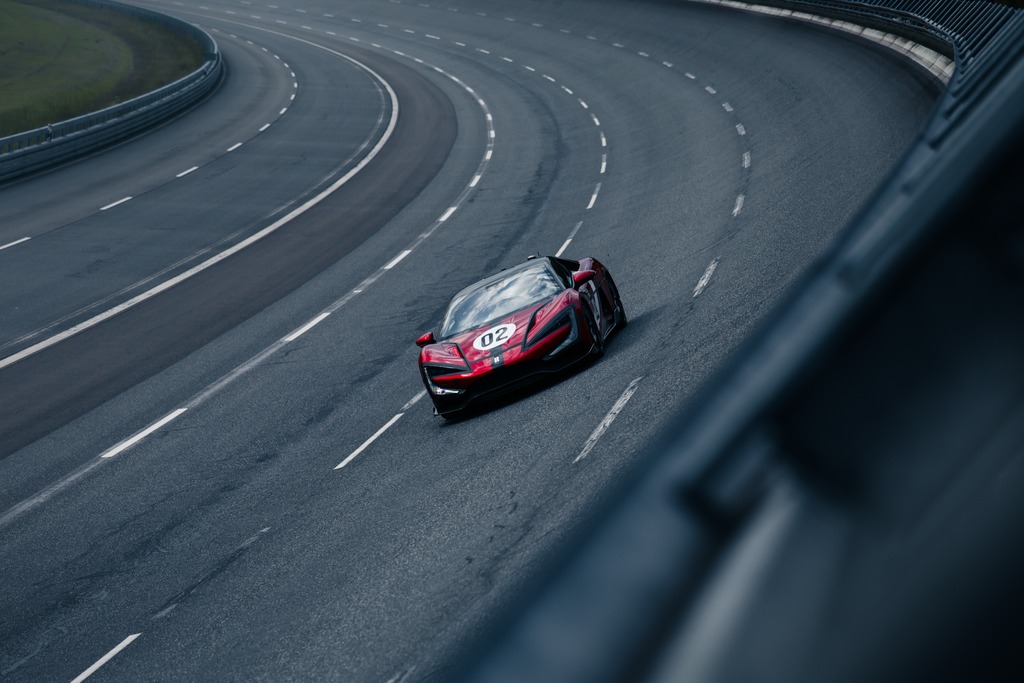
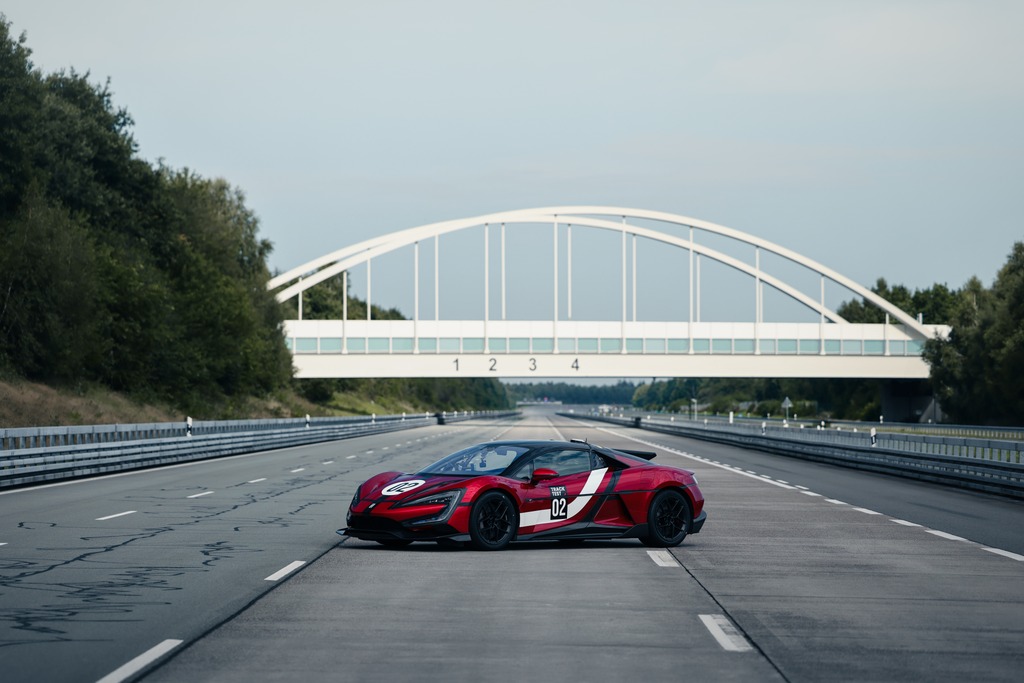
Back in April, the Xiaomi SU7 Ultra dethroned Porsche on its home turf, beating the sportiest version of the Taycan in the electric category at the legendary Nürburgring. This autumn, it’s another electric hypercar that is shaking up the historic giants of sports cars with an even more impressive record. The Yangwang U9 Xtreme has become the fastest production car in the world on the ATP (Automotive Testing Papenburg) circuit in Germany. And that’s just for starters.
3000 bhp and 496 km/h for the Yangwang U9
The ‘production’ version of the Yangwang U9 is a supercar to be presented in 2023 by this sports division of the BYD Group. The basic model already boasts 1,300bhp and a 0-100kph time of two seconds, making it one of the best in its class. But its Xtreme variant, as the name suggests, pushes the envelope even further, with over 3,000bhp!
Credit: BYD
It was with these strong arguments that the Yangwang U9 Xtreme arrived on the ATP scene and smashed the speed record previously held by the Bugatti Chiron Super Sport 300+. In fact, the Chinese racer managed the feat of clocking up 496.22 km/h on the speedometer. That’s insane. What’s more, assuming that the ATP is a shorter test track than Ehra Lessien, where Bugatti set its record, BYD reckons that its hypercar could have reached or even exceeded 500 km/h…
Impressive on the Nürburgring too
But as the world speed record didn’t seem to be enough, BYD sent its Yangwang U9 Xtreme to take on… Xiaomi! As we mentioned in the introduction, the lap record for an electric car was beaten last April by the SU7 Ultra in 7 minutes and 04 seconds. Well, the U9 Xtreme has achieved the feat of doing so in 6 minutes and 59 seconds. Admittedly, that’s not much of a gap, but it says a lot about the BYD group’s ambitions to not only extinguish the European competition, but also its compatriots!
Credit: BYD
It remains to be seen whether this Xtreme version will be available to the general public. Well, ‘general public’ is a bit of an exaggeration, but the brand had to produce it, at least in small series, in order to homologate its record as the fastest production car in the world. This will certainly be the case, with a limited edition of around thirty units, which should not have too much trouble selling despite the prohibitive price… Beating Bugatti, Porsche and Xiaomi within a few days of each other is a hell of a publicity stunt!
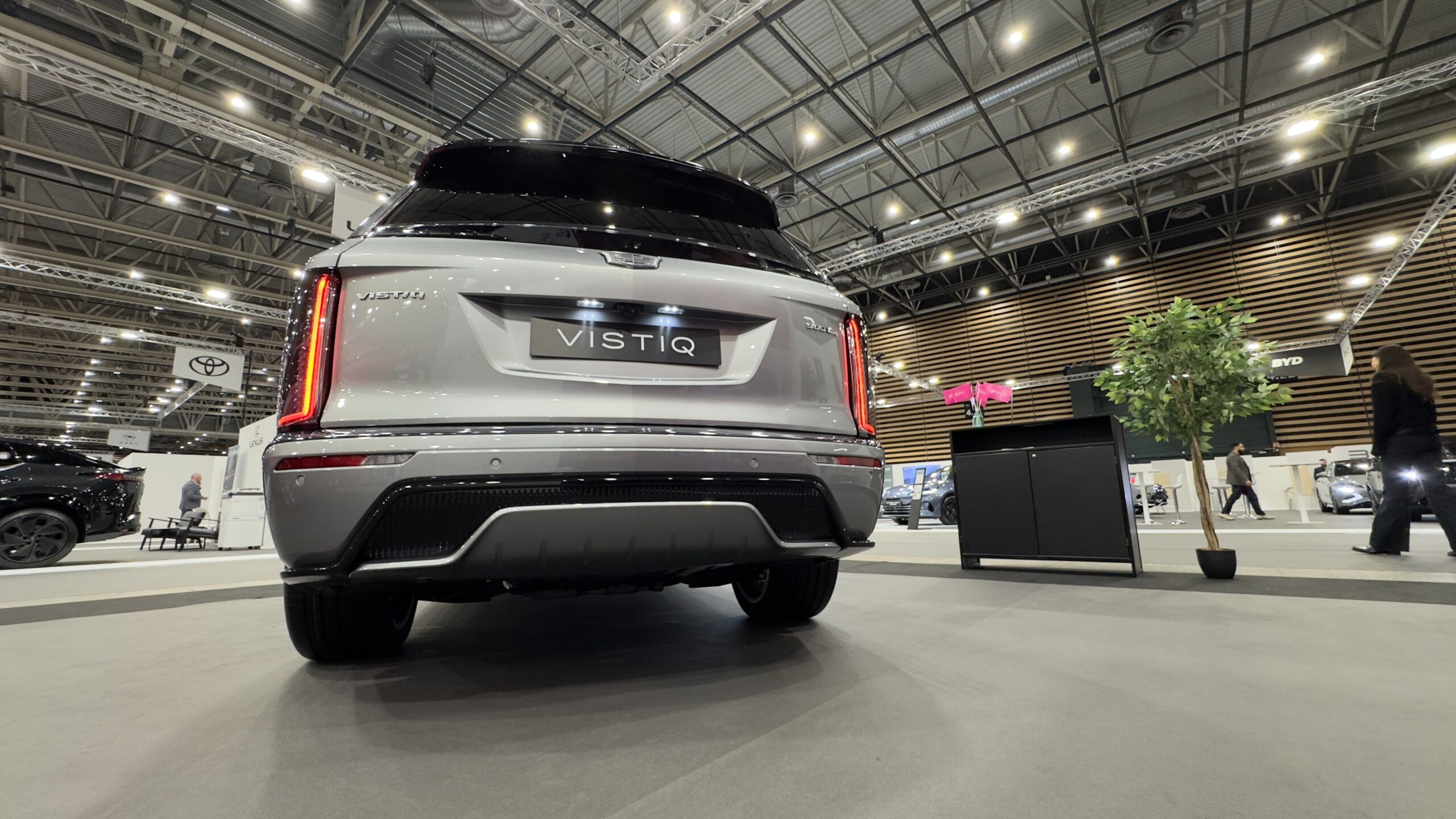
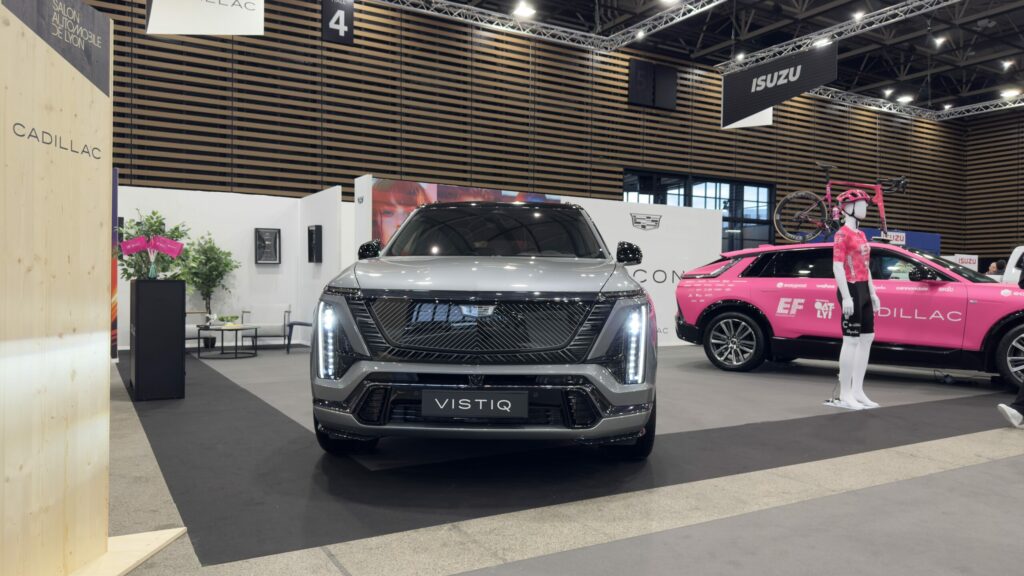
Cadillac took advantage of the Lyon Motor Show to unveil, for the first time to the French public, its new VISTIQ large electric SUV, for which orders are already open in Europe.
If the Cadillac stand catches the eye at the Lyon Motor Show, it’s not because of the number of models on display. No, if you can spot the American brand from afar, it’s because it took the opportunity to unveil its imposing VISTIQ electric SUV to the French public for the first time. We’re already familiar with the LYRIQ, an SUV coupé/breakback that’s already quite substantial, but now we’ll have to get used to its new companion, which is 5.22 m long, 1.80 m high and 2 m wide. That’s what we call, on the Old Continent at least, a beautiful beast.
A family limousine
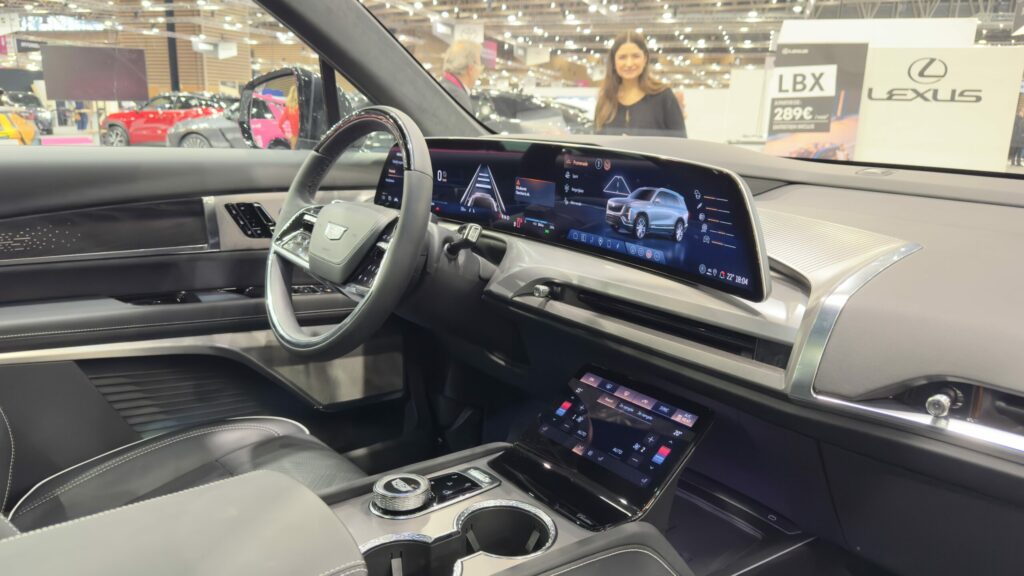
But it’s not just its dimensions that impress. VISTIQ is also a success in terms of design. It exudes luxury and tranquillity: discreet lines, gentle curves and a harmonious whole. A special mention goes to the radiator grille, which is very elegant and not flashy, with a modernised light signature that is nonetheless faithful to the iconic Cadillac front end. Inside, once again, premium reigns supreme. Wood panelling, aluminium, a curved screen – our favourite! – and an augmented reality head-up display. The AKG Dolby Atmos audio system with its 23 speakers is of the highest quality, as are the massaging/heating/ventilated seats.
Credit: ECO MOTORS NEWS
There are 6 seats, with the option of adding a third seat in the second row. Enough to take the whole family on a road trip along Route Nationale 7, the French equivalent of Route 66. And the good thing about such an imposing vehicle is that there’s plenty of room in the boot, even with six passengers: 431 litres! That figure rises to 2,271 litres with the seats folded down.
From 0 to 100 in 4 seconds for VISTIQ
And what about performance? Here again, it’s out of all proportion! With an unladen weight of 2.9 tonnes, you might expect it to drag itself along, but that’s not the case. With 623bhp and 881Nm of torque, its two engines and all-wheel drive allow it to accelerate from 0 to 60mph (96kph) in 3.7 seconds. That’s a hell of a time! In terms of range, it’s pretty respectable for a vehicle of this size and specification, coming close to 490 km, with the promise of a rapid 190 kW recharge that will regain 130 km in ten minutes.
Credit: ECO MOTORS NEWS
With a price starting at around €100,000, the Cadillac VISTIQ is almost alone in its segment. But with the growing popularity of models such as the less expensive G9 from Xpeng, the Detroit-based brand has no choice but to distinguish itself through quality materials, performance and looks. Having seen the beast in action at the Lyon Motor Show, ECO MOTORS NEWS can confirm that it has succeeded!
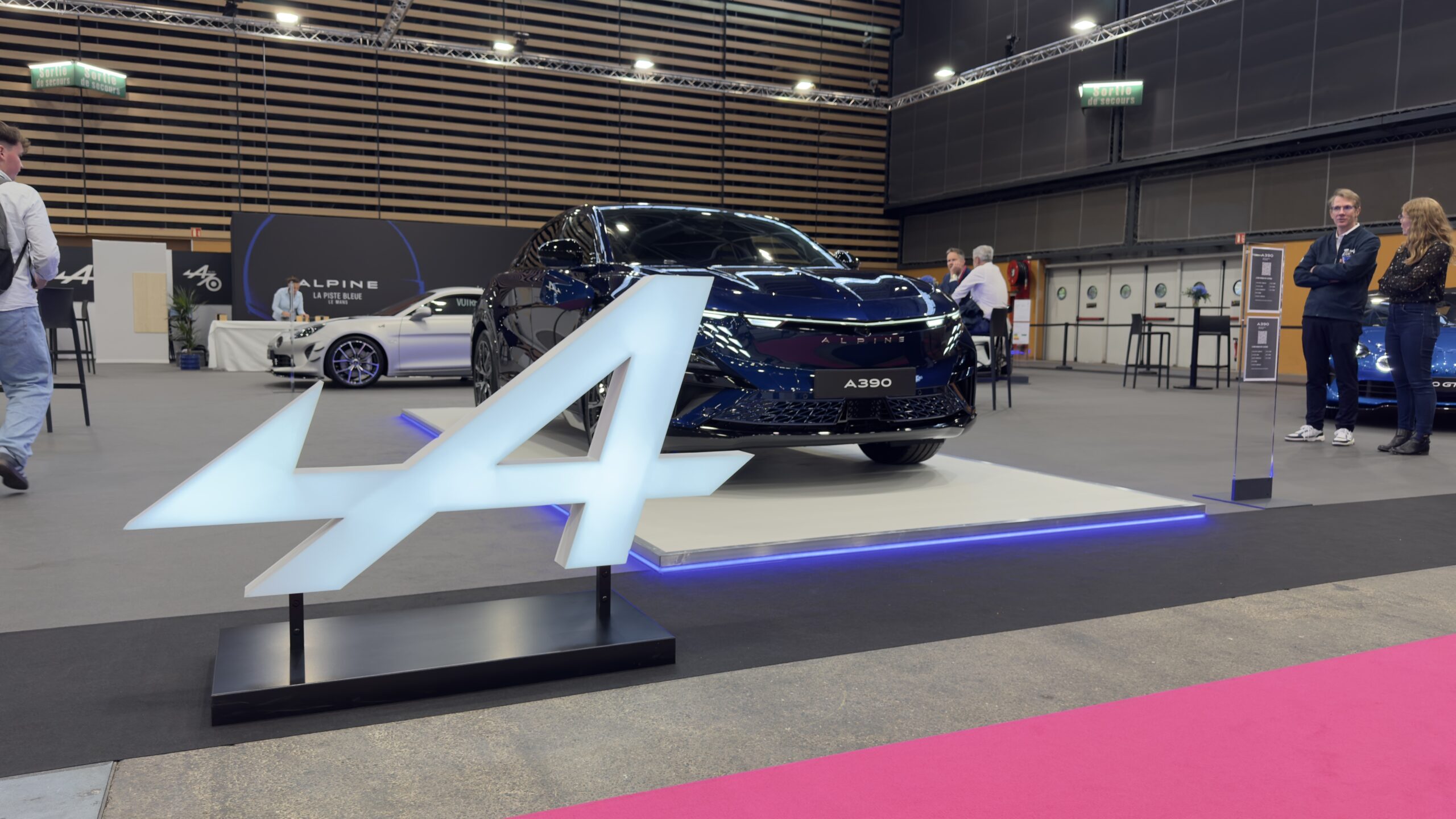
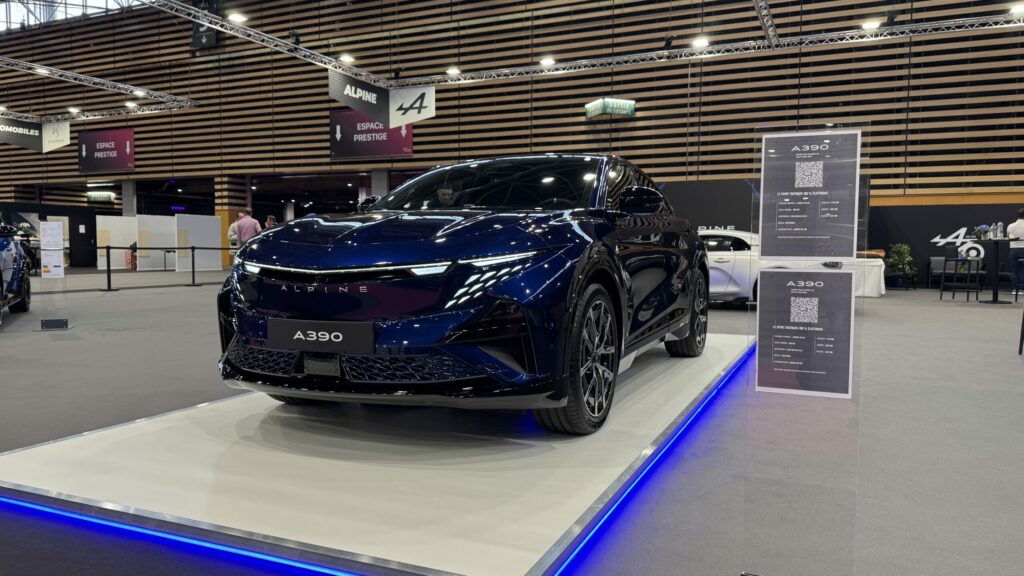
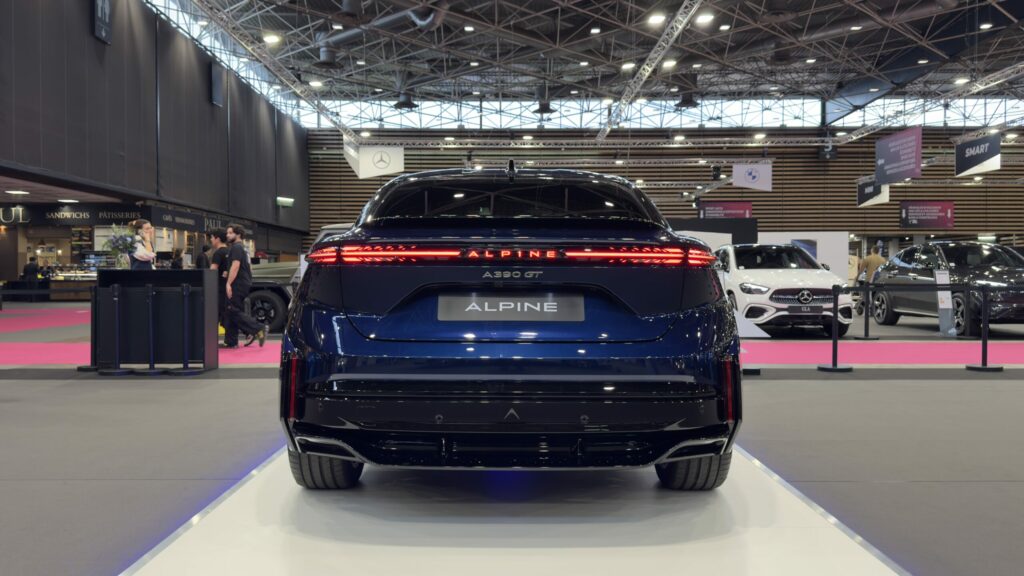
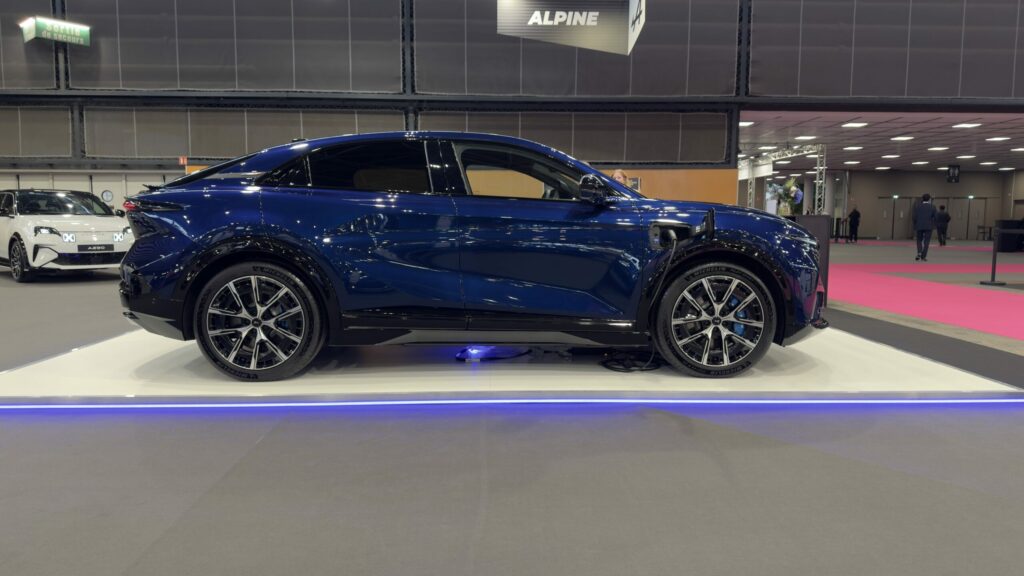
ECO MOTORS NEWS had the opportunity to walk the aisles of the Lyon 2025 Motor Show, and among the most eagerly-awaited exhibitors was Alpine, with the first public showing of the Alpine A390 electric SUV.
Alpine’s presence at the Lyon Motor Show was a fitting way for the manufacturer to celebrate its 70th anniversary. Several versions of the A110 saloon car were on show, including a special anniversary version, but above all – and this is what interests us most at ECO MOTORS NEWS – the Dieppe-based manufacturer highlighted its ‘Dream Garage’, in other words its dream line-up of 100% electric cars. The A290 city car, based on the Renault 5 E-Tech, was on show, as was the season’s big news, the much-anticipated A390 SUV coupé.
Credit: ECO MOTORS NEWS
A390, a real Alpine?
When the A390 was unveiled at Dieppe at the end of May 2025, journalists were only allowed to see photos of the aircraft, and while its simple, effective design was universally acclaimed, it did not arouse the crowds. Well, it turned out to be a pleasant surprise! Indeed, the ‘wow’ factor was certainly there when we saw the beast in the flesh, or rather in metal and watts. At 4.6 metres long and 1.90 metres wide, the fastback silhouette of this relatively massive SUV, with its plunging roof, is a real success. Its design is much more racy and aggressive under the lights of the showroom, with lines that seem to melt into the bodywork. It’s rather elegant, and while the front end is a far cry from the Alpine style, it does have one thing in common: sportiness.
Credit: ECO MOTORS NEWS
This sportiness can also be found ‘under the bonnet’. The Alpine A390 is equipped with three Cléon electric motors made in Normandy, all-wheel drive and a system called Active Torque Vectoring, which the manufacturer promises will give the SUV an “agility worthy of the brand’s reputation“. It delivers the equivalent of 400bhp in GT form and 470bhp in GTS form, enough to easily (and happily) push its two tonnes or so without worrying about either power or driving pleasure, with a 0-100kph time of less than four seconds. But to find out for sure, you’ll have to take it for a test drive!
555 km range and a mission
While Alpine’s DNA is all about sportiness, the A390 is nonetheless an SUV, and SUVs mean high sales expectations. Its mission, therefore, is not only to win over Alpine aficionados, but also to attract new customers. To do that, it offers a decent level of comfort, even if a plunging roof makes it difficult, but the typical architecture of an electric car means that not too much space is lost in exchange. Above all, the brand is promising a range of up to 555 kilometres, which puts it a hair below the Porsche Macan 4S. As for recharging, we’re promised 20 minutes to go from 15 to 80%, again within the market average.
Credit: ECO MOTORS NEWS
These are strong arguments, not to mention the fact that the car is made in France, in Dieppe. The price is not yet official, but we have been told that the GT version could be offered for around €65,000, and the GTS version for around €75,000. One thing is certain: after 70 years of a rich history, Alpine has no intention of giving up. On the contrary, the emblematic Norman manufacturer seems to be taking the electric route with a masterful SUV which, while it may have raised a few eyebrows at the time of its presentation, could well end up putting everyone on the same wavelength.
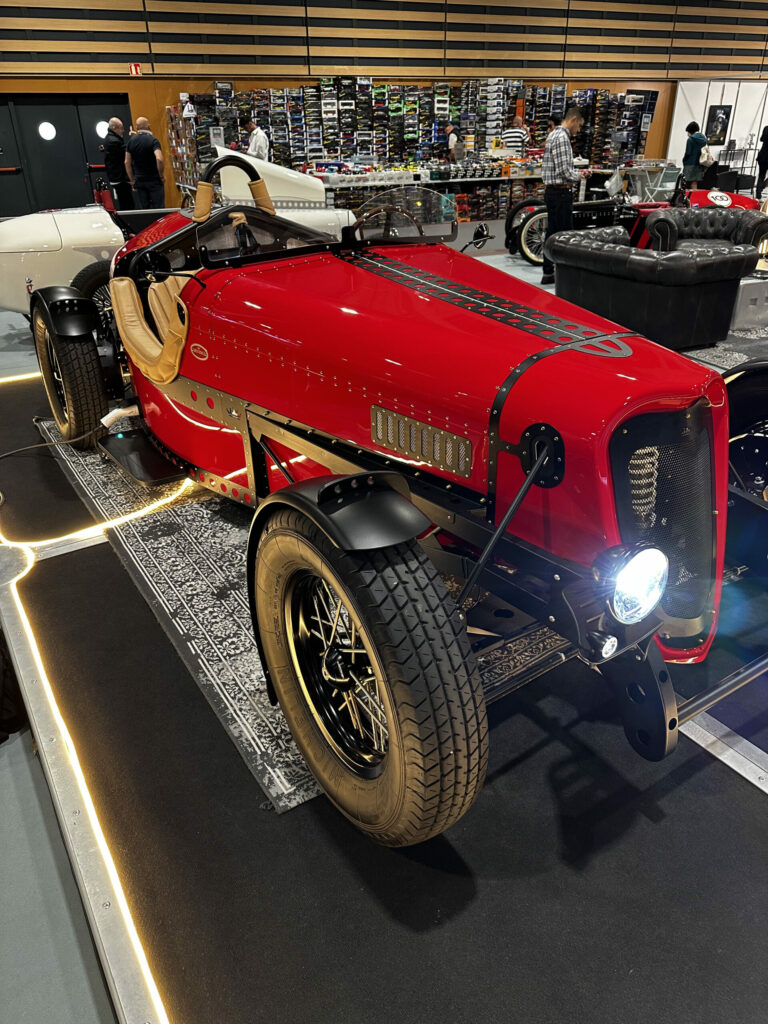
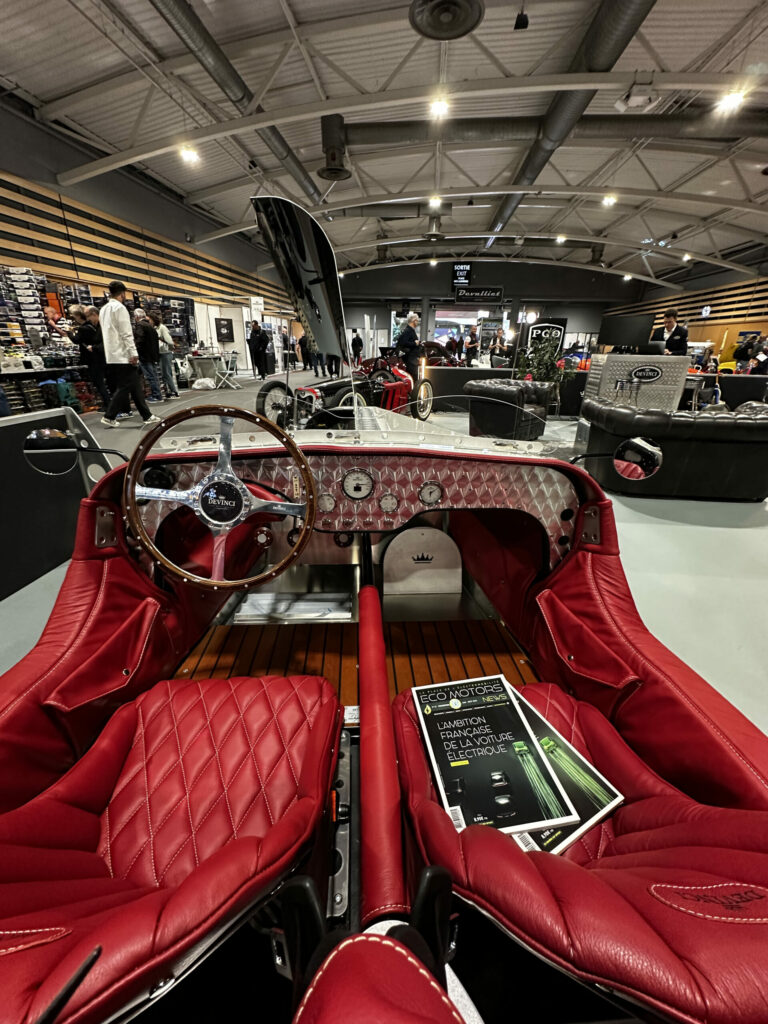
The editorial team had the opportunity to meet the Devinci teams on their stand at the Lyon Motor Show, to find out more about this real UFO of French car manufacturing.
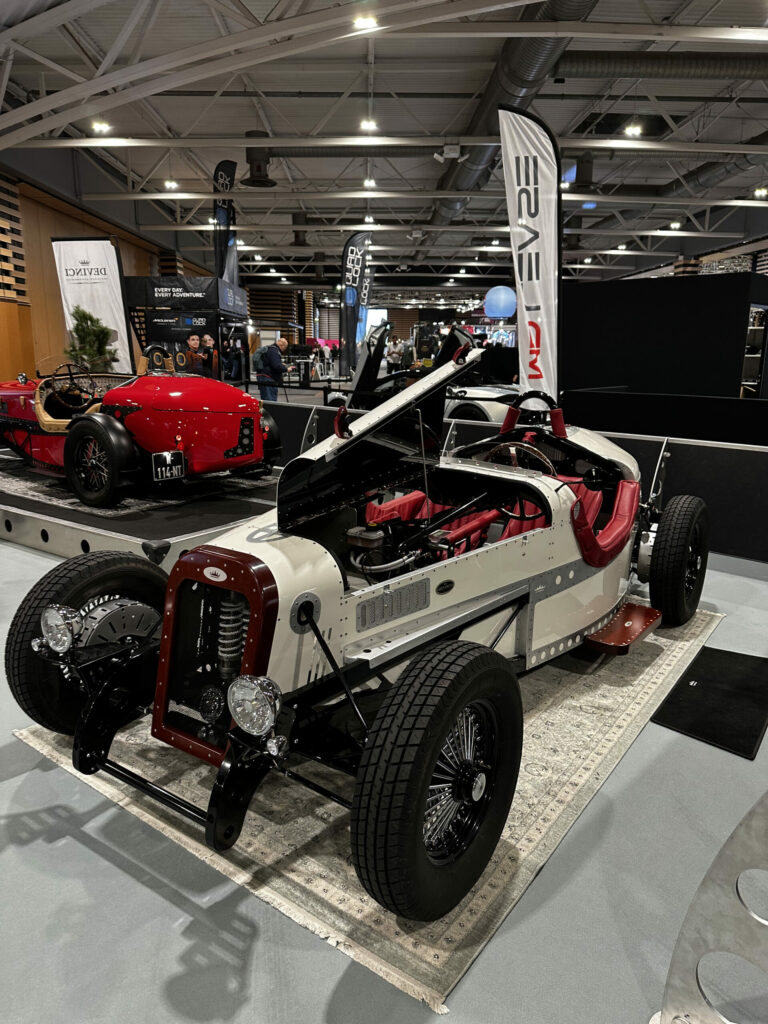
As we wandered the aisles of the Lyon 2025 Motor Show, our eyes fell on a stand that stood out from the rest, that of Devinci. Cars with the racing style of the 30s and 40s, but powered by 100% electric motors, obviously speak to us at ECO MOTORS NEWS. But Jonathan Rouanet, the French manufacturer’s Sales Director, stops us dead in our tracks: the cars are designed and assembled in their workshop at St-Sulpice-la-Pointe in the Tarn region, using parts made by craftsmen, usually in the region and more rarely in the rest of France. Only the electric motors come from abroad, but from neighbouring countries (Germany, Italy). And the batteries? French, but incorporating imported cells. All these details pique our curiosity a little more, and we took some of Mr Rouanet’s time to tell us a little more about Devinci.
Credit: ECO MOTORS NEWS
And we start by taking a step back in time. The brand was created in 2017 by its founder Jean-Philippe Dayraut, a designer and racing driver. Named Devinci, in a nod to the great Leonardo, “acomplete artist and engineer, a visionary inventor and creator of timeless works” with whom the company “shares this vision of know-how that is both technical and artistic” according to Jonathan Rouanet, it presented its first prototypes, the D417s, at the 2018 Rétromobile show. These first cars were “deliberately simple, with leaf spring front suspension, front and rear drum brakes, proportions inspired by the 1930s and a range of around 140 km“. The result? 30 orders! In the industry, for a niche manufacturer just starting out, that’s what we call a hit.
Devinci, objet d’art and… marketing tool
In 2019, Devinci inaugurated its current line-up, comprising four finishes of the same model, improved each year: Brigitte (40 examples), Adèle (10 examples), Marianne (10 examples) and Eugénie (5 examples, one for each continent), priced at €58,000, €75,000, €150,000 and €200,000 respectively (excluding tax). This is an important point, because although Jonathan Rouanet doesn’t identify a typical customer – “my youngest customer is in her twenties, my oldest is in her eighties” – he does note that, in addition to “car collectors and lovers of art or beautiful objects, who don’t necessarily own other cars“, most owners of Devinci models are “company directors who use the vehicle as a marketing tool, for example for estate agencies or 5-star hotels“. In fact, he claims that, more than just cars, Brigitte, Marianne, Adèle and Eugénie serve above all to transcribe values and convey a message more effectively than with more traditional means of communication. And that’s thanks to its positioning.
Credit: ECO MOTORS NEWS
“We are positioned in a completely atypical niche, at the crossroads of several worlds: art and the automobile, industry and craftsmanship, the ancient and the modern“. The result is a real car, thanks to the founder’s “solid experience in motor racing – Formula Renault 3.5, Super Touring, rallies such as the Dakar“, but with the look of a rolling, chic, vintage work of art, all powered by modern electric power. The brand has already delivered its cars to some twenty countries around the world, and generates more than half its sales abroad.
Big ambitions
And there’s no end in sight for this “continuous and permanent improvement” manufacturer, which has just presented a new front end for its Eugénie model, as well as new Italian engines reserved for the top-of-the-range versions. As Jonathan Rouanet sums up, “each change is an opportunity for a new homologation“, but always with the same ambition: “Tocontinue to promote French excellence on the border between art and the automobile“. And it seemed to work at the Lyon 2025 Motor Show, as the Devinci stand was packed with people, all intrigued by these vehicles that were as anachronistic as they were desirable – further proof, if any were needed, that electric can go hand in hand with chic.
The wooden grille is a perfect illustration of the brand’s retro, artisanal, technical and industrial identity. Credit: ECO MOTORS NEWS
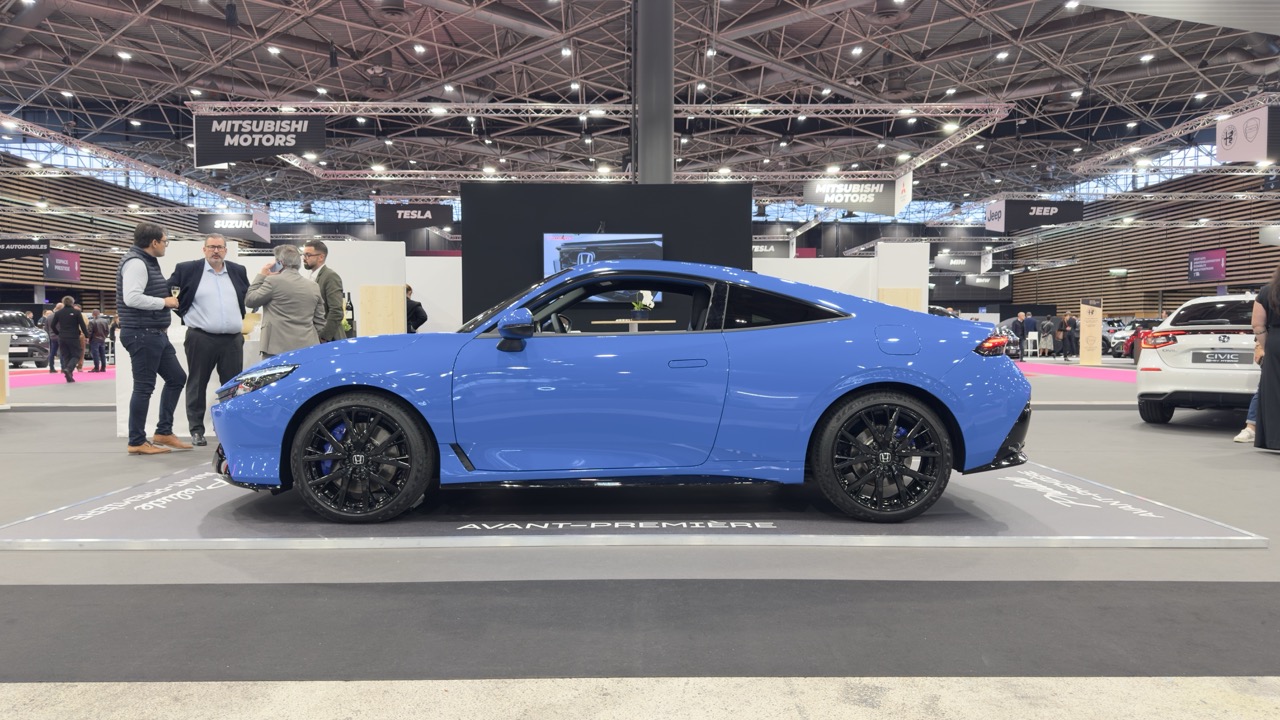
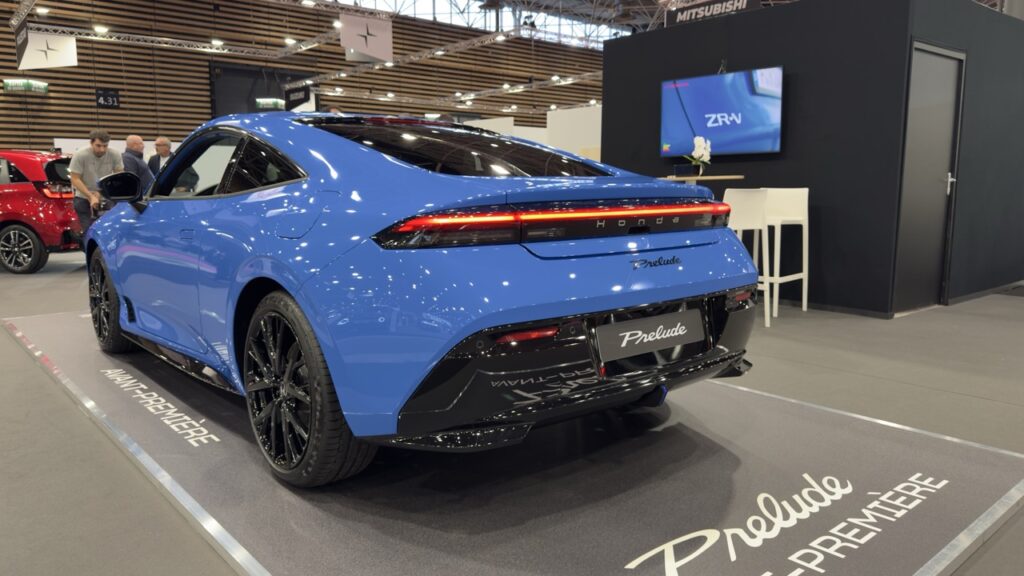
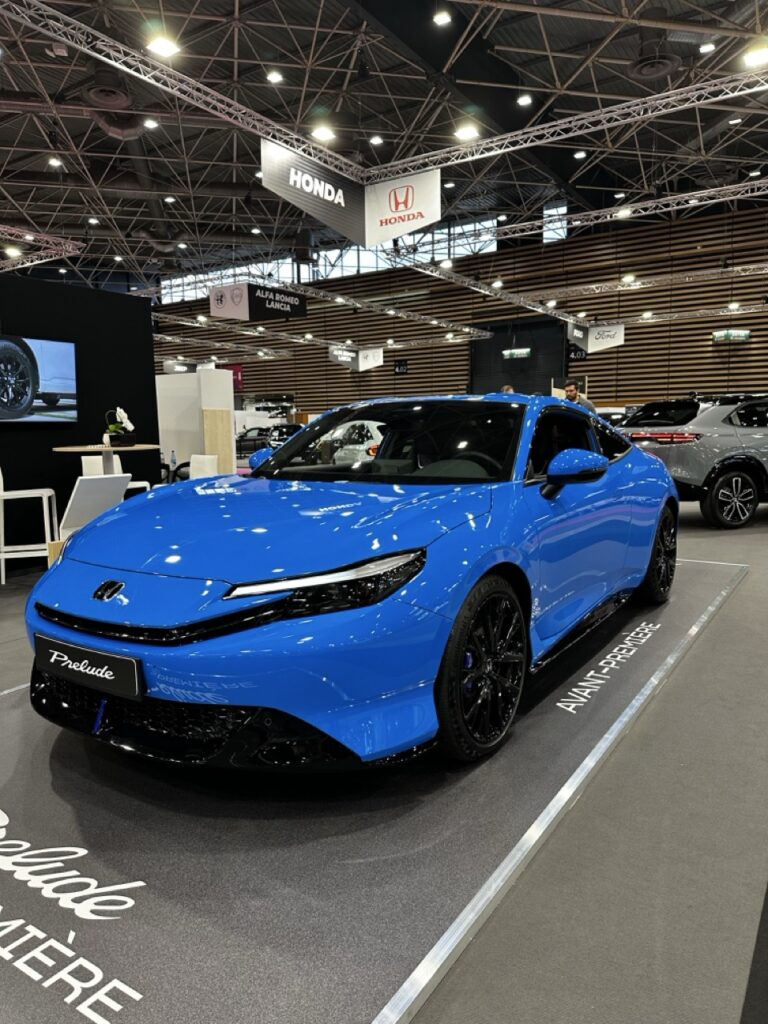
It’s when you stop expecting them that the nice surprises come! That was the case when we discovered the new look of the 6ᵉ generation Honda Prelude in the bays of the Lyon 2025 Motor Show. More than twenty years after it ceased production, the Japanese sports car that marked an entire generation is making its grand return to Europe.
A successful blend of heritage and modernity
At first glance, it’s obvious: the Prelude of 2026 is not the car of yesteryear. Like its ancestors, it retains its sporty silhouette, low lines and dynamic profile – in short, the codes that made it such a success. There’s a sharp front end and a distinctive light signature. The modern touch, meanwhile, is reflected in its compact appearance, aerodynamic details and unmistakable refinement, confirming Honda’s desire to make a sports coupé that is as seductive as it is efficient.
Powertrains and performance: hybrid as a matter of course
The powertrain has been confirmed: the Honda Prelude will be equipped with an e:HEV hybrid powertrain, combining a combustion engine and two electric motors. The chassis is strongly inspired by that of the Honda Civic Type R, a guarantee of sportiness, and the brand is introducing a new S+ clutch mode, which simulates automatic gear changes for a more engaging driving experience. All the more reason to take full advantage of the 200bhp developed by this sports car.
In Lyon, the new Honda Prelude was presented as a model steeped in history, with a modernised silhouette and a hybrid powertrain, a sign that Honda wants to combine heritage and energy transition. It remains to be hoped that this version, which is due to arrive in Europe in early 2026, will be able to stand on its own two feet and not remain in the shadow of its predecessors.
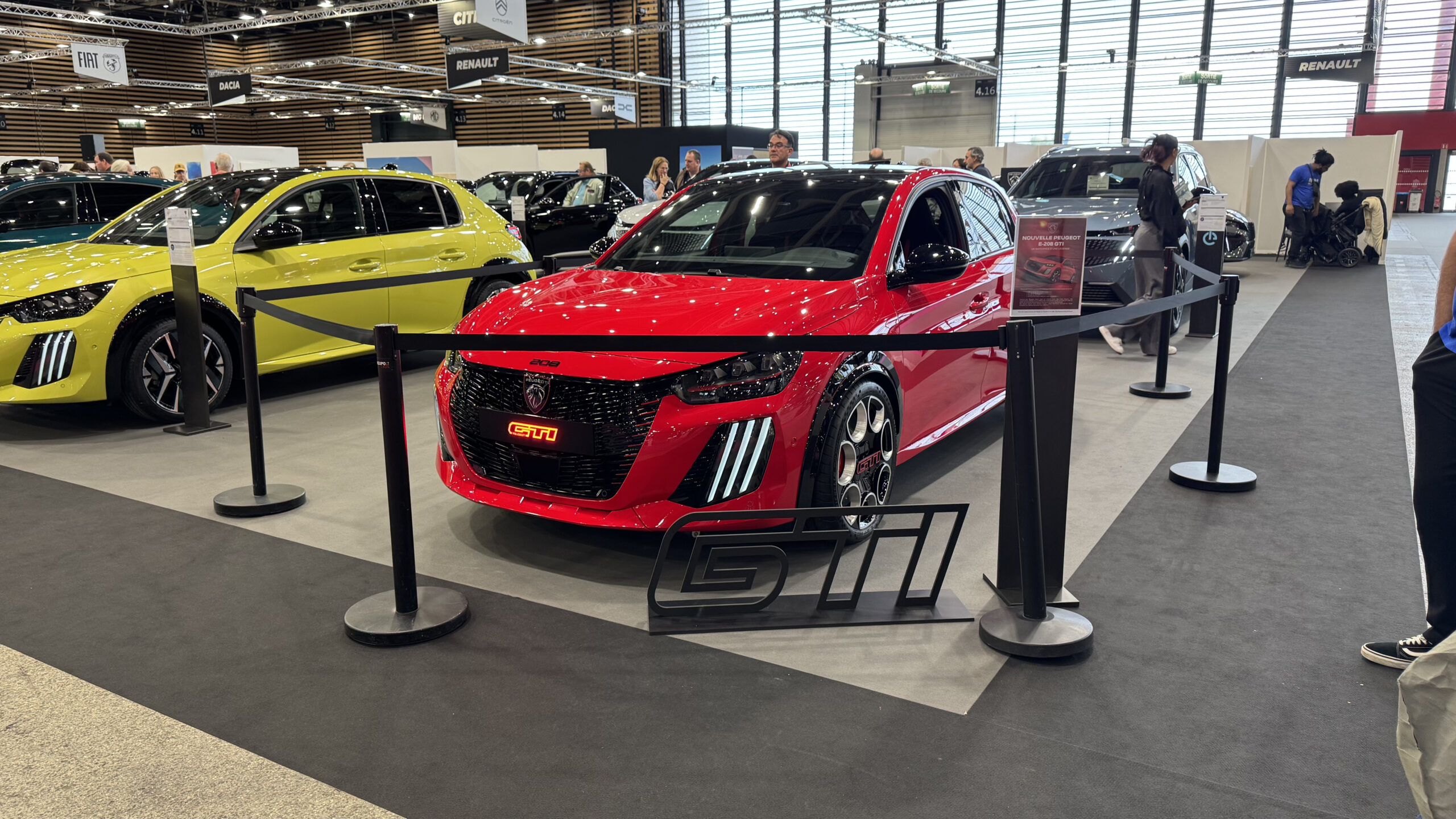
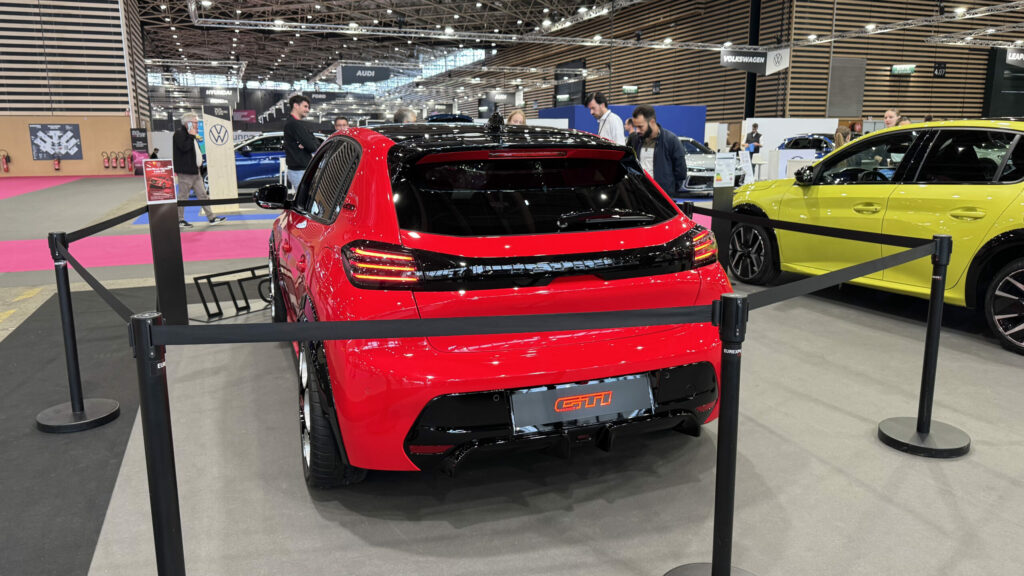
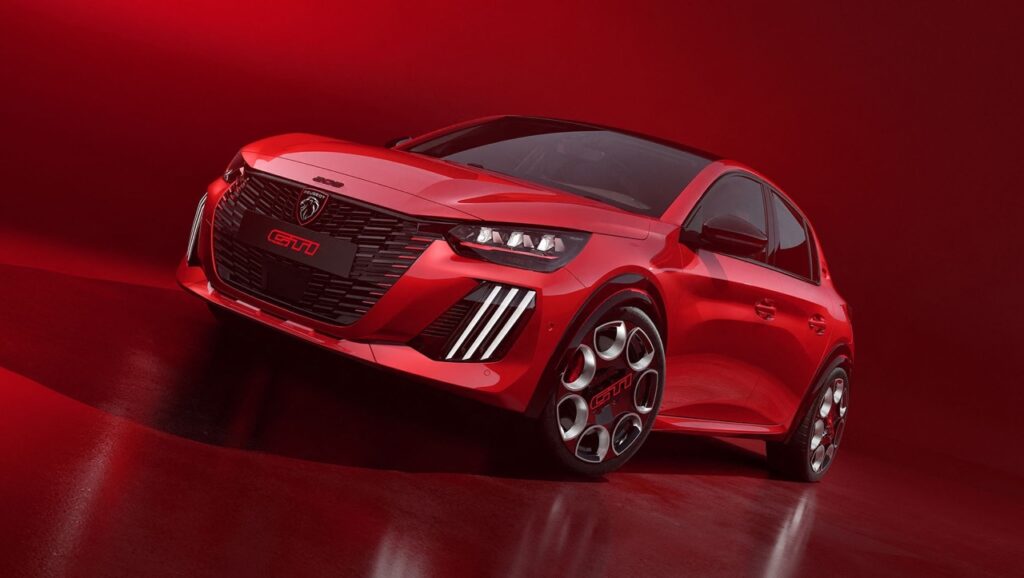
The star of the Peugeot stand at the Lyon 2025 Motor Show is undoubtedly the E-208 GTi show car, which combines desirable design, great performance and passion, all in 100% electric form.
Presented at Le Mans last June, the Peugeot E-208 GTi had not yet reached the general public. Now it has, in the form of a show car – a car that is very close to the production model, but not yet 100% – at the Lyon Motor Show, which runs until September 28 in the capital of France. The red livery is a real eye-catcher, attracting journalists and visitors alike. ECO MOTORS NEWS was no exception to the rule, and was mesmerised…
Credit: ECO MOTORS NEWS
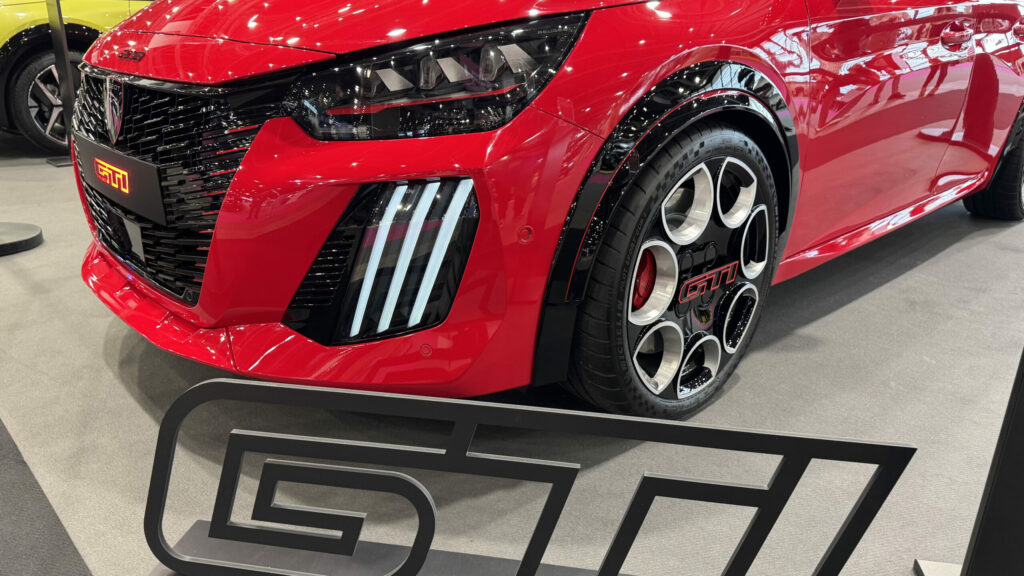
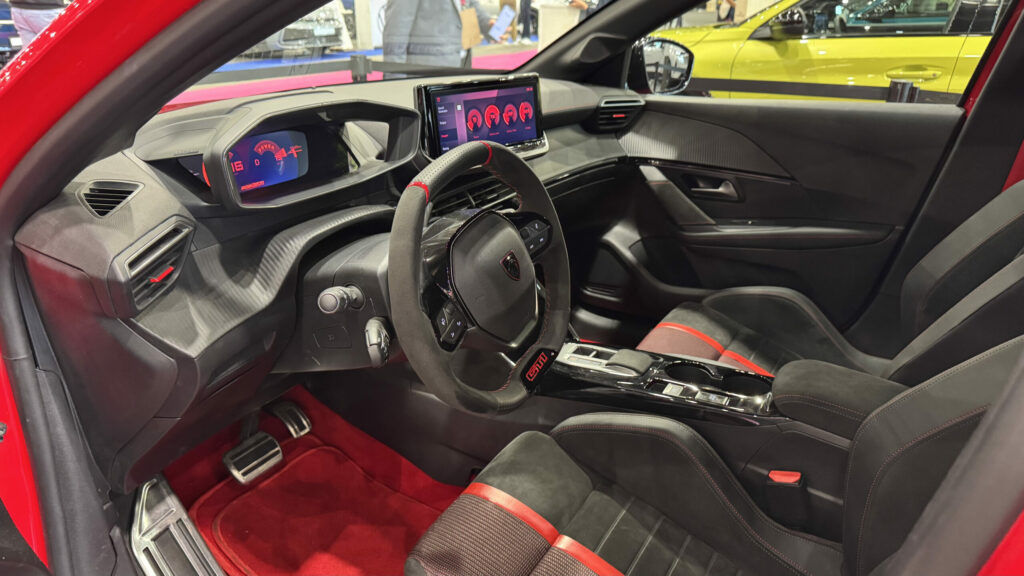
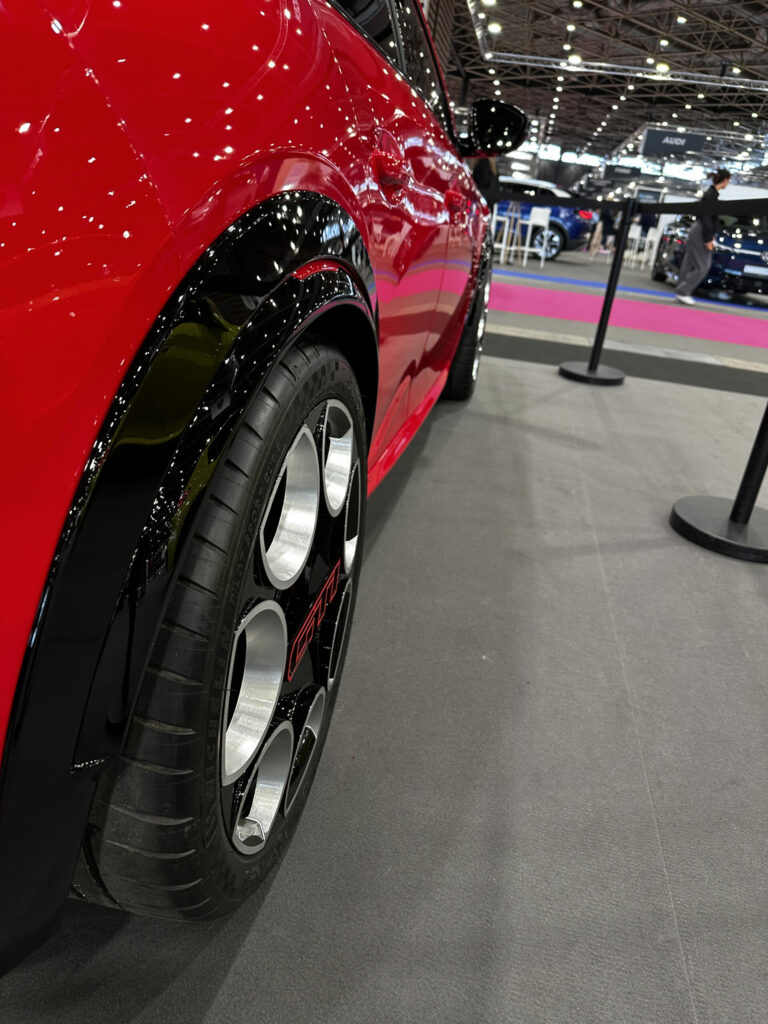
Firstly, there’s the design. This E-208 GTi respects the codes of the more classic version. But some details seem to be infused with sportiness. 18-inch wheels in XXL wheel arches, spectacular diffusers at the rear, wider wings and a lowered chassis are rather subtle, but this was also the case with the 205 GTi, for example. There are plenty of references to the latter, particularly inside, with the return of the red carpet, 205-inspired seats and aluminium pedals.
Credit: ECO MOTORS NEWS
The technical specifications of the Peugeot E-208 GTi are mouth-watering
It now remains to be seen whether this E-208 GTi will be able to stand up to the comparison with its illustrious ancestor. Designed entirely by Peugeot Sport, it promises 280 bhp, a 0 to 100 kph time of 5.7 seconds and a torque of 345 Nm – which is immediately accessible, as is also the advantage of electric over petrol engines. In other words, the 205 GTi’s signature ‘kick in the pants’ should also be found behind the wheel of this E-208 GTi. Peugeot has also announced a range of 350 km, which is rather respectable, even if, on a model of this type, this seems rather secondary…
Credit: ECO MOTORS NEWS
Still at the show car stage, Peugeot’s electrically-powered compact should, of course, go into series production. There’s no exact date on the stand yet, but spring 2026 seems an achievable target…
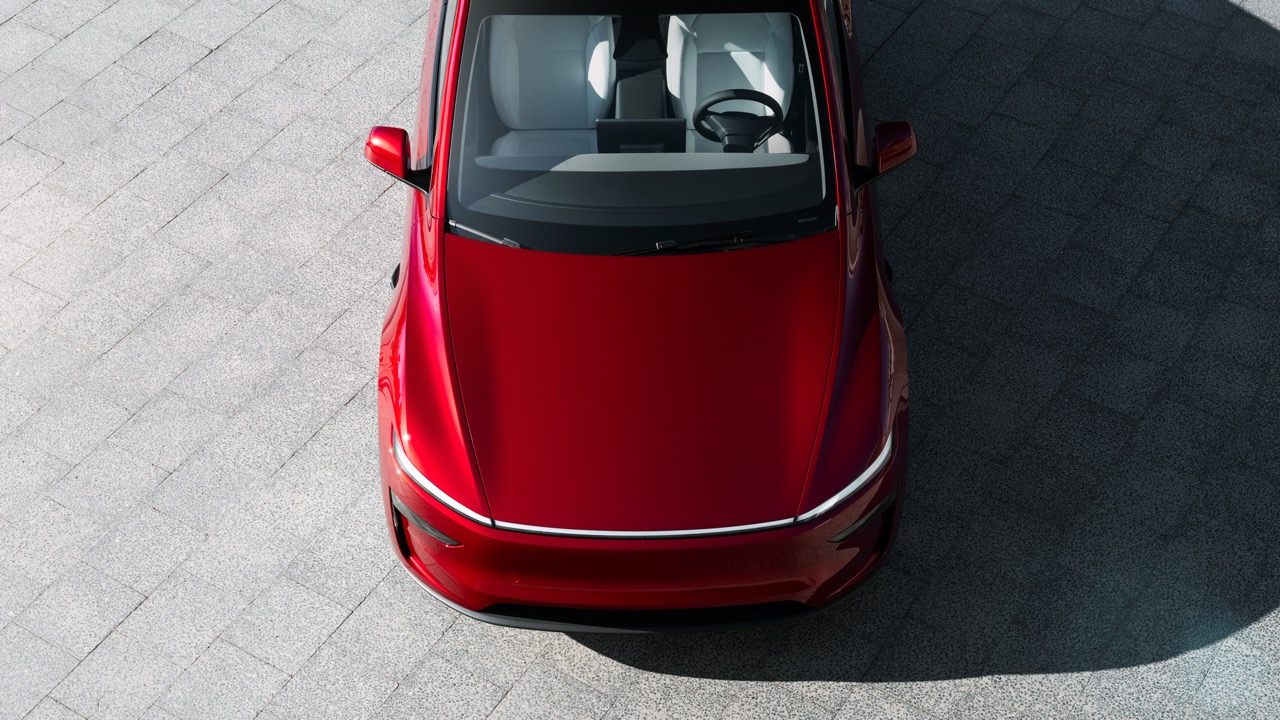
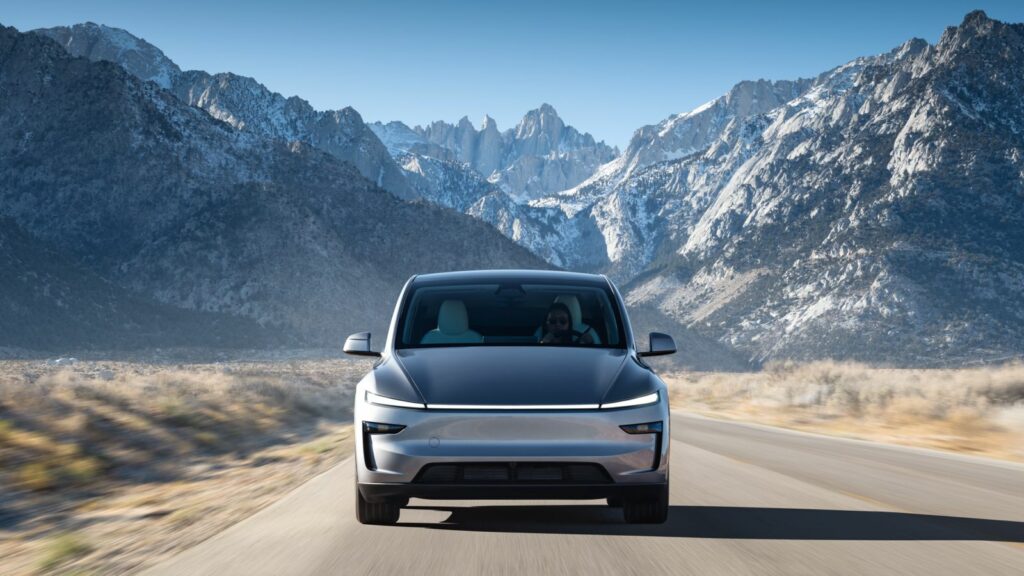
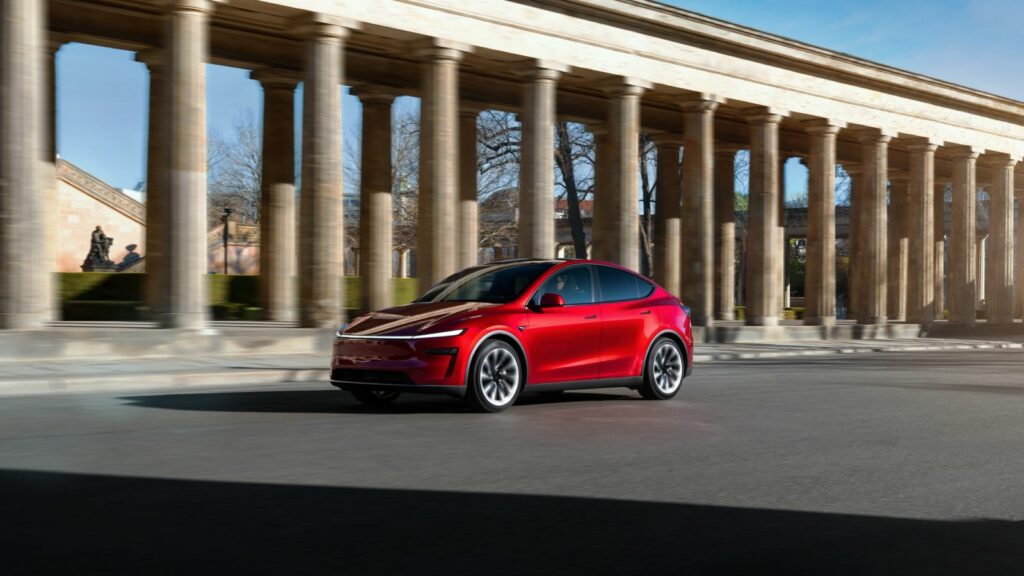
A big part of the reason why Tesla is facing trouble nowadays is the Model Y. It is the brand’s most popular product and yet it is recording big sales drops across Europe. The increasing competition, its old age, and the facelift introduced in Q1 2025 are all contributing to a 34% drop on its registrations through July 2025.
Nevertheless, this compact to midsize SUV was still the region’s top-selling pure electric vehicle. The data from JATO Dynamics indicates that between January and July Tesla registered almost 74,500 units of the Model Y. This is considerably lower than the 112,100 units registered during the first seven months of 2024, but enough to put it in the top spot in the BEV sales ranking by models.
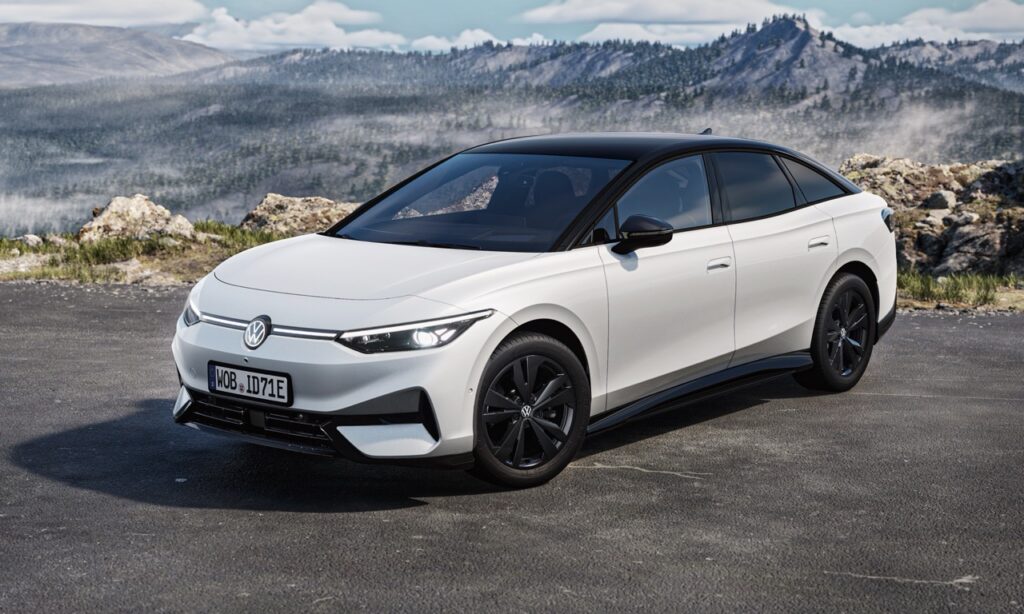
The result is even more remarkable after seeing the strong growth posted by the following models in the ranking. The data shows three Volkswagens at the second, third, and fourth positions, with all of them posting double- and triple-digit growth. The Volkswagen ID.4 increased its volumes by 35% and yet it was almost 28,000 units behind the Model Y.
Volkswagen IDs products’ increases came at the expense of a lower position of the Tesla Model 3, which was outsold by the Volkswagen ID.7. In January-July 2024, the Model 3 was Europe’s second most popular BEV, falling to the 5th position this year. This Tesla is already 9 years old.
The other winners
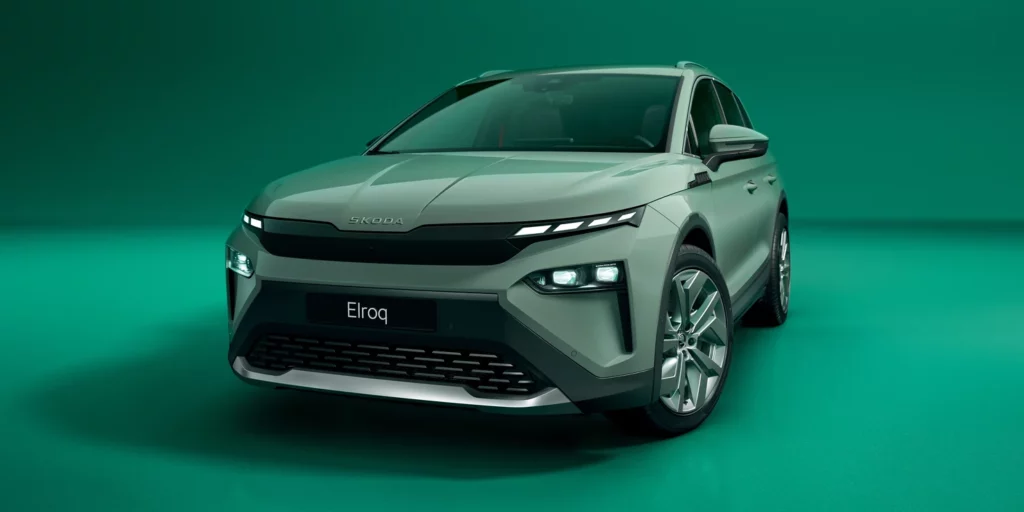
The Skoda Elroq was the most successful recent BEV launch in Europe with almost 43,000 units, at 6th position. It was followed by the also recently introduced Kia EV3 with 40,900 units, and the new Renault 5 with 39,900 units. None of them were available a year earlier. They are proving to be successful within the small BEV world. The top 10 was completed by the Skoda Enyaq with 38,900 units, and the BMW iX1 with 37,800 units.
Further down the list the Audi Q6 e-tron at 11th position registered 28,900 units, while Citroen registered 24,900 units of the electric C3, becoming the top-selling BEV from Stellantis occupying the 16th position in the BEV ranking. Ford seems to have finally taken off with the Explorer EV with 22,500 units, outselling others like the Renault Scenic (20,900 units), Hyundai Kona (19,900 units), and the Kia Niro (5,900).
In contast, the initially successful Volvo EX30 has lost ground with its volumes down by 43% (partly affected by the tariffs on Chinese BEVs), as well as its bigger brother the EX40, down by 37%. Another Chinese BEV to drop dramatically was the MG4 (-54%). Stellantis saw mixed results as the Peugeot 3008 was up by 156% to 12,900 units while the volumes of the Peugeot 2008, Fiat/Abarth 500, and Peugeot 208, fell by 19%, 49%, and 57%, respectively.