Blog

  • Chevrolet shatters the range record with its Silverado EV electric pick-up truck

    Chevrolet shatters the range record with its Silverado EV electric pick-up truck

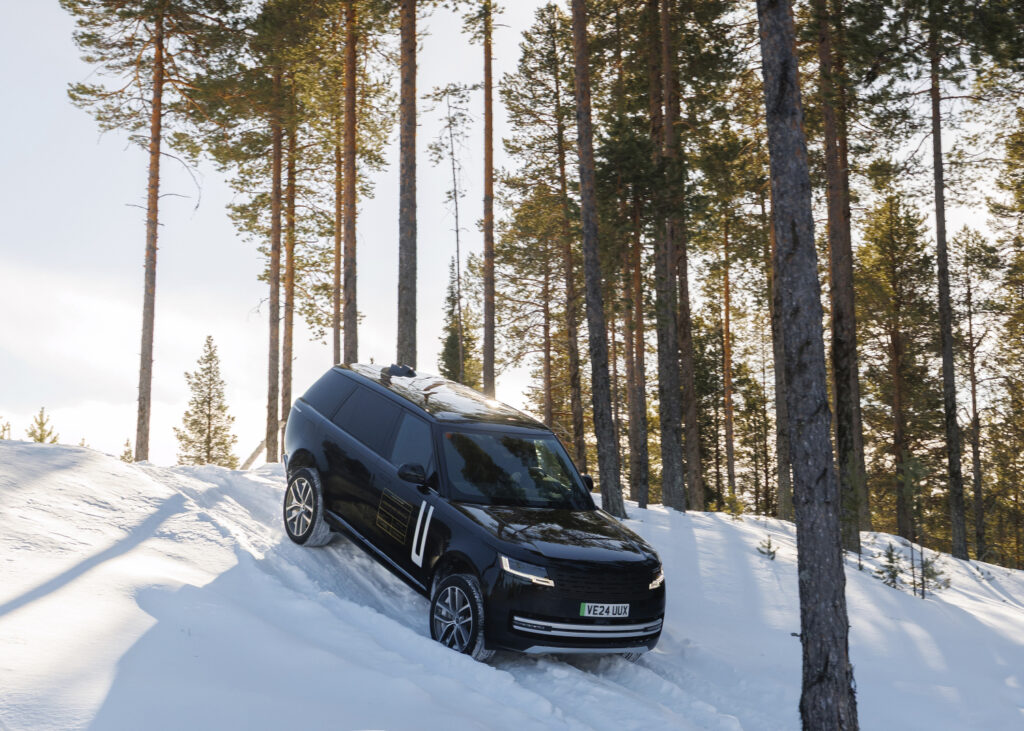
    Chevrolet has set a new world range record with its Silverado EV electric pick-up, covering 1,704 km on a single charge. A feat achieved under ultra-optimised driving conditions that are difficult to reproduce in everyday life.

    Chevrolet Silverado EV electric long-distance, record range of 1704 km on a single charge
    The Chevrolet Silverado EV electric pick-up has broken a world range record, covering 1,704 km without recharging. (Credit: Chevrolet)

    A technical feat in extreme conditions

    The test was conducted by General Motors engineers on open roads near the Milford test centre in Michigan. What’s more, the Silverado EV Max Range has a giant 205 kWh battery, twice the capacity of a Tesla Model S. To beat the record, the average speed remained between 32 and 40 km/h, a far cry from everyday use. The tyres were inflated to maximum pressure and the alignment was optimised to reduce rolling resistance. The spare wheel was also removed and the body covered with a cover to improve overall aerodynamics. The air conditioning remained switched off, and no passengers were seated for most of the journey.

    A much more modest official autonomy

    On the market, the Max Range version claims an official range of around 740 km, according to the homologation results. This figure, already high, falls to around a third of the record in real traffic conditions. During the test, average fuel consumption was just 12 kWh/100 km, a remarkable score for a vehicle weighing 3.8 tonnes. By comparison, some electric saloon cars achieve this level at normal speed, but with a much lower weight and a more aerodynamic profile.

    A symbolic record

    Above all, this challenge shows the major impact of ultra-optimised driving on the range of electric vehicles. However, under normal conditions, it is impossible to hope to reproduce this figure without sacrificing speed, comfort and payload. Chevrolet concluded the event by using the Silverado to power a 3D printer making the record trophy.

  • On the road for the holidays, motorists are more aware of electric cars

    On the road for the holidays, motorists are more aware of electric cars

    A summer campaign is informing holidaymakers about the advantages of electric mobility. Free educational kits are being distributed on motorways.
    Family on holiday near a wind farm with their electric car
    A family enjoying a holiday near wind turbines with their electric car.

    A national operation supported by Avere-France

    The CEE Advenir Formations programme is launching a campaign at the main motorway service areas from 8 August 2025. The aim is to take advantage of summer traffic to reach as many motorists on holiday as possible. The campaign already took place at Whitsun with 32,000 kits distributed. It will return in August with a similar format and a presence every weekend.

    Fun learning kits

    Each kit contains two brochures explaining electric mobility. A family quiz card game invites you to test your knowledge. A simulator shows the ecological and economic benefits of electric vehicles. The fun format makes it easy to tackle a technical subject in an accessible way.
    A measurable impact on motorists

    According to the ROOLE media, a survey of 529 people carried out in June confirms the effectiveness of the approach. 40% of those surveyed were already using an electric vehicle before the operation. 85% said they had learned new information thanks to the kit they had received. Over 90% said that their perception of electric vehicles had changed for the better.

    Distribution dates and locations

    • From 8 to 10 August: Sorgues, Narbonne Vinassan Nord, Saint Léger Est, Sainte Victoire.
    • From 15 to 17 August: Montélimar Est, La Riviera Française, Ambrussum Nord, Béziers Montblanc Nord.
    • From 22 to 24 August: Saint Rambert d’Albon Est, Vidauban Sud, Corbières Sud
    • From 29 to 31 August: Mornas les Adrets, Toulouse Sud, Poitou Charentes Nord.
  • 4 kWh/100 km: the incredible gamble of a Normandy start-up

    4 kWh/100 km: the incredible gamble of a Normandy start-up

    500 km of range and a recharge in ten minutes. A start-up from Normandy is aiming to revolutionise electric mobility with a ground-breaking prototype.

    LINE electric car from FacteurDix, 500 km range and consumption of 4 kWh/100 km
    LINE, the electric prototype designed by FacteurDix, promises record autonomy and energy efficiency (Credit: FacteurDix).

    A response to the energy consumption of cars

    In France, cars account for 30% of national energy consumption. Marc Guillemaud and Aurélien Roulleaux Dugage, two engineers from Normandy, want to change this equation. They founded FacteurDix in 2024 in Saint-Romain-de-Colbosc, near Le Havre. Their aim: to reduce the energy consumption of an electric vehicle by a factor of ten. The result: LINE, an aerodynamic, lightweight and ultra-efficient three-wheeler.

    A sober design

    LINE weighs less than 500 kg, thanks to composite materials from the boating and aeronautical industries. Its teardrop profile reduces air resistance and optimises efficiency. With a reduced frontal area, it achieves a drag coefficient of 0.28 m². By comparison, the best Tesla is 0.51 m². This design delivers record fuel consumption of 4 kWh/100 km.

    Performance worthy of a classic road car

    LINE reaches speeds of 165 km/h and offers a WLTP range of over 500 km. It recharges from 20% to 80% in ten minutes using a 100 kW charging point. This performance means it can be driven on the motorway at 130 km/h for two to three hours.

    Despite its small size, the car is still very safe, with airbags, ESP and ABS. The engine is compact and light, with torque close to that of a Lotus Elise.

    An ambitious industrial project

    The prototype is being built by Faster in Plaisir (Yvelines), a specialist in experimental vehicles. FacteurDix expects the vehicle to be approved in 2027, before going into production. Ten examples will initially be offered to investors and ambassadors. Between 2028 and 2029, the aim is to produce 500 vehicles a year. From 2030, production could reach 10,000 units a year.

    An assertive positioning

    The target price has been set at around €30,000. The start-up is targeting a public that is aware of climate issues and looking for something original. LINE could also be attractive as a second car or for professional fleets. FacteurDix aims to become a Mission Company by 2026. The company is committed to reparability, sustainability and local job creation.

  • Profile of electric car owners in France

    Profile of electric car owners in France

    As the electric car market is still relatively new and growing rapidly, it is of interest to consultancies and pollsters, who are constantly publishing studies on the subject which, when aggregated, produce a profile of the typical electric car owner in France.

    Man driving an electric car in France, seen from behind
    A discreet portrait of an electric car owner in France, behind the wheel of his vehicle. (Credit: Michael Kahn)

    We know that they are men (nearly 70% of owners), private individuals, aged between 46 and 48 according to the studies (much younger than those with combustion engines, whose buyers of new cars are approaching sixty), mostly city dwellers, who invest in new cars. Technophiles, they generally have a charging point at home – a figure that rises to 90% for house owners – and, despite comfortable incomes, they tend to go for the most affordable models, which they acquire by leasing. Finally, in the first few months of 2025, French electric vehicle owners were more inclined to buy… French! In fact, the top 10 electric cars sold in France in recent months include six models from French manufacturers.

    The main motivations

    For this typical buyer and all the others, the decision to go electric is the result of a number of factors. The first is, of course, consumers’ growing ecological awareness. Reducing their carbon footprint (in use) and making their own contribution to curbing climate change are the main reasons for considering the purchase of an electric car, particularly among younger people, which explains why the average age of electric vehicle owners is lower than that of internal combustion customers. But this is not the only argument in favour of ‘watted’ cars. While the average purchase price of an electric car is always higher than that of a combustion engine, the running costs are lower, maintenance is less frequent and more expensive, and it is possible to benefit from state aid to reduce the bill. Add to this the numerous financing options, from long-term leasing (LLD) to leasing with an option to purchase (LOA), and the wallet can manage without too much damage. The new generation, for whom the car seems to be primarily a utility object rather than a collector’s item, seems more inclined to lease their vehicle and to change it more often than their elders.

    In the same vein, shifting gears after rattling the rev counter, listening to the hum of a V8 and changing the oil, filters and spark plugs in the garage on Sundays is a little less thrilling for these new buyers, who prefer a vehicle that is quiet, easy to drive and packed with technology.

    Car park full of electric cars in France
    A mass of electric vehicles in a car park in France, reflecting the widespread adoption of electric cars.

    Persistent obstacles

    But let’s not kid ourselves. If the electric car market is growing rapidly, it’s mainly because it started from scratch and has been boosted by various political measures, both in France and in the European Union. Consumers are still faced with a number of obstacles to the purchase of an electric car, the most important of which is range. This is the number one concern for more than 80% of French people, even though on average they only drive around fifty kilometres a day. In addition to this – slightly exaggerated – fear of a breakdown, there’s the worry of not being able to find charging points. With 160,000 charging points spread across the country, France is not lagging behind, and is even aiming for 400,000 by 2030. By way of comparison, there are only 10,000 service stations in the whole country! But the argument is still valid, particularly for people living in rural areas who often have no choice but to install a charging point at home, given the long distances between charging stations.

    Finally, although we mentioned above that electric cars can be interesting from a financial point of view, money is still a barrier for most households. This can be explained by the fact that the second-hand market for electric cars is still very small. Logical, given that a French owner keeps his or her electric vehicle for an average of 5 years before selling it on, and that a large number of these vehicles in the French fleet have been on the road for less than 5 years… There are grounds for optimism.

    Towards democratisation?

    All the lights are green for the democratisation of electric cars (and electric mobility in general) in France and Europe. Carmakers have switched, are switching or are planning to switch to 100% electric cars, from the most mass-market to the most luxurious, driven by the desire to change things, to attract new, younger consumers who are concerned about the environment, but above all by the local policies imposed on them. In 2035, quite simply, it will be forbidden to sell new combustion-powered vehicles. And 10 years is the minimum time needed to ensure that the transition is complete by then.

    The ambitions for infrastructure dedicated to recharging electric vehicles are very high, but so far in France, one target after another has been met, giving us confidence for the future. The same goes for innovations to extend the range of electric vehicles, battery recycling and battery manufacture – all areas of uncertainty and concern for French consumers that should become clearer over the next few years. The main question is whether, by 2035, the sketch we drew up in the introduction will be any different from that of 2025? Not for sure, but if there is a real democratisation of electric mobility, it will be much more complex to establish!

  • Honda & Sony collaboration: The “Afeela 1” enters pre-production, a historic step for Sony and electro-mobility

    Honda & Sony collaboration: The “Afeela 1” enters pre-production, a historic step for Sony and electro-mobility

    Sony is leaving the show floor to take to the pavement – a major first for the renowned tech brand. After Xiaomi’s arrival on the market with its YU 7 and SU7 Ultra, it’s Sony’s turn. The Japanese brand, historically known for its televisions, consoles and cameras, is taking an unprecedented step into the automotive sector. It is now entering the pre-production phase of the Afeela 1, its first 100% electric car.

    Designed and built in partnership with Honda, assembly of the model began on Wednesday 30 July 2025. It will take place at Honda’s East Liberty plant in Ohio, USA. This is a decisive step in making the project a reality.

    Sony Afeela 1 electric car exterior view in pre-production
    The Afeela 1 electric saloon, the fruit of collaboration between Sony and Honda (Credit: Sony)

    Presented in prototype form at CES in Vegas in 2023, and then in a near-complete version in January 2025, the Afeela 1 was until then no more than a “promising concept”. It is now becoming a concrete industrial product in the making, with deliveries scheduled from mid-2026 for the first American customers.

    A strategic turning point for Sony

    This is the first time that Sony has entered the automotive industry in such a concrete way. And it’s no mean feat. The company is bringing to this project its expertise in key areas: sensors, on-board software, interfaces, AI – everything that is shaping the future of the connected car today. The Afeela 1 is as much a saloon car as a digital terminal on wheels. With screens all over the dashboard, facial recognition at the entrance, high-level in-car entertainment and cutting-edge driver assistance systems, technology is not just an add-on, it’s at the heart of the project.

    Where are we now?

    This entry into pre-production is much more than a simple test phase. In this pivotal phase, the engineers go through every stage of assembly with a fine-tooth comb. They check the fit of the parts, the quality of the materials, the precision of the welds and the robot chains. This is when we check that what has been designed on screen can actually be mass-produced, without a hitch or error. In concrete terms, we move from theory to practice. We test the vehicle, but above all we test the factory itself. Because a car as technologically advanced as the Afeela cannot tolerate any approximations. Pre-production allows us to correct any remaining faults. It also serves to fine-tune industrial processes and anticipate sticking points before the launch. In short, this is the stage that transforms a concept into a reliable product.

    Interior of the Sony Afeela 1 electric car with a driver on board
    Immersive digital interface on board the Afeela 1, with a real-life driver. (Credit: Afeela)

    In designing this vehicle, Sony could not have gone so far without Honda. The two companies signed a partnership agreement in 2022 with the creation of Sony Honda Mobility, forming an unprecedented collaboration between the tech and automotive industries, which, given the cross-fertilisation of these two sectors, could inspire other companies to join forces. The launch of pre-production shows that the collaboration is working. The assembly lines are in place, assembly tests are beginning, and the production rate will be gradually increased over the coming months.

    An example paving the way for new alliances?

    Behind the scenes, this initiative is also sending out a message to the general public: the energy transition is no longer just a matter for traditional car manufacturers. The growing involvement of technology players like Sony is helping to accelerate the integration of electric cars into the public arena. And if other companies of this calibre follow suit, world opinion could move more quickly towards mass adoption, making electric mobility truly universal.

    Too much technology?

    The fact remains that this rise in technological power is not universally accepted… In barely two decades, the automotive world has moved from a world centred on the driving experience, mechanical sensations and the feel of the chassis to an environment increasingly controlled by technology, where panoramic screens, on-board algorithms and voice assistants now play a central role in the driving experience. Emotion, on the other hand, cannot be downloaded. It remains to be seen whether this energy transition will really lead to the end of the car that moves.

  • The French electricity industry faces the challenge of global competition

    The French electricity industry faces the challenge of global competition

    France is banking on electric vehicles to secure its industrial and environmental future. In 2024, production of electric vehicles jumped by 68%, driven by iconic models such as the Renault 5 electric and the Peugeot e-3008. But in a market dominated by China and the United States, the French industry must redouble its efforts to remain competitive. Between innovation, relocation and economic pressure, the French electric vehicle industry is at a turning point.

    Peugeot e-3008, compact electric SUV with luxurious interior
    Peugeot e-3008, a 100% electric SUV with a neat, modern interior design

    The French government has set an ambitious target of 800,000 electric vehicle sales per year by 2027, up from around 300,000 in 2023. This will be accompanied by accelerated development of charging infrastructure, with a target of 400,000 charging points installed by 2030. To encourage consumers to take the plunge, schemes such as the ecological bonus and social leasing at 100 euros a month have been introduced. However, these incentives are gradually being reduced, a sign that the market needs to become more self-sufficient.

    At the same time, French carmakers are investing massively to offer vehicles that are more efficient, more autonomous and more accessible to a wider customer base. However, there are still many challenges to be overcome, such as the still high purchase price, the cost of batteries, uncertainties over critical materials, and the resistance of some consumers to new powertrains.

    Strategic investment for greater autonomy

    Faced with Europe’s dependence on Asian imports of batteries and rare materials, France has embarked on a policy of industrial sovereignty. Several gigafactories are currently under construction, notably in the north of the country, with the aim of producing batteries locally and reducing logistical and environmental costs. In Dunkirk, a Franco-Chinese partnership between Orano (formerly Areva) and XTC New Energy Materials, announced in December 2024, plans to manufacture battery components. This €1.5 billion ambition, conceived as part of the NEOMAT project, raises both hopes and questions about technological dependence on China.

    Map of France showing the locations of future electric battery gigafactories
    Map showing the sites planned for future gigafactories producing electric batteries in France

    Raw materials are also a major issue. The energy transition depends to a large extent on rare metals such as lithium, cobalt and nickel, the extraction of which is highly concentrated in a few countries, particularly in South America and Africa. To secure these resources, France and Europe are seeking to diversify their supplies and invest in projects to recycle used batteries.

    Fierce international competition

    While electromobility in France is making progress, it faces intense competition. Tesla, with its plant in Berlin, is flooding the European market and dominating sales with its Model Y, which has become the benchmark electric SUV thanks to its range, performance and ultra-developed recharging network. This local presence enables Elon Musk’s brand to avoid customs duties and speed up deliveries in Europe, strengthening its dominant position.

    China, meanwhile, despite French restrictions on aid for vehicles produced outside Europe, is making its mark with brands such as BYD and MG Motors. These manufacturers are banking on very competitive prices and advanced technologies, particularly in terms of batteries and energy efficiency. BYD, which develops its own lithium-iron-phosphate (LFP) batteries, enjoys a strategic advantage by reducing its production costs and offering high-performance models at attractive prices. Blade Battery technology currently offers capacities of 61.44 kWh and 80.64 kWh, giving a range of between 433 and 552 kilometres according to the European WLTP homologation cycle. Chinese-controlled MG Motors is also attracting interest with its well-equipped, affordable vehicles, increasing the pressure on European manufacturers who are struggling to compete in the entry and mid-range segment.

    The French industry is seeking to distinguish itself through the quality of its vehicles and their integration into a national energy ecosystem. The government is supporting this approach through the France 2030 plan, which aims to produce two million electric vehicles a year in France by 2030, by mastering cutting-edge technologies such as electric motors and batteries. Producing more affordable vehicles is one of the major challenges. Several projects aim to develop models costing less than €20,000, while guaranteeing satisfactory range and durability. For example, Renault plans to market an electric version of the Twingo in 2026 at a price of less than €20,000.
    Public charging station for electric cars in car park
    Public recharging station facilitating the mobility of electric cars in urban areas.

    A key role for public policy

    To support the industry while speeding up the ecological transition, subsidies for the purchase of electric vehicles will be gradually reduced, from €1.5 billion to €1 billion by 2025. At the same time, stricter taxes on internal combustion vehicles are being introduced to encourage consumers to switch to electric vehicles.

    France is investing in battery recycling to limit its environmental impact and reduce its dependence on imports of rare metals. Companies such as Verkor and Northvolt are developing innovative solutions to recover lithium, cobalt and nickel, reintegrating these materials into new batteries.

    By focusing on the circular economy, the aim is to secure supply, reduce the carbon footprint and strengthen industrial autonomy. These initiatives are part of a wider strategy to make electric mobility more sustainable and competitive.

    Making the transition more accessible

    The development of electromobility in France must not be at the expense of accessibility for low-income households. Developing a range of low-cost vehicles and extending the recharging network, including in rural areas, are priorities. Electric vehicles must also be integrated into a broader framework of sustainable mobility, including car-sharing and improved public transport.

    Another major challenge lies in training professionals and adapting infrastructures. The installation of charging points needs to be accelerated in condominiums and public spaces, while garages and technicians need to be trained in the specific features of electric vehicles to support their widespread deployment.

    The next few years will be crucial in determining whether France succeeds in establishing itself as a major player in electric vehicles in Europe. With strategic investment, an ambitious industrial policy and a focus on consumer needs, the French automotive industry has a card to play in this global transition.

  • Samsung SDI, the battery at the heart of Lucid’s record

    Samsung SDI, the battery at the heart of Lucid’s record

    With its 21700 cylindrical cells, Samsung SDI propels the Lucid Air Grand Touring to the pinnacle of electric autonomy.

    21700 Samsung SDI cylindrical battery installed in Lucid Air Grand Touring
    Samsung SDI’s 21700 cylindrical battery equips the Lucid Air Grand Touring, ensuring record autonomy (Credit: Samsung SDI)

    A world record to validate a technology

    The record set by the Lucid Air Grand Touring would not have been possible without the batteries developed by Samsung SDI. Powered by 21700 cylindrical cells, the electric saloon covered 1,205 kilometres on a single charge. This record has been approved by Guinness World Records. The journey, made in July 2025 between St. Moritz in Switzerland and Munich in Germany, demonstrated the vehicle’s real-world performance. It took place in a variety of conditions, including Alpine roads, motorways and secondary networks.

    High-performance cylindrical cells

    The 21700 cells used by Samsung SDI represent a major advance in terms of energy capacity. As a result, they also offer extended life and rapid recharging. This format, which is larger than conventional 18650 cells, offers higher energy density while improving thermal stability. These cells enable the battery to maintain high efficiency even under prolonged loads, an essential advantage for long-distance use.
    An ultra-fast recharging system

    The integration of this battery into Lucid’s electric platform is based on an advanced charging architecture. Thanks to this technological synergy, the pack can recover up to 400 kilometres of range in just 16 minutes. This recharging speed, unprecedented for a production model, is made possible by the optimisation of the cells, the pack and the power electronics developed jointly by Lucid and Samsung SDI.

    A long-term technological partnership

    Samsung SDI and Lucid have been working together since 2016, long before the launch of the brand’s first production model. This strategic collaboration led to the development of the first Lucid Air prototypes. It then led to marketed versions, such as the Dream Edition and the Grand Touring. Together, the two companies have refined an integrated technical solution that combines efficiency, reliability and safety.
    A showcase for battery innovation

    With this record, Samsung SDI is showing that its technologies are not reserved for prototypes or concepts. They are being deployed in production vehicles, accessible to consumers and approved for the road. The company intends to strengthen its presence in the global high-performance battery market. It will continue to invest in R&D (research and development), while consolidating its partnership with Lucid.

  • Mercedes steps up its electric drive: 15 models by 2027

    Mercedes steps up its electric drive: 15 models by 2027

    Mercedes is preparing an unprecedented offensive with 32 new models between 2026 and 2027, half of which will be 100% electric. This marks a strategic shift for the German manufacturer as it seeks to revive its commercial momentum and catch up with the competition.

    Mercedes EQS luxury electric saloon in Istanbul, Turkey, May 2022
    The Mercedes EQS, an electric luxury saloon, illustrates Mercedes-Benz’s growing commitment to the electrification of vehicles, photographed in Istanbul in May 2022.

    A response to falling sales

    Mercedes is going through a difficult period, with sales down by 3% in 2024 and 6.2% in the first half of 2025. To reassure its investors and counter the rise of Tesla and Chinese brands, the manufacturer is betting on the most ambitious product plan in its history.

    From 2026, 18 models will be launched, followed by a further 14 in 2027. Of these, 15 will be 100% electric vehicles, across all segments.

    Electrification across the range

    Mercedes is planning a complete overhaul of its range. At entry level, the new GLA, GLB and CLA Shooting Brake will be offered in both internal combustion and electric versions.

    At the heart of the range, the brand is preparing an electric GLC (presented at the Munich Motor Show 2025) and a zero-emission C-Class, both based on the new MB.EA platform.

    The top of the range is not to be outdone, with ten launches planned, including a restyled EQS, a new small electric G-Class, and an electric version of the AMG GT 4-door.

    Battery cross-section of the Mercedes EQC 400 4Matic electric SUV at the 2019 Geneva Motor Show
    Cross-section of the battery of the Mercedes EQC 400 4Matic, the electric SUV presented at the 2019 Geneva Motor Show, which showcases the technology of Mercedes’ EQ range.

    End of the EQ range announced

    Mercedes is also planning to rethink its design approach. The aesthetic differences between combustion and electric models will disappear, marking the gradual end of the EQ range. Eventually, all vehicles will share the same styling language, whatever their engine.

    AMG enters the electric era without abandoning the V8

    The AMG sports division will accompany the transition with new electric models, including a high-performance SUV and a saloon derived from the GT XX concept. At the same time, Mercedes has confirmed the return of the naturally-aspirated V8 from 2027, which will remain in the catalogue “until the middle of the next decade”.

    A strategic shift, but not a break with the past

    Contrary to its earlier plans, Mercedes will not be phasing out combustion engines in 2030. The manufacturer prefers to use a mix of technologies, in response to the diversity of markets and geopolitical uncertainties.

    With this dual strategy – ambitious electrification and the retention of combustion engines – Mercedes hopes to regain ground in a premium market that is more competitive than ever.

  • Tesla revises its prices in France thanks to the new CEE incentives

    Tesla revises its prices in France thanks to the new CEE incentives

    Tesla is adjusting its prices in France for the Model Y and Model 3, taking advantage of the new CEE bonus scheme, now financed by energy suppliers via Energy Savings Certificates.

    Tesla Model Y seen from the back, eligible for the EEC bonus in 2025
    The Model Y is becoming more affordable thanks to the CEE bonus, with up to €4,200 in assistance depending on the profile (Crédit : Mathis Miroux)

    Model Y: substantial discounts

    Previously excluded from the environmental bonus, the restyled Model Y (“Juniper”) is now eligible for the “electric vehicle incentive”. The rear-wheel drive version drops from €44,990 to €41,810, and even €40,790 for the most modest households. The Grande Autonomie Propulsion version, meanwhile, drops to €42,790.

    These offers are accompanied by an attractive LOA (lease with purchase option), from €299 per month over 36 months, with an initial deposit of €8,450 for a resident of Hauts-de-France.

    Model 3: a direct price cut

    Produced in China and excluded from the main incentives, the Model 3 benefits from a direct discount of €3,100 granted by Tesla, reducing its entry price to €36,980, or even €36,554 with a ‘small’ CEE bonus of €350.

    Offers are valid for all orders placed before 31 December 2025 (Model Y) with deliveries until 30 June 2026, or 27 September 2025 (Model 3), with deliveries before 30 of the same month.

  • Who Can Compete with China in the Electric Vehicle Battery Manufacturing Market?

    Who Can Compete with China in the Electric Vehicle Battery Manufacturing Market?

    China, the undisputed leader in battery manufacturing, has produced more than two-thirds of the lithium-ion batteries currently in circulation. This dominance can be attributed to an immensely powerful industrial network that allows for full internalization of the supply chain. It is also due to competitive manufacturing costs and easy access to raw materials thanks to China’s strong economic ties with key supplier countries.

    Aerial view of the ACC gigafactory in Billy-Berclau, a major battery manufacturing site in France.
    The ACC gigafactory in Billy-Berclau, France, is a leading European battery manufacturing facility focused on advancing EV battery production. (Credit: ACC)

    However, with the recent and spectacular rise of electric vehicles (EVs), Europe and the United States, among others, are investing heavily in developing their own production capacities to secure energy independence.

    At the same time, promising technological innovations are emerging, aiming to revolutionize battery performance and sustainability—particularly in terms of size (and therefore weight).

    They also focus on the use of minerals whose extraction often sparks controversy.

    “Made in Europe” Batteries: Between Strategic Independence and Chinese Investments

    It’s clear—based on both government announcements and the inauguration of new factories in recent years—that Europe is aiming to become a major player in electric vehicle battery production. By 2033, it’s estimated that nearly 250 factories will be established across the continent.

    This surge is driven by key projects in France, Germany, Italy, Spain, and Norway, among others. If some of them are failing, because of a still fragile market, companies such as Verkor and ACC (initially founded by Stellantis and Total, now with Mercedes-Benz among its shareholders) in France, and Italvolt in Italy are taking the lead.

    This vibrant European ecosystem has quickly attracted the attention of… the Chinese! Envision, based in Shanghai, has built gigafactories in Douai, France, and Sunderland, UK, in partnership with Renault and Nissan, respectively.

    Similarly, CATL, the undisputed global leader in EV battery manufacturing, has teamed up with Stellantis—the two companies that plan to invest over €4 billion—to build a factory in Zaragoza, Spain. This will be CATL’s third factory in Europe after Germany and Hungary, with a fourth already in the pipeline. Its location has yet to be announced.

    Finally, BYD, the new global leader in EV sales, has already opened two factories in Europe and is considering a third. These partnerships and installations highlight the complex challenge facing European governments: developing a domestic industry to achieve energy independence, while also relying on the very players they hope to free themselves from. This allows them to benefit from their funding and technical expertise.

    The American Industrial Boom

    Lithium-ion battery for Ford electric vehicles made in the USA.
    This lithium-ion battery is manufactured in the USA for Ford electric vehicles, highlighting America’s growing battery manufacturing industry. (Credit: Ford)

    In the United States, the 2022 Inflation Reduction Act (IRA) has sparked a true boom in the construction of EV battery factories. An unprecedented surge has brought dozens of gigafactories, most still under construction, within the “Battery Belt” spanning ten states from Georgia to Michigan.

    In addition to Tesla, which is already well-established, Ford, General Motors, Hyundai, Toyota, and others are investing heavily, supported by federal tax credits provided by the IRA. From just two such factories in 2019, the U.S. now has around thirty that are either operational or nearing completion. There are over 200 battery-related projects.

    There’s also a wave of startups creating battery recycling solutions that ensure batteries remain within the country for their entire lifecycle. The question remains: what will the Trump administration do about this electrification movement? The 47th President of the United States is a strong supporter of the oil industry.

    Yet he also launched a trade war with China and promised to massively reduce unemployment. Domestic battery manufacturing helps reduce reliance on Chinese imports and, according to several estimates, could create over 100,000 jobs.

    So, between protectionism—fueled by industrialization and electrification—and conservatism—rooted in continued oil reliance—two core features of Trump’s platform, the administration will have to make a choice. But which one?

    New Batteries: Lighter and More Durable

    Scientist working in an electric battery research laboratory.
    A cutting-edge research lab dedicated to developing innovative and sustainable battery technologies for the electric vehicle market. (Credit: ThisisEngineering)

    Far from these geopolitical concerns, technological innovation is steadily progressing and lies at the heart of the battery sector’s transformation.

    Recently, U.S.-based Paraclete Energy developed SILO Silicon, a silicon anode material that reduces battery weight by 50% while doubling range. An 80 kWh pack could drop from 565 kg to just 150 kg. It could also offer a range of over 930 km. A promising outlook!

    Stellantis is also exploring promising alternatives. In partnership with Zeta Energy, the group is developing lithium-sulfur batteries, which are lighter, cheaper, and contain no cobalt or nickel. This dramatically reduces the need for controversial raw materials. These batteries could hit the market by 2030 and be compatible with existing infrastructure.

    Finally, semi-solid battery technology is advancing. Stellantis plans to test Dodge Chargers equipped with these batteries starting in 2026. They offer higher energy density and compatibility with current production lines.

    Whether powered by sand, seawater, air, or carbon—whether they charge as quickly as a gas tank fills, or even offer virtually unlimited lifespans—the batteries of the future are already on their way!