Chinese manufacturer Nio has taken the surprising step of discontinuing its 150 kWh battery. This technology promised over 1,000 kilometres of range, but demand never followed. This decision highlights the real expectations of drivers when it comes to the development of recharging infrastructures.
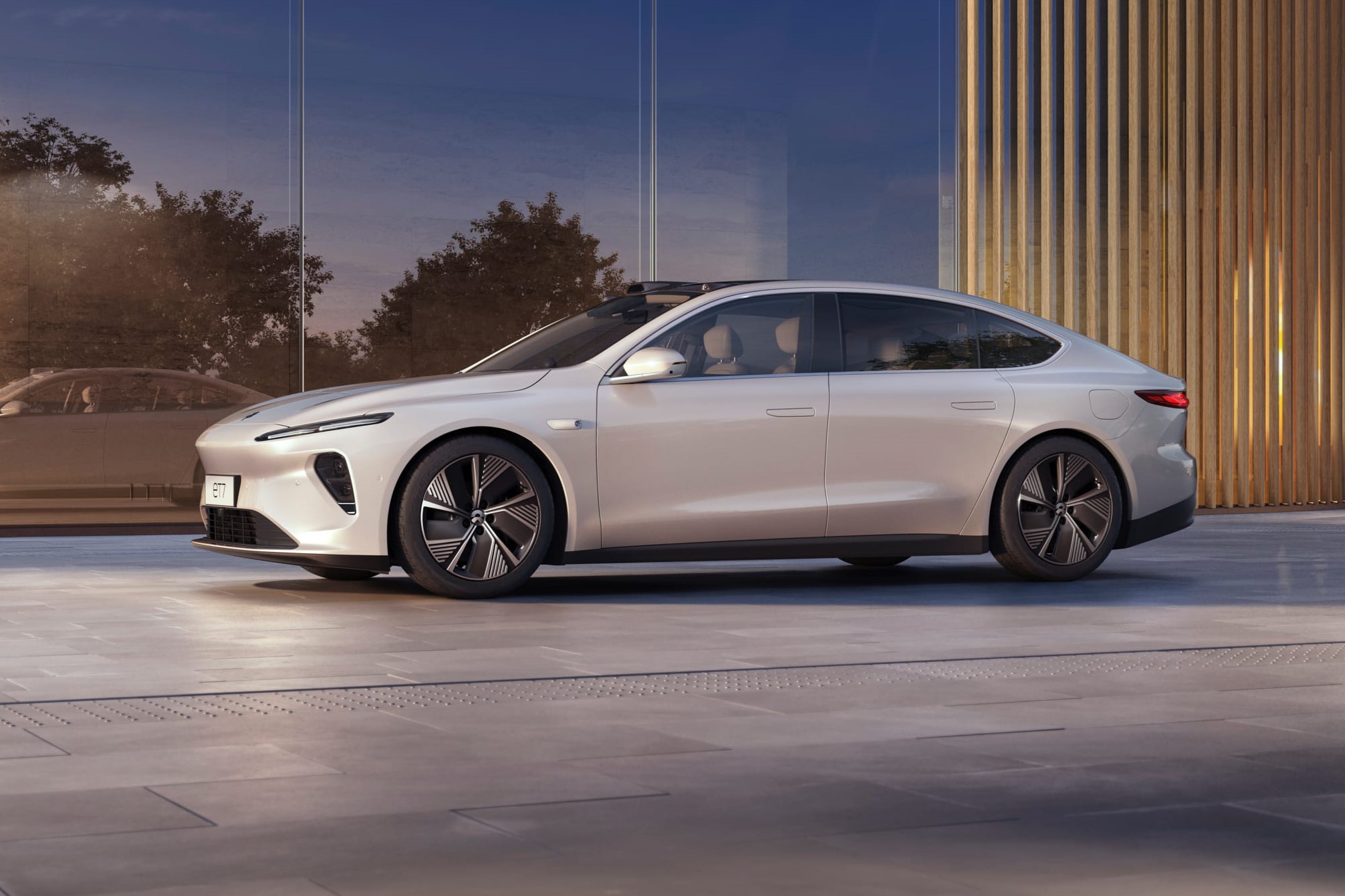
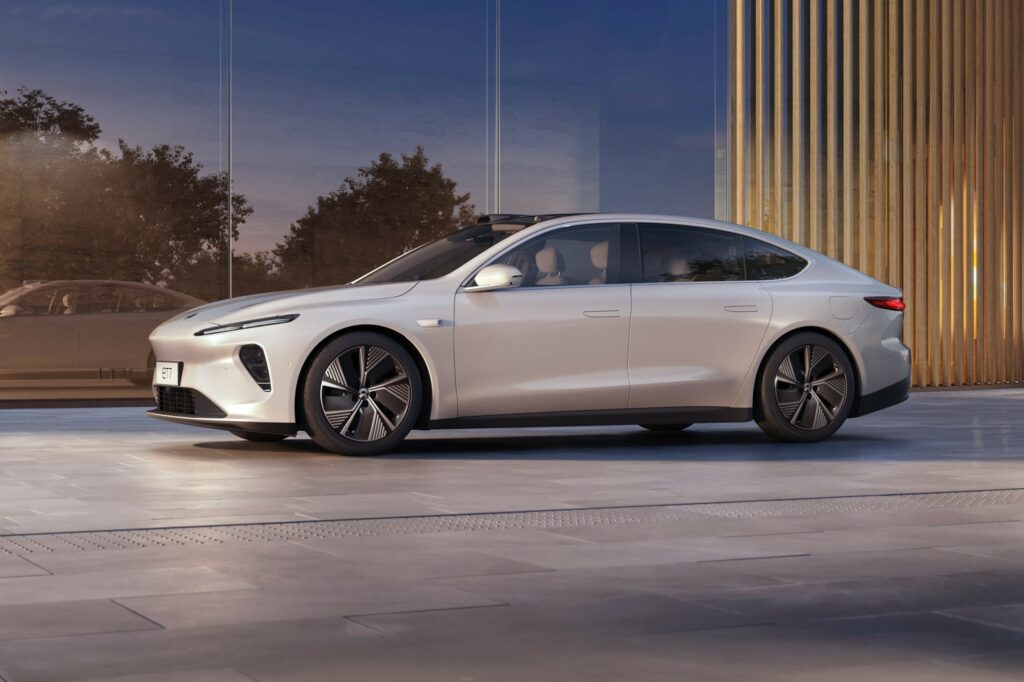
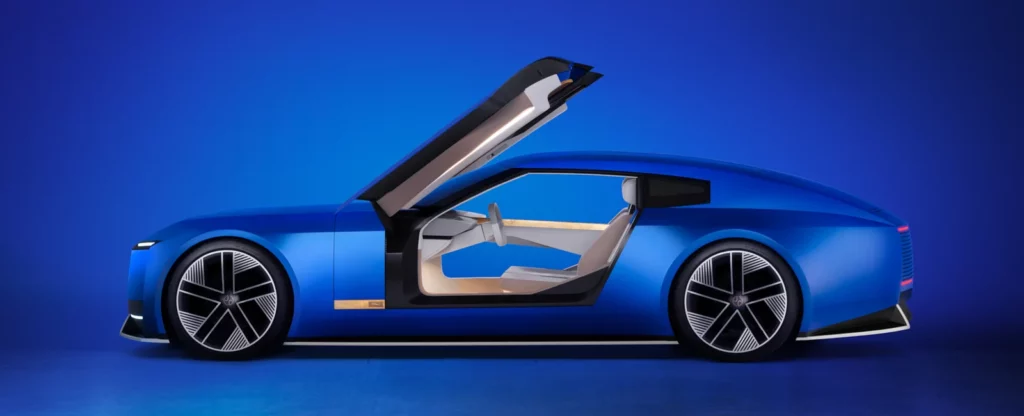
Nio ET7 shown in profile, illustrating its elegant, aerodynamic design (Credit: Nio)
Extreme autonomy that doesn’t appeal
On paper, Nio’s 150 kWh battery seemed revolutionary. In particular, it was fitted to the ET7 saloon and could cover more than 1,050 kilometres according to the Chinese CLTC cycle. In Europe, this represents around 900 kilometres on the WLTP cycle. However, despite this impressive performance, customers have not embraced it. According to William Li, CEO of Nio, the battery was used mainly as a marketing tool rather than for practical purposes. Several hundred units were produced in China, but these numbers were insufficient to maintain production.
The main drawback is the high cost. The battery cost 47,500 euros, the price of a complete Nio ET5. Even the monthly rental scheme, offered as an alternative, did not appeal to motorists. Most consider that a range of over 400 kilometres is already sufficient, especially with today’s recharging infrastructure.
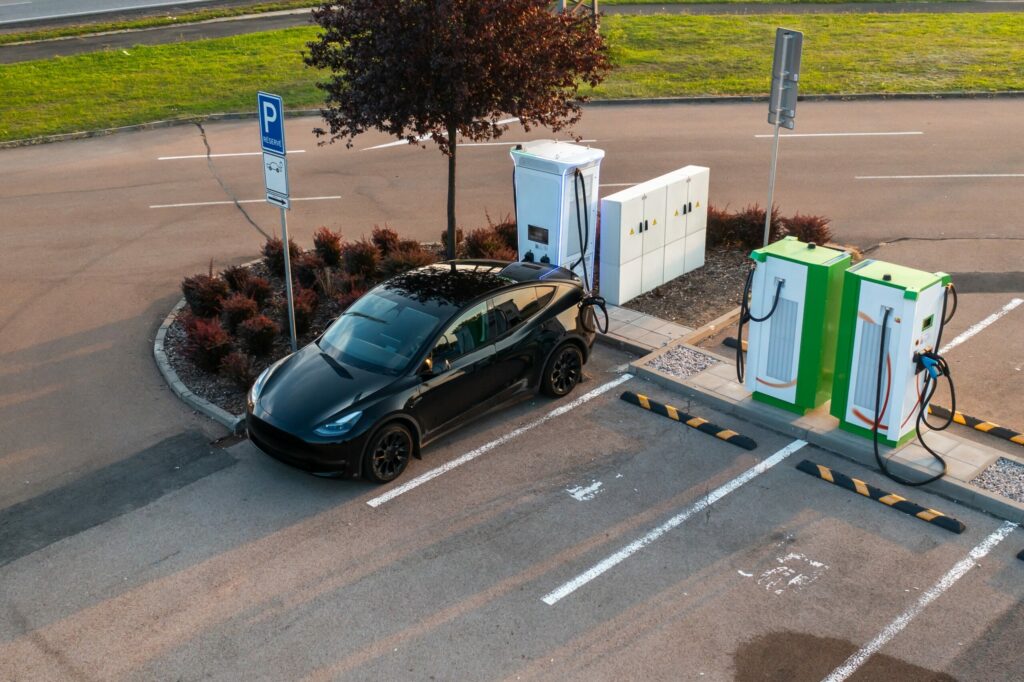
Changing recharging habits
Driver behaviour has changed considerably in recent years. Previously, use was evenly split between 75 kWh and 100 kWh batteries. Today, only 3% of customers choose the 100 kWh battery. The proliferation of fast-charging stations and the development of battery swapping have reduced the need for extreme range. As a result, recovering a full battery in three minutes is becoming more practical than a long journey without a break.
This transformation has also changed Nio’s strategy. The brand now prefers to invest in the deployment of exchange stations rather than produce expensive batteries that are rarely used. William Li points out that this choice responds directly to the needs of customers in the field, rather than to marketing ambitions.
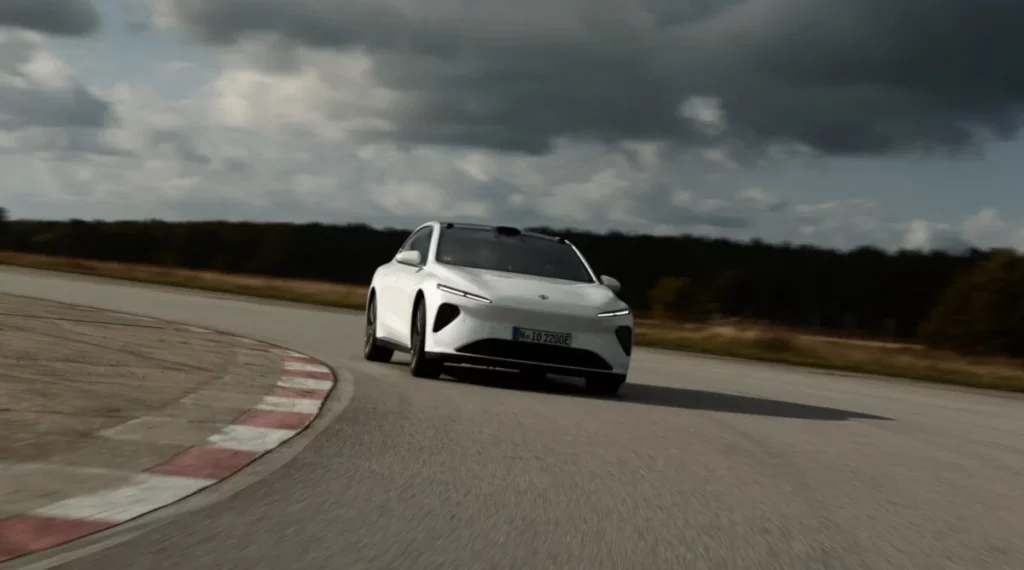
The Nio ET7, a top-of-the-range electric saloon equipped with a 150 kWh battery for extended range (Credit: Nio)
Strategic choices for Europe
Nor will Nio be offering the 150 kWh battery in Europe. The additional certification and testing would have made the introduction too complex and costly. Instead, the company wants to develop its network of exchange stations, seen as a more efficient solution for everyday use. This decision underlines a growing pragmatism, prioritising the user experience over autonomy records.
However, the recent closure of the only battery swapping station in Denmark illustrates the logistical challenges. Despite these occasional obstacles, Nio remains confident in this technology. The company is relying on gradual deployment and practicality to convince its customers, rather than on impressive but unhelpful figures.
A lesson for the electric vehicle market
The abandonment of the 1,000 km battery reveals an interesting paradox: drivers want range, but not necessarily extreme range. The real challenge lies in accessibility and speed of recharging. Nio demonstrates that innovation is not limited to technical performance, but must respond to the real needs of users.
This choice could influence other manufacturers. Rather than focusing on the race for maximum range, optimising infrastructure and everyday practicality now appear to be priorities. Ultimately, the success of electric vehicles will depend as much on practical solutions as on technological prowess.
Towing a trailer or caravan with an electric car may still seem unlikely. However, this use is becoming credible thanks to the rapid progress in the sector. The TCS(Touring Club Schweiz) now provides a detailed perspective on what electric vehicles can really do. It highlights their strengths, but also their limitations, particularly in terms of range and charging.
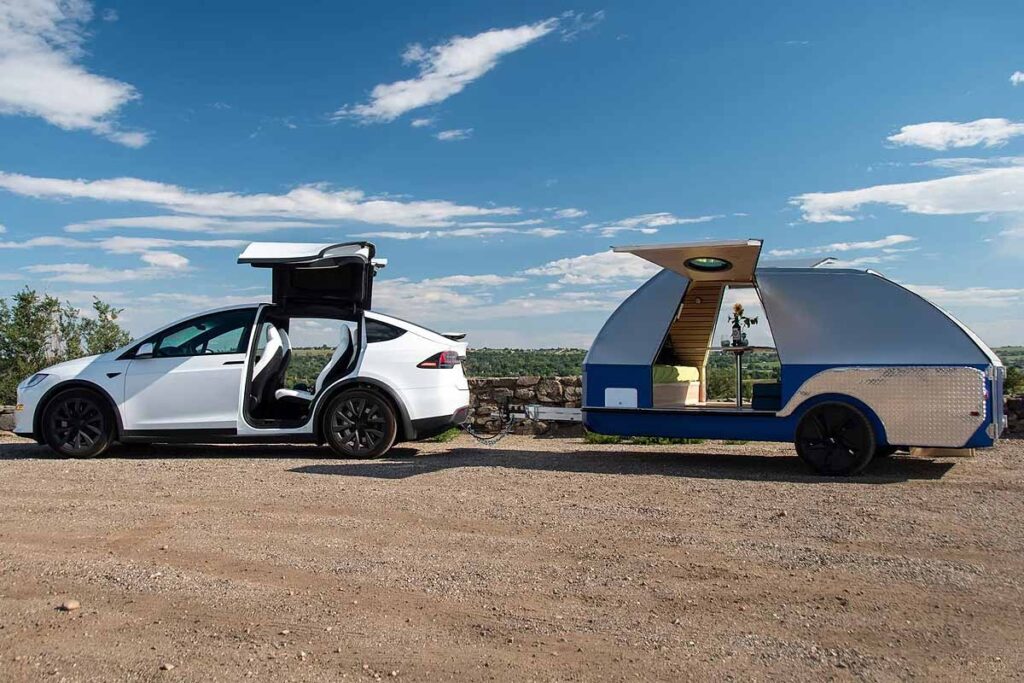
Electric car parked with trailer attached (Credit: Colorado Teardrops)
When electric meets towing
The idea of using an electric vehicle for towing may still surprise some, but certain models already rival conventional cars. For example, the Tesla Model X can tow up to approximately 2,250 kg according to the manufacturer’s manual. Its instant torque makes starting with a load, accelerating, and climbing steep inclines easier. This power also reduces the risk of overheating, which is common in some conventional clutches under heavy load. Currently, a few models such as the Mercedes G 580 electric or the Maxus eTERRON 9 can even tow up to 3.5 tonnes, placing them on par with good combustion vehicles. However, power alone does not guarantee safety. Vehicle balance remains essential for safe driving. The TCS notes that roll-assist systems improve stability but never replace precise setup. Load distribution and tongue weight always play a major role in the behaviour of a towed combination.
Even with these systems, towing a trailer requires constant vigilance. The TCS emphasises the importance of a properly calibrated vertical load to avoid dangerous reactions. A poorly balanced trailer can cause oscillations that neither the ESP nor the electronics can correct effectively. Electronics remain a support, not a miracle solution. The driver must adapt their driving, reduce speed, and anticipate every movement. An EV offers instant traction, but it never replaces careful driving.
Range and consumption: the real challenge
In reality, electric towing primarily presents a range challenge. Towing a trailer increases consumption and reduces the distance between charges. Travelling with a trailer in an EV is possible, but only with careful planning. Energy loss must be anticipated, the right charging stations selected, and longer breaks scheduled. Furthermore, current infrastructure complicates matters. Unlike petrol stations, it is often impossible to charge while keeping the trailer attached. Many charging points require perpendicular parking or tight manoeuvring. In most cases, the driver must detach the trailer, which inevitably extends the stop. This constraint can also block access for other users, creating extra stress for the driver and even potential collisions.
To address this, the TCS highlights a useful solution: the “eTrucker” app. It allows filtering for charging points accessible without detaching the trailer. Originally intended for electric trucks, this feature also benefits electric cars with trailers. It helps plan charging stops and reduces surprises. However, this solution is temporary. The real need concerns charging points designed for vehicles with a tow. Developing such infrastructure will become crucial if towing with EVs becomes widespread.
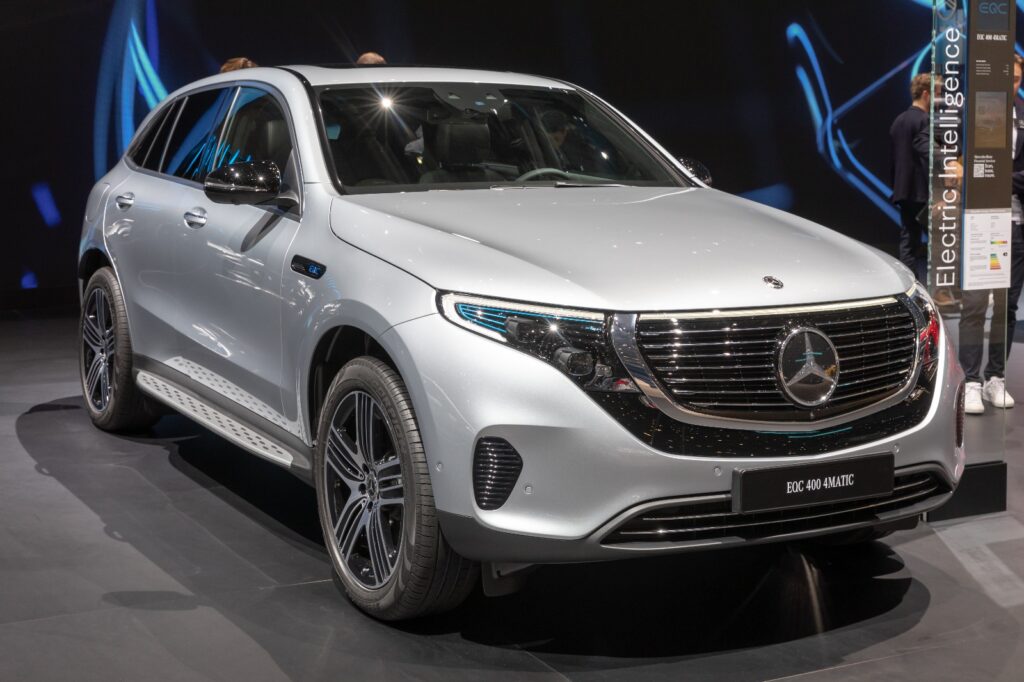
The Mercedes EQC, capable of towing up to 1,800 kg according to TCS.
Technology ready, but an ecosystem still in transition
According to TCS tests, electric vehicles are fully capable of towing. Differences in consumption between an EV and a conventional car towing a trailer are generally limited. Technology is therefore no longer a barrier. Instant torque, no clutch, and smooth driving are real advantages. However, this use requires much stricter organisation than with a conventional vehicle. For example, other models such as the Mercedes EQC can tow up to approximately 1,800 kg according to specialist guides. More recently, sedans such as the Audi A6 e-tron report towing capacities of around 2,100 kg. Remaining obstacles are therefore not mechanical or technological, but logistical. The charging network is not yet adapted for vehicles towing a trailer. It remains designed for short, unattached cars. As long as this situation persists, long trips with a trailer in an EV will require more preparation and patience.
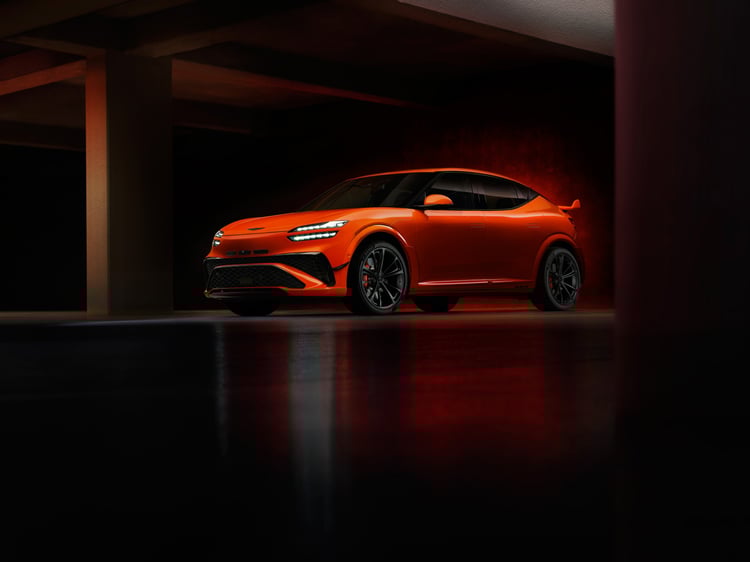
From the Circuit Paul Ricard, Genesis has lifted the veil on its GV60 Magma, the first production Magma model. This version completely rethinks the concept of the sporty electric SUV. Fans of performance and design will be delighted by this bold, futuristic vehicle.
The Genesis GV60 Magma reveals its sporty and elegant design, with a lowered body and 21-inch wheels (Credit: Genesis).
A style that makes its presence felt
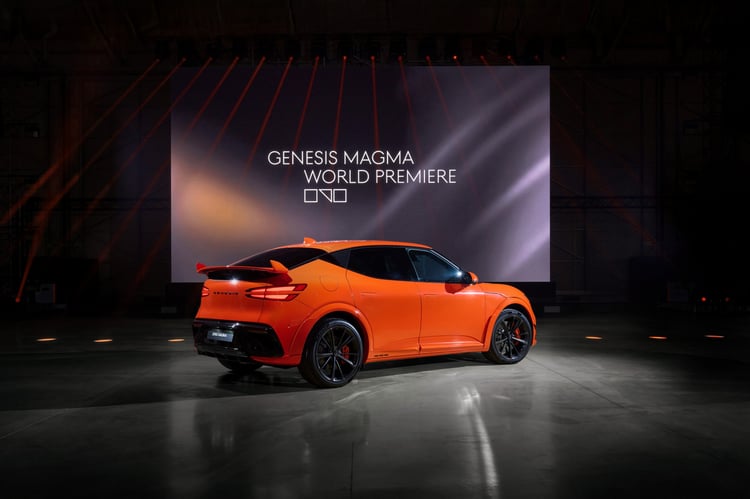
The GV60 Magma is immediately distinguishable from the classic GV60 thanks to its wider, lower silhouette. The front bumper has three pronounced openings, optimising both air flow and cooling. In profile, the body is lowered by 20 millimetres and the wider wings accommodate 21-inch wheels fitted with 275-mm tyres. These changes underline the attention paid to aerodynamics and handling. At the rear, the bumper incorporates a special diffuser, while the spoiler on the tailgate adds an aesthetic and functional touch.
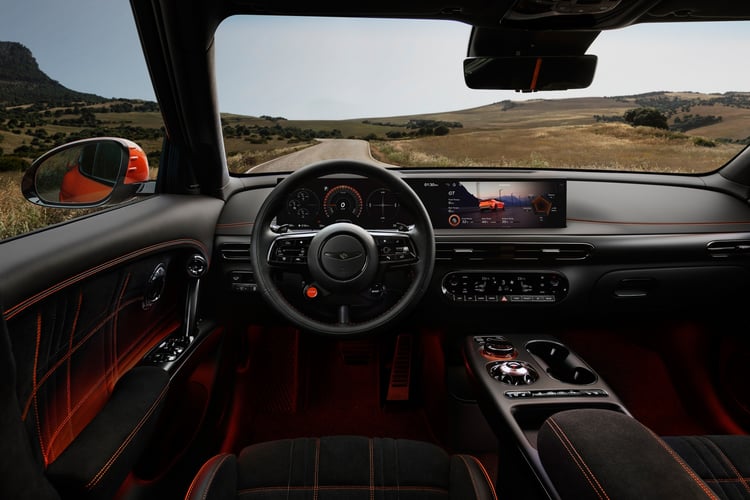
Inside, Genesis blends luxury and sportiness. Black dominates, punctuated by orange and grey stitching and matching seatbelts. The steering wheel features additional controls for driving modes and the boost function. The instrumentation is unique, featuring exclusive Magma themes and offering an immersive experience. Chamude, a material reminiscent of suede, adorns the seats and console, reinforcing the premium character of the cabin.
Mechanics designed for performance
Under the bonnet, the GV60 Magma is more than just a pretty face. It combines two electric motors, one per axle, offering a total output of 609 bhp and 740 Nm of torque. A single button activates Boost mode, which boosts power to 650 bhp and torque to 790 Nm for 15 seconds. This configuration enables the car to reach 200 km/h in just 10.9 seconds thanks to Launch Control. Genesis also offers three driving modes and a Drift mode, guaranteeing sensations and agility on the track. The brakes, suspension and steering components have been optimised for a sporting experience worthy of hypercars.
The interior of the GV60 Magma combines luxury and sportiness, with an exclusive steering wheel, orange stitching and Magma-specific instrumentation (Credit: Genesis).
In addition, the VGS system simulates gear changes and the sound generator recreates the ambience of a combustion engine. In this way, the driving experience combines electric sensations with traditional emotions. Thermal optimisation of the battery ensures that performance is maintained even during extended dynamic sessions.
An ambitious European strategy
Genesis is thinking big for the next decade, and Europe is at the heart of its ambitions. After a timid start, the manufacturer intends to make a name for itself with its high-performance electric models. The Magma programme is the main thrust of this strategy, combining luxury, technology and performance. The GV60 Magma will serve as the gateway to future models, including saloons and large SUVs, and even dedicated competition models.
Deliveries will begin in South Korea in early 2026, followed by Europe and North America. The GV60 Magma paves the way for a future in which Genesis aims to rival Porsche, Polestar and Cadillac in the premium electric segment. Although the price remains unknown, it promises to be a highly anticipated vehicle for lovers of performance and innovation.
A technical heritage inspired by the Ioniq 5 N
The GV60 Magma is based on the E-GMP platform used by the Hyundai Ioniq 5 N, but with a refined and luxurious approach. The two electric motors deliver 790 Nm of torque in boost mode, enabling a 0-100 kph time of less than 3.5 seconds and a top speed of 264 kph. Its suspension, recalibrated with Hydro G silentblocks, improves comfort and agility, while braking is reinforced to cope with the power.
The GV60 Magma is distinguished by its functional rear spoiler and integrated diffuser, which enhance the SUV’s aerodynamics and elegance (Credit: Genesis).
Sporty styling is matched by precise detailing. Side skirts, rocker panels and a functional rear spoiler enhance aerodynamics, while the interior combines sobriety and sparkle. The displays and instrumentation adopt a Magma theme, and the steering wheel incorporates controls for the boost function and driving modes. Genesis strikes a subtle balance between luxury, performance and immersive technology.
Towards a complete Magma family
The GV60 Magma paves the way for a complete series of high-performance models. From the G80 saloon to the GV80 SUV, Genesis plans to roll out the Magma programme across its entire range. The brand aims to transform its image and establish itself as a major player in sporty electric luxury. With the GV60 Magma, Genesis combines distinctive design, extreme power and innovative technologies. Europe and then North America will be able to discover this first model from 2026, heralding a new era of Korean performance on the international market.
Over the last few days, winter has arrived in France, with very low temperatures. The fear of electric cars in cold conditions remains. Despite this, drivers are learning to adapt their use to preserve the range of their batteries. Manufacturers are developing technologies that improve performance in winter conditions. As a result, winter is becoming an area of innovation rather than a barrier to electric mobility.
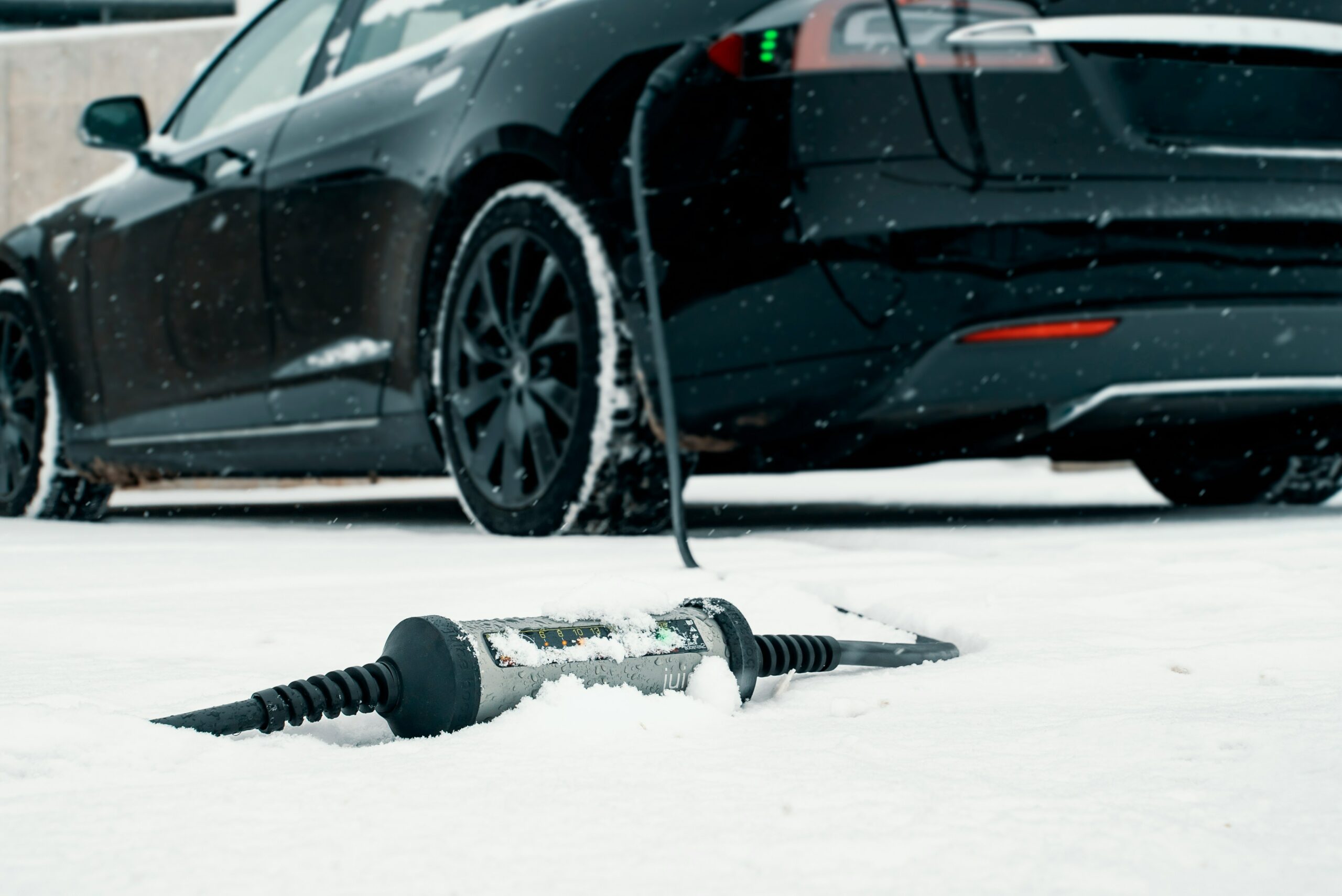
An electric car recharges despite sub-zero temperatures, illustrating the progress of sustainable mobility in winter.
Cold, the enemy of batteries
Let’s start with a fact: cold weather is not batteries’ best friend. It profoundly alters their behaviour, forcing drivers to think ahead. Below 0°C, lithium-ion cells lose efficiency, reducing the range by 20-30% depending on the model.
Recharging time is often longer, because the battery has to be preheated before it can accept a fast charge. This step protects the cells, but delays reaching the desired charge level. It is important to regulate the battery temperature so that the car retains its range and power throughout the journey.
Another part of the energy is used to heat the passenger compartment. Unlike internal combustion engines, electric cars have no residual heat. The system therefore draws directly from the battery to heat the interior, which increases overall consumption. This is particularly noticeable on short journeys in town, where repeated starts accentuate the losses. Despite these constraints, drivers must learn to optimise their driving and adapt their habits to limit the drop in range.
Concrete solutions are emerging
In many countries with severe winters, motorists are adapting their practices to preserve their range. One of the most effective reflexes is to preheat the vehicle while it is still plugged in. This limits the impact of heating on the battery during the first few kilometres. Heated seats are also preferable, as they consume much less energy than general heating. Thanks to these practical choices, losses in range become more predictable and therefore easier to manage.
At the same time, infrastructure is evolving to support this energy transition. Charging stations are adapting to cold climates by incorporating ice protection systems. Some installations also use thermal management technologies to ensure safe fast charging in winter. The improved regional coverage means that drivers can make long journeys with greater peace of mind. This global transformation is helping to build real confidence in electric vehicles, even in extreme conditions.
Cars drive along a snow-covered Alpine road despite the storm, a reminder of the risks associated with winter journeys.
Constantly evolving technology
The progress made by the automotive industry shows that batteries are becoming more robust year after year. Manufacturers are adopting heat pumps, which significantly improve energy efficiency in winter. This technology enables up to 83% of range to be maintained in winter, compared with 75% for vehicles not equipped with this technology. Users benefit from a more stable driving experience, even in prolonged sub-zero temperatures.
At the same time, engineers are working on the internal thermal management of batteries to optimise their operation. Some systems use phase change materials (PCM) to maintain a stable temperature. Others use cooling fins to improve heat dissipation and maintain the optimum operating temperature of the batteries. These advances extend cell life and reduce the risk of accelerated degradation. In addition, intelligent recharging is being developed to coordinate heating and charging at the right time. This innovation limits unnecessary consumption and improves the overall efficiency of the vehicle.
Electrics make their mark, even in the coldest regions
Experience gained in winter areas, such as the Nordic countries, proves that electric cars can operate reliably. Public policies play an important role in supporting the installation of suitable charging points and facilitating access to clean mobility. These initiatives encourage drivers to take the plunge and discover a use that is ultimately simpler than they imagined. Thanks to these coordinated efforts, electric vehicles are no longer confined to temperate regions, and are now conquering territories with demanding climatic conditions. Take Norway, for example, which is shattering all records, with 95.8% of new electric cars sold in January 2025 – a world record, according to the Norwegian Road Traffic Information Council (OFV).
This development opens up interesting prospects for the entire automotive market. The innovations tested in extreme cold then benefit drivers the world over. Batteries are becoming more stable, vehicles more versatile and infrastructures more powerful. With this progress, winter is no longer seen as a barrier, but as a lever for accelerating the overall improvement in electric technologies. The future of mobility therefore seems compatible with a wide range of climates, reinforcing the place of electric power in the global energy transition.
How do you protect your electric car from the cold?
Winter puts electric vehicles to the test. Here are a few simple steps you can take to preserve the range and longevity of your battery:
Preheat the vehicle while it is still plugged in: this limits the energy consumed by the battery.
Keep the battery charged to between 40% and 80% to avoid losing range due to the cold.
Use heated seats instead of general heating, which consumes more energy.
Park the vehicle in a garage or covered space to limit exposure to frost.
Schedule the recharge just before departure so that the battery is warm and more efficient.
Have the battery thermal system checked before winter to prevent any malfunctions.
At a time when countries are developing their energy transitions for transport, are France’s overseas territories, which are often overlooked in major national plans, being left behind when it comes to electromobility? Logistical challenges, a unique energy mix, ambitions that are sometimes thwarted: territory by territory, let’s find out where electromobility stands off the French mainland in 2025.
An electric car drives along a mountain road in the middle of nature, illustrating sustainable mobility in green landscapes.
La Réunion
Réunion is the leader in electromobility in the French overseas territories, with the highest penetration rate. With a total of 6,005 new vehicles sold in the first quarter of 2025, the island is down 8.4% on last year. The same applies to electrified vehicles: 742 electric vehicles sold, a fall of 32.1%.
In these figures, BEVs account for 631 units (10.5% market share), while PHEVs represent 111 units (1.8% market share). These declines are largely due to the abolition of the local tax exemption and higher prices.
It also has the highest density of charging points (462 public points), supported by local operators such as EZDrive. The region has a high overall electrification rate (49.9%), but remains highly sensitive to economic and political uncertainties.
Martinique
By 2025, the region will have 211 public charging points, a figure that is rising but still insufficient to support motorists. They are deployed by various operators: EZDrive, VoltDom and TotalEnergies, who offer competitive average tariffs.
The market for electric vehicles remains modest (4.9% market share in 2024).
There are several reasons for this low penetration:
A road network that consumes a lot of energy (steep gradients, almost constant air conditioning);
a limited range of models that are not always adapted to local constraints ;
a tense economic and social context.
Guadeloupe
Guadeloupe has more than 184 public charging points, a number that is still low but growing steadily, supported by players such as gmob, EZDrive and TotalEnergies.
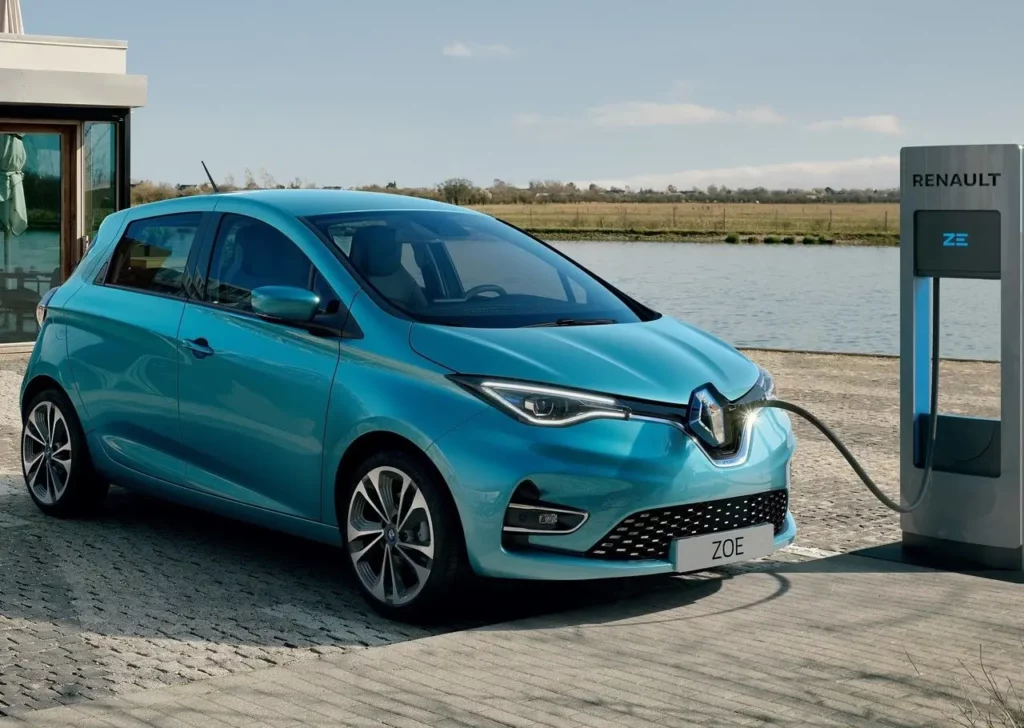
A Renault Zoe recharges at a charging point, illustrating the boom in electric vehicles in the French overseas territories.
In terms of sales, the results are encouraging: despite an overall decline in the passenger car market (-6.1% in 2024), the share of electric vehicles is between 5 and 6%, representing an increase of around 20%.
As well as cars, electromobility is also making headway on two-wheeled vehicles: in recent years, the majority of mopeds sold have been electric.
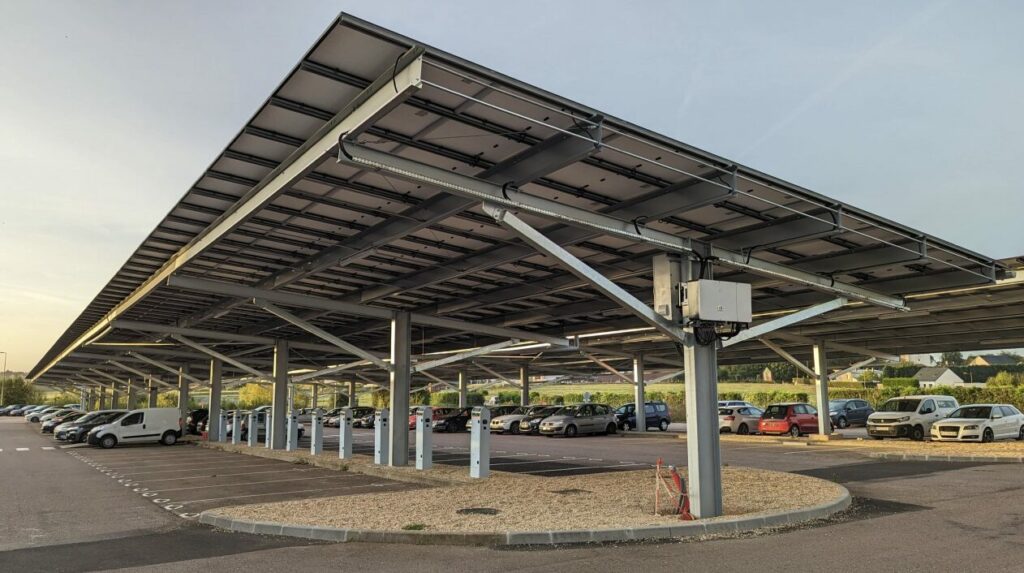
EDF Guadeloupe has also launched the D.R.I.V.E. project, an experiment designed to measure the benefits of photovoltaic shading dedicated to recharging, with intelligent control to favour hours of sunshine.
French Guiana
Despite having the largest territory in French overseas territories, electromobility in French Guiana is struggling to take off. The public network has just 30 charging points, making it the least equipped territory. This shortfall is a major obstacle, and the market share of BEVs remains below 3%.
Paradoxically, French Guiana is one of the most advanced regions in terms of carbon-free electricity production, thanks to the Petit-Saut dam and its hydroelectric potential, which covers almost 70% of electricity needs.
Mayotte
Probably the most troubled territory, Mayotte suffers from a very fragile economy. The car market is in crisis, with a 12.6% fall in second-hand cars by 2024, and a low penetration of pure electric cars (just over 3%).
Despite this, the rate of hybrid electrification is high (30.2% by 2022). The transition is underway, but is severely hampered by local economic constraints.
Data on infrastructure is non-existent: this lack of public information means that the region is significantly behind the times.
New Caledonia
In 2022, New Caledonia adopted an Energy Transition Plan (STENC 2) with a clear objective: 18,500 electric vehicles by 2030. The territory has already made progress: around 1,000 EVs are on the road, there are some forty charging points (Hivy network), and the first 150 kW hypercharging point was inaugurated in 2025.
Local aid also supports the transition:
bonus of 600,000 CFP francs (around €5,030) for the purchase of an EV;
preferential electricity tariff for charging points: 8 francs/kWh during the day and 20 francs/kWh at night (compared with 34.96 francs for the standard tariff).
However, the transition is still being held back by cultural (strong attachment to 4×4 vehicles), economic and political factors.
The BYD Seal U drives along a coastal road in the sunshine, a typical landscape found in many overseas territories. (Credit: BYD Guyane)
French Polynesia
The market is still in its infancy, with only 2 to 3% electric cars and around 150 sold each year. Unlike New Caledonia, Polynesia offers no significant subsidies, which is holding back adoption.
Scaling up is limited by the almost non-existent infrastructure, particularly in view of the very recent authorisation (2024) to install chargeable charging stations of more than 3 kW.
Saint-Barthélemy & Saint-Martin
In these areas, electromobility is still a niche mode of transport, at the top end of the market: the transition is mainly being made by importing luxury models, often hybrids. Public charging points are rare, and local support is virtually non-existent.
Other overseas territories
In Saint-Pierre-et-Miquelon and Wallis and Futuna, markets are marginal or non-existent. With no recorded infrastructure and a low population density, the entire market depends on imports, with demand remaining very low.
Integration into national policies
France has been encouraging electromobility for years, particularly through public subsidies. But while national schemes (ecological bonuses, social leasing) are theoretically open to the French overseas departments and territories, their application is proving complex.
The government has increased the bonus for the DROMs by €1,000, up to a maximum of €8,000 depending on resources. However, the conversion bonus has been abolished for private individuals since December 2024.
A €500 tax credit for the installation of a home charging point has been extended until 2027. The ADVENIR ZNI programme, set up by ADEME, finances up to €2,160 per charging point in non-interconnected zones. In particular, it encourages solar charging to avoid peaks in consumption.
However, these aids are not always as successful as expected: high logistical costs, import prices, lack of take-back structures, low terminal density and local tax policies limit their impact.
Solar recharging stations in Martinique, an example of innovative solutions adapted to the energy realities of overseas France. (Credit: Terre Solaire)
Cross-cutting challenges and strengths
The overseas territories present an energy paradox: heavy dependence on fossil fuels, but considerable renewable potential (sun, wind, hydroelectricity).
Their status as non-interconnected zones means that the cost of electricity production can be up to ten times higher than in mainland France. This context complicates the emergence of sustainable electromobility, where optimising recharging and coordination with local energies are essential.
There are also socio-economic constraints (poverty, high prices, unsuitable models) and the intensive use of air conditioning, which consumes a lot of battery power. However, the short distances between islands are an advantage: they make them natural laboratories for the energy transition, particularly through mini-grids, solar shading and intelligent management of recharging.
Conclusion
While La Réunion is leading the way, with a penetration rate in excess of 10%, the transition remains very uneven across France’s overseas territories. Martinique, Guadeloupe, French Guiana and Mayotte are lagging behind, while New Caledonia and Polynesia have ambitions despite a still limited market.
There is real integration with the aid available in mainland France, but their effectiveness requires differentiated support and wider access to recharging. The decade 2025-2035 will be decisive: the challenge is clear – to make the overseas territories major levers for sustainable mobility.
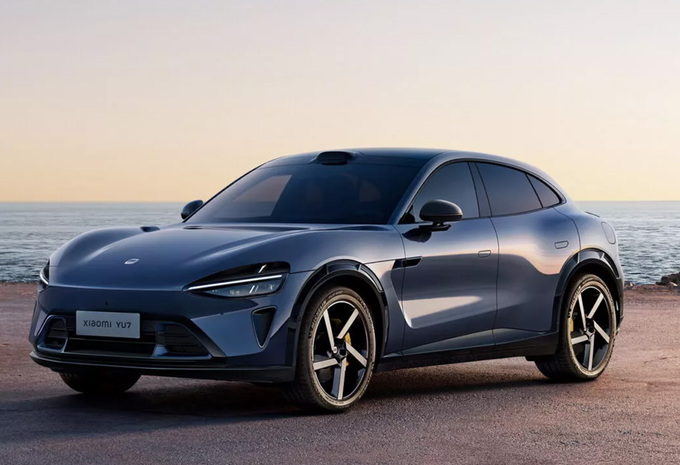
In just a few years, the Chinese firm Xiaomi has transformed what looked like a daring gamble into a genuine industrial reality. Production is booming, the first models are solid, profitability is fast approaching and the company is scheduled to arrive in Europe. Xiaomi is no longer an outsider; it is now one of the hottest electric carmakers on the market.
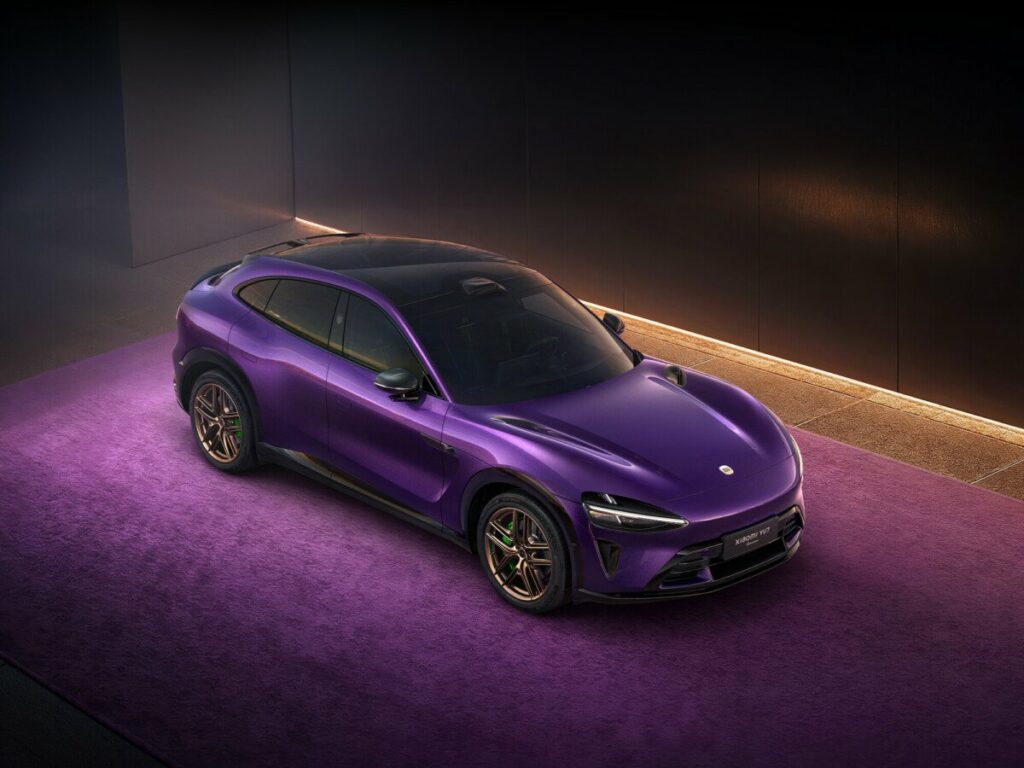
The Xiaomi YU7: premium electric SUV with 691 hp and a range of up to 740 km (Credit: Xiaomi)
Dazzling growth destabilises the industry
2025 clearly marks a change of dimension for Xiaomi in the world of electric cars. Those who saw the brand as an over-confident newcomer are now being forced to reconsider. Barely four years after launching its automotive division, Xiaomi has already passed the symbolic milestone of 500,000 electric vehicles produced. For such a young brand, this is more than just an achievement, it’s a message sent to the entire industry.
Sales momentum is following the same upward trajectory. Over the year as a whole, Xiaomi plans to deliver more than 400,000 cars, far exceeding its initial ambitions. And the pace is not slowing: more than 40,000 units sold in October 2025, a level already reached in September. This is no longer an isolated “good month”; it’s now a solid trend, showing that Xiaomi is not just experiencing a moment of grace, but rather a rise to power with lasting ambitions.
Lightning profitability and a perfectly mastered range strategy
The industrial performance is impressive, but the profitability is perhaps even more so. While the majority of new manufacturers take years to break even, Xiaomi has announced a profitable first quarter as early as 2025, just 18 months after the launch of its automotive division. In the third quarter, electric vehicles generated 28.3 billion yuan in revenue (around €3.4 billion). This performance places Xiaomi among the rare new players capable of eventually approaching the industrial and financial standards set by giants such as Tesla and BYD. This lightning success is due to a method that is well known to the brand: extensive integration, strict cost control, a locked-down software ecosystem and extremely rapid decision-making. In fact, Xiaomi is applying to the automotive sector the recipe that has made it so successful in the tech sector: iterate quickly, optimise continuously and lock in the user experience in a coherent environment.
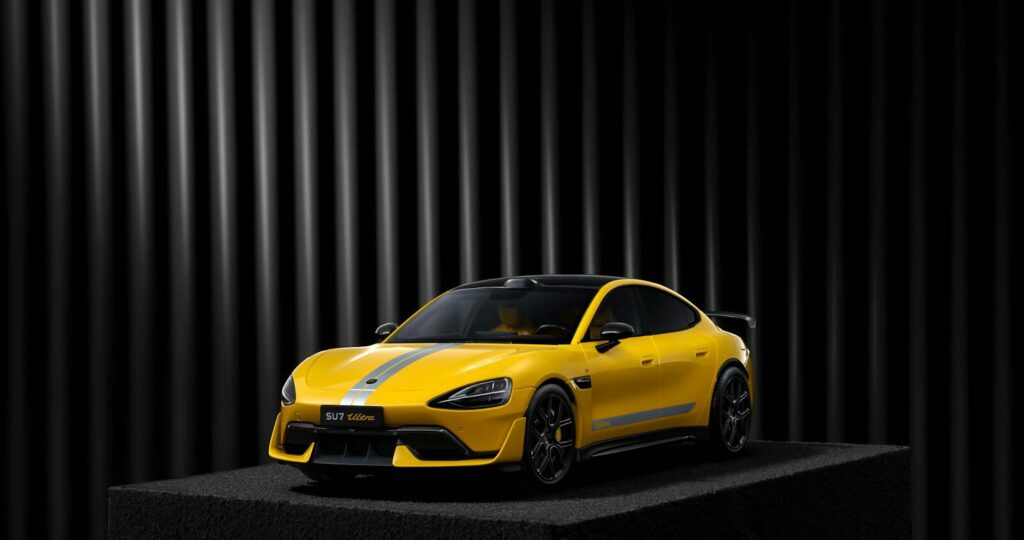
The Xiaomi SU7 Ultra: an electric sports saloon with sharp styling and ultra-fast charging. (Credit: Xiaomi)
On the product side, the strategy has been clear since the launch of the SU7, a sporty saloon with sharp styling, reminiscent of the philosophy of a Taycan that passed through the Xiaomi laboratory. With its taut lines, meticulous aerodynamics, advanced software integration and aggressive price/agility positioning, the SU7 set the tone. The manufacturer then extended its range with the YU7, a premium SUV based on the Modena platform. Available with rear- or all-wheel drive, and boasting 691bhp and a claimed range of between 660 and 740km WLTP, it’s right up there with the big boys. Recharging time is another point worth highlighting. Xiaomi claims a range of 220 km in five minutes, a technological showcase that confirms the manufacturer’s ambition to become a benchmark in electric performance.
A major new player shaking things up
Xiaomi clearly has no plans to remain confined to Asia. The company is preparing for its arrival in Europe by 2027, and it’s not doing so lightly. The brand is setting up an R&D centre in Munich, with the task of adapting future vehicles to European requirements: stricter safety standards, more rigorous road holding, revised acoustic comfort, adapted thermal management and specific calibration for high speeds on motorways. At the same time, Xiaomi is continuing to strengthen its image through communications focused on performance, software innovation and in-house records. The idea is clear: Xiaomi wants to establish itself as the most technologically advanced electric vehicle manufacturer even before it reaches European dealerships.
The Xiaomi SU7 combines aerodynamic design, performance and advanced software integration (Credit: Xiaomi)
Just as it has done in the smartphone market, the brand could be banking on a formidable cocktail of aggressive pricing and technical excellence. The least we can say is that, in just a few years, Xiaomi has gone from ambitious challenger to future heavyweight in global electric mobility. Exponential production, solid models, early profitability, clear international ambitions… All the signs are that Xiaomi has set in motion a sustainable dynamic. In a rapidly reshaping electric market, the manufacturer is already establishing itself as one of the players capable of reshuffling the deck on a global scale.
The Lola-DGR project is shaking up the certainties of motorsport by announcing unprecedented performance. Designed by Lucas di Grassi, this 100% electric concept promises to be faster than an F1 car on certain circuits. However, despite its stated ambition, the car has not yet taken to the track and remains at the virtual prototype stage.
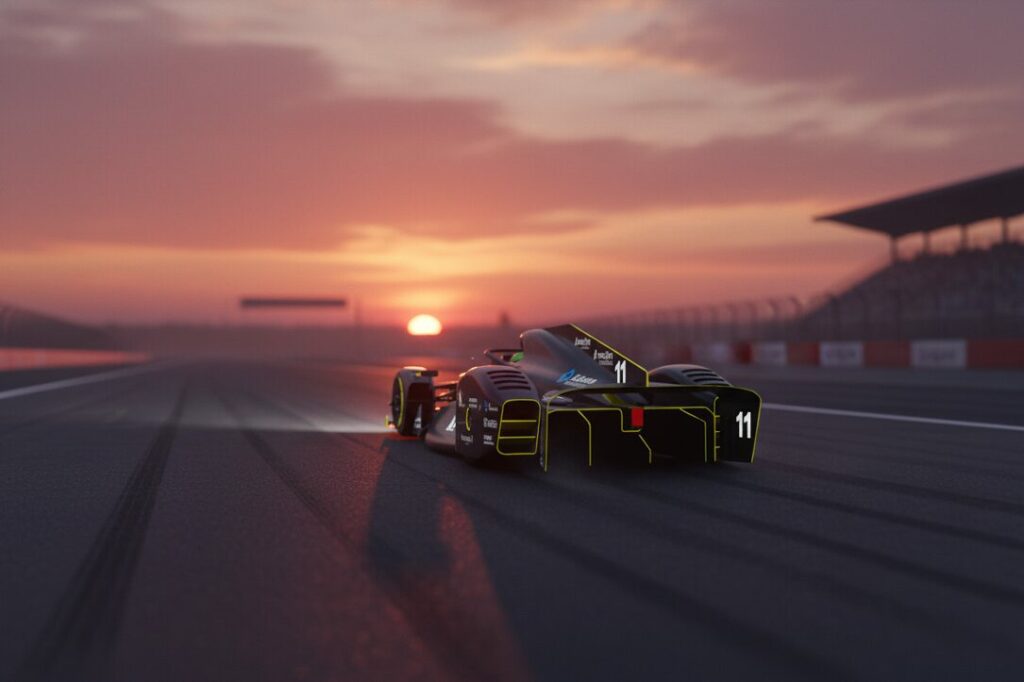
The Lola-DGR facing the track, ready to challenge the performance of an F1 car (Credit: DRG)
Designed outside any regulations, the prototype is intended to prove that absolute performance is not the exclusive preserve of internal combustion engines. The simulations unveiled by the team predict astonishing lap times, notably in Monaco, where it would outperform a Formula 1 car by several seconds per lap.
An idea born to go beyond current limits
According to Lucas di Grassi, the initial question was simple: how far can an electric single-seater go if it is freed from the usual rules? In collaboration with Lola, a long-standing motorsport specialist, he designed a machine that exploits technical solutions already available. The objective remains clear: to build the most efficient electric single-seater ever conceived, capable of beating an F1 car on a lap while consuming less energy.
This is not Di Grassi’s first challenge. As a driver who has long been involved in electric projects, he is well aware of the limits and advantages of the technology. The exit of the GEN4 from Formula E, with its higher performance and four-wheel drive, has not slowed him down. On the contrary, it seems to have accelerated his desire to prove that electric cars can go even further. So the Lola-DGR is a visionary response, designed to shake up the benchmarks set by F1.
The philosophy behind the concept is based on a powerful idea: efficiency can become a performance multiplier. The car is not designed as an inaccessible technological showcase, but as a realistic laboratory. It uses credible industrial solutions, including a 60 kWh battery integrated into the floor and centralised cooling to limit drag. It’s all part of a systemic approach that aims to reduce energy losses rather than compensate for them with a heavier battery.
Active aerodynamics designed as a total breakthrough
To outperform Formula 1, the Lola-DGR relies above all on radically new active aerodynamics. The prototype combines a suction effect under the car with a blown diffuser to maximise downforce at all speeds. This technological choice is reminiscent of the Brabham ‘hoover’ of 1978, but it goes much further by adding unprecedented flow control. The car could generate several tonnes of equivalent downforce thanks to two 30 kW turbines activated as required.
The major advantage of this solution lies in its ability to stabilise downforce. Unlike an F1 car, which relies heavily on speed to generate grip, the Lola-DGR maintains a constant load in slow bends. This behaviour paves the way for higher passing speeds in sections where F1 cars lose their advantage. What’s more, this flexible management reduces drag when the car reaches high speeds. The fans are then switched off to allow natural aerodynamics to act and optimise the tip.
The Lola-DGR reveals its aerodynamic architecture from the rear. (Credit: DRG)
The streamlined wheels further enhance this quest for efficiency. They significantly reduce drag while improving safety on wet tracks by limiting water splashes. Finally, the absence of side radiators slims the silhouette of the vehicle, further reducing air resistance. The combination of all these elements points to a single ambition: to redefine the aerodynamic hierarchy in racing.
Simulations that promise to beat F1 at Monaco
The most spectacular data concerns the virtual performance achieved on the Monaco circuit. According to CFD analyses and partner simulations, the Lola-DGR would be up to 4.3 seconds faster than a current F1 car over a lap, and even up to 11 seconds faster in the most optimised versions of the concept. These figures seem staggering when you consider that F1 cars hold the performance records on most of the world’s circuits.
Di Grassi specifies that he based his calculations on a load of 15 kN, or around 1.5 tonnes, a figure that he nevertheless considers conservative. By removing certain battery modules to lighten the car, the concept could become even sharper. What’s more, the simulation shows that the Lola-DGR is not content with an exceptional lap. It could maintain a pace comparable to an F1 pole position for a dozen laps, or even keep up a race pace for fifteen to twenty laps. This ability to put in one performance after another demonstrates an overall efficiency that goes far beyond a simple one-off exploit.
This advantage also comes from easier handling. The constant downforce stabilises the car in the narrow or bumpy sections of urban circuits. The car feels more predictable and consistent in all phases of driving, which can reduce errors and make driving more aggressive without increasing risk.
Intelligent, forward-looking energy management
With a battery of just 60 kWh, the question of range becomes central. The decision not to increase capacity is explained by a strategy focused on efficiency. Reducing drag remains the primary saving, while active aero becomes an energy management tool. The system makes it possible to decide when to activate the fans, when to maximise regeneration and how to optimise lateral forces according to speed.
Integrating the battery into the floor lowers the centre of gravity and optimises weight distribution. The system could also evolve towards hydrogen assistance, which would play the role of range extender or auxiliary generator for the fans. This combination opens up credible prospects for endurance racing. It could make participation in the Le Mans 24 Hours with an entirely zero-emission architecture a realistic possibility.
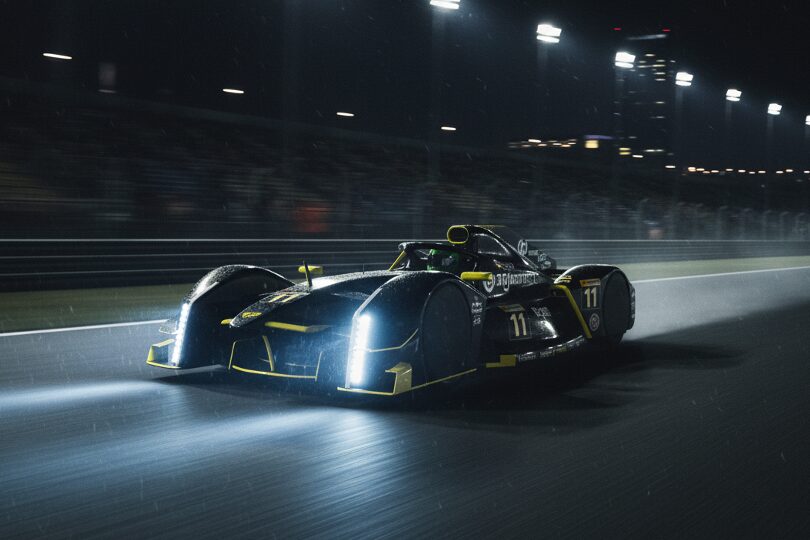
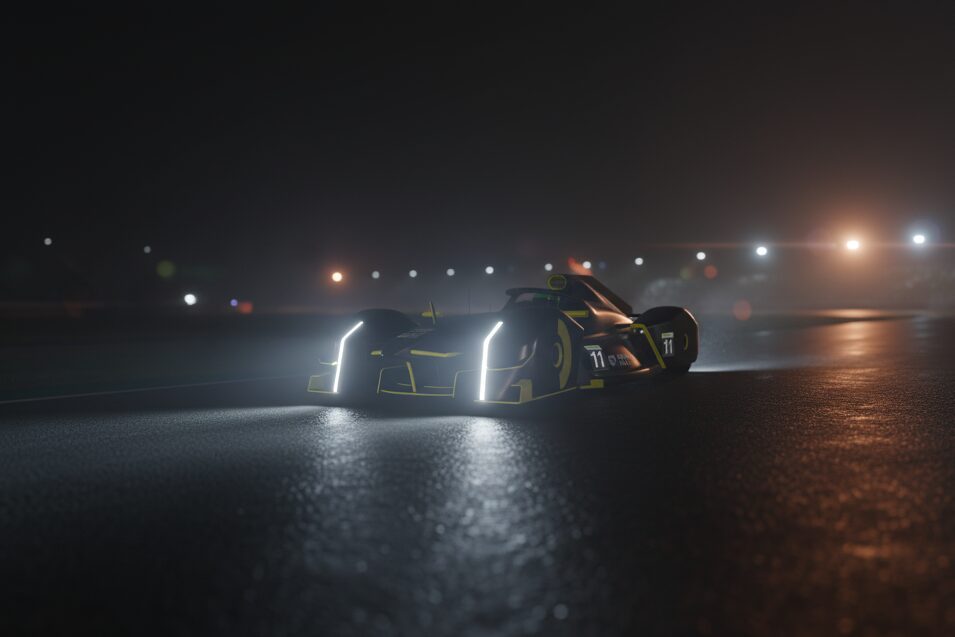
The Lola-DGR lights up the track at night. (Credit: DRG)
In the short term, the concept seems perfectly suited to both sprint and urban racing. The constant downforce at low speeds offers a considerable advantage during hard braking or short re-accelerations. On a wet track, the controlled aerodynamics and streamlined wheels should provide more stable handling than a traditional single-seater. What’s more, the modular design means the car can be adapted to different circuits, from the Nürburgring to Macau.
Clear ambitions but a colossal challenge ahead
Despite these impressive figures, one major obstacle remains: the car now needs to be built and tested. Lucas di Grassi says he wants to produce an operational demonstrator within two years. If real-world performance confirms the simulations, the Lola-DGR could usher in a new era in which electric power is no longer a compromise but a choice of absolute performance.
The concept aims to demonstrate that it is possible to do better than an F1 car by focusing on energy intelligence rather than raw power. It also proposes a new way forward for the industry, with technologies that can be transposed to production cars, including rational active aerodynamics and anti-drag bodywork. This vision goes beyond mere competition and extends to the mobility of tomorrow.
It remains to be seen whether the digital promises will hold up in the real world. And if it does, the Lola-DGR could well become the first electric single-seater to seriously threaten the hegemony of Formula 1. A potential revolution that would transform the way we think about automotive performance.
At a time when the automotive industry is undergoing one of the biggest transformations in its history, driven by environmental regulations, Jaguar Land Rover (JLR) is charting an electrified course while retaining its DNA.
In an exclusive interview, Léo Lubrano, Head of Press & PR France at JLR, talks to us about the British group’s vision, dilemmas and ambitions.
The JLR Group’s two flagship brands, Jaguar and Land Rover
JLR, a complete luxury brand
Born in 2013 from the union of two icons of British motoring, Jaguar and Land Rover(JLR) has built on a heritage of luxury and automotive prestige.
Jaguar stands for elegance, sportiness and exceptional motoring performance, while Land Rover, parent company of Range Rover, Defender and Discovery, embodies ruggedness, adventure and world-renowned off-road expertise, becoming over the decades synonymous with refinement and absolute comfort.
“The Group’s objective is really to create a universe for each brand. They each have their own universe, always guided by strong ambitions for robustness, elegance and purity of line, in order to target the luxury segment of the automotive sector.”
Jaguar is now the embodiment of modern, assertive luxury, guided by the logic of ‘copy nothing’ (vehicles that are seen nowhere else and that break the mould). Jaguar is completely renewing itself with a 100% electric range.
At Range Rover, “we really cultivate luxury, elegance, charisma and pure lines. To achieve this, we explore the alpine, nautical and design worlds.
“The Defender, on the other hand, embodies the values of robustness, adventurousness and adventure. We’re putting more emphasis on what we call top luxury. It’s still a JLR Group brand, but this time it’s developed around the adjectives that have made the brand’s reputation: surpassing oneself and taking on new challenges.
Finally, Discovery retains its role as a versatile, top-of-the-range family SUV with a focus on travel.
A long-term vision
In order to meet European standards for the electrification of vehicle fleets, the British group has had to adapt and transform its models. The first of the Group’s brands to become 100% electric is Jaguar: “While our aim is to make this change as smoothly as possible, with Jaguar it has been much more radical. We have decided to relaunch the brand by producing vehicles powered solely by electric motors from 2026.
Jaguar is therefore completely changing its vision, embodied by the Jaguar Type 00, which will be the symbol of the brand’s renewal. “It will serve as a template for future vehicles to be released, the first of which will be the 100% electric 4-door GT Coupé.”
The Jaguar Type 00, symbol of the brand’s 100% electric revival (Credit: Jaguar)
For the other brands in the JLR Group, the change will come in stages: “Apart from Jaguar, the first zero-emission vehicle will be the 100% electric Range Rover, which will come out in 2026. And then the EV range will gradually follow for all the brands”.
This is a clear, progressive policy for a group with clear ambitions: “The Group’s objective is to achieve zero carbon emissions for all its activities by 2039, including production. This fundamental transition therefore involves our ability to increase our electricity production, with the first solar projects starting up at JLR’s production centres in Gaydon, Haywood and Wolverhampton. Above all, we are maintaining our production capacity by refurbishing our factories.
As Mr Lubrano explains, JLR’s intention is not to make this transition abrupt, but to take the time to produce ultra-luxurious vehicles: “We have to adapt to the laws in terms of fleet electrification, but our aim is to produce efficient cars because one of the primary characteristics of our vehicles, whether for Defender, Range Rover, Discovery or Jaguar, is to make ultra-high-performance vehicles.”
Beyond the performance aspect, another of the brand’s strong personality traits is the comfort found in Range Rover, and with the entry into the range of 100% electric vehicles, this comfort will only increase: “This electrification will go in the direction of additional comfort. So for us, the message of transition to the brand’s regular customers is easy to deliver. All these facts mean that we have nothing to deny, quite the contrary. Going electric will be a real advantage for Range Rover. We’ll be able to go even further in creating this cocoon, this real living room on wheels.
Scepticism soon forgotten
The switch to electric vehicles means an entire ecosystem has been turned upside down. While manufacturers are having to adapt, so too are customers and consumers – a change that could have upset them.
The JLR Group brings together a number of the world’s iconic automotive brands. Jaguar, a century-old brand that has built its reputation as an engine manufacturer with the Le Mans 24 Hours, among others, faces a real challenge in maintaining the confidence of the brand’s fans.
“The announcement of the 100% electric car was greeted with a little scepticism, but that’s to be expected because the change has been radical. The launch of the Type 00 at the beginning of the year at Place Vendôme in Paris gave us the opportunity to invite loyal customers and journalists to explain why and how we got to this point and why we succeeded in creating this vehicle. If people were sceptical, after hearing the reasons for the change, they were completely unanimous that this is a spectacular vehicle that breaks the mould, but is true to the philosophy of Jaguar and its founder William Lyons.”
William Lyons, founder of Jaguar, icon of British automotive elegance
As for the Group’s other vehicles, while the transition to 100% electric vehicles is not yet complete, Léo Lubrano is not worried about how they will be received by the public. For him, it’s going to happen quite naturally “because one of the brand’s hallmarks is comfort and the living-room-on-wheels aspect, so it’s going to be quite simple to build around that”. I’m convinced that this transition will take a few years, and that’s normal.
Revised sales targets
This change in approach has led to a rethink of the British brand’s sales targets. “For the last few years, there has been growth, so obviously the aim is to keep up the momentum. The year 2025 is a bit special for the luxury car sector at the moment.
Indeed, the global economic context (economic slowdown, high inflation and high interest rates) is putting off purchases by luxury customers, a tense situation for a sector that is not immune.
For the JLR Group, there are a number of factors that make it impossible to draw any conclusions about sales figures: “In addition to this national and international context, there was a cyber-incident that we suffered in September, when production lines were interrupted. Obviously, this had a direct impact on sales, so for us it’s difficult to draw any interpretable sales results from it.”
Despite the difficulties faced by the entire automotive sector, Jaguar Land Rover explains that its sales ambitions have been rethought in the light of the brand’s clear desire to establish itself in the luxury segment of the sector:
“Since the launch of the Reimagine strategy, production volume has been reduced, especially initially, in order to move upmarket. The quality of our vehicles has improved, with purer materials and increasingly high-performance equipment; conversely, production volume has fallen slightly to move away from the premium vehicle segment and closer to the world of luxury”.
“For the coming year, we know it’s going to be a year of transition. Sales are going to follow, thanks to our iconic models, which are proving highly successful. One of the Group’s strong characteristics is resilience, and when we look back at past events, we always manage to generate growth. True luxury is to endure in a changing world.
From next week, Google Maps will activate a new function that uses artificial intelligence to estimate how many charging points will be available by the time a driver arrives. The service will initially be deployed on Android Auto and in vehicles directly integrating Google services. With this update, the company promises to reduce one of the main frustrations of electric car drivers: unexpected queues at charging stations.
Google Maps uses AI to predict the availability of EV charging points
An update with unprecedented scope
To develop this new feature, Google is relying on its in-house AI model, Gemini. This tool continuously analyses two types of data: the history of use of charging points, i.e. the times when they are most in demand, average charging times, peaks observed during the week, and real-time information sent by operators. The idea is simple, but ambitious: rather than simply indicating whether a charging point is free, Google Maps will now try to predict what state the station will be in when the user arrives. This will avoid a situation that drivers are all too familiar with: setting off for a station that is displayed as available, only to find it occupied once they get there. Google sums up this philosophy by explaining that the feature aims to “help users avoid queues and save time”.
In its official announcement, the company states: “Prediction of the availability of EV charging stations will be launched next week in Android Auto and in cars integrating Google services for hundreds of thousands of charging stations around the world”. This massive roll-out, without a test phase limited to just a few countries, shows just how strategic this issue is. Today, the availability of charging stations is one of the most decisive criteria in the electric driving experience, often even ahead of charging power. At the same time, Google is updating the Android Auto interface with more precise filters: recharging speed (slow, fast, very fast), payment methods accepted, compatibility according to standards, and accessibility according to vehicle type. This is an important development to avoid destination errors, a frequent problem, especially on long journeys.
A response to a very real problem
If Google is pushing this type of technology so quickly, it’s because the saturation of the recharging network is becoming an increasingly visible issue. Electric car sales are rising, but the infrastructure is following a less aggressive curve, sometimes creating occasional tensions. Anyone who drives an electric car has already experienced these situations: a charging point displayed as available in the application but then occupied, vehicles charging for longer than expected, stations closed for no apparent reason, or simply an accumulation of cars on the same charging point when going on holiday. By integrating historical data, Google Maps can anticipate these phenomena. For example, if a station is systematically full between 6 p.m. and 8 p.m. on weekdays, the application will be able to warn the driver in advance and suggest a better-positioned or less-frequented alternative.
By redirecting some users to nearby charging points, Google can help to improve the distribution of traffic, a crucial issue in urban and tourist areas. For users, the benefit is immediate and visible. Anticipating the condition of a charging point before you go there means avoiding adding stress to an already long or busy journey. It also reduces dependence on a single operator or a single station, by providing access to a more global view of the network. On long journeys, where each stop has to be carefully thought through, this prediction can simplify planning: choosing a station in advance, adjusting your itinerary according to availability, or even reducing the number of stops if you know that the chosen terminal will be free at the right time.
Anticipating the status of charging points with Google Maps saves time on EV journeys
Google continues to make its mark on the EV ecosystem
This new feature is the latest in a long line of functions dedicated to electric vehicles: estimated battery level on arrival, suggestions for optimised stops, advanced sorting of charging points, highlighting of ultra-fast stations, and integration of charging limits recommended by certain manufacturers. Maps is gradually becoming a real co-pilot for electric driving, with tools that go beyond simple navigation. The company is working to transform data into automatic or semi-automatic decisions, to lighten the driver’s load. At a time when the transition to electric vehicles is gathering pace, this type of functionality could become the norm and one of the criteria influencing the choice of vehicle or in-car multimedia system.
With sales of electric vehicles growing faster than the deployment of new charging points, intelligent network management is becoming essential. Google Maps is not alone in this field, but its ability to centralise data from different sources gives it a major advantage. By predicting the availability of kiosks, Google is providing a technical response to a practical problem experienced daily by millions of motorists. A development that could well change the way we approach long-distance journeys… and finally reduce the “stress of recharging”.
Solid state batteries are finally moving from the laboratory to the production line. Thanks to a structured alliance between BMW, Samsung SDI and Solid Power, the technology is taking a decisive step towards commercialisation, expected before 2030. This convergence of major players promises double the range, faster recharging and greater safety, reviving the global race for innovation.
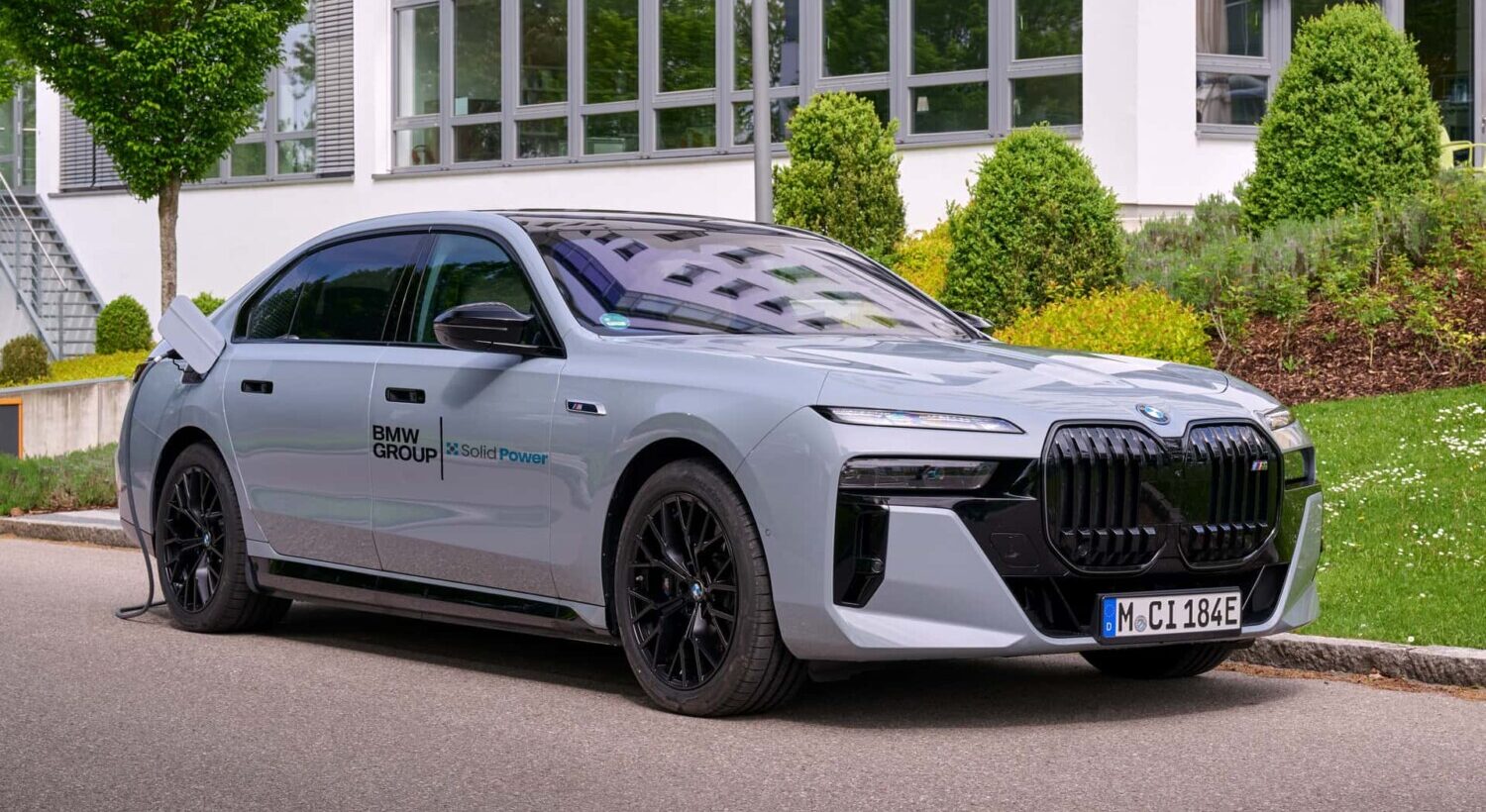
A BMW equipped with solid batteries recharges outside, symbolising autonomy and advanced technology (Credit: BMW Group).
The partnership that could change the industry
BMW, Samsung and Solid Power today formalised a strategic collaboration to accelerate the development of solid state batteries. The alliance draws on Solid Power’s chemical expertise, Samsung SDI’s industrial strength and BMW’s automotive expertise, providing a complete ecosystem to take batteries from prototype to production. BMW and Solid Power have already been working together since 2022, but the arrival of Samsung marks a crucial step. The Korean group will contribute its manufacturing capabilities, while BMW will design and integrate the packs into its future models. This clear division of roles should enable a rapid and controlled ramp-up.
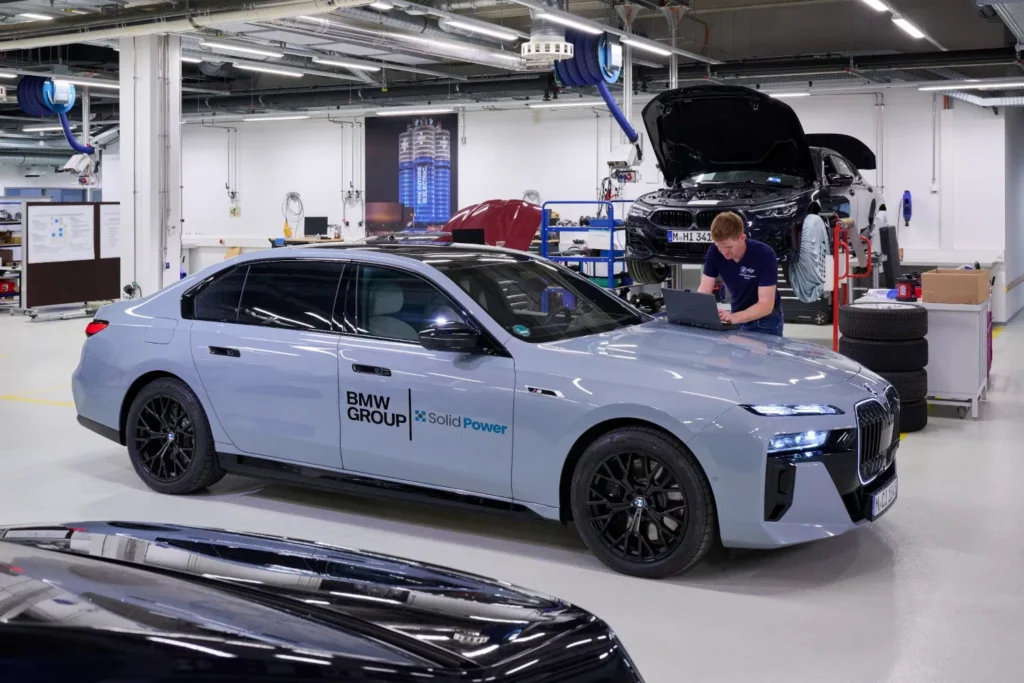
The first results are tangible, with a pilot line inaugurated by Samsung in 2023 to produce prototypes that will be sent to customers. At the same time, BMW has successfully tested an i7 equipped with solid-state cells in real-life conditions. As a result of these advances, the partners are aiming for series production before 2030, reinforcing the credibility of a technology that is often considered over-ambitious.
Long-promised technology finally a reality
The heart of the system is a sulphide-based solid electrolyte developed by Solid Power. It offers high conductivity and improved stability, two major challenges for this technology. The cells manufactured by Samsung will incorporate this electrolyte in the separator or catholyte. BMW will then assess performance against strict criteria before incorporating them into its demonstration vehicles. These advances are also based on an energy density that is significantly higher than current standards. Some configurations already reach 390 Wh/kg and could rise to 440 Wh/kg with a lithium metal anode. Experimental versions are even aiming for 560 Wh/kg, although their development is still at an early stage.
This performance is expected to double the range and halve recharge times. The benefits also include longer life, limited degradation and a safer thermal profile. The technology therefore seems to offer much-awaited solutions for accelerating the adoption of electric vehicles in an increasingly competitive market.
A technician examines a BMW equipped with solid-state batteries, illustrating the tests and validations carried out in real-life conditions. (Credit: BMW)
The global race intensifies
The competition for solid-state batteries is gathering pace, with all the major manufacturers looking to gain the upper hand. Nissan is already developing its own solutions with LiCAP Technologies. In China, CATL and BYD are aiming to bring their products to market as early as 2027, with a view to asserting their dominance before the end of the decade. At the same time, Mercedes-Benz, Stellantis and Volkswagen are making progress with their dedicated partners, showing that the stakes go far beyond the technological framework.
Against this backdrop, BMW is adopting a cautious but ambitious strategy. The manufacturer is multiplying its partnerships to maximise its chances of success, while rigorously validating each step forward. Despite the absence of a precise timetable, the current momentum suggests that the solid-state battery could become an industrial reality sooner than expected.
A redefined electric future
Thanks to the complementary nature of their combined expertise, BMW, Samsung SDI and Solid Power seem to be better equipped to take the final critical steps. Prototypes are already on the road, pilot lines are up and running and validation work is progressing. If the promises are confirmed, this technology could profoundly transform the automotive industry by offering greater safety, more autonomy and fewer constraints for users. So the countdown is on. The next few years will tell whether the solid state battery can finally live up to its promise and reshape the global electric mobility landscape.
As well as manufacturers, consumers have high expectations of this new generation of solid batteries. The doubled range and faster recharging could remove the last remaining obstacles to the purchase of an electric vehicle, particularly for long journeys. In addition, greater safety and improved thermal stability are boosting public confidence in this technology. Finally, the combination of performance, durability and ease of use could transform the driving experience, while accelerating the transition to cleaner, more efficient mobility.