Category: News

  • Two Mini x Deus concepts reconcile combustion and electricity

    Two Mini x Deus concepts reconcile combustion and electricity

    Mini, in collaboration with Australian fashion label Deus Ex Machina, and via its sports car subsidiary John Cooper Works, unveiled two crazy concepts at the IAA Mobility show in Munich, called The Skeg and The Machina. The Skeg and The Machina are electric bombshells and thermal powerhouses that bridge the gap between two worlds that sometimes struggle to understand each other.

    At first glance, nothing seems to compare The Skeg and The Machina. The first is a revisit of the beastly electric Mini JCW and its 258 bhp. Its surfboard-like fin and yellow straps on the roof are all calls for adventure, a characteristic trait of the Deus universe that The Skeg transcribes to perfection.

    the skeg mini electric jcw deus
    Credit: BMW Group

    Its companion, The Machina, as its name might suggest in Italian, prefers petrol to watts. It’s powered by a 231bhp turbocharged four-cylinder petrol engine, and it’s not hard to imagine the symphony that is the hallmark of John Cooper Works cars. Its livery is also a tribute to sportiness. It wears the colours of Monaco and bears the number 37, which Paddy Hopkirk wore when he won the Monte Carlo Rally in 1964. Mini and Deus have also paid homage to the sporty interior, with bucket seats, a racing steering wheel, extra headlights and, the detail that really gets us going, a hydraulic handbrake.

    the machina mini jcw deus
    Credit: BMW Group

    Not the same engine, but the same passion

    In other words, you get both the smell of petrol and the ugly back of electric power. Unfortunately, this will remain at the concept stage… Indeed, Mini and Deus Ex Machina have no plans to offer the two cars for sale, even in limited editions. So what’s the point? These show cars will certainly play a role in the communication of the two companies, but they also demonstrate the versatility of this iconic little city car. Above all, and this is what interests us here: The Skeg and The Machina show that a car can still be a subject of creativity and sportiness, whether it’s electric or combustion-powered.

    mini deus electric rally car
    Credit: BMW Group

    This ‘reconciliation’, even if symbolic, is worth highlighting at a time when the car industry is undergoing a transition that can sometimes be divisive (we know something about this, we read all the comments on our social networks…). In 2025, a decisive year for the future of mobility, Mini has chosen to tell two seemingly parallel stories that ultimately come together around the same conclusion: when you love the car, you love the pistons and the oil as much as all the memories you create behind the wheel.

    And while the cars aren’t for sale, you can still get a little piece of the partnership… To mark the occasion (and do a bit of business), a capsule collection of clothes inspired by the collab is available on the Deus Ex Machina website.

  • Clio 6, Renault’s risky bet

    Clio 6, Renault’s risky bet

    Renault took advantage of the IAA Mobility show in Munich to present the Clio 6. It’s a clear break with the past and a risky gamble: bigger, more connected, more expensive and now available exclusively in petrol and hybrid, the iconic city car – and incidentally its best seller – will have to (con)quer or perish.

    This autumn, at the IAA Mobility show in Munich, where ECO MOTORS NEWS made the trip, Renault lifted the veil on the Clio 6. The launch is no mean feat, given that 17 million Clios have been sold since the car first hit the road in 1990. It is not only a Renault icon, but also an emblem of European motoring. The proof is in the Clio 5’s second place in the ranking of the best-selling cars in Europe in the first half of 2025, behind the Dacia Sandero. It would therefore be an understatement to say that this Clio 6, the first models of which are due to leave the Bursa plant in Tunisia in early 2026, will not only be eagerly awaited, but will also play a major role in Renault’s future.

    new clio 6 2025
    Credit: Renault

    Futuristic design, modernised interior and new on-board technologies

    If you put the Clio 6 next to a Clio 5, you’d think they were from two different manufacturers! Quite simply, we haven’t seen such a restyling since the transition from the 2nd to the 3rd generation. And, as was the case then, the new design is divisive. Here at ECO MOTORS NEWS, we love it! With a hint of the Emblem concept car and its sleek, tapered, futuristic lines, and with its aggressive grille and sharp, handsome headlights, the Clio 6 is definitely in tune with the times. But there’s one intriguing detail above all: this city car is becoming ‘decitadinised’. A rather barbaric neologism, but with an extra 7 centimetres in length, for a total of 4.12 m, we’re moving even further away from the original spirit of Renault’s best-seller and its 3.70 m length. And that’s precisely where Renault is taking a risk, since it’s the compactness of the Clio that has made it such a success… Especially as this change in size also implies a change of segment and, de facto, a change in pricing. Although Renault has yet to reveal the price of the Clio 6, it is estimated that it could start at around €20,000, considerably more than the current version. Once again, this is a gamble, since the ‘affordable’ nature of Renault’s city car is another argument in its favour.

    Clio 6 front design
    Credit: Renault

    But the change in price can also be explained by the changes inside. In addition to a completely redesigned, high-quality interior, the Clio 6 features the same digital interface as the R5 and R4 E-Tech, with a dual 10-inch screen, native integration of Google Maps and the AI assistant, and almost thirty driving assistance devices. A far cry from the crank to wind up the windows…

    new clio 6 2025
    Credit: Renault

    Clio 6 closes the diesel chapter

    It was to be expected, and that’s the way the story goes, but it’s still something: there will be no Clio 6 diesel. The same goes for the smaller internal combustion engines, which explains the higher entry price. The range now starts with a 115bhp three-cylinder petrol engine. A petrol/LPG bi-fuel is also on the programme. But what really interests us is the hybrid model, which will undoubtedly be the biggest seller. This benefits from some significant improvements, notably to the petrol engine, which has been reworked to boost its power by around 15bhp to 160bhp. All this is backed up by the two electric motors that have made the other hybrid models in the E-Tech range so successful. We would have loved Renault to spring a surprise with a 100% electric Clio 6, but that still doesn’t seem to be on the agenda… Let’s just say that a lot of things would have had to be rethought before launching such a novelty, and the gamble is risky enough as it is!

    clio 6 rear
    Credit: Renault

    Renault is therefore taking a calculated risk. The Clio is still a safe bet, but the competition is intensifying, particularly in the face of Chinese brands with their formidable value for money, and the growing popularity of compact SUVs. With this longer, more powerful sixth generation, Renault hopes to consolidate the Clio’s place on the European best-seller podium by expanding into other market segments. It remains to be seen whether this strategy will pay off or whether, on the contrary, the Clio 6 strays too far from the Clio spirit for customers who are very attached to the legendary city car.

  • SCAPE: the European project to rethink the electric power of EVs

    SCAPE: the European project to rethink the electric power of EVs

    The SCAPE project is funded by the 27 European countries as part of the Horizon Europe programme and led by the Energy Research Institute of Catalonia (IREC). The aim is to revisit the power electronics used in electric vehicles. What are SCAPE’s ambitions? To achieve an efficiency of over 97.5%, double the power density and halve the cost per kWh compared with current solutions.

    With the market for electric vehicles constantly evolving, carmakers still face many challenges. Such is the case with power electronics: all the electronic components that transform and control the electricity in an electric car.

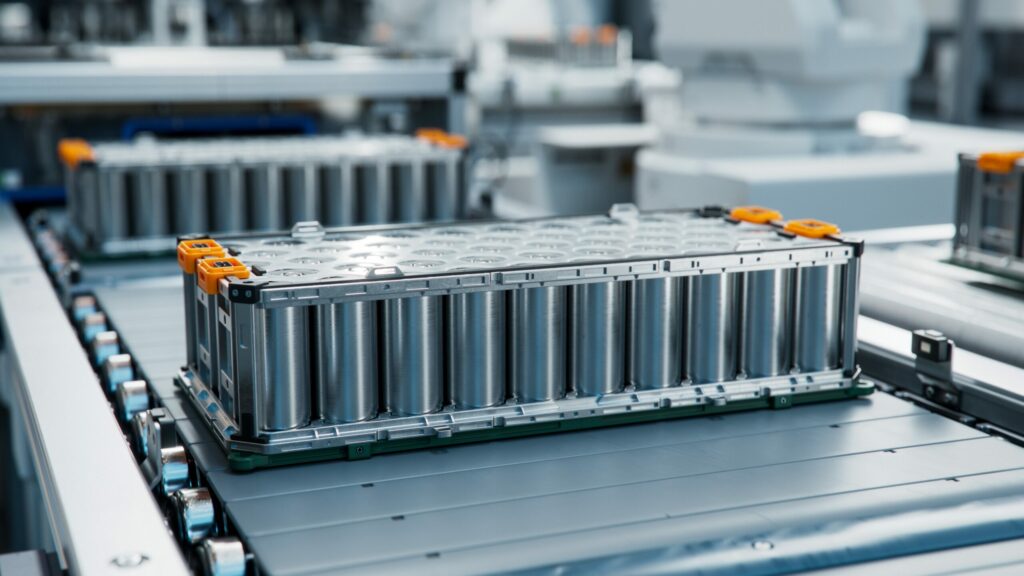
    The key idea behind the SCAPE project is modular technology. Rather than designing a different converter for each vehicle, IREC engineers are developing a “standard brick” called a switching cell. These small bricks can be stacked in series, like Lego, to obtain exactly the power required. These chains are then assembled to form a complete converter for the motor or charging system. The result is a common base that is equally suited to small city cars, vans and HGVs, promoting standardisation and reducing costs.

    renault 5 electric platform
    Renault

    With an efficiency of over 97.5%, SCAPE hopes to improve the recharging performance of our electric vehicles. The project also aims to combine certain functions: traction inverters and on-board chargers can coexist in the same module, simplifying design and reducing the number of components required.

    Not only that, but the power chips will be integrated directly into the electronic circuit boards. This innovation will improve cooling, reduce energy losses and increase the lifespan of the vehicle and its components.

  • IAA Munich 2025: The Xpeng P7+ arrives in France, the great return of the saloon?

    IAA Munich 2025: The Xpeng P7+ arrives in France, the great return of the saloon?

    At the IAA Mobility 2025 trade fair in Munich, Xpeng announced that its P7+ saloon would soon be available in France.

    September is back-to-school month, but not the only one! For the editors of ECO MOTORS NEWS – and the rest of the ecomobility world – it’s also time to head to Germany for the IAA Mobility show in Munich, to take the pulse of this booming industry.

    Chinese carmaker Xpeng decided to unveil its new large saloon – the Xpeng P7+ – for the first time on the Old Continent, in Franz Beckenbauer’s hometown. The premium brand is thus confirming its imminent arrival on the French market, as we predicted in our article on the 5 Chinese electric car models you need to know about.

    Credit: Xpeng

    This XXL saloon (over 5 metres long) is based on the company’s signature SEPA 2.0 platform, which is modular and practical, and whose architecture enables it to accommodate 800-volt batteries. It therefore promises ultra-fast recharging, with a refill from 10% to 80% in around twelve minutes on the highest-performance version. In the age of SUVs and, more generally, 4-wheel drive, the P7+ will only be available with rear-wheel drive. Two versions will be offered, all equipped with lithium-iron-phosphate (LFP) batteries, with a choice of 60.7 kWh or 76.3 kWh, promising power outputs of 245 and 320 bhp.

    In terms of performance, the claimed range (to be taken with a grain of salt) is 715 km CLTC – the Chinese equivalent of the WLTP, which is closer to 585 km. In terms of design, every detail of the car’s aerodynamics has been thought through in order to limit fuel consumption, with a fastback that is particularly striking. The boot capacity, which varies between 725 litres and 2,221 litres with the seats folded, is more than adequate. When it arrives in France, expected before spring 2026, it should be priced between €45,000 and €50,000. Indeed, Xpeng has announced that its price will be similar to that of its G6 SUV, which sells for €47,000 in France. If the P7+ lives up to its promise, it could put the Tesla Model 3 under pressure in the same price segment.

    Credit: Xpeng

    In short, the Xpeng P7+ is an ambitious large electric saloon, combining ultra-fast charging, generous interior space, advanced technology and very attractive value for money in the European segment. Could this finally be the comeback of the saloon? In the meantime, stay tuned for further announcements and news straight from the IAA Mobility Munich show, coming soon to our website.

  • Porsche Cayenne electric: wireless charging makes its debut

    Porsche Cayenne electric: wireless charging makes its debut

    Porsche is preparing for the arrival of its 100% electric Cayenne, expected in dealerships in early 2026. But before the official unveiling, scheduled for the end of 2025, the German marque is taking advantage of the Munich Motor Show to unveil an innovation that could change the habits of its customers: induction charging.

    Porsche Cayenne electric 2026 seen in profile, camouflaged prototype at the Munich Motor Show with innovative induction charging
    The electric Porsche Cayenne is unveiled under camouflage at the Munich Motor Show and announces its induction charging. (Credit: Porsche)

    Notably, presented under animated camouflage, the prototype conceals a technology that is still rare in the automotive industry. In practical terms, it will be possible to recharge an SUV simply by parking it on top of a slab installed on the ground, without the need for cables or plugs.

    A device designed for domestic use

    The system is based on a plate measuring 117 cm by 78 cm, 6 cm thick, which can be installed in a garage, under a carport or even outdoors. The vehicle carries a second plate placed between its front wheels. Alignment is carried out using 360° cameras, and the car then lowers itself automatically to optimise energy transfer. The system delivers 11 kW of alternating current, equivalent to that of a domestic wall-mounted charging point.

    Porsche emphasises the efficiency of the process, with a claimed efficiency of 90%. The aim is clear: to simplify home recharging. According to the manufacturer, 75% of owners of electric models already fill up at home.

    Induction charging plate for the electric Porsche Cayenne, a floor-mounted device for cable-free charging of the premium SUV.
    Induction charging on the Porsche Cayenne relies on a plate on the floor that supplies power to the battery without plugging it in. (Credit: Porsche)

    Useful innovation or simple comfort?

    Induction charging is not a technical revolution, as it already exists for smartphones. Nevertheless, its application to a production vehicle is a first. There remains the question of cost, estimated at several thousand euros as an option. Some will see it as a gadget, while others will appreciate the convenience, especially in a premium segment where the customer experience counts as much as performance.

    Moreover, at the same time, the future Cayenne will retain DC fast charging, taking advantage of its 800 V architecture to exceed 350 kW. A perfect combination of everyday practicality and long-distance travel.

  • Hyundai Concept Three: an electric city car that blurs the lines

    Hyundai Concept Three: an electric city car that blurs the lines

    Hyundai unveils Concept Three, a vehicle billed as a compact city car. However, its sculpted profile is more reminiscent of a sports coupé. With this teaser, Hyundai is building up anticipation ahead of the IAA Mobility 2025show, which runs from 9 to 14 September in Munich.

    Official sketch of the Hyundai Concept Three, a compact electric city car with a sporty design presented at the IAA Mobility 2025 trade fair
    Teaser drawing of the Hyundai Concept Three, Hyundai’s first compact electric city car. (Credit: Hyundai)

    A long-awaited return to Munich

    After a four-year absence, the Korean manufacturer is making a comeback at the IAA, Europe’s biggest mobility show. To mark the occasion, Hyundai has chosen to officially unveil its first compact electric concept from the Ioniq range. This model could herald a future Ioniq 3, an electric city car promised to be bold and innovative.

    Sculptural and dynamic design

    The styling of the Concept Three illustrates the new design language known as the “Art of Steel”. Inspired by the fluidity of steel, the bodywork combines taut surfaces, clean lines and precise intersections. Its bold appearance is reinforced by a sharp profile, a plunging bonnet and reduced side windows. The whole evokes an assertive sportiness, far removed from the traditional image of the city car.

    The birth of the Aero Hatch

    Concept Three introduces a new type of vehicle, dubbed the “Aero Hatch”. This fluid, muscular silhouette aims to reinvent the compact electric vehicle segment. According to Simon Loasby, Hyundai’s Head of Design, the project was an opportunity to completely rethink the electric city car, combining movement with balanced proportions.

    A key event for Hyundai

    Hyundai will present the Concept Three in detail at a press conference on 9 September. The public will also be able to discover the vehicle in the IAA Open Space in the heart of Munich. With this styling study, the brand confirms its ambition to establish itself as a major player in sustainable mobility in Europe.

  • Citroën C5 Aircross: a family SUV combining comfort and rational electrification

    Citroën C5 Aircross: a family SUV combining comfort and rational electrification

    With its second generation, the Citroën C5 Aircross has established itself as an SUV designed for families. Available as a hybrid or 100% electric, it combines modern design, refined comfort and advanced technologies. Produced in France, it stands out for its broad range and competitive positioning.

    Front view of the Citroën C5 Aircross Plug-in Hybrid, a family SUV with a modern, aerodynamic design
    The new Citroën C5 Aircross has a redesigned front end with Matrix LED headlamps and tauter lines. (Credit: Citroën)

    A complete range of electrified powertrains

    C5 Aircross offers several choices to suit individual needs. The entry-level 48V hybrid offers efficient city driving without the need for external recharging. The rechargeable hybrid version develops 195 bhp and offers a range of up to 100 kilometres in electric mode. Finally, two 100% electric versions complete the range, with ranges of up to 680 kilometres. In this way, Citroën covers all types of use, from city driving to long journeys.

    Comfort worthy of a Citroën signature

    Comfort remains the brand’s DNA. Suspension with progressive hydraulic bumpers ensures a smooth ride, almost like a magic carpet. The new-generation Advanced Comfort® seats add ventilation, heating and massage programmes. The interior ambience, inspired by furniture, offers a cocooning atmosphere enhanced by recycled materials and a generous panoramic roof.

    Technology for simplicity

    The C5 Aircross boasts an extensive digital arsenal. The Cascade central touchscreen can be customised and features “Hello Citroën” voice control with ChatGPT. In terms of safety, Drive Assist 2.0 provides Level 2 autonomy with lane keeping and adaptive cruise control. Other aids, such as 360° vision and head-up display, enhance the driving experience.

    Interior of the Citroën C5 Aircross, comfortable interior with Advanced Comfort seats and large central touch screen
    The interior of the C5 Aircross offers premium comfort, with massaging seats, recycled materials and customisable lighting. (Credit: Citroën)

    Design rethought for efficiency

    With its tauter lines and Matrix LED headlamps, the SUV is more modern than ever. Its optimised aerodynamics improve electric range. The generous interior space for the rear seats is complemented by a boot that can be adjusted up to 1,668 litres.

    An SUV made in France

    Assembled in Rennes using recycled materials, the Citroën C5 Aircross showcases national expertise. Its batteries and engines also come from French sites. Available from €34,990, it combines comfort, technology and environmental responsibility.

  • Mercedes to bring EQE and EQE SUV to an early end

    Mercedes to bring EQE and EQE SUV to an early end

    The Mercedes EQE and EQE SUV, launched in 2021 and 2022, will not have a long career. The German manufacturer plans to end production of these models in 2026. This decision reflects the difficulties encountered by these electric models and a desire for strategic reorganisation. Disappointing sales, high prices and a controversial design have sealed their fate earlier than expected.

    Mercedes EQE electric SUV, a premium model that will cease production in 2026
    Mercedes EQE SUV: an electric model whose career will come to an end in 2026 (Credit: Mercedes)

    A withdrawal dictated by sales

    In the United States, a key market for Mercedes, sales of the EQE and EQE SUV fell by 39% in 2024, to just 11,660 units. In Europe, the high prices also failed to attract a large customer base. The styling, considered bland and undistinguished by the competition, has not helped these models to make a lasting impact.

    A new strategy in preparation

    Mercedes is now focusing on a new generation of electric vehicles based on the new MB.EA-M platform. This platform will be used in particular for the future electric GLC, soon to be presented in Munich, and for the next C-Class. An electric E-Class has also been confirmed, as a direct replacement for the EQE.

    A clear repositioning of the range

    The carmaker wants to simplify its range by bringing its electric models closer to its traditional combustion-powered models. The aim is to avoid duplication, clarify the range and offer more attractive vehicles. Future models will feature more classic styling and improved interior space, while incorporating technologies inspired by the EQS.

    A necessary turning point

    The disappearance of the EQE illustrates the rapid changes taking place in the automotive market. Mercedes prefers to abandon its models in difficulty in order to prepare more strategic launches. This reorganisation could enable the brand to become clearer and better respond to consumer expectations. A pragmatic choice, but a risky one, against a backdrop of increased competition.

  • Toyota to produce its first electric vehicle in Europe at its Czech plant

    Toyota to produce its first electric vehicle in Europe at its Czech plant

    Toyota is to assemble a 100% electric vehicle on European soil for the first time. The Kolin plant, to the east of Prague, has been chosen as the production site. The announcement, made on Wednesday, marks a strategic turning point for the Japanese manufacturer. Details of the model and production schedule are still confidential.

    Toyota Urban Cruiser electric, future model expected on the European market
    The Urban Cruiser could join Toyota’s electric range in Europe in the next few years (Credit: Toyota)

    A strategic site for Toyota in Europe

    For the moment, the manufacturer is only revealing the financial aspects of the project. Total investment amounts to 680 million euros, including 64 million from the Czech government. The Kolin plant already produces the Aygo X and the Yaris hybrid, with an annual capacity of around 220,000 vehicles. The extension of the site, from 152,000 to 173,000 square metres, will make it possible to prepare for electricity production.

    Support from the Czech government and economic issues

    The Czech government is actively participating in the financing, particularly for the battery facility. The automotive industry accounts for around 10% of the country’s gross domestic product. Prime Minister Petr Fiala stresses that this project is essential to maintain automotive production in the Czech Republic. Toyota Europe also sees it as an opportunity to strengthen its market presence and move towards carbon neutrality by 2040.

    A European electrical offensive

    Having long adopted a cautious strategy when it comes to electric vehicles, Toyota is now planning nine non-thermal models for the continent between 2025 and 2026. The vehicle produced in Kolin could be the Urban Cruiser or the C-HR+, expected in late 2025 or early 2026. The brand is thus combining its expertise in hybrids with its new move towards 100% electric vehicles.

    Kolin, a key site for the future

    Wholly owned by Toyota since 2021, the Czech plant has already produced more than 4.5 million vehicles, including for Peugeot and Citroën. The expansion of the site is part of a wider European strategy, with eight other plants in Portugal, the UK, France, Poland and Turkey. This decision marks a historic change for Toyota and the European market. It also confirms the growing importance of electric vehicles in the Japanese manufacturer’s industrial strategy.

  • Leapmotor B10: China’s budget-priced electric SUV arrives in France

    Leapmotor B10: China’s budget-priced electric SUV arrives in France

    With the B10, Leapmotor is striking hard in the compact SUV market. Presented at the 2024 Paris Motor Show, this 100% electric model is aimed directly at the Renault Scénic E-Tech and Peugeot e-3008. True to its aggressive strategy, the Chinese brand, now 51%-owned by Stellantis, is banking on unbeatable prices to win over French motorists.

    Front view of the Leapmotor B10 2025 electric SUV, modern design and competitive price from €28,400
    Front view of the Leapmotor B10, a Chinese electric SUV competing with the Renault Scénic and the Peugeot e-3008. (Credit: Leapmotor)

    From its launch on 2 September, the SUV is priced at €29,900. Thanks to a temporary promotional offer, the price has even fallen to €28,400. That’s more than €10,000 less than its French rivals. This makes the B10 one of the most competitive electric SUVs in the C segment.

    Less autonomy than the competition

    Under its bonnet, the Leapmotor B10 packs a unique 218 bhp engine. Two batteries are available: 56.2 kWh for 361 km WLTP and 67.1 kWh for 434 km. In real-world conditions, however, the range falls below 400 km, a handicap compared with the 500 km claimed by its rivals. Recharging remains rapid, with 30 minutes needed to go from 20% to 80% on a high-power terminal.

    Generous equipment right from the start of the range

    Available in two trim levels, Life and Design, the SUV doesn’t skimp on equipment. The Life trim includes a 14.6-inch central touchscreen, a 1.8 m² panoramic roof, a 360° camera and 17 driving aids. The Design trim goes even further, adding vegan leather, ventilated electric seats and customisable lighting.

    Interior of the Leapmotor B10 with 1.8 m² panoramic glass roof and spacious interior
    Interior of the Leapmotor B10 with 1.8 m² electric panoramic roof, available from Life trim level upwards. (Credit: Leapmotor)

    An offensive supported by Stellantis

    At 4.52 metres in length, the B10 puts a premium on interior space and connectivity. Its boot capacity is limited to 420 litres. Priced at up to €32,900, it remains more affordable than most of its rivals. The Stellantis network already has 125 sales outlets in France. Production in Spain from 2026 should also boost its credibility. Leapmotor hopes to convince customers who are still wary of this new Chinese brand.