Category: News

  • Rivian R2: the electric SUV set to rival the Tesla Model Y

    Rivian R2: the electric SUV set to rival the Tesla Model Y

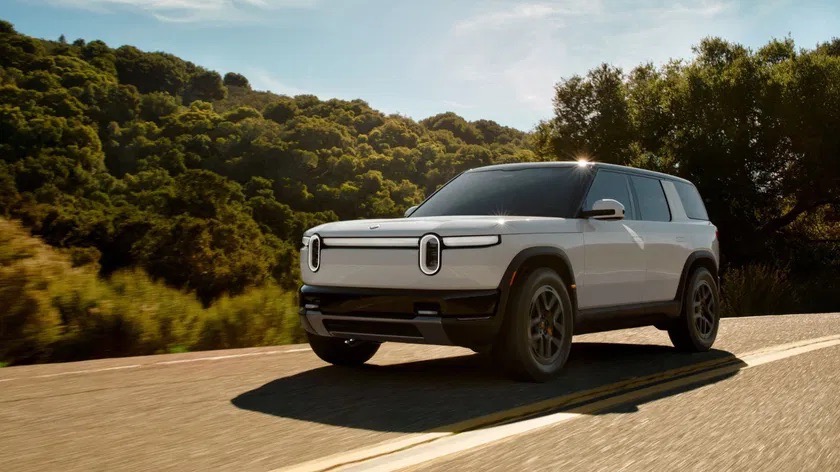
    With the R2, Rivian is entering a new phase in its development. More compact, more affordable and designed for much higher production volumes, this electric SUV is set to enable the American manufacturer to transition from a niche player to a genuine competitor on the global market.
    source: Rivian

    The rocker switch model for Rivian

    With the R2, Rivian is clearly shifting its strategy. Having previously focused on relatively expensive premium vehicles such as the R1T and R1S, the American brand is now targeting a much larger market segment. This new SUV is therefore the most strategic model in Rivian’s history, the one that is expected to enable the manufacturer to become profitable in the medium term, following a challenging 2025. 

    The R2, which was unveiled in its final form in March 2026, will go into production in the United States this year. And the news is that, unlike Rivian’s previous models, the R2 is expected to go on sale in Europe from 2027. 

    A more compact SUV, designed for global use

    Indeed, the Rivian R2 is positioned as a mid-size family SUV, more compact than the R1S but still designed with versatility and adventure in mind.
    source: Rivian

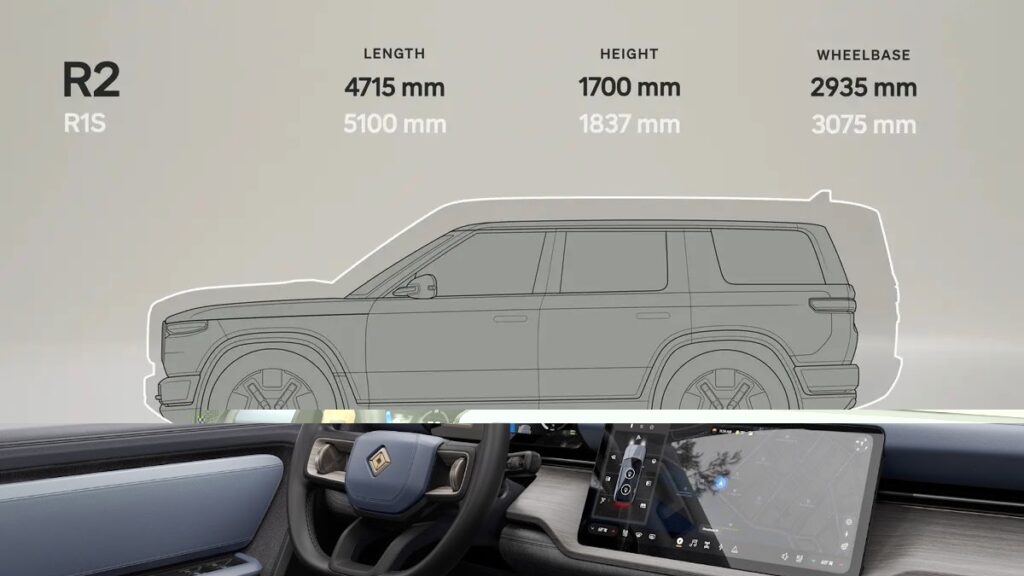
    In terms of dimensions, the vehicle is approximately 4.72 metres long with a wheelbase of 2.94 metres, which puts it in direct competition with segment leaders such as the Tesla Model Y. According to various press reviews carried out by our American colleagues, it is a spacious vehicle and, indeed, the vehicle offers a generous boot capacity of 812 litres, which is 10 litres less than its future rival: the Tesla Model Y. 

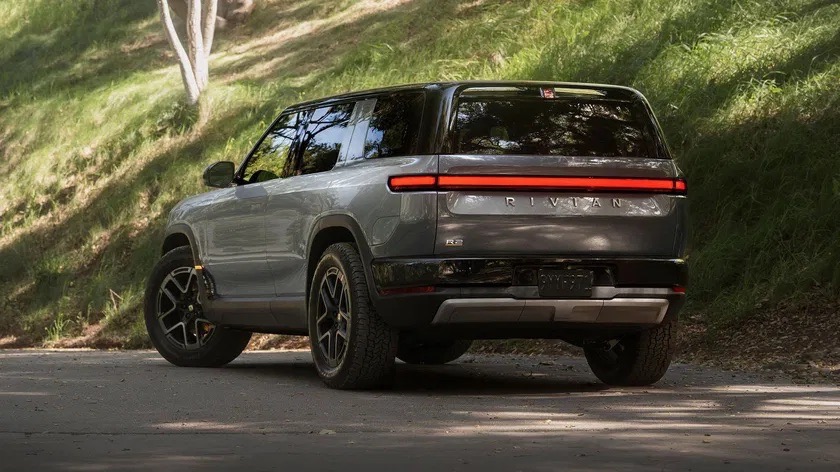
    When it comes to design, there’s no mistaking it: this is definitely a Rivian. The brand’s DNA is clear to see: a rugged silhouette, clean lines and an ‘outdoor’ feel, with high ground clearance that underlines its versatile nature. 

    A comprehensive range, offering various performance levels

    This news was announced recently: Rivian has planned the R2 as a range of models, with production ramping up gradually between 2026 and 2027.

    The range is based on four main configurations:

    • At the top of the range is the R2 Performance (Launch Edition). This version clearly embodies the SUV’s sportiest vision, with a claimed power output of 656 horsepower. Thanks to its all-wheel drive, it can accelerate from 0 to 100 km/h in just 3.6 seconds – performance figures that put it right up there with some of the segment’s leading models. In terms of range, Rivian claims around 530 kilometres, a figure that is consistent given the level of performance on offer. All this comes at an estimated price of around $58,000, making it a top-of-the-range model that is still relatively competitive in the US market.
    • A step down from that, the R2 Premium takes a more balanced approach. With an output of around 450 horsepower, it maintains solid performance whilst placing greater emphasis on comfort and the in-car experience. The range remains similar to that of the Performance version, at around 530 kilometres, making it a particularly attractive option for everyday use.
    • The R2 Standard Long Range marks the first real shift towards a more accessible market positioning. This version features rear-wheel drive, which helps to keep costs down whilst maintaining a high range. Rivian claims a range of up to 345 miles, or around 555 kilometres, a figure that is particularly competitive in this segment. Its price is expected to be around $50,000, positioning it as a strategic volume model.
    • Finally, the R2 Standard, which will be the entry-level model, is clearly aimed at a wider audience. With an estimated range of around 275 miles (approximately 440 kilometres), it remains in line with market standards whilst carrying a target price of $45,000. Its launch is scheduled for 2027, following the traditional approach of a gradual move upmarket, with the most profitable versions coming first before the arrival of more affordable variants.
    source: Rivian

    Solid performance and fast charging

    From a technical perspective, the Rivian R2 is built on a new platform designed specifically for mid-size models. Among the key features announced by the manufacturer is a battery pack of approximately 87.9 kWh which, as explained earlier, delivers a range of up to 530 km depending on the version. These batteries support fast charging, allowing them to go from 10% to 80% in around 29 minutes. It isn’t the fastest vehicle on the market in this respect, but it is in line with the segment.

    Still on the subject of charging, the new Rivian model will also adopt the NACS charging standard, which is compatible with Tesla. This is an important strategic move to facilitate access to the North American charging network and further establish itself as one of the future competitors to the American market leader. 
    source: Rivian

    A highly tech-focused SUV, with a strong emphasis on software

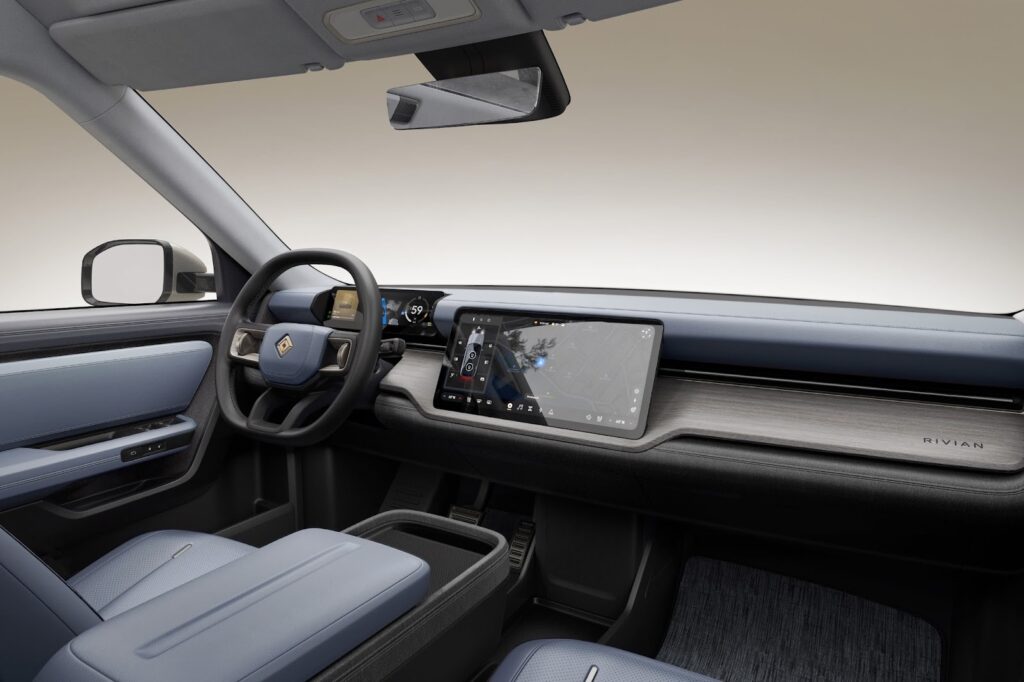
    One of the most important factors for customers looking for a new vehicle is the quality of the in-car technology. Rivian has therefore placed a strong emphasis on software to set itself apart.

    In this regard, we are told that the R2 features 5G connectivity, a smart voice assistant, a remote monitoring system (Gear Guard), and that its software can be kept up to date via over-the-air (OTA) updates.

    Above all, however, all models come pre-fitted with Autonomy+, Rivian’s driver-assistance platform, which can be upgraded to more advanced semi-autonomous driving features. 
    source: Rivian

    A progressive industrial strategy

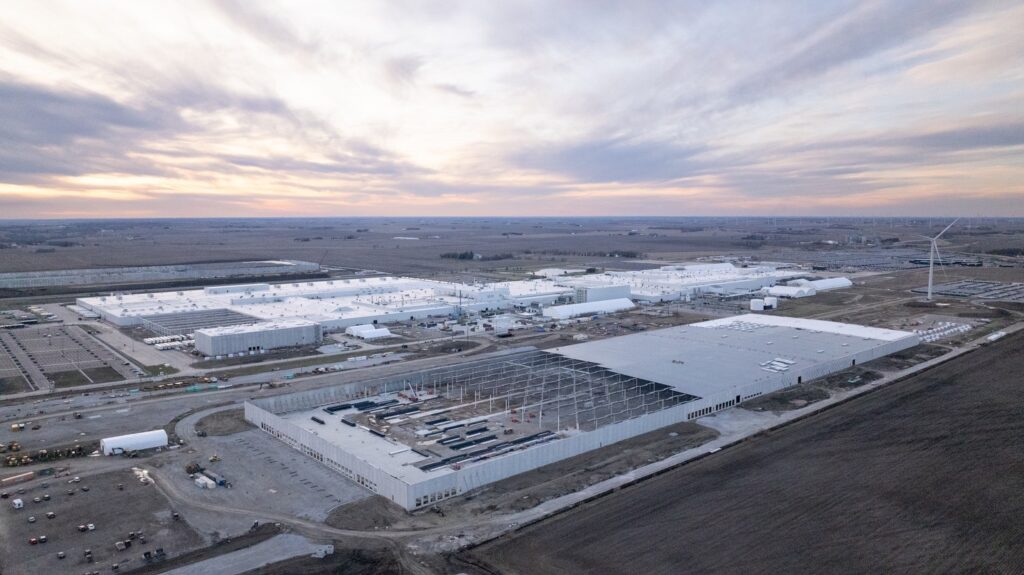
    The figures are all well and good, but where will the Rivian R2 be manufactured? Production of the R2 will begin at Rivian’s factory in Illinois, before gradually shifting to a new site in Georgia from 2028 onwards. This will enable Rivian to limit its short-term investment, whilst also speeding up the model’s launch and securing its production volumes

    Ultimately, the R2 is expected to account for a significant proportion of the manufacturer’s deliveries, with tens of thousands of units planned each year. 
    Rivian factory

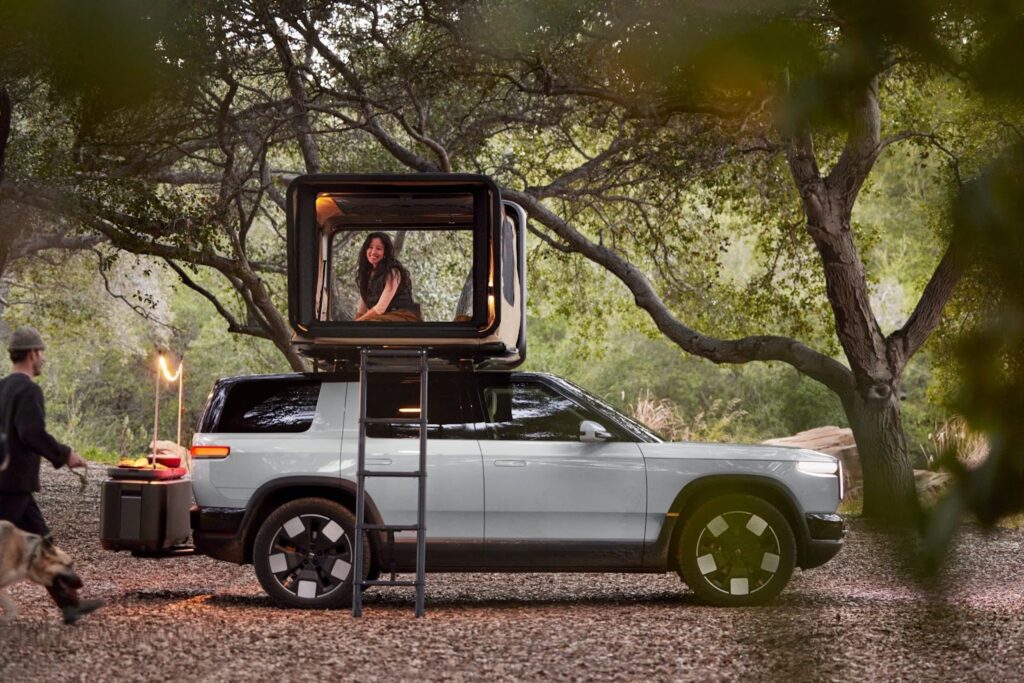
    With a starting price of around $45,000, competitive range and positioning as a family SUV, the Rivian R2 is clearly targeting the Tesla Model Y. The idea, however, is to stay true to its core philosophy and thus set itself apart through its ‘adventure’ image, interior modularity and a more lifestyle-oriented approach. The model’s arrival in Europe, expected in 2027, confirms this global ambition
    source: Rivian

    A key model for Rivian’s future

    Rivian is taking a big gamble with the R2. This SUV is not just intended to expand the range: it is set to transform the company. With increasing production volumes, competitive pressure and profitability challenges, the success of the R2 will be crucial to the future of the American manufacturer.
  • DS No. 7: DS Automobiles unveils the new generation of its best-selling SUV

    DS No. 7: DS Automobiles unveils the new generation of its best-selling SUV

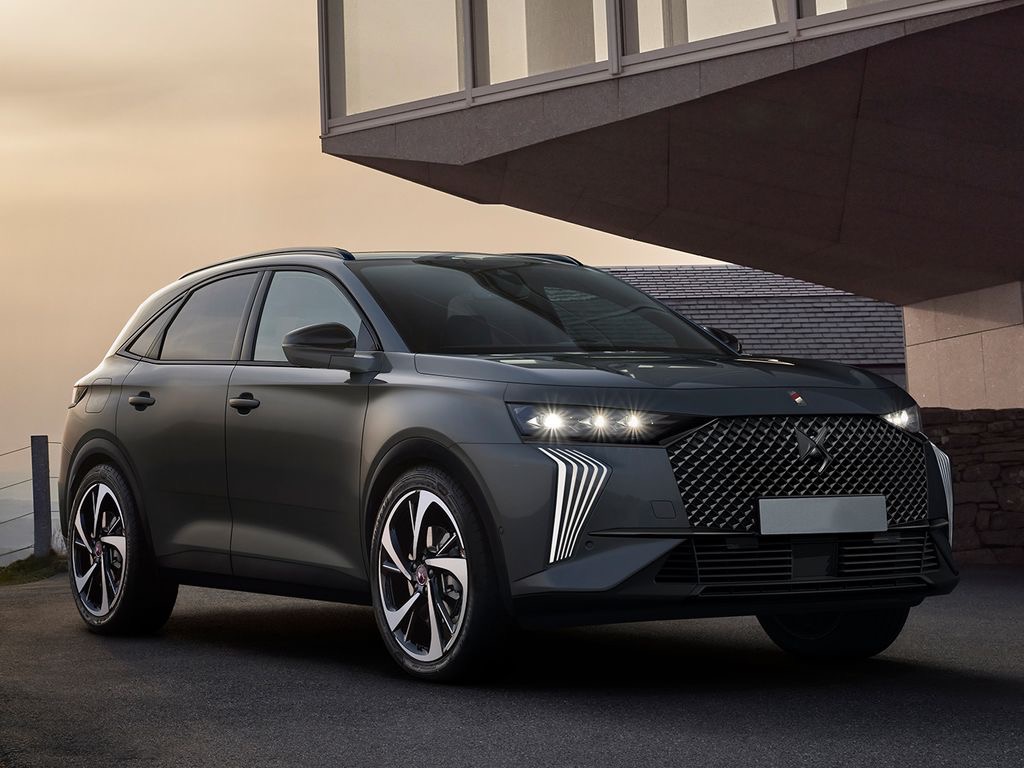
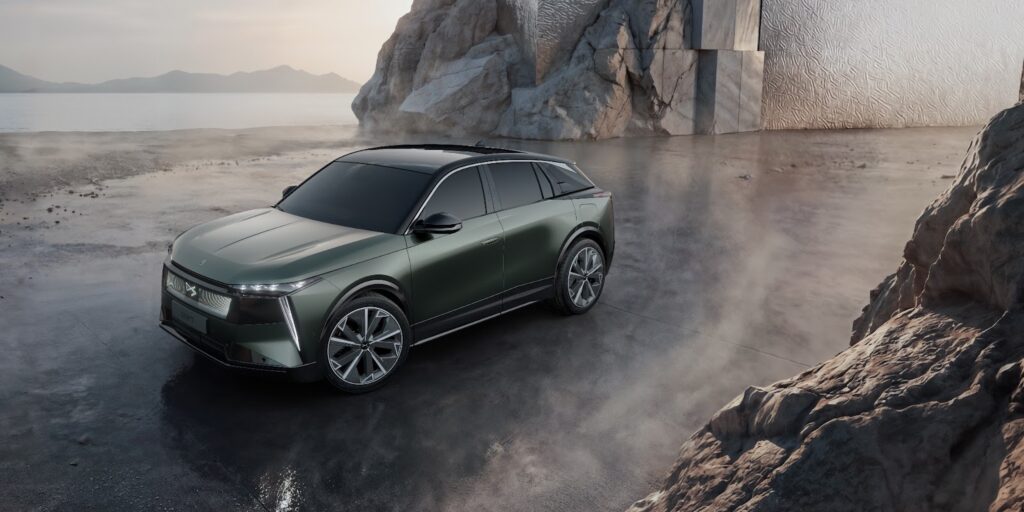
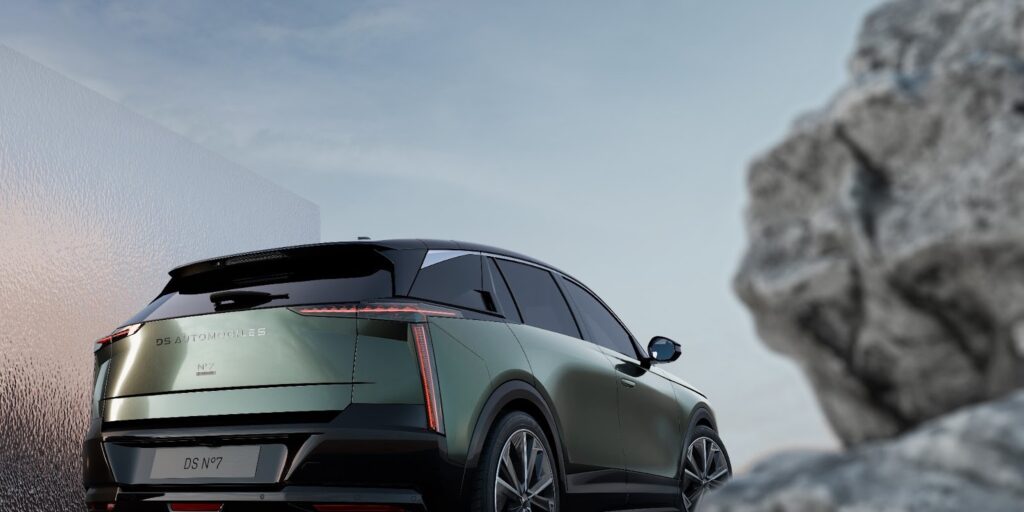
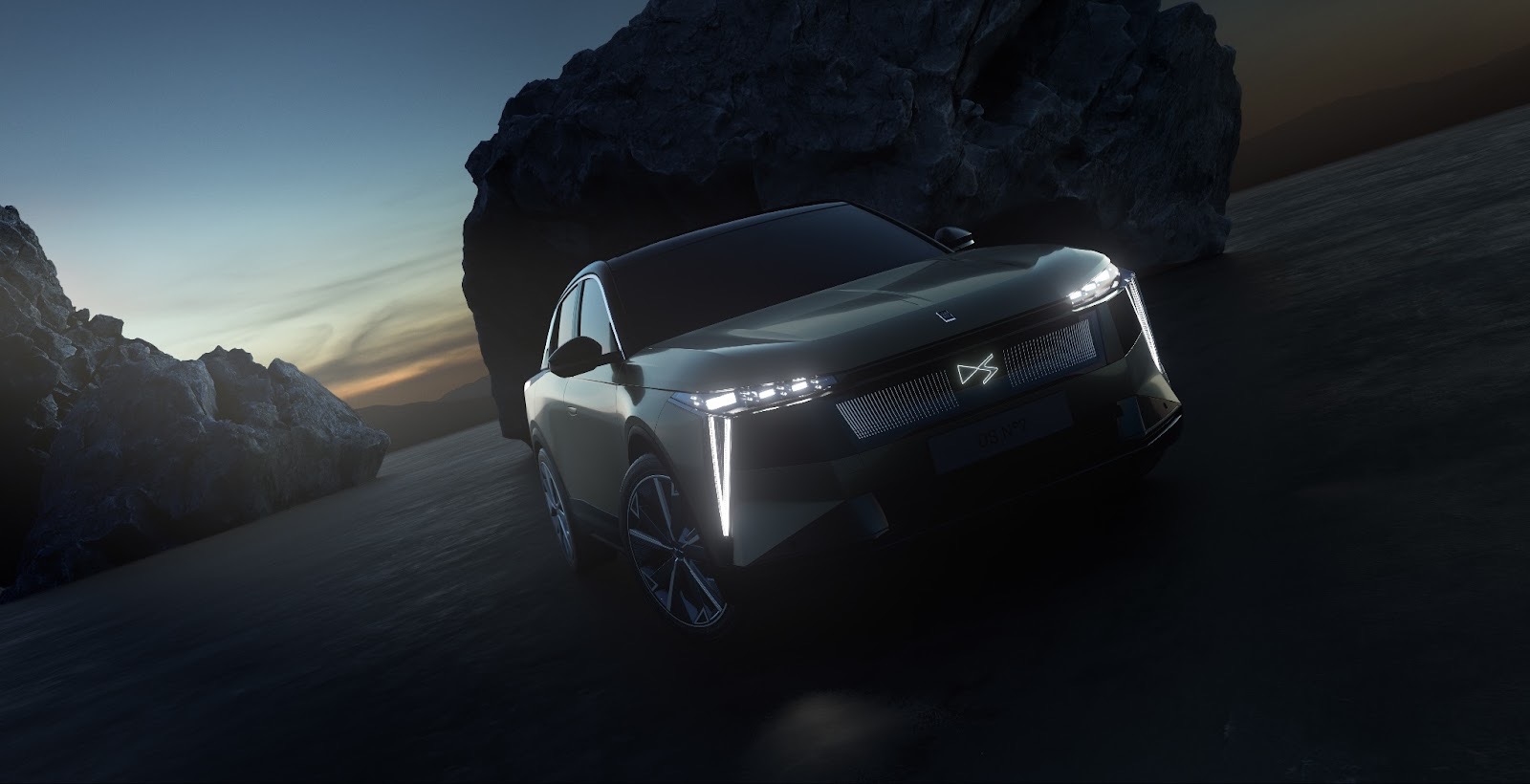
    DS Automobiles has officially unveiled the DS N°7, a new premium SUV set to succeed the DS 7, which was launched in 2017. Available with a range of powertrain options, this model marks a new milestone in the gradual electrification strategy of the French brand, part of the Stellantis group.

    source: Stellantis

    The successor to the best-selling DS 7

    With the DS No. 7, DS Automobiles is revamping one of the most important models in its range. This new SUV succeeds the DS 7, launched in 2017, which, according to the manufacturer, was the French premium brand’s best-selling model for several years. Indeed, it was the first SUV developed specifically for DS Automobiles and was intended to firmly establish the brand in the European premium segment.

    According to market estimates, global sales of the DS 7 are currently believed to be between 150,000 and 200,000 units, although the manufacturer has not published detailed model-by-model figures since 2023, preferring to report on the group’s overall performance.

    source: Drivek

    With this new generation, dubbed the DS No. 7, the brand hopes to build on this momentum whilst updating its technological and powertrain offerings.

    A commanding presence and well-balanced proportions

    Its dimensions are as follows: 4.66 metres in length, 1.90 metres in width and 1.63 metres in height. Purists of the previous model may have noticed that it is 7 centimetres longer, with 5 centimetres of that added to the wheelbase, which now stands at 2.79 metres. All of these dimensions contribute to improved interior space without compromising the vehicle’s overall agility.

    Visually, the DS No. 7 stands out with its sleek, dynamic silhouette and a distinct sense of prestige. It is fitted with large wheels measuring up to 21 inches, with a total diameter of 740 mm. The roof is slightly arched and features an integrated spoiler, which enhances its aerodynamic efficiency (Cx) to 0.26.

    At the front, the visual signature is defined by a striking lighting design, featuring V-shaped DS LIGHT BLADEs combined with an illuminated grille. At the rear, vertical lighting elements echo this design language, ensuring visual consistency and a strong identity.

    source: Stellantis

    A new generation that is now multi-energy

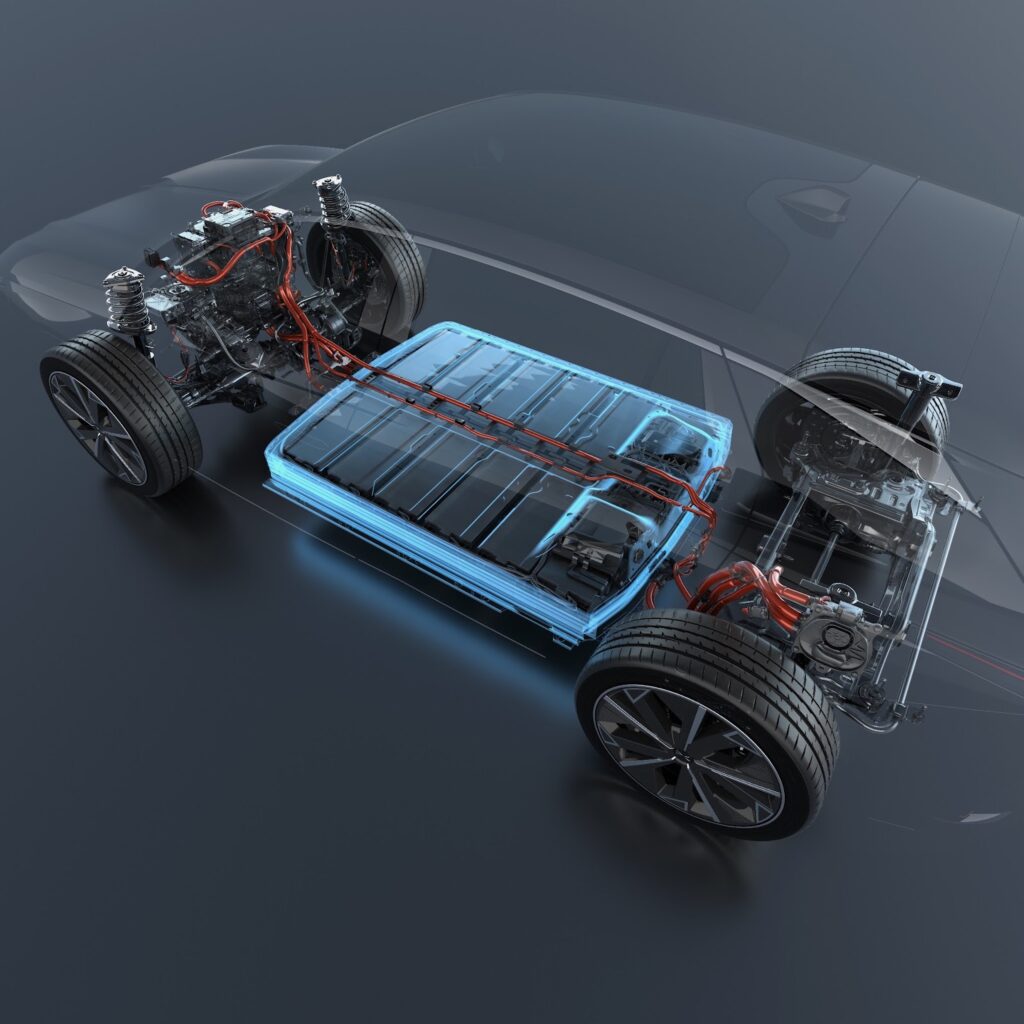
    The DS 7 is built on the Stellantis Group’s new STLA Medium platform, a technical architecture designed to accommodate a range of electrified powertrains. It is therefore only natural that this SUV is available with a variety of powertrain options to meet the needs of different markets.

    The range is expected to include, in particular:

    • a 145 hp hybrid version, which will be the entry-level model
    • a plug-in hybrid version, intended to be the mainstay of sales
    • several fully electric E-TENSE models

    Please note that orders open on Tuesday 17 March (the day of the announcement) for an initial 230 hp FWD version: the “No. 7 E-TENSE FWD ÉTOILE BUSINESS LINE”, priced at €64,200.

    Impressive technical specifications

    When it comes to electric vehicles, DS is announcing particularly ambitious and impressive ranges.

    For the top-of-the-range model (E-TENSE FWD Long Range), the manufacturer claims a range of up to 740 km on the WLTP cycle, thanks to a 97.2 kWh battery produced in France at the ACC gigafactory: ‘Made in France’ takes centre stage.

    For the E-TENSE AWD Long Range version, which features the same battery and all-wheel drive, the range is said to reach 679 km on the WLTP combined cycle. The latest model in the electric range (E-TENSE FWD) is fitted with a 73.7 kWh battery offering a range of up to 543 km on the WLTP combined cycle.

    source: Stellantis

    Charging performance is equally impressive, as the DS No. 7 E-TENSE can go from 20% to 80% battery charge in 27 minutes (31 minutes for the 73.7 kWh battery). Furthermore, DS has fitted a three-level regenerative braking system to optimise range across different types of journeys.

    A high-tech SUV inspired by the world of luxury

    As well as its engine options, DS Automobiles is particularly keen to highlight the technological aspects of its new SUV.

    The DS No. 7 features a range of technologies designed to enhance comfort, safety and the in-car digital experience.

    Among the main facilities announced:

    • DS Pixel Vision headlights: an intelligent lighting system capable of automatically adjusting the light beam to optimise visibility without dazzling other road users.
    • Camera-controlled suspension: the system analyses the road in real time to adjust the suspension settings and enhance ride comfort.
    • Extended head-up display: driving information is projected directly into the driver’s field of vision to minimise distractions.
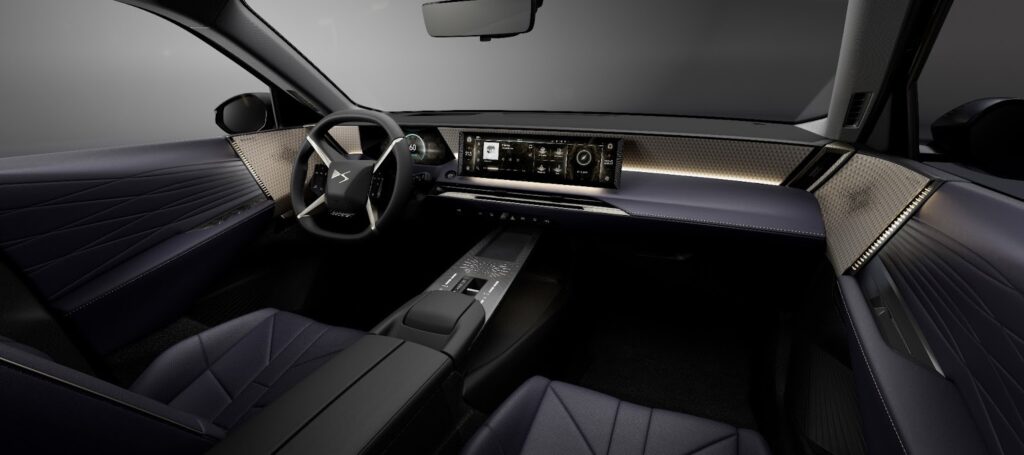
    • Advanced digital interface: the cabin features a large central screen and a connected infotainment system designed to centralise most of the vehicle’s functions.
    • State-of-the-art driver-assistance systems: the SUV is equipped with a range of assistance systems designed to enhance safety and support the driver on motorways or in heavy traffic.
    source: Stellantis

    The list is long and comprehensive. If you would like further details, you can find them in the press release available on the Stellantis website.

    An SUV that is part of DS’s energy transition

    The launch of the DS 7 is part of the brand’s gradual transition towards electrification. Indeed, for several years now, DS Automobiles has been developing its entire range around electrified powertrains, notably under the E-TENSE banner, which encompasses the manufacturer’s plug-in hybrid and electric models.

    Although DS announced in 2021 that all new models launched from 2024 onwards would be 100% electric and that the brand would eventually become 100% electric, the strategy has since evolved. Since 2025, Stellantis has adopted a multi-energy strategy in Europe (EVs and hybrid models) to reflect actual demand.

    The DS No. 7 thus rounds off this new product range, offering a more versatile model designed to drive higher sales volumes.

    source: Stellantis

    A strategic blueprint for the future of DS Automobiles

    With the DS 7, the brand is replacing an SUV that has been one of the mainstays of the DS range for several years. This can be seen in two ways: either as a risk-taking move or as a safe bet.

    In a particularly competitive segment, dominated by German premium SUVs that are now available across continents, this new model should enable DS Automobiles to strengthen its position and expand its customer base.

  • The new i3: the model that truly marks BMW’s move towards electric vehicles

    The new i3: the model that truly marks BMW’s move towards electric vehicles

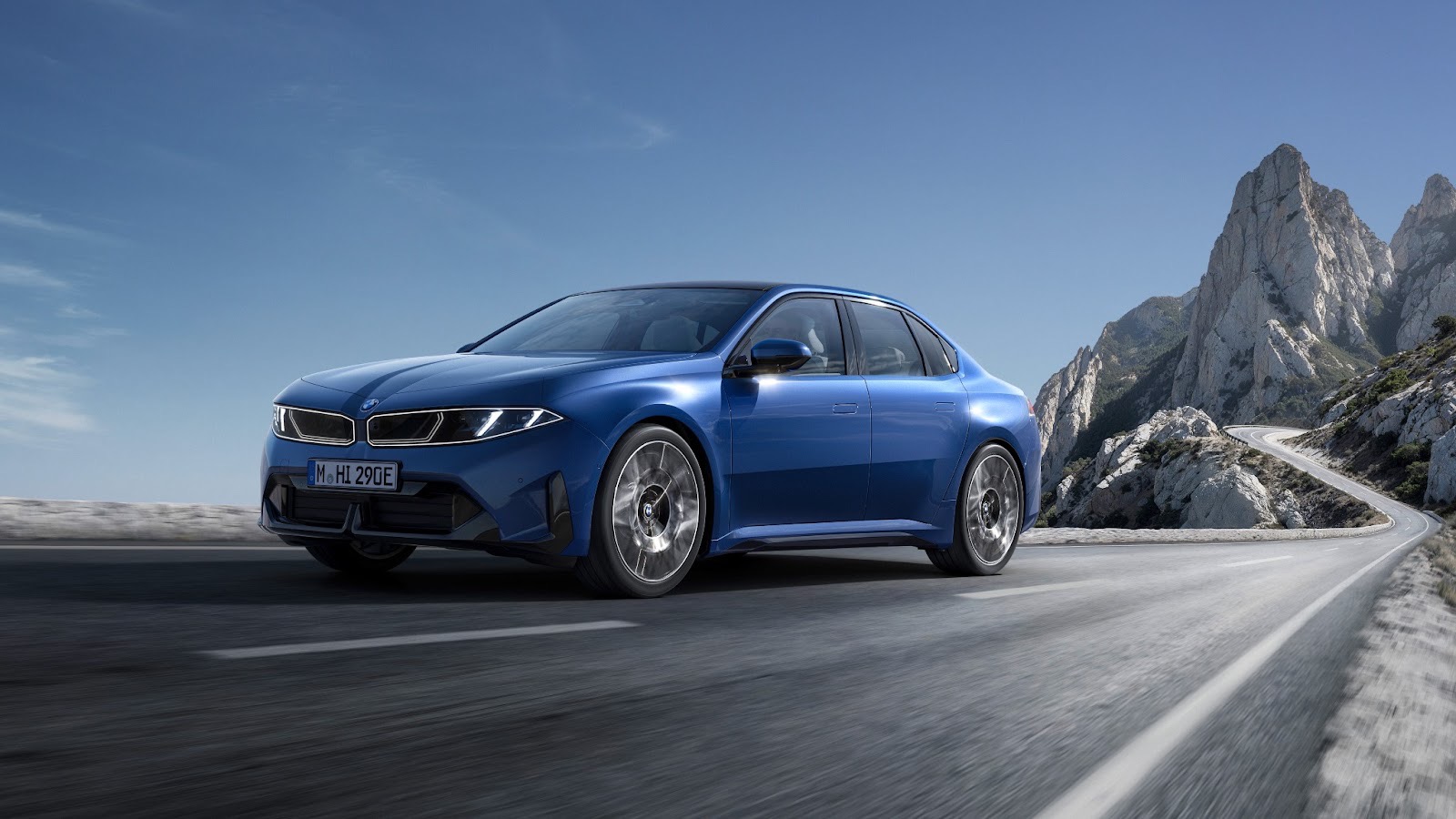
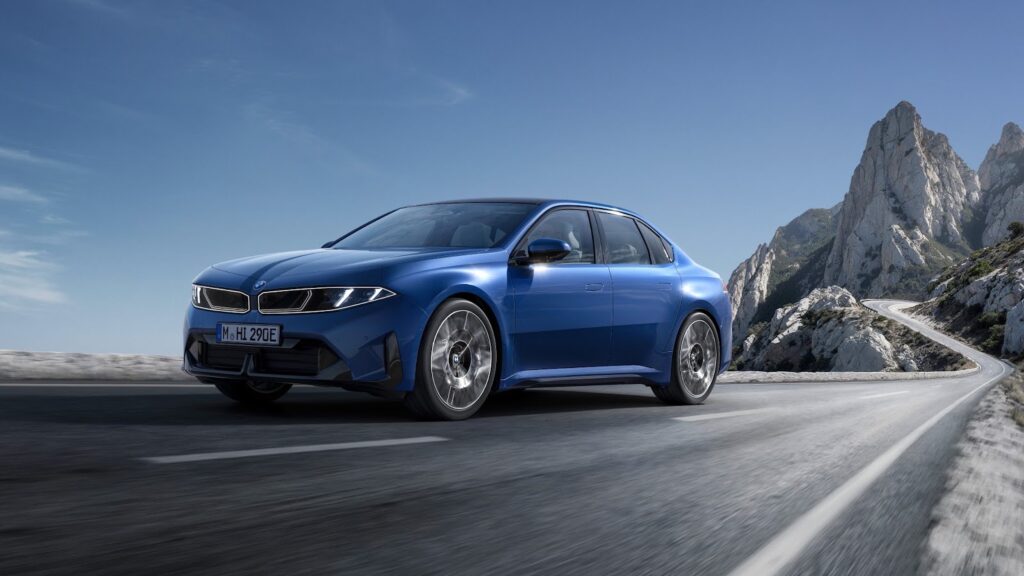
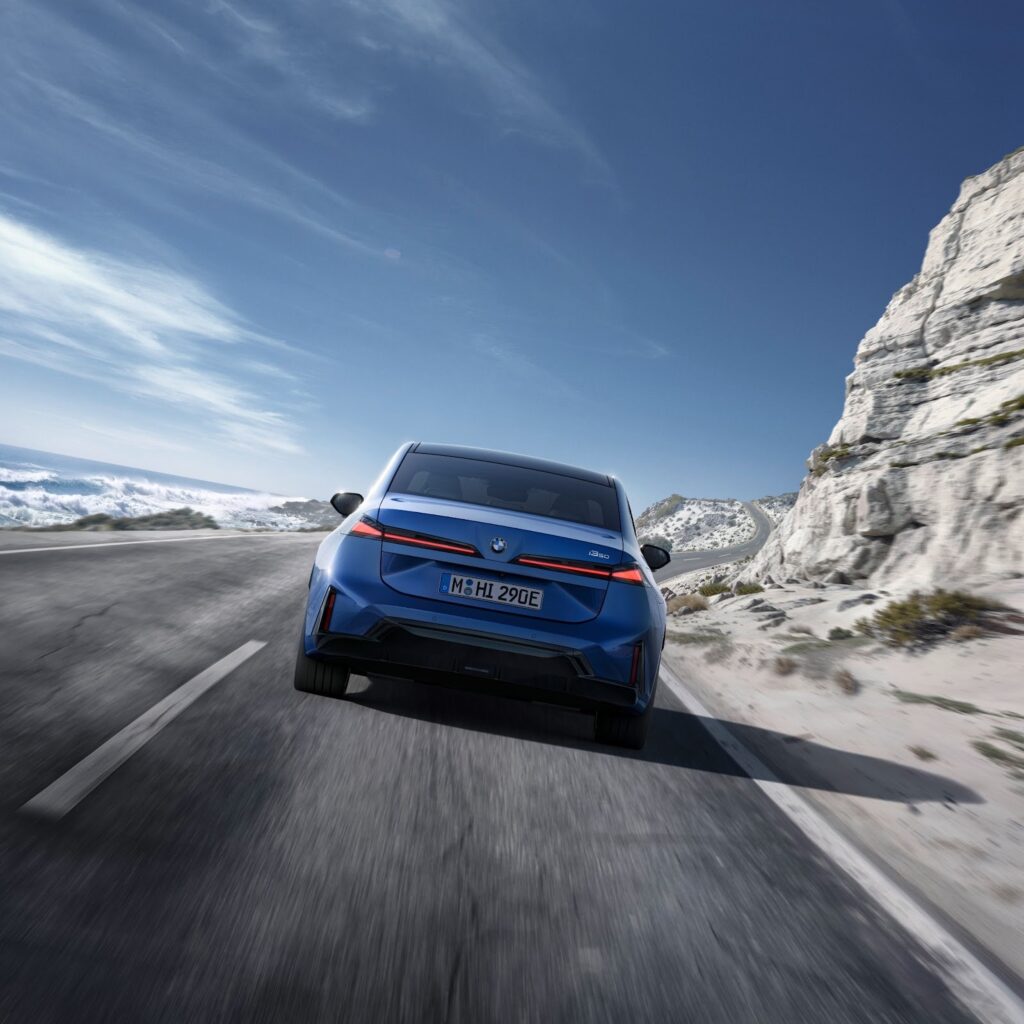
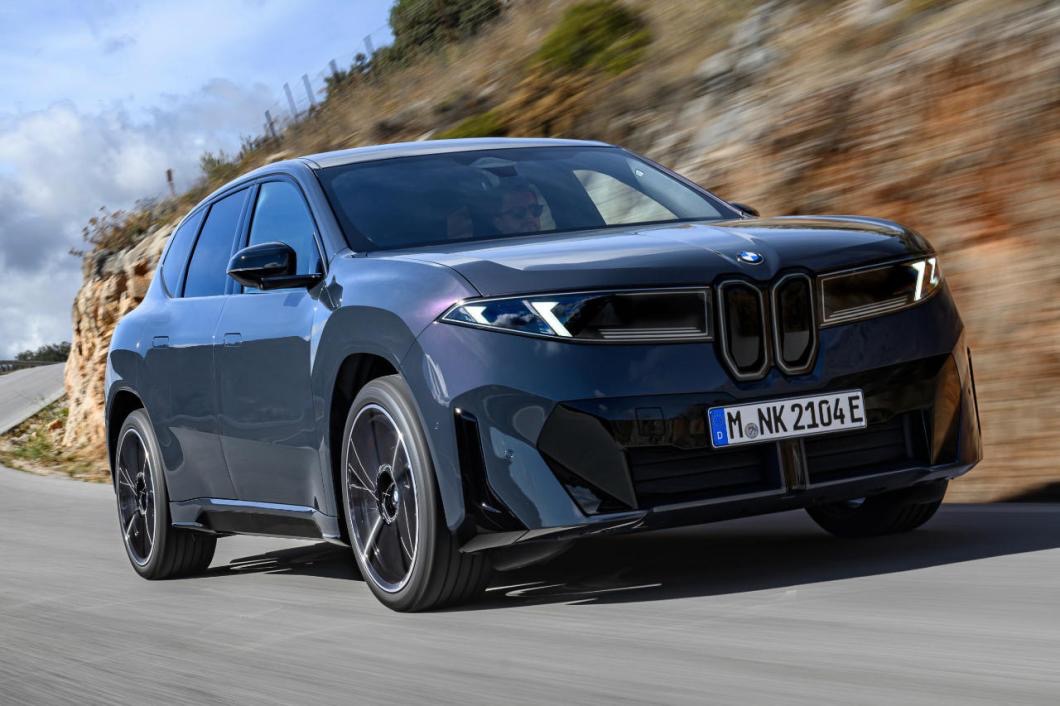
    Following the iX3 SUV, BMW is continuing its push into the EV market with the i3 saloon. The ‘zero-emission’ version of the iconic 3 Series aims to set the benchmark for premium electric models. BMW claims a range of up to 900 km, fast charging with peaks of 400 kW, and 469 hp delivered via all-wheel drive. Since the “Neue Klasse” concept car, the German manufacturer is therefore stepping up a gear with this car, which is crucial to the success of its electrification programme.

    source: BMW

    The i3: the new benchmark for premium electric cars

    The second model in BMW’s ‘Neue Klasse’ range, the i3 (which is essentially the electric version of the 3 Series) is designed to excel on long journeys. Built on a new dedicated platform, the saloon is based on an 800 V architecture, which will enable it to regain 400 km of range in just 10 minutes, as it can handle peak DC charging power of up to 400 kW. The new-generation batteries are integrated directly into the chassis (cell-to-pack), are compact and very flat, and incorporate cylindrical cells, making it easier to replace individual cells in the event of a fault. 

    Two highly efficient electric motors (one per axle) will provide all-wheel drive and deliver a total output of 469 hp (and 645 Nm of torque). The i3 therefore seems ideally suited to long-distance journeys. The claimed range, which has not yet been officially certified, is nearly 900 km on a single charge.

    source: BMW

    BMW’s strategy: two saloons for two different power sources

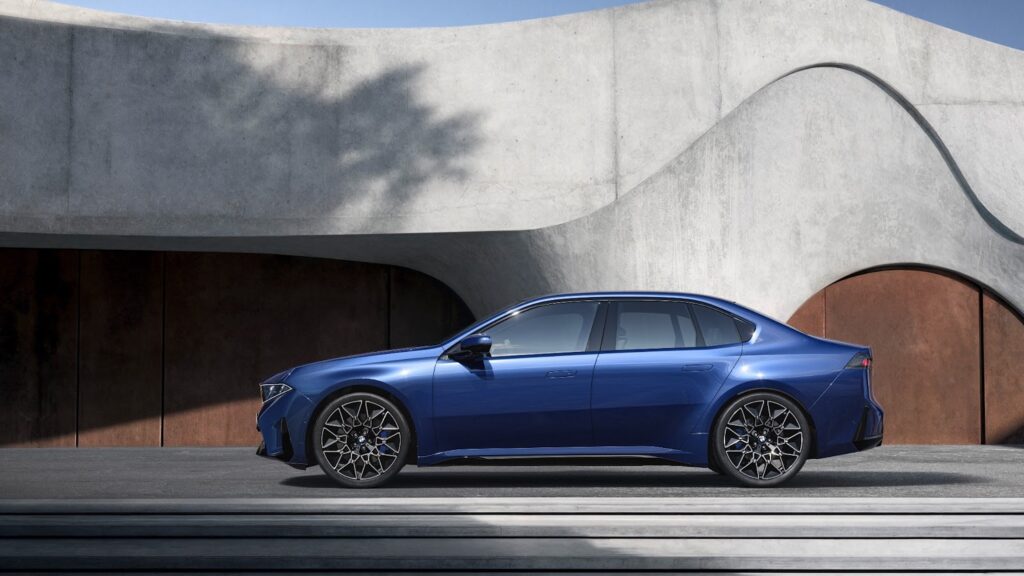
    Aesthetically, the i3 bears a resemblance to its petrol-powered cousin, the 3 Series, the iconic saloon with its sleek, elegant lines. This is a deliberate choice by BMW, which aims to imbue its electric saloon with the DNA and the famous ‘Freude am Fahren’ (driving pleasure) of its best-selling combustion-engine model. 

    The range will therefore offer customers a choice: the petrol-powered 3 Series (as well as the plug-in hybrid) and the all-electric i3. Both models will coexist within the BMW range. In response to the hesitancy of the EV market and to win over as many customers as possible, the Bavarian manufacturer is therefore maintaining a clear, dual offering. This will cover all the countries where the brand is present.

    source: BMW

    Two-way power distribution

    When parked, the BMW i3 also offers bidirectional charging functions: Vehicle-to-Load (in combination with the optional 22 kW AC Pro fast charger), which allows other electrical devices connected to its battery to be powered (laptops, electric bikes, etc.). A Vehicle-to-Home function that allows energy from the batteries to be fed back into the domestic grid (home, building). It is also compatible with the Vehicle-to-Grid function, which allows energy to be fed back into the public electricity grid via a charging point (subject to market availability). The technology deployed by BMW thus enhances the i3’s versatility and is designed to simplify its day-to-day use and charge management.

    Futuristic interior and interface

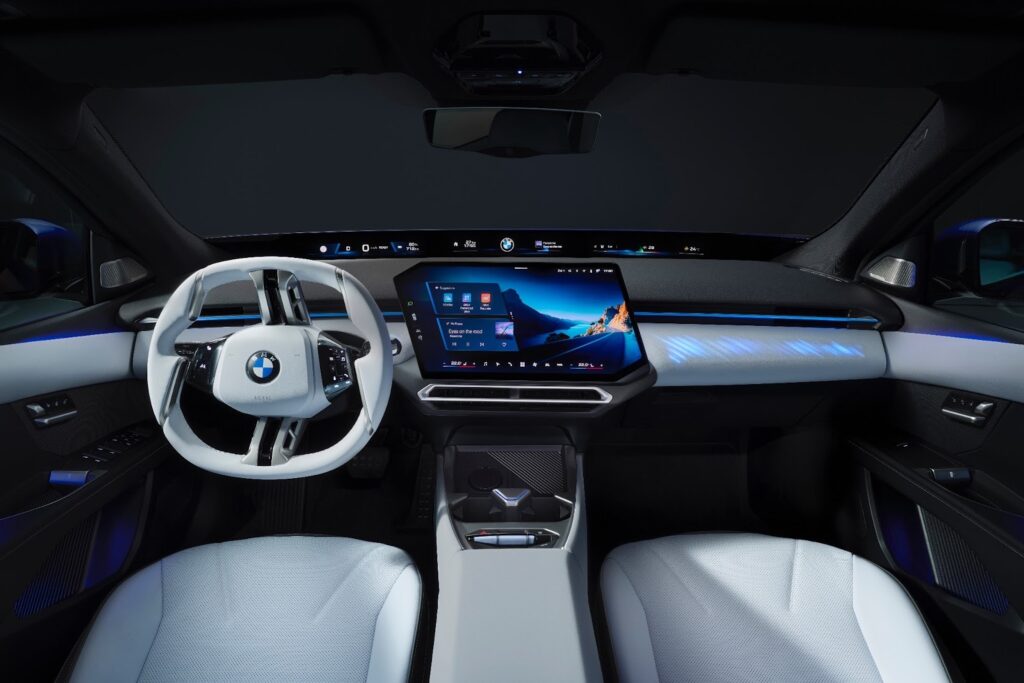
    Inside, the i3 incorporates most of the design cues from the ‘Neue Klasse’ concept car, featuring an interface designed for electric mobility whilst retaining a sporty feel, known as Panoramic iDrive. The central screen is slightly angled towards the driver; a wide Panoramic Vision strip positioned beneath the windscreen provides better visibility of driving information, whilst the “Heart of Joy” control unit offers a response time ten times faster than previous systems. The driving experience of the i3 must be at the very top of the range for a premium model, including electric vehicles.

    source: BMW

    A major industrial investment in the electric sector

    A key strategic priority for the Bavarian manufacturer, the i3 is produced at the Munich plant, which has been BMW’s historic site since 1922. Over €650 million has been invested in adapting the assembly lines and modernising the site with a view to producing an entirely all-electric range of cars. Other models will gradually be added to the production line-up. 

    source: BMW

    Production of the first i3s will begin in August 2026, with deliveries expected by the end of the year. The price of the i3 has not yet been announced. It is worth noting that a Touring version (estate) and an M version (high-performance) will be launched at a later date, demonstrating that the i3 forms the cornerstone of BMW’s commitment to electric vehicles.

  • SAIC Z7: the Chinese electric saloon that openly draws inspiration from the Porsche Taycan

    SAIC Z7: the Chinese electric saloon that openly draws inspiration from the Porsche Taycan

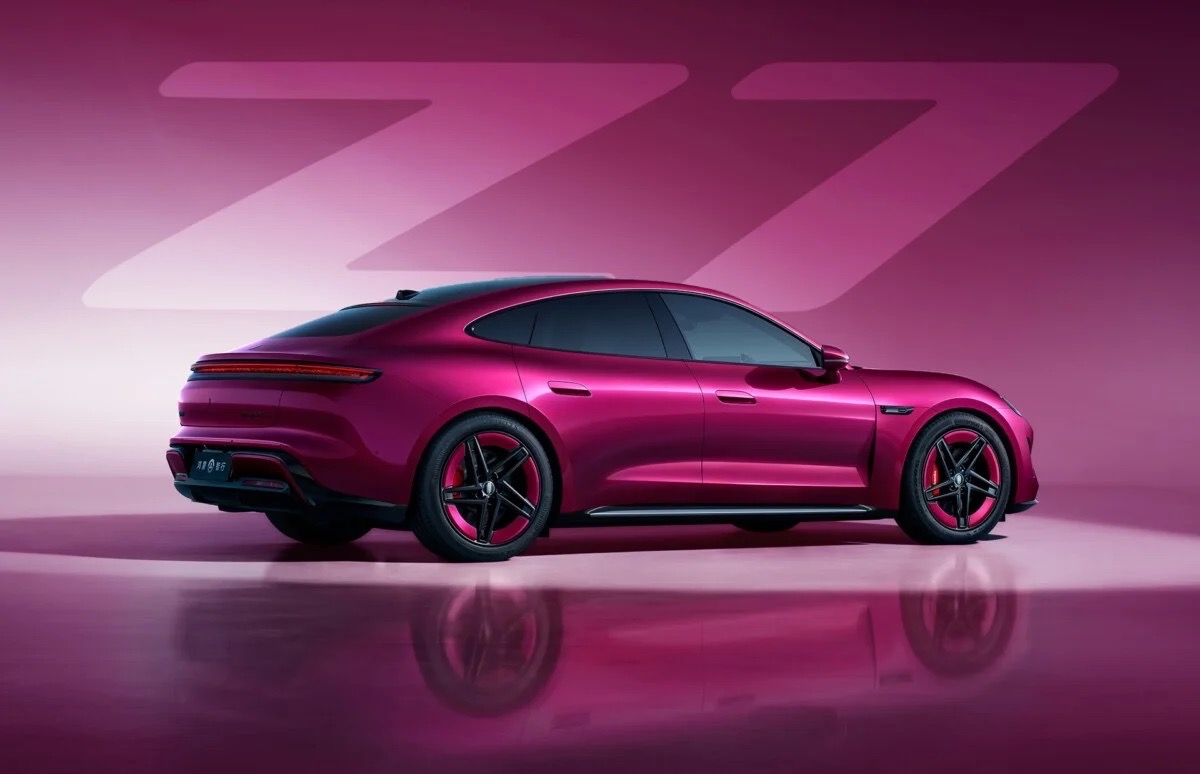
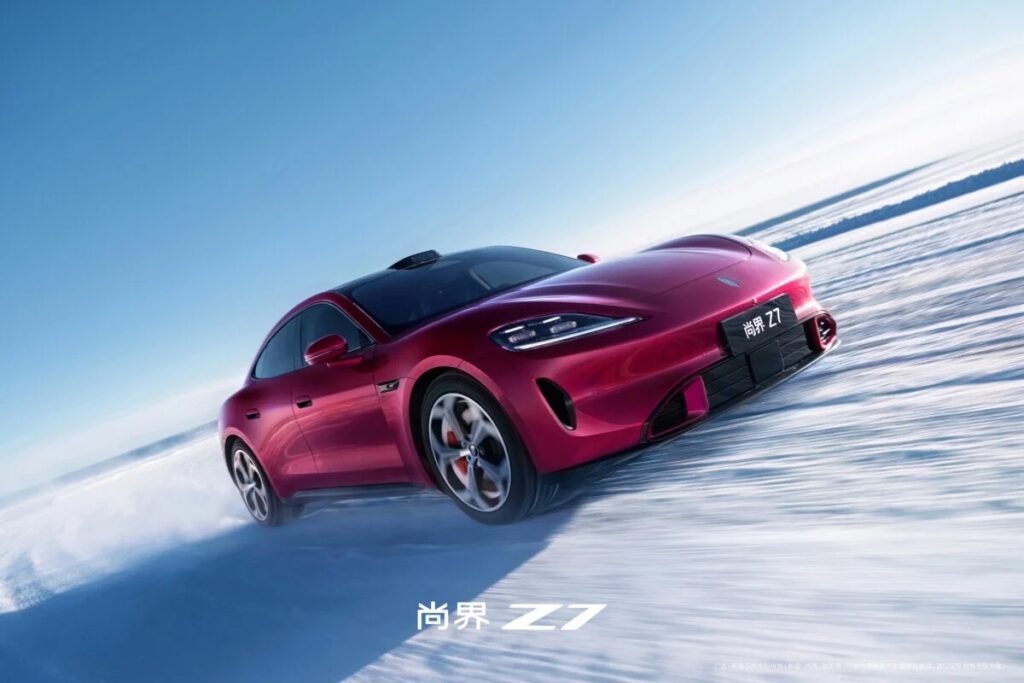
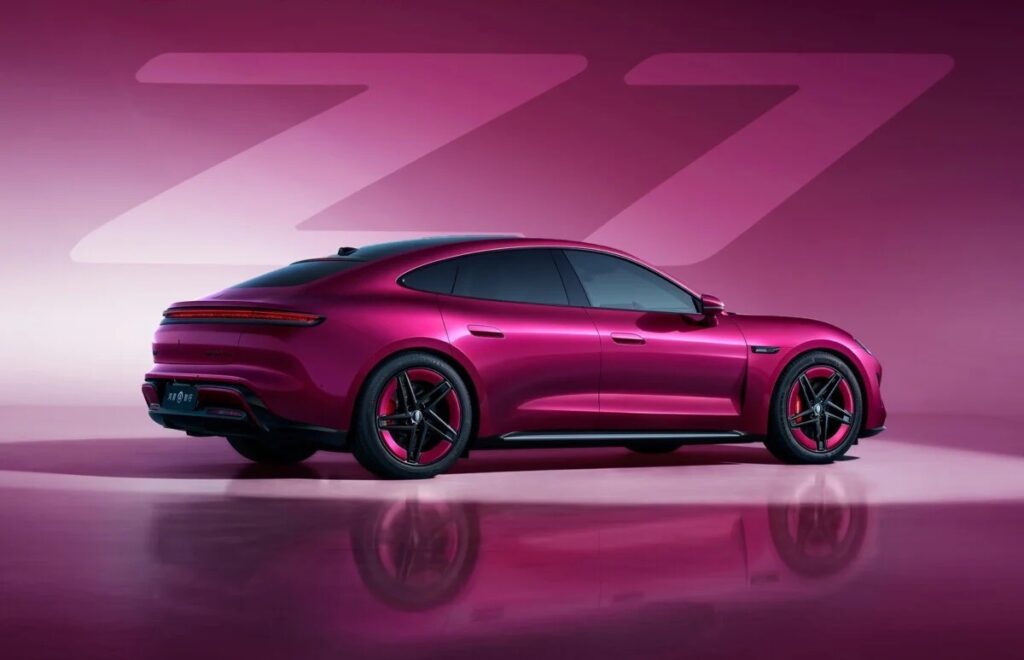
    Unveiled in March 2026, the SAIC Z7 (also known as the Shangjie Z7) is a new electric saloon developed by SAIC Motor in collaboration with Huawei. With a design strongly reminiscent of the Porsche Taycan and a much more affordable price tag, this model aims to make its mark against the new Chinese leaders in the segment, starting with the Xiaomi SU7.

    Source: SAIC

    A new electric saloon resulting from the collaboration between SAIC and Huawei

    The SAIC Z7 is the result of a close partnership between SAIC Motor and Huawei. The model forms part of the Harmony Intelligent Mobility Alliance (HIMA) ecosystem, a technology platform that enables the Chinese telecommunications giant to integrate its software solutions and driver-assistance systems into various electric vehicles.

    Positioned in the premium electric saloon category, the Z7 features a highly dynamic fastback silhouette. With an estimated length of around 5 metres, the model boasts proportions similar to those of the large sports saloons on the market.

    The aim is clear: to offer a vehicle that is technologically advanced, high-performing and visually appealing, whilst remaining significantly more affordable than the European models with which it is often compared.

    Source: SAIC

    A design heavily inspired by the Porsche Taycan

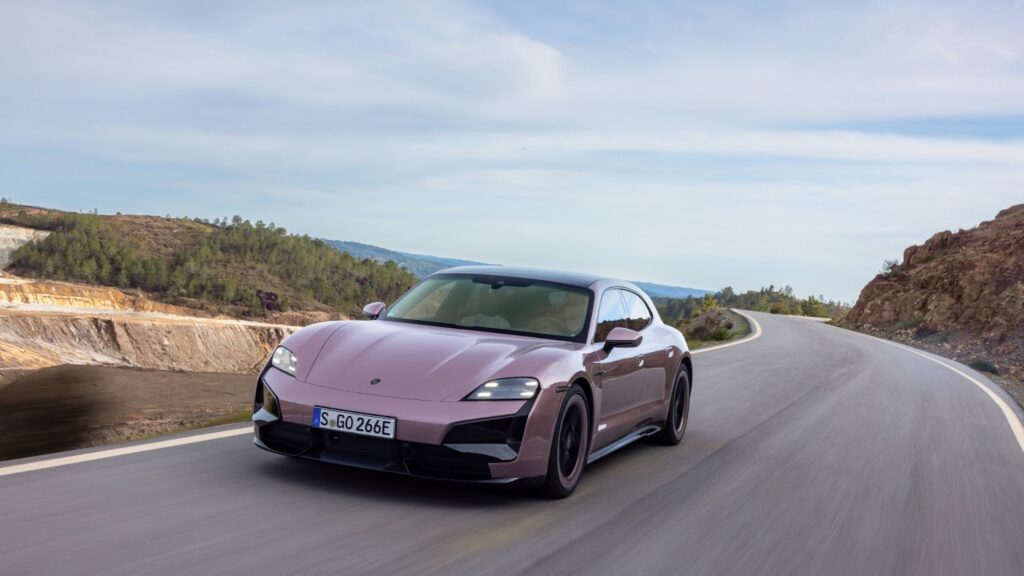
    This was probably the feature that attracted the most attention during the vehicle’s unveiling. The SAIC Z7 does indeed incorporate numerous design cues reminiscent of the Porsche Taycan.

    It stands out thanks to its very low body, sloping roofline and four-door coupé silhouette. Another detail reminiscent of a Porsche is the fact that the headlights are slightly bulged out from the rest of the bonnet. These features give the car a distinctly sporty look, and above all, an attitude and style similar to the iconic Taycan.

    Source: Porsche

    The model also incorporates several modern design features, such as semi-flush door handles and a roof-mounted LiDAR sensor for driver-assistance systems. At the rear, the Z7 features a light strip spanning the full width of the vehicle, dubbed the ‘Galaxy tail light’.

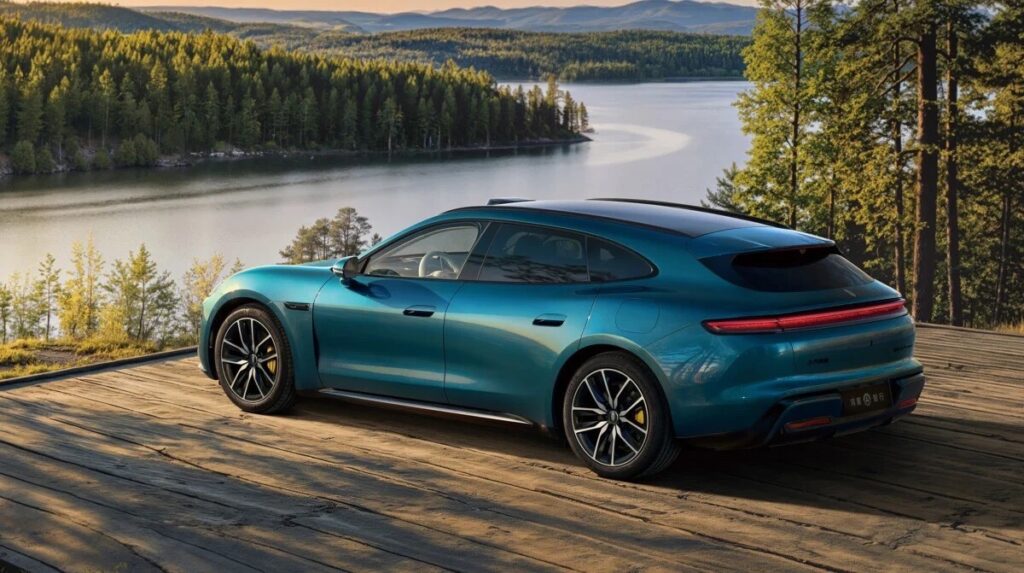
    A shooting brake variant, named the Z7T, was also unveiled. This more family-oriented version prioritises interior space and boot capacity whilst retaining the model’s sporty styling.

    Source: SAIC

    A high-tech electric saloon

    The SAIC Z7 places particular emphasis on in-car technology. The vehicle is built on Huawei’s software platform and features a digital cockpit based on HarmonyOS.

    The interior features a central screen that can be angled towards the driver, as well as a dedicated screen for the front passenger. A dedicated area on the dashboard also allows passengers to display personalised items such as figurines or decorative accessories.

    In terms of driver assistance, the Z7 is expected to feature the Huawei Qiankun ADS system, combined with a LiDAR sensor and several advanced sensors for autonomous driving and driver assistance functions.

    The chassis also features Huawei Tuling technology, combined with a sophisticated suspension system comprising a double wishbone setup at the front and a multi-link setup at the rear.

    A record range for the segment

    From a technical perspective, the SAIC Z7 is based on an 800-volt electric architecture, designed to enhance performance and charging speed. According to initial reports, several configurations are expected to be available.

    Customers will be able to choose between two battery packs (81 and 100 kWh) and two drivetrains (rear-wheel drive and all-wheel drive), a basic yet essential feature for this segment.

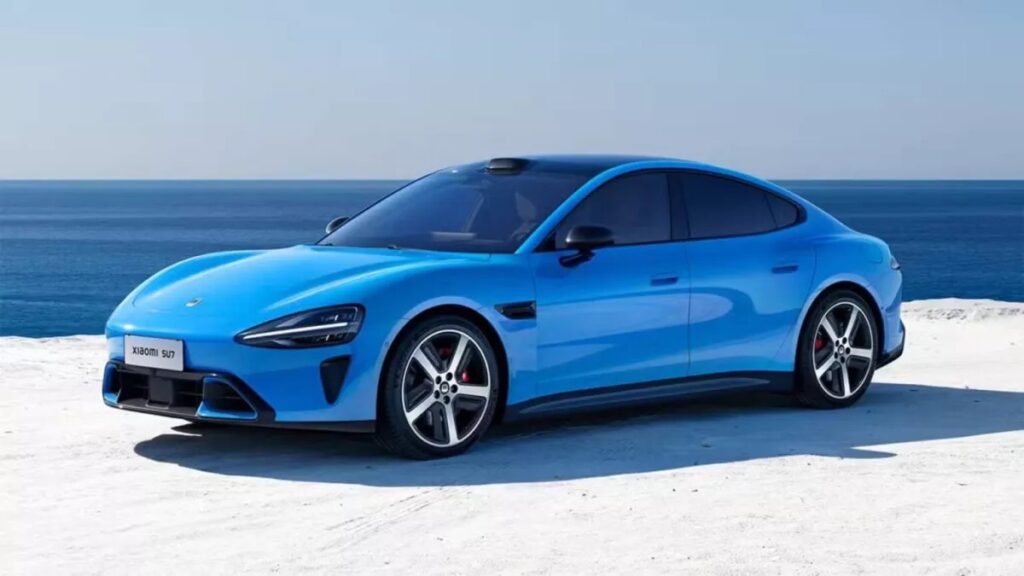
    When it comes to the battery, this is where the Chinese brand takes pride (and rightly so), as it claims that its electric saloon achieves a maximum range of 905 km according to the Chinese reference cycle (CLTP). Under the European cycle (WLTP), the range would be around 770 km. But why then is it being compared with the Xiaomi SU7? Simply because, for two vehicles in the same segment, the Z7 outperforms its counterpart by… 3 kilometres of range.

    Source: Xiaomi

    A direct rival to the Xiaomi SU7

    The prices of the various versions of the SAIC Z7 are not yet known. According to industry estimates, it is expected to go on sale in China at a price ranging from 220,000 to 280,000 yuan, or €27,000–€35,000.

    A particularly aggressive pricing strategy compared to models such as the Porsche Taycan, which costs well over €100,000, but also compared to the Xiaomi SU7, which is already establishing itself as one of the new benchmarks in the Chinese market and starts at around 229,900 yuan (approximately €28,150).

    Pre-orders for the SAIC Z7 will open on 23 March 2026 in China, whilst the final images and official prices will be unveiled on 31 March 2026. The first deliveries are scheduled for the second quarter of 2026.

  • Honda is scrapping several electric models in the US and expects losses of up to 570 billion yen

    Honda is scrapping several electric models in the US and expects losses of up to 570 billion yen

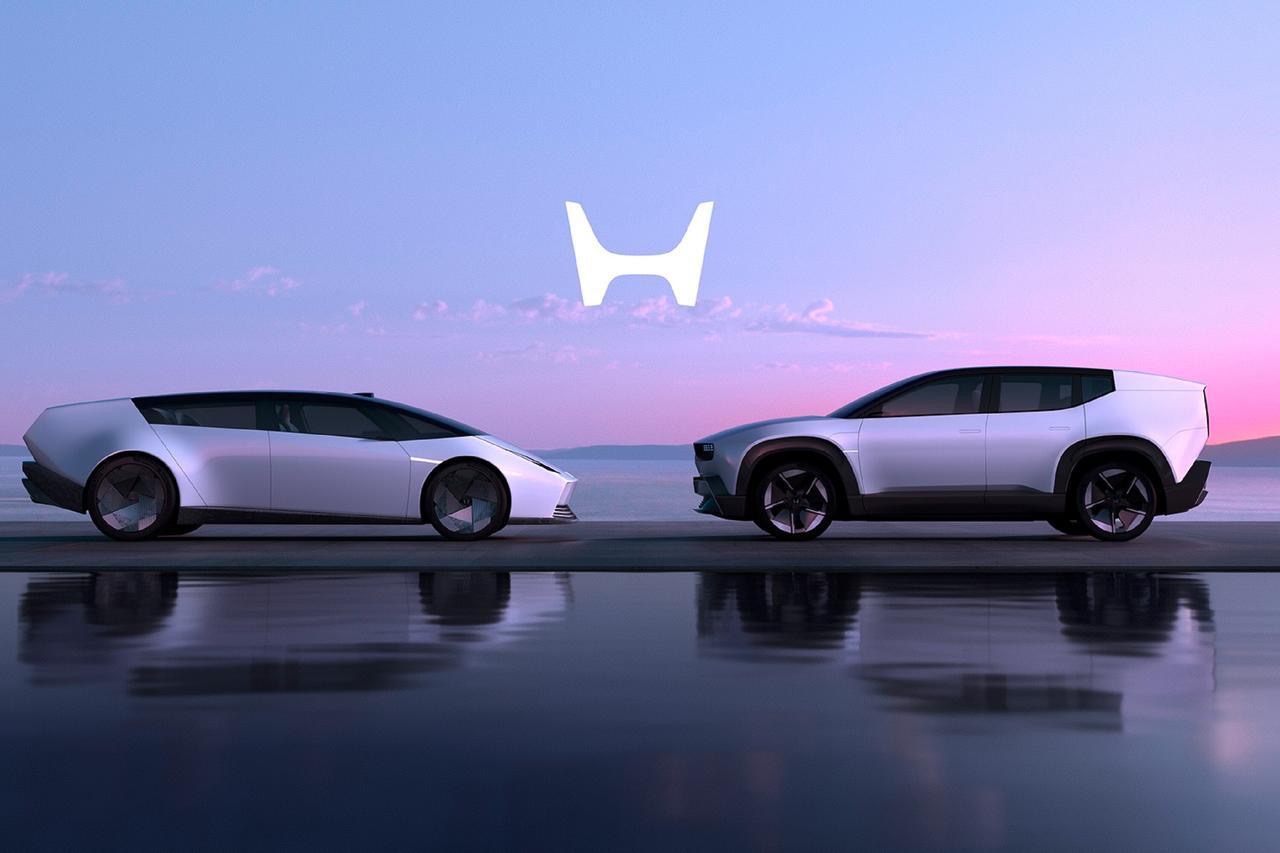
    On 12 March 2026, Japanese car manufacturer Honda Motor Co. announced that it was abandoning the development of several electric models intended for the North American market. This decision could result in extraordinary losses of up to 570 billion yen for the 2025–2026 financial year, a situation the group has not faced for several decades.

    source:honda

    Honda is reviewing its electric vehicle strategy

    On 12 March 2026, Honda Motor Co. issued a statement that sent shockwaves through the automotive industry. The company had decided to cancel the development and launch of several all-electric models in the 0 Series, which had originally been planned for the North American market.

    The projects in question include three models from the upcoming 0 Series: the Honda 0 SUV, the Honda 0 Saloon and the Acura RSX. These vehicles were due to be manufactured in the United States and sold primarily in North America. Although they were due to be launched in 2026, these cars will never even reach the production stage.

    source: Honda

    A slowdown in electricity demand in North America, but that’s not all

    Honda Motor Co.’s decision to discontinue several models in the 0 Series is primarily due to a slowdown in demand for electric vehicles in North America. In its press release, the company explicitly cites market conditions that have proved less favourable than anticipated, prompting it to reassess certain investments related to electrification.

    Yet it was in this very region that Honda had planned to accelerate its transition to electric vehicles. But the reality of the market is quite different: indeed, since President Trump returned to power, the 100% electric vehicle market has not been faring very well. This is undoubtedly due to the abolition of the $7,500 federal tax credit from September 2025, but also to the administration’s introduction of a 25% tariff from January 2026. As a result, EV sales in the United States have fallen by around a third in the space of a year, according to several estimates.

    source: Honda

    Furthermore, Honda also highlights in its press release that consumer expectations are changing significantly in certain markets, particularly in China. The manufacturer explains that “the perceived value of a vehicle no longer rests solely on physical characteristics, such as fuel efficiency or interior space, but increasingly on software features capable of constantly evolving through updates and the personalisation of services”. This market transformation has prompted the group to rethink its technological priorities and investments.

    source: Honda

    Up to 570 billion yen in exceptional losses

    The figures cited in Honda’s statement reflect the difficult situation the company finds itself in. Honda says it expects to incur up to 570 billion yen in exceptional losses – equivalent to around 3.6 billion euros – for the financial year ending 31 March 2026.

    These losses will be recognised in the fourth fiscal quarter, covering the period from January to March 2026. The group also states that the cumulative expenditure and losses associated with these projects could reach 2.5 trillion yen over several financial years.

    According to several financial analysts, this situation could lead to the group’s first annual loss since 1957, a particularly rare occurrence in the history of the legendary Japanese car manufacturer.

    Managers take responsibility

    In light of this situation, and in addition to cancelling production of three of their fully electric vehicles, the group’s executives have announced symbolic measures.

    CEO Toshihiro Mibe and Executive Vice-President and Chief Financial Officer Noriya Kaihara have decided to voluntarily reduce their remuneration by 30% for a period of three months.

    Toshihiro Mibe – source: Honda

    In the statement, the two executives acknowledge the need to respond swiftly to market developments and to adapt the group’s industrial strategy.

    A strategic shift towards hybrid solutions

    In response to the cancellation of these projects, Honda has announced a broader reorientation of its electrification strategy. The manufacturer explains that it intends to adopt a more flexible investment strategy in the allocation of its resources in order to better adapt to changing global demand. It is in this press release that we learn the brand will be strengthening its focus on hybrid technologies, for which demand remains strong in several markets.

    In this regard, it is expected that the factories due to produce Honda EVs – such as those in Ohio, for example – will need to switch their CR-V BEV production lines to CR-V e:PHEV as soon as possible in 2026.

    source: Honda

    This strategic reorganisation is intended to enable Honda to respond more effectively to changes in the automotive market, pending the presentation of a new industrial roadmap, which is expected to be unveiled after 1 April 2026, once the financial year has ended (31 March, as a reminder).

    A strong signal and a future to watch

    By scrapping several models from its upcoming 0 Series, the Japanese manufacturer is sending a strong signal by choosing to scale back its all-electric ambitions in regions that are less enthusiastic about the move. Honda’s worrying financial situation must therefore be relieved of additional costs.

    The strategy that Honda is set to unveil in the coming months will therefore be closely scrutinised by the entire automotive industry.

  • Nice Boating Tomorrow: the first international sustainable boating show drops anchor in Nice

    Nice Boating Tomorrow: the first international sustainable boating show drops anchor in Nice

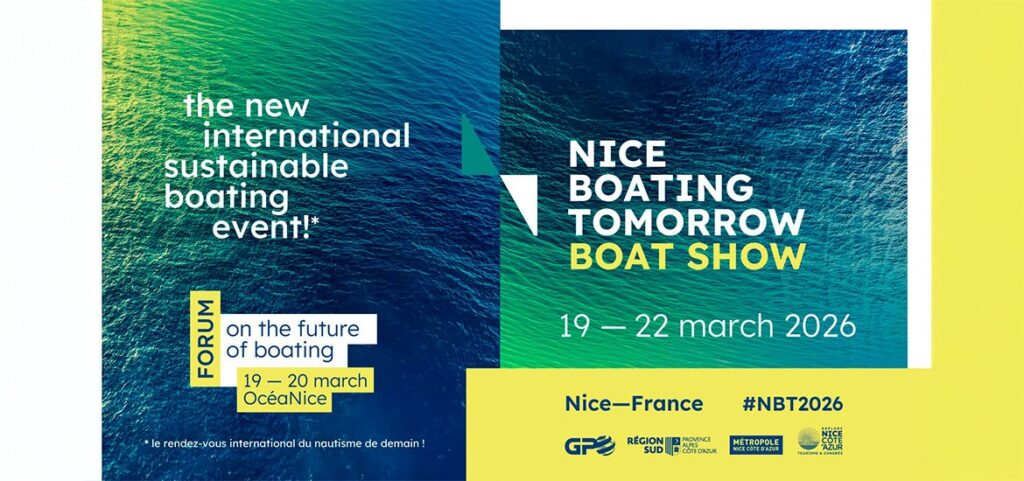
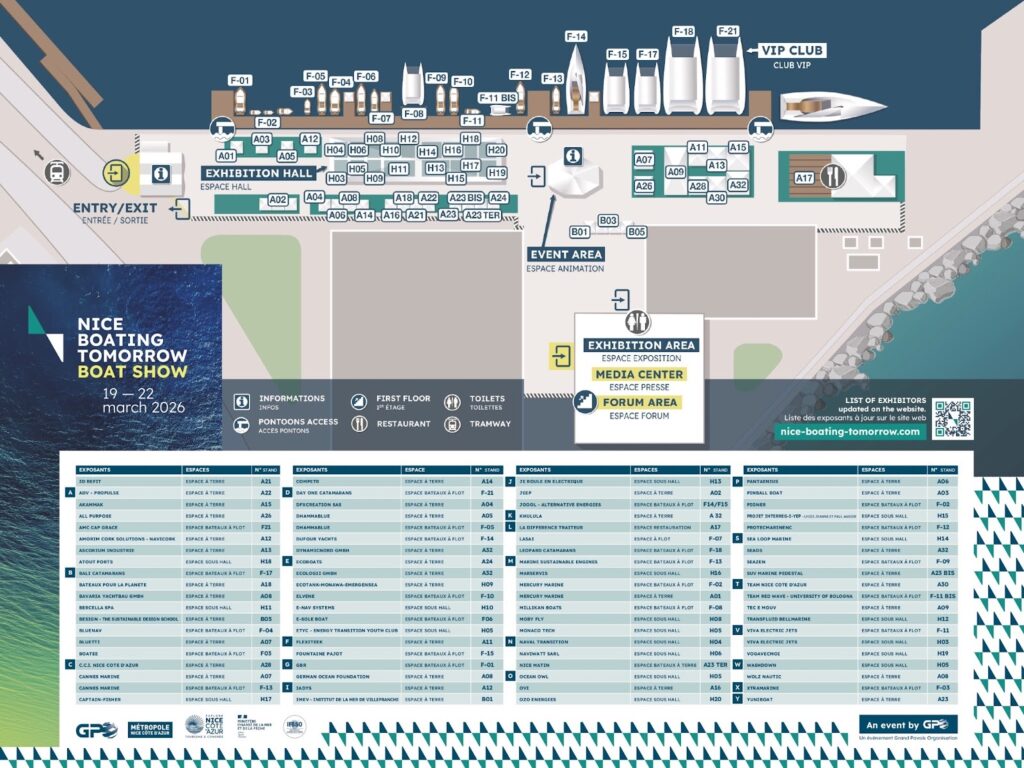
    From 19 to 22 March 2026, the city of Nice will host the first edition of Nice Boating Tomorrow, an international exhibition entirely dedicated to sustainable boating. Over four days, industry professionals, manufacturers, organisations and the general public will gather at the Port of Nice to discover the technologies and innovations that could shape the future of recreational boating.

    source: Nice Boating Tomorrow

    A context that is driving the boating industry to reinvent itself

    Nice Boating Tomorrow is taking place against a backdrop of profound change in the maritime sector. From the decarbonisation of ships and technological innovations to new forms of maritime transport and the protection of ecosystems, the entire boating industry is now being driven to evolve. The aim of the exhibition is therefore to bring together all stakeholders in the sector to showcase solutions that could shape a more sustainable future for shipping.

    The choice of Nice as the host city for this exhibition is no coincidence. Located at the heart of the Mediterranean and boasting a dynamic maritime ecosystem (an accessible port, the “Territoire d’Industrie” designation for 2023–2027, and support for start-ups), the city offers the ideal setting for hosting this type of event. With its port, international appeal and environmental commitments, Nice aims to become a benchmark for initiatives related to sustainable yachting in the Mediterranean.

    source: David Nouy

    A new international event for sustainable boating

    From Thursday 19 March 2026 until Sunday 22 March 2026, Nice Boating Tomorrow will take place at the Port of Nice, on Quai Amiral Infernet. Organised by Grand Pavois Organisation (GPO), a leading player in the boating industry for over 50 years, this new show is positioned as the first international event entirely dedicated to sustainable boating, with the ambition of becoming a global benchmark in this field. 

    Spanning four days, the event will bring together professionals from the maritime sector, manufacturers, start-ups, institutions and sailing enthusiasts around a shared goal: to devise and build a more environmentally friendly model for recreational boating. Indeed, the significance of this exhibition becomes clear when one considers that recreational boating accounts for 10% of CO₂ emissions in the Mediterranean Sea 

    An event combining exhibitions, sea trials and conferences

    Throughout this innovative event, visitors will be able to explore nearly 100 exhibitors and around 50 boats on display in the water, showcasing the latest innovations shaping the future of recreational boating. The show will offer a fun way to learn more about this, as visitors will be able to attend demonstrations and sea trials, allowing them to test certain technologies and new models directly in their natural environment. 

    Alongside the trade fair, an international forum will be held on 19 and 20 March at the OcéaNice conference centre. Industry representatives, experts, institutions and researchers will discuss several key issues for the future of the boating industry, including:

    • the decarbonisation of ships
    • new energy solutions
    • sustainable ports
    • or the use of artificial intelligence in recreational boating. 
    source: David Nouy

    Innovation and the green transition at the heart of the exhibition

    Nice Boating Tomorrow will place particular emphasis on technologies designed to reduce the environmental impact of recreational boating. Among the innovations expected to be showcased are:

    • electric or solar-powered boats,
    • hydrogen propulsion systems,
    • hybrid sailing boats,
    • low-carbon marine equipment,
    • or recycled materials for the maritime industry. 

    The aim of the show is to demonstrate that the boating industry’s green transition is already underway and that it is underpinned by a comprehensive ecosystem of technological, industrial and environmental innovations.

    source: Dhamma Blue

    Nice, Europe’s new showcase for sustainable boating

    Through this event, the city of Nice aims to become a new hub for sustainable boating in the Mediterranean. The boat show, meanwhile, forms part of a wider initiative led by the city and various institutional stakeholders to strengthen the maritime economy whilst addressing the environmental challenges associated with the use of the oceans.

    source: Nice Boating Tomorrow

    Nice Boating Tomorrow aims to lay the foundations for a new maritime ecosystem that is more sustainable, innovative and focused on the future of recreational boating. The organisers are expecting 15,000 visitors over the course of the event.

  • Volkswagen launches the ID.UNYX 08, the first model to emerge from its ‘in China, for China’ strategy

    Volkswagen launches the ID.UNYX 08, the first model to emerge from its ‘in China, for China’ strategy

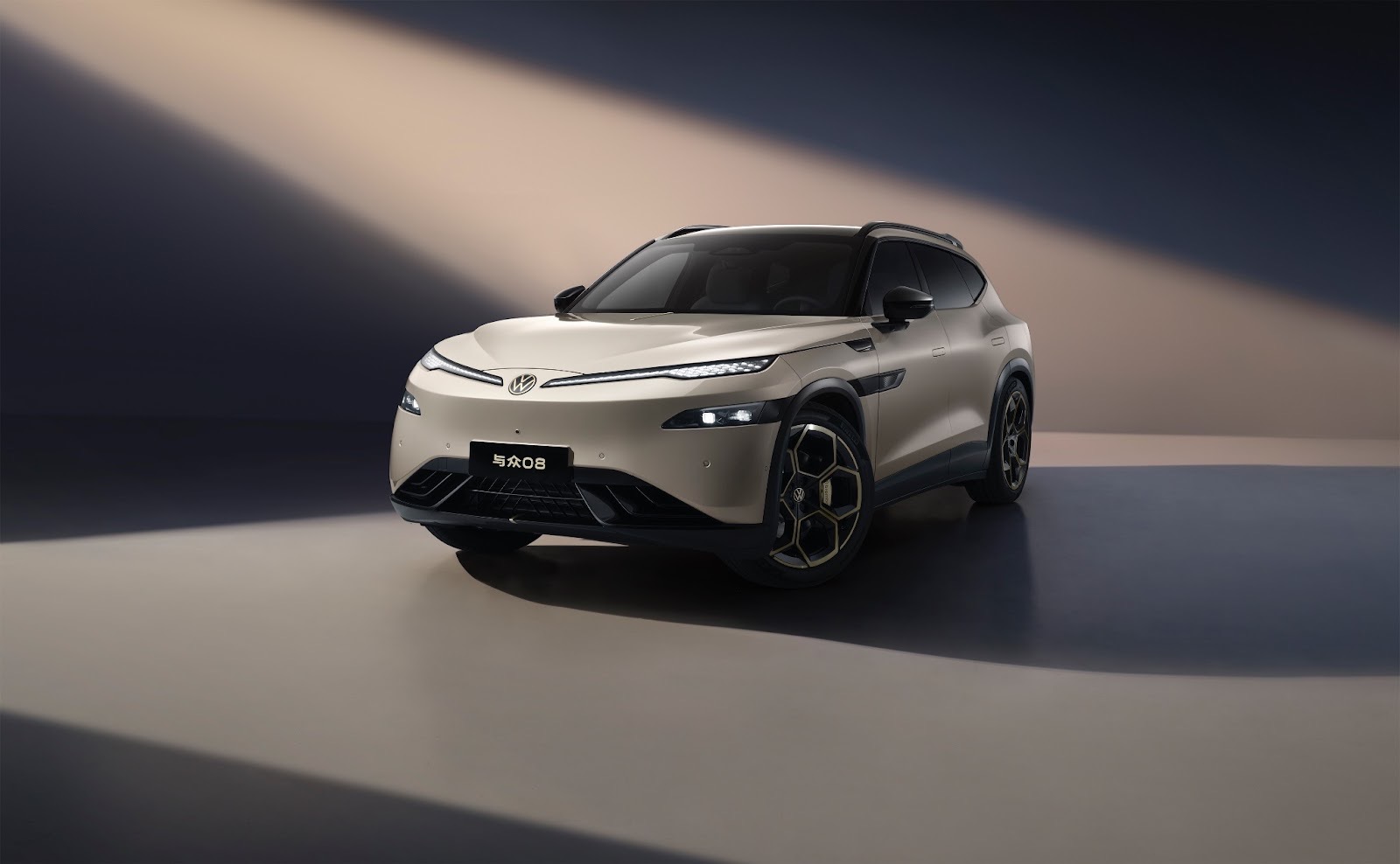
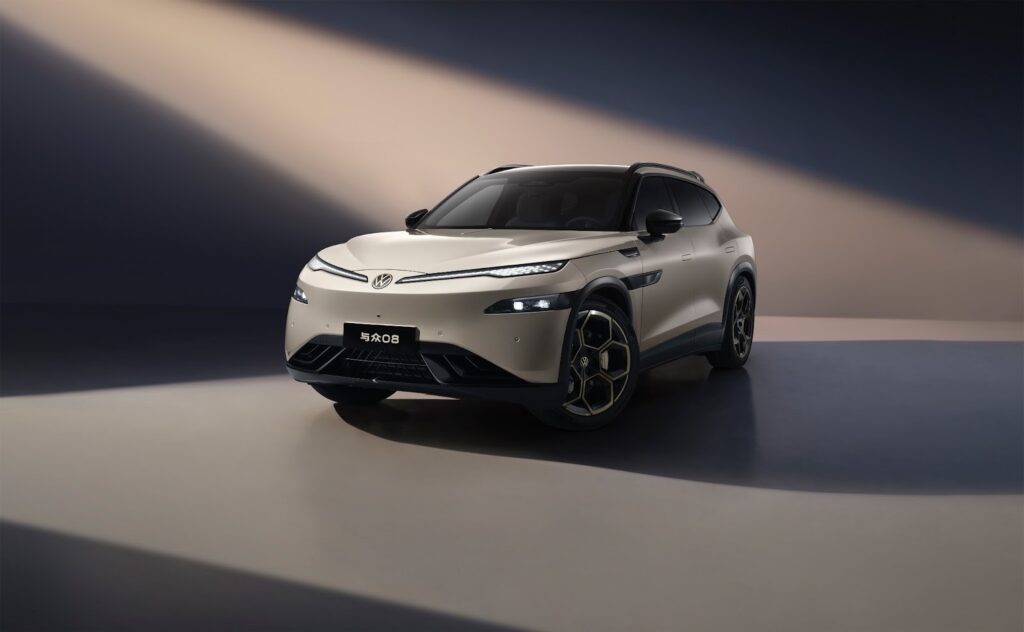
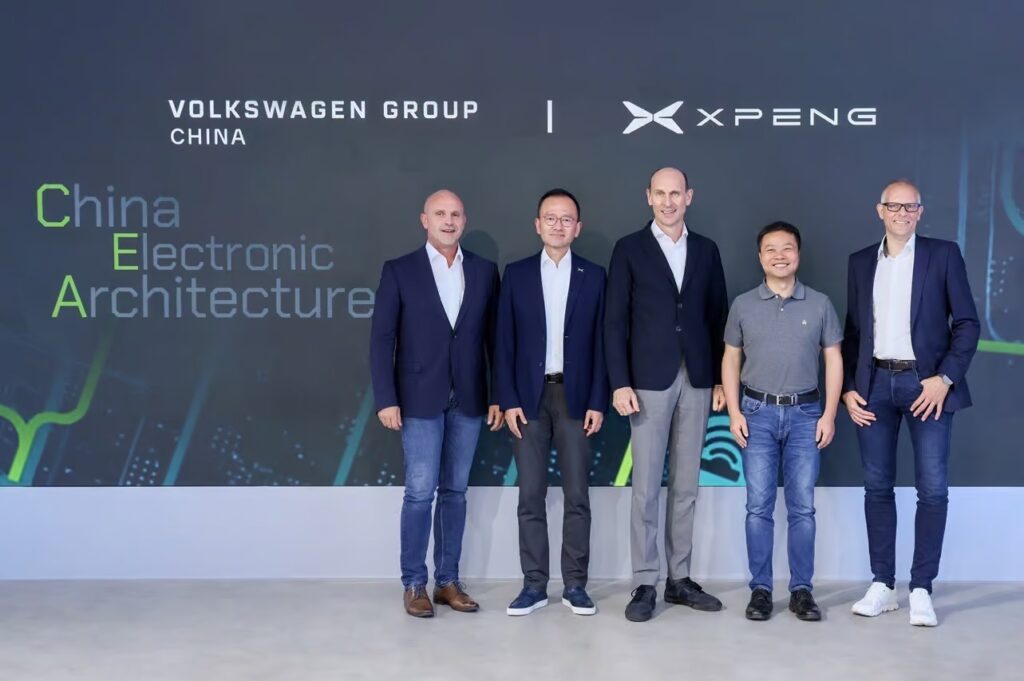
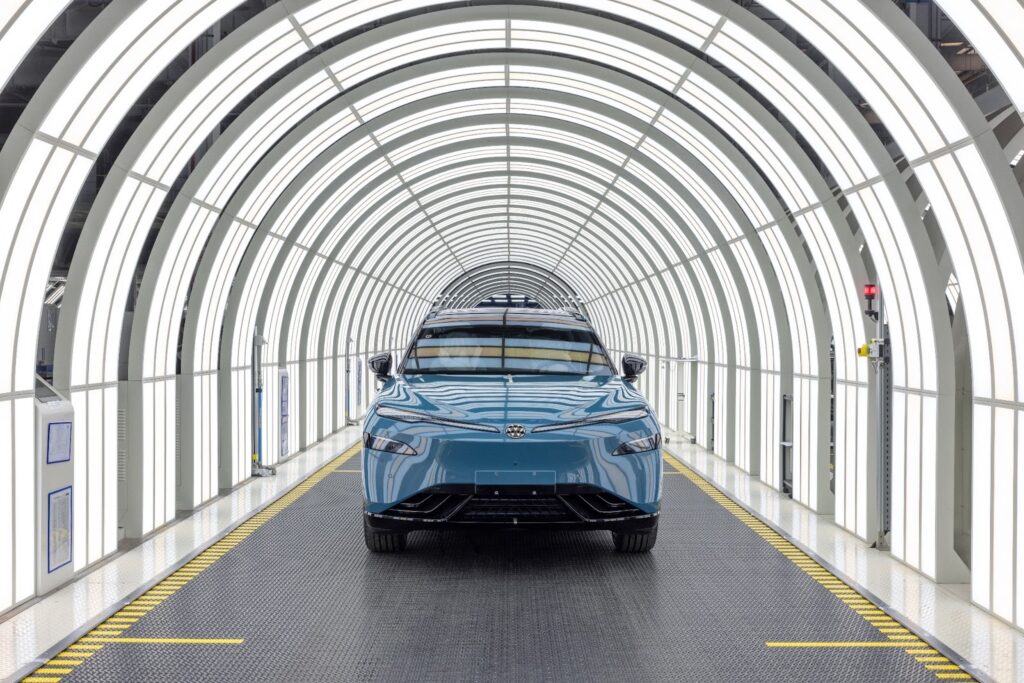
    The Volkswagen Group has taken another step forward in its China strategy. The first vehicle developed in partnership with XPeng, the ID.UNYX 08, has just rolled off the production lines in Hefei. This marks a significant milestone for the German manufacturer, which is seeking to strengthen its presence in the world’s largest car market in the face of growing competition from local brands.

    Source: Volkswagen

    The first Volkswagen–XPeng model produced in Hefei

    On 13 March 2026, the Volkswagen Group announced the start of series production of the ID.UNYX 08, the first vehicle developed jointly with the Chinese manufacturer XPeng. The model is assembled at the Hefei plant, operated by Volkswagen Anhui, which is set to become the German group’s main hub for the development of its ambitions in China.

    The vehicle was developed in around 24 months, a particularly short timeframe for the automotive industry. This rapid development process illustrates the German manufacturer’s determination to keep pace with the Chinese market, often referred to as ‘China speed’.

    That is why the Volkswagen Group and XPeng have been working together since the summer of 2023. As a reminder, Volkswagen had announced a long-term technology partnership agreement with XPeng, accompanied by an investment of around $700 million to acquire a 4.99% stake in the Chinese manufacturer. This development on 13 March 2026 marks a strategic turning point for the German group, which is seeking to combine its industrial expertise with the technological and software capabilities of Chinese manufacturers.

    Source: Xpeng

    The ID.UNYX 08, a high-tech electric SUV… exclusively for the Chinese market

    At the heart of this announcement is the ID.UNYX 08, an electric SUV designed specifically for the Chinese market. The model will not be sold in Europe, reflecting Volkswagen’s commitment to developing products designed from the outset for Chinese customers – ‘in China, for China’.

    The vehicle features several locally developed technologies. These include an 800-volt electrical architecture, which enables ultra-fast charging – a feature that has become essential for Chinese motorists. The ID.UNYX 08 also features an advanced Level 2 driver assistance system (ADAS), as well as over-the-air (OTA) software updates that enable the vehicle’s functionality to be enhanced throughout its lifecycle.

    Source: Volkswagen

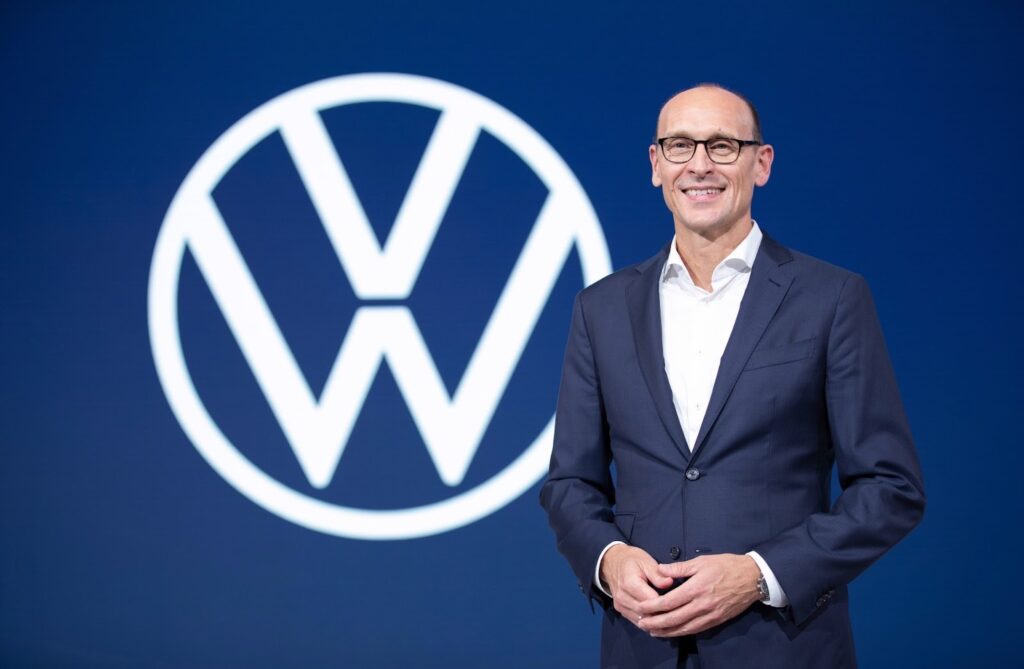
    According to Ralf Brandstätter, President and CEO of Volkswagen Group China, “this model embodies the brand’s traditional values of safety, quality, driving comfort and sustainability, whilst incorporating the digital technologies expected by Chinese customers”.

    China, the Volkswagen Group’s largest market

    China remains the Volkswagen Group’s largest market today. In 2025, the manufacturer delivered around 2.7 million vehicles there, accounting for nearly a third of its global sales. Naturally, with the emergence of numerous local manufacturers over the past few years, this dominant position is now under threat, particularly in the electric vehicle segment.

    Brands such as BYD, Geely and NIO have gained a significant lead in the fields of in-car software, connectivity and electrification.

    The ‘in China, for China’ strategy

    Indeed, in response to these new trends, Volkswagen has launched its ‘in China, for China’ strategy, which involves developing an increasing proportion of its vehicles directly in China and specifically for the Chinese market.

    Historically, the group’s models were designed in Europe and then adapted locally through Chinese joint ventures. Now, China is becoming a genuine centre for the design and development of some of the group’s future electric vehicles. “Our ‘In China, for China’ strategy is bearing fruit. With the ID.UNYX 08, we are launching the Group’s largest commercial offensive in the field of electromobility in China,” said Ralf Brandstätter.
    source: Volkswagen

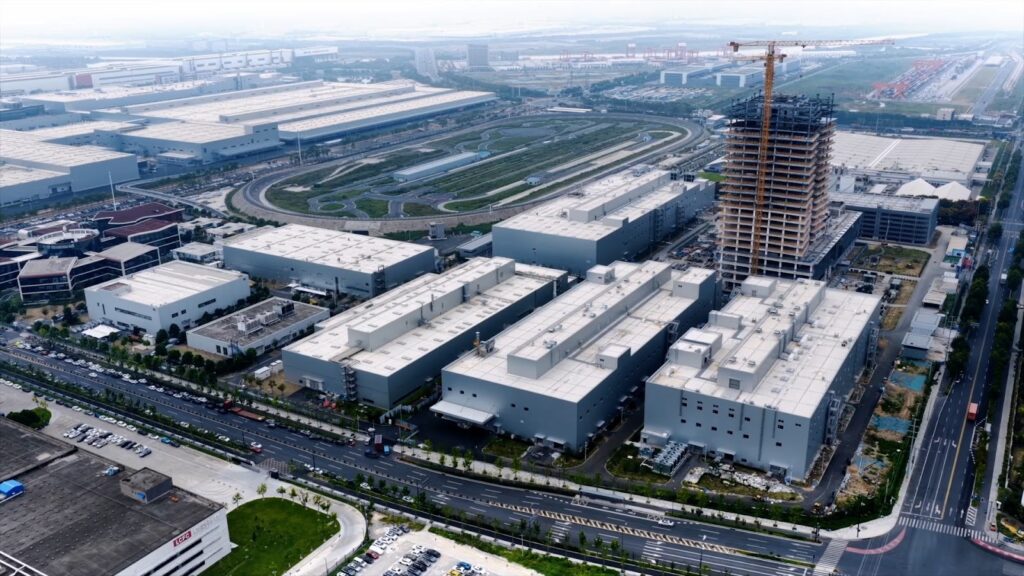
    This strategy is underpinned in particular by the establishment of the Volkswagen Group China Technology Company (VCTC) in Hefei, a research and development centre described as the group’s most comprehensive facility outside Germany. It brings together software development, platform engineering, vehicle testing and prototyping activities, enabling the design of a complete vehicle in China, from the development phase right through to production.

    Volkswagen is also developing new technical architectures tailored to the Chinese market. These include the China Electronic Architecture (CEA), designed in collaboration with XPeng. This ‘software-led’ electronic architecture is expected to enable development speeds up to 30% faster and cost reductions of up to 40% compared with current solutions.

    The group is also working on the China Main Platform (CMP), a platform designed for compact electric vehicles, which also aims to cut costs by around 40% in order to remain competitive against Chinese manufacturers.

    source: Volkswagen

    Regain the initiative in the world’s largest car market

    With this strategy, Volkswagen aims to consolidate its position in a market that has become extremely competitive. The group has set itself the target of selling around 4 million vehicles a year in China by 2030, whilst generating a corresponding operating profit of around €3 billion.

    The launch of the ID.UNYX 08 therefore represents much more than just the arrival of a new model in the range. It symbolises the transformation of the German manufacturer, which is now adapting to the Chinese automotive industry. The group has announced that more than 20 electrified vehicles will also be launched before the end of this year.
  • Ford improves its electric range for Europe: range, technology and efficiency on the agenda

    Ford improves its electric range for Europe: range, technology and efficiency on the agenda

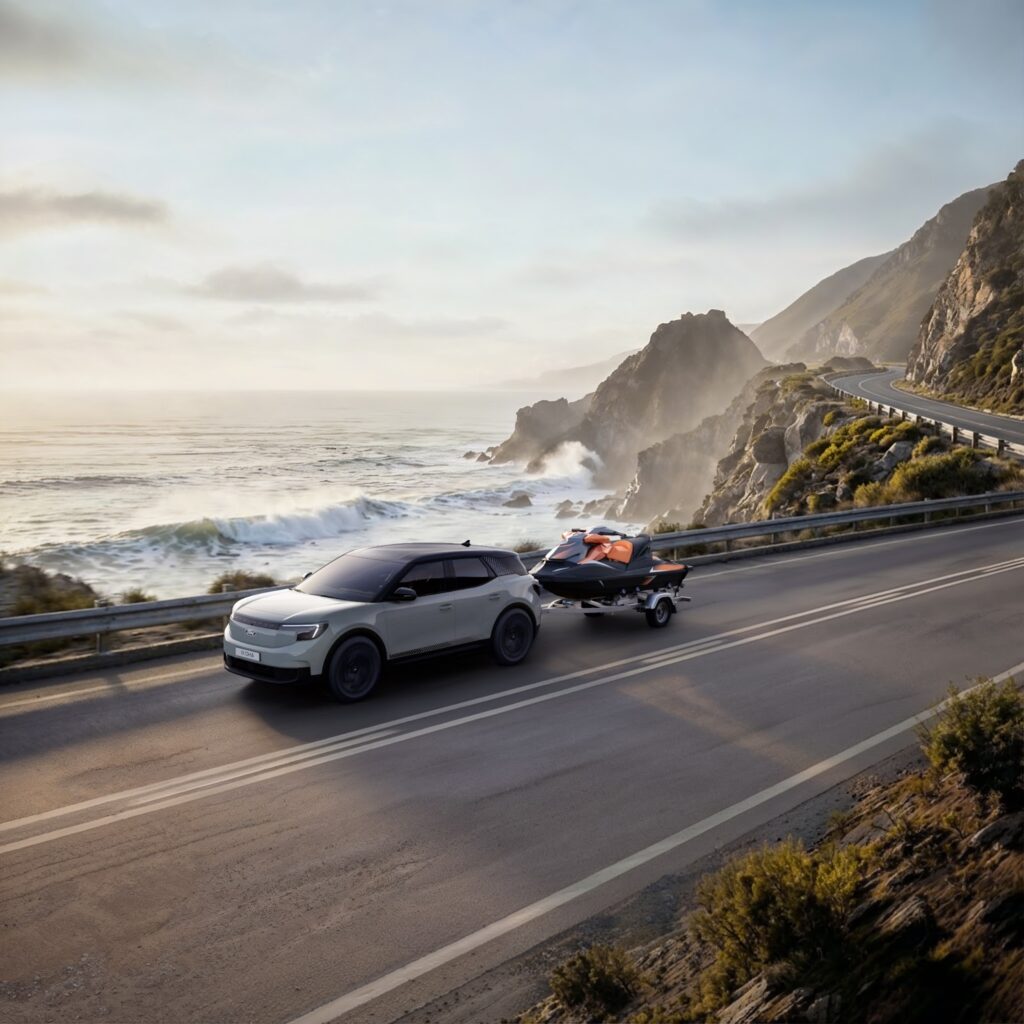
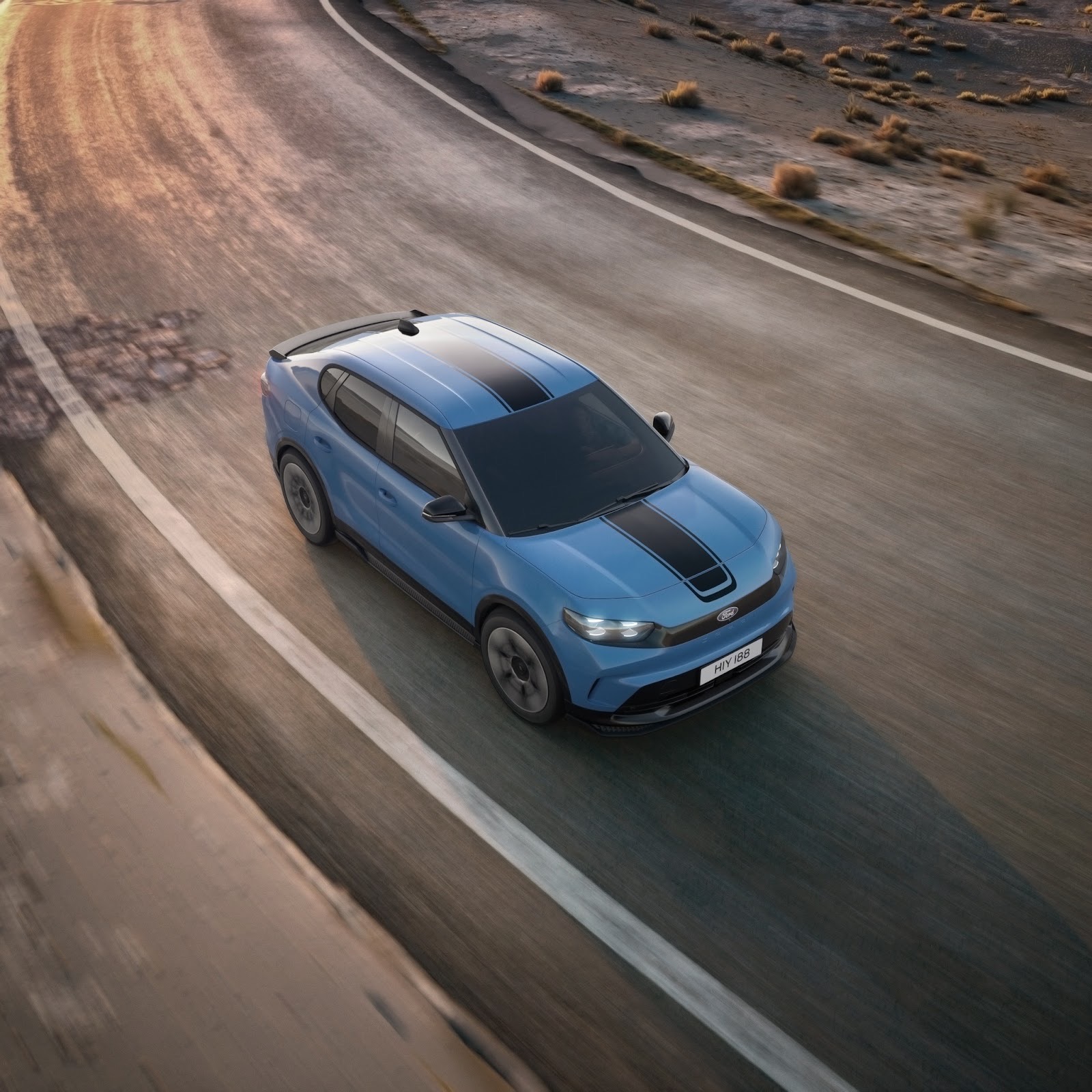
    In the space of a few days at the beginning of March 2026, Ford announced a series of improvements for three of its electric models: the Puma Gen-E, the Explorer and the Capri. On the agenda: greater range, new technologies and technical optimisations designed to make these vehicles more competitive, without any significant price increases. A series of announcements that illustrate the American manufacturer’s desire to strengthen the credibility of its electric range in Europe.
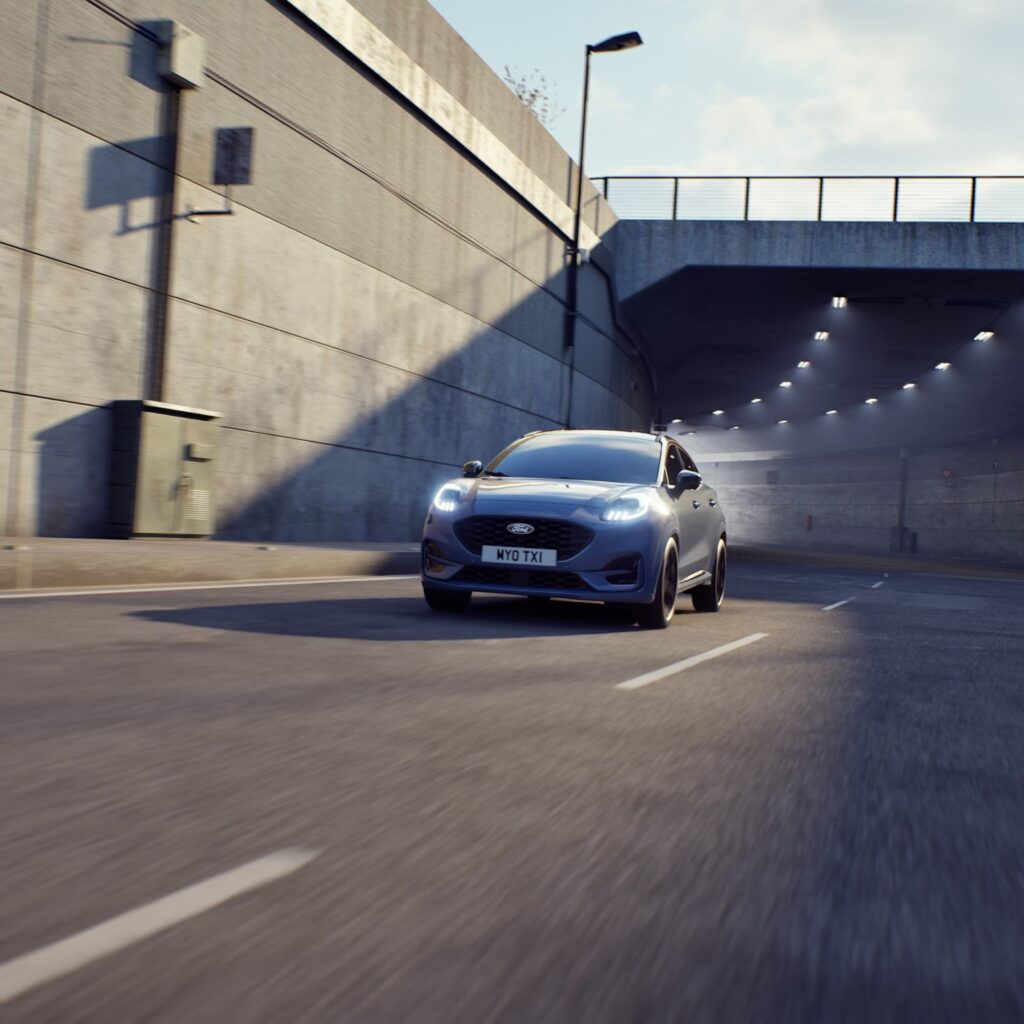
    Source : Ford

    Puma Gen-E: the electric volume car gains in range

    Let’s start with the American brand’s best-selling model in Europe in 2025: the Puma Gen-E, the 100% electric version of Ford’s urban crossover. It’s a strategic vehicle that Ford obviously doesn’t want to leave on the sidelines: “The interest we’ve seen in our Puma and Puma Gen-E across Europe is proof that we’ve found the right formula,” says Christian Weingaertner, Managing Director, Passenger Cars, Ford of Europe.

    Source : Ford

    With this update, Ford is announcing a range of over 417 km, compared with 376 km for the previous version of the Puma Gen-E, thanks to optimisation of the battery and energy management. This is a significant improvement for a model that is aimed primarily at the small urban SUV segment, where range remains a key criterion for buyers.

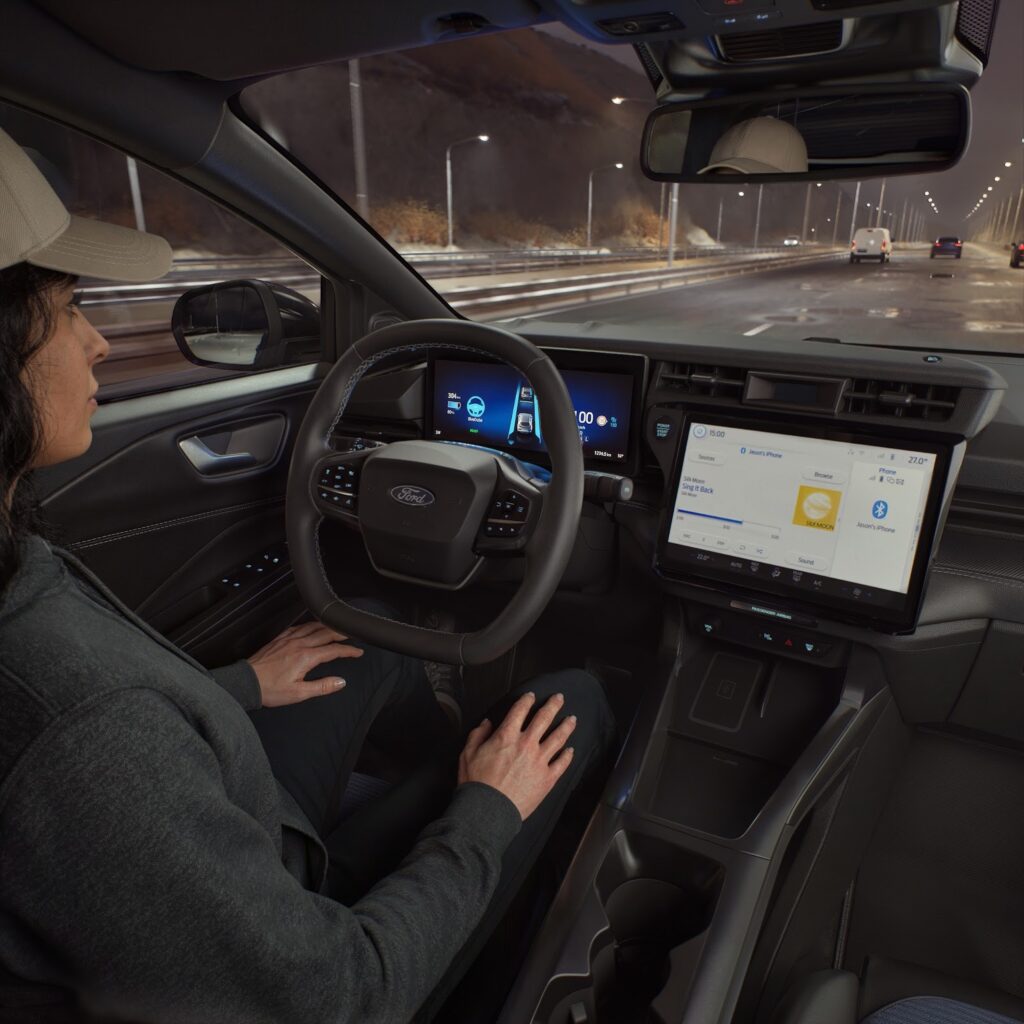
    The manufacturer is also introducing BlueCruise, its assisted driving system that allows hands-free driving on certain stretches of motorway, as long as the driver keeps his or her eyes on the road. Hitherto reserved for more upmarket models, this is the first time the system has been available on a vehicle in the small crossover segment. And as an added bonus for music fans, the manufacturer has announced that the B&O Premium Audio system has been improved and is now even more powerful than before.

    Source : Ford

    Electric Explorer: greater efficiency and technology

    The Ford Explorer Electric, recently launched on the European market, is also benefiting from technical improvements. Among the changes announced for this 100% electric family SUV is the introduction of a new 58 kWh LFP battery for Standard Range versions, replacing the previous 52 kWh battery. This change increases the range, which is now up to 444 kilometres according to the WLTP cycle. The 79 kWh Explorer RWD Extended Range version offers a range of up to 602 km.

    Source : Ford

    This new battery uses lithium iron phosphate (LFP) chemistry, renowned for its durability and resistance to recharging cycles, even though it requires slightly less rapid recharging power. On the Explorer Standard Range, maximum DC power has been reduced from around 145 kW to 110 kW, bringing the recharge time from 10% to 80% to around 28 minutes, compared with around 25 minutes previously.

    At the same time, Ford is also introducing a number of software and technological improvements. The SYNC Move system, controlled via the central screen, benefits from optimised navigation capable of planning journeys by taking into account recharge stops and remaining range. Driving aids have also been upgraded, with a more precise adaptive cruise control system, improved lane-keeping management and new motorway assistance functions.

    Source : Ford

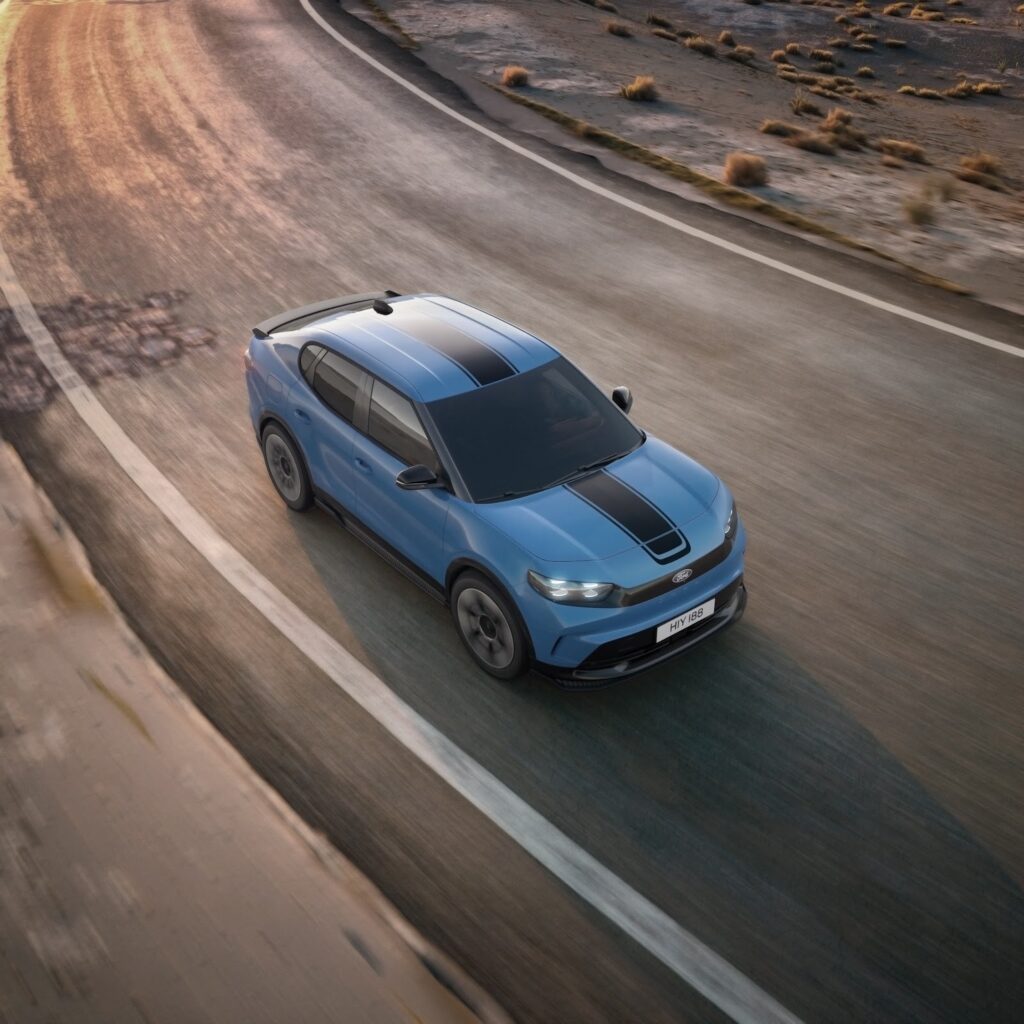
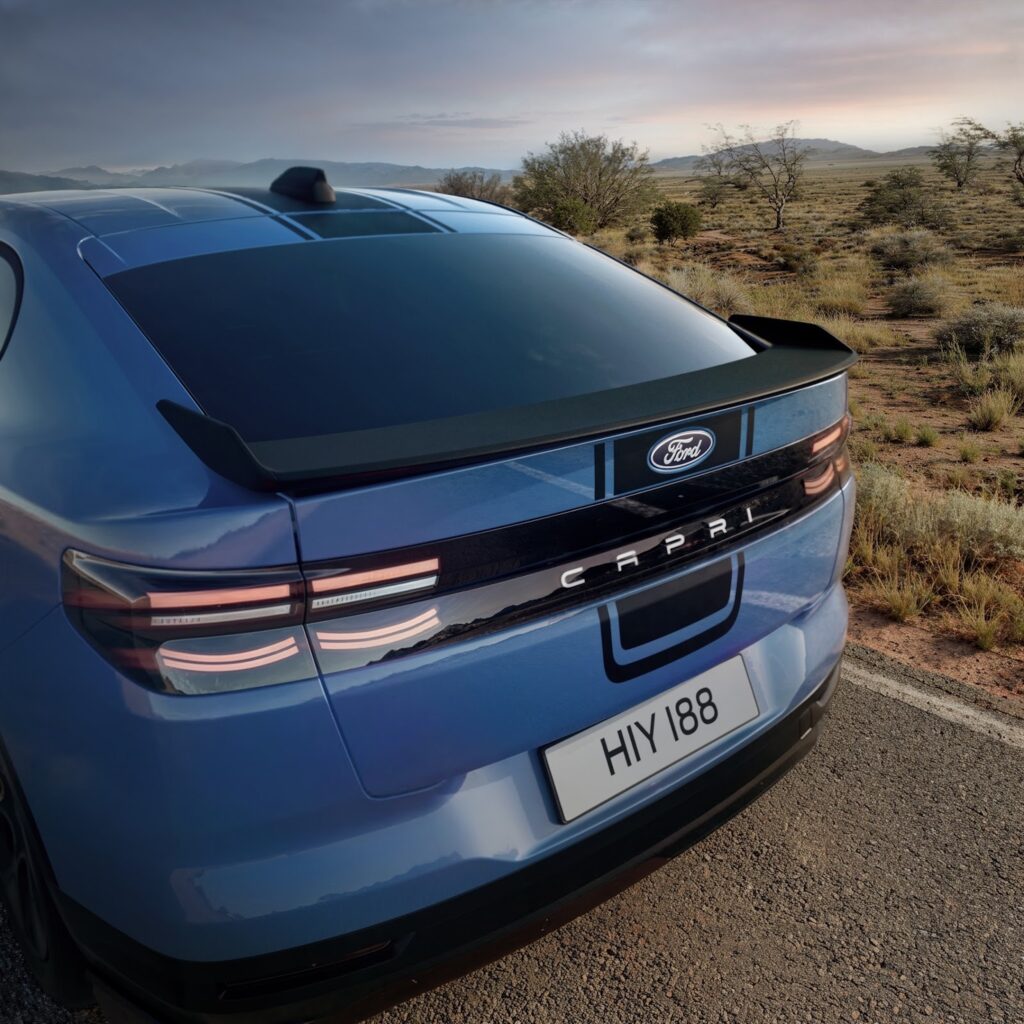
    Capri electric: more range for the SUV coupé

    The electric Ford Capri, recently unveiled as a modern interpretation of the famous 1970s coupé, also benefits from these technical developments. The Capri is based on the same platform as the Explorer, and like the Explorer, the entry-level versions now adopt the 58 kWh LFP battery, which provides a WLTP range of up to 464 kilometres. Extended Range versions are still equipped with the larger 77 kWh battery, offering a range of up to 627 km WLTP depending on configuration.

    Source : Ford

    The motor has also been improved. The Capri Standard Range benefits from an improved electric motor, with power increased to 140 kW (190 bhp) 7 and torque to 350 Nm.

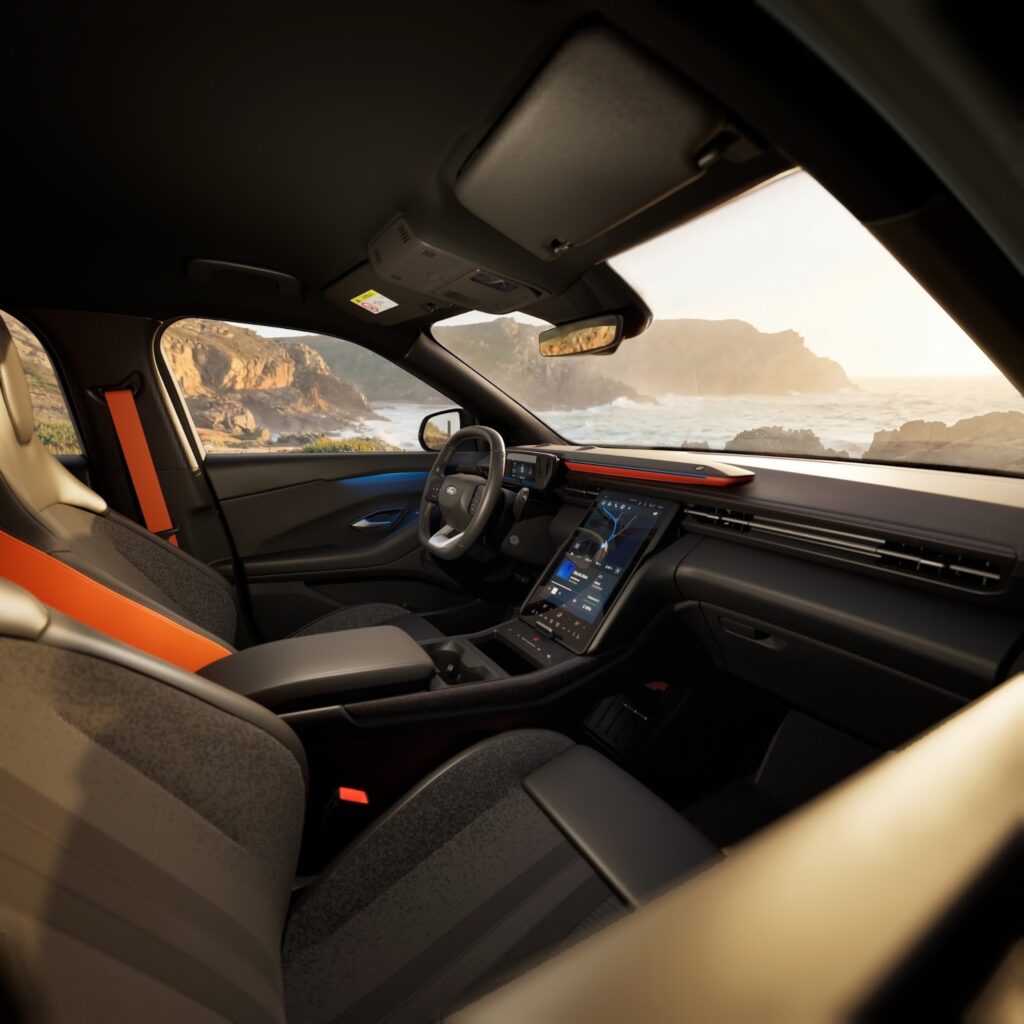
    Ford is also taking advantage of this update to enhance the model’s equipment. As with the Explorer, the Capri’s digital environment has been upgraded, with the SYNC Move multimedia system controlled via a 14.6-inch sliding touchscreen, as well as a number of adjustments to driving aids and on-board connectivity. The changes to the Capri mainly concern the optimisation of technologies already on board. The manufacturer is also offering the Capri Collection Pack, a finish inspired by the model’s heritage that adds a number of specific design elements and reinforces the more emotional positioning of this electric SUV coupé.

    Source : Ford

    A strategy to strengthen Ford’s electric credentials

    These announcements are part of a wider strategy by the American manufacturer in Europe. Rather than churning out new models, Ford seems to be focusing on gradually improving its existing electric vehicles to make them more competitive.

    The three models concerned occupy key positions in the manufacturer’s range:

    • Puma Gen-E, designed to generate volume in the small SUV segment.
    • Explorer, positioned as a technological family SUV.
    • Capri, which plays more of an image role with its SUV coupé design.

    This strategy enables Ford to cover several major segments of the European electric market, in the face of increasingly intense competition.

  • BMW Group: solid results in 2025 and a strategy focused on electric vehicles

    BMW Group: solid results in 2025 and a strategy focused on electric vehicles

    On Thursday 12 March 2026, the BMW Group presented its financial results for 2025 at its annual conference. In a complex global automotive environment, the Bavarian manufacturer has managed to maintain solid profitability. With growth in electric sales and preparations for the next generation of “Neue Klasse” models, BMW has confirmed its transformation strategy for the years ahead.

    Source : BMW

    Overall stable sales in 2025

    In 2025, the BMW Group delivered more than 2.45 million vehicles worldwide, all brands combined, including BMW, MINI and Rolls-Royce. This volume remains broadly stable compared with the previous year, confirming the manufacturer’s ability to maintain sales despite market uncertainties.

    Source : BMW Group

    In financial terms, the Group posted sales of 133.5 billion euros over the full year. Profit before tax (EBT) came to 10.2 billion euros, with an EBT margin of 7.7%, a level once again identical to that seen in 2024. Net profit was more than 7 billion euros.

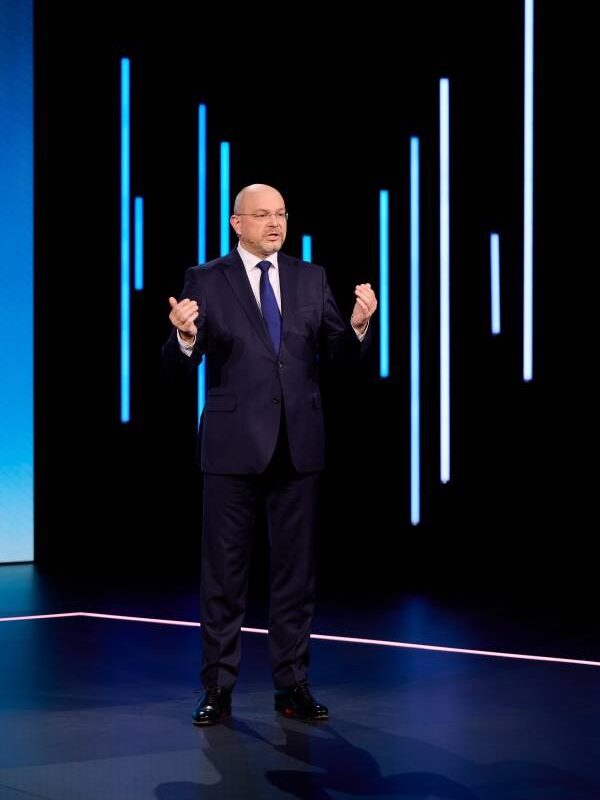
    According to Walter Mertl, the Group’s Chief Financial Officer, these results demonstrate the effectiveness of the strategy implemented in recent years, combining financial discipline and diversification of the product offering.

    Source : BMW

    Electric vehicles continue to grow in sales

    The energy transition is also continuing at BMW. In 2025, the manufacturer sold 442,056 100% electric vehicles, a significant increase on previous years.

    These models now account for 17.9% of the Group’s worldwide sales. Including plug-in hybrids, electrified vehicles sold more than 642,000 units over the year. And electrified vehicles are enjoying particularly strong momentum in Europe, where almost 40% of the Group’s sales are of electrified vehicles.

    For Oliver Zipse, Chairman of the BMW Group Management Board, this increase confirms the relevance of the manufacturer’s strategy of ‘technological openness’, which consists of offering several types of engine to adapt to the different realities of world markets.

    Source : ERT

    An increasingly complex automotive environment

    Despite these solid results, 2025 was not without its challenges for the Bavarian group. International trade tensions, regulatory changes and increased competition in certain markets, notably China, have weighed on the economic environment of the automotive sector.

    The Chinese market, in particular, remains a major strategic challenge for premium carmakers. But the rise of local brands in the electric segment is increasing competitive pressure.

    Against this backdrop, BMW expects a slightly lower level of profitability in 2026, with an automotive operating margin of between 4% and 6%.

    The Neue Klasse, the next stage in the transformation

    In addition to the financial results, the annual conference was also an opportunity for the group to reaffirm its long-term vision. BMW’s next technological milestone will be the Neue Klasse, a new generation of electric vehicles that will gradually transform the company’s range.

    This dedicated platform promises major advances in energy efficiency, autonomy and software performance. It should also make it possible to reduce production costs and increase the competitiveness of the Group’s future electric models and even those already released, such as the IX3, to name but one.

    Source : BMW

    A strategy of continuity in a changing sector

    The Group continues to invest in electrification, software and new platforms, while maintaining a varied range of powertrains to meet the needs of different markets around the world.

    For the Bavarian carmaker, 2025 looks set to be a year of consolidation, before the arrival of a new generation of vehicles that could mark a major step in the transition to electric vehicles.

  • Rising petrol prices: will electric vehicles benefit?

    Rising petrol prices: will electric vehicles benefit?

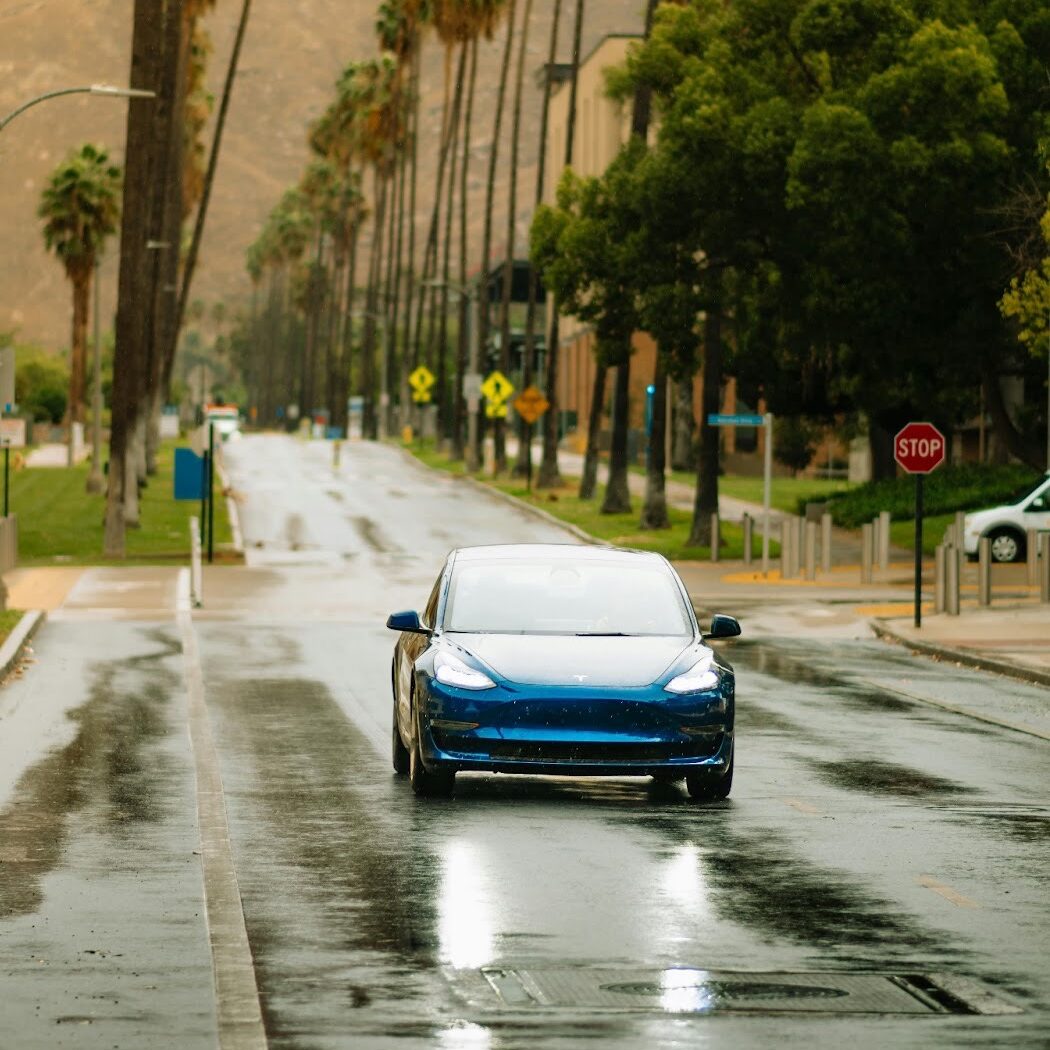
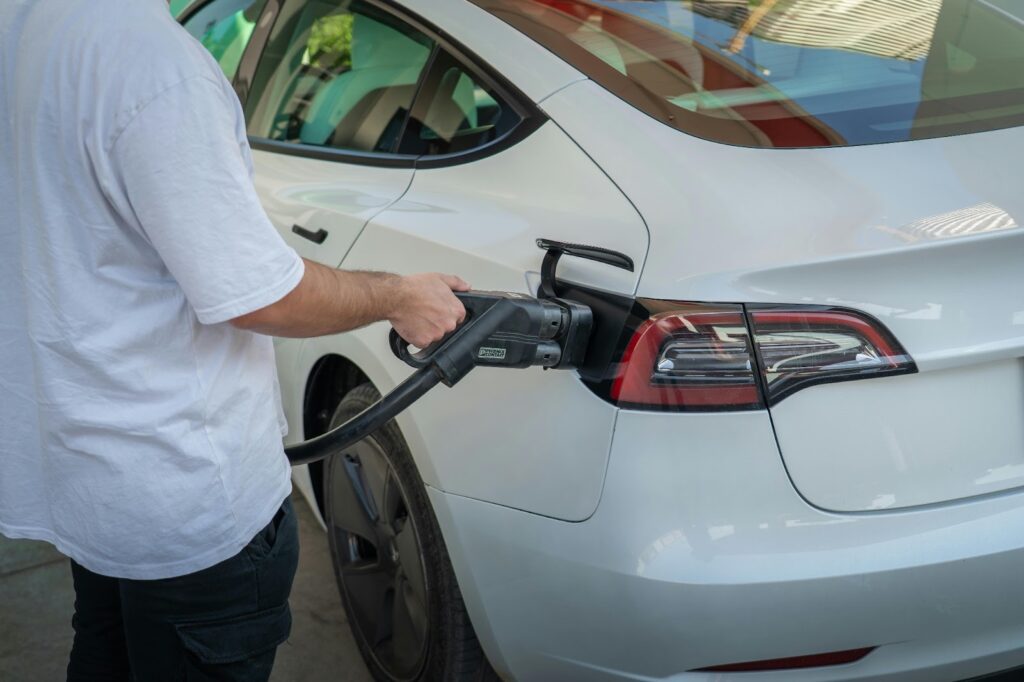
    The recent rise in oil prices, fuelled by geopolitical tensions in the Middle East, is beginning to be felt in many parts of the world. In Los Angeles, the price of petrol has passed the symbolic mark of 5.29 dollars a gallon (3.8 litres), an increase of 45 cents in just 15 days. Brent crude is trading at around $105 a barrel. In France, too, prices are on the rise, and this could well lead to an increase in the number of EVs on the road.

    source : Tesla

    Soaring fuel prices speed up the transition to electric vehicles

    In the United States, and California in particular, the first effects could already be visible this month. A AAA survey revealed that 77% of respondents said that saving money on petrol was their main motivation for buying an electric vehicle. A figure that clearly illustrates the unexpected role of fuel in driving the transition.

    Sam Abuelsamid, automotive analyst at the telemetry agency, said: “The last time we saw oil prices above $100 a barrel was in early 2022, and that’s when we saw electric vehicle sales really start to pick up in the US”, before adding: “We’re likely to see an increase in the adoption of electric vehicles and in particular the adoption of hybrids”.

    This trend is confirmed by Brian Maas, President of the California New Car Dealers Assn. Interviewed by the Los Angeles Times, he predicted that enthusiasm for electric vehicles will rise again throughout California if oil prices don’t fall. “If previous spikes in gas prices are any indication, you tend to see interest in more fuel-efficient vehicles,” he said.

    source: California New Car Dealers Assn

    And what about France?

    In France, the trend is similar, with prices rising significantly between 1 and 11 March 2026: diesel rose from €1.721 per litre to around €1.95, SP95-E10 from €1.723 to €1.85, and SP98 from €1.829 to €1.93. This increase is due to a combination of the rise in the price of Brent crude oil ($105-110), geopolitical tensions in Iran and the EEC tax of 16 to 17 centimes per litre since January 2026.

    And the least we can say is that this increase does not please the French. On social networks, they are not hesitating to raise their voices with the keyword #BalanceTonPlein. Now viral, particularly on X, motorists are sharing their bills or their exasperation at the increase in fuel prices.

    But will this change anything for the car market? We can’t say for sure, but what we do know is that the price of petrol is an argument that could tip the balance. In fact, according to a Driveco study carried out with Harris Interactive at the end of 2025, around 20% of French people are considering an electric vehicle for their next purchase. For 42% of them, the reason is the difference in running costs between a combustion and an electric vehicle.

    In conclusion, it would not be surprising to see sales of electric vehicles rise over the next few months, due to the geopolitical conflicts around the world that are impacting on French people’s wallets.

    Buying patterns that could change

    Soaring fuel prices are not just a source of frustration. It could also influence purchasing decisions. When the cost of running an internal combustion vehicle rises sharply, electric and hybrid vehicles naturally become more attractive. If oil prices remain high over the coming months, this dynamic could become even more pronounced, both in the United States and in France.