It was a decision that sent shockwaves through the environmental community: low-emission zones (ZFE) were abolished by the National Assembly on Wednesday 28 May 2025. This measure, designed to limit pollution in large conurbations, was buried as part of the bill to simplify economic life.
Credit: Guillaume Laurens / Actu Toulouse
An unlikely political resonance
Initially, it was the Rassemblement National (RN) that launched the offensive against the ZFEs, in the name of “freedom of movement” for all vehicles, regardless of their Crit’Air sticker… But this crusade on behalf of cars has found an unexpected echo even in the ranks opposed to the far right. On the left of the political spectrum, La France insoumise (LFI) also voted to abolish these zones, denouncing a socially unfair measure. According to the Insoumis, the EPZs primarily penalise low-income workers who depend on their vehicles to get to work or, quite simply, to do their job (in certain sectors of activity).
Dejection for the Greens…
Marine Tondelier, national secretary of Europe Écologie Les Verts (EELV), had this to say about the decision, which she described as a “dramatic turning point”. On her X account (formerly Twitter), she expressed her indignation: ” This is the worst week for ecology in a long time. She points the finger at a motley majority, ranging from the RN to LFI, via a few Macronist MPs, who voted to abolish the EPZs, adopted by 98 votes to 51.
A step backwards for the environment?
The abolition of the EPZs is part of a wider trend to question environmental policies, which are often criticised for being technocratic or out of touch with social issues. The political signal, however, is unequivocal: in the midst of a climate crisis, France is choosing to ease an ecological constraint in the name of economic accessibility, even if it means compromising the long-term dynamic initiated several years ago.
Ironically, however, these zones were supported by President Emmanuel Macron and implemented under the government of Édouard Philippe. In 2022, our Head of State announced, following his re-election: ” The policy I will pursue over the next five years will be ecological or it won’t be. ” Three years on, the ecological course set by the presidential party raises questions.
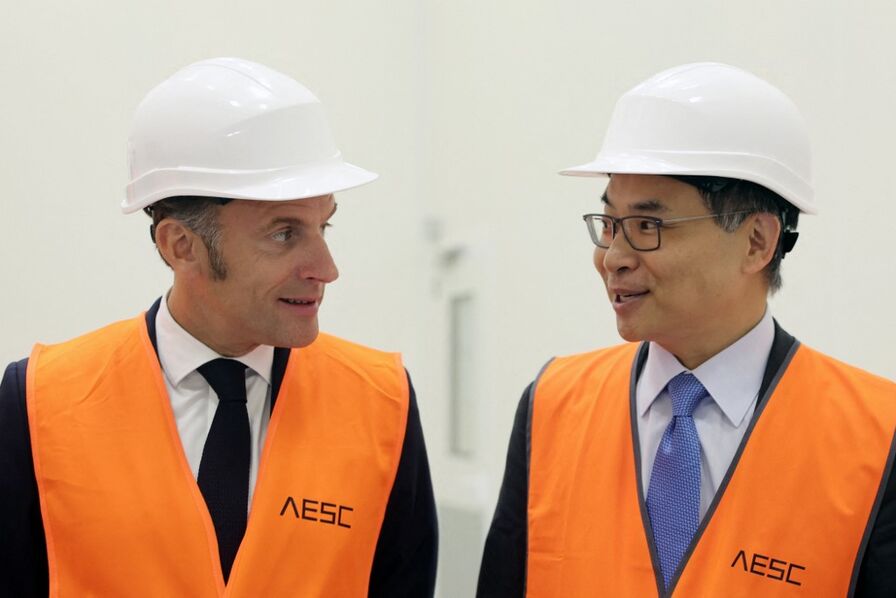
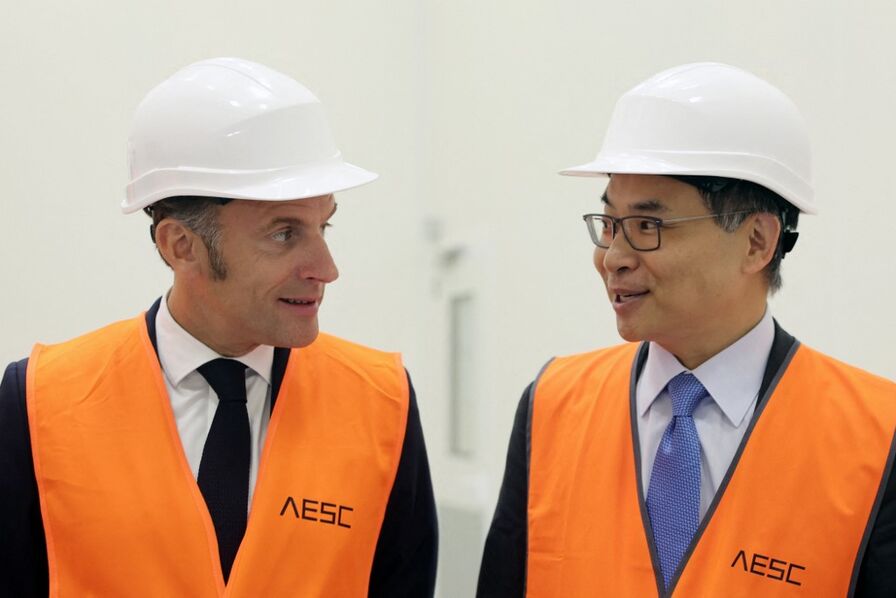
On Tuesday 3 June, Emmanuel Macron visited Douai to inaugurate the AESC Gigafactory, a huge factory specialising in the production of batteries for electric cars. The Gigafactory, developed in partnership with the Chinese group Envision AESC, is part of the Renault ElectriCity industrial cluster, dedicated to 100% electric vehicles.
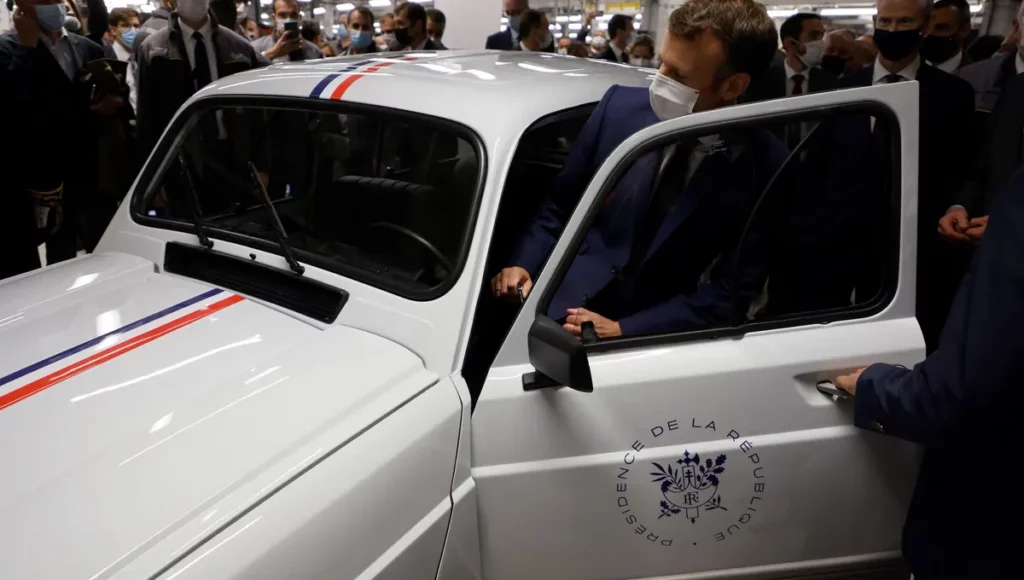
Designed to produce batteries for the new Renault electric range, this “gigafactory” will eventually produce an annual energy capacity of between 24 and 30 GWh… By way of comparison, that’s enough to power an average town of 5,000 inhabitants for a year. In reality, this new “Gigafactory” alone will supply batteries for around 200,000 electric cars a year by 2030. It will produce batteries for Renault’s reinvented iconic models, such as the R5 and the future electric R4.
Credit: Teresa SUAREZ
A national industrial and ecological ambition
The inauguration of the AESC Gigafactory in Douai is part of a wider strategy of reindustrialisation and energy transition called “Renault ElectriCity”, with a total investment of almost €2 billion, including €1.3 billion for the Douai plant alone.
Launched in 2021, this project brings together three strategic sites in Hauts-de-France: Douai, Maubeuge and Ruitz, with the ambition of making the region the centre of gravity for electric cars in Europe. The aim of the project is to produce up to 400,000 electric vehicles a year at the three production plants, and to relocate some of the manufacturing to France. “Renault ElectriCity” aims to create a complete ecosystem, from battery manufacture to final vehicle assembly, with the support of key partners such as Envision AESC.
This inauguration marks a further step forward for Renault, which is affirming its determination to make Hauts-de-France the nerve centre of its 100% electric ecosystem, as part of its “Renaulution” transformation strategy. These initiatives illustrate the drive to strengthen France’s industrial sovereignty, with the aim of reducing its dependence on imported Asian batteries.
On the financial side, the European Commission has authorised €48 million in aid to support the construction of this lithium-ion battery plant, underlining its importance to France’s economic development and competitiveness in this field. The Douai site alone is expected to create more than 1,000 jobs by 2030.
Credit: Maxpp
A major socio-economic impact
In Douai, Emmanuel Macron also stressed the importance of initiatives of this kind for the economic revitalisation of the region, which has historically suffered from industrial decline. The Head of State even went so far as to say: ” There’s no need to be fatalistic or gloomy. Times are tough, but what you are embodying here today shows that ecology and the economy can go hand in hand if we invest, if we have a long-term strategy and consistency. “
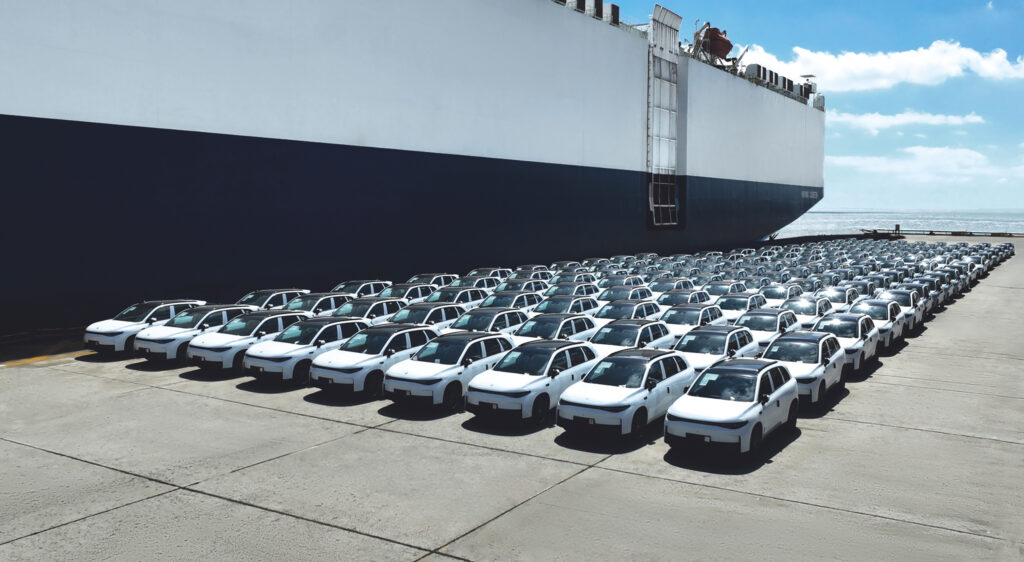
The Middle Kingdom and the Cradle of Humankind have forged increasingly strong economic ties over the past several years. Electric mobility is no exception and plays an ever-growing role in these relations. Let’s focus on the latest Chinese establishments across the African continent, from Morocco to South Africa, including Nigeria, Ivory Coast, Rwanda, Egypt, and Kenya.
The ideal partner
Before diving into specifics, it’s essential to understand why Africa is an ideal partner for Chinese electric vehicle (EV) companies.
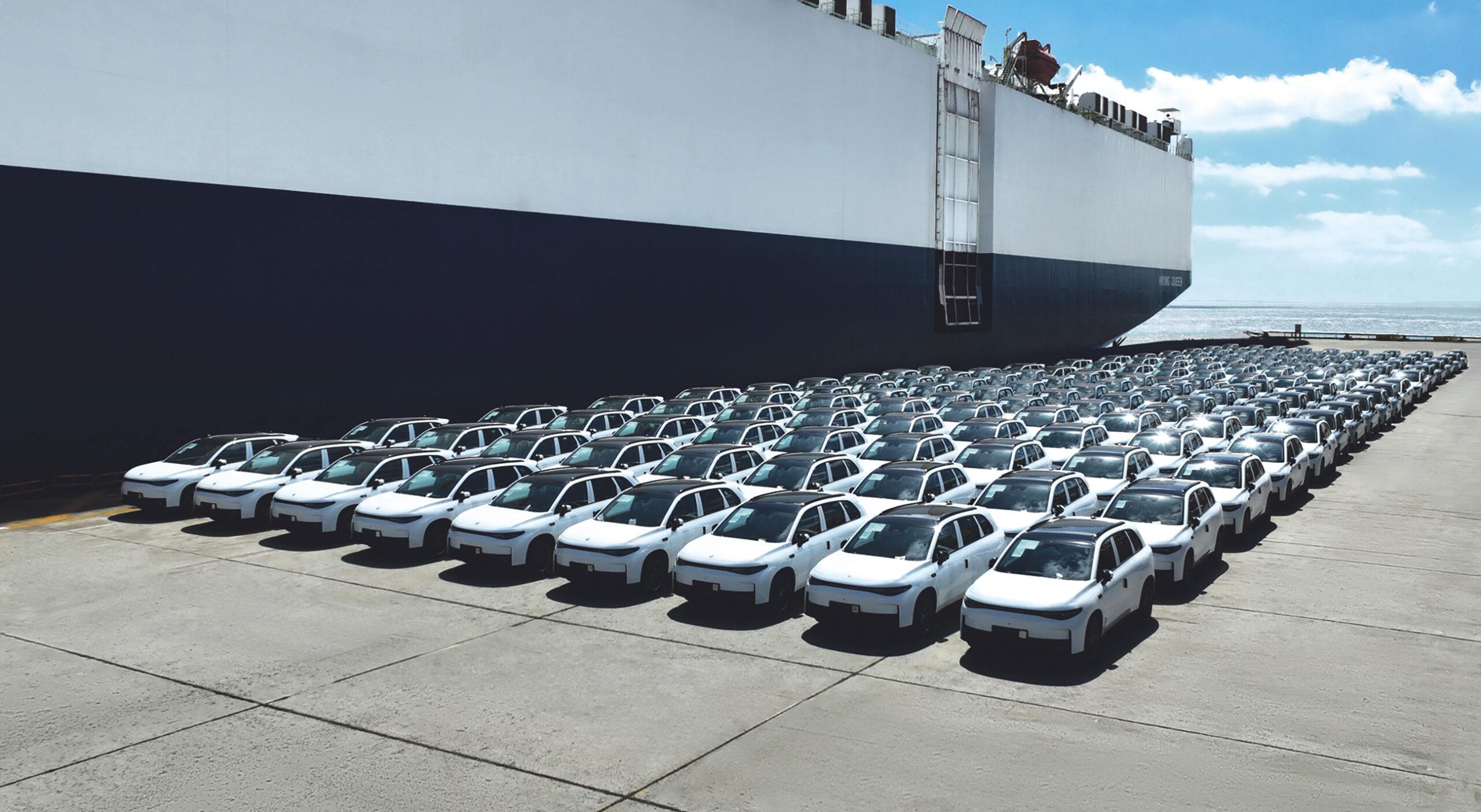
First, Africa presents an effective solution to the financial barriers imposed by Europe and the United States, particularly regarding tariffs and penalties. Africa is not engaged in a trade war with China; on the contrary, it offers a more open market.
Moreover, Africa is rich in essential resources. Of particular interest to Chinese investors in electric mobility are minerals like cobalt, with the Democratic Republic of the Congo being the world’s leading producer.
Additionally, low manufacturing costs, affordable labour, tax incentives, and a vast, relatively young population—the demographic most inclined to adopt electric vehicles—make Africa a highly attractive market for EV and battery manufacturers.
Establishing operations in Africa offers numerous advantages to Chinese companies, further bolstered by the continent’s industrial powers, emerging markets, and countries with strategic locations.
Industrial Powers
When setting up factories, companies naturally gravitate towards countries with proven industrial capabilities, and Africa has several.
Anyone who has visited Tangier can attest to the scale and modernity of its infrastructure. “The Pearl of the North” exemplifies the broader Moroccan landscape, which already hosts production facilities for companies like Stellantis and Renault, collectively producing approximately 700,000 vehicles annually.
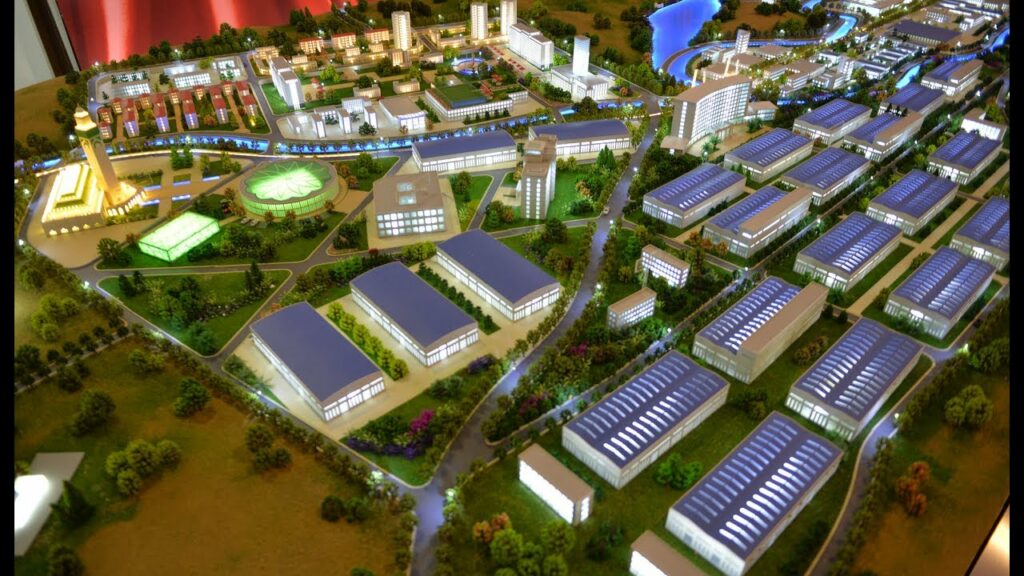
For Chinese investors, this ensures access to a skilled workforce and substantial industrial expertise. It’s no coincidence that companies such as Hailiang, Shinzoom, Gotion High Tech, BTR, and CGNR—spanning copper processing to battery manufacturing—have invested nearly a billion dollars in various manufacturing sites within the newly established Tangier Tech industrial hub.
Furthermore, Morocco’s favourable relations with the European Union and the United States (for now) provide additional reassurance to Chinese investors.
In North Africa, Egypt is also attracting Chinese companies. For instance, BAIC Group plans to inaugurate a 120,000-square-meter assembly plant by late 2025, initially producing 20,000 vehicles annually, with plans to scale up to 50,000 by 2030. This facility aims to first saturate the Egyptian market, then leverage Egypt’s strategic location to penetrate other African and Middle Eastern markets.
On the other hand, Nigeria appears to be retreating from Chinese investments. In late 2023, the government announced that several Chinese companies intended to invest $2 billion in various factories across the country. Since then, there have been no updates.
Instead, Nigeria seems to be turning to Spiro, a Kenyan manufacturer of electric two-wheelers, to advance its transition to cleaner mobility, exemplified by the opening of a factory in Ogun State.
Crédit : DR
Promising Markets
This shift doesn’t imply that China has lost interest in Nigeria. On the contrary, Nigeria remains one of the continent’s most promising markets, driven by a young, urban population with a higher purchasing power than many other African nations.
Notably, Nigeria was among the first African countries to receive Chinese Yutong electric buses through a partnership with Lagos-based Oando Clean Energy.
South Africa, the largest automotive market in sub-Saharan Africa, is another attractive destination for Chinese investors. BYD, for instance, is aggressively launching new models in the region. South African distributor Enviro Automotive has begun selling Chinese models, quickly followed by competitors, all vying for a significant share of a market that, while still modest, is steadily growing.
Rwanda has distinguished itself as one of the first African nations to embrace electric mobility, supported by a government that early on invested in public subsidies, facilitated charging station rentals, and electrified public transport. These initiatives have attracted Chinese manufacturers and groups, leading to collaborations with Kabisa, a pioneer in Rwanda’s electric vehicle distribution, and contributions to Kigali’s public transport networks.
Ivory Coast is also increasingly attracting Chinese investors. Without necessarily relying on bonuses or incentives, the Ivorian government regularly holds discussions with the Chinese government as well as with the country’s largest companies to facilitate the introduction of electric vehicles in the Ivory Coast.
Recently, ride-hailing drivers in Abidjan have started equipping themselves with vehicles from the Chinese manufacturer Neta, while fellow Chinese automaker BYD has begun marketing its models in the country. Chinese investors are also contributing through the development of a charging station network and have even provided electric buses to help organize the Africa Cup of Nations in early 2024.
Crédit : Jean Claude Akarikumutima
Raw Materials and Strategic Hubs
Beyond Morocco’s industrial expertise and South Africa’s promising market, other countries are drawing Chinese investors due to their strategic geographic positions.
As previously mentioned, Egypt serves as a gateway to both African and Middle Eastern markets. Similarly, Kenya has become an inspiration for neighbouring countries, sourcing vehicles from Chinese manufacturer Neta Auto to green its taxi fleet. This positions Chinese companies advantageously to persuade other major cities to trust their offerings.
On the raw materials front, the Democratic Republic of the Congo stands out as the world’s leading supplier of cobalt—a crucial component in battery manufacturing—and a significant source of copper. China has strategically positioned itself as the primary client of Congolese mines, purchasing over three-quarters of the nation’s production. While many of these mines are still owned by Western groups, Chinese shareholders are increasingly prominent.
The substantial influx of Chinese electric vehicle companies into Africa follows an unrelenting business logic, suggesting a central role for the continent in this market, especially given its youthful population.
However, a critical question persists whenever foreign funds flow into Africa: Will African nations retain sovereignty over their resource management and labour conditions?