Blog

  • Charging and electric cars: who’s shaping the future?

    Charging and electric cars: who’s shaping the future?

    There are countless electric cars on the road, electric charging points and adverts promoting ‘cleaner’ mobility. Electromobility is no longer an emerging trend; it has become an everyday reality that is established throughout the world.

    But behind this term with its technical meaning lies a real upheaval. Electromobility isn’t just about replacing an internal combustion engine with an electric battery, it’s about transforming an entire ecosystem: from historic carmakers to innovative start-ups and equipment manufacturers, let’s take a look at the pillars of global electromobility.

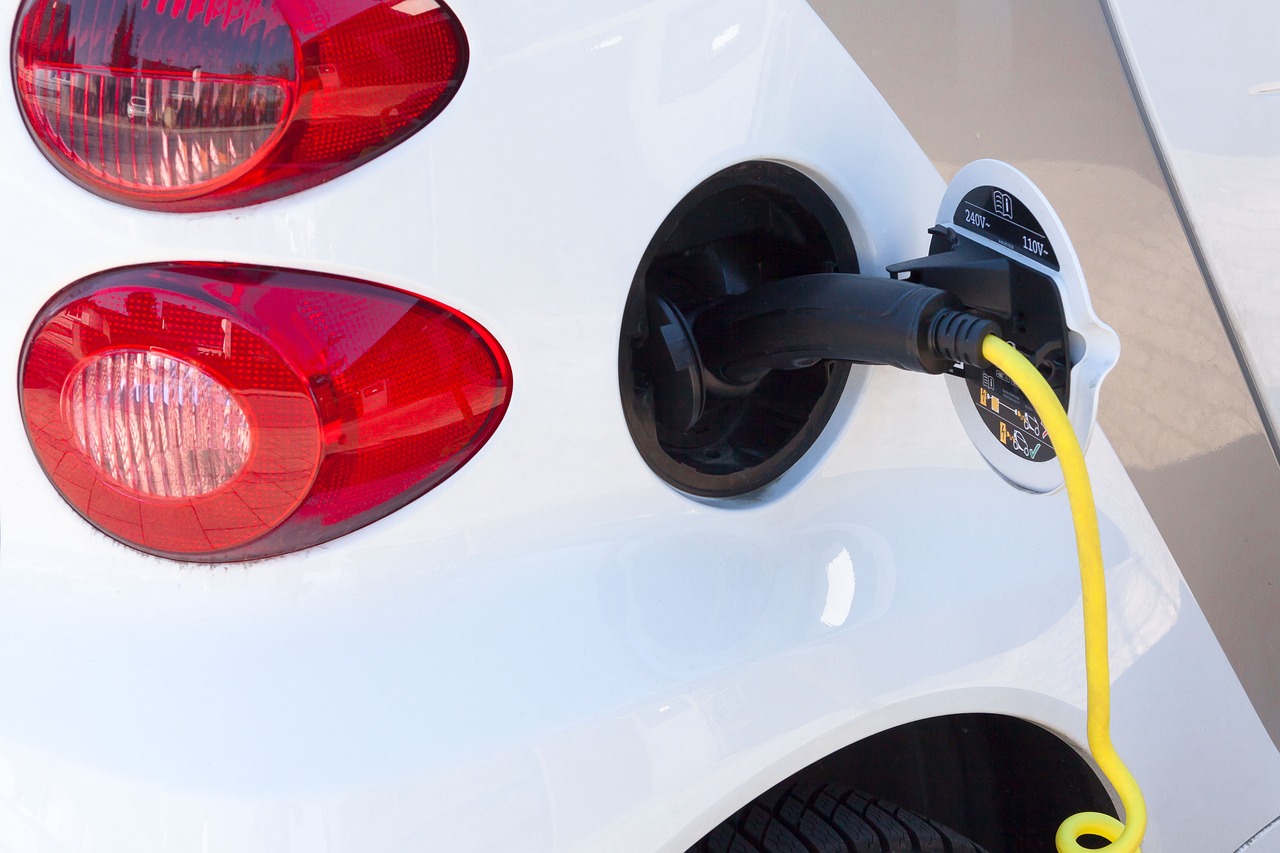
    Credit: Qovoltis
    Credit: Qovoltis


    Car manufacturers: the global battle rages on

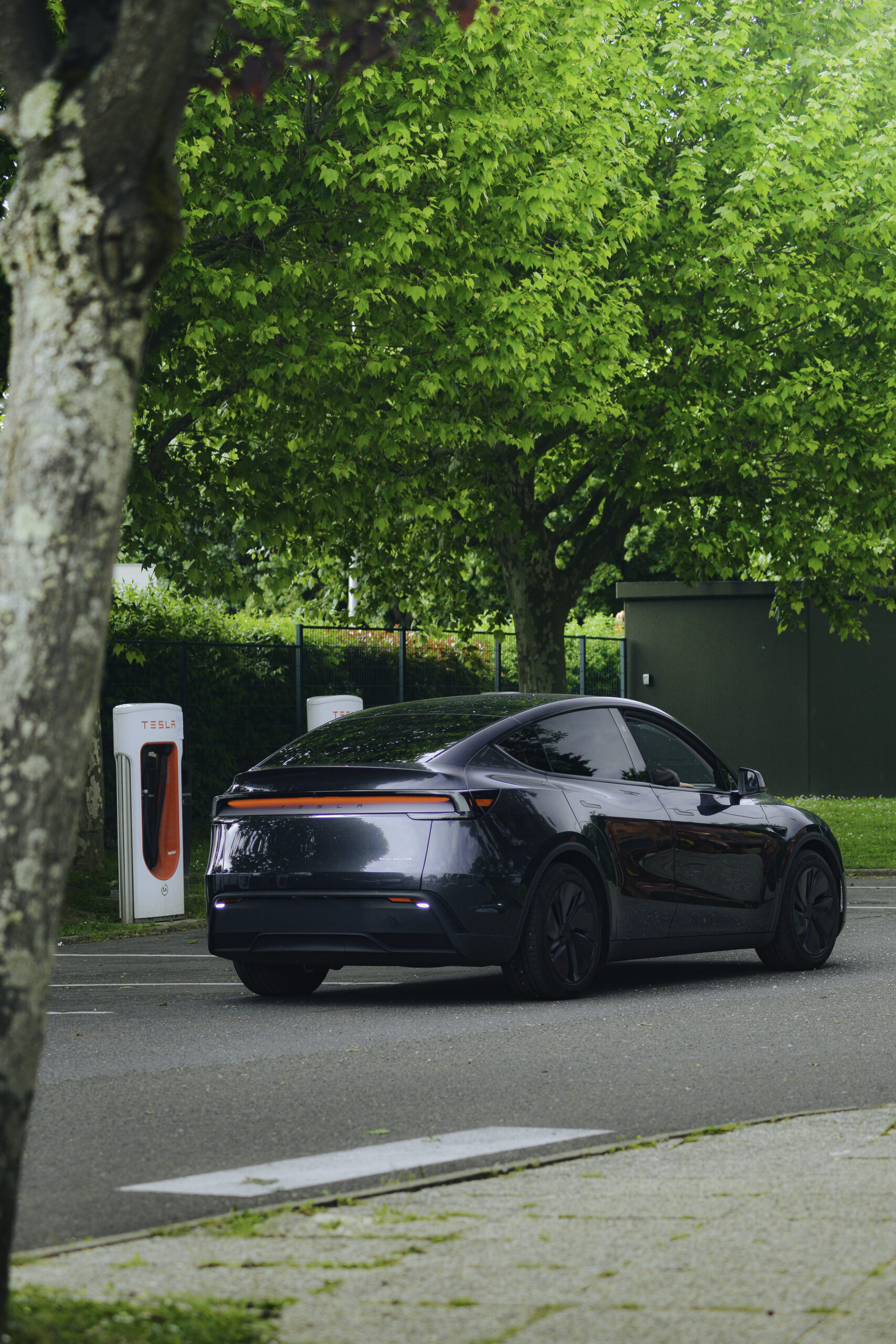
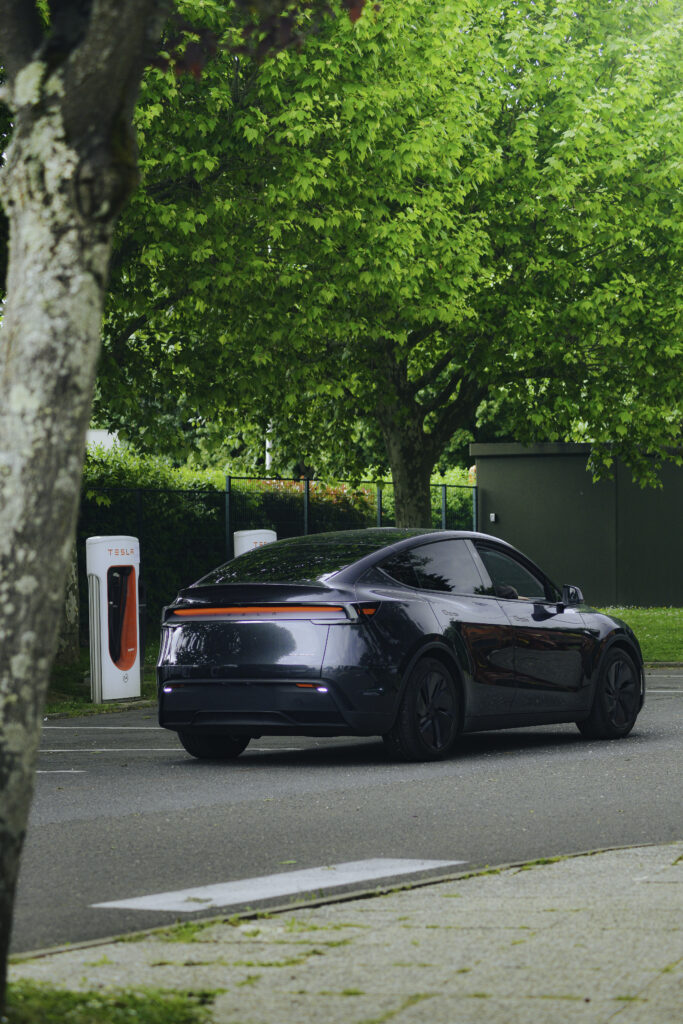
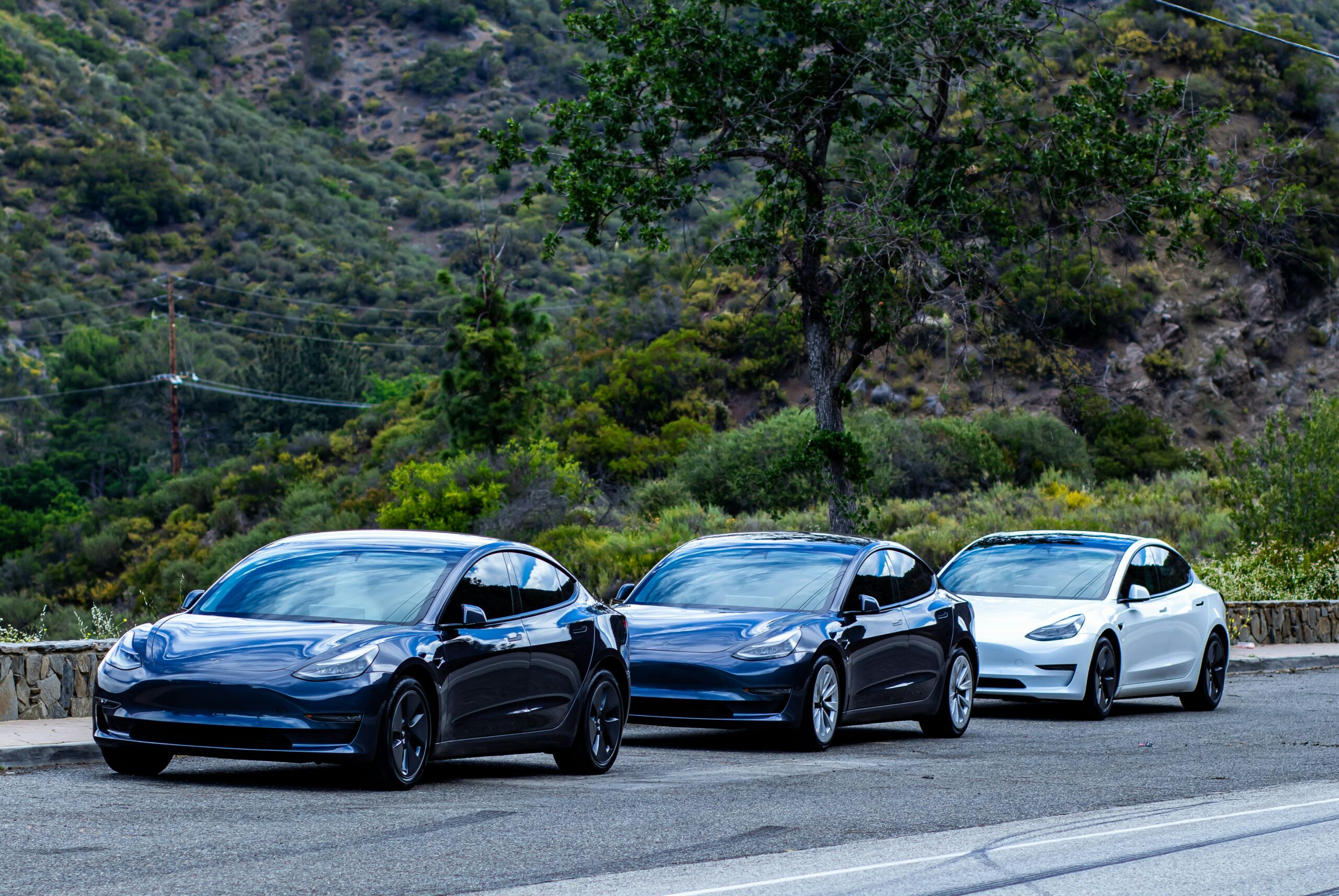
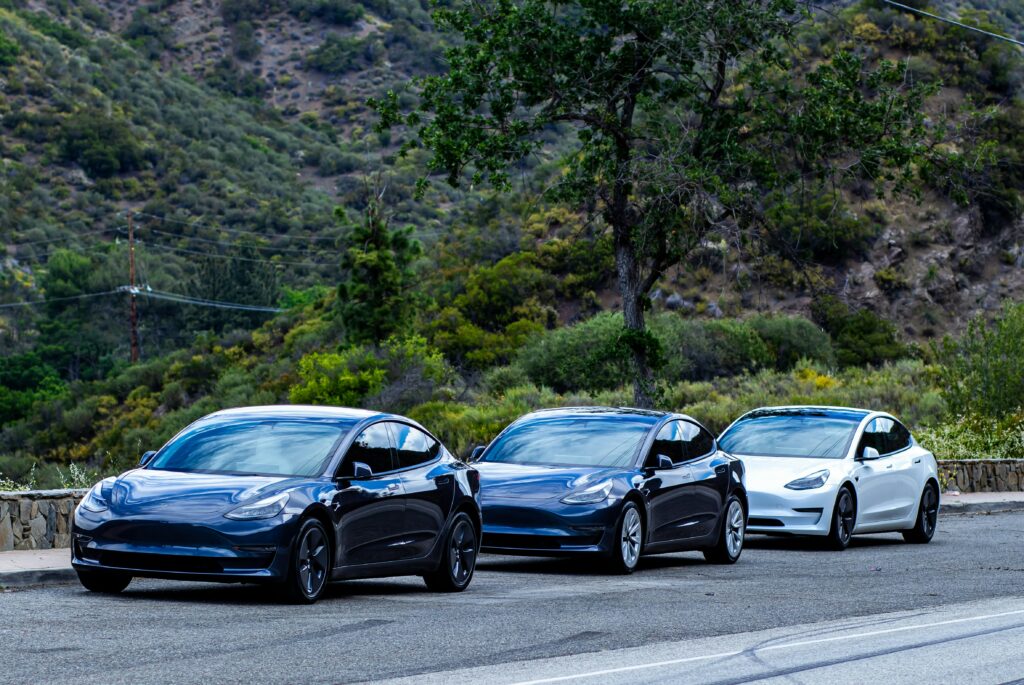
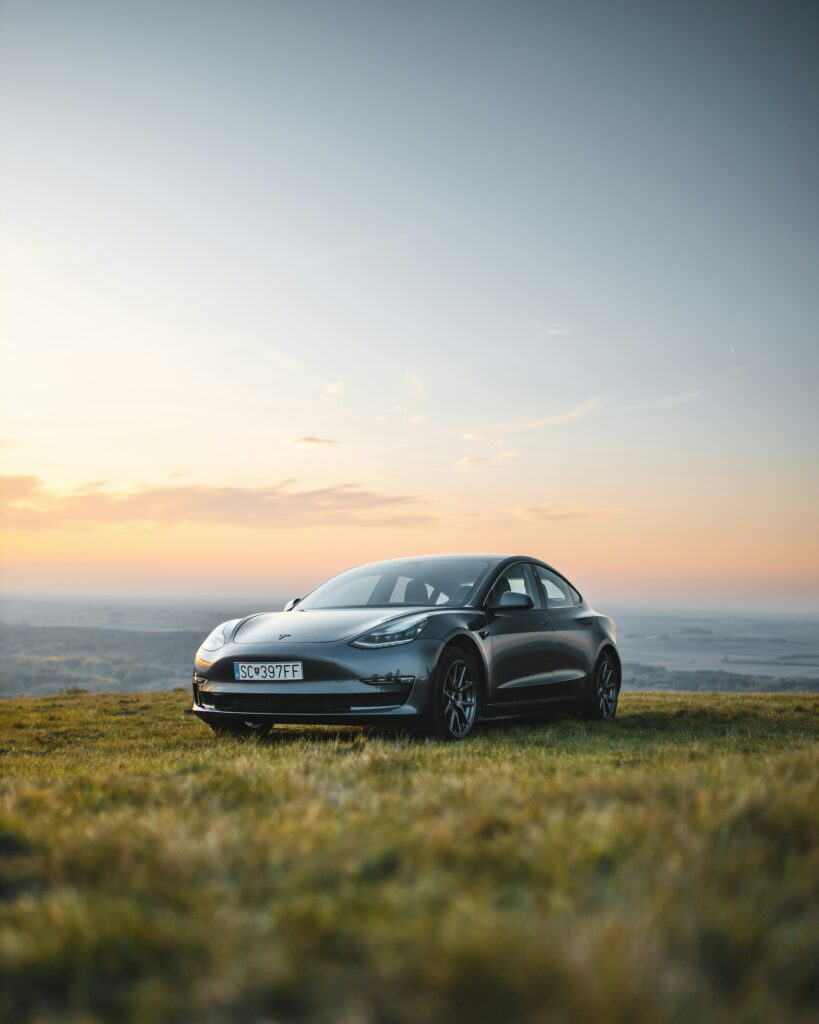
    For more than a decade, a number of manufacturers have been leading the way in electric cars. Tesla, of course, remains the symbol of this revolution. With its innovative models, the Californian firm has shaken up the established order and forced the giants of the sector to adapt. With almost 1.8 million electric vehicles sold in 2024, Tesla remains the best-selling brand in the world.

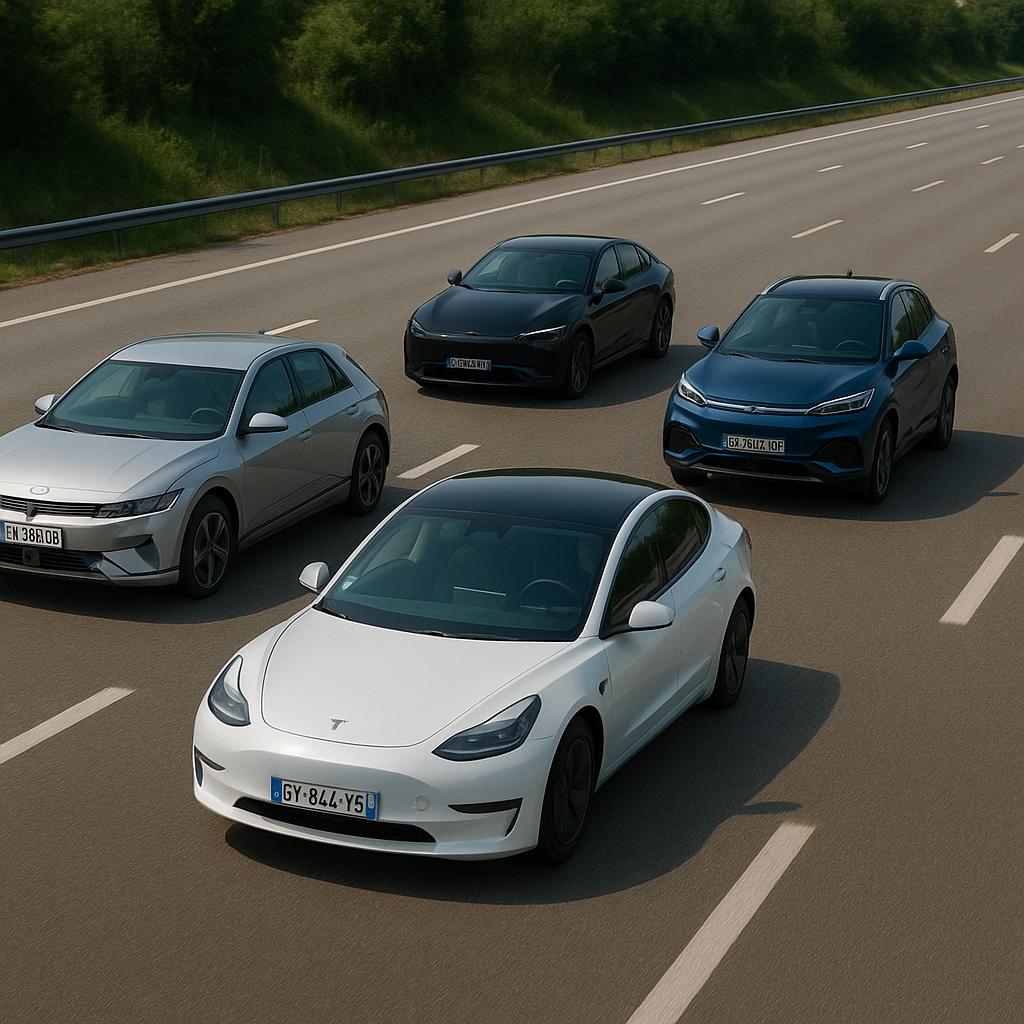
    But this dominance could waver, as Chinese manufacturers continue to play a major role in the sale of 100% electric vehicles: BYD (1,764,992 vehicles sold in 2024), GEELY, SGMW, NIO and Xpeng, among others, account for 28% of the market and make China the world’s leading market. This is because China produces on a large scale and now exports to Europe. The Middle Kingdom is banking on an integrated industrial strategy, backed by massive state support.

    To stay in the race on a global scale, European manufacturers are reinventing themselves. Nissan and Renault have been pioneers since 2010, when the Nissan Leaf and Renault Zoé enabled thousands of drivers to switch to electric cars. Today, the majority of European car market leaders such as Volkswagen, BMW, Mercedes-Benz, Renault and Stellantis are stepping up their efforts to electrify their ranges, with initiatives to offer affordable models at around €25,000.

    Equipment manufacturers: the craftsmen of electromobility

    Behind every electric car are specialist suppliers who design the key components: batteries, motors, electronic management systems and recharging stations. These equipment manufacturers play a fundamental role in this ecosystem.

    CATL (China), LG Energy Solution (South Korea) and Panasonic (Japan) dominate the global lithium-ion battery market. Between them, they power millions of electric cars. In Europe, things are much more laborious. Although companies like ACC (backed by the PSA Group, Total and Mercedes-Benz) and Verkor are emerging, Europeans are still unable to compete with the Asian giants.

    In addition to batteries, other essential components, such as driving assistance systems and engines, are developed by renowned equipment manufacturers such as Valeo, Bosch and Continental.

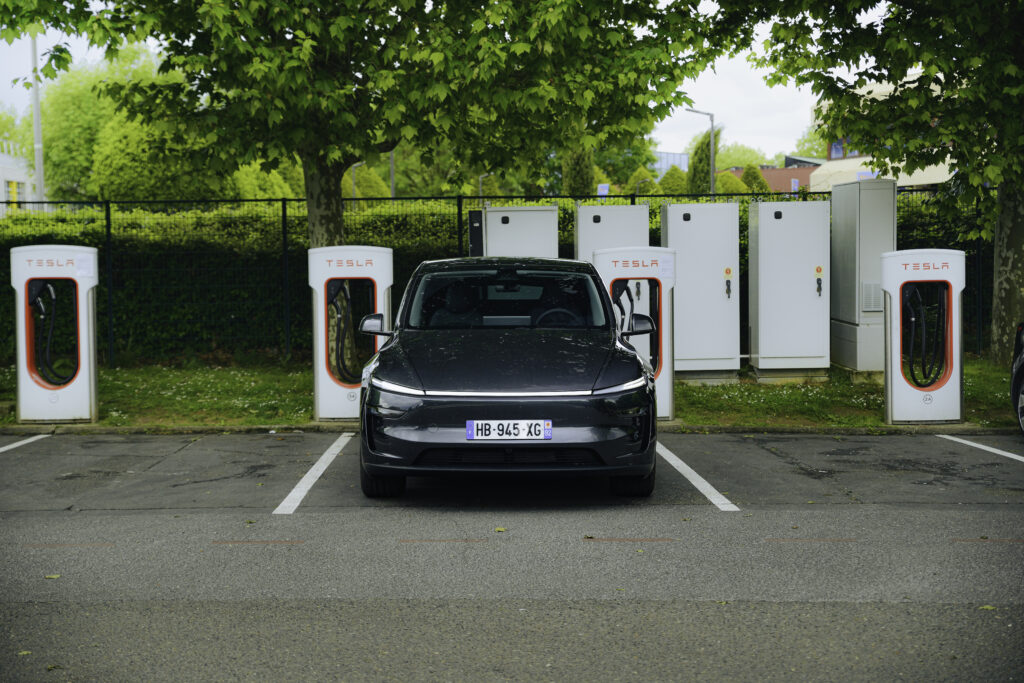
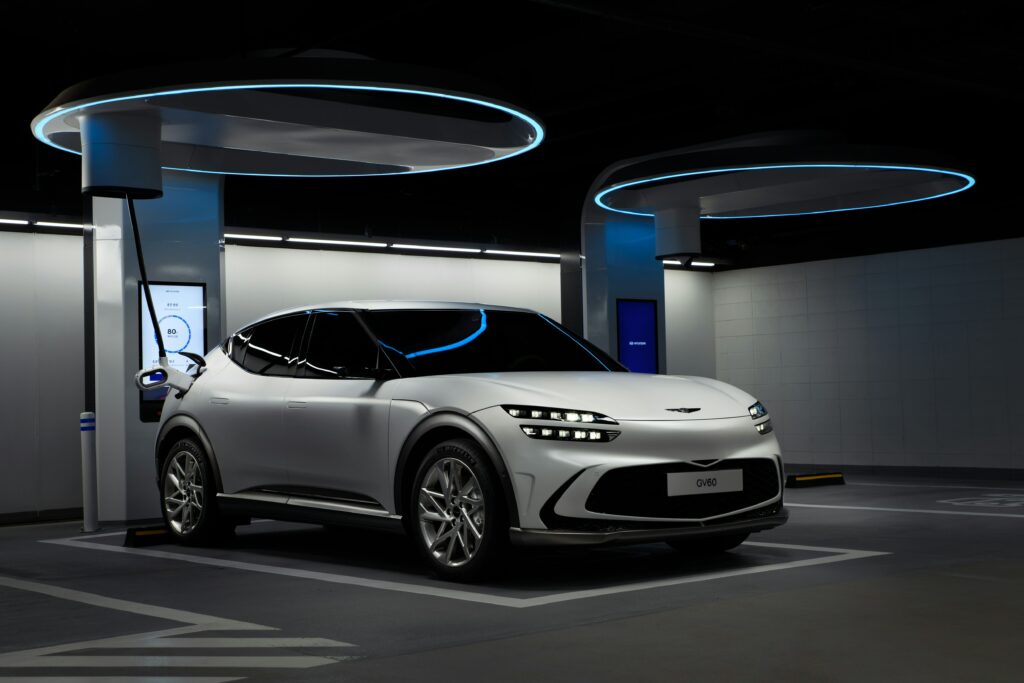
    The recharging station sector, essential to all electric mobility, is booming. Tesla is one of the market leaders with its Superchargers, but competition is intensifying. Atlante, IONITY, Electra and Fastned recently joined forces to form the Spark Alliance, with a clear objective: to become the largest ultra-fast charging network. This is a strong sign that the Old Continent is gaining ground in this field.

    Start-ups: innovation for tomorrow’s mobility

    Start-ups play a key role in innovation in electric mobility. In France, Gireve facilitates the interoperability of charging points, while Qovoltis offers intelligent charging solutions.

    Internationally, a number of projects aimed at improving the comfort of motorists are emerging. These include StoreDot, which is developing ultra-fast-charging batteries that can go from 0 to 80% in just 5 minutes, and Pulsetrain, a German start-up that designs integrated systems for electric vehicles that extend battery life by up to 80%.

    These start-ups are providing practical solutions to the technical and user challenges of electric mobility. From intelligent recharging to battery optimisation, they are already shaping the car of tomorrow.

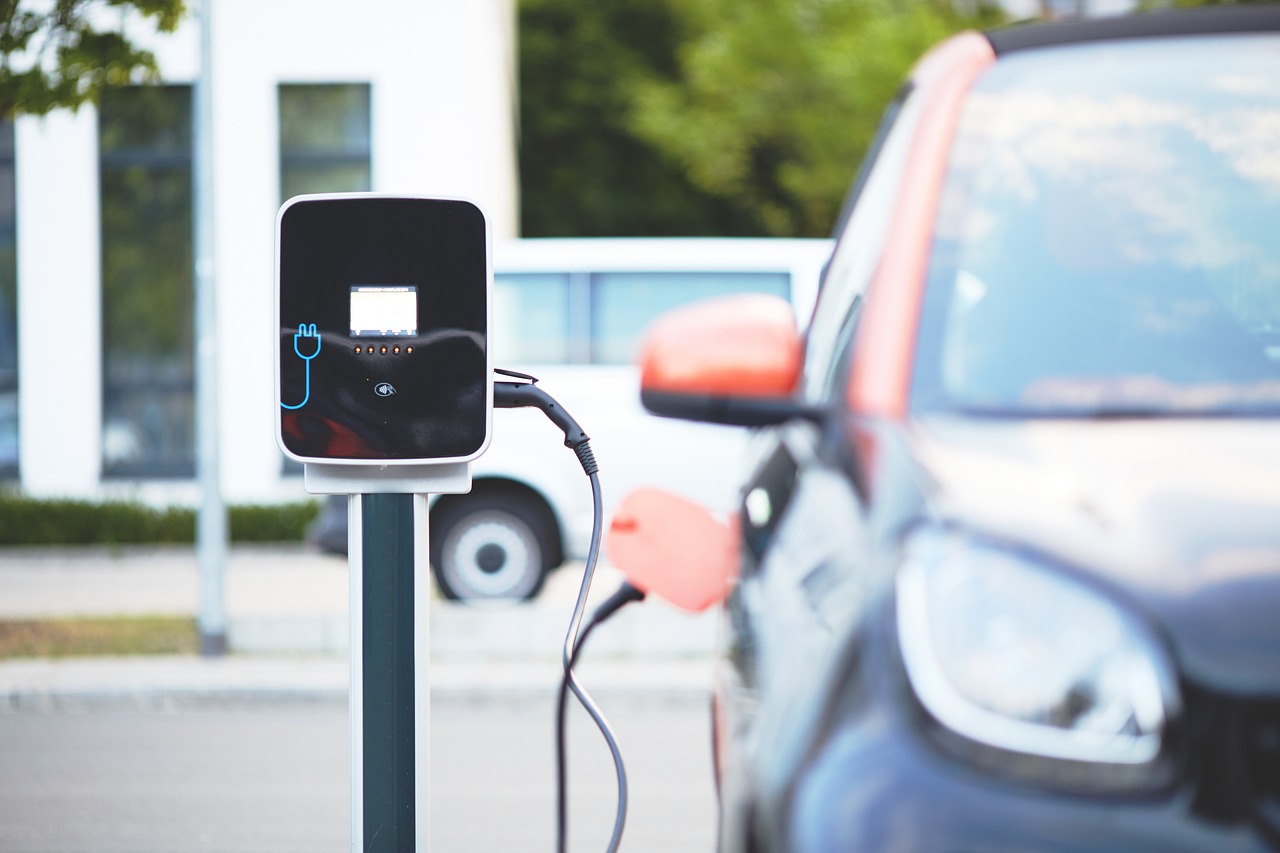
    Credit: This_is_Engineering
    Credit: This_is_Engineering

    In 2025, electromobility is no longer a gamble on the future; it’s a global race that’s well under way. Tesla retains its benchmark status, Chinese manufacturers dominate large-scale production, and Europe is playing the innovation card: industrial alliances and disruptive start-ups to stay in the race.

    Behind this transformation, an entire ecosystem is mobilising, with a common objective: to create more sustainable, intelligent and accessible mobility. And one thing is certain: the shift to electric vehicles has only just begun.

  • CATL offers an alternative to conventional lithium batteries

    CATL offers an alternative to conventional lithium batteries

    After unveiling their latest sodium-ion batteries in April 2025, CATL announced on 28 May 2025 a new advance on its “lithium-metal” batteries. These modifications to the composition of the cells could remove several obstacles to the adoption of electric cars, by improving both range and lifespan.

    Credit: L'Annuel de l'Automobile
    Credit: L’Annuel de l’Automobile


    To understand what such a breakthrough represents in terms of electric batteries, it is essential to know who CATL really is. The brands equipped with ‘Lithium’ batteries from this company’s factories are very large. They include Tesla, BMW, Mercedes-Benz, Volkswagen, the brands of the Stellantis group, Hyundai, Ford, Xpeng and even BYD. All these brands together account for around 57% of the global market for electric cars… CATL could therefore supply these new batteries to more than half the market!

    A revolution in global auto electrics?

    This new ‘lithium-metal’ battery is a radical step forward… Not only has range been doubled thanks to a record energy density of 500 Wh/kg (compared with 250/300 Wh/kg on average), but the battery’s longevity and lifespan have also been significantly improved compared with previous ‘lithium-metal’ batteries. In theory, this new prototype doubles the life of the cells, making it possible to achieve 483 recharge cycles before the battery’s capacity falls below 80%, compared with around 250 cycles previously. The biggest advantage is that the batteries will be able to store much more energy, without being heavier or bigger…

    Eventually, this type of battery could enable electric vehicles to achieve mileages comparable to, or even greater than, those of many internal combustion models. However, these “lithium-metal” batteries do offer superior energy density, but they are sometimes limited in time. They face problems of premature wear and tear, particularly with the formation of dendrites and the gradual degradation of the electrolyte. After hundreds of recharging cycles, these dendrites end up neutralising certain lithium cells, which ultimately tarnishes the battery’s performance.

    In practical terms, the battery gradually loses its autonomy, and it also becomes more difficult to deliver heavy acceleration or rapid charging without heating up or damaging the battery. Yes, that dead lithium always takes up space and cannot be used by the battery…

    There is much speculation as to when the first CATL “lithium-metal” battery-powered vehicles could be put on the road as early as 2026-2027, with a ramp-up to 2027-2028, according to the Australian technology news website Discovery Alert.

    How do you go from 100 to over 450 recharges?

    Until now, lithium-metal batteries have struggled to exceed 100 recharge cycles before losing performance. CATL has succeeded in pushing back this limit by modifying the composition of the electrolyte (the liquid that allows lithium ions to circulate in the battery). Normally, some of the lithium and salt (LiFSI) present in this liquid is lost with each recharge, which wears down the battery. By better stabilising this electrolyte and forming a thin, more even protective layer inside the battery, CATL has succeeded in limiting these losses and significantly extending the life of its lithium cells.

  • Electric charging: the French government tightens up its plan

    Electric charging: the French government tightens up its plan

    As the electric car gradually gains ground, the government is stepping up its support for the installation of charging points. The aim is to make life easier for motorists, remove disincentives to recharging, and ensure equitable access across the country.

    Credit: stux
    Credit: stux

    400,000 terminals in the pipeline: France moves up a gear

    With more than 168,000 public charging points in May 2025, France is aiming for 400,000 by 2030, including 50,000 fast charging points. From cities to rural areas, all locations are covered: car parks, motorways, supermarkets… so that every French person can recharge easily, wherever they live.

    This is in response to the strong growth in sales of electric vehicles and the forthcoming ban on combustion-powered cars, voted by the European Parliament for 2035.

    Home terminal: soon simpler, faster

    In conjunction with Enedis, the government is preparing a plan to simplify the installation of charging points in communal housing: the aim is to have less than six months between the agreement of the co-ownership and commissioning.

    To lighten the bill (between €1,500 and €2,500), the State provides financial assistance, in particular via the Advenir programme, to encourage private individuals to take the plunge.

    Smart tariffs and cars that give energy back

    To continue to attract new users, preferential tariffs should be introduced at times of peak renewable energy production (“solar hours”), as well as at night and at weekends.

    The government is also pushing ahead with the development of V2G, an innovative technology that allows cars to return electricity to the grid when consumption peaks. The government’s aim is to roll out V2G across Europe by 2026.

    Reliable terminals, available 24 hours a day: a promise of trust

    With a technical availability rate of 93%, the French network is already performing well. But to go even further, the government intends to strengthen its partnerships with operators to ensure a seamless service, with terminals that are maintained, repaired quickly and accessible 24 hours a day.

    A challenge to match climate ambitions

    Supporting the rise of the electric car is much more than a matter of comfort: it’s a necessity if we are to meet the climate targets set at European level. Because a clean car is worth nothing… without a charging point nearby.

  • The government wants to increase the ecological bonus and redirect its funding

    The government wants to increase the ecological bonus and redirect its funding

    The government plans to increase the amount of the ecological bonus for the purchase of electric vehicles, while introducing a new method of financing. This reform could come into force as early as 1 July 2025, according to a draft order to be presented to the Conseil supérieur de l’énergie on 17 June.

    credit: Pixabay – Andreas

    A bigger environmental bonus

    The amount of the ecological bonus, currently 4,000 euros for low-income households or those in “fuel poverty”, would be increased to 4,200 euros. For other households, the bonus would rise from €2,000 to €3,100, according to Les Echos. The aim of this increase is to make electric vehicles more accessible, at a time when the cost of these models remains a major obstacle for many households.

    The reform is also designed to speed up the decarbonisation of the car fleet, at a time when sales of electric vehicles are slowing down.

    One of the reasons for this reform is that the budget for the bonus for 2025 is almost fully committed. A new method of financing is therefore deemed necessary to guarantee the continuity of the scheme.

    Financing based on energy suppliers

    Rather than relying entirely on public finances for this support, the government would like to mobilise energy saving certificates (CEE). This mechanism obliges energy suppliers (such as EDF or TotalEnergies) to finance actions to reduce energy consumption in France.

    Until now, CEE has mainly been used to help people renovate their homes (by changing an old boiler or insulating a roof, for example). The government now wants the scheme to be used to fund support for electric cars, such as the bonus or social leasing.

    Each year, the CEE represents between 4 and 6 billion euros. The government wants to use some of this to help with the transition to electric cars, while continuing to support housing renovations.

    A decision on the ecological bonus expected in mid-June

    Not everyone is in favour of this strategic reorientation. Some players in the energy renovation sector fear that the funds allocated to work on housing, such as thermal insulation or the replacement of heating systems, will be reduced.

    The government, for its part, is defending a more balanced approach to the energy transition. It believes that reducing emissions in the transport sector should now be given the same priority as reducing emissions in the residential sector.

    The draft decree will be presented to the Conseil Supérieur de l’Energie on 17 June. If the text is adopted, the new eco-bonus rules will come into force on 1 July 2025.

  • Tesla Model Y 2025, still on top?

    Tesla Model Y 2025, still on top?

    ECO MOTORS NEWS had the opportunity to get hands-on with the Tesla Model Y 2025. This electric SUV has managed to sell more than 3.5 million units since its launch in 2020, and was even the best-selling vehicle of all energy sources in 2023 and 2024. In other words, the American manufacturer has high hopes for this restyling.

    Credit: Mathis Miroux

    We’ve arranged to meet at the Tesla Center in Saint-Ouen, where our ride of the day is waiting for us. Dressed all in black, our Tesla Model Y 2025 is ready to devour the kilometres of the route we’ve planned for it today: a bit of town, a bit of the ring road, the main road, the secondary road and the motorway, to put it through its paces in as many conditions as possible.

    First impressions

    At first glance, the change is obvious. The design of the Model Y has been extensively revised for this new version, with more than half the parts reworked to improve aerodynamics (and consequently range). The front lights, inspired by the Cybertruck, add a real touch of modernity, while the rear lights feature a wide, diffused strip of light to great effect. This restyling, which is much more contemporary, finally erases the slightly dated lines of the 2020 version.

    Credit: Mathis Miroux

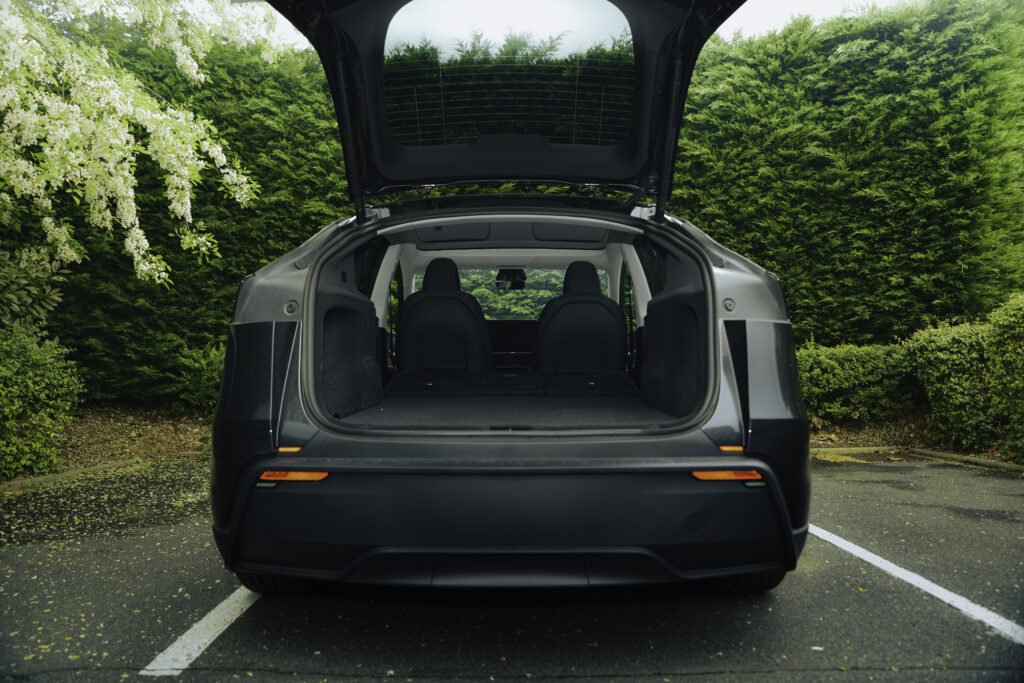
    At the rear, the boot still impresses with its capacity. The rear seats can be folded down at the touch of a button, and it is now possible to raise them in the same way. This is a real plus in terms of practicality. The panoramic roof, which remains true to form, is an undeniable asset in terms of light and the feeling of space on board.

    Credit: Mathis Miroux

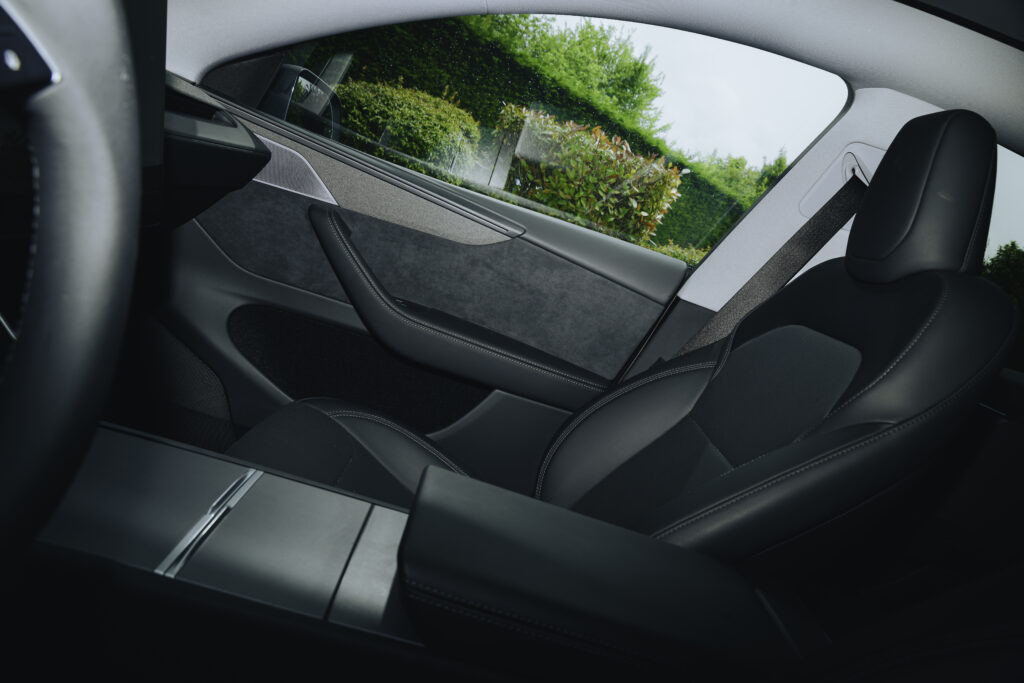
    Finally, and this was often a criticism of Tesla, the finish is impeccable: Alcantara, aluminium, ‘vegan’ leather – it’s quality, well-worked and up to the standard you’d expect from a top-of-the-range car.

    Credit: Mathis Miroux

    Behind the wheel of the Tesla Model Y 2025

    In terms of driving, Tesla has taken another step forward. Comfort has been improved, thanks in particular to much more advanced soundproofing. The chassis has adopted the changes made to that of the latest Model 3, making it a little more supple. Although it’s still a little too ‘grounded’ for lovers of automotive animality, it does the job well for an SUV that manages, despite its two tonnes, to offer some response in bends and a less heavy feel than other vehicles of the same size. The suspension has been reworked and, although in standard mode you can feel the cobbles a little at low speeds, you only need to accelerate a little to free yourself from the roughness of the road. It’s quite impressive! The steering is supple and precise, and very pleasant when you choose the ‘supple’ mode.

    Acceleration remains true to Tesla’s reputation: crisp, immediate, with no lag time. Braking is excellent, particularly with the ‘one pedal’ mode, which allows you to slow down effectively simply by releasing the accelerator. The only downside of our experience is a turning circle of over 12 metres, combined with a width of 2 metres, which means you have to anticipate manoeuvres, especially in dense urban areas.

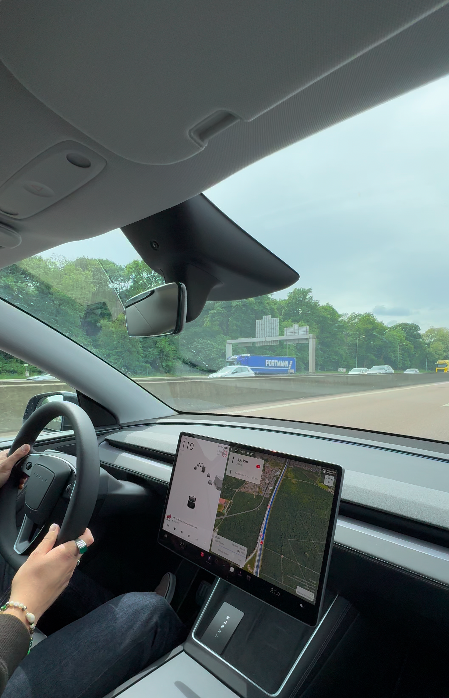
    But on all other types of road – crowded ring roads, potholed highways or open motorways – the 2025 Model Y performs brilliantly. The range is in line with what’s displayed on the screen, and you even recover a little energy by braking. The journey planner, as practical as ever, anticipates any necessary stops at superchargers, which is a great relief for the driver.

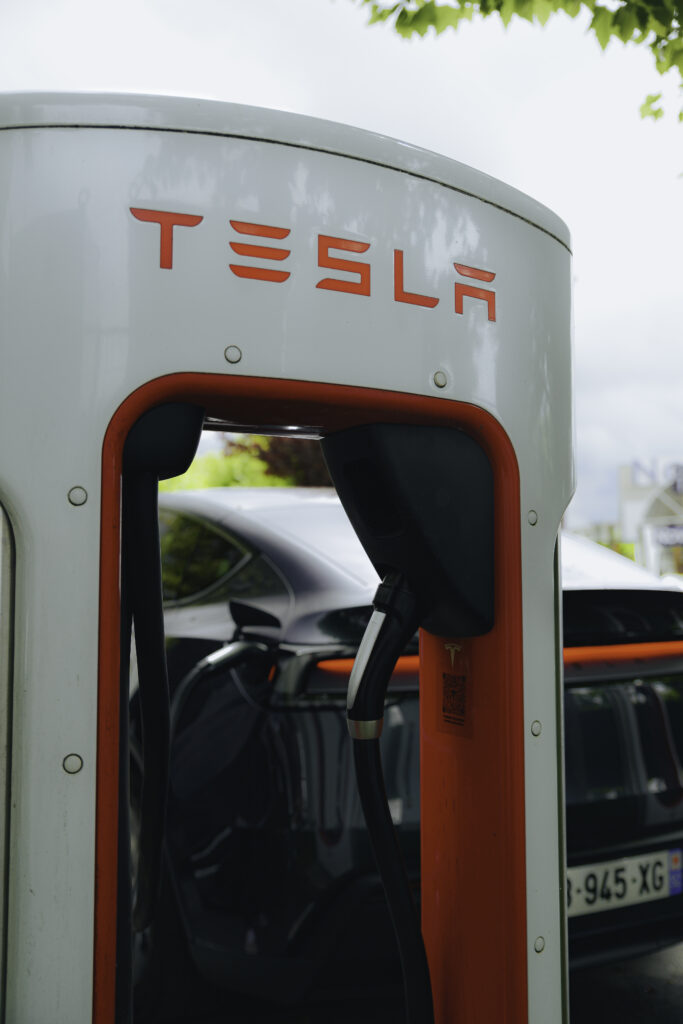
    Anecdote: during our stop at the Supercharger, many other Tesla drivers came up to us to ask questions about this new model, confirming the ‘wow’ effect felt when we picked up the car.

    Credit: Mathis Miroux

    Finally, still on the subject of comfort, the seats are now not only heated, but also ventilated, a real plus, and there are still two screens on board, at the front and rear, to manage all the vehicle’s settings.

    Credit: Mathis Miroux

    Conclusion

    The experience was so convincing that it was hard to hand back the keys – or rather the card – after this test drive. Comfort, versatility, reliable range, responsive driving and even the price of recharging (€16 to go from 40% to 98%) make the Tesla Model Y 2025 a truly complete vehicle. The restyling is a real success, bringing this SUV up to date with the times.

    In short, it’s a banger. Tesla is striking hard to face up to increasingly serious competition from Europe, but especially from China. The Model Y 2025, unquestionably one of the best value-for-money cars on the market, has all the weapons it needs to continue its domination and, why not, top the list of the best-selling cars in the world for the third year running. The arrival of rear-wheel drive versions at even lower prices (from €44,990) could well help it achieve this objective.

    Credit: Mathis Miroux

    For our part, we can already see ourselves inflating Tesla’s signature mattress (yes, yes) with the cigarette lighter built into the boot, and falling asleep peacefully in the huge trunk under the stars thanks to the panoramic roof, at a perfectly stabilised temperature, thanks to… the Camping mode! There’s no end to the options available on this new Model Y…

    ECO MOTORS NEWS notes on the Tesla Model Y 2025

    • Tried and tested model: Model Y Grande Autonomie All-Wheel Drive
    • Range: 586 km (WLTP) with 19-inch wheels / 568 km (WLTP) with 20-inch wheels
    • Fuel consumption: 14.8 kWh/100 km for 19 inch / 15.3 kWh/100 km for 20 inch
    • 0 to 100 km/ h: 4.8 s
    • Maximum speed: 201 km/h
    • Maximum supercharging power: 250 kW
    • Boot volume: 2138 litres
    • Price: €52,990
  • What consumers say

    What consumers say

    ECO MOTORS NEWS interviewed 5 electric car owners in order to gain a better and more concrete understanding of what motivates drivers to go electric and, above all… to stick with it! Although their answers sometimes differed, they all agreed that it took them no more than a few days to adapt to driving electric. We also asked each of them how likely they were to go back to combustion engines one day. So, do they regret their choice?

    Charles. Content creator (Weelyke) / Hyundai Ioniq 6 / Electric for over three years

    The thing that made me switch to electric was clearly the low running costs. Since then, I’ve come to appreciate the comfort, the quiet ride and the maximum torque that’s immediately available. The fact that I don’t have to go to service stations any more, with the recurring savings that that brings, is great too! On the other hand, it took me a while to learn about the specific ecosystem of electric mobility, to understand the different charging powers and to plan my stops accordingly.
    Probability of going back to combustion: 0%.

    Jordan. Chartered accountant / Volkswagen ID.7 / Electric for less than a year

    I received an attractive offer on an electric model and decided to take the plunge. There’s no vibration, it’s quiet, it picks up quickly, and it’s ready to go every morning after recharging at home… To be honest, I didn’t notice any disadvantages compared with my old internal combustion engine. And the transition has been easier than I imagined!
    Probability of returning to combustion: 0%.

    Quentin. Delivery driver / MG5 / Electric for over three years

    For me, the catalyst was the prospect of “driving for free thanks to the sun”. In fact, combining domestic photovoltaic panels with an electric car means converting solar energy into kilometres without the need for a checkout. On a daily basis, it’s the torque available at any speed without having to downshift, and therefore without jerking, that I appreciate most. The only thing I don’t like about the internal combustion engine? The smell of diesel! (laughs)
    Probability of returning to combustion: 0%.

    Sandrine. School teacher / MG4 / Electric for over a year

    I wanted to replace my economical city car, and compared with the models available in this category, the electric version offered the lowest running costs. Since then, I’ve noticed – as many electric car enthusiasts do – the savings per kilometre, both on the energy bill and on maintenance, which is also cheaper than on my small internal combustion car. The fact remains that with a real range of around 300 km, you still have to deal with multiple recharges on long journeys… I’m willing to make a compromise, because the financial aspect makes up for it, but, in my opinion, the internal combustion engine still has the advantage on very long journeys for the time being.
    Probability of going back to combustion: 0%.

    Valentin. Taxi driver and content creator (TaxiEnVE) / XPENG G6 / Electric for over a year now

    As a taxi driver, the prospect of halving, or even two and a half times, the cost of running my vehicle was very appealing. Since I switched to electric vehicles, I’ve been able to confirm these savings on a daily basis. To be honest, I can see nothing but benefits in this transition. Financially, in terms of driving comfort and reliability, I have no regrets!
    Probability of going back to combustion: 0%.

  • “Cars are all about use” Interview with Jamy Gourmaud

    “Cars are all about use” Interview with Jamy Gourmaud

    He left his mark on an entire generation with C’est pas sorcier, and today continues to decipher the world around us with the same passion. From the Hotel M Social in Paris, Jamy Gourmaud spoke to ECO MOTORS NEWS about his vision of the electric car, the preconceived ideas that surround it, and the challenges of this transition.

    Image
    Credit: Philippe Matsas

    Who are you, Jamy Gourmaud?

    Jamy Gourmaud: I’m a journalist, more specifically
    . I like to say that I’m a go-between for those who know and those who want to know. My passion for knowledge began very early, when I was a teenager, with the desire to do this job. I was lucky enough to realise this childhood dream. Science came a little later, after my journalism studies and a few years spent covering social issues.
    C’est pas sorcier marked the beginning of this scientific adventure.

    What does the electric car mean to you, and how did you feel when you tested it?

    Jamy Gourmaud: Peace and quiet. That’s what comes to mind first, especially in town. Critics will say that it makes as much noise as any other car, but the noise comes mainly from the contact of the tyres with the road. I’ve had the opportunity to test several of them, first in C’est pas sorcier nearly 30 years ago, and more recently in Le Monde de Jamy. I like its flexibility, the fact that you don’t have to shift gears. It may not be what thrills driving enthusiasts, but it suits me just fine.

    Do you think the electric car is still poorly understood?

    Jamy Gourmaud: I think there are a lot of preconceived ideas, and fears that are unfounded. The first obstacle is often the question of range. You hear people say, “I can’t drive 1,000 km”, or “I’ll have to stop after 300 km and wait half an hour to recharge”. These concerns often stem from a lack of understanding of actual usage.

    What should be done to overcome this fear of autonomy?

    JG: First of all, you have to ask yourself the question: “How do I use my car? Mobility is all about usage. If I make mainly short journeys – as is the case for the majority of daily journeys – an electric car is more than sufficient. On average, a French driver only makes one or two journeys of more than 400 km a year, usually on holiday.

    What about recharge time?

    JG: You have to bear in mind that the batteries will be empty after about two hours’ driving. After two hours of driving, it’s advisable to stop and refuel. This is what road safety advises motorists to do: take a break every two hours. And if you count the time it takes to go to the toilet, have a coffee or a cigarette, the twenty minutes it takes to fill up the tank are soon gone.

    So education is still necessary?

    JG: Yes, you have to explain it, you have to get people to try it out. Before I tried an electric car, I was a bit sceptical myself. But once you’ve tested an electric car, you adopt it. People should be allowed to test drive one for a day or two.

    You recently published a video on the subject. What was your objective?

    JG: I wanted to talk about the concerns about range, but also the lack of understanding that exists around the distances claimed by manufacturers. Some people complain: “But on the motorway, I can’t do more than 250 km, whereas the manufacturer claims a range of 450 km”. The simple fact is that this range is calculated as an average of the distance covered in town, on the road and on the motorway.

    And what about the carbon footprint of electric vehicles?

    JG : There’s a common misconception that electric cars pollute as much as internal combustion vehicles, if not more. It’s true that when they leave the factory, their manufacture generates more CO2. But the difference is that this carbon debt ends there. An internal combustion vehicle continues to emit throughout its life cycle. At the end of its life, an electric car can produce between two and five times less CO2 than a combustion engine car.

    Ready to take the plunge yourself?

    JG: As it happens, it’s underway. First of all, I want to get to the end of the life cycle of my current vehicle. It’s also a question of budget. But yes, I’m getting there.

  • True or false? 10 common misconceptions about electric cars!

    True or false? 10 common misconceptions about electric cars!

    While electric mobility is becoming increasingly popular, preconceived ideas about it are multiplying. That’s why ECO MOTORS NEWS has sifted through 10 persistent clichés about electric cars to sort out the real from the fake…

    Credit: Jeffrey Correa

    “Electric cars pollute more than combustion cars because of their batteries”.

    False. Provided, of course, that you take into account the entire life of the electric car, from manufacture to scrapping, in your calculations. In fact, the CO₂ emissions that result from its manufacture are higher than those recorded during the manufacture of a combustion-powered car. It’s simple, most sources agree on one figure: during the manufacture of a battery, one kWh = 150 to 200 kg of CO₂ into the atmosphere. But, in use, the electric car quickly repays this debt by emitting, according to the Agency for Ecological Transition (ADEME), up to 20 times less CO₂ per kilometre. But it’s at the end of the dance that we pay the musicians. So what about a complete life cycle? Still according to ADEME, an electric car will have emitted 75g of CO₂/km compared with 190g CO₂/km for a combustion engine, i.e. 2.5 times less!

    “An electric car has zero emissions

    False: the media, manufacturers and even politicians generally use this shortcut to make a point. But as we saw earlier, the manufacture of the battery in particular, but also the origin of the electricity used to recharge an electric car, (slightly) increases its emissions.

    Credit: DR

    “Electric car batteries don’t last more than 3 years”.

    False. This persistent cliché stems from a lack of hindsight when it comes to the longevity of batteries, as the market was still in its infancy and for a long time there was insufficient data to establish an average. Today, it’s possible to say that a battery lasts between 8 and 12 years, and can be driven well over 100,000 kilometres. Batteries can then be reused in other, less energy-intensive applications, or simply recycled.

    “Electric car batteries cannot be recycled”.

    False: lithium-ion batteries, the most widely used today, can be recycled, and up to 95% of the materials used can be recovered! Admittedly, the industry is still a little ‘green’, but it is gaining in maturity and recycling plants have been or will soon be built to keep pace with the increasing volume of electric cars sold, whose batteries will one day have to be recycled.

    “Electric cars are cheaper to run”.

    True. Electric cars are generally more economical to run than their internal combustion counterparts. Depending on the model – and the driver’s driving style! – The TCO (Total Cost of Ownership) of an electric car is much lower than that of an equivalent internal combustion engine, and the monthly running cost can be up to 50% lower. The main reason is, of course, the savings on fuel, but maintenance, which is less frequent and involves fewer parts that are expensive to manufacture, is also less expensive.

    Credit: Hyundai Motor Group

    “It takes too long to recharge an electric car”.

    True and false: recharging time depends on the power of the charging point and the capacity of the battery. Recharging at home can take up to seven hours, but on the motorway, fast-charging stations usually charge up to 80% in 30 minutes, or even 20 minutes depending on the supplier. That’s still longer than filling up with petrol, especially if you add the queues, but the constant increase in the number of charging points and the technological innovations under way will soon make it possible to shorten the length of stops even further.

    “Electric cars catch fire more often than internal combustion cars”.

    False. This cliché is tenacious. However, in early 2024, the US National Transportation Safety Board carried out a study that put an end to the debate. For every 100,000 100% electric cars sold, there were 25 fires. On the internal combustion side, 1,530 petrol vehicles caught fire for every 100,000 sold! It’s true, however, that putting out an electric car fire requires a lot more water, and that hybrids are more prone to fires than their electric and internal combustion counterparts. Perhaps that’s where the confusion comes from…

    “Electric cars are too expensive

    True, for the moment! The average purchase price of an electric car is higher than that of a combustion engine. But subsidies and the savings you make when you use the car will help to reduce the bill a little over time. And it’s a well-known fact that the more a market is democratised, the more prices fall. If we add to that the booming second-hand market, this statement will soon be nothing more than an old cliché…

    Credit: Martin Katler

    “It is impossible to make an electric car profitable”.

    False. On average, in France, an electric car costs its owner between €150 and €200 a month in fuel, maintenance and insurance – the rent and purchase price are included in the TCO – compared with €400 to €800 for a combustion engine. If we take the high average for electric cars and the low average for internal combustion, we still get a difference of €200 per month. For an electric car that costs €10,000 more than its internal combustion equivalent, it will take less than five years to find its way around.

    “The actual range of electric cars is much less than advertised”.

    True, because of the WLTP (Worldwide Harmonized Light Vehicles Test Procedure) protocol used to calculate the range announced on the technical data sheet. This protocol, like most standardised protocols, is not yet capable of recreating real-life driving conditions. As a result, it has been found that actual range can be between 10% and 30% less than the advertised range. Variations that depend on the owner’s driving style, the type of roads travelled, the climate, whether or not the air conditioning and heating are used – in short, just like on a combustion engine!

  • Electric cars: everything you need to know about home recharging

    Electric cars: everything you need to know about home recharging

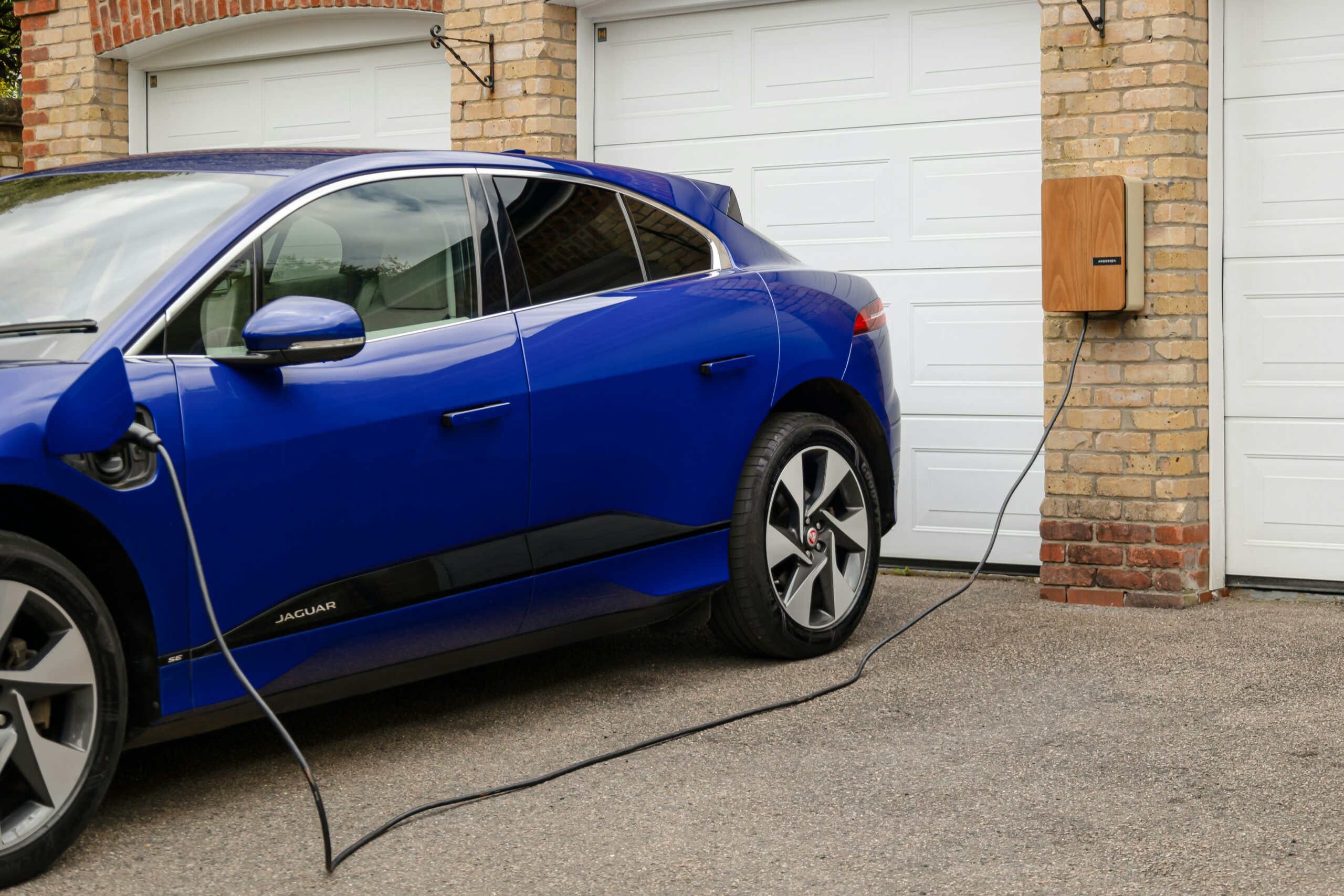
    Practical and economical, home recharging is the preferred solution for electric car owners, nearly 90% of whom have one. Whether conventional or wall-mounted, in the garage or the car park of a condominium, it’s always advantageous and sometimes lucrative. Here’s everything you need to know about home charging.

    When it comes to recharging your electric car at home, the most obvious solution is the domestic socket. With a power of 2.3 kW, it’s the perfect bad idea! Not only do you only get about ten kilometres per hour out of the socket, but you also lose energy – up to 30% according to Engie. The owner then has the option of a reinforced socket. After a specific installation, generally in the form of a box, the power is increased to 3.7 kW and it is possible to recover up to 20 kilometres per hour of charging while limiting energy losses. This may be enough for everyday use, since a night’s charge recovers just over 100 kilometres of range, and slow charging is less aggressive on the battery. But the most recommended solution is the wall-mounted charging point. Even though they sometimes require some work, wall-mounted charging points have the advantage of offering ‘à la carte’ power, up to 22 kW three-phase, so you can recover up to 40 km of range per hour while optimising charging and preserving the battery by adjusting and programming your charging point according to your needs. There are stand-mounted alternatives if it is not possible to install a wall-mounted charging point. The main disadvantage of home charging points is the cost, but there are solutions for that too…

    Credit: Thomas Reaubourg


    Financial aid to facilitate the installation of charging points

    As part of France’s policies to speed up the transition to electromobility, there are two ways of reducing the bill for those who install a home charging point. On the one hand, the famous tax credit for energy transition (CITE) allows you to benefit from aid of up to €300 for the purchase and installation of a charging point. The only condition? Use an RGE (Reconnu Garant de l’Environnement) certified company. There is also a grant called ADVENIR, which “reimburses” up to 50% of the cost of the operation. Capped at €600, it is reserved for private individuals living in collective housing and companies wishing to recharge their fleets. It also has the added advantage of being paid directly to the installer, saving electric car owners a lot of paperwork. At local level, some local authorities offer additional incentives, so it’s worth finding out what the policy is in your département or region before installing your charging point.

    The impact on bills

    Installing a home charging point for your electric car inevitably leads to an increase in electricity consumption. ChargeGuru carried out a study and found that the average increase was 21%. Depending on the supplier, this translates into an increase of €30 to €40 on the monthly bill, or €500 a year. That may sound scary when you put it like that, but the savings compared with combustion engines are substantial. In fact, the average fuel budget in Europe is around €100 per month, i.e. 2 to 3 times more than for electric cars.

    Playing the eco-responsibility game

    It’s not just the economic aspect that comes into play when consumers decide to swap their petrol-powered car for an electric one. The environmental aspect also comes into play, and home charging points, powered mainly by decarbonised energy (in France at any rate), tick this box. But you can go even greener by opting for a guaranteed 100% renewable energy supplier, like Ilek, Enercoop or Ekwateur, among others. And to really drive the point home, you can choose a programmable charging point that will allow you to plug in only during off-peak hours, thus relieving congestion on the grid and saving money at the same time… a win-win situation!

    Credit: Thomas Reaubourg


    The right to take

    One of the biggest problems with the electrification of the French car fleet is the lack of charging points in communal housing. And yet, in France, every resident in a condominium has what is known as the right to a plug. In other words, they can have a charging point installed in their parking space. To do so, all you have to do is inform the syndic, who can only object if the necessary work jeopardises the integrity of the building. There are even organisations like Zeplug that can take care of the administrative and billing procedures. When it comes to installing shared charging points, a vote at a general meeting and the pooling of costs can simplify the installation even further, as well as making it easier for more residents to switch to electric vehicles.

    Bidirectional charging, a solution for the future?

    Finally, we look a little further into the (near) future and conclude with a technology that is certain to become increasingly widespread, and which has already made its appearance on the latest Renault 5 electric car: Vehicle-to-Grid (V2G) or ‘two-way charging’ technology. The principle is relatively simple: at any given time of day, more than 9 out of every 10 cars on the road are parked. In order to take advantage of this immobility, bidirectional charging enables the vehicles being charged to “return” energy to the grid during peak hours, after having recovered some during off-peak hours. This saves even more energy and money, while helping to stabilise the grid.

  • Our advice before buying a used electric car

    Our advice before buying a used electric car

    The market for used electric cars is growing every year. And while buying a used EV isn’t radically different from buying a combustion-powered car, there are a number of features specific to electric cars that require special attention before you buy.

    Electric cars were marginal for a long time, but they are now an integral part of the French automotive landscape, and this trend is set to increase in the years ahead, until the sale of new combustion-powered vehicles is completely banned in 2035. This boom is having a direct impact on the second-hand market, which, although still a niche market, continues to grow year on year. In France, for example, the volume of transactions involving used electric cars rose by 54% between 2024 and 2025. So it’s important to be aware of best practice and to adopt the right reflexes before taking the plunge and benefiting from a good deal that’s as environmentally friendly as it is economical.

    Checking the condition of the battery in a used electric car

    The battery is the heart of an electric car, far more important than the motor. A (very) expensive component, it is necessary to know exactly how healthy it is, or State of Health (SoH), generally expressed as a percentage. If the SoH is above 85%, the range is still optimal. Below 75%, you should move on. To obtain this information, you can use a dedicated manufacturer’s application, or even a tool that connects to the OBD port via Bluetooth.

    Credit: Priscilla Du Preez


    Check the ownership of the battery

    Some models, generally the older ones, have been sold with a leased battery. This implies a monthly subscription fee, and can somewhat distort the price offered by the seller. If the seller doesn’t provide this information, it’s a question that absolutely must be asked, because if the battery isn’t included in the sale, it’s a good lever for negotiating the price downwards.

    Request a service history for your used electric car

    It’s a classic when buying a second-hand car, regardless of the energy it consumes. Just because an electric car requires less maintenance than a combustion-powered vehicle doesn’t mean it doesn’t need it. It’s essential to ask for invoices, check for software updates, and pay particular attention to the parts that suffer most on an electric car: tyres and brakes.

    Inspect accessories

    When it comes time to inspect the vehicle, it’s important to check that the charging socket is in good condition, that the cables supplied are compatible and in good condition, and that the on-board electronic equipment – GPS, touch screen, cameras, driver assistance – and lighting are working properly.

    Credit: Waldemar


    Running away from the first generation of electric cars

    As is the case with many electrical and electronic products, the first generations to leave the factory are generally quickly overtaken by the following models, before the situation evens out after a few years and the gap narrows. So a model that came out 10 years ago, with its short-lived batteries, basic equipment and sometimes even incompatibility with modern recharging points, will be much less attractive than the same model from 5 or 6 years ago, fitted with lithium-ion batteries, for example.

    Try before you buy

    It’s obvious: a test drive is essential before you take out the chequebook. It allows us to assess comfort, silence (and therefore any potentially suspicious noises), power under acceleration, and above all the effectiveness of regenerative braking, which is characteristic of electric cars. Another special feature is the electronics, in particular the control screen, which is checked for fluidity.