The electrification of the automotive industry has been held back on several occasions over the past 18 months. Tariffs imposed by Europe and the United States have led to a slowdown in demand for electric vehicles in these markets. The price war in China continues to affect the profitability of Chinese manufacturers. Today, changes to regulations within the European Union confirm a reality that no one dared to envisage: electrification is taking longer and is more complex than anticipated. What would be the characteristics of the best electric vehicle at present?
Despite the challenges facing electric cars, last year was the busiest yet in terms of new models launched. This year looks set to be even more dynamic. According to my daily tracking of new passenger cars unveiled worldwide, 97 new all-electric models were launched in 2025. This represents 56% of all passenger cars and light commercial vehicles on display. More than half of the new vehicles unveiled in 2025 were electric. So far this year, up to mid-May, 64 new models have been unveiled, 42 of which are available in a 100% electric version.
My data shows that more than half of the fully electric cars unveiled between January and May 2026 (excluding plug-in hybrids, hybrids and range-extended vehicles) were launched by Chinese manufacturers.
Lots of interesting models
Unlike a few years ago, when Tesla and a few Chinese models topped the rankings of the most interesting electric cars, the situation is very different today.
The rapid catch-up by Western car manufacturers is helping to expand the range of options available. I have selected 20 finalists from the 97 new electric cars unveiled between January 2025 and May 2026: Aito M6, Audi E7X, BMW iX3, Buick Electra L7, BYD Han L, Fang Cheng Bao Tai 3, Firefly, Kia EV2, Leapmotor A10, Lexus ES, Maextro S800, Mazda EZ-60, Nissan N7, Onvo L90, Polestar 5, Renault Twingo, Xiaomi YU7, Toyota Highlander, Volkswagen ID.Polo and Xpeng GX.
Although the selection is largely objective and is not based on any specific test, I have tried to take the following three factors into account:
1. Body type: the likely impact of the new car on global markets due to its body type.
2. Availability: the presence and availability of the new car on international markets worldwide.
3. Competitiveness: the right balance between price and technical specifications.
Based on these criteria, I believe the electric car of the moment is the Leapmotor A10. It is a highly competitive small SUV that has the potential to revolutionise the market, both in developed and emerging countries. It is neither too big nor too small. In terms of design, it is modern and contemporary, with a spacious, high-quality interior. Its price is very attractive without being a bargain, which allows it to compete with the traditional leaders in the B and C SUV segments.
Leapmotor is growing rapidly
Leapmotor is set to become one of the fastest-growing Chinese car manufacturers. The brand has cleverly positioned itself as an affordable alternative amongst the increasingly popular Chinese high-tech car brands. This shrewd move allows the brand to present itself as a technologically advanced manufacturer offering competitive prices, unlike other high-tech Chinese manufacturers such as Nio, Xpeng, Li Auto or Xiaomi.
Stellantis’s stake in Leapmotor could also prove to be a key factor in its success. Although the European-American manufacturer is going through a difficult period, it has a strong presence in Europe and Latin America, two markets where Chinese brands are keen to expand their business. The Stellantis dealer network has the potential to significantly boost the presence and sales of Leapmotor vehicles, including the A10.
The question seems somewhat ill-timed at a time when sales of petrol and diesel cars are falling sharply and fuel prices are at an all-time high: are electric models really the future of mobility, and will they remain so in the long term? The answer is more nuanced than the evidence might suggest
Growing popularity
It’s anyone’s guess. I recently took part, as a speaker, in an event focusing on the state of the electric car and its growing popularity. One of the questions from the audience concerned the next five years and the role of each type of powertrain. My answer: each will have its place.
We have been hearing about the transition to electric vehicles for the past ten years or so. The Dieselgate scandal in 2015 only served to accelerate the need to drive ‘clean’ cars. Regulatory measures were introduced, and the energy transition quickly became a hot topic in the automotive industry.
Whilst cars with internal combustion engines seemed less committed to reducing emissions, many people turned to electric cars. The reality today is very different. Fortunately, they won’t be the only ones.
However, only one in three cars worldwide is electric
In May 2026, there were around 1,800 different car models available worldwide. Fully electric models accounted for a third of these. In short, of all the new cars available today, a third are fitted with a 100% electric powertrain. This is a definite advantage in terms of choice: consumers now have more options.
Most of these cars arrived following years of product planning that focused attention and resources on the transition.
Until 2024, it was virtually essential for car manufacturers to allocate more funding to the development of electric cars than to any other project. As China demonstrated, the transition was possible because consumers wanted these cars.
A transition that has run out of steam
But this rapid transition has lost momentum, and it soon became clear that it was taking longer than expected. That is why I believe the future of the electric car in Europe is closely linked to that of other technologies. The industry has realised that it cannot rely on a single powertrain to ensure its long-term viability.
Hybrid (HEV), plug-in hybrid (PHEV), mild hybrid (MHEV), petrol, fully electric (EV), extended-range electric (EREV) and even hydrogen-powered cars are set to become an integral part of the automotive landscape over the next five years. The automotive industry recognises that it is too risky to rely on a single technology.
An ecosystem in need of strengthening
That is why, even though electric cars are expected to become more affordable (cheaper
(expensive) in the coming years, it will not be the only option available to European consumers. The ecosystem surrounding battery electric vehicles (BEVs) will need more time to develop fully, whilst European car manufacturers will need more time to bring truly affordable electric cars to market.
The future looks bright for electric cars in Europe. But contrary to what was thought a few years ago, they will not be the only option, and other technologies will continue to play their part. This is good news for consumers.
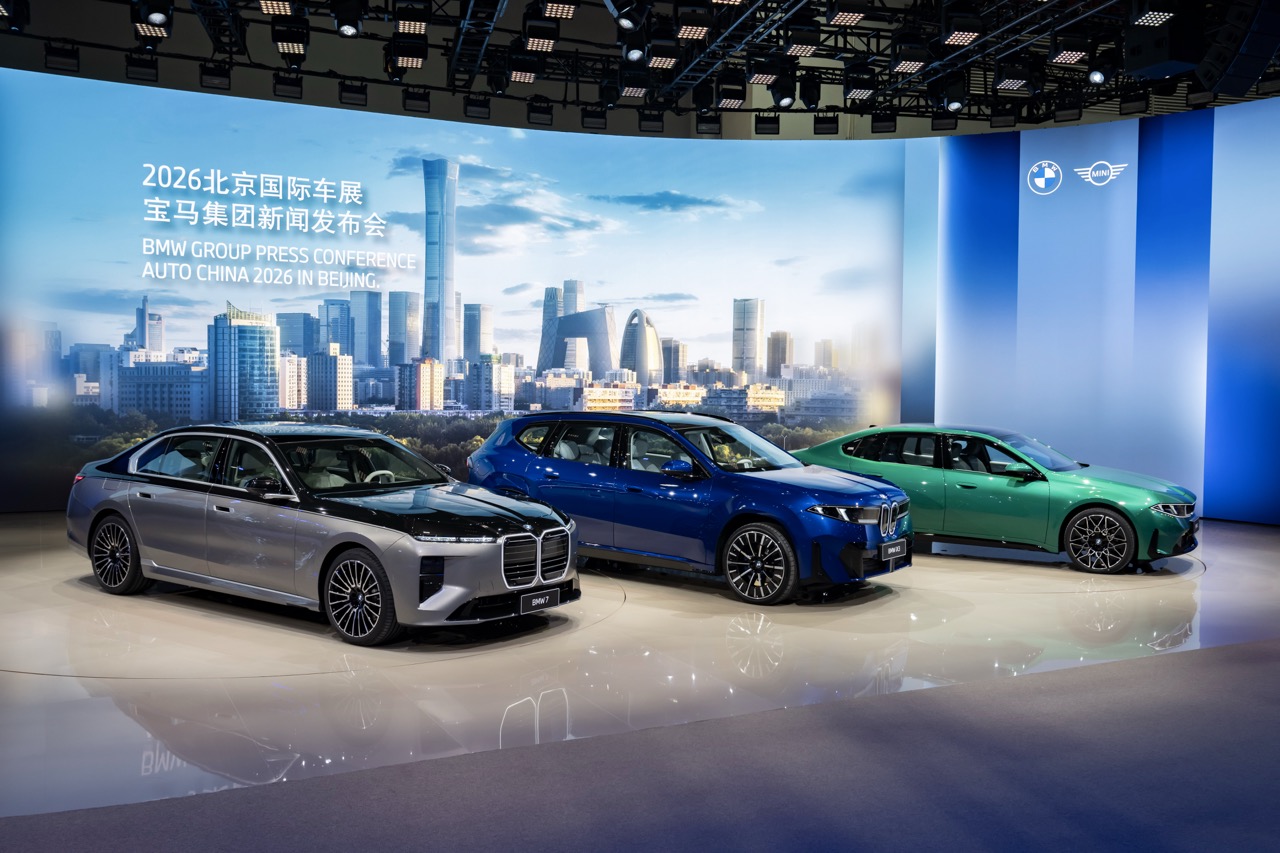
I had the opportunity to visit the 2026 Beijing Motor Show. It was my fourth trip to China in two years, a period during which the scale of its industry has been surpassed by the speed of its development. The show, held in April, once again demonstrated the strength of the Chinese, proving that their strength lies not only in their impressive production and sales volumes, but also in their ability to innovate and anticipate trends.
That’s what impressed me most about this exhibition. Of course, the figures
were simply incredible: across 380,000 square metres of exhibition space and 1.3
Spanning a kilometre between the south and north sections of the conference centre, 1,451 vehicles were on display, most of them from 82 different brands, including 60 Chinese and 22 foreign ones. Notable absentees included Kia, Chevrolet and Land Rover.
The most striking thing was the speed at which everything is changing. From the venue itself — whose exhibition space has doubled in just two years — to the number of new brands and models, not to mention the technological advances and mobility solutions on display, the automotive industry has undergone major transformations throughout its history, such as the meteoric rise of Japanese manufacturers in the 1970s and 1980s, or the rapid growth of Korean brands in the 1990s and 2000s. But never before has the automotive industry experienced changes as rapid as those currently being experienced by Chinese manufacturers. And this is perhaps the greatest challenge now facing traditional car manufacturers.
The motor show provided an opportunity to unveil 38 new production vehicles. Eight of these were presented by foreign manufacturers (five by the Volkswagen Group). With the exception of the
Porsche Cayenne Coupé: all these models have been designed by and for the Chinese market.
In other words, the epicentre of the global automotive industry and its latest innovations is no longer Europe, the United States or Japan, but China. What happened in Beijing reflects a trend that has been emerging over the past few months.
Based on my monitoring of new models, between January and May this year, Chinese manufacturers launched an average of two new models per week. That is twice as many as European brands during the same period.
The West, Japan and Korea have never experienced such a pace. Consequently, they are not accustomed to such rapid product development cycles.
Western arrogance is a thing of the past.
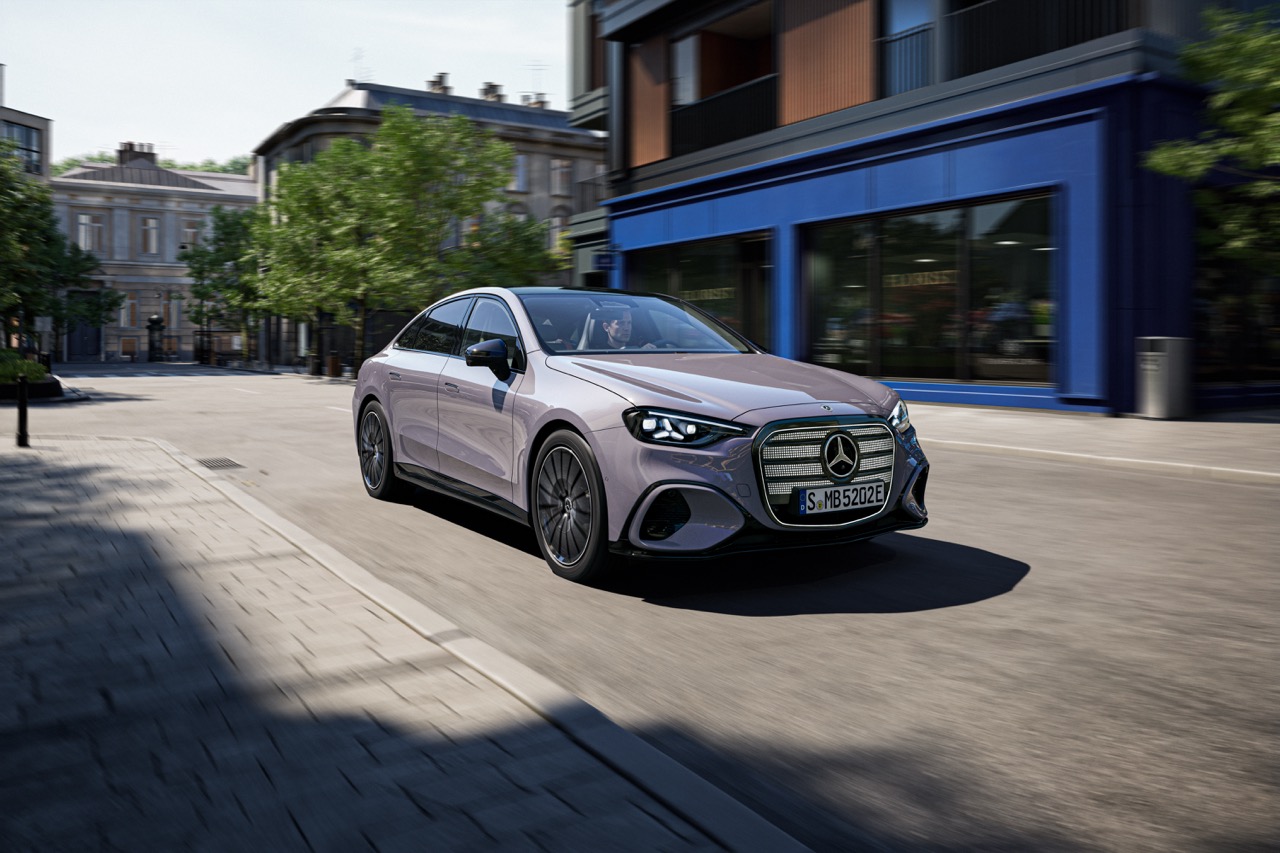
The traditional car manufacturers, once the undisputed leaders of the industry, are now mere spectators. This was the atmosphere at the stands of brands such as Volkswagen, BMW, Mercedes, Toyota, Hyundai, Nissan, Audi, Ford, Honda, Mazda and Buick.
Media and public attention is now focused on the statements and presentations made by Chinese figures.
And when foreign brands launch a new model, it is often a product steeped in Chinese DNA. This is the case with Audi, the Volkswagen ID range, the Nissan N range, the Ford Bronco EV, almost all new Buick models, the Hyundai IONIQ V, the latest Toyota bZ models and Mazda electric vehicles.
Gone are the days when top European and American executives used to arrive at motor shows like demigods. Today, they come across, at best, as mere executives trying to understand how Chinese manufacturers manage to offer innovative solutions without driving up the final price of the vehicle.
It may well be this arrogant attitude that clouded the judgement of many of these companies. They underestimated their Chinese competitors and, although they had anticipated the arrival of electric vehicles (Renault Zoe, Nissan Leaf, BMW i3, Chevrolet Volt), they never imagined that the transition — at least in China — would happen so quickly.
Consequently, the sector’s most important decisions are no longer taken at
Detroit, Wolfsburg or Tokyo – but in China. Electric vehicles now have a name, and if it isn’t Tesla, there’s a good chance it’s a Chinese brand. And this phenomenon is no longer confined to China; this trend is gathering pace in emerging markets (Latin America, South-East Asia, Africa, Russia and Central Asia), as well as in many developed regions (Australia, Europe and the Middle East).
The problem for Western manufacturers is no longer just their freefall into the
the world’s largest market. Having seen their market share in China fall from 63–66% before the pandemic to 32–36% today, traditional car manufacturers now find their once-strong position outside China under threat as well.
It’s not just a question of price
China’s rise cannot be explained solely by competitive pricing. At a motor show such as the one in Beijing, it was the models from Chinese brands that wowed visitors the moment they walked in. The perceived high quality of the materials, combined with state-of-the-art infotainment systems and a wide range of accessories and solutions, makes the
a truly enjoyable experience on board.
Although many of these gadgets are not popular in the West (who needs an in-car karaoke system?), the reality is that this is how today’s consumers are won over. This ability to surprise has been lost in the West, where cars are not only more expensive, but also more bland and simplistic. The contrast was striking between the enthusiasm of those in an Xpeng and the lukewarm reaction of those getting into a Mercedes.
A geopolitical issue
The motor show also reflected the new balance of power between China and developing countries. It is interesting to note how the Chinese invite thousands of journalists from developing countries where they wish to expand their influence. They treat them with deference and lead them to believe that the Chinese car is the car of the moment.
When have Western manufacturers ever shown such consideration, given that they often tend to look down on developing countries by offering them less sophisticated vehicles that fall short of safety standards? Clearly, China’s public relations efforts are bearing fruit: just as in their domestic market, Chinese vehicles are now becoming more attractive than Western ones in many developing countries.
Whilst Europe struggles to keep its own regulations under control, China continues to gain ground thanks to its pragmatic approach to change. This clearly illustrates the situation in the automotive industry in both markets and the way in which they approach it from two opposing perspectives.
The transition to cleaner energy in transport, the development of newtechnologies and trade tensions are the three main challenges currently facing the automotive industry. After more than a century of history, we are now witnessing a radical transformation in the way we buy and use cars.
Is regulation an asset or a hindrance?
Both China and Europe are keen to reduce their emissions in the coming years.
The difference lies in how this goal is to be achieved. On the one hand, the European Union has made a legal commitment to achieve climate neutrality by 2050. To do so, it plans to reduce its net greenhouse gas emissions by at least 55% by 2030 compared to 1990 levels. One way of achieving this is to promote the adoption of electric vehicles.
This transition must be accompanied by a system of severe penalties, with car manufacturers that fail to meet the targets having to pay fines to the authorities. Instead of having a positive impact, this regulation is becoming a real nightmare for all car manufacturers operating in Europe. They must invest heavily in zero-emission engine technologies without any certainty that consumers will buy these vehicles.
At the same time, they are being forced to abandon the production of petrol and diesel cars, their main source of income.
On the other hand, China aims to achieve carbon neutrality by 2060, with a target of reducing emissions across its entire economy by 10% from peak levels by 2035. The Chinese government wishes to promote the adoption of new energy vehicles (NEVs) in order to achieve a 91% reduction in emissions from passenger cars in the long term.
The main difference lies in the role of regulatory authorities and car manufacturers within the economy. In China, NEVs are essential to the country’s future economic growth. Manufacturers know that they have no competitive advantage with combustion-engine cars, but they do with low-emission vehicles. This is why central and local governments provide numerous incentives, support and subsidies to car manufacturers.
In Europe, government incentives do exist, but penalties are the key element of the regulations. European car manufacturers are stepping up their electrification programmes because they do not want to pay fines. Rather than facilitating the transition, European regulations are making it more complicated.
Whilst the automotive industry is accelerating its shift towards electric vehicles, Lamborghini appears to be taking a much more cautious approach. Between the widespread adoption of hybrid technology, the continued use of internal combustion engines and the shelving of the all-electric Lanzador project, the Italian brand is primarily seeking to preserve what defines its identity: emotion, performance and exclusivity.
source: Lamborghini
Cor Tauri: the initial plan for a phased electrification programme
The official turning point dates back to 2021. That year, Lamborghini unveiled its “Cor Tauri” roadmap, billed as the biggest investment plan in the brand’s history. Over €1.5 billion is set to be invested over four years to gradually transform the range.
The strategy is therefore organised into three very clear stages:
firstly, to celebrate internal combustion engines with commemorative ranges and exclusive models;
and then make plug-in hybrid vehicles the norm;
and then launch the first fully electric Lamborghini in the second half of the decade.
At the time, Stephan Winkelmann, the brand’s CEO, described this transition as a “change of direction made necessary by a radically changed landscape”, whilst promising to remain “true to our DNA”. And it is probably this statement that best sums up Lamborghini’s current strategy.
source: Lamborghini
A range that is now almost entirely hybrid
From an industrial perspective, Lamborghini has indeed delivered on a large part of its roadmap. The Revuelto has become the brand’s first production V12 plug-in hybrid supercar, with a combined power output of 1,015 hp. The Urus SE, the electrified version of the manufacturer’s flagship SUV, has also joined the range. Even the Huracán’s successor, named Temerario, now features a plug-in hybrid powertrain based on a twin-turbo V8.
In fact, Lamborghini is now electrifying all its strategic pillars. But this shift towards hybridisation is not a sudden break with the past. On the contrary, it is being used as a means of preserving the performance and character of the models whilst meeting regulatory requirements.
source: Lamborghini
The Fenomeno Roadster, the perfect embodiment of Lamborghini’s strategy
Unveiled at the second edition of the Lamborghini Arena, the Fenomeno Roadster almost single-handedly encapsulates the Italian manufacturer’s current vision.
Only 15 units will be produced. This is clearly an ultra-high-performance model, featuring a naturally aspirated 6.5-litre V12 engine combined with three electric motors, delivering a total output of 1,080 hp.
The manufacturer describes it as “the most powerful open-top car ever created by Lamborghini” and the expected result is spectacular:
0 to 100 km/h in 2.4 seconds;
0 to 200 km/h in 6.8 seconds;
a top speed of over 340 km/h.
But beyond the figures, it is the message sent by Lamborghini that is particularly interesting. The Fenomeno Roadster does not represent a break with the brand’s historic DNA. On the contrary, it uses this heritage to justify the move to hybridisation. The V12 remains central, the driving experience is still the focus, and the electric powertrain primarily serves to enhance performance.
Stephan Winkelmann describes it himself as: “the purest expression of our brand’s values: visionary design, uncompromising performance and absolute exclusivity.”
source: Lamborghini
The real challenge of going 100% electric: preserving the Lamborghini spirit
And this is precisely where the strategy begins to shift. Initially, Lamborghini had planned to launch its first all-electric model before the end of the decade with the Lanzador project, a concept unveiled in 2023. The vehicle was expected to deliver over one megawatt of power, equivalent to around 1,340 hp.
But since 2025, the manufacturer’s stance has shifted significantly. Stephan Winkelmann now acknowledges that demand for a fully electric Lamborghini remains extremely low among the brand’s customer base. In an interview with The Sunday Times, he even explains that:
“Investing heavily in the development of fully electric vehicles when the market and customers aren’t ready would be a costly exercise.”
The executive goes even further, explaining that Lamborghini customers are primarily seeking “the thrill” and “the visceral sound” of combustion engines. Lamborghini’s problem is not merely technical or regulatory. It is, above all, symbolic and emotional: a Lamborghini must be fast, of course, but also dramatic, raw and distinctive.
The plug-in hybrid as a transitional phase
In this context, the plug-in hybrid appears to be a much more reassuring solution for Lamborghini. Indeed, the manufacturer can:
reduce emissions;
comply with European standards;
to improve performance whilst retaining the internal combustion engines that are part of the brand’s identity.
Even the Lanzador project may ultimately abandon its all-electric design in favour of a plug-in hybrid system. Stephan Winkelmann sums up this reasoning very simply: “Plug-in hybrids offer the best of both worlds.”
source: Lamborghini
In Sant’Agata Bolognese, the future no longer seems to lie in a radical revolution, but rather in a controlled transition. Lamborghini is electrifying its models, yes, but without sacrificing the sound, the thrills and the exclusivity that still define the brand’s driving experience. And today, the plug-in hybrid clearly stands out as the best compromise the Italian manufacturer has found to maintain this balance.
In the history of European motoring, few models have managed to stand the test of time without losing their relevance. The Iso Isetta is one of them. Born in a Europe in the midst of reconstruction, it became a symbol of accessible mobility and is now making a comeback in a greener form with the Microlino. The latter stands out as a contemporary reinterpretation of a concept that is over 70 years old.
source: Microlino
The Isetta, an icon of a Europe in the process of reconstruction
To understand the significance of the Microlino, we need to go back to the early 1950s. The Isetta was launched in 1953 by Iso, an Italian company originally specialising in scooters and small vehicles. The context at the time was very specific: Europe was emerging from the Second World War, purchasing power was limited and infrastructure was still fragile. The conventional car remained out of reach for a large part of the population.
It is against this backdrop that the Isetta stands out as a radically different solution. Measuring around 2.30 metres in length and weighing barely 350 kg, it features a unique design: a front door that spans the entire front of the vehicle, allowing direct access to the interior. Inside, two passengers sit side by side in a compact but optimised space. Its single-cylinder engine, derived from a motorbike, produces a modest power output of around 12 horsepower, with a top speed of nearly 85 km/h.
source: BMW
But what really made the Isetta a success was its large-scale production under licence, notably by BMW. It was an instant hit. Produced between 1955 and 1962, more than 160,000 Isettas were sold in Germany alone – an impressive figure for the time. Globally, across all versions, production exceeded 300,000 units. With its single-cylinder engine derived from a motorbike (often around 250 to 300 cc), its extremely low fuel consumption and its ultra-compact size (around 2.3 metres long), it became the embodiment of accessible, practical and ingenious mobility.
What’s more, the Isetta literally saved BMW from bankruptcy. It enabled the brand to survive a critical period and gradually finance its shift towards more ambitious models. Rarely has such an unconventional car played such a pivotal role in the history of a car manufacturer.
source: BMW
Why this concept still resonates today
More than 70 years on, the context has changed, but some of the issues remain strikingly similar. Urban congestion, a shortage of parking spaces and the overall cost of transport are prompting a rethink of the very concept of the car.
In major European cities, the average size of vehicles is increasingly at odds with actual usage patterns. The majority of journeys are made alone, over short distances, in congested areas. It was precisely in this context that the Isetta proved its worth in the 1950s.
source: BMW
It is on this basis that the Microlino was conceived. Developed by the Swiss company Micro Mobility Systems, it explicitly draws on the design cues of the Isetta.
The visual similarities are striking: front-opening door, rounded silhouette, ultra-compact size. At around 2.50 metres long, the Microlino stays true to the same philosophy as its predecessor. It also retains the two-seater layout and the concept of a vehicle designed exclusively for urban use. Above all, the highly original front-opening door has been retained to evoke the spirit of the Isetta. Yet, despite this quadricycle’s XS dimensions, it still boasts a 230-litre boot.
source: Microlino
A transformation shaped by the 21st century
Where the Microlino differs radically from the Isetta is in terms of technology. Gone is the single-cylinder combustion engine: the Microlino is 100% electric. It offers several battery configurations, with a range of up to around 230 km depending on the version, and a top speed of around 90 km/h.
source: Microlino
These figures clearly position it as an urban vehicle, incapable of competing with a traditional car on the motorway. But that is precisely where its strength lies: it does not set out to do everything, but simply to serve a specific purpose effectively.
Another major development is safety and design. Unlike the Isetta, the Microlino meets modern standards in terms of structure, braking and equipment.
source: Microlino
An icon reimagined, not copied
With the Microlino, the Isetta isn’t simply being brought back as it was. It has been reinterpreted, adapted and placed in a new context, and is part of an emotional journey.
In the 1950s, the Isetta was the answer to a Europe in the process of rebuilding. In 2026, the Microlino is the answer to a changing urban mobility landscape. Between the two, there is a common thread: offering a solution that is simple, compact and in tune with its times. Some ideas never go out of fashion; they simply evolve.
BMW has reached a milestone that is symbolic, but above all significant in industrial terms. The German group has announced that it has produced its two-millionth fully electric vehicle at its Dingolfing plant in Germany. Behind this figure lies a significance that goes far beyond mere publicity: it says a great deal about the manufacturer’s gradual shift towards electric vehicles, without abandoning its multi-energy strategy.
source: BMW Group
A symbolic milestone, and above all an industrial one
According to a press release from the BMW Group, the lucky winner is a Tansanite Blue BMW i5 M60 xDrive, assembled at the Dingolfing plant and destined for a Spanish customer. The figure speaks for itself and is highly symbolic: with 2 million electric vehicles produced, BMW confirms that it is a major player in the energy transition within the transport sector.
Although the group remains far behind the sales volumes of the global leaders – led by BYD, Tesla and the Volkswagen Group – the pace is clearly picking up. This milestone illustrates a steady rise in momentum, driven by the expansion of the product range and the gradual transformation of the German group’s factories.
source: BMW Group
An old strategy, but one that has long been progressive
Unlike other manufacturers, BMW did not wait for the recent trend to take off. In fact, the group has been mass-producing fully electric cars since 2013 with the BMW i3, which is assembled in Leipzig.
This pioneering model laid the foundations for the “i” range, but its popularity grew only gradually over several years, as the brand’s hallmark has always been its high-performance combustion engines.
It is particularly since the early 2020s that the manufacturer has stepped up a gear, with a proliferation of models and a more far-reaching transformation of its manufacturing facilities.
source: BMW Group
Dingolfing, BMW’s industrial heartland for electric vehicles
The press release issued on 5 May 2026 highlights Dingolfing, and this is no coincidence. The Lower Bavarian site is now BMW’s main industrial showcase for electric vehicles. Since 2021, it has been producing models such as the BMW iX, the BMW i7 and the BMW i5, all of which are electric.
In four years, more than 320,000 electric vehicles were assembled there, accounting for nearly one-sixth of the total. More recently, in 2025, more than a quarter of the site’s production was already 100% electric.
Above all, Dingolfing is not just an assembly plant. The site has produced over 1.5 million electric motors and more than a million high-voltage batteries. In other words, it is a key hub in the group’s electric vehicle value chain.
source: BMW Group
An industrial network that is already largely electrified
But whilst the Dingolfing plant is being highlighted, it is in fact just one key part of a wider network. BMW now produces electric vehicles at all its major German plants, including those in Munich, Regensburg and Leipzig.
Internationally, production also relies on sites such as Shenyang in China and Spartanburg in the United States, depending on the model and components.
This structure enables the group to scale up its operations without relying on a single site, whilst preparing the next generation of “Neue Klasse” vehicles.
A conscious choice for multi-energy
This is the other key message in the press release. BMW is not opting for an abrupt switch to all-electric vehicles. The manufacturer continues to produce petrol, hybrid and electric models on the same assembly line.
source: BMW Group
This ‘mixed production’ approach allows production to be tailored to demand on a market-by-market basis. It is a more flexible approach than that of some competitors, who completely separate their production lines, thereby running the risk of overproducing in the face of demand that can fluctuate depending on various factors. In other words, BMW is safeguarding its transition by keeping all options open.
Electrification that will continue to gather pace
The German giant’s strategy is well known: it aims for around 50% of its sales in Europe to be electric by 2030. And some sites will make the switch more quickly than the rest of the group; a prime example is the Munich plant, which is set to become 100% electric from 2027.
source: BMW France
Reaching the 2 million vehicle milestone confirms a fundamental trend: at BMW, electric vehicles are no longer a separate segment, but a core part of the business.
Whilst 2023 and 2024 were defined by the boom in electric vehicles, and 2025 has become the year when EVs became a reality, 2026 looks set to be the year of genuine competition in the electric vehicle market in the United States.
The US EV market did not collapse once the initial euphoria had subsided. On the contrary, it has matured. Buyers have become more selective, focusing on affordability, access to charging, reliability and long-term running costs. Brands that offered real value, rather than just ambitious promises, have continued to dominate sales.
Industry data from Cox Automotive and Kelley Blue Book show that the strong momentum seen in the EV market in 2025 continued into 2026, confirming that electric vehicles are no longer a niche segment of the US car market.
The uptake of EVs has settled into a phase of steady growth rather than the explosive surge seen in the early years. The market is no longer driven by speculation; it is driven by competition.
Here is the story of who led EV sales during the most recent cycle, what these figures reveal about the industry, and what they suggest for the future of electric mobility in America.
The big picture: EV sales in the US on the cusp of 2026
By the end of 2025, the US EV market had reached one of its strongest periods on record. Several major trends were shaping the industry as 2026 began:
Sales of electric vehicles reached record quarterly levels in 2025.
Electric vehicles have captured a double-digit market share nationwide.
SUVs and crossovers have dominated EV sales.
Competition between manufacturers has intensified dramatically.
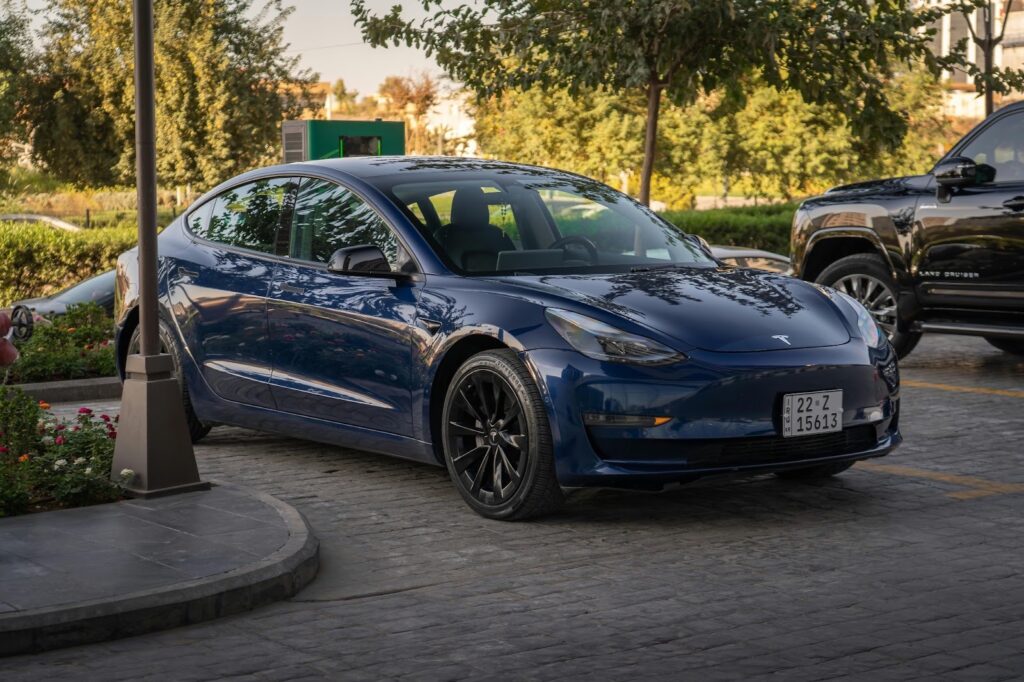
Tesla remained the number one EV brand in the United States, but its market share declined as traditional manufacturers and international brands launched competitive models.
Tesla’s share of the US EV market has fallen to around 38%, a significant shift from its previous dominance of over 70% at the start of the decade.
This decline did not mean that Tesla was selling fewer cars. It meant that the rest of the industry had finally caught up.
EV sales by brand: who led the market
One of the clearest snapshots of competition in the EV market emerged in late 2025, when sales soared ahead of changes to federal incentive schemes.
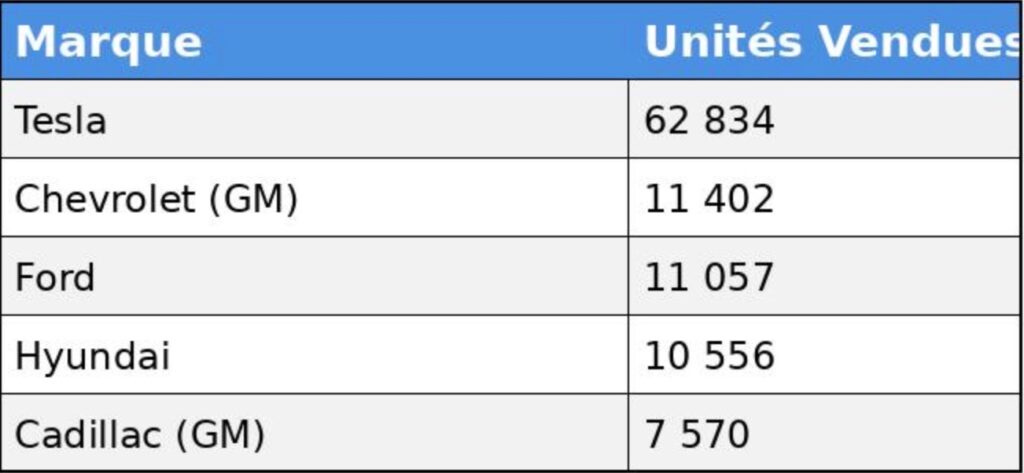
Representative monthly sales figures showed the following performance by brand:
These figures reveal a major structural shift in the industry: Tesla remains in the lead, but the established manufacturers are now collectively rivalling Tesla’s scale.
TESLA: still the king, but no longer alone
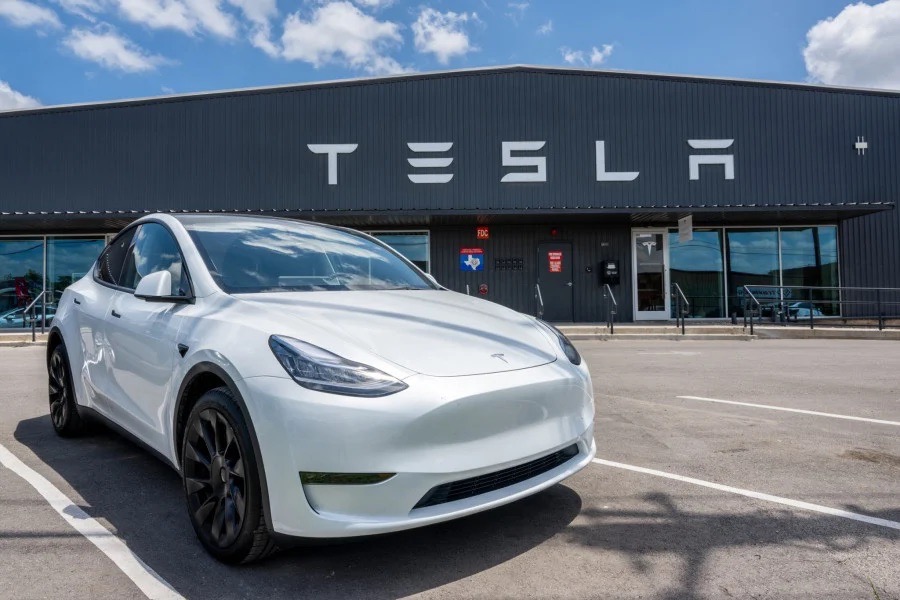
Tesla began 2025 as the undisputed leader in the EV market and has maintained that position as we enter 2026.
The company’s dominance rests largely on two factors:
Tesla Model Y
Tesla Model 3
The Model Y remained the best-selling electric vehicle in the United States and one of the best-selling vehicles overall.
Preliminary sales figures for the third quarter of 2025 showed:
Model Y: approximately 114,897 units
Model 3: approximately 53,857 units
But Tesla’s leadership is no longer unchallenged.
The company has faced increasing pressure from:
Aggressive price competition.
Traditional car manufacturers are expanding their ranges of electric vehicles.
Changes to eligibility for the federal tax credit.
A slowdown in demand growth compared with previous boom years.
Tesla responded with price cuts designed to maintain sales volumes, a strategy reflecting a more competitive market environment.
GENERAL MOTORS: the surprising return of EVs
If any traditional car manufacturer has emerged as a major success story in the EV sector, it is General Motors.
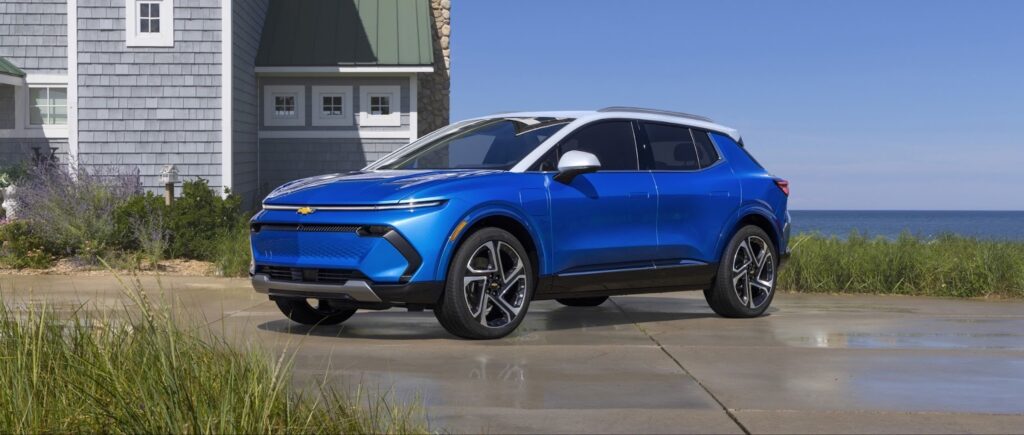
Chevrolet has become Tesla’s closest direct competitor, largely thanks to one vehicle: the Chevrolet Equinox EV.
Sales of the Equinox EV reached around 25,085 units in the third quarter of 2025, making it one of the best-selling non-Tesla EVs in the United States.
Chevrolet has been successful in targeting mainstream buyers with:
A recognisable brand.
Competitive prices.
A practical battery life.
Strong support from the dealer network.
The result marked a turning point for the established manufacturers, who had previously been left far behind by Tesla.
source: Chevrolet
FORD: pick-up trucks, performance and power from the brand
Ford has maintained a strong presence in the EV market at the start of 2026, underpinned by two flagship models:
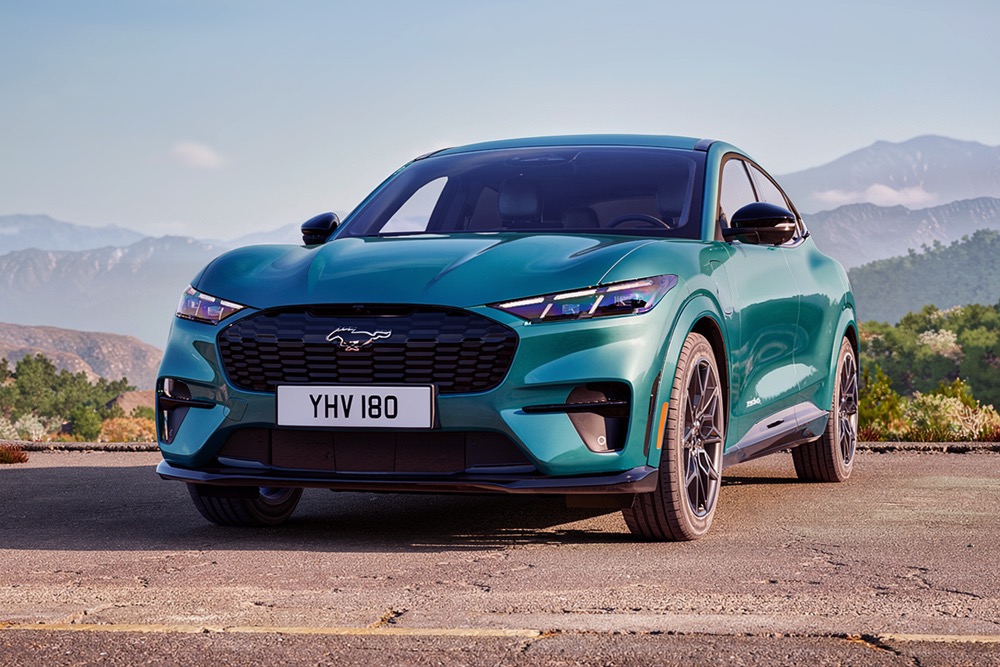
Mustang Mach-E
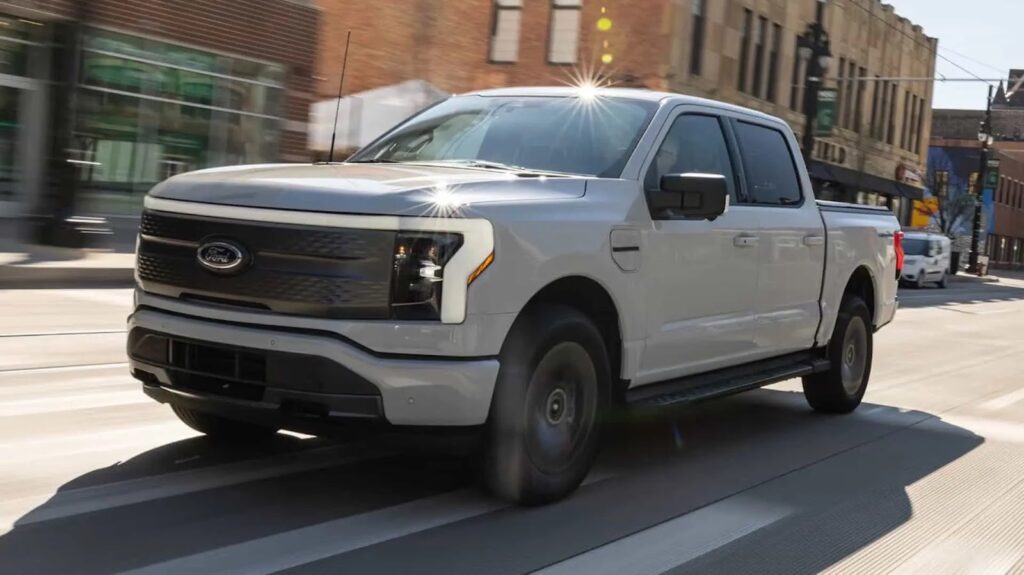
F-150 Lightning
Sales of the Mach-E reached approximately 20,177 units in the third quarter of 2025, reflecting strong brand loyalty and the strength of Ford’s nationwide dealer network.
Rather than competing directly in the smaller EV segments, Ford has focused on high-performance SUVs and electric pick-up trucks, closely aligning itself with traditional American vehicle preferences.
source: Ford
HYUNDAI AND KIA: the leaders in value
Hyundai and Kia have quietly continued to gain market share.
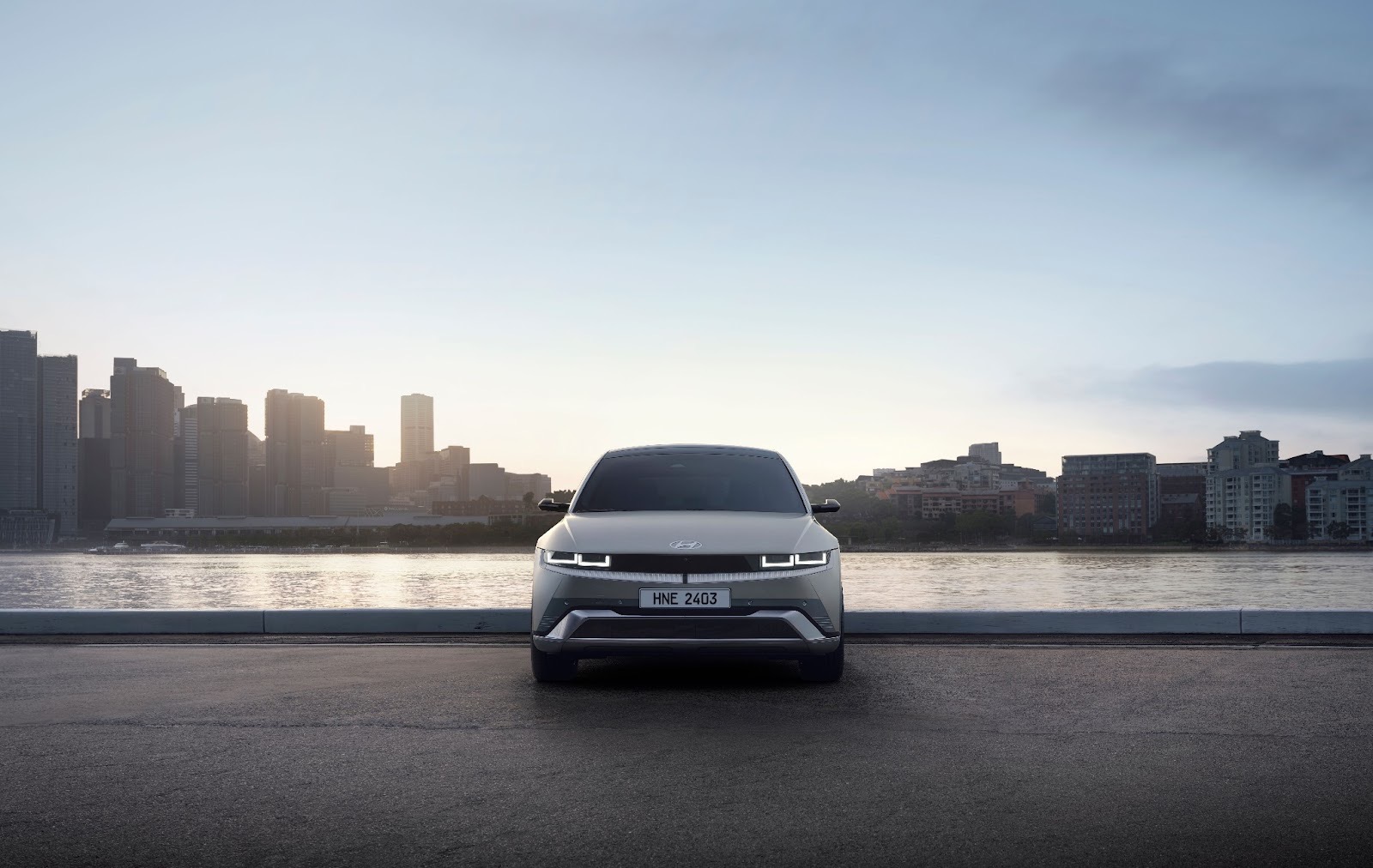
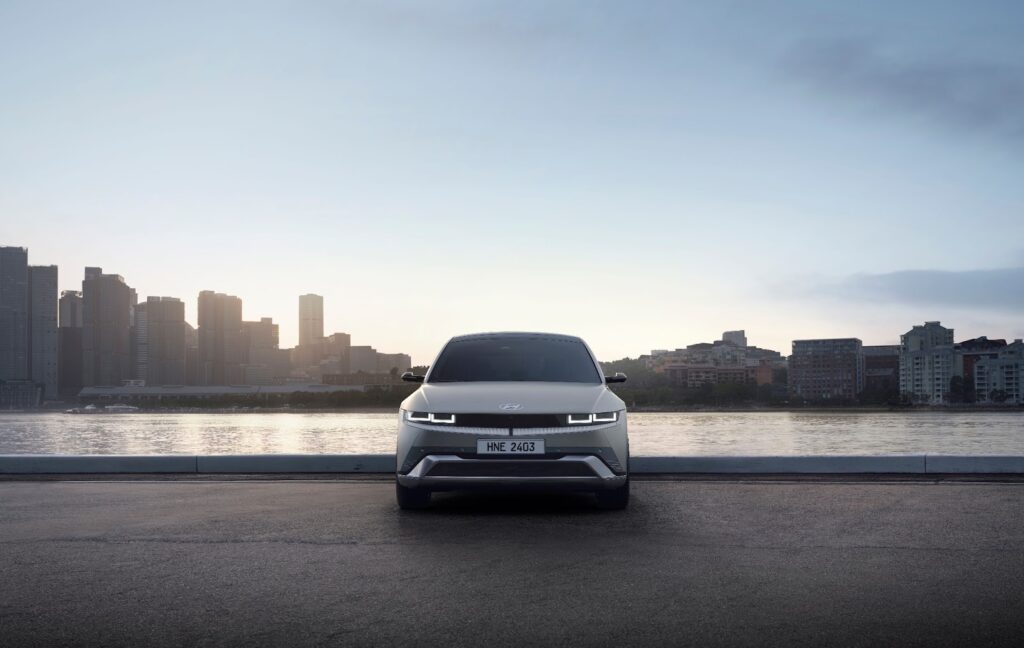
Hyundai’s range of electric vehicles – particularly the Ioniq 5 – has received high praise from consumers for its value, range and reliability.
Sales of the Ioniq 5 reached around 21,999 units in the third quarter of 2025, making it one of the most successful non-Tesla EVs.
Analysts have frequently cited Hyundai and Kia as leaders in the design and engineering of affordable EVs, helping to broaden the uptake of EVs beyond luxury car buyers.
source: Hyundai
Emerging players: the new competition
In addition to the traditional brands, several new players have helped to diversify the EV market.
Notable models included:
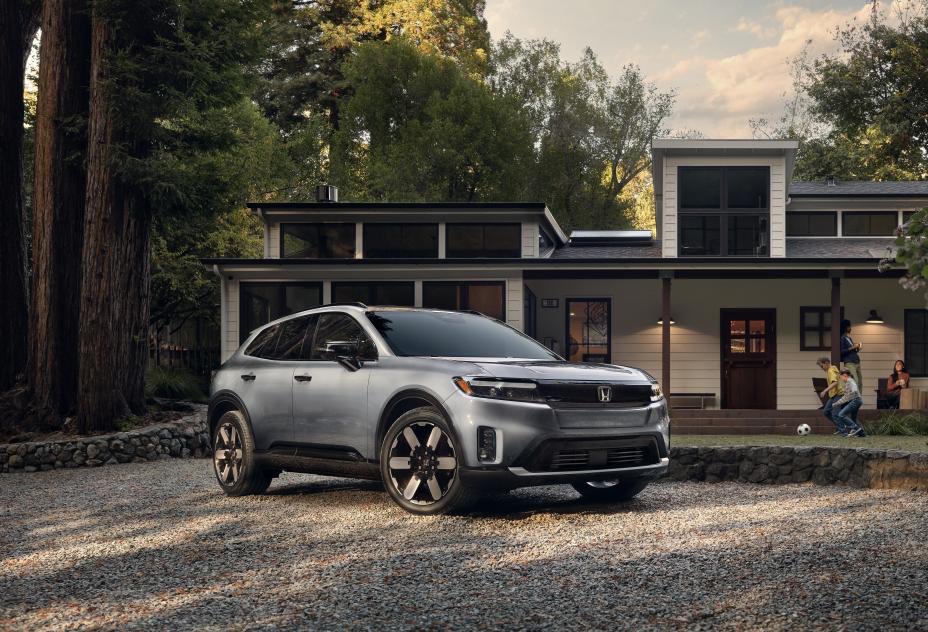
Honda Prologue — approximately 20,236 units sold in the third quarter of 2025.
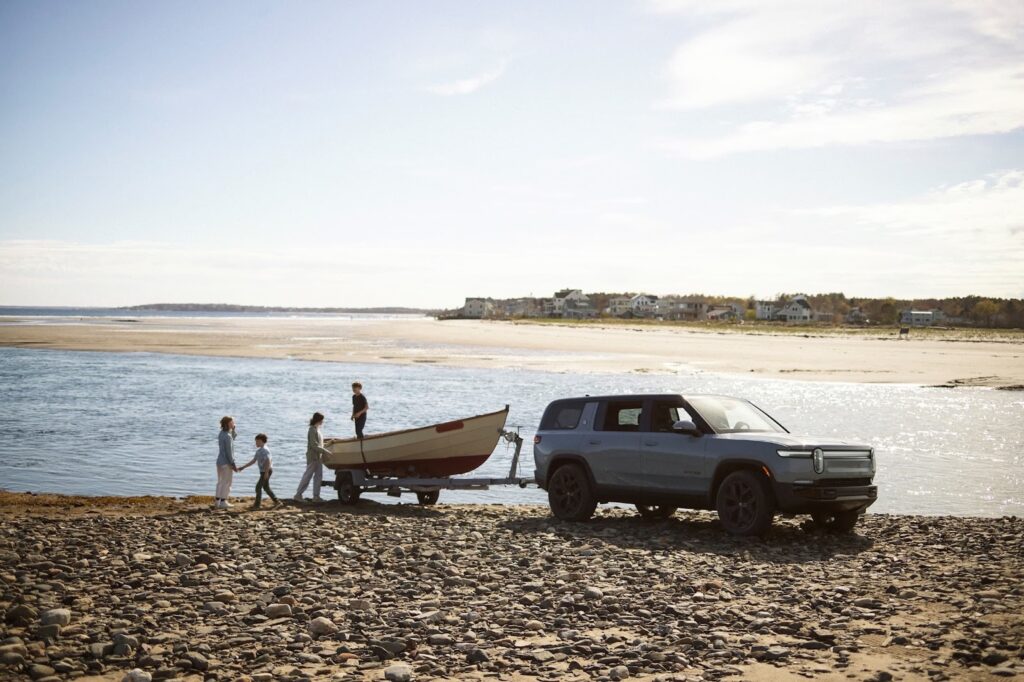
Rivian R1S — nearly 19,687 units in 2025.
Volkswagen ID.4 — steady sales as a European alternative.
These vehicles demonstrate that the EV market is no longer dominated by a single company or strategy.
Instead, it becomes a fully-fledged ecosystem of competing brands and technologies.
source: Honda
The best-selling EV models
The best EV models on the US market included:
Tesla Model Y
Tesla Model 3
Chevrolet Equinox EV
Hyundai Ioniq 5
Honda Prologue
Ford Mustang Mach-E
Kia EV6 / Chevrolet Blazer EV
Rivian R1S
Volkswagen ID.4
Ford F-150 Lightning
SUVs and crossovers topped the rankings, reflecting the preferences of American consumers.
source: Rivian
Incentives and economic reality
Government policy has remained a major factor influencing demand for EVs.
Changes to the $7,500 federal tax credit for EVs sparked a surge in consumer purchases throughout 2025, as buyers rushed to secure the incentives before eligibility rules were tightened.
At the same time, higher interest rates have made affordability a key factor.
Brands that offered competitive prices or aggressive financing gained an advantage.
Charging infrastructure: still the big question
Access to charging remains one of the biggest barriers to the wider adoption of EVs.
States that have invested heavily in infrastructure, particularly California, have continued to lead the country in terms of EV adoption rates.
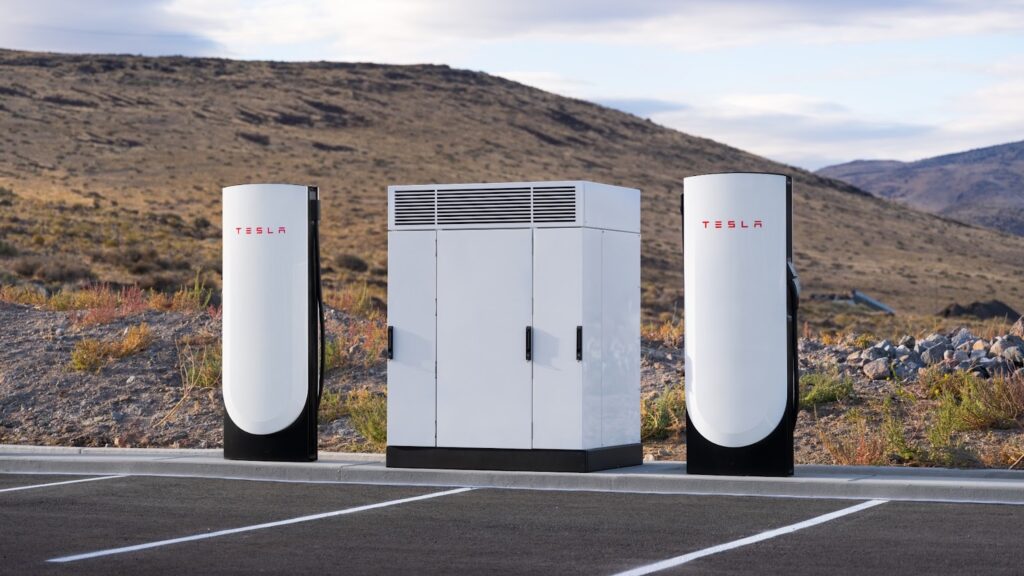
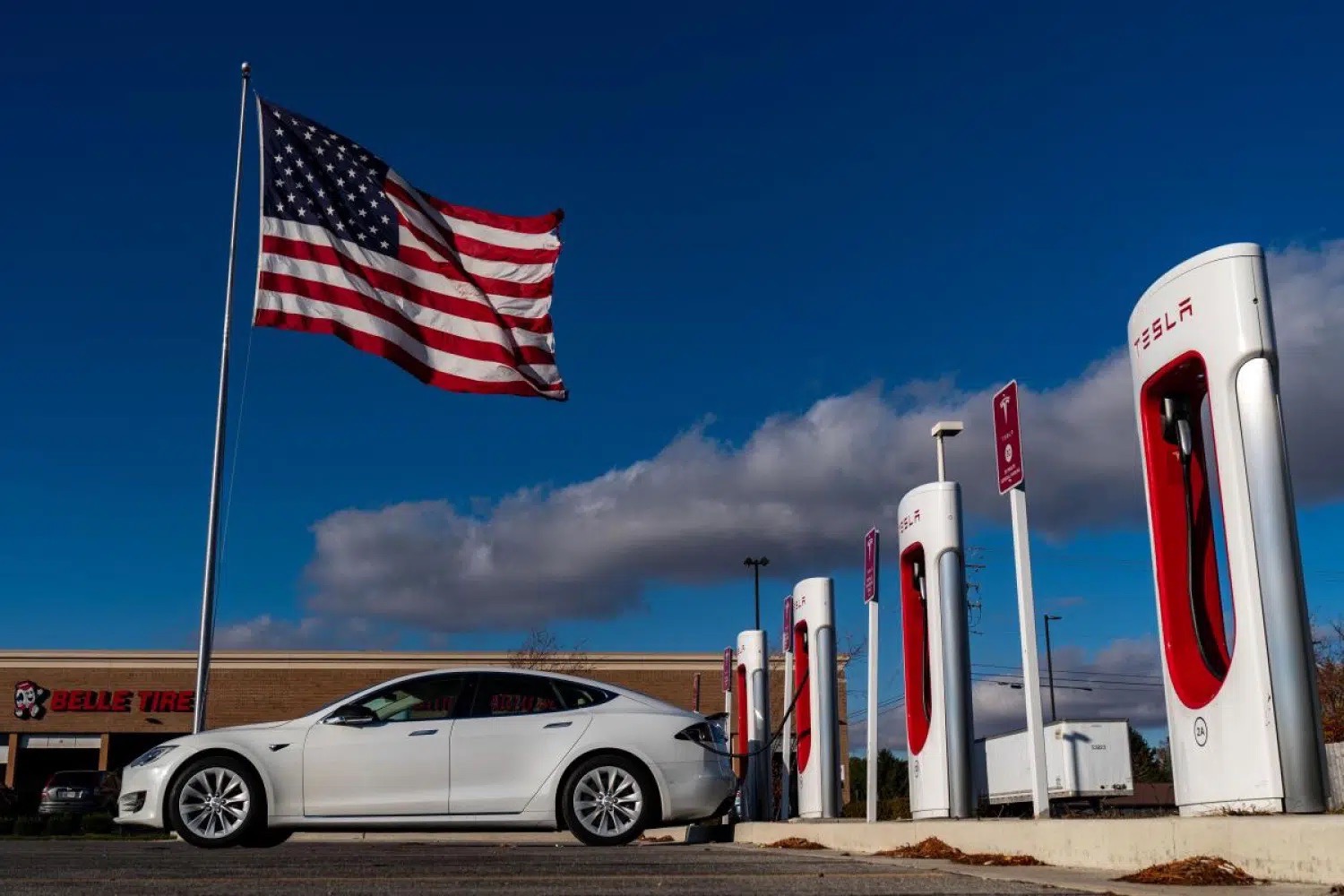
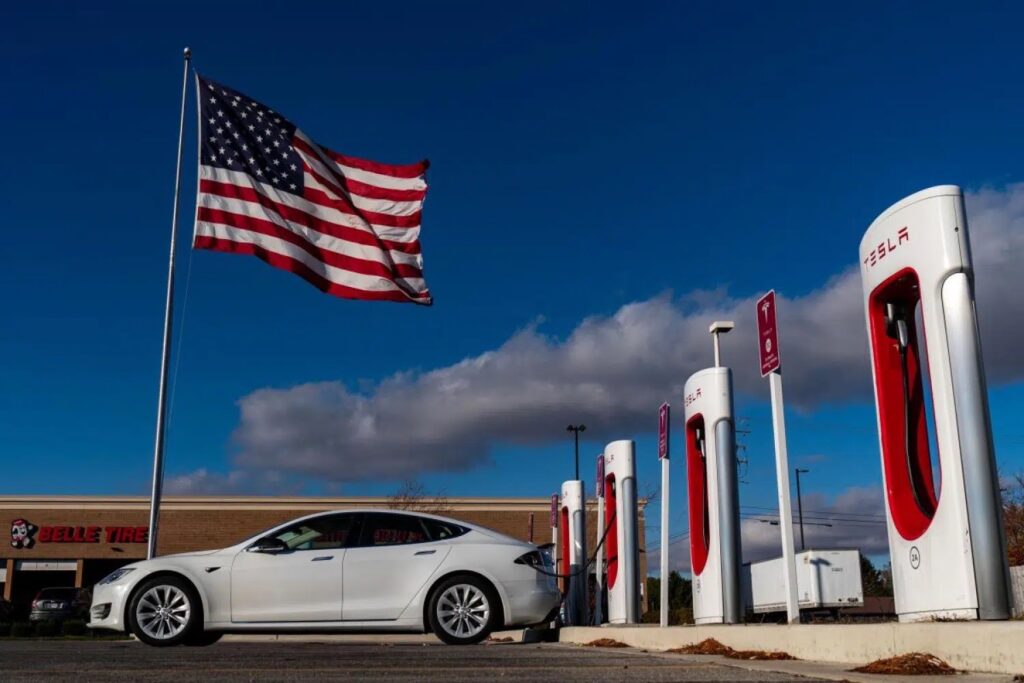
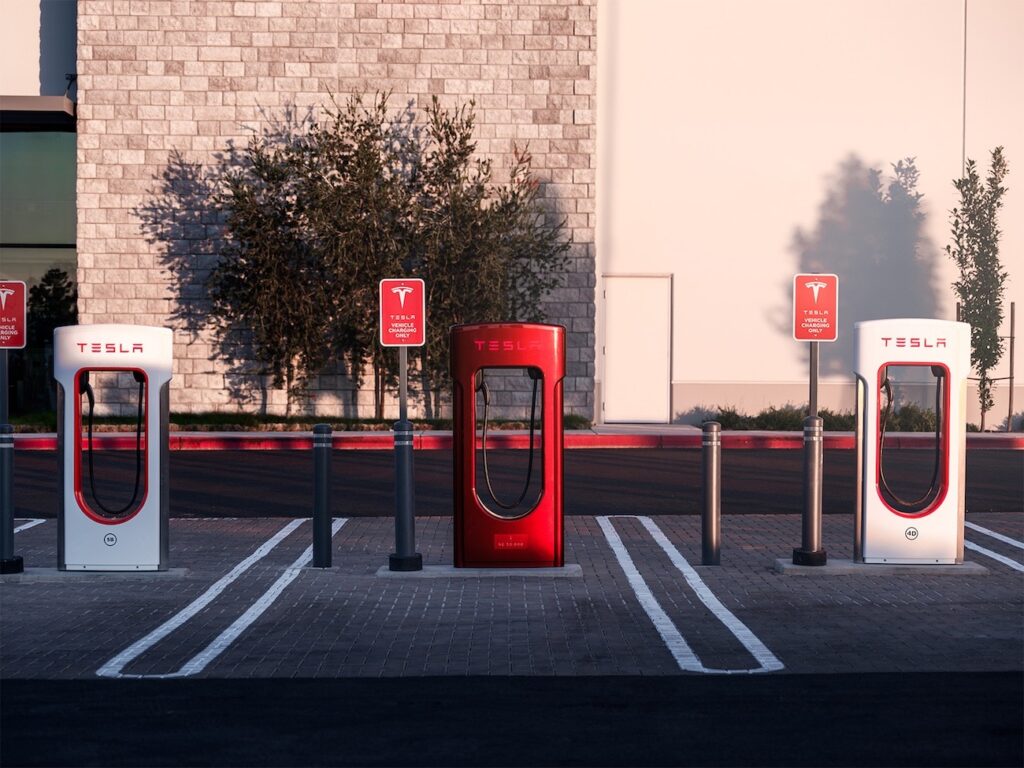
Tesla’s charging network remains a major strategic advantage, although partnerships between manufacturers are expanding access to charging facilities nationwide.
source: Tesla
What 2026 means for the future of EVs
The outlook for EVs at the start of 2026 is clear.
Electric vehicles are no longer an experimental technology or the subject of over-the-top speculation. They are now a permanent fixture on the American automotive scene.
But the industry is entering a new phase in which success will depend on:
Affordability.
The expansion of infrastructure.
Trust in brands.
Usability in the real world.
Tesla remains the market leader, but the era of unchallenged dominance is over. The EV revolution did not stall after the initial wave of enthusiasm; it has simply matured, and the real competition is only just beginning.
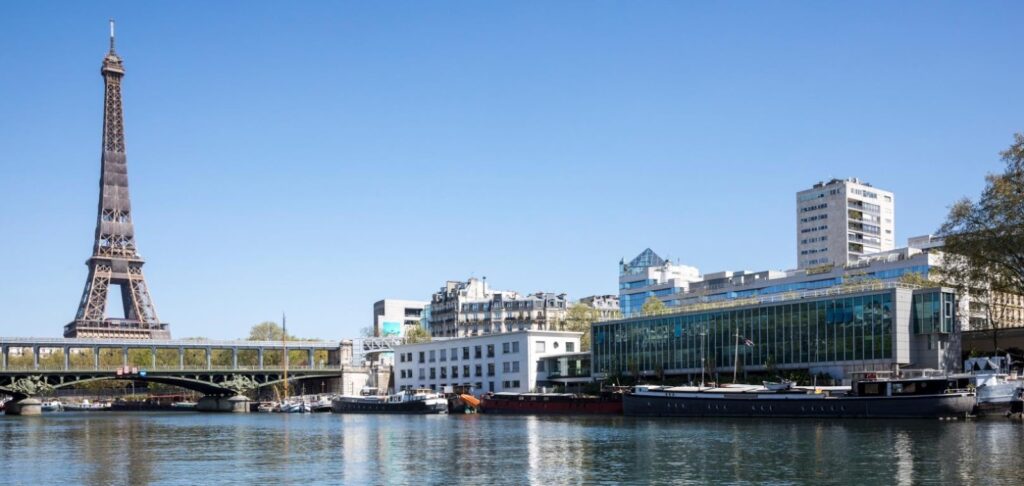
In Paris, the shift to electric transport is no longer confined to the roads. Indeed, the River Seine is gradually emerging as a new strategic corridor for decarbonising transport, whether in urban logistics, passenger transport or even tourism. Thanks to a combination of private initiatives, public investment and technological trials, electric transport is now gaining ground on the water.
source: HAROPA PORT
River-electric logistics is becoming a feature of the Parisian landscape
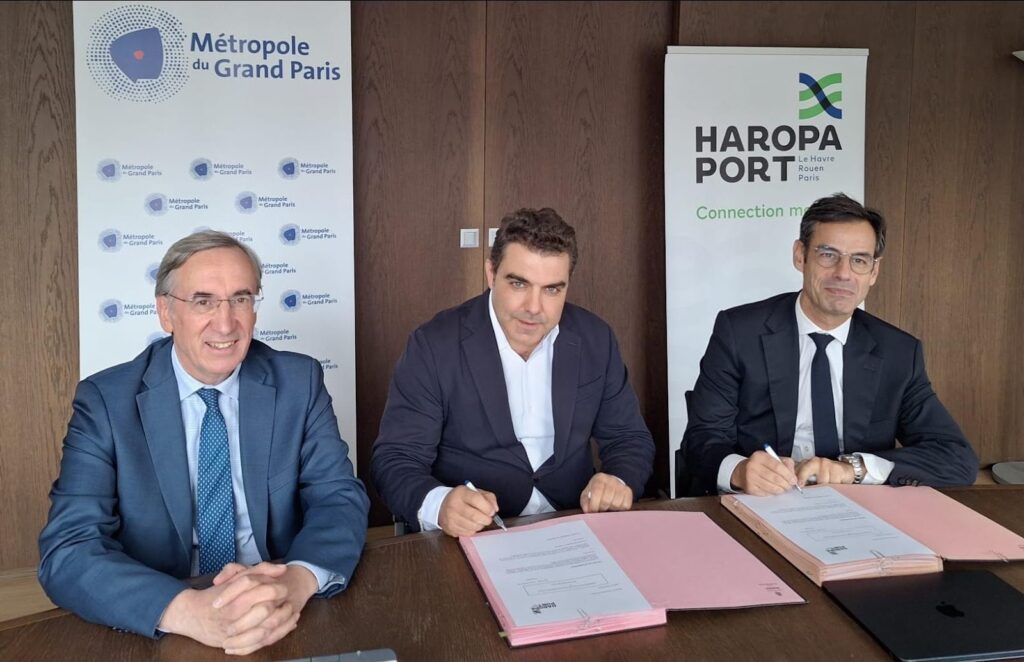
What if the next revolution in Parisian electric mobility were to come not from the roads, but from the river? One thing is certain: the movement is already well underway. Indeed, for example, since late 2025, HAROPA PORT has formalised a 15-year partnership with the start-up ULS (Urban Logistic Solutions) to develop a river and cycle logistics network in Paris.
source: HAROPA PORT
It may sound abstract put like that, but in practice it’s simpler. Goods are transported by boat between Charenton-le-Pont and strategic locations such as the ports of Javel-Bas or Gros-Caillou, before being delivered to the city centre via electric cargo bikes. According to an article in Le Figaro published in March 2026, it takes just 37 minutes to travel from Charenton to the Alexandre III Bridge, followed by a further six minutes to reach the Champs-Élysées by bike.
source: Les Echos
This model makes it possible to drastically reduce the use of combustion-engine commercial vehicles in urban areas, where their impact remains particularly high: in Paris, delivery vehicles (commercial vans and lorries) account for up to 40% of emissions linked to road traffic in densely populated areas, whilst also being responsible for a significant proportion of noise pollution and congestion.
In this context, ULS aims to replace up to 150 diesel lorries with this logistics system. Furthermore, the vessel used is built in modular sections in Portugal, illustrating the emergence of a genuine European value chain centred on these new forms of transport.
source: HAROPA PORT
A regulatory framework that clearly drives towards net-zero emissions
The development of these solutions does not rely solely on private initiatives. It is, in fact, taking place within a more restrictive regulatory framework for transport, which is forcing companies to rethink their business models.
In fact, in Paris, the Low Emission Zone (LEZ) already bans the most polluting vehicles, with restrictions being gradually tightened. By 2030, the capital aims to phase out diesel almost entirely, which is why river transport is emerging as the solution.
At European level, the “Fit for 55” climate package sets a target of a 55% reduction in CO₂ emissions by 2030. At the same time, the Alternative Fuels Infrastructure Regulation (AFIR) requires the development of charging infrastructure, including for inland waterway transport.
source: Fit for 55
Tourism and passenger transport are also going electric
The electrification of the Seine is not limited to freight transport. Passenger transport is also evolving rapidly.
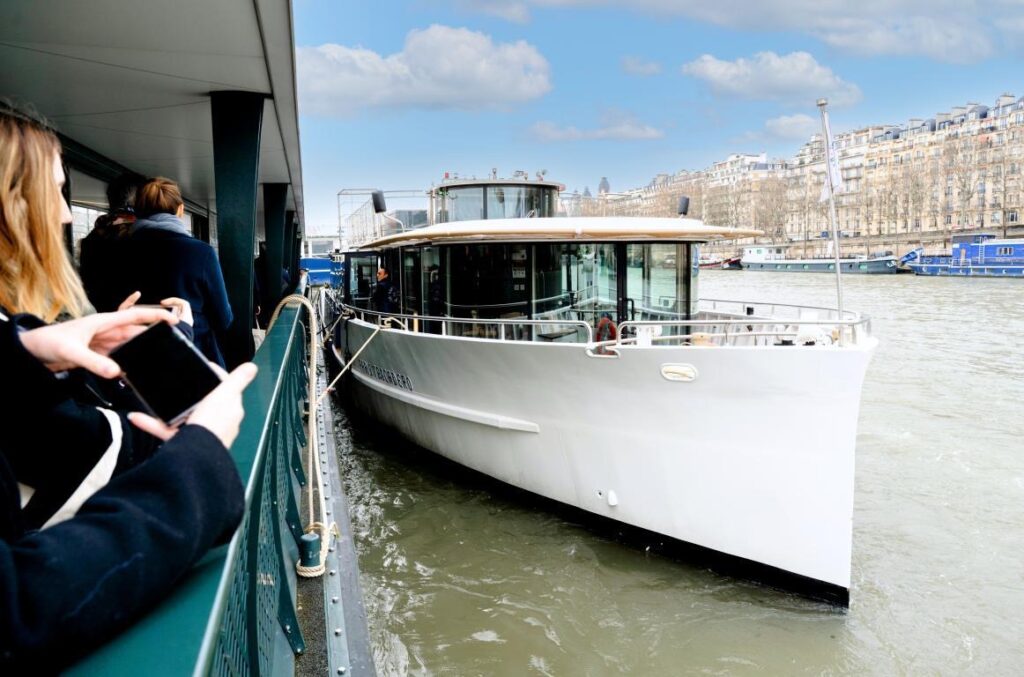
Les Vedettes de Paris, for example, have begun transforming their fleet, with the first vessel to be retrofitted to run entirely on electricity due to be ready by 2024. Each vessel is equipped with two 550 kWh battery packs, allowing for rapid recharging in around 15 minutes during stopovers. The stated aim was to achieve an 80% zero-emission fleet by mid-2025, with an estimated saving of 460 tonnes of CO₂ avoided per year per vessel. This is an ambitious target, which above all illustrates the operators’ determination to accelerate electrification, even though the actual level of deployment has not yet been officially specified at this stage.
On a different note, the event vessel La Perle Noire, launched in June 2025 at the Port of Grenelle, features an innovative electro-hydraulic propulsion system. Measuring 22 metres in length and capable of carrying 70 passengers, it is based on technology developed in collaboration with several French companies, illustrating the emergence of an industrial sector centred on electric river transport.
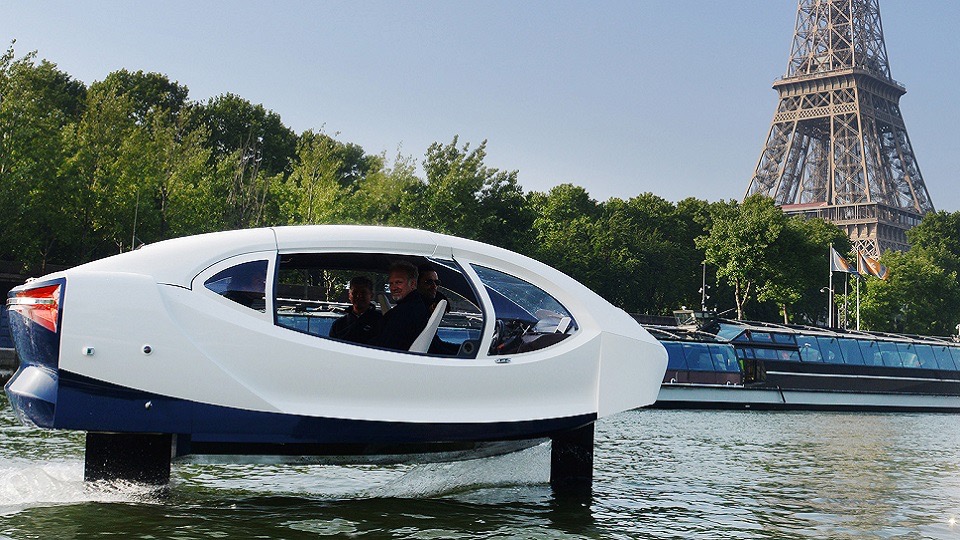
Finally, plans for flying water taxis are back in the spotlight with SeaBubbles. These electric vessels, capable of reaching 25 knots (46 km/h), could be deployed as early as 2026 with a fleet of 10 to 20 units. Several operators, such as G7 and Uber, have been mentioned, although regulatory issues are still under discussion.
source: French Marine Industries Federation
Infrastructure: the cornerstone of this transformation
As with electric cars, the development of these applications depends largely on infrastructure.
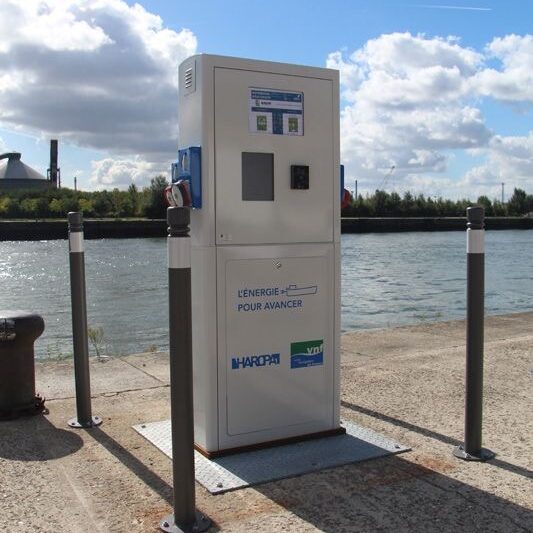
Since 2018, HAROPA PORT and Voies Navigables de France have been gradually rolling out the Borne & Eau® network, which is set to comprise 110 charging points by 2026 between Le Havre, Rouen and Paris. These stations provide both electricity (up to 63A) and water.
And as mentioned earlier, just as with land vehicles, this network of charging points is key to the development of transport modes. It will need to be expanded significantly if electric boats are to flourish.
source: HAROPA PORT
A transformation still in progress
Whilst the number of projects is growing, the logistics of electric river transport are still in the early stages of development. The momentum is certainly there. Driven by regulatory constraints, technological innovations and changing patterns of use, the Seine is gradually emerging as a solution – albeit a niche one – for reducing CO₂ emissions.
In 2025, President Donald J. Trump launched what many now describe as the most significant shift in modern US automotive policy. By 2026, the results of this reset were becoming clear. Whilst the Biden administration had spent years attempting to impose electric vehicle mandates on Americans, regardless of cost, infrastructure or practicality, President Trump had chosen a different path: one rooted in freedom, economic realism and consumer choice.
source: Le rouleur électrique
Contrary to the narrative pushed by the media, President Trump did not ‘kill’ electric vehicles. On the contrary, he saved the EV sector from government overreach, restoring balance, innovation and consumer confidence to an industry that had been stifled by mandates, subsidies and ideological pressure.
Trump’s reset of EV policy, launched in 2025 and continued in 2026, represents a strategic realignment that prioritises American consumers, American workers and American manufacturers.
The problem Trump has inherited: forced electrification
Even before President Trump returned to the White House, the electric vehicle market was already facing serious challenges. Despite massive federal subsidies, EV adoption had stalled. Prices were rising, dealerships’ stockyards were filling up with unsold electric cars, and the charging infrastructure was lagging far behind the promises made by policymakers in Washington.
Middle-class families felt increasingly pressured to buy cars they neither wanted nor could afford.
The Biden administration’s EV strategy was based on coercion rather than consumer choice. Through aggressive Corporate Average Fuel Economy standards, EPA regulations and global climate commitments, Americans were essentially being told: buy electric or pay the price.
This price included:
Higher vehicle costs
A reduction in consumer choice
Production inconsistencies
Concerns about the electricity grid
Growing public scepticism towards EV policy
President Trump has changed his stance: technological transitions cannot be imposed by government decree.
Trump’s core philosophy: let the market decide
From the start of his second term in 2025, Trump made his position clear. Electric vehicles must succeed, but only if they succeed in the market.
His EV framework was based on several key principles:
No compulsory mandate
No artificial demand created by regulation
No penalties for petrol or hybrid vehicles
No bureaucratic micromanagement of consumers
Instead, the Trump administration has focused on restoring competition, affordability and technological innovation.
By 2026, this approach had begun to stabilise the EV industry. Car manufacturers can plan effectively, consumers can choose freely, and the development of EVs continues without the distortions caused by government mandates.
source: AFP
The “Freedom Means Affordable Cars” initiative
One of the most significant policies introduced in 2025, and which is now shaping the market in 2026, is the Trump administration’s ‘Freedom Means Affordable Cars’ initiative.
The programme has revised the fuel economy and emissions standards that had previously been used to indirectly encourage the adoption of electric vehicles.
By resetting the CAFE standards to realistic and technology-neutral levels, the administration:
Has reduced regulatory costs for car manufacturers
Has helped to bring down vehicle prices
Has enabled EVs, hybrids and petrol-powered vehicles to compete on a level playing field
Has eliminated disguised EV mandates
source: US Department of Transportation
Federal transport estimates predicted that the reform would save US consumers more than $100 billion over five years.
Equally important, the lifting of government pressure has helped to reduce the political stigma attached to EVs.
Why might lower costs speed up the uptake of EVs?
Many climate activists argued that the adoption of EVs needed to be enforced. Trump’s approach proved the opposite.
By reducing regulatory costs across the automotive sector, manufacturers have gained greater flexibility to:
Improving battery technology
Increase autonomy
Reduce purchase prices
Focus on designs that consumers actually want
As EV technology improves and costs naturally fall, consumer adoption becomes sustainable. Throughout 2026, innovation in EVs and hybrid vehicles continues within the industry without the instability caused by rigid government mandates.
“America First” manufacturing
A key pillar of Trump’s economic strategy is the revitalisation of domestic manufacturing.
The government has introduced policies designed to encourage Americans to buy vehicles manufactured in the United States. A key measure allows buyers to deduct up to $10,000 a year in car loan interest for domestically assembled vehicles.
Politics:
Encourages the purchase of vehicles manufactured in America
Strengthens domestic supply chains
Reward manufacturers who invest in American workers
Unlike previous subsidy schemes, which often benefited foreign supply chains, Trump’s policies aim to keep the economic value of EV production within the United States.
source: Ford
Ending dependence on foreign countries
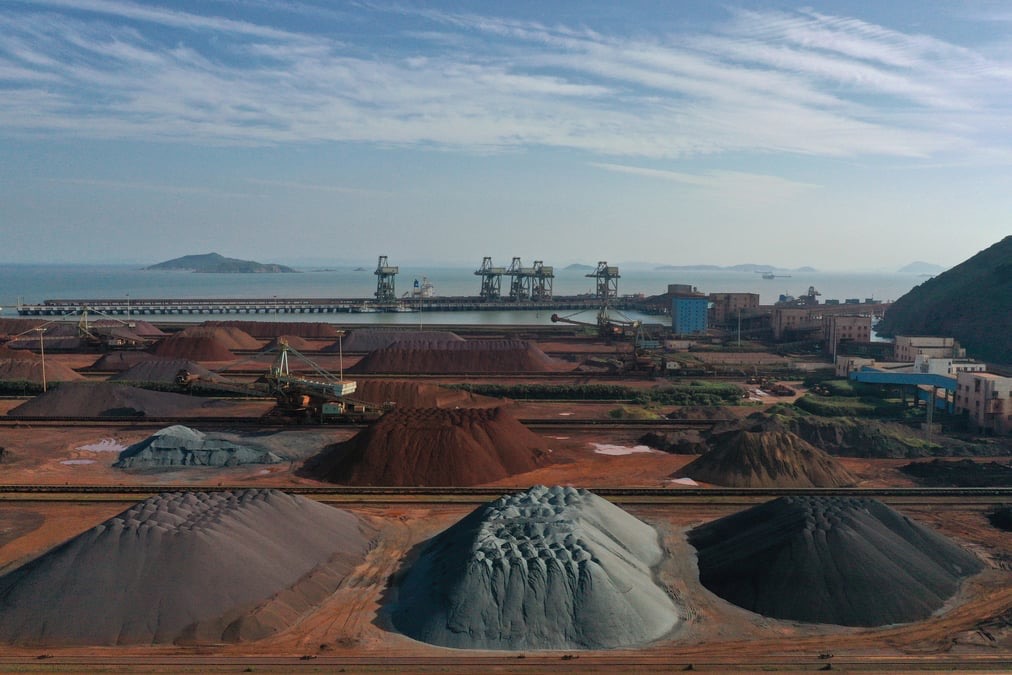
The production of electric vehicles relies heavily on critical minerals such as lithium, cobalt, nickel and rare earth elements, many of which are currently dominated by China.
In response to this vulnerability, the Trump administration has stepped up policies focused on energy and mining independence, including:
Streamlining domestic mining permits
Expansion of strategic minerals development
Investment in battery research in the United States
Reducing reliance on Chinese supply chains
This strategy ensures that America’s electric vehicle future does not become a national security vulnerability.
source: China Stringer Network
Infrastructural realism
The Biden administration had promised millions of charging points across the country but has delivered far fewer.
Trump has taken a different approach, focusing on practical infrastructure development rather than ambitious federal promises.
How to take it:
Encouraged private-sector investment in charging networks
Has reduced approval delays
Has concentrated infrastructure along the main travel corridors
Has given Member States greater flexibility in planning
This market-driven model has begun to expand access to charging more effectively, particularly in suburban and rural areas that had previously been neglected.
source: Tesla
Protecting working-class Americans
Perhaps the most politically significant aspect of Trump’s EV policy is his rejection of what critics describe as EV elitism.
Previous mandates disproportionately affected:
Rural families
Farmers
The craftspeople
Van owners
Pensioners on a fixed income
By safeguarding consumer choice – including petrol, diesel, hybrid and electric vehicles – the Trump administration has ensured that Americans are not penalised for their transport needs.
This fairness has helped to restore public confidence in the automotive market as a whole.
source: entraid
A stronger automotive industry by 2026
Car manufacturers had repeatedly warned that aggressive EV mandates could destabilise the industry.
On the contrary, the Trump administration has worked closely with:
American car manufacturers
Dealer associations
Trade unions
Independent suppliers
The result is an automotive industry with greater flexibility to:
Balancing the production of EVs and conventional vehicles
Protecting American jobs
Adapting to actual consumer demand
Competing on a global scale
The EV reset continues
As 2026 unfolds, the effects of President Trump’s electric vehicle reset are becoming increasingly apparent.
The development of electric vehicles continues. Innovation remains strong. But the market is now driven by consumer choice rather than government mandates.
President Trump hasn’t given up on electric vehicles – he’s repositioned them.
By rejecting coercion, restoring affordability, defending consumer freedom and prioritising American workers, Trump has laid the foundations for an EV future built on economic strength and national sovereignty.
And under this model, innovation – rather than government pressure – will determine which technologies ultimately prevail.