Category: News

  • The government wants to increase the ecological bonus and redirect its funding

    The government wants to increase the ecological bonus and redirect its funding

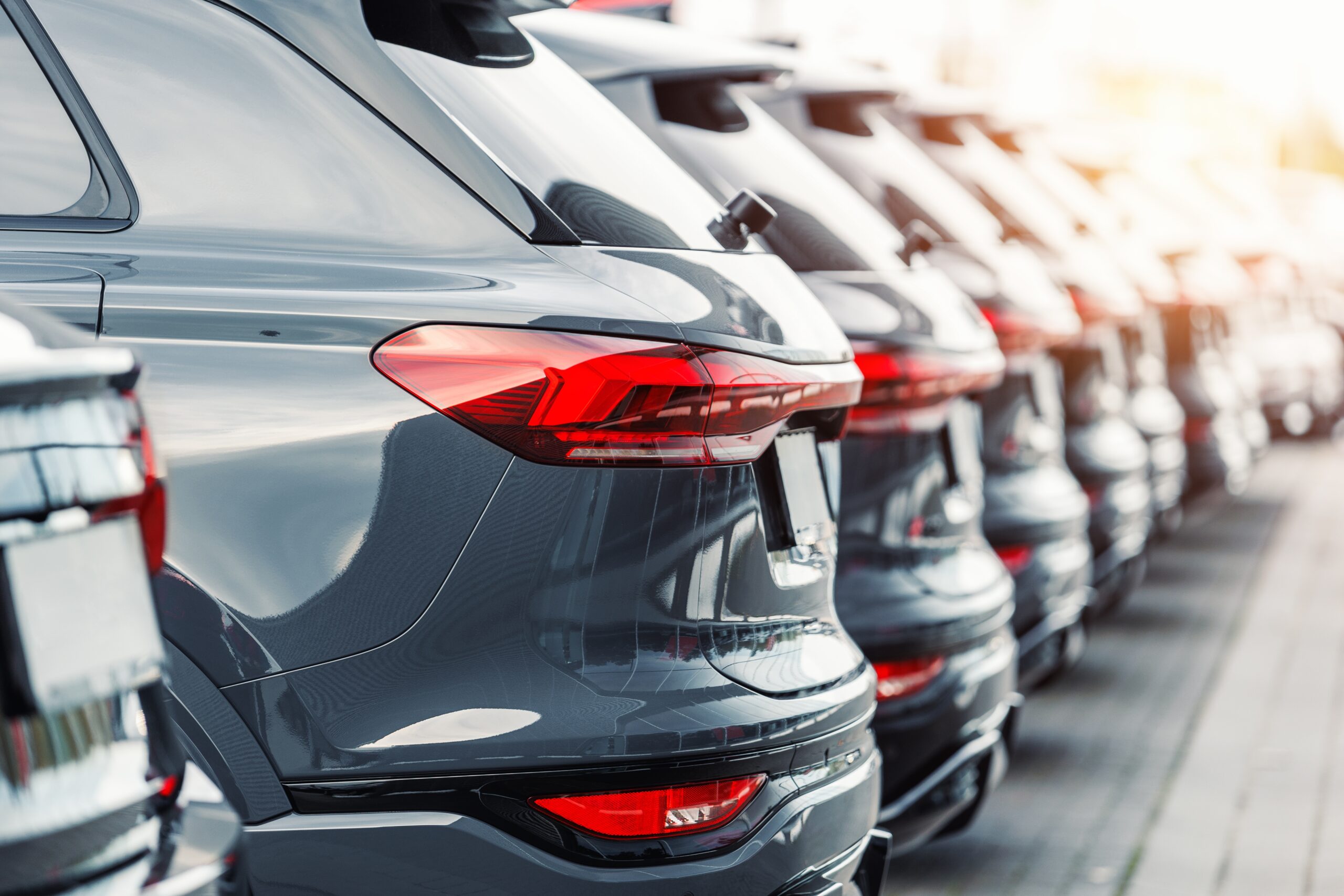
    The government plans to increase the amount of the ecological bonus for the purchase of electric vehicles, while introducing a new method of financing. This reform could come into force as early as 1 July 2025, according to a draft order to be presented to the Conseil supérieur de l’énergie on 17 June.

    credit: Pixabay – Andreas

    A bigger environmental bonus

    The amount of the ecological bonus, currently 4,000 euros for low-income households or those in “fuel poverty”, would be increased to 4,200 euros. For other households, the bonus would rise from €2,000 to €3,100, according to Les Echos. The aim of this increase is to make electric vehicles more accessible, at a time when the cost of these models remains a major obstacle for many households.

    The reform is also designed to speed up the decarbonisation of the car fleet, at a time when sales of electric vehicles are slowing down.

    One of the reasons for this reform is that the budget for the bonus for 2025 is almost fully committed. A new method of financing is therefore deemed necessary to guarantee the continuity of the scheme.

    Financing based on energy suppliers

    Rather than relying entirely on public finances for this support, the government would like to mobilise energy saving certificates (CEE). This mechanism obliges energy suppliers (such as EDF or TotalEnergies) to finance actions to reduce energy consumption in France.

    Until now, CEE has mainly been used to help people renovate their homes (by changing an old boiler or insulating a roof, for example). The government now wants the scheme to be used to fund support for electric cars, such as the bonus or social leasing.

    Each year, the CEE represents between 4 and 6 billion euros. The government wants to use some of this to help with the transition to electric cars, while continuing to support housing renovations.

    A decision on the ecological bonus expected in mid-June

    Not everyone is in favour of this strategic reorientation. Some players in the energy renovation sector fear that the funds allocated to work on housing, such as thermal insulation or the replacement of heating systems, will be reduced.

    The government, for its part, is defending a more balanced approach to the energy transition. It believes that reducing emissions in the transport sector should now be given the same priority as reducing emissions in the residential sector.

    The draft decree will be presented to the Conseil Supérieur de l’Energie on 17 June. If the text is adopted, the new eco-bonus rules will come into force on 1 July 2025.

  • BYD sets its sights on the European supercar market

    BYD sets its sights on the European supercar market

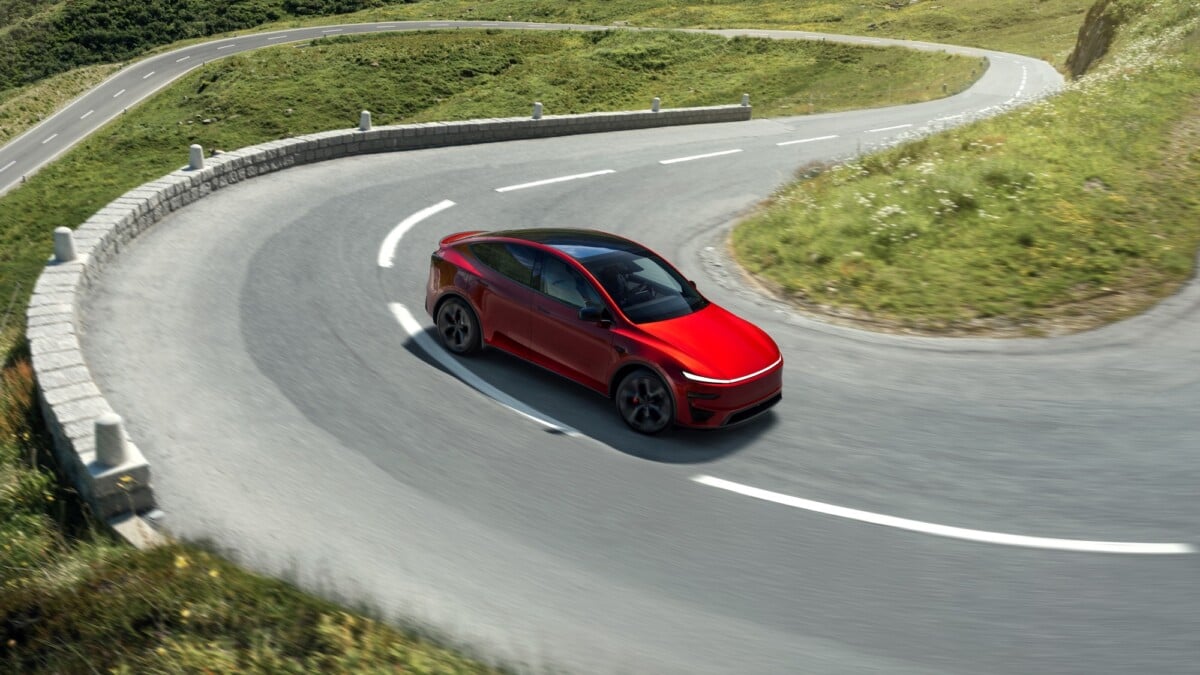
    Presented at the Shanghai Motor Show from 23 April to 2 May 2025, the new Denza marks a turning point for the top-of-the-range subsidiary of Chinese giant BYD.

    Credit : Denza®

    With its sleek design and low-slung silhouette worthy of a GT sports car, this newcomer is impressive. But where it comes as a surprise is its price, estimated at around 60,000 euros including tax in France… a price well below that of the rivals against which it intends to compete, starting with the Porsche 911 and its many variants. With its sharp lines, aggressive front blade and oversized rear spoiler, BYD reveals a clearly assertive sporty style.

    Performance

    The Chinese firm is remaining discreet about its technical specifications, but everything suggests that it intends to hit hard. Its parent company, BYD, which is well on the way to dethroning Tesla as the world’s biggest seller of electric cars, has been developing top-quality batteries for some years now. This latest model could be inspired by the Denza Z9GT, a 950-horsepower station wagon developed entirely by BYD.

    Credit : Denza®

    Technical side

    For the moment, what we do know is that this technological jewel, unveiled in Shanghai, features a new adaptive magnetic suspension capable of reacting in less than 10 milliseconds. This new sports car also features ‘steer-by-wire’ steering, an innovative system with no direct mechanical link between the steering wheel and the wheels. Everything is managed with the help of artificial intelligence. The result is greater precision when cornering, making the car more accessible on the racetrack, and enhanced suppleness, whether driving in the city or on the motorway. It can also adjust the resistance of the steering wheel according to the situation and reduce vibrations, for unprecedented driving comfort. Still at the concept stage, the latest Denza could go into production as early as 2026.

    Credit : Denza®
  • BMW: Will the shift to electric vehicles be too tight?

    BMW: Will the shift to electric vehicles be too tight?

    Since its beginnings, BMW has cultivated a distinctive image, built on a distinctive driving experience and a recognisable visual identity. As the internal combustion engine reaches the end of its life cycle, a major change is on the horizon. More than just a technological shift, BMW is planning an in-depth transformation from 2025 onwards.

    Credit: BMW

    Vision Neue Klasse”: a strong new identity

    Like its German competitors, BMW plans to stop selling combustion-powered vehicles by 2035. This transition to electric vehicles has already begun with a solid range (iX, i4, i7, etc.), and will accelerate with the arrival of the Neue Klasse in 2025. Initial sketches were unveiled in 2023, followed in 2024 by a first version of the Vision Neue Klasse. The style adopted is marked by strong ambition, symbolising a new era focused on innovation. BMW is not content simply to develop the engine, but is also completely rethinking the vehicle platform and interface.

    On the programme:

    ● New electric technology, BMW’s 6th generation, with cylindrical batteries providing up to 30% more range and a 30% reduction in recharging time.

    ● A centralised electronic system that adjusts driving in real time (braking, acceleration, energy recovery) for greater fluidity and responsiveness.

    ● A more intuitive and personalised interface, with a redesigned head-up display (“Panoramic Vision”) covering the full width of the windscreen.

    ● Advanced semi-autonomous driving functions, capable of taking over certain journeys.

    ● Optimised energy management, adapted to the journey, the driver’s habits and the road conditions.

    With a sleek interior design and a focus on connectivity and intelligence, this new generation aims to appeal to both purists and new users.

    Credit: BMW

    A drastic change of face

    This development raises questions, as BMW has long been built around a loyal community, often attached to the sensations of combustion engines and the traditional aesthetics of the brand. This transition represents a challenge, particularly in terms of exterior design and visual identity.

    The Vision Neue Klasse concept features a futuristic front end, praised for its slim lines and the integration of LED headlights. However, the rear end and overall silhouette drew mixed reactions. Some consider the lines less dynamic and the rear-view mirrors more massive than in the past. On social networking sites, some consumers have expressed their disappointment, saying that the styling is a far cry from what they expected from a BMW.

    Credit: BMW

    A necessary and well-considered development

    With the Neue Klasse, BMW is showing its intention to look to the future. This choice is not an abandonment of the past, but an evolution. By focusing on increased autonomy and maintained performance, the brand wants to demonstrate that it is possible to maintain the pleasure of driving in a different way. The success of this transition will depend in part on BMW’s ability to bring together its longstanding customers and new electric mobility enthusiasts.

    A bridge between tradition and modernity

    The dialogue between BMW purists and new fans could be based on proposals such as that of independent Korean designer Ihn Lee. He has imagined a fusion between the iconic 1980 M3 E30, a benchmark in automotive design, and the first visuals of the Neue Klasse. The result is a compact two-door that combines elegance and character: four round lights at the front, this time LED, a wide grille inspired by the era but modernised, a more pronounced front bumper, and square side panels and arches reminiscent of classic BMW styling. The rear end is clearly inspired by the Neue Klasse, while retaining its 80s heritage. This proposal illustrates how tradition and innovation can be reconciled.

    Credit: BMW
  • EPZs abolished: a black week for French ecology…

    EPZs abolished: a black week for French ecology…

    It was a decision that sent shockwaves through the environmental community: low-emission zones (ZFE) were abolished by the National Assembly on Wednesday 28 May 2025. This measure, designed to limit pollution in large conurbations, was buried as part of the bill to simplify economic life.

    Credit: Guillaume Laurens / Actu Toulouse

    An unlikely political resonance

    Initially, it was the Rassemblement National (RN) that launched the offensive against the ZFEs, in the name of “freedom of movement” for all vehicles, regardless of their Crit’Air sticker… But this crusade on behalf of cars has found an unexpected echo even in the ranks opposed to the far right. On the left of the political spectrum, La France insoumise (LFI) also voted to abolish these zones, denouncing a socially unfair measure. According to the Insoumis, the EPZs primarily penalise low-income workers who depend on their vehicles to get to work or, quite simply, to do their job (in certain sectors of activity).

    Dejection for the Greens…

    Marine Tondelier, national secretary of Europe Écologie Les Verts (EELV), had this to say about the decision, which she described as a “dramatic turning point”. On her X account (formerly Twitter), she expressed her indignation: ” This is the worst week for ecology in a long time. She points the finger at a motley majority, ranging from the RN to LFI, via a few Macronist MPs, who voted to abolish the EPZs, adopted by 98 votes to 51.

    A step backwards for the environment?

    The abolition of the EPZs is part of a wider trend to question environmental policies, which are often criticised for being technocratic or out of touch with social issues. The political signal, however, is unequivocal: in the midst of a climate crisis, France is choosing to ease an ecological constraint in the name of economic accessibility, even if it means compromising the long-term dynamic initiated several years ago.

    Ironically, however, these zones were supported by President Emmanuel Macron and implemented under the government of Édouard Philippe. In 2022, our Head of State announced, following his re-election: ” The policy I will pursue over the next five years will be ecological or it won’t be. ” Three years on, the ecological course set by the presidential party raises questions.

  • Emmanuel Macron in Douai for the launch of the Gigafactory-AESC

    Emmanuel Macron in Douai for the launch of the Gigafactory-AESC

    On Tuesday 3 June, Emmanuel Macron visited Douai to inaugurate the AESC Gigafactory, a huge factory specialising in the production of batteries for electric cars. The Gigafactory, developed in partnership with the Chinese group Envision AESC, is part of the Renault ElectriCity industrial cluster, dedicated to 100% electric vehicles.

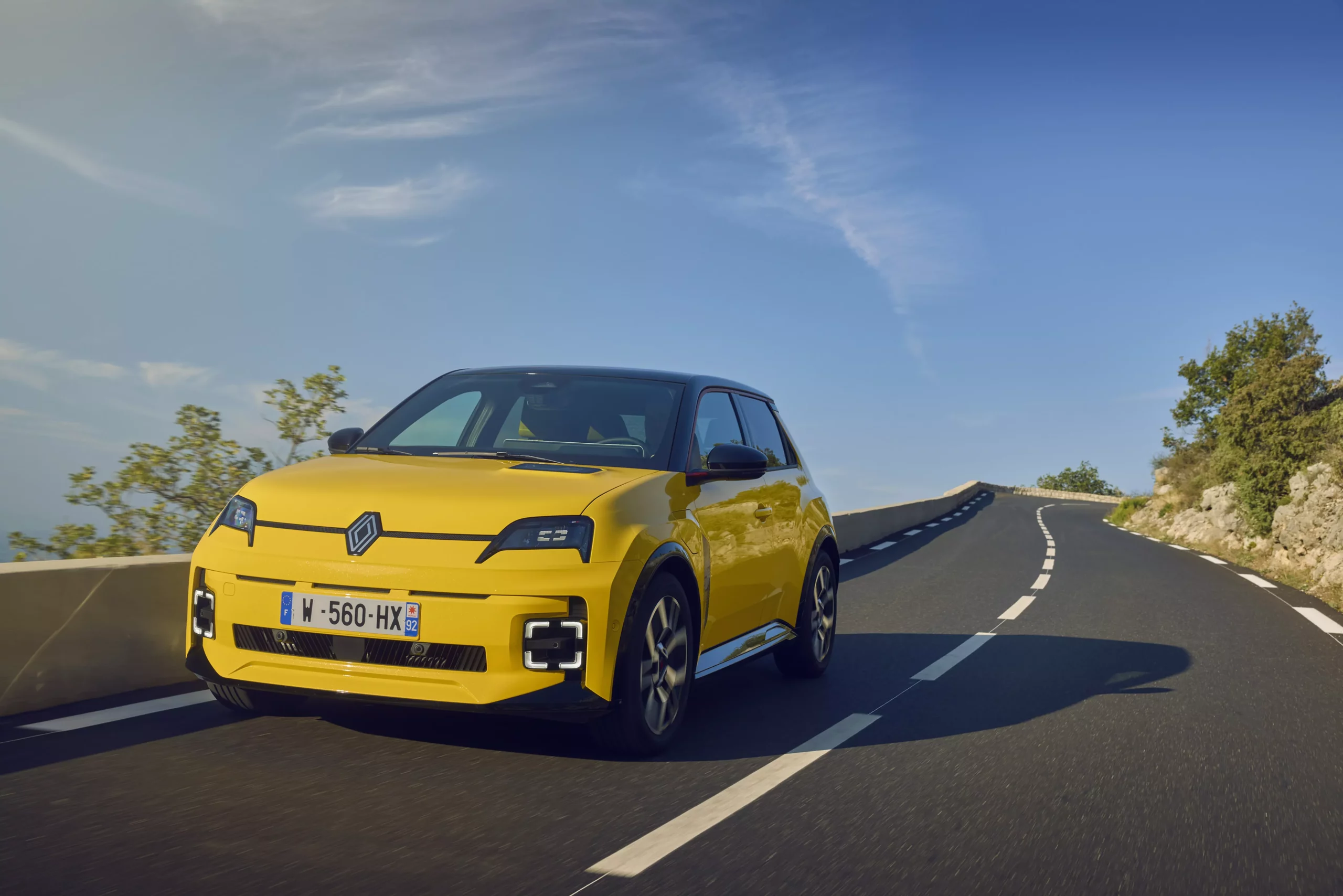
    Designed to produce batteries for the new Renault electric range, this “gigafactory” will eventually produce an annual energy capacity of between 24 and 30 GWh… By way of comparison, that’s enough to power an average town of 5,000 inhabitants for a year. In reality, this new “Gigafactory” alone will supply batteries for around 200,000 electric cars a year by 2030. It will produce batteries for Renault’s reinvented iconic models, such as the R5 and the future electric R4.

    Credit: Teresa SUAREZ

    A national industrial and ecological ambition

    The inauguration of the AESC Gigafactory in Douai is part of a wider strategy of reindustrialisation and energy transition called “Renault ElectriCity”, with a total investment of almost €2 billion, including €1.3 billion for the Douai plant alone.

    Launched in 2021, this project brings together three strategic sites in Hauts-de-France: Douai, Maubeuge and Ruitz, with the ambition of making the region the centre of gravity for electric cars in Europe. The aim of the project is to produce up to 400,000 electric vehicles a year at the three production plants, and to relocate some of the manufacturing to France. “Renault ElectriCity” aims to create a complete ecosystem, from battery manufacture to final vehicle assembly, with the support of key partners such as Envision AESC.

    This inauguration marks a further step forward for Renault, which is affirming its determination to make Hauts-de-France the nerve centre of its 100% electric ecosystem, as part of its “Renaulution” transformation strategy. These initiatives illustrate the drive to strengthen France’s industrial sovereignty, with the aim of reducing its dependence on imported Asian batteries.

    On the financial side, the European Commission has authorised €48 million in aid to support the construction of this lithium-ion battery plant, underlining its importance to France’s economic development and competitiveness in this field. The Douai site alone is expected to create more than 1,000 jobs by 2030.

    Credit: Maxpp

    A major socio-economic impact

    In Douai, Emmanuel Macron also stressed the importance of initiatives of this kind for the economic revitalisation of the region, which has historically suffered from industrial decline. The Head of State even went so far as to say: ” There’s no need to be fatalistic or gloomy. Times are tough, but what you are embodying here today shows that ecology and the economy can go hand in hand if we invest, if we have a long-term strategy and consistency.

    Credit: Ludovic Marin