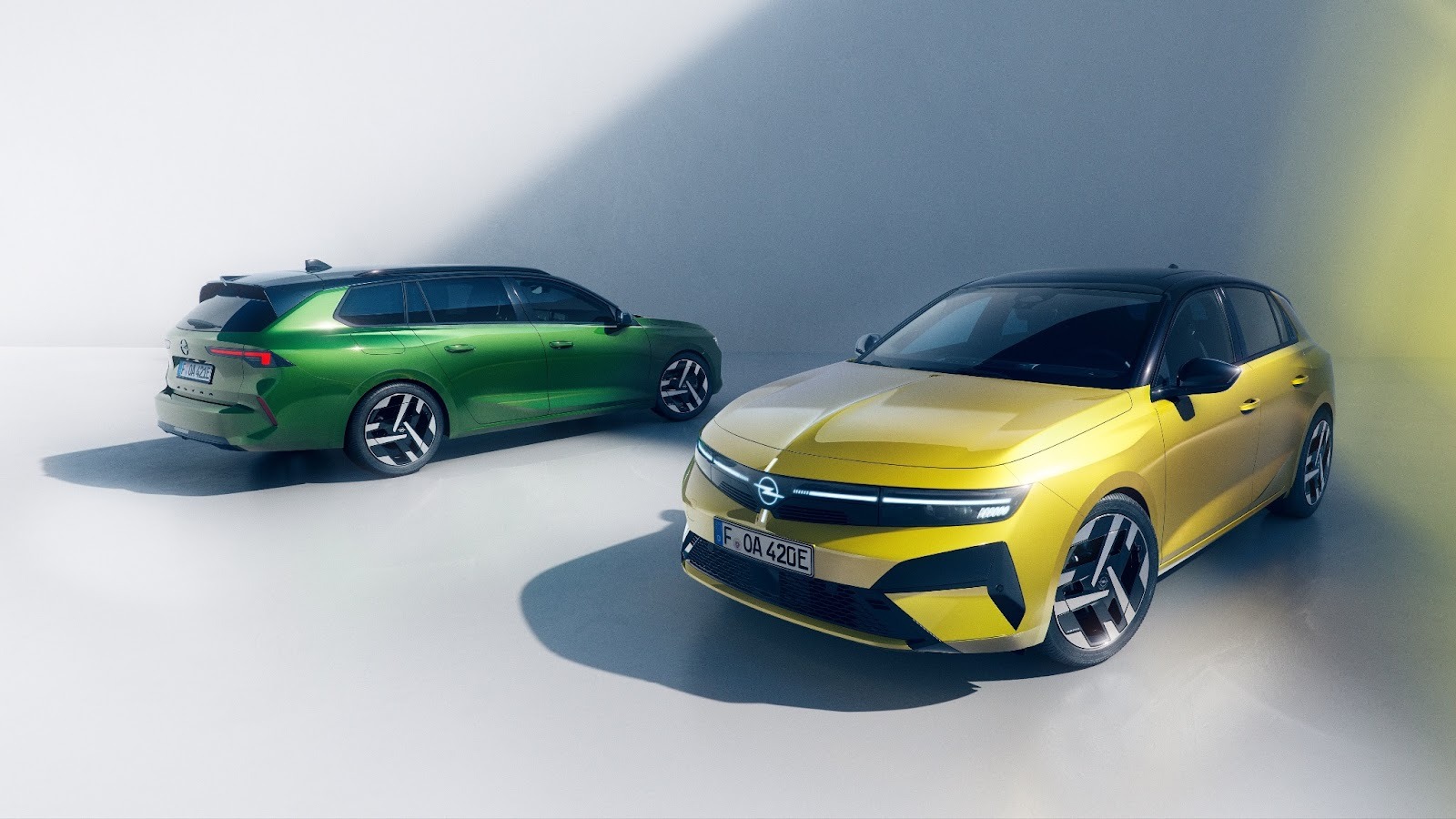
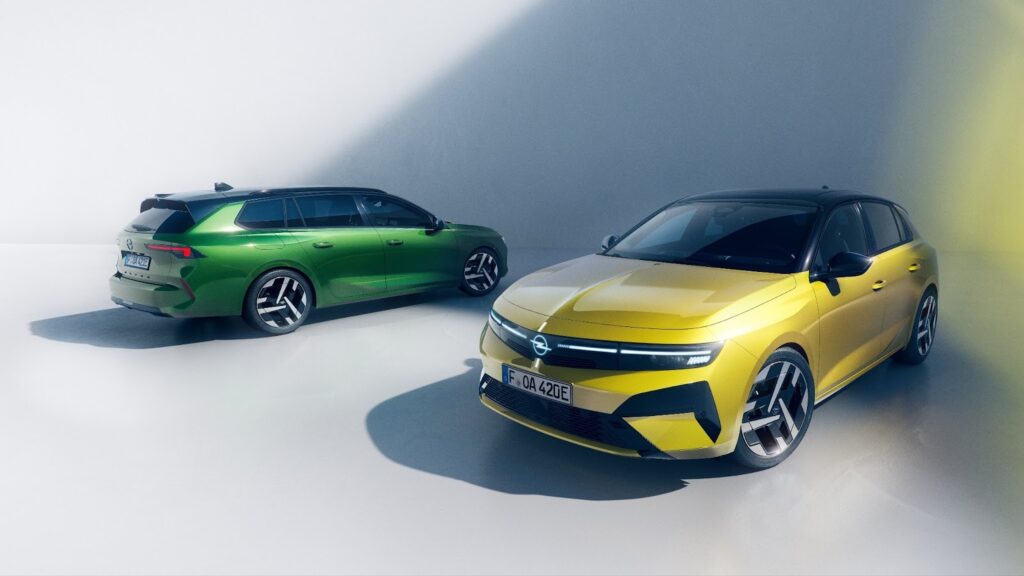
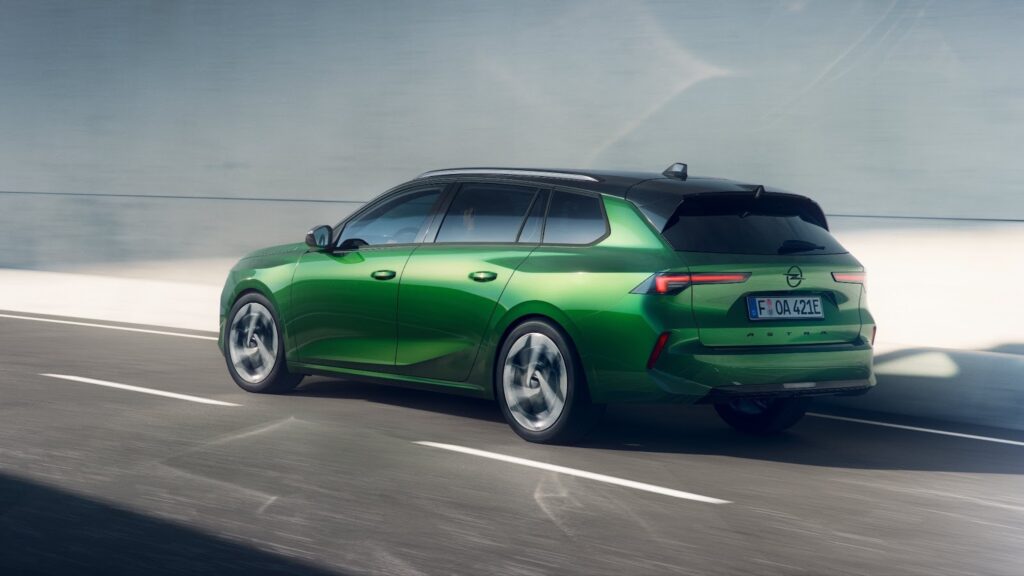
The Stellantis Group officially lifted the veil on the new Opel Astra and Astra Sports Tourer a few days ago, an announcement that comes a month before their world premiere scheduled for the 2026 Brussels Motor Show. For the German manufacturer, this is an opportunity to continue the evolution of its flagship compact model in a context of accelerated energy transition.
source: Opel
An announcement ahead of the 2026 Brussels Motor Show
The manufacturer has confirmed the arrival of these two new versions, designed to succeed the current generation, in a number of official announcements. The first public appearance will take place from 9 January 2026 at the Brussels Motor Show, where visitors will be able to see these models in their final configuration for the first time. With this early announcement, Opel intends to prepare the ground and highlight the main styling and technological developments of its new compact cars.
A modernised design and a new lighting signature
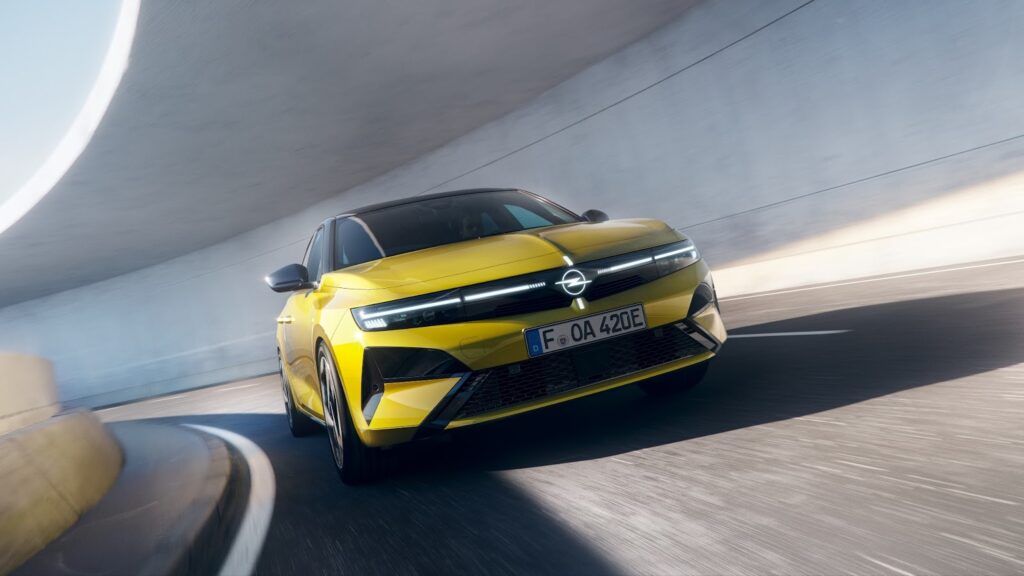
Aesthetically, the new Astra and Astra Sports Tourer evolve and adopt an all-new styling language for the brand, inspired by the design of the Opel Corsa GSE Vision Gran Turismo high-performance concept car. It features a reworked Vizor grille and, above all, the introduction of Intelli-Lux HD headlamps, an adaptive lighting technology that improves visibility and reduces glare for other road users.
source: Opel
Where these two vehicles differ is in terms of format and use. The Opel Astra remains the five-door compact we know, designed for urban and everyday use, while the Astra Sports Tourer is the estate version of the iconic German model, offering more cargo space and modularity, ideal for families or users with larger transport needs.
The compact five-door version offers up to 1,339 litres of boot capacity with the seats folded down. The Astra Sports Tourer offers 1,634 litres with the seats folded.
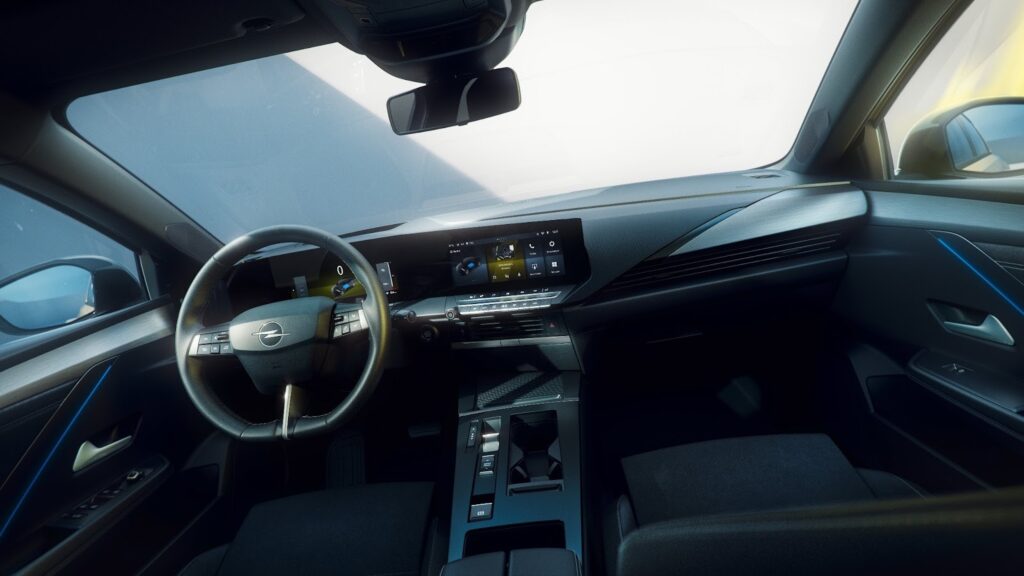
The press release makes a point of showing that the brand is moving towards ever more environmentally friendly practices: “Developers and designers have also remained true to Opel’s ‘Greenovation’ approach: the interior of the new Astra is made from 100 percent recycled materials.”
source: Opel
A 100% electric engine
The most interesting news is that the press release confirms that the new Astra and Astra Sports Tourer will be available in a 100% electric version. And on the performance front, the electric version of the Astra boasts a claimed range of up to 454 km WLTP and is equipped with V2L technology, which allows users to charge an electric device while driving, such as a bicycle.
The press release focuses exclusively on this electric powertrain, illustrating that Opel is highlighting its new energy transition technologies, which, it should be remembered, have officially announced a total switch to electric power in Europe by 2028.
source: Opel
Strategically positioned in the compact segment
With these new models, Opel is seeking to strengthen its presence in the C segment, which designates compact cars in the European car classification. This is a highly competitive sector, with rivals already well established in the electric segment. The aim is clear: to offer a versatile range, combining design, on-board technologies and sustainable mobility solutions.
A key step in Opel’s strategy
The announcement marks a new milestone for Opel, which aims to become a 100 percent electric brand in Europe by the end of the decade. The new Astra and Astra Sports Tourer embody this transition. See them at the Brussels Motor Show from January 9, 2026.
On Saturday 20 December 2025, a major blackout plunged San Francisco into darkness, the fault of a fire that broke out in a Pacific Gas and Electric (PG&E) electrical substation. The incident left around 130,000 homes and businesses without power, bringing parts of the city to a standstill, including autonomous cars.
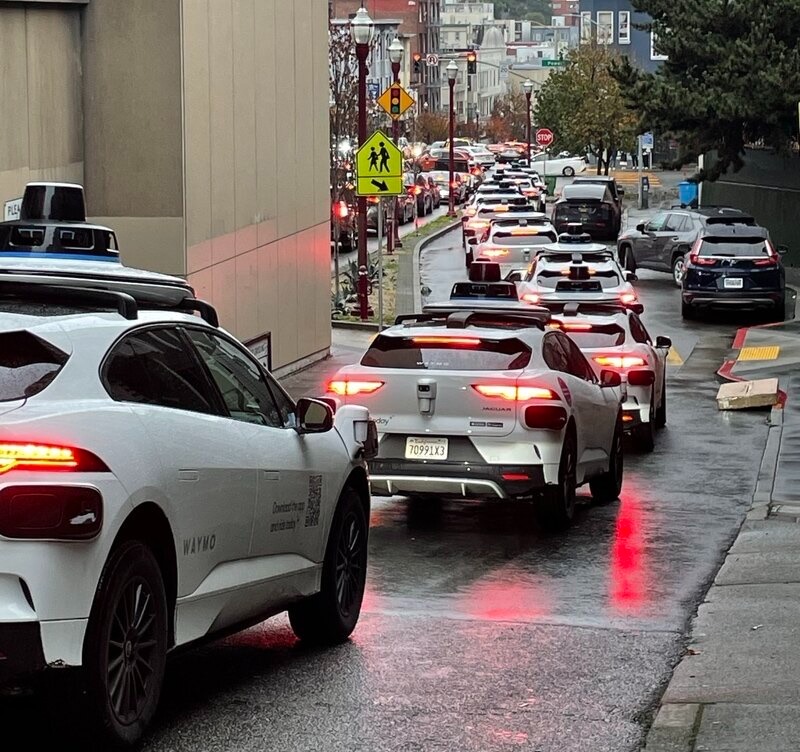
Autonomous taxis have turned into immobile obstacles. At intersections with no traffic lights, these normally fluid vehicles came to a screeching halt with their blinkers on, forcing other motorists to manoeuvre around them as best they could. This rare and comical situation highlights the city’s dependence on ageing infrastructure, even as it adopts cutting-edge technologies.
According to a PG&E press release, the fire damaged essential substation equipment, causing massive power outages in the city centre, South of Market and surrounding areas. To isolate the incident and begin repairs, emergency crews were dispatched to the site and worked throughout the night, in coordination with the municipal emergency services. The authorities have confirmed that there were no casualties and that the cause of the incident is still under investigation.
Intersections without traffic lights, traffic rapidly coming to a standstill
The breakdown had an immediate and visible impact on the streets of San Francisco. More than a dozen intersections were left without traffic lights and quickly became gridlocked, making traffic dangerous for motorists and pedestrians alike. To deal with this unusual situation, the police were mobilised to regulate traffic in the most critical areas, and residents were asked to avoid all non-essential travel until the network was fully restored. The fire that broke out in a PG&E electricity substation also had an impact on the entire public transport network, which suffered significant delays.
Sources: @AnnTrades
Waymo forced to temporarily suspend its robot taxis
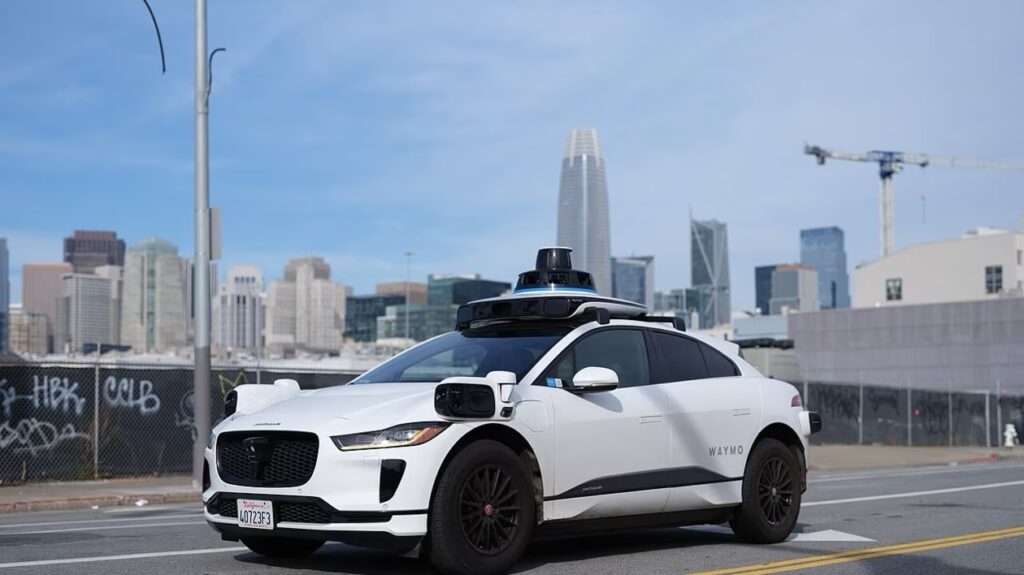
As briefly mentioned above, one of the most striking effects of the blackout was the immobilisation of Waymo’s autonomous vehicles. Waymo is an American brand that has been operating in San Francisco since August 2021 with the launch of its robotaxi service for “trusted testers”. Since June 2024, the autonomous robotaxi service has been available to everyone in San Francisco.
As a result of the power cut, many autonomous and therefore driverless taxis became stuck at intersections due to a lack of traffic lights, leading the company to temporarily suspend its operations in San Francisco as a safety precaution. This interruption exacerbated the traffic disruption in the city.
The dependence of autonomous vehicles on urban infrastructure
The local authorities stressed that this incident highlighted the fragility of certain infrastructures in a city that claims to be a world showcase for technological innovation. For the time being, the majority of users had their electricity back after several hours, although thousands of customers remained without power until the following day. Many shops were forced to close early, restaurants struggled to save perishable foodstuffs, and residents dependent on medical equipment required assistance from the emergency services.
When power was restored, attention turned to issues of preparedness and coordination between energy operators, municipal services and technology companies. Officials announced an audit to assess response protocols and consider measures to reduce the risk of similar outages in the future. For many residents, the blackout was a reminder that at the heart of even the most advanced cities, a reliable power supply remains the foundation of public safety, transport and daily life.
This is a major turning point in European climate policy. Yesterday in Brussels, the European Commission put an end to one of the symbols of the Green Deal: the total ban on the sale of combustion engine vehicles from 2035. The principle of “zero grams of CO₂ from the tailpipe” will disappear in favour of a target deemed more realistic: a 90% reduction in average emissions from new cars compared with 2021.
In other words, Brussels is maintaining the trajectory towards carbon neutrality in 2050, but introducing a limited margin of flexibility after 2035. Internal combustion and hybrid vehicles will still be allowed to be sold, provided they offset their emissions using synthetic fuels, sustainable biofuels or low-carbon industrial processes. This is not a renunciation, but an adjustment between climate ambitions and economic reality.
Why Brussels is changing its strategy
Fortunately for the climate objectives, this apparent retreat is not ideological. In fact, it’s in line with industrial realism. In 2025, even if sales of 100% electric vehicles increase in France, they will stagnate in several markets, notably Germany, Italy and certain Central European countries. The high price of models, the fact that we are still too dependent on China for batteries and the delay in infrastructure are undermining the initial plan.
European Commissioner Stéphane Séjourné refers to a “pragmatic approach”: the forced all-electricity, imagined in 2023, comes up against the economic realities of 2025.
The initial framework of the Green Deal
Let’s go back to the text that governed this vision of the future car industry: the “European Green Deal”. It stipulated that from 2035, all new cars would have zero direct emissions. In short, petrol, diesel and plug-in hybrid cars could not be sold new. Logically, that left 100% electric or hydrogen.
It’s an ambitious target, but one that will be difficult to meet without breaking up the industry. And indeed, faced with the cost of batteries and pressure from Asia, Brussels admits that the pace needs to change. The new -90% target maintains the direction, but gives a little breathing space to an industry under stress.
-90% reduction in emissions: what’s the difference?
With this new target, the vast majority of sales will remain electric or zero-emission direct. However, a small margin of flexibility could be granted: manufacturers would be able to include a limited share of combustion or hybrid models, provided that the average CO₂ emissions of their fleet complied with the 90% reduction compared with 2021.
These few models, tolerated at the margin, would have to rely on synthetic fuels, biofuels or low-carbon production processes to offset their impact. For carmakers, this scenario would provide a transitional lever, giving them time to make their hybrid platforms profitable and support the rise of all-electricity.
Berlin and Rome on the front line
Germany and Italy pulled out all the stops behind this compromise. German decision-makers had been arguing for months for recognition of e-fuels. Rome, for its part, wanted to preserve its thermal production sites, which are essential to its industrial fabric.
On the French side, reticence prevailed at first, but France finally agreed, on condition that European investment in the electric sector was protected. Emmanuel Macron stressed the need to strengthen the European industry rather than weaken it.
Electrics remain at the heart
However, despite a decision that could dampen the enthusiasm of electric car manufacturers, Brussels is not turning its back on zero-emission mobility. On the contrary, the Commission intends to maintain electric vehicles as a central pillar of the decarbonisation of road transport, while adjusting its industrial strategy.
The new framework is accompanied by increased support for small electric cars made in Europe, to counter low-cost Chinese models.
The Commission is also promising to simplify industrial procedures, such as approval procedures, to make State aid more flexible in order to encourage investment in battery factories, and to speed up gigafactory projects. In addition, the idea is to encourage innovation in solid batteries, two-way recharging and recycling.
source : netcarshow
Angry NGOs, relieved industry
But this more realistic reorientation, largely geared towards European competitiveness, has not met with unanimous approval. NGOs are denouncing it as a step backwards for the climate and a blurred signal to industry. Greenpeace calls it a “historic step backwards”.
Conversely, carmakers are welcoming the compromise as a breath of fresh air: it gives them extra time to finance the ramp-up to all-electricity without jeopardising their financial equilibrium.
What’s next?
The proposal will have to be approved by the European Parliament and the Member States during 2026. If it is adopted, the transition will remain largely electric, but will be more sustainable for industry.
For manufacturers, the challenge is clear: to offer electric cars that are competitive, desirable and affordable, while continuing to innovate.
This European decision marks the end of a transition designed without shock absorbers, and the beginning of a more pragmatic era.
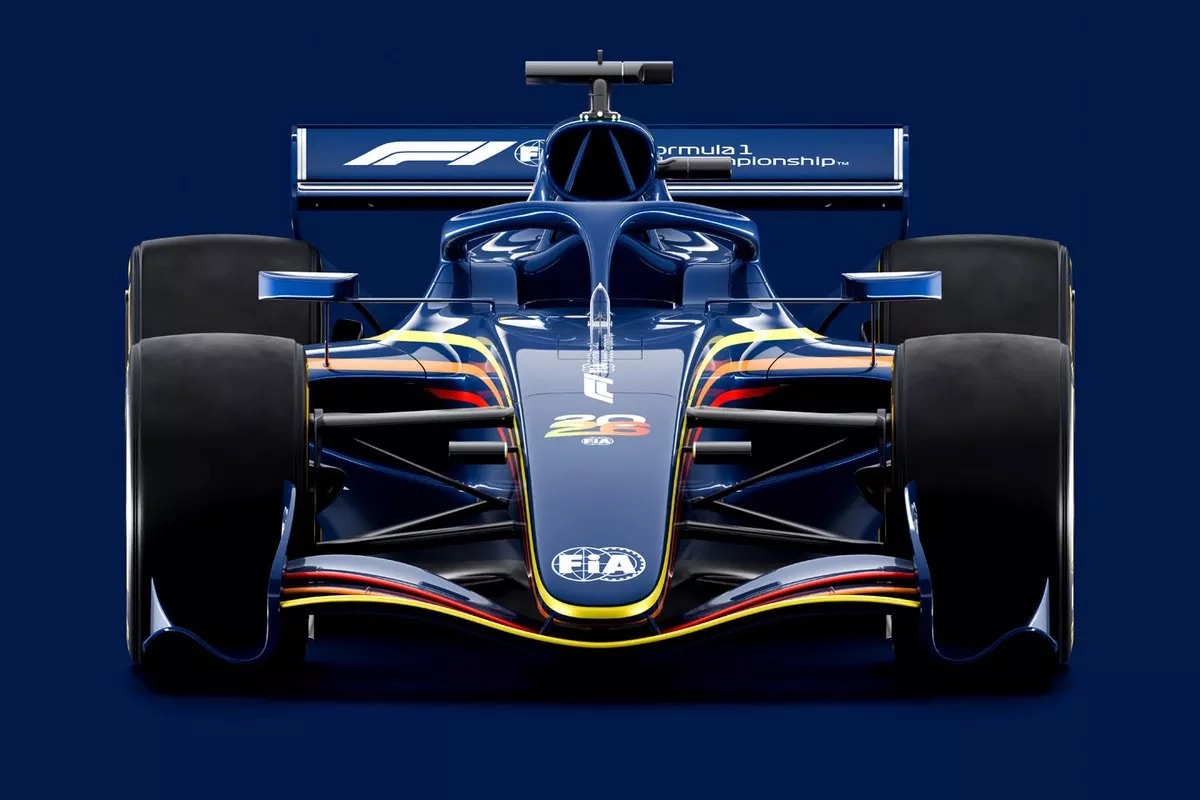
The 2025 Formula 1 season, which has just come to a close, will go down in history as McLaren driver Lando Norris clinched his first-ever world title after a thrilling championship. For the British team, it was a historic triumph, but behind the celebrations, another major turning point is taking shape: the end of ‘classic’ engines and the start of a reinforced hybrid era, from the 2026 season.
source: FIA
A revolution under the bonnet
The single-seaters will continue to be powered by a 1.6-litre V6 turbo engine, as they are today, but with a radically altered energy/power split. The central element of this change? Electric power will triple from around 120 kW to around 350 kW, or 475 bhp, via the MGU-K system. In practical terms, the electrics will be able to provide almost 50% of the total power.
The old MGU-H unit is a small motor that converts the heat from the exhaust gases into electrical energy to help the car go faster. The 2026 rules do away with this part. But even without it, the car becomes simpler and more efficient: thanks to the other hybrid systems, every time the car brakes or accelerates, it can recover much more energy than before, up to 8.5 MJ per revolution, almost double that of current systems.
Total power preserved
Obviously, these innovations are being produced with the clear aim of maintaining performance, and therefore enhancing the spectacle that is motor racing. With these changes, the overall power of the 2026 engines remains extremely high, with an estimated total of just under 1,000 bhp (combustion + electric).
What has changed is the reduction in engine power. Its power has been slightly reduced to around 400 kW, compared with 550 kW at present.
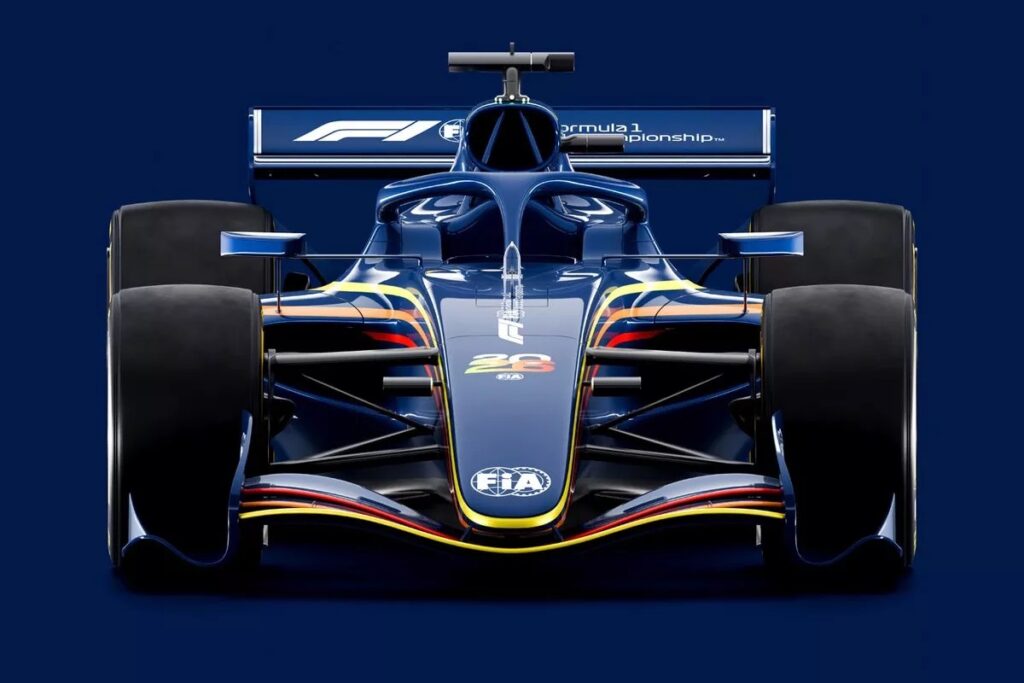
Other innovations modifying the car itself will appear as early as next season. The aerodynamics of the single-seaters are being extensively modified, with a clear objective: to reduce drag, limit excessive downforce and improve fuel efficiency.
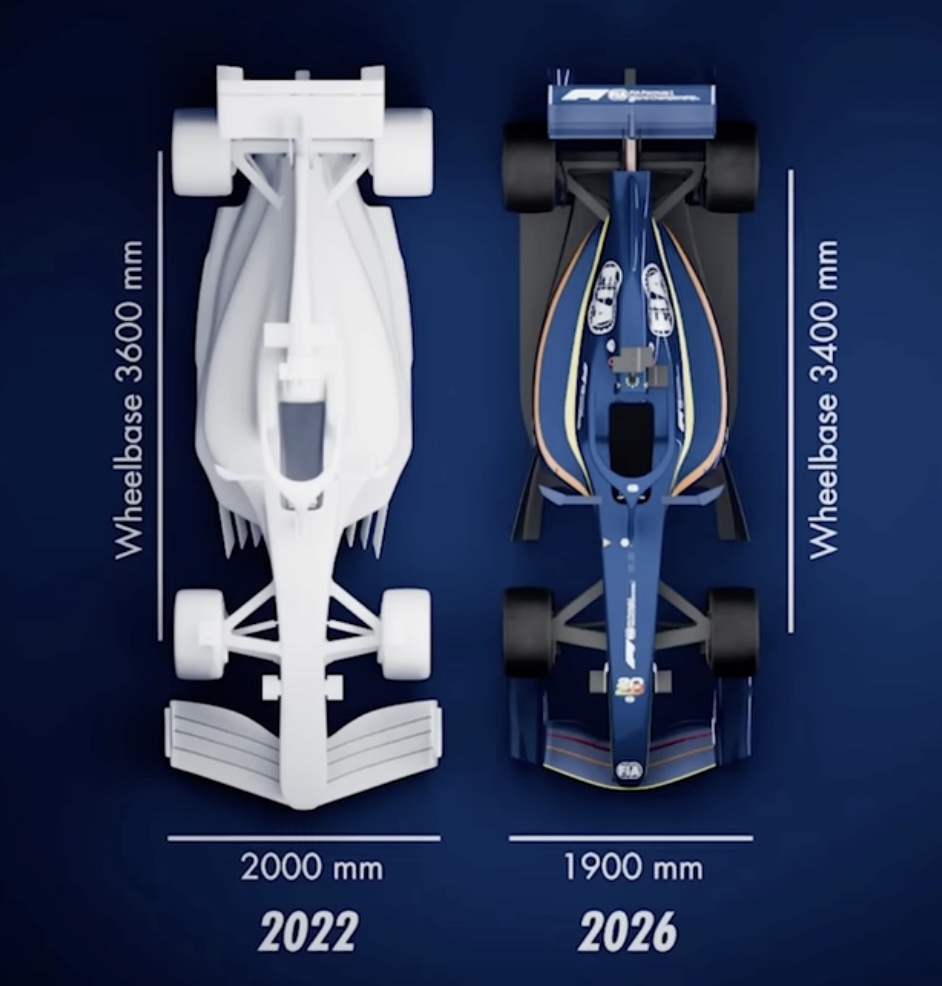
To illustrate this, the F1 cars of 2026 will be more compact and lighter, with a reduction in width (1.90 m compared to 2 m today) and wheelbase, according to the latest FIA guidelines. But the real revolution comes from the introduction of active aerodynamics, a first on this scale in the recent history of the sport. The single-seaters will have two distinct aerodynamic modes:
a low-drag mode for straight lines,
a high downforce mode for cornering and braking.
The aim of these changes is to make the Grands Prix more competitive and more exciting for drivers and spectators alike.
source: FIA
Following initial tests, Mercedes has revealed that the 2026 single-seaters could reach top speeds of up to 400 km/h. That’s quite a feat when you consider that the speed record so far has been held by Valtteri Bottas at the 2016 Mexican Grand Prix, when his car reached 372.6 km/h.
An economic objective for manufacturers
The 2026 regulations are not just about performance, but also about rationalisation. By simplifying several vehicle components, the FIA intends to drastically reduce development costs. This move makes Formula 1 more attractive to new engine manufacturers, by lowering the technological entry barrier. As a result, Audi has officially joined the grid, Ford is making a comeback by joining forces with Red Bull Powertrains, and Cadillac is also set to become an engine manufacturer in 2029. The elite of motor sport is thus opening up to renewed, more diversified and sustainable competition.
Sustainable fuels and the ecological transition
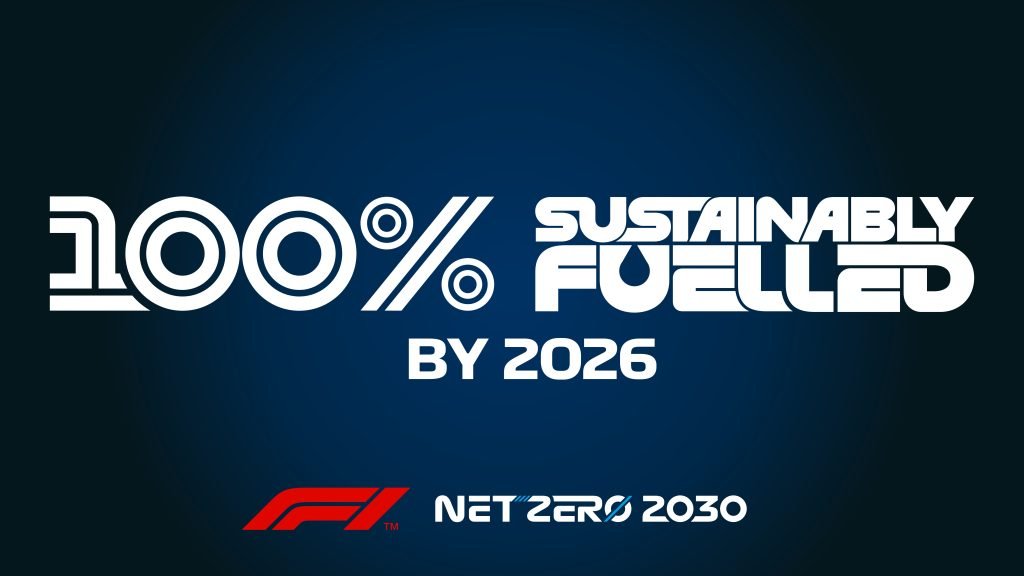
But the revolution doesn’t stop at power. In fact, these hybrid engines will be powered by 100% sustainable fuels, and the amount of petrol is reduced from the 100 to 110 kg needed today to 70 to 80 kg.
Produced from non-fossil sources, these fuels will be based on advanced biofuels or synthetic drop-in fuels, meaning that they can be used directly in engines without major modifications. They will drastically reduce carbon footprints while remaining compatible with current engine architecture.
source: FIA
A strategic turning point for F1
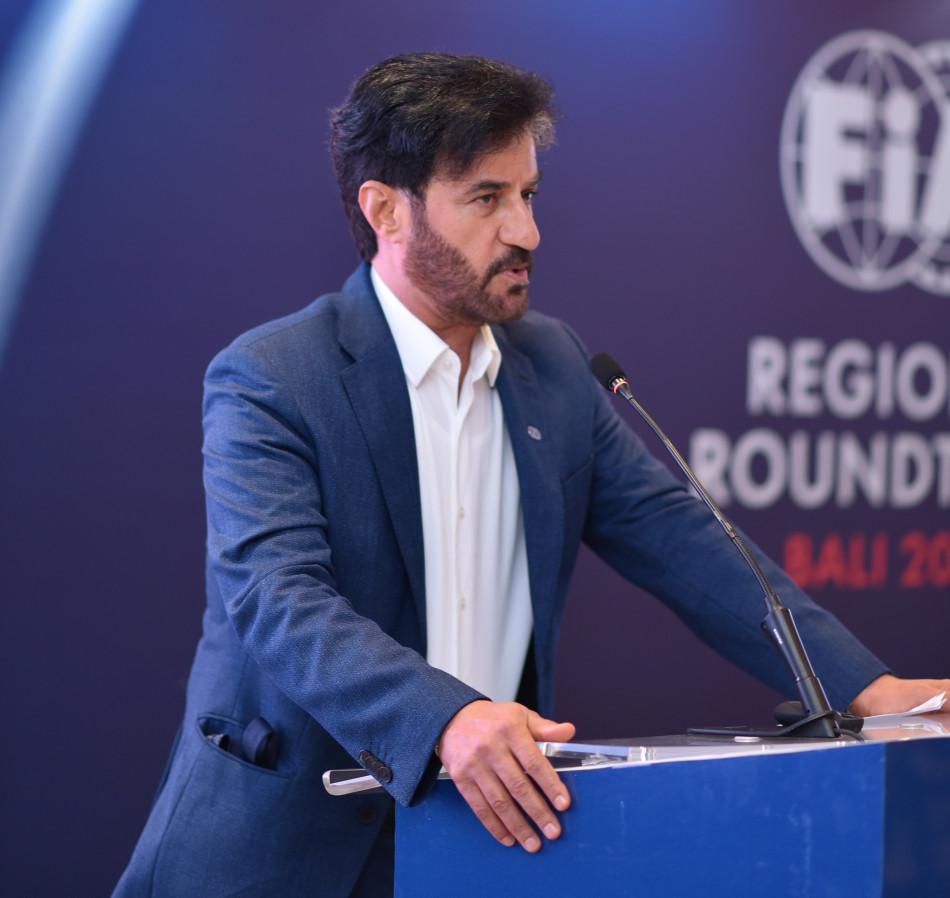
Mohammed Ben Sulayem, President of the FIA, justifies this strong choice to increase the proportion of electric power in F1 engines: “The FIA continues to push innovation and sustainability across our motorsport portfolio. The powertrain regulations for 2026 are the most visible example of this.”
This technological shift shows that Formula 1 is no longer content to be a showcase for the performance of the world’s best engine engineers: it is foreshadowing the future of global mobility, where electrification and sustainability are becoming the norm. Mercedes, Red Bull Powertrains, Honda and Audi are using the championship as an extreme testing ground.
This overhaul is part of a wider environmental ambition: to achieve carbon neutrality by 2030. This “Net Zero Carbon” objective, set by the FIA and F1, is based on three pillars: the use of 100% sustainable fuels, the reduction of emissions over the entire lifecycle of the races and the compensation of residual impacts.
source: FIA
F1 reinvents its DNA
With the abolition of the old MGU-H, more electric power, optimised energy recovery and the use of sustainable fuels, Formula 1 is reinventing itself.
The 2025 season therefore concludes with two victories: Lando Norris’, and that of a Formula 1 team entering a new era, ready to demonstrate that the future of motor sport is hybrid… and sustainable.
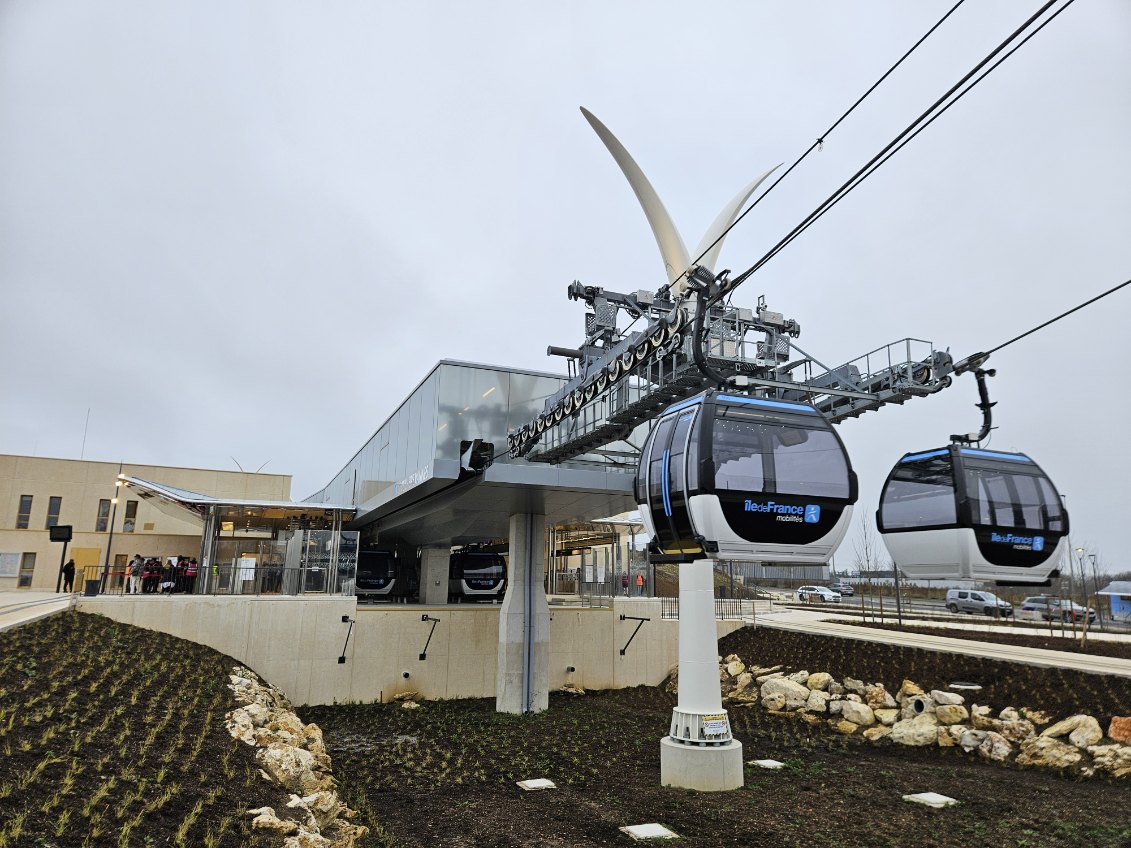
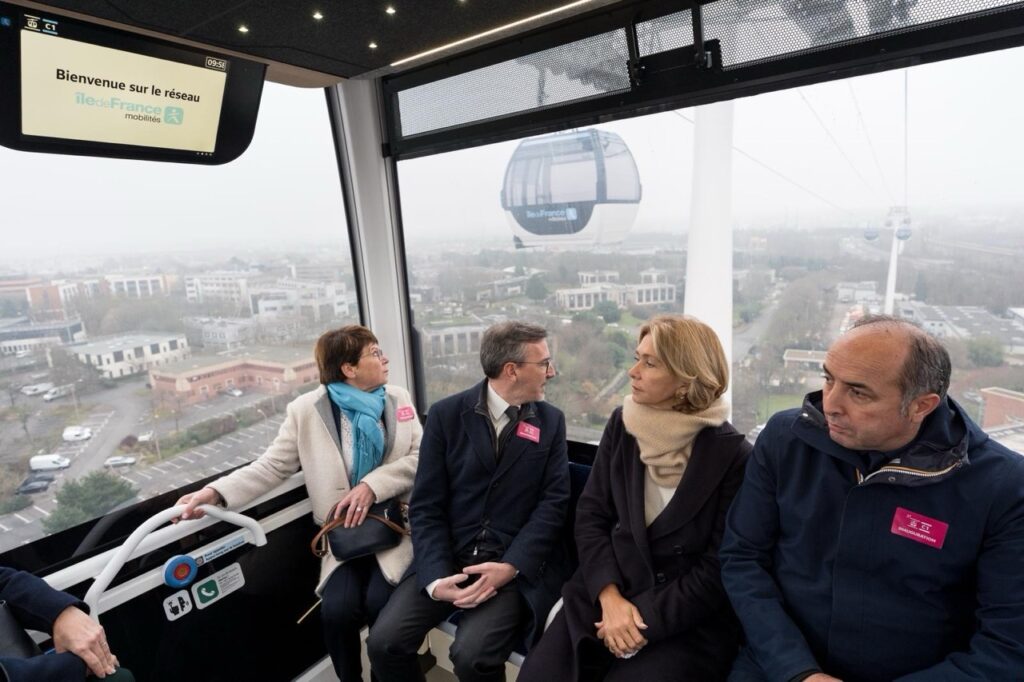
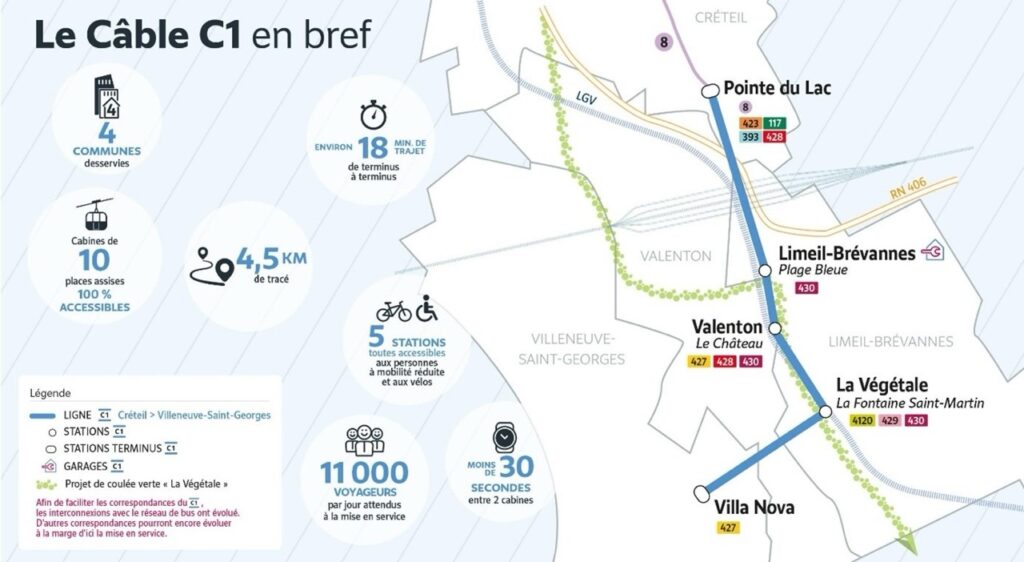
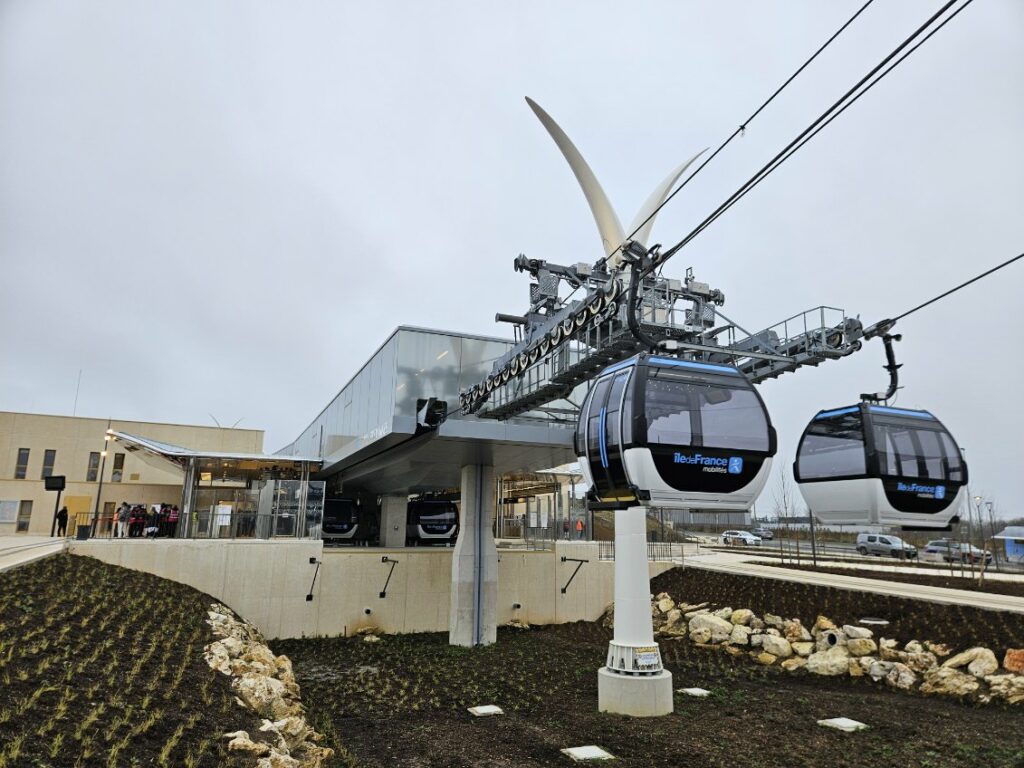
On Saturday 13 December 2025, Valérie Pécresse and various elected representatives inaugurated Câble C1, the largest urban cable car in the Paris region. At 4.5 km long, this 100% electric project will halve journey times between Créteil and Villeneuve-Saint-Georges. A suspended revolution that redefines sustainable mobility in over-burdened urban environments.
credit: Département du Val-de-Marne
A grand opening in Limeil-Brévannes
The inauguration ceremony was held in Limeil-Brévannes on Saturday morning. Families, elected representatives and curious onlookers flocked to the five Cable C1 stations to be among the first to board these cabins suspended at heights of over 40 metres above several Val-de-Marne communes. In all, no fewer than ten people can travel in a single cabin, seated and enjoying a panoramic view of the area.
The morning was attended by many of the elected representatives and decision-makers involved in this project, which was launched 12 years ago in 2013. Valérie Pécresse, President of the Île-de-France Region and of Île-de-France Mobilités, was present alongside Marie Gautier-Melleray, Prefect and General Secretary for Public Policy, Étienne Stoskopf, Prefect of Val-de-Marne, Olivier Capitanio, President of the Val-de-Marne Department, Louis Boyard, Member of Parliament for Val-de-Marne, and the mayors of the municipalities through which the project passes: Françoise Lecoufle (Limeil-Brévannes), Kristell Niasme (Villeneuve-Saint-Georges), Métin Yavuz (Valenton) and Édouard Hénault, representing Créteil. Jessica Larsson, Head of the European Commission Representation in France, was also present to symbolise the European co-financing of the project.
“It’s the Alpes sur Marne!” said Valérie Pécresse. “We’re coming to the end of an obstacle course that’s lasted more than 10 years. We had to find the funding, convince the local residents… For the people of Val-de-Marne, this is a sign of consideration.”
18 minutes against 40
So why decide to create an urban cable car? Well, the initial data is demonstrative: before C1, the journey from Villeneuve-Saint-Georges to Pointe du Lac station, the terminus of the metro 8, took over 40 minutes by bus or car, stuck in traffic jams on the RD 101 and the RN 6. The cable car, on the other hand, makes the journey in 18 minutes, over obstacles such as the TGV high-speed train line, the Valenton marshalling yard, the RN 406 and high-voltage power lines.
What’s more, the service operates from 5.30am to 11.30pm on weekdays, and until 12.30am at weekends. A cabin runs every 30 seconds during rush hour, which means that 11,000 passengers are expected to use the service every day. To take advantage of this new urban improvement, you need to have a Passe Navigo or, for occasional travellers, buy a Bus-Tram-Câble ticket worth €2 (€1.64 with Liberté+). Access is free for children under the age of 4.
credit: Ile de france mobilité
While the C1 Cable is a fast, environmentally-friendly alternative to the car, its limited capacity of just over 10,000 passengers per day shows that it is still a complementary solution to other modes of transport. Intermodality with the metro and bus remains essential to meet all mobility needs on the route.
An ecological project
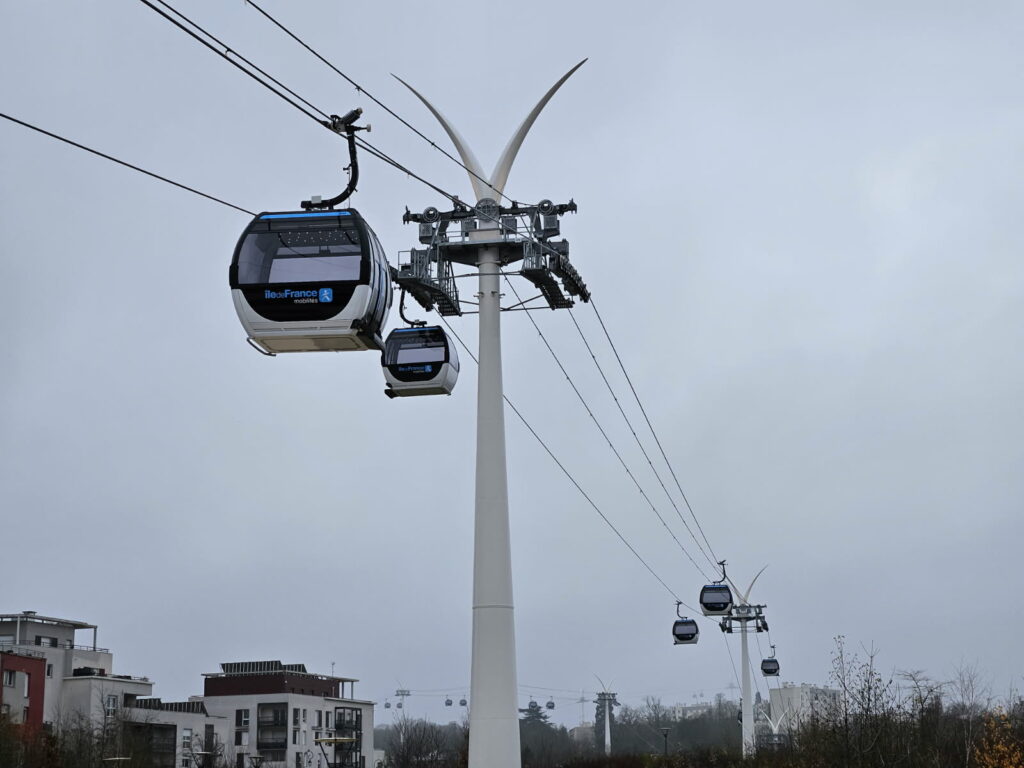
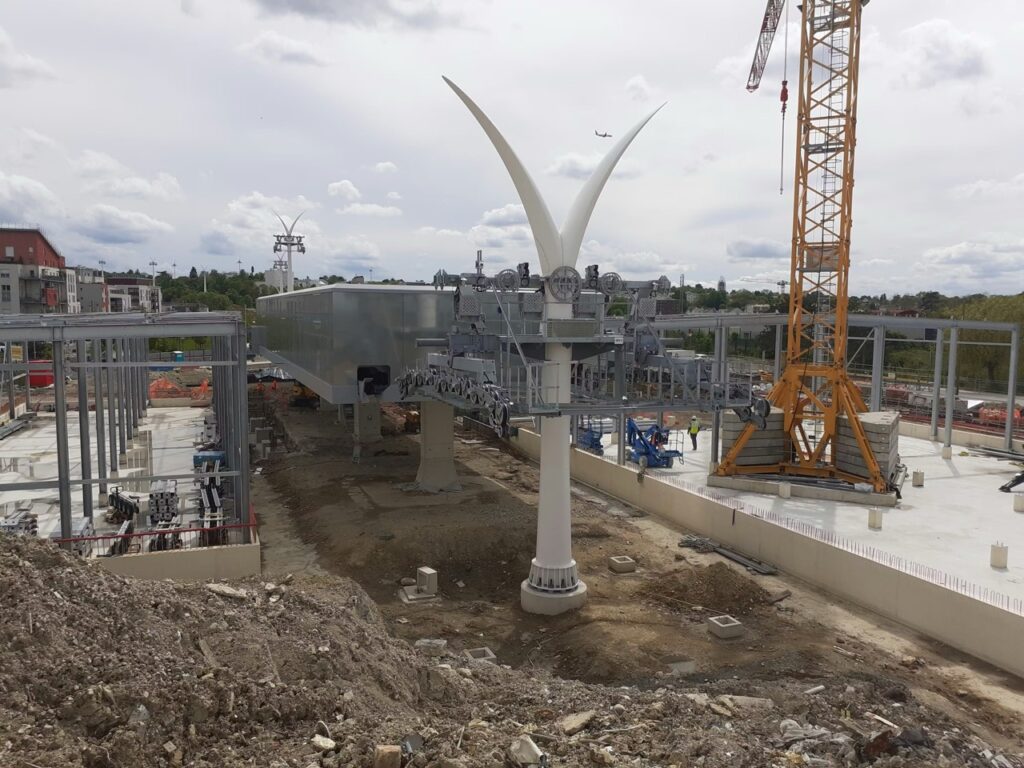
The C1 Cable is 100% electrically powered and has been awarded HQE Sustainable Infrastructure certification. Its 30 pylons have a reduced footprint, preserving the green spaces they cross, in particular the Tégéval green corridor.
This monocable carrier-tractor technology is less invasive than a metro or tramway, since it avoids the construction of heavy engineering structures and reduces the duration and intensity of the work, and therefore the pollution and emissions associated with conventional worksites.
credit: Ile de France Mobilité
By offering a fast, regular alternative to the car on a route that is currently saturated, the C1 should help to reduce traffic jams and, in turn, CO₂, NOx and particulate emissions linked to daily road traffic in the area.
C1 has a total cost of 138 million euros (132 million for the infrastructure, 6 million for the 105 cabins). “An underground metro would never have seen the light of day because the budget of over a billion euros could never have been financed,” explains Grégoire de Lasteyrie, vice-president of the regional council in charge of transport. Just three years of construction work, from the ground-breaking ceremony in 2022 to the inauguration on Saturday, have also made it possible to limit the impact of a major transport project on the quality of life of local residents.
Financing: a tripartite arrangement
One of the sinews of war when it comes to financing this kind of project is often finding the funds needed to make it a success. And the €132 million needed to build the infrastructure is 49% funded by the Île-de-France Region, 30% by the Val-de-Marne Department, and 21% by the State and the European Union. The cabins (6 million euros) and operations are financed 100% by Île-de-France Mobilités.
The 21% EU funding underlines Brussels’ commitment to innovative electric mobility in dense urban areas. And the Câble C1 is the perfect embodiment of this European priority: a 100% electric, HQE-certified mode designed to replace car journeys on congested roads and reduce emissions. The presence of representatives from the European Commission at the inauguration, including Jessica Larsson as Head of the Representation in France, illustrates this desire for visibility: Europe is concretely financing low-carbon alternatives that are suited to constrained areas like Val-de-Marne.
There are several reasons for the EU’s support:
Decarbonisation objective: C1 pools energy on cables for lightweight cabins, optimising consumption per passenger-km compared with the predominant combustion-powered cars on the RD 101/RN 6.
European scale: this funding is part of the Green Deal and the sustainable mobility funds (CEF Transport, Connecting Europe Facility), which prioritise low-carbon air projects in urban areas.
Replicable model: with a total cost of €138m (compared with €250m/km for the metro), the C1 is becoming a textbook example for other European cities.
Safety and acceptability
Cable cars are considered to be one of the safest means of transport in the world, according to the Ministry of Transport’s technical department. In France, the last fatal accident occurred in 1999 in the Hautes-Alpes region.
For this new investment in environmentally-friendly transport, each cabin is equipped with video surveillance, an intercom linked to the control centre at Limeil-Brévannes, and staff on hand at the station. The system works in snow and winds of up to 70 km/h. Sensors continuously monitor weather conditions.
And if Parisian transport, like the metro for example, is poorly equipped with access for people with disabilities, leaving out people who cannot move around freely, with the Câble C1, this problem has been solved. The cable car is 100% accessible for people with disabilities:
level stations
wheelchair-friendly cabins
human assistance at the station
audio and visual information
call intercoms
guide strips from the public space to the boarding platform
credit: Département du Val-de-Marne
A laboratory for the future of mobility
C1 proves that it is possible to open up the region effectively without sinking a billion euros into an underground metro. But capacity remains limited (11,000 passengers/day compared with 500,000 for a conventional metro line), and the technology is not suitable everywhere. It excels in constrained areas, where there is a strong need for intermodality and where there are major height differences or obstacles.
More than just a technological gimmick, this urban cable car embodies a pragmatic vision of decarbonising transport: providing a fast, reliable, electric alternative to combustion-powered cars in congested areas. With the C1, electric mobility now comes from above.
Sodium-ion batteries are set to revolutionise the electric vehicle market. Between Canadian scientific advances and Chinese industrialisation, this safer, more affordable and environmentally-friendly technology could democratise electromobility as early as 2026.
Researchers at the University of Western Ontario in Canada have announced a breakthrough in the development of solid electrolyte sodium-ion (Na-ion) batteries, published in the journal Advanced Materials. This innovation solves a major challenge of lithium-ion (Li-ion) batteries: thermal runaway, which can cause fires or explosions if damaged or short-circuited. The discovery: a solid electrolyte, composed of sulphur and chlorine, which conducts sodium ions like a liquid while remaining non-flammable. Another positive point is that it has a remarkable efficiency of 99.26% after 600 charge-discharge cycles (on a laboratory scale), similar to Li-ion standards at over 99%.
Industrial context: CATL and BYD in the lead
This discovery is part of a global industrial drive. At the end of 2025, the Chinese giant CATL launched mass production of its Naxtra sodium-ion cells, which have highly promising energy capacities. These batteries have an energy density of 175 Wh/kg, a range of 500 km and can withstand a rapid 5C charge. They are also resistant to extreme cold (-40°C with 90% of capacity retained), ideal for countries located in areas of the world with extreme climatic conditions. CATL supplies Tesla, Ford and Stellantis, who are studying these cells for low-cost EVs from 2026. Alongside cars, BYD is already producing energy storage cells (MC Cube-SIB) and developing cells for EVs, which underlines the fact that they could be useful for corporate fleets and urban use.
Decisive economic and environmental benefits
Obviously, this solution is designed to counter the main problems associated with the development of batteries for EVs and other vehicles: cost and pollution.
Sodium is around 400 times more abundant and cheaper than lithium, enabling potential production costs of around €60-90/kWh compared with €100+ for Li-ion.
With no rare metals (cobalt, nickel), these batteries make recycling easier and reduce the carbon footprint, in line with European constraints on critical materials. But this advance is also in line with the objective of slowing down the extraction of these metals, which, it should be remembered, is dangerous and not ethically responsible.
Kobalt
Current limits and outlook for 2026
Despite these advantages, energy density remains 30% lower than advanced Li-ion (175 Wh/kg vs 250+), initially limiting applications to compact, hybrid or utility vehicles. Challenges remain on large-scale production without accelerated degradation. However, 2026 will see the first low-cost deployments, with China as the core target, while deployment in Europe remains to be seen.
Implications for French electromobility
In France, where electrified car registrations reached almost 30% in November 2025, sodium-ion batteries could counter low-cost Chinese competition and support the France 2030 plan. With the end of the bollard tax credit on 31 December and increased quotas for commercial fleets, they offer manufacturers a viable alternative. A technical revolution that makes electric vehicles more democratic, secure and sovereign.
At a time when Brussels is discussing easing up on the end of fossil-fired power by 2035 and Asia dominates 80% of the battery market, Verkor is inaugurating its 16 GWh gigafactory in Dunkirk. Is this a leap of faith in European industrial sovereignty, or an inordinate risk?
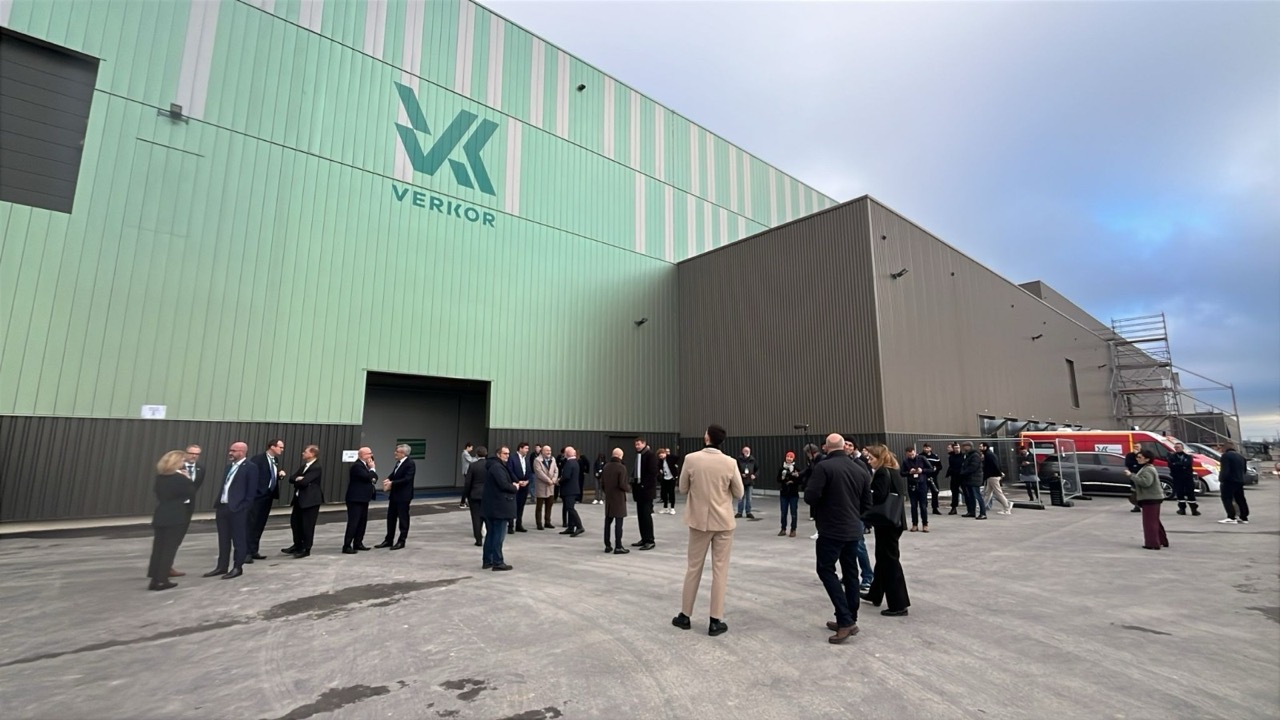
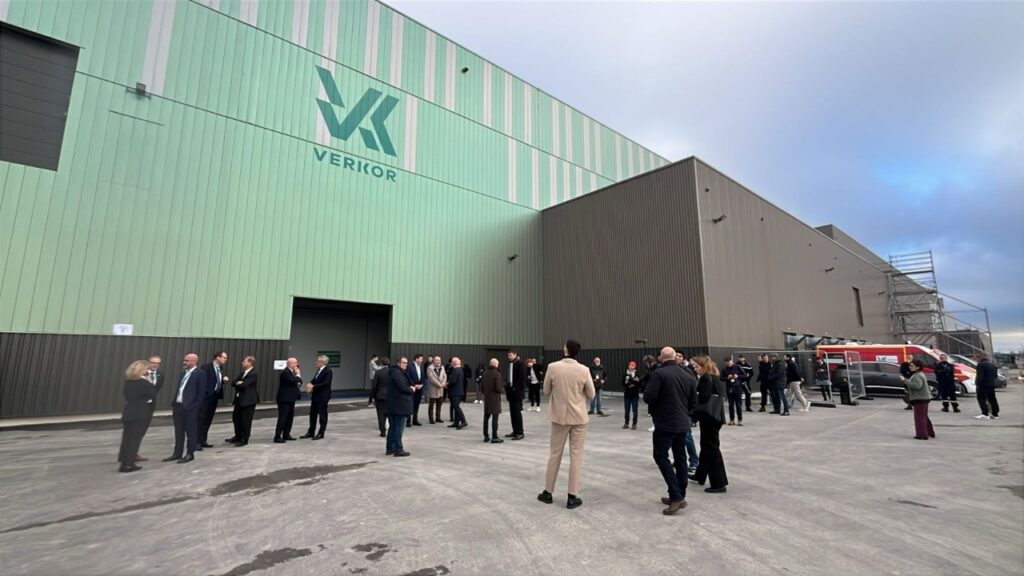
On 11 December 2025, under the patronage of Emmanuel Macron, the French start-up took a decisive step forward with its first battery factory, in the heart of the “battery valley” in Hauts-de-France. 100,000 m², 1,200 direct jobs and €3 billion raised: Verkor is betting big to equip the Alpine A390 from 2026 and aim for 50 GWh by 2030.
A high-voltage inauguration
“This is a great day for Dunkirk, France and Europe,” said Patrice Vergriete, Chairman of the Dunkirk Urban Community (CUD), at the ceremony on 11 December. The event is being held under the patronage of the French President, alongside ministers and local elected representatives. The Bourbourg plant is already home to the first production lines in the test phase, with LFP-NMC cells designed for premium electric vehicles.
The figures are impressive: initial capacity of 16 GWh/year, or the equivalent of 200,000 to 300,000 EV batteries per year. Financing for the project has been secured to the tune of €3 billion by a number of players: the French government, the EIB, the Hauts-de-France Region, Renault and Mercedes, for a total investment target of €11 billion by the time the plant is expanded to 50 GWh. Verkor is part of the Hauts-de-France ecosystem, alongside other battery manufacturers.
Role in the French industry
Verkor is at the heart of the “battery valley” in Hauts-de-France, Europe’s third gigafactory after Billund and Kamenz. Its partnership with Renault is key: the first deliveries of cells will power the Alpine A390.
The innovation comes from Grenoble (Verkor R&D), and the production from Dunkirk (proximity to ports for lithium supply). EDF will also be involved in supplying green electricity to the plant. A 33 MW contract has been signed, and a partnership with Veolia has also been agreed with the aim of recycling batteries at the end of their life.
The challenges: competitiveness and timing
The real test remains the ramp-up. The pilot phases began in April 2025, but industrial production is not scheduled until 2026. Energy costs weigh heavily: despite the EDF PPA (long-term electricity purchase contract), French electricity remains expensive compared to China. Securing raw materials (lithium, nickel, cobalt) is another stumbling block in a tight market. Expansion to 50 GWh will depend on new financing and European demand. Verkor is betting on its high-density LFP-NMC technology.
Strategic context: Europe in question
The inauguration comes at an opportune time, when Brussels is discussing a more flexible approach to the end of the use of combustion engines in 2035 (plug-in hybrids tolerated under certain conditions). In France, the SNBC (national low-carbon strategy) is aiming for two-thirds of new car sales to be in EVs by 2030, with an increased purchase incentive from 1 January 2026. Verkor embodies this sovereignty: producing locally to avoid dependence on China.
Prospects: success or industrial mirage?
The advantages are there: proximity to the Renault/Alpine plants, the creation of a large number of jobs (1,200 direct, 3,000 indirect), but also a useful low-carbon process. If Verkor keeps up its pace, Dunkirk could become the spearhead of a competitive French industry. Risks remain, including uncertain demand for EVs if Brussels gives in on 2035, global overcapacity and an Asian price war. Despite everything, Dunkirk symbolises Europe’s commitment to sovereignty in the face of foreign competitors.
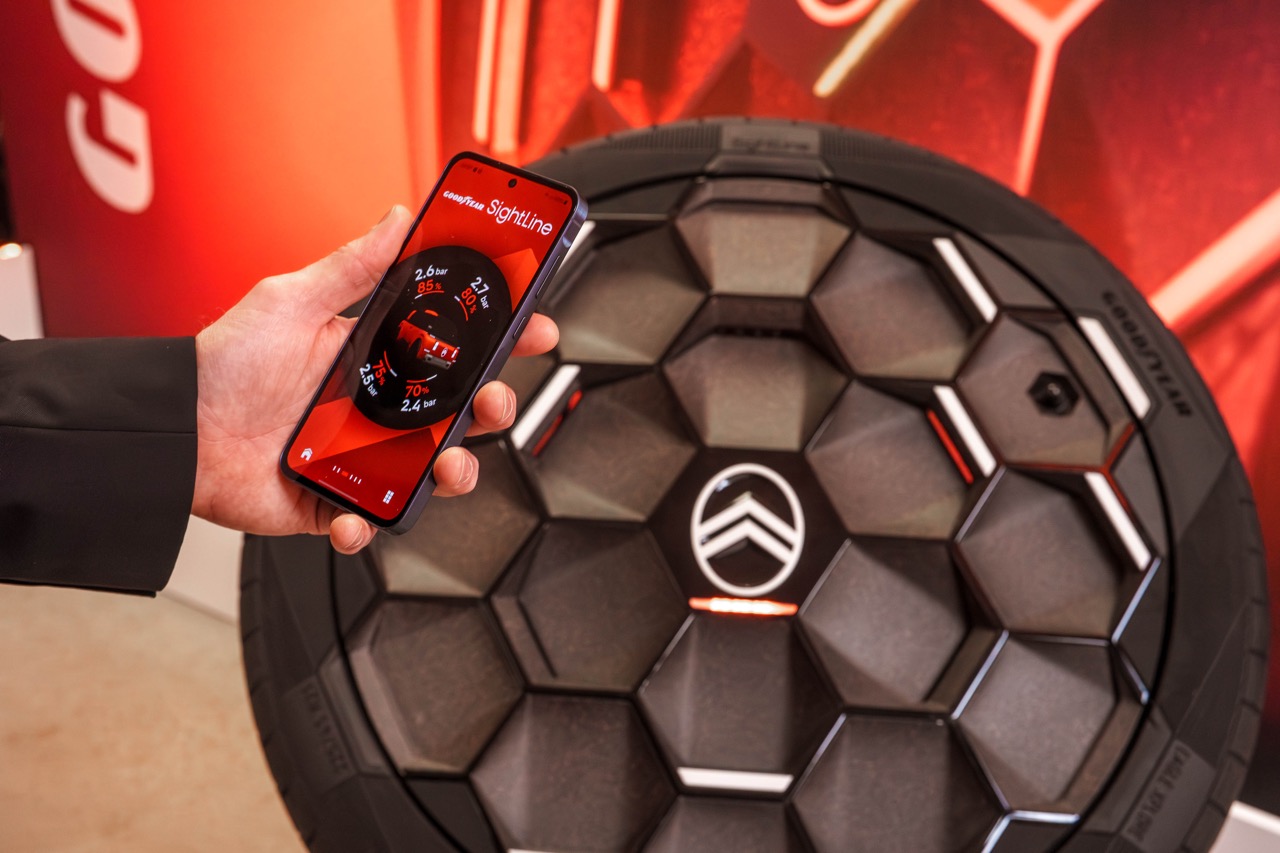
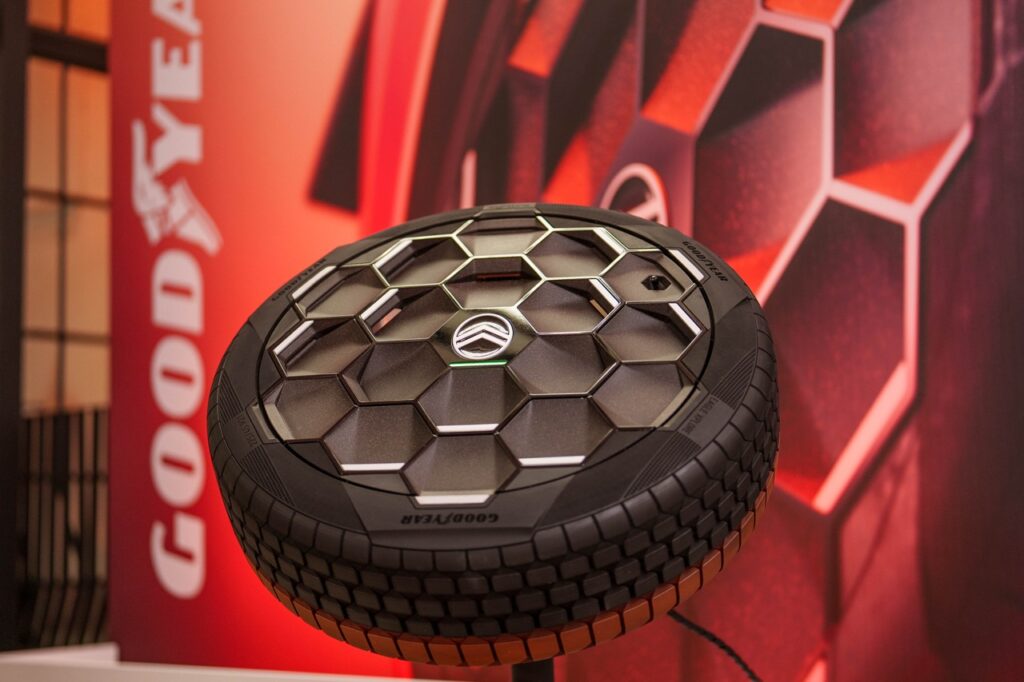
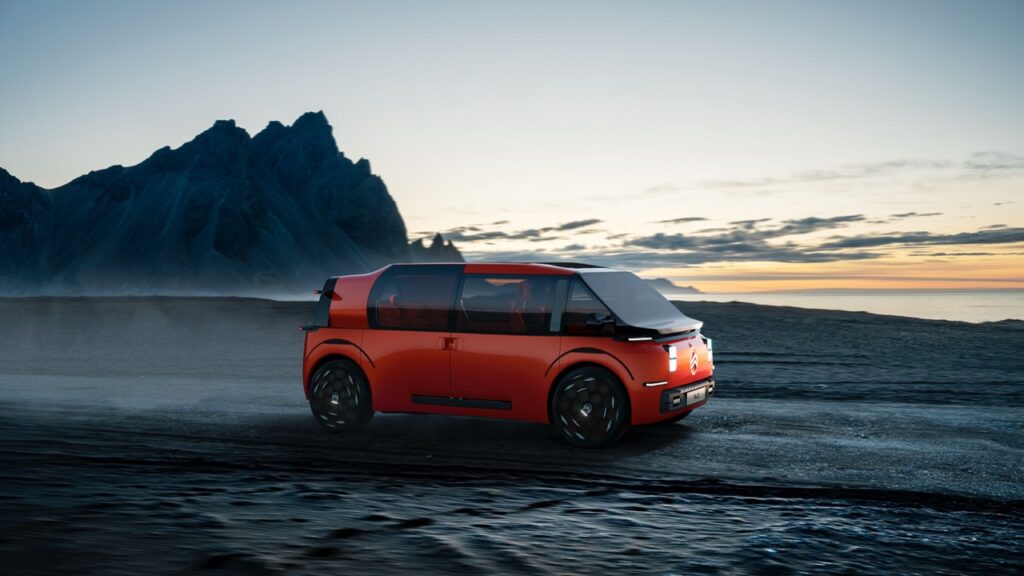
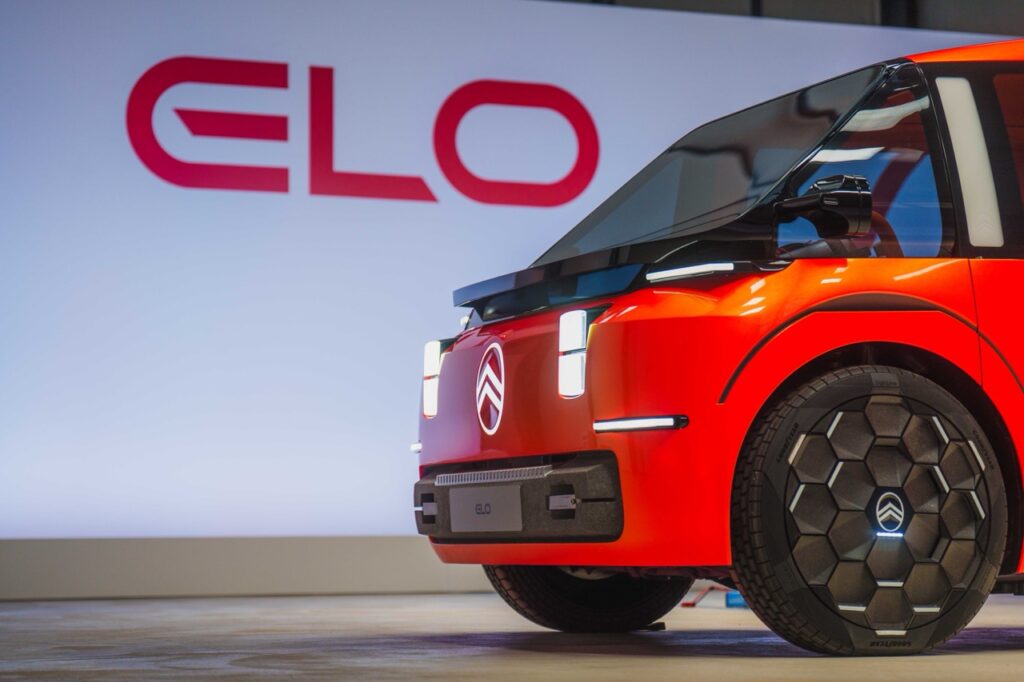
On 9 December 2025, Goodyear unveiled the Eagle Xplore, a concept tyre for the new Citroën ELO concept car. A genuine technological showcase, it transforms the tyre into an intelligent sensor and visual interface. With its personalised design, SightLine technology and LED display on the rim, the Eagle Xplore illustrates the transformation of the tyre in the era of connected electromobility.
credit: Goodyear
A tailor-made tyre for performance and adventure
The Eagle Xplore is not part of any standard Goodyear range. It’s the result of blending the sporting DNA of the Eagle line with the ruggedness of the Wrangler range, renowned for off-road use. The result? A tyre designed for versatile electric vehicles capable of tackling both tarmac and tracks.
The tread is structured to combine fuel efficiency and grip. One section is optimised to maximise range, while the other focuses on grip for off-road driving. This dual approach fits in perfectly with the positioning of the Citroën ELO: an electric concept car built for adventure and designed to explore different environments.
In terms of design, the Eagle Xplore has a bright orange sidewall, a nod to the colour of the ELO concept. This strong aesthetic choice makes the tyre an element of personalisation in its own right, going well beyond its functional role to become a genuine visual signature.
credit: Goodyear
SightLine: when tyres become intelligent sensors
What’s great on paper is the integration of Goodyear SightLine technology. This intelligent innovation transforms the tyre into a connected sensor capable of continuously monitoring pressure, total vehicle weight and state of wear. The data is transmitted in real time to the dashboard and the vehicle’s dedicated application.
credit: Goodyear
The most spectacular innovation? A side LED bar integrated directly into the rim. This visual display system instantly indicates the state of pressure: green for optimum pressure, red when adjustment is required. No need for a pressure gauge or audible warning: the information is visible at a glance.
As well as being practical, SightLine incorporates predictive functions. The system aims to maintain vehicle stability, optimise tyre wear and extend tyre life by maintaining the ideal tyre pressure. For an electric vehicle, where every element has an impact on autonomy, intelligent tyre pressure management is crucial.
A demonstrator for the electrical ecosystem of tomorrow
Let’s be clear: the Eagle Xplore is not intended for imminent commercialisation. Goodyear is presenting it as a pure technological concept, a demonstrator of what tyres could become in the connected electric vehicle ecosystem. However, no release date or price has yet been announced.
This positioning is indicative of a wider trend in the automotive industry. The tyre is no longer a simple interchangeable component, but an active element in the driving experience. With SightLine, they become a source of data for driver assistance systems (ADAS), contribute to optimising energy consumption and can be integrated into the on-board software like any other electronic module.
The partnership between Citroën and Goodyear on the ELO project also illustrates the evolution of collaboration between carmakers and equipment manufacturers. The manufacturer is no longer content simply to supply suitable tyres: it is actively involved in the vehicle’s technological narrative, co-designing the user experience and contributing to the DNA of the concept.
credit: Goodyear
Towards 4.0 tyres in sustainable mobility
The Eagle Xplore raises an essential question: how far will tyre technology integration go? If this concept becomes reality, tomorrow’s tyres could inform drivers directly, communicate with active safety systems and even automatically adjust their characteristics according to road conditions. A system like SightLine could make it possible to gain several dozen kilometres of driving range simply by maintaining optimum tyre pressure at all times.
It remains to be seen whether Goodyear will follow up this concept commercially. The manufacturer is remaining silent on any production. One thing is certain: with the Eagle Xplore, Goodyear is sending out a strong signal about its vision of intelligent tyres in the world of electric and connected mobility.
With just six days to go before the announcement of the European Commission’s automotive package, Ursula von der Leyen’s desk has just received two open letters with opposing views. While they both touch on the future of the electric vehicle transition, they do not focus on exactly the same battles. Together, they reveal the extent of the tensions shaking the European automotive sector.
Monday 8 December: 67 players reject fleet quotas
On 8 December, a coalition of 67 major players in the automotive industry sent a letter to the President of the European Commission, Ursula von der Leyen. These players include manufacturers such as BMW and Toyota, rental giants such as Avis and Hertz, and leasing companies such as Arval and Ayvens. Their message: mandatory quotas for the electrification of company fleets would be “extremely damaging”.
The stakes are high, because business fleets (including company cars) account for between 50 and 60% of new car sales in the EU, according to the European Automobile Manufacturers Association (ACEA). The December 16 package should include proposals on this key segment.
According to these players, the real obstacles to the adoption of EVs remain purchase and running costs, as well as insufficient recharging infrastructure. Imposing binding targets would put companies in a dilemma: keep their vehicles longer or reduce their purchases of new vehicles. A counter-productive action in both cases, according to the plaintiffs.
Faced with these problems, various European countries have found a solution: in those European countries where adoption is growing fastest, it is the combination of financial incentives and massive investment in infrastructure that is making the difference. The letter also stresses the need for incentives for the second-hand market, given that many leased vehicles are resold after two or three years.
These demands seem understandable. However, the Climate Group is arguing in favour of maintaining strict targets. It points out that more than 120 companies, including EDF, Ikea, Siemens and Unilever, have already committed themselves to converting their fleets to 100% electric.
Wednesday 10 December: 200 signatories defend the 2035 target
Two days later, another letter, this time on global targets, was sent to von der Leyen. E-Mobility Europe and ChargeUp Europe, supported by almost 200 signatories including Polestar and Volvo Cars, are calling on the Commission to firmly maintain the target of zero emissions for new cars by 2035.
“We are deeply concerned by recent efforts to water down your targets,” they write. The target of this letter: to thwart the pressure exerted by certain German manufacturers and the ACEA to obtain more flexibility on the CO₂ targets and to relax the ban on sales of combustion cars in 2035.
In particular, the concern is about reopening the door to plug-in hybrids and CO₂-neutral fuels. In their view, this approach would create uncertainty and slow down the transition to electric, at a time when Chinese manufacturers are making rapid progress and cutting costs.
The message is clear: “Every delay in Europe only widens the gap with China”. For these players, any setback would jeopardise the investments already underway and widen the gap with the Asian giant once and for all.
16 December, the day of truth
The automotive package, whose publication has already been delayed by a week, is crystallising all the attention. It could grant more flexibility on CO₂ targets, relax the ban on combustion engines in 2035, and include specific measures on company fleets.
The dossier has been the subject of frenetic lobbying in recent weeks, with a flood of letters flooding into Brussels ahead of the announcement.
These two positions, while not dealing with exactly the same issues, reveal the dividing lines in the sector. On the one hand, there are players calling for pragmatism and flexibility. On the other, defenders of the transition who fear that any relaxation could compromise Europe’s climate ambitions and its competitiveness vis-à-vis China.
December 16 will provide answers on several fronts: the level of ambition maintained for 2035, the flexibility granted on CO₂ targets, the fate of hybrids, and possible obligations for fleets. The compromise promises to be a delicate one.
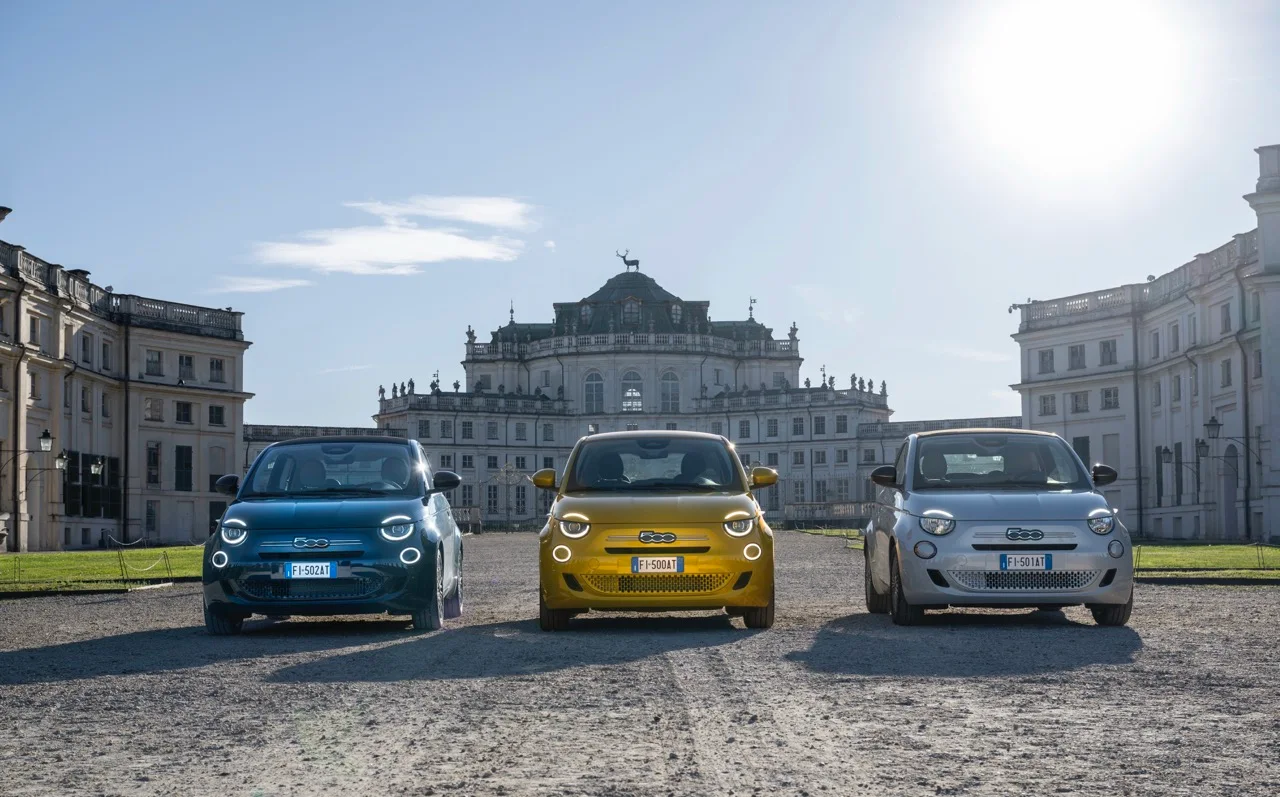
As 2025 draws to a close, Fiat is confirming its commitment to affordable electrified mobility with the launch of the new 500 Hybrid, produced at the emblematic Mirafiori plant in Turin, while the Grande Panda continues to be rolled out in electric and hybrid versions. These two complementary models are aimed at city dwellers and those on a budget, while responding to the urgent need to protect the environment.
Credit: Fiat
The 500 Hybrid marks a pragmatic return to its roots
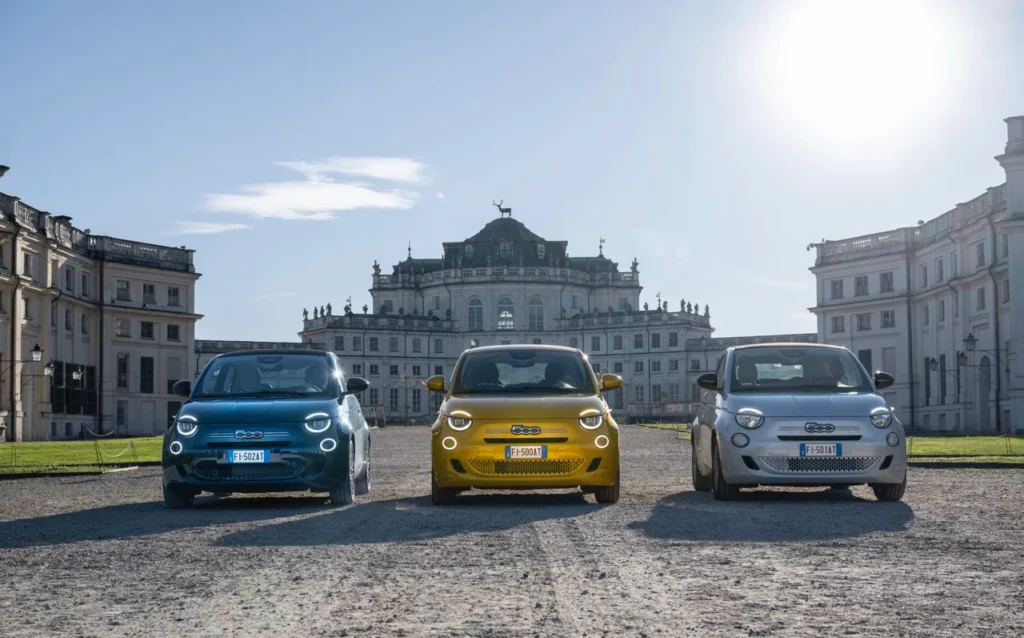
Presented in Turin at a special press event from 21 to 28 November, the new Fiat 500 Hybrid is now available to order for all lovers of this iconic Italian vehicle. It is available in classic 3-door and 3+1 versions, as well as in a convertible version, with a range of finishes from POP to LA PRIMA, plus a special launch series called “Torino”.
In terms of engines, Fiat has opted for a petrol engine coupled to a 12 V micro-hybrid system, offering a combined power output of around 70 bhp, which is necessary for the often very urban use of this vehicle. This lightweight hybrid system is particularly fuel-efficient, with an average fuel consumption of 5.2 litres/100 km WLTP, according to official figures.
Its dimensions have not changed, and it remains true to the standards that made it such a success. In fact, it remains compact (around 3.63 m long), faithful to the city spirit of the original model. Its elegantly retro exterior design incorporates modernised details: a revamped radiator grille, LED headlights and soft lines, while the interior features a streamlined dashboard with a central 10.25-inch touchscreen, quality materials and a carefully designed lighting ambience focused on comfort and practicality.
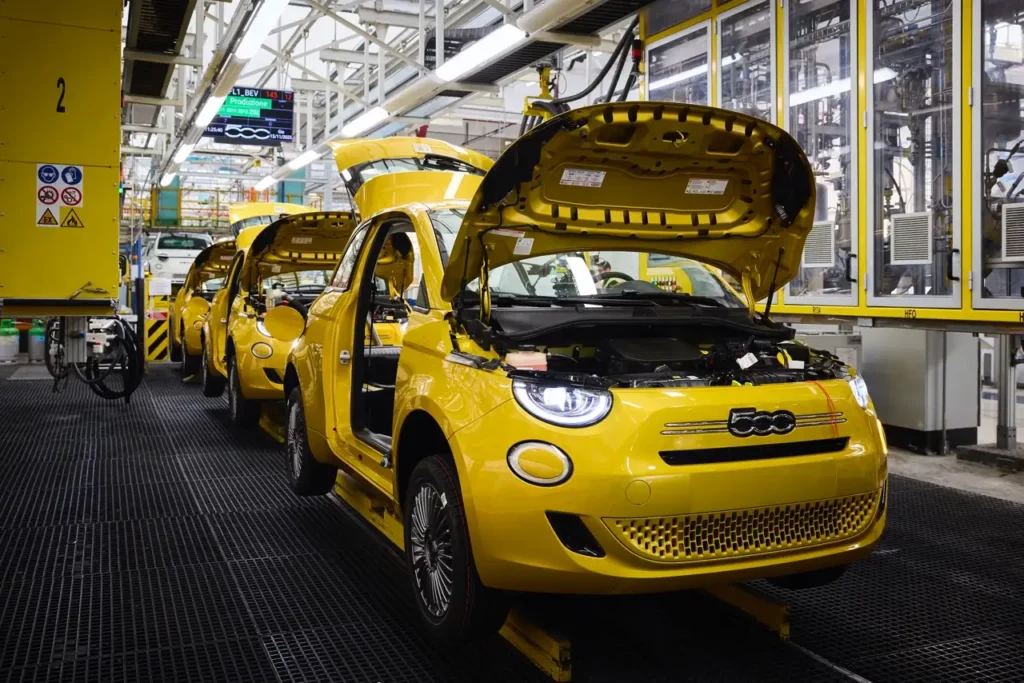
The press release announcing the launch event, which took place on 21 November, made a point of emphasising the historic nature of this release: “This special moment also marks the model’s link with the Mirafiori factory in Turin, the original birthplace of the 500 in 1957. Production of the new 500 Hybrid officially began in November at the Carrozzerie Mirafiori plant in Turin, with a target of 5,000 units by the end of the year”. Fiat is highlighting this strong link with its industrial history, combining heritage and innovation in a model ready to meet the needs of everyday urban life.
Credit: Fiat
The entry-level price starts at €19,400 inc VAT, and at this price, after a first electric wave with mixed sales, is a realistic compromise between performance, range and practicality.
Grande Panda EV: urban versatility at an affordable price
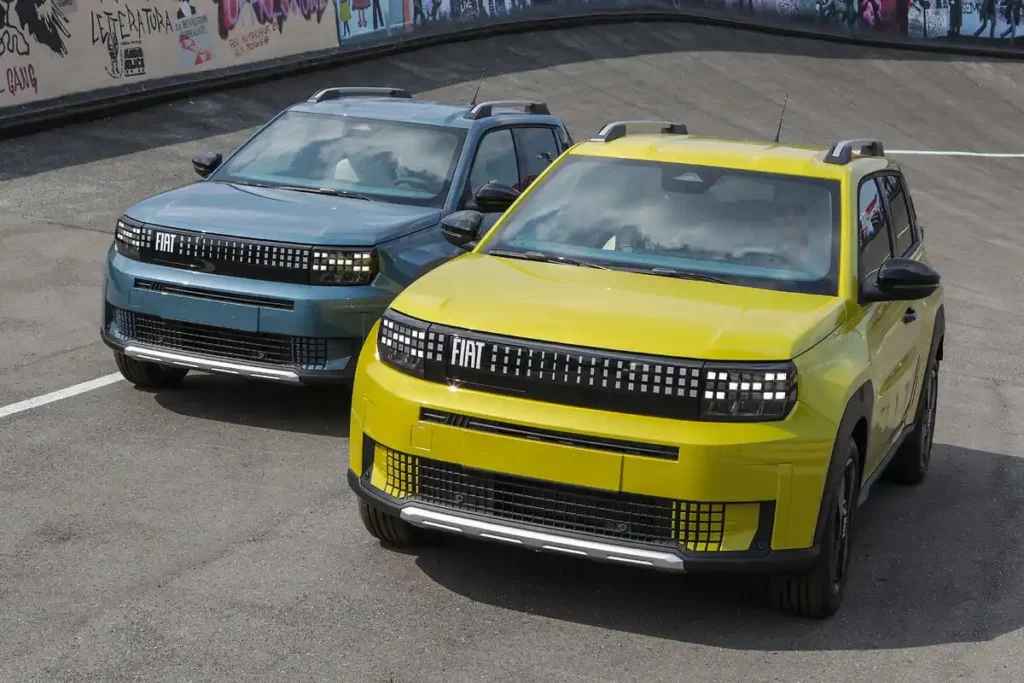
The Grande Panda boasts a comprehensive range of engines, with petrol, hybrid and 100% electric versions available. The big news at the end of the year is that the Italian brand has declared that each engine will be available in the affordable entry-level ‘POP’ version. A real boost for motorists who want to switch to more environmentally-friendly mobility without breaking the bank.
Credit: Fiat
The 100% electric version, priced at €23,900 list price, boasts a WLTP range of up to 320 km thanks to its 44 kWh battery. Its engine develops 113 bhp (≈ 83 kW) and 122 Nm of torque. Its top speed is capped at 132 km/h for a 0 to 100 km/h time of less than 11 seconds. Classic performance, but for this kind of affordable, economical vehicle, speed and responsiveness are not the criteria on which the manufacturer has focused.
The light hybrid version, priced from €18,900, is aimed at providing an economical alternative to conventional combustion-powered city cars. Fiat is playing its card on a combination of attractive price, urban style and versatility of use, to appeal to a wide range of profiles. Talking of performance, this hybrid features a petrol engine combined with a 48 kW electric motor that develops 100 bhp. Top speed is 160 km/h, with a 0 to 100 km/h time of 10 seconds. This POP version of Fiat’s hybrid consumes 5 litres/100 km in the combined cycle, a decent average for this type of vehicle.
The POP version for these two types of engine offers a good ‘viable minimum’: 7 different colours, 16-inch wheels, basic but effective connectivity, and so on. It’s an interesting option for buyers looking for a simple, efficient EV (or hybrid/petrol city car) without superfluous options.
A clear commitment to the democratisation of electromobility
With the 500 Hybrid and the Grande Panda ‘POP’, Fiat has adopted a pragmatic strategy: to revive an accessible best-seller by adapting electric power to the reality of the European market, which is still hesitant, with hybrid as the gateway.
The diversification of powertrains, local production and affordable prices reflect the ambition for electrified mobility on a large scale.