Category: Panorama

  • Spain: electric mobility is gaining momentum, yet remains held back by its own limitations

    Spain: electric mobility is gaining momentum, yet remains held back by its own limitations

    As Europe’s second-largest car manufacturer, Spain is gradually establishing itself as a key market for electric mobility. Having long lagged behind northern European countries, the country has seen a marked acceleration in electric vehicle sales since 2025, driven by increased industrial and political momentum. Behind this rise, however, several structural weaknesses remain.

    A rapidly growing market

    The year 2025 marks a real turning point for electric mobility in Spain. According to estimates from the European Alternative Fuels Observatory, around 243,000 plug-in vehicles (BEVs and PHEVs) were registered that year, accounting for nearly 19% of the car market.

    The breakdown of this estimate reveals that over 100,000 fully electric vehicles (BEVs) were sold. These figures represent growth of more than 70% compared to last year. Naturally, with over 100,000 BEVs sold, this also means that plug-in hybrids (PHEVs) have exceeded 100,000 units. This is a sign that the Spanish view PHEVs as the key to the energy transition in transport. Taking these results together, in Spain, nearly one in five new cars is now rechargeable.

    Of the approximately 243,000 rechargeable vehicles (BEVs and PHEVs), passenger car registrations alone exceeded 225,000 units. And this momentum is continuing into early 2026. In the first two months of the year, more than 36,000 rechargeable vehicles were registered, bringing the market share to 21.3%, a significant increase.
    A park still under construction

    Despite this rapid growth, the number of electric vehicles on the road remains limited at national level.

    In the absence of consolidated data for the end of 2025, estimates put the total fleet at between 500,000 and 700,000 rechargeable vehicles. This is still a modest figure compared to the size of the car market, which stands at around 24 to 25 million passenger cars.

    Certain regions illustrate this structural lag. In Madrid, for example, electric vehicles still accounted for less than 2% of the total vehicle fleet in 2024, with even greater disparities in less urbanised regions.

    An infrastructure that is growing rapidly… but is far from perfect

    But electric cars inevitably require a charging infrastructure. Spain’s charging network is expanding rapidly. By the end of 2025, the country will have around 50,000 operational public charging points, according to data from AEDIVE.

    The increase is particularly marked in high-speed infrastructure:

    • the number of charging points with a capacity of between 50 and 250 kW has almost doubled in a year,
    • The number of ultra-fast charging points (>250 kW) has increased by nearly 85%.

    Major regions such as Catalonia, Madrid and Andalusia account for the bulk of the network.

    But this apparent growth masks a more mixed picture. A significant proportion of the charging points installed are not yet in service, due to delays in connection or bureaucratic red tape. As a result, the network’s actual availability remains below the figures announced.
    Obstacles that are still clearly identified

    Despite positive momentum, several obstacles continue to hinder the uptake of electric vehicles.

    The first concerns the reliability and distribution of infrastructure. The network remains unevenly distributed, with rural areas still lacking adequate coverage.

    Added to this is a familiar factor: the still high purchase price of electric vehicles, which limits their uptake by private individuals, despite the subsidies. Finally, the lack of clarity regarding future policies has long fostered a degree of caution among both consumers and market players.

    A review of financial support in 2026

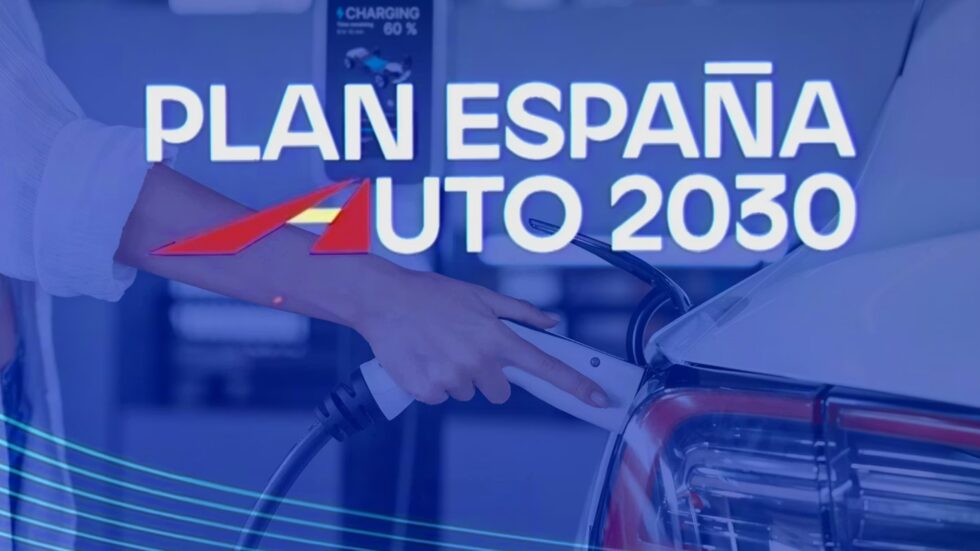
    In light of these limitations, the Spanish government has embarked on a major overhaul of its support scheme. The MOVES III programme, which runs until 2025, is gradually being replaced by a new national framework as part of the ‘Auto 2030’ plan. At the heart of this strategy lies the Auto+ Plan, which provides around €400 million in direct purchase subsidies.

    Unlike the previous system, management is now centralised at national level, with a clear objective: to simplify procedures, reduce processing times and standardise eligibility criteria. This initiative forms part of a comprehensive plan estimated to cost over €1.2 billion, which also includes support for industry and infrastructure.
    source: sustainable mobility

    An ambitious industrial strategy

    Beyond the market itself, Spain aims to play a major role in the European electric mobility value chain. In particular, the country is hosting a strategic gigafactory project led by CATL and Stellantis, with an announced capacity of 50 GWh per year and production scheduled to begin in late 2026. At the same time, several manufacturers are accelerating the electrification of their industrial sites:

    • SEAT and CUPRA in Martorell
    • Stellantis in Vigo, Zaragoza and Madrid
    • Ford in Valencia

    Energy companies also play a key role in the roll-out of infrastructure, with firms such as Iberdrola and Endesa playing a particularly active part in fast-charging networks.

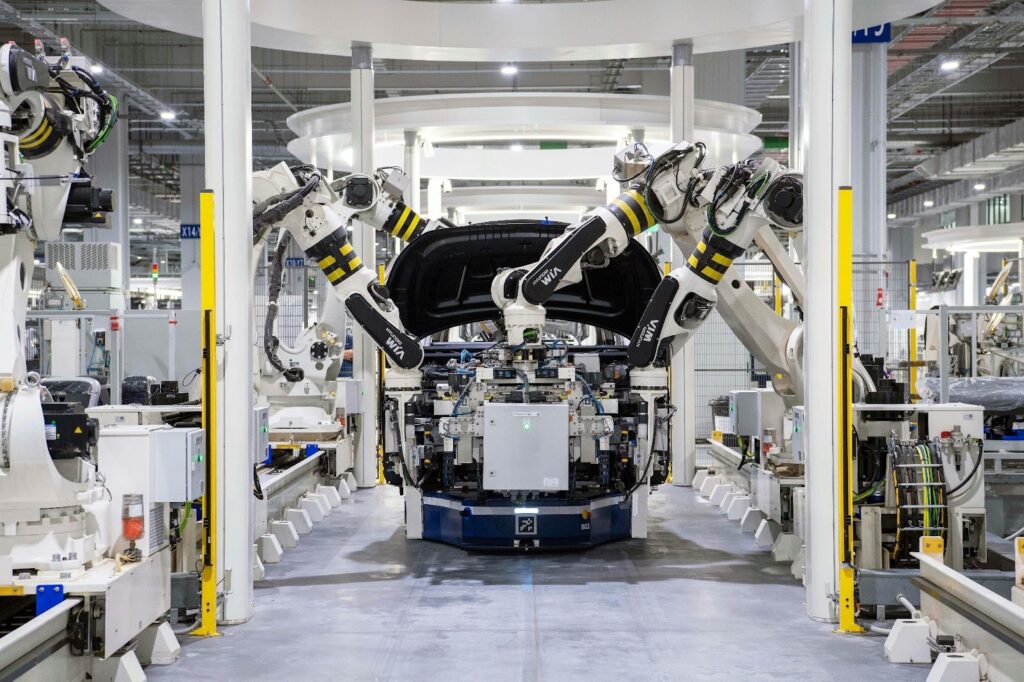
    source: SEAT and CUPRA

    A transition that is well underway but not yet complete

    Spain has set itself ambitious targets as part of its energy transition:

    • 30% renewable energy in transport by 2030
    • 70% renewable electricity
    • carbon neutrality in the transport sector by 2050

    With sales surging, the industry taking shape and infrastructure gradually improving, electric mobility in Spain is advancing rapidly. However, to catch up with more mature markets, it will still need to overcome several structural barriers and ensure a smoother implementation of its strategy.


  • Malta: slight growth in electromobility, but persistent structural challenges

    Malta: slight growth in electromobility, but persistent structural challenges

    A small Mediterranean archipelago of 320 km² with a population of around 545,000, Malta has an atypical profile in Europe. With a population density of around 1,716 inhabitants per km², the highest in the European Union, and a car fleet of more than 450,000 vehicles of all categories, the country has a number of structural constraints that make the transition to electric mobility more complex. Despite real progress in recent years, supported by increased public funding, electromobility still faces a number of obstacles in the archipelago.

    A rollercoaster electricity market

    Electric vehicle sales in Malta have followed an atypical trajectory in Europe. In the first quarter of 2022, electric motors and plug-in hybrids accounted for just 1.7% of the total vehicle fleet, representing a total of just 7,122 vehicles in the Maltese islands at the time.

    Fast forward three years later and as of the second quarter of 2025, this segment of vehicles has more than doubled and now represents 4.3% of the total fleet, or 19,493 vehicles out of the overall total of 450,794 vehicles currently registered. The number of pure electric vehicles in the Maltese islands increased by 6% in the first two quarters of 2025, to a total of 14,555 electric vehicles.

    At the end of September 2025, the total fleet of electric vehicles and plug-in hybrids reached 20,604 units, or 4.5% of the total fleet of motorised vehicles registered in Malta.

    A recharging network that is still limited and inefficient

    Malta has around 380 public charging points, a figure that may seem relatively reasonable given the still modest number of electric vehicles on the island. In fact, there is one public charging point for electric vehicles for every 46 cars on the Maltese islands.

    In practice, the power of the installations remains very limited. Only a handful of charging points exceed 22 kW, and 12 fast charging points offer more than 50 kW. In other words, almost 90% of installations are AC charging points of less than 11 kW, which means that charging times are particularly long.

    Most of the infrastructure is concentrated in urban and tourist areas: Valletta, Sliema and St Julian’s, Gozo.

    As for the network operators, there is Maltapark, which operates almost half of the public terminals, as well as Enemalta (the Maltese EDF). There are also a few fast infrastructures operated by Tesla.

    source: Maltapark

    Numerous structural obstacles

    There are several major obstacles to the volatile adoption of electric vehicles on the archipelago.

    The first is the purchase price. In Malta, the price of electric vehicles is significantly higher than in other European markets, due to the fact that the vehicles are imported in their entirety and the associated logistics costs. For example, excluding grants, the price of a Tesla Model Y Long Range is €62,900 in Malta, compared with ‘only’ €49,990 in France, an increase of 26%.

    Access to recharging is another major obstacle. Around 85% of households live in flats, often without private parking or the possibility of installing a home charging point.

    Furthermore, and this is not the only sceptical European population, Maltese drivers remain unconvinced given the range of electric vehicles, even though most daily journeys on this particularly compact island do not exceed 30 kilometres.

    Finally, a number of cultural factors also play a role. In a society where the car remains a status symbol, the electric models on the market are often perceived as prestige objects rather than everyday vehicles.

    Sharp rise in public funding

    With a view to developing electromobility as effectively as possible and tackling these obstacles, the Maltese government has stepped up its financial incentives. Malta is counting on very generous subsidies through the main Electric Vehicle Grant Scheme. This scheme offers between €5,000 and €10,000 for the purchase of a 100% electric vehicle for private individuals (and up to €15,000 for businesses), depending on the price. These grants are supplemented by a 5-year exemption from road tax and subsidies for the installation of charging points covering up to 70% of the costs.

    The government is gradually increasing the budget (€6m in 2024, €12m planned for 2026) to fund more subsidies. As a result, 87% of electric vehicles sold in 2025 will have received aid.

    A national strategy still to be put into practice

    And these aids are not here by chance. The Maltese authorities have set a number of targets to speed up the transition. In particular, the national plan calls for 10% electric vehicles in the fleet by 2030, 6,500 recharging points across the Maltese islands by 2030, in line with Malta’s Low Carbon Development Strategy (LCDS), and 50% of electricity generated from renewable energy.
    A low-emission zone is also due to be introduced in Valletta from 2028, with a gradual restriction on internal combustion vehicles. At the same time, several projects are underway to improve sustainable mobility, including the development of an electric sea link between Malta and the island of Gozo.

    An economic ecosystem that is still in its infancy

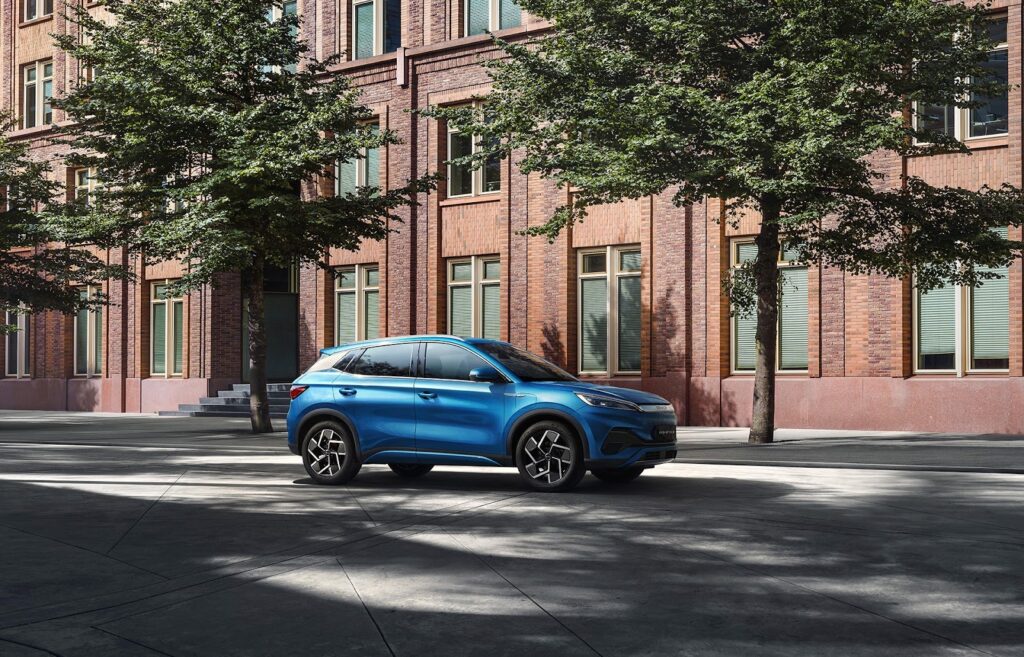
    Unlike other European markets, Malta has no local automotive production or battery industry. The market relies mainly on international importers and distributors. Tesla dominates the electric vehicle market, followed by MG Motor and the Chinese manufacturer BYD, whose breakthrough has been particularly noteworthy: the BYD Atto 3 took third place among the best-selling models in 2024, with an increase of 336% over one year.
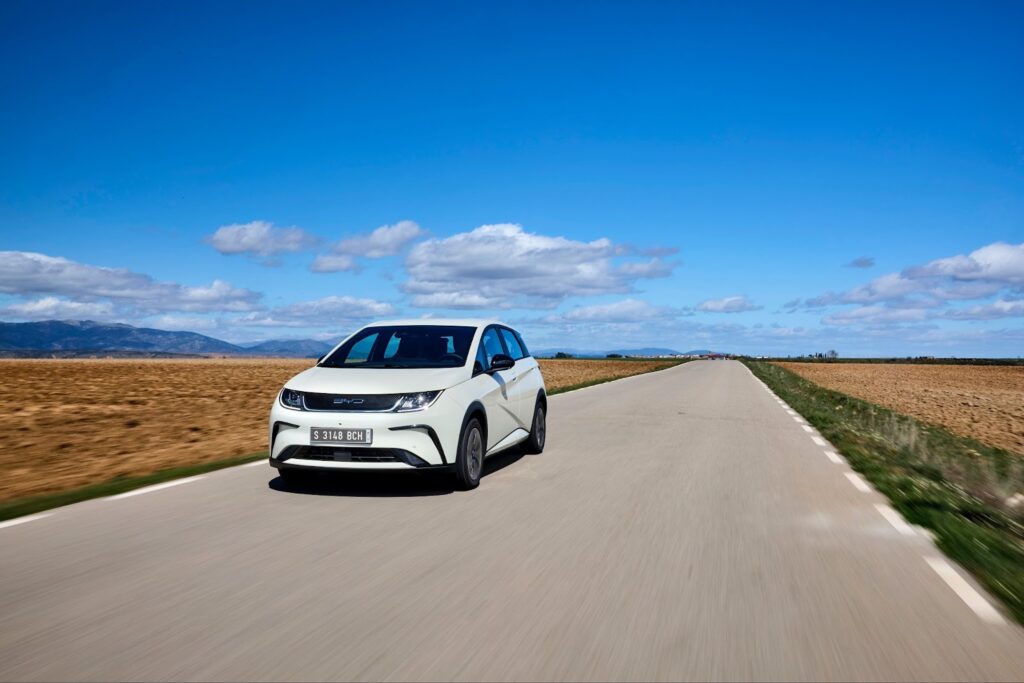
    source : BYD

    However, a number of local companies are beginning to emerge in the field of electric mobility services, notably Switch, a platform for locating and reserving recharging points. It’s not much, but it’s something.

    A market dependent on public funding and growing

    All in all, electromobility in Malta is making progress, but at a still fragile pace. Supported by some of the most generous subsidies in Europe and ambitious political objectives, the archipelago’s energy transition is beginning to produce visible results. However, the constraints specific to this island territory – high urban density, limited access to domestic recharging, import costs and infrastructure that is still inadequate – continue to hold back its development.

    The challenge for the coming years will therefore be to transform these financial incentives into a genuine ecosystem for electric mobility, capable of becoming a lasting part of everyday life in Malta.

  • Singapore: the city-state where electric cars already account for more than 45% of sales

    Singapore: the city-state where electric cars already account for more than 45% of sales

    Covering just 725 km², Singapore is becoming one of the world’s most advanced electromobility laboratories. Thanks to a very proactive public policy, the city-state is now showing impressive results, with electric vehicles being adopted much more quickly than in most other major metropolises.

    An explosion in sales of electric vehicles

    The progress of electric vehicles in Singapore has been spectacular, to say the least. At the end of 2022, there were just 6,531 electric vehicles on the island, barely 1% of the total fleet.

    Three years later, at the end of 2025, the situation has changed radically. In fact, 23,684 100% electric cars were registered out of a total of 52,678 new car sales, representing 45% of the market. For the first time, electric vehicles have overtaken both hybrids (38.8%) and internal combustion engines.

    The momentum continues into 2026, with almost 9,000 electric cars already sold between January and February. The total fleet is now approaching 46,000 electric vehicles on the island.

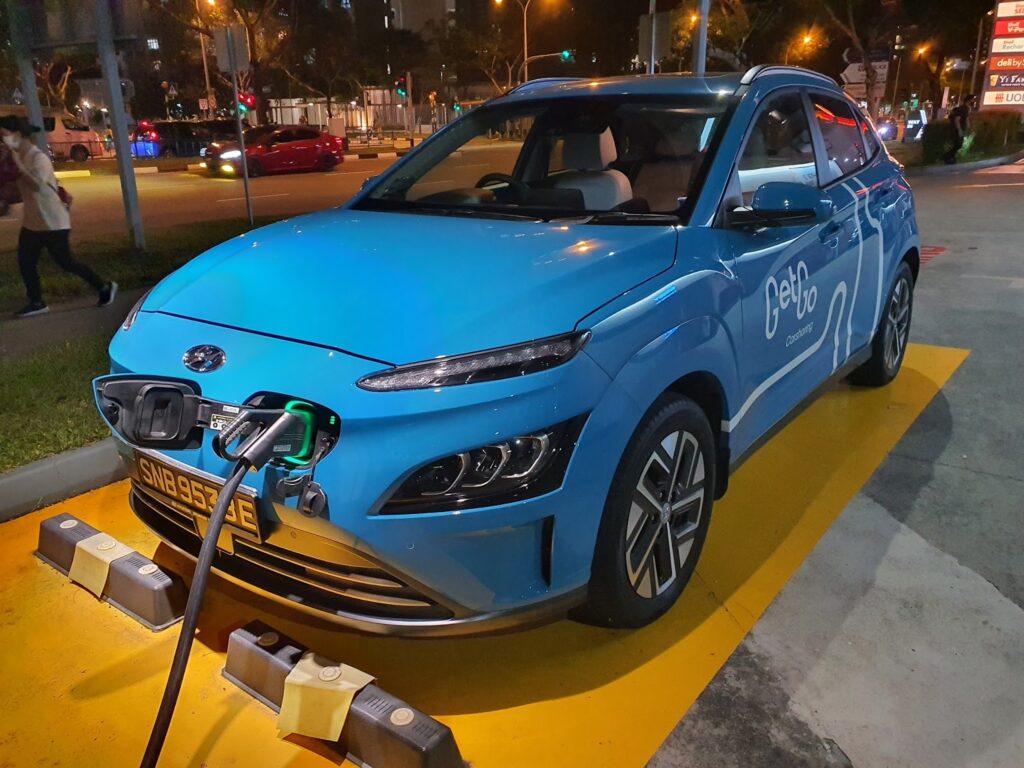
    This rapid growth has been driven in particular by the massive arrival of Chinese manufacturers such as BYD, which has taken the lead over Tesla in the local market.

    One of the densest recharging networks in the world

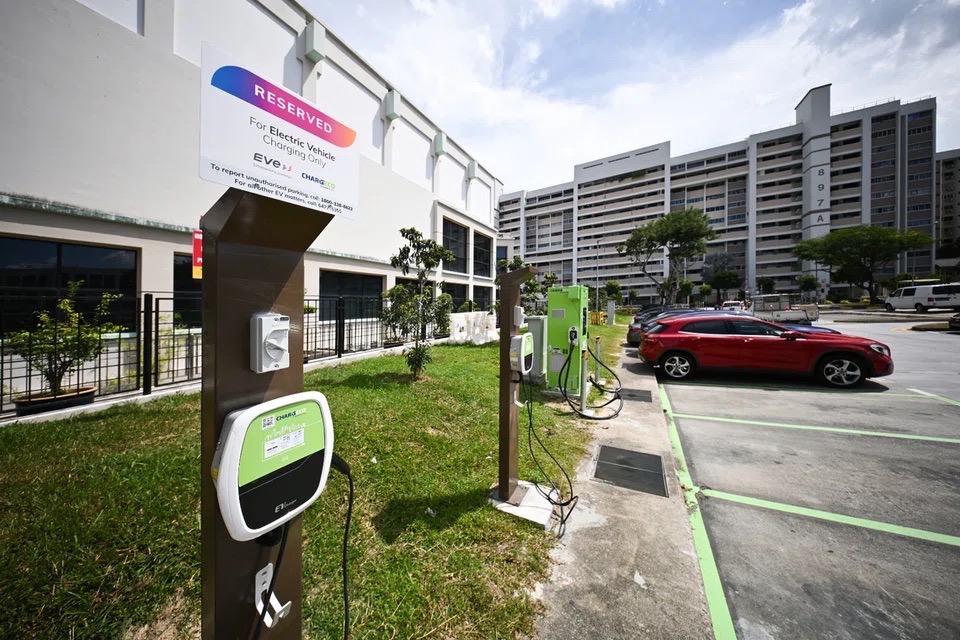
    To support this transition, Singapore is rolling out one of the most ambitious recharging infrastructures in Asia. In 2022, the city-state already had around 2,500 charging points. By the end of 2025, this figure had risen to more than 6,000 charging points.

    The rollout is being steered by the Land Transport Authority and local operator EVe Charging, with a clear target of 60,000 charging points by 2030.

    source : LIM YAOHUI

    This drive to increase the number of charging points is also evident in public car parks. Since 2024, they have been required to reserve at least 1% of their spaces for charging points. At the same time, a partnership with Huawei has enabled the installation of ultra-fast chargers capable of reaching 360 kW.

    A structured government strategy

    And if these figures are significant, it’s not by chance: the transition is framed by the national Singapore Green Plan 2030, adopted in 2021. It sets a number of key objectives:

    • 2040: 100% clean energy vehicles (electric or hydrogen)
    • 2030: 50% of taxis and buses will be electric
    • 60,000 charging points installed
    source: SG Green Plan

    This strategy is coordinated by the National Electric Vehicle Centre, which oversees research, standardisation and the development of the ecosystem.

    Some of the most aggressive financial support in Asia

    To speed up adoption, the Singaporean government has introduced a particularly generous system of incentives. Under the Early EV Incentive scheme, private individuals can benefit from a tax reduction of up to 45% on the price of an electric vehicle. The installation of home charging points is also subsidised up to 50% of the cost, up to a maximum of S$4,000.

    Businesses have not been forgotten: since the beginning of 2026, electric lorries have been eligible for subsidies, while electric taxis have benefited from an extended period of operation.

    Constraints unique in the world

    Despite these impressive results, Singapore faces a number of structural constraints.

    • The first obstacle is the extremely high cost of the car, linked to the COE (Certificate of Entitlement) system. Even an electric vehicle like the Tesla Model Y can cost in excess of €150,000 once all taxes are included.
    • Extreme urbanisation is another challenge: with almost 5.9 million inhabitants living in an area of 725 km², private car parks are rare, making it difficult to recharge at home.
    • Finally, the local tropical climate, with temperatures around 30°C and high humidity, can reduce the actual range of the batteries by 10 to 15% compared with the WLTP standards.

    The models and players that dominate the market

    The Singapore market is currently dominated by a handful of major players.

    Chinese manufacturer BYD has been the market leader since 2023, thanks in particular to the BYD Atto 3 and BYD Seal models.

    Tesla is still very present with its Model 3 and Model Y, while Hyundai is gaining ground with the Hyundai Ioniq 5 and Hyundai Ioniq 6.

    Public fleets are also playing a leading role: some sixty electric buses are already on the road, and half the taxi fleet should be electrified by 2030.

    A global laboratory for electric mobility

    With 45% of new car sales to be electric by 2025, Singapore is demonstrating that a rapid transition is possible even in an ultra-dense and constrained territory.

    With its massive recharging infrastructure, strong financial incentives and clear policy planning, the city-state is now one of the world’s most advanced electromobility laboratories. A model that could inspire other major cities facing the same urban challenges.

  • Electromobility in Venezuela: a mirage for this oil giant

    Electromobility in Venezuela: a mirage for this oil giant

    Venezuela has the world’s largest proven oil reserves, but its car market is on the verge of collapse: 20,000 to 30,000 new vehicles were registered in 2025, compared with almost 500,000 before 2014. Electromobility remains marginal, with around 0.1% of the total car fleet, or around 6,000 EVs at the end of 2024.
    At the beginning of 2026, the capture of Nicolás Maduro by the United States reshuffles the deck and opens up new scenarios: possible lifting of certain sanctions, imports of EVs. Against this shifting backdrop, the question remains: is electromobility viable or just a green showcase?

    source: Wikipedia

    A slow market

    The Venezuelan car market has collapsed since 2014, following a major economic and social crisis. Prior to that date, nearly 500,000 vehicles were registered each year. The combination of falling local production, imports blocked by strict exchange controls (CADIVI) and economic sanctions has resulted in new car sales falling to a few thousand units a year.

    Rising inflation (+200% by 2025) and the collapse in purchasing power have made it almost impossible for the average citizen to buy a new car, while political instability and massive demonstrations against the Maduro government have made matters worse.

    Between 2023 and 2026, small EV initiatives emerged: pilot tests of micro EVs by Corpoelec and PDVSA, and grey imports from China and Colombia. At the end of 2024, the electric vehicle fleet is estimated at around 6,000 units.

    However, out of the 25,000 vehicles sold in 2025, new EVs will account for just 0.4% of the market. These sales are concentrated among government fleets and the elite in Caracas, the capital of this country of 916,445 km². For the average citizen, the cost of an EV is still astronomical compared with the average monthly salary of around USD 195 to 200, and the fact that petrol is virtually free (USD 0.01/litre) continues to put the brakes on any mass adoption.

    The EV market: symbolic rather than strategic

    The electric vehicle fleet remains marginal. Fewer than 100 new EVs will be sold in 2025, with an estimated cumulative fleet of between 6,000 and 10,000 vehicles if all grey registrations are taken into account (purchased abroad – China, Colombia, Mexico, United States – then imported by a private individual, an independent dealer or an intermediary).
    The BEV/PHEV split is around 90/10%, with hybrids still very rare.

    Compared with its South American neighbours, Venezuela has the worst record: in Brazil, the share of EVs is 5%, in Chile 3%, while Venezuela is stagnating at less than 0.1%.

    Despite the low number of sales, official data show which EV models will be most popular in Venezuela in 2025:

    • BYD (Seagull/Dolphin): around 50 units, mainly for Corpoelec/PDVSA fleets, priced at USD 15,000 to 20,000.
    • Tesla Model 3/Y: around 20 units reserved for the elite of Caracas, price > USD 50,000.
    • ZEV Motors: few units, used in particular for urban tests in Maracay, price ~ USD 10,000.
    source : BYD

    Players and industrial offer

    On the industrial front, Venezuela has no battery production facilities. ZEV Motors assembles Chinese kits (City One), with a theoretical capacity of 500 units per year, but fewer than 50 vehicles are actually produced each year.

    The foreign manufacturers present are limited: BYD and MG via Corpoelec, Tesla imported through grey channels from the United States or Colombia. Korean giants Hyundai and Kia are absent, despite their presence in Latin America.

    Public policy and taxation: green rhetoric, oil reality

    From a political point of view, there are no subsidies or bonuses for EVs. What’s more, almost free petrol remains the No. 1 cultural and economic brake. In 2024 and 2025, President Maduro made numerous public statements at international forums (COP29, the United Nations General Assembly and other summits), promoting a “transition to alternative energies” and “post-oil diversification”.

    In fact, the Venezuelan economy remains dominated by oil: in 2024, the state-owned company PDVSA exported an average of more than 800,000 barrels per day, consolidating its position on Asian markets and beyond. These exports, which make up an essential part of the country’s income, remained at very high levels in 2025.

    source: PDVSA

    As for actions to democratise EVs in Venezuela, Corpoelec has tested 50 EVs in 2023 and PDVSA 10 Prius hybrids, but there is no target figure for 2035 or 2040. Customs exemptions favour the elite (Tesla), while taxes on conventional EV imports are as high as 100%. The policy remains focused on Caracas and Maracay, with oil-rich regions such as Maracaibo largely ignored.

    Charging infrastructure: the bottleneck

    The main drawback is that Venezuela has fewer than 20 public charging points, mainly in luxury hotels in Caracas. The ratio is one for every 300 EVs, an absurd figure for even an embryonic market.

    Most domestic recharging is done on 110 V/220 V. Adaptation is essential, as most of these installations are equipped with back-up generators, due to power blackouts that can last up to 12 hours a day.

    Innovative stations remain experimental: Swing Energy is testing solar micro-stations. There is no DC fast charging or smart charging, and the energy mix (hydro 60% unstable + gas/oil 40%) makes the CO₂ balance of an EV unfavourable in the local context.

    Obstacles, paradoxes and challenges

    As in many countries, a number of challenges persist, further delaying the adoption of zero-emission vehicles. The first is cost, which exceeds 1,500 times the average wage, widening inequalities: the elites drive Tesla cars, while the majority travel by motorbike or internal combustion engine.
    Added to this are poor roads, the scarcity of new tyres, energy blackouts and free petrol, all of which reduce the incentive to change.

    Venezuela is still the world’s biggest holder of oil reserves, but its electricity grid is regularly failing. Green ambitions remain largely symbolic, dependent on China for EVs and constrained by US sanctions. Scaling up Tesla or BYD therefore remains illusory in the short term.

    A political turning point with possible consequences for electromobility

    The beginning of 2026 marked a political earthquake in Venezuela, likely to profoundly alter the country’s economic and industrial context, including electromobility. On 3 January 2026, Venezuelan President Nicolás Maduro was captured by the US armed forces and transferred to New York to face federal charges including narco-terrorism and drug trafficking. This event ushered in a period of major uncertainty for Caracas.

    source : CNN

    If this situation were to lead to an easing of US sanctions, imports of Chinese EVs (BYD) and Tesla could be unblocked, enabling an immediate micro take-off (500 to 1,000 units in 2026, compared with less than 200 previously).

    Under external supervision, strategic partnerships between local and foreign companies, and even industrial projects involving lithium and batteries, could be envisaged. Finally, pressure to rehabilitate the electricity network could reduce blackouts, increase the number of public charging points and improve EV charging.

    This is not a prediction, but a potential scenario in which the policy could profoundly transform the country’s automotive landscape.

    Outlook and scenarios for 2030

    In the short term, if the structural imbalances persist, the fleet of electric vehicles could remain very limited, at less than a few hundred units, concentrated in Caracas and certain institutional fleets.

    Conversely, a change in the political and economic framework, in particular a gradual normalisation of trade and investment, could pave the way for a more dynamic scenario: partial lifting of sanctions, the return of Asian industrial players, or even the establishment of local assembly plants.

    Failing such an upheaval on several scales, Venezuela could follow an alternative, more informal path, inspired by other countries: electric and solar retrofitting of motorbikes and micro-vehicles.

  • Electromobility in Switzerland: a solid foothold, but a long way from our stated objectives

    Electromobility in Switzerland: a solid foothold, but a long way from our stated objectives

    Switzerland is continuing its transition at its own pace. Without massive national subsidies or radical bans, the country is relying on a pragmatic, decentralised approach that is largely supported by the cantons. The result is a growing market share and a dense infrastructure, but federal targets are still out of reach.

    source : Ok voyage

    A growing electricity market despite a difficult environment

    In 2025, the Swiss car market will total around 235,000 new registrations, down slightly on 2024 (-2%), as a direct result of a tense economic climate and increased caution on the part of households and business fleets alike.

    Against this backdrop, electromobility continues to grow. 100% electric vehicles (BEVs) reached 50,975 registrations, up 15% year-on-year, for a market share of 22.8%. Plug-in hybrids (PHEVs) also confirmed their appeal, with 25,284 units, or 11.1% of the market.

    In all, 33.9% of new cars sold in Switzerland in 2025 will be rechargeable, or one in three cars – an all-time record for the country. The month of December is a perfect illustration of this dynamic, with 42.7% market share for rechargeable vehicles.

    By the end of 2025, there will be around 230,000 electric vehicles on the road, compared with just 7,500 ten years earlier. This represents a thirty-fold increase, even though electric vehicles still only account for 5% of the total fleet, compared with 83% thermal or diesel vehicles.

    Electric SUVs and leading manufacturers

    As in the rest of Europe, electric SUVs dominate sales in Switzerland. At the top of the 2025 rankings, the Tesla Model Y is once again the market benchmark, with sales of 4,522 units, boosted by a particularly strong December.

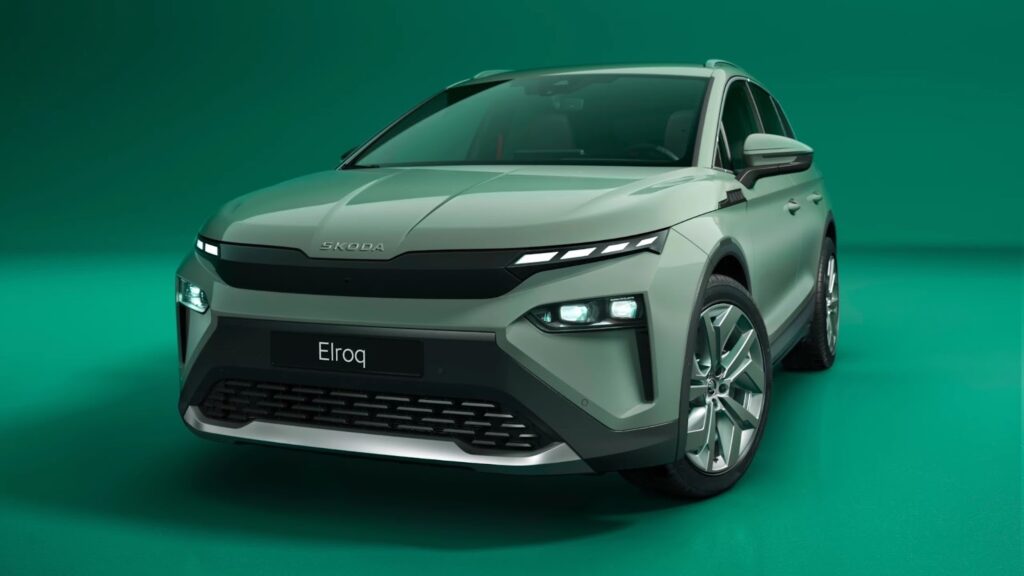
    The surprise came from Škoda, which placed two models on the podium. The Škoda Elroq, a recently-launched compact SUV, has won over customers thanks to its price positioning, with 3,308 registrations, ahead of the Škoda Enyaq (2,774 units), which has become the brand’s best-selling electric model across all segments.

    source : Skoda

    Behind this trio are the Tesla Model 3, the Volkswagen ID.4 and ID. Buzz, as well as several Chinese models such as the BYD Seal and Atto 3, which are increasingly visible on Swiss roads. Switzerland thus confirms its position as an open market, where premium, generalist and new entrants coexist.

    A dense but uneven recharging network

    When it comes to recharging, with around 18,000 public charging points by the end of 2025, Switzerland has one of the densest networks in Europe, ranking 7ᵉ on the continent. The number of charging points has risen by around 30% in less than two years, with a notable increase in fast-charging infrastructures.

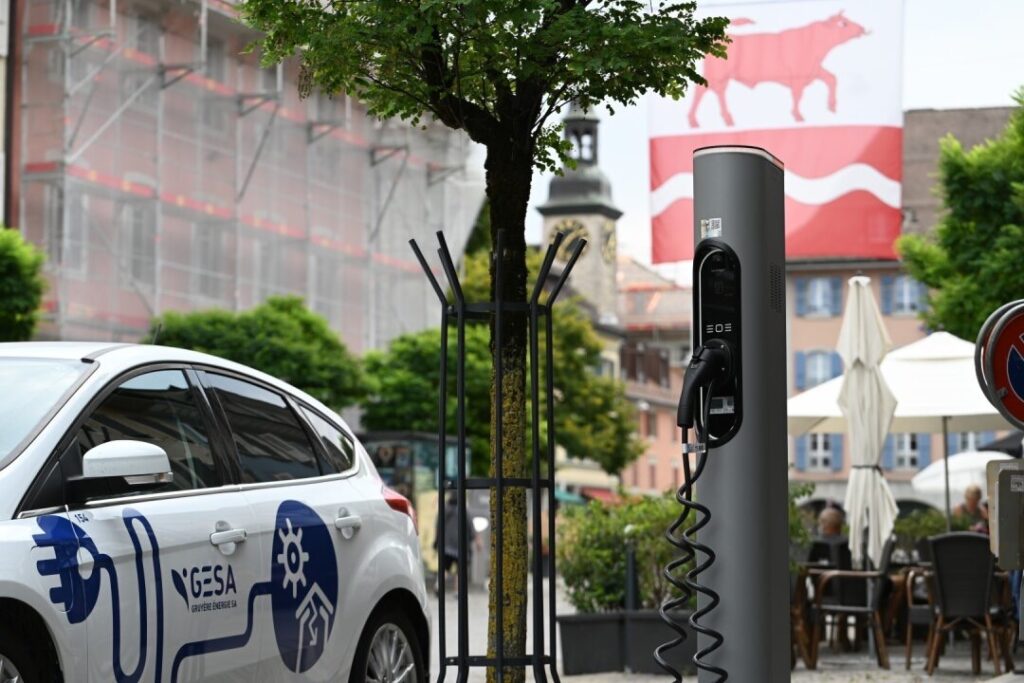
    source: GESA

    However, 80% of charging still takes place at home or at the workplace, compared with just 20% on the public network. This is a situation that particularly affects tenants in urban areas, who are heavily dependent on public charging points.

    But this development is not the same everywhere. The cantons of Zurich (around 2,000 points), Berne (1,300) and Vaud (1,200) concentrate most of the infrastructure. Conversely, rural and Alpine areas are lagging behind, and are therefore not developing at the same rate.

    A federal strategy without strong constraints

    Unlike some European Union countries, Switzerland has never relied on massive national incentives to speed up the adoption of electric vehicles. The strategy is based above all on energy efficiency, indirect taxation and the voluntary commitment of stakeholders.

    The federal government’s roadmap set a target of 50% rechargeable vehicles by 2025, a target that was clearly missed at 33.9%. It has since been extended to 2030, with an extension to include trucks, buses and commercial vehicles, the sectors in which Switzerland is performing best.

    Exemption from the LSVA for electric heavy goods vehicles has led to a sharp increase in BEV trucks, which now account for more than 18% of new registrations in this segment, a European record.

    Local businesses and players

    Although Switzerland does not have a major national manufacturer, it does have a solid ecosystem. The national reference organisation, Swiss eMobility, coordinates cantons and private-sector players, publishes statistics, supports infrastructure projects and plays an active role in defining federal roadmaps.

    When it comes to recharging, SwissCharge is a major player, with a growing presence in urban centres and on strategic routes. The company is supported by the cantonal energy companies, which are developing the network of public charging points, in particular to meet the needs of fleets and commercial vehicles.

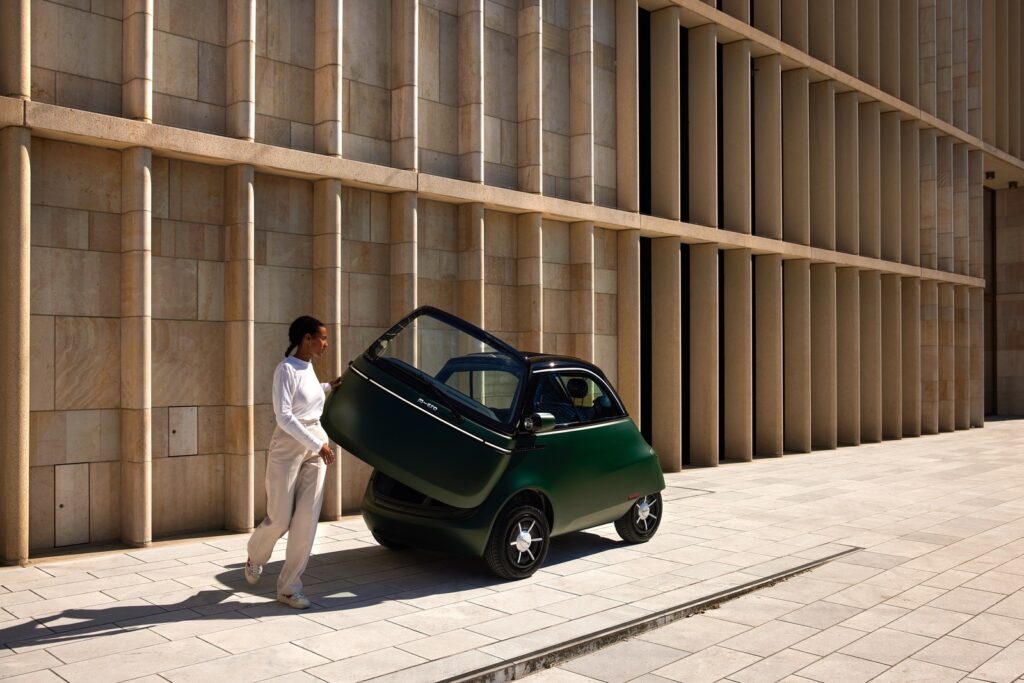
    One of the most emblematic Swiss start-ups is Microlino, which made a name for itself with its urban electric micro-car inspired by the Isetta. Designed for city travel, it is compact, simple and has a range suited to everyday journeys, offering a lightweight alternative to traditional SUVs and saloons.

    source : microlino

    The traditional players in the mobility sector also play a key role. The Touring Club Suisse (TCS) is a major source of information and analysis for private individuals, while auto-schweiz and the VFAS represent importers and the independent motor trade, while playing an active role in the debate on the pace and methods of the transition.

    Marked disparities between cantons

    The transition to electric vehicles in Switzerland remains highly decentralised. The urban and economically dynamic cantons are showing the best results in terms of new electric car registrations, starting with Zurich, where BEVs account for more than 30% of new sales. Solothurn, Lucerne and other cantons also exceed 25%.

    Ticino, on the other hand, lags behind with a market share of around 12%, penalised by limited infrastructure, a strong Italian cross-border influence and different mobility habits.

    These differences can be explained by a combination of factors: level of income, urbanisation, terminal density and car culture.

    Persistent obstacles and a conditional future

    Despite a generally positive dynamic, electromobility in Switzerland is still coming up against a number of structural obstacles. As in many European countries, the sinews of war are still the same: money. In this respect, electrified mobility is not scoring any points, because the purchase price, in the absence of national incentives, remains high and less affordable, even in a country with high purchasing power.

    Added to this are the constraints associated with recharging, particularly for the many tenants without access to a private charging point, as well as the uncertainties surrounding the cost of electricity and the future tax framework.

    Alpine winter conditions, the question of long-distance autonomy and a marked cultural caution in the face of technological renewal also continue to influence purchasing decisions.

    The result is that, according to recent studies, only 24% of future car buyers are currently considering a 100% electric vehicle, leaving a significant number in favour of rechargeable hybrids, which are seen as a more versatile and reassuring compromise.

    In the short term, the country is aiming for 40% of vehicles to be rechargeable by 2026, before reaching a majority of electric vehicles by 2035, without formally banning internal combustion engines. It’s a deliberately cautious trajectory, in keeping with the Swiss approach: moving forward without rushing, but without going backwards.

  • Electromobility in Belgium: a fast-growing market

    Electromobility in Belgium: a fast-growing market

    On the roads and in public policy, the electric transition is no longer a promise but a reality. With electric vehicles increasingly visible in city centres, recharging stations being rolled out at a steady pace, and businesses and public authorities aligned on the same trajectory, the UK is now one of Europe’s most dynamic markets for electromobility.

    A fast-growing market

    The year 2024 will be remembered as a turning point for electric cars in Belgium. 127,750 100% electric vehicles (BEVs) were registered, an increase of 37% compared with 2023. This performance places Belgium among the most dynamic markets in Western Europe. BEVs now account for 28.5% of the new car market, and when rechargeable hybrids are added, more than half of all new cars have a plug.

    But behind this rapid growth lies a structural reality that is different from what you might think: corporate fleets are playing a driving role. In fact, almost 87% of new electric vehicles are now registered by companies. Tax breaks and policies to make fleets greener are driving companies to rapidly electrify their fleets.

    Individuals, on the other hand, are taking a more cautious approach. Purchase costs, perceived range and access to recharging remain obstacles. But the momentum is gradually building: by the first quarter of 2025, one in three new cars registered in Belgium will be electric, a sign that the switchover is surely taking place.

    According to market data for 2024, the Tesla Model Y is the best-selling BEV in Belgium, with more than 13,200 registrations, far ahead of its rivals. It is followed by the Audi Q4 e-tron (≈ 8,600 units) and the Tesla Model 3 (≈ 8,000), which confirm buyers’ appetite for well-established electric SUVs and saloons. The BMW iX1 and the Volvo EX30 complete the top 5, illustrating the strong demand for compact and premium SUVs on the Belgian market.

    source : Tesla

    A dense but uneven recharging network

    To support this growth, Belgium can draw on an already solid recharging ecosystem. The country now has more than 100,000 recharging points, including public, semi-public and private terminals, making it one of Europe’s best-equipped countries in terms of population.

    source : Agoria

    In detail, however, the strictly public network reveals major regional disparities. Flanders alone will have 43,655 public charging points by 2025 (FEBIAC/Traxio data), reflecting a proactive policy and sustained investment. By contrast, Wallonia has just 2,799 charging points, while Brussels has 1,903.

    The rest of the fleet consists mainly of charging points installed at company sites, private car parks open to the public, shopping centres and homes.

    And to respond to the explosion in the number of vehicles on the road, public authorities and private-sector players have set themselves a clear target: 200,000 public charging points by 2030, with particular emphasis on fast and ultra-fast charging points, which are essential for removing the disincentives associated with long journeys.

    Tax measures and incentives to speed up the transition

    The growth of electromobility in Belgium is also based on a particularly attractive tax framework. Electric vehicles are exempt from registration and road tax, while VAT on electricity is reduced to 6%, making everyday use more attractive.

    On the business side, the tax deductibility of electric vehicles, in force until 2026, remains one of the major levers for the electrification of fleets. In addition, there are various regional incentives for the purchase of vehicles and the installation of charging points.

    Historically, the Flemish subsidy for the purchase of new BEVs costing less than €40,000 was discontinued in November 2024. Although it is no longer in effect, it nevertheless illustrates the regional authorities’ desire in the past to speed up the adoption of electric vehicles.

    Finally, home recharging continues to be encouraged: up to 75% of installation costs can be tax deducted, within a well-defined regulatory framework.

    Industry and players: Belgium at the heart of innovation

    Beyond sales figures and infrastructure deployment, Belgium continues to play a strategic role in the European automotive industry, particularly in the development of electric vehicles. Thanks to its geographical position and industrial expertise, the country is a key link in the electromobile value chain.

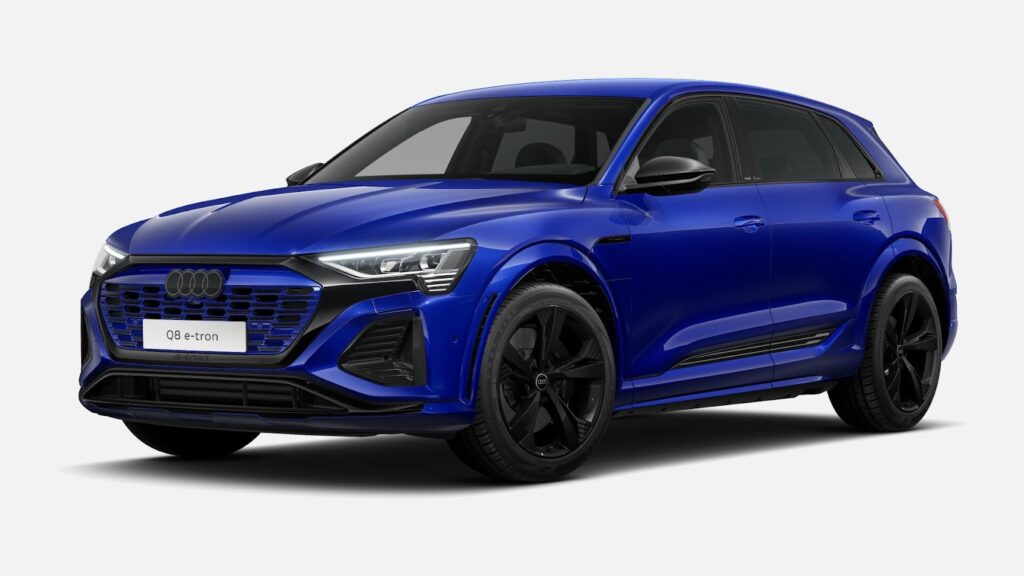
    In Brussels, the Audi Brussels site has established itself as one of the first European plants dedicated to the production of top-of-the-range 100% electric vehicles, with the assembly of the Audi Q8 e-tron.

    source : Audi

    In Flanders, Volvo Cars Gent also plays a central role. The plant has embarked on an in-depth transformation to support the Swedish manufacturer’s electrification strategy, with the production of electrified models and the gradual adaptation of its lines to the assembly of electric vehicles for the European market.

    This dynamic is not limited to private vehicles. Belgium is also establishing itself as a key player in the electric bus and coach segment, a rapidly expanding market driven by policies to reduce the carbon footprint of public transport. Belgian manufacturers with Europe-wide recognition are designing and assembling electric vehicles for urban and interurban networks.

    Brussels Motor Show 2026: the key event

    It is against this backdrop that the Brussels Motor Show 2026 will take on its full dimension. From 9 January 2026, over 60,000 m² of exhibition space will be devoted to more than 60 brands showcasing their latest products, with a special focus on electric vehicles, recharging solutions and sustainable mobility technologies. More than just an exhibition, the event is intended to be a platform for exchange, combining innovation, industry and education.

    Initiatives such as Febelauto’s Eco-Parcours will raise public awareness of the challenges of battery recycling and the circular economy, reminding us that electromobility is not limited to vehicle use, but encompasses an entire value chain.

    source : newmobility.news

    Challenges and prospects

    Despite this positive momentum, a number of challenges remain:

    • Regional disparities in access to infrastructure remain marked.
    • Adoption by private individuals is growing, but remains held back by the purchase price and certain concerns about autonomy.
    • The rollout of fast charging stations needs to be stepped up to keep pace with the growth in the number of vehicles on the road.
    • Finally, regulatory coordination with European standards remains a key issue.

    By 2030, the ambitions are clear: 2 million electric vehicles on Belgian roads and a doubling in the number of public charging points. To achieve this, the country will have to increase its current fleet fivefold, while maintaining a high level of service quality.

    Conclusion: Belgium, Europe’s electromobility laboratory

    With sustained growth in registrations, an expanding recharging network, tax incentives and a solid industrial base, Belgium is moving methodically towards mass electric mobility. The Brussels Motor Show 2026 will be one of the highlights of this transformation, bringing together technological innovations, industry players and environmental challenges.

    By combining public policy and market dynamics, the UK is confirming its role as Europe’s electromobility laboratory, capable of inspiring its neighbours and capturing the attention of industry professionals.

  • Electromobility in the UK: a European leader still in transition

    Electromobility in the UK: a European leader still in transition

    The UK is approaching the end of 2025 as one of Europe’s most advanced markets for electromobility, with a high share of the electric market, an ever-growing recharging infrastructure and a policy framework now structured around the ZEV mandate, but still with real obstacles in terms of purchase costs, future taxation and regional disparities.

    Market and sales volumes

    For once, the UK market accelerated in 2025. Between January and the end of November 2025, no fewer than 426,000 100% electric cars (BEVs) were registered in the UK. This significant figure represents an increase of 26% compared with 2024, giving EVs a 22.7% share of the new car market. Number of cars on the road: around 1.75 million 100% electric cars, or 5.2% of the 34 million cars on the road in the UK.

    In terms of hybrid technology, 208,000 PHEVs were sold over the same period last year, for a market share of just over 11%. As for HEVs, 260,000 new vehicles were registered, representing a market share of 14.0%.

    For electric light commercial vehicles (LCVs), although public data remains patchy for the year 2025 as a whole, monthly statistics from the SMMT (Society of Motor Manufacturers and Traders) show a sharp rise in sales of electric vans, with around 27,000 registrations to the end of November, representing an increase of almost 45% over one year.

    Number of charging points and recharging network

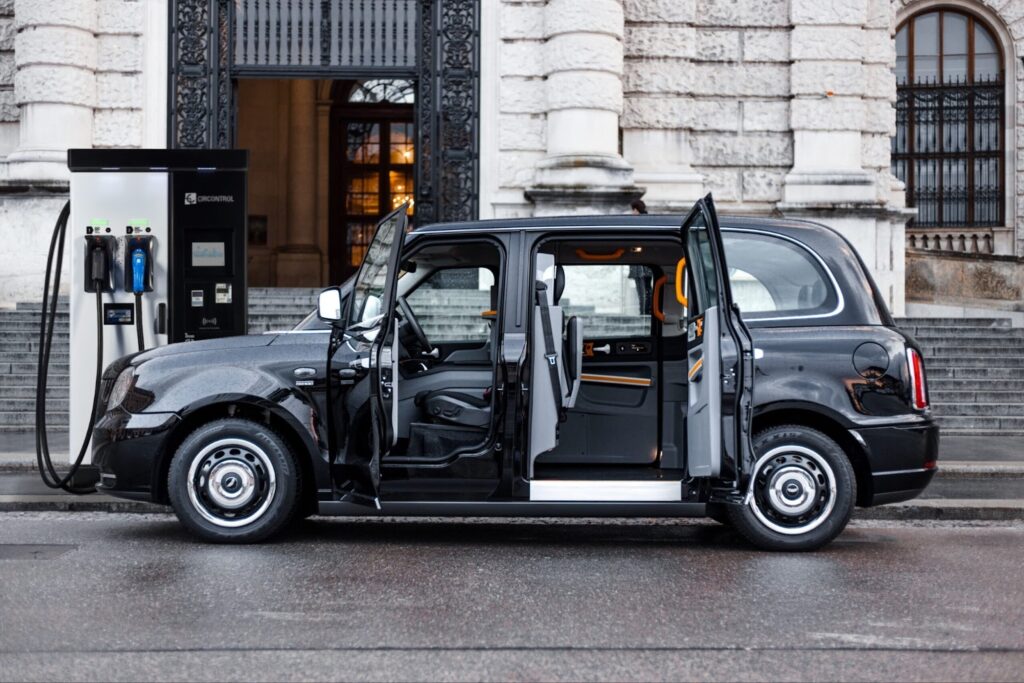
    Charging infrastructure has grown significantly since 2020, with a clear political target of 300,000 public charging points by 2030. It’s an ambitious target, but one that still seems a long way from being achieved. In fact, at the end of November 2025, the UK had more than 87,000 public charging points, with a dense but still very uneven network between regions. These solutions are spread over 44,326 separate sites and offer a total of 121,364 connectors. The average density is 127.3 chargepoints per 100,000 inhabitants, but there are wide variations, reflecting the fact that access is still very patchy. In London, for example, there are 300.8 terminals per 100,000 inhabitants, compared with 38.6 in Northern Ireland.

    source : circontrol

    In 2025, 13,469 chargepoints were added across the country, including 6,220 slow chargepoints and 3,358 fast or ultra-fast chargepoints. Although this figure is significant and represents an annual increase of around 18%, it is the smallest increase since 2022.

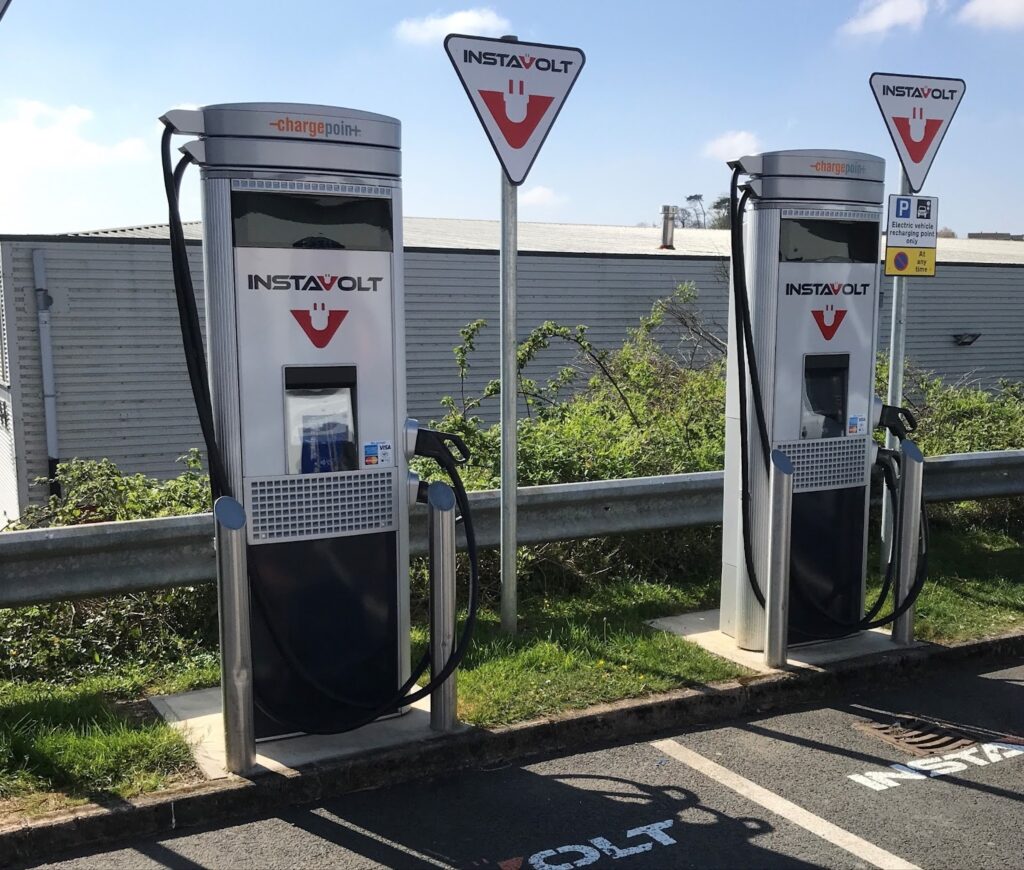
    The major private operators now dominate the fast-grid landscape: InstaVolt (2,169 fast/ultrarapid kiosks), Tesla (2,026) and Osprey (1,351) make up the top three by the end of 2025.

    source: Instavolt

    Public policy, aid and taxation

    With the aim of developing this market as effectively as possible and enabling EVs to become more widely available, legislation and incentives have been introduced. The UK framework is based on two pillars: a tight regulatory mandate for manufacturers (ZEV mandate) and targeted subsidies, notably relaunched in 2025 with a new “plug-in grant”.

    • ZEV mandate: the regulatory framework imposes on manufacturers a target of 28% sales of 100% electric vehicles by 2025, with a gradual trajectory leading to the end of sales of new combustion engine cars within the decade. By autumn 2025, the market share of BEVs was around 26%, slightly below this overall target, even though the scheme provides flexibility mechanisms for manufacturers.
    • Plug-in Grant 2025: a new purchase aid for electric cars was relaunched in the summer of 2025, with a twelve-month extension announced as part of the budget presented by Chancellor Rachel Reeves. The grant is deducted directly from the purchase price at the dealership.
    • Additional support: the scheme is complemented by OZEV grants for the installation of home and business charging points, as well as funding programmes dedicated to local authorities, in particular the LEVI fund for the local deployment of infrastructure.
    • Taxation: the planned end of the exemption from Vehicle Excise Duty (VED) for electric vehicles is fuelling questions about the economic attractiveness of electric vehicles in the medium term, particularly for households.

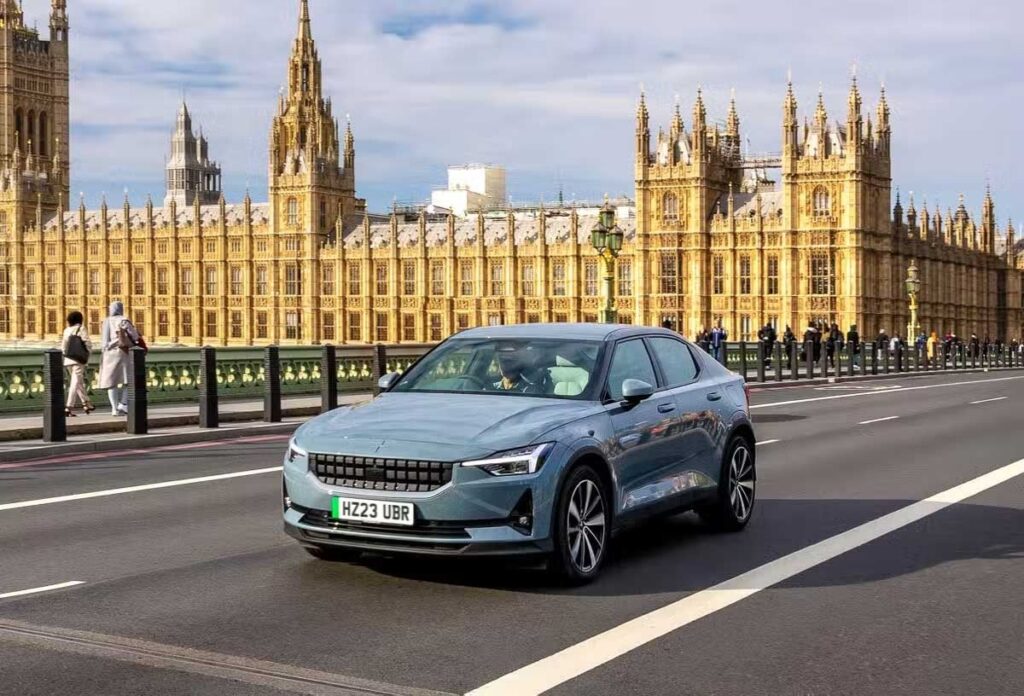
    source: Automobile propre

    Top-selling models and industry players

    In terms of sales and best-selling models, the market is still dominated by the major global generalists rather than by national manufacturers, but the UK ecosystem has specialised in recharging and services.

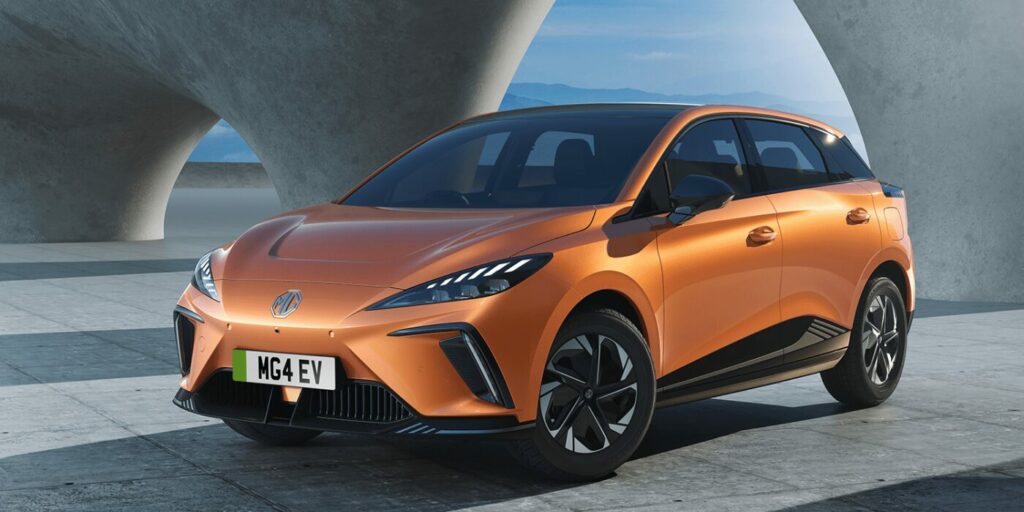
    Best-selling vehicles: in 2025, the UK electric car market continues to be dominated by the Tesla Model Y, which remains the most popular BEV model, closely followed by the MG4 EV and other electric SUVs and saloons such as the Tesla Model 3, Volkswagen ID.4 or Volvo EX30.

    source : MG

    Plug-in hybrids (PHEVs) are making rapid progress, with models such as the BYD Seal U DM-i among the most popular in this segment, which is particularly popular with fleets and commuters.

    Conventional hybrids (HEV) continue to have a strong presence in the general market, notably with the Toyota Corolla Hybrid and the Ford Puma Hybrid, which combine affordability with low fuel consumption.

    The range of electric and hybrid cars available in the UK now exceeds 150 models, with an average price of around £46,000, while the entry-level segment is expanding rapidly, with vehicles available for under £30,000, led by the Dacia Spring.

    The UK has a fast-growing ecosystem of companies involved in electric mobility.

    • Charging operators: InstaVolt, Osprey, BP Pulse (BP), Shell Recharge UK and others are developing networks of fast charging points and high-power hubs throughout the country, with a particularly dense network in the south and around London.
    • Services and leasing: many local players – rental companies, brokers and leasing platforms – specialise in electric fleet management and recharging solutions for individuals and businesses.
    • Production and R&D: the UK is home to several battery and electrified vehicle production sites operated by foreign groups, as well as gigafactory projects, although the sector remains less integrated than in Germany or China.

    Brakes and friction points

    Despite solid figures, the transition to electromobility in the UK remains gradual, with a number of structural obstacles:

    • Purchase cost: the average price of a new electric vehicle is around £46,000, driven in part by premium models such as Tesla and Audi. The entry-level range is growing, with models under £30,000 (MG4, BYD Dolphin, Citroën ë-C3), but is still a minority in terms of volume. Public subsidies, such as the Plug-in Grant and OZEV subsidies, partially reduce the additional cost compared with combustion vehicles.
    • Uneven infrastructure: the major conurbations in the south and London benefit from a well-developed network of charging stations, but there are still “white zones” in the north, in Northern Ireland and in certain rural areas, particularly for fast and ultra-fast charging stations.
    • Tax uncertainties: the gradual end of the exemption from VED (road tax) for EVs and the prospect of a kilometre tax by 2028 are fuelling a degree of caution among households.
    • Car culture and usage: many drivers remain attached to combustion-powered vehicles for long journeys. Concerns remain about the real range, residual value and long-term reliability of batteries, sometimes putting the brakes on the decision to buy.

    To sum up, the UK now ticks most of the boxes for a mature EV market: high market share, fleet in excess of 5%, dense recharging network and ambitious policy framework. But the next step, that of mass adoption beyond the ‘early adopters’, will depend on the ability to reduce the entry ticket, fill the infrastructure gaps and stabilise the fiscal framework.

  • Electromobility in Turkey: a market that has exploded in three years

    Electromobility in Turkey: a market that has exploded in three years

    In the space of just three years, however, the country has undergone a spectacular transformation. Buoyed by the emergence of its national manufacturer Togg, an extremely attractive tax system and the offensive by foreign brands, led by the US and China, Turkey is now one of the most dynamic markets on the continent.

    Spectacular take-off in 2025

    Turkey is experiencing impressive growth this year. In fact, while several European countries are seeing sales of electric vehicles stagnate or fall back, Turkey is breaking all the records.

    Indeed, the figures speak for themselves: according to data from the Association of Automobile Distributors (ODMD), in the first eleven months of 2025, the country recorded 166,665 sales of 100% electric vehicles, more than double the figure for the same period in 2024. At this rate, Turkey is poised to end the year with an increase in sales of more than 100% in one year.

    If we broaden the spectrum to electrified vehicles as a whole, the shift is even more striking. Plug-in hybrids rose by more than 658% to 42,857 units over eleven months, while conventional hybrids sold more than 252,000 units. As a result, by January-November 2025, electrified vehicles (BEV + PHEV + HEV) accounted for around 45% of total registrations, compared with less than 25% the previous year.

    Togg, Tesla, BYD: a trio that dominates the market

    Behind these figures, which symbolise effective progress, three brands share almost the entire 100% electric market, with radically different strategies and profiles.

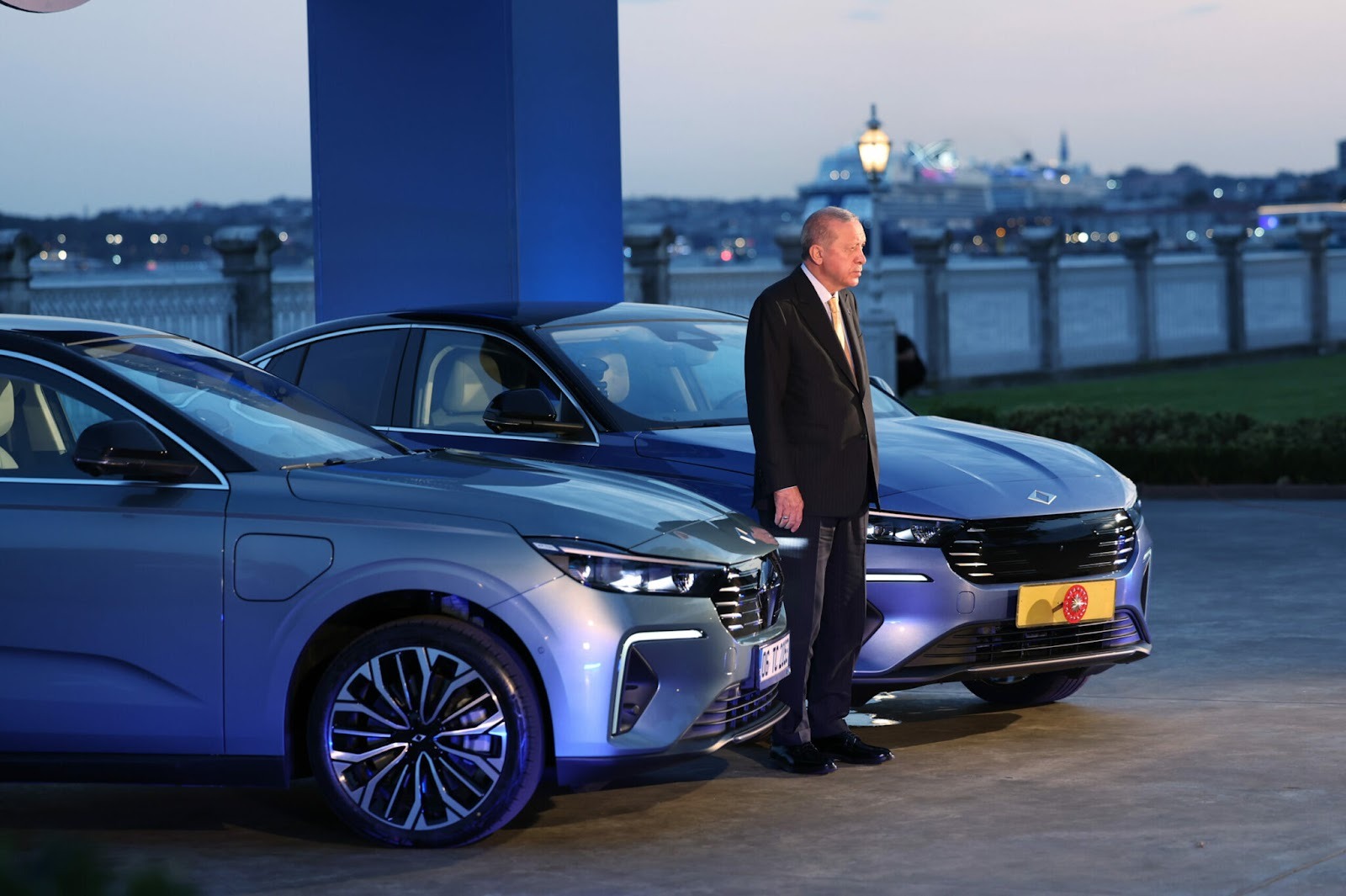
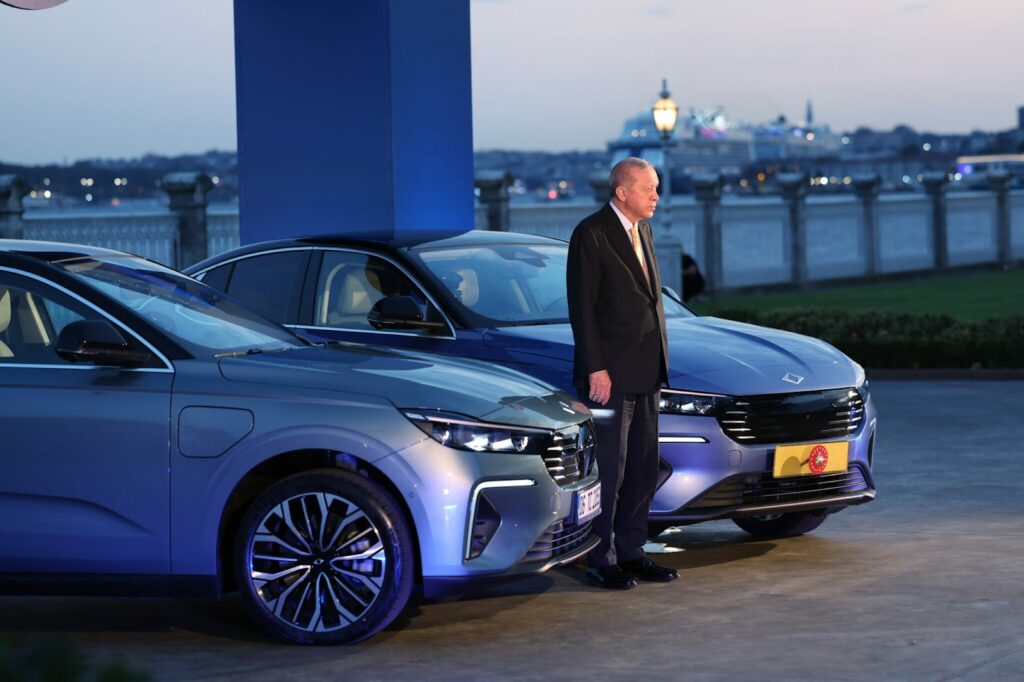
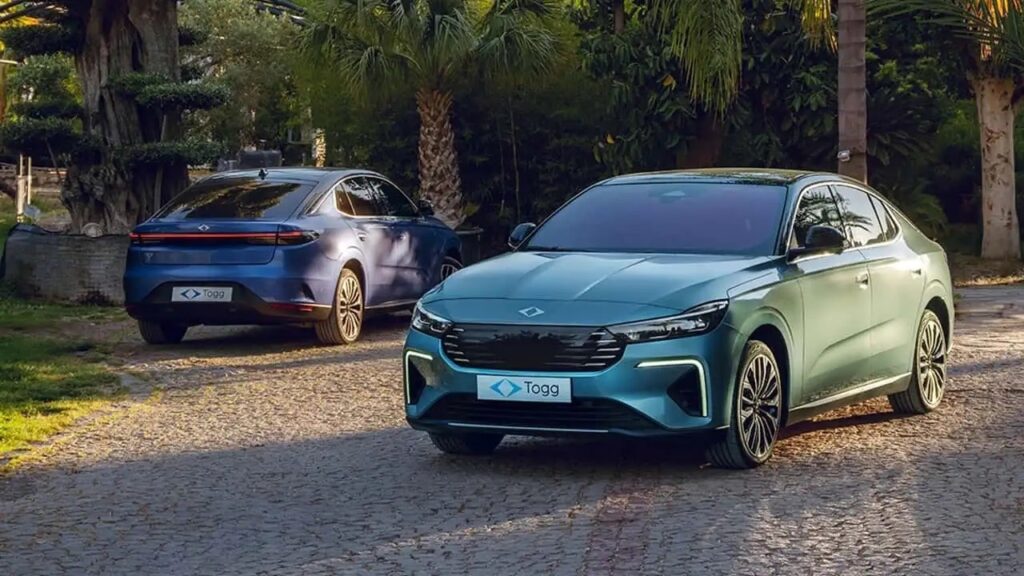
    The winner is Togg, Turkey’s national manufacturer. It topped the podium with 31,715 units sold over eleven months. This figure marks a symbolic turning point: for the first time, a Turkish car brand is the leader in a strategic segment. Launched in 2023 with the T10X SUV, Togg benefits from massive political support and ultra-favourable taxation reserved for locally produced models.

    Credit: TOGG

    Tesla came second with 29,955 sales. June was a historic month for the brand, with more than 7,200 units sold in a single month. The American brand benefited from the shortcomings of the Turkish tax system. If an EV has a power output of more than 160 kW, it is taxed heavily (40-60%). Tesla has therefore limited its vehicles to this limit to enable Turks to buy without breaking the bank.

    BYD completes the podium with 17,639 units sold. A latecomer to the Turkish market at the end of 2023, the Chinese giant has methodically rolled out a range of nine models covering all segments. In 2025, BYD announced a billion-dollar investment to build a production plant in Manisa, capable of producing 150,000 vehicles a year by the end of 2026. This strategic move will enable the Chinese company to get round the 40% import tariff.

    A fast-expanding recharging network

    The explosion in sales is logically pushing the country to speed up the roll-out of its infrastructure. And the figures show an accelerated catch-up, even if the coverage remains very uneven.

    In June 2025, Turkey had 31,433 public charging points, according to the Energy Market Regulatory Authority (EPDK), compared with just 6,500 in March 2023. This growth of more than 370% in two years reflects a real effort, albeit from a very low base. By autumn 2025, the network will have more than 37,000 outlets, concentrated in Istanbul (more than 3,000 stations), Ankara (1,322 stations) and Izmir.

    Turkey’s infrastructure is structured around several major operators:

    ZES dominates the market with a national network covering motorways and urban centres.

    Trugo, Togg’s proprietary network, now has more than 1,000 ultra-fast DC chargers and 600 AC stations spread across the country’s 81 provinces.

    Eşarj, operated by Enerjisa, offers a multi-brand network accessible via mobile application.

    The problem in Turkey is that beyond the metropolises, things are more complicated. Indeed, rural areas remain largely under-equipped. Government targets are ambitious: 143,000 plugs by 2030 and 273,000 by 2035 to support an estimated 1.5 million electric vehicles. To achieve this, however, between €500 and €600 million will have to be invested.

    ÖTV tax

    This success does not come from nowhere. If Turkey is experiencing such an explosion in electric vehicle sales, it is above all thanks to an ultra-aggressive tax policy that makes electric vehicles the most economically rational option.

    At the heart of the system is the special consumption tax (ÖTV), which applies to all new vehicles according to a scale based on power, price and origin of the vehicle. For internal combustion vehicles, this tax varies between 80% and 220% of the base price, making the purchase of a petrol or diesel car extremely expensive for the average consumer.

    By contrast, electric vehicles benefit from spectacular tax reductions: 10% for models with less than 160 kW and a base price of less than 1.65 million Turkish lira (around €47,000), and up to 60% above these thresholds. Even in the most unfavourable case, an electric vehicle is still more attractive from a tax point of view than its internal combustion equivalent.

    As a further government incentive, the system includes an incentive for local production: electric vehicles assembled in Turkey, such as Togg, benefit from additional tax advantages, including corporate tax deductions for the companies that buy them. This mechanism is clearly designed to favour Togg over imports.

    The scheme had an immediate effect on purchasing behaviour. In June 2025, just before the tax thresholds were adjusted, sales of electric vehicles soared by 233.6% year-on-year, as buyers rushed to take advantage of the lowest rates before they were revised. Tesla, with its Model Y limited to 160 kW, made the most of this window of opportunity.

    But this tax policy raises questions. By creating a massive tax advantage for Togg, the Turkish government is distorting competition and potentially discouraging other international manufacturers from investing in the country.

    Ambitious targets for 2030

    The Turkish government is making no secret of its ambitions. The national plan aims to have 2.5 million electric vehicles on the road by 2030, 35% of them locally produced. This target rises to 10 million vehicles by 2040, with a 100% electric fleet by 2053 to achieve carbon neutrality.

    To achieve this, the government is mobilising several levers: subsidies for R&D, support for battery factories, development of the recharging network via public-private partnerships, and maintaining a tax system that favours locally produced electric vehicles.

    But these objectives presuppose economic stability and a sustained growth trajectory, which the country is struggling to guarantee. High inflation, the volatility of the Turkish lira and regional geopolitical tensions are all uncertainties that could slow or compromise these ambitions.

    A structuring local ecosystem

    The country is gradually developing a local industrial ecosystem around electromobility.

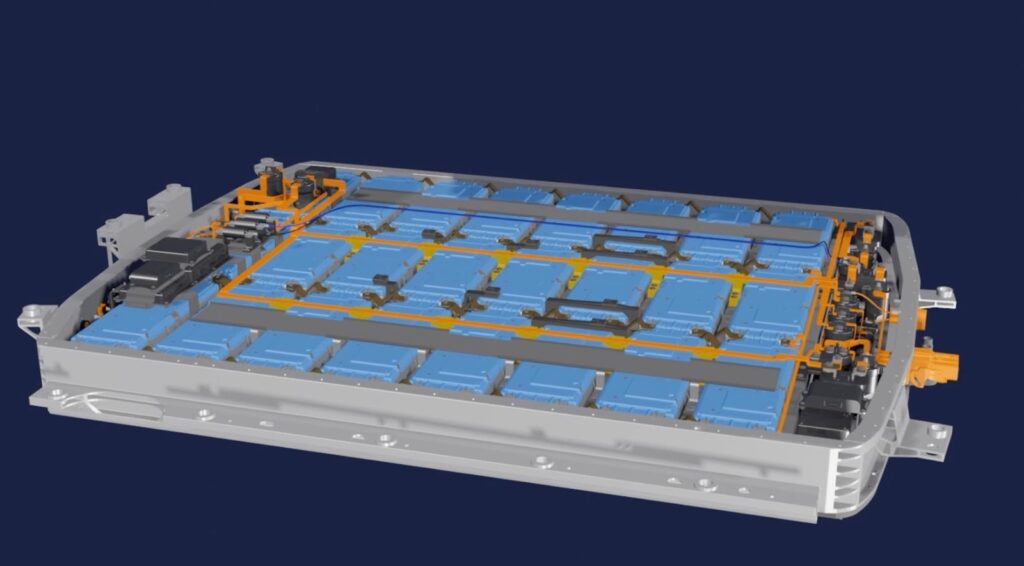
    SIRO produces batteries for Togg vehicles at its Gemlik plant. With a current capacity of 3 GWh per year, the plant aims to reach 20 GWh by 2031, enough to equip several hundred thousand vehicles.

    Aspilsan produces around 22 million battery cells a year, mainly in nickel-metal-hydride and lithium-ion technologies. Historically focused on the defence and energy sectors, the company is now turning its attention to the automotive industry.

    In 2025, three new battery plants came on stream: Ottomotive (5 GWh of battery packs), Reap Battery (5 GWh for energy storage) and Maxxen (10 GWh). These combined capacities of 20 GWh position Turkey as a potential regional hub for battery production.

    Finally, the electric vehicle components and equipment industry is showing impressive growth: exports of spare parts for EVs reached more than €1 billion in June 2025, up 13% year-on-year.

    Structural barriers to mass adoption

    Despite the spectacular growth in sales, a number of obstacles remain that could slow the momentum in the medium term.

    Customs tariffs, set at 40% on electric vehicles imported from China, heavily penalise buyers and limit access to the most affordable Chinese models. This protectionist measure aims to encourage local production, but it also reduces competition and keeps prices high for a large proportion of the population.

    In Turkey, there are no CO₂ standards. This leaves the combustion market to flourish without regulatory pressure. Unlike the European Union, where emissions quotas force manufacturers to electrify their ranges, Turkey imposes no climate constraints on new vehicle sales.

    The electricity grid is a growing concern. With a heavy reliance on imported natural gas and limited domestic renewable generation capacity, the country could face stresses on the grid if the electric vehicle fleet reaches its target of 2.5 million units by 2030.

    Rural infrastructure remains largely inadequate. While the major cities account for the bulk of charging points, the rest of the country is struggling to keep up. The lack of a complete motorway network is holding back adoption for inter-city journeys.

    As everywhere else, price is still an adoption issue. Even with tax benefits, an electric vehicle remains a considerable investment in a country where purchasing power is under pressure.

    A European surprise, but still fragile

    Turkey is emerging as one of the major surprises on the world electromobility scene. In the space of just three years, the country has gone from an anecdotal market to a player that rivals European nations.

    This acceleration is largely based on a tax policy that massively favours local production to the detriment of international competition. While this strategy has made it possible to structure a national industry, it has also made the market extremely dependent on the State’s tax choices. Any downward revision of ÖTV benefits could brutally break the momentum.

    Turkey is developing its electromobility, and fast. As a bridge between Europe and Asia, Turkey is ambitious. Let’s see if this transition will last over time.

  • Brazil: the electromobility giant in Latin America

    Brazil: the electromobility giant in Latin America

    In just a few years, Brazil has gone from being a niche market to the driving force behind electromobility in Latin America. Buoyed by an explosion in sales of electrified vehicles, an aggressive industrial policy and the massive arrival of Chinese players, the country is speeding up its transition, even though combustion engines remain ultra-dominant and a number of structural obstacles persist.

    A fleet that is electrifying at high speed

    The Brazilian dynamic can only really be seen if you look at the figures for the last few years. In 2020, electric vehicles were still anecdotal in a market dominated by internal combustion engines. Four years on, the landscape has changed radically.

    According to ABVE and various market analyses, sales of plug-in vehicles (100% electric and plug-in hybrids) will rise from around 19,300 units in 2023 to 61,600 in 2024, an increase of more than 200% in one year.

    If we extend this to all electrified vehicles, market studies estimate that the total exceeds 150,000 units over the year, and this trend is set to continue in 2025. The market share of electrified vehicles reached around 4% of new registrations in the January-November total, in a global market of around 2.5 to 2.7 million vehicles.

    Some months in 2025 broke records, with more than 24,000 electrified vehicles (BEV + PHEV + HEV) sold in a single month. This is a clear sign that electric vehicles are becoming more widespread in Brazil, even if combustion engines remain the dominant mode.

    BYD, GWM and the others: a market dominated by the Chinese

    If there is one striking feature of Brazilian electromobility, it is the central role played by Chinese brands, far ahead of the traditional manufacturers.

    The figures speak for themselves:

    • In 2024, BYD and GWM (Great Wall Motor) will together account for 81.6% of plug-in electric vehicle sales (BEV + PHEV) in Brazil.
    • BYD alone has around 70% of the BEV market and more than 50% of the PHEV market, confirming its almost hegemonic domination of trendy models.
    • In May 2025, BEV sales reached a monthly record: BYD accounted for more than 80% of all 100% electric registrations, well ahead of Volvo and GWM.

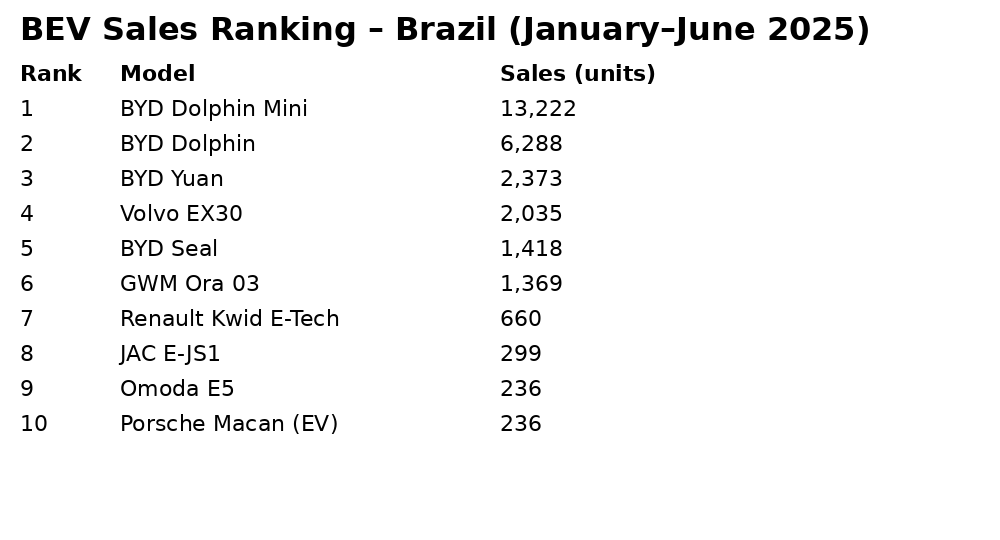
    As this table shows, Chinese manufacturers dominate the ranking of the best-selling 100% electric vehicles in Brazil, although Volvo does manage to stand out:

    A recharging network that’s catching up fast

    To continue the development and democratisation of EVs, the development of recharging infrastructure is vital. Although it has a long way to go, the charging system for electrified vehicles in Brazil is keeping pace with the adoption of these vehicles.

    In 2019, Brazil had just a few hundred public chargepoints; today, the country has a network that, while not yet homogeneous, is beginning to cover its main axes. In fact, an analysis of the growth of the infrastructure shows that by summer 2025, there will be almost 17,000 charge points with general or restricted access, covering more than 1,500 municipalities, demonstrating the gradual extension of the infrastructure beyond just the state capitals.

    The figures reveal a clear trend: the Brazilian network is expanding rapidly, particularly on the major motorways linking São Paulo, Rio de Janeiro, Belo Horizonte, Curitiba and the south of the country. But also in dense urban areas where the first adopters and professional fleets (VTC, delivery, services) are concentrated.

    Industry projections estimate that at least 150,000 charging points will be needed by 2035 to support a fleet of around 3 million electric vehicles, which means a sustained rate of investment over the coming decade.

    A proactive industrial policy: MOVER and taxation

    Obviously, as in every country with a clear desire to make progress in terms of electromobility, the government has put in place measures and aid to support and help this change.

    One of the major turning points in Brazilian electromobility is the entry into force of the MOVER programme (National Programme for Green Mobility and Innovation). Launched in 2024 as part of the Lula government’s industrial policy, this programme aims to modernise the automotive sector around climate and innovation criteria.

    • MOVER introduces a bonus-malus system on the IPI (tax on industrialised products), which favours low-emission vehicles and penalises the most polluting models.
    • It provides direct financial incentives to reduce the purchase price of electrified vehicles.
    • It provides for around 19.3 billion reals (nearly 4 billion euros) in incentives for innovation between 2024 and 2028, focusing on R&D, electrification, energy efficiency and the use of recycled materials.
    • The programme also imposes improved carbon accounting throughout the vehicle life cycle, with increasing requirements in terms of recyclability and recycled content.

    As a result, manufacturers from around the world have announced investments of more than €23 billion in Brazil over the next few years, including several projects directly linked to electromobility.

    On the trade front, customs policy has been tightened to regulate imports and encourage domestic production:

    • After a period of reduced import duties to launch the market, the government has decided to gradually raise tariffs on imported electric vehicles (BEVs, PHEVs, HEVs) to converge towards the 35% ceiling, which is the maximum rate authorised by the rules of MERCOSUR (the South American Common Market).
    • This trajectory is clearly intended to encourage manufacturers, particularly BYD and GWM, to locate part of their production in Brazil in order to maintain their price competitiveness.

    Source: BYD

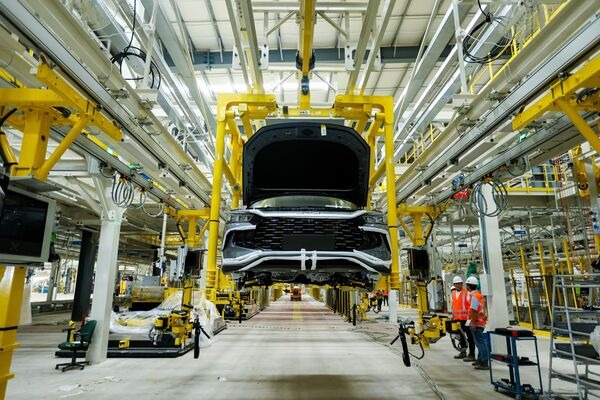
    And the result of all these efforts to promote Made in Brazil is hard-hitting and effective. BYD plans to transform the former Ford plant at Camaçari (Bahia) into a production hub for electric vehicles and batteries, while GWM is investing in the local assembly of hybrid and electric models in the state of São Paulo. Volkswagen and Stellantis have also announced packages dedicated to the gradual electrification of their locally produced ranges.

    WEG, Tupi Mob and a structuring local ecosystem

    While the majority of electric vehicles sold in Brazil still come from China, national players are emerging in the field of recharging infrastructure and services.

    The most emblematic case is that of WEG, an industrial giant from the state of Santa Catarina. Historically renowned for its electric motors and industrial automation systems, WEG has gradually extended its expertise to electromobility, developing a comprehensive range of recharging solutions: home chargers, public DC charging points and energy management tools.

    In October 2025, WEG announced the acquisition of 54% of Tupinambá Energia (Tupi Mob), which operates one of the country’s leading recharging platforms. The Brazilian group is now not only an equipment supplier, but also and above all a player in the recharging ecosystem.

    Thanks to this acquisition, WEG now combines hardware, software and network or fleet management services, a positioning that is still rare in Brazil. The group intends to play a leading role in the energy transition in the transport sector.

    Source : WEG

    Other players are developing around this hub:

    • Energy companies such as Raízen are committed to the deployment of electric fleets, with a partnership aimed at integrating 20,000 electric vehicles into the fleet of VTC 99 by the end of 2025.
    • Private operators, property developers and infrastructure managers are developing networks of charging points in car parks, shopping centres and service stations, capitalising on the massive arrival of Chinese models and the growing interest of business fleets.

    Persistent obstacles to mass adoption

    Despite this momentum, Brazil is still a long way from achieving majority electromobility. And for good reason: there are a number of obstacles to scale-up.

    • Still high purchase price: even if Chinese models are driving prices down, the gap with a combustion vehicle remains significant for a large proportion of the population, especially in a very sensitive market.
    • Interest rates and purchasing power: car financing relies heavily on credit. High interest rates and under-pressure purchasing power make it more difficult to buy recent vehicles, especially electric ones.
    • Uneven infrastructure: the major cities are benefiting from a growing density of charging points, but a large part of the country remains poorly equipped, fuelling “autonomy anxiety” for inter-city journeys and business use outside the main roads.
    • Electricity grid and reliability: even though Brazil’s electricity mix is largely decarbonised thanks to hydroelectricity, some regions suffer from grid capacity and reliability constraints, making it difficult to roll out fast charging on a large scale.

    A large region in transition, but still breaking in

    Brazil is proving to be one of the most interesting laboratories for electromobility in the world, with an assertive industrial policy, a mass market, the importance of flex-fuel (ethanol), a Chinese offensive and the emergence of local players in recharging. The figures show a real and palpable take-off, but the market share is still modest in terms of the national fleet.

    Brazil has laid the foundations to become a regional pillar of electric mobility. All that remains now is to build on this success: accelerate the reduction in costs, increase the density of the network of charging points outside the major cities and remove the cultural and financial obstacles that still stand in the way of truly mass-market electromobility.

  • Electric wins the futur

    Electric wins the futur

    Why EVs outperform hybrids in America’s auto revolution

    The year 2025 marks a defining moment in the American automotive journey. For decades, the internal combustion engine dominated U.S. roads, shaping cities, economies, and lifestyles. Then came hybrids an important transitional technology designed to soften fuel consumption without fully abandoning gasoline. Now, electric vehicles (EVs) stand firmly at the center of the future.

    As American consumers weigh their choices between electric vehicles (EVs) and hybrid vehicles in 2025, the answer is becoming increasingly clear: fully electric vehicles are the superior choice for performance, cost efficiency, environmental responsibility, and long-term value.

    Hybrids once represented progress. Today, they represent compromise.

    This comprehensive comparison explores why EVs are no longer just an alternative but the dominant automotive solution for America.

    The shift is no longer coming — it’s here

    Five years ago, EVs were often discussed as “the future.” In 2025, they are the present.

    Electric vehicles are now widely available across nearly every segment sedans, SUVs, trucks, crossovers, and even performance cars. American roads are increasingly populated by vehicles that are quieter, faster, cleaner, and cheaper to operate than their gasoline-based predecessors.

    Hybrids still exist, but their role has changed. What was once a stepping stone has become a technological halfway house neither fully efficient nor fully future-ready.

    Purchase price: The gap is closing fast

    One of the longest-standing arguments in favor of hybrids has been their lower upfront cost. In 2025, that argument is rapidly losing strength.

    EV Affordability

    Electric vehicles now span a wide price range, from affordable entry-level models to premium luxury offerings. Increased domestic manufacturing, improved battery technology, and economies of scale have pushed EV prices down year after year.

    Additionally:

    • Many EV buyers qualify for financial incentives at the point of sale
    • EV leasing options are often more favorable than hybrid leases
    • Operating cost savings offset higher upfront prices quickly

    Hybrid Pricing Reality

    Hybrids may appear cheaper initially, but they still require:

    • Gasoline
    • Oil changes
    • Exhaust systems
    • Emission-related maintenance

    When the full ownership cost is considered, hybrids lose much of their pricing advantage.

    Verdict: EVs are no longer expensive experiments they are competitively priced, financially rational purchases.

    Total cost of ownership: EVs dominate

    When Americans buy a car, the real question isn’t the sticker price it’s how much that vehicle costs over time.

    EV Ownership Advantages

    Electric vehicles shine in long-term ownership:

    • Electricity is significantly cheaper per mile than gasoline
    • Fewer moving parts mean fewer breakdowns
    • No oil changes, spark plugs, timing belts, or transmission servicing
    • Regenerative braking extends brake life dramatically

    Over a 5–8 year ownership period, EV owners routinely spend thousands of dollars less than hybrid owners.

    Hybrid Cost Burden

    Hybrids still rely on internal combustion engines. That means:

    • Ongoing fuel costs
    • Engine wear and tear
    • Dual powertrain complexity
    • Higher long-term maintenance risk

    Hybrids combine two systems electric and gasoline while EVs simplify ownership by eliminating one entirely.

    Verdict: EVs win decisively on lifetime cost.

    Performance: Electric is simply better.

    The driving experience is where EVs completely outclass hybrids.

    Instant Torque

    Electric motors deliver power instantly. There is no delay, no gear shifting, no hesitation. Acceleration is smooth, silent, and immediate.

    Many EVs outperform traditional sports cars in acceleration even in mainstream price brackets.

    Driving Comfort

    EVs offer:

    • Quiet cabins
    • Smooth power delivery
    • Lower vibration
    • Balanced weight distribution due to floor-mounted batteries

    Hybrids, by contrast, still rely on gasoline engines that turn on and off, often disrupting the driving experience.

    Verdict: EVs are not just cleaner they are more enjoyable to drive.

    Range anxiety is a thing of the past.

    One of the most persistent myths about EVs is range anxiety. In 2025, this concern is largely outdated.

    Modern EV Range

    Most electric vehicles today offer:

    • 250–400+ miles on a single charge
    • Real-world range suitable for daily commuting and long-distance travel
    • Predictive navigation that factors in charging stops automatically

    Charging Convenience

    • Home charging provides unmatched convenience plug in at night, wake up full
    • Public fast-charging networks are expanding rapidly
    • Charging times continue to decrease with improved battery and charger technology

    Hybrids avoid charging but at the cost of remaining dependent on gasoline.

    Verdict: EV range is no longer a limitation it’s a competitive strength.

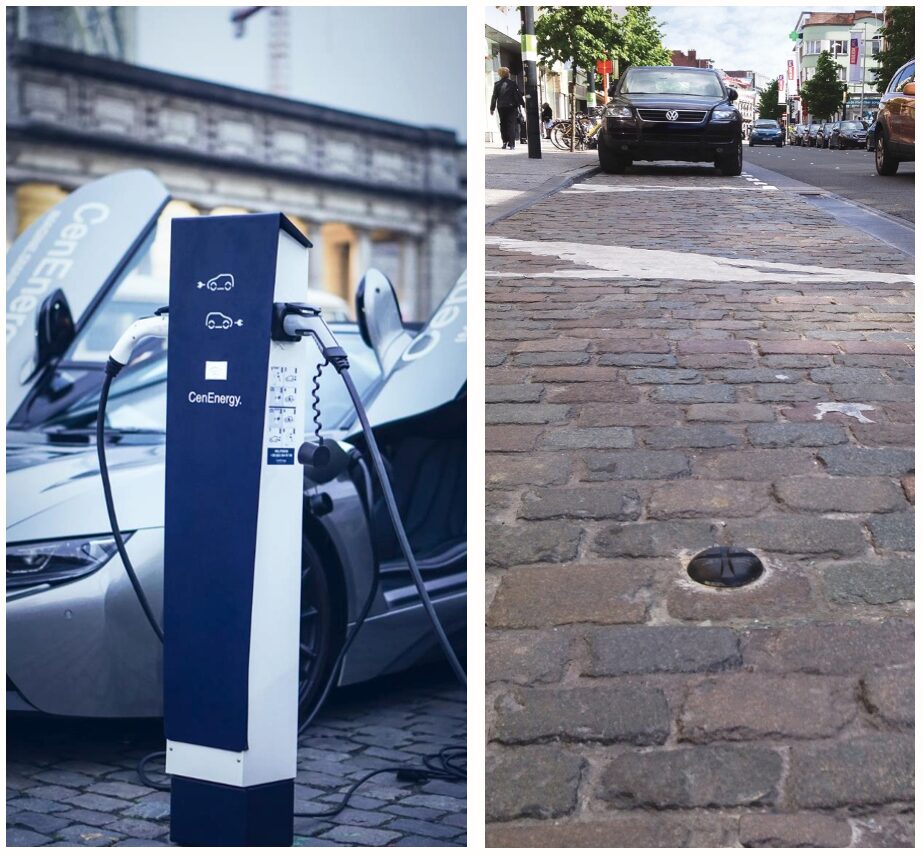
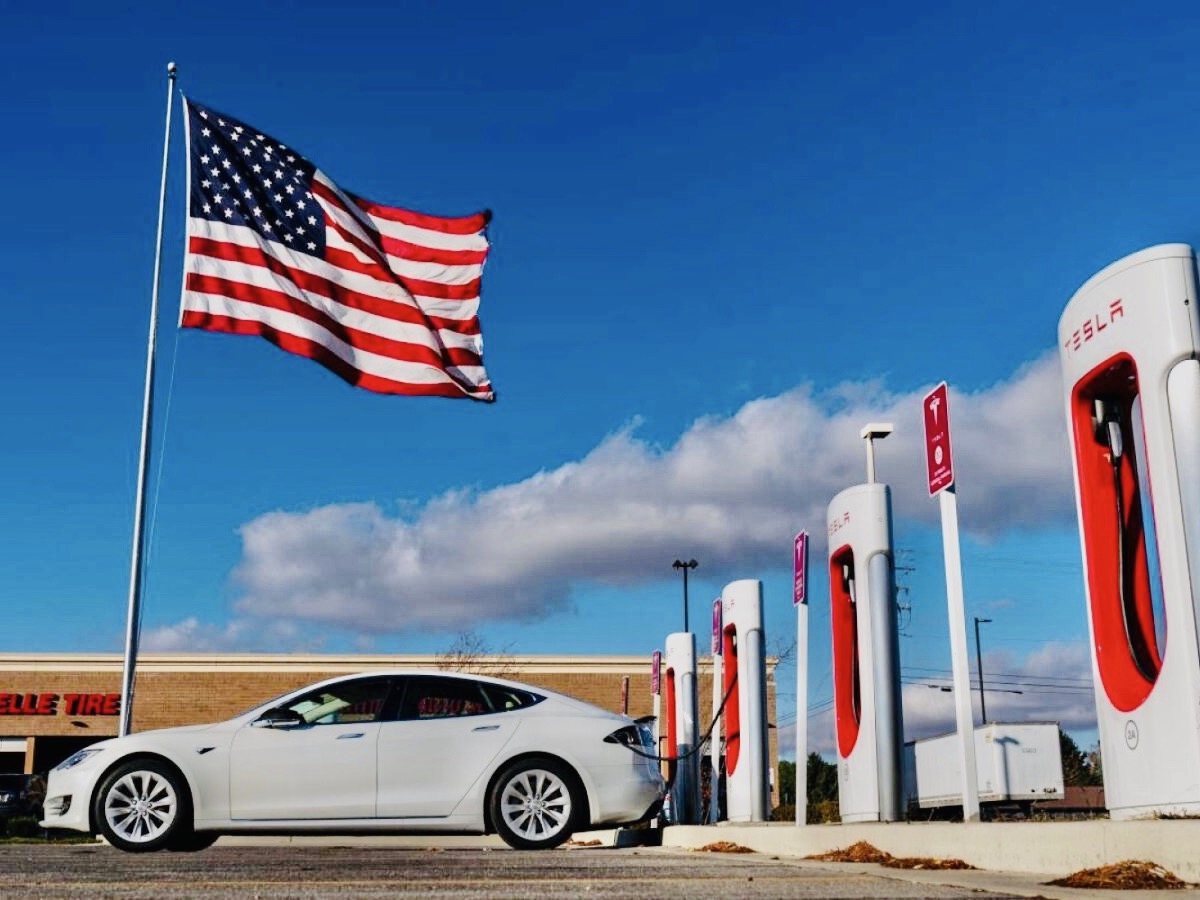
    Infrastructure: Electric America is taking shape.

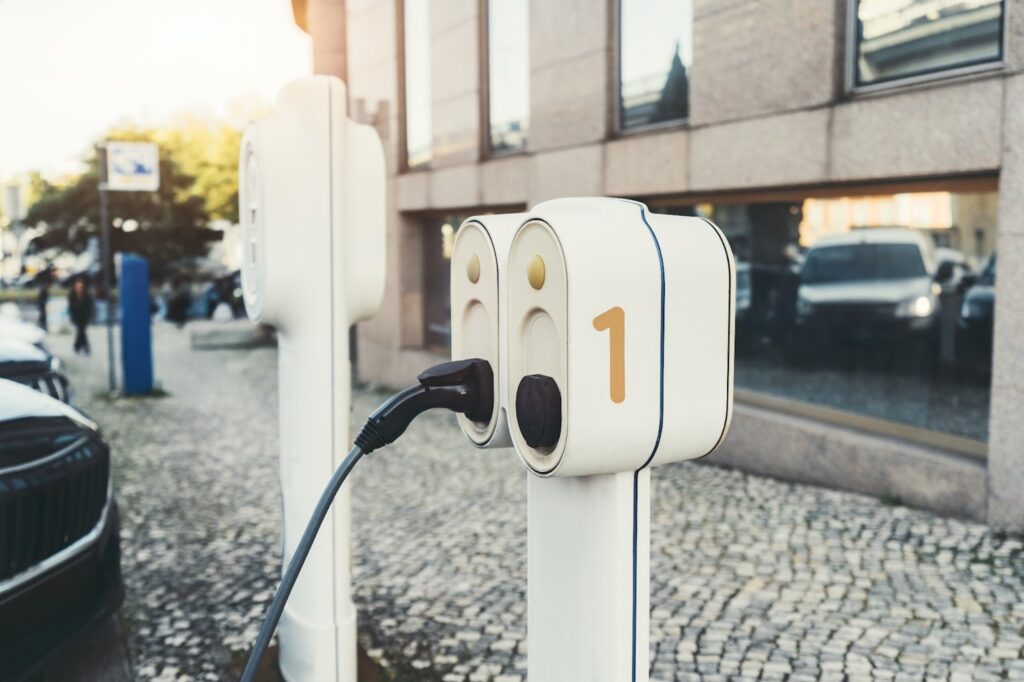
    Credit: pxhere.com

    America’s charging infrastructure in 2025 is stronger than ever.

    Charging Expansion

    Charging stations are now common at:

    • Highways
    • Shopping centers
    • Apartment complexes
    • Office buildings
    • Hotels and airports

    The national charging ecosystem continues to grow in reliability, speed, and accessibility.

    Home Charging Advantage

    EV owners enjoy the ultimate convenience:

    • No gas station stops
    • No fuel price volatility
    • No waiting in line

    Hybrid owners still rely on gas stations—an outdated inconvenience in a modern world.

    Verdict: Infrastructure growth overwhelmingly favors EVs, not hybrids.

    Environmental impact: EVs lead, hybrids lag.

    Hybrids reduce fuel use but they do not eliminate emissions.

    Electric vehicles:

    • Produce zero tailpipe emissions
    • Improve urban air quality
    • Reduce dependence on fossil fuels
    • Align with cleaner energy generation over time

    Hybrids still burn gasoline every day. They still emit pollutants. They still rely on oil.

    As America transitions to cleaner energy, EVs automatically become cleaner without changing the vehicle.

    Verdict: EVs are the only true solution for sustainable transportation

    Maintenance & reliability: Simplicity wins

    Credit: Envato by Pedrulito

    EV Simplicity

    Electric vehicles are mechanically simpler:

    • No engine
    • No transmission
    • No exhaust
    • No fuel system

    This simplicity translates to:

    • Fewer service visits
    • Lower repair bills
    • Higher reliability

    Hybrid Complexity

    Hybrids contain:

    • A full gasoline engine
    • An electric motor
    • A battery system
    • Complex software coordination

    More systems mean more potential failure points.

    Verdict: EVs are easier to own and maintain.

    Resale value: EV confidence is rising.

    Early concerns about EV resale have faded.

    Modern EVs:

    • Retain value well due to strong demand
    • Benefit from improved battery longevity
    • Are increasingly desirable in the used-car market

    Hybrids face growing competition from used EVs, which now offer better performance an lower running costs.

    Verdict: EV resale confidence continues to strengthen.

    Who should still buy a hybrid?

    Hybrids still make sense for a shrinking group of buyers:

    • Drivers without any access to charging
    • Extremely remote rural users
    • Buyers unwilling to change fueling habits

    However, these scenarios are becoming less common each year.

    For the vast majority of American drivers, EVs are now the smarter choice.

    The final verdict: Electric is the clear winner.

    In 2025, the comparison between EVs and hybrids is no longer close.

    CategoryWinner
    PerformanceEV
    Environmental Impact EV
    MaintenanceEV
    Driving ExperienceEV
    Future ReadinessEV

    Hybrids served their purpose but that era is ending.

    Electric vehicles are not a trend.

    They are not experimental.

    They are not niche.

    They are the new American standard.

    Looking ahead: The next decade belongs to EVs

    As battery costs continue to fall, charging infrastructure expands, and consumer confidence grows, the momentum behind EVs is irreversible.

    Hybrids will fade. Gasoline will decline. Electric vehicles will define mobility, innovation, and freedom on American roads.