

As Europe’s second-largest car manufacturer, Spain is gradually establishing itself as a key market for electric mobility. Having long lagged behind northern European countries, the country has seen a marked acceleration in electric vehicle sales since 2025, driven by increased industrial and political momentum. Behind this rise, however, several structural weaknesses remain.

A rapidly growing market
The year 2025 marks a real turning point for electric mobility in Spain. According to estimates from the European Alternative Fuels Observatory, around 243,000 plug-in vehicles (BEVs and PHEVs) were registered that year, accounting for nearly 19% of the car market.
The breakdown of this estimate reveals that over 100,000 fully electric vehicles (BEVs) were sold. These figures represent growth of more than 70% compared to last year. Naturally, with over 100,000 BEVs sold, this also means that plug-in hybrids (PHEVs) have exceeded 100,000 units. This is a sign that the Spanish view PHEVs as the key to the energy transition in transport. Taking these results together, in Spain, nearly one in five new cars is now rechargeable.
Of the approximately 243,000 rechargeable vehicles (BEVs and PHEVs), passenger car registrations alone exceeded 225,000 units. And this momentum is continuing into early 2026. In the first two months of the year, more than 36,000 rechargeable vehicles were registered, bringing the market share to 21.3%, a significant increase.
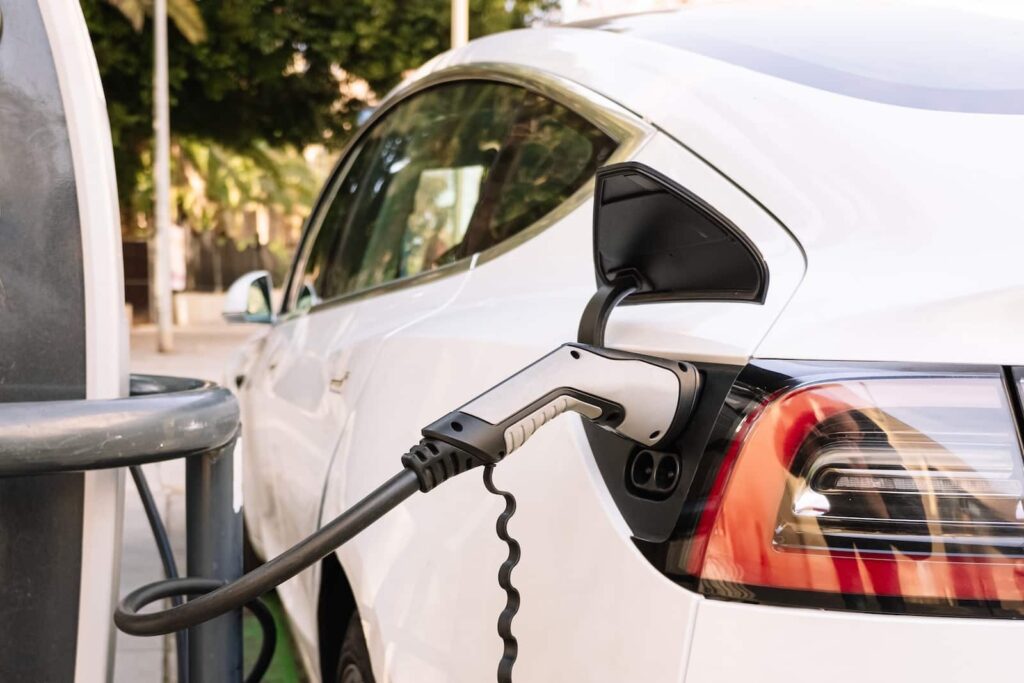
A park still under construction
Despite this rapid growth, the number of electric vehicles on the road remains limited at national level.
In the absence of consolidated data for the end of 2025, estimates put the total fleet at between 500,000 and 700,000 rechargeable vehicles. This is still a modest figure compared to the size of the car market, which stands at around 24 to 25 million passenger cars.
Certain regions illustrate this structural lag. In Madrid, for example, electric vehicles still accounted for less than 2% of the total vehicle fleet in 2024, with even greater disparities in less urbanised regions.

An infrastructure that is growing rapidly… but is far from perfect
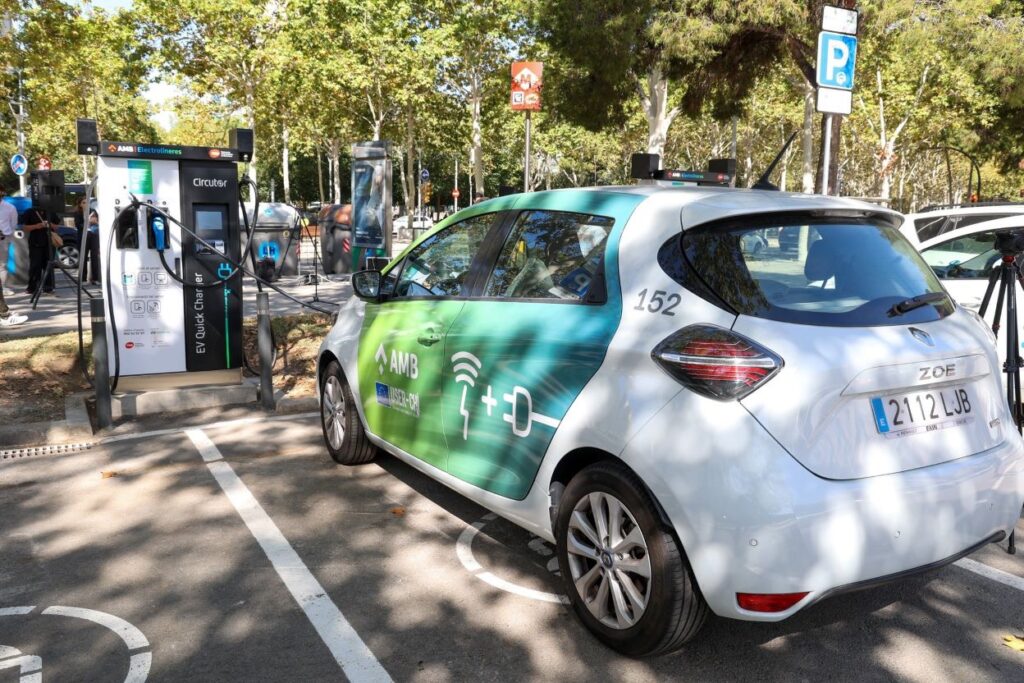
But electric cars inevitably require a charging infrastructure. Spain’s charging network is expanding rapidly. By the end of 2025, the country will have around 50,000 operational public charging points, according to data from AEDIVE.
The increase is particularly marked in high-speed infrastructure:
- the number of charging points with a capacity of between 50 and 250 kW has almost doubled in a year,
- The number of ultra-fast charging points (>250 kW) has increased by nearly 85%.
Major regions such as Catalonia, Madrid and Andalusia account for the bulk of the network.
But this apparent growth masks a more mixed picture. A significant proportion of the charging points installed are not yet in service, due to delays in connection or bureaucratic red tape. As a result, the network’s actual availability remains below the figures announced.
Obstacles that are still clearly identified
Despite positive momentum, several obstacles continue to hinder the uptake of electric vehicles.
The first concerns the reliability and distribution of infrastructure. The network remains unevenly distributed, with rural areas still lacking adequate coverage.
Added to this is a familiar factor: the still high purchase price of electric vehicles, which limits their uptake by private individuals, despite the subsidies. Finally, the lack of clarity regarding future policies has long fostered a degree of caution among both consumers and market players.
A review of financial support in 2026
In light of these limitations, the Spanish government has embarked on a major overhaul of its support scheme. The MOVES III programme, which runs until 2025, is gradually being replaced by a new national framework as part of the ‘Auto 2030’ plan. At the heart of this strategy lies the Auto+ Plan, which provides around €400 million in direct purchase subsidies.
Unlike the previous system, management is now centralised at national level, with a clear objective: to simplify procedures, reduce processing times and standardise eligibility criteria. This initiative forms part of a comprehensive plan estimated to cost over €1.2 billion, which also includes support for industry and infrastructure.
An ambitious industrial strategy
Beyond the market itself, Spain aims to play a major role in the European electric mobility value chain. In particular, the country is hosting a strategic gigafactory project led by CATL and Stellantis, with an announced capacity of 50 GWh per year and production scheduled to begin in late 2026. At the same time, several manufacturers are accelerating the electrification of their industrial sites:
- SEAT and CUPRA in Martorell
- Stellantis in Vigo, Zaragoza and Madrid
- Ford in Valencia
Energy companies also play a key role in the roll-out of infrastructure, with firms such as Iberdrola and Endesa playing a particularly active part in fast-charging networks.

A transition that is well underway but not yet complete
Spain has set itself ambitious targets as part of its energy transition:
- 30% renewable energy in transport by 2030
- 70% renewable electricity
- carbon neutrality in the transport sector by 2050
With sales surging, the industry taking shape and infrastructure gradually improving, electric mobility in Spain is advancing rapidly. However, to catch up with more mature markets, it will still need to overcome several structural barriers and ensure a smoother implementation of its strategy.