Category: News

  • Astra and Astra Sports Tourer: Opel’s best-seller goes electric

    Astra and Astra Sports Tourer: Opel’s best-seller goes electric

    The Stellantis Group officially lifted the veil on the new Opel Astra and Astra Sports Tourer a few days ago, an announcement that comes a month before their world premiere scheduled for the 2026 Brussels Motor Show. For the German manufacturer, this is an opportunity to continue the evolution of its flagship compact model in a context of accelerated energy transition.

    source: Opel

    An announcement ahead of the 2026 Brussels Motor Show

    The manufacturer has confirmed the arrival of these two new versions, designed to succeed the current generation, in a number of official announcements. The first public appearance will take place from 9 January 2026 at the Brussels Motor Show, where visitors will be able to see these models in their final configuration for the first time. With this early announcement, Opel intends to prepare the ground and highlight the main styling and technological developments of its new compact cars.

    A modernised design and a new lighting signature

    Aesthetically, the new Astra and Astra Sports Tourer evolve and adopt an all-new styling language for the brand, inspired by the design of the Opel Corsa GSE Vision Gran Turismo high-performance concept car. It features a reworked Vizor grille and, above all, the introduction of Intelli-Lux HD headlamps, an adaptive lighting technology that improves visibility and reduces glare for other road users.

    source: Opel

    Where these two vehicles differ is in terms of format and use. The Opel Astra remains the five-door compact we know, designed for urban and everyday use, while the Astra Sports Tourer is the estate version of the iconic German model, offering more cargo space and modularity, ideal for families or users with larger transport needs.

    The compact five-door version offers up to 1,339 litres of boot capacity with the seats folded down. The Astra Sports Tourer offers 1,634 litres with the seats folded.

    The press release makes a point of showing that the brand is moving towards ever more environmentally friendly practices: “Developers and designers have also remained true to Opel’s ‘Greenovation’ approach: the interior of the new Astra is made from 100 percent recycled materials.”

    source: Opel

    A 100% electric engine

    The most interesting news is that the press release confirms that the new Astra and Astra Sports Tourer will be available in a 100% electric version. And on the performance front, the electric version of the Astra boasts a claimed range of up to 454 km WLTP and is equipped with V2L technology, which allows users to charge an electric device while driving, such as a bicycle.

    The press release focuses exclusively on this electric powertrain, illustrating that Opel is highlighting its new energy transition technologies, which, it should be remembered, have officially announced a total switch to electric power in Europe by 2028.

    source: Opel

    Strategically positioned in the compact segment

    With these new models, Opel is seeking to strengthen its presence in the C segment, which designates compact cars in the European car classification. This is a highly competitive sector, with rivals already well established in the electric segment. The aim is clear: to offer a versatile range, combining design, on-board technologies and sustainable mobility solutions.

    A key step in Opel’s strategy

    The announcement marks a new milestone for Opel, which aims to become a 100 percent electric brand in Europe by the end of the decade. The new Astra and Astra Sports Tourer embody this transition. See them at the Brussels Motor Show from January 9, 2026.

  • Electric Cars: Soon Taxed by the Kilometer?

    Electric Cars: Soon Taxed by the Kilometer?

    As electric cars gain ground, a long-postponed question is now confronting governments: how can road maintenance be financed when fuel taxes disappear? Tried or planned in the UK, California, Switzerland and New Zealand, the kilometre-based tax applied to electric vehicles is emerging as a pragmatic solution. It’s an explosive subject, but one that is becoming less and less avoidable, and one that is beginning to enter the French and European debate.

    The transition to electric vehicles is overturning a long-standing pillar of public finance. For decades, maintenance of the road network has been largely based on the taxes levied on petrol and diesel. The more motorists drove, the more fuel they consumed, the more they indirectly contributed to the infrastructure. With the electric car, this link disappears almost completely.
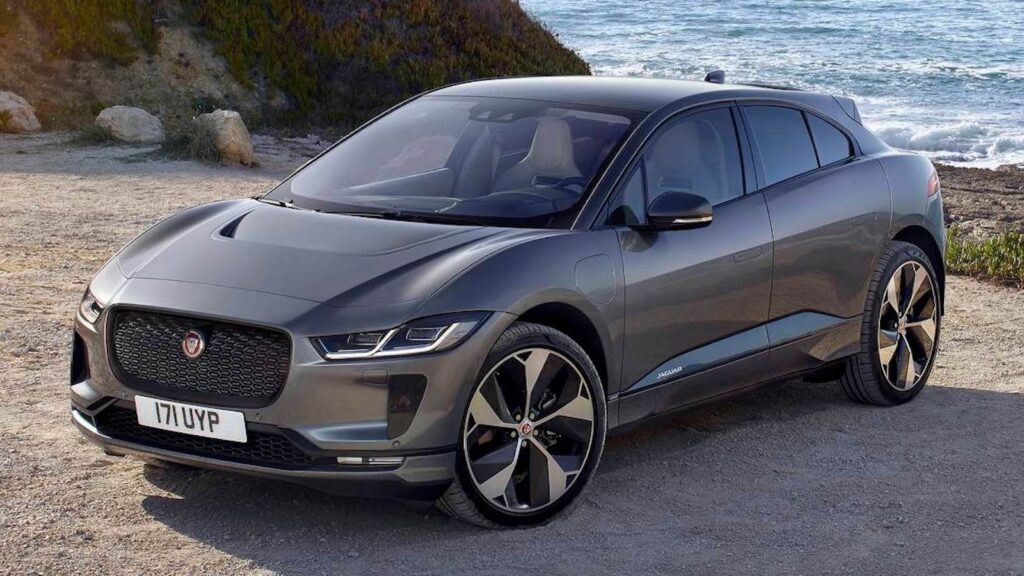
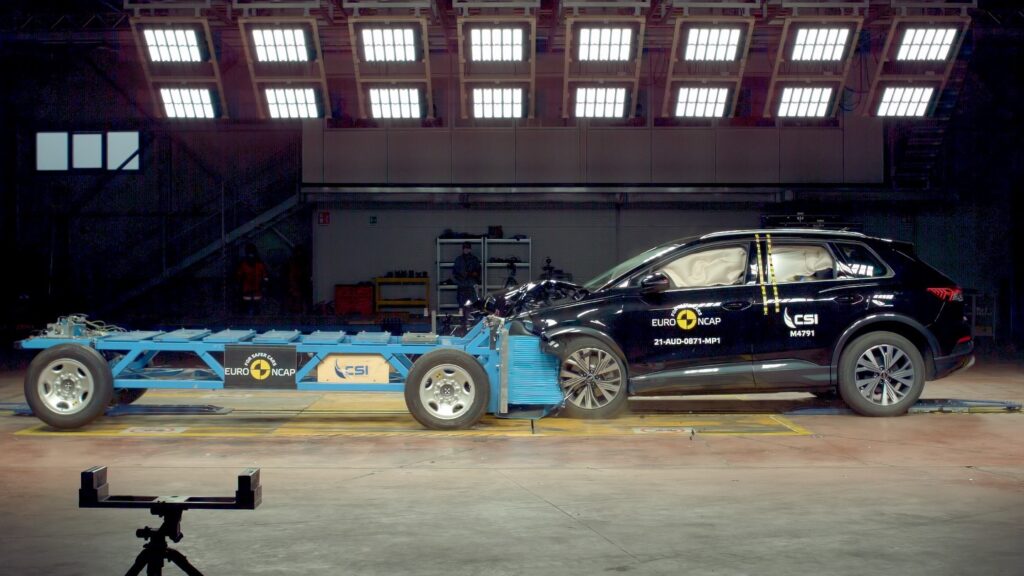
    Each electric vehicle on the road represents several hundred euros less tax revenue each year. As long as electric cars remain in the minority, the effect will be limited. But with the gradual fall in sales of combustion engines and the challenges of the 2035 deadline being constantly reshuffled and rediscussed, the problem is becoming structural and forcing governments to review their strategy.

    Fragile taxation and pilot countries

    Faced with this programmed erosion of revenue, governments are looking for a new tax base capable of replacing fuel taxes without jeopardising the energy transition. Charging for the actual use of the road rather than the energy consumed seems an attractive direction. The principle is simple on paper: each vehicle would contribute in proportion to the number of kilometres travelled, regardless of its engine. For electric cars, the amounts quoted are generally around 2 to 4 euro cents per kilometre, giving an estimated annual contribution of between 240 and 300 euros for an average driver travelling 12,000 to 15,000 kilometres.

    The British government plans to introduce an “Electric Vehicle Excise Duty” from 2028, with a per-kilometre tax rate around half that currently applied to internal combustion vehicles via fuel. The aim is to maintain revenues without brutally penalising electric vehicles. In California, the logic is even more assertive. The state is testing pilot projects for charging per kilometre for electric cars in order to make up for a colossal shortfall in revenue. Nearly 80% of California’s road maintenance budget is based on petrol tax.

    Photo credit: Envato by CreativeNature_nl

    A growing debate in France and Europe

    In France, no specific kilometre-based tax for electric cars has yet been officially agreed. However, there are a number of signs that some thought is already being given to the matter, notably the plan to tax the heaviest electric vehicles from 2026. At European level, the issue is becoming unavoidable. The target of ending sales of new combustion-powered vehicles by 2035 is forcing Member States to plan ahead for a new road-financing model. Among the scenarios studied, kilometre-based taxation appears to be the most credible option for decoupling taxation and motorisation in the long term.

    Other countries have made more discreet progress. Switzerland, Iceland and New Zealand have already introduced or experimented with kilometre-based charges or specific taxation for electric vehicles. The central argument is neutrality: electrification must not create a hole in infrastructure funding. In these countries, the kilometre-based tax is presented not as a sanction against electric vehicles, but as the gradual end of a tax exception deemed temporary. It is expected to become part of a contributory framework comparable to that for other uses of the road.

    Technical details and a political equation

    There remains the question of implementation. The simplest solution would be to record the mileage at the roadworthiness test and then charge for the distance travelled since the previous reading. But this approach would probably mean increasing the frequency of checks, at the risk of reinforcing the rejection of motorists. Technological solutions, such as the installation of on-board telematics boxes, offer more accurate measurement, but raise serious concerns. Data protection, respect for privacy and the monitoring of drivers’ movements are becoming major points of contention.

    For governments, the argument remains to guarantee stable, long-term funding for road infrastructure and to ensure that all vehicles contribute to wear and tear on the network. For users, the risk is clear: an ill-calibrated kilometre tax could undermine the economic advantage of electric cars, which are already more expensive to buy, and heavily penalise heavy drivers. More than a question of principle, the kilometre tax now appears to be a question of timing, acceptability and dosage.

    Sources: www.capital.fr – Reuters

  • Giant power cut in San Francisco this weekend: impact on Self-Driving Cars

    Giant power cut in San Francisco this weekend: impact on Self-Driving Cars

    On Saturday 20 December 2025, a major blackout plunged San Francisco into darkness, the fault of a fire that broke out in a Pacific Gas and Electric (PG&E) electrical substation. The incident left around 130,000 homes and businesses without power, bringing parts of the city to a standstill, including autonomous cars.

    Autonomous taxis have turned into immobile obstacles. At intersections with no traffic lights, these normally fluid vehicles came to a screeching halt with their blinkers on, forcing other motorists to manoeuvre around them as best they could. This rare and comical situation highlights the city’s dependence on ageing infrastructure, even as it adopts cutting-edge technologies.

    According to a PG&E press release, the fire damaged essential substation equipment, causing massive power outages in the city centre, South of Market and surrounding areas. To isolate the incident and begin repairs, emergency crews were dispatched to the site and worked throughout the night, in coordination with the municipal emergency services. The authorities have confirmed that there were no casualties and that the cause of the incident is still under investigation.

    Intersections without traffic lights, traffic rapidly coming to a standstill

    The breakdown had an immediate and visible impact on the streets of San Francisco. More than a dozen intersections were left without traffic lights and quickly became gridlocked, making traffic dangerous for motorists and pedestrians alike. To deal with this unusual situation, the police were mobilised to regulate traffic in the most critical areas, and residents were asked to avoid all non-essential travel until the network was fully restored. The fire that broke out in a PG&E electricity substation also had an impact on the entire public transport network, which suffered significant delays.

    Sources: @AnnTrades

    Waymo forced to temporarily suspend its robot taxis

    As briefly mentioned above, one of the most striking effects of the blackout was the immobilisation of Waymo’s autonomous vehicles. Waymo is an American brand that has been operating in San Francisco since August 2021 with the launch of its robotaxi service for “trusted testers”. Since June 2024, the autonomous robotaxi service has been available to everyone in San Francisco.

    As a result of the power cut, many autonomous and therefore driverless taxis became stuck at intersections due to a lack of traffic lights, leading the company to temporarily suspend its operations in San Francisco as a safety precaution. This interruption exacerbated the traffic disruption in the city.

    The dependence of autonomous vehicles on urban infrastructure

    The local authorities stressed that this incident highlighted the fragility of certain infrastructures in a city that claims to be a world showcase for technological innovation. For the time being, the majority of users had their electricity back after several hours, although thousands of customers remained without power until the following day. Many shops were forced to close early, restaurants struggled to save perishable foodstuffs, and residents dependent on medical equipment required assistance from the emergency services.

    When power was restored, attention turned to issues of preparedness and coordination between energy operators, municipal services and technology companies. Officials announced an audit to assess response protocols and consider measures to reduce the risk of similar outages in the future. For many residents, the blackout was a reminder that at the heart of even the most advanced cities, a reliable power supply remains the foundation of public safety, transport and daily life.

  • Mercedes VLE electric: the limousine of tomorrow

    Mercedes VLE electric: the limousine of tomorrow

    With the VLE, Mercedes-Benz is preparing to open a new chapter in premium electromobility. This large electric luxury MPV, due to be unveiled worldwide on 10 March 2026 in Stuttgart, will inaugurate the brand new VAN.EA platform. Its stated ambition is to combine the comfort of a limousine, the space of a van and the technological standards of the next decade.

    Photo credit: media.mercedes-benz.co.uk

    A clear will of your own

    Mercedes is no longer hiding its intentions. The future ELV will not simply be an electrified derivative of the current V-Class, but a model in its own right, designed from the outset for electric power and for the very top end of the market. Halfway between a large family MPV and a luxury commuter, it is clearly aimed at premium customers looking for comfort, space and cutting-edge technology. This positioning is in line with a fundamental trend in the market, where the van is becoming a credible alternative to the classic limousine. For Mercedes, it’s also a way of regaining control of a segment where new players, particularly from Asia, are beginning to impose their standards in terms of on-board experience and luxury features.

    The date is official: the Mercedes VLE will be presented on 10 March 2026 in Stuttgart. The brand has already started distilling teasers. Above all, the launch will mark a major world first: that of the VAN.EA platform in its production version. The VLE will be the very first vehicle to be based on this architecture dedicated to electric vans. This pioneering role gives it particular importance in Mercedes’ electrification strategy. VAN.EA is intended to serve as the basis for a whole family of vehicles, from top-of-the-range family vans to the most luxurious VIP shuttles.

    Photo credit: media.mercedes-benz.co.uk

    The ambition for premium comfort

    Unlike the current EQV, which is still based on an internal combustion platform, VAN.EA has been designed exclusively for electric vehicles. This choice will enable much better integration of the batteries, optimised volumes and much greater design freedom. The aim is an even more spacious cabin and a better compromise between range, performance and comfort. The other key element of this platform is undoubtedly its 800-volt architecture. A technology that is still rare in this type of vehicle, but essential for offering very high recharging power. Mercedes has already mentioned capacities of up to 350kW, which would place the ELV among the segment’s best performers in terms of fast charging.

    On board, the VLE clearly sets itself apart from the traditional commercial image. The integration of the batteries in the floor frees up space and enables an interior architecture geared towards comfort and modularity. Mercedes promises a cabin where every centimetre is optimised for passenger comfort. The van will be able to accommodate up to eight people, with configurations suited to both demanding families and top-of-the-range business use. Initial descriptions suggest a ride worthy of a limousine, plenty of freedom of movement and plenty of storage space, all in a resolutely premium ambience.

    An assertive design for a new-generation van

    In terms of looks, the Mercedes VLE does not play the discreet card. The first teasers reveal a distinctive front end, with a large closed grille and daytime running lights featuring a star motif directly inspired by the Vision V. A lighting signature designed to assert the vehicle’s status. With this VLE, Mercedes is not content to simply electrify an existing van. The brand is redefining its vision of zero-emission premium transport by offering a credible alternative to traditional limousines and the new players in electric luxury. A key model, destined to become the technological and statutory showcase for Mercedes vans of the future.

    Sources: Press release dated 24 July 2025 – Mercedes-Benz / mondial.paris / www.mercedes-kroely.fr /

    Photo credit: media.mercedes-benz.co.uk

  • LFP batteries: the component that is driving down the price of EVs

    LFP batteries: the component that is driving down the price of EVs

    Cheaper, longer-lasting and now more efficient, new-generation LFP batteries are slowly but surely emerging as a key solution for bringing down the price of electric vehicles in Europe. Behind this chemistry, long confined to the entry-level range, lies a major industrial, economic and strategic shift for European carmakers.

    Photo credit : CATL LFP battery – @en.motor1.com

    Price, the Achilles heel of electric vehicles

    For more than a decade, the democratisation of the electric vehicle has come up against a simple but complex reality. The battery remains its most expensive component. In Europe, it still accounts for 30-35% of the total cost of a vehicle, an economic burden that limits access to electric models for a large proportion of motorists. Despite public subsidies, the entry ticket is still high, particularly when compared with combustion vehicles, which are still cheaper to buy.

    Against this backdrop, every technological development capable of lowering the cost per kWh is closely scrutinised by the industry. And over the last two years, one chemistry has come back to the fore with unexpected force: Lithium Iron Phosphate (or LFP). Long perceived as less efficient, LFPs have undergone profound changes: today, their production cost is around 15 to 25% lower than NMC (nickel, manganese, cobalt) chemistries, with an average price of between 90 and 100 dollars per kWh, compared with 110 to 130 dollars for traditional batteries. On an industrial scale, this difference makes all the difference.

    Long underestimated, now at the heart of the game

    LFP batteries have long been shunned in Europe, primarily because of their lower energy density. Less compact, they offered a more limited range, a criterion considered to be a redhibitory factor in a market still obsessed by the number of kilometres travelled. But this structural weakness is now being overcome. The latest generations of LFPs now exceed 200 Wh/kg, a threshold that makes them fully competitive for entry-level and mid-range vehicles. Industrial innovations such as Cell-to-Pack and Cell-to-Chassis reduce unnecessary structural elements, optimising the integration of the battery in the vehicle.

    The results are tangible: some platforms now achieve theoretical ranges of over 700 km in the WLTP cycle, as with CATL’s Shenxing Pro technology, while retaining the historic advantages of LFP. Increased safety, high thermal stability and much slower degradation over time. Where an NMC battery sees its performance drop progressively, an LFP can withstand up to 12,000 charge cycles and aim for a lifespan of 20 years or almost a million kilometres. A decisive argument for fleets, heavy-duty private users, and also for the second-hand electric vehicle market.

    Photo credit: Diagram produced by IA to explain how the new LFP batteries work

    Immediate savings for everyone

    The economic impact of this transition is major. On a vehicle sold for between €25,000 and €35,000, switching to an LFP battery would save an estimated €2,000 to €4,000 per unit. This margin can be reinvested in equipment, range… or simply passed on to the final price. This is precisely the lever that European carmakers are now seeking to activate, faced with double pressure.

    On the one hand, price-conscious consumers. On the other, aggressive Chinese competition, able to offer low-cost electric vehicles thanks to complete control of the battery chain. LFPs also respond to a more realistic use of electric cars. They are better able to withstand 100% loads, reduce the risk of premature deterioration and simplify the day-to-day user experience. A seemingly minor detail, but a key factor in overcoming the reluctance of drivers who are still hesitant.

    Industrial adoption accelerating in Europe

    The European market for LFP batteries is currently growing rapidly. Estimated at just over 2 billion dollars in 2024, it could exceed 4.3 billion by 2029, with an annual growth rate of over 14%. This rise in power is automatically driving down costs, with packages now flirting with the symbolic 100 dollars per kWh mark.

    Renault’s subsidiary Ampere has opted for controlled industrial integration, assembling packs in Douai, France, from cells supplied by LG and CATL. Stellantis, for its part, is going one step further by teaming up directly with CATL to build an LFP gigafactory in Spain, in which it has an equal stake. CATL is also stepping up its industrial presence on the continent, with plants in Germany, Hungary and soon in Spain, giving this chemistry a long-term foothold in Europe.

    Photo credit: Official Stellantis logo – @www.stellantis.com

    Industrial sovereignty: a still fragile balance

    A central concern remains Europe’s dependence on Asian players. Today, almost 99% of LFP batteries are produced by Chinese companies, an imbalance that raises obvious geopolitical issues. The recent bankruptcy of Northvolt, a European player historically focused on NMC batteries, was a reminder of the fragility of the local ecosystem.

    But Europe is not giving up. Local production strategies, industrial partnerships and investment in R&D are on the increase. The aim is clear: to secure supplies, control costs and build a credible European battery industry capable of meeting the continent’s environmental, social and industrial requirements.

    The LFP as a strategic pivot for the EV

    In the short and medium term, LFP batteries appear to be the strategic pivot for achieving a goal long thought to be out of reach: a reliable, long-lasting European electric car selling for around €25,000. Without this chemistry, the price battle against low-cost imports would remain largely unbalanced. By reconciling cost, safety, longevity and sufficient performance, LFPs are not completely replacing NMC batteries, but they are redefining the core of the market.

    For the European automotive industry, the message is clear: the electric transition will not be won solely on the basis of maximum range or power, but on the ability to offer vehicles that are accessible, locally produced and technologically sober. And in this area, new-generation LFP batteries are becoming a decisive asset.

    Sources: www.connaissancedesenergies.org – www.mordorintelligence.com – battery-tech.net

  • Jaguar’s electric renaissance

    Jaguar’s electric renaissance

    With its future 100% electric GT, Jaguar is not simply trying to keep up with the times: the British brand wants to redefine what an ultra-premium electric saloon should be. More than 1,000bhp, up to 770km of range, lightning-fast recharging and almost total silence. This new-generation Jaguar promises to be as much a technological showcase as a styling manifesto.

    Photo credit: The future 100% electric Jaguar GT – @autocar.co.uk

    A new era without compromise

    Jaguar is preparing to turn a decisive page in its history. From 2026, the British brand will launch a large 4-door GT saloon, 100% electric, designed as the starting point for a completely redesigned range. This car will embody Jaguar’s radical strategy. To reduce its catalogue to three very high-end electric models by 2030. Based on the brand new Jaguar Electric Architecture platform, this GT boasts extraordinary ambitions. The target power output is in excess of 1000hp, the target range is up to 770km in WLTP cycle, and the electric architecture places it directly in the circle of the most advanced electric cars on the market. Jaguar has embraced its objective of once again becoming a desirable brand, with technology and status that are close to ultra-luxury.

    Beneath the sleek bodywork of this future GT lies a three-engined configuration, with two engines on the rear axle and one at the front. This architecture paves the way for very fine torque vectoring, capable of managing power almost surgically, wheel by wheel. To power this arsenal, Jaguar is aiming for a battery pack of over 100 kWh, probably around 120 kWh on current prototypes. The aim is to offer a range that is truly compatible with electric touring, without sacrificing performance. The brand is already announcing the possibility of recovering around 300 km of range in just 15 minutes of fast charging, which implies charging powers of up to 350 to 400 kW.

    Photo credit: Official Jaguar logo

    Extreme acceleration, delivered with elegance

    The first tests carried out by the specialist press give a very clear idea of the character of this Jaguar. Yes, the acceleration is dazzling. But unlike some ultra-sporty electric cars known for their ‘catapult’ effect, Jaguar has made a different choice. The acceleration is described as overwhelming but progressive, almost subdued, without jerking or mechanical brutality. The chassis plays a key role in this experience. Despite its long stature and substantial weight, the GT is surprisingly agile, thanks in particular to rear-wheel steering of up to 6 degrees. The air suspension, combined with twin-valve dampers, gives the car a controlled, assertive roll, in keeping with the DNA of the great thermal Jaguars, which are more geared towards supreme comfort than radical sport.

    At high speeds, including over 200 km/h on the track, air and road noise remain extremely contained. The absence of vibrations and mechanical noise plays a full part in the positioning of this GT, which seeks to compete more with a Rolls-Royce Spectre than with a Tesla Plaid or Porsche Taycan Turbo GT. Jaguar clearly claims a vision of electric luxury based on serenity, comfort and continuity of effort. It’s an approach that stands in stark contrast to the raw spectacularity of some of its rivals, and one that could appeal to customers looking for refinement rather than demonstration.

    Statutory design and controlled timetable

    In terms of styling, the production version will take up the spirit of the Type 00 concept, while adapting it to a 4-door configuration. The silhouette is more reminiscent of a long coupé than a traditional saloon, with a very long bonnet, reduced overhangs and radical proportions. The British manufacturer wants to make its mark and visually assert its move upmarket. The first production models are expected from 2026, although Jaguar remains cautious about the final timetable. What is certain, however, is the message being sent. With this electric GT, Jaguar is not trying to survive electrification. It wants to use it as a lever for a renaissance, reaffirming a very British vision of automotive luxury, where extreme power is combined with silence, smoothness and a form of timeless elegance.

    Photo credit: The future 100% electric Jaguar GT – @autocar.co.uk

    Sources: www.jaguar.fr – www.topgear.com – www.motortrend.com

  • OutPod 1000 : TEMO takes a new step in the electrification of boating.

    OutPod 1000 : TEMO takes a new step in the electrification of boating.

    The French brand is offering an electric motor designed for light cruising yachts, combining the advantages of a fixed pod with the simplicity of a pop-up outboard. It’s a modular solution, with no need to drill holes in the hull, as part of a wider strategy to democratise plug & play electric propulsion, from dinghies to coastal cruisers.

    Photo credit : Temo Outpod 1000 – @Temofrance

    A concrete response

    Electrifying a 7 to 9 metre sailboat is still a tricky business. Fixed pods require extensive work, including drilling below the waterline, while thermal outboards are noisy, polluting and difficult to integrate. TEMO has positioned the OutPod 1000 precisely in this middle ground. Presented as a genuine ‘simplified inboard’ electric motor, the OutPod is based on hybrid architecture. We have a submerged pod-type motor unit, powered by 48V, mounted on an external sliding mast that can be raised. The whole unit is attached to a slide rail on the transom or skirt, with no need for any structural work on the hull. For both owners and boat builders, the promise is clear: electrify without having to convert.

    The OutPod’s main innovation is this synthesis of two worlds. Once reassembled, it generates no drag under sail, reduces fouling and makes maintenance and wintering easier. Another notable feature is that the drive shaft pivots through 180 degrees. This rotation considerably improves manoeuvrability in port and opens the way to hydrogen generation under sail, a powerful argument for coastal sailors seeking energy autonomy. TEMO also places great emphasis on weight distribution. The engine unit weighs just 8 kg on the transom, with the rest of the weight inside the boat.

    A system designed for real-life use

    The OutPod 1000 is fully integrated into the SEASIDE ecosystem developed by TEMO. It currently covers a power range from 450W to 6kW. In the case of the OutPod, three power levels are available: 500W, 1kW and 3kW, so that the motorisation can be precisely adapted to the boat’s programme. In terms of power, TEMO offers a choice of 2.3 kWh modular battery cassettes or a 48V stationary battery, developed in partnership with Powertech. The remote control and cockpit display make for intuitive operation, in keeping with the brand’s philosophy. The aim is not pure speed, but a reliable, silent propulsion system designed for manoeuvring in and out of harbours.

    The OutPod offers a number of significant advantages over a conventional internal combustion outboard. It eliminates local emissions, drastically reduces noise and vibration, and eliminates the need to store fuel on board. Compared with a fixed pod, it eliminates the main point of friction: the hull hole below the waterline, which is often a problem on existing boats. This intermediate position makes it a particularly attractive solution for electrical retrofitting, a rapidly expanding market. TEMO is clearly targeting yachtsmen who want to modernise their boat without making an irreversible commitment, as well as boatyards looking for a turnkey solution that can be industrialised and is reassuring for their customers.

    Photo credit : @Temofrance

    A coherent industrial strategy

    The OutPod 1000 is part of an industrial trajectory already well underway at TEMO. With more than 5,500 engines sold, French manufacturing in Vannes and a three-year warranty, the brand now has solid credibility. This recognition recently translated into an award at the Paris Nautic Show, where the OutPod was hailed as a major product innovation. A strong signal for a solution that aims to become the standard for light electrification under sail.

    With the OutPod 1000, TEMO is seeking to offer a simpler, more accessible alternative. By combining modularity, energy efficiency and ease of installation, the brand is responding to a growing demand for a new way of sailing, without sacrificing practicality. The OutPod is a perfect illustration of the transition underway in the boating industry, where innovation is no longer just about power, but about intelligent use. It’s a well-thought-out electrification, designed for the real world, not just for show.

    Photo credit: The engine block is designed to resist overheating and premature wear, and delivers optimum power with a static thrust of up to 67 kg – @Temo France

    Sources: www.temofrance.com – figaronautisme.meteoconsult.fr

  • EV sales: Europe split in two

    EV sales: Europe split in two

    Despite an increasingly wide range of electric vehicles on offer and ambitious climate targets, the electric vehicle market remains profoundly unbalanced in Europe. Between the countries of the North, which have already entered the all-electric era, and the South-East, which is struggling to keep up, the transition is progressing at very different rates. This disparity calls into question both public policy and Europe’s industrial strategy.

    Photo credit: Envato - By Halfpoint
    Photo credit: Envato – By Halfpoint

    Adoption varies greatly from region to region

    On the face of it, sales of electric vehicles continue to grow in Europe. But behind this overall dynamic lies a much more fragmented reality. The continent is now divided between mature markets and others where electric vehicles remain marginal. In Northern and Western Europe, the electric vehicle has established itself as a credible, if not dominant, alternative. In the South and East, it is still often perceived as an expensive, restrictive product reserved for a minority. This structural gap is widening as some countries accelerate while others stagnate.

    Norway remains by far the most spectacular case. In the first seven months of 2025, almost 94% of new car registrations in Norway were electric. This is an unprecedented level, made possible by a policy that has been consistently pursued for over a decade. Generous subsidies, ultra-favourable taxation, user benefits and a dense recharging network have gradually removed the barriers to adoption. The country has also used revenues from its sovereign oil fund to finance this transition. Electric cars are now the norm, even if growth is tending to slow as the market stabilises.

    Photo credit: Envato - By wirestock
    Photo credit: Envato – By wirestock

    The South and East still lagging behind

    At the other end of the spectrum, Southern and Eastern Europe are struggling to get the momentum going. In Croatia, for example, electric vehicles account for barely 1% of sales. This figure reflects not so much a rejection of the technology as a set of economic and practical constraints. The purchase price remains the main obstacle, in regions where purchasing power is more limited. Added to this is a shortage of recharging infrastructure, often concentrated in major cities, leaving vast areas with little or no coverage.

    This delay comes at a time when the European Union is partially reviewing its plans. Faced with demand that is less buoyant than expected, Brussels has begun to relax some of the intermediate targets linked to the end of combustion by 2035, under pressure from carmakers. They are calling for more time to adapt their industrial facilities and secure their margins. For many players, regulatory stability is essential to speed up the transition.

    Subsidies, terminals and the industrial battle

    Where governments have invested massively in charging points and offered clear incentives, market share has taken off. Elsewhere, electric cars remain confined to low levels, often limited to a few percent. Another factor complicating the equation is the rise of Chinese manufacturers. Highly competitive on price, they benefit indirectly from European subsidies, sometimes to the detriment of local brands. Europe could find itself lagging behind technologically and dependent industrially. More than just an automotive issue, the electric vehicle reveals Europe’s economic and political fractures. Without a more homogeneous strategy, there is a risk that the transition will reinforce a two-speed Europe, where it should embody a common project.

    Graph of gross EV sales by country in Europe for the first quarter of 2025 (sources: ACEA, market analyses, EV observatories. Orders of magnitude, not official reporting)
    Graph of gross EV sales by country in Europe for the first quarter of 2025 (sources: ACEA, market analyses, EV observatories. Orders of magnitude, not official reporting)

    Sources: www.Reuters.com – www.investing.com – www.globalbankingandfinance.com

  • EU backtracks on 2035: goodbye to 100% electric cars

    EU backtracks on 2035: goodbye to 100% electric cars

    This is a major turning point in European climate policy. Yesterday in Brussels, the European Commission put an end to one of the symbols of the Green Deal: the total ban on the sale of combustion engine vehicles from 2035. The principle of “zero grams of CO₂ from the tailpipe” will disappear in favour of a target deemed more realistic: a 90% reduction in average emissions from new cars compared with 2021.

    In other words, Brussels is maintaining the trajectory towards carbon neutrality in 2050, but introducing a limited margin of flexibility after 2035. Internal combustion and hybrid vehicles will still be allowed to be sold, provided they offset their emissions using synthetic fuels, sustainable biofuels or low-carbon industrial processes. This is not a renunciation, but an adjustment between climate ambitions and economic reality.

    Why Brussels is changing its strategy

    Fortunately for the climate objectives, this apparent retreat is not ideological. In fact, it’s in line with industrial realism. In 2025, even if sales of 100% electric vehicles increase in France, they will stagnate in several markets, notably Germany, Italy and certain Central European countries. The high price of models, the fact that we are still too dependent on China for batteries and the delay in infrastructure are undermining the initial plan.

    European Commissioner Stéphane Séjourné refers to a “pragmatic approach”: the forced all-electricity, imagined in 2023, comes up against the economic realities of 2025.

    The initial framework of the Green Deal

    Let’s go back to the text that governed this vision of the future car industry: the “European Green Deal”. It stipulated that from 2035, all new cars would have zero direct emissions. In short, petrol, diesel and plug-in hybrid cars could not be sold new. Logically, that left 100% electric or hydrogen.

    It’s an ambitious target, but one that will be difficult to meet without breaking up the industry. And indeed, faced with the cost of batteries and pressure from Asia, Brussels admits that the pace needs to change. The new -90% target maintains the direction, but gives a little breathing space to an industry under stress.

    -90% reduction in emissions: what’s the difference?

    With this new target, the vast majority of sales will remain electric or zero-emission direct. However, a small margin of flexibility could be granted: manufacturers would be able to include a limited share of combustion or hybrid models, provided that the average CO₂ emissions of their fleet complied with the 90% reduction compared with 2021.

    These few models, tolerated at the margin, would have to rely on synthetic fuels, biofuels or low-carbon production processes to offset their impact. For carmakers, this scenario would provide a transitional lever, giving them time to make their hybrid platforms profitable and support the rise of all-electricity.

    Berlin and Rome on the front line

    Germany and Italy pulled out all the stops behind this compromise. German decision-makers had been arguing for months for recognition of e-fuels. Rome, for its part, wanted to preserve its thermal production sites, which are essential to its industrial fabric.

    On the French side, reticence prevailed at first, but France finally agreed, on condition that European investment in the electric sector was protected. Emmanuel Macron stressed the need to strengthen the European industry rather than weaken it.

    Electrics remain at the heart

    However, despite a decision that could dampen the enthusiasm of electric car manufacturers, Brussels is not turning its back on zero-emission mobility. On the contrary, the Commission intends to maintain electric vehicles as a central pillar of the decarbonisation of road transport, while adjusting its industrial strategy.

    The new framework is accompanied by increased support for small electric cars made in Europe, to counter low-cost Chinese models.

    The Commission is also promising to simplify industrial procedures, such as approval procedures, to make State aid more flexible in order to encourage investment in battery factories, and to speed up gigafactory projects. In addition, the idea is to encourage innovation in solid batteries, two-way recharging and recycling.

    source : netcarshow

    Angry NGOs, relieved industry

    But this more realistic reorientation, largely geared towards European competitiveness, has not met with unanimous approval. NGOs are denouncing it as a step backwards for the climate and a blurred signal to industry. Greenpeace calls it a “historic step backwards”.

    Conversely, carmakers are welcoming the compromise as a breath of fresh air: it gives them extra time to finance the ramp-up to all-electricity without jeopardising their financial equilibrium.

    What’s next?

    The proposal will have to be approved by the European Parliament and the Member States during 2026. If it is adopted, the transition will remain largely electric, but will be more sustainable for industry.

    For manufacturers, the challenge is clear: to offer electric cars that are competitive, desirable and affordable, while continuing to innovate.

    This European decision marks the end of a transition designed without shock absorbers, and the beginning of a more pragmatic era.

  • F1 enters the hybrid era

    F1 enters the hybrid era

    The 2025 Formula 1 season, which has just come to a close, will go down in history as McLaren driver Lando Norris clinched his first-ever world title after a thrilling championship. For the British team, it was a historic triumph, but behind the celebrations, another major turning point is taking shape: the end of ‘classic’ engines and the start of a reinforced hybrid era, from the 2026 season.

    source: FIA
    source: FIA

    A revolution under the bonnet

    The single-seaters will continue to be powered by a 1.6-litre V6 turbo engine, as they are today, but with a radically altered energy/power split. The central element of this change? Electric power will triple from around 120 kW to around 350 kW, or 475 bhp, via the MGU-K system. In practical terms, the electrics will be able to provide almost 50% of the total power.

    The old MGU-H unit is a small motor that converts the heat from the exhaust gases into electrical energy to help the car go faster. The 2026 rules do away with this part. But even without it, the car becomes simpler and more efficient: thanks to the other hybrid systems, every time the car brakes or accelerates, it can recover much more energy than before, up to 8.5 MJ per revolution, almost double that of current systems.

    Total power preserved

    Obviously, these innovations are being produced with the clear aim of maintaining performance, and therefore enhancing the spectacle that is motor racing. With these changes, the overall power of the 2026 engines remains extremely high, with an estimated total of just under 1,000 bhp (combustion + electric).

    What has changed is the reduction in engine power. Its power has been slightly reduced to around 400 kW, compared with 550 kW at present.

    Other innovations modifying the car itself will appear as early as next season. The aerodynamics of the single-seaters are being extensively modified, with a clear objective: to reduce drag, limit excessive downforce and improve fuel efficiency.

    To illustrate this, the F1 cars of 2026 will be more compact and lighter, with a reduction in width (1.90 m compared to 2 m today) and wheelbase, according to the latest FIA guidelines. But the real revolution comes from the introduction of active aerodynamics, a first on this scale in the recent history of the sport. The single-seaters will have two distinct aerodynamic modes:

    • a low-drag mode for straight lines,
    • a high downforce mode for cornering and braking.

    The aim of these changes is to make the Grands Prix more competitive and more exciting for drivers and spectators alike.

    source: FIA

    Following initial tests, Mercedes has revealed that the 2026 single-seaters could reach top speeds of up to 400 km/h. That’s quite a feat when you consider that the speed record so far has been held by Valtteri Bottas at the 2016 Mexican Grand Prix, when his car reached 372.6 km/h.

    An economic objective for manufacturers

    The 2026 regulations are not just about performance, but also about rationalisation. By simplifying several vehicle components, the FIA intends to drastically reduce development costs. This move makes Formula 1 more attractive to new engine manufacturers, by lowering the technological entry barrier. As a result, Audi has officially joined the grid, Ford is making a comeback by joining forces with Red Bull Powertrains, and Cadillac is also set to become an engine manufacturer in 2029. The elite of motor sport is thus opening up to renewed, more diversified and sustainable competition.

    Sustainable fuels and the ecological transition

    But the revolution doesn’t stop at power. In fact, these hybrid engines will be powered by 100% sustainable fuels, and the amount of petrol is reduced from the 100 to 110 kg needed today to 70 to 80 kg.

    Produced from non-fossil sources, these fuels will be based on advanced biofuels or synthetic drop-in fuels, meaning that they can be used directly in engines without major modifications. They will drastically reduce carbon footprints while remaining compatible with current engine architecture.

    source: FIA

    A strategic turning point for F1

    Mohammed Ben Sulayem, President of the FIA, justifies this strong choice to increase the proportion of electric power in F1 engines:
    “The FIA continues to push innovation and sustainability across our motorsport portfolio. The powertrain regulations for 2026 are the most visible example of this.”

    This technological shift shows that Formula 1 is no longer content to be a showcase for the performance of the world’s best engine engineers: it is foreshadowing the future of global mobility, where electrification and sustainability are becoming the norm. Mercedes, Red Bull Powertrains, Honda and Audi are using the championship as an extreme testing ground.

    This overhaul is part of a wider environmental ambition: to achieve carbon neutrality by 2030. This “Net Zero Carbon” objective, set by the FIA and F1, is based on three pillars: the use of 100% sustainable fuels, the reduction of emissions over the entire lifecycle of the races and the compensation of residual impacts.

    source: FIA

    F1 reinvents its DNA

    With the abolition of the old MGU-H, more electric power, optimised energy recovery and the use of sustainable fuels, Formula 1 is reinventing itself.

    The 2025 season therefore concludes with two victories: Lando Norris’, and that of a Formula 1 team entering a new era, ready to demonstrate that the future of motor sport is hybrid… and sustainable.