Category: News

  • 2025, the pivotal year for OMODA & JAECOO

    2025, the pivotal year for OMODA & JAECOO

    If 2025 is a new record year for EVs, with an increase in sales, it is also the year that marked an important milestone in the international development of OMODA & JAECOO. In a press release from the manufacturer, the brand, a subsidiary of the Chinese group Chery, looks back on the year that has just ended and claims to have sold more than 800,000 vehicles worldwide in 32 months, including 380,000 units sold in 2025 alone. These figures reflect the brand’s rapid expansion in a number of key markets, particularly in Europe.
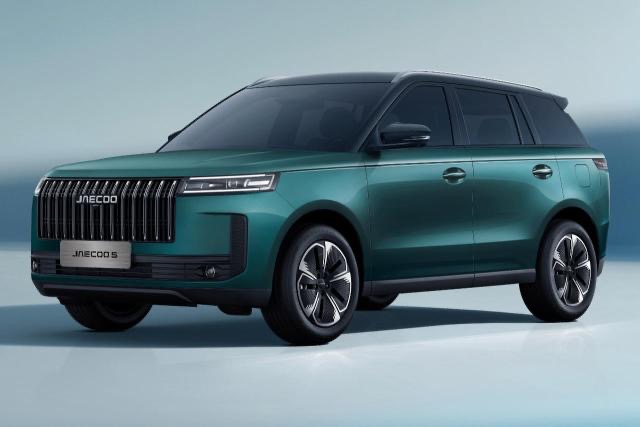
    source : largus

    A global presence extended to 64 markets

    According to this press release, the brand owned by Chery, China’s leading car exporter for over twenty years, is now present in 64 international markets, after starting operations in 22 new countries in 2025. This rapid expansion is taking place in Asia, Latin America and Europe, with contrasting results depending on the region.

    In South-East Asia, the brand is highlighting a number of commercial achievements. In Thailand, OMODA & JAECOO said that in November 2025 it had achieved the number one position in sales of pure electrified vehicles. In Indonesia, OMODA & JAECOO announced that the JAECOO 5 EV had exceeded 10,000 orders in just one month, a sign of a rapid start to sales in this market.
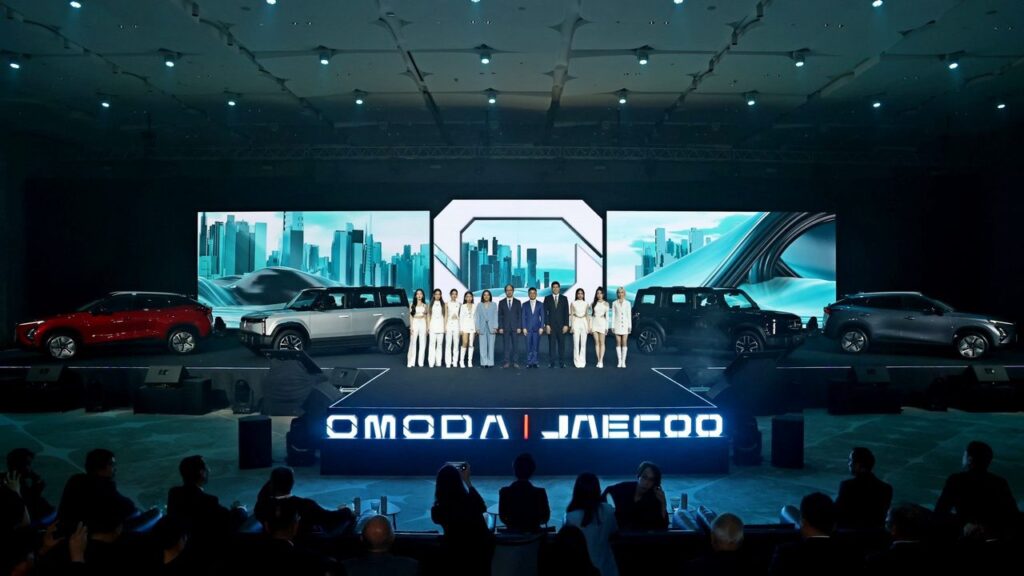
    source : Kingsley Wijayasinha

    In Latin America, OMODA & JAECOO also made significant progress. In Chile, the OMODA 5 and JAECOO 5 models were named “most recommended vehicles of the year” by Autocosmos Chile, a Chilean automotive media outlet.

    Europe, the main vector for expansion according to the manufacturer

    But what is certain is that Europe is a priority area for development. OMODA & JAECOO claims to have sold more than 200,000 cars in Europe since 2024, including 135,000 registrations in 2025. The brand is now present in 16 European countries.

    Among the most dynamic markets are the UK, with 53,606 registrations announced for 2025, and Spain, with 23,697 units over the same period. These figures, communicated by the manufacturer, testify to its ambitions in these markets, even if they are not yet fully reflected in the public European sales rankings.

    Rapidly accelerating electrification

    It’s not just the expansion into other territories that’s making progress: the electrification of the Chinese group’s vehicle fleet is also booming. In terms of technology, OMODA & JAECOO is highlighting a clear increase in its electrified sales. By 2025, the manufacturer claims to have sold 200,000 electrified vehicles (EV, HEV and PHEV), or more than 50% of its annual sales, representing growth of 585% compared with 2024.

    This momentum is based in particular on SHS (Super Hybrid System) technology, available in hybrid and rechargeable hybrid versions, which the brand presents as an intermediate solution adapted to the expectations of European markets in terms of fuel efficiency, range and versatility of use.

    Heading for France in 2026

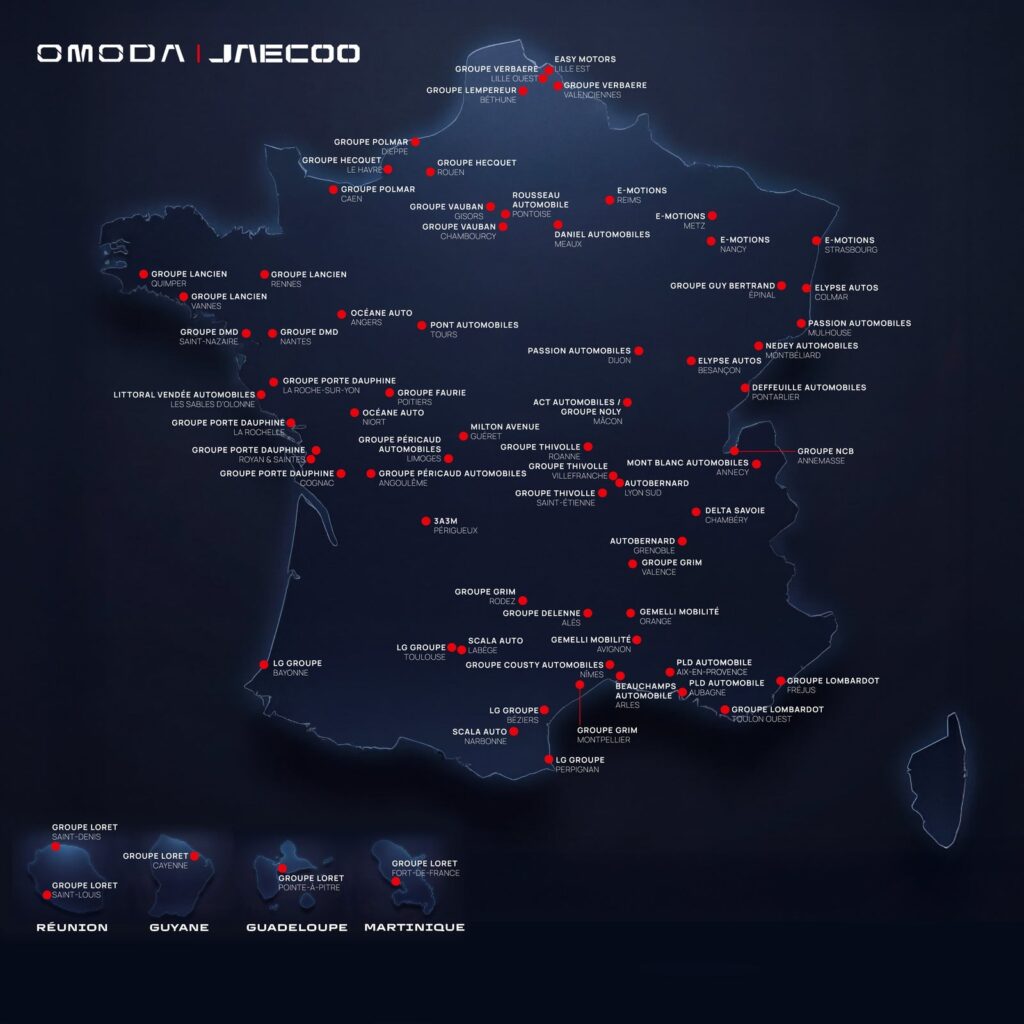
    After structuring its network in several European countries, OMODA & JAECOO is preparing its arrival in France. The commercial launch is scheduled for spring 2026, with a network of more than 70 distributors and approved repairers from the outset, and the aim of gradually increasing the number of distributors throughout the country. These sales and maintenance outlets will be located throughout France, as well as in certain French overseas departments and territories.
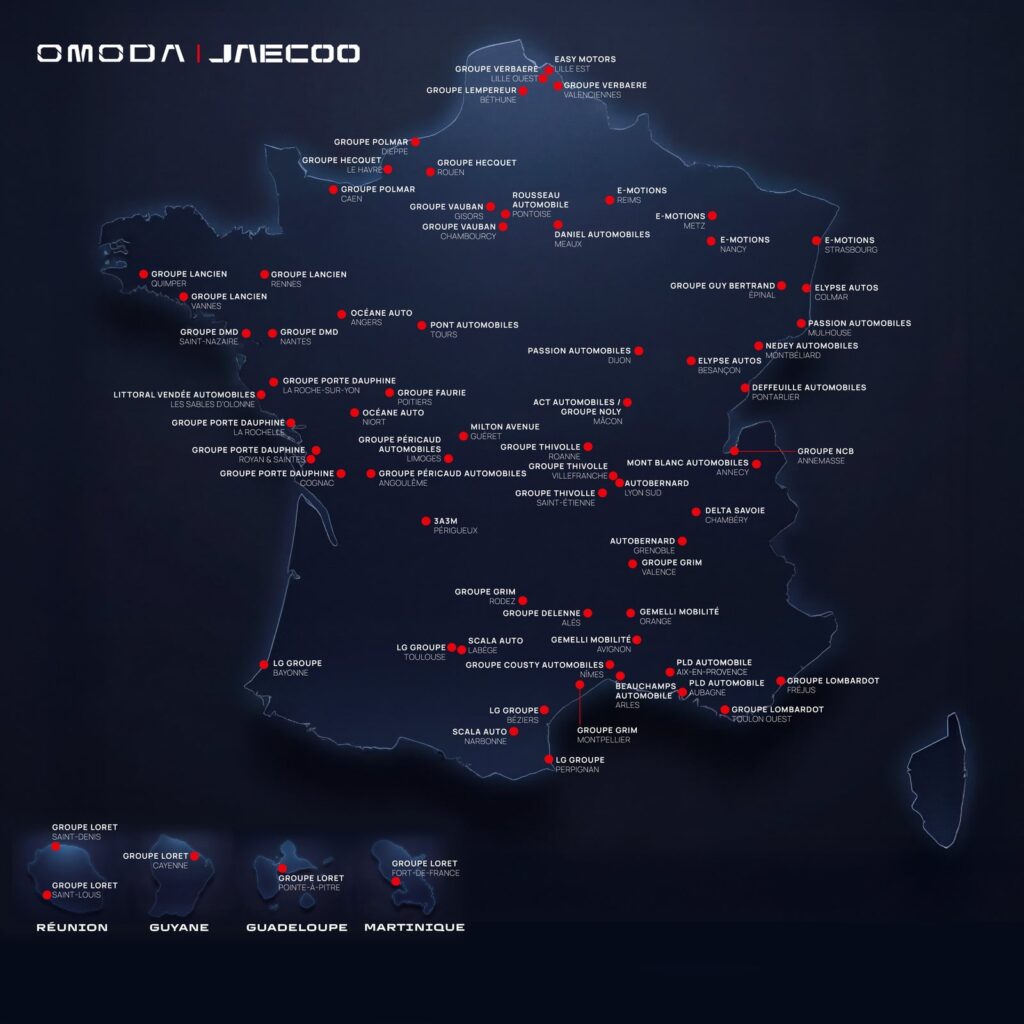
    source: OMODA & JAECOO

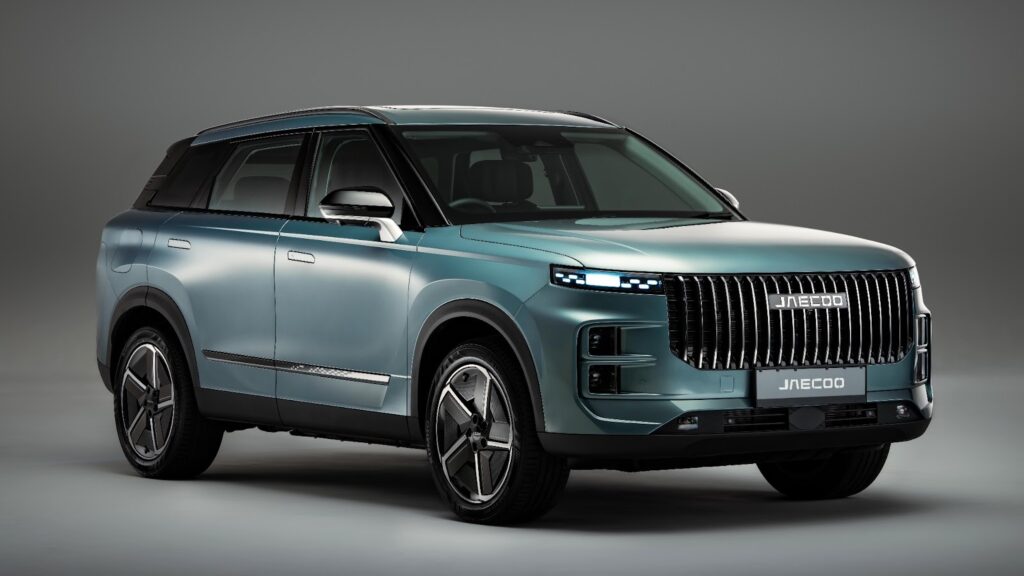
    The French plant is part of a wider strategy aimed at achieving complete coverage of the European Union by the end of 2026, according to the manufacturer’s stated objectives. The range offered will be based on the complementary nature of the OMODA models, which focus on design and urban use, and the JAECOO SUVs, positioned for more versatile uses.

    A strategy to be confirmed in the European market

    OMODA & JAECOO’s ambition is to position itself as a credible new player in electrified mobility in Europe, with strong growth in claimed volumes, electrification already accounting for the majority of its sales and a rapid deployment strategy. However, the success of this strategy will depend on its ability to turn these announcements into sustainable results, particularly in demanding markets such as France, where the competition is already well established.
  • BMW innovations: technology and autonomous driving

    BMW innovations: technology and autonomous driving

    After unveiling the first two major innovations dedicated to intelligent parking and digital access to the vehicle, discover the new pillars of BMW’s technological strategy. The German manufacturer is unveiling the two latest building blocks in its ecosystem: My Digital BMW and the on-board technologies of the new BMW iX3, including autonomous driving. These new features confirm the brand’s commitment to placing digital technology and electrification at the heart of the driving experience.

    Source: BMW

    Digital technology redefines break times with My Digital BMW

    One of the new features highlighted by the brand is ‘My Digital BMW’. Unlike the intelligent and autonomous parking service, for example, this is not an isolated innovation, but a set of digital services centralised in a single ecosystem, accessible via the My BMW application, the BMW ConnectedDrive Store or directly from the vehicle’s screen. This system allows drivers to activate and manage different connected functions according to their needs.

    In practical terms, these digital services transform the daily use of the vehicle. For example, when stationary, particularly during recharging, the passenger compartment becomes a real entertainment area, with access to games and integrated multimedia applications such as films, TV series and video games directly from the central screen, without having to rely on the smartphone. It’s also possible to enjoy music streaming applications or even video conferencing during breaks.

    Navigation is also made more precise by the integration of highly detailed real-time traffic data, 3D map views and a finer representation of the environment surrounding the vehicle. My Digital BMW also lets you keep an eye on your vehicle from a distance thanks to monitoring and visualisation functions, including alerts about damage or attempted theft.

    Source: BMW

    All these services can be activated on demand, for a limited period or permanently, and can be upgraded remotely (OTA). This approach is in line with the growing popularity of electric vehicles, which are now designed as genuine digital platforms capable of evolving throughout their lifecycle.

    Highway Assistant: a new step towards automated driving

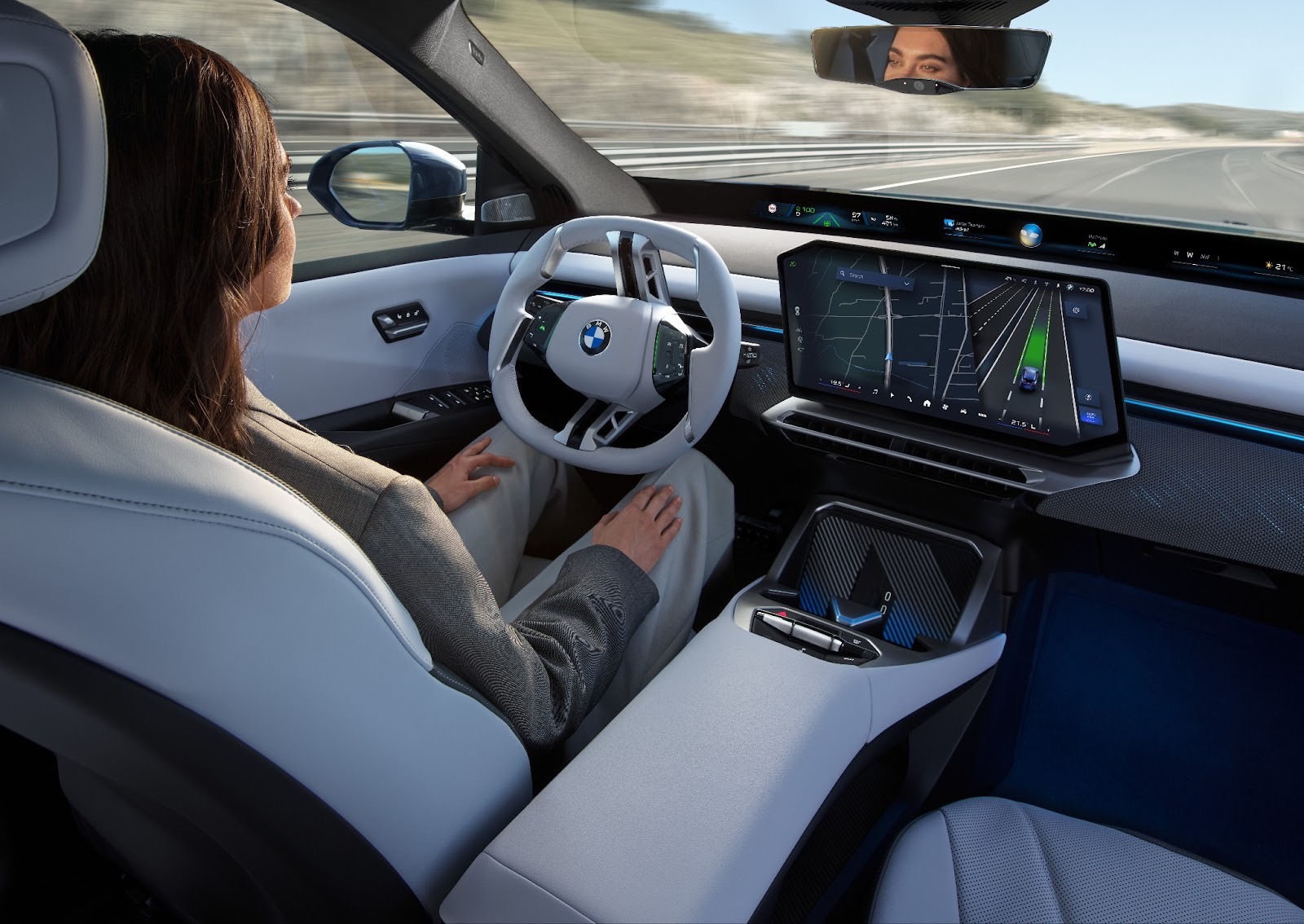
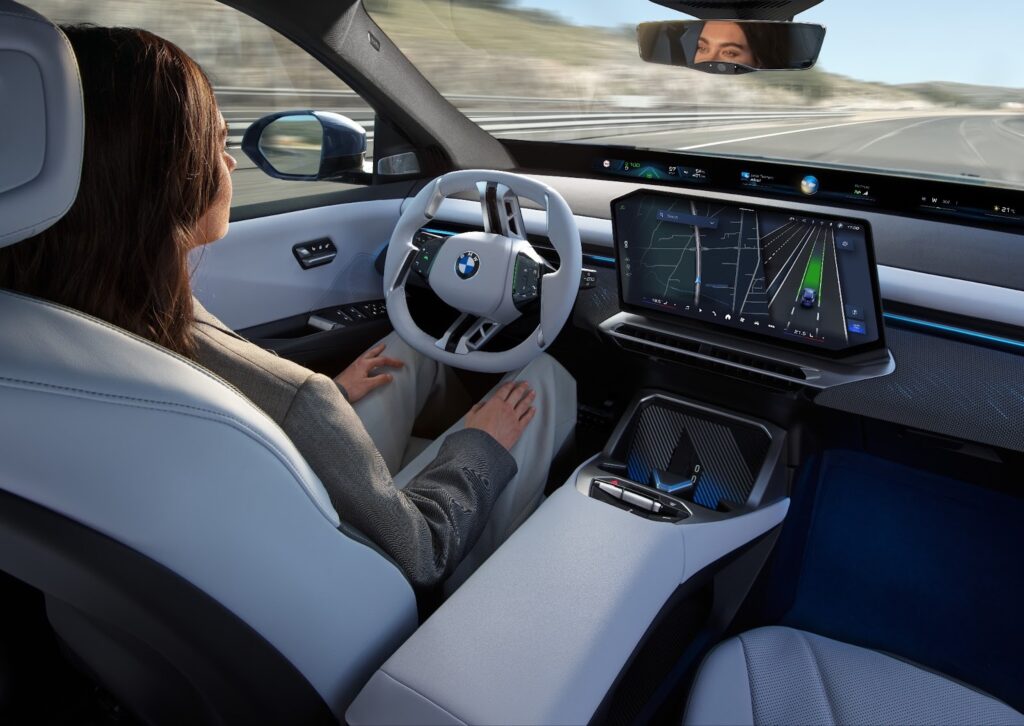
    Another key innovation from BMW is the forthcoming arrival of Highway Assistant on the new iX3. This advanced driving aid assists the driver on motorways at speeds of up to 130 km/h, simultaneously managing speed, distance from the vehicle in front and trajectory.

    This system, designed to relieve the driver of the burden of long journeys, allows the driver to take his or her hands off the wheel when conditions allow, as long as he or she remains alert to traffic and ready to intervene. The principle is simple: when the system judges the road to be suitable, it can suggest an automated lane change. The manoeuvre is then validated by a simple glance in the outside rear-view mirror, to the left to overtake and to the right to swerve – a natural interaction that illustrates the bridge between today’s aids and tomorrow’s automated driving.

    Source: BMW

    This Highway Assistant is part of a wider range of driving aids, including Driving Assistant Plus, which comes as standard. This equipment automatically adapts speed to recognised speed limits, adjusts the pace when approaching bends or roundabouts, and helps to keep the vehicle in its lane. The whole system is coordinated by an advanced software architecture that merges the driver’s intentions with the vehicle’s capabilities in real time, for smoother, more intuitive driving.

    The new iX3, a technological showcase for BMW’s electric strategy

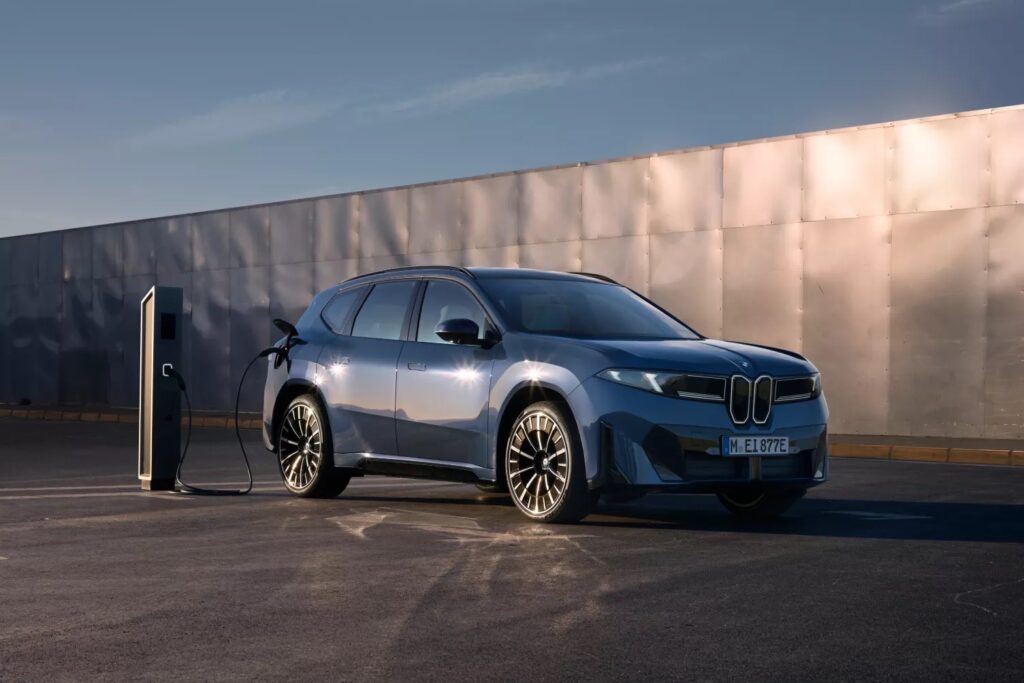
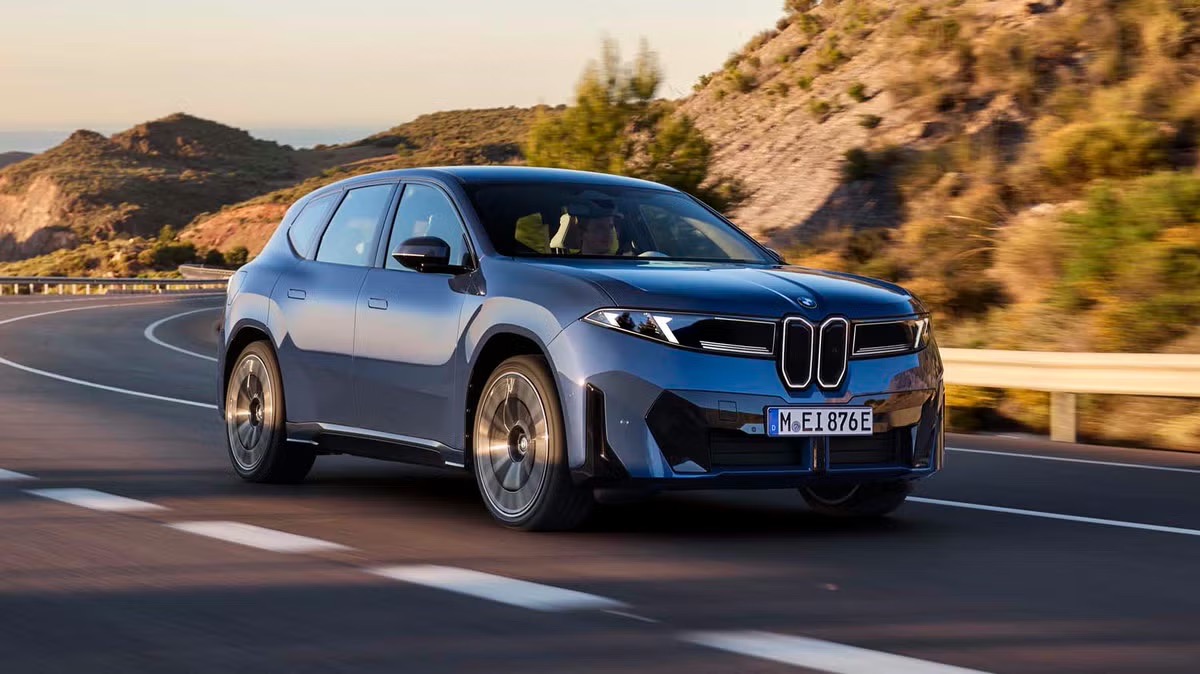
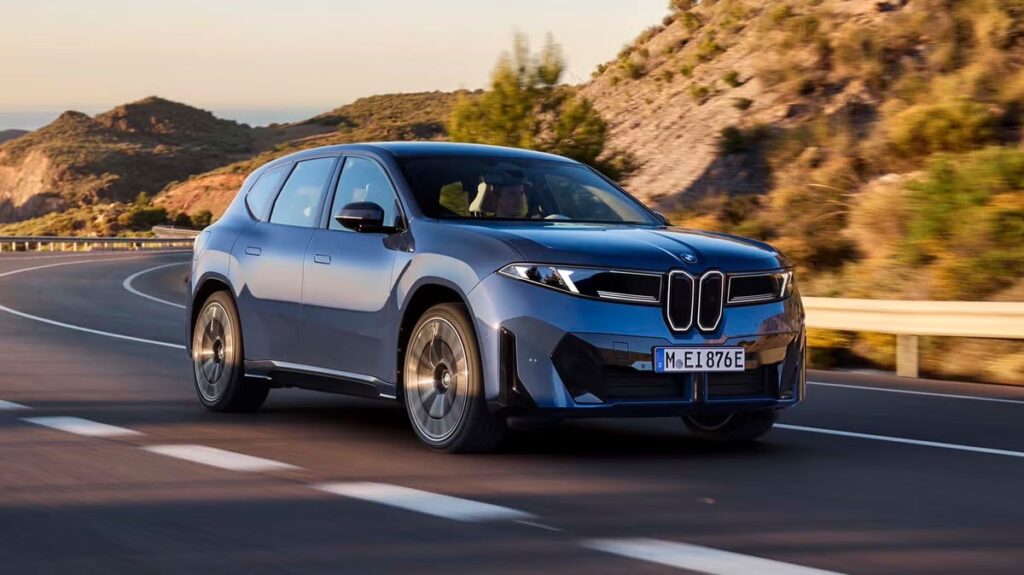
    These innovations take on their full meaning on board the new BMW iX3, the brand’s first new-generation electric SUV. Designed as a technological showcase, the iX3 embodies the convergence of electrification, connectivity and automation.

    The on-board experience is based on the new BMW Panoramic iDrive interface, which intelligently redistributes information within the driver’s field of vision. Navigation, charge management, driving aids and My Digital BMW connected services are seamlessly integrated, reinforcing the impression of a vehicle designed as a coherent whole.

    In technical terms, the iX3 is based on the latest-generation electric architecture, combined with an 800-volt platform that improves energy efficiency while reducing recharging times – a key factor in making the use of electric vehicles more widespread. With a claimed range of over 800 kilometres in the WLTP cycle, BMW is clearly demonstrating its ambitions in the electromobility market.

    source : BMW

    A well-established vision of tomorrow

    With My Digital BMW, the new iX3 and the Highway Assistant, BMW completes the first two innovations previously announced. Automated parking, digital access, connected services and advanced driving aids are now part of a global strategy in which each technology reinforces the others.
    In addition to comfort, these innovations respond to the current challenges of mobility: safety, fluidity of travel, adaptation to urban constraints and the transition to electric vehicles. They also reflect BMW’s ambition to make digital technology a major differentiating factor in an increasingly competitive electric vehicle market.

  • BMW works its parking magic

    BMW works its parking magic

    BMW has reached a new milestone. In a press release, the German manufacturer announced that it had developed four major innovations. These include the Parking Assistant Professional and the BMW Digital Key. At a time when urban traffic and parking are becoming increasingly complex, the three-letter brand is offering solutions that combine advanced automation and digital control, simplifying the daily lives of drivers and paving the way for increasingly connected mobility.

    Redesigned parking assistance

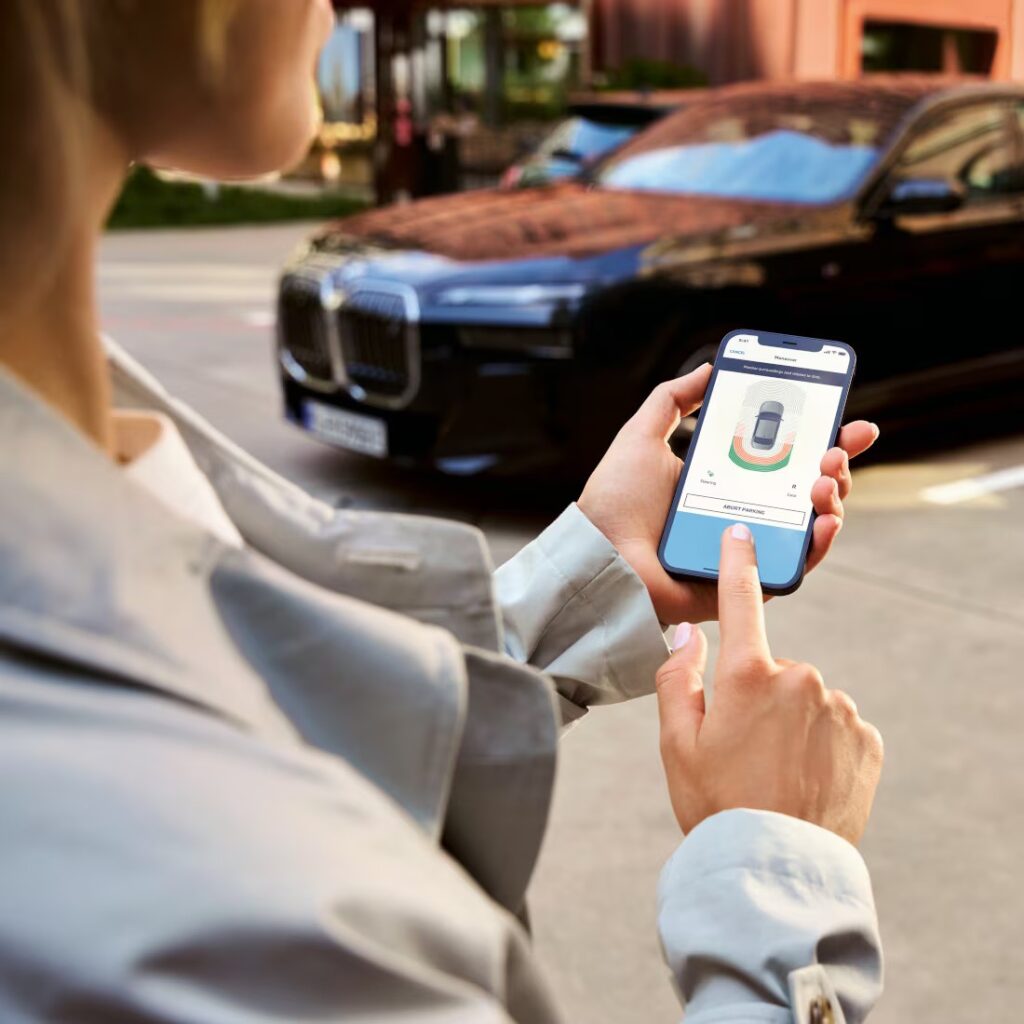
    The first innovation is called “Parking Assistant Professional”, and it is no longer simply a parking aid. With it, the car becomes a real digital co-pilot capable of parking and getting out of the vehicle autonomously, even in confined spaces.
    What’s more, according to the press release, thanks to the My BMW app, the driver can steer the car remotely over a distance of just a few metres, making manoeuvres in tight car parks much less stressful and even, let’s face it, a little exciting.

    source : BMW

    The system has a memory that allows it to store up to ten 200-metre journeys, making it easy to repeat frequent routes, such as the entrance to a garage or parking outside the workplace. This feature illustrates BMW’s commitment to intelligent automation, an area that is close to the technologies needed for electric and autonomous vehicles. By reducing the stress of manoeuvring and optimising the use of space, Parking Assistant Professional indirectly contributes to improving fuel efficiency and the overall experience of EV vehicle users.

    BMW Digital Key: the smartphone replaces the physical key

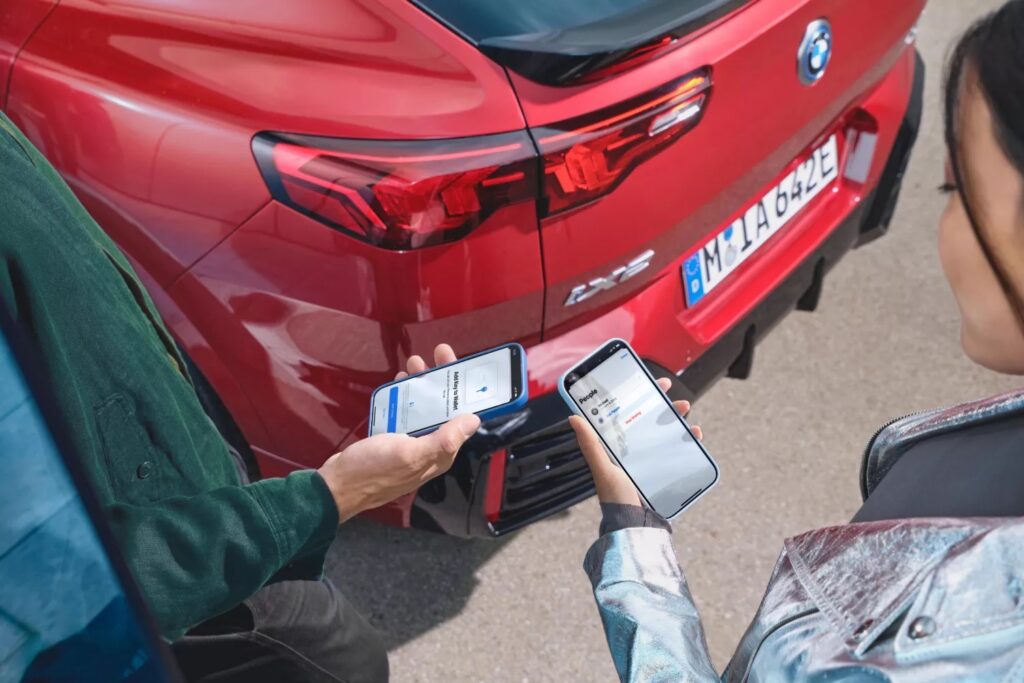
    The second innovation is the Digital Key. It is based on a simple principle: transform the driver’s smartphone or connected watch into a secure digital key, directly linked to the vehicle. In practical terms, this key is stored in the My BMW application, but also in the phone’s Secure Element, a protected zone comparable to that used for contactless payments.

    source : BMW

    As the user approaches, the car automatically recognises him or her, unlocking the car automatically and starting it as soon as the smartphone or watch is inside the vehicle. And with Digital Key Plus, the experience goes even further: the car is able to locate the user precisely and anticipate his or her arrival. The vehicle unlocks without any action whatsoever, simply when the driver approaches it, offering a near hands-free experience.

    Sharing the key is also entirely digital. Up to 18 users can receive a key via the application, with customisable rights. BMW makes it possible, for example, to limit speed, restrict certain functions or give temporary access, a particularly relevant use for lending the vehicle or family use.

    Impact on drivers and the market

    These innovations go beyond mere convenience. Parking becomes safer and less stressful, while dependence on a physical key gradually disappears. Drivers benefit from a personalised, flexible experience, from shared access to repeated parking manoeuvres.

    In sector terms, these developments are part of the global transformation of the automotive industry. BMW is combining connectivity, automation and electrification to meet consumer expectations and urban constraints. With more than 1.6 million electric vehicles sold to date and continued growth in the EV market, the German brand is demonstrating that it is still one of the driving forces behind global mobility.

    These developments are part of a wider strategy of transition to electric vehicles, with the aim of making BMW a major player in electromobility. By 2030, the brand expects 50% of its global sales to be electric vehicles, and will have more than 25 EV models on the market, covering all segments from SUVs to premium saloons. These innovations are not isolated: they are part of an ecosystem in which connectivity, automation and electrification reinforce each other.

    source : BMW

    Outlook and conclusion

    With the Parking Assistant Professional and the Digital Key, BMW confirms its strategy of intelligent automation and digital mobility, placing the driver at the centre of a fluid and secure experience. These innovations transform the car into a connected hub, directly in line with the brand’s objective of strengthening its electric range and digital services.

    At a time when electrification is becoming an imperative for all major brands, BMW is showing that connectivity and automation are not just gadgets, but central elements in supporting the energy transition and offering a premium user experience. Future EV models will benefit from these technologies, making driving safer, more comfortable and resolutely forward-looking.

  • The United Arab Emirates inaugurates one of the world’s largest ultra-fast charging hubs

    The United Arab Emirates inaugurates one of the world’s largest ultra-fast charging hubs

    In many parts of the world, there is still room for improvement when it comes to travelling by electric vehicle on the motorway. In the United Arab Emirates, a new infrastructure aims to tackle this problem head-on. On 12 January 2026, the country inaugurated one of the world’s largest ultra-fast charging hubs for electric vehicles, located on the strategic road linking Abu Dhabi to Dubai.

    source: ADNOC Distribution

    An extraordinary hub, designed for the motorway

    In practical terms, this new site, operated by ADNOC Distribution, brings together 60 ultra-fast recharging points capable, on paper, of recharging the majority of electric vehicles from 0 to 80% in around 20 minutes.

    In reality, this performance depends very much on the vehicle connected. The charging points deliver a power of up to 350 kW, a level that can currently only be fully exploited by models with an 800-volt electrical architecture. On the other hand, models with a 400-volt architecture can of course be recharged at these stations, but without exploiting their full power.

    On a global scale, this hub ranks as the sixth largest in the world in terms of the number of ultra-fast terminals, and is the largest in the Middle East, Africa and Turkey.

    source: WAM

    With this inauguration, we can now say that the United Arab Emirates have not only set up a new recharging station on their territory, but above all have created an infrastructure designed to absorb long-distance electric traffic, without creating saturation.

    A strategic location at the heart of traffic flows

    Impressive performance indeed, and to make the most of this facility, the choice of location is no mean feat. The hub is located in Saih Shuaib, along the E11 motorway, one of the busiest roads in the country. This road links the Emirates’ two main cities and is the hub of a large proportion of intercity travel, whether for business or pleasure.

    Until now, travelling electrically on this type of journey has been possible, but less seamless. With this installation, long-distance travel becomes an accepted practice, and no longer a penalising compromise.

    A symbolic inauguration at a key moment

    As with the chosen location, the date of the official opening is no coincidence. In fact, the inauguration took place on 12 January 2026, just as Abu Dhabi Sustainability Week, an international event dedicated to energy transitions, opened its doors.

    The timing is highly symbolic, allowing the United Arab Emirates to illustrate, through a concrete project, the messages conveyed during this global event. More than just the commissioning of infrastructure, this inauguration is part of a technological showcase strategy designed to position this hub as a benchmark for interurban electric mobility.

    When an oil giant becomes a player in the electric sector

    This is undoubtedly one of the most interesting aspects of this project.
    The hub is being developed by ADNOC Distribution, a subsidiary of the UAE’s national oil group. It’s a powerful symbol: the traditional fossil fuel players are now investing massively in electromobility.

    This site is part of ADNOC’s E2GO network, which already has more than 400 charging points in the country, with a stated target of 750 by 2028. In the longer term, the country is aiming for 20 hubs of this type on its motorway network by 2027, the majority of which will be operational by the end of 2026.

    source : khaleej times

    Recharging becomes an experience, not a constraint

    Beyond the figures, this hub adopts a broader concept dubbed “The Hub by ADNOC”. On site, drivers will find not only kiosks, but also :

    • catering facilities,
    • commercial services,
    • and even work areas, designed to optimise recharge time.

    According to the company, the idea is simple: to turn a stop to recharge into a useful break, rather than wasted time.

    source: ADNOC Distribution

    What this says about global electromobility

    This inauguration goes far beyond the United Arab Emirates. It illustrates several key trends in global electromobility:

    • Electric vehicles are finally moving out of the urban environment. Infrastructures are beginning to be designed for the long term, which is a prerequisite for mass adoption.
    • The major networks are being structured on a very large scale. 60 ultra-fast terminals on a single site is a direct response to the saturation problems still being experienced in Europe and North America.
    • The historical players are changing roles. Seeing an oil group in charge of one of the world’s biggest EV hubs shows just how strategic the transition has become, including for the energy giants.

    A clear vision

    With this mega-hub, the United Arab Emirates are not just adding charging points to the network. They are proposing a very concrete approach to long-distance electric mobility, based on fast recharging, continuity on major routes and anticipation of future uses.

    This approach contrasts with the still fragmented infrastructure seen in many parts of the world, where the issue of recharging on motorways remains one of the main obstacles to the mass adoption of electric vehicles.

  • Mercedes-Benz CLA electric: German car voted COTY 2026 in Brussels

    Mercedes-Benz CLA electric: German car voted COTY 2026 in Brussels

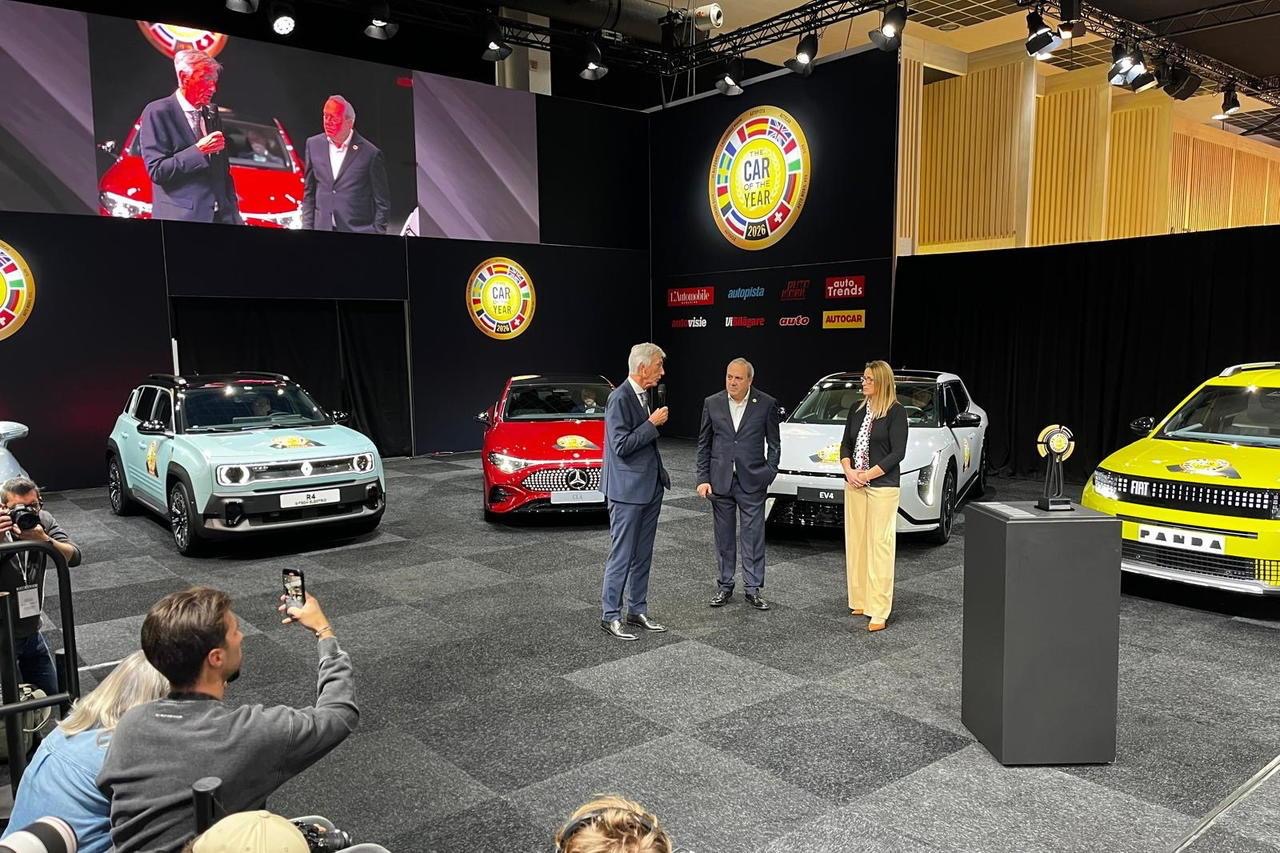
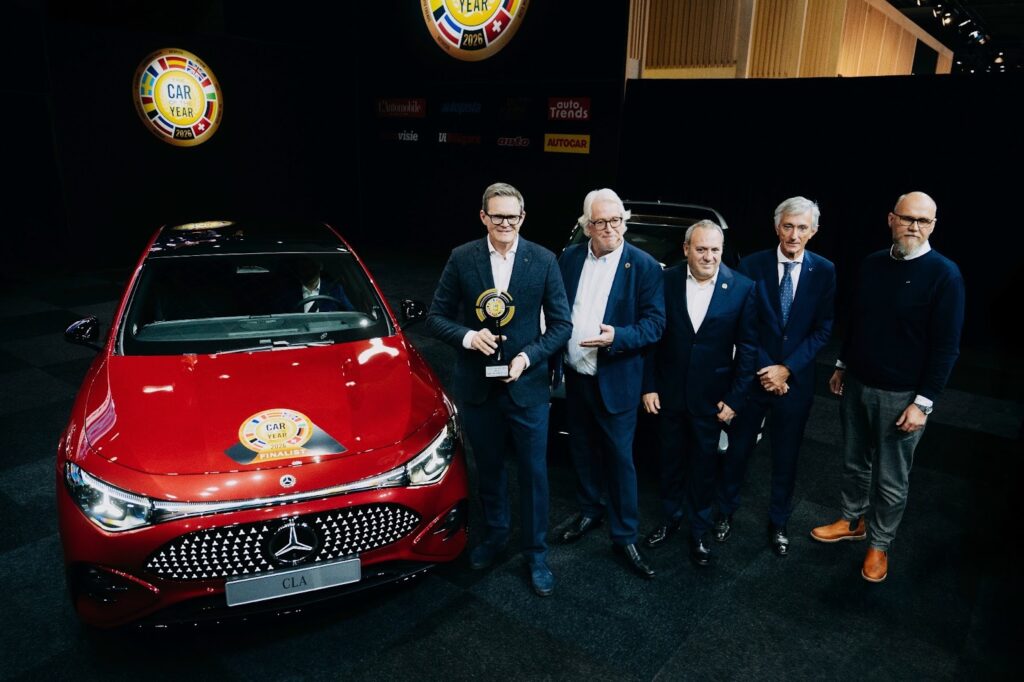
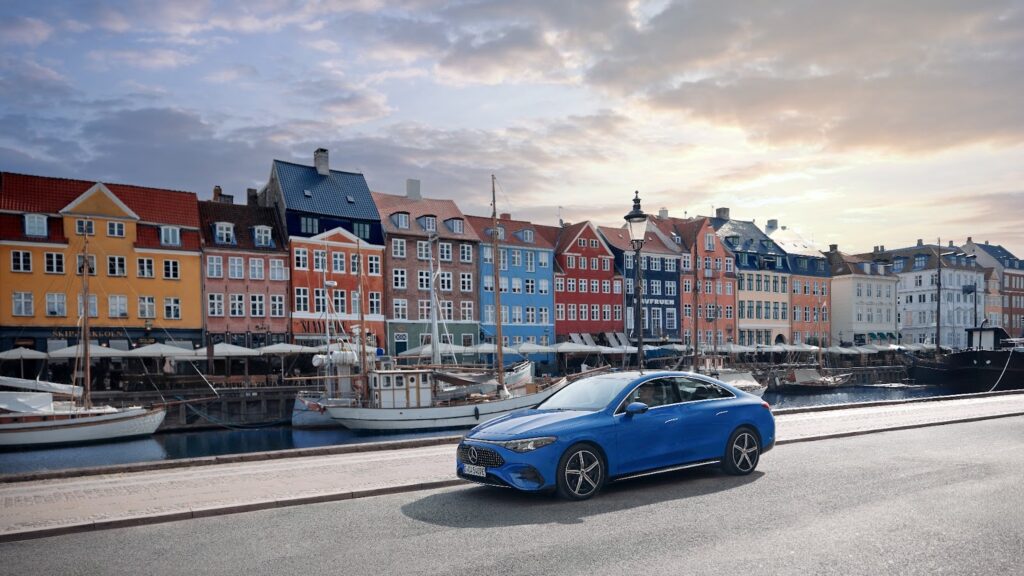
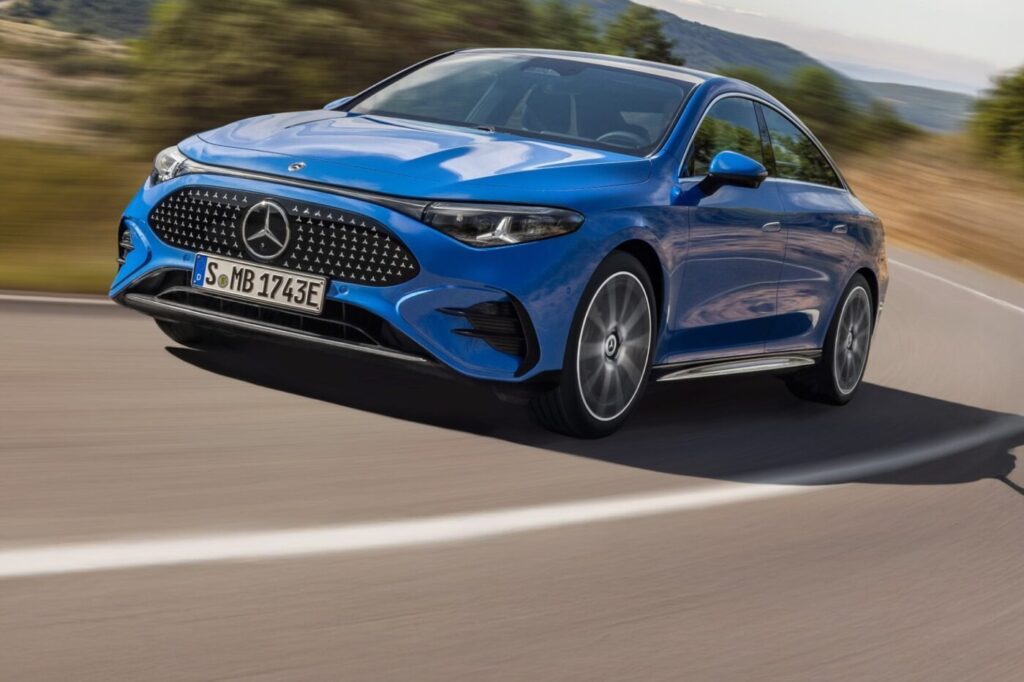
    The Mercedes-Benz CLA, in its new, highly-electrified generation, made its mark at the Brussels Motor Show on 9 January 2026 by winning the prestigious title of European Car of the Year 2026. A clear and unequivocal choice by the jury, it marks Mercedes-Benz’s return to prominence in a rapidly changing automotive landscape.

    Source : Mercedes-Benz

    A resounding triumph

    The least we can say is that the new generation of the 100% electric CLA was a clear winner. On Friday 9 January, the Car of the Year jury awarded a total of 320 points to the German saloon. This is a lower score than that of its predecessor, the Renault 5, which scored 353 points for the same title last year.

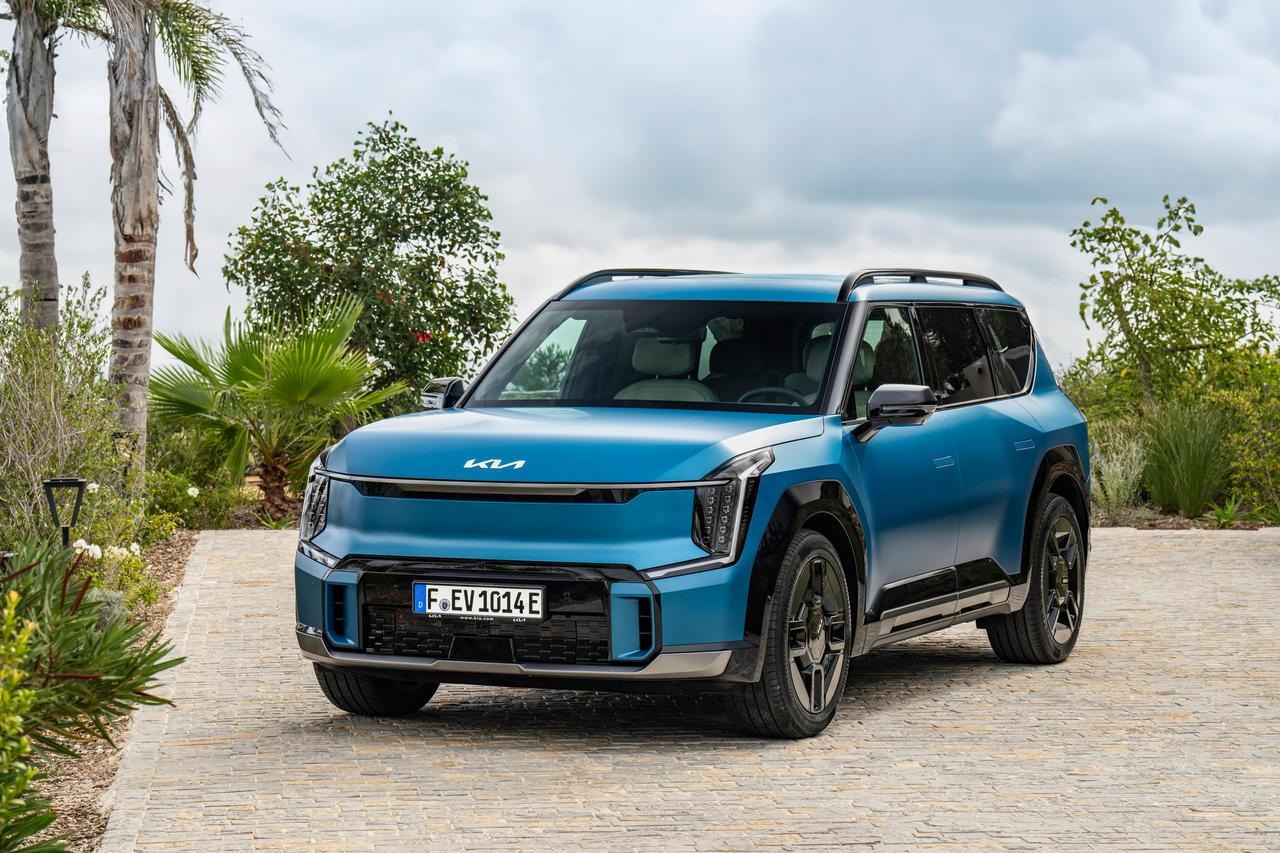
    Although this total is lower, the CLA is well ahead of the Skoda Elroq (220 points) and the Kia EV4 (208 points) by 100 points, while the Citroën C5 Aircross, the Fiat Grande Panda, the Dacia Bigster and the Renault 4 E-Tech complete the ranking.

    source : largus

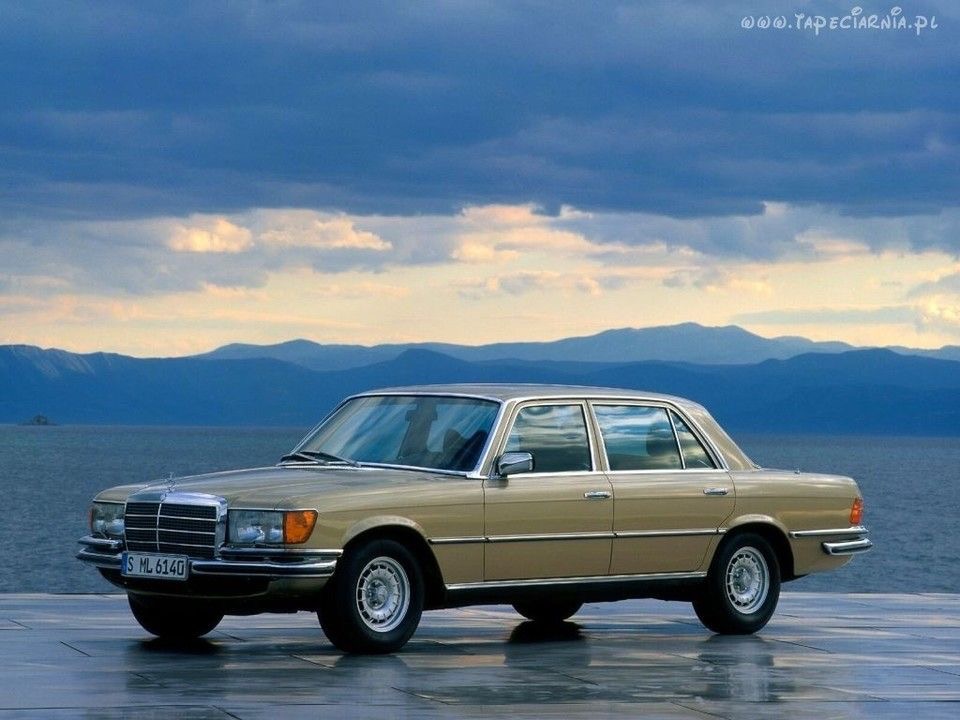
    This victory is no mean feat. It is Mercedes’ first victory in this competition since 1974, when the legendary S-Class / 450 S won the title. After two years of domination by Renault with the Scenic E-Tech and Renault 5 E-Tech, the CLA has now put the German brand back in the European race for premium electromobility. More generally, it illustrates a change in the European market, where premium electric saloons are no longer mere alternatives, but benchmarks in their own right.

    A technical profile for the future

    What sets the Mercedes-Benz CLA 2026 apart from its rivals is its combination of cutting-edge technology and efficient performance. It is based on an 800 V electric platform and features a battery with a capacity of around 85 kWh, enabling ultra-fast recharging of up to 320 kW. This modern architecture makes the CLA capable of recovering more than 300 km of range in just ten minutes from high-powered charging points.

    Another point of note is the CLA’s exceptional range, claimed to be up to 792 km according to the WLTP cycle, a figure that makes it one of the most enduring electric saloons in its segment. The combination of these top-level features makes this premium compact saloon a particularly attractive proposition, both for everyday use and for long journeys. It also illustrates the technological maturity achieved by Mercedes-Benz with its MMA (Mercedes Modular Architecture) platform, designed from the outset for electric use.

    MB.OS & MBUX: intelligence at the wheel

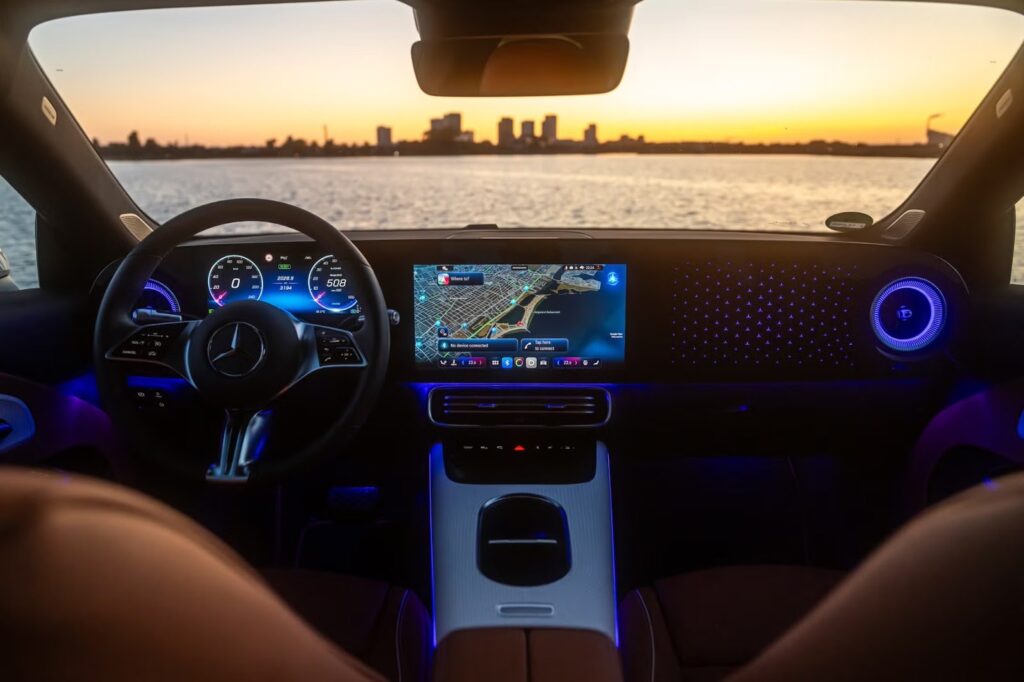
    In addition to its pure performance, the Mercedes-Benz CLA also features a significant evolution in user experience, supported by the introduction of the new MB.OS operating system and a latest-generation MBUX interface. The manufacturer’s stated aim is clear: to centralise the vehicle’s functions within a more coherent and easier-to-read digital environment.

    MB.OS also provides the basis for the latest generation of driving aids, such as adaptive cruise control, lane keeping and assistance in dense traffic. Without overturning existing market standards, the CLA is part of an approach aimed at making the interaction between the driver and the electronic aids more fluid.

    source: Mercedes-Benz

    Finally, Mercedes has maintained a balanced approach between digitalization and comfort. The cabin features sober ergonomics, quality materials and careful acoustic insulation.

    A model for 2026… and beyond

    Available from mid-2025 in Europe, the new Mercedes-Benz CLA has already generated strong interest in the market, with orders well in excess of initial forecasts, according to the brand. Its electric version (CLA 250+ EQ, CLA 350 4MATIC EQ) is available from the launch of the saloon, while the electric CLA Shooting Brake will follow in March 2026, joined by 48V hybrid versions on both bodystyles. A diversified product strategy that enables the German manufacturer to cover a large part of the electrified premium segment.

    source: Mercedes-Benz

    In a number of independent tests, the CLA was also praised for its handling, comfort and ability to compete with benchmarks such as the Tesla Model 3, thanks to a record aerodynamic coefficient (around 0.21) and a modular MMA4 platform designed to maximise overall efficiency.

    A rising star in electromobility

    By winning the title of European Car of the Year 2026, the Mercedes-Benz CLA confirms that it embodies a modern vision of the electric car, where autonomy, efficiency, technology and driving pleasure are successfully combined.

    This award, obtained at the heart of the Brussels Motor Show, underlines the growing importance of premium electric models on the European market and establishes the CLA as one of the key models of the coming year, as well as a benchmark in the transition to more sustainable mobility.

  • Brussels Motor Show 2026: What can we expect?

    Brussels Motor Show 2026: What can we expect?

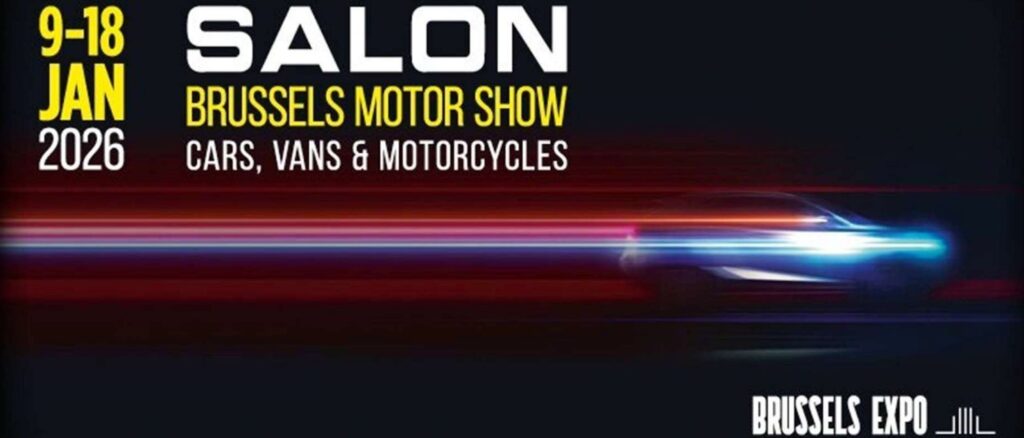
    The Brussels Motor Show is gearing up for another edition that promises to be more intense, popular and strategic than ever. From 9 to 18 January 2026, Brussels Expo will open the doors to its 102ᵉ edition of the Brussels Motor Show, a not-to-be-missed event which, after reconnecting with its public last year, confirms its place as Europe’s leading motor show of the year for manufacturers, enthusiasts and mobility professionals.

    source : newmobility.news

    A historic show that spans the ages

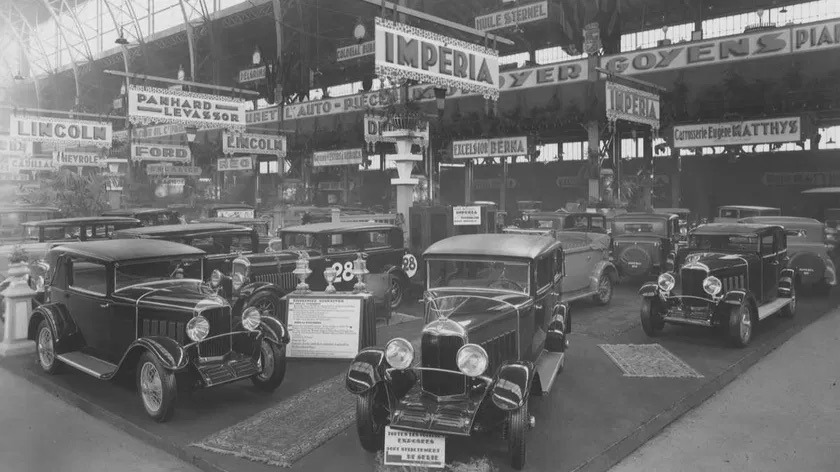
    Founded over a century ago, the Brussels Motor Show is one of the oldest motor shows still operating in Europe. Long an eagerly-awaited annual event for the entire industry, it has been plagued by complications in recent years, including the cancellation of the 2024 edition for reasons of market expectations.

    source : Gocar

    But with a comeback scheduled for 2025, the event has established itself as a key fixture in the automotive calendar, attracting an average of over 300,000 visitors and becoming a key observatory of changes in the sector.

    102nd edition: ambitions and world firsts

    The 2026 version of the show is no half-measure. No fewer than 64 car brands will be present, one more than the previous year, covering almost 95% of the Belgian market.

    The 2026 edition will occupy a total surface area of around 60,000 m², spread over halls 5, 6, 7, 9, 11, the Patio and the new Hall Astrid, recently integrated to meet the growing demand from exhibitors.

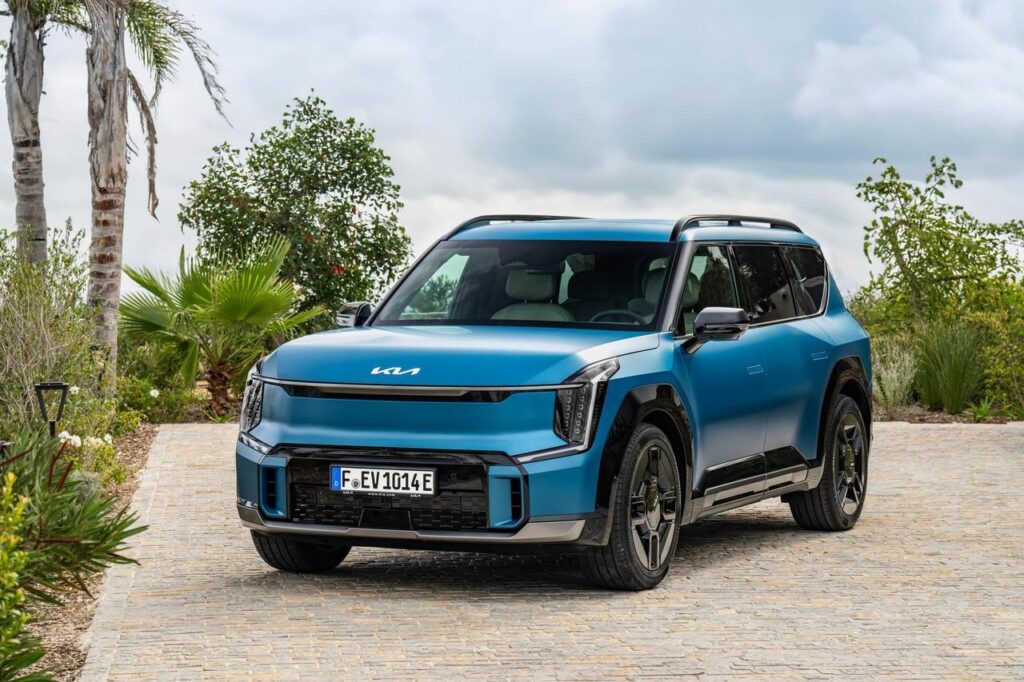
    What’s even more remarkable is that the show already boasts a packed programme of revelations, with 39 premieres announced (worldwide, European and Belgian). Among the most eagerly awaited models will be the world premiere of the Kia EV2, an SUV, while Hyundai will unveil its largest EV, featuring 800 V recharging technology. Opel will be showcasing the new Astra and Astra Sports Tourer, as well as the Grandland Electric AWD. In France, Peugeot will be presenting the new 408 and the E-208 GTi electric version, confirming the market’s appetite for compact and sporty electrified models.

    source : largus

    This diversity underlines the extent of the sector’s transformation: electrification, compact SUVs and innovative technologies will be the focus of attention, and the show is shaping up to be the ideal place to observe the mobility of tomorrow.

    Motorbikes and mobility: a broader, more open edition

    Another strong sign of the show’s evolution is the return of motorbikes, for the first time since 2020. A total of 28 motorised two-wheeler brands will be exhibiting in a dedicated area of hall 9, bringing together motorcyclists, enthusiasts and the curious to discuss the latest technical, electric and combustion developments in the segment.

    This development broadens the scope of the event well beyond the traditional automotive sector and reflects a more comprehensive vision of mobility, where cars, motorbikes and alternative forms of mobility coexist to present visitors with the state of the art in motorised mobility.

    Car of the Year and entertainment: a complete experience

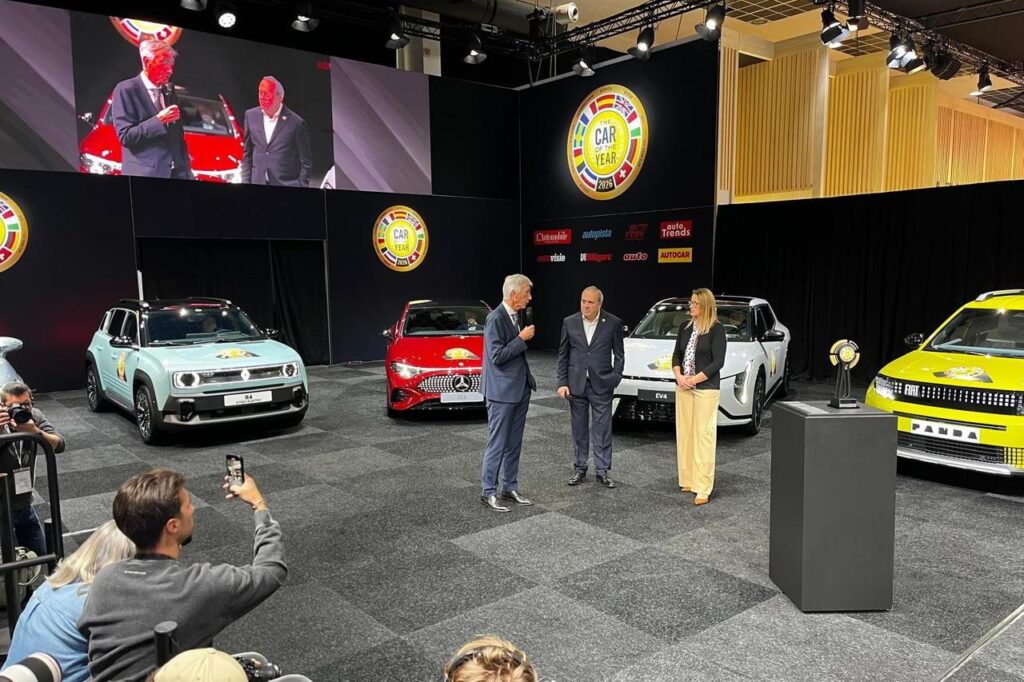
    On 9 January, the Car of the Year ceremony took place, electing the European Car of the Year, a highlight that attracts the attention of the media and enthusiasts every year. This year, it was the Mercedes-Benz CLA that took the coveted title of Car of the Year 2026. The German brand’s model succeeds the Renault 5 E-Tech (2025) and the Renault Scenic E-Tech (2024).

    source: Mercedes-Benz

    But the show isn’t just about exhibiting cars: a series of fun, entertaining and educational events are planned for all audiences. Driving simulators, children’s areas, interactive zones, meetings with automotive influencers and technical presentations complete the exhibition offer.

    A strategic event for electromobility

    For all those involved in electromobility – manufacturers, equipment suppliers, recharging infrastructure providers and political decision-makers – the Brussels show has become a major observatory. It provides a unique venue for presenting new electric solutions, discussing infrastructure challenges, recharging standards and energy transition strategies.

    The presence of a large number of EV, hybrid and electric concept cars is also an indication of the Belgian and European public’s appetite for these technologies, as well as the commitment of manufacturers to the electric sector.

    From Belgian trade fair to European mobility event

    Now in its 102th year, the Brussels Motor Show has established itself as more than just a car show. It has become a strategic space where market trends, technological innovations and consumer expectations meet.

    With a programme packed with world premieres, a variety of events, the return of the motorbikes, and almost exhaustive coverage of the car and two-wheeler sectors, the 2026 edition promises to be a benchmark for the automotive year that is just beginning.

  • Congestion Charge: London now charges £13.50 for electric cars

    Congestion Charge: London now charges £13.50 for electric cars

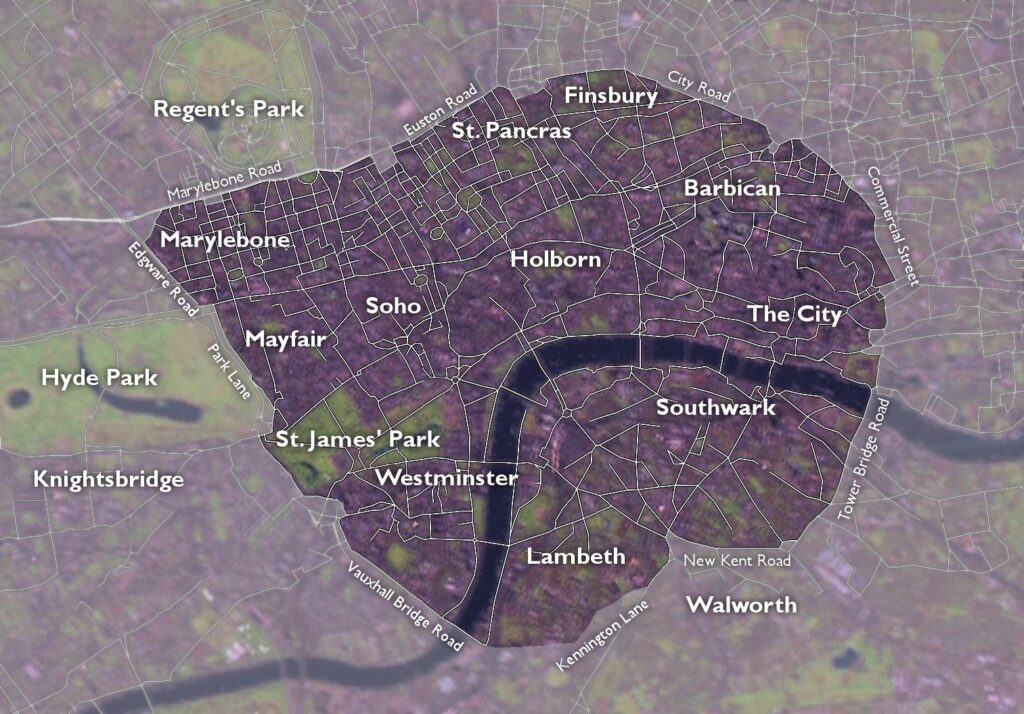
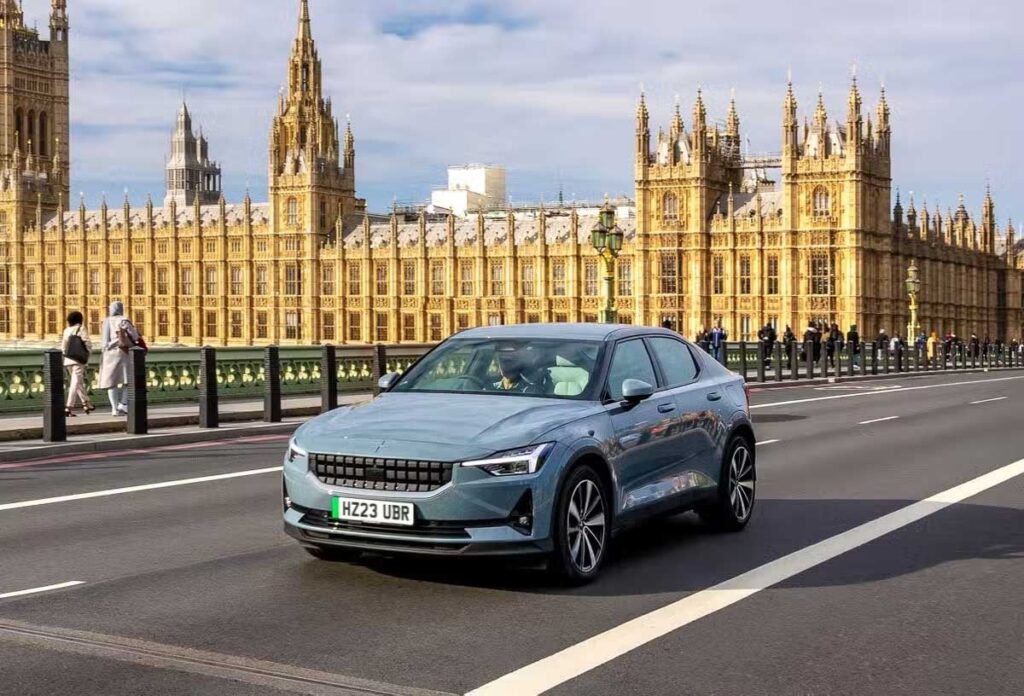
    After more than a decade of almost total exemption, electric vehicles (EVs) will now have to pay the Congestion Charge when travelling in London city centre, a measure that came into force on 2 January 2026.

    source : Evans Halshaw

    Until now, the Cleaner Vehicle Discount allowed electric cars to be exempted from the daily payment of this tax, which was introduced in 2003 to reduce congestion on London’s arterial roads. This exceptional scheme has been abolished, putting an end to one of the major incentives for EV users in urban areas.

    Revised pricing

    In concrete terms, the new pricing structure marks a clear break with the previous system. Electric cars will no longer be able to travel free of charge in the English capital’s city centre; they will now have to pay £13.50 per day provided they are registered with the Auto Pay scheme, which corresponds to a 25% reduction on the standard rate. Drivers of electric vans and light commercial vehicles benefit from an extra effort, with the cost reduced to £9 per day via the same automated system. On the other hand, for all vehicles, whether internal combustion or electric, not registered with Auto Pay, the charge is now £18 per day, compared with £15 previously.

    These rates apply during the Congestion Charge’s normal opening hours, from 7am to 6pm on weekdays, and from 12pm to 6pm on weekends and public holidays, bearing in mind that the measure is designed above all to regulate traffic flows at the busiest times. This is the first increase since 2020.

    Why the change now?

    The London authorities, led by Mayor Sadiq Khan, believe that the total exemption for EVs is no longer compatible with traffic regulation objectives. “Without this change, an additional 2,200 vehicles would enter the defined zone every day”.

    For Transport for London (TfL), the objective is clear: to modernise a system that has become less efficient in the face of traffic growth and the increasing use of electric vehicles, which are now so numerous that they are also having an impact on congestion in the city centre. Traffic jams cost London businesses nearly £3.85 billion every year.

    source: courrier international

    A clear message to electric motorists… but not only

    This strategic shift is not just about taxation: it is also about refocusing policy on urban traffic management, and not just on reducing local emissions. While it’s true that EVs don’t pollute when they’re in use, which is good for the climate and good for society, they still have an impact on traffic density, public space and the flow of traffic, which TfL believes London can no longer ignore.

    Again according to TfL, the number of electric vehicles registered in London has risen from around 20,000 in 2019 to more than 116,000 in 2025. This growth means that EVs now account for almost 20% of all vehicles entering the congestion zone every day. In other words, of the 90,000 or so vehicles passing through the zone every day, around 1 in 5 is an electric vehicle.

    source: Automobile propre

    For drivers, this means an increase in the cost of using an EV in the city centre, even if the Auto Pay discount partially mitigates this increase. On a positive note, however, current residents of the zone who have been benefiting from significant discounts will continue to keep them, but new applications after March 2027 will be conditional on owning an EV.

    Beyond that, the social dimension of this reform is largely ignored. Who can still afford to pay £13.50 or £18 a day to drive around central London? For many residents or workers dependent on their electric vehicle, this measure risks widening the divide between those who have the means or alternatives to do without their car and those for whom no efficient public transport is available: this is an issue of urban equity that the city seems to have overlooked.

    The impact on urban electromobility

    This London reform goes far beyond the tax issue alone. It illustrates a fundamental change observed in many cities, where electric vehicles are no longer approached solely from the point of view of emissions, but are integrated into more comprehensive mobility policies. Energy transition, flow management, the use of public space and the efficiency of urban travel are now intertwined in a single approach.

    London’s decision is a reminder that while electric vehicles reduce local carbon footprints, they do not eliminate congestion or pressure on urban space. From now on, it is not just emissions that dictate taxation choices, but the overall impact of the vehicle on the fluidity and organisation of the city.

  • Verge TS Pro Solid-State: the innovative electric motorbike at CES 2026

    Verge TS Pro Solid-State: the innovative electric motorbike at CES 2026

    At CES 2026 in Las Vegas, the electric two-wheeler segment was marked by an announcement from Finland. Hyvinkää-based start-up Verge Motorcycles presented a major evolution of its TS Pro, now equipped with a solid electrolyte battery developed in partnership with Donut Lab. A technological advance that the brand claims to be a world first for a production motorbike, but which has yet to be validated by independent testing.

    Credit: Verge

    From technological promise to industrial ambition

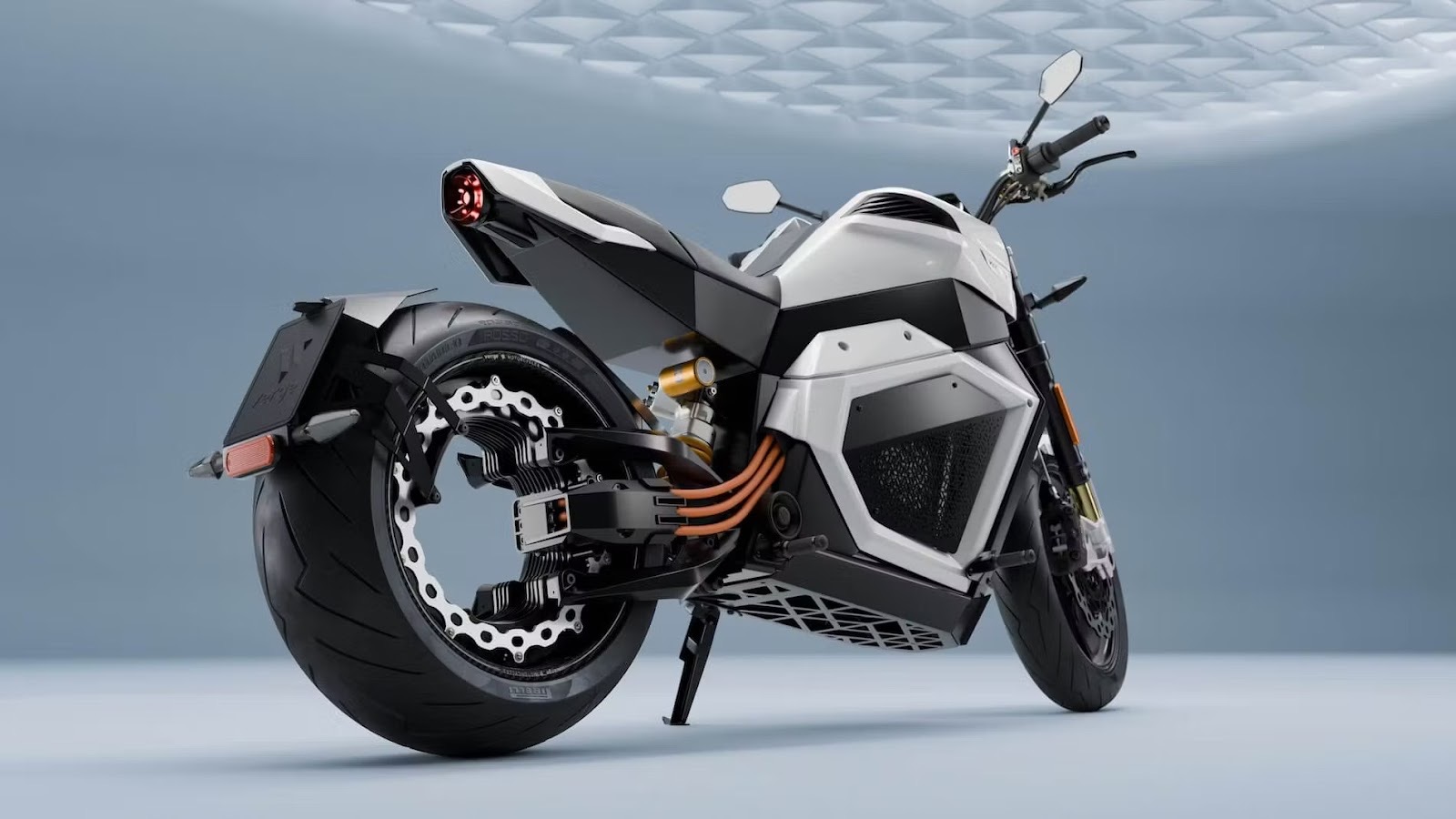
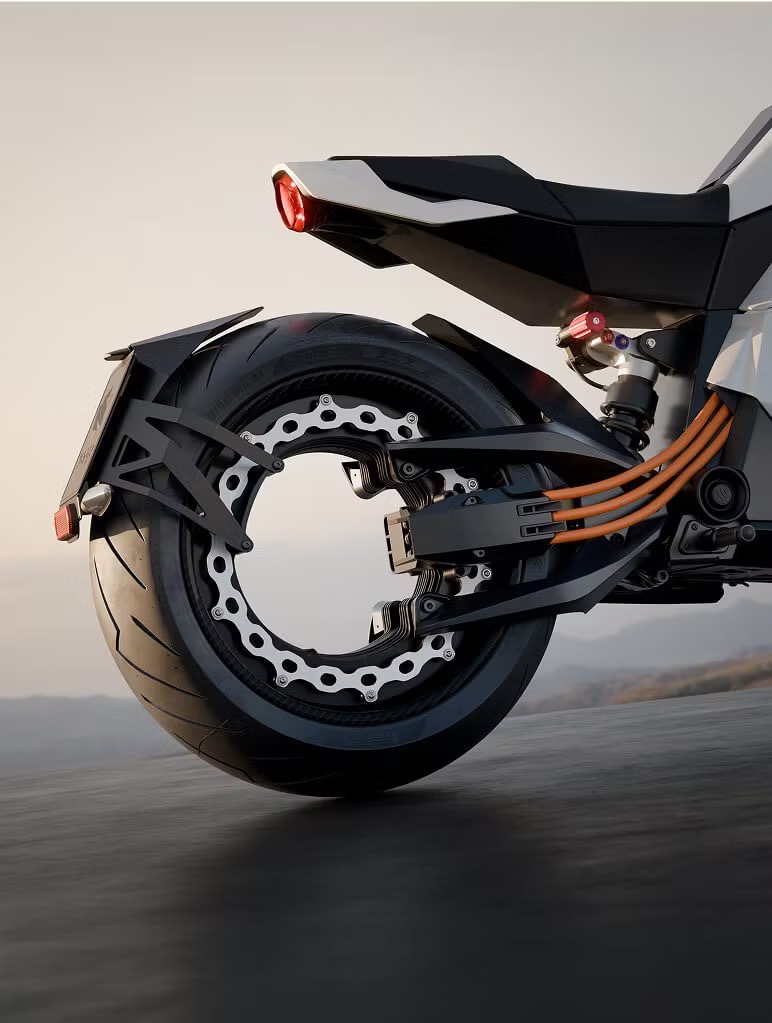
    From the outset, Verge has built its business around a radical concept: rethinking the very architecture of the electric motorbike. A few years after introducing its hubless motor integrated into the rear wheel, the brand is taking a new step forward with this TS Pro Solid-State, presented not just as a concept, but as a production version, with the first deliveries scheduled for mid-2026, according to the manufacturer.

    Verge claims that it wants to be the first manufacturer to offer a production-approved motorbike equipped with an all-solid battery. It’s a strong claim, echoed at CES, but at this stage it’s based solely on statements from the manufacturer and its technology partner.

    Architecture faithful to the Verge DNA

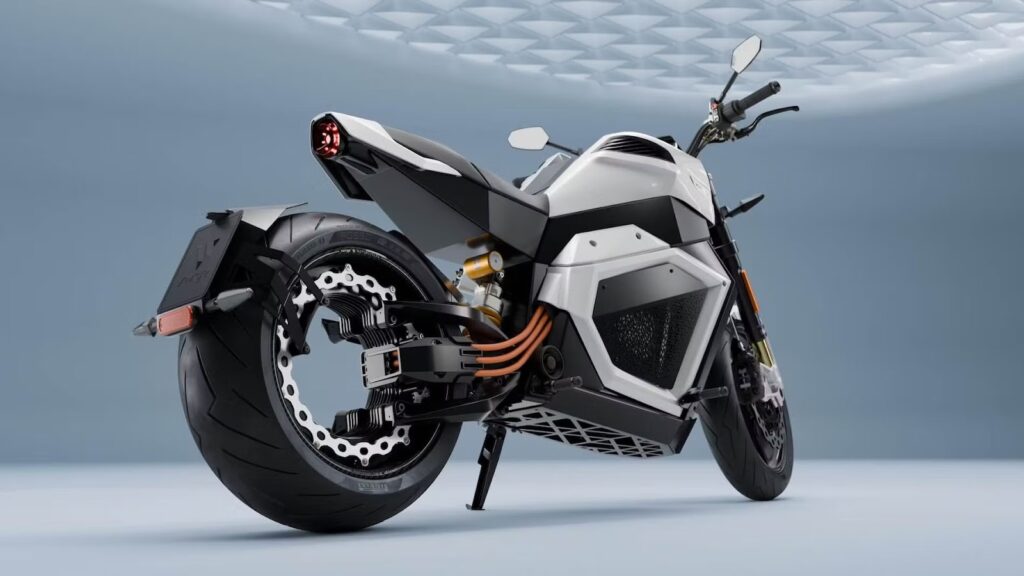
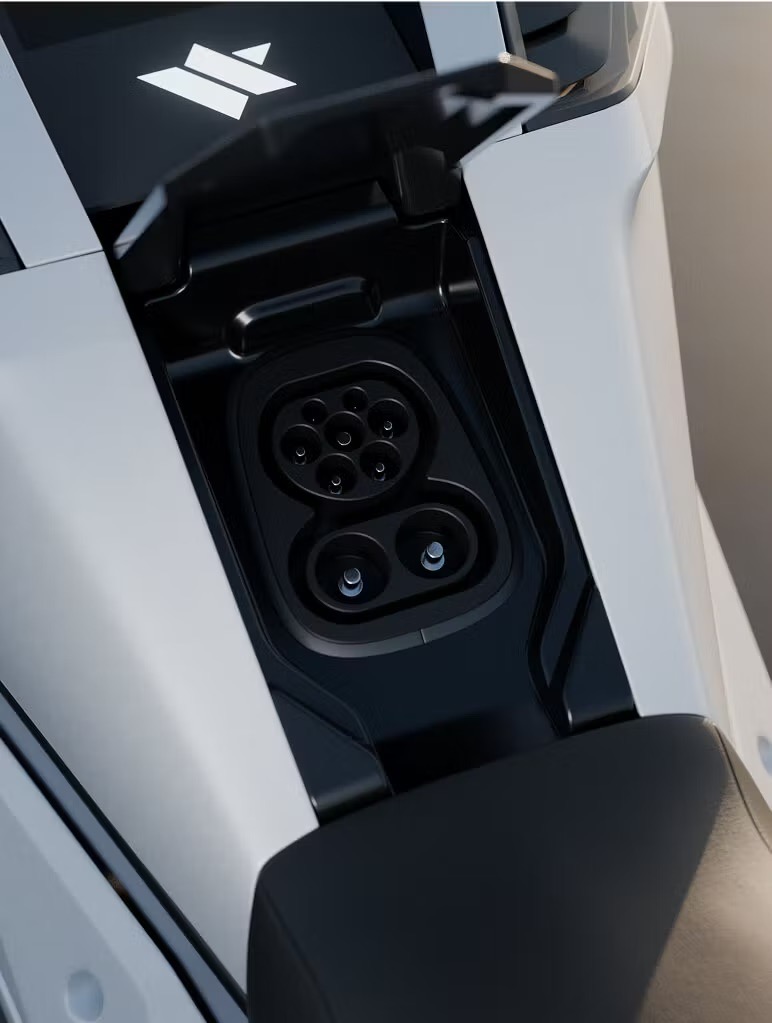
    Visually, the TS Pro Solid-State remains true to the futuristic aesthetic of the Verge range. On the CES stand, it featured a hubless rear wheel, a sculptural frame, extensive use of carbon fibre and an aggressive stance reminiscent of a sports bike.

    Credit: Verge

    The batteries, dubbed the ‘Donut Battery’, are integrated directly into the structure of the motorbike. Each module has a capacity of around 5 kWh, enabling Verge to offer different energy configurations depending on use.

    Impressive figures

    The main innovation lies in the adoption of solid electrolyte batteries, which Donut Lab presents as ready for large-scale industrial application. According to the data provided by the two protagonists, this technology will enable :

    • a claimed energy density of around 400 Wh/kg,
    • a range of up to 600 km with the highest capacity battery configuration,
    • ultra-fast charging, with up to 300 km of range recovered in around ten minutes from a fast charging point.
    source : Verge

    In terms of powertrains, the TS Pro Solid-State retains the electric motor integrated into the rear wheel, claimed to deliver up to 200 kW (around 270 bhp) and instant torque of 1,000 Nm. The manufacturer claims a 0 to 100 km/h time of around 3.5 seconds.

    These are impressive figures, but they should be regarded as manufacturer data, awaiting validation by independent tests.

    A clear ambition for top-of-the-range electrics

    With this TS Pro Solid-State, Verge is clearly demonstrating its objective: to establish itself as a global benchmark for premium electric motorbikes. The partnership with Donut Lab brings additional technological credibility to a project long considered experimental.

    Credit: Verge

    If the announced performances are confirmed by the first independent tests, this motorbike, expected in the first quarter of 2026, could send a strong signal to established manufacturers, both European and Japanese.

  • 2025 for BYD in France: palpable leadership

    2025 for BYD in France: palpable leadership

    Year after year, BYD confirms that its French strategy is no longer a gamble. In 2025, the Chinese manufacturer of new energy vehicles (NEVs) registered 14,311 vehicles in France, representing growth of 145.3% compared with 2024, in a car market that was nevertheless down by almost 5%. Behind these figures lies a reality: BYD has above all offered a credible hybrid alternative to motorists who are still hesitant.

    Source : BYD

    SEAL U DM-i: the game-changing PHEV

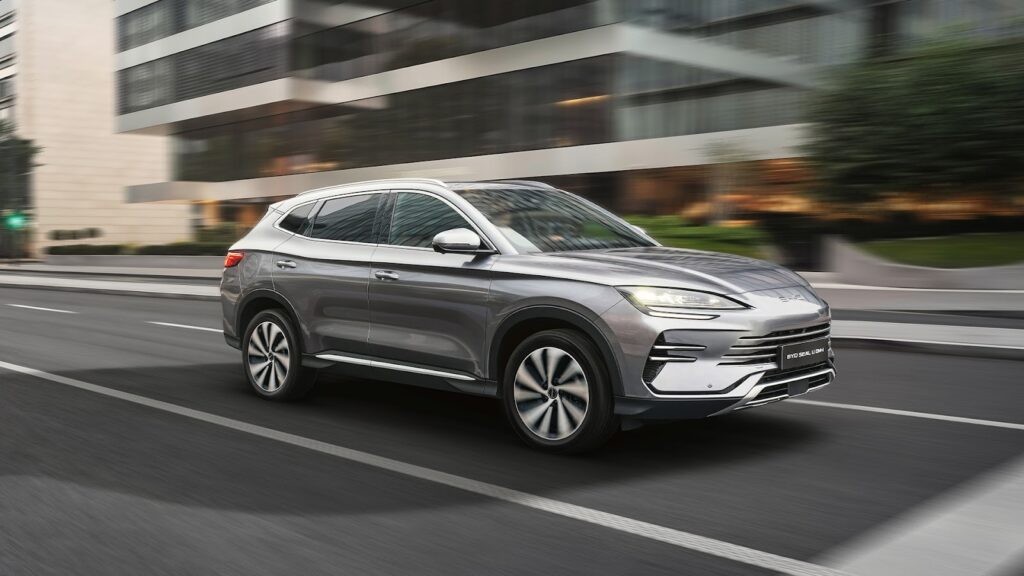
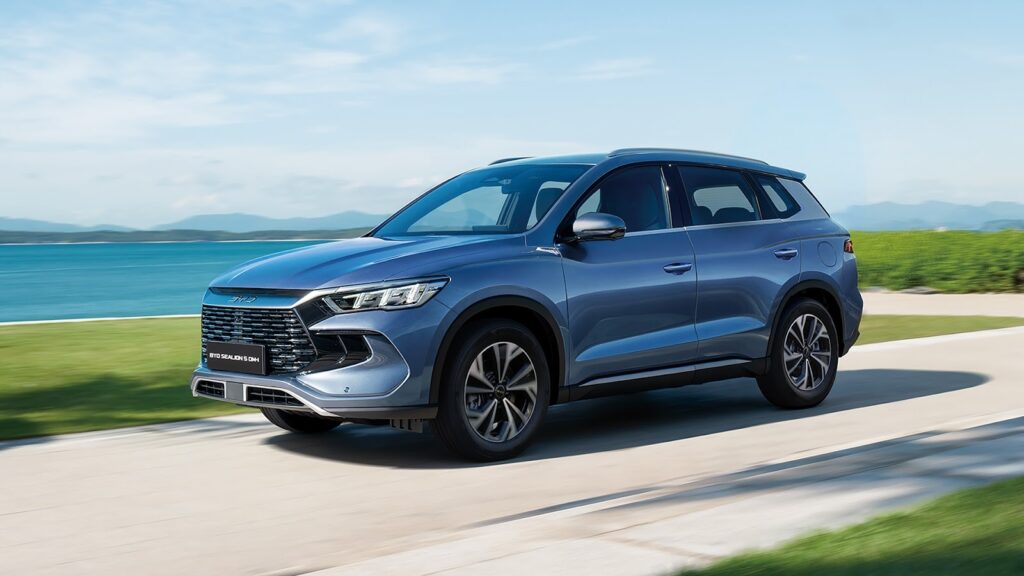
    The year 2025 saw the BYD SEAL U DM-i become the brand’s real powerhouse. This Chinese SUV was BYD’s best-selling model in France in 2025, with 6,058 registrations, up 194.5% year-on-year. In December, it even became the best-selling PHEV in France, with 1,797 units, giving BYD a 1.5% market share.

    This success can be explained by the positioning of DM-i Super Hybrid technology: a predominantly electric drive for everyday use, coupled with a combustion engine for long journeys, with a combined range of up to 1,505 km. It’s a pragmatic response to fears about range, which are still widespread in France.

    Source : BYD

    A well-established electric range

    In addition to the SEAL U DM-i, BYD has a complete and coherent electric range. In 2025, the brand’s podium will reflect this growing power:

    • BYD SEAL (electric saloon): 1,835 registrations (+70.4%)
    • BYD SEALION 7 (electric SUV): 1,811 units
    • BYD DOLPHIN: 1,108 registrations
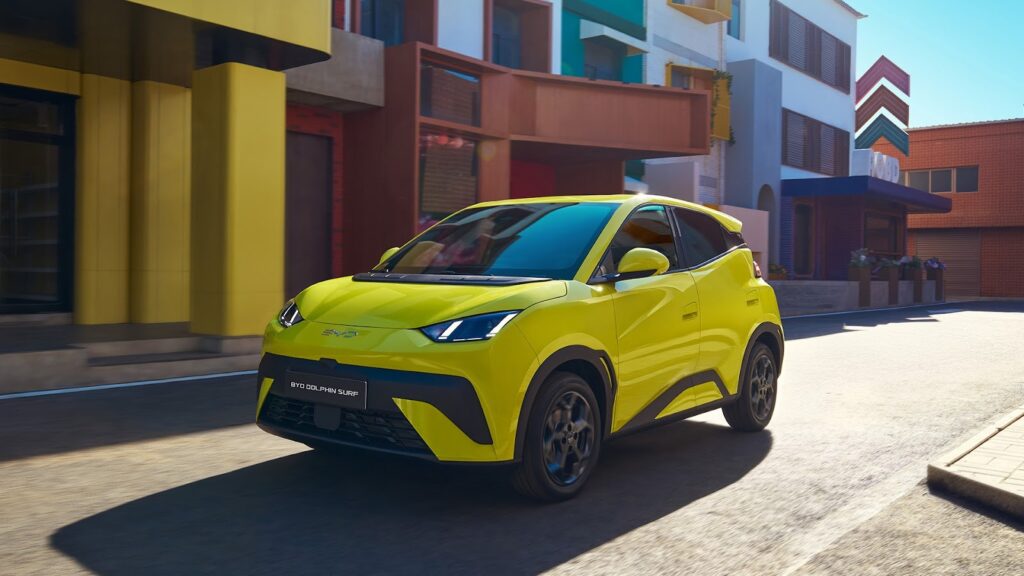
    • BYD DOLPHIN SURF: 1,049 units

    The latter, an affordable electric city car, marked the year with its World Urban Car of the Year title, its 5-star Euro NCAP rating and a starting price of €19,990, confirming BYD’s strategy of making electromobility accessible without compromising on technology or safety.

    Source : BYD

    2025: a pivotal year for BYD France

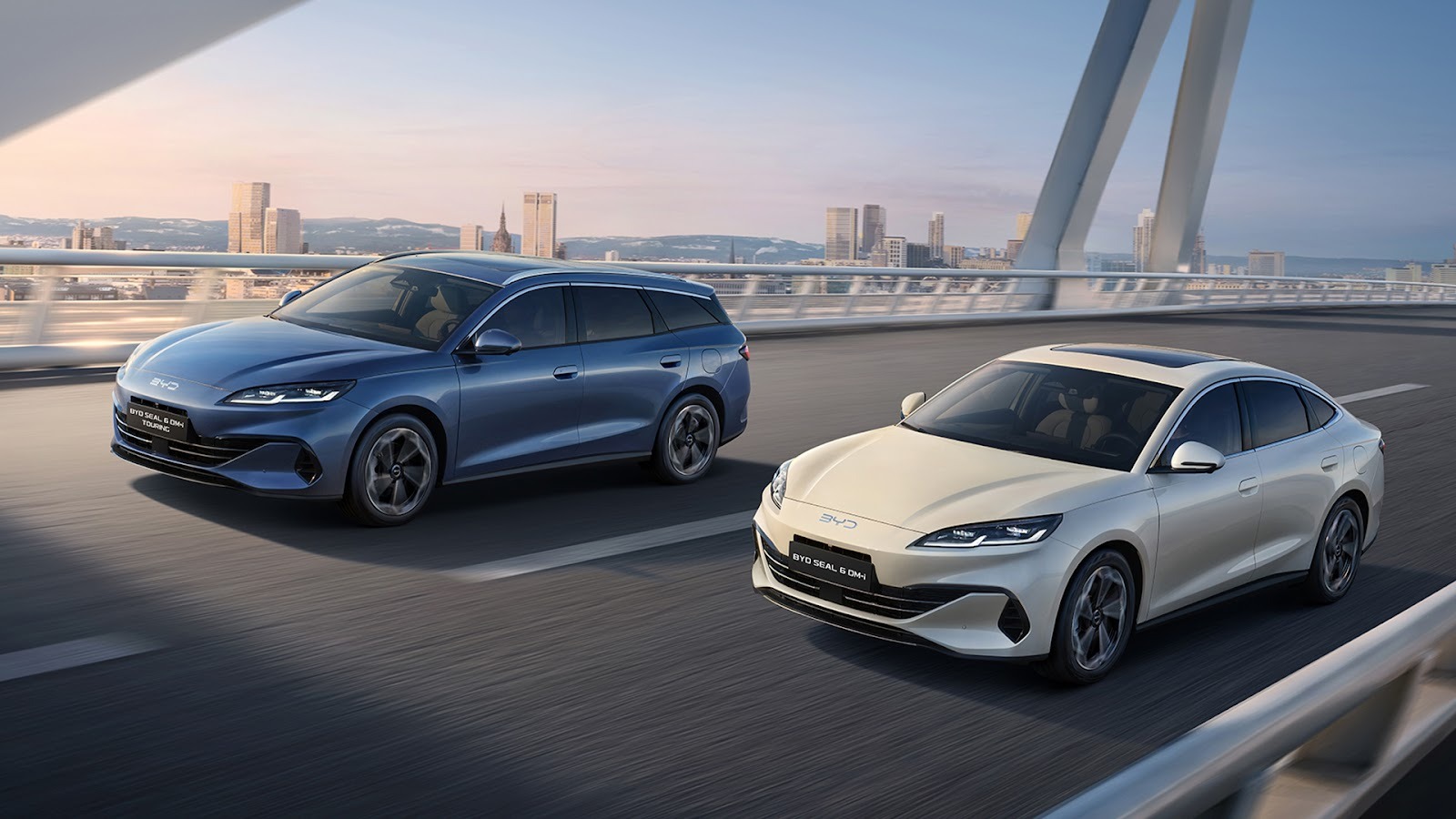
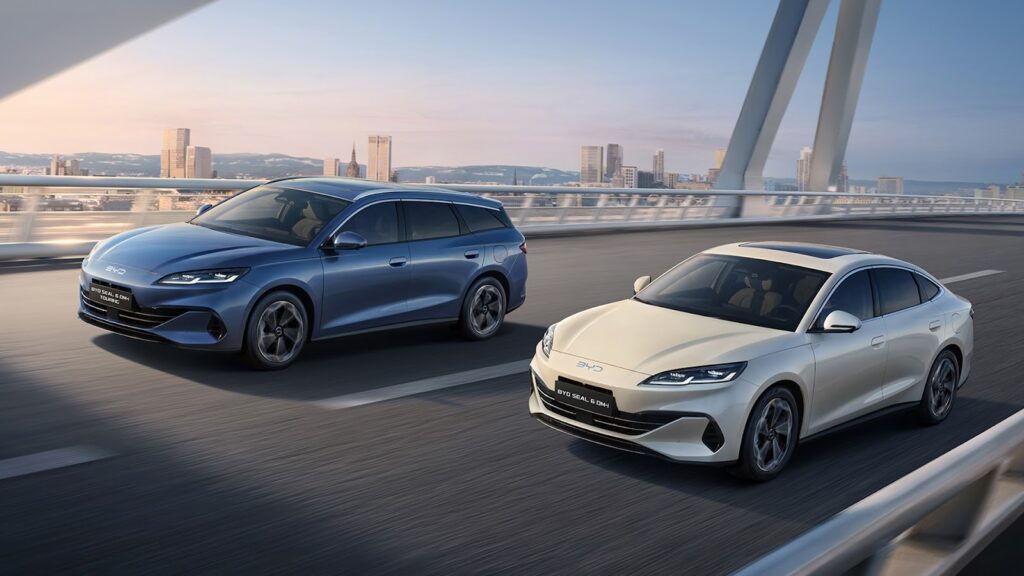
    Last year also saw the arrival of a number of ground-breaking new models from the Chinese brand. The ATTO 2, an urban SUV with city-friendly dimensions, available in electric and DM Super Hybrid versions, the SEAL 6 DM-i and SEAL 6 DM-i Touring, saloon and estate cars with a range of up to 1,505 km, and the SEALION 5 DM-i, a family SUV with a combined range of 1,016 km, all saw the light of day in 2025.

    Source : BYD

    At the same time, BYD is continuing to expand its network, reaching almost 90 sales outlets by the end of 2025, with a clear target of 200 dealerships by 2026.

    2026: Upmarket and technological acceleration

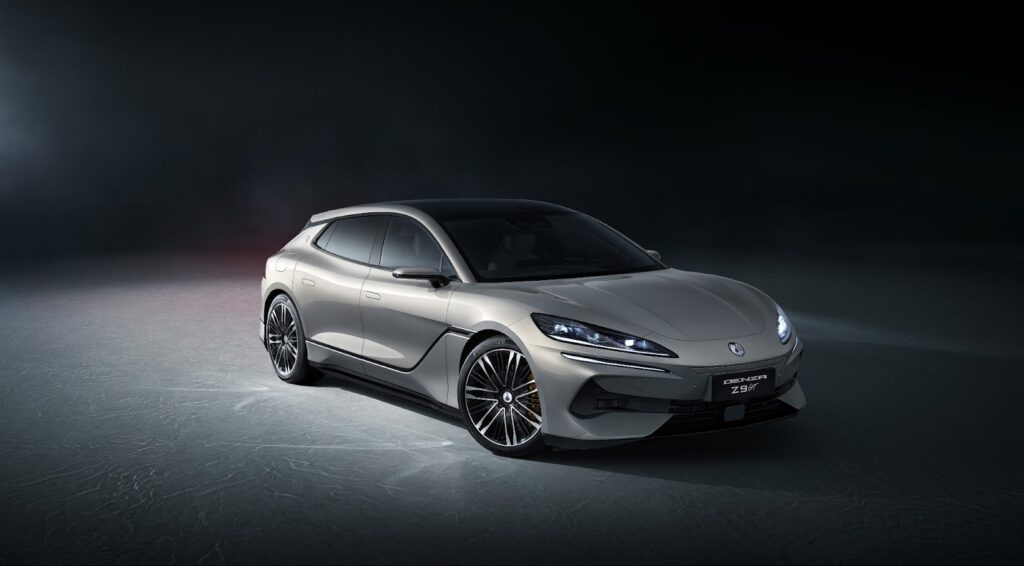
    And the year ahead will see BYD do even more. In 2026, the premium DENZA brand will be launched in France, spearheaded by the Z9GT, developed specifically for the European market. Added to this is the roll-out of the Flash Charging network, capable of reaching 1,000 kW and recovering up to 400 km of range in 5 minutes.

    Source : BYD

    “In just one year, we have almost trebled our sales in France and recorded almost 4,000 orders in December alone,” points out Dorothée Bonassies, Managing Director of BYD France. “A solid base from which to continue our development.

    Hybrids as a gateway to electric vehicles

    As the first carmaker in the world to abandon pure combustion engines, BYD is capitalising on its Blade batteries, e-Platform 3.0 and DM-i technologies to establish itself in a French market that is still in transition. By 2025, the brand has demonstrated that plug-in hybrids can accelerate electromobility.

  • OMODA & JAECOO come to France: 74 dealerships from spring 2026, target 130 outlets

    OMODA & JAECOO come to France: 74 dealerships from spring 2026, target 130 outlets

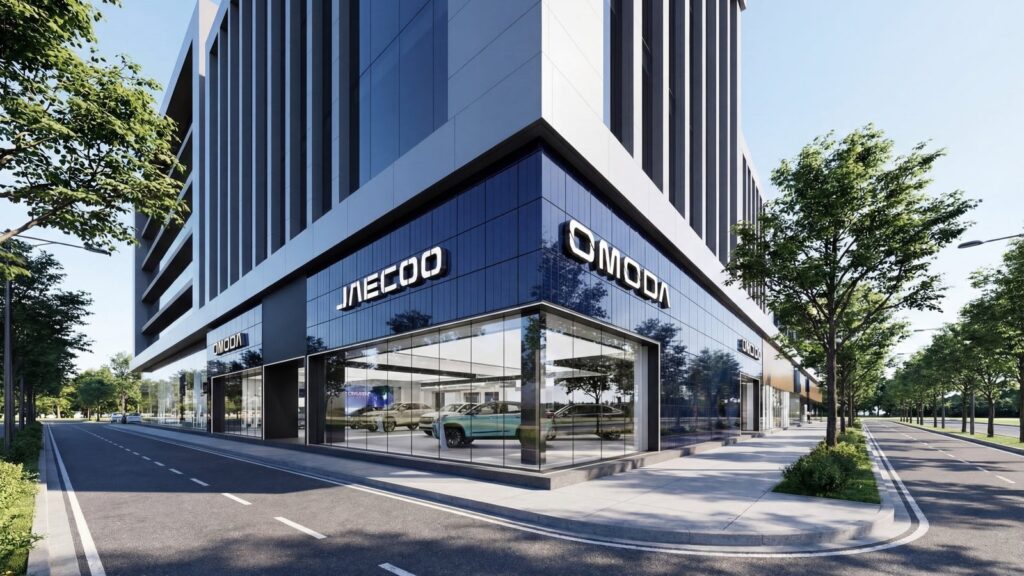
    As the French automotive market continues its transition to electrification, OMODA & JAECOO, a subsidiary of the Chinese Chery group, have chosen to deploy a dense, structured network to support the commercial launch as effectively as possible. From spring 2026, 74 dealerships and approved repairers will be operational in France, with a clear ambition of 130 sales outlets by the end of the year.

    source: OMODA & JAECOO

    A highly developed national network

    OMODA & JAECOO have already made their mark throughout France. From major cities to strategic regional areas, everyone in France will have a brand new dealership nearby. For example, major French cities such as Paris, Lyon, Marseille, Lille, Toulouse, Bordeaux and Nantes will be set up alongside intermediate towns such as Bayonne, Niort, Quimper, Rodez and Mâcon, reflecting a clear determination to leave no territory behind.

    Significantly, the network also includes the French overseas territories, with dealerships planned for Guadeloupe, Martinique, French Guiana and La Réunion – a rare choice for a brand in its launch phase.

    source: OMODA & JAECOO

    The stated aim is clear: to guarantee, in the long term, a point of service within 45 minutes of each customer’s home.

    Standardised dealerships focused on the customer experience

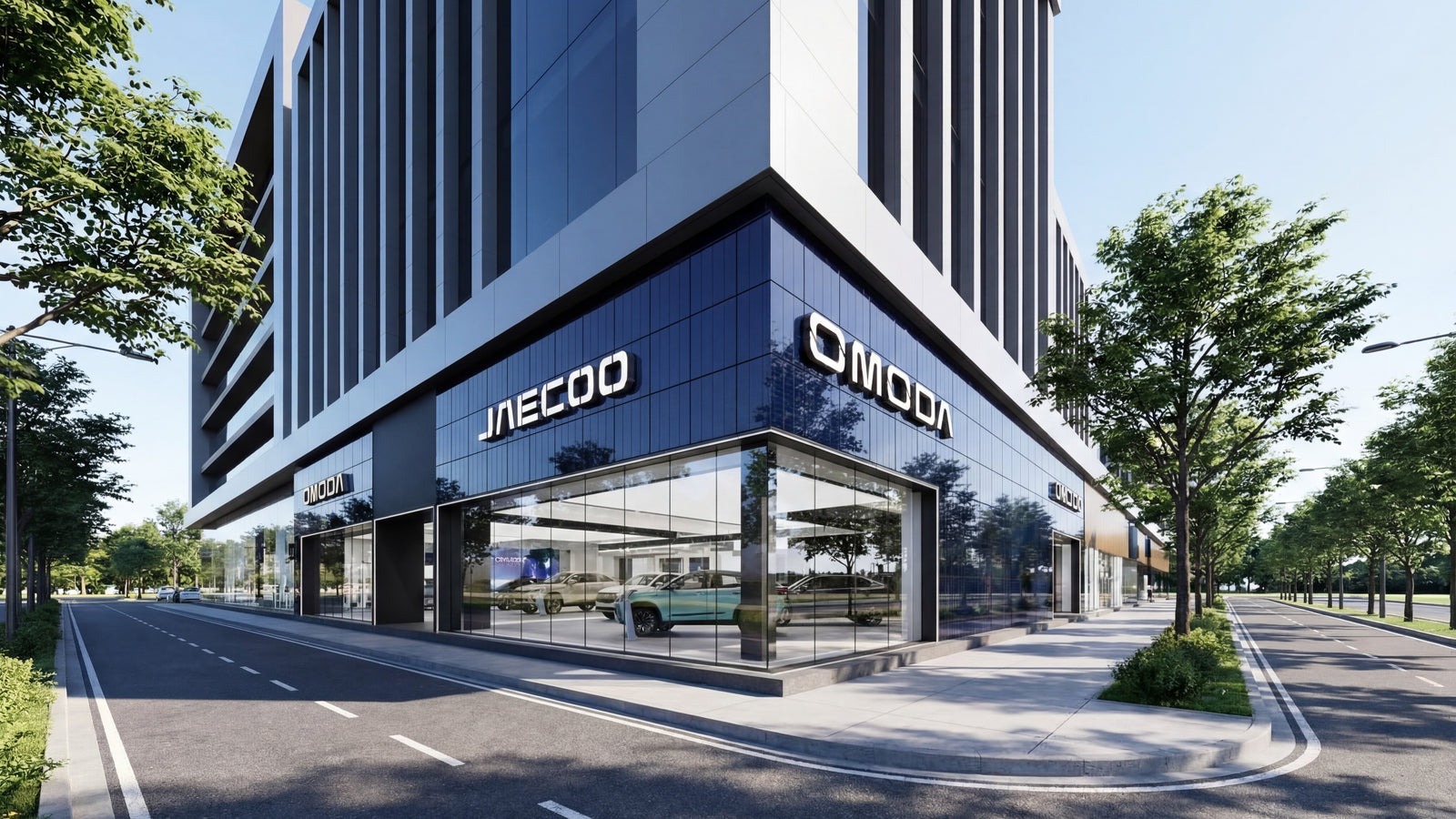
    According to the Chinese brand’s press release, each point of sale will comply with uniform standards, with immersive showrooms of at least 200 m² and dedicated after-sales workshops. For the group, this is an approach designed to ensure a “consistent experience”, wherever the purchase is made, and to reassure customers who are still sometimes wary of new entrants.

    “Our priority is to guarantee real proximity to our French customers, throughout the country. We’re not just looking for a geographical presence, but a relevant service”, says Antoine Roussel, OMODA & JAECOO France Sales and Network Development Director.

    Well-identified distribution groups

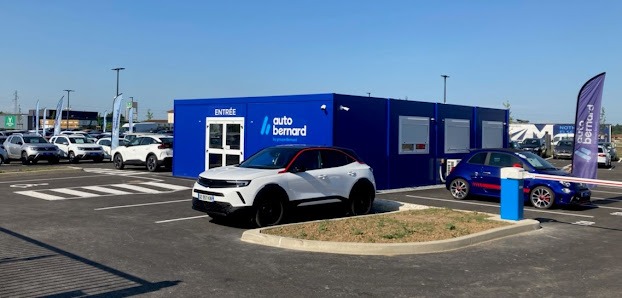
    According to the press release, the strength of this XXL roll-out in France will lie in the quality of the partners selected. OMODA & JAECOO are relying on distribution groups that are already well established, often multi-site and experienced, such as Autobernard, Deffeuille, DMD, Elypse, Faurie, Grim, Hecquet, Lempereur, LG, Loret, Nedey, Passion, Péricaud, PLD, Polmar, Porte Dauphine, Vauban, Rousseau, Scala Auto and Thivolle.

    These are well-known names on the French automotive scene, guaranteeing stability, expertise and mastery of the aftersales market, particularly in business sales.

    source : Autobernard

    And on the financing side, to secure the launch, the brand has also entered into a partnership with CGI Finance, which is responsible for financing distributor stocks.

    A 100% electrified range designed for Europe

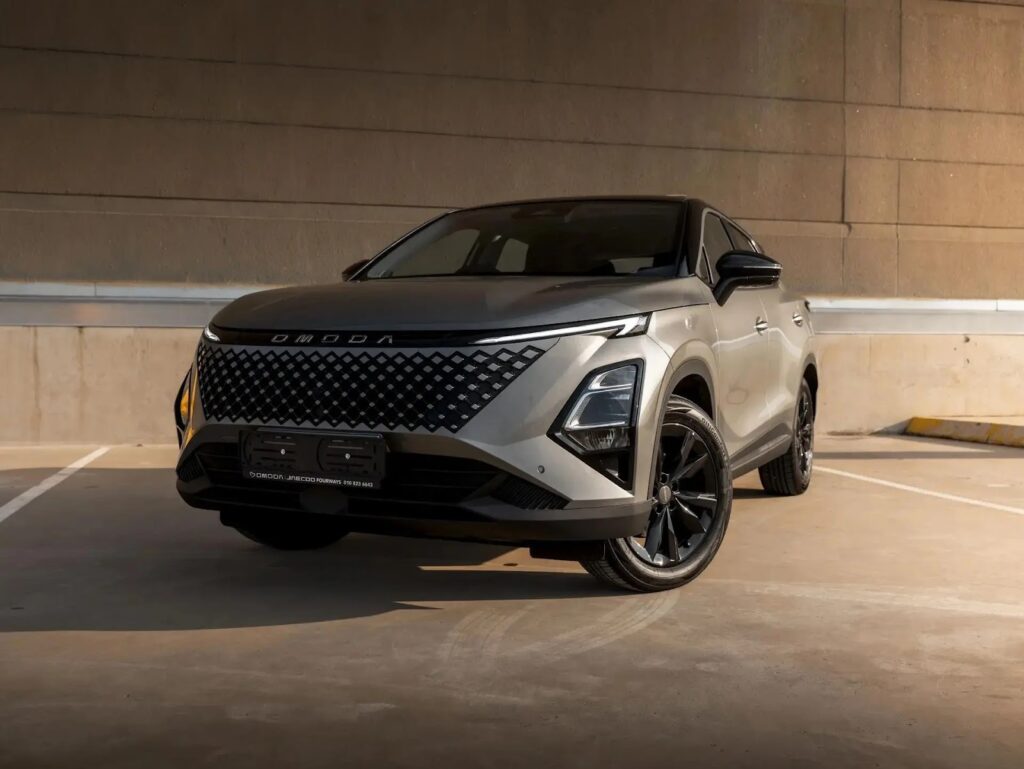
    In terms of products, OMODA & JAECOO are focusing on a fully electrified range, developed specifically for European use. OMODA’s crossovers offer comfort and technology, while JAECOO’s SUVs are more robust and versatile, equally at home in urban environments or off the beaten track.

    source: Omoda.co

    Advanced driver assistance technologies, next-generation connectivity and a strong design are the pillars of this product offensive.

    “The French market is a benchmark for high standards and innovation. We are convinced that our technological approach, our quality standards and our network will bring new value to French motorists”, explains Hanbang Yu, Managing Director of Chery France.

    source: TopGear

    A long-awaited launch in spring 2026

    The first dealerships are due to open in spring 2026, marking the official start of sales in France. With a target of 130 sales outlets by the end of 2026, OMODA & JAECOO aim to establish themselves rapidly as a credible new player on the French electrified car scene, focusing as much on the product as on the service.