Category: News

  • XPeng begins production of its first mass-produced robotaxi and steps up its efforts in autonomous driving

    XPeng begins production of its first mass-produced robotaxi and steps up its efforts in autonomous driving

    The Chinese manufacturer has just rolled the first mass-produced model of its Robotaxi off the production line in Guangzhou. For XPeng, this is more than just a new vehicle; it represents a step towards the commercial roll-out of its autonomous driving services.

    source: XPeng

    A major milestone for XPeng

    On 18 May 2026, XPeng officially announced the roll-off of its first mass-produced robotaxi from the production line at its Guangzhou plant. The announcement marks a new milestone for the Chinese manufacturer, which is already established in the electric vehicle market but is now looking to accelerate its expansion into the autonomous mobility sector.

    The company explains that this marks the first time in China that a car manufacturer has succeeded in mass-producing a robotaxi developed entirely in-house. XPeng is not just referring to the assembly of the vehicle, but to the entire technological chain, from microchips to autonomous driving software.

    The model is based on the new GX platform and has been designed to meet Level 4 (L4) autonomous driving standards. In practical terms, this means that the vehicle can navigate defined areas on its own without human intervention.

    source: XPeng

    This project has been in the pipeline since January 2026, when XPeng was granted a road testing permit in Guangzhou. In March, the company established its Robotaxi business unit to oversee product development, R&D testing and operations, thereby accelerating the commercialisation roadmap.

    A technical strategy that differs from that of several competitors

    One of the major new developments that might (on paper) give sceptics of autonomous driving cause for concern is that, from a technical standpoint, XPeng is taking a different approach to most other players in the sector.

    Indeed, whilst many robotaxis rely on LiDAR sensors and highly detailed high-definition maps, XPeng has opted for an approach known as “Vision-Language-Action”. The vehicle relies primarily on cameras and its VLA 2.0 artificial intelligence model to interpret its surroundings and make decisions.

    source: XPeng

    The manufacturer claims that this architecture reduces the system’s response time to less than 80 milliseconds. The Robotaxi also features four in-house Turing AI chips, which deliver a claimed computing power of 3,000 TOPS.

    XPeng’s stated aim is also to simplify the roll-out of the vehicle in different cities. By reducing its reliance on highly detailed city maps, the manufacturer believes it can speed up any future expansion into other markets.

    This approach is nevertheless being closely monitored. Some industry players still regard LiDAR sensors as an additional safety measure in certain more complex situations, such as dense fog, heavy rain or poor lighting conditions. In response to this, the company emphasises a dual-redundancy hardware architecture to ensure proper operation in the event of a failure in one of the systems.

    source: XPeng

    An interior designed for driverless journeys

    With no driver on board, the brand with the X logo has taken the liberty of altering the vehicle’s interior layout as well.

    XPeng explains that it has focused more on the passenger experience, incorporating a range of special features such as variable-tint windows, ‘zero-gravity’ seats and screens for rear-seat passengers.
    The vehicle also features a voice assistant that allows you to control various functions, such as vehicle settings and certain multimedia features, whilst on the move. The aim is quite simple: to transform the cabin into a space that is more focused on transport and less on the traditional driving experience.

    China is stepping up its efforts in the robotaxi market, in the absence of Europe

    This announcement is part of a broader trend in which China has been seeking for several years to establish a dominant position in autonomous driving, having already significantly consolidated its lead in electric vehicles.

    XPeng is thus joining an already well-established ecosystem, alongside players such as Baidu with its Apollo Go service, as well as Pony.ai and WeRide. All are now moving towards the same goal: moving beyond the testing phase and into the gradual roll-out of robotaxi fleets.

    source: XPeng

    This acceleration stands in contrast to the situation in Europe. Whilst the continent had already fallen behind in the electric vehicle value chain – particularly in batteries, key components and certain in-car software – it now also appears to be lagging behind in Level 4 autonomous driving. Trials are taking place, but they remain limited.

    Conversely, China and the United States are already establishing large-scale services, with rising order volumes and strategies for territorial expansion. Against this backdrop, Europe’s long-term technological dependence is likely to continue.

    Trials this year, with a target set for 2027

    XPeng plans to launch pilot schemes in the second half of 2026 to assess several aspects: technical reliability, user feedback and the economic viability of the service.

    The manufacturer is then aiming for fully autonomous operation without a safety operator on board from 2027.

  • Mercedes-AMG unveils its first all-electric GT: a spectacular four-door coupé with nearly 1,200 hp!

    Mercedes-AMG unveils its first all-electric GT: a spectacular four-door coupé with nearly 1,200 hp!

    Mercedes and its AMG sports division are making the leap into electric motoring with the unveiling of an impressive grand tourer: the AMG GT 4-door. The German tuning firm has developed an innovative architecture, a high-performance battery based on Formula 1 technology, and a triple-motor setup to enable this pure-bred sports car to deliver up to 1,169 hp (860 kW) of maximum power. The performance of this new benchmark in the segment promises to reach new heights, such as accelerating from 0 to 100 km/h in just 2.1 seconds!

    A masterpiece of engineering

    Mercedes was expected to unveil the electrified versions of its ultra-sporty models developed by its tuning division, AMG. The four-door GT coupé, which has just been unveiled in Los Angeles, is truly impressive. Building on the CONCEPT AMG GT XX technology demonstrator presented last year, the production model looks set to become the benchmark in the high-performance electric segment. There are numerous innovations, starting with the AMG.EA architecture, specially developed in Affalterbach, which features an all-wheel-drive concept with three ‘axial-flow’ motors (two on the rear axle, one at the front) combined with a high-performance battery. This 800-volt battery incorporates some of the components found in the battery pack used in F1, with directly cooled cylindrical cells (thanks to a liquid that circulates continuously between the cells). This unique battery allows for better energy absorption, and the power density delivered is higher than normal. Advantages: it can deliver rapid, sustained and reproducible instantaneous power. Mercedes thus promises sprint performance over marathon distances, often the weak point of electric power compared to combustion engines.

    Performance on a par with the finest supercars

    The combination of the three more compact engines thus delivers up to 860 kW of power – the equivalent of 1,169 hp – and a massive 2,000 Nm of torque. In its sportiest configuration, the AMG GT 4-door is capable of accelerating from 0 to 100 km/h in 2.1 seconds and from 0 to 200 km/h in 6.4 seconds. The top speed is 300 km/h, provided the ‘AMG Driver’s Package’ is selected. The ‘boost’ provided by the electric power lasts for over a minute continuously. Alongside these figures, worthy of the finest supercars, come encouraging results in terms of range, AMG’s other key focus in electric vehicles. The development of the AMG XX Concept prototype recently proved this. At the Nardo test track in Italy, the vehicle completed a “round-the-world” journey at very high speed, covering more than 40,000 kilometres (without stopping, except to recharge), in 7 days and 13 hours. This achievement validated the technological choices made and broke 25 electric long-distance records along the way. As a result, “with the AMG GT 4-door Coupé, we are taking performance and endurance to a whole new level and pushing the boundaries of electric mobility,” says Jörg Burzer, Chief Technology Officer at Mercedes-AMG. 
    Charging speed and driving experience

    Mercedes-AMG has also focused on reducing the time spent at the charging station. Thanks to a 600 kW capacity (optional AMG Performance Charger), the charging speed allows for 460 km of range to be restored in 10 minutes. The standard charging cycle from 10% to 80% takes just 11 minutes. Spending as little time as possible at the charging point is, in fact, the other key challenge for an electric GT. It is worth noting that the battery capacity is 106 kWh net.
    In terms of the driving experience, Mercedes has developed the AMG Race Engineer. This is a suite of connected software designed for drivers who wish to make the most of the car’s dynamics in line with their driving style. Whether it’s throttle response, traction or cornering behaviour, three dials on the centre console allow the desired level of response to be adjusted across nine settings. Combined with these settings, the AMG Active Ride Control suspension offers optimal weight distribution, semi-active roll stabilisation and maintains a balanced road holding that strikes a balance between the rigidity expected of a sports car and the comfort of a grand tourer. Together, these electronic systems enhance the agility of a very heavy (2,460 kg kerb weight) and long (5.09 m, with a wheelbase of over 3 m) car and should make it easier to handle dynamically, particularly on the track.

    Athletic and aerodynamic design 

    In terms of styling, the AMG-GT 4-door coupé boasts an athletic and sporty design: with taut lines and the active Aerokinetic system to maximise downforce, the drag coefficient is 0.22, a level of aerodynamic efficiency that helps keep fuel consumption low (around 21 kWh/100 km). 

    Inside the cabin, the atmosphere is high-tech and sporty (backlit air vents, carbon fibre trim). The ergonomics are designed around the driver, who sits very low and faces a flat-bottomed multifunction steering wheel with touch controls and rotary knobs for selecting the driving mode without taking their eyes off the road. Three screens span the full width of the dashboard, serving both driver and passenger, highlighting the blend of cutting-edge technology that bridges the gap between extreme sport and ultimate luxury.

    Two versions of the electric AMG GT

    On a more light-hearted note, an artificial V8 engine sound is played through the speakers. This immersive sound, which includes a brief interruption in power delivery with every simulated gear change, promises to be authentic enough to satisfy fans of powerful V8s. Whether that’s the case is down to individual taste.

    Mercedes is launching two versions of this four-door AMG GT. The sportier AMG 63 delivers a constant 721 hp and a range of just under 600 km. The GT 55 version, meanwhile, offers a constant 510 hp and a longer range (up to 700 km). Both are powered by the fully variable 4Matic+ all-wheel-drive system.

    Towards a new era 

    Whilst the price of this AMG-GT four-door coupé is not yet known, it is expected to go on sale in a few days’ time. This new model, which is already being billed as ‘iconic’, is therefore Mercedes’ response – a rather convincing one on paper – to Porsche, Tesla, Xiaomi and YangWang (BYD). These manufacturers all present a different vision of high-performance electric vehicles. But what they have in common is proving that electric power can deliver unprecedented and radical driving experiences thanks to innovative technology and revolutionary designs, with the aim of ushering in a new era – provided customers are on board…

  • Stellantis is preparing a new generation of low-cost small electric cars for Europe

    Stellantis is preparing a new generation of low-cost small electric cars for Europe

    Stellantis has announced the launch of Project E-Car, a programme aimed at developing a new generation of small electric cars manufactured in Europe. Expected from 2028 onwards, these future models are set to enable the group to re-enter a segment that has gradually been neglected in recent years: that of affordable city cars.

    source: Simon Wohlfahrt / AFP

    A project rather than a one-size-fits-all approach

    Over the past few years, European car manufacturers have gradually moved away from the most affordable models in favour of larger, more profitable vehicles. As a result, the range of affordable small cars available in Europe has shrunk significantly.

    With its E-Car project, Stellantis has announced its intention to return to this historic market. But contrary to what the name might suggest, this is not a single model. Instead, the group describes E-Car as a new family of compact and affordable electric vehicles, set to be produced by several brands in its portfolio.

    In its press release, the manufacturer describes these future vehicles as “electric, compact, innovative and affordable” models, developed with a view to “mobility for all”.

    source: Stellantis

    In particular, the group aims to address a market reality: affordable small cars have gradually become scarce in Europe, leaving a gap between city cars and more versatile—but also more expensive—models.

    A return to Stellantis’s historical roots

    The announcement also marks a return to basics for several of the group’s brands. For decades, Fiat, Citroën and Opel have built part of their identity on simple, compact vehicles designed for the masses. Notable examples include the Fiat Panda and Fiat 500 at Fiat, the Citroën 2CV and Citroën AX at Citroën, and the Opel Corsa at Opel. These cars have long been based on a fairly similar formula: compact dimensions and controlled costs. But in recent years, manufacturers have gradually shifted their focus towards larger, more profitable models.

    source: Stellantis

    Antonio Filosa, CEO of Stellantis, highlights this very point in the press release: “Customers want to see a return to stylish small cars, proudly manufactured in Europe, that are both affordable and environmentally friendly.”

    The E-Car project therefore appears to be seeking to revive this philosophy, albeit adapted to the current constraints of electric vehicles.

    source: Citroenvie

    Several brands could be affected

    Stellantis confirms in its press release that several brands will be involved in the project, without specifying which ones. There is already much speculation about which brands are most likely to use this future architecture.

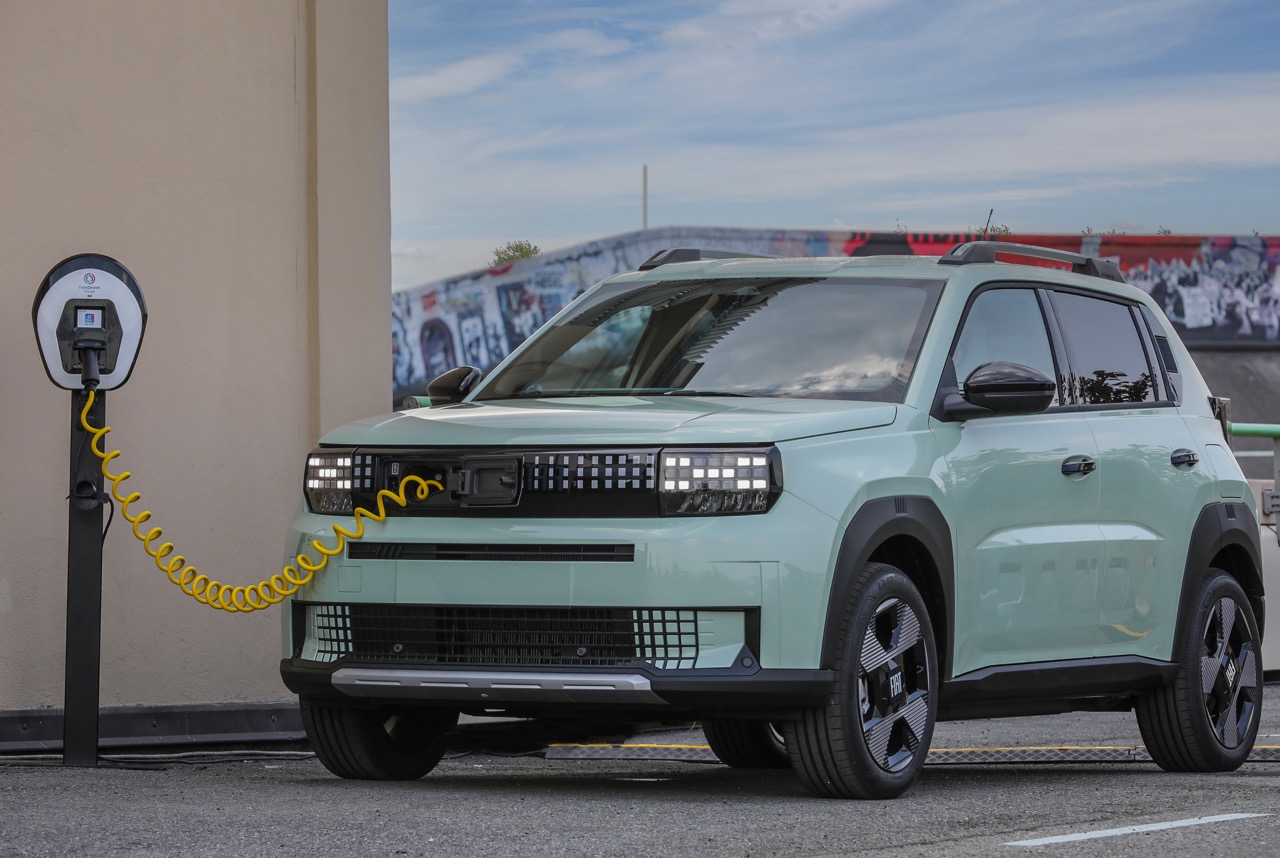
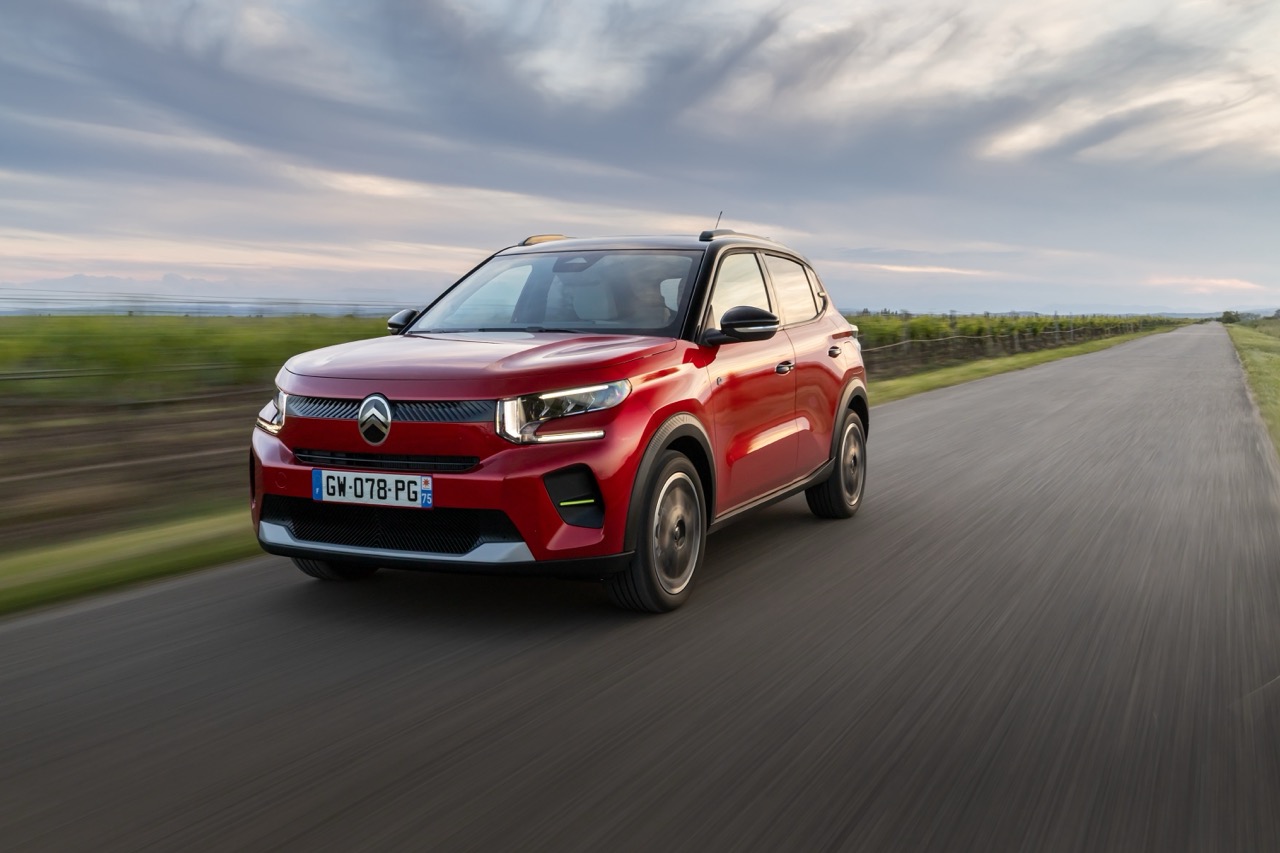
    At Fiat, some are speculating about a future successor to the Fiat Panda or the current Pandina. At Citroën, these future models could potentially fill the gap between the Citroën Ami and the Citroën ë-C3. Opel could also be involved.

    source: Stellantis

    Production is scheduled to begin in Italy from 2028

    Whilst we do not yet know much about these future “low-cost” vehicles, what we do know for certain is that the first vehicles to emerge from the E-Car project will be produced from 2028 onwards at the Pomigliano d’Arco plant in Italy.

    This seems like a sensible choice given the factory’s track record. Indeed, it has a long history of manufacturing popular, high-volume models. It was here, in particular, that certain generations of the Fiat Panda were produced.

    Stellantis says it intends to capitalise on this industrial expertise in order to handle potentially large volumes.

    source: Stellantis

    A response to the new dynamics of the European market

    The launch of the E-Car project comes at a time when several manufacturers are gradually returning to the small electric car segment.

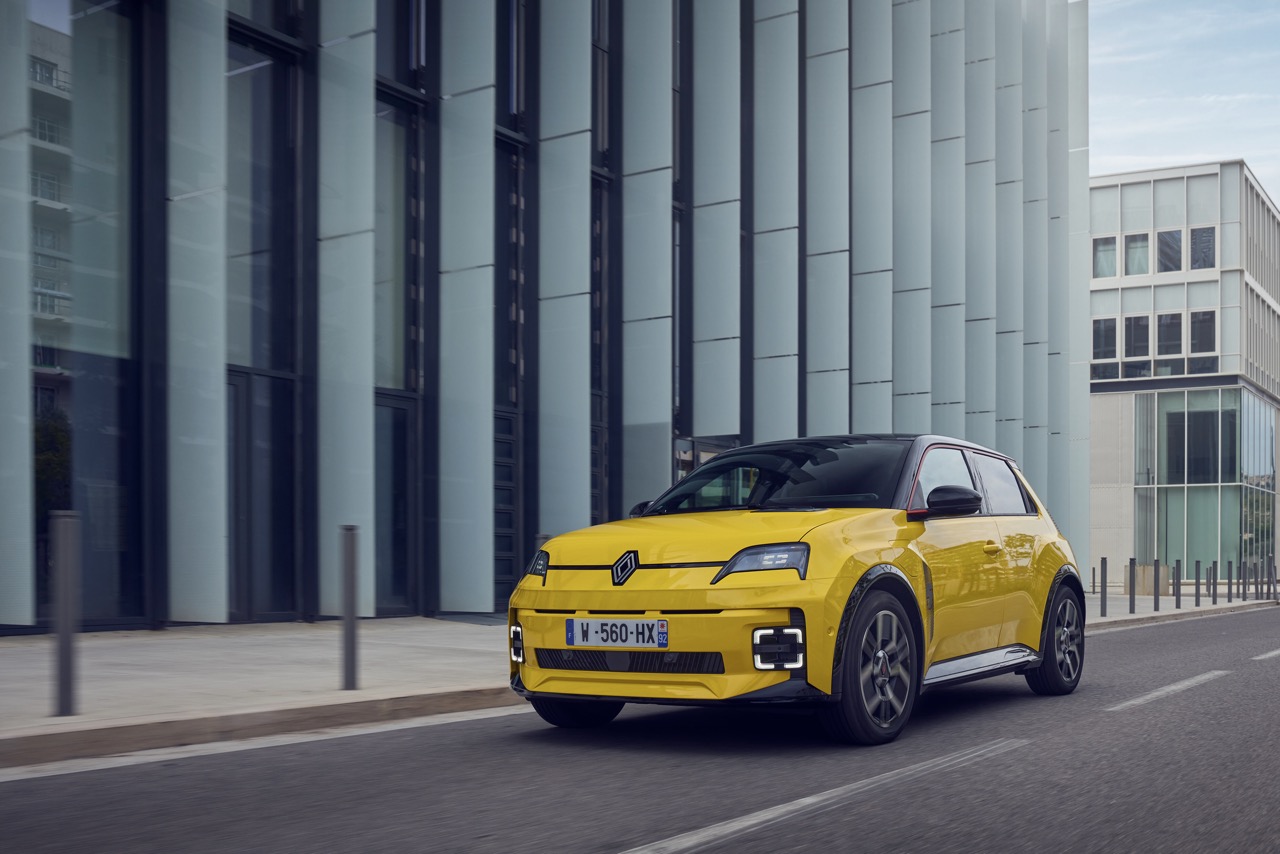
    Indeed, at Renault, it is the Renault Twingo E-Tech that occupies this segment, whilst at neighbouring German manufacturer Volkswagen, it has been announced that a more affordable electric city car is set to be launched.

    At the same time, Chinese manufacturers are continuing to make headway with electric vehicles offered at competitive prices. Notable examples include the BYD Dolphin and the BYD Seagull from BYD, the MG4 Electric from MG, and the Leapmotor T03, which is distributed in Europe via Stellantis.

    For Stellantis, these future electric cars could therefore also serve as an industrial and commercial response to this new competition.

    source: Stellantis

    The price is still unknown, but the direction seems clear

    At present, Stellantis has not released any information regarding range, battery capacity or performance. The manufacturer simply promises “cutting-edge electric technologies” developed in collaboration with various partners in order to speed up the time to market.

    No official price has been announced either. However, several analyses suggest a price point that could approach the €15,000 mark, a threshold that has become particularly strategic in the European market for small electric cars.

    For now, the announcement mainly marks the launch of an industrial project. As for the future models, they are yet to be revealed.

  • BMW is relaunching ALPINA with a spectacular 5.2-metre luxury coupé

    BMW is relaunching ALPINA with a spectacular 5.2-metre luxury coupé

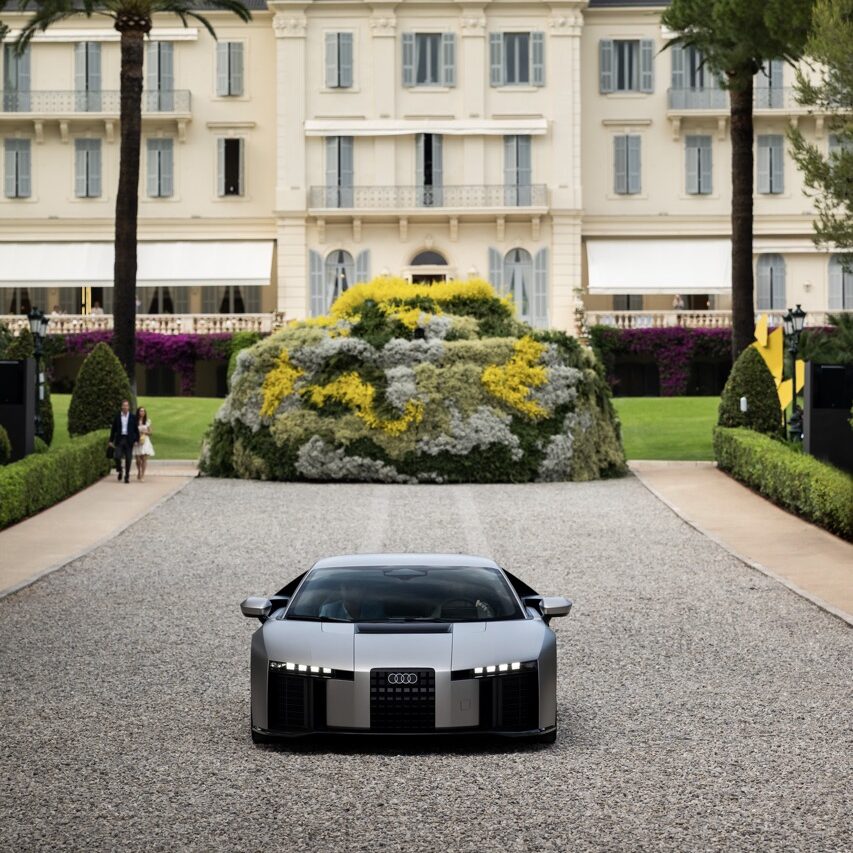
    Four years after acquiring ALPINA, BMW has finally unveiled its concrete vision for the brand’s future. Unveiled at the 2026 Concorso d’Eleganza Villa d’Este, the BMW ALPINA Vision is more than just a concept car: it outlines the new identity of a brand set to position itself between BMW and Rolls-Royce, with a distinctive blend of performance, comfort and understated luxury at its core.

    source: BMW

    The BMW ALPINA Vision seems to be taking a different approach.

    BMW has probably just answered a question that many enthusiasts have been asking themselves for several years: what will the ALPINA of the future actually look like?

    Since the announcement of BMW’s takeover of the German manufacturer in 2022, followed by its official integration into the group in 2026, the brand’s future has been the subject of much speculation. Some feared a gradual dilution of its identity, whilst others were already imagining it as nothing more than a luxury version of existing BMW models.

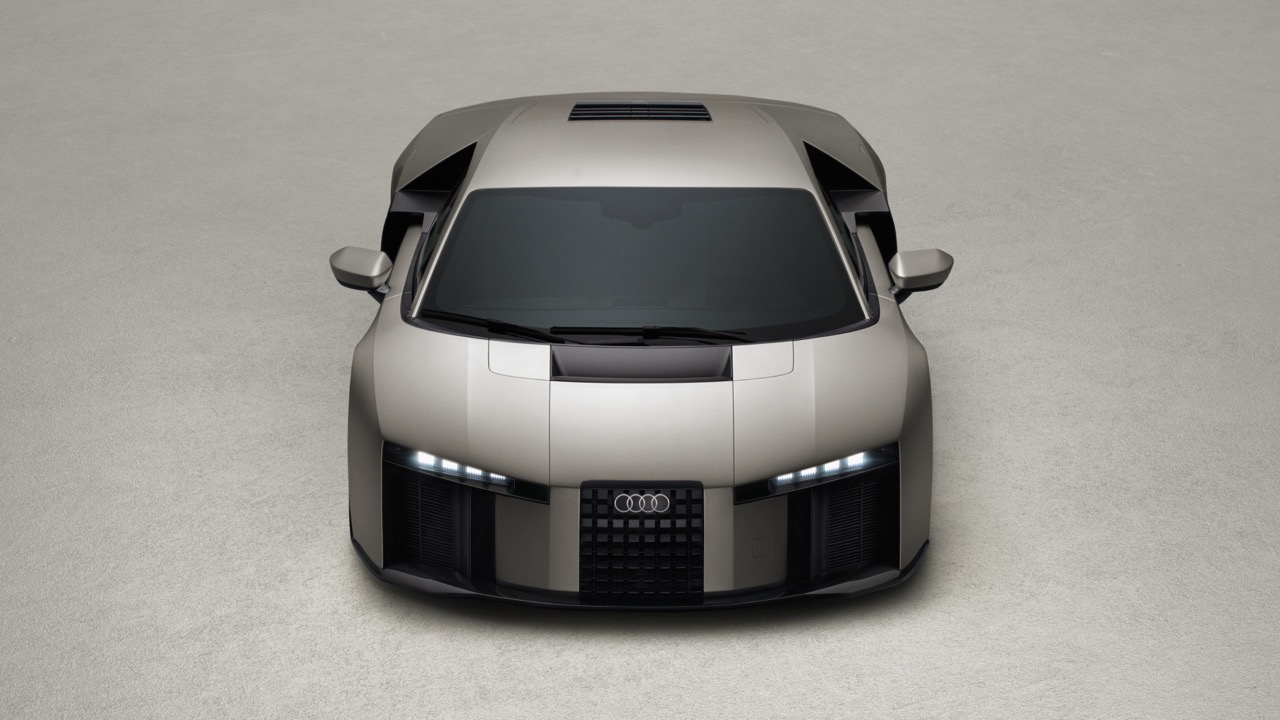
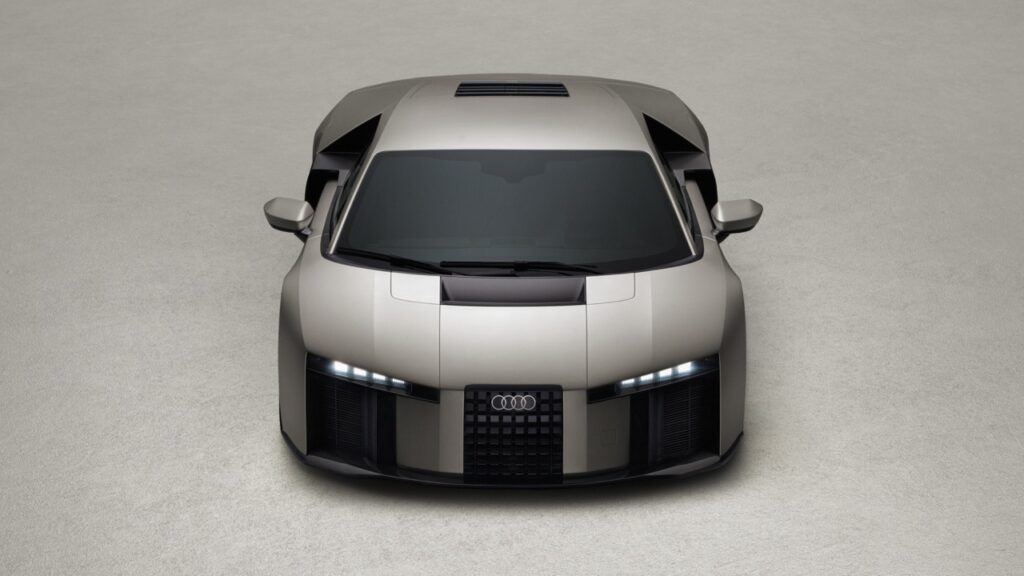
    We’ve known more since 18 May 2026, at the Villa d’Este Concours d’Élégance. A concept car was unveiled, taking the form of an imposing coupé measuring 5.20 metres in length. Its silhouette is reminiscent in some respects of the 8 Series, which is set to be discontinued with no real replacement announced as yet. 

    source: BMW

    More than just a top-of-the-range BMW: a new collaboration between BMW and Rolls-Royce

    The ambition is now much clearer than before: BMW wants to position ALPINA as a brand that bridges the gap between its traditional premium models and Rolls-Royce.

    Oliver Viellechner, Head of BMW ALPINA, said: “BMW ALPINA occupies a unique position within our portfolio, between BMW and Rolls-Royce, at a time when we are seeing growing potential in the high-end luxury segment.”

    source: LinkedIn

    The positioning is particularly interesting. On the one hand, BMW already has top-of-the-range models such as the 7 Series and X7. On the other, Rolls-Royce remains positioned in an ultra-luxury segment where the passenger experience far outweighs the driving experience.

    ALPINA will now have to occupy this middle ground: more exclusive than a standard BMW, yet more focused on driving pleasure than a Rolls-Royce. This also indirectly brings the German group’s strategy closer to that of Mercedes with Maybach.

    A design that revives several of the brand’s historic design elements

    Visually, BMW has not sought to create a complete break with the past; on the contrary, the BMW ALPINA Vision is full of historical references.

    The long bonnet, the elongated roofline, the low-slung proportions and the famous shark nose are immediately reminiscent of certain BMWs from the 1970s, particularly the early E24 6 Series models.

    source: carjager

    The famous ALPINA 20-spoke alloy wheels are also making a comeback, as are the side trim strips that have featured on the brand’s models since the 1970s.

    But bear in mind, this is 2026, so the approach is much more modern. Decorative lines are now integrated directly beneath the paintwork, the exterior surfaces feature carefully crafted contrasts between dark metallic finishes and lighter shades – likely inspired by details from historic models such as the BMW 507 – and the light signatures have become extremely slim.

    source: BMW

    Maximilian Missoni, Head of Design at BMW ALPINA, explains this philosophy: “Every detail reflects a genuine quest for substance, whether in terms of engineering, materials or the story the vehicle tells.” The idea, therefore, is not to pile on ostentatious features, but rather to offer a more understated form of luxury.

    source: BMW

    An interior designed more for grand touring than as a showcase for technology

    This philosophy is also evident inside the car, where the cabin is designed with a clear focus on comfort and long-distance driving. The interior architecture is based on clearly defined spaces, with a distinct separation between the different zones, rather than a fully digitalised or uniform design. It features the new BMW Panoramic iDrive interface from the Neue Klasse range, which combines a head-up display at the base of the windscreen with a central screen that spans the full width of the dashboard, creating a sense of visual continuity.

    source: BMW

    The coupé’s generous 5.20-metre wheelbase allows for a genuine four-seater layout, with particular attention paid to the rear seats, which are designed for long journeys rather than occasional use. The front seats, which are more enveloping, follow the same low, stretched design philosophy, in keeping with the vehicle’s overall silhouette. The materials follow the same approach, featuring full-grain leather sourced from suppliers in the Alpine region and metal elements finished in a style inspired by watchmaking, combining satin and polished surfaces.

    source: BMW

    Certain features complement this ensemble in a more specific way, such as the integration at the rear of the centre console of a glass water bottle accompanied by BMW ALPINA crystal glasses, which are automatically deployed. This feature is consistent with the concept’s design philosophy, in which functional elements are treated with a particular level of finish. The press release links these features to a long-standing brand philosophy, inherited from Burkard Bovensiepen, according to which in-car comfort is directly linked to the driver’s ability to concentrate and perform.

    source: BMW

    A V8 under the bonnet, but the door is open to electrification

    Beneath its massive bonnet, the BMW ALPINA Vision currently suggests a V8 engine, which is being touted as the benchmark internal combustion engine for this concept. BMW is, however, deliberately keeping a low profile: no official figures on power or performance have been released. 

    And this is precisely where this concept really comes into its own, as it is, above all, a design study that marks the start of a new chapter for ALPINA within the BMW Group. 

    source: BMW

    In this context, it is hard to imagine a future model in this segment without some form of hybridisation, or even a shift towards all-electric vehicles. BMW already has solid experience with these architectures, with hybrid models such as the M760e and the M5 plug-in hybrid, as well as high-end all-electric models such as the i7 and iX, which demonstrate the brand’s ability to combine performance, comfort and electrification. 

    All these factors suggest that a production version could well be part of this evolution, whilst retaining ALPINA’s distinctive grand touring DNA.

    source: BMW

    A concept car that gives us a glimpse of what’s to come

    As is often the case with BMW, a Vision concept is generally more than just a design exercise. These concepts often serve as a very close preview of future production models. The manufacturer has already confirmed that the first BMW ALPINA model to emerge from this new strategy will arrive as early as 2027, based on the future 7 Series.

  • Ford is preparing for its big comeback on the European market with a new range inspired by rallying

    Ford is preparing for its big comeback on the European market with a new range inspired by rallying

    Ford is going on the offensive again in the European market. After several years of holding back and restructuring, the American manufacturer has announced a major overhaul of its strategy, featuring a new generation of models designed specifically for European motorists. On the agenda: rally DNA, gradual electrification and ‘made in the EU’ production.

    A European range shaped by sporting heritage

    For over fifty years, Ford’s European division has built up a strong reputation in motorsport, particularly in rallying with the legendary Escort RS 1800 – world champion in 1979 – followed by the Sierra and various Focus RS WRC models. It is a legacy that the brand now aims to carry forward into its future vehicles, five of which will be launched for private customers by 2029. The aim is clear: to combine driving pleasure, precision and versatility, whether on mountain passes, cobbled city centres or winding country roads.

    A small Bronco to be produced in Spain from 2028

    One of the most talked-about announcements is the arrival of a new compact SUV from the Bronco family. This model, which is based on a ‘multi-energy’ platform, will be produced at Ford’s plant in Valencia, Spain, from 2028. More compact and more affordable than the current American Bronco models, this future SUV is aimed at the rapidly expanding market for urban crossovers with an adventurous look.

    Three electrified models with a strong personality

    In the medium term, among its other new models, Ford is promising a fully electric city car with a distinctive design. The brand recently signed a strategic partnership with the Renault Group to share the French manufacturing facility, the Douai plant in the Nord region, which already produces the R5. Also in development are a small, highly dynamic electric SUV inspired by the world of rallying and two multi-energy crossovers that will complete the range by the end of 2029.

    In a European market that has become extremely competitive, Ford needs to stand out and is banking on the sporty and emotional appeal that these future models can offer. “We don’t build vehicles to meet regulatory requirements; we build them for the users,” insists John Baumbick, President of Ford Europe, pointing to a few missteps in Europe’s transition to all-electric vehicles. Ford therefore believes that greater account must be taken of the reality of charging infrastructure, the pace of consumer adoption and the constraints faced by professionals and small businesses.

    Industrial partnerships at the heart of the strategy

    In particular, the manufacturer advocates an approach that relies more heavily on plug-in hybrids (PHEVs) and extended-range electric vehicles (EREVs), which are regarded as credible transitional solutions.

    This strategy is being launched alongside ‘Ready-Set-Ford’, a new global brand platform built on Ford’s expertise in productivity, performance and off-road adventures. In Europe, Ford will rely on major partnerships to remain competitive. These collaborations will help to speed up development cycles, share costs and secure supply chains across Europe. The US group will therefore strengthen its industrial ecosystem in Turkey, the UK and Morocco.

    A new European identity for Ford

    With this new strategy, Ford aims to turn the page on a difficult period in the European market. Following several years marked by restructuring and the discontinuation of iconic models such as the Fiesta and the Mondeo, the manufacturer is now seeking to rebuild a cohesive and emotive range. The combination of rally heritage, electrification and European production could enable Ford to reclaim a strong identity in the face of increasingly aggressive competition, particularly from Asia.

  • Volkswagen launches the ID Polo GTI and enters the fray in the small electric sports car market

    Volkswagen launches the ID Polo GTI and enters the fray in the small electric sports car market

    On the sidelines of the Nürburgring 24 Hours, Volkswagen unveiled the sporty version of the ID Polo bearing the famous GTI badge. With 226 hp and a 0–100 km/h time of under 7 seconds, the badge returns as a fully electric model, fifty years after the launch of the first car to bear these three now-legendary letters. Volkswagen thus joins Peugeot, Alpine, Opel and Lancia in the small EV sports car segment, with significant ambitions.

    The Polo GTi, building on 50 years of history 

    Having only just been launched, the ID Polo city car is already making a name for itself and has been awarded the famous GTi badge, first introduced in 1976 with the Golf. These three letters have always resonated with fans of small, agile, dynamic and accessible sports cars. Will the same be true of this electric ID Polo version? On paper, the specifications are impressive: a 166 kW motor delivering 226 hp to the front wheels, acceleration from 0 to 100 km/h in 6.8 seconds, and 290 Nm of torque distributed evenly thanks to a standard electronic limited-slip differential and an adaptive DCC sports chassis. Volkswagen promises a driving experience identical to that of a classic GTi, although the weight (1,540 kg) is increased by the 52 kWh NMC (nickel-manganese-cobalt) battery (approximately 424 km WLTP range).

    GTi button on the steering wheel 

    Unlike traditional GTis, which are more progressive in their handling, the electric version allows the car’s full dynamic potential to be unleashed at the touch of a new ‘GTi’ button on the steering wheel. The driving settings, steering and chassis settings are then instantly adjusted for maximum sportiness. In sport mode, the dashboard is bathed in bright colours and the displays change their graphic style. Furthermore, the brand’s designers have included numerous retro nods to the GTi lineage, such as red piping, a tartan pattern on the seats, and extensive red stitching on the dashboard, door panels and sports steering wheel. However, there is no mention of the return of an artificial engine sound in the cabin via the speakers.

    A rather understated design

    Aesthetically, the design remains faithful to the ID Polo, with its clean, balanced lines. The front bumper, side skirts and rear diffuser have been redesigned to create a more dynamic look. GTi badges are featured in various places on the Tornado Red bodywork, the historic GTi colour. The overhangs are short, the 19-inch alloy wheels are unique to this model, and the headlights feature ‘IQ Light’ matrix LED technology.

    The ID Polo GTi is based on the MEB+ platform, which is already used for the Cupra Raval. It will go on sale from next autumn, with prices starting at €39,000. 

    There’s plenty of choice when it comes to sporty electric city cars

    The ID Polo GTi is entering a rapidly growing market: small electric sports cars. Almost all manufacturers now have a model of this type in their range. The advantage is that these are ‘image’ cars; they are designed to prove to the public that electric vehicles can be fun and high-performance, whilst also offering manufacturers more comfortable profit margins. Among the stars of the segment are: 

    • Alpine A290: 220 hp, 300 Nm of torque, 0–100 km/h in 6.4 seconds. Price: from €41,700.
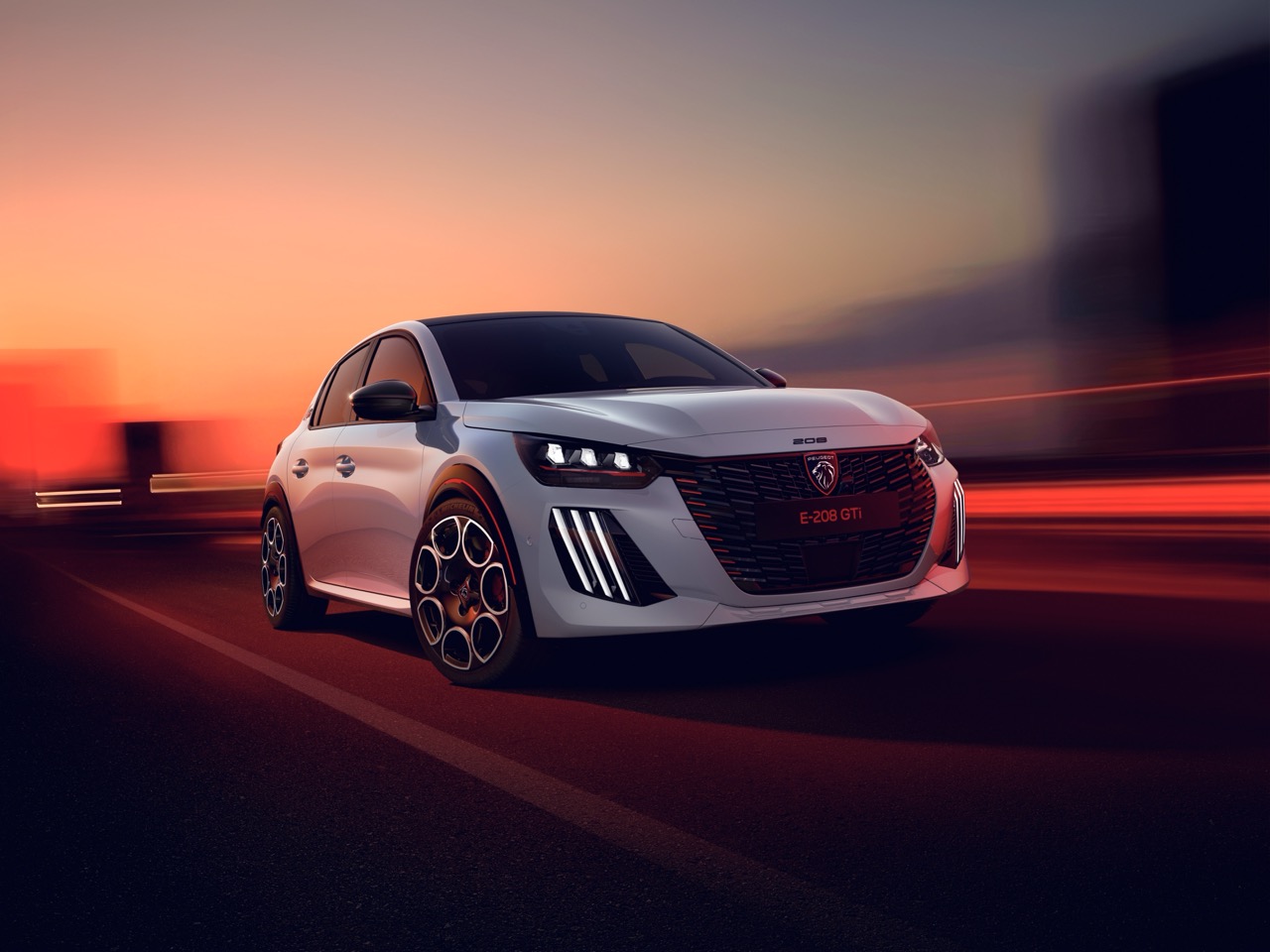
    • Peugeot e-208 GTi: 280 hp, 350 Nm of torque; it is based on the current e-208 (which is due to be replaced in 2026). Price: from €42,000.
    • Opel Corsa GSE: 281 hp, maximum torque of 285 Nm and 0–100 km/h in 5.5 seconds. Unveiled at the Paris Motor Show.
    • Lancia Ypsilon HF: 280 hp, top speed of 180 km/h and 0–100 km/h in 5.6 seconds. Price: €42,400
    • Cupra Raval VZ Extreme: 226 hp, 1,610 kg, 52 kWh battery. Price: from €45,500.
    • Ford Fiesta ST EV: an upcoming model, expected to be based on the Alpine A290 platform thanks to the industrial partnership between Renault and Ford.

    Niche market

    Following the gradual disappearance of GTis and small sports cars with combustion engines, there was a void to be filled in the hearts of enthusiasts and ‘fun-seeking’ customers. Cars that are suitable for everyday use, free from penalty charges, far more powerful than their predecessors and boasting strong acceleration (torque), these little powerhouses have plenty to offer. But they are also much heavier, very expensive and still have a limited range (between 300 and 400 km in real-world use, and therefore much less on a track or under intensive use). Furthermore, the absence of engine vibration and sound robs these sports cars of the joyful, spirited nature that once made them so successful. 

    Whilst this niche market for small, zippy electric cars remains very marginal, the range of models on offer is expanding rapidly, driven by the shared-platform strategy adopted by automotive groups (Stellantis, Renault, Volkswagen, etc.). The question remains: will nostalgia for these famous logos from the 1980s and 1990s be enough to spark enthusiasm for these ‘thrill-seeking’ electric cars?

  • Renault wants to curb regulatory inflation to save small European electric cars

    Renault wants to curb regulatory inflation to save small European electric cars

    Faced with increasingly aggressive competition from China in the affordable electric vehicle market, Renault is stepping up its game. At a conference organised in London by the Financial Times, François Provost, CEO of the French group, called on the European Union to freeze new regulations on small cars for ten years. According to him, this stability would allow European manufacturers to focus their resources on a key challenge: bringing down the price of compact electric cars to speed up their adoption.

    Renault is calling for a regulatory pause

    It was at the Future of the Car conference that François Provost, CEO of the Renault Group, took the floor. He argued that European car manufacturers were now facing a mounting number of constraints that were slowing down innovation and driving up development costs.

    He therefore spoke out on the matter in the hope of prompting a response from European decision-makers. “What I am proposing to the EU is that we take the current regulations as they stand – the ones that apply to the R5 and the Clio – and freeze them for 10 years.”

    According to him, this stability would allow engineers to focus more on reducing costs and electrification. “All our engineers, who are currently facing a deluge of European regulations, will be able to devote time and resources to bringing prices down,” he added.

    The message sent to Brussels is clear: for Renault, the priority is no longer to impose new obligations, but to make small European electric cars more competitive.

    source: Renault

    Electric city cars are becoming the focus of the battle

    But to fully understand what we’re talking about, we need to explain what these regulations are. For several years now, European manufacturers have had to incorporate new regulations with almost every new generation of vehicles: the widespread introduction of mandatory driver-assistance systems, stricter cybersecurity standards, new software requirements, driver monitoring systems, increased constraints on batteries, emissions reductions, and obligations relating to repairability and over-the-air updates. These developments require more development, engineering and equipment, including in small cars where every euro counts in the final price.

    The reason Mr Provost is calling for a freeze in this segment is that small electric cars are emerging as a strategic segment of the European market. For Renault, the transition to electric vehicles can only truly become widespread with affordable city cars.

    And in this area, Chinese manufacturers are really stepping up a gear. The commercial success of the Renault 5 E-Tech is currently enabling the French group to maintain strong momentum, with turnover up 7.3% in the first quarter of 2026. But at the same time, groups such as BYD and Geely are stepping up their push into compact electric vehicles. Geely, in particular, is preparing to launch a model in France that is directly positioned to compete with the electric R5.

    source: Renault

    Brussels is already considering a new category of vehicles

    The proposal backed by Renault is in line with discussions already underway at the European Commission. Last December, Brussels had raised the possibility of creating a new category of small electric cars known as “M1e”.

    The aim would be to encourage the development of simpler and less costly models, in particular by limiting the introduction of new regulatory requirements for a period of ten years. François Provost supports this approach, whilst making it clear that he “does not recommend reducing the level of regulation, but rather freezing it”.

    For Renault, this distinction is important: it is not a question of lowering safety or environmental standards, but of avoiding a constant increase in regulation that places a particular burden on compact cars.

    source: Shutterstock

    A European industry under pressure

    This request highlights the pressures currently facing the European automotive industry. Manufacturers must fund their transition to electric vehicles, invest in batteries and software, maintain their profit margins, and so on, whilst competing against Chinese rivals who are often able to offer cheaper models.

    However, small cars are also the most difficult to make profitable. Regulatory and technological costs account for a much larger proportion of their costs than they do for premium vehicles. For Renault, the challenge therefore goes beyond mere industrial considerations: it is a matter of preventing Europe from falling behind in one of the most strategic segments of electromobility.

    source: Renault

    The electricity market continues to grow rapidly

    This announcement comes as the European market continues to gain momentum. According to the Automotive Platform (PFA), registrations of new electric vehicles surged by 48% in France over the first four months of 2026.

    This growth is being driven both by European models such as the Renault 5, the French brand’s star model, and by the massive influx of Chinese brands. The recent rise in fuel prices is also helping to accelerate the shift towards electric vehicles among both private individuals and businesses.

    In the wake of François Provost’s appeal, one question now stands out clearly: can Europe still produce small electric cars that can compete with those from China? For Renault, the answer lies primarily in simplifying the regulatory framework in order to give European manufacturers greater room for manoeuvre.

  • Lotus is returning to its sporting roots and has announced a hybrid supercar with over 1,000 hp

    Lotus is returning to its sporting roots and has announced a hybrid supercar with over 1,000 hp

    To consolidate its position in a rapidly changing automotive world, Lotus, the British brand now owned by the Chinese manufacturer Geely, is reorienting its strategy. Having previously focused heavily on electric vehicles, the “Focus 2030” plan marks a return to internal combustion engines through hybridisation. A prestige supercar with an electrified V8 engine is expected to be launched in two years’ time.

    Photo credit: Lotus

    Performance-oriented cars

    Lotus is adjusting its plans to address global challenges and maintain its competitiveness. As a reminder, the British brand was founded in 1952 by the ‘rebellious spirit’ Colin Chapman, the man behind the philosophy: ‘light is right’ – in other words, ‘the lighter the car, the better its performance’. True to this philosophy, Lotus has made a name for itself in Formula 1 and has always designed sporty, agile and sensational cars for its customers (Esprit, Elan, Elise…).

    In 2017, the Chinese giant Geely acquired the ‘small’ British carmaker, whose sluggish sales were threatening its survival. Today, the range includes three electrified models: the Emeya (GT), the Eletre (SUV) and the Evija (hypercar), but their sales remain fairly modest and are not enough to ensure the company’s survival in a globalised and rapidly changing automotive industry.

    Photo credit: Lotus

    Multi-engine strategy

    The ‘Focus 2030’ plan is therefore designed to strengthen the brand and relaunch a multi-powertrain strategy to meet customer expectations and adapt to the varying regulations across different regions of the world. In collaboration with its main shareholder, Geely Holding Group, Lotus is reorganising its technological development and manufacturing facilities. Lotus UK and Lotus Technology are expected to merge into a single entity in the near future.

    Photo credit: Lotus

    Design in the UK, R&D in China

    Ultimately, Lotus will continue to offer a flagship supercar with a 4-cylinder or V6 internal combustion engine (the Emira), but will primarily focus on PHEVs (plug-in hybrids) and BEVs (battery electric vehicles), aiming for a sales mix of 60% PHEVs and 40% BEVs.

    In practical terms, design and engineering operations remain based in the UK, the brand’s birthplace and the foundation of its motorsport expertise, whilst R&D is managed from China to drive innovation and enable a faster ramp-up in the markets.

    Photo credit: Lotus

    X-Hybrid, with a range of up to 1,200 km

    The first example of this new strategy will be the launch in Europe, in late 2026, of the X-Hybrid technology in the Eletre SUV, under the name Eletre X. This ‘super hybrid’ is based on a 900 V architecture, featuring a 952 hp electric motor (935 Nm of torque) and promises a range of 350 km in all-electric mode, and 1,200 km in total (without refuelling or recharging). The 70 kWh battery can be charged from 20% to 80% at a fast-charging station in 9 minutes. It accelerates from 0 to 100 km/h in 3.3 seconds. This technology has just been introduced on the Eletre “For Me” model sold in China, and over 1,000 pre-orders have been placed in a single month.

    Photo credit: Lotus

    A supercar with a hybrid V8 engine in 2028

    Furthermore, this multi-powertrain strategy marks a return to Lotus’s historic performance heritage. The next evolution of its hybrid technology will power a supercar, codenamed Type 135. This all-new supercar will be powered by a hybrid V8 engine developing over 1,000 hp, likely designed by Horse, a joint venture between Geely and Renault. It will be produced in Europe and is expected to launch in 2028. At this level of power, the rivals for this future Lotus include the Ferrari 849 Testarossa and the Aston Martin Valhalla, both of which are also hybrid supercars. Whilst fans of the brand may recall the legendary V8-powered Esprit, there is no indication that the future model will be its replacement. However, the Theory 1 concept unveiled in 2024 could serve as the design basis for this new hybrid GT coupé.

    Photo credit: Lotus

    Target: 30,000 sales per year

    In addition to this clearly defined product strategy, Focus 2030 also sets out commercial objectives to ensure Lotus’s long-term profitability: achieving stronger margins, offering greater customisation options for buyers, and scaling up to 30,000 annual sales as the range is completed. Driving pleasure, cutting-edge engineering and bold styling: the path forward is clear; all that remains is to realise these ambitions and bring Lotus back to the forefront.

    Photo credit: Lotus
  • Porsche sets the lap record at the Nürburgring with the Taycan Turbo GT

    Porsche sets the lap record at the Nürburgring with the Taycan Turbo GT

    With a time of 6’55’’533, the Taycan Turbo GT—specially prepared for the occasion (Weissach package and Manthey kit)—has broken the lap record on the Nürburgring Nordschleife in Germany. On this long and demanding benchmark track, the Stuttgart-based manufacturer is thus reigniting the battle for ‘symbolic’ supremacy among high-end electric supercars, in which Chinese brands have been actively participating for several years.

    9 seconds faster

    Porsche can proudly celebrate its success. The Taycan Turbo GT, fitted with the Weissach package and an aerodynamic kit from tuning firm Manthey, has set a record lap time of 6’55’’533 on the Nürburgring Nordschleife in the high-end electric vehicle category. The German sports car has beaten the previous record set by a model of similar power – the Xiaomi SU7 Ultra (7’04’’957, set in April 2025) – by 9 seconds. This achievement is no small feat, given the fierce rivalry that has developed between Western and Chinese manufacturers in the field of electric performance.

    The Northern Loop, a benchmark route

    The title of the fastest production electric car on the demanding German circuit is synonymous with expertise and excellence, and allows manufacturers to highlight the exceptional dynamic capabilities of their models. It is a matter of credibility for this cutting-edge technology. The Nordschleife, nicknamed the Green Hell, is a 20.832 km track, winding through the Black Forest. With over 70 bends, a surface that is sometimes uneven and a rugged terrain, this track has become a mecca for sports cars and supercars from around the world. Setting a lap record here is therefore a benchmark.

    Optimised aerodynamic design

    Three years after setting a previous record, Porsche has repeated the feat by specifically tuning its Taycan Turbo GT. The car, fitted with the Weissach package developed by Porsche’s motorsport department, features several enhancements. Combined with the kit from tuning firm Manthey Racing, the package delivers increased power, improved suspension, a more efficient drivetrain and enhanced aerodynamics. Downforce is more than tripled compared to the standard model. The engine’s power (600 kW) can gain an additional 130 kW in ‘Attack’ mode, bringing the total to nearly 1,000 hp. The top speed reaches 310 km/h and launch control torque is 1,270 Nm. “On the Nordschleife, you can really feel how much more stability and confidence the car offers in the fast sections and under braking,” explains Lars Kern, the Taycan Turbo GT driver. 

    With this ‘honorary’ title on this legendary track, Porsche is, of course, promoting this technology to its customers, but the aim of such a record is primarily a form of soft power, at a time when Chinese manufacturers – experts in electric powertrains – are regularly putting their cars through their paces on the Nordschleife to establish their credentials.

    YangWang’s previous record has been broken

    In August 2025, YangWang, the high-performance subsidiary of the automotive giant BYD, became the first production electric car to break the 7-minute barrier (6’59’’157), with the U9 Xtreme, a four-motor supercar boasting over 3,000 hp. The same car that had beaten the Bugatti Chiron’s speed record (496 km/h) added another feather to its cap. This new record at the Nürburgring, on European soil, allowed BYD to show the world that its technology is just as at home on the straights as it is in the corners, and that it has no qualms about pushing the boundaries with a car weighing over 2.4 tonnes. A truly symbolic achievement.

    Tesla had paved the way

    This spring, by setting an even faster lap time with a car that, on paper, has less power, Porsche has made a major impact and reignited the battle in the electric sports car segment between Western and Asian brands. In June 2023, Tesla had paved the way with the Model S Plaid and an already remarkable time of 7’25’’231. Since then, a race has been underway between engineers, drivers and aerodynamics specialists to beat the lap times, attempt after attempt. It is worth noting that the fastest car of all time on the Nordschleife remains… a Porsche with a hybrid engine: the 919 Hybrid Evo prototype (in 5’19’’546), an absolute record set in 2018.

  • Tesla is quietly raising the price of its Superchargers

    Tesla is quietly raising the price of its Superchargers

    Long regarded as the most competitive fast-charging stations on the market, Tesla Superchargers are seeing their prices rise in France. At some stations, the price now exceeds €0.70/kWh during the day for non-subscribers. This is a subtle but significant increase, which could reshuffle the deck in the face of increasingly aggressive competition.

    source: Tesla

    Price rises are now evident at many resorts

    Tesla has been using dynamic pricing across its network for several years. The price of charging varies depending on the time of day, how busy the station is, its location and electricity market conditions.

    Until now, this strategy has mainly enabled the company to offer very competitive rates, particularly in the face of competition from players such as Ionity and TotalEnergies. However, over the past few weeks, a significant rise in prices has been observed at many French charging stations.

    In the Paris region, for example, some charging points now charge particularly high rates during the day. Our colleagues at Génération-nt have noted that at the Parly 2 station in the Yvelines, the price can rise to €0.74/kWh between 10am and 7pm for drivers without a subscription. Other stations, such as Livry-Gargan, also reach €0.70/kWh at certain times, compared with around €0.45 previously. This represents an increase of up to 55% at some sites.

    source: Tesla 

    In practical terms, fast charging at Tesla can now cost as much, or even more, than at some competitors traditionally regarded as premium brands.

    Charging has become much more expensive for non-Tesla owners

    However, not all users are affected in the same way. Tesla owners automatically benefit from the network’s best rates. Drivers of electric vehicles from other brands can access these same terms via the Supercharger subscription, which costs €11.99 per month.

    The cost difference quickly becomes significant when charging a full battery. For a 60 kWh battery charged from 10% to 80%, the bill can range from around €17 to nearly €30, depending on the user’s status and the time of day chosen.

    On a long journey, the cost becomes even more apparent. A journey from Paris to Lyon requiring two quick charges can now cost a driver using a Tesla Supercharger without a subscription and charging during the day as much as €40.

    source: Tesla-mag

    Tesla is now focusing on “two-speed” charging

    Tesla’s strategy now seems much clearer: to make charging during peak hours more expensive whilst maintaining extremely competitive rates at night.

    For despite this overall increase, the American manufacturer continues to offer particularly competitive rates during off-peak hours. Between approximately 10 pm and 8 am, the rate drops to around €0.30/kWh for standard users, and can fall as low as €0.20/kWh for Tesla owners and subscribers. At these levels, Tesla remains virtually unbeatable in the ultra-fast charging market.

    Charging a 60 kWh battery from 10% to 80% therefore costs a subscriber around €8. Few competing networks are able to offer such competitive rates at fast-charging stations.

    This pricing policy is clearly designed to even out visitor numbers at the stations and encourage overnight charging, when energy demand is lower.

    The Supercharger subscription is becoming almost essential

    With this new pricing structure, the €11.99 monthly subscription takes on a much more strategic importance. Tesla estimates that it becomes cost-effective once you’ve used around 80 kWh from the grid per month, which is the equivalent of two to three fast charges a month. 

    The savings can quickly add up. With an average difference of around 15 to 30 pence per kWh between subscriber and non-subscriber rates.

    Competition is now much more aggressive

    This price rise is also taking place at a time when rival networks are becoming more established. Indeed, operators such as Electra, Atlante, Ionity and Fastned now offer more powerful infrastructure, modern charging stations and, above all, subscriptions that are often cheaper.

    Electra, for example, offers a subscription for €9.99 per month, allowing customers to charge at €0.29/kWh on its network. Atlante follows a similar strategy, offering preferential rates across several partner networks.

    source: Electra

    The result is that Tesla no longer automatically enjoys the cost advantage it had just a few years ago. For some electric vehicle drivers, checking price comparison apps before plugging in has now become essential.

    Why is Tesla raising its prices?

    There are several factors that may explain this trend.

    Firstly, the gradual opening up of Superchargers to vehicles from other manufacturers has significantly increased usage of the network. More vehicles means more peaks in energy consumption and, consequently, higher supply costs for Tesla.

    Furthermore, the manufacturer continues to invest heavily in expanding its charging infrastructure across Europe. These costs must be covered.

    Finally, this increase is also part of a broader commercial strategy: to make owning a Tesla or subscribing to the company’s service even more appealing.

    openings that have taken place or are due to take place in 2026 – source: BlogTesla

    Tesla remains formidable but is no longer unbeatable

    Despite this increase, Tesla retains several key advantages: the reliability of its charging points, the simplicity of the payment process, the density of its network and its charging performance.

    But Tesla’s dominance is far less clear-cut these days. During the day, Superchargers can now be among the most expensive options on the market for non-subscribers. Conversely, at night, Tesla remains one of the most competitive operators in Europe.