Category: News

  • BYD targets Spain for its third European factory

    BYD targets Spain for its third European factory

    The Chinese automaker BYD is planning to establish its third European factory in Spain, according to sources close to the matter cited by Reuters. Spain is reportedly the favourite compared to other European candidates.
    Logo of Chinese car manufacturer BYD
    The BYD logo, symbol of the Chinese manufacturer’s global expansion in the electric vehicle sector.

    Strategic location

    According to Reuters, this future factory would complement those already planned in Hungary and Turkey, and aligns with the Chinese giant’s aim to establish a long-term production presence in Europe. The goal behind this strategy is clear: as in Brazil, BYD wants to manufacture vehicles locally for the European market, reducing additional costs, avoiding customs barriers, and adapting to European regulatory requirements.

    Why Spain?

    While BYD considered other countries such as Germany, a source close to the matter, along with BYD’s national director for Spain and Portugal, Alberto De Aza, recently explained to Reuters why Spain would be an ideal location for BYD’s expansion in Europe.

    • Spain has a qualified workforce of similar quality, but production costs are significantly lower than in France or Germany.
    • The country already has an efficient logistics network, with ports and infrastructure enabling rapid distribution across Europe and worldwide.
    • Since 2020, Spain has implemented an industrial policy supported by a €5 billion investment plan, according to Reuters, to attract electric mobility manufacturers.
    • Spain and China have established strong diplomatic relations. Last year, Spain abstained in an EU vote on tariffs for Chinese-made electric vehicles.
    • Most importantly, Spain’s energy is becoming increasingly “clean”, thanks to significant growth in solar and wind power.

    All these factors make Spain a serious contender for BYD’s next European base.
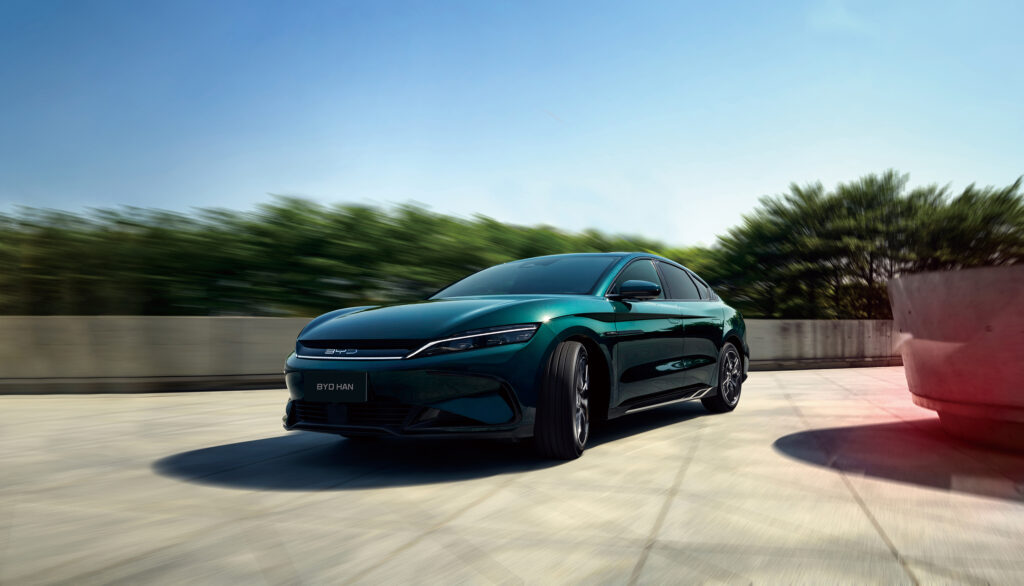
    BYD Han electric car
    The BYD Han, an example of the top-of-the-range electric vehicles produced by BYD for the international market. (Credit: BYD)

    A well-oiled global expansion strategy

    For over two years, BYD has been accelerating its global expansion. This includes Europe, where the company has a clear ambition: producing locally to strengthen its market share.

    Currently, Spain is under discussion, but BYD is already building a factory in Szeged, Hungary, which is set to begin production in 2026, and another factory will open in Turkey next year.

    BYD’s European presence is guided by several objectives: reducing import costs, design and delivery times, transportation risks, currency fluctuations, and trade barriers, especially amid stricter regulations and greater pressure in Europe. Establishing a base in Europe allows BYD to adapt more quickly to European standards and requirements.

    Reuters reports that BYD aims for the majority of its vehicles sold in Europe to be locally produced within three years.

    Growth to dominate

    Since its founding in 2003, the Chinese brand has grown exponentially. BYD has been selling vehicles in Europe since 2020. The figures speak for themselves, showing the company’s spectacular growth on the continent.

    • IEuropean sales have surged by 280% in the first eight months of 2025.
    • In April 2025, BYD even surpassed Tesla in European sales of 100% electric cars (7,231 units versus 7,165 according to JATO Dynamics).
    • In 2024, the brand sold nearly 57,000 vehicles in Europe, representing about 2.8% market share in the electric category.
    • In August 2025, EU registrations nearly tripled year-on-year, reaching over 9,000 units in a single month.

    These figures demonstrate how BYD could play a key role in Europe’s transition to fully electric vehicles by 2035.
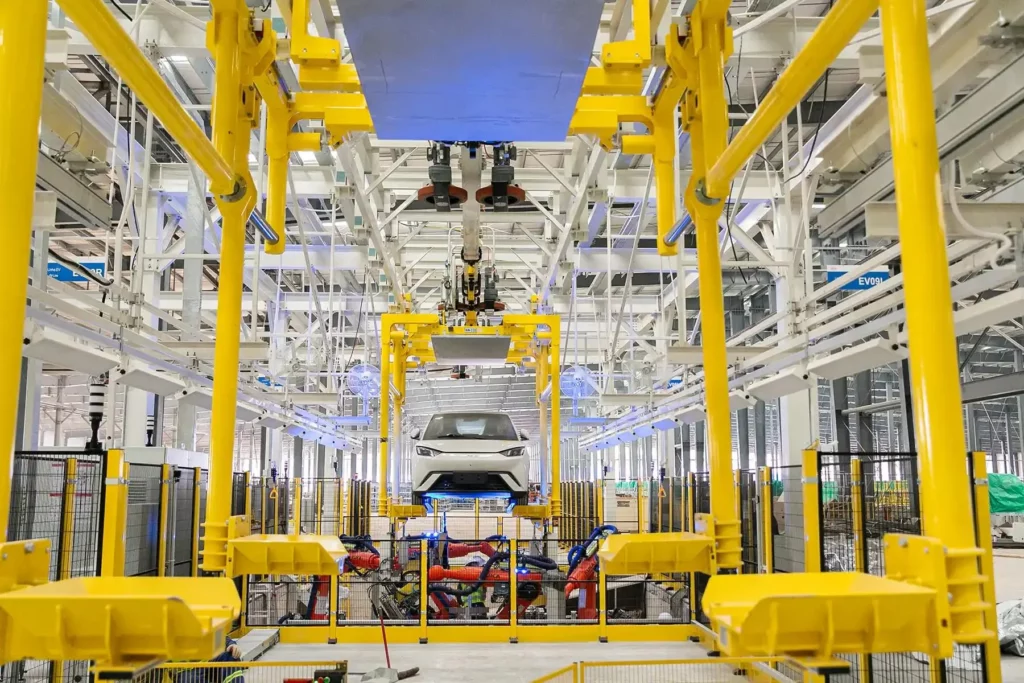
    BYD production plant
    One of BYD’s factories, a symbol of industrial expansion and local production in Europe.

    Another challenge for European automakers

    The arrival of this third factory would strengthen BYD’s presence against European giants already under pressure. Producing locally could also intensify competition in the SUV and family car segments. Indeed, the Chinese brand offers high-quality cars at highly competitive prices, while European brands struggle to provide affordable models.

    By establishing a base in Spain, BYD sends a strong signal to manufacturers, policymakers, and Europeans. This move shows the company’s long-term commitment to the European market. It remains to be seen whether European authorities will welcome this news given the current challenging trade environment.
  • Mercedes-Benz Vision Iconic: between past and future

    Mercedes-Benz Vision Iconic: between past and future

    Mercedes-Benz is striking back with its new Vision Iconic concept car — a vehicle that blends heritage with cutting-edge technology. Inspired by the Roaring Twenties and classic Mercedes models, this electric coupé unveils a bold, futuristic design identity. From its monumental grille to its Art Deco-inspired interior, the Vision Iconic perfectly embodies the brand’s new era of luxury design.

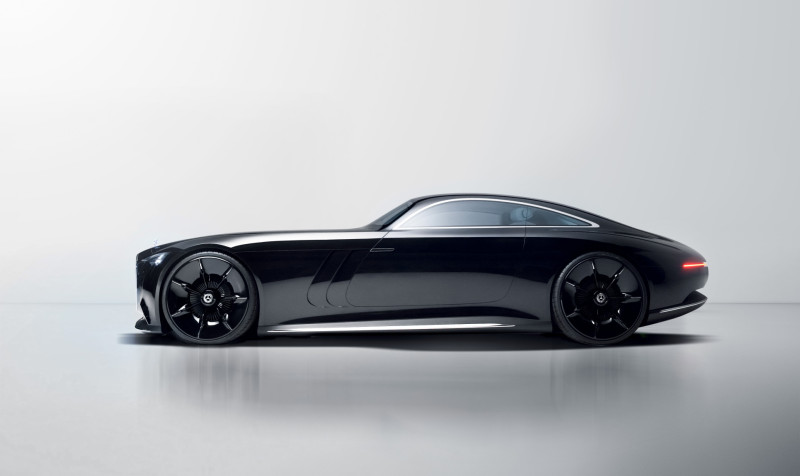
    Mercedes-Benz Vision Iconic profile view, large electric coupé with Art Deco styling
    The fastback profile of the Vision Iconic is reminiscent of the legendary Mercedes coupés of the 1930s and 1960s (Credit: Mercedes-Benz).

    A tribute to the legends of the past

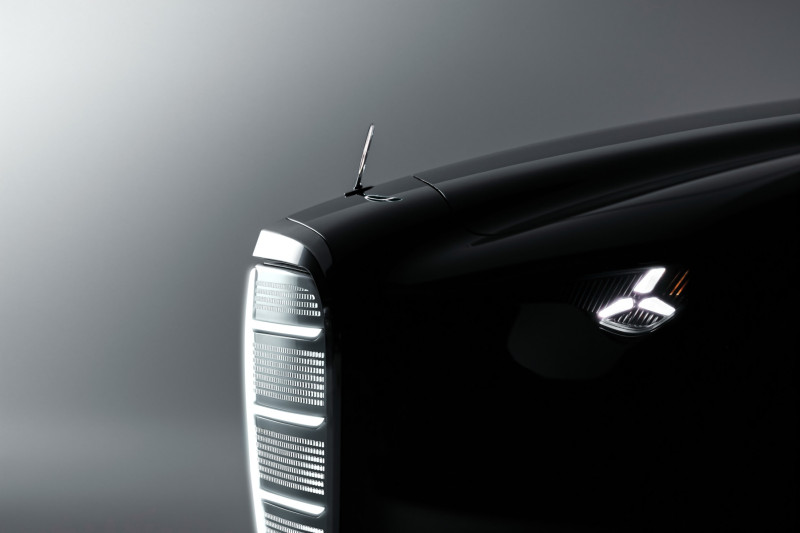
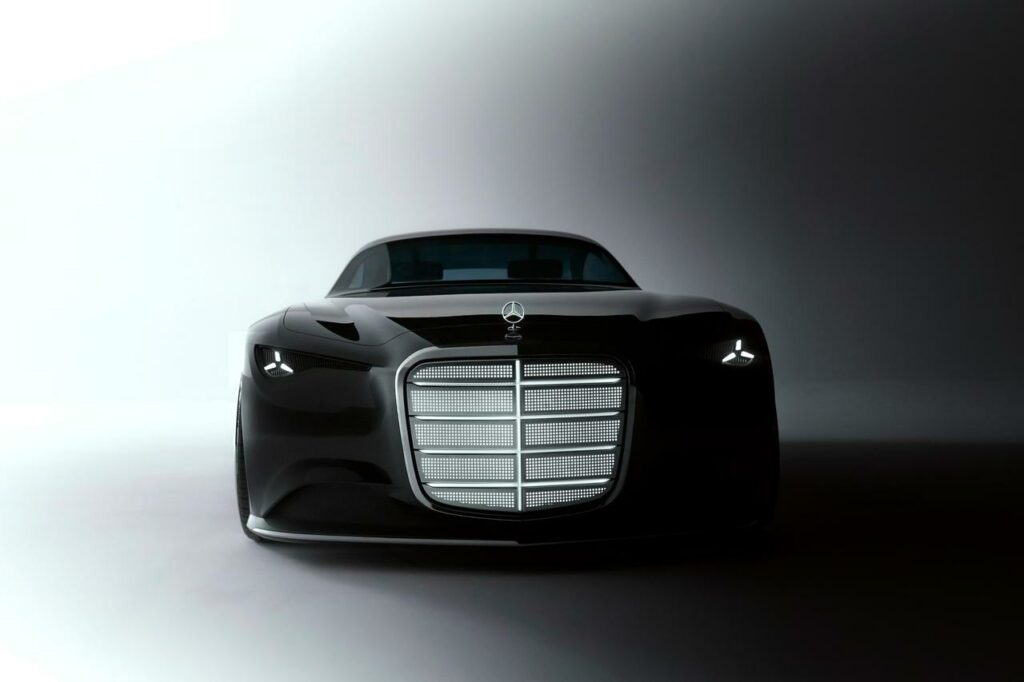
    With its long bonnet and flowing lines, the Vision Iconic evokes the Mercedes icons of the 1960s, particularly the W108 and W111. Its vast illuminated vertical grille replaces metal with glass and LEDs, creating a bold new signature. The emblematic star perched at the tip of the bonnet enhances its aura of power and prestige. Slim headlamps positioned at the upper corners complete the lighting signature, while the soft curves and smooth surfaces reinforce its elegant, sculptural presence.

    Integrated cutting-edge technologies

    Beneath its retro styling, the Vision Iconic conceals a host of impressive innovations. The car is fully electric, and its photovoltaic paint captures solar energy to deliver up to 12,000 extra kilometres of range each year.

    Covering 11 square metres, its solar-active surface continues generating power even when the car is stationary. These high-efficiency cells supplement the electric battery, significantly extending range and promoting energy autonomy. This breakthrough marks a new milestone toward sustainable, self-sufficient mobility — seamlessly blending innovation with timeless aesthetics.

    Front of the Mercedes-Benz Vision Iconic with illuminated radiator grille and illuminated star
    The vertical illuminated glass grille redefines the identity of future electric Mercedes. (Credit: Mercedes-Benz)

    The neuromorphic computer, inspired by the architecture of the human brain, optimises Level 4/5 autonomous driving while cutting computational energy use by up to 90%. The electric steering system powers all four wheels, enhancing agility and comfort, particularly during low-speed manoeuvres and parking.

    Mercedes-Benz then leverages neuromorphic computing to improve the recognition of traffic signs, lanes and other road users. This next-generation technology accelerates data processing and drastically reduces energy consumption. It also makes autonomous driving more dependable in poor visibility, while anticipating the movements of surrounding vehicles and pedestrians.

    Futuristic interior of the Mercedes-Benz Vision Iconic with Zeppelin dashboard and glass steering wheel
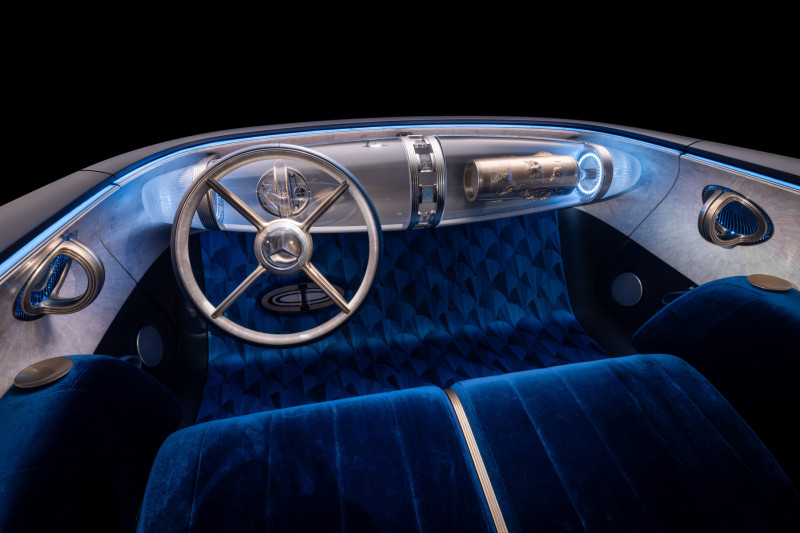
    A lounge interior combining Art Deco and advanced technology, the symbol of tomorrow’s luxury according to Mercedes.

    A luxurious neo-retro design

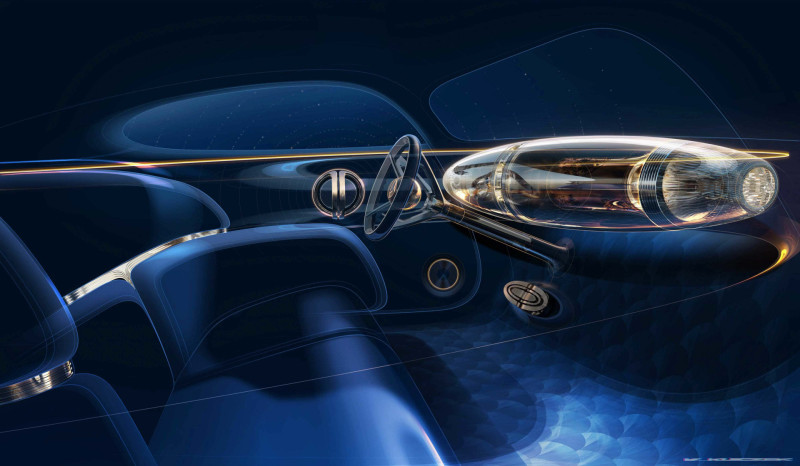
    Inside, Mercedes-Benz reinterprets the Art Deco spirit with exquisite refinement. The four-spoke steering wheel encases the iconic star within a crystal sphere, while the “Zeppelin” dashboard elegantly blends analogue gauges with digital displays. A continuous front bench seat, upholstered in deep blue velvet, offers lounge-like comfort for both driver and passenger. Door panels adorned with mother-of-pearl and brass inlays fuse traditional craftsmanship with modern innovation, creating an atmosphere that is both elegant and immersive.

    On the outside, the Vision Iconic stirs emotion through light. The illuminated grille and radiant star become interactive design elements, while ultra-slim headlights underline its sculptural presence. The glossy black paintwork enhances the car’s curves and pays tribute to the Art Deco aesthetic. Its imposing front end and graceful fastback silhouette echo legendary models such as the 300 SL — while boldly projecting Mercedes-Benz design into the future.

    Detail of the Vision Iconic bonnet
    The illuminated Mercedes star embodies the fusion of tradition and modernity in the design of the Vision Iconic. (Credit: Mercedes-Benz)

    A new type of mobility

    With Level 4 autonomous driving, the driver’s role is evolving. On the motorway, they can relax, watch videos, or immerse themselves in the cabin’s advanced sound and lighting experience. Upon arrival, the automatic parking system takes care of the vehicle, transforming the interior into a living room on wheels and offering a completely new vision of motoring.

    To complement the showcar, Mercedes-Benz unveiled a capsule collection of six outfits for men and women. Dark blue tones with silver-gold accents echo the vehicle’s interior, while geometric patterns draw inspiration from Art Deco. This collaboration between automotive design and fashion highlights the cultural and aesthetic influence of the Vision Iconic.

    Interior of the Mercedes-Benz Vision Iconic with blue bench seat and mother-of-pearl trim
    Blue velvet, mother-of-pearl and brass create a refined space inspired by the salons of the 1930’s. (Credit: Mercedes-Benz)

    A concept for the future

    Although not intended for immediate production, the Vision Iconic strongly shapes the design of Mercedes’ future top-tier electric cars, including the restyled S-Class. It bridges classic heritage and cutting-edge innovation, potentially rivaling luxury brands such as Rolls-Royce. The concept allows Mercedes-Benz to test bold ideas and anticipate the expectations of discerning customers.

    With the Vision Iconic, Mercedes-Benz demonstrates its commitment to merging timeless style, advanced technology, and a luxurious user experience. The book ICONIC DESIGN captures this vision, showing how the brand is redefining its aesthetic and technological codes. Straddling a glorious past and an electric future, the Vision Iconic embodies creative freedom and modern luxury.

  • BYD launches a biofuel super hybrid in Brazil

    BYD launches a biofuel super hybrid in Brazil

    Chinese giant BYD has just reached a historic milestone. With the launch of its 14 millionth new-energy vehicle, the company presents a ground-breaking model in Brazil. This is a super hybrid compatible with biofuels. Designed specifically for the local market, the vehicle combines technological innovation and an ecological vision adapted to the country’s resources.

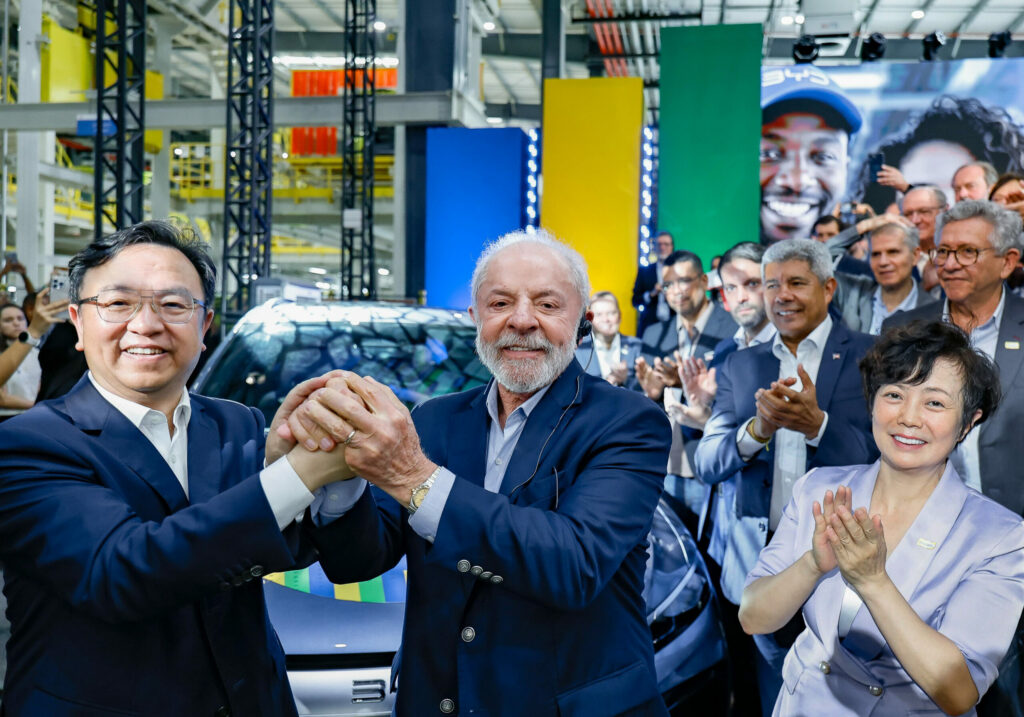
    Brazilian President Luiz Inácio Lula da Silva inaugurating the BYD factory in Camaçari
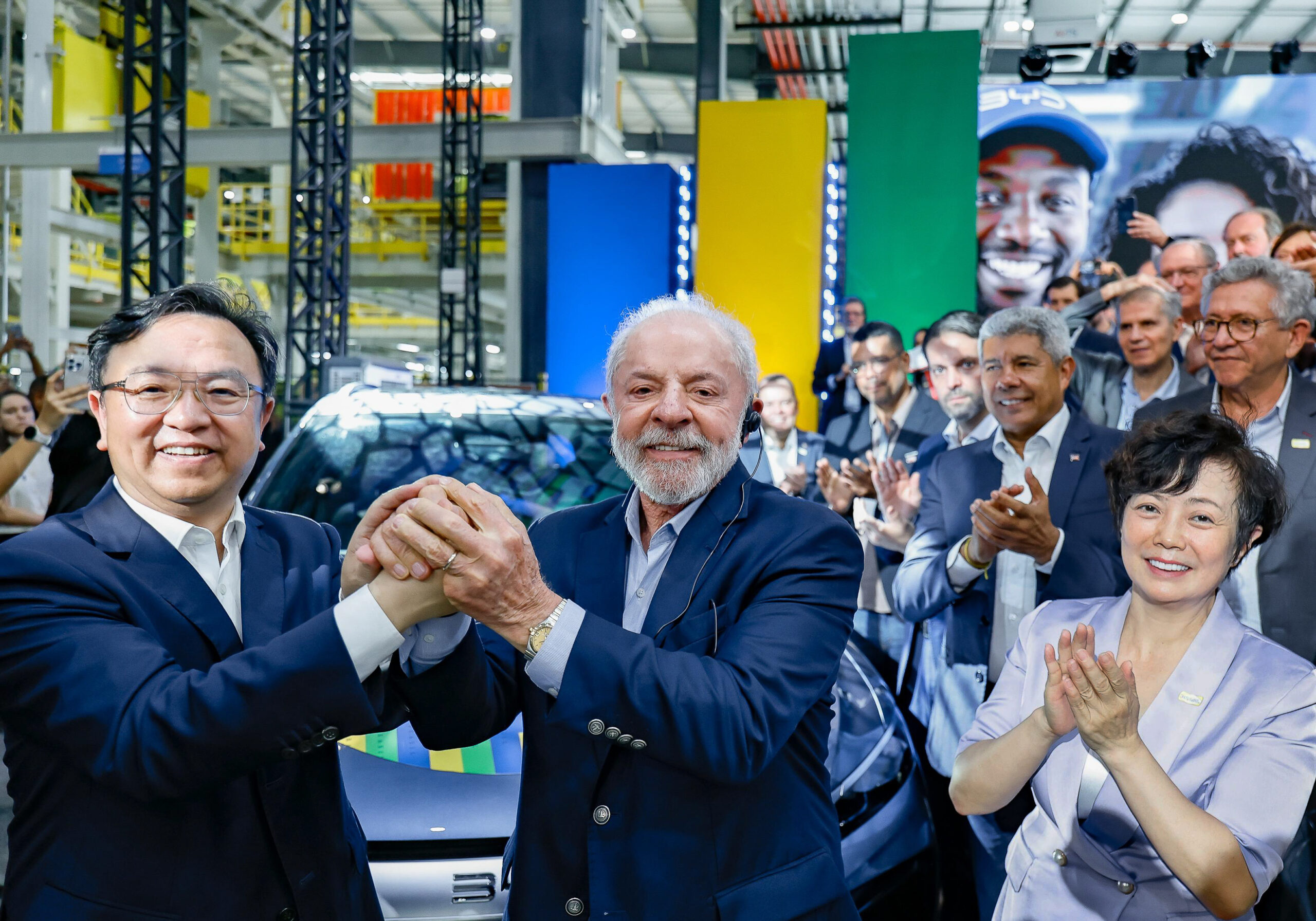
    Brazilian President Luiz Inácio Lula da Silva at the inauguration of the BYD factory in Camaçari, Bahia. (Credit: Ricardo Stuckert / PR)

    A technological breakthrough designed for Brazil

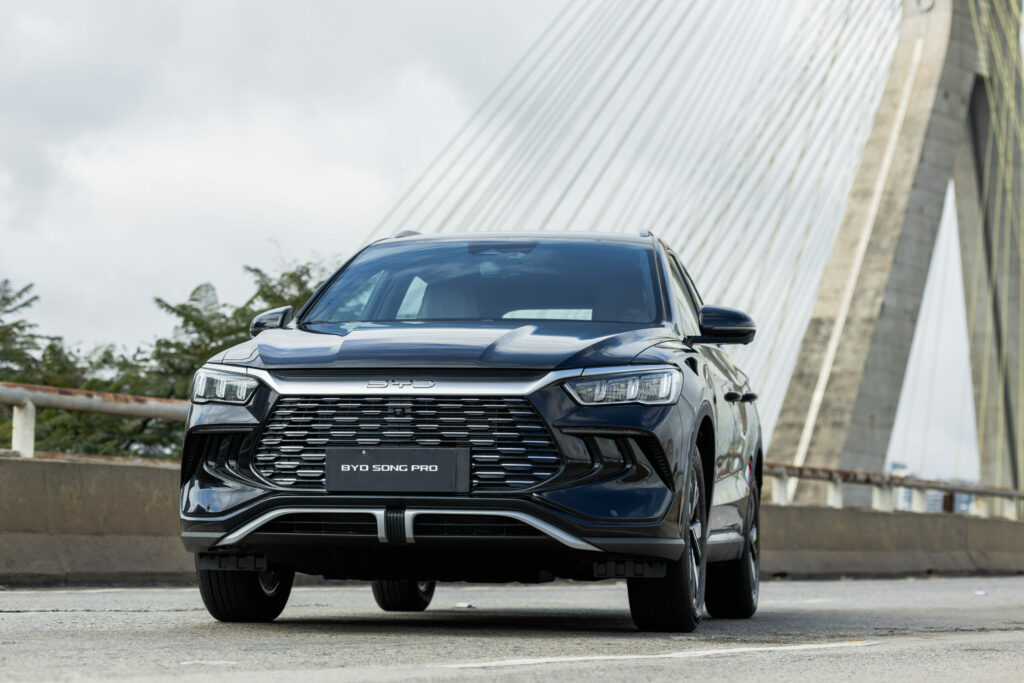
    At a ceremony held in Camaçari, Bahia, BYD inaugurated the final assembly line for the SONG PRO. This is the first model to incorporate this hybrid technology, which runs on petrol and ethanol. The choice of ethanol is not insignificant: this biofuel is one of the pillars of Brazil’s energy policy. Thanks to close collaboration between Chinese and Brazilian engineers, the 1.5-litre engine in the Super Hybrid version has been specially adapted to handle all petrol and ethanol blends. This guarantees both performance and fuel efficiency.

    SONG PRO COP30, a green alliance

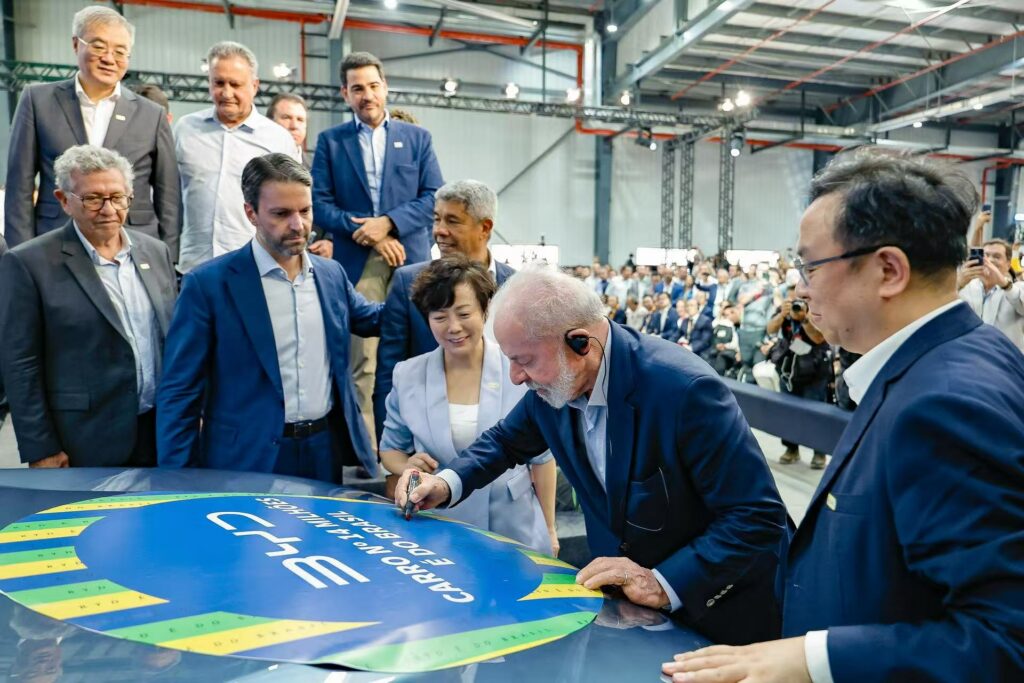
    To mark this breakthrough, BYD has unveiled a special edition of the vehicle: the SONG PRO COP30. Thirty examples will be offered at the next United Nations Climate Change Conference, COP30, scheduled to take place in Brazil. The first model, rolled off the production line in the presence of President Luiz Inácio Lula da Silva, symbolises the meeting of Chinese innovation and Brazilian environmental ambition.

    BYD Song Pro biofuel-compatible super hybrid
    The BYD Song Pro, the first super hybrid compatible with all petrol and ethanol blends, on display in Brazil (Credit: BYD)

    A strategic plant undergoing rapid expansion

    BYD’s new factory in Camaçari represents a major investment. Built in just fifteen months, it already employs more than 1,500 people. Currently capable of producing 150,000 vehicles a year, it will reach 300,000 units in its second phase. BYD Chairman Wang Chuanfu has confirmed that further investment will be made to double this capacity even further, to 600,000 vehicles a year. This will make it the largest electric vehicle plant in Latin America. It is also the group’s largest facility outside Asia.

    China-Brazil cooperation

    For Wang Chuanfu, this innovation goes beyond the industrial framework: it illustrates sustainable cooperation between two countries committed to clean mobility. “This is not just a technological breakthrough, but an ecological solution designed for Brazil”, he said. Stella Li, the Group’s Executive Vice President, emphasised BYD’s long-term vision: to support the local economy, create skilled jobs and strengthen Brazil’s technical skills.

    Ethanol, driving the energy transition

    Tyler Li, CEO of BYD Brazil, emphasises the central role of ethanol. By integrating this biofuel into the DM-i technology, the manufacturer is making the most of the country’s renewable energy matrix. This approach makes it possible to reduce emissions while offering a high-performance vehicle adapted to local habits. It also confirms Brazil’s place as a major player in global sustainable mobility.

    President Luiz Inácio Lula da Silva at the inauguration of the BYD factory in Camaçari
    Brazilian President Luiz Inácio Lula da Silva at the inauguration ceremony for the BYD factory in Camaçari, Bahia.

    A global ambition

    BYD is thus consolidating its presence in Latin America, where demand for electrified vehicles is growing rapidly. Already number one on the Chinese market, the company masters its entire production chain: batteries, electric motors and control systems. In Brazil, it has a network of more than 200 dealers in all the major cities, with the aim of reaching 250 in the near future.

    With this biofuel-powered super hybrid, BYD confirms its ability to innovate in line with local realities. The company combines cutting-edge technology, economic development and respect for the environment. By choosing Brazil to unveil this world first, it is banking on a country rich in renewable resources and industrial potential. This launch undoubtedly marks a turning point in energy cooperation between China and South America, paving the way for a new era of clean, accessible mobility.
  • Toyota Century Coupé: Japanese luxury reinvented

    Toyota Century Coupé: Japanese luxury reinvented

    Toyota is preparing a revolution in the world of Japanese automotive luxury. At the Japan Mobility Show 2025, the brand will unveil an exceptional concept: a Century ‘One of One’ SUV coupé. This unique project embodies the carmaker’s new ambition to push back the boundaries of automotive refinement. It also redefines Century’s place as a showcase of Japanese prestige, up against Rolls-Royce and Bentley.
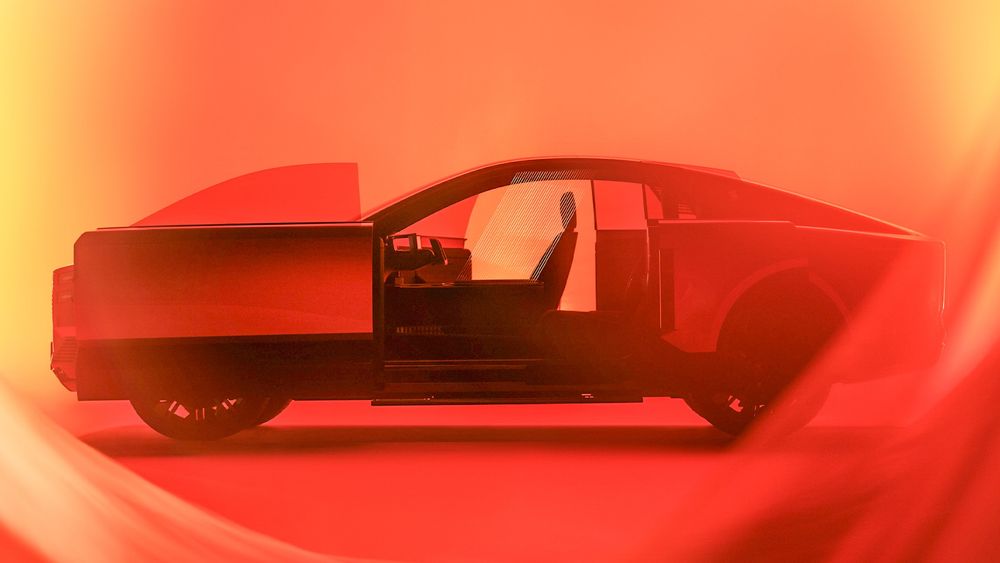
    Toyota Century Coupé One of One side view
    The Toyota Century Coupé is distinguished by its elegant, sporty silhouette. A cross between a prestige saloon and a high-riding SUV. (Credit: Toyota)

    Toyota’ s bold vision for this concept is to combine the timeless elegance of the Century limousine with the modernity of an SUV coupé. The muscular yet fluid silhouette expresses a clear break with the traditional codes of Japanese luxury.

    An intriguing ‘One of One’ concept

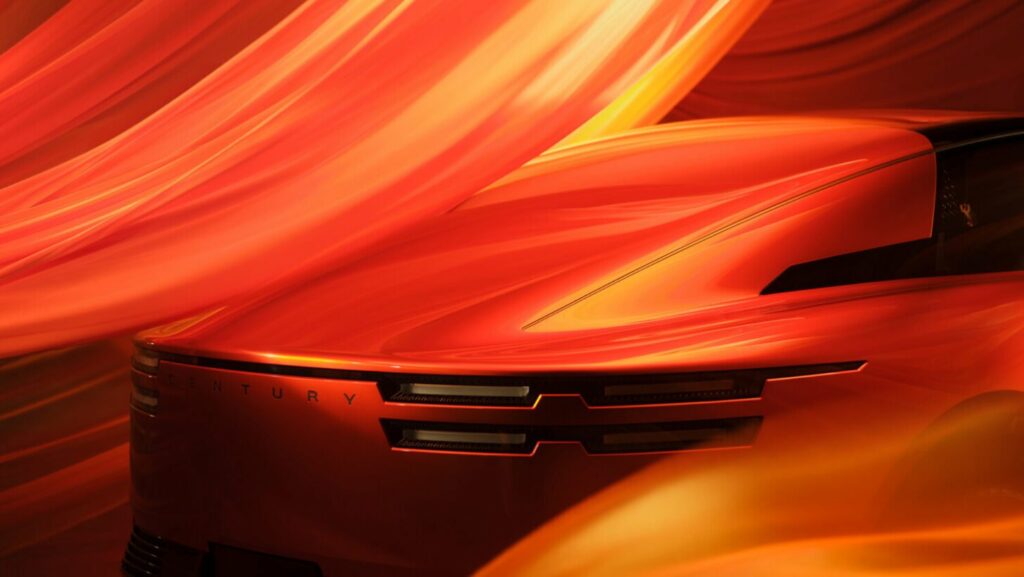
    Presented as a unique creation, the Century Coupé immediately stands out for its imposing looks and sculpted lines. Perched on large wheels, it looks more like a crossover than a traditional saloon. Its profile without a central pillar and its sliding doors, unprecedented on a model of this standing, reflect the pursuit of a design that is both futuristic and functional.
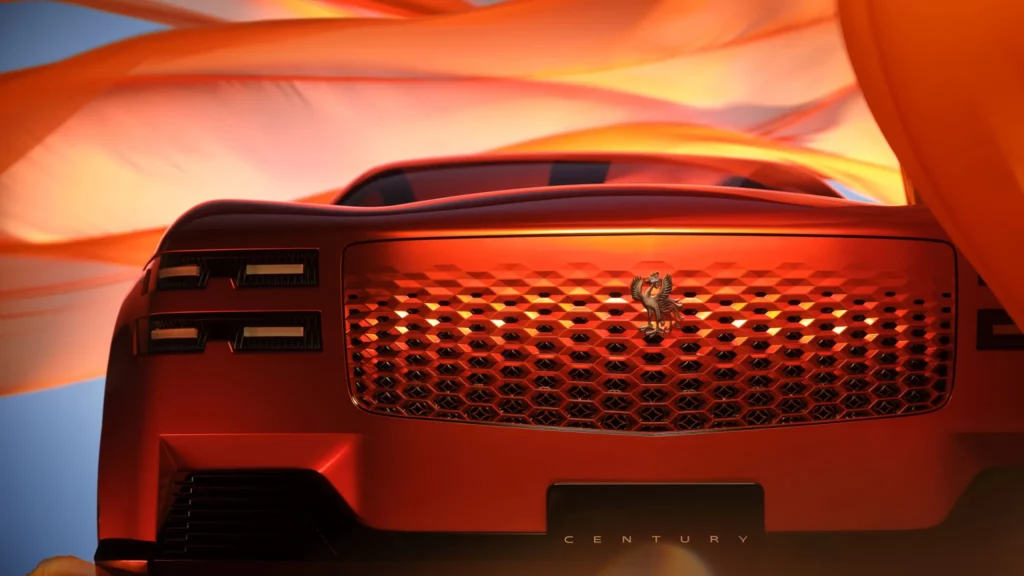
    The golden Phoenix, the historic emblem of the Century lineage, sits proudly at the centre of a refined radiator grille. This visual signature, combined with the absence of a rear window, gives the concept a mysterious, almost sculptural dimension. Toyota has not confirmed the nature of its powertrain. But, several clues suggest that a combustion or hybrid engine could be lurking under the bonnet.

    A new era for the Century brand

    Since 1967, the Century has been the embodiment of Japanese automotive excellence. Long reserved for the country’s dignitaries and leaders, it was recently transformed into an SUV before adopting this bold coupé silhouette. This change of direction symbolises Toyota’s desire to make Century a brand in its own right, positioned above Lexus in the group’s hierarchy.

    Toyota Century Coupé grille with golden Phoenix emblem
    The golden Phoenix emblem, a symbol of Century prestige, sits at the centre of a finely chiselled radiator grille (Credit: Toyota).

    Here, Japanese designers are asserting the expression of “incomparable” luxury. The term “One of One” evokes not just a unique piece, but a philosophy: that of creating the incomparable. The concept is as much a stylistic achievement as it is a statement of Century’s identity.

    A cabin designed as a mobile living room

    While the images are still mysterious, certain details are already intriguing. The driving position could be central, reminiscent of some iconic supercars. The rectangular steering wheel is more reminiscent of an aircraft control than a traditional steering wheel. As for the interior, it promises to be spacious and modular, with sliding seats and a wider doorway thanks to the inverted doors.

    Toyota seems intent on offering an on-board experience worthy of a living room on wheels. Comfort, discretion and personalisation remain the watchwords of this concept, which takes the notion of Japanese hospitality, or omotenashi, a step further.

    The symbol of Japanese luxury

    With the unveiling of this Century coupé, Toyota is confirming its ability to rival the leading European brands. The sleek design, noble materials and innovative bodywork reflect a unique expertise. The silhouette, both tall and elegant, combines the stature of an SUV with the finesse of a grand touring coupé.

    More than just a styling exercise, this concept heralds a clear strategy: to extend the Century brand beyond Japan. Already marketed in China as an SUV, the label could soon be targeting other international markets, reinforcing the carmaker’s global prestige.

    Rear of Toyota Century Coupé One of One
    The rear of the Century Coupé features clean lines and no rear window, a sign of bold styling (Credit: Toyota).

    A cultural and industrial revolution

    With Century, Toyota is introducing a new definition of luxury. Rather than reproducing Western codes, the group celebrates Japanese sophistication based on sobriety, perfection of detail and rarity. This ‘One of One’ is not about excess, but about the exceptional.
    Akio Toyoda, Chairman of the group, wants to make Century the symbol of uncompromising luxury, while Lexus will pursue a more experimental and international path. This division of roles reflects a clear ambition: to promote Japanese expertise in all the top-of-the-range segments.

    Pending the official revelation

    The Toyota Century Coupé will make its world debut at the end of the month, at the Japan Mobility Show 2025. In the meantime, its performance and potential market launch remain a mystery.
    One thing is certain: with this ‘One of One’ concept, Toyota is once again proving its ability to surprise, innovate and reinvent Japanese luxury. This exceptional coupé could well mark a historic turning point in the Century saga, paving the way for a new era of automotive refinement.
  • Lexus LS Concept: the daring challenge of the six-wheeled MPV

    Lexus LS Concept: the daring challenge of the six-wheeled MPV

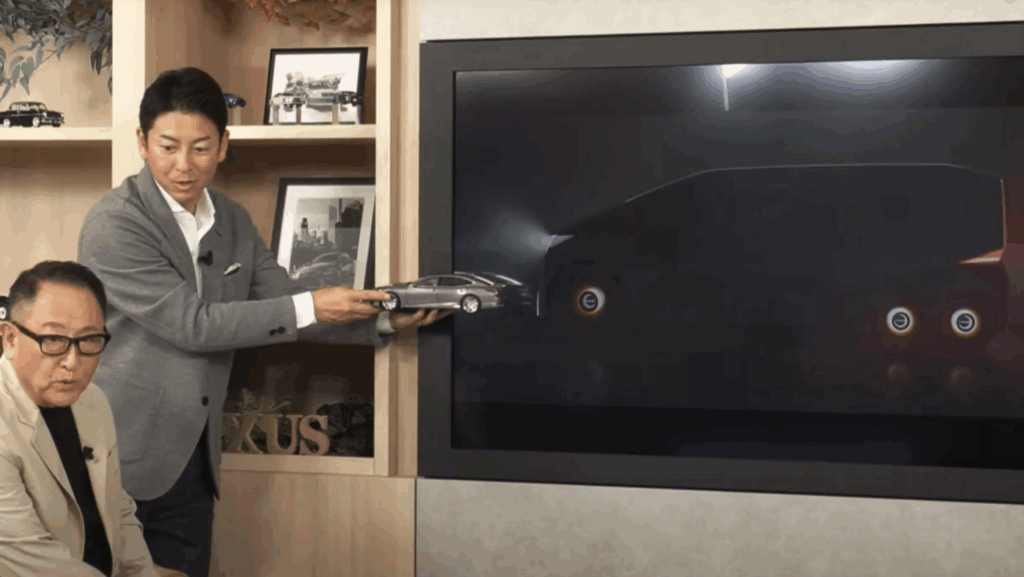
    The Lexus LS saloon, a symbol of discreet luxury for over thirty years, seems to be drawing to a close. But the Japanese brand is surprising once again. It has unveiled a daring concept: a six-wheeled electric MPV.

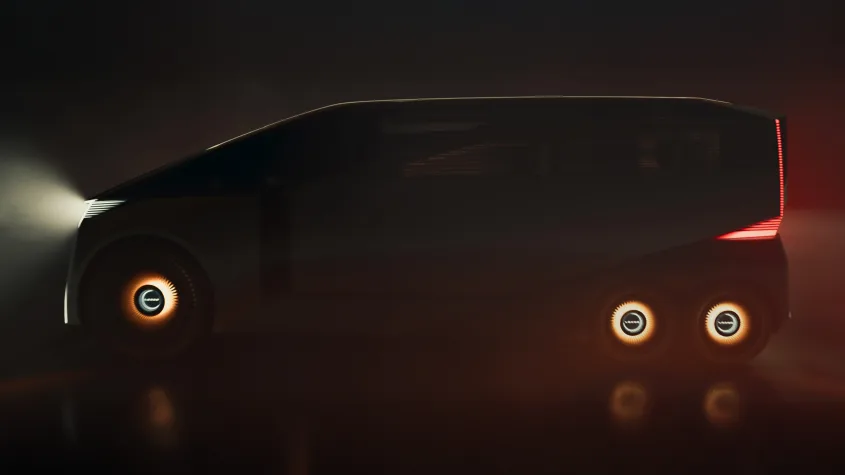
    Side view of the Lexus LS Concept with six wheels, futuristic design and massive silhouette
    The Lexus LS Concept shows off its imposing silhouette and futuristic six-wheel design (Credit: Toyota)

    This radical initiative completely transforms the traditional vision of the LS. Akio Toyoda, President of Toyota Motor Corporation, insists: “Everyone is serious about this. This is no mere styling exercise, but a project that has been matured with precision and ambition.

    From saloon to luxury space

    The Lexus LS – long synonymous with Luxury Sedan – has been reinvented as Luxury Space. This change illustrates a radically new philosophy: luxury is no longer measured solely by speed or prestige, but by space and comfort. The concept on show has a futuristic MPV-style body, with three rows of seats and six wheels. Compared with the Lexus LM, it impresses with its mass, long wheelbase and short overhangs. The angular lines and clean surfaces are reminiscent of a spaceship. Vertical LED headlamps, an illuminated rear spoiler and imposing wheel rims underline its experimental character. This design goes beyond mere aesthetics: it serves a practical and conceptual purpose.

    Six wheels for comfort and stability

    The idea of a third axle is not insignificant. Lexus is seeking to improve weight distribution, stability and comfort. The interior, designed as a living room on wheels, offers six adjustable seats, adjustable ambient lighting and a typically Japanese Zen atmosphere. Silent running and smooth driving, emblematic values of the brand, remain priorities. In this way, the LS is no longer just a vehicle, it becomes a mobile living space, where travelling is a sensory experience. This approach illustrates how Lexus now interprets luxury: less spectacular, more immersive and personalised.
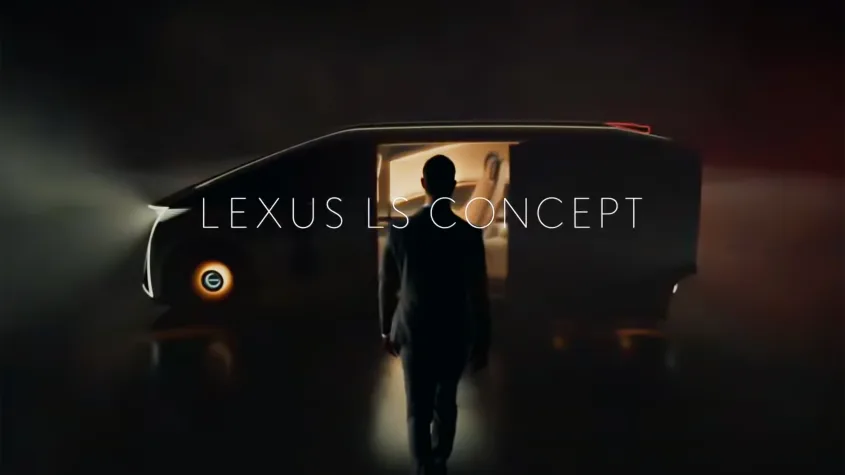
    Man advancing towards the sliding door of the Lexus LS Concept with six wheels, spacious interior visible
    Access to the Lexus LS Concept reveals a spacious interior designed as a rolling lounge (Credit: Lexus).

    Electrical innovation and technical challenges

    The concept is based on 100% electric propulsion, in line with market expectations and space constraints. The electric motors ensure optimum weight distribution and maximum habitability. However, the road to production is still strewn with obstacles. Integrating a third axle into an electric architecture is complex, as is certification for road driving. In addition, the engineers have to guarantee safety, comfort and performance despite the unusual configuration. Toyoda stresses that the team is working with seriousness and determination, and that the project could become a reality if all the technical challenges are overcome.

    Bold design and futuristic influences

    Its square silhouette and flat roofline reinforce the impression of a living room on wheels. The electric sliding door on the passenger side provides easy access to the spacious cabin. The vertical front lights and rear LED strips reinforce the vehicle’s spectacular, recognisable character. Inspiration also comes from the lunar rovers: the wheel layout and biomimicry enhance stability and manoeuvrability. Even fans of futuristic technology will be seduced by this approach, which combines visual innovation with interior ergonomics. Lexus turns every journey into an experience, where technology serves comfort and enjoyment rather than raw performance.

    Strategic positioning

    This LS concept illustrates Lexus’ strategy to redefine Japanese luxury. While the Century continues to embody classic ultra-luxury, the six-wheeled LS explores new dimensions. The brand aims to appeal to consumers who value space, comfort and innovation, responding to the new expectations of the premium market. This approach also allows Lexus to reinforce its distinction from Toyota, while consolidating its reputation as a bold innovator. If produced, it could become the most original vehicle ever designed by the brand, redefining the luxury MPV segment.

    Lexus team comparing the old LS saloon and the new six-wheel LS Concept
    From classic to futuristic: Lexus puts the LS saloon and its new six-wheel concept into perspective (Credit: Toyota)

    The Japan Mobility Show 2025, a decisive moment

    The LS concept will be presented at the Japan Mobility Show 2025, alongside the Century SUV coupé. This event promises to mark a turning point for the Japanese group, revealing an unprecedented vision of luxury. The future six-wheeled LS poses a central question: is it an artistic daring or an imminent industrial revolution? Lexus seems convinced that the concept can be integrated into serious production, and Toyoda assures us that the company is ready to take up the challenge. The coming months will tell whether the futuristic MPV will become a tangible reality or remain a fascinating styling exercise.

  • Range Rover Electric: the luxury of silence as a new art of living

    Range Rover Electric: the luxury of silence as a new art of living

    The Range Rover Electric isn’t just another SUV. It’s a vehicle that turns luxury into silence. While its release has been pushed back to 2026, tests in Sweden have shown an SUV capable of combining comfort and performance. This electric model is not designed to go fast, but to offer a unique and refined experience.

    Range Rover Electric front view of a frozen snowy lake, 100% electric luxury SUV
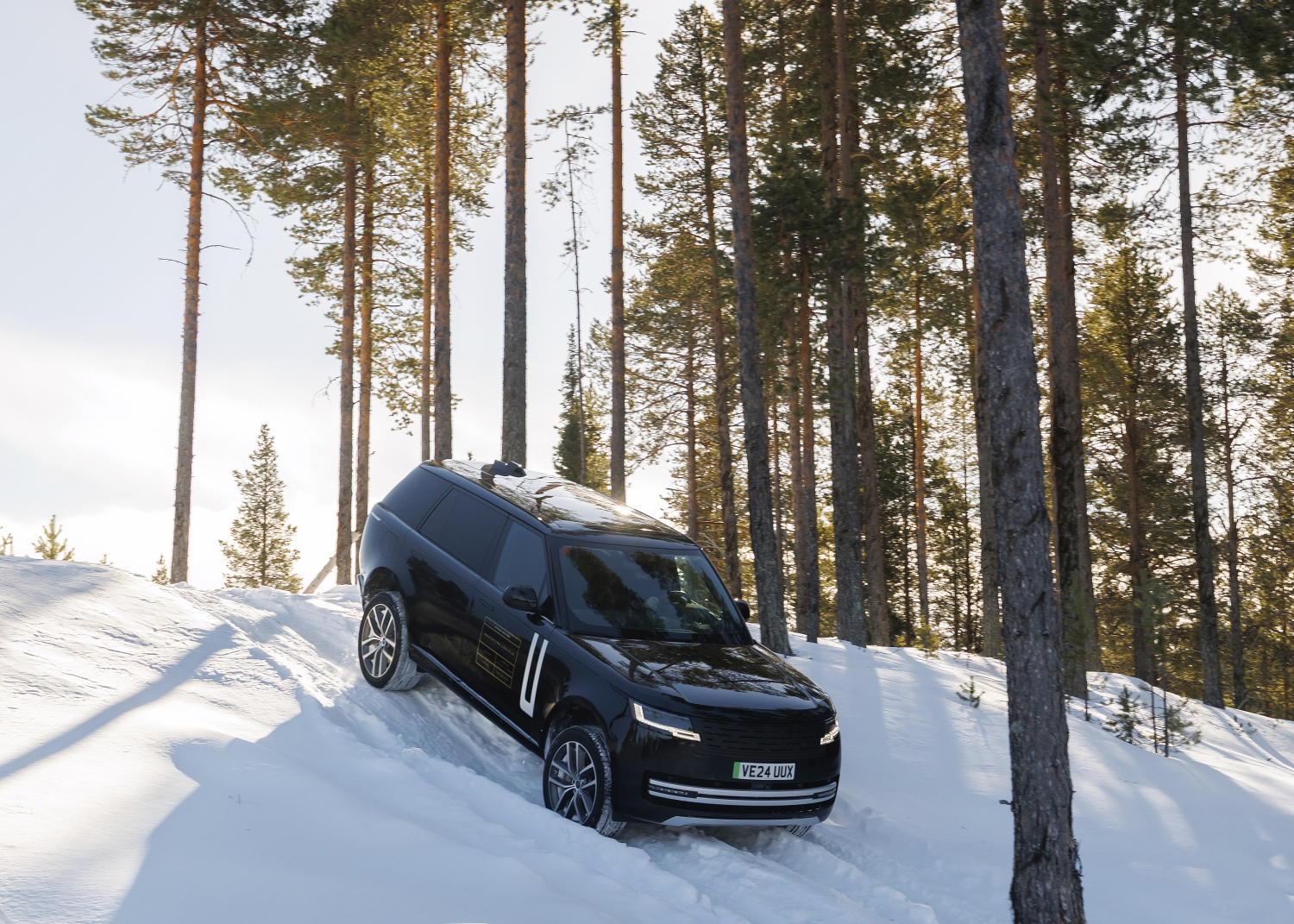
    Range Rover Electric reveals its imposing silhouette on a frozen lake, a symbol of power and silent luxury (Credit: Land Rover).

    The challenge of silence

    The Range Rover Electric doesn’t have a roaring engine, and that’s what makes it interesting. For fifty-five years, the brand has stood out for its quiet, controlled power. Today, without an internal combustion engine, this idea is even stronger. Silence has become an element of luxury. In the cabin, the dual-chamber suspension, intelligent temperature management and precise torque control create a floating sensation. The car feels less like a vehicle and more like a mobile living room, isolated from the outside world, where vibrations are almost non-existent thanks to the work of Solihull’s engineers.

    The SUV braves the cold

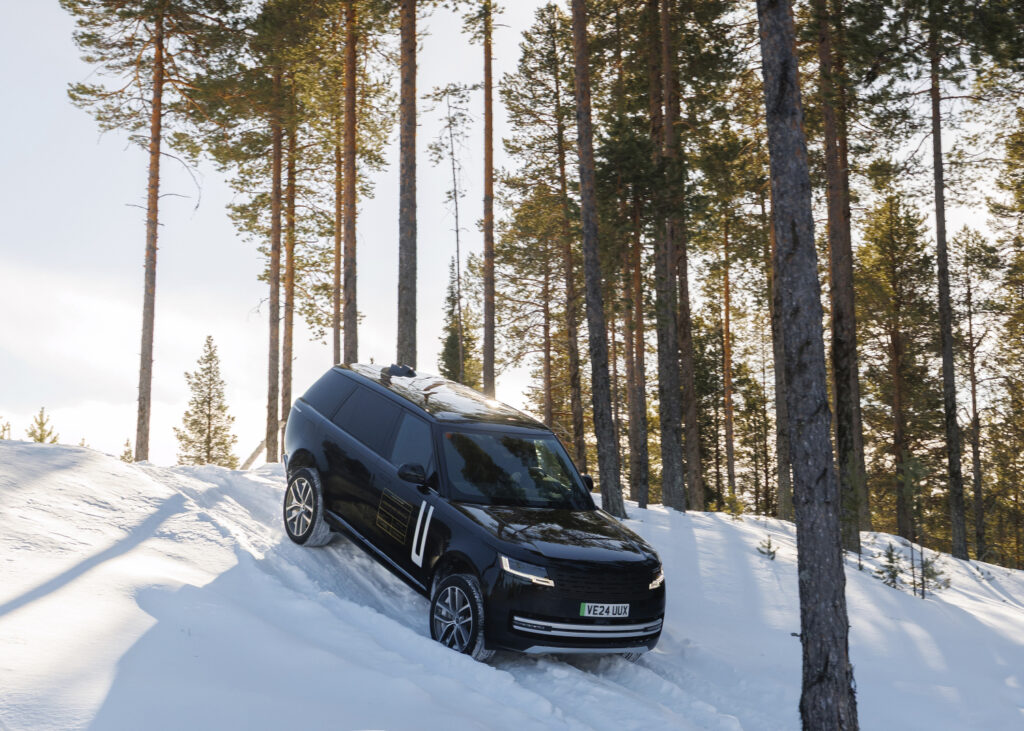
    In Arjeplog, in the north of Sweden, the Range Rover Electric underwent two winters of intense testing. Seventy-two thousand kilometres on frozen lakes, steep slopes and slippery surfaces. The aim: to show that electric cars can match combustion engines even in the worst conditions. The engineers tested ThermAssist, a technology that recovers heat at -10°C and keeps the battery at the right temperature. This enables the car to maintain its range even in very cold weather, where most electric cars lose efficiency. It’s not just technical, it’s also a question of prestige: a Range Rover can’t be afraid of the cold.

    Range Rover Electric in a desert arctic landscape, remote luxury electric SUV
    A distant view of the Range Rover Electric in the icy expanses of Sweden, illustrating its mastery of extreme off-roading (Credit: Land Rover).

    Electrical architecture

    Under the bonnet, the Range Rover Electric uses an 800-volt architecture and a 117 kWh battery manufactured in-house. This decision has delayed the project, but demonstrates a rare independence. Instead of buying standard batteries, the brand is creating its own luxury standard. The result: 542 bhp, 850 Nm of torque and ultra-precise all-wheel drive. Intelligent Driveline Dynamics adjusts rear torque in 50 milliseconds, 100 times faster than a petrol car. Electronics replace mechanics with style. The Range Rover Electric doesn’t deny its past, it reinvents it with electricity and software.

    Range Rover wants its electric SUV to be first and foremost an experience. According to Thomas Müller, Product Director, the soul of the vehicle lies in its insulation and comfort. It’s not a car that makes noise, it’s a car that makes you feel calm. The materials, seats, steering and even the pedal contribute to this comfort. The driver becomes an explorer of silence rather than a mere conductor. Then, the relationship with power is changing: it’s no longer something to be flaunted, it’s something to be felt.

    Range Rover logo on the rear boot of the electric SUV, close-up
    Close-up of the Range Rover logo on the new electric SUV, a reflection of British refinement and heritage (Credit: Land Rover).

    A delay to preserve the icon

    The postponement of the launch until 2026 may disappoint some, but it is a well-considered choice. Jaguar Land Rover does not want to rush the electric transition. The luxury electric market is still unstable. By waiting, the manufacturer is ensuring an experience that is true to the Range Rover image. In a world where everyone is rushing ahead, this delay becomes a strategic choice. Perfection takes time, especially for a symbol like Range Rover.

    The Range Rover Electric won’t revolutionise the market, but it will change the way we experience luxury. It doesn’t promise to transform the world, but to make silence precious to those who can afford it. The true luxury of tomorrow is no longer speed or power, but the quality of silence. This Range Rover shows that you can stay in control of the road, without ever making a sound.

    Availability of the 2026 Electric Range Rover

    The first units of the 2026 Electric Range Rover will be available at Arc de Triomphe Auto, a specialist dealership in Paris.

    • Address: 30 rue de Tilsitt, 75017 Paris
    • Phone: +33 1 43 80 55 11
  • Ferrari Elettrica: the silent revolution of the Prancing Horse

    Ferrari Elettrica: the silent revolution of the Prancing Horse

    The Ferrari Elettrica is set to mark the most decisive change in the brand’s modern history. In 2026, this first 100% electric car will be launched by the Prancing Horse.

    While this new-generation model promises impressive performance figures, above all it embodies a major strategic and philosophical shift. Because beyond power and autonomy, it is the notion of mechanical emotion that the Maranello firm is trying to reinvent.

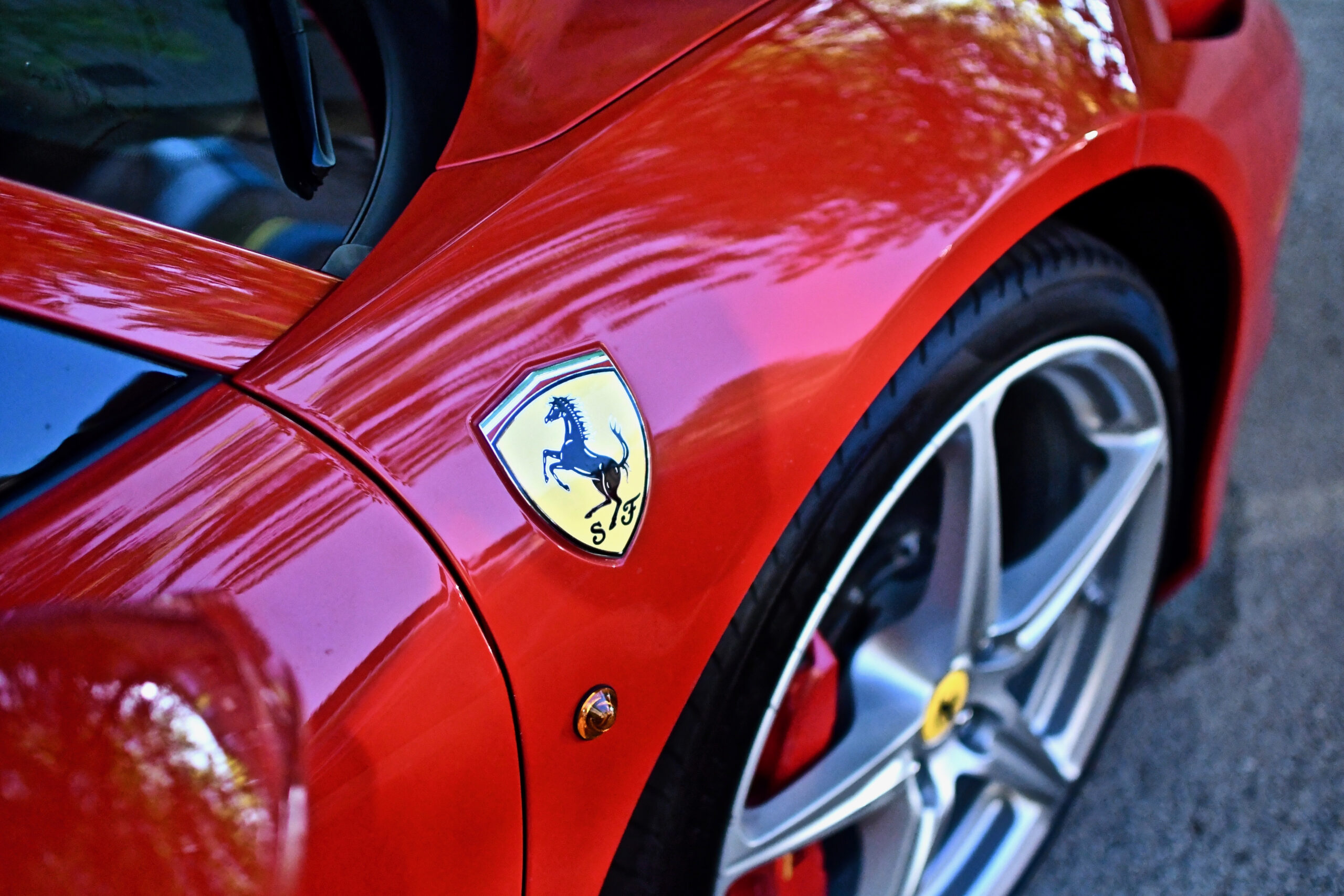
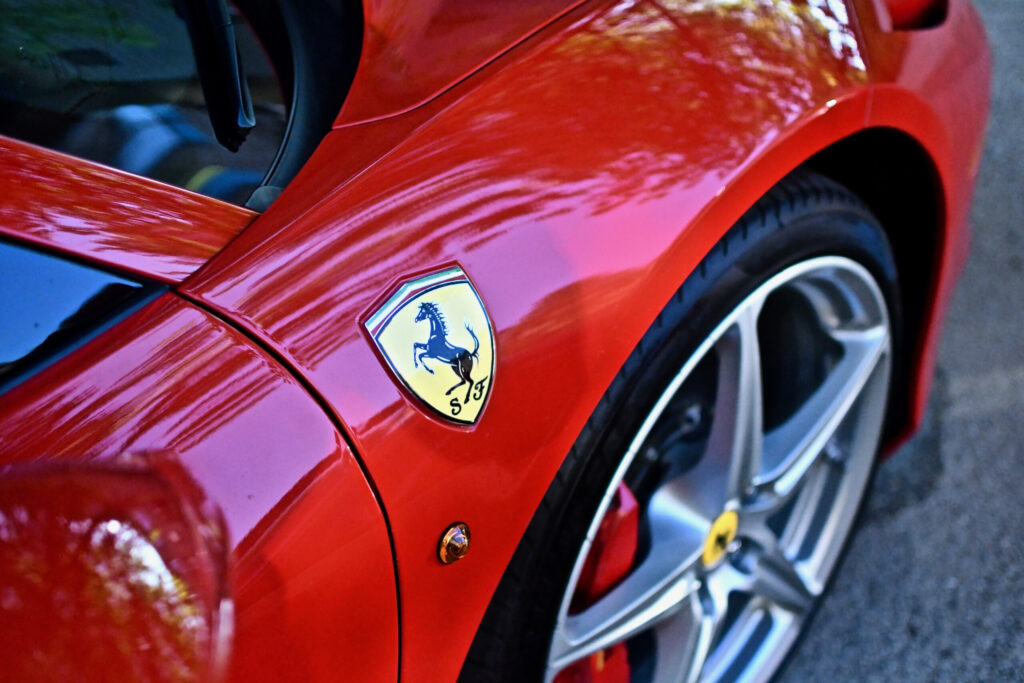
    Zoom in on the Ferrari Elettrica logo on the bodywork, a symbol of Italian performance and prestige.
    Detail of the Ferrari Elettrica logo on the bonnet, representing exclusivity and Italian engineering.

    A calculated technological leap

    At Ferrari, electrification has never been a goal, but a necessity. The Italian manufacturer, renowned for its combustion engines, has long resisted the transformation imposed by environmental standards. However, CEO Benedetto Vigna is convinced that the future of luxury cars lies in electric innovation. By choosing 2026 as the launch year, Ferrari is giving itself time to fine-tune a model that lives up to its heritage. The Elettrica will be manufactured in Maranello, in a brand-new building dedicated to electric vehicles, a symbol of a measured but assertive strategic shift.

    An unchanged philosophy

    Ferrari never wanted to make an electric car just to follow the fashion. The objective is clear: to prove that a Ferrari can be exciting without an internal combustion engine. Moreover, the brand specifies that its upcoming model will not be a supercar, but a four-door, four-seat sedan. It’s a bold decision, designed to appeal to a broader customer base without betraying the brand’s philosophy. The design, which is still being kept secret, will be the fruit of collaboration between in-house stylists and LoveFrom, the studio founded by former Apple designer Jony Ive. This partnership suggests a more refined approach, combining technology and Italian elegance.

    Credit : Ferrari

    Four engines, a thousand horsepower and absolute control

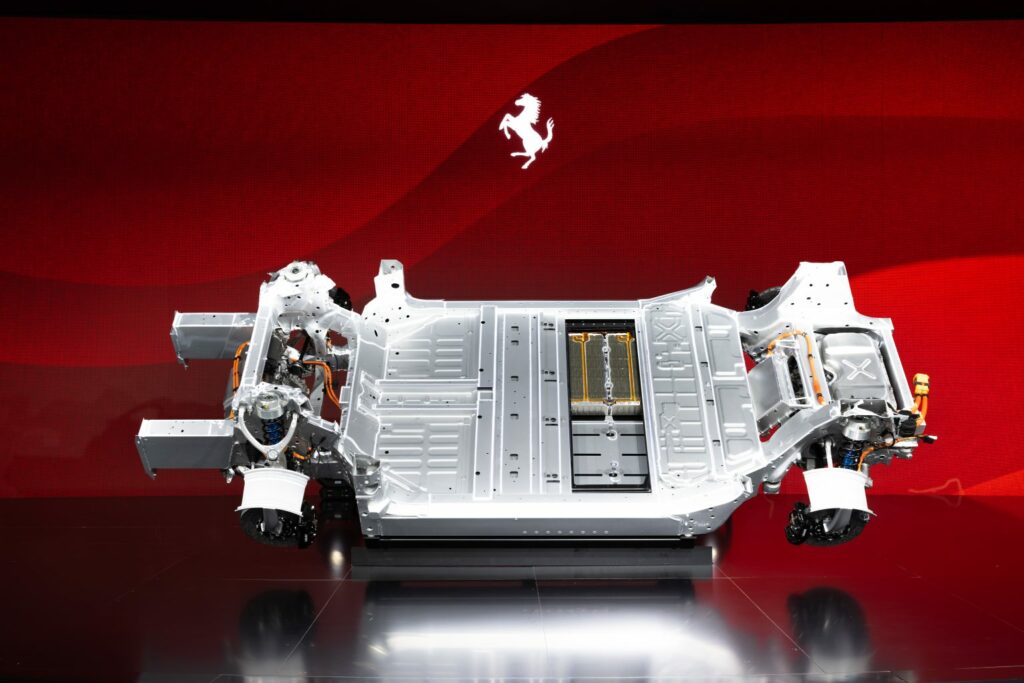
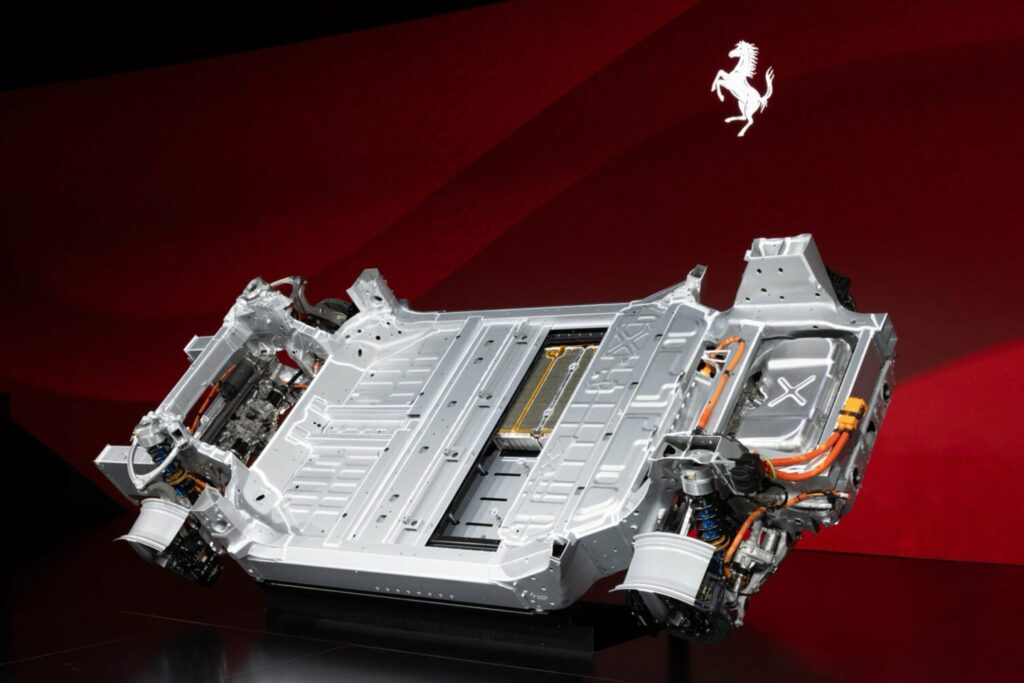
    Beneath the bodywork, Ferrari has gone big. The Elettrica will be built on a completely new aluminum platform, featuring a 122 kWh NMC battery integrated into the floor. This pack powers four permanent magnet synchronous motors, one per wheel. The total output exceeds 1,000 horsepower, allowing 0 to 100 km/h in 2.5 seconds and a top speed of 310 km/h. But at Ferrari, raw performance is not an end in itself. Thanks to torque vectoring and four-wheel steering, every corner becomes a demonstration of agility. This system is designed to counteract the car’s 2.3-ton weight by distributing torque independently to each wheel.

    The battery: the heart of the car

    The heart of the Elettrica is built to endure. Composed of fifteen modules and 210 pouch cells, the battery offers power, stability, and maintainability. It operates at 800 volts, allowing ultra-fast charging up to 350 kW. Ferrari claims a 530 km range, a reasonable figure for a car of this class. Importantly, the battery is designed to evolve over time, highlighting Maranello’s focus on long-term durability.

    Credit : Ferrari

    The sound of silence, reinvented Italian-style

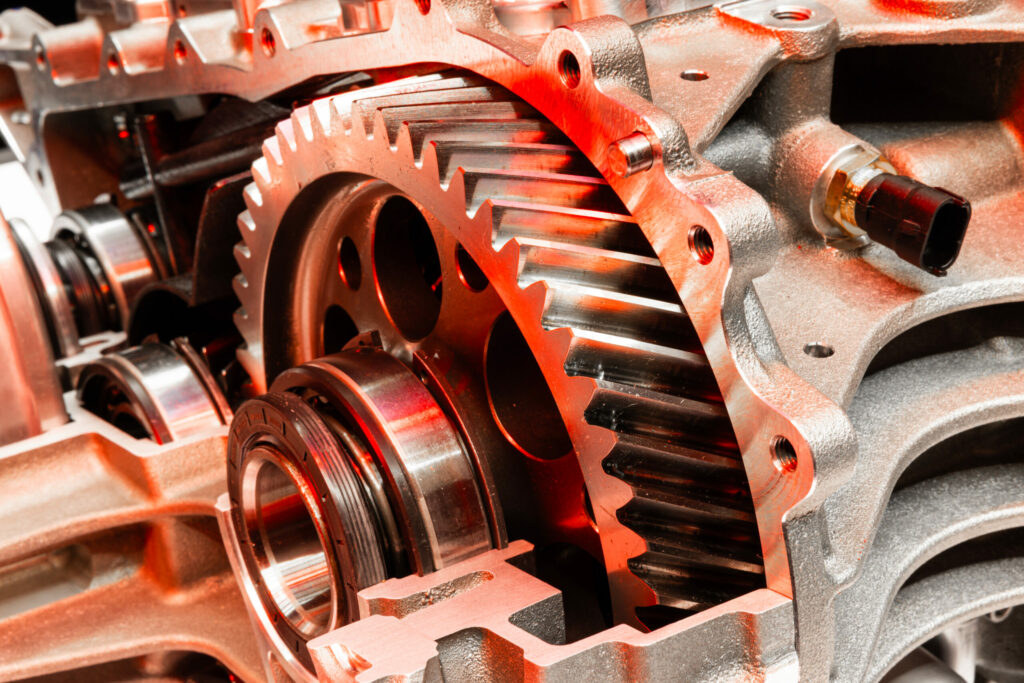
    Ferrari knows that noise is an integral part of its DNA. So it’s impossible to imagine a silent car. The engineers have therefore created an innovative sound reproduction system. A sensor placed near the inverter picks up mechanical vibrations, then amplifies them naturally in the passenger compartment. It’s not an artificial noise, or a science-fiction roar. It’s more like an acoustic signature, halfway between music and mechanics. This work on sound aims to recreate the emotional bond between the driver and the machine, a founding element of the Ferrari myth.

    The sensations are still there

    To ensure driving remains more than just efficiency, Ferrari has developed an innovative steering wheel paddle system. The right paddle adjusts power and torque across five levels, while the left controls regenerative braking. This setup allows the driver to interact precisely with the vehicle, restoring sensitivity often lost in electric cars.

    Strategic positioning

    Credit : Ferrari

    Despite this bold move, Ferrari does not abandon its past. The Elettrica is an addition, not a replacement. Electric cars are expected to make up only 20% of sales by 2030, down from 40% initially projected. This caution illustrates a clear strategy: electrify without compromising heritage. Ferrari aims to attract new customers while keeping traditional enthusiasts, preserving its exclusive image.

    The Ferrari of the future

    The Elettrica symbolises more than just a change in technology. It marks Ferrari’s determination to prove that emotion and electricity can coexist. In an industry that is often obsessed with numbers, Maranello has chosen the path of nuance: controlled power, sufficient range and intact pleasure. The challenge is immense, but the brand has already proved that it can transform every constraint into performance.

    When the Ferrari Elettrica finally glides silently on roads in 2026, it will not just be a first electric Ferrari. It will demonstrate that the soul of a Ferrari engine can survive without fuel—and that what truly defines a Ferrari is the emotion it evokes.

  • Rolls-Royce Spectre: electric luxury between heritage and innovation

    Rolls-Royce Spectre: electric luxury between heritage and innovation

    Since its debut, the Rolls-Royce Spectre has never ceased to captivate enthusiasts and collectors. Since 2022, the British manufacturer has taken a historic step towards electric power, combining luxury, silence and power. While most brands have opted for hybrids, Rolls-Royce has opted for electric authenticity, affirming its identity while meeting the demands of the future. This approach reflects a bold strategy that goes beyond mere technical innovation.

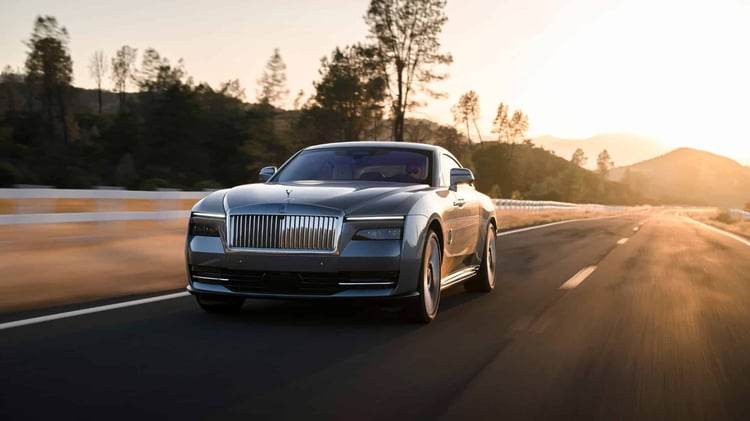
    Rolls-Royce Spectre electric on the road, front view
    The Rolls-Royce Spectre imposes its presence, combining silence and presence on European roads (Credit: Rolls-Royce).

    Going electric

    Rolls-Royce presented the Spectre as its first 100% electric model, announcing a range in excess of 500 km. This decision was not only motivated by ecological standards, it was also strategic in anticipation of strict European regulations.

    In 2024, the Spectre became the brand’s best-selling model in Europe, even surpassing some iconic thermal saloons. This success shows that luxury and innovation can coexist perfectly, appealing to a traditional and demanding clientele while attracting new buyers. Electric cars are becoming a vector of image and a symbol of modernity for the Goodwood-based brand.

    Between tradition and modernity

    The Spectre coupé makes its presence felt at 5.45 metres long and 2.08 metres wide, an impressive size for an electric vehicle. Despite this size, the vehicle holds an aerodynamic record with a drag coefficient of just 0.25. Its silhouette retains the Rolls-Royce DNA, but the modern lighting signatures and enlarged radiator grille reflect a desire for renewal.

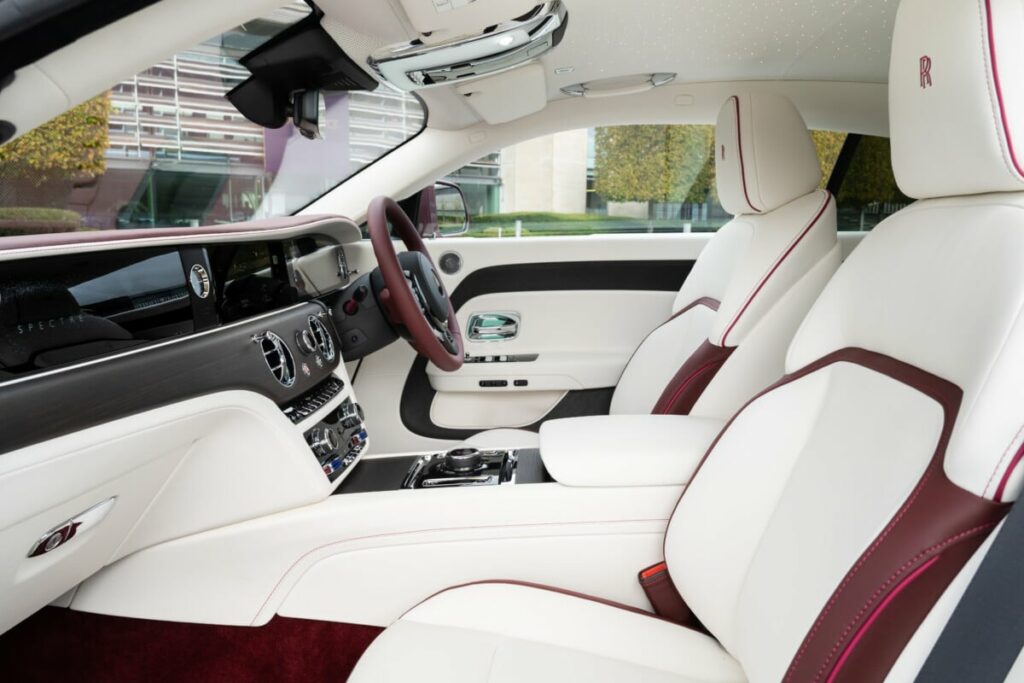
    Front interior of the Rolls-Royce Spectre Electric
    The interior of the Spectre illustrates the excellence of Rolls-Royce’s craftsmanship and technology. (Credit: Rolls-Royce)

    Inside, refinement is everywhere: lambswool carpets, a starry sky with fibre optics and a shooting star, spectacular bi-fold doors and branded umbrellas in each door. The on-board experience reinforces this ‘flying carpet’ feeling, the brand’s historic signature, while offering a level of comfort that is unprecedented for an electric coupé.

    Spectre Black Badge: power and provocation

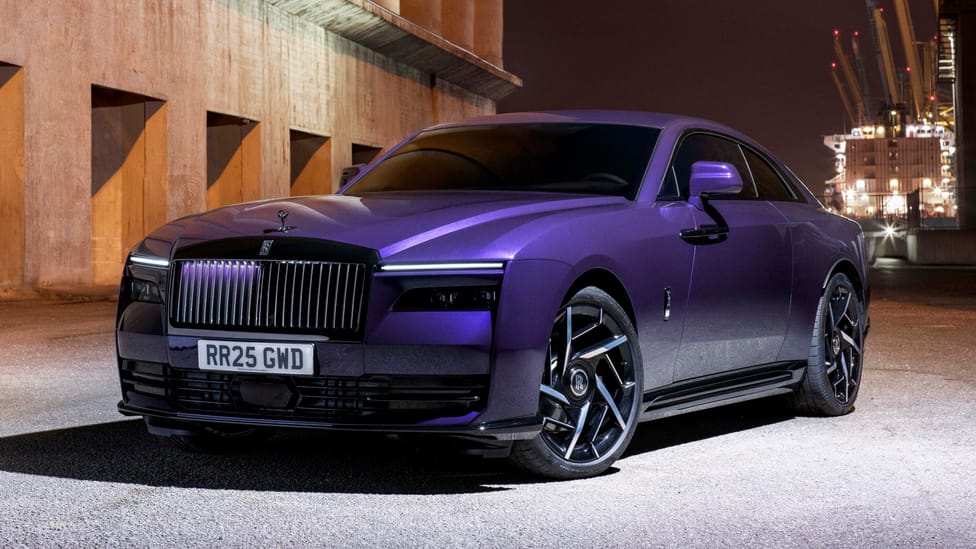
    The Spectre Black Badge – the ‘alter ego’ – marks an unprecedented intensity in the brand’s history. With 485 kW and 1,075 Nm of torque, it becomes the most powerful Rolls-Royce ever produced. Nevertheless, the priority remains comfort and control. Spirited Drive mode delivers blistering acceleration, while the suspension and steering have been recalibrated to harness this power in complete safety.

    The exterior design, with its black and violet finishes, reflects a bold, rebellious temperament, perfectly in keeping with the Black Badge spirit. This model is aimed at an intrepid clientele who refuse to conform to the traditional conventions of British luxury.

    Rolls-Royce Spectre Black Badge, a powerful and exclusive version
    With the Black Badge Spectre, Rolls-Royce is pushing back the boundaries of electric luxury and controlled performance. (Credit: Rolls-Royce)

    The interior of the Black Badge Spectre is a true demonstration of innovative craftsmanship. The illuminated instrument panel features more than 5,500 stars, a symbol of infinity and a signature of extreme personalisation. Customers can choose from five colour themes for the dials and harmonise the entire cabin.

    The seats, wood trim and technical fibre surfaces reveal a level of detail rarely seen in cars. This combination of technology and classic luxury perfectly illustrates British craftsmanship, while underlining Rolls-Royce’s ability to reinvent refinement for the electric age.

    Electrifying the classics: nostalgia and modernity

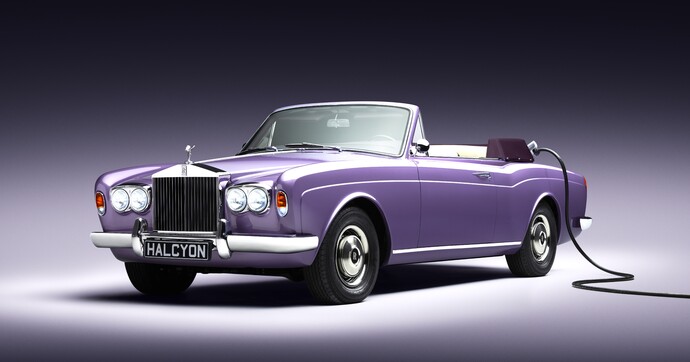
    Rolls-Royce Corniche electric by Halcyon
    Halcyon reinvents the legendary Corniche in an electric version, combining nostalgia and modernity (Credit: Halcyon).

    As well as new models, electrification is also affecting historic vehicles. British company Halcyon has transformed the legendary Rolls-Royce Corniche into an electric version, a project that has divided enthusiasts. The conversion replaces the original V8 engine with batteries offering a range of 400 km, while retaining the spirit of the 1970s convertible.

    The interior has been restored by hand, with woodwork, upholstery and modern technology discreetly integrated. This initiative shows that electrification and heritage preservation can co-exist, while provoking passionate debate about the soul and legendary sound of Rolls-Royce engines.

    Towards a new era for Rolls-Royce

    The Spectre paved the way, but the electric adventure continues. In 2025, Rolls-Royce plans to unveil a new electric model, probably a more compact SUV than the Cullinan. The €358 million investment in the Goodwood plant has confirmed this ambitious strategy. The carmaker is anticipating the ecological transition while maintaining its philosophy of tailor-made luxury. Electrical technology is becoming a tool for differentiation and personalisation, ensuring that each Rolls-Royce remains unique and true to the expectations of a highly demanding clientele.

    Rolls-Royce Spectre electric from a distance
    From afar, the Spectre’s imposing silhouette and timeless elegance are a symbol of British luxury (Credit: Rolls-Royce).

    The electric Rolls-Royces are not aiming for speed records, but for excellent comfort and controlled power. Even the Black Badge, with its phenomenal torque, retains the ‘magic carpet’ philosophy. The brand is demonstrating that luxury can be sustainable, and that performance, silence and respect for the environment can coexist. This strategy is a perfect illustration of how a historic brand is adapting to a changing world, where ecological demands are becoming unavoidable.

    The electric future of British luxury

    Between the Spectre, the Black Badge and the classic conversions, Rolls-Royce is demonstrating that electric cars are no longer a trend, but a strategic choice. The company has succeeded in preserving its identity while attracting a new generation of customers. The question is no longer “why go electric”, but “how can we continue to surprise and seduce in a world without petrol? This electric future combines tradition, innovation and boldness, illustrating Rolls-Royce’s ability to remain the absolute benchmark of contemporary luxury.

  • Bentley Flying Spur Hybrid : luxury, craftsmanship and electrified innovation

    Bentley Flying Spur Hybrid : luxury, craftsmanship and electrified innovation

    The Bentley Flying Spur Plug-In Hybrid is no longer a novelty, but it remains fascinating for its blend of performance and prestige. Far more than just an electrified engine, this saloon represents a perfect symbiosis of modern technology and British craftsmanship. Bentley demonstrates that hybrid can be synonymous with power, emotion and exclusivity.

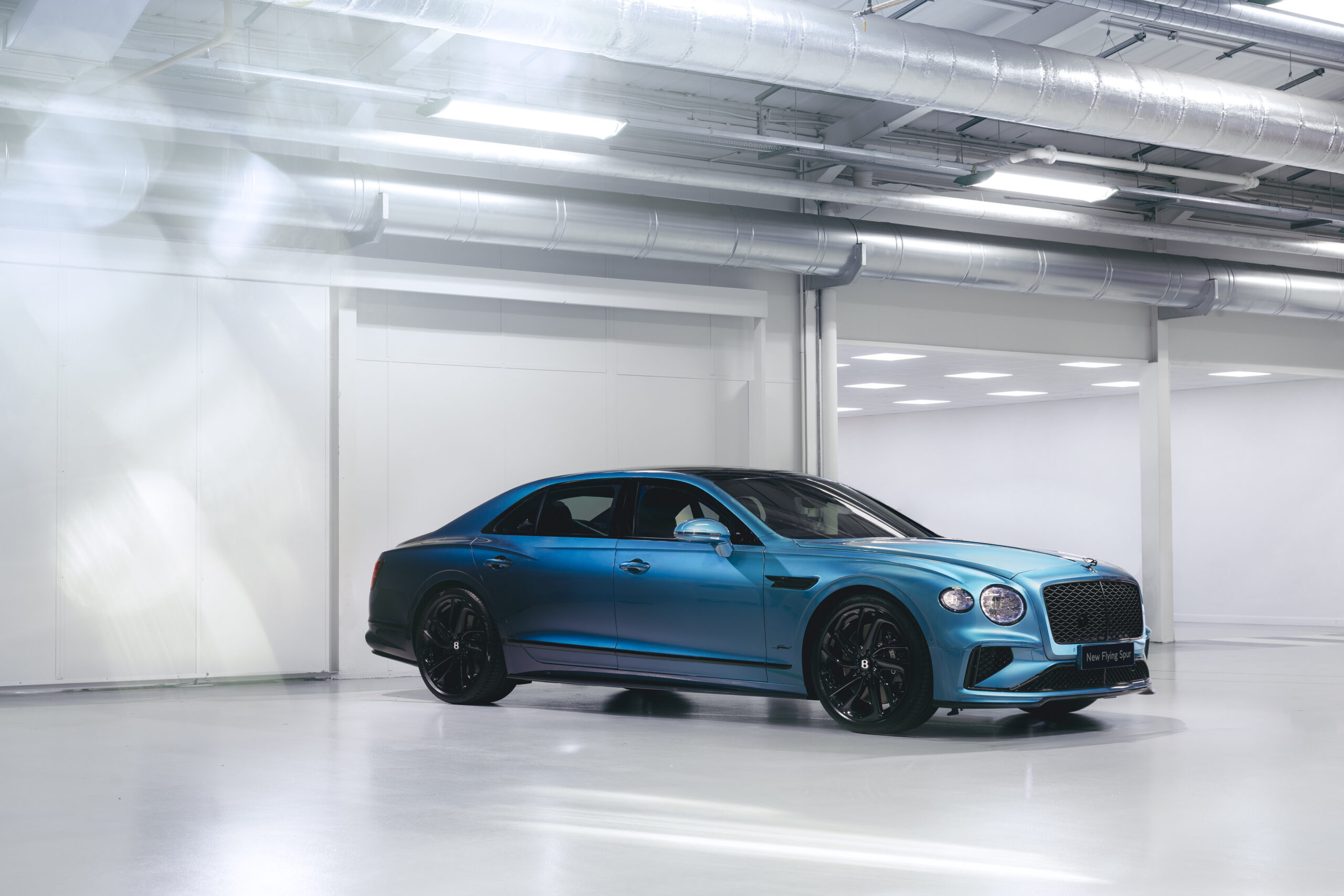
    Bentley Flying Spur hybrid 2025 seen from a distance with Ombré paintwork
    The Bentley Flying Spur hybrid 2025 boasts Ombré paintwork and an elegant design. (Credit: Bentley)

    A hybrid of tradition and modernity

    The Flying Spur Hybrid occupies an original position between the V8 version and the W12. Its design remains virtually unchanged, but its weight is naturally increased by the electric motor and battery. The 2.9-litre V6, combined with a 100 kW electric motor, develops 544 bhp and 750 Nm of torque. As a result, 0-100 kph is achieved in just 4.1 seconds, with a top speed of 285 kph, close to that of the V8 version. Bentley shows that electrification does not mean compromising performance.

    The 14.1 kWh battery offers a range of 40 km in 100% electric mode according to the WLTP cycle. Combined with the petrol tank, the Flying Spur has a total range of 700 km, making it flexible and reassuring for long journeys. The hybrid becomes a tool for everyday comfort, reducing emissions while maintaining dynamic performance.

    Ombré by Mulliner: the art of colour

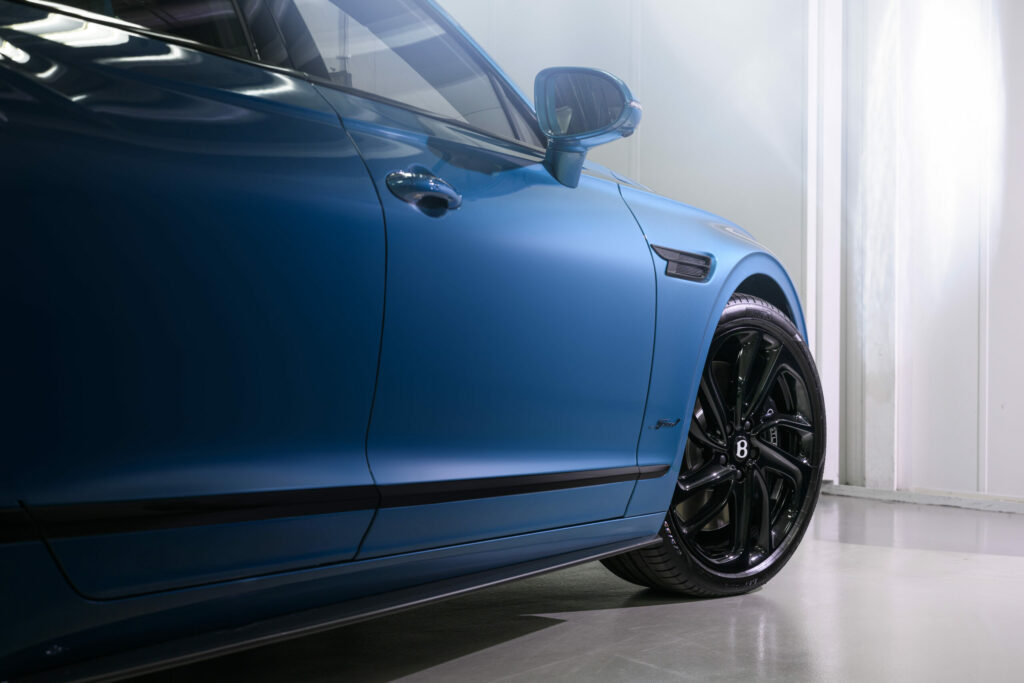
    Detail of front door and wheel Bentley Flying Spur hybrid 2025
    Close-up of the front door and wheel of the Bentley Flying Spur 2025, highlighting the Ombré finish.

    Bentley has applied its new Ombré paint technique to a Flying Spur for the first time, creating the first four-door saloon with a colour gradient. The process takes almost 60 hours of craftsmanship. This work is carried out by two expert technicians at the Dream Factory workshop in Crewe, UK. This paintwork changes from vibrant Topaz Blue at the front to darker Windsor Blue at the rear, with a gradual transition on the doors, sills and roof.

    The colours are applied in several stages, carefully blended using traditional methods to ensure perfect symmetry and avoid the appearance of an intermediate colour. Two other combinations are also available: Sunburst Gold to Orange Flame and Tungsten to Onyx, with more shades planned in the near future.

    Each vehicle is therefore unique, and the mastery of the technicians ensures that the result is perfect to the naked eye. The Flying Spur Ombré makes its first appearance at the Southampton International Boat Show 2025, following on from the Continental GT which debuted the technique at the Quail Motorsports Gathering. This exclusive finish, called Ombré by Mulliner, is available through Bentley’s global dealer network for £48,000 (approximately €55,200).

    Performance and technology

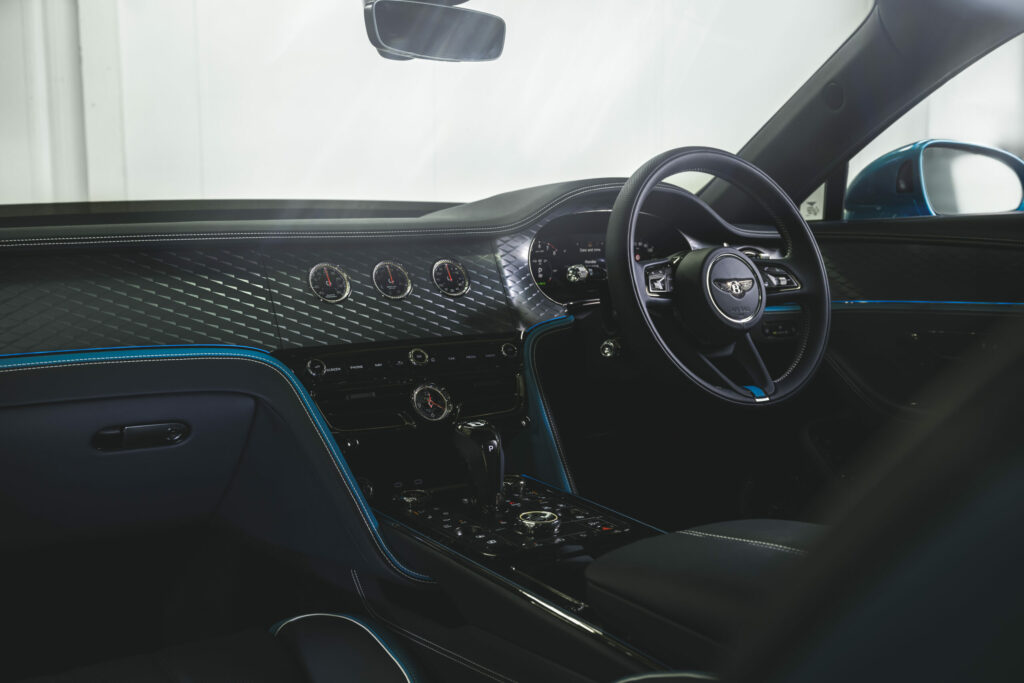
    Bentley Flying Spur 2025 dashboard with Ombré by Mulliner paintwork and hand-crafted finish
    Luxurious interior of the Flying Spur 2025 with Ombré Topaz Blue/Windsor Blue paintwork, unique and handcrafted

    The hybrid powertrain isn’t just about numbers on paper. The 100 kW electric motor ensures instant acceleration, while the V6 delivers a pleasant sound and power. Its hybrid system is optimised to combine energy efficiency with driving pleasure. Adaptive suspension and power steering ensure comfort and precision on all roads, from city centres to fast motorways.

    The Flying Spur Hybrid offers luxurious options such as the Naim audio system, Bentley rotary screen and panoramic roof. Each vehicle becomes a personalised collector’s item, reflecting the owner’s taste while offering a unique driving experience.

    Bentley’s hybrid takes on the premium competition

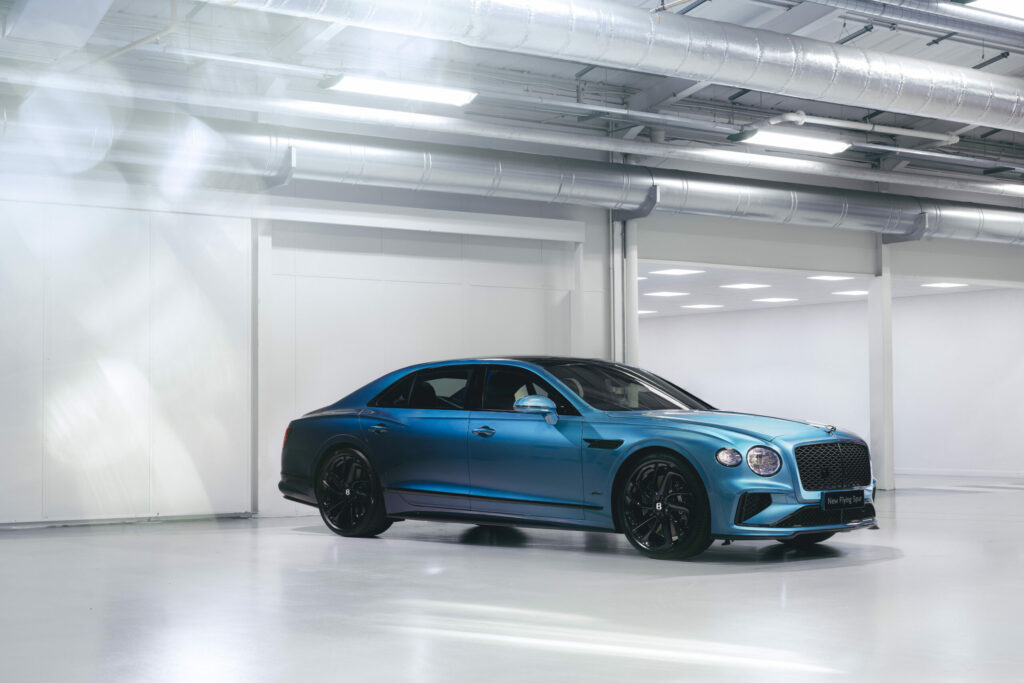
    Side view Bentley Flying Spur hybrid 2025 Ombré paintwork
    The side view of the Bentley Flying Spur hybrid 2025 reveals the subtle gradation of the Ombré by Mulliner paintwork.

    Compared to the Bentayga Hybrid or the Continental GT Speed, the Flying Spur hybrid emphasises elegance and comfort while maintaining performance close to that of combustion engines. Even in the face of German rivals such as Porsche Panamera E-Hybrid or Mercedes-AMG S 63 E, Bentley stands out for its artisanal approach and extreme customisation, where each vehicle becomes a unique creation.

    Bentley transforms the hybrid into a vector of emotion and prestige. The engine is no longer limited to technology: it becomes part of the sensory experience, combined with the beauty of the exterior and the cockpit. Every journey is an immersion in luxury, where power and craftsmanship coexist in harmony.

    Electrification strategy and future vision

    Bentley plans to maintain hybrid models until 2035, while gradually preparing for the arrival of fully electric models. This strategy allows customers to adapt to electrification without losing the prestige and comfort that are characteristic of the brand. Hybrids thus become a bridge between tradition and modernity, combining technology, performance and craftsmanship.

    Bentley Flying Spur Hybrid 2025 leather rear seats Cumbrian Green
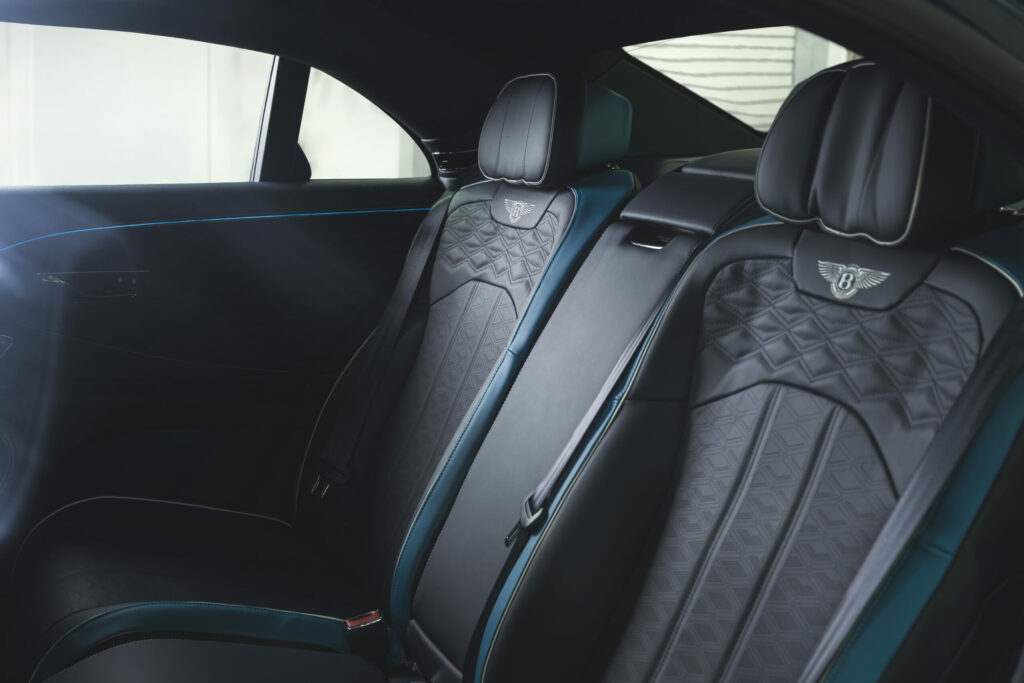
    The rear seats of the Bentley Flying Spur 2025 offer comfort, craftsmanship and harmony with the Ombré colour scheme.

    The Flying Spur hybrid is more than just the addition of an electric motor to a V6. It embodies a unique combination of performance, autonomy and personalised design. Thanks to Ombré by Mulliner and a host of options, each model becomes a rolling work of art. Bentley is proving that hybrids can deliver emotion, style and luxury, while respecting its prestigious British DNA.

  • Toyota is annoyed by the misuse of the word “hybrid”… while losing itself in the process

    Toyota is annoyed by the misuse of the word “hybrid”… while losing itself in the process

    Toyota is denouncing the “fake hybrids” sold by its competitors. According to the Japanese manufacturer, 48-volt systems do not deserve the name. Yet Toyota’s own Hilux pick-up, sold in Europe, proudly displays the “Hybrid 48V” badge. This casts doubt on the consistency of the brand’s claims.

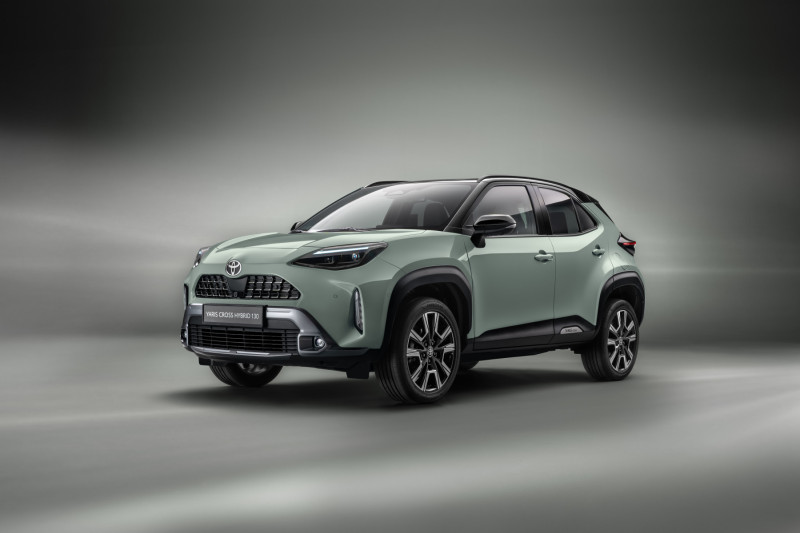
    Toyota Yaris Cross front and side view, compact and modern design for hybrid urban SUV
    Front and side views of the Toyota Yaris Cross, a hybrid urban SUV with a modern, dynamic design (Credit: Toyota)

    A semantic war in the automotive industry

    For several years now, the technical terms surrounding electrification have been multiplying. Hybrid, rechargeable, mild-hybrid… all names that sometimes confuse the issue. For Toyota, a pioneer of ‘full hybrid’ since the late 1990s, this confusion has become unbearable. The Japanese group defends a strict definition: a hybrid vehicle must be able to drive, at least for a few metres, in 100% electric mode.

    In Australia, Sean Hanley, Toyota’s Marketing and Sales Director, strongly criticised manufacturers who present 48-volt cars as hybrids. In his view, these systems offer only a slight assistance to the combustion engine. They slightly reduce fuel consumption, but do not provide real electric propulsion. “A 48V-assisted system does not represent a hybrid powertrain”, he said, calling on manufacturers to be more transparent with their customers.

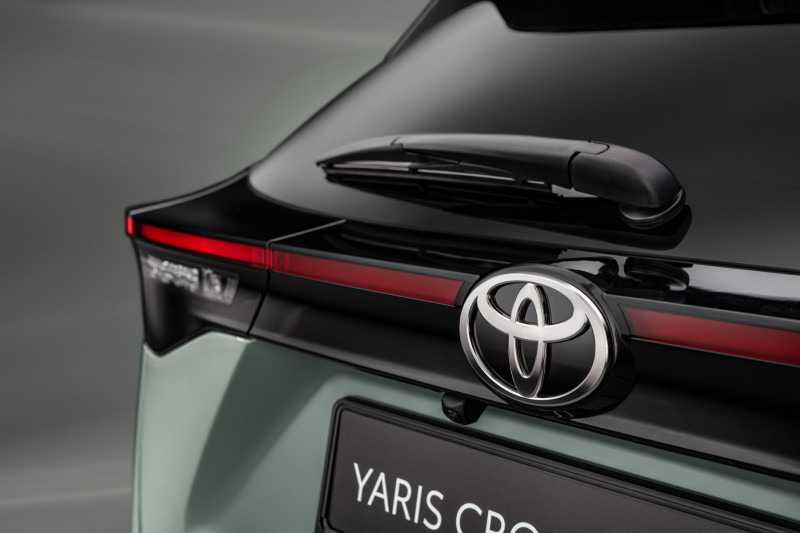
    Toyota Yaris Cross rear view with Toyota logo, practical and elegant design
    Rear of the Toyota Yaris Cross with boot and rear window, illustrating the elegant styling of the hybrid SUV (Credit: Toyota)

    Finger-pointing at competitors

    Toyota’s criticisms are aimed at several major players: Stellantis, Renault, Nissan and even some German manufacturers. Their ‘mild-hybrid’ models are often lumped together with full hybrids in the registration statistics. The result is total confusion for the public, who believe they are buying an electrified vehicle, when in fact they are buying a slightly assisted internal combustion engine.

    Ironically, Toyota is not entirely consistent with its own principles. In Europe, its Hilux pick-up is now sold under the name “Hilux Hybrid 48V”. However, this is a mildly hybrid engine, i.e. a simple electric assistance system. In Australia, the same model is called ‘V Active’, precisely to avoid any ambiguity. This difference in approach in different markets casts a shadow over the manufacturer’s communications strategy.

    A question of image and credibility

    For over twenty years, Toyota has been banking on hybrids, a technology that has become central to its brand identity. The argument is clear: full hybrid offers real fuel savings, unlike 48V solutions. However, this defence of authenticity is coming up against the reality of the market. To remain competitive, the manufacturer must also offer simpler, less expensive versions, even if they do not correspond to its definition of hybrid.

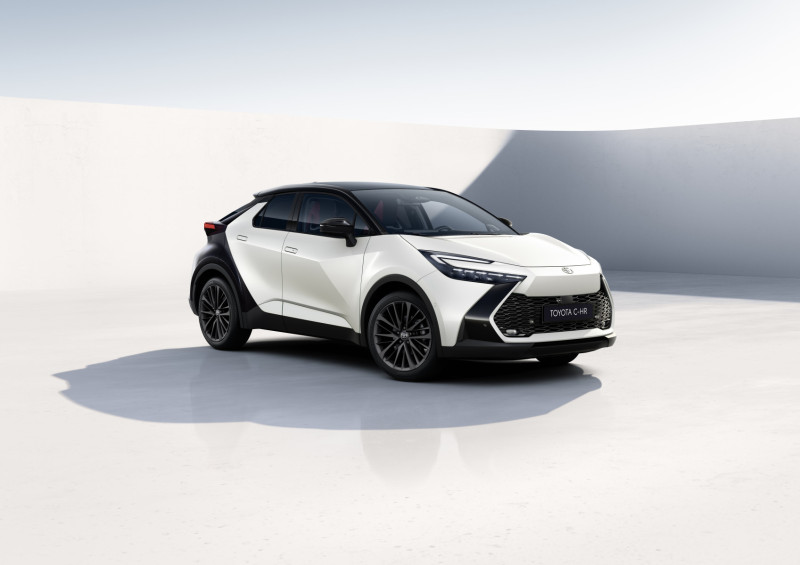
    Toyota C-HR front view and profile, a hybrid SUV coupé with a dynamic, modern design
    The Toyota C-HR, seen from the front and in profile, is a powerful hybrid SUV coupé with a sporty, contemporary design (Credit: Toyota).

    Europe, a place of compromise

    On the old continent, regulations are forcing brands to reduce their CO₂ emissions. Light hybridisation is therefore becoming an essential means of artificially lowering average fuel consumption. In this context, Toyota is no exception to the marketing logic: adopting the term ‘hybrid’ is still more salesy than simply announcing a ’48 volt’. As a result, Toyota is playing both sides of the fence, at the risk of being accused of hypocrisy.

    Behind this debate lies a battle over image. Customers do not always distinguish between the different types of hybridisation, and the brands are taking advantage of this. Toyota, which has long been ahead of the game, is seeing its technological advantage diluted by this inflation of similar terms. By denouncing this drift, the brand hopes to reassert its expertise, but its own behaviour complicates the demonstration.

    Toyota C-HR interior dashboard, digital display, multifunction steering wheel and modern finish
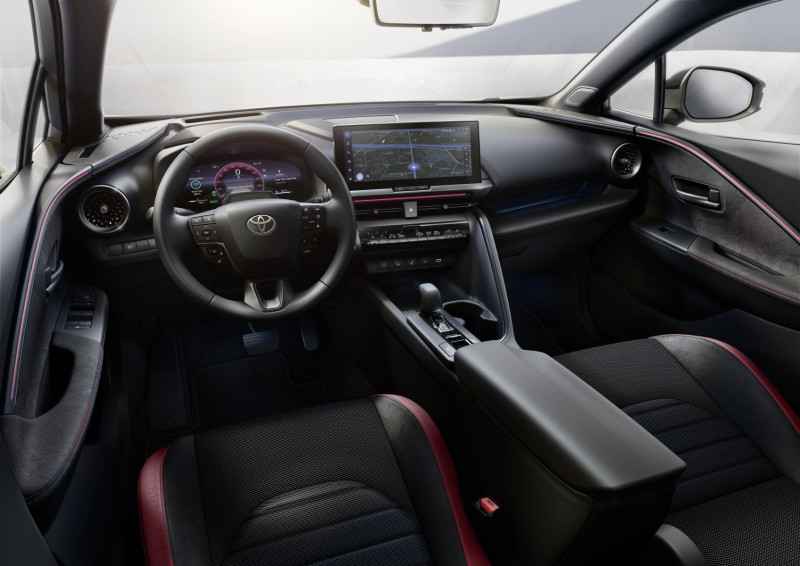
    Interior of the Toyota C-HR with digital instrument panel, highlighting the comfort and technology of hybrids.

    Towards a future that is still unclear

    The automotive market is continuing to shift from hybrid to rechargeable to electric vehicles. Toyota, which remains cautious when it comes to all-electric vehicles, continues to defend its vision of gradual electrification, without any break with the past. However, to be convincing, the manufacturer will first have to clarify its position. By playing with words, there is a great risk that consumers will no longer know what they are really buying.