Category: News

  • Renault: Time for the facts

    Renault: Time for the facts

    On 19 February 2026, Renault Group presented its financial results for 2025 during an online conference call with journalists and analysts. The message from François Provost, CEO, and Duncan Minto, CFO, was clear: 2025 remains a solid year in a market under pressure, but 2026 promises to be more cautious, due to the price war and industrial reorganisation.
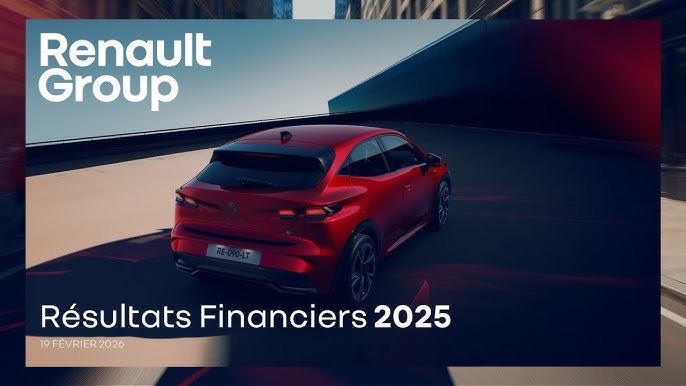
    source : Renault

    A solid 2025 performance in a deteriorated environment

    François Provost began by emphasising the context: 2025 is part of a more difficult global market, marked by increased competitive pressure, particularly in the electric segment, where Asian carmakers are gaining more and more ground. “The 2025 results, against a difficult market backdrop, demonstrate the commitment of our teams to delivering a consistent performance of the highest order in the automotive industry”, he said.

    In financial terms, the Renault Group still expects an operating margin of 6.3% in 2025, down on the record level of 7.6% achieved in 2024. In terms of operating profit, the CEO has announced a year-on-year decline of around 14.8%. Finally, in terms of sales, the Group sold 2,336,807 vehicles worldwide in 2025, up 3.2% on the 2,264,815 units sold in 2024. Nevertheless, the Group remains one of the most profitable generalist carmakers in Europe.
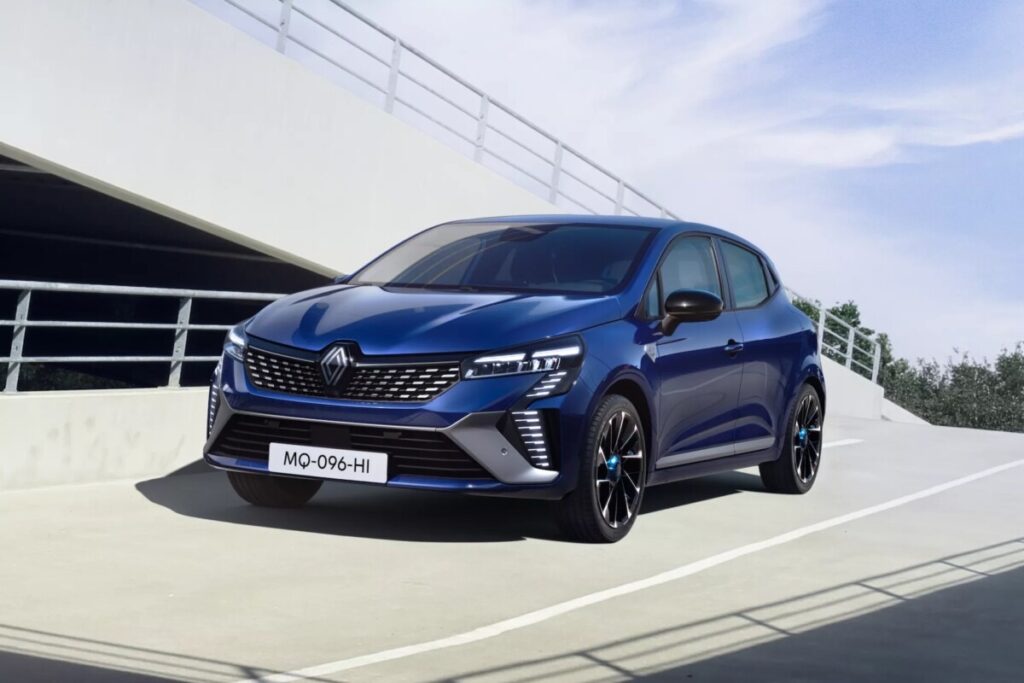
    source : Renault

    The CEO of Renault Group described a particularly tense environment:

    • Intensification of price wars on electric vehicles, with Asian players on the offensive.
    • Slowdown in the European retail market.
    • Underperformance in the light commercial vehicle (LCV) segment.

    Against this backdrop, Renault is highlighting the resilience of its post-restructuring model: reducing fixed costs, refocusing the range and ramping up platforms dedicated to electric vehicles.

    2026: a cautious approach and lower margins expected

    And if 2025 has been more discreet, this may also be the case for 2026. Renault Group executives have been much more cautious for the current year.

    Renault anticipates an operating margin of around 5.5%, down on 2025. This is justified by the Group, which cites an environment that remains “complex”, marked by international economic uncertainty and ever-increasing pressure on prices. But while this estimate gives us an idea of how the brand is approaching this year, we will have to wait for the new strategic plan, due on 10 March 2026.

    source : Renault

    Palencia: a strong signal on industrial electricity allocation

    Before the March strategy, however, it was during the Q&A session of this video conference that the most strategic announcement was made.

    Asked about the industrial allocation of future electric models, François Provost said: “We need to find the competitiveness, find the economic equations, so no final decision has been taken, but in terms of industrial allocation, it is natural to use Palencia as a reference for the renewal of the C and D segments, including electrics.

    This statement clearly places the Palencia plant at the heart of the Group’s future industrial strategy for the compact C and D segments, including electric vehicles. Currently dedicated mainly to the Captur, the Spanish plant could become a pillar of mid-range electric production, with a current capacity of around 250,000 units per year and the potential to ramp up production.
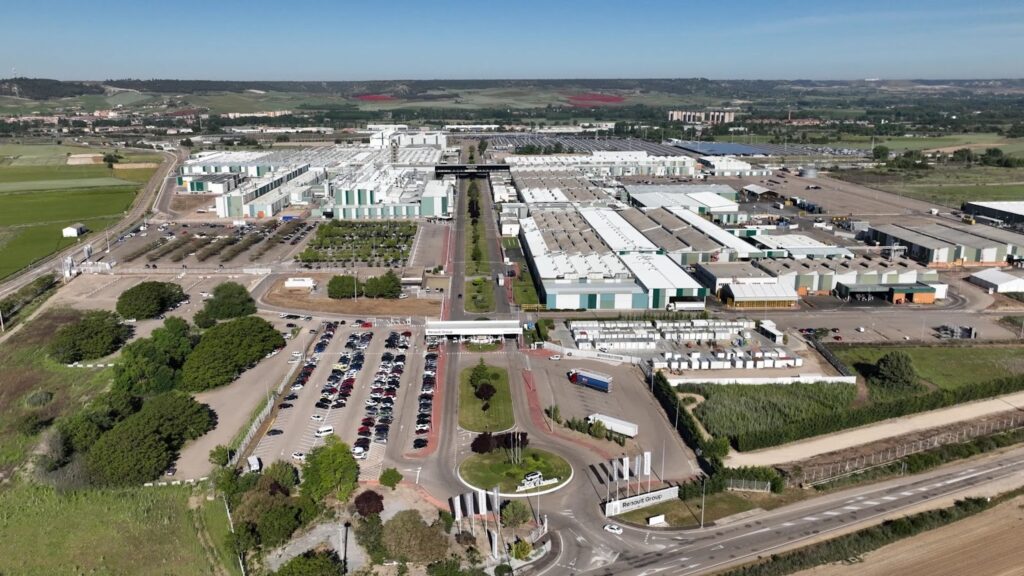
    source : Renault

    European competitiveness and rebalancing of sites

    Palencia was chosen because of its industrial competitiveness. Spain has lower labour costs than France, and benefits from recent social agreements that favour flexibility. The agreements signed in recent years between Renault and the Spanish trade unions, particularly at the Valladolid and Palencia sites, allow for more flexible working hours and shifts, greater versatility among employees and better control of production costs.

    This move is also a continuation of the geographical specialisation undertaken since the Renaulution plan. Until the recent launch of the new Twingo in Slovenia, the French plants at Douai and Maubeuge were the Group’s only European sites dedicated to 100% electric models, while Spain had become the hub for hybrid models, including the Austral, Espace and Rafale.

    According to our colleagues in “Les Echos”, Palencia is set to be the site of the group’s next medium and large electric family models from 2028.
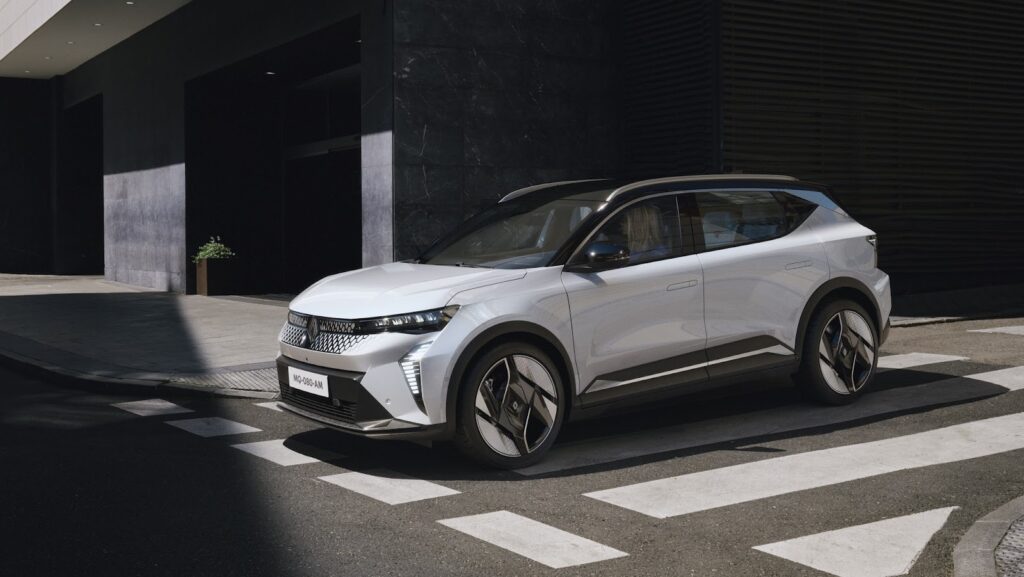
    source : Renault

    A profitable group in strategic transition

    The main conclusions of this teleconference are twofold. Renault remains profitable in a difficult environment, but is entering a more cautious phase. The expected fall in margins in 2026 reflects a realistic anticipation of future tensions. At the same time, the potential allocation of the C and D electric segments at Palencia marks a structuring step: the industrial shift towards electric vehicles is now fully integrated into the group’s strategy.

    The 10 March plan will set out this roadmap, which aims to ensure profitable growth in the second half of the decade.
  • The future electric Alpine A110 will share its platform with the Renault 5 Turbo 3E

    The future electric Alpine A110 will share its platform with the Renault 5 Turbo 3E

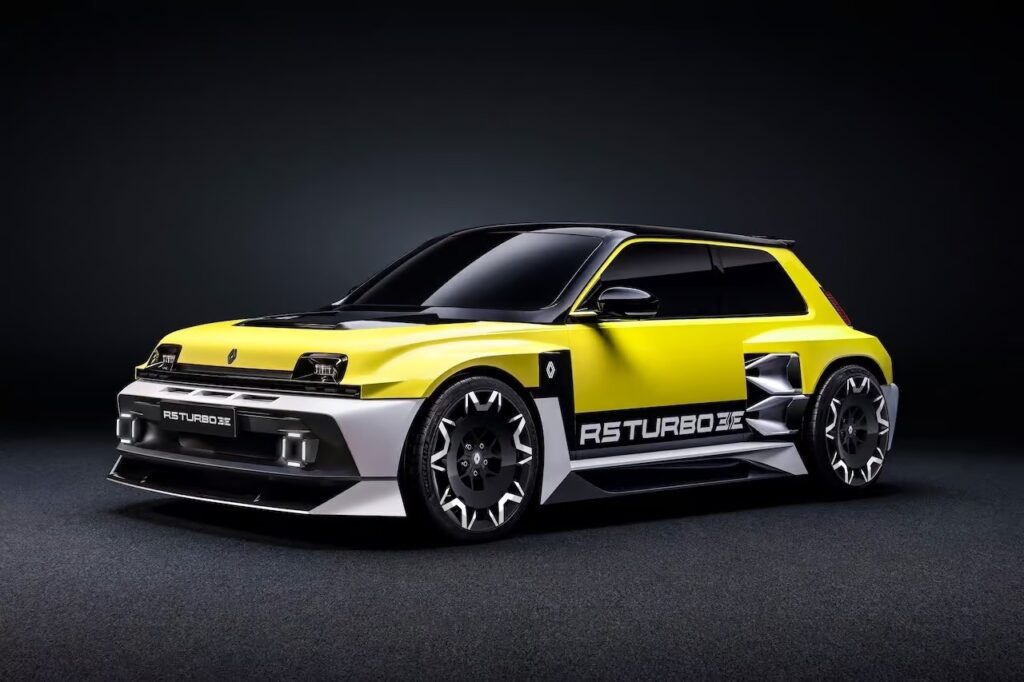
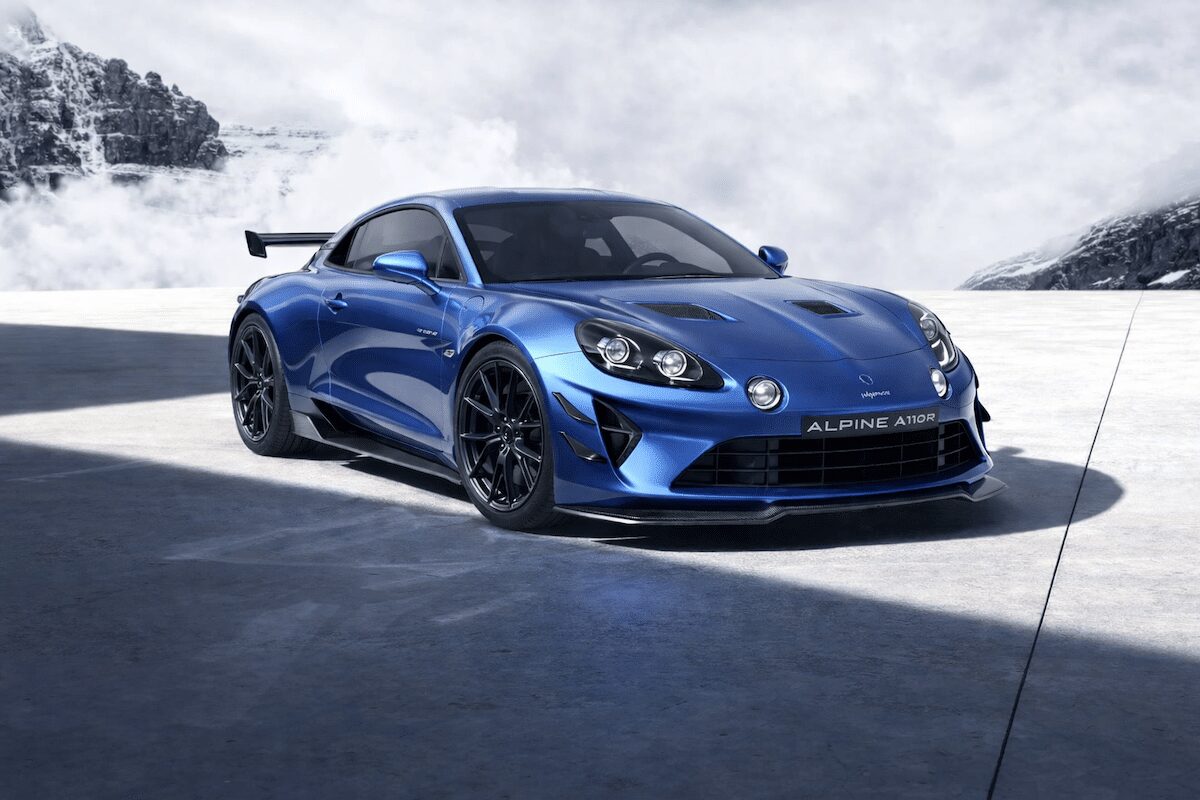
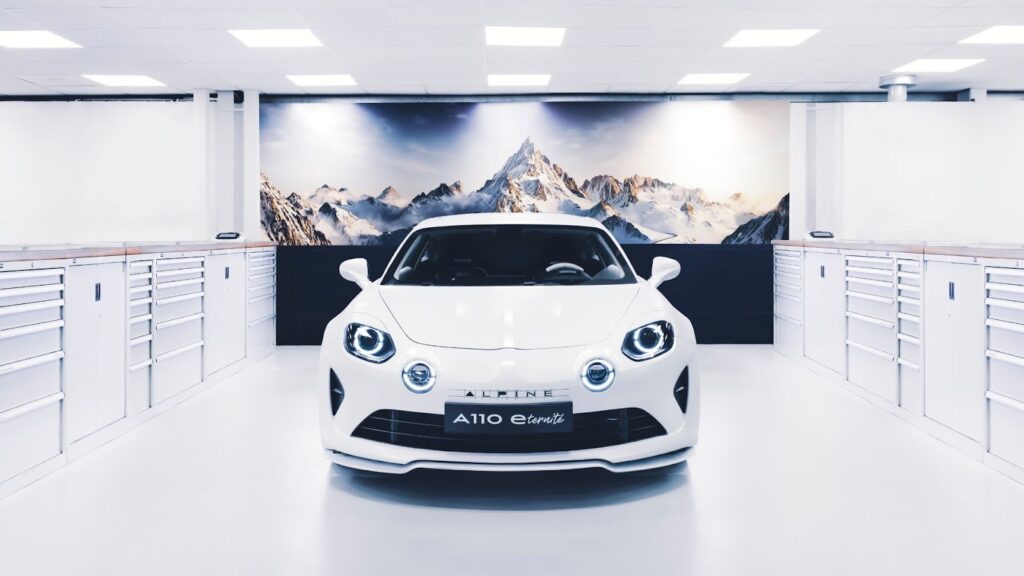
    The news has been circulating since 16 February 2026, and has rapidly attracted the attention of the automotive sector: the future electric Alpine A110 will be based on the same Alpine Performance Platform (APP) as the Renault 5 Turbo 3E, the radical electric model recently unveiled by Renault. This confirmation came indirectly from an interview with Philippe Krief, CEO of Alpine, given to the British media outlet Autocar UK.

    source : Alpine

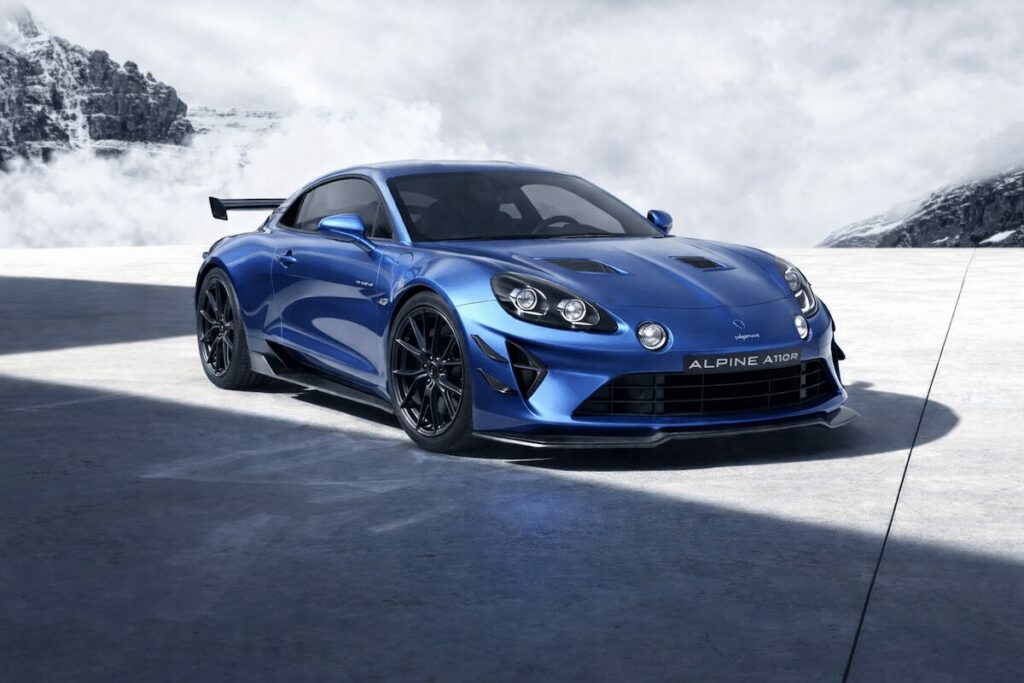
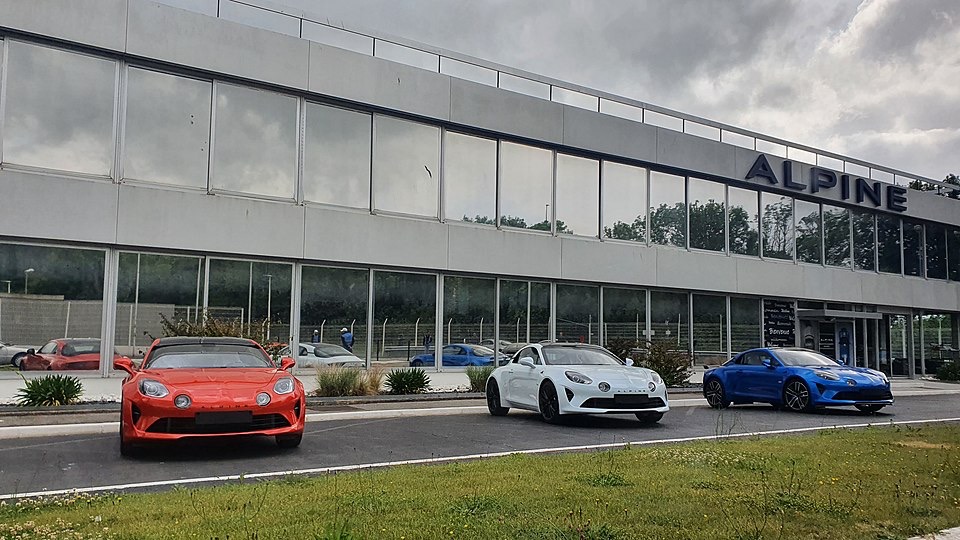
    This new version of the Alpine A110 promises to be incredible. Relaunched in 2017 by the French marque, the Alpine A110 marks the rebirth of the legendary 1960-70 berlinetta, officially unveiled at the Geneva Motor Show. Produced in Dieppe, the French sports car has sold nearly 30,000 units worldwide since its return, ahead of the announcement of the scheduled end of its combustion engine version in 2026. This will coincide with the launch of the next generation of 100% electric cars, expected from 2027.

    A common APP platform, but distinct applications

    And what we’ve known since Philippe Krief spoke to our British colleagues: “The future third-generation A110, like the Renault 5 Turbo 3E, will use a new aluminium structure called the Alpine Performance Platform (APP)”. This platform is designed specifically for Alpine’s future electric sports models. It is based on an ultra-rigid extruded aluminium structure, which is claimed to be twice as rigid as that of the current A110 thermal, while retaining a central objective: lightness. Renault’s Turbo 3E weighs no more than 1.5 tonnes, and its cousin is likely to follow suit.

    The Renault 5 Turbo 3E and the future electric A110 will therefore share a common architecture, but with different mechanical set-ups and implementations. Renault’s sporty electric city car will use two axial-flow rear-wheel motors developing up to 555 bhp, while the A110 EV should initially adopt a more conventional configuration with integrated rear motors, still with rear-wheel drive.

    Source : Renault

    A design faithful to the A110 thermal

    Even before tackling the technical aspects, Philippe Krief was keen to reassure us on one key point: the future electric Alpine A110 will retain the stylistic essence of the saloon car. The emblematic silhouette will remain, albeit with a slightly increased length compared with the current model (4.18 m). Like the A390, Alpine intends to evolve its historic codes by retaining the quadruple headlamps, but in a more futuristic interpretation than a retro one.

    This new 100% electric generation will also mark a move upmarket in terms of body styles. In addition to the coupé, Alpine is planning a cabriolet and a GT 2+2 version, an approach reminiscent of the Porsche 911 strategy. On board, the future A110 will feature an entirely new cockpit. According to Autocar UK, this will be Alpine’s first truly bespoke interior, with priority given to physical controls and a deliberately uncluttered driving experience, far removed from screen overkill.

    source : Alpine

    Rear battery and optimised weight distribution

    According to information relayed by several specialist French and European media, the future electric A110 will carry a battery of around 70 to 77 kWh, supplied by Verkor. The battery will be positioned mainly at the rear, behind the seats, to ensure a weight distribution close to 50/50 and a very low centre of gravity.

    The stated aim remains true to Alpine’s DNA: to offer an agile, precise electric sports car capable of rivaling the sensations of today’s combustion-powered models. The target weight is claimed to be under 1,500 kg, an ambitious figure for an electric coupé in this segment.

    Increased performance without sacrificing the A110 spirit

    In terms of performance, the future electric A110 should exceed the 345 bhp of the current A110 R Ultimate. Some sources suggest a power output of between 400 and 480 bhp, depending on the version, with a 0 to 100 km/h time of less than 3.5 seconds and a range of more than 480 km on the WLTP cycle.

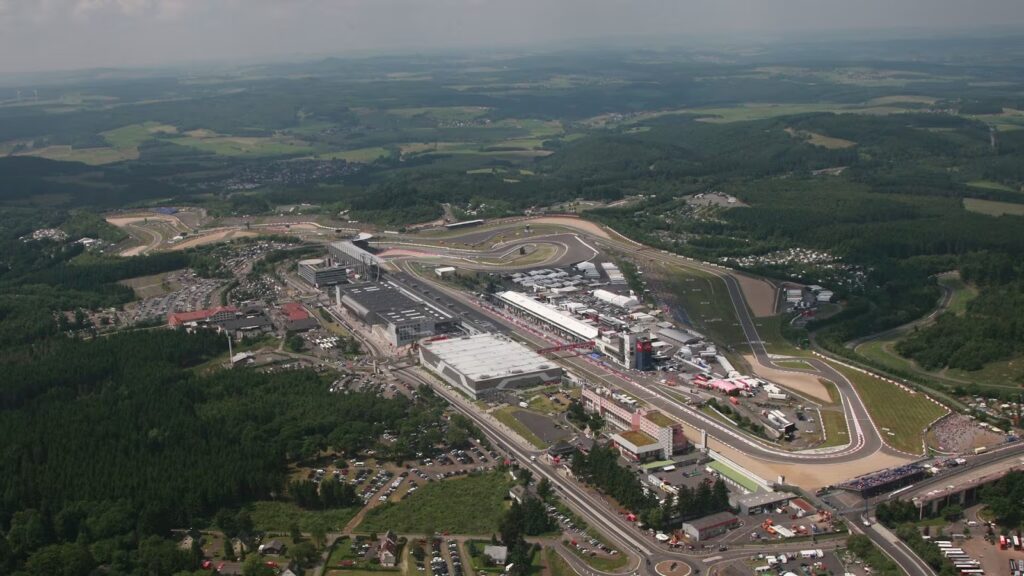
    Alpine is also said to be working on an advanced electric architecture, with advanced software management (Software Defined Vehicle) and a torque vectoring system called the Alpine Dynamic Module (ADM), designed to optimise dynamic behaviour on both road and track. Before the official technical specifications of this sports car are announced, full-scale tests are due to take place at the legendary Nürburgring in Germany.

    source: Formule 1

    An assertive range strategy

    This future electric A110 is part of a clear strategy for Alpine: to maintain an exclusive and sporty positioning, far from volumes. Production will remain limited, with assembly planned to take place in Dieppe, France, and prices estimated at between €140,000 and €160,000, depending on the configuration.

    source: Wikipedia

    The Renault 5 Turbo 3E, of which 1,980 units were produced, would act as a technological showcase, enabling the development of the APP platform to be partly financed and a number of technical solutions to be tested before the A110.

    See you in Paris in 2026

    We’re going to have to wait and see the first images of the Alpine A110. Its official unveiling is expected to take place at the Paris Motor Show in October 2026, with market launch planned for 2027. In the meantime, Alpine will continue to release information.

  • JAECOO 7 PEHV: what does the SUV soon to be available in France promise?

    JAECOO 7 PEHV: what does the SUV soon to be available in France promise?

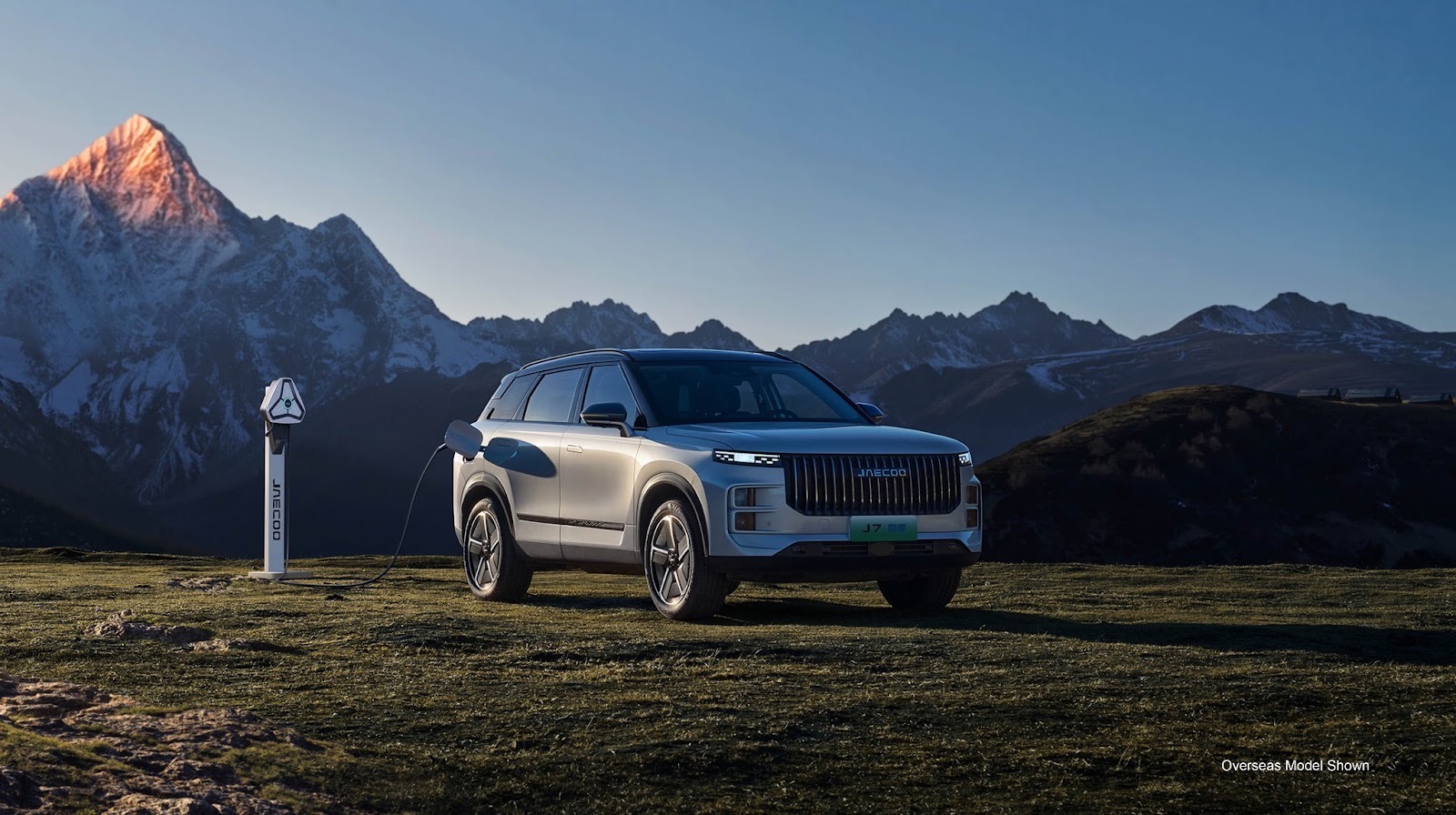
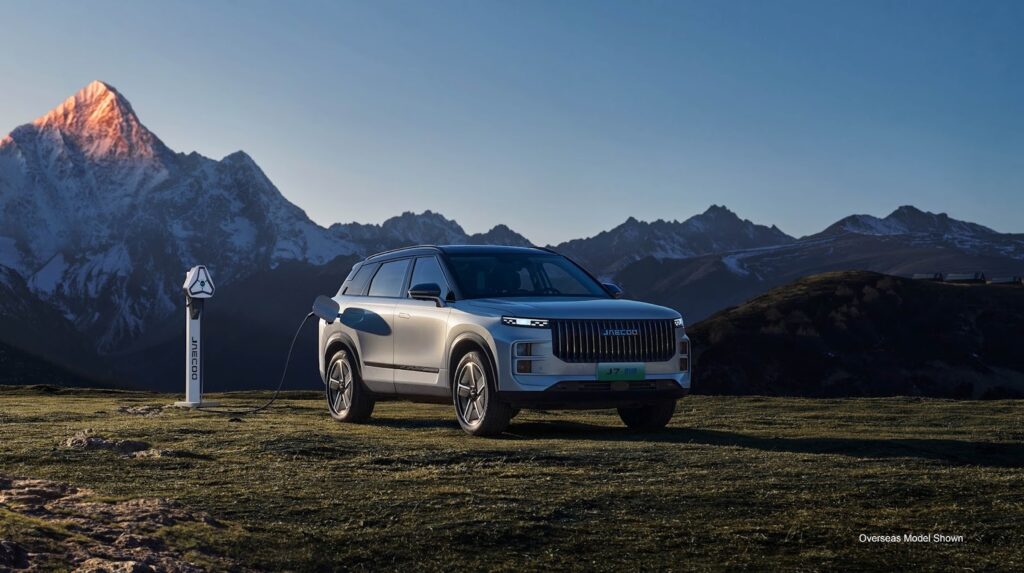
    “JAECOO 7 PHEV: The New Classic” is the title of the press release published by the Chinese manufacturer on 17 February 2026. It sets out the full specifications of the JAECOO 7 Plug-in Hybrid (SHS-P), the premium SUV that will arrive in France in March 2026. With a 279 bhp plug-in hybrid engine, 90 km of electric range, a combined fuel consumption of 2.4 l/100 km and a starting price of €35,990, the JAECOO 7 is positioned as a serious alternative to its European rivals.

    source : JAECOO

    Generous exterior design and dimensions

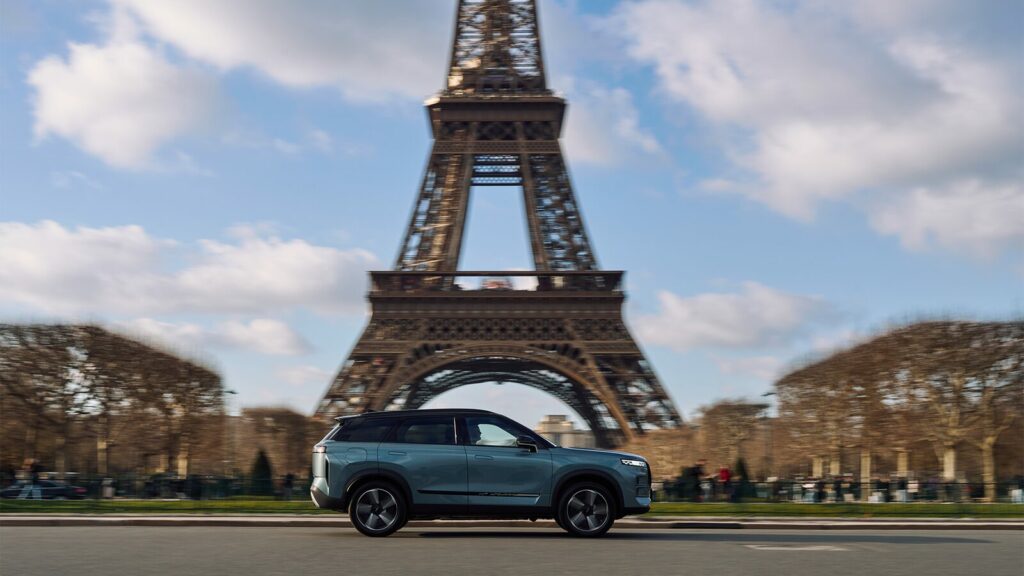
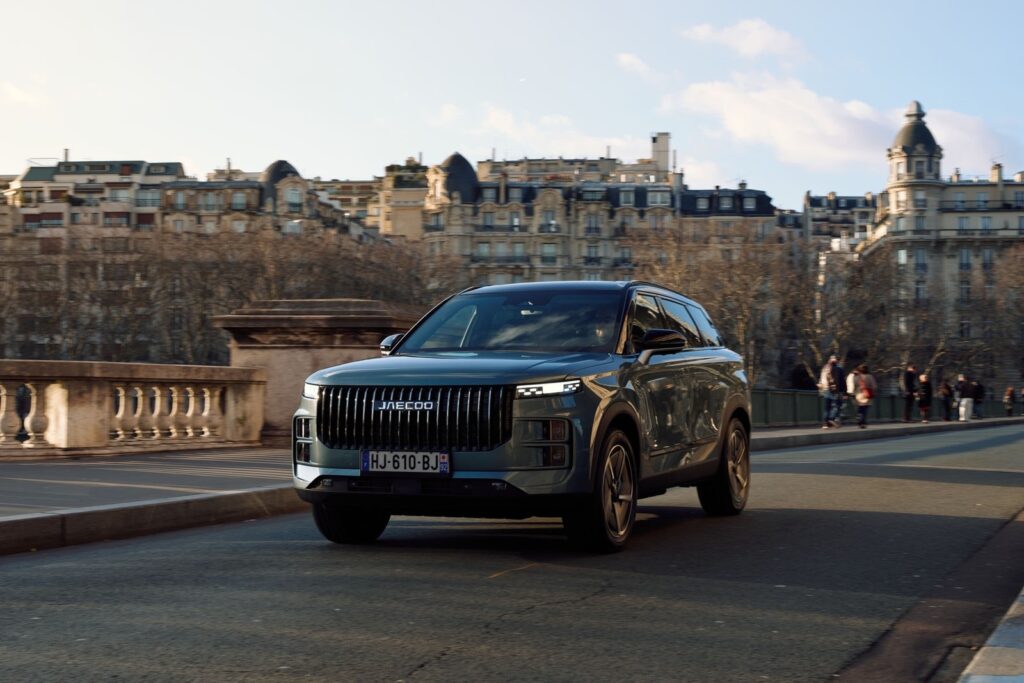
    The JAECOO 7 is defined by the manufacturer as an SUV with clean, contemporary lines. Its dimensions are in line with those already seen in this segment: 4.50 m long, 1.87 m wide and 1.67 m high. The design expresses style and robustness, in line with the ‘From classic beyond classic’ philosophy.

    According to Jaecco, the front end features a very wide radiator grille, flanked by full LED headlamps. The side profile features pronounced wheel arches, straight lines and flush-fitting retractable door handles. The rear features a full LED light strip and a sporty spoiler.

    source : JAECOO

    Premium, technological interior

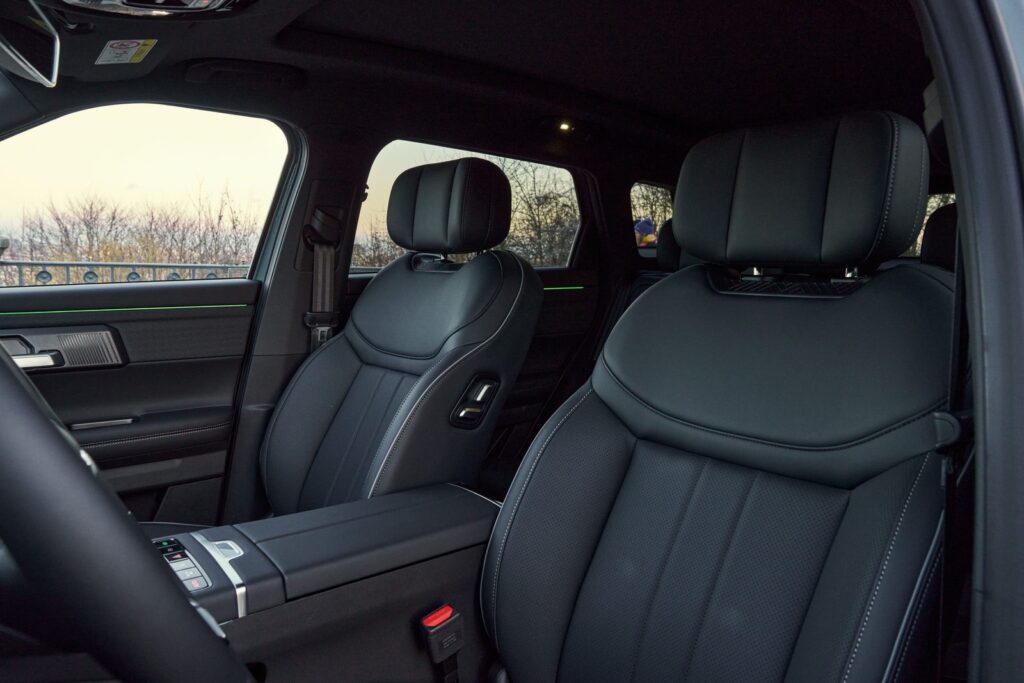
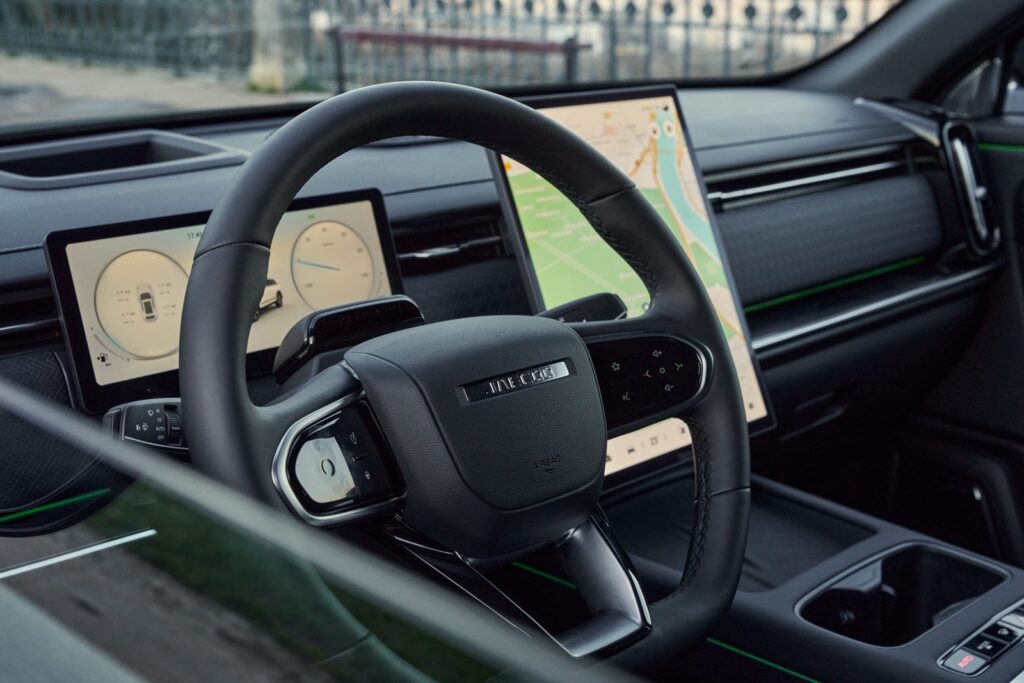
    The cabin is minimalist, with a 10.25-inch instrument cluster behind the steering wheel and a 14.8-inch vertical central screen. The gear selector is positioned close to the steering wheel rather than on the centre console, as is often the case. According to Jaecco, this makes it easier to start the car without the need for a key or a button: a simple press on the brake starts the vehicle, once the seatbelt is fastened.

    The front seats are electrically adjustable and heated as standard, and the steering wheel is also heated – always a little extra that makes a difference. As for boot capacity, an important criterion when it comes to an SUV, it is 500 litres and can be extended to 1,265 litres with the seats folded down.

    source : JAECOO

    SHS-P plug-in hybrid powertrain: three key technologies

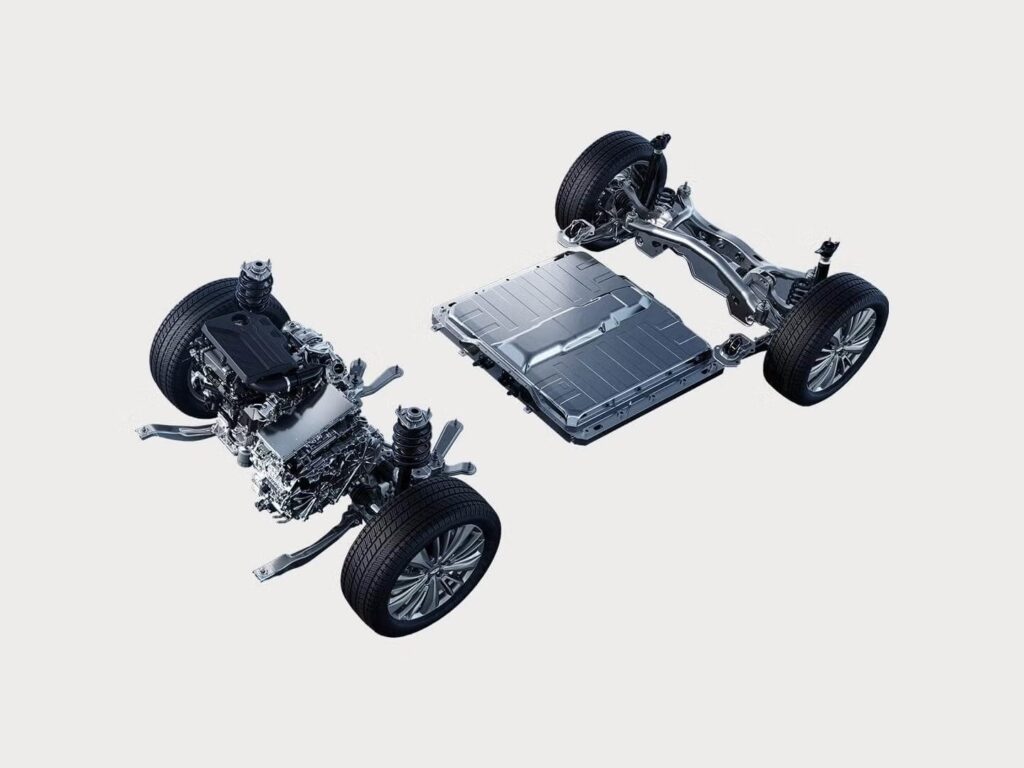
    Let’s talk about pure technology, which is also of interest to motorists. The JAECOO 7 will be equipped with the SHS-P (Super Hybrid System – Plug-in) system, which combines three technologies developed by the Chery group:

    • 1.5T GDI DHE internal combustion engine: Fifth-generation turbocharged 4-cylinder engine, 143 bhp and 215 Nm.
    • 1DHT transmission: A single-speed transmission combined with a 204 bhp, 310 Nm synchronous electric motor. It incorporates a 100 kW generator and intelligently alternates between 100% electric, series hybrid, parallel hybrid, pure thermal or regeneration mode.

    • 18.4 kWh LFP battery: High-density battery with Cell-To-Pack technology, IP68 certified, tested from -35 to +60°C. AC 6.6 kW (2 h 40 from 25% to 100%) and DC 40 kW standard (30 to 80% in 20 minutes). V2L 3.3 kW function for powering external devices.
    source: OMODA & JAECOO

    Performance and consumption

    The SHS-P system gives the SUV an impressive performance. According to the manufacturer :
    • Combined power: 279 bhp, 310 Nm
    • WLTP combined fuel consumption: 2.4 l/100 km
    • Fuel consumption on a trickle charge: 6 l/100 km
    • 100% electric range: 90 km WLTP
    • Total range: up to 1,200 km (60 L tank)
    • 0-100 km/h: 8.5 seconds
    • Maximum speed: 180 km/h
    source: OMODA & JAECOO

    Switching between the three modes (Normal, Eco, Sport) is imperceptible thanks to the single gear, and for workers, it has a towing capacity of 1,500 kg.
    5-star safety

    When you think of a new vehicle on the market, you think of a tough machine that will make you feel safe. In this respect, the JAECOO 7 delivers and seems to have everything to please.

    In fact, the PHEV was awarded five Euro NCAP stars in 2025. It is based on the Chery Group’s T1X modular platform, with a body made of 80% high-strength steel, and 7 airbags as standard (8 in the Exclusive trim with knee airbag).

    In terms of equipment, the vehicle incorporates 20 ADAS systems as standard: ACC (adaptive cruise control), BSD (blind spots), IES (intelligent lane adjustment when overtaking HGVs), TJA (traffic jam assistant), DMS (driver monitoring system), 540° camera, and many more.

    source : JAECOO

    Two attractive finishes

    The JAECOO 7 PHEV is available to order in two trim levels: Select and Exclusive :

    Select finish: €35,990

    • Full equipment: 20 ADAS, 7 airbags, 19″ wheels, full LED lights, electric and heated front seats, heated steering wheel, keyless start, N95 dual-zone air conditioning, acoustic glazing, 14.8″ screen, navigation, voice assistant, Apple CarPlay/Android Auto, 6 speakers.

    Exclusive finish: €37,990

    • Includes Select equipment and adds: ambient lighting, synthetic leather upholstery, 1.1 m² panoramic roof, hands-free electric tailgate, heated and ventilated seats (10 driver settings with memory), heated windscreen, HUD, 8-speaker SONY audio system, 540° camera with transparency, 50 W ventilated induction charger, knee airbag.

    A price positioning that places it far below the European competitors already on the market.

    OMODA & JAECOO: a strategic presence in France

    The launch of the JAECOO 7 is part of OMODA & JAECOO’s offensive on the French market. From spring 2026, the brand will have 74 distributors and approved repairers throughout France, with a medium-term target of 130 sales outlets. OMODA & JAECOO offers two product lines: OMODA crossovers with their avant-garde design, and JAECOO SUVs designed to be equally at home in urban environments and off the beaten track, following the philosophy “From classic beyond classic”.

    The brand has made the strategic choice of a long-term warranty: 7 years or 150,000 km for the vehicle as a whole, and 8 years or 160,000 km for the electrical components (motor and battery with at least 75% of the original capacity maintained).

    So there’s a lot to look forward to, and all we have to do now is wait until the spring of 2026 to confirm all these features.

  • Electric mobility: Volkswagen and EDF step up EWC support

    Electric mobility: Volkswagen and EDF step up EWC support

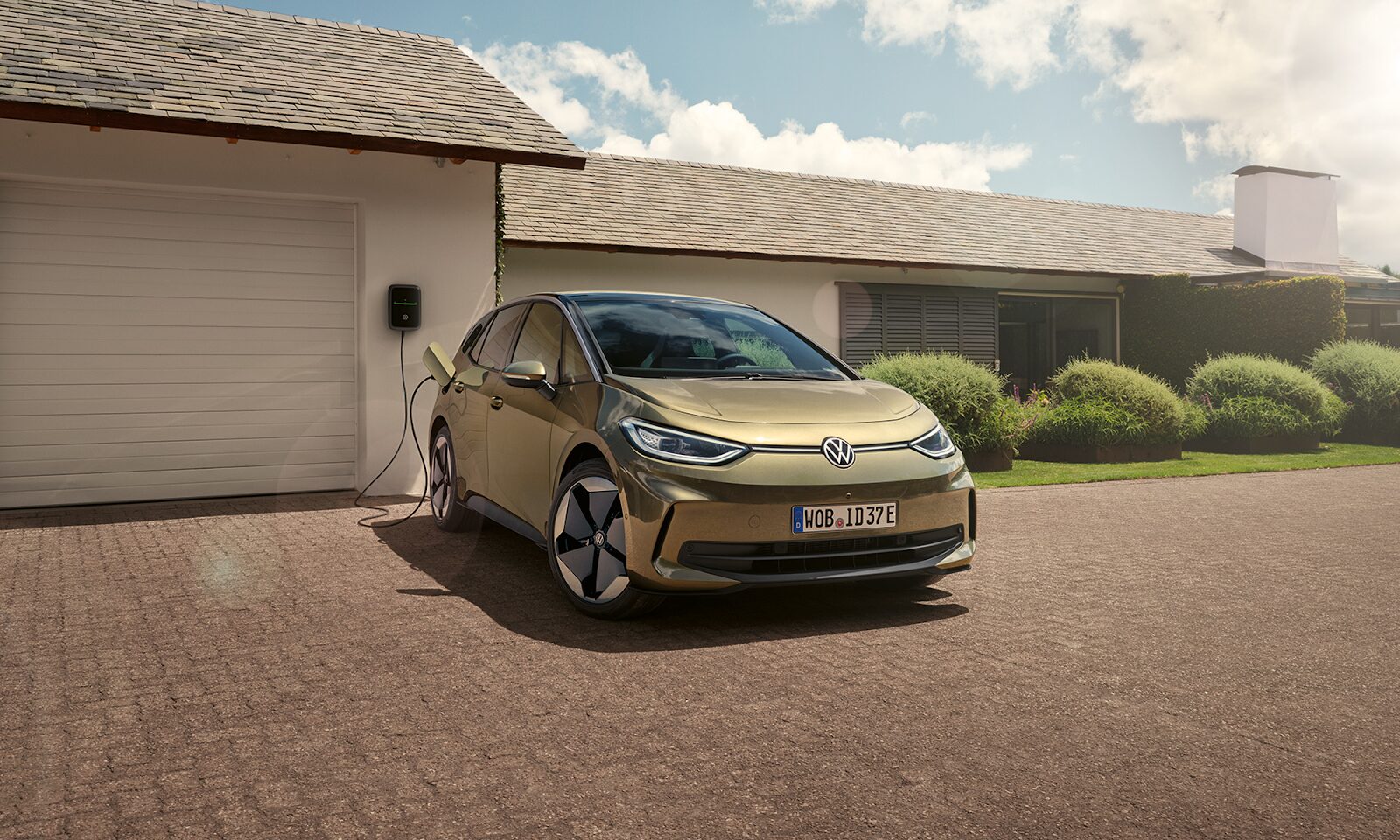
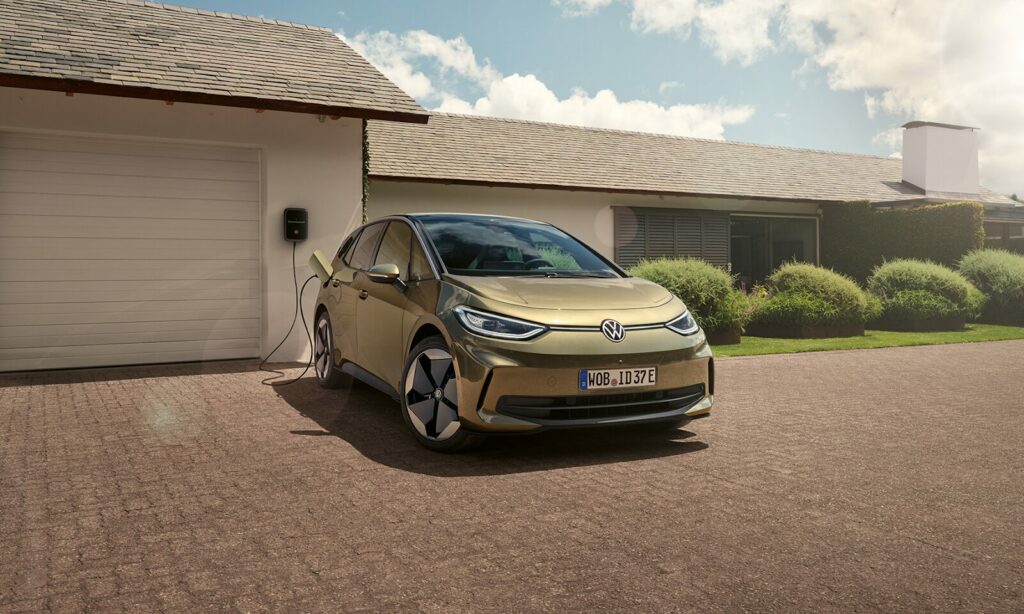
    Access to electric mobility is becoming easier in France thanks to an unprecedented increase in Energy Savings Certificates (EEC). Since 13 February 2026, in partnership with EDF, the Group has been offering up to €6,890 in subsidies for the purchase or long-term leasing of 100% electric vehicles from its brands (Volkswagen, Audi, CUPRA, Škoda and VW Commercial Vehicles). This offensive comes at a time when the ecological bonus will be abolished in July 2025 and replaced by a system based on CEE.

    source: Volkswagen

    A stronger system for private individuals

    Volkswagen Group France announced on 13 February 2025 that it has increased its support for the CEE scheme. The amount of grants for private individuals has been increased to a maximum of €6,890 for households on the lowest incomes, i.e. €1,290 more than in 2025, no less.
    The new tiers are now as follows:

    • 3,450 for income in excess of €26,300 reference tax income (RFR) per unit
    • 4,600 for modest incomes (RTS between €16,301 and €26,300 per part)
    • 6,890 for low-income households (income less than or equal to €16,300 per unit)

    This aid is automatically applied at the time of purchase or lease, with no additional administrative formalities for the customer at dealerships in the VW Group France network. This simplification will make it easier for the French to buy an EV, as the bureaucratic red tape involved in accessing this public support is regularly criticised.

    source: CEE

    Strict but consistent eligibility criteria

    To qualify for these enhanced CEE incentives, vehicles must meet a number of criteria:

    • Eco-score greater than or equal to 60/100: this environmental indicator measures the CO₂ impact of the vehicle’s production and use.
    • Catalogue price under €47,000 incl. VAT (excluding options)
    • Weight less than or equal to 2.4 tonnes
    • Compliance with the Coup de Pouce standard or the European bonus: the latter recognises vehicles whose production and battery cells are manufactured in the European Economic Area.

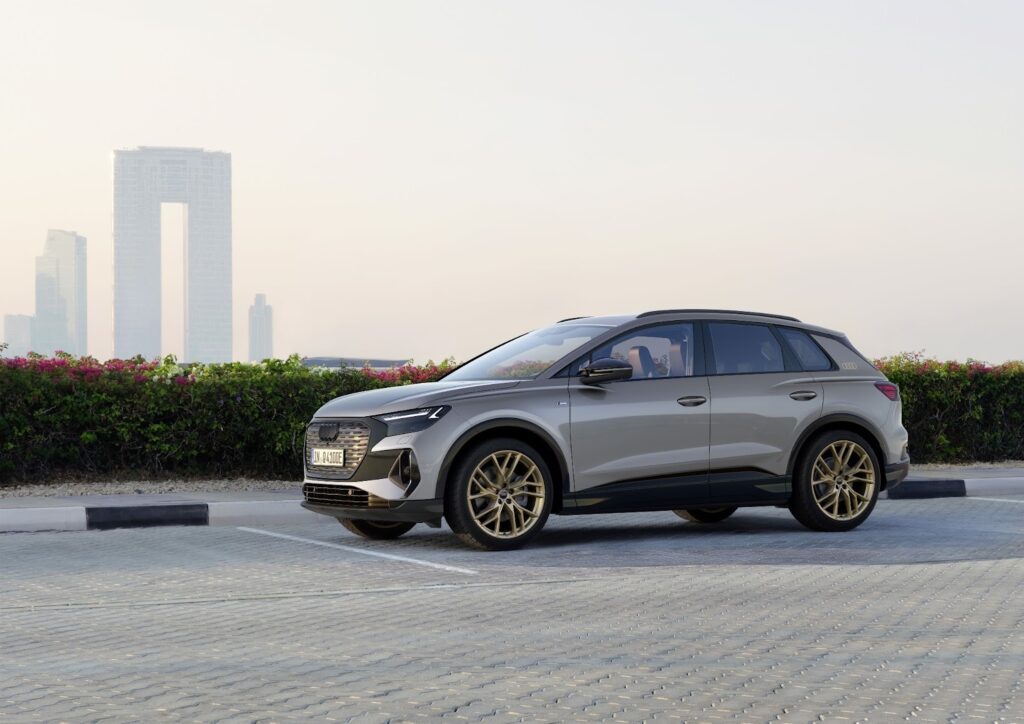
    The European bonus is a central element of the scheme. It enables vehicles assembled in Europe with European batteries, such as the Volkswagen ID.3 and ID.4, the Audi Q4 e-tron or the Škoda Enyaq, produced in Zwickau or Emden and fitted with cells manufactured in Sagunto or Brunswick, to be promoted.

    source : Audi

    An immediate impact on real prices

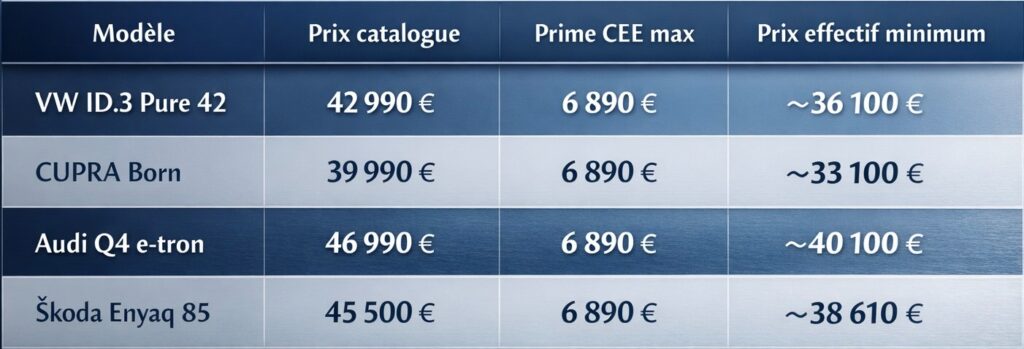
    The effect of this increased support is immediate and perceptible on the effective price of electric vehicles. Here are a few concrete examples:

    A low-income household can therefore reduce the price of a popular electric vehicle by more than 15%, a particularly significant gain at a time when direct public subsidies have been cut.

    In addition to support for private individuals, the new enhanced CEE scheme also offers attractive amounts for businesses and local authorities:

    • Private vehicles (companies): up to €575
    • Light commercial vehicles (fleets of more than 100 vehicles): up to €4,890

    A strategic response to the end of the ecological bonus

    The increase in EWC bonuses comes at a time when the aid landscape is undergoing radical change. In July 2025, the historic ecological bonus was abolished in France, replaced by a system of bonuses linked to energy saving certificates managed by energy suppliers such as EDF.

    Source: EDF

    Since then, support for the purchase of an electric vehicle has been heavily dependent on the price of CEE certificates, as well as on the eco-score and European origin of the components. This transformation was presented by the French government as a sustainable solution for maintaining support for electric vehicles while keeping public spending under control.

    Conclusion

    By massively increasing its CEE incentives with EDF, Volkswagen Group France is playing a strategic role in transforming the ecosystem of support for electric mobility in France. The scheme is seen as a response to the abolition of the ecological bonus, while promoting European industrial production and making electric vehicles more affordable for households, businesses and local authorities. It’s a strategy that could serve as a model for other manufacturers in the months to come.

  • Mercedes-Benz teases six electric models announced for 2026 in a programme of 16 new products

    Mercedes-Benz teases six electric models announced for 2026 in a programme of 16 new products

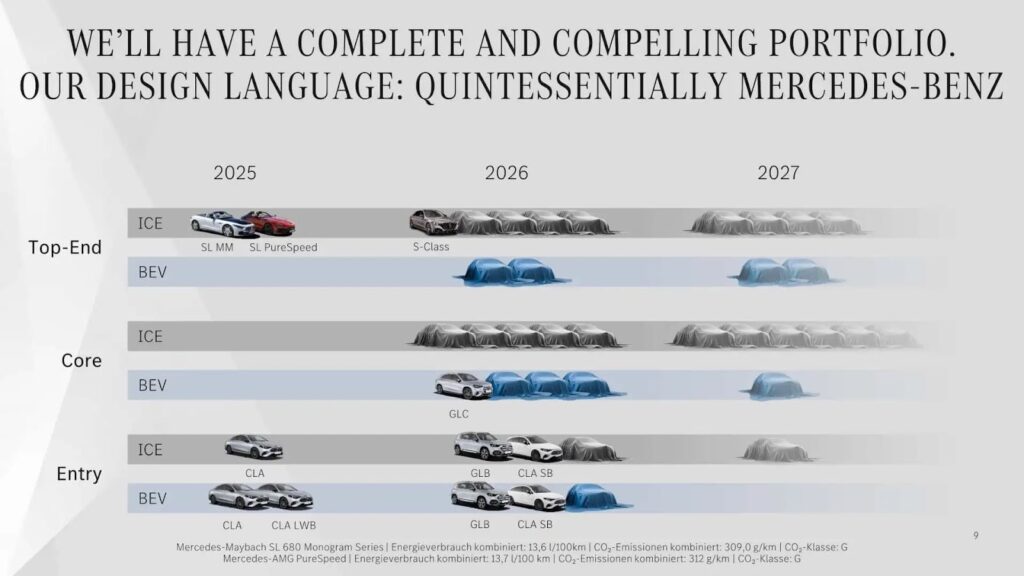
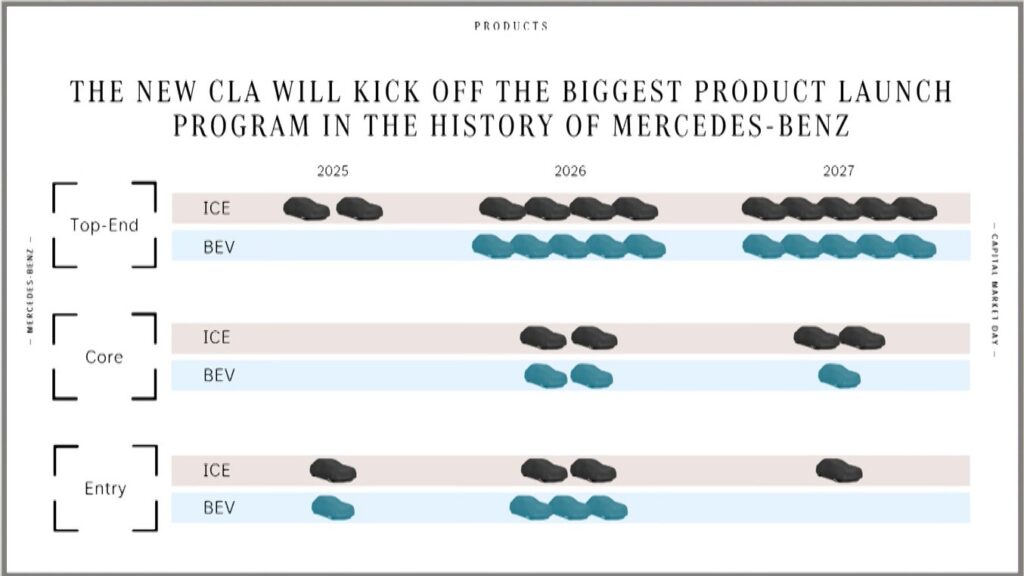
    Mercedes-Benz is stepping up its electrification strategy with an ambitious timetable for 2026: a total of 16 new models, including six 100% electric models. These figures come from a graph unveiled during the German brand’s 2025 annual report. Mercedes is expanding its electric range without abandoning hybrids and premium combustion engines.

    source: Mercedes-Benz

    A massive programme of launches for 2026

    According to the illustration revealed by Mercedes-Benz on 12 February 2026, 16 new models will be launched in 2026, divided between 12 electrified vehicles (pure electric and plug-in hybrids) and 4 restylings. The first six 100% electric models are part of a strategy to achieve 50-60% electrified sales in Europe by 2030.

    This offensive comes against a backdrop of contrasts for Mercedes: the manufacturer plans to sell 168,800 100% electric vehicles (BEVs) worldwide in 2025, down 9% on 2024, representing just 9 to 10% of its total sales of 1.8 million units worldwide. Moderate growth, held back in particular by competition from China. Mercedes-Benz plans to sell around 250,000 to 300,000 plug-in hybrids (PHEVs) worldwide by 2025, representing 15 to 18% of total passenger car sales.

    source : CAR AND DRIVER

    Six electric models at the heart of the strategy

    The first six electric models to be announced are based on the new MMA (Modular Mercedes Architecture) and EVA2 platforms, and all boast ranges in excess of 650km WLTP and compatibility with 800V ultra-fast charging.

    The manufacturer categorises its vehicles into three classes: Top-End (S-Class, EQS, G-Class), Core (E-Class, EQE, C-Class, GLC) and Entry (GLA, CLA, etc.).

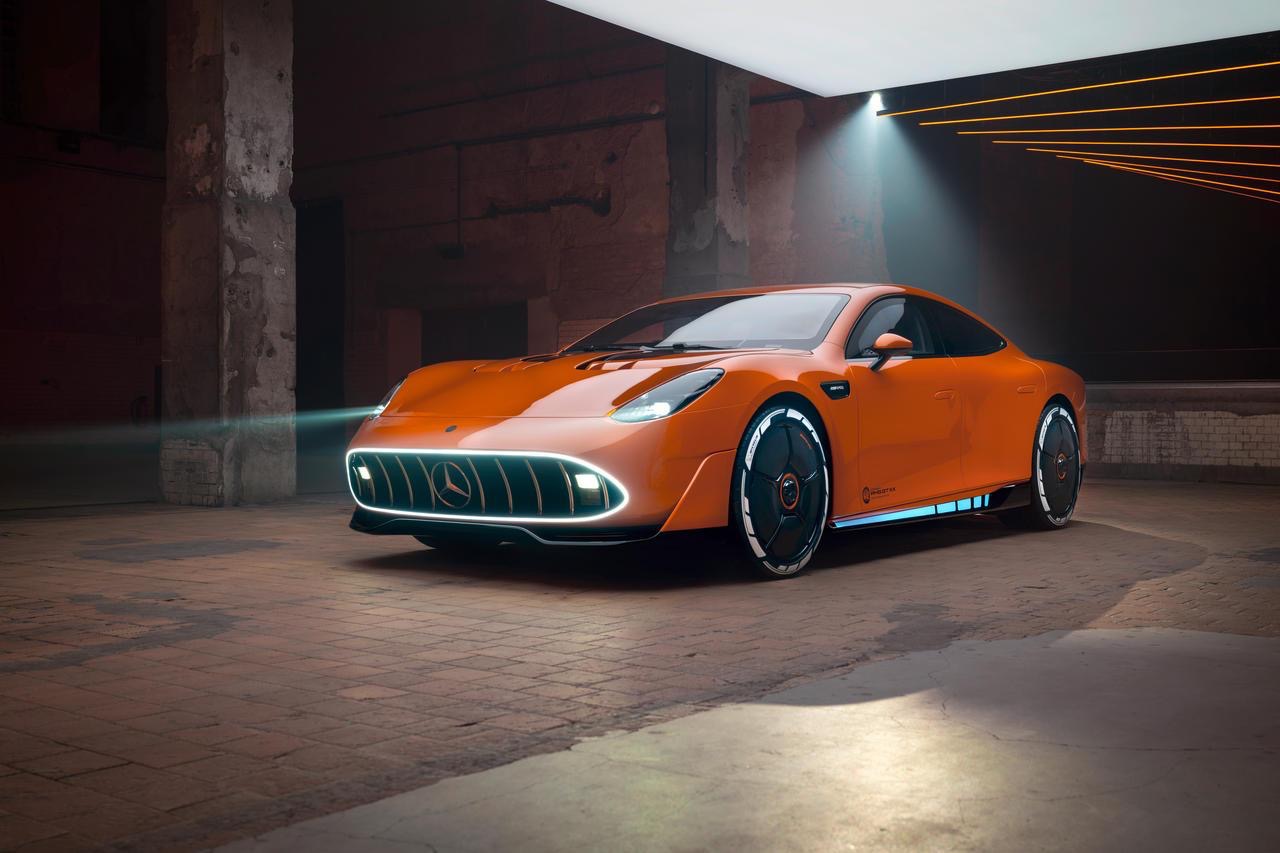
    For the Top-End category, Mercedes has revealed that two new models will be launched in 2026. The first is likely to be the 4-door AMG GT. The other new top-of-the-range model could be the VLS van, a variant of the VLE. As we have seen, 2027 will also bring two more BEVs, one of which is expected to be the SUV version of the 4-door AMG GT.

    source: Mercedes-Benz

    In the Core segment, what is certain is that 2026 will see the birth of the electric C-Class from the first quarter. Other mid-range Mercedes models could be added, such as a C-Class estate (T-Modell) or a GLC Coupé. A BEV will see the light of day in 2027, probably an electric E-Class, announced earlier by Mercedes director Ola Källenius.

    Finally, in the entry-level segment, the main new model expected is the GLA EQ. This would be the fourth and final model based on the Mercedes Modular Architecture (MMA), already used for the CLA, CLA Shooting Brake and new-generation GLB. An A-Class could also make a return to the range, as several specialist media have reported. However, its arrival would not be part of the immediate timetable: it would not be expected before 2028, or even beyond.

    source: Mercedes-Benz

    A revised strategy to reflect market realities

    The 2026 offensive reflects a strategic recalibration for Mercedes-Benz. Initially, the group was aiming for 100% electric sales by 2030. This ambition was revised in 2024 in the face of slower-than-expected take-up. The new roadmap, “Ambition 2039”, now favours a mix: 50 to 60% electric by 2030, with hybrids and premium combustion engines to be maintained beyond that.

    This approach will enable Mercedes to meet the expectations of premium customers who are attached to internal combustion engines, while at the same time stepping up the pace of electric vehicles where demand is confirmed and where the brand will have to comply with European requirements, in particular.

    This time last year, the brand with the silver three-pointed star unveiled the same calendar for the year ahead. And the least we can say is that the BEV release targets have changed. In the Top-End segment, five BEVs were teased for 2026, but in the end only two. In the Core segment, too, the situation is different, but in the opposite direction: two 100% electric vehicles have been announced, compared with four at present. Only in the Entry segment does the brand not seem to have changed direction. This is a sign that these announcements, particularly for the three BEVs planned for 2027, are subject to change.

    source: Mercedes-Benz

    History and context of Mercedes electrification

    Mercedes-Benz has been involved in electric vehicles since 2010 with the Smart ED, but the real offensive began in 2018 with the EQC, the first model in the EQ range. The range expands in 2021 with the EQA, EQB and EQS, reaching ten EQ models by 2023. By the end of 2025, nearly 370,000 EQ vehicles had been sold.

    In 2025, the EQA and EQB combined will account for the majority of electric passenger car sales (~25,000 to 30,000 units estimated), while the EQS will maintain its premium volumes (~12,000 to 15,000 units), with WLTP ranges now between 400 and 750 km depending on the model. Although these figures are significant, with 168,800 BEVs sold worldwide, they still fall short of the initial “100% electric 2030” ambitions, justifying the strategic recalibration in 2024 and the massive offensive in 2026.

    With 16 new models planned for 2026, including six 100% electric models in the first half of the year, Mercedes-Benz is confirming its commitment to the transition to electric vehicles, while adopting a pragmatic approach. Far from making a radical switch to all-electricity, the German manufacturer is favouring a balance between technological innovation, market realities and the expectations of premium customers. It is highly likely that the GLA EQ, the electric C-Class, the 4-door AMG GT and the VLE will be presented in the coming months. For the rest, it’s more uncertain, and we’re not immune to another change of strategy from Mercedes.

  • EPP3: electromobility becomes a key pillar of France’s energy strategy

    EPP3: electromobility becomes a key pillar of France’s energy strategy

    On 13 February 2026, Prime Minister Sébastien Lecornu unveiled the third Multiannual Energy Programme (PPE3), a strategy setting out France’s energy trajectory for the period 2026-2035. Behind the major balances in the electricity mix and the revival of nuclear power, one focus stands out: the electrification of mobility. This time, electromobility is no longer simply a climate lever, but a structuring pillar of the national strategy.

    source : Stellantis

    An energy roadmap that reshapes mobility

    Unlike the automotive strategies of the past, the PPE3 is not presented as a stimulus plan based on symbolic figures. Its role lies elsewhere: to programme energy, anticipate usage and ensure that the increase in the use of electricity remains compatible with electricity production, network capacity and actual usage.

    The EPP3 fully integrates electric vehicle charging into the “electrification of uses plan”, with several priorities: adapting distribution networks, developing smart charging, gradually integrating vehicle-to-grid (V2G) and securing peak consumption. The decarbonised electricity generation targets, set at between 650 and 693 TWh in 2035, are designed to absorb a significant increase in transport-related demand, estimated at more than 100 TWh per year.

    Making electric vehicles the market standard

    The PPE3 marks a clear shift: the electric vehicle will become the benchmark for passenger cars and light commercial vehicles. The target is 50% market share for 100% electric vehicles in new sales from 2030, as an intermediate step towards 100% zero-emission sales in 2035, in line with the European framework.

    This trajectory guarantees that the supply of carbon-free electricity will be sufficient to support the increase in the number of electric vehicles on the road, estimated at between 7 and 13 million in 2035. At the same time, electromobility should contribute to a massive reduction in fossil fuel consumption, from around 900 TWh in 2023 to 330 TWh in 2035, all sectors combined.

    Road transport plays a central role in this shift. The deployment of electric vehicles, combined with biofuels and hydrogen for specific uses, should contribute to the energy sector’s -31% emissions target by 2030. Electric mobility is thus becoming one of the main levers for rapid decarbonisation.

    Infrastructure: a clear path to 2035

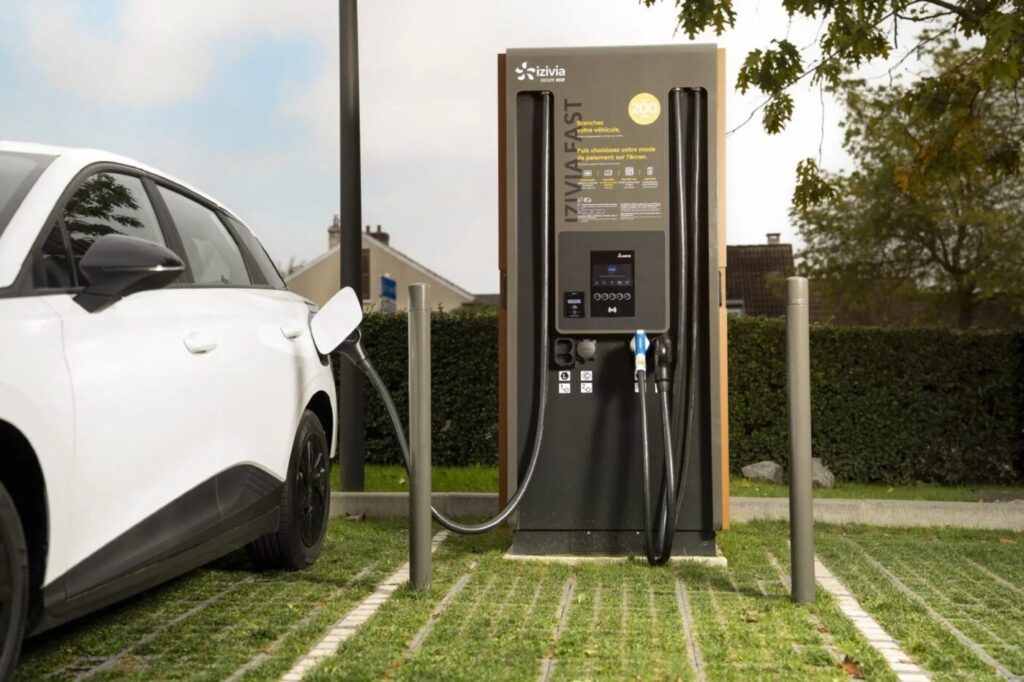
    The EPP3 does not abandon the expansion of infrastructure, but it does specify the actual trajectory. Based on the European AFIR framework and the expected needs of the fleet, it sets a target of around 170,000 public charging points by 2030, rising to almost 200,000 by 2035.

    The change in philosophy is clear: the problem is no longer just the number of charging points, but their actual usefulness. The government is focusing on fast and ultra-fast recharging on major roads, collective residential and business recharging, and the reliability of existing infrastructure. The aim is to avoid a proliferation of little-used and expensive charging points.

    source : Izivia

    Boosting sales: the return of targeted support

    Without explicitly mentioning a slowdown in the market, the PPE3 recognises that structural levers are now needed to ensure the widespread use of electric vehicles. The government intends to consolidate demand, particularly among low-income households.

    This is why the government has confirmed that the social leasing scheme will be maintained. Created in 2024, the scheme was a great success, enabling no fewer than 50,000 households to obtain a new EV for less than €100 a month in just six weeks, with no deposit required. Renewed for a second time on 30 September 2025, the 50,000 opportunities to obtain an EV at a lower cost were also seized, this time in three months. This lasting lever for democratisation, which prevents electromobility from becoming a privilege, has therefore been maintained for 2026.

    At the same time, the nature of the financial support is changing. The traditional ecological bonus is gradually being supplemented, or even replaced, by schemes based on energy saving certificates (CEE). Electric vehicles are now seen as energy transition tools in their own right, in the same way as heat pumps or thermal renovation.

    Electric commercial vehicles and complementarity with hydrogen

    In addition to private vehicles, the PPE3 fully integrates electric commercial vehicles into the trajectory of decarbonisation of transport. Since 2025, companies have no longer benefited from the ecological bonus, but can instead take advantage of a CEE bonus of up to €5,000 for the purchase or long-term leasing, which can be combined with certain regional grants. In addition, there are a number of tax levers: total exemption from TVS, an extra 20% depreciation allowance, and a ceiling on deductible depreciation raised to €30,000 for 100% electric models.

    In practice, these vehicles continue to have privileged access to LEZs and city centres, while restrictions are becoming tighter on combustion engines, a criterion that has become a determining factor for business fleets.

    source : Renault

    What’s more, the Prime Minister’s statement confirms that battery-electric vehicles will be the benchmark for light vehicles, while decarbonised hydrogen and biofuels will be reserved for the uses that are most difficult to electrify. The government is aiming for 4.5 GW of electrolysis by 2030 and 8 GW by 2035.

    Industry, sovereignty and a revisable trajectory

    The PPE3 is part of a wider industrial strategy: developing gigafactories, structuring the battery industry and securing critical supplies. The aim is to make electromobility an industrial pillar. Its implementation could generate more than 120,000 jobs by 2030, a significant proportion of which will be linked to electric vehicles and associated infrastructure.

    source: Reuters/Pascal Rossignol

    Lastly, the EPP3 introduces a review clause in 2027, enabling the trajectory to be adjusted in line with actual changes in usage, the pace of adoption and constraints on the networks.

    France is no longer promising an immediate revolution in electric mobility, but a credible electromobility. A transition conceived as a complete system, where infrastructure, vehicles, support, network and industry all move forward at the same pace.

  • Dubai Loop: Dubai unveils the first stations in its network of ultra-fast tunnels

    Dubai Loop: Dubai unveils the first stations in its network of ultra-fast tunnels

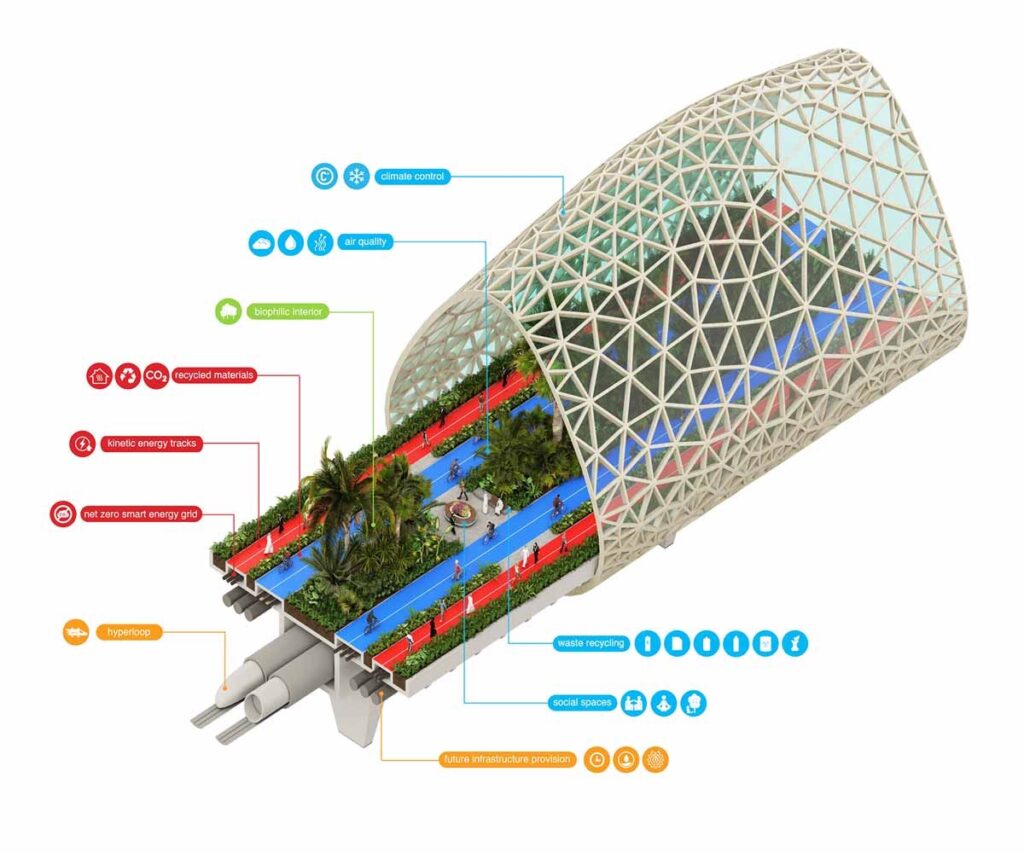
    The news has just broken. Dubai’s transport authorities have revealed the locations of the first four stations of the Dubai Loop, an underground transport project developed with The Boring Company. It’s an announcement that puts this network of ultra-fast tunnels firmly on the map, and gives an idea of the scale of an infrastructure that is intended to be as much an economic lever as an urban one.

    source : rta_dubai (X)

    Four initial stations in the heart of the city

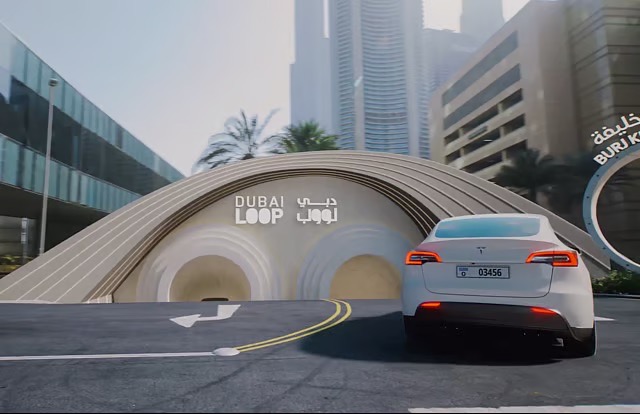
    The first access points for the Dubai Loop have been officially announced by the Roads and Transport Authority (RTA). The four inaugural stations will be located at Burj Khalifa, DIFC 2, the Zabeel Dubai Mall car park and ICD Brookfield Place.

    A choice that is far from trivial. These sites concentrate tourism, offices, shops and commuter flows. In short, where congestion costs the most in terms of time and productivity. The Dubai Loop targets these high-density areas as a priority.

    A tunnel, not a metro

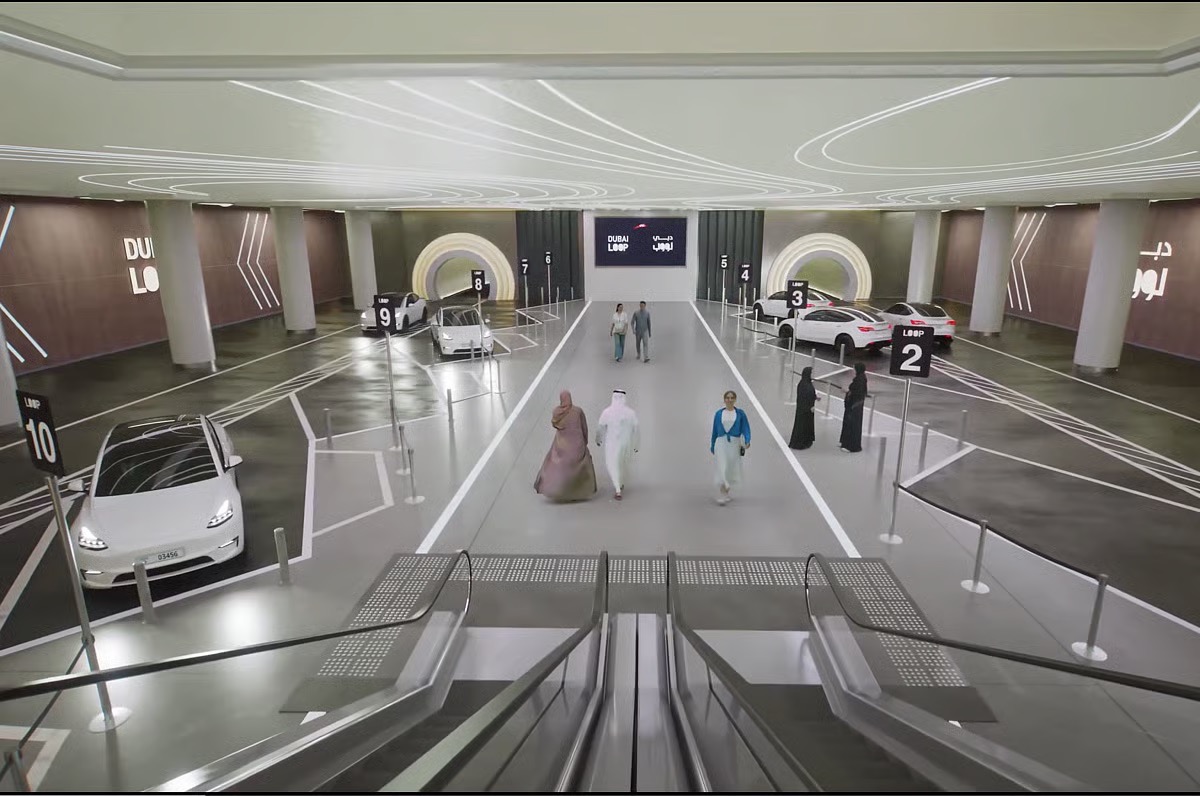
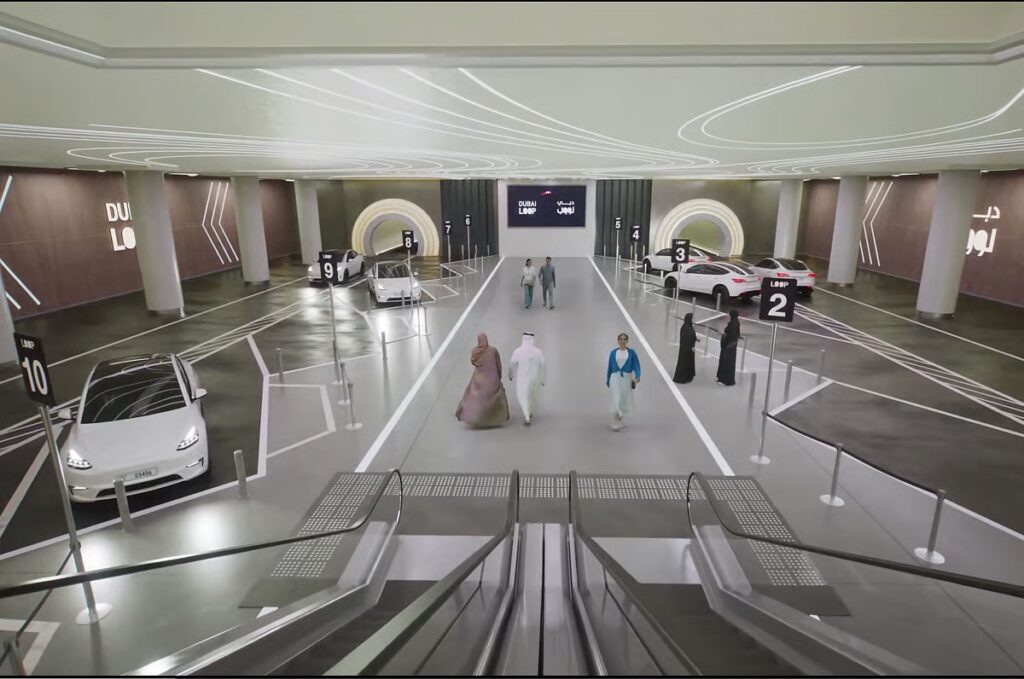
    Contrary to what you might think, the Dubai Loop should not be confused with a conventional underground metro. Here, there are no trains, no platforms and no compulsory stops. This is because the system is based on tunnels specifically built to accommodate autonomous electric vehicles, such as Tesla Model Ys. These road infrastructures will not be accessible to the general road network.

    So what shape will this new-generation tunnel take? What we do know is that they will be between 3.6 and 3.9 metres in diameter, depending on the section. The first phase will cover 6.4 kilometres, before a gradual extension that could eventually reach 22.5 kilometres. The final network will comprise 19 stations, linking the Dubai World Trade Centre, the DIFC financial district and Business Bay.

    source : rta_dubai (X)

    So how does it work for users? From one of the stations, users select their destination using an application connected to the Roads and Transport Authority network. They will then be allocated an autonomous electric vehicle. These driverless vehicles will travel in dedicated tunnels, completely independent of surface road traffic. Once engaged, they will travel directly to the destination station, without any intermediate stops, at speeds of up to 160 km/h. The result: journey times estimated at between two and five minutes, compared with thirty to forty minutes on the surface at peak times.

    A long-standing project, now a reality

    First announced in 2024, then confirmed at the World Governments Summit in 2025, the Dubai Loop is being developed in partnership with the American firm The Boring Company.

    source: Wikipedia

    The cost of the first phase is estimated at around 565 million dirhams, while the entire project could represent an overall investment of close to two billion dirhams once the entire network has been rolled out. This is a substantial sum, but it is presented as lower than that of equivalent heavy infrastructures, thanks in particular to the absence of expropriations and the minimal impact on the surface area.

    A tool against congestion, but also against loss of productivity

    As well as being a technological innovation, the Dubai Loop has a clear economic rationale. According to several analyses based on work by the OECD, urban congestion can account for up to 1 to 2% of lost GDP in major cities.

    By moving part of the traffic underground, Dubai hopes to recover up to 0.3 to 0.5% of productivity, or billions of dirhams a year. The promise is not just to drive faster, but to make travel predictable, reliable and independent of surface hazards. Of course, underground hazards are not impossible, but with autonomous driving technologies, they can be reduced.

    A key component of Dubai’s smart city strategy

    The Dubai Loop is fully in line with the emirate’s smart city strategy, which aims to make Dubai a global benchmark for sustainable mobility, artificial intelligence and intelligent infrastructure by 2040.

    The system will be based on autonomous electric vehicles, controlled by AI, with on-demand routing and reservations integrated into the RTA’s applications. The stated objective is clear: to achieve 50% autonomous journeys and enhance complementarity with other modes of transport, including soft mobility.

    In urban terms, the stakes are just as high. By avoiding the consumption of surface land, Dubai is preserving the value of its central areas, limiting urban fragmentation and completing projects such as The Loop, the 93 km air-conditioned pedestrian and cycle path.

    source : urb.ae

    More than transport, a choice of urban model

    With the Dubai Loop, the city is betting on invisible, fast and scalable mobility, capable of improving with technology.

    The unveiling of the first stations marks a decisive step: the project is moving away from forward-looking rhetoric and moving towards implementation, confirming the Emirate’s desire to treat mobility not as a problem to be managed, but as a competitive advantage to be built.

  • Cadillac Elevated Velocity: a concept car that confirms the brand’s future

    Cadillac Elevated Velocity: a concept car that confirms the brand’s future

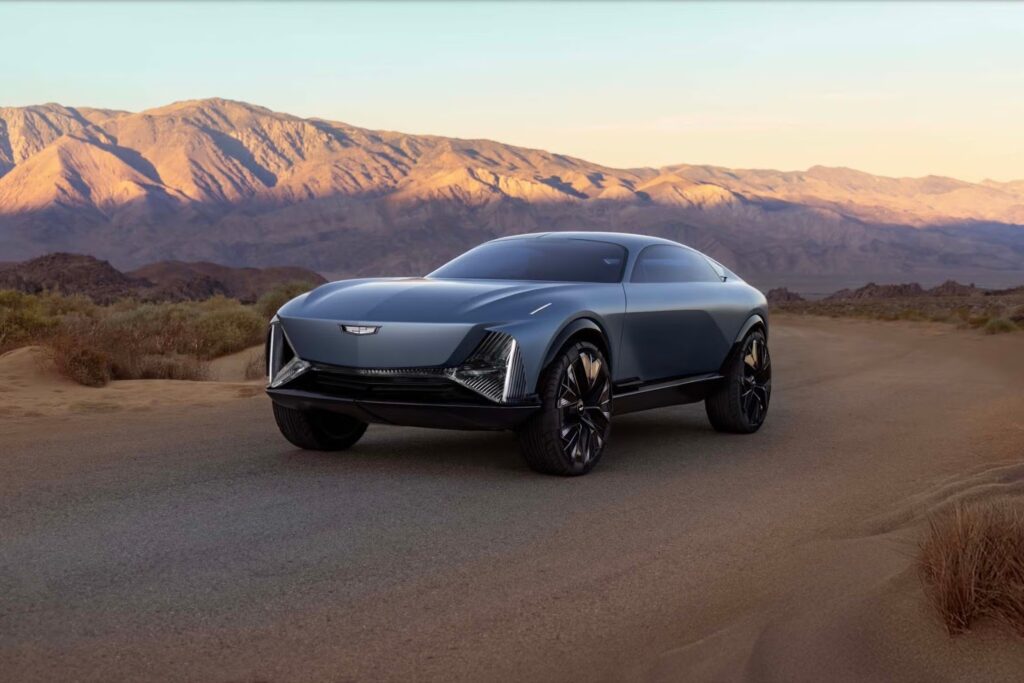
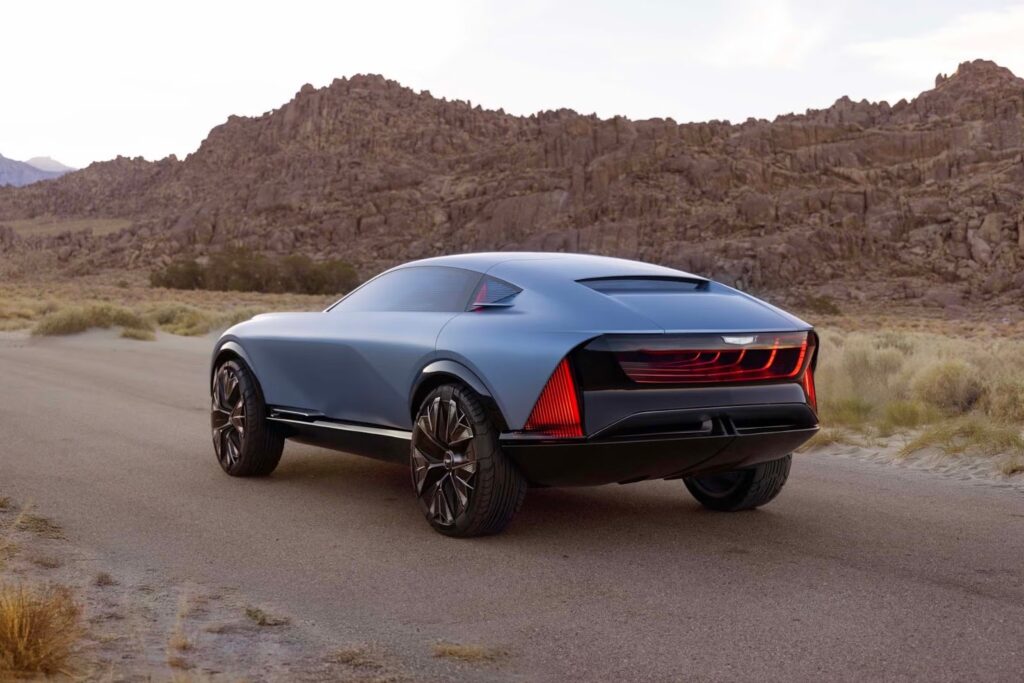
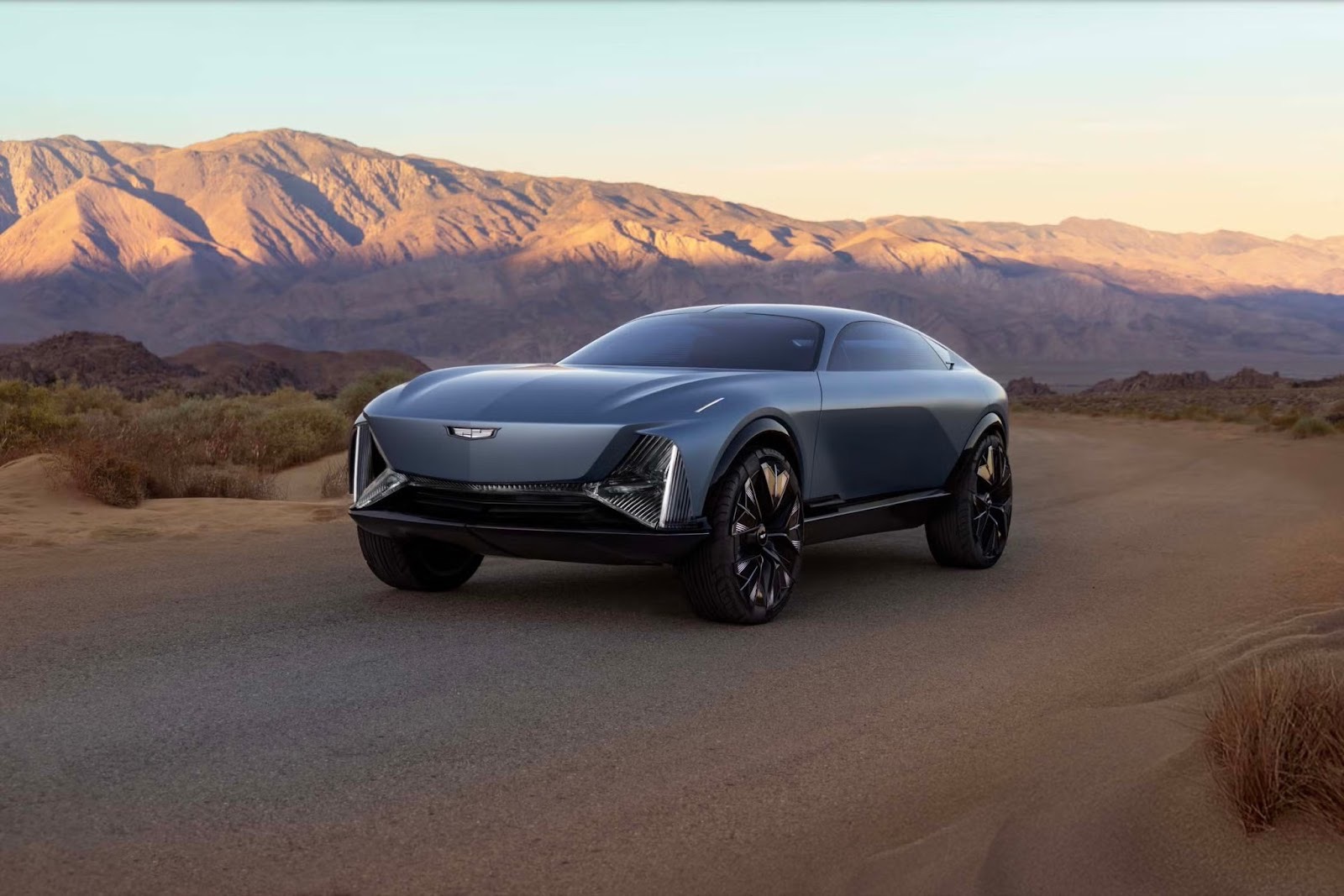
    Cadillac continues to develop the way it makes vehicles with its Elevated Velocity concept car, recently named Best Concept Vehicle of 2026 by EyesOn Design. This vehicle embodies an ambitious vision: to combine luxury, electric performance and versatility, while offering an aesthetic that blends heritage and modernity. It’s a victory that underlines the brand’s ambition to become an ever more ambitious and versatile manufacturer.

    source : Cadillac

    The same stylistic heritage, but reinvented

    Aesthetically, this concept car is striking for its sculpted, athletic silhouette. Cadillac has taken up the DNA of its V-Series: long bonnet, taut lines, sculpted surfaces, but with a design resolutely geared towards electric power and futuristic luxury.

    source : Cadillac

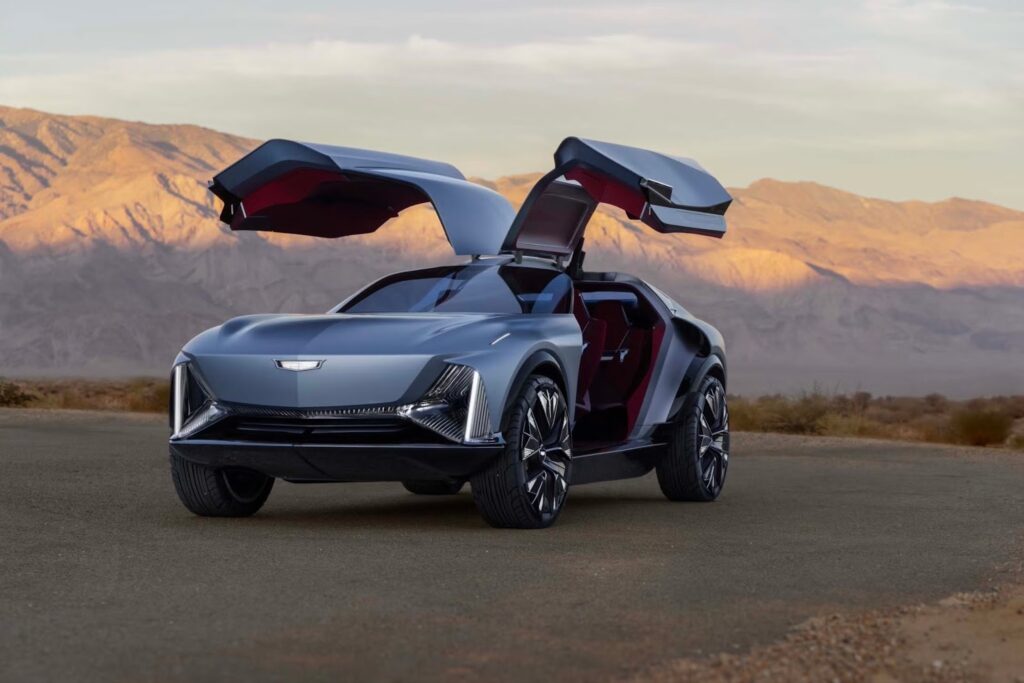
    Elevated Velocity featuresgull-wing doors, a rare and spectacular treatment that reinforces the notion of a visual motoring spectacle. It is equipped with 24-inch wheels that assert its presence and give an impression of performance. Dominic Najafi, Executive Design Director, Global Cadillac, said:

    “The Elevated Velocity concept channels Cadillac’s V-Series heritage into an ultra-luxurious, bold 2+2 crossover designed to exhilarate.”

    The idea is clear: to give a glimpse of the future styling codes of Cadillac’s top-of-the-range EV models, which will be resolutely different from the competition in Europe and Asia.

    A name that says it all

    The Elevated Velocity concept fully embraces Cadillac’s ‘Art of Exhilaration’ philosophy, foreshadowing potential design cues for future production models. Its name was not chosen at random: ‘Elevated’ refers to both the elevated position of the occupants and the ride height of the vehicle, while ‘Velocity’ evokes its dynamic on- and off-road capabilities.

    This is a concept car, designed to explore the future styling and identity of the V-Series, and not a production vehicle: no official technical data – engine, performance or range – has been released. The concept serves primarily as a creative laboratory, allowing Cadillac to project its vision of electric luxury and performance in future models, while celebrating its V-Series heritage and bold styling.

    source : Cadillac

    Cadillac: a historic brand undergoing a major transformation

    Elevated Velocity may represent the future of styling, but Cadillac’s overall trajectory is just as remarkable. Founded in 1902, Cadillac has long been the standard-bearer of American luxury. Today, it is transforming itself almost visually: a versatile premium brand, driven by three main themes: electrification, performance and, more unexpectedly, Formula 1!

    Electrification as the cornerstone

    Cadillac has clearly announced its intention to migrate entirely to electric power, with no specific date set, aligning its investments with a zero-emissions future. This strategy is reflected in vehicles such as :

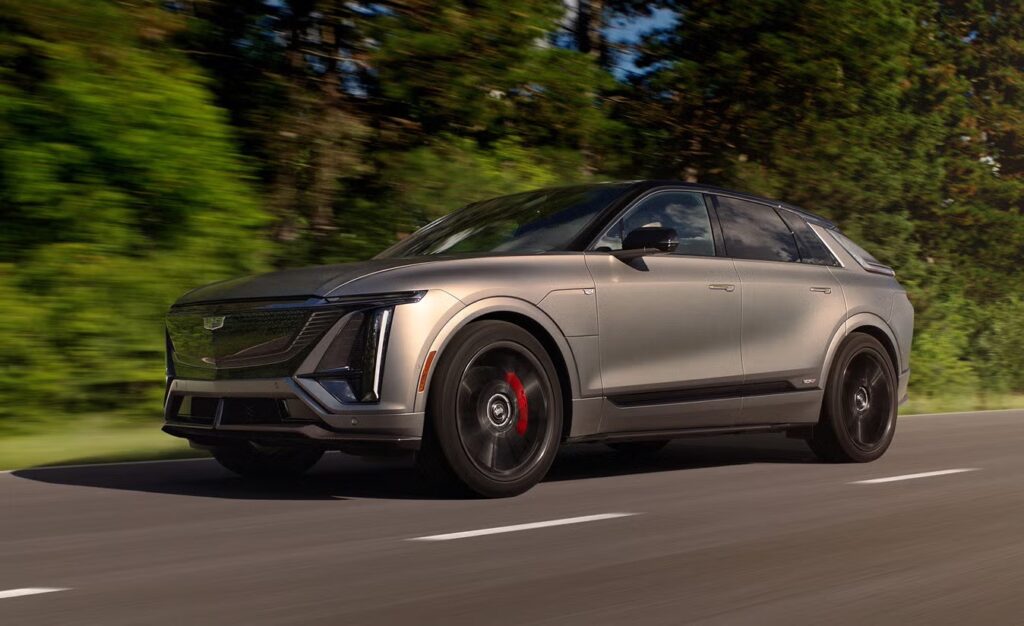
    • LYRIQ-V, a high-performance version of the iconic electric SUV with over 615 bhp.
    • OPTIQ-V, a dynamic proposition with over 500 bhp and integrated native fast charging technologies(NACS).

    Despite the brand’s status as a benchmark in terms of combustion technology, sales of EVs are on the rise. In fact, almost 40% of Cadillac’s sales in the United States in the third quarter of 2025 were electric vehicles (18,383 EVs out of a total of 46,525 units sold). This is a sign that even the historic manufacturers in a country that is very attached to combustion engines are managing to turn the corner and retain a loyal customer base.

    source : Cadillac

    The ambition of a 100% electric portfolio in the long term remains on the table, with no firm date for the complete cessation of combustion engines, underlining a gradual transition adapted to market demand.

    The Formula 1 adventure: daring and global visibility

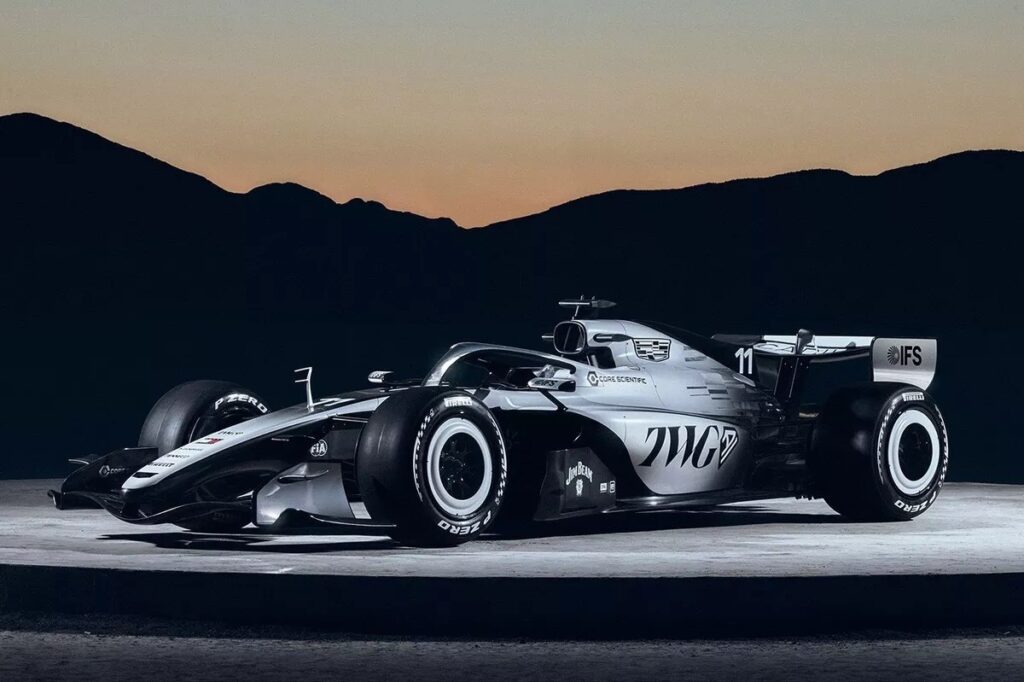
    In addition to this electric transformation, Cadillac has taken an even more spectacular step: to enter Formula 1 from 2026 with an official team. This initiative marks a cultural and strategic break: Cadillac is no longer just a manufacturer of luxury cars, it is becoming a motorsport brand.

    A team structured to perform

    • Cadillac Formula 1 Team will be present on the grid in 2026, supported by General Motors and TWG Motorsports on the technical and operational fronts.
    • For the first few seasons, the team will use Ferrari power units, while developing its own engines towards 2028.
    • The single-seater’s livery, unveiled during the 2026 Super Bowl, struck a chord with the public with its modern, unifying aesthetic, giving Cadillac immense exposure to a global audience.
    • Sergio Pérez (Mexico) and Valtteri Bottas (Finland), two seasoned drivers, represent the team. Together, they bring more than 500 Grand Prix starts and several victories.
    source : Cadillac

    This presence in F1 puts Cadillac on a different pedestal: beyond the traditional EV market, the brand is entering the arena of extreme performance, alongside other historic manufacturers. With Elevated Velocity and its electric and sporty strategy, Cadillac is clearly showing that it is reinventing itself while remaining true to its heritage.

  • New MG4 (2026): the electric compact moves upmarket

    New MG4 (2026): the electric compact moves upmarket

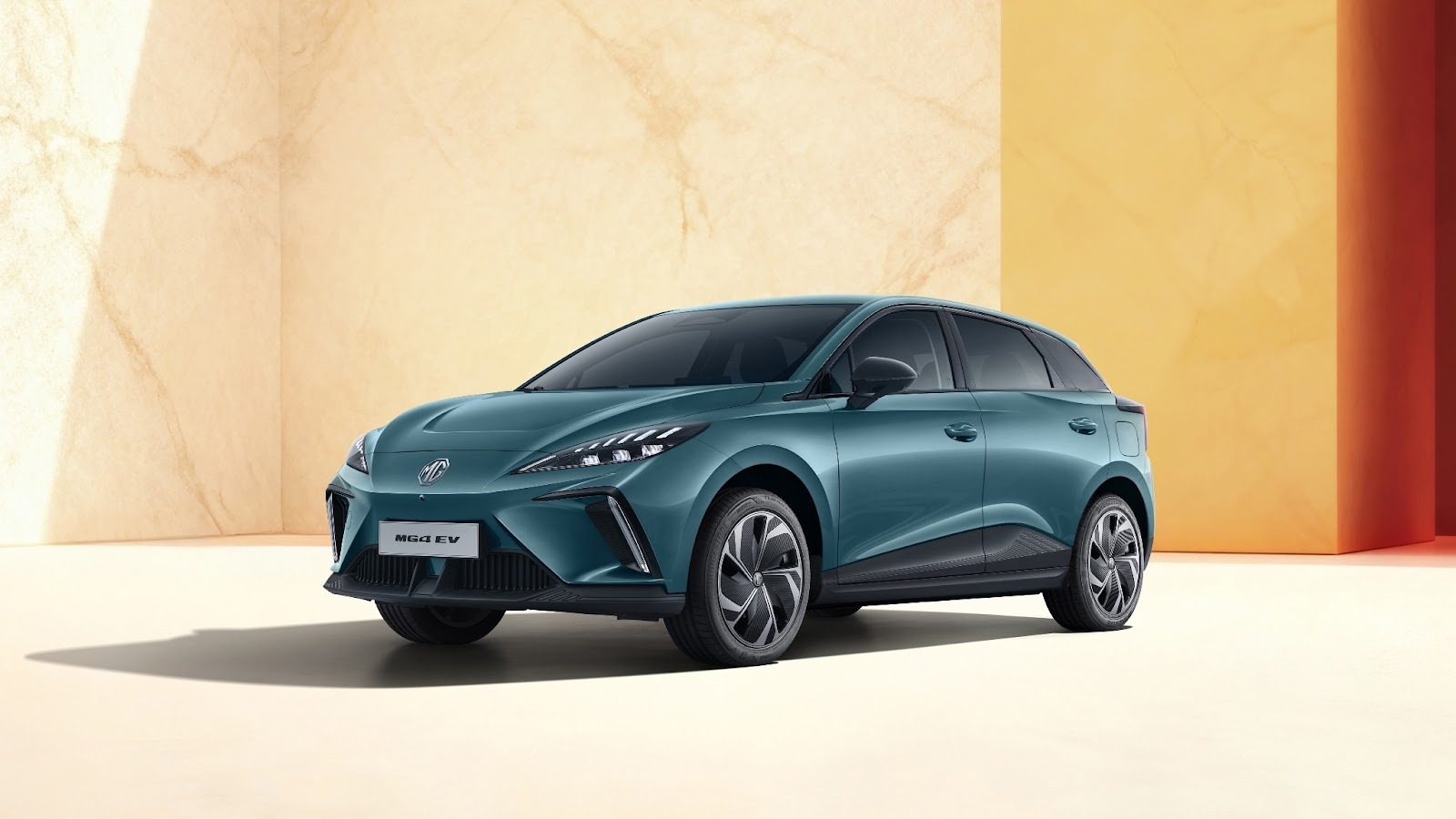
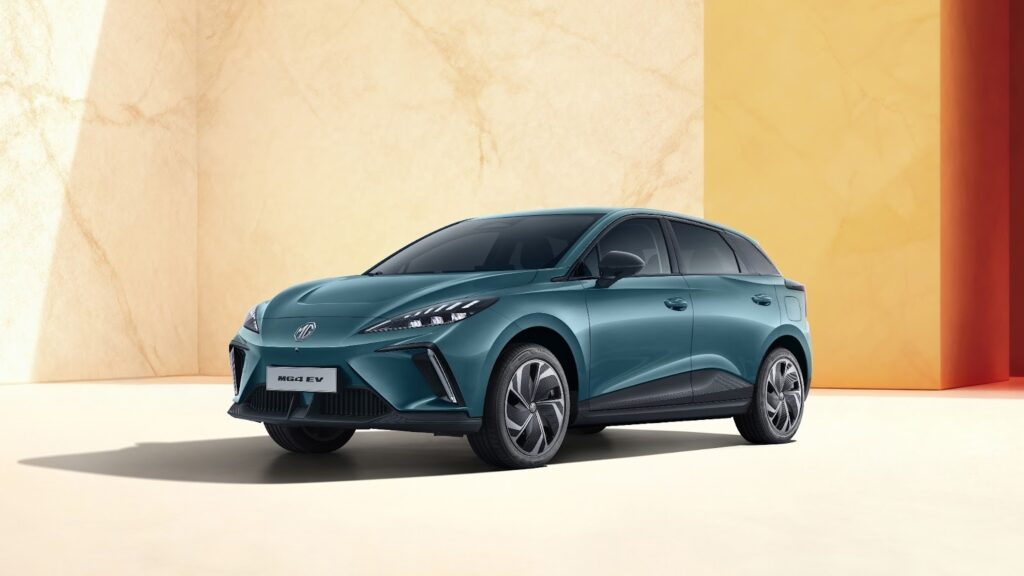
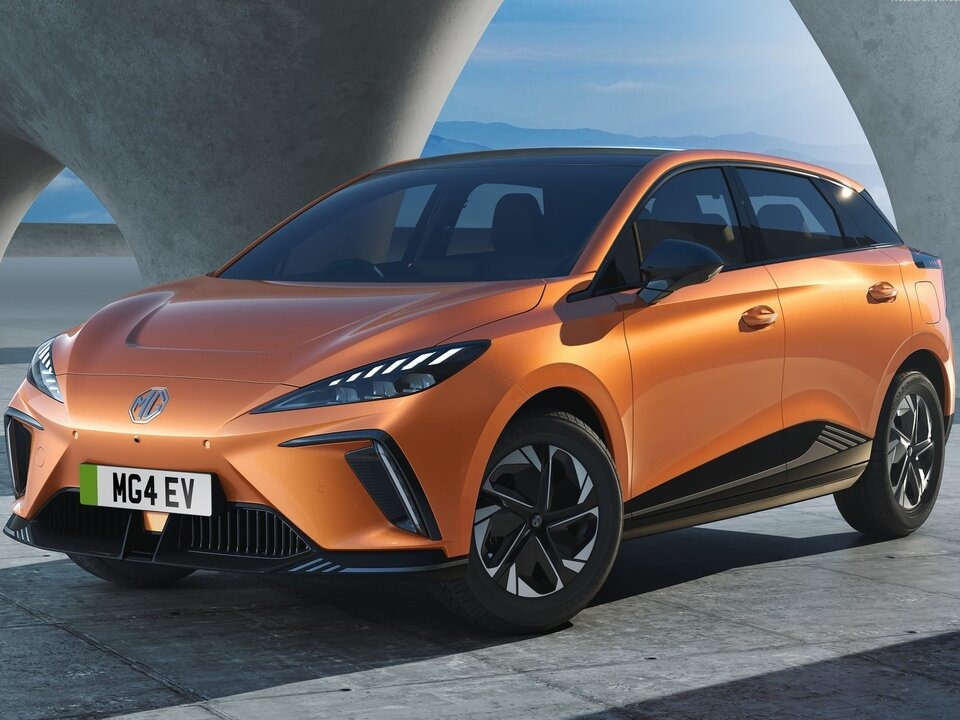
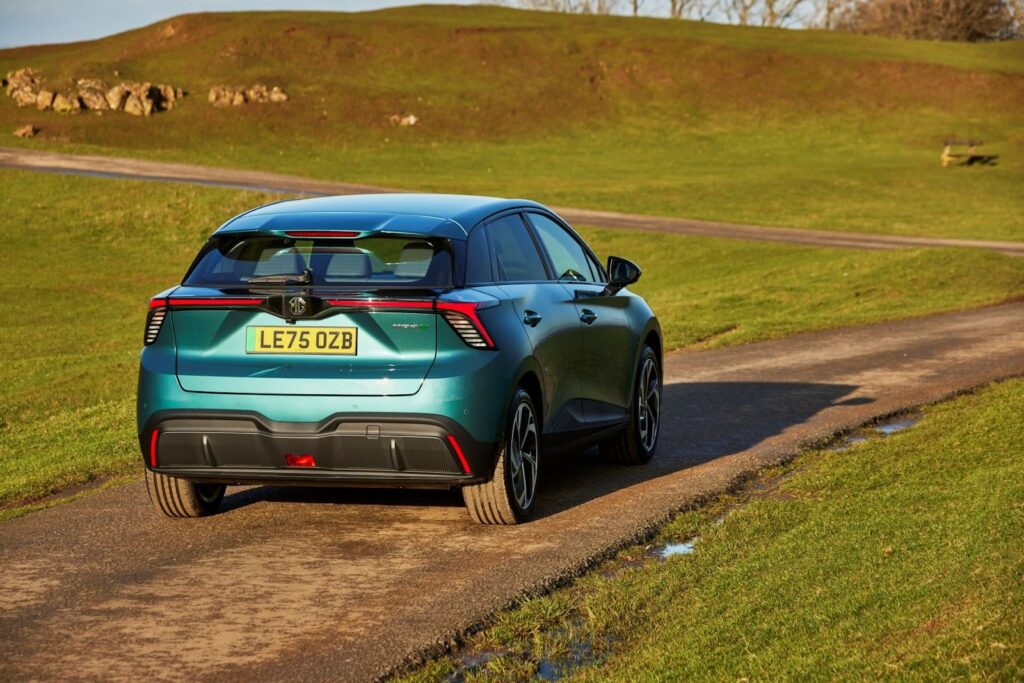
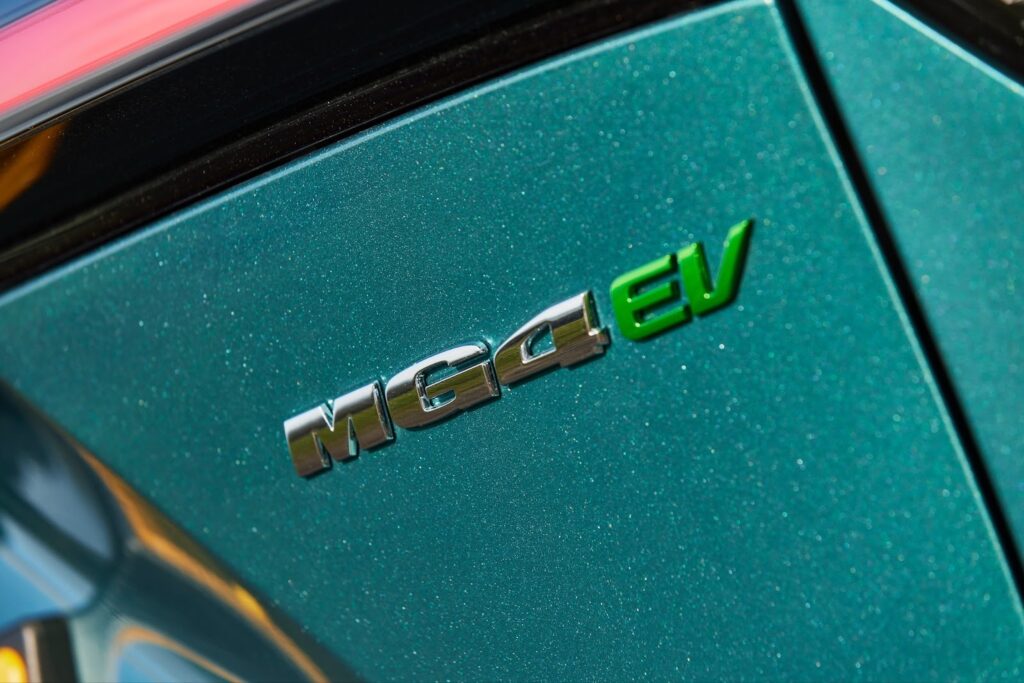
    This February, British-Chinese manufacturer MG Motor reaffirms its determination to shake up the electric compact segment with its new MG4. The message is simple: more range, more on-board technology and an enhanced interior finish. Where the MG4 made its name with its accessibility, this restyled version clearly moves upmarket to meet the demands of an increasingly demanding clientele in the face of competition pushing for greater range and comfort.

    source : MG Motor

    Why the restyling?

    Launched at the end of 2022, the MG4 was convincing thanks to its rather competitive price compared with other European electric compacts, its dedicated electric platform and its appreciable range for the category. Since then, it has established itself as an affordable electric compact, selling over 33,000 units in France, including more than 21,000 in 2023 alone – a remarkable achievement in a highly competitive EV market.

    source : MG Motor

    At the start of 2026, MG has decided to rethink its flagship model. This restyling is more than just a cosmetic touch-up: it goes hand in hand with a complete overhaul of the range, from the electrical architecture to the on-board technologies, not to mention the ergonomics and on-board experience.

    Design and interior

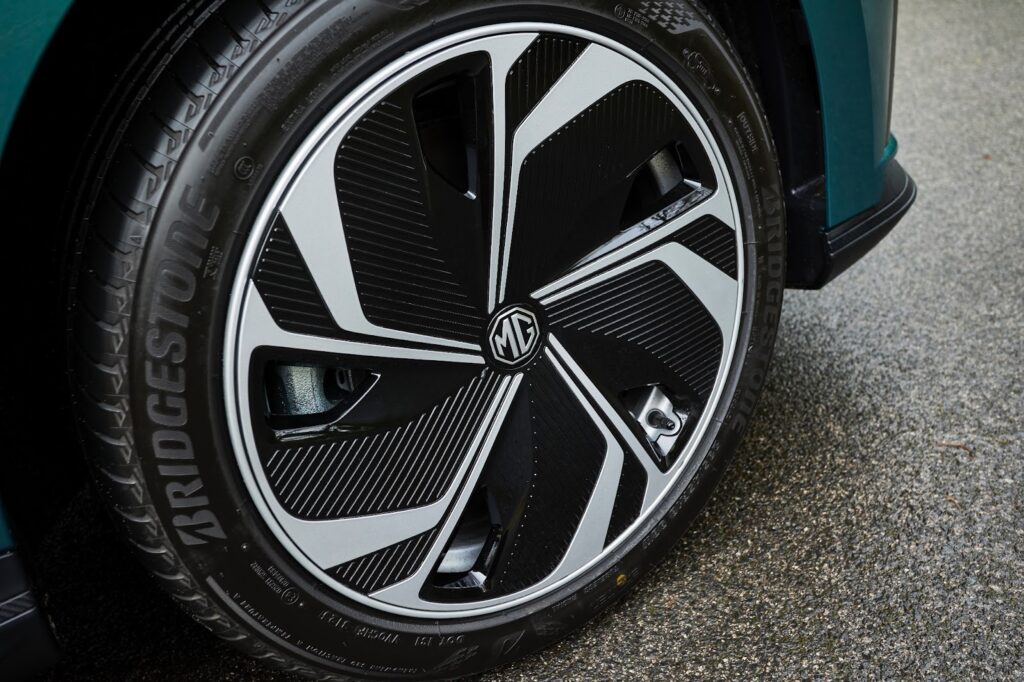
    On the outside, the MG4 retains its dynamic profile while incorporating evolutionary touches such as new wheels and a more aerodynamic one-piece spoiler that contributes to the vehicle’s overall efficiency.

    source : MG Motor

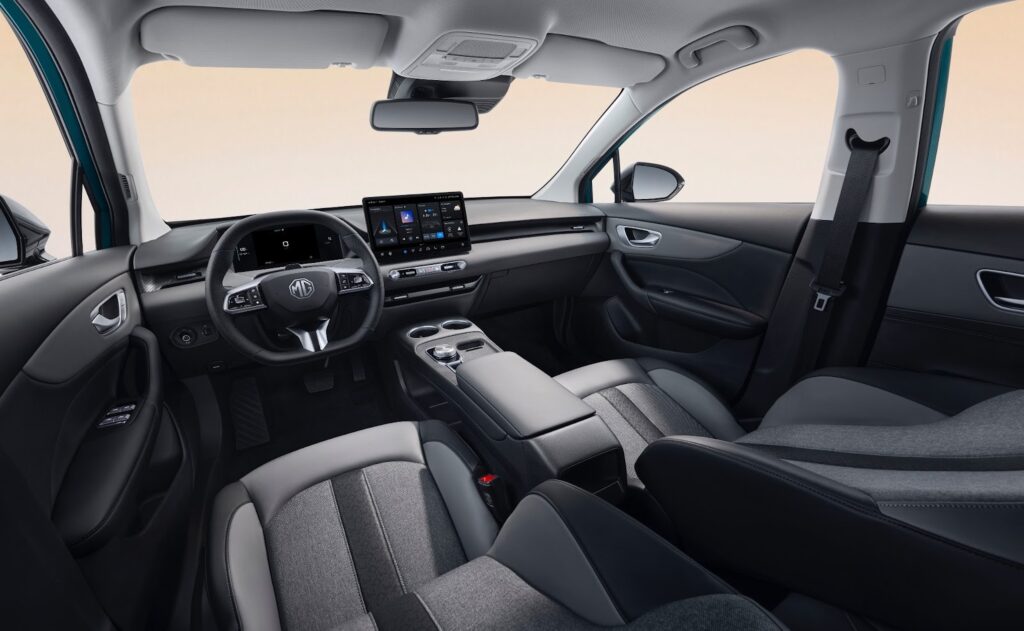
    It’s inside that the changes are most significant. MG is tackling a crucial point if it is to compete with the more upmarket models: quality. To this end, the MG4 uses the same dashboard as the MG S5, with a more horizontal architecture, improved materials, the return of physical buttons and more intuitive screens. This move upmarket in terms of technology brings the MG4 closer to an experience that we’ve come to expect from premium compacts.

    source : MG Motor

    Engines and range: heading for 500+ km

    One of the major aspects of this improvement is the increased range of the model compared with its predecessor. Where the previous MG4 mainly offered 51 kWh and 64 kWh batteries, with a maximum range of 400 km WLTP for the best-performing version, the MG4 (2026) abandons small configurations to concentrate on two configurations:

    • 64 kWh LFP with 190 bhp and a WLTP range of 452 km, providing a reliable and durable basis for everyday use, 50 km more than the previous generation.
    • 77 kWh NMC with 245 bhp and up to 545 km WLTP, propelling the compact car well above the standards of its category and almost 150 km further than the most autonomous version of the previous generation.
    source : MG Motor

    This extended-range configuration features a battery that many users have been waiting for since the previous generation, but with improved energy efficiency thanks to optimised thermal management and aerodynamics.

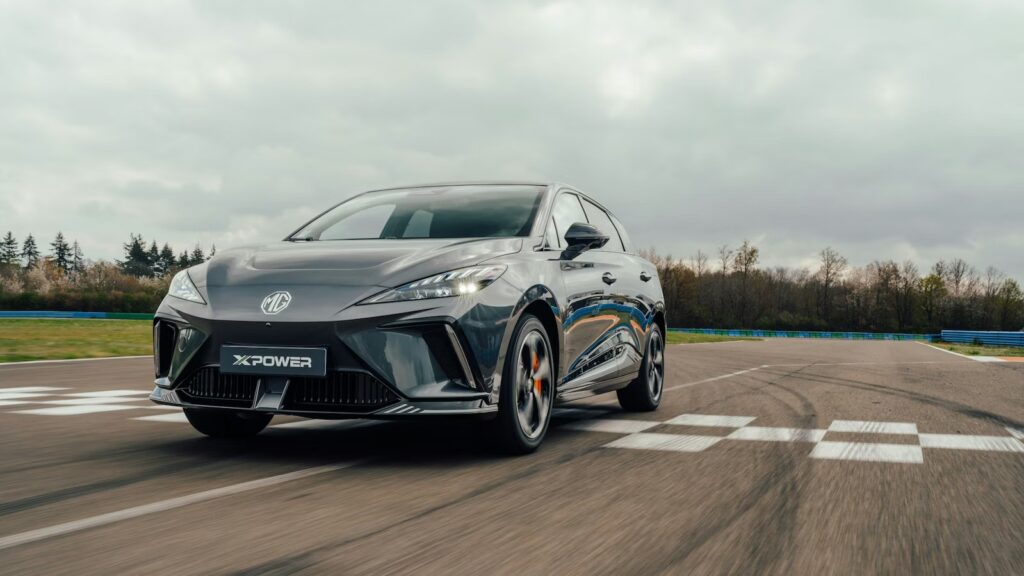
    For sports enthusiasts, the XPower version remains in the catalogue, with 435 bhp and 600 Nm, accelerating from 0-100 km/h in 3.8 seconds, compared with 4.2 seconds for the old version, while offering a range of 405 km (an increase of 5 km), while retaining a highly committed driving dynamic.

    source : MG Motor

    Charging and on-board technologies

    The new MG4 not only improves its range, but also reduces the time it takes to recharge at a DC rapid charging point (10-80%) to around 25 minutes, around 5 minutes less than the previous generation, thanks to a maximum power rating increased to 140-154 kW depending on the version (compared with 120-150 kW previously).

    source : MG Motor

    In terms of driving aids, MG has incorporated a new, more fluid camera for the ADAS systems, complemented by the full kit of modern safety aids, whereas the previous generation was limited to a less responsive version of ADAS and a few driving aid functions.

    The MG Pilot Custom function, previously absent, now allows drivers to memorise personalised settings according to their preferences, offering comfort and ergonomics never before seen in the range.

    A more mature compact for a demanding market

    This restyling of the MG4 responds to two market demands: greater range and real interior refinement. Whereas the initial MG4 focused primarily on electric accessibility, the 2026 version now seeks to appeal to a wider customer base thanks to a more comprehensive offering that is better positioned than its European rivals.

    The move away from small-battery versions, the increased use of electric power and the enhanced on-board experience are all signs that MG is looking to transcend its image as a good compromise between price and efficiency and become a credible alternative to the more established benchmarks.

    Arrival scheduled for March

    The MG4 (2026) is expected to hit dealerships at the beginning of March 2026 in the 198 MG Motor France outlets, with the possibility of ordering all the restyled versions now.

    In a market where compact electric cars now have to exceed a range of 500 km to be convincing, this development could well revive interest in the model and attract a wider customer base.

  • Canada relaunches electromobility: charging points, incentives, industrial strategy

    Canada relaunches electromobility: charging points, incentives, industrial strategy

    In February 2026, Canada took the next step in its transition to electromobility with a series of ambitious announcements from the federal government. Faced with falling sales of electric vehicles after the previous rebate programme ran out, Ottawa recently unveiled a coherent national automotive strategy. This roadmap aims to boost the adoption of EVs while consolidating the Canadian automotive industry.

    source: ANDREJ IVANOV/AFP

    A national automotive strategy to transform the sector

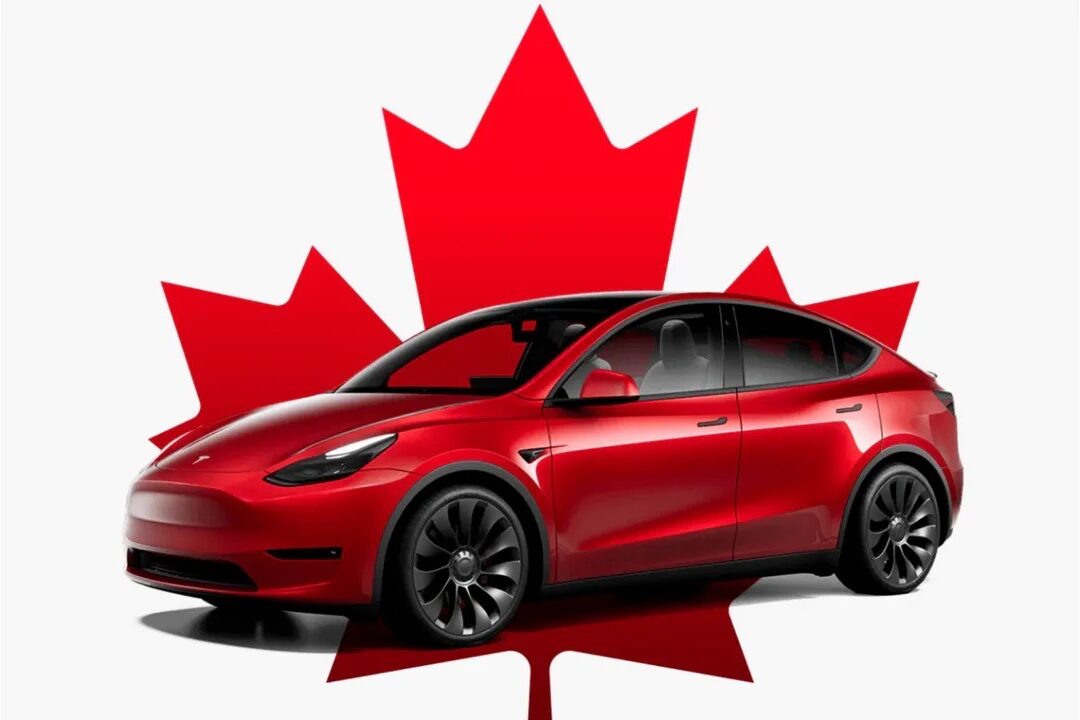
    On 5 February 2026, Prime Minister Mark Carney presented a new national strategy for the automotive industry, designed to position the country as a major player in electric vehicles. The strategy includes a five-year programme of incentives, massive industrial investment and tougher environmental standards. It reflects the desire to structure not only the demand for electric vehicles, but also the entire ecosystem surrounding electromobility.

    In this vision, electrified mobility is one of the pillars of a broader industrial transformation that mobilises public funds to stimulate investment, protect jobs and diversify markets.

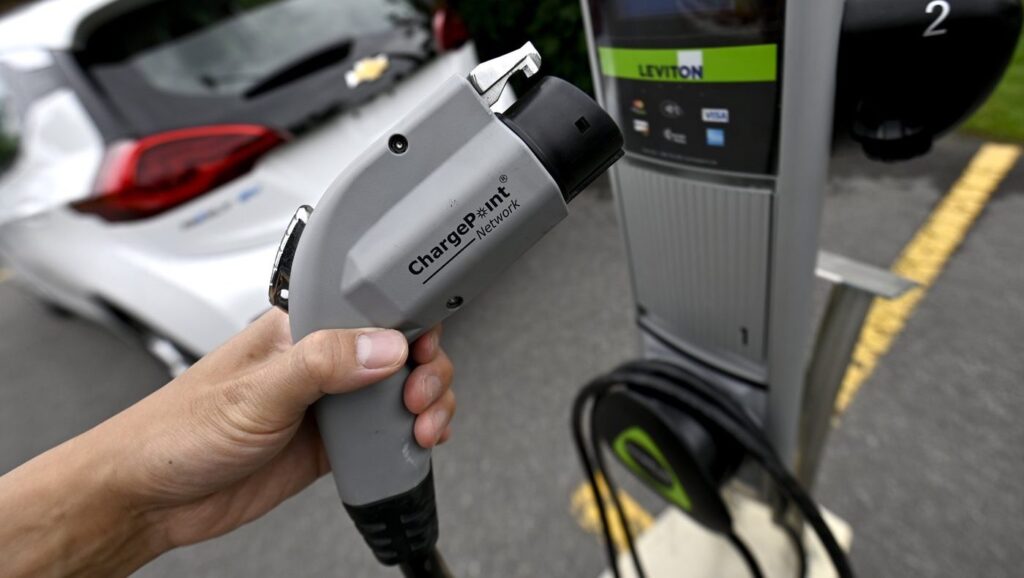
    A stronger recharging network: 8,000 more charging points announced

    One of the most concrete aspects of this strategy concerns infrastructure. On February 10, 2026, Ottawa announced an investment of $84.4 million to fund more than 8,000 new public charging stations across the country, as part of the Zero Emission Vehicle Infrastructure Program (ZEVIP).

    This deployment comes at a time when the existing fleet of charging stations already exceeds 38,000 units, spread across nearly 14,500 locations across the country. Most of this infrastructure is concentrated in several provinces, including Ontario, Quebec and British Columbia, but the strategy aims to increase the number of charging stations in all regions, including the least well-served rural areas.

    source: THE CANADIAN PRESS

    Relaunch of incentives: return of the rebate programme

    Another central element of the strategy is the relaunch of incentives for the purchase of electric vehicles, which were suspended at the beginning of 2025 when funding for the federal iZEV programme, which was very popular at the time, ran out.

    From 16 February 2026, the government plans to reintroduce a system of federal rebates, offering up to $5,000 for the purchase of an eligible 100% electric vehicle and up to $2,500 for a plug-in hybrid. These amounts will gradually decrease until 2030, to keep pace with market developments and ensure a more sustainable transition to electric vehicles.

    source: shop4Tesla

    This relaunch comes against a backdrop of falling EV sales in Canada since the end of incentive support in 2025, which was marked by a significant fall in EV registrations.

    A renewed regulatory framework

    At the same time, the government has opted to end the minimum sales requirement for electric vehicles in favour of stricter emissions standards for the automotive sector, a move designed to offer manufacturers greater flexibility while steering the market towards a sustainable transition.

    This approach reflects a clear strategic philosophy on the part of the Canadian government: to develop electromobility through a combination of ambitious standards, economic incentives and appropriate infrastructure, in order to meet the needs of consumers while supporting the competitiveness of the industry.

    A global industrial approach

    All these measures are part of a strategy to transform the Canadian automotive industry, affecting demand as much as supply, infrastructure as much as production. The strategy aims not only to boost the adoption of electric vehicles, but also to attract private investment and create jobs in an uncertain global economic environment.

    By combining the expansion of terminals, subsidies for purchases, stricter standards and a strategic industrial vision, Canada is seeking to establish a new dynamic from 2026.