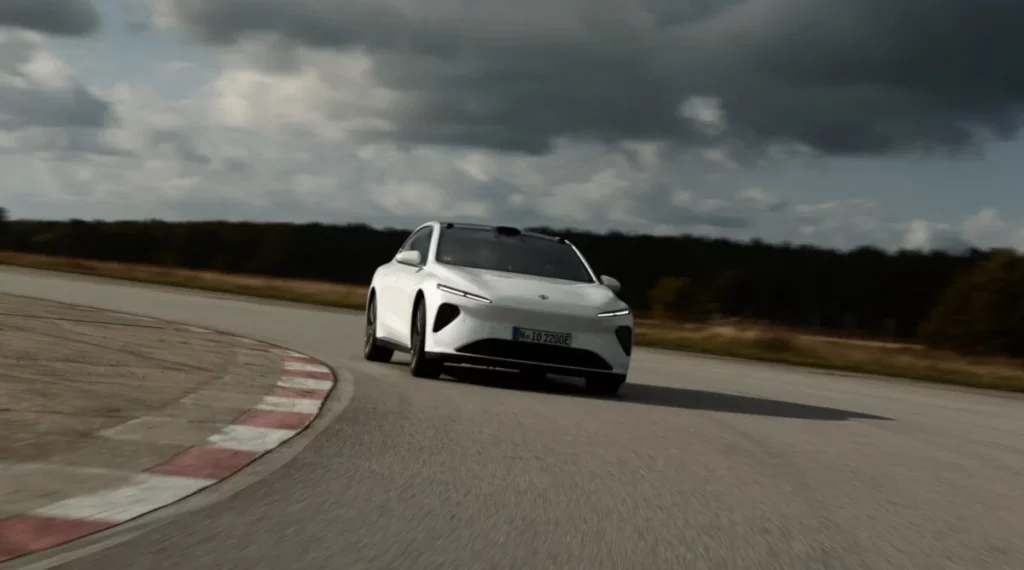
Chinese manufacturer Nio has taken the surprising step of discontinuing its 150 kWh battery. This technology promised over 1,000 kilometres of range, but demand never followed. This decision highlights the real expectations of drivers when it comes to the development of recharging infrastructures.
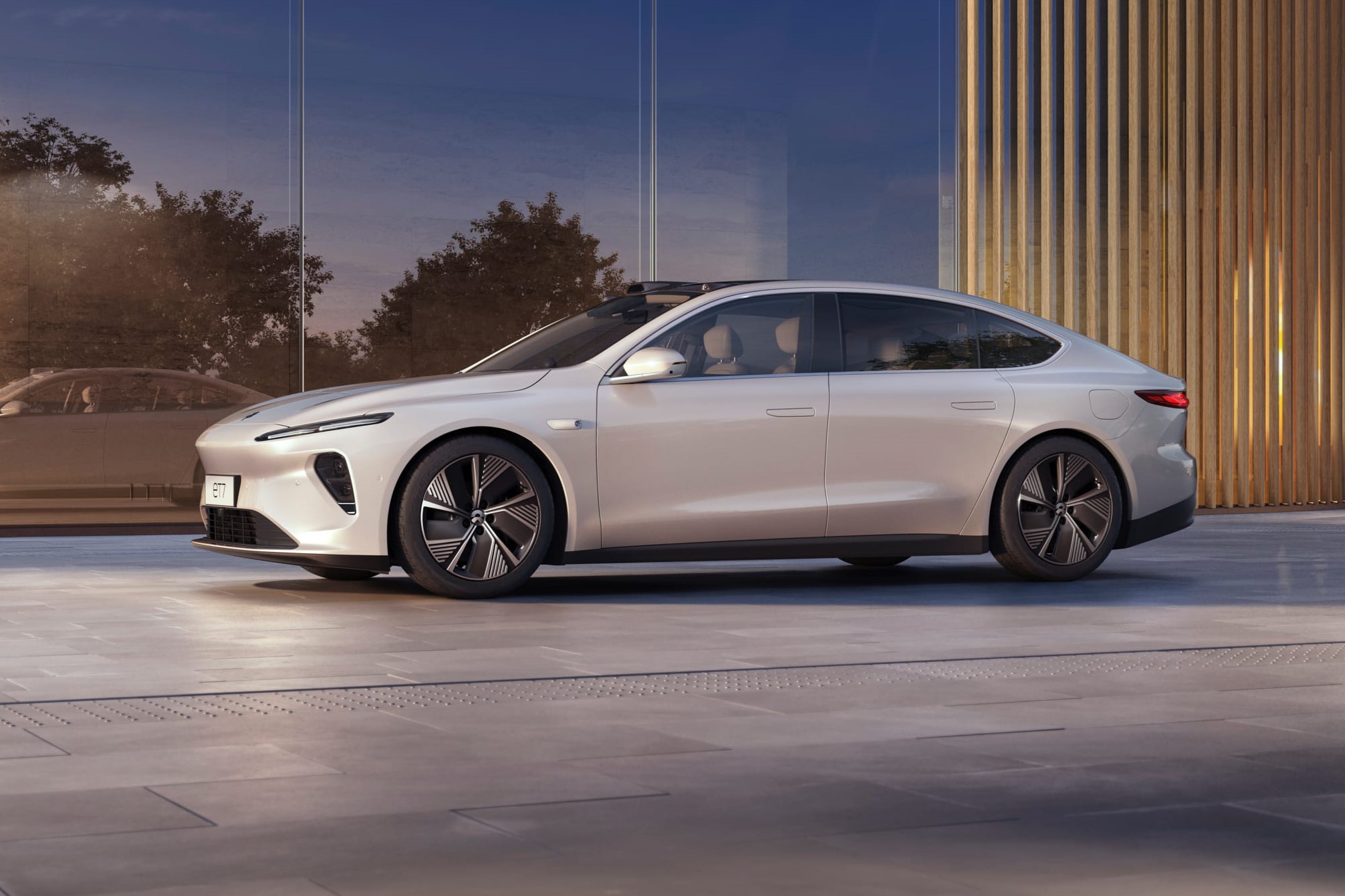
Nio ET7 shown in profile, illustrating its elegant, aerodynamic design (Credit: Nio)
Extreme autonomy that doesn’t appeal
On paper, Nio’s 150 kWh battery seemed revolutionary. In particular, it was fitted to the ET7 saloon and could cover more than 1,050 kilometres according to the Chinese CLTC cycle. In Europe, this represents around 900 kilometres on the WLTP cycle. However, despite this impressive performance, customers have not embraced it. According to William Li, CEO of Nio, the battery was used mainly as a marketing tool rather than for practical purposes. Several hundred units were produced in China, but these numbers were insufficient to maintain production.
The main drawback is the high cost. The battery cost 47,500 euros, the price of a complete Nio ET5. Even the monthly rental scheme, offered as an alternative, did not appeal to motorists. Most consider that a range of over 400 kilometres is already sufficient, especially with today’s recharging infrastructure.
Changing recharging habits
Driver behaviour has changed considerably in recent years. Previously, use was evenly split between 75 kWh and 100 kWh batteries. Today, only 3% of customers choose the 100 kWh battery. The proliferation of fast-charging stations and the development of battery swapping have reduced the need for extreme range. As a result, recovering a full battery in three minutes is becoming more practical than a long journey without a break.
This transformation has also changed Nio’s strategy. The brand now prefers to invest in the deployment of exchange stations rather than produce expensive batteries that are rarely used. William Li points out that this choice responds directly to the needs of customers in the field, rather than to marketing ambitions.
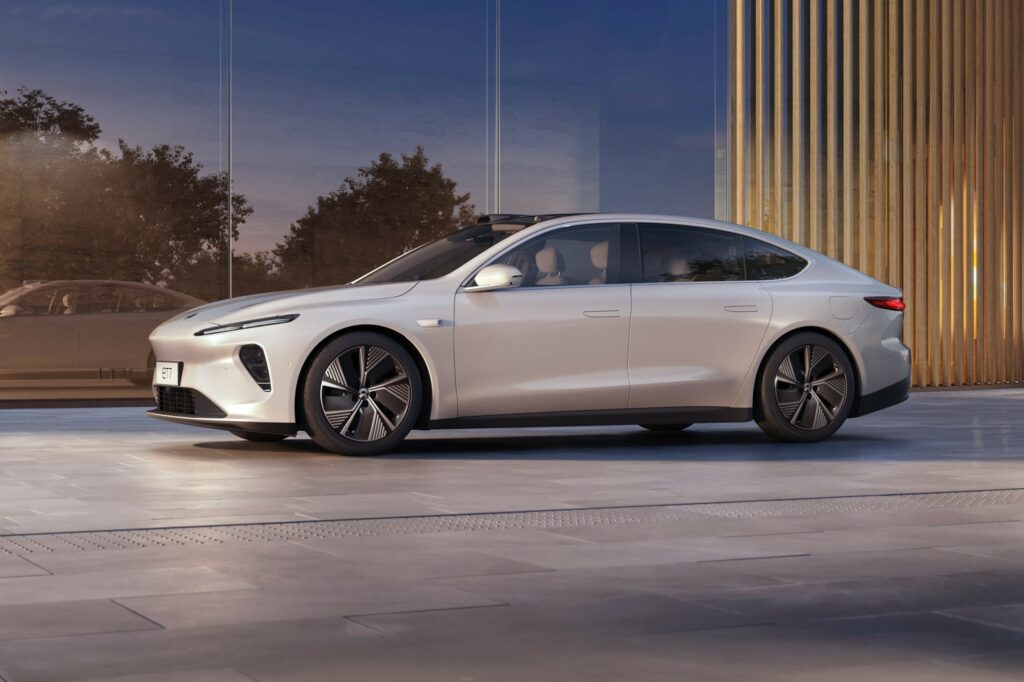
The Nio ET7, a top-of-the-range electric saloon equipped with a 150 kWh battery for extended range (Credit: Nio)
Strategic choices for Europe
Nor will Nio be offering the 150 kWh battery in Europe. The additional certification and testing would have made the introduction too complex and costly. Instead, the company wants to develop its network of exchange stations, seen as a more efficient solution for everyday use. This decision underlines a growing pragmatism, prioritising the user experience over autonomy records.
However, the recent closure of the only battery swapping station in Denmark illustrates the logistical challenges. Despite these occasional obstacles, Nio remains confident in this technology. The company is relying on gradual deployment and practicality to convince its customers, rather than on impressive but unhelpful figures.
A lesson for the electric vehicle market
The abandonment of the 1,000 km battery reveals an interesting paradox: drivers want range, but not necessarily extreme range. The real challenge lies in accessibility and speed of recharging. Nio demonstrates that innovation is not limited to technical performance, but must respond to the real needs of users.
This choice could influence other manufacturers. Rather than focusing on the race for maximum range, optimising infrastructure and everyday practicality now appear to be priorities. Ultimately, the success of electric vehicles will depend as much on practical solutions as on technological prowess.
From the Circuit Paul Ricard, Genesis has lifted the veil on its GV60 Magma, the first production Magma model. This version completely rethinks the concept of the sporty electric SUV. Fans of performance and design will be delighted by this bold, futuristic vehicle.
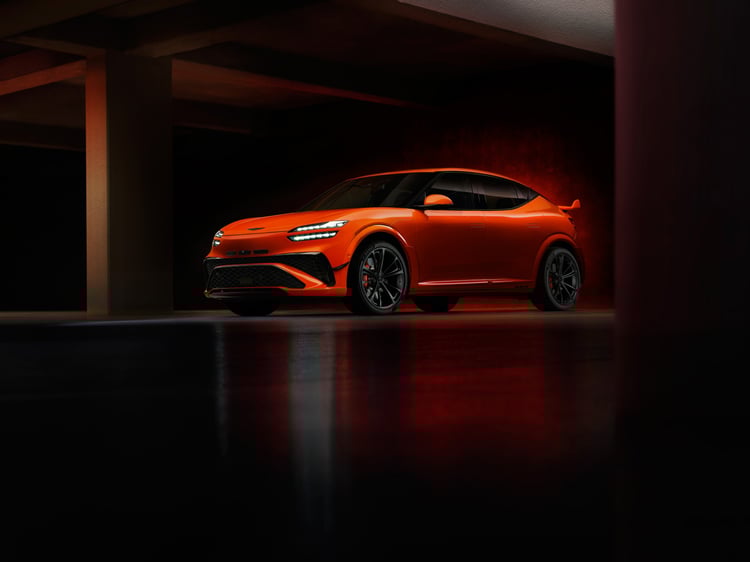
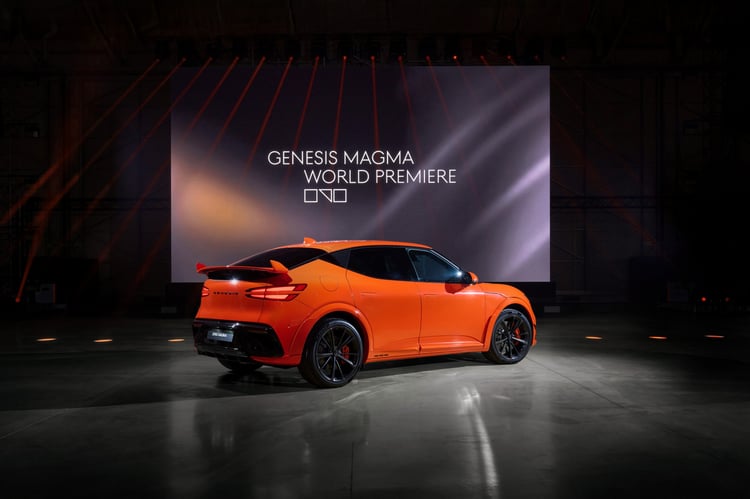
The Genesis GV60 Magma reveals its sporty and elegant design, with a lowered body and 21-inch wheels (Credit: Genesis).
A style that makes its presence felt
The GV60 Magma is immediately distinguishable from the classic GV60 thanks to its wider, lower silhouette. The front bumper has three pronounced openings, optimising both air flow and cooling. In profile, the body is lowered by 20 millimetres and the wider wings accommodate 21-inch wheels fitted with 275-mm tyres. These changes underline the attention paid to aerodynamics and handling. At the rear, the bumper incorporates a special diffuser, while the spoiler on the tailgate adds an aesthetic and functional touch.
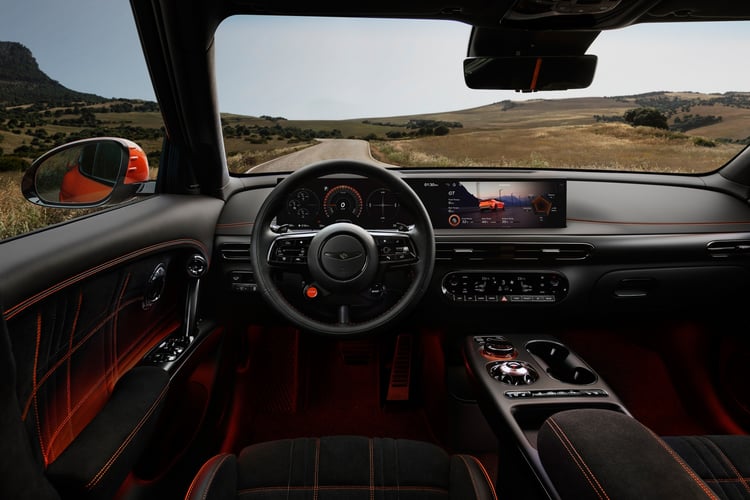
Inside, Genesis blends luxury and sportiness. Black dominates, punctuated by orange and grey stitching and matching seatbelts. The steering wheel features additional controls for driving modes and the boost function. The instrumentation is unique, featuring exclusive Magma themes and offering an immersive experience. Chamude, a material reminiscent of suede, adorns the seats and console, reinforcing the premium character of the cabin.
Mechanics designed for performance
Under the bonnet, the GV60 Magma is more than just a pretty face. It combines two electric motors, one per axle, offering a total output of 609 bhp and 740 Nm of torque. A single button activates Boost mode, which boosts power to 650 bhp and torque to 790 Nm for 15 seconds. This configuration enables the car to reach 200 km/h in just 10.9 seconds thanks to Launch Control. Genesis also offers three driving modes and a Drift mode, guaranteeing sensations and agility on the track. The brakes, suspension and steering components have been optimised for a sporting experience worthy of hypercars.
The interior of the GV60 Magma combines luxury and sportiness, with an exclusive steering wheel, orange stitching and Magma-specific instrumentation (Credit: Genesis).
In addition, the VGS system simulates gear changes and the sound generator recreates the ambience of a combustion engine. In this way, the driving experience combines electric sensations with traditional emotions. Thermal optimisation of the battery ensures that performance is maintained even during extended dynamic sessions.
An ambitious European strategy
Genesis is thinking big for the next decade, and Europe is at the heart of its ambitions. After a timid start, the manufacturer intends to make a name for itself with its high-performance electric models. The Magma programme is the main thrust of this strategy, combining luxury, technology and performance. The GV60 Magma will serve as the gateway to future models, including saloons and large SUVs, and even dedicated competition models.
Deliveries will begin in South Korea in early 2026, followed by Europe and North America. The GV60 Magma paves the way for a future in which Genesis aims to rival Porsche, Polestar and Cadillac in the premium electric segment. Although the price remains unknown, it promises to be a highly anticipated vehicle for lovers of performance and innovation.
A technical heritage inspired by the Ioniq 5 N
The GV60 Magma is based on the E-GMP platform used by the Hyundai Ioniq 5 N, but with a refined and luxurious approach. The two electric motors deliver 790 Nm of torque in boost mode, enabling a 0-100 kph time of less than 3.5 seconds and a top speed of 264 kph. Its suspension, recalibrated with Hydro G silentblocks, improves comfort and agility, while braking is reinforced to cope with the power.
The GV60 Magma is distinguished by its functional rear spoiler and integrated diffuser, which enhance the SUV’s aerodynamics and elegance (Credit: Genesis).
Sporty styling is matched by precise detailing. Side skirts, rocker panels and a functional rear spoiler enhance aerodynamics, while the interior combines sobriety and sparkle. The displays and instrumentation adopt a Magma theme, and the steering wheel incorporates controls for the boost function and driving modes. Genesis strikes a subtle balance between luxury, performance and immersive technology.
Towards a complete Magma family
The GV60 Magma paves the way for a complete series of high-performance models. From the G80 saloon to the GV80 SUV, Genesis plans to roll out the Magma programme across its entire range. The brand aims to transform its image and establish itself as a major player in sporty electric luxury. With the GV60 Magma, Genesis combines distinctive design, extreme power and innovative technologies. Europe and then North America will be able to discover this first model from 2026, heralding a new era of Korean performance on the international market.
Over the last few days, winter has arrived in France, with very low temperatures. The fear of electric cars in cold conditions remains. Despite this, drivers are learning to adapt their use to preserve the range of their batteries. Manufacturers are developing technologies that improve performance in winter conditions. As a result, winter is becoming an area of innovation rather than a barrier to electric mobility.
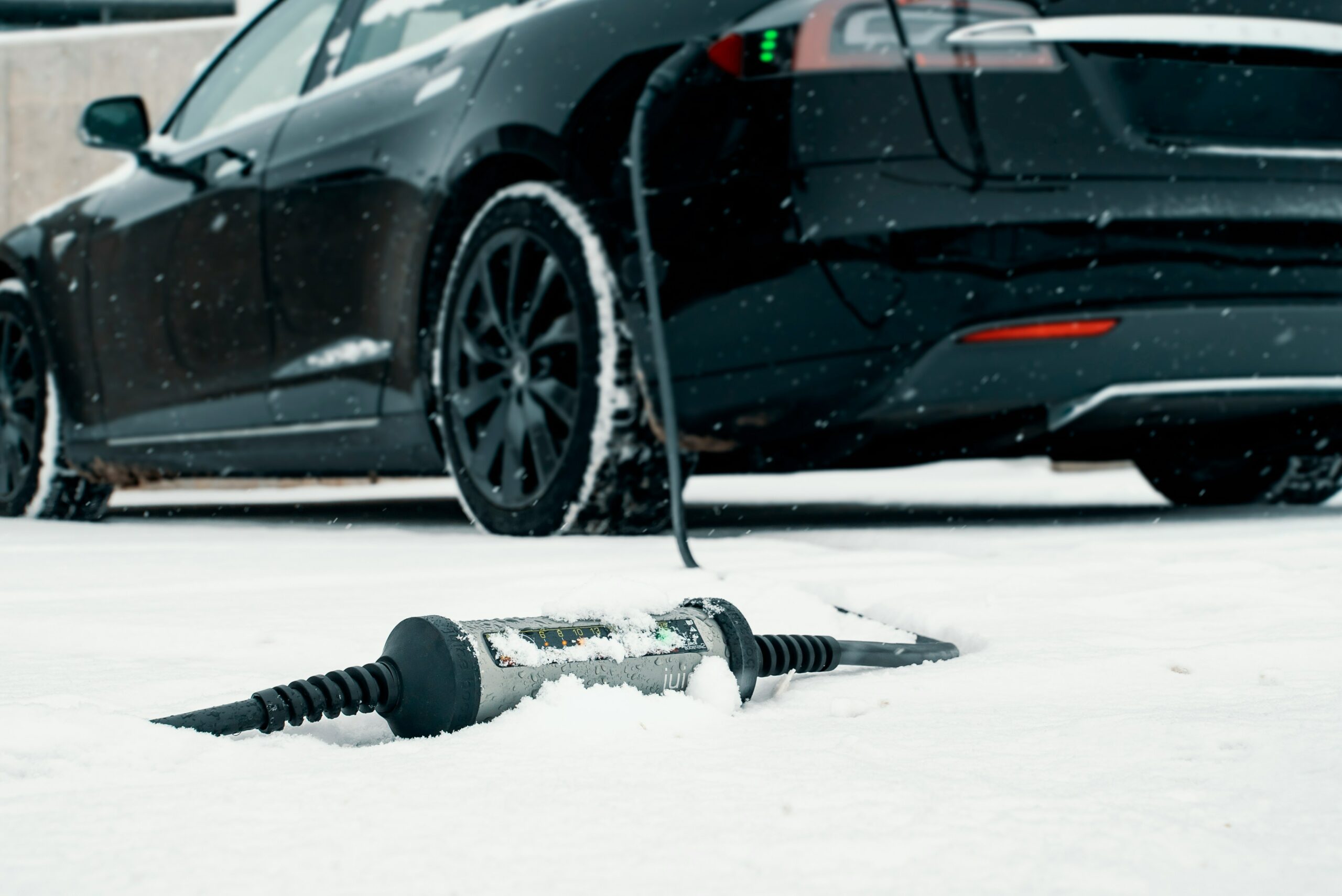
An electric car recharges despite sub-zero temperatures, illustrating the progress of sustainable mobility in winter.
Cold, the enemy of batteries
Let’s start with a fact: cold weather is not batteries’ best friend. It profoundly alters their behaviour, forcing drivers to think ahead. Below 0°C, lithium-ion cells lose efficiency, reducing the range by 20-30% depending on the model.
Recharging time is often longer, because the battery has to be preheated before it can accept a fast charge. This step protects the cells, but delays reaching the desired charge level. It is important to regulate the battery temperature so that the car retains its range and power throughout the journey.
Another part of the energy is used to heat the passenger compartment. Unlike internal combustion engines, electric cars have no residual heat. The system therefore draws directly from the battery to heat the interior, which increases overall consumption. This is particularly noticeable on short journeys in town, where repeated starts accentuate the losses. Despite these constraints, drivers must learn to optimise their driving and adapt their habits to limit the drop in range.
Concrete solutions are emerging
In many countries with severe winters, motorists are adapting their practices to preserve their range. One of the most effective reflexes is to preheat the vehicle while it is still plugged in. This limits the impact of heating on the battery during the first few kilometres. Heated seats are also preferable, as they consume much less energy than general heating. Thanks to these practical choices, losses in range become more predictable and therefore easier to manage.
At the same time, infrastructure is evolving to support this energy transition. Charging stations are adapting to cold climates by incorporating ice protection systems. Some installations also use thermal management technologies to ensure safe fast charging in winter. The improved regional coverage means that drivers can make long journeys with greater peace of mind. This global transformation is helping to build real confidence in electric vehicles, even in extreme conditions.
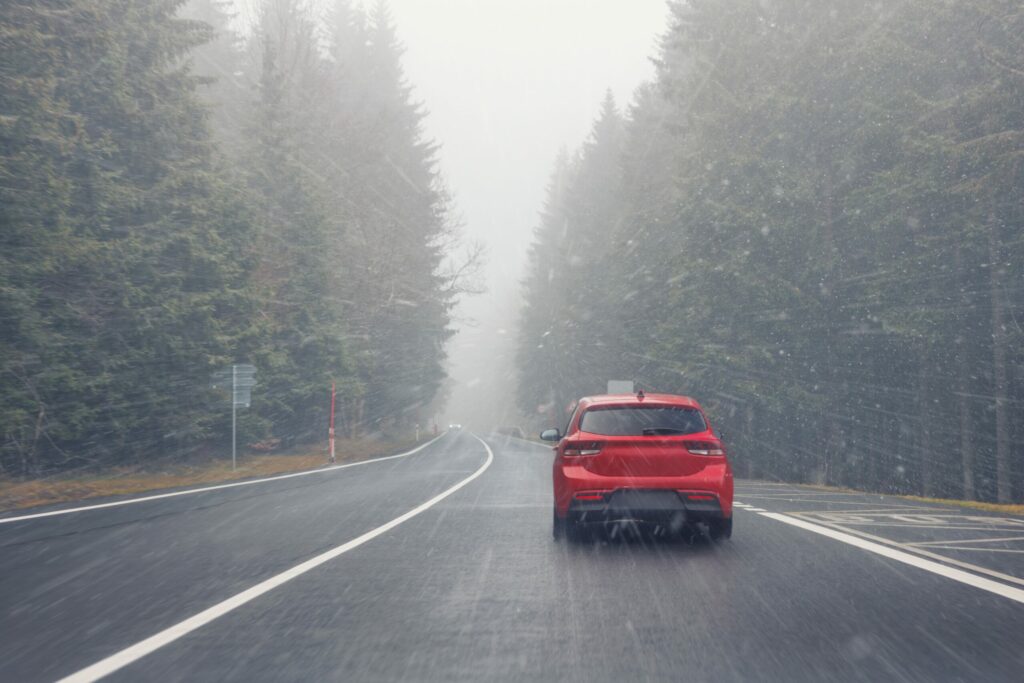
Cars drive along a snow-covered Alpine road despite the storm, a reminder of the risks associated with winter journeys.
Constantly evolving technology
The progress made by the automotive industry shows that batteries are becoming more robust year after year. Manufacturers are adopting heat pumps, which significantly improve energy efficiency in winter. This technology enables up to 83% of range to be maintained in winter, compared with 75% for vehicles not equipped with this technology. Users benefit from a more stable driving experience, even in prolonged sub-zero temperatures.
At the same time, engineers are working on the internal thermal management of batteries to optimise their operation. Some systems use phase change materials (PCM) to maintain a stable temperature. Others use cooling fins to improve heat dissipation and maintain the optimum operating temperature of the batteries. These advances extend cell life and reduce the risk of accelerated degradation. In addition, intelligent recharging is being developed to coordinate heating and charging at the right time. This innovation limits unnecessary consumption and improves the overall efficiency of the vehicle.
Electrics make their mark, even in the coldest regions
Experience gained in winter areas, such as the Nordic countries, proves that electric cars can operate reliably. Public policies play an important role in supporting the installation of suitable charging points and facilitating access to clean mobility. These initiatives encourage drivers to take the plunge and discover a use that is ultimately simpler than they imagined. Thanks to these coordinated efforts, electric vehicles are no longer confined to temperate regions, and are now conquering territories with demanding climatic conditions. Take Norway, for example, which is shattering all records, with 95.8% of new electric cars sold in January 2025 – a world record, according to the Norwegian Road Traffic Information Council (OFV).
This development opens up interesting prospects for the entire automotive market. The innovations tested in extreme cold then benefit drivers the world over. Batteries are becoming more stable, vehicles more versatile and infrastructures more powerful. With this progress, winter is no longer seen as a barrier, but as a lever for accelerating the overall improvement in electric technologies. The future of mobility therefore seems compatible with a wide range of climates, reinforcing the place of electric power in the global energy transition.
How do you protect your electric car from the cold?
Winter puts electric vehicles to the test. Here are a few simple steps you can take to preserve the range and longevity of your battery:
Preheat the vehicle while it is still plugged in: this limits the energy consumed by the battery.
Keep the battery charged to between 40% and 80% to avoid losing range due to the cold.
Use heated seats instead of general heating, which consumes more energy.
Park the vehicle in a garage or covered space to limit exposure to frost.
Schedule the recharge just before departure so that the battery is warm and more efficient.
Have the battery thermal system checked before winter to prevent any malfunctions.
The Lola-DGR project is shaking up the certainties of motorsport by announcing unprecedented performance. Designed by Lucas di Grassi, this 100% electric concept promises to be faster than an F1 car on certain circuits. However, despite its stated ambition, the car has not yet taken to the track and remains at the virtual prototype stage.
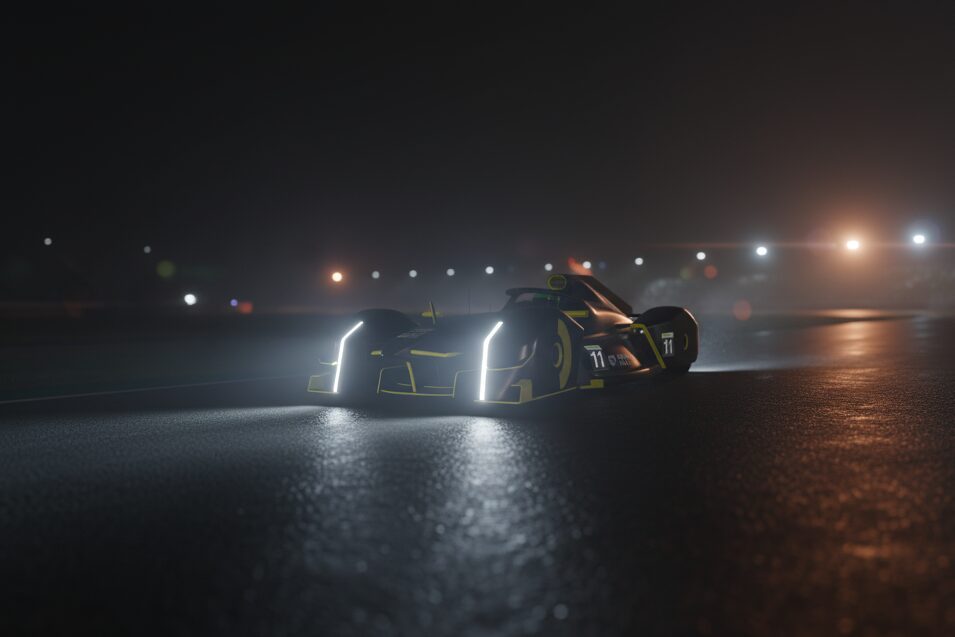
The Lola-DGR facing the track, ready to challenge the performance of an F1 car (Credit: DRG)
Designed outside any regulations, the prototype is intended to prove that absolute performance is not the exclusive preserve of internal combustion engines. The simulations unveiled by the team predict astonishing lap times, notably in Monaco, where it would outperform a Formula 1 car by several seconds per lap.
An idea born to go beyond current limits
According to Lucas di Grassi, the initial question was simple: how far can an electric single-seater go if it is freed from the usual rules? In collaboration with Lola, a long-standing motorsport specialist, he designed a machine that exploits technical solutions already available. The objective remains clear: to build the most efficient electric single-seater ever conceived, capable of beating an F1 car on a lap while consuming less energy.
This is not Di Grassi’s first challenge. As a driver who has long been involved in electric projects, he is well aware of the limits and advantages of the technology. The exit of the GEN4 from Formula E, with its higher performance and four-wheel drive, has not slowed him down. On the contrary, it seems to have accelerated his desire to prove that electric cars can go even further. So the Lola-DGR is a visionary response, designed to shake up the benchmarks set by F1.
The philosophy behind the concept is based on a powerful idea: efficiency can become a performance multiplier. The car is not designed as an inaccessible technological showcase, but as a realistic laboratory. It uses credible industrial solutions, including a 60 kWh battery integrated into the floor and centralised cooling to limit drag. It’s all part of a systemic approach that aims to reduce energy losses rather than compensate for them with a heavier battery.
Active aerodynamics designed as a total breakthrough
To outperform Formula 1, the Lola-DGR relies above all on radically new active aerodynamics. The prototype combines a suction effect under the car with a blown diffuser to maximise downforce at all speeds. This technological choice is reminiscent of the Brabham ‘hoover’ of 1978, but it goes much further by adding unprecedented flow control. The car could generate several tonnes of equivalent downforce thanks to two 30 kW turbines activated as required.
The major advantage of this solution lies in its ability to stabilise downforce. Unlike an F1 car, which relies heavily on speed to generate grip, the Lola-DGR maintains a constant load in slow bends. This behaviour paves the way for higher passing speeds in sections where F1 cars lose their advantage. What’s more, this flexible management reduces drag when the car reaches high speeds. The fans are then switched off to allow natural aerodynamics to act and optimise the tip.
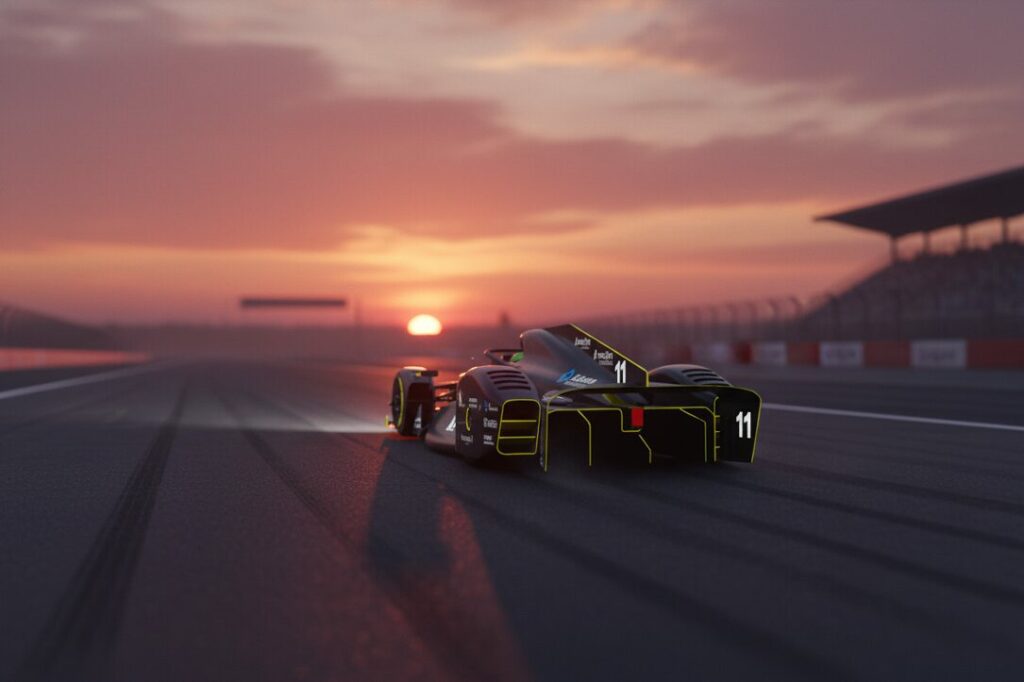
The Lola-DGR reveals its aerodynamic architecture from the rear. (Credit: DRG)
The streamlined wheels further enhance this quest for efficiency. They significantly reduce drag while improving safety on wet tracks by limiting water splashes. Finally, the absence of side radiators slims the silhouette of the vehicle, further reducing air resistance. The combination of all these elements points to a single ambition: to redefine the aerodynamic hierarchy in racing.
Simulations that promise to beat F1 at Monaco
The most spectacular data concerns the virtual performance achieved on the Monaco circuit. According to CFD analyses and partner simulations, the Lola-DGR would be up to 4.3 seconds faster than a current F1 car over a lap, and even up to 11 seconds faster in the most optimised versions of the concept. These figures seem staggering when you consider that F1 cars hold the performance records on most of the world’s circuits.
Di Grassi specifies that he based his calculations on a load of 15 kN, or around 1.5 tonnes, a figure that he nevertheless considers conservative. By removing certain battery modules to lighten the car, the concept could become even sharper. What’s more, the simulation shows that the Lola-DGR is not content with an exceptional lap. It could maintain a pace comparable to an F1 pole position for a dozen laps, or even keep up a race pace for fifteen to twenty laps. This ability to put in one performance after another demonstrates an overall efficiency that goes far beyond a simple one-off exploit.
This advantage also comes from easier handling. The constant downforce stabilises the car in the narrow or bumpy sections of urban circuits. The car feels more predictable and consistent in all phases of driving, which can reduce errors and make driving more aggressive without increasing risk.
Intelligent, forward-looking energy management
With a battery of just 60 kWh, the question of range becomes central. The decision not to increase capacity is explained by a strategy focused on efficiency. Reducing drag remains the primary saving, while active aero becomes an energy management tool. The system makes it possible to decide when to activate the fans, when to maximise regeneration and how to optimise lateral forces according to speed.
Integrating the battery into the floor lowers the centre of gravity and optimises weight distribution. The system could also evolve towards hydrogen assistance, which would play the role of range extender or auxiliary generator for the fans. This combination opens up credible prospects for endurance racing. It could make participation in the Le Mans 24 Hours with an entirely zero-emission architecture a realistic possibility.
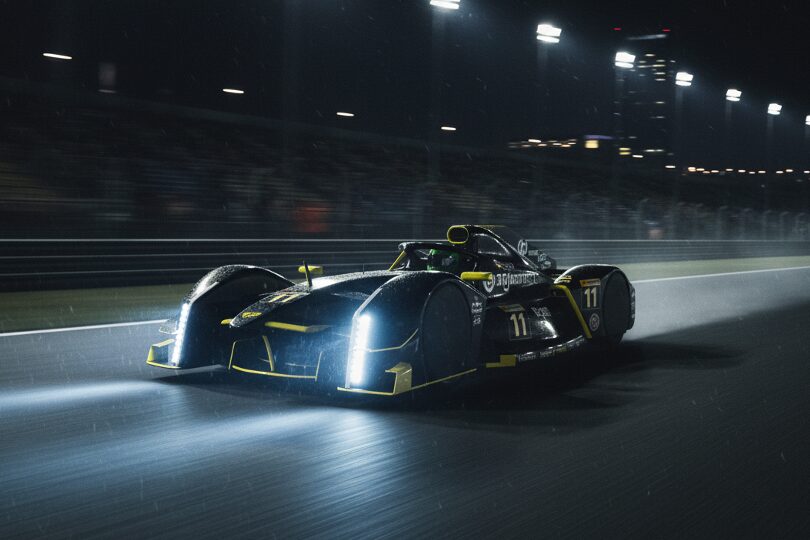
The Lola-DGR lights up the track at night. (Credit: DRG)
In the short term, the concept seems perfectly suited to both sprint and urban racing. The constant downforce at low speeds offers a considerable advantage during hard braking or short re-accelerations. On a wet track, the controlled aerodynamics and streamlined wheels should provide more stable handling than a traditional single-seater. What’s more, the modular design means the car can be adapted to different circuits, from the Nürburgring to Macau.
Clear ambitions but a colossal challenge ahead
Despite these impressive figures, one major obstacle remains: the car now needs to be built and tested. Lucas di Grassi says he wants to produce an operational demonstrator within two years. If real-world performance confirms the simulations, the Lola-DGR could usher in a new era in which electric power is no longer a compromise but a choice of absolute performance.
The concept aims to demonstrate that it is possible to do better than an F1 car by focusing on energy intelligence rather than raw power. It also proposes a new way forward for the industry, with technologies that can be transposed to production cars, including rational active aerodynamics and anti-drag bodywork. This vision goes beyond mere competition and extends to the mobility of tomorrow.
It remains to be seen whether the digital promises will hold up in the real world. And if it does, the Lola-DGR could well become the first electric single-seater to seriously threaten the hegemony of Formula 1. A potential revolution that would transform the way we think about automotive performance.
Solid state batteries are finally moving from the laboratory to the production line. Thanks to a structured alliance between BMW, Samsung SDI and Solid Power, the technology is taking a decisive step towards commercialisation, expected before 2030. This convergence of major players promises double the range, faster recharging and greater safety, reviving the global race for innovation.
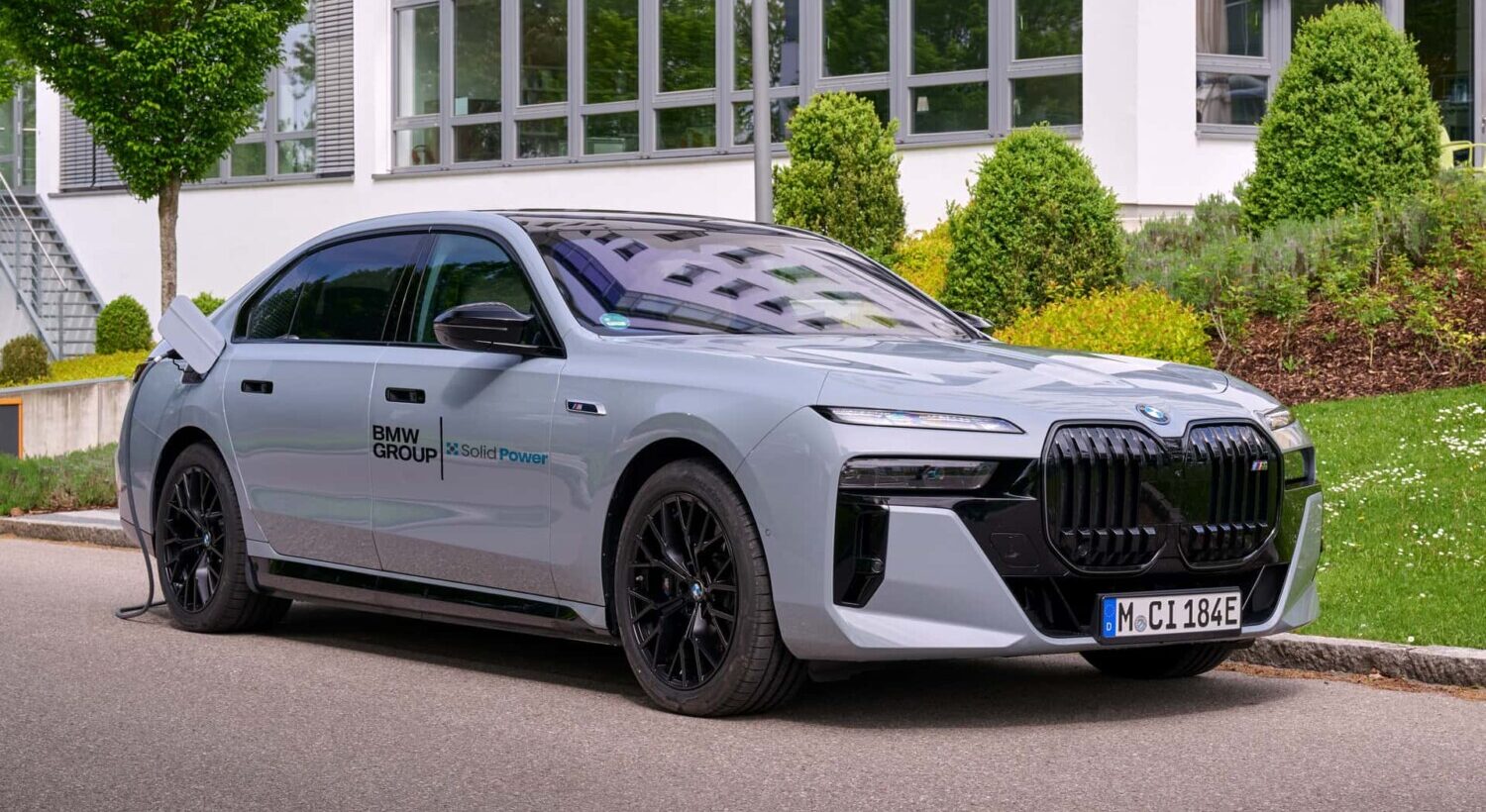
A BMW equipped with solid batteries recharges outside, symbolising autonomy and advanced technology (Credit: BMW Group).
The partnership that could change the industry
BMW, Samsung and Solid Power today formalised a strategic collaboration to accelerate the development of solid state batteries. The alliance draws on Solid Power’s chemical expertise, Samsung SDI’s industrial strength and BMW’s automotive expertise, providing a complete ecosystem to take batteries from prototype to production. BMW and Solid Power have already been working together since 2022, but the arrival of Samsung marks a crucial step. The Korean group will contribute its manufacturing capabilities, while BMW will design and integrate the packs into its future models. This clear division of roles should enable a rapid and controlled ramp-up.
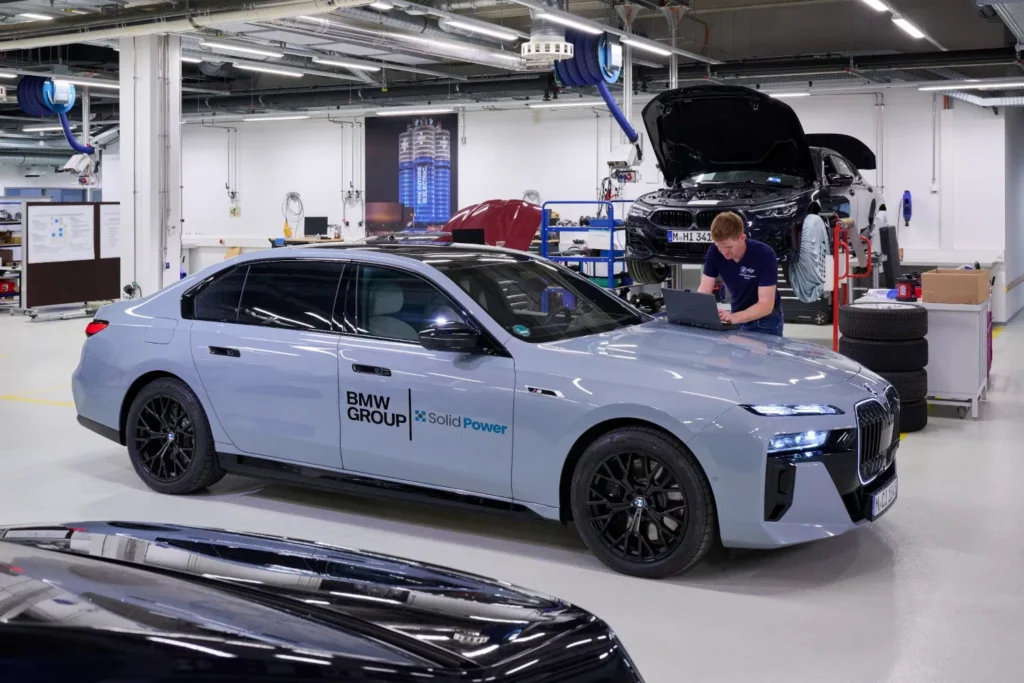
The first results are tangible, with a pilot line inaugurated by Samsung in 2023 to produce prototypes that will be sent to customers. At the same time, BMW has successfully tested an i7 equipped with solid-state cells in real-life conditions. As a result of these advances, the partners are aiming for series production before 2030, reinforcing the credibility of a technology that is often considered over-ambitious.
Long-promised technology finally a reality
The heart of the system is a sulphide-based solid electrolyte developed by Solid Power. It offers high conductivity and improved stability, two major challenges for this technology. The cells manufactured by Samsung will incorporate this electrolyte in the separator or catholyte. BMW will then assess performance against strict criteria before incorporating them into its demonstration vehicles. These advances are also based on an energy density that is significantly higher than current standards. Some configurations already reach 390 Wh/kg and could rise to 440 Wh/kg with a lithium metal anode. Experimental versions are even aiming for 560 Wh/kg, although their development is still at an early stage.
This performance is expected to double the range and halve recharge times. The benefits also include longer life, limited degradation and a safer thermal profile. The technology therefore seems to offer much-awaited solutions for accelerating the adoption of electric vehicles in an increasingly competitive market.
A technician examines a BMW equipped with solid-state batteries, illustrating the tests and validations carried out in real-life conditions. (Credit: BMW)
The global race intensifies
The competition for solid-state batteries is gathering pace, with all the major manufacturers looking to gain the upper hand. Nissan is already developing its own solutions with LiCAP Technologies. In China, CATL and BYD are aiming to bring their products to market as early as 2027, with a view to asserting their dominance before the end of the decade. At the same time, Mercedes-Benz, Stellantis and Volkswagen are making progress with their dedicated partners, showing that the stakes go far beyond the technological framework.
Against this backdrop, BMW is adopting a cautious but ambitious strategy. The manufacturer is multiplying its partnerships to maximise its chances of success, while rigorously validating each step forward. Despite the absence of a precise timetable, the current momentum suggests that the solid-state battery could become an industrial reality sooner than expected.
A redefined electric future
Thanks to the complementary nature of their combined expertise, BMW, Samsung SDI and Solid Power seem to be better equipped to take the final critical steps. Prototypes are already on the road, pilot lines are up and running and validation work is progressing. If the promises are confirmed, this technology could profoundly transform the automotive industry by offering greater safety, more autonomy and fewer constraints for users. So the countdown is on. The next few years will tell whether the solid state battery can finally live up to its promise and reshape the global electric mobility landscape.
As well as manufacturers, consumers have high expectations of this new generation of solid batteries. The doubled range and faster recharging could remove the last remaining obstacles to the purchase of an electric vehicle, particularly for long journeys. In addition, greater safety and improved thermal stability are boosting public confidence in this technology. Finally, the combination of performance, durability and ease of use could transform the driving experience, while accelerating the transition to cleaner, more efficient mobility.
Europe’s vast programme to decarbonise transport is granting €100 million to sixteen French projects, supporting ports, airports and road networks. The funding is designed to speed up the transition to clean energy solutions and boost national competitiveness. It also marks a strategic step towards the rapid electrification of heavy mobility.
French airports are modernising their ground operations to incorporate electric solutions and reduce their CO₂ emissions.
Massive support for French ports and airports
European funding primarily targets the power supply to ships at berth, in order to reduce emissions in port areas. The ports of Saint-Malo and Bordeaux, and those managed by Haropa in Le Havre, Rouen and Paris, are benefiting from substantial aid. These installations will enable ships to use land-based electricity rather than their auxiliary engines, which are highly polluting. Airport operations are also following suit, with Toulouse-Blagnac and Paris-Charles-de-Gaulle receiving several million euros to electrify their facilities. This development strengthens the coherence of environmental policies while modernising strategic infrastructures.
These subsidies consolidate a dynamic already underway by several players in the sector. Port managers are keen to reduce the environmental impact of maritime traffic, which emits large quantities of pollutants. At the same time, airports are speeding up the integration of electric equipment, which is essential if European emission reduction targets are to be met. This convergence reflects a desire to adapt national equipment to climate requirements.
Mass deployment of charging stations for electric vehicles
The list of winners also includes a number of operators specialising in recharging electric vehicles. Engie Mobilités électriques has been awarded more than €5 million to equip fifty-one sites for heavy goods vehicles in Europe. The majority of these installations will be in France, to support the transition in road transport. TotalEnergies, for its part, is coordinating a major project involving nineteen sites capable of delivering 76 megawatts for electric trucks. This initiative has been allocated €13 million, illustrating the strategic importance of the logistics sector.
These investments are facilitating the development of a coherent, high-performance network, which is essential for businesses faced with new energy constraints. The European corridors must rapidly accommodate terminals capable of meeting the growing demand for power. What’s more, these networks will make it possible to unify technical standards and improve interoperability between neighbouring countries.
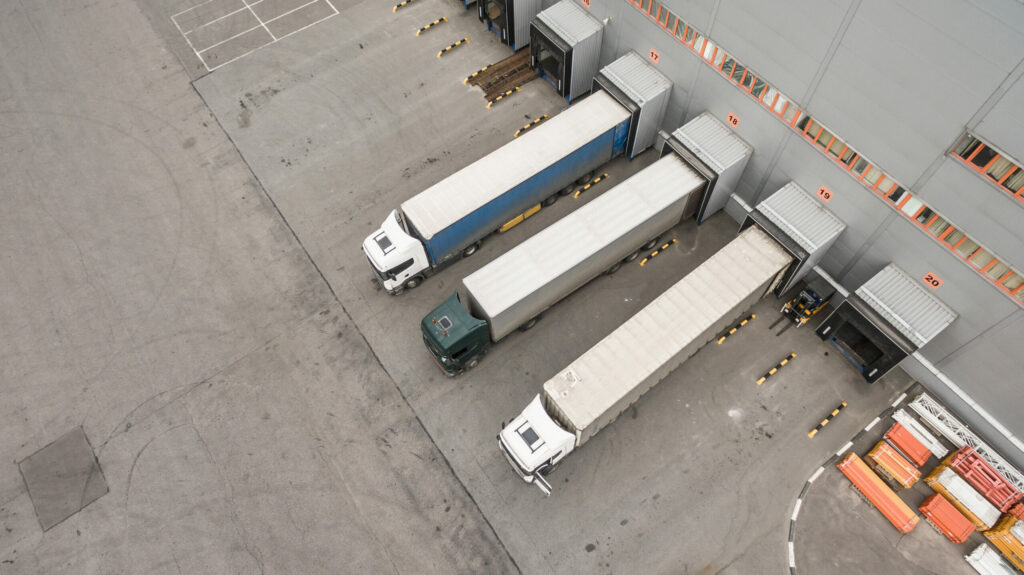
Bus and lorry depots are being transformed with recharging facilities to support sustainable mobility.
Electro-mobility in buses and the boom in green hydrogen
Keolis is also among the beneficiaries, with a grant to modernise a depot with ninety-eight buses in eastern Paris. The operator also wants to electrify a site still dependent on diesel, which will further reduce urban emissions. This transformation is part of a sustainable public mobility strategy. It also underlines the efforts being made by urban areas to reduce local pollution. At the same time, green hydrogen is continuing to make headway thanks to the start-up Qair, which has received support to deploy stations between Toulouse, Montpellier and Perpignan. Support for this technology confirms its place in the transition to heavy mobility.
Hydrogène Nouvelle Aquitaine is also receiving support for an electrolyser and several stations. This approach guarantees a diversification of energy sources. It will also enable hydrogen to be integrated more quickly into industrial and logistics applications. Finally, the company Izivia has been awarded a grant to install one hundred and sixty hydrogen filling stations for lorries on European motorways. This initiative complements the efforts being made by operators to strengthen the long-distance recharging offer.
Private players heavily involved in the transition
Voltix, a subsidiary of the Vinci Group, has been granted an exceptional sum of sixty-five million euros. The funding will be used to set up forty-five recharging sites in France and several other European countries. The total power announced is 288 megawatts, once again demonstrating a major ambition for the electrification of heavy goods vehicles. This initiative illustrates the determination of companies to meet the technological challenges of the ecological transition. It also highlights unprecedented European coordination.
The Electra network is receiving four million euros for thirty-nine sites in several Member States. This contribution strengthens the presence of an operator already well established in urban areas. It also encourages the harmonisation of infrastructures between the different markets in the Union. This enhanced development will enable users to benefit from a more reliable and extensive network.
Charging stations are springing up all along Europe’s major roads to facilitate electric road transport.
A European strategy transforming the French landscape
These grants reflect a shared vision focused on reducing emissions from the transport sector. They support concrete projects, anchored in the regions and led by public and private partners. Thanks to these investments, France is speeding up the adaptation of its infrastructure. This dynamic also contributes to the economic development of the regions concerned. Finally, it encourages innovation in a sector undergoing major change.
Europe is confirming its driving role in the energy transition. The projects selected meet the environmental priorities set for the coming years. This approach creates a stable and encouraging framework for industrial players. It also sends a clear signal about the importance of investing in clean technologies. All in all, this €100 million package marks a significant step towards more sustainable transport.
Chinese manufacturer Leapmotor is stepping up its electric strategy. Its new A10 urban SUV is clearly aimed at the already saturated European market. It promises an aggressive price and unexpected technologies for this segment.
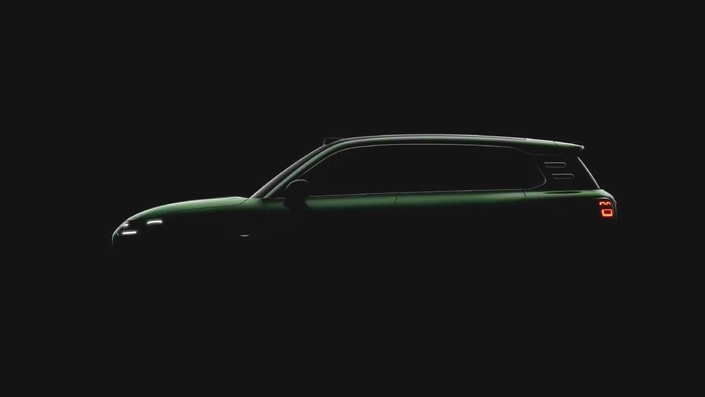
The front of the Leapmotor A10 appears in a dark teaser released by Leapmotor (Credit: Leapmotor)
A strategic launch in a hotly contested segment
Leapmotor is preparing a major offensive with the A10, a model designed to appeal to the European public despite formidable competition. Backed by Stellantis, Leapmotor has been rolling out new models for several months now, and is moving forward at an impressive pace. After the B05, then the large C10 and the compact B10, the brand will unveil this small 100% electric SUV on 21 November at the Guangzhou Motor Show. Its mission is clear: to take on the Peugeot e-2008, Renault 4, Jeep Avenger and Fiat 600e, models that have long dominated the B segment.
The first images published on Weibo, a social network widely used in China, confirm a distinctive design that is sharper than that of the rest of the Leapmotor range. We can see a three-segment front light signature, as well as a rectilinear profile marked by two metallic rear inserts. These elements are reminiscent of European vehicles, while at the same time affirming a new identity designed for the international market. The SUV is also aimed at a price-conscious clientele, a criterion that has become central in a tense electric market.
A bold design and a few mysteries still unanswered
The teasers show a vehicle still in shadow, but several details are already emerging. The rear features an unexpected light signature, resembling a smiling emoji. This stylistic touch contrasts with the seriousness displayed by its direct rivals. The roof also features a large bump, housing a LiDAR system reserved for the Chinese market. This technology will enable advanced semi-autonomous driving functions.
However, Europe is unlikely to benefit from LiDAR, probably to keep production costs down. European versions, on the other hand, will retain the modern electric architecture of the Chinese model, as well as its digital interface for urban driving. The patent images also confirm the presence of a charging hatch on the front left wing and black protectors on the rocker panels. These elements reinforce the SUV look without sacrificing overall sobriety.
A new platform for a new series of models
The A10 inaugurates Leapmotor’s new ‘A’ series, which also includes the A05 city car. Both models are based on a new technical platform, developed to meet European expectations in terms of perceived quality and urban agility. This strategy marks a major break in Leapmotor’s positioning, as it seeks to move away from its image as a ‘low-cost brand’.
The A10’s proportions are ideal for urban use. At more than four metres long, the SUV sits below the B10 in the range and is close to the standards of the Renault Captur and Peugeot 2008. The patents reveal simple lines that are far more dynamic than the first Leapmotor models. The brand’s aim is to appeal to a discerning European clientele, accustomed to higher-quality finishes and better-structured interiors.
Rectilinear profile of the Leapmotor A10 reveals itself slightly in the dark. (Credit: Leapmotor)
Consistent range and a possible range extender
No official technical data has been released, but the Chinese press is quoting a range of around 400 km on a combined cycle. There are also persistent rumours of a range-extender version reserved for China. This system would combine an electric battery with a small combustion engine dedicated to recharging.
If this configuration is confirmed, Leapmotor would be the only player in the B-SUV segment to offer such a device. In Europe, only a 100% electric version is expected, without an extender. This would enable the brand to maintain a very aggressive price, while simplifying production. The European versions are expected to be powered by a conventional electric motor, with a power output comparable to that of its direct rivals.
A price that could shake up the entire European market
The real shock could come from the announced price. Several sources suggest an entry price of under €25,000. At that level, the A10 would immediately become one of the most affordable electric SUVs on the market. By comparison, the Renault 4 E-Tech starts at almost €30,000. The Peugeot e-2008 tops the €38,000 mark before discounts and bonuses.
This gap could play a decisive role for a brand that is still under construction on the continent. The A10 could be used as a loss leader to establish Leapmotor on a long-term basis in Europe. Stellantis, Leapmotor’s manufacturing and distribution partner, could even envisage production in Spain at a later date. This location would reduce logistics costs and simplify access to European government grants.
A global offensive, not just a European one
While Europe is the priority target, the A10 also has a role to play in South America. This market is already home to the successful BYD Atto 2, so Leapmotor is hoping for a similar breakthrough. The brand wants to develop a coherent global range capable of fuelling rapid growth.
Leapmotor sales exploded in 2025, with a 120% increase over ten months. These figures are set to rise further with the arrival of the A series, designed to broaden the customer base while strengthening the brand’s image. This small SUV is therefore becoming a crucial model in the Chinese manufacturer’s international strategy.
A life-size version of the 2023 Auto Show logo, seen at the annual event. (Credit: Auto Guangzhou)
A highly anticipated event at the Guangzhou Motor Show
The official presentation of the Leapmotor A10 on 21 November will finally lift the veil on its technical specifications and interior. The Guangzhou Motor Show will be the first event where the model will appear without camouflage or shadow. Its final information will show whether Leapmotor can really compete with the European heavyweights on the market.
In Europe, the public will be able to discover the SUV in 2026, probably at the Paris Motor Show. If the promises are confirmed, this small electric SUV could become one of the great disruptors of the market. A clear threat to the established brands, which are already engaged in a difficult pricing battle.
South America is seeing a meteoric rise in sales of electric vehicles, driven by Chinese manufacturers. This expansion is taking place at a time when Tesla remains largely absent from the continent. According to Reuters, consumers are embracing these affordable models, while regional ports and logistics networks are changing rapidly.
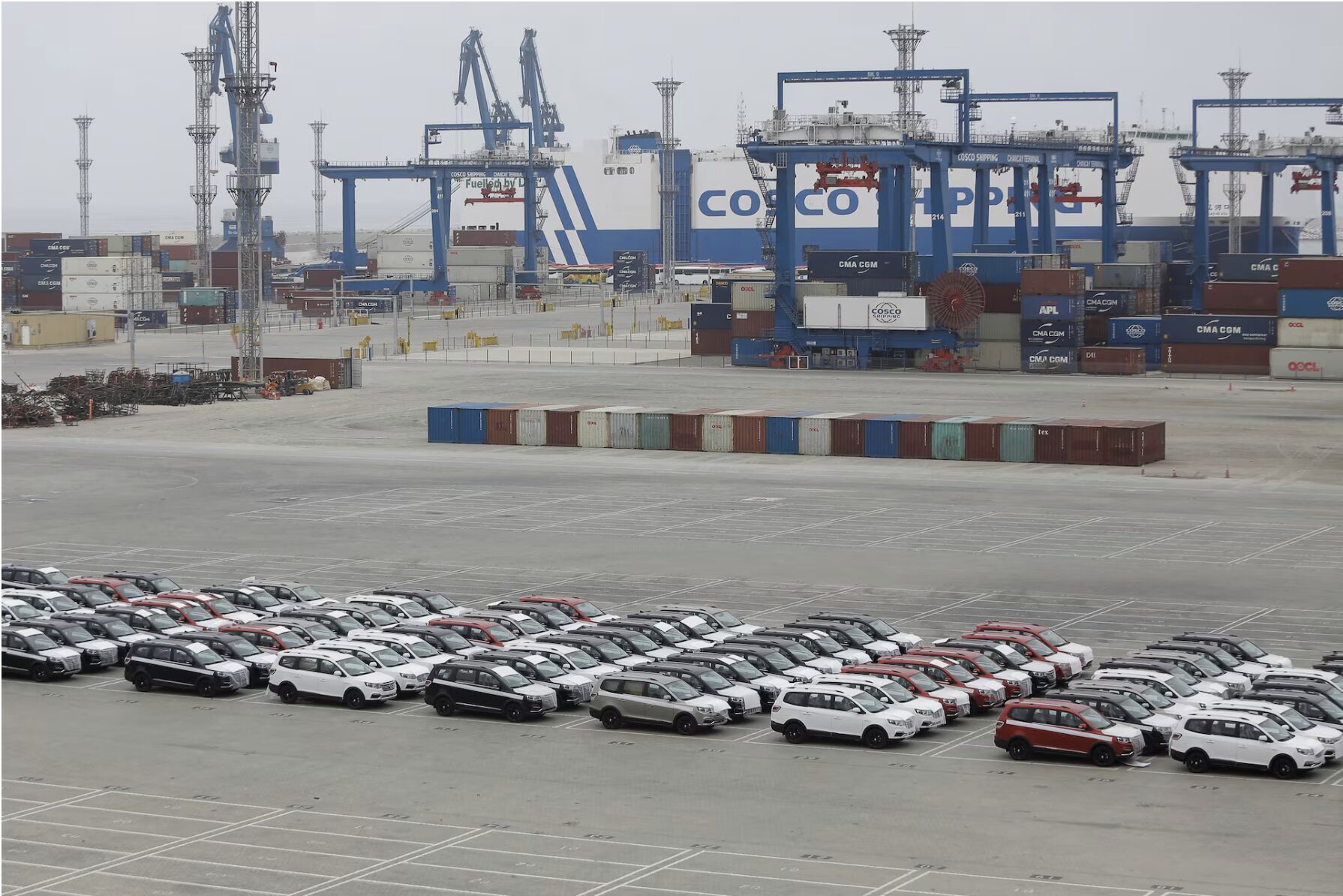
Chinese electric cars parked at the Chancay megaport in Peru on November 13, 2025, illustrating the rise of Chinese carmakers in South America (Credit: REUTERS/Gerardo Marin)
The rise of a still young market
In 2019, Peruvian entrepreneur Luis Zwiebach wanted to buy a reliable electric car. After a test drive in the United States, he discovered Peruvian administrative limitations. Despite these obstacles, he found an owner willing to sell his Tesla and bought it. He then improvised an earth connection with a fork to charge the car, showing the ingenuity required at the time. Since then, things have changed thanks to the massive arrival of much cheaper Chinese models. Today, BYD, Geely and GWM dominate this segment, with prices around 40% lower than Tesla. Traditional manufacturers such as Toyota and Hyundai are also stepping up their electric presence. This diversity is stimulating a market that is still modest, but is expanding rapidly in Peru. Hybrids and electric cars reached a record 7,256 sales this year, a significant increase.
The opening of the giant port of Chancay has accelerated this trend. This new logistics hub, built by China, significantly reduces transpacific transport times. As a result, Chinese vehicles are arriving faster and in greater numbers. Faced with growing trade restrictions in Europe and the United States, Chinese manufacturers are finding South America an ideal gateway. BYD is already planning a fourth dealership in Lima and other brands are strengthening their networks. Zwiebach confirms that demand is growing rapidly. He has also developed new services, including the installation of charging points and solar panels. This demand is also affecting real estate, where the presence of a charger can influence a major purchase.
Accelerated regional conquest
Chinese brands are gaining ground throughout South America. According to analysts, they are taking advantage of a local market lacking in abundant, competitive supply. They are also offering models adapted to regional needs. Their reputation for quality is growing fast. In Chile, they already account for almost 30% of new car sales. This breakthrough confirms their strategy of methodical expansion. At the same time, the adoption of electric vehicles is growing in the region. According to the International Energy Agency, penetration has doubled this year. This progress is based on public subsidies and the arrival of affordable models. Uruguay stands out with an impressive 28% share of new registrations. In Brazil, the figures are also rising, despite a more protected market.
Even in Argentina, where the economy is still fragile, electric vehicle sales are on the rise. BYD launched its first operations there this year. The brand already dominates several neighbouring countries. This success is due in part to its partnership with local importers. These understand consumer expectations and facilitate distribution. In Uruguay, dealers are seeing a rapid switch to these models. In Punta del Este, BYD has now overtaken the European and Japanese brands. The highly competitive prices are adding to this craze. A Chinese pick-up can cost much less than its traditional equivalents. This advantage creates a decisive gap for buyers.
Top view of the port of Chancay, a key infrastructure for maritime trade linking China to South America (Credit: Cosco)
The key role of the new logistics hubs
The port of Chancay illustrates this regional transformation. Every week, workers unload hundreds of cars from China. Cosco Shipping is forecasting nearly 19,000 arrivals by the end of the year. This port no longer serves Peru alone. It now redistributes vehicles to Chile, Colombia and Ecuador. This strategy strengthens Peru’s place in the regional logistics chain. For certain brands, such as Chery, this platform speeds up deliveries to several markets. Customs figures show a spectacular increase in arrivals since January.
However, elsewhere in the region, this invasion is sometimes causing tensions. In Brazil, some players are complaining that the competition is unfair. Massive imports are taking advantage of temporarily low tariffs. This is encouraging Chinese manufacturers to invest in local factories. BYD already assembles models in the former Ford factory in Bahia. Great Wall Motors also produces in part in Brazil. These investments should make it possible to export from Brazil to other countries within a few years. Regional trade agreements reinforce this prospect. For local manufacturers, the gradual increase in taxes is designed to protect domestic production.
A transition still strewn with obstacles
Despite this momentum, a number of challenges remain. Long distances and limited infrastructure sometimes slow adoption. Zwiebach highlights the difficulties of travelling the entire Peruvian coast without planning. Charging networks remain patchy and require coordinated investment. However, the low running costs of electric cars are appealing to drivers. These vehicles require less maintenance than a conventional model. This economy is attracting many consumers looking for sustainable and economical solutions.
In the years to come, South America could become a key area for electromobility worldwide. Chinese manufacturers see this as a strategic opportunity. Governments want to modernise their vehicle fleets. Consumers want to reduce their fuel costs. This convergence creates a favourable context for wider adoption. If recharging networks improve, growth could accelerate. Several countries are already aiming to follow the trajectories observed in Europe and China. Future investments will determine the speed of this transition.
Saint-Étienne-based start-up Eenuee is pursuing its ambition to revolutionise regional aviation with a 100% electric aircraft. Thanks to a new industrial partnership and an ongoing fund-raising drive, its project is taking on a more concrete dimension. The aim is to have a 19-seater aircraft flying by 2029 that is as affordable as a TGV ticket.
Eenuee’s future 100% electric GEN-ee regional jet flies over the mountains, a symbol of clean, silent mobility (Credit: Eenuee)
A strategic alliance to take a decisive step forward
After several years of promising research and testing, Eenuee is now joining forces with Duqueine Group, a company based in Ain and renowned for its expertise in aeronautical composite materials. This partnership, described as a “major asset” by Benjamin Persiani, CEO of Eenuee, should enable the start-up to move from a small-scale prototype to a larger-scale demonstrator. Duqueine, a supplier of parts to Airbus, Safran and Dassault, will contribute its industrial expertise to design the structure of the future aircraft. Together, the two companies want to prove that regional innovation can compete with the big names in aeronautics.
This collaboration marks a key stage for Eenuee, which has been working since 2019 on its GEN-ee regional aircraft. This model, which looks like a flying wing, is based on a “load-bearing fuselage” concept, which is more complex to design but offers better aerodynamic and energy performance. Initial tests on a radio-controlled prototype with a four-metre wingspan have already validated the technical feasibility of the project.
A prototype twice the size to get closer to the real thing
The next step is to build an eight-metre model, twice the size of the initial prototype. This intermediate version, scheduled for completion by 2027, will enable the team to move closer to a certifiable aircraft. The Eenuee engineers will see this as an opportunity to test the performance of the fuselage and electric propulsion in real conditions. The ultimate goal is ambitious: to design an aircraft with a 33-metre wingspan capable of carrying 19 passengers over 500 kilometres, with no polluting emissions.
To achieve this, Eenuee still needs to raise nearly €4 million. Supported by the Banque Publique d’Investissement via a Deeptech grant, the company is stepping up discussions with investment funds. According to Baptiste Giuliani, sales manager, “each passenger on our plane will consume less than an electric car driver”.
Eenuee’s GEN-ee electric aircraft, seen from the back, embodies the new generation of zero-emission regional aircraft. (Credit: Eenuee)
A clean, quiet and versatile aircraft
The GEN-ee has a claimed range of 500 kilometres and a cruising speed of around 260 km/h. It will run on two shrouded propeller engines powered by 1,500 kg of solid batteries. Its designers claim that it will consume up to eleven times less energy than an equivalent internal combustion aircraft, while considerably reducing noise. This silent, low-carbon aircraft could, for example, link Clermont-Ferrand to Nantes in less than two hours, or Rome to Monaco in just over two hours.
Another major advantage is its versatility. Eenuee’s electric aircraft can take off and land on very short runways, or even on grassy or watery surfaces. An amphibious version is even envisaged, capable of landing on islands. This flexibility is already of interest to several regional airlines looking for solutions adapted to isolated areas.
An industrial challenge and a race against time
Competing with Aura Aero of Toulouse, which is developing the ERA hybrid aircraft, Eenuee is taking measured but determined steps forward. The Toulouse-based project has a head start and a large number of pre-orders, but the Stéphane-based company’s 100% electric approach is seductive because of its ecological coherence. If all goes according to plan, the full-scale prototype will make its first flight in 2029, before entering service around 2033.
More than just a technological feat, Eenuee wants to help structure a low-carbon aeronautics industry in Auvergne-Rhône-Alpes. By relying on a local ecosystem of innovative companies, the start-up hopes to prove that a successful energy transition can also come from the regions. For Benjamin Persiani, “this regional partnership is a major asset. It allows us to combine technological agility and local industrial strength to take a key step forward. An essential combination if the future of clean aviation is to take off.
The GEN-ee electric aircraft flies over calm waters, demonstrating its versatility and the possibility of a future amphibious version (Credit: Eenuee).
Towards a new regional transport model
With its GEN-ee project, Eenuee aims to make air transport as environmentally friendly as rail, while retaining its speed and flexibility. Its objective is clear: to offer regional connections at an affordable price, without compromising the environment. Although the technical and financial challenges are still numerous, the vision of this young team from Saint-Etienne symbolises a new era for French aviation.
So by 2030, it’s not impossible that the passengers of the future will be boarding an electric aircraft “made in Saint-Étienne” from a small regional aerodrome. A powerful symbol of the transition to cleaner, quieter and more sustainable skies.
Lucid and NVIDIA announce a major collaboration to propel the automotive industry towards complete autonomy. The electric vehicle manufacturer intends to revolutionise the driving experience. The alliance aims to combine artificial intelligence and manufacturing excellence for its next vehicles.
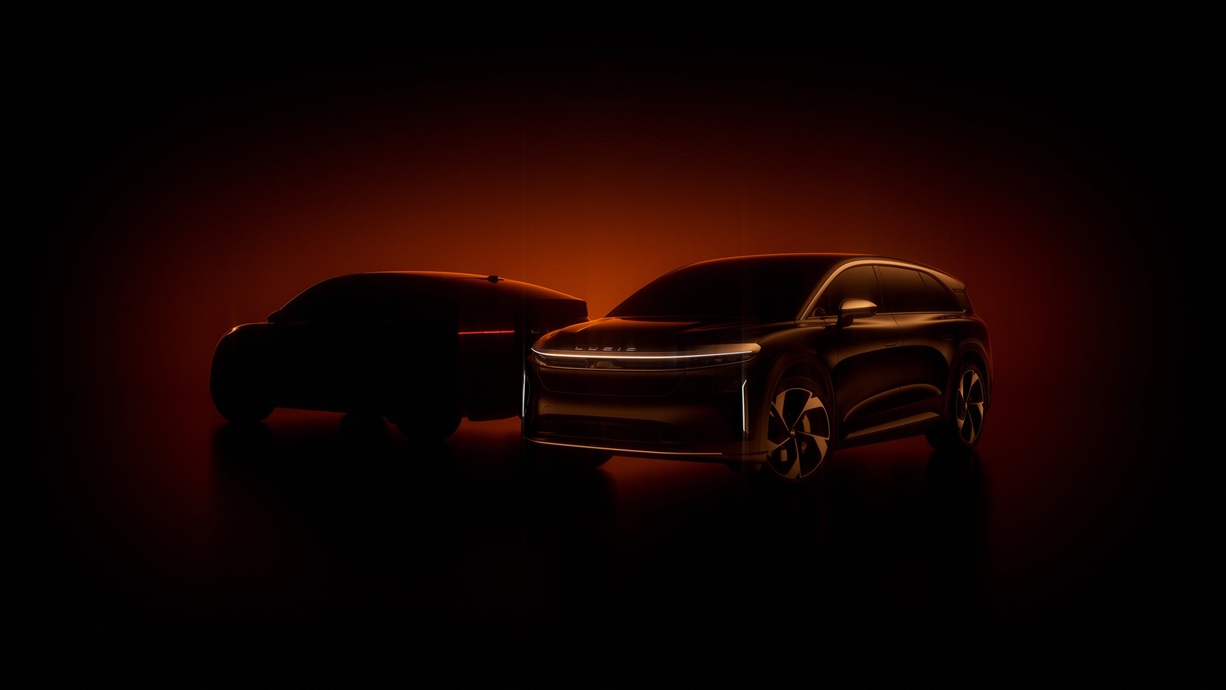
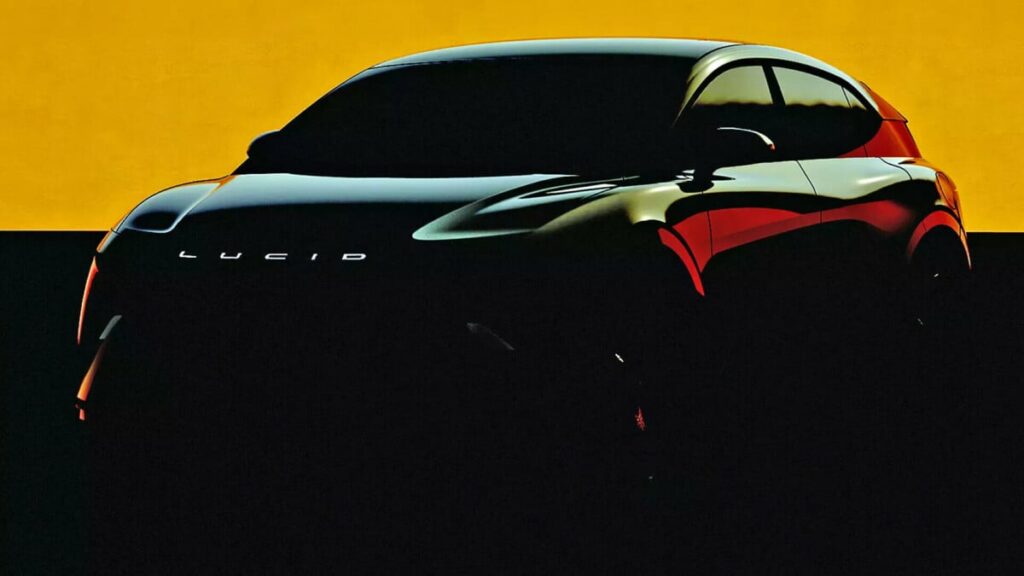
The Lucid EV reveals its futuristic design, combining elegance and performance in a subtle play of shadows (Credit: Lucid)
Unprecedented autonomy for the vehicles of tomorrow
Lucid plans to launch one of the first Level 4 consumer autonomous vehicles incorporating NVIDIA DRIVE AGX Thor technology. This breakthrough will enable true “no look, no touch, no think” driving, ushering in a new era of motoring. The project is based on the DreamDrive Pro ADAS, introduced on the Lucid Air in 2021, which is already capable of hands-free driving and automatic lane changes.
As of today, Lucid is beginning the transition with the Lucid Gravity and its future midsize models in L2++ assisted driving, guaranteeing safety and comfort. The ultimate goal is to reach level 4, thanks to a multi-sensor system combining cameras, radar and lidar. Two NVIDIA DRIVE AGX Thor computers will unify all the automation functions and ensure smooth progress on the autonomy ladder.
Strategic partnership with NVIDIA
This collaboration is not limited to vehicles. NVIDIA is also contributing its industrial platform to optimise manufacturing and reduce costs. Lucid will be able to create intelligent factories, controlled by connected robots and digital twins to simulate and validate processes. Planning becomes faster, production lines more flexible and quality more rigorous.
For Jensen Huang, founder of NVIDIA, this alliance transforms every vehicle into a supercomputer on wheels, reinventing mobility with intelligence. For his part, Marc Winterhoff, interim CEO of Lucid, emphasises the desire to combine cutting-edge technology with engineering excellence. Together, they aim to deliver a luxurious and fully autonomous driving experience.
Close-up of the Lucid vehicle, with the logo subtly emerging from the shadows, a symbol of power and innovation. (Credit: Lucid)
Towards AI-driven manufacturing
In addition to driving, Lucid uses NVIDIA’s industrial platform to optimise production. Digitalisation and artificial intelligence make it possible to simulate factories before they are built, to anticipate problems and plan effective solutions. The robots follow optimised trajectories, guaranteeing safety and speed, while reducing production costs.
This strategy paves the way for reconfigurable production lines, capable of adapting to different models and volumes. The use of digital twins also makes it possible to test complex scenarios without interrupting actual production. In this way, Lucid combines vehicle autonomy and factory intelligence to create an innovative end-to-end chain.
A transformed customer experience
For consumers, this evolution promises a future where luxury, performance and autonomy come together. Lucid vehicles will become evolving software platforms, capable of receiving continuous updates. This ensures that each car remains at the cutting edge of innovation, even after delivery.
By integrating NVIDIA DRIVE AV and its scalable architecture, Lucid ensures technological continuity, enabling the addition of new autonomous and safety features. Drivers will be able to enjoy a fluid, intelligent and safe experience, radically transforming the notion of personal driving.
Lucid and the future of electric mobility
Lucid has positioned itself as a major player in intelligent electric mobility. With factories in the United States and Saudi Arabia, the company combines performance, design and energy efficiency. The integration of AI into its vehicles and factories promises to redefine industry standards, while paving the way for mass adoption of autonomous driving.
Thanks to this strategic partnership, the car of the future is becoming a tangible reality, where artificial intelligence and technological innovation offer safe, high-performance, forward-looking vehicles.