Category: United States

  • Electric 2026: Who sold the most EVs in America, and what does the next phase of the electric revolution look like?

    Electric 2026: Who sold the most EVs in America, and what does the next phase of the electric revolution look like?

    Whilst 2023 and 2024 were defined by the boom in electric vehicles, and 2025 has become the year when EVs became a reality, 2026 looks set to be the year of genuine competition in the electric vehicle market in the United States.
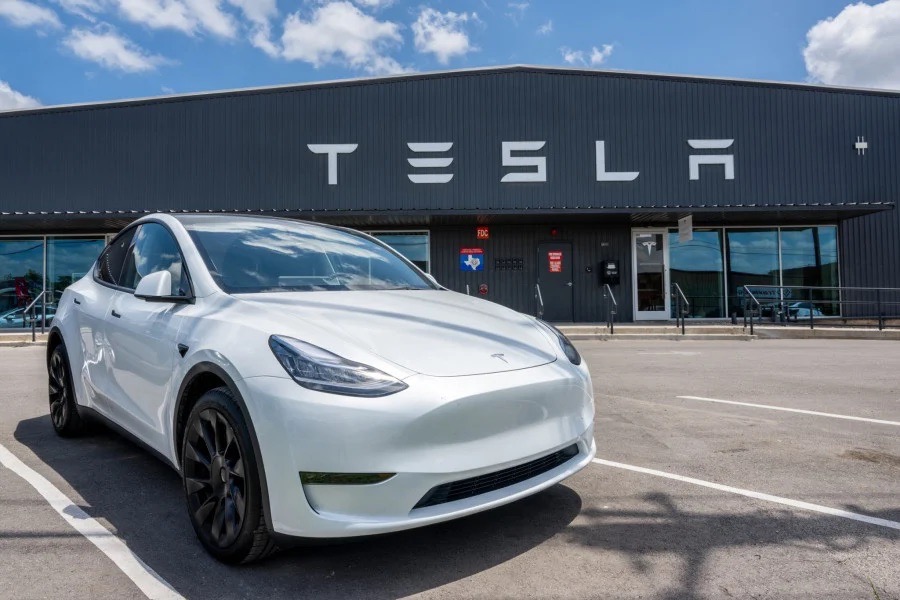
    The US EV market did not collapse once the initial euphoria had subsided. On the contrary, it has matured. Buyers have become more selective, focusing on affordability, access to charging, reliability and long-term running costs. Brands that offered real value, rather than just ambitious promises, have continued to dominate sales.

    Industry data from Cox Automotive and Kelley Blue Book show that the strong momentum seen in the EV market in 2025 continued into 2026, confirming that electric vehicles are no longer a niche segment of the US car market.

    The uptake of EVs has settled into a phase of steady growth rather than the explosive surge seen in the early years. The market is no longer driven by speculation; it is driven by competition.

    Here is the story of who led EV sales during the most recent cycle, what these figures reveal about the industry, and what they suggest for the future of electric mobility in America.

    The big picture: EV sales in the US on the cusp of 2026

    By the end of 2025, the US EV market had reached one of its strongest periods on record. Several major trends were shaping the industry as 2026 began:

    • Sales of electric vehicles reached record quarterly levels in 2025.
    • Electric vehicles have captured a double-digit market share nationwide.
    • SUVs and crossovers have dominated EV sales.
    • Competition between manufacturers has intensified dramatically.

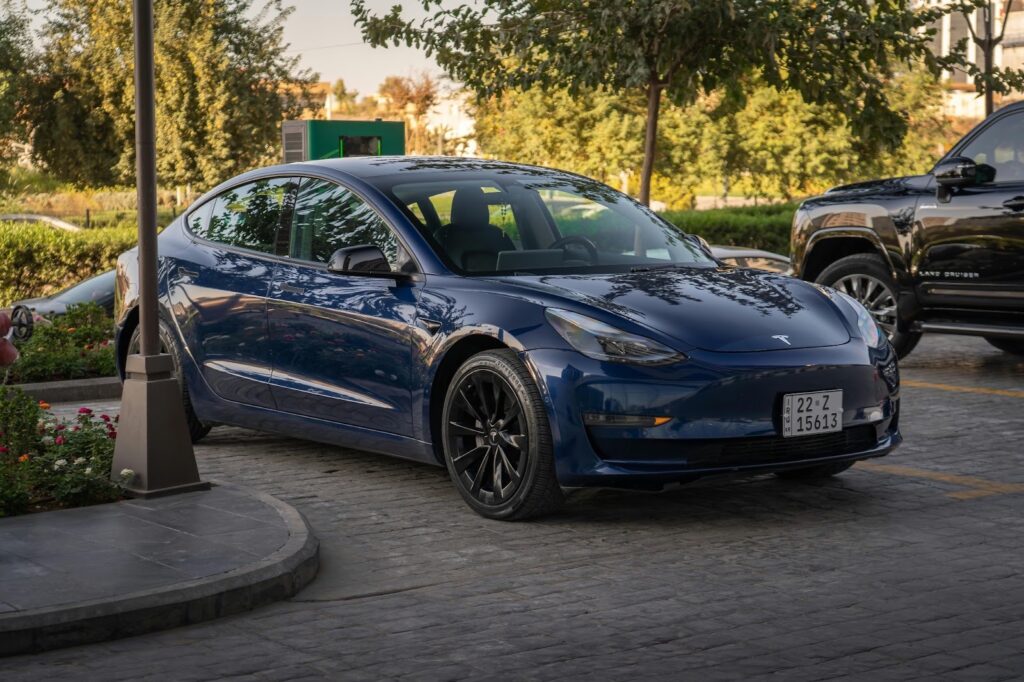
    Tesla remained the number one EV brand in the United States, but its market share declined as traditional manufacturers and international brands launched competitive models.

    Tesla’s share of the US EV market has fallen to around 38%, a significant shift from its previous dominance of over 70% at the start of the decade.

    This decline did not mean that Tesla was selling fewer cars. It meant that the rest of the industry had finally caught up.
    EV sales by brand: who led the market 

    One of the clearest snapshots of competition in the EV market emerged in late 2025, when sales soared ahead of changes to federal incentive schemes.

    Representative monthly sales figures showed the following performance by brand:
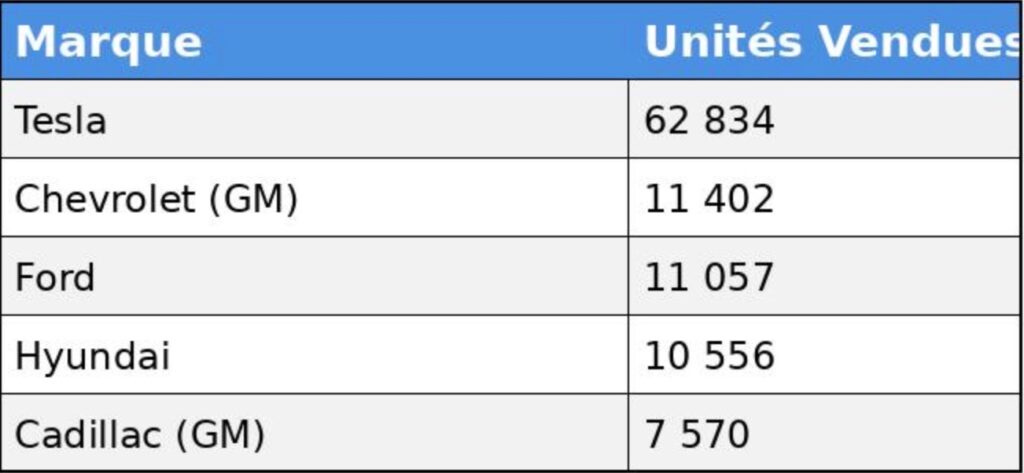
    These figures reveal a major structural shift in the industry: Tesla remains in the lead, but the established manufacturers are now collectively rivalling Tesla’s scale.

    TESLA: still the king, but no longer alone 

    Tesla began 2025 as the undisputed leader in the EV market and has maintained that position as we enter 2026.

    The company’s dominance rests largely on two factors:

    • Tesla Model Y
    • Tesla Model 3

    The Model Y remained the best-selling electric vehicle in the United States and one of the best-selling vehicles overall.

    Preliminary sales figures for the third quarter of 2025 showed:

    • Model Y: approximately 114,897 units
    • Model 3: approximately 53,857 units

    But Tesla’s leadership is no longer unchallenged.

    The company has faced increasing pressure from:

    • Aggressive price competition.
    • Traditional car manufacturers are expanding their ranges of electric vehicles.
    • Changes to eligibility for the federal tax credit.
    • A slowdown in demand growth compared with previous boom years.

    Tesla responded with price cuts designed to maintain sales volumes, a strategy reflecting a more competitive market environment.

    GENERAL MOTORS: the surprising return of EVs

    If any traditional car manufacturer has emerged as a major success story in the EV sector, it is General Motors.

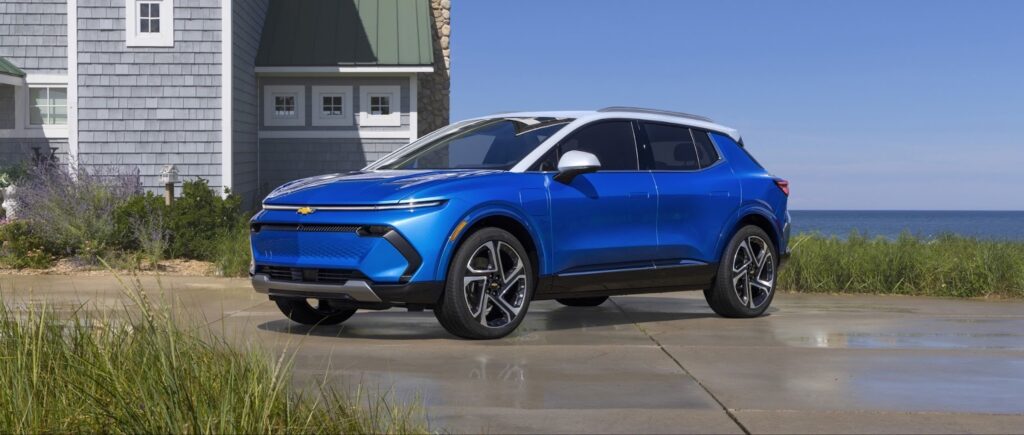
    Chevrolet has become Tesla’s closest direct competitor, largely thanks to one vehicle: the Chevrolet Equinox EV.

    Sales of the Equinox EV reached around 25,085 units in the third quarter of 2025, making it one of the best-selling non-Tesla EVs in the United States.

    Chevrolet has been successful in targeting mainstream buyers with:

    • A recognisable brand.
    • Competitive prices.
    • A practical battery life.
    • Strong support from the dealer network.

    The result marked a turning point for the established manufacturers, who had previously been left far behind by Tesla.
    source: Chevrolet

    FORD: pick-up trucks, performance and power from the brand 

    Ford has maintained a strong presence in the EV market at the start of 2026, underpinned by two flagship models:

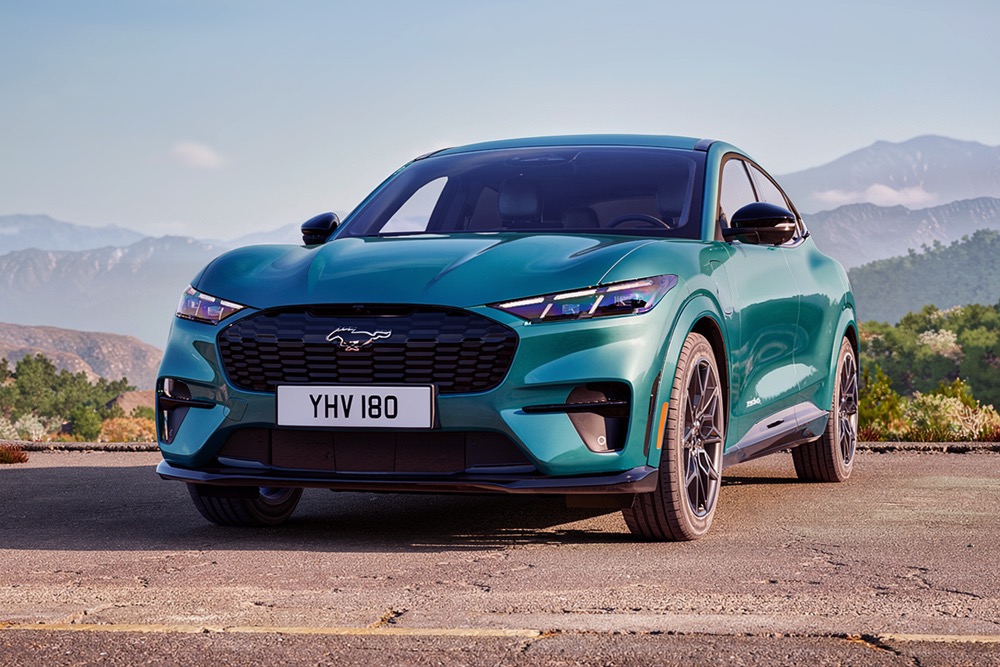
    • Mustang Mach-E
    • F-150 Lightning

    Sales of the Mach-E reached approximately 20,177 units in the third quarter of 2025, reflecting strong brand loyalty and the strength of Ford’s nationwide dealer network.

    Rather than competing directly in the smaller EV segments, Ford has focused on high-performance SUVs and electric pick-up trucks, closely aligning itself with traditional American vehicle preferences.
    source: Ford 

    HYUNDAI AND KIA: the leaders in value 

    Hyundai and Kia have quietly continued to gain market share.

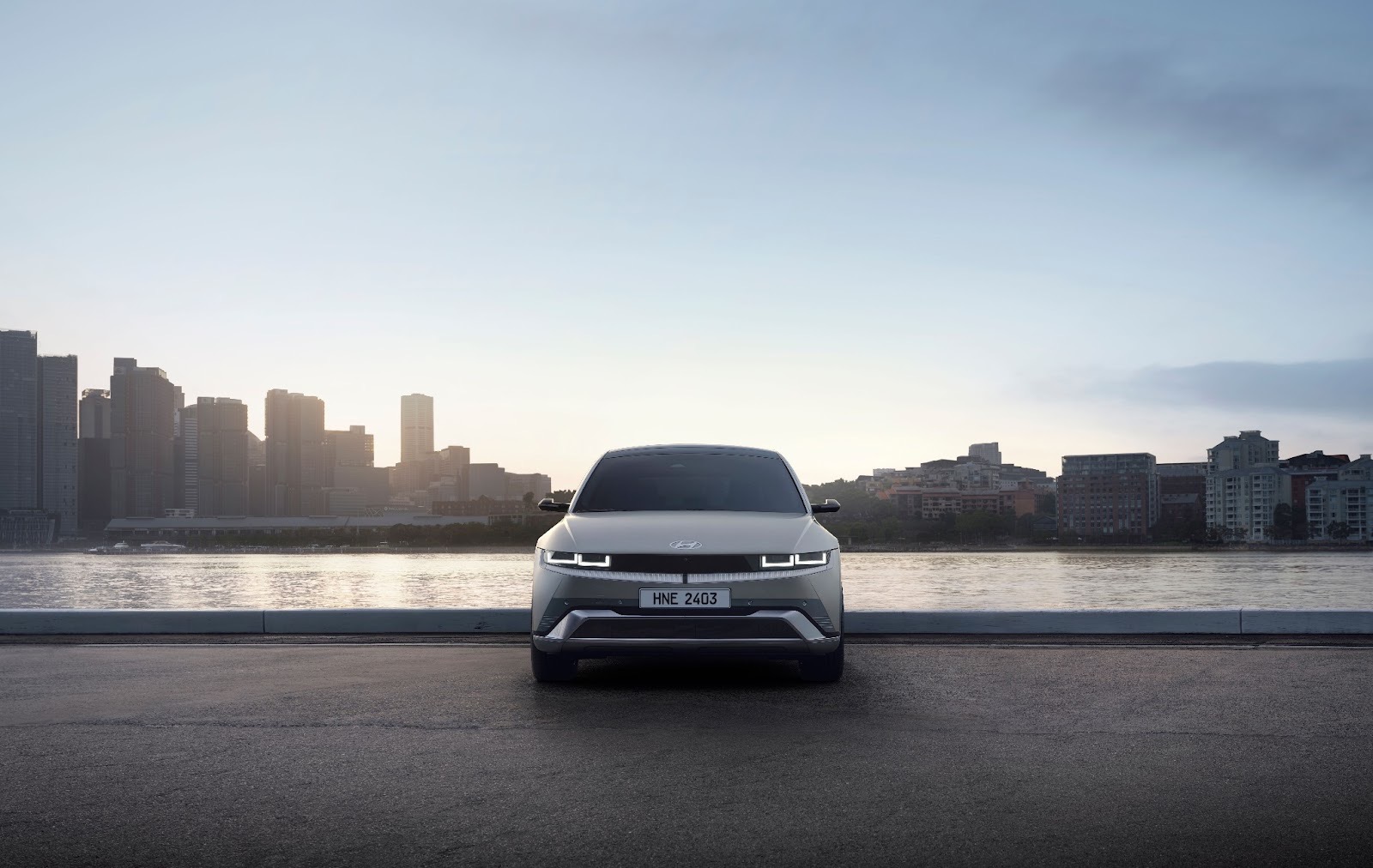
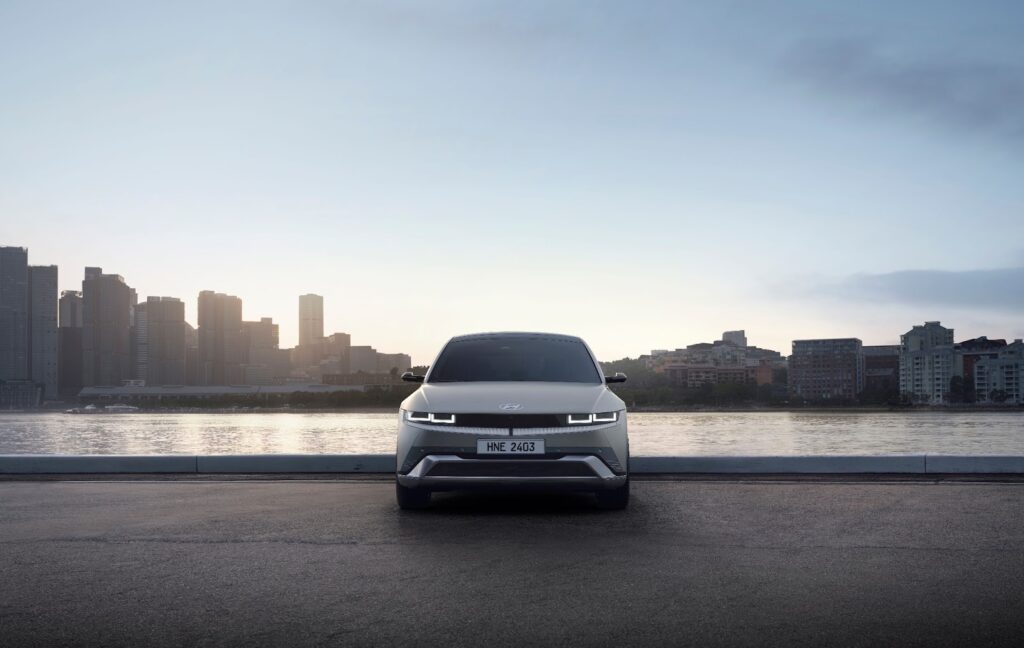
    Hyundai’s range of electric vehicles – particularly the Ioniq 5 – has received high praise from consumers for its value, range and reliability.

    Sales of the Ioniq 5 reached around 21,999 units in the third quarter of 2025, making it one of the most successful non-Tesla EVs.

    Analysts have frequently cited Hyundai and Kia as leaders in the design and engineering of affordable EVs, helping to broaden the uptake of EVs beyond luxury car buyers.
    source: Hyundai

    Emerging players: the new competition

    In addition to the traditional brands, several new players have helped to diversify the EV market.

    Notable models included:

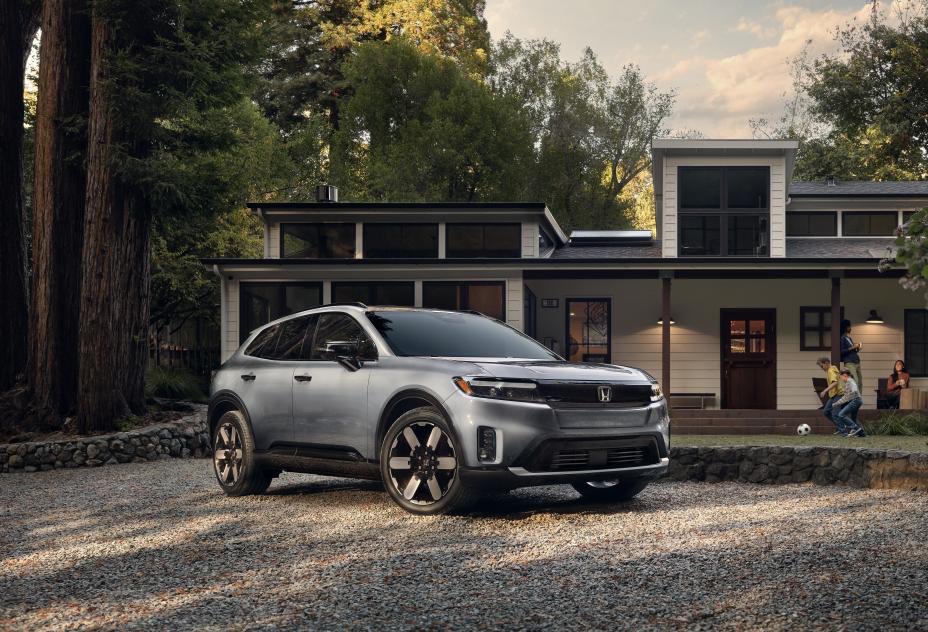
    • Honda Prologue — approximately 20,236 units sold in the third quarter of 2025.
    • Rivian R1S — nearly 19,687 units in 2025.
    • Volkswagen ID.4 — steady sales as a European alternative.

    These vehicles demonstrate that the EV market is no longer dominated by a single company or strategy.

    Instead, it becomes a fully-fledged ecosystem of competing brands and technologies.
    source: Honda

    The best-selling EV models 

    The best EV models on the US market included:

    1. Tesla Model Y
    2. Tesla Model 3
    3. Chevrolet Equinox EV
    4. Hyundai Ioniq 5
    5. Honda Prologue
    6. Ford Mustang Mach-E
    7. Kia EV6 / Chevrolet Blazer EV
    8. Rivian R1S
    9. Volkswagen ID.4
    10. Ford F-150 Lightning

    SUVs and crossovers topped the rankings, reflecting the preferences of American consumers.

    source: Rivian

    Incentives and economic reality 

    Government policy has remained a major factor influencing demand for EVs.

    Changes to the $7,500 federal tax credit for EVs sparked a surge in consumer purchases throughout 2025, as buyers rushed to secure the incentives before eligibility rules were tightened.

    At the same time, higher interest rates have made affordability a key factor.

    Brands that offered competitive prices or aggressive financing gained an advantage.

    Charging infrastructure: still the big question 

    Access to charging remains one of the biggest barriers to the wider adoption of EVs.

    States that have invested heavily in infrastructure, particularly California, have continued to lead the country in terms of EV adoption rates.

    Tesla’s charging network remains a major strategic advantage, although partnerships between manufacturers are expanding access to charging facilities nationwide.
    source: Tesla

    What 2026 means for the future of EVs 

    The outlook for EVs at the start of 2026 is clear.

    Electric vehicles are no longer an experimental technology or the subject of over-the-top speculation. They are now a permanent fixture on the American automotive scene.

    But the industry is entering a new phase in which success will depend on:

    • Affordability.
    • The expansion of infrastructure.
    • Trust in brands.
    • Usability in the real world.

    Tesla remains the market leader, but the era of unchallenged dominance is over. The EV revolution did not stall after the initial wave of enthusiasm; it has simply matured, and the real competition is only just beginning.


  • The day the market crashed

    The day the market crashed

    How did the MMTLP scandal expose Wall Street, the regulators and a rigged system working against ordinary Americans? There are moments in history when Americans suddenly see what lies behind the curtain, when the comforting illusion of fairness crumbles and the machinery of power is laid bare. For millions of retail investors, that moment came in December 2022. The stock symbol was MMTLP. What followed was not merely a suspension of trading. It was a breach of trust so severe that, three years on, the US financial system is still struggling to explain it. 

    MMTLP was supposed to be a routine transaction. A preference share linked to oil and gas assets, resulting from a spin-off from Meta Materials, it was marketed as a temporary bridge, soon to be converted into private shares in a new company, Next Bridge Hydrocarbons. Investors believed they would either be able to exit their positions by selling or receive fair value through the spin-off. Instead, they were trapped. Without warning, resolution or accountability, the market was frozen. And it never really reopened.

    An unprecedented ruling

    On 9 December 2022, trading in MMTLP was suspended just a few days before the final settlement period. Retail investors, many of whom were veterans, pensioners and middle-class Americans, were denied the fundamental right to participate in the market: the ability to sell.

    • No emergency announcements.
    • No penalties for fraud.
    • No clear explanation.

    The decision came from FINRA (Financial Industry Regulatory Authority), the self-regulatory body responsible for maintaining ‘fair and orderly markets’. But the markets were neither fair nor orderly that day. They were selectively closed.

    source: FINRA

    What made this ruling extraordinary was not only its timing, but its permanence. MMTLP never resumed negotiations. Investors were forced into a private company structure with no liquidity, no way out and no timeline for resolution.

    To many Americans, it felt less like regulation and more like confiscation.

    The shadow of naked short selling

    Almost immediately, investors began asking a question that was taboo on Wall Street: What if there were more shares in circulation than were legally authorised?

    Suspicion centred on naked short selling, a practice long denied by institutions but widely practised by retail traders. The theory was simple and explosive: if huge short positions existed and could not be closed out once trading had ceased, the suspension of trading prevented the revelation of a catastrophic imbalance.

    Instead of ensuring accountability, the system has frozen the evidence.

    Documents obtained under the Freedom of Information Act (FOIA) subsequently suggested that there was an internal realisation within the regulatory agencies that something was seriously amiss. Emails, timelines and internal alerts revealed that senior officials had been brought up to speed very quickly. Yet nothing was done to protect investors. Nothing was disclosed publicly. Silence became policy.

    source: FOIA

    Regulators are closing ranks

    As pressure mounted, investors turned to the courts. Lawsuits were filed in several federal courts, including those in Texas, Nevada, Connecticut and Vermont. The defendants were not only hedge funds, but also the very regulators responsible for oversight.

    The SEC (Securities and Exchange Commission) and FINRA responded with a joint defence: procedural immunity.

    The judges were asked not to assess the evidence, but to dismiss the cases on technical grounds. Time and again, the judges ruled that retail investors had no right to bring a private action. Requests for discovery were blocked. FOIA requests were refused. The evidence was sealed.

    Not because the allegations had been refuted, but because there was never any opportunity to examine them. Justice was not blind. It was simply unavailable.

    The human cost

    Behind every stock market symbol are real people. The MMTLP community comprises:

    • Military veterans who had faith in the market they had served to defend.
    • Pensioners who had invested their retirement savings.
    • Families who believed in American fairness and free enterprise.

    For them, it wasn’t just a loss on paper; it was a life-changing event.

    Some had to put off medical procedures. Others had to delay paying their university tuition fees. Many simply wanted answers. What they received instead was gaslighting: assurances that the split had been ‘successful’, that the markets were functioning as intended, and that nothing untoward had taken place.

    Yet, three years on, the shares remain illiquid, the questions unanswered and the regulators unmoved.

    Next Bridge: a locked door

    Next Bridge Hydrocarbons, the private company into which investors were forced to invest, filed repeated disclosures revealing severe financial distress. Losses were mounting. ‘Going concern’ warnings emerged. Assets remained unexploited. There was no initial public offering (IPO). No buyback. No repayment mechanism.

    Retail investors have been told to wait. To wait for value, to wait for transparency, to wait for justice. But in this system, waiting seems to be the very point.

    source: Next Bridge Hydrocarbons

    A pattern, not a coincidence

    What makes MMTLP so dangerous in this situation is that it is not an isolated case. The same themes are evident in other small-cap stocks driven by retail investors:

    • Trading halts at critical moments.
    • Transparency rules delayed.
    • Endless extensions granted to powerful market players.
    • Courts are reluctant to override regulatory immunity.

    In December 2025, the SEC quietly delayed the transparency rules on short selling once again, pushing back the disclosure requirements until 2028. The message was clear: Wall Street would be protected. Retail investors would have to wait.

    For many Americans, MMTLP has become the Rosetta Stone of stock market corruption – the case that explained all the others.

    Why the media turned a blind eye

    Perhaps the most damning aspect of the MMTLP scandal is not what happened, but the fact that the mainstream financial media – ever quick to report on celebrities’ stock picks and the craze for cryptocurrencies – have largely ignored the story.

    Why? Because MMTLP challenges the narrative that US markets are the fairest in the world. It exposes uncomfortable truths about regulatory capture, institutional favouritism and the erosion of equal protection under the law. It reveals that in modern America, some investors are more equal than others.

    A constitutional issue

    Ultimately, the MMTLP scandal is no longer about a single action. It is about rights.

    • The right to property.
    • The right to due process.
    • The right to transparent governance.

    When regulators can drain liquidity without explanation, refuse to disclose evidence, suppress evidence and evade judicial scrutiny, the question inevitably arises: who is the market really for?

    The Silent Revolt

    Despite everything, the MMTLP community has not disappeared. It has organised itself. Thousands of letters have been sent to Congress. Dozens of lawmakers have signed petitions. Independent journalists have investigated the matter. FOIA battles have continued. Discussion forums, calls, dashboards and evidence submissions have multiplied.

    That wasn’t mob behaviour. It was civic engagement. The sort that our system claims to encourage—until it threatens those in power.

    The day the market crashed

    History will remember December 2022 not merely as a trading halt, but as a turning point. The day when ordinary Americans realised that the promise of free markets no longer applied across the board.

    MMTLP has shown that when losses are small, individuals are allowed to gamble. When losses threaten institutions, the game stops. And when the game stops, the referees close ranks.

    The shadow cast over electric mobility

    This same two-tier system, which sacrificed MMTLP retail investors to protect Wall Street, now looms over the US energy transition. Whilst the Trump administration has been advocating a ‘free market’ approach to electric vehicles since its 2025 reset, one crucial question remains: who will protect the small players when the shift to electric vehicles threatens the established giants?

    The parallel is disturbing. The same regulators (SEC, EPA) that turned a blind eye to MMTLP are now overseeing massive subsidies (IRA, tax credits) and the supply chains for lithium, a critical mineral dominated by China. If MMTLP revealed that ‘some investors are more equal than others’, the battle for electromobility risks demonstrating that some transitions are freer than others.

    What comes next

    The story of MMTLP is still unfolding. Appeals are still ongoing. FOIA disclosures continue. Public pressure is mounting. And trust, once lost, is hard to restore.

    But one thing is already certain: the myth of a fair market has not survived MMTLP.

    The only question now is whether America will face up to what this has revealed, or whether it will sweep it under the carpet like so many truths before it.

  • War, oil and petrol: Americans grappling with soaring prices and Trump’s decisions

    War, oil and petrol: Americans grappling with soaring prices and Trump’s decisions

    The war in the Middle East is reigniting a concern all too familiar to Americans: the price at the pump. Since the strikes carried out by the United States and Israel against Iran in late February 2026, followed by Iranian retaliation and the blockade of the Strait of Hormuz, energy markets have been under strain. The immediate result: a surge in oil and petrol prices, which is unpopular with the public and has reignited the debate over switching to clean-energy vehicles. 

    A geopolitical shock that is driving prices back up

    In reality, the impact of the conflict was almost immediate. The Strait of Hormuz, through which around 20% of the world’s oil passes, was partially blocked. As a direct consequence, the price of a barrel of Brent crude broke the $100 mark, even reaching $120 at times – a level not seen since 2022, according to several analyses published in early March. Indeed, the price per barrel fluctuated between $55,000 and $64,000 between 2020 and 2023.

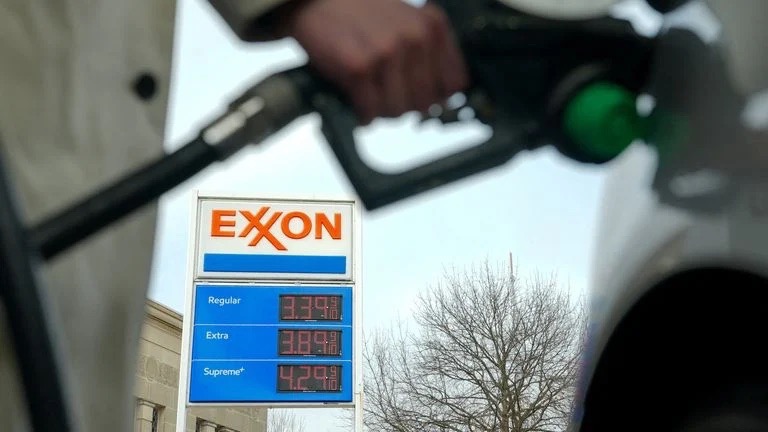
    In the United States, this tension was quickly reflected at the pump. According to data reported by Reuters and several international media outlets, the average price of petrol rose from around $2.85 per gallon in February to between $3.63 and $4 in early March, with peaks of up to $4.40 in some states. This represents an increase of between 21% and 24% in just a few weeks.

    A sudden spike, less severe than that of 2022, when prices had risen above $5 a gallon, but significant enough to reignite concerns about purchasing power.

    source: Zonebourse

    A very real concern in the daily lives of Americans

    On the ground, the impact is immediate. Accounts gathered by AFP and reported by USA Today in early March 2026 point to growing discontent at petrol stations, particularly in California and several southern states. Some motorists speak of a direct impact on their household budgets: “Prices are rising really fast”, “I’m unemployed, it’s getting difficult”, or “This war is making life more expensive”. 

    Polls confirm this trend. A Reuters/Ipsos survey indicates that 67% of Americans expect petrol prices to continue rising over the course of the year. At the same time, 49% believe the war is already having a negative impact on their personal finances.

    Household confidence has been directly affected. The University of Michigan’s consumer confidence index fell to 55.5 in March 2026, one of its lowest levels in several months.

    Growing political pressure on Donald Trump

    Against this backdrop, the energy issue has become a key political concern. According to several surveys reported by Reuters and Le Monde, only 27% of Americans approve of Donald Trump’s handling of petrol prices, whilst 66% disapprove.

    source: JULIA DEMAREE 

    More broadly, managing the cost of living has become a major point of vulnerability for the government. Nearly two-thirds of those surveyed say they are critical on this issue, even as the mid-term elections approach in autumn 2026.

    This situation is reminiscent of the crisis in 2022, when soaring prices following the invasion of Ukraine had taken their toll on the popularity of the US administration at the time.

    Trump’s energy policy put to the test

    Since returning to the White House, Donald Trump has radically changed US energy policy. Several measures supporting electric vehicles have been scrapped, starting with the $7,500 tax credit, which is set to end in late September 2025. Funding for the NEVI programme, intended for the roll-out of charging points, has also been frozen, whilst certain emissions standards have been relaxed.

    At the same time, the government has stepped up its support for fossil fuels, with a strategy focused on increasing domestic production and exports of liquefied natural gas, which are expected to rise by 50% by 2027.

    In practice, this decision indirectly favours combustion-engine vehicles. This approach automatically increases households’ dependence on fluctuations in oil prices.

    An ironic twist in the energy sector that is reigniting interest in electric vehicles

    The irony is that, whilst public policy is holding back the development of electric vehicles, rising petrol prices are making them more attractive in the short term.

    According to several sector-specific analyses, searches for electric vehicles now account for between 22% and 24% of all automotive searches, a figure that represents an increase of several percentage points since the start of the conflict. This trend was already observed in 2022, when sales of electric vehicles rose sharply, with their market share increasing from 2.7% to 5.6% amid soaring oil prices.

    But unlike back then, the current political climate is now holding back this momentum. Indeed, the withdrawal of subsidies and the rise in the price of new vehicles – which now average over $50,000 – are limiting access to electric vehicles for some consumers.

    source: Tesla

    A strategy that could backfire on its initiator

    The question now clearly arises: has Donald Trump fallen into his own trap?

    By favouring fossil fuels and holding back the transition to electric vehicles, the administration has increased Americans’ vulnerability to oil price shocks. In the short term, rising petrol prices are fuelling discontent and eroding purchasing power.

    In a rapidly changing automotive market, the war in the Middle East serves as a wake-up call. It serves as a reminder that, despite record domestic production estimated at over 13 million barrels a day, the United States remains vulnerable to international tensions.

    And in this context, clean energy for our transport is proving to be the best option for keeping costs down.

  • Trump’s electric vehicle reset continues in 2026: how the US President is prioritising consumers, workers and common sense

    Trump’s electric vehicle reset continues in 2026: how the US President is prioritising consumers, workers and common sense

    In 2025, President Donald J. Trump launched what many now describe as the most significant shift in modern US automotive policy. By 2026, the results of this reset were becoming clear. Whilst the Biden administration had spent years attempting to impose electric vehicle mandates on Americans, regardless of cost, infrastructure or practicality, President Trump had chosen a different path: one rooted in freedom, economic realism and consumer choice.

    source: Le rouleur électrique

    Contrary to the narrative pushed by the media, President Trump did not ‘kill’ electric vehicles. On the contrary, he saved the EV sector from government overreach, restoring balance, innovation and consumer confidence to an industry that had been stifled by mandates, subsidies and ideological pressure.

    Trump’s reset of EV policy, launched in 2025 and continued in 2026, represents a strategic realignment that prioritises American consumers, American workers and American manufacturers.

    The problem Trump has inherited: forced electrification

    Even before President Trump returned to the White House, the electric vehicle market was already facing serious challenges. Despite massive federal subsidies, EV adoption had stalled. Prices were rising, dealerships’ stockyards were filling up with unsold electric cars, and the charging infrastructure was lagging far behind the promises made by policymakers in Washington.

    Middle-class families felt increasingly pressured to buy cars they neither wanted nor could afford.

    The Biden administration’s EV strategy was based on coercion rather than consumer choice. Through aggressive Corporate Average Fuel Economy standards, EPA regulations and global climate commitments, Americans were essentially being told: buy electric or pay the price.

    This price included:

    • Higher vehicle costs
    • A reduction in consumer choice
    • Production inconsistencies
    • Concerns about the electricity grid
    • Growing public scepticism towards EV policy

    President Trump has changed his stance: technological transitions cannot be imposed by government decree.

    Trump’s core philosophy: let the market decide

    From the start of his second term in 2025, Trump made his position clear. Electric vehicles must succeed, but only if they succeed in the market.

    His EV framework was based on several key principles:

    • No compulsory mandate
    • No artificial demand created by regulation
    • No penalties for petrol or hybrid vehicles
    • No bureaucratic micromanagement of consumers

    Instead, the Trump administration has focused on restoring competition, affordability and technological innovation.

    By 2026, this approach had begun to stabilise the EV industry. Car manufacturers can plan effectively, consumers can choose freely, and the development of EVs continues without the distortions caused by government mandates.

    source: AFP

    The “Freedom Means Affordable Cars” initiative

    One of the most significant policies introduced in 2025, and which is now shaping the market in 2026, is the Trump administration’s ‘Freedom Means Affordable Cars’ initiative.

    The programme has revised the fuel economy and emissions standards that had previously been used to indirectly encourage the adoption of electric vehicles.

    By resetting the CAFE standards to realistic and technology-neutral levels, the administration:

    • Has reduced regulatory costs for car manufacturers
    • Has helped to bring down vehicle prices
    • Has enabled EVs, hybrids and petrol-powered vehicles to compete on a level playing field
    • Has eliminated disguised EV mandates
    source: US Department of Transportation

    Federal transport estimates predicted that the reform would save US consumers more than $100 billion over five years.

    Equally important, the lifting of government pressure has helped to reduce the political stigma attached to EVs.

    Why might lower costs speed up the uptake of EVs?

    Many climate activists argued that the adoption of EVs needed to be enforced. Trump’s approach proved the opposite.

    By reducing regulatory costs across the automotive sector, manufacturers have gained greater flexibility to:

    • Improving battery technology
    • Increase autonomy
    • Reduce purchase prices
    • Focus on designs that consumers actually want

    As EV technology improves and costs naturally fall, consumer adoption becomes sustainable. Throughout 2026, innovation in EVs and hybrid vehicles continues within the industry without the instability caused by rigid government mandates.

    “America First” manufacturing

    A key pillar of Trump’s economic strategy is the revitalisation of domestic manufacturing.

    The government has introduced policies designed to encourage Americans to buy vehicles manufactured in the United States. A key measure allows buyers to deduct up to $10,000 a year in car loan interest for domestically assembled vehicles.

    Politics:

    • Encourages the purchase of vehicles manufactured in America
    • Strengthens domestic supply chains
    • Reward manufacturers who invest in American workers

    Unlike previous subsidy schemes, which often benefited foreign supply chains, Trump’s policies aim to keep the economic value of EV production within the United States.

    source: Ford

    Ending dependence on foreign countries

    The production of electric vehicles relies heavily on critical minerals such as lithium, cobalt, nickel and rare earth elements, many of which are currently dominated by China.

    In response to this vulnerability, the Trump administration has stepped up policies focused on energy and mining independence, including:

    • Streamlining domestic mining permits
    • Expansion of strategic minerals development
    • Investment in battery research in the United States
    • Reducing reliance on Chinese supply chains

    This strategy ensures that America’s electric vehicle future does not become a national security vulnerability.

    source: China Stringer Network

    Infrastructural realism 

    The Biden administration had promised millions of charging points across the country but has delivered far fewer.

    Trump has taken a different approach, focusing on practical infrastructure development rather than ambitious federal promises.

    How to take it:

    • Encouraged private-sector investment in charging networks
    • Has reduced approval delays
    • Has concentrated infrastructure along the main travel corridors
    • Has given Member States greater flexibility in planning

    This market-driven model has begun to expand access to charging more effectively, particularly in suburban and rural areas that had previously been neglected.

    source: Tesla

    Protecting working-class Americans

    Perhaps the most politically significant aspect of Trump’s EV policy is his rejection of what critics describe as EV elitism.

    Previous mandates disproportionately affected:

    • Rural families
    • Farmers
    • The craftspeople
    • Van owners
    • Pensioners on a fixed income

    By safeguarding consumer choice – including petrol, diesel, hybrid and electric vehicles – the Trump administration has ensured that Americans are not penalised for their transport needs.

    This fairness has helped to restore public confidence in the automotive market as a whole.

    source: entraid

    A stronger automotive industry by 2026 

    Car manufacturers had repeatedly warned that aggressive EV mandates could destabilise the industry.

    On the contrary, the Trump administration has worked closely with:

    • American car manufacturers
    • Dealer associations
    • Trade unions
    • Independent suppliers

    The result is an automotive industry with greater flexibility to:

    • Balancing the production of EVs and conventional vehicles
    • Protecting American jobs
    • Adapting to actual consumer demand
    • Competing on a global scale

    The EV reset continues

    As 2026 unfolds, the effects of President Trump’s electric vehicle reset are becoming increasingly apparent.

    The development of electric vehicles continues. Innovation remains strong. But the market is now driven by consumer choice rather than government mandates.

    President Trump hasn’t given up on electric vehicles – he’s repositioned them.

    By rejecting coercion, restoring affordability, defending consumer freedom and prioritising American workers, Trump has laid the foundations for an EV future built on economic strength and national sovereignty.

    And under this model, innovation – rather than government pressure – will determine which technologies ultimately prevail.

  • Electric wins the futur

    Electric wins the futur

    Why EVs outperform hybrids in America’s auto revolution

    The year 2025 marks a defining moment in the American automotive journey. For decades, the internal combustion engine dominated U.S. roads, shaping cities, economies, and lifestyles. Then came hybrids an important transitional technology designed to soften fuel consumption without fully abandoning gasoline. Now, electric vehicles (EVs) stand firmly at the center of the future.

    As American consumers weigh their choices between electric vehicles (EVs) and hybrid vehicles in 2025, the answer is becoming increasingly clear: fully electric vehicles are the superior choice for performance, cost efficiency, environmental responsibility, and long-term value.

    Hybrids once represented progress. Today, they represent compromise.

    This comprehensive comparison explores why EVs are no longer just an alternative but the dominant automotive solution for America.

    The shift is no longer coming — it’s here

    Five years ago, EVs were often discussed as “the future.” In 2025, they are the present.

    Electric vehicles are now widely available across nearly every segment sedans, SUVs, trucks, crossovers, and even performance cars. American roads are increasingly populated by vehicles that are quieter, faster, cleaner, and cheaper to operate than their gasoline-based predecessors.

    Hybrids still exist, but their role has changed. What was once a stepping stone has become a technological halfway house neither fully efficient nor fully future-ready.

    Purchase price: The gap is closing fast

    One of the longest-standing arguments in favor of hybrids has been their lower upfront cost. In 2025, that argument is rapidly losing strength.

    EV Affordability

    Electric vehicles now span a wide price range, from affordable entry-level models to premium luxury offerings. Increased domestic manufacturing, improved battery technology, and economies of scale have pushed EV prices down year after year.

    Additionally:

    • Many EV buyers qualify for financial incentives at the point of sale
    • EV leasing options are often more favorable than hybrid leases
    • Operating cost savings offset higher upfront prices quickly

    Hybrid Pricing Reality

    Hybrids may appear cheaper initially, but they still require:

    • Gasoline
    • Oil changes
    • Exhaust systems
    • Emission-related maintenance

    When the full ownership cost is considered, hybrids lose much of their pricing advantage.

    Verdict: EVs are no longer expensive experiments they are competitively priced, financially rational purchases.

    Total cost of ownership: EVs dominate

    When Americans buy a car, the real question isn’t the sticker price it’s how much that vehicle costs over time.

    EV Ownership Advantages

    Electric vehicles shine in long-term ownership:

    • Electricity is significantly cheaper per mile than gasoline
    • Fewer moving parts mean fewer breakdowns
    • No oil changes, spark plugs, timing belts, or transmission servicing
    • Regenerative braking extends brake life dramatically

    Over a 5–8 year ownership period, EV owners routinely spend thousands of dollars less than hybrid owners.

    Hybrid Cost Burden

    Hybrids still rely on internal combustion engines. That means:

    • Ongoing fuel costs
    • Engine wear and tear
    • Dual powertrain complexity
    • Higher long-term maintenance risk

    Hybrids combine two systems electric and gasoline while EVs simplify ownership by eliminating one entirely.

    Verdict: EVs win decisively on lifetime cost.

    Performance: Electric is simply better.

    The driving experience is where EVs completely outclass hybrids.

    Instant Torque

    Electric motors deliver power instantly. There is no delay, no gear shifting, no hesitation. Acceleration is smooth, silent, and immediate.

    Many EVs outperform traditional sports cars in acceleration even in mainstream price brackets.

    Driving Comfort

    EVs offer:

    • Quiet cabins
    • Smooth power delivery
    • Lower vibration
    • Balanced weight distribution due to floor-mounted batteries

    Hybrids, by contrast, still rely on gasoline engines that turn on and off, often disrupting the driving experience.

    Verdict: EVs are not just cleaner they are more enjoyable to drive.

    Range anxiety is a thing of the past.

    One of the most persistent myths about EVs is range anxiety. In 2025, this concern is largely outdated.

    Modern EV Range

    Most electric vehicles today offer:

    • 250–400+ miles on a single charge
    • Real-world range suitable for daily commuting and long-distance travel
    • Predictive navigation that factors in charging stops automatically

    Charging Convenience

    • Home charging provides unmatched convenience plug in at night, wake up full
    • Public fast-charging networks are expanding rapidly
    • Charging times continue to decrease with improved battery and charger technology

    Hybrids avoid charging but at the cost of remaining dependent on gasoline.

    Verdict: EV range is no longer a limitation it’s a competitive strength.

    Infrastructure: Electric America is taking shape.

    Credit: pxhere.com

    America’s charging infrastructure in 2025 is stronger than ever.

    Charging Expansion

    Charging stations are now common at:

    • Highways
    • Shopping centers
    • Apartment complexes
    • Office buildings
    • Hotels and airports

    The national charging ecosystem continues to grow in reliability, speed, and accessibility.

    Home Charging Advantage

    EV owners enjoy the ultimate convenience:

    • No gas station stops
    • No fuel price volatility
    • No waiting in line

    Hybrid owners still rely on gas stations—an outdated inconvenience in a modern world.

    Verdict: Infrastructure growth overwhelmingly favors EVs, not hybrids.

    Environmental impact: EVs lead, hybrids lag.

    Hybrids reduce fuel use but they do not eliminate emissions.

    Electric vehicles:

    • Produce zero tailpipe emissions
    • Improve urban air quality
    • Reduce dependence on fossil fuels
    • Align with cleaner energy generation over time

    Hybrids still burn gasoline every day. They still emit pollutants. They still rely on oil.

    As America transitions to cleaner energy, EVs automatically become cleaner without changing the vehicle.

    Verdict: EVs are the only true solution for sustainable transportation

    Maintenance & reliability: Simplicity wins

    Credit: Envato by Pedrulito

    EV Simplicity

    Electric vehicles are mechanically simpler:

    • No engine
    • No transmission
    • No exhaust
    • No fuel system

    This simplicity translates to:

    • Fewer service visits
    • Lower repair bills
    • Higher reliability

    Hybrid Complexity

    Hybrids contain:

    • A full gasoline engine
    • An electric motor
    • A battery system
    • Complex software coordination

    More systems mean more potential failure points.

    Verdict: EVs are easier to own and maintain.

    Resale value: EV confidence is rising.

    Early concerns about EV resale have faded.

    Modern EVs:

    • Retain value well due to strong demand
    • Benefit from improved battery longevity
    • Are increasingly desirable in the used-car market

    Hybrids face growing competition from used EVs, which now offer better performance an lower running costs.

    Verdict: EV resale confidence continues to strengthen.

    Who should still buy a hybrid?

    Hybrids still make sense for a shrinking group of buyers:

    • Drivers without any access to charging
    • Extremely remote rural users
    • Buyers unwilling to change fueling habits

    However, these scenarios are becoming less common each year.

    For the vast majority of American drivers, EVs are now the smarter choice.

    The final verdict: Electric is the clear winner.

    In 2025, the comparison between EVs and hybrids is no longer close.

    CategoryWinner
    PerformanceEV
    Environmental Impact EV
    MaintenanceEV
    Driving ExperienceEV
    Future ReadinessEV

    Hybrids served their purpose but that era is ending.

    Electric vehicles are not a trend.

    They are not experimental.

    They are not niche.

    They are the new American standard.

    Looking ahead: The next decade belongs to EVs

    As battery costs continue to fall, charging infrastructure expands, and consumer confidence grows, the momentum behind EVs is irreversible.

    Hybrids will fade. Gasoline will decline. Electric vehicles will define mobility, innovation, and freedom on American roads.

  • The Future of EVs in the United States: Production, Infrastructure, and Policy

    The Future of EVs in the United States: Production, Infrastructure, and Policy

    The US EV market is entering a decisive decade, driven by innovation in production. Expanding charging infrastructure and evolving policies will shape the future of mobility.

    Reinventing the Factory Floor

    Manufacturing is changing rapidly:

    • For instance, Ford’s three-branch tree flexible assembly system—building front, rear, and battery modules separately before final assembly—is able to reduce production time and part usage by 20%. That streamlining is valued due to emerging threats from low-cost, large-scale Chinese production.
    • In addition, aside from assembly, U.S. automakers are solidifying local EV supply chains, utilizing Inflation Reduction Act benefits and investing in facilities that produce minerals and batteries.

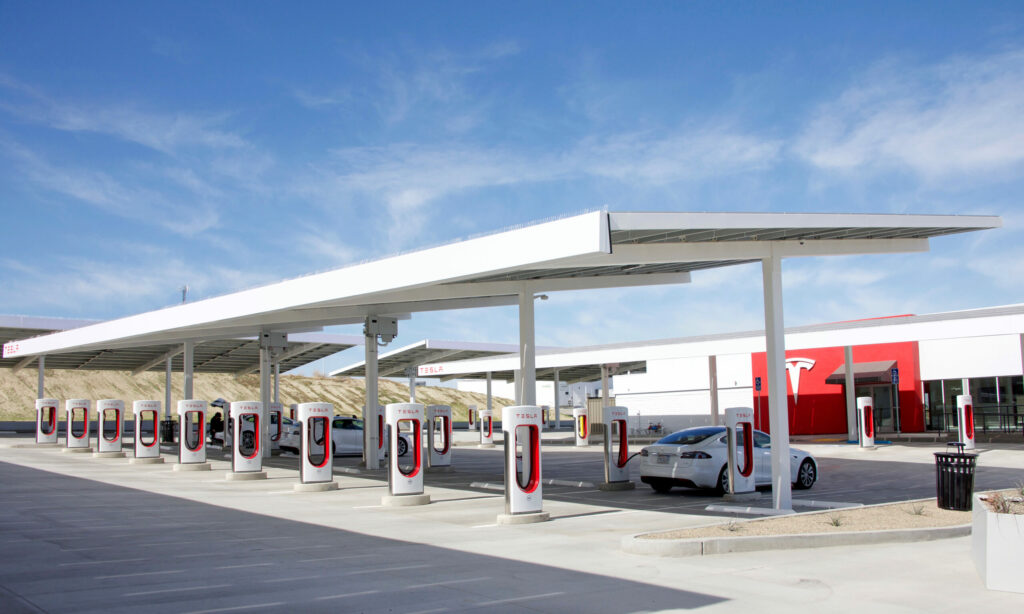
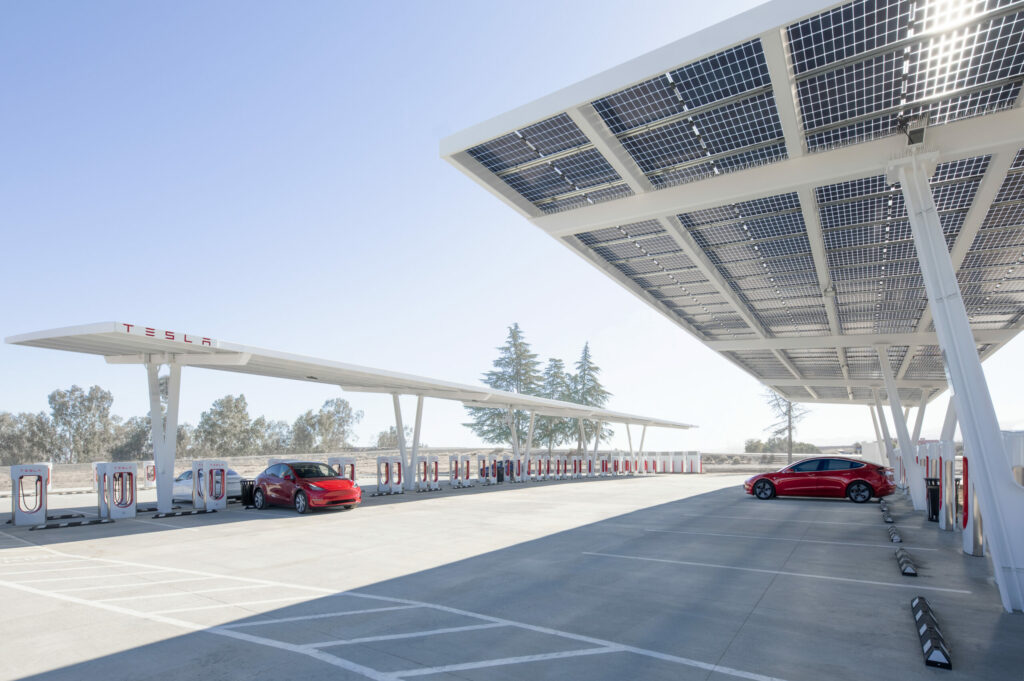
    Tesla charging station with solar roof in Kettleman City, CA.
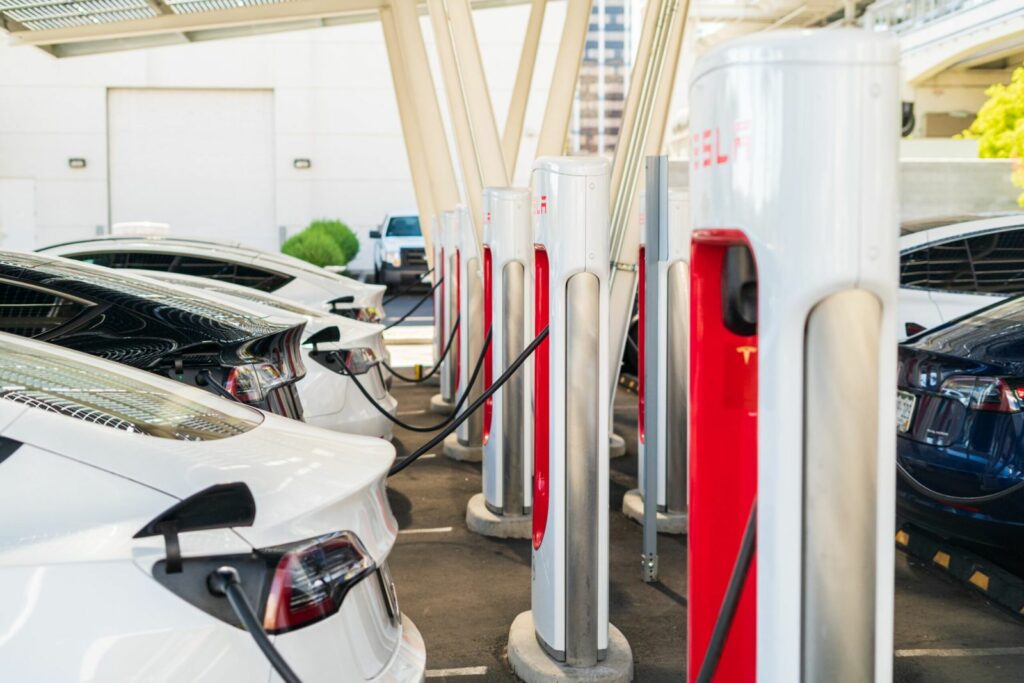
    Tesla charging station in Las Vegas, a key part of the growing US EV market infrastructure. (Credit: Sheila Fitzgerald)

    Charging Ahead: Infrastructure Expands

    Even the best EVs depend on robust charging networks:

    EV registrations have surged, but charging infrastructure is lagging. In Q1 2025, approximately 42 new EVs were registered for every one new public charging port added, according to Autos Innovate.

    Meanwhile, the great majority of mainstream producers have committed to Tesla’s North American Charging Standard (NACS) standard. From 2025 onward, all-new vehicles will roll off the factory NACS-capable. This gives Tesla’s Superchargers network access that is essentially as simple as refueling a typical ICE vehicle.

    Meanwhile, federal and local investments continue to add public charging stations, particularly on highways and city corridors.

    Policy Crossroads

    Policy remains a critical inflection point:

    The $7,500 federal EV tax credit, once a cornerstone of EV affordability, is slated to expire on September 30, 2025. This will happen unless it is renewed.

    Therefore, this impending deadline is prompting automakers to ramp up pre-expiration sales or pivot to leasing strategies (Reported by Vox and Investors).

    Despite federal uncertainty, states like California are pushing aggressive timelines to phase out gas-powered vehicle sales by 2035.

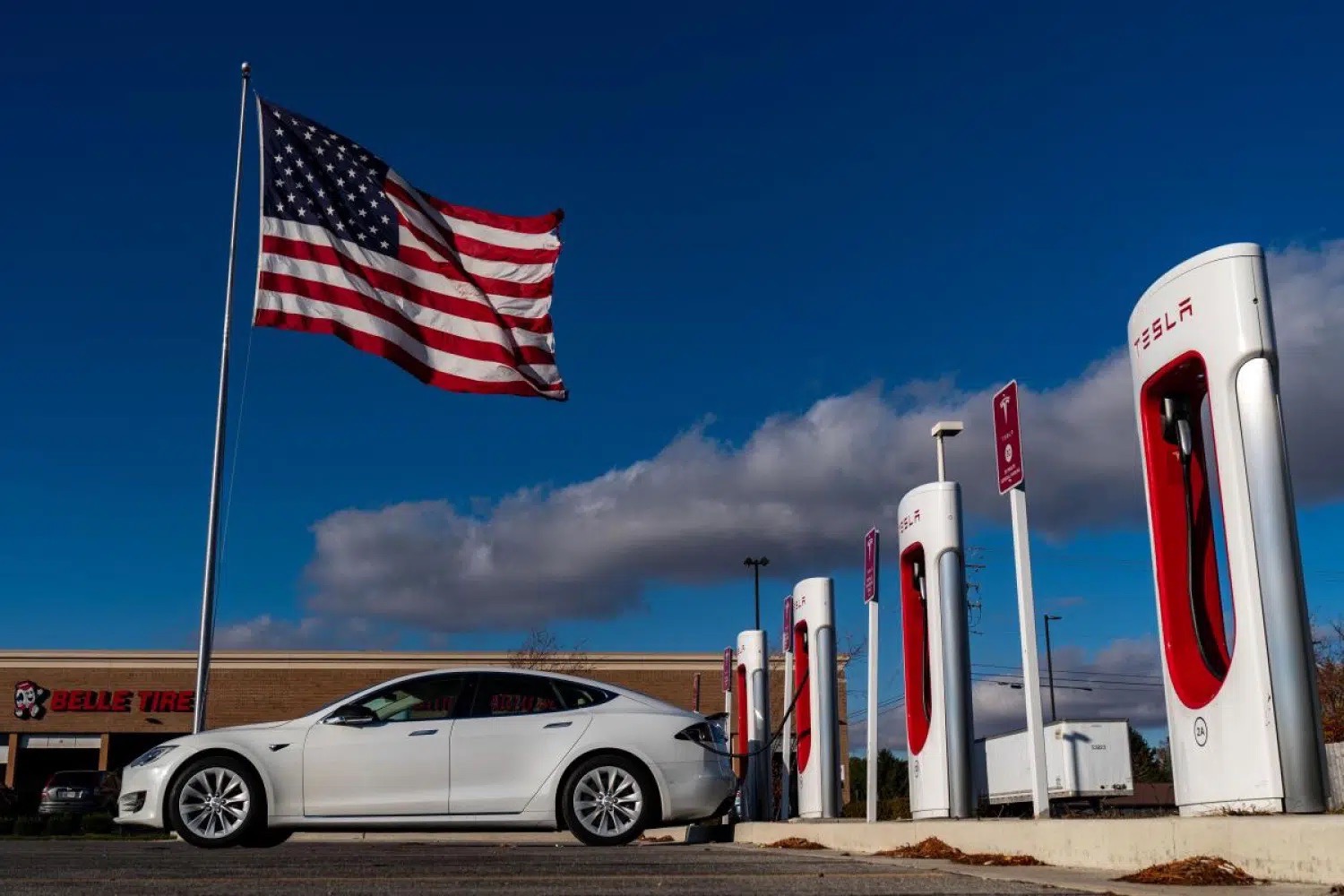
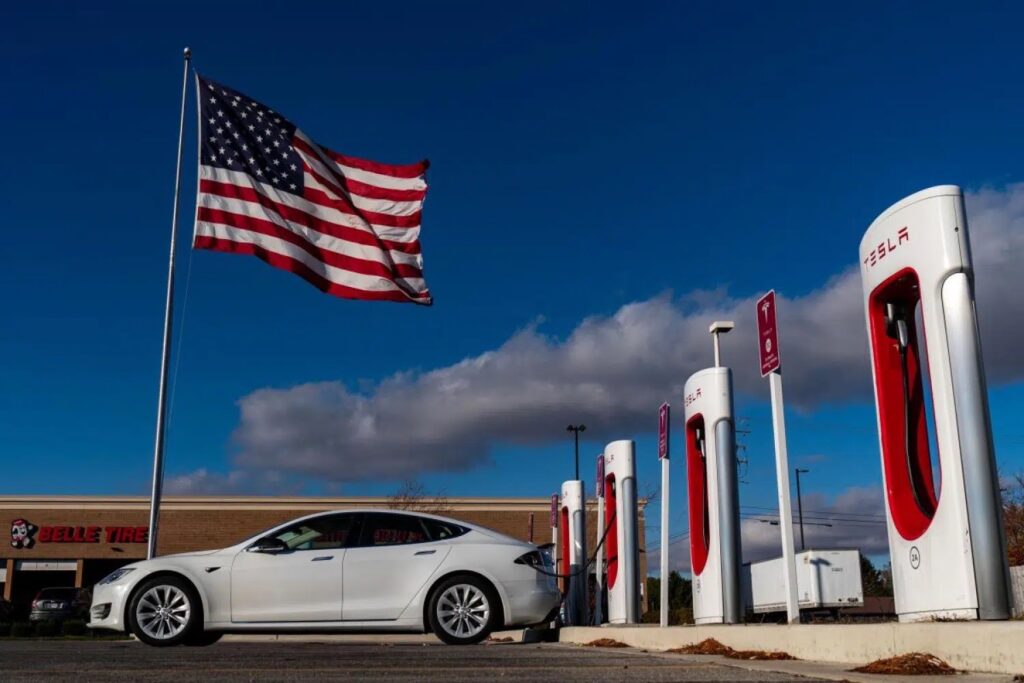
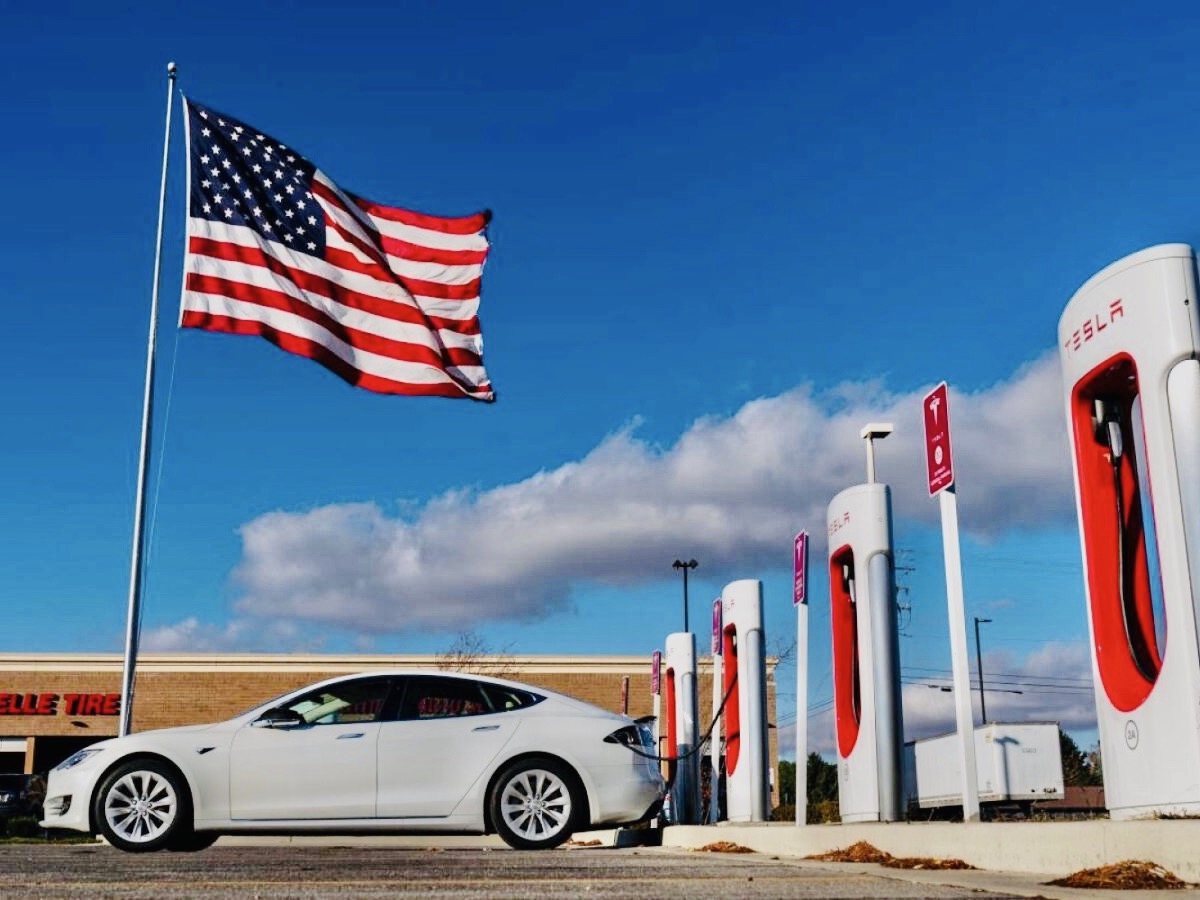
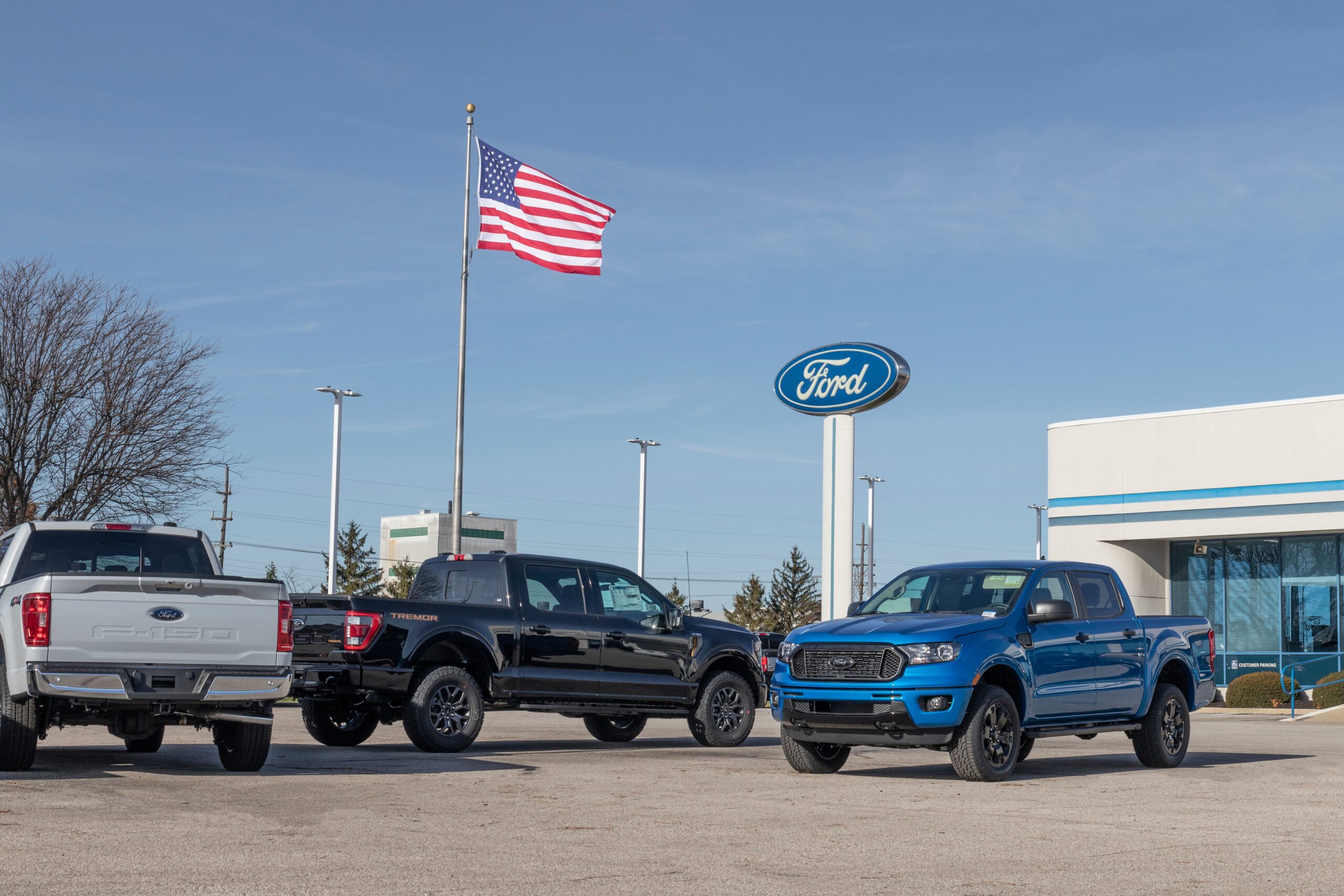
    Electric vehicles parked in front of American flags, representing the US EV market.
    Electric vehicles in front of American flags, highlighting growth and adoption trends in the US EV market.

    The Road to 2030

    Looking ahead: Analysts project EVs may account for one in every four new vehicles sold in the U.S. by 2030. This growth would happen on the strength of continued innovations in battery technology, durable supply chains, and steady policy backing.

    In fact, market estimations position the U.S. EV market size was estimated at around $131.3 billion in 2024 and is projected to grow to $139.6 billion by 2025. By 2034, it is expected to jump to $439 billion, representing a 13.6% CAGR (according to Global Market Insights Inc.).

  • The Rise of Electric Vehicles in the United States: Market, Models, and Innovations

    The Rise of Electric Vehicles in the United States: Market, Models, and Innovations

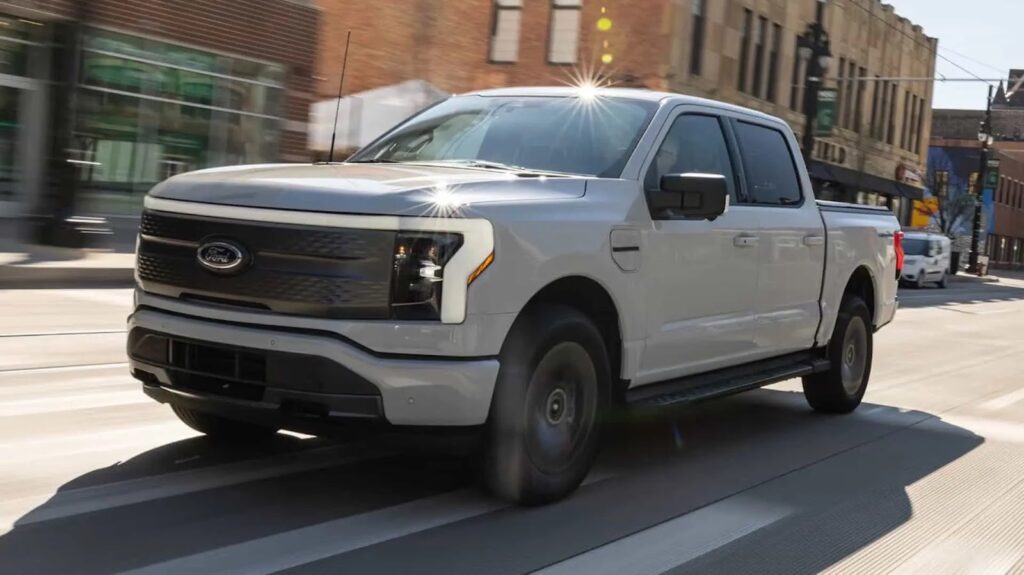
    It is a sweltering summer afternoon in Detroit when Ford engineers are secretly getting ready what is described by the executives as the company’s “Model T moment.” Their assignment is neither to assemble another vehicle, but to redefine an entire industry. With an electric pickup truck costing around $30,000 on the cards and billions in fresh investment, Ford is counting on affordability and scale to drag the EV from the sidelines of invention into the very heart of American living, marking a pivotal step in the US EV market.

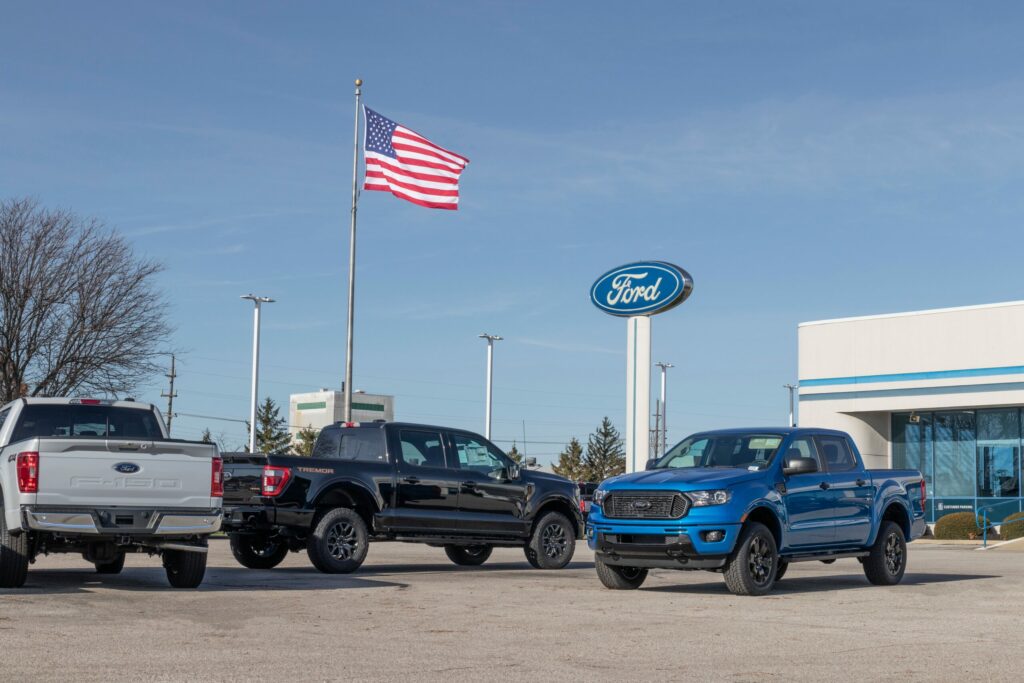
    Ford electric pickup truck 2025 affordable EV model
    Ford aims to produce an affordable mid-sized electric pickup around $30,000, marking a turning point in the US EV market.

    They’re not alone. From Silicon Valley start-ups to Japanese icons, the game to conquer America’s EV market is on. It’s a challenge powered by technology, demand from consumers, and government encouragement—and it is changing the way Americans think about getting behind the wheel.

    A Market in Motion

    The U.S. market for electrified and electric vehicles is solidly underway—no longer experimental:

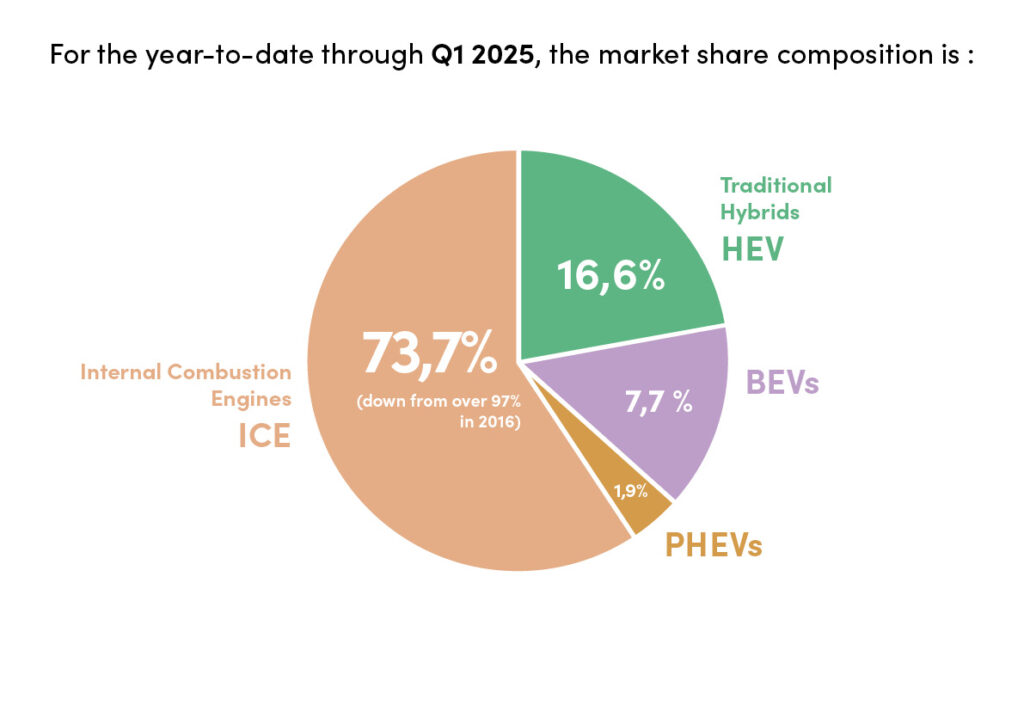
    According to Autos Innovate, in Q1 2025 EVs—including BEVs, PHEVs, and fuel-cell electric vehicles—accounted for 9.6% of new light-duty vehicle sales. That’s down from 10.9% in Q4 2024, yet still reflects a 0.3 percentage-point gain year-over-year. Meanwhile, overall light-duty sales rose 6%, and EV volume grew by about 9% (~30,500 vehicles) compared to Q1 2024.

    This change in powertrain mix shows the way the dominance of the ICE market is gradually being replaced by several forms of electrified mobility.

    The Drive to Affordability

    For years, the biggest obstacle to EV adoption was cost. Now, car manufacturers are getting serious about reducing prices:

    • Ford aims to produce a mid-sized electric pickup around $30,000 by bringing back the Model T spirit through affordability (as reported by Vox and Investors).
    • New entrants like Michigan-based Slate Auto are constructing modularity-based electric trucks whose base prices will come in under $27,500—again flipping the script on availability.
    Tesla charging station with solar roof in Las Vegas, Nevada, USA, October 10, 2021.
    Tesla charging station in Las Vegas, a key part of the growing US EV market infrastructure.

    Power, Luxury, and Performance

    Affordability isn’t the only story. At the luxury end:

    Lucid Motors is getting ready to debut the Lucid Gravity, an electric SUV positioned as a high-performance vehicle statement—good for about 828 hp, powered by a 123 kWh battery, and offering 450 miles of range.

    Tesla, though still dominant, encounters tougher competition as incumbents such as Ford, GM, and Hyundai—and an increasingly vibrant startup ecosystem—are stepping up their EV initiatives.

    Model-Level Highlights
    (U.S. Top Sellers H1 2025)

    ModelSales (first half of 2025, United States)
    TESLA MODEL Y• Q1 2025: Approximately 64,051 units sold 
    • Q2 2025: Estimated 90,949 units sold 
    • Total H1 Estimate: ~155,000 units
    TESLA MODEL 3• Q1 2025: Around 52,520 units
    (Q2H1 figures not separately disclosed, but Model Y maintained strong dominance in H1 overall.)
    CHEVROLET EQUINOX EV• Q1 2025: 10,329 units sold in the U.S. 
    • Q2 2025: 17,420 units sold 
    • Total H1: ~27,749 units
    FORD MUSTANG MACH-E• Q1 2025: 11,607 units sold 
    (No explicit Q2 data – total H1 likely slightly higher.)
    HONDA PROLOGUE• Q1 2025: 9,561 units
    HYUNDAI IONIQ 5• Q1 2025: 8,611 units sold
    FORD F-150 LIGHTNING• Q1 2025: 7,187 units sold
    BMW i4• Q1 2025: 7,125 units
    TESLA CYBERTRUCK• Q1 2025: 6,406 units sold
  • Tesla Superchargers: at the heart of fast charging

    Tesla Superchargers: at the heart of fast charging

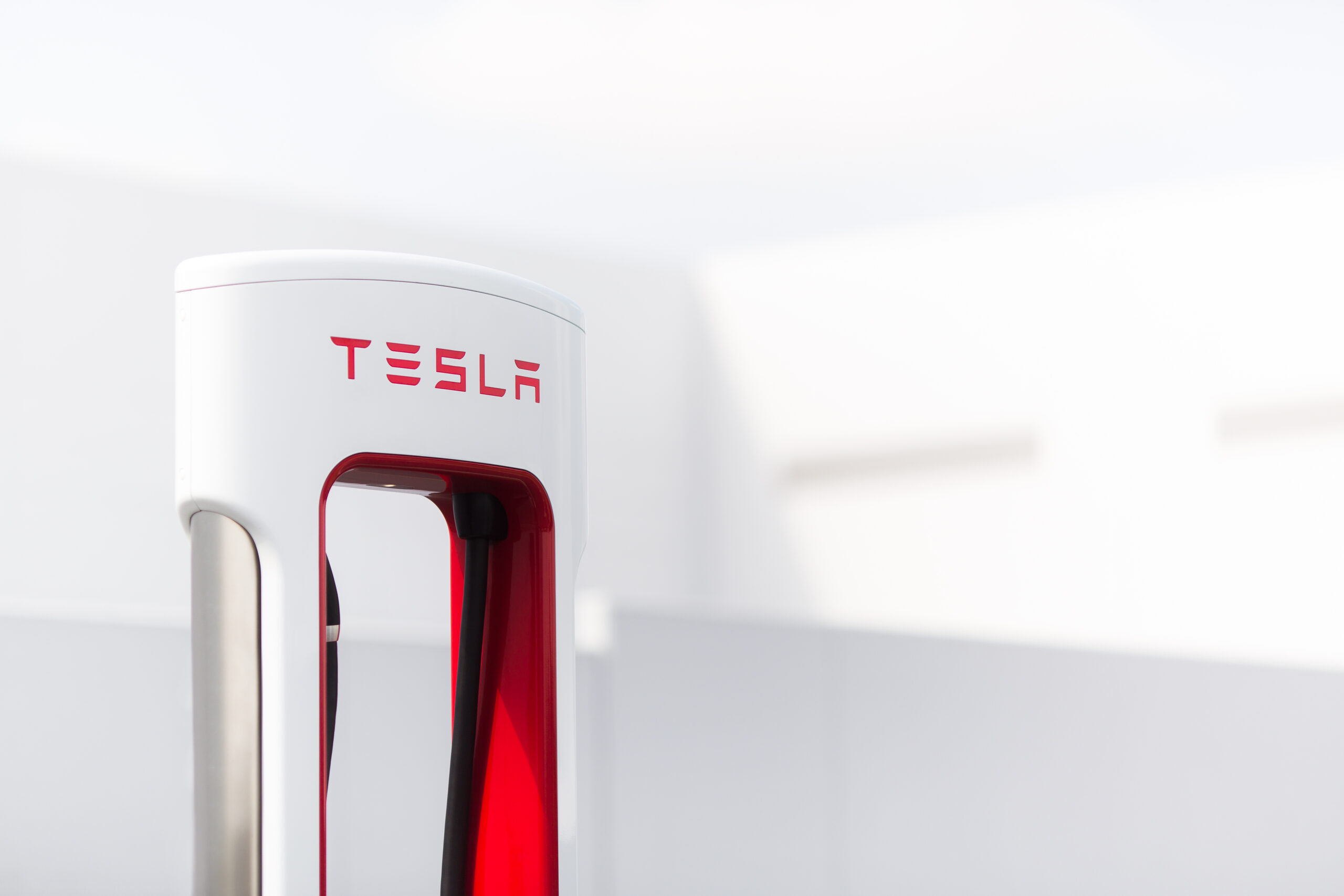
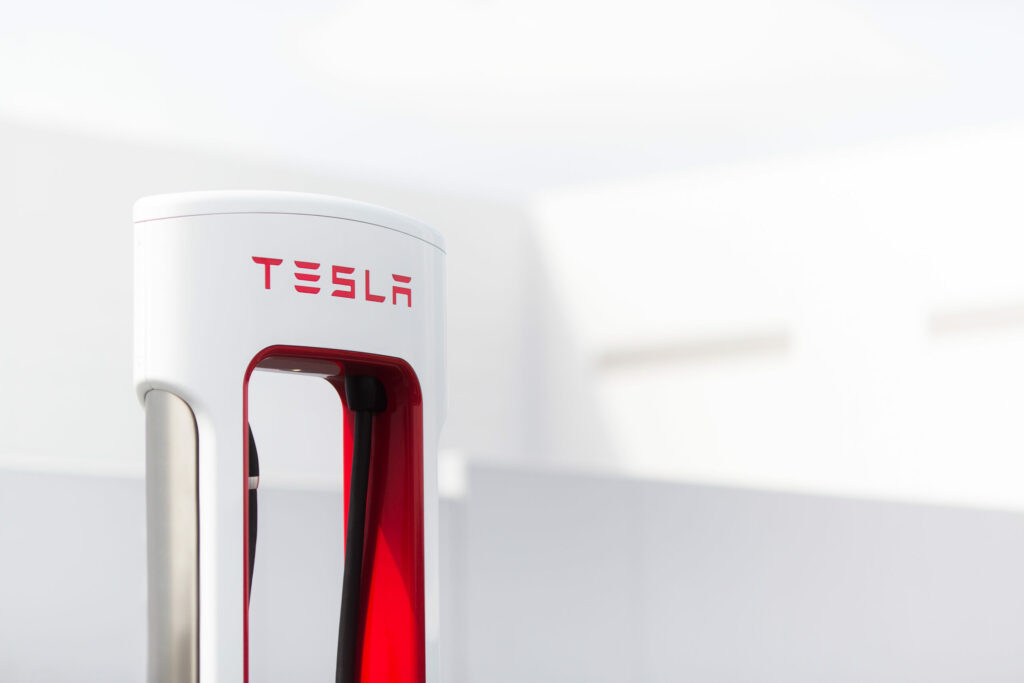
    Tesla, a multinational company founded in 2003 by a group of engineers and led by Elon Musk, was founded with the ambition of moving the world towards a more sustainable way of travelling. A leader in electromobility, Tesla has not stopped at building high-performance 100% electric vehicles: the company has also created a fast-charging network that has become emblematic: Superchargers.

    Close-up of a Tesla Supercharger station in operation
    Zoom in on a Tesla Supercharger, the symbol of fast, intuitive charging. (Credit: Tesla)

    The mission of Tesla Superchargers

    Eliminate the fear of running out of battery power, reduce the recharging time for electric cars (EVs), and thus enable motorists to travel long distances without constraint. Launched in 2012, initially in the United States, the Supercharger network has expanded at breakneck speed to keep pace with the growing popularity of electromobility. These ultra-fast recharging stations can recover hundreds of kilometres of range in just a few minutes – a major advance that has made a significant contribution to the democratisation of the electric vehicle.

    Constantly improving recharging technology

    Superchargers have come a long way since their launch. While the first versions were already capable of quickly recharging an electric car, with a power of up to 150 kilowatts, Tesla has taken things a step further in 2019 with the V3 Superchargers.

    This third generation offers much higher performance: a maximum power of 250 kW per vehicle, with no sharing between the charging points, enabling much more efficient recharging, even when several cars are connected simultaneously. In concrete terms, a vehicle can recover up to 120 kilometres of range in just 5 minutes, and reach 80% of its battery in less than 25 minutes, depending on the weather conditions and the model.

    Since 2021, this charging solution is no longer exclusive to Tesla: electric vehicles of any brand can benefit from it, via the Tesla app.

    More recently, Tesla began installing an even faster version, called V4, capable of delivering up to 500 kW. This new generation of charging points will be available from the third quarter of 2025, and will be used to recharge powerful vehicles (Cybertruck, as well as certain Hyundai, Porsche and Kia models, etc.). The new charging points are also designed to accommodate the technologies of tomorrow, such as two-way charging (V2G – Vehicle-to-Grid), which will enable vehicles to return electricity to the grid when needed. However, current vehicles, whether Tesla or not, are limited to a charging capacity of 250 kW and will not yet be able to take advantage of this maximum power.

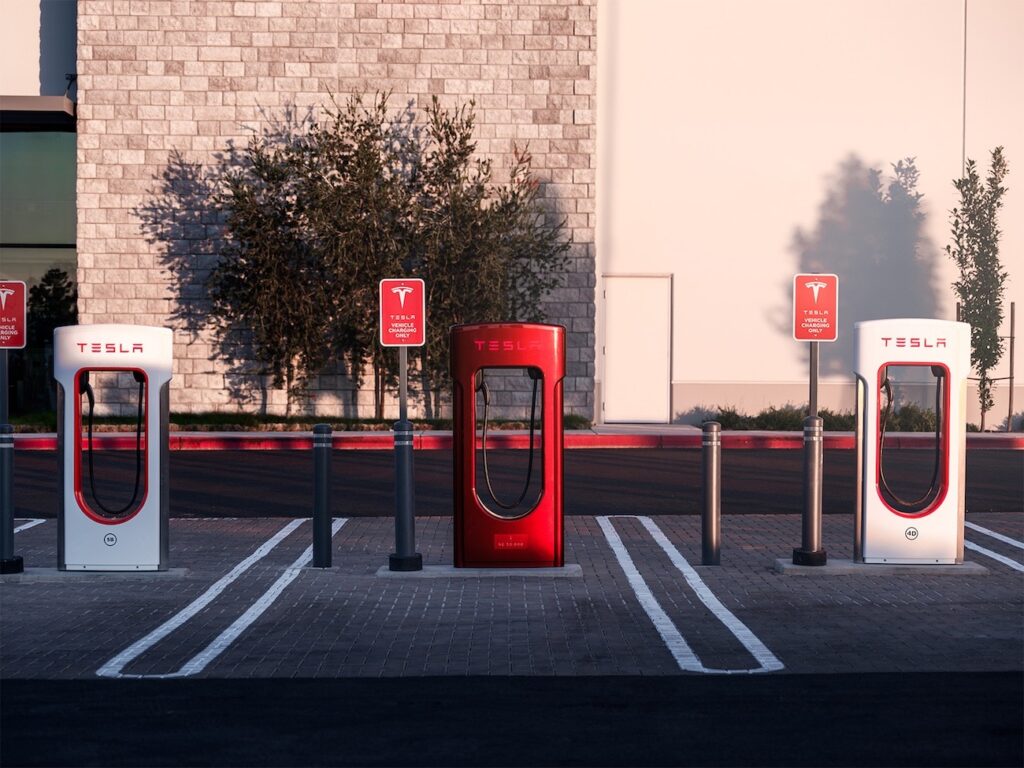
    Tesla Supercharger stations installed in an urban car park
    Several Tesla charging points installed in a car park accessible to the public. (Credit: Tesla)

    Massive international deployment

    Since their launch, the deployment of these charging solutions has been impressive: by the end of the first quarter of 2025, Tesla had more than 60,000 Superchargers at over 6,000 stations worldwide. This network covers North America, Europe, Asia and certain strategic areas in Africa, the Middle East and Oceania.

    This dense network represents one of the largest ultra-fast charging networks in the world, and above all one of the most reliable, with an availability rate of over 99%.

    France is not to be outdone

    France, a pioneer of electromobility in Europe, is no exception to the trend. France benefits from a particularly well-developed Tesla network. In May 2025, the network of Tesla Superchargers in France exceeded 3,000 fast-charging stations, spread across some 180 locations across the country.

    With a high concentration along major motorway routes (A6, A10, A7, A1, etc.), but also in shopping centres and suburban areas, these stations are strategically located, making it easier for motorists to access recharging facilities.

    Simplified use

    What sets Tesla Superchargers apart, beyond their performance, is their ease of use, designed from the outset to be fluid, intuitive and almost invisible. For Tesla owners, all they have to do is park, plug the cable into their vehicle… and that’s it. No badge, no bank card, no application to manipulate: the vehicle is identified automatically and billing is linked directly to the user account.

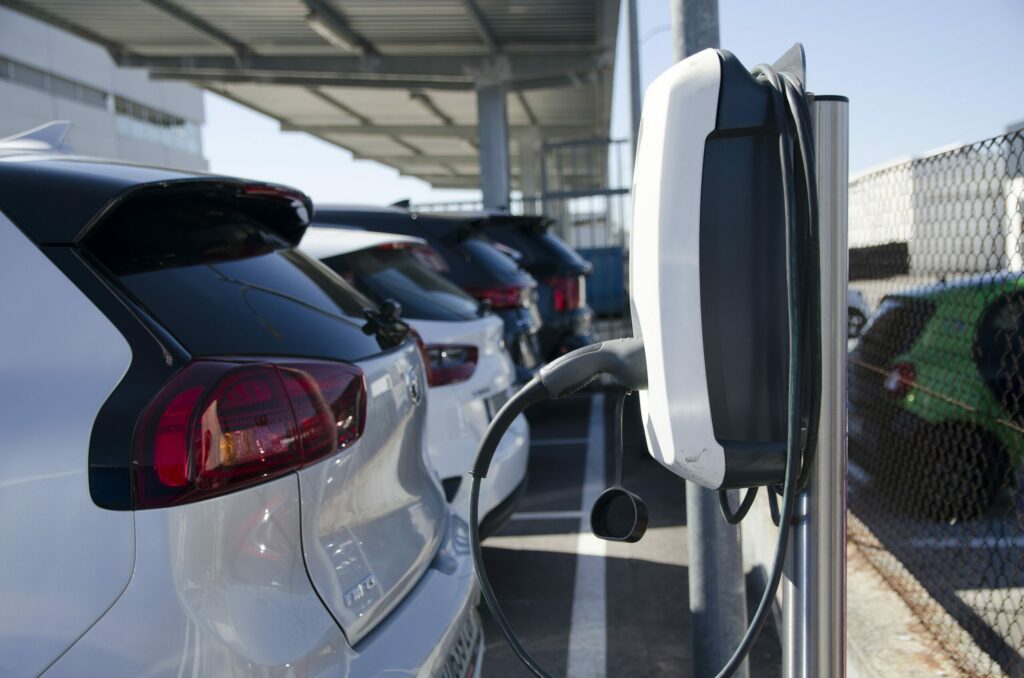
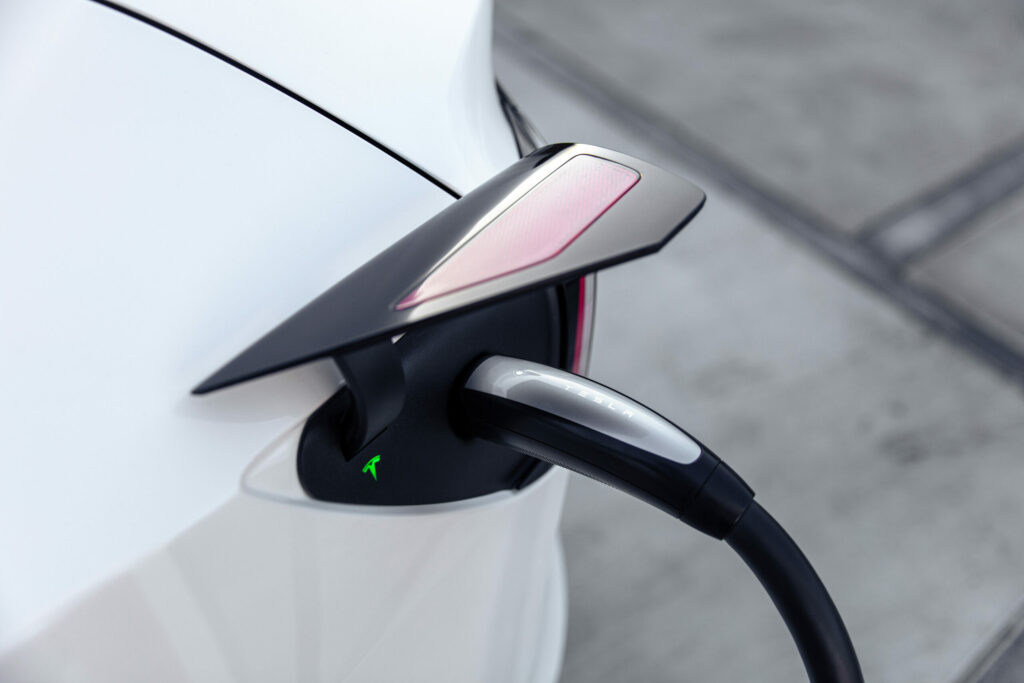
    Tesla Supercharger cable connected to a recharging electric car
    Close-up of the Tesla charging cable connected to an electric car (Credit: Tesla)

    Even for drivers of electric vehicles of other makes, the experience remains seamless via the Tesla app, which enables users to locate a charging point, check its availability in real time and launch a charging session in just a few clicks. Payment is made simply by credit card registered in the app, with rates adjusted according to whether the user recharges on a one-off basis or opts for a monthly subscription. It’s a seamless process that makes recharging a pleasant experience, without the smells or the noise.

    Towards an electric future

    Tesla Superchargers embody more than just a recharging network: they illustrate an ecosystem that has been thought through in its entirety, where every detail is at the service of a fluid, rapid and accessible energy transition. Through this global deployment and ease of use, Tesla is redefining what electric mobility should be: not an alternative, but a matter of course.

  • Focus on… California

    Focus on… California

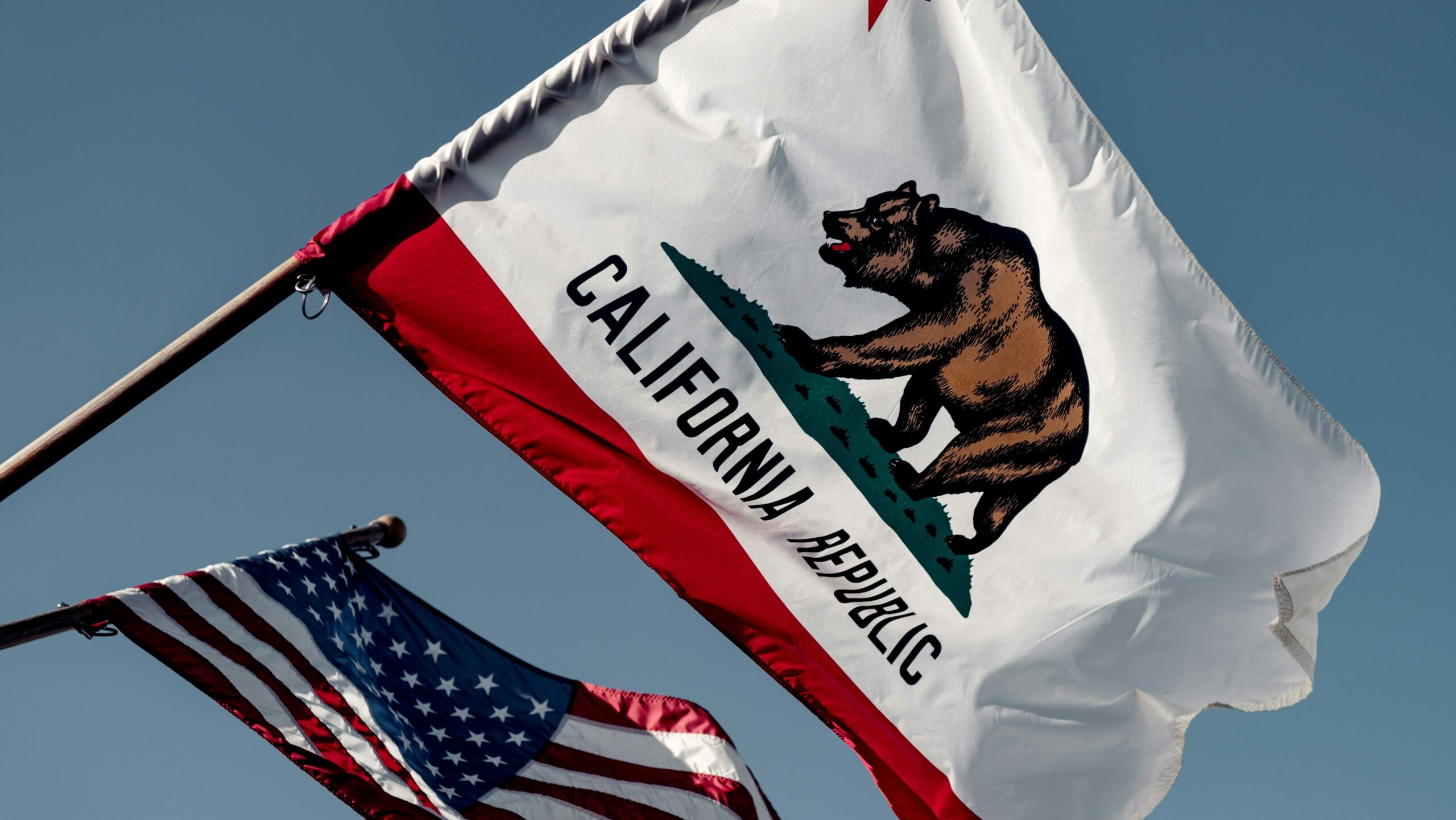
    As the birthplace of the Zero-Emission Vehicle, California has turned electromobility into a genuine state policy, contributing to almost a third of electric vehicle sales in the United States, despite having only 10% of the population. But this full-scale laboratory for electric mobility still faces a number of challenges…

    Credit: Tim Mossholder

    California, a pioneer in electromobility, has never stopped making electric cars (EVs) one of its priorities. And that goes back a long way! As early as 1990, the Golden State enacted the “Zero-Emission Vehicle” mandate, imposing clean vehicle quotas on manufacturers wishing to sell in the state, which have been steadily increasing ever since. California has been imposing strict rules on manufacturers for 35 years. Most recently, the Advanced Clean Cars II programme definitively introduced a ban on sales of new, non-electrified cars from 2035. This injunction has been adopted by some fifteen other American states, proving that California is indeed the driving force behind electromobility across the Atlantic.

    A host of benefits and opportunities

    California is giving itself the means to achieve its electromobility targets. Until 2023, the Clean Vehicle Rebate Project enabled the most modest households to reduce their bill by $7,500 for the purchase of electric vehicles. Although this scheme is no longer in effect, it has made a significant contribution to the electrification of the state over the dozen years it has been in existence. Since 2019, the Clean Cars 4 All programme has offered up to $9,500 to help low-income households get rid of their old, polluting vehicles. Added to this is a federal tax credit of up to $7,500. Finally, there’s a detail that’s particularly important when you consider the infernal traffic of Los Angeles: electric car owners can use the dedicated car-sharing lanes free of charge. As a result, by 2024, more than one in four car registrations in California was electric, well above the national average (8%).

    In response to growing demand, and taking advantage of a favourable administrative environment, a whole eco-mobile ecosystem is flourishing. Tesla, of course, is still at the top, but more and more competitors are emerging. Large, well-established groups such as Ford, General Motors and Toyota are taking more and more market share, and new 100% electric carmakers are looking to take their share of the cake. This is the case of Rivian, which, even though it is based in Michigan, the cradle of the automobile in the USA, chose Los Angeles in 2018 to present its first models.

    And carmakers aren’t the only ones thriving under the sun of the El Dorado State. Tech giants Apple and Alphabet, among others, as well as a whole host of start-ups dedicated to batteries, recharging and operating systems, have taken up residence between San Diego and Los Angeles, creating more than 70,000 jobs in the process since 2020.

    Credit: Anastasiya Badun

    The white gold rush

    California is undoubtedly the epicentre of electromobility in the United States and, despite the boom in Europe and, above all, China, it continues to set the standard in the field, particularly when it comes to innovation. But not everything is perfect in La La Land. California’s recharging infrastructure is spread mainly along the coast, leaving the interior dry. And despite the abundance of structures in the major coastal urban areas, this is not enough to avoid long queues in front of the charging points because of the overloaded traffic.

    Finally, and this is certainly the thorniest issue, California, like the rest of the country, is dependent on lithium imports for battery manufacture. And with the trade war looming, it’s a safe bet that the USA will have to rely on local mining. California is home to the Salton Sea, a recently discovered deposit whose subsoil could be used to manufacture 375 million electric cars! At the beginning of the year, the courts gave the go-ahead for the site to be mined, and after the gold rush, California is now preparing to become the scene of the rush for lithium, the white gold of the electric transition…
    Finally, and this is perhaps the biggest sword of Damocles hanging over the head of Californian electromobility: a possible political U-turn hostile to environmental standards, aligned with the ‘petrolophile’ ideas of President Donald Trump, could put the brakes on the momentum underway. Indeed, the occupant of the White House is already threatening to abolish tax credits and funding for the development of recharging infrastructure. His instability and recurrent changes of direction are cause for concern, but the machine is already well under way and it’s hard to see how California could turn back the clock after 35 years of developing electromobility…
    Main Californian laws and measures on zero-emission vehicles :

    1990 – ZEV Mandate
    Progressive imposition of zero-emission vehicle sales quotas for all manufacturers operating in California.

    2002 – Pavley Law
    First time a state has regulated CO2 emissions from passenger cars. Will serve as the basis for Corporate Average Fuel Economy (CAFE) standards nationwide.

    2021 – California Clean Fleet Program
    Grants and loans with the goal of rapidly electrifying public truck and bus fleets.

    2022 – Advanced Clean Cars II
    From 2035, 100% of new vehicle sales must be electric cars or plug-in hybrids with at least 50 km of electric range.

    ● 2024 – Climate Accountability Package

    Obligation for large companies to declare their CO2 emissions, including those linked to car fleets.