Category: United States

  • The forward march of Tesla’s robotaxis

    The forward march of Tesla’s robotaxis

    Demand is exploding and waiting times are getting longer in Austin, one of the two cities where the service is in place, along with San Francisco. In response, Tesla plans to double its fleet of robot taxis from next month, according to founder Elon Musk’s announcement on X. This significant increase confirms Austin’s central role in Tesla’s roll-out strategy, which aims to turn the city into a showcase for its autonomous technology launched last June.

    Outside view of Tesla robotaxi in service in Austin
    Exterior view of a Tesla robotaxi used in pilot areas such as Austin and San Francisco (Credit: Tesla)

    A service still under development

    The American billionaire claims that the fleet of robot taxis in Austin, Texas, should “roughly double in the next month”. He did not give a precise figure, but his statement confirms the strong pressure on the service since its launch. Many users report having to wait a long time for a ride, with some citing unavailability in the evenings or at peak times. These reports show that current capacity is no longer sufficient.

    The service currently operates in two areas: Austin and the San Francisco Bay Area. Tesla presents its vehicles as robotaxis, but they still operate with a safety driver at the wheel. The authorities point out that Tesla cannot charge for an autonomous taxi service and that the current framework remains that of a VTC service using advanced driver assistance, but not legally recognised fully autonomous driving. This supervision remains essential until the software is deemed totally reliable in all situations. However, Tesla is promising rapid progress towards more complete autonomy. It says it wants to remove Safety Drivers from large areas of Austin by the end of the year, which would be a major turning point for Tesla.

    Interior of a Tesla robotaxi seen from the rear seat
    View from the back seat of a Tesla robotaxi, showing the modern interior and the central screen used for the service. (Credit: Tesla)

    A geographical and technological ambition

    It also plans to extend the service to eight or ten major US metropolitan areas. Tesla has just obtained a licence to operate a VTC service in Arizona. This authorisation paves the way for an extension of the robotaxi beyond Texas and California. The company could test larger areas and different road environments in order to validate the robustness of its system. This new testing ground promises to be the first step in a wider national roll-out.

    This ambition marks a turning point for Tesla, which has long been trying to fulfil its promise of making the robotaxi a core activity in its business model. The carmaker is also repositioning part of its technical resources towards improving its FSD (Full Self-Driving) software, which has become a strategic priority. Musk regularly describes autonomy as “the real edge” of Tesla’s future. If Tesla manages to accelerate at this rate, Austin could become the first full-scale laboratory for a truly operational autonomous service. But success will also depend on two key factors: the ability of the software to handle complex scenarios and the speed with which regulators grant the necessary authorisations. It remains to be seen whether technology and regulation will move fast enough to keep pace with this highly ambitious timetable.

  • The Future of EVs in the United States: Production, Infrastructure, and Policy

    The Future of EVs in the United States: Production, Infrastructure, and Policy

    The US EV market is entering a decisive decade, driven by innovation in production. Expanding charging infrastructure and evolving policies will shape the future of mobility.

    Reinventing the Factory Floor

    Manufacturing is changing rapidly:

    • For instance, Ford’s three-branch tree flexible assembly system—building front, rear, and battery modules separately before final assembly—is able to reduce production time and part usage by 20%. That streamlining is valued due to emerging threats from low-cost, large-scale Chinese production.
    • In addition, aside from assembly, U.S. automakers are solidifying local EV supply chains, utilizing Inflation Reduction Act benefits and investing in facilities that produce minerals and batteries.

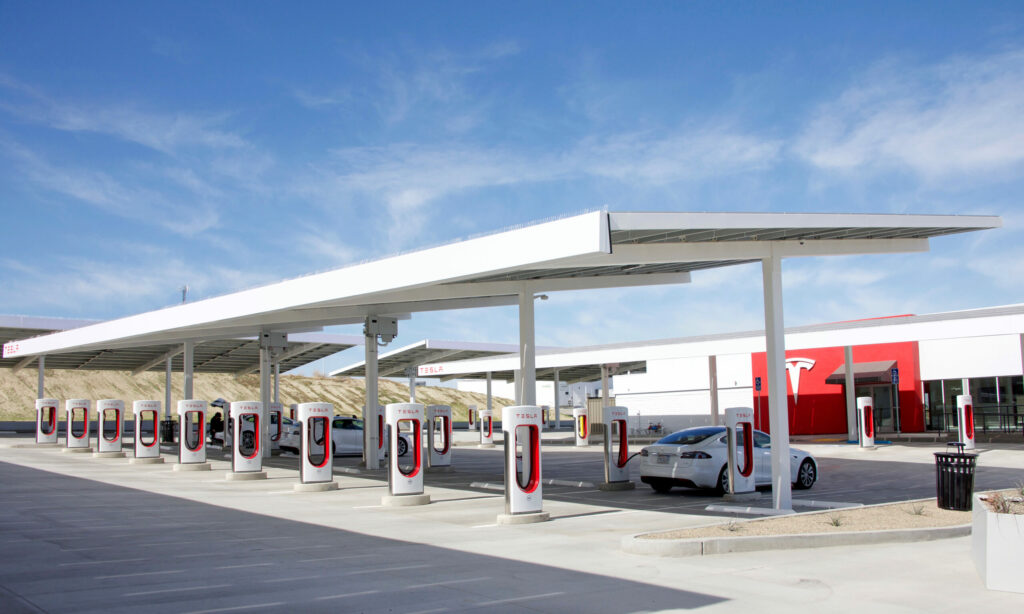
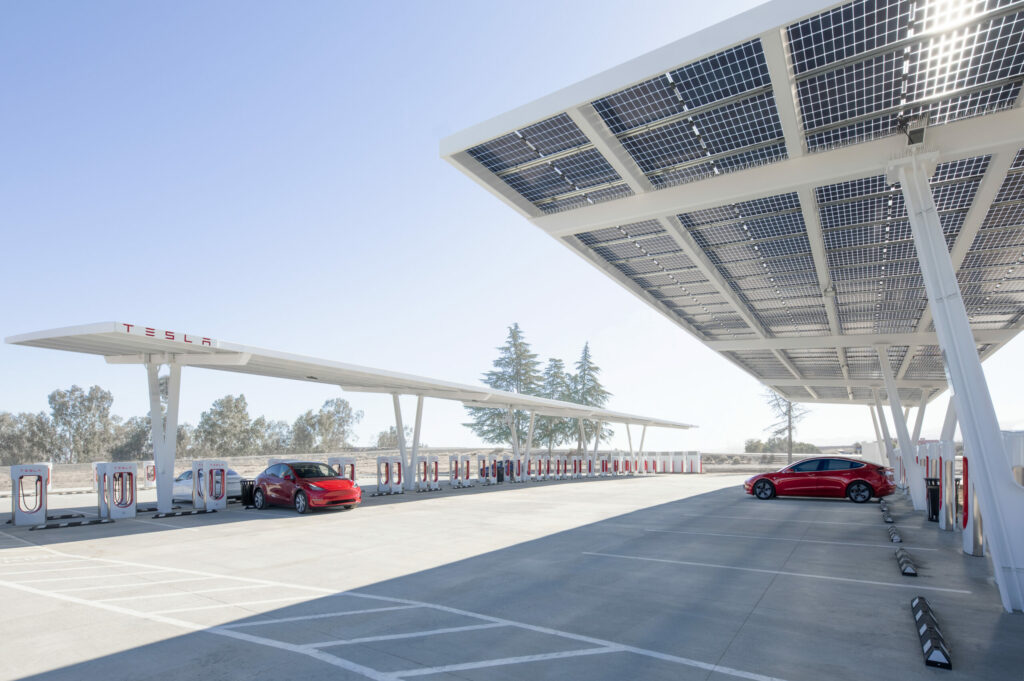
    Tesla charging station with solar roof in Kettleman City, CA.
    Tesla charging station in Las Vegas, a key part of the growing US EV market infrastructure. (Credit: Sheila Fitzgerald)

    Charging Ahead: Infrastructure Expands

    Even the best EVs depend on robust charging networks:

    EV registrations have surged, but charging infrastructure is lagging. In Q1 2025, approximately 42 new EVs were registered for every one new public charging port added, according to Autos Innovate.

    Meanwhile, the great majority of mainstream producers have committed to Tesla’s North American Charging Standard (NACS) standard. From 2025 onward, all-new vehicles will roll off the factory NACS-capable. This gives Tesla’s Superchargers network access that is essentially as simple as refueling a typical ICE vehicle.

    Meanwhile, federal and local investments continue to add public charging stations, particularly on highways and city corridors.

    Policy Crossroads

    Policy remains a critical inflection point:

    The $7,500 federal EV tax credit, once a cornerstone of EV affordability, is slated to expire on September 30, 2025. This will happen unless it is renewed.

    Therefore, this impending deadline is prompting automakers to ramp up pre-expiration sales or pivot to leasing strategies (Reported by Vox and Investors).

    Despite federal uncertainty, states like California are pushing aggressive timelines to phase out gas-powered vehicle sales by 2035.

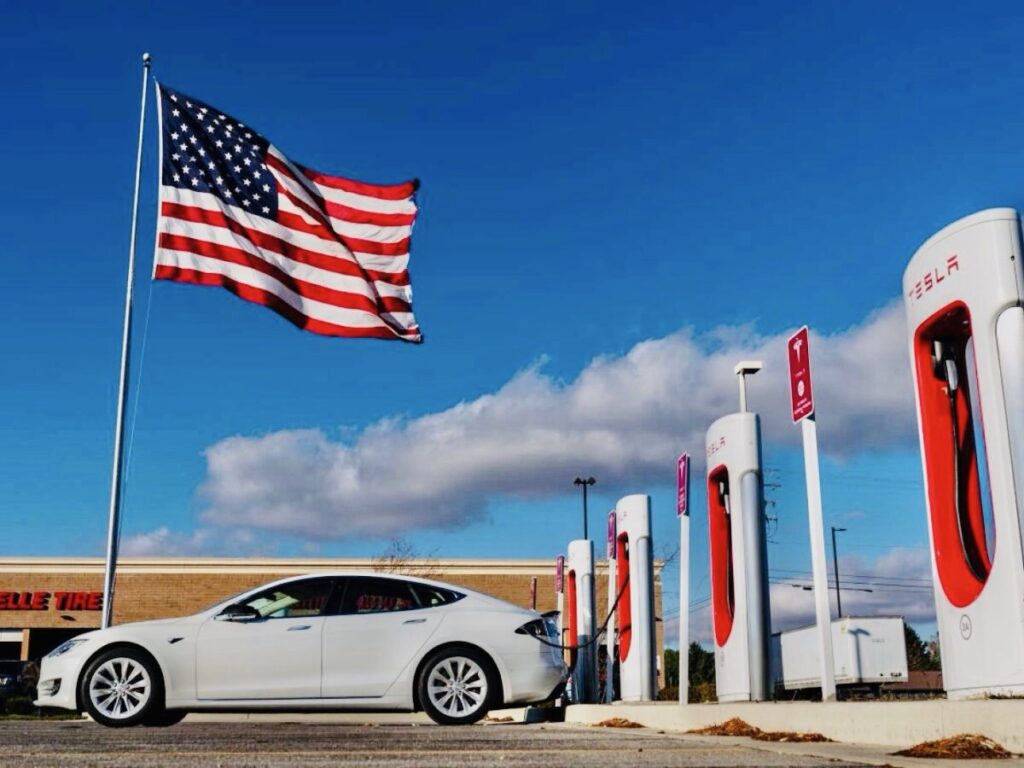
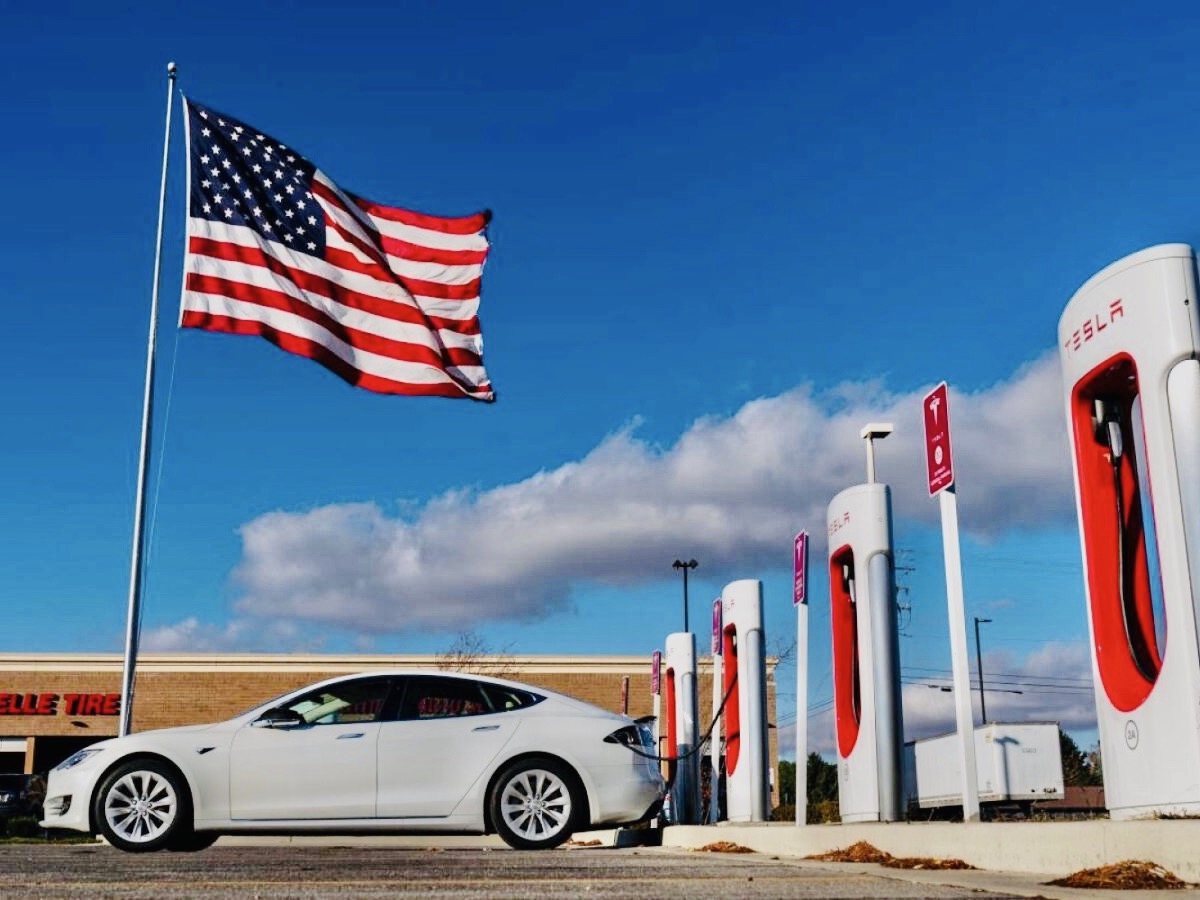
    Electric vehicles parked in front of American flags, representing the US EV market.
    Electric vehicles in front of American flags, highlighting growth and adoption trends in the US EV market.

    The Road to 2030

    Looking ahead: Analysts project EVs may account for one in every four new vehicles sold in the U.S. by 2030. This growth would happen on the strength of continued innovations in battery technology, durable supply chains, and steady policy backing.

    In fact, market estimations position the U.S. EV market size was estimated at around $131.3 billion in 2024 and is projected to grow to $139.6 billion by 2025. By 2034, it is expected to jump to $439 billion, representing a 13.6% CAGR (according to Global Market Insights Inc.).

  • The Rise of Electric Vehicles in the United States: Market, Models, and Innovations

    The Rise of Electric Vehicles in the United States: Market, Models, and Innovations

    It is a sweltering summer afternoon in Detroit when Ford engineers are secretly getting ready what is described by the executives as the company’s “Model T moment.” Their assignment is neither to assemble another vehicle, but to redefine an entire industry. With an electric pickup truck costing around $30,000 on the cards and billions in fresh investment, Ford is counting on affordability and scale to drag the EV from the sidelines of invention into the very heart of American living, marking a pivotal step in the US EV market.

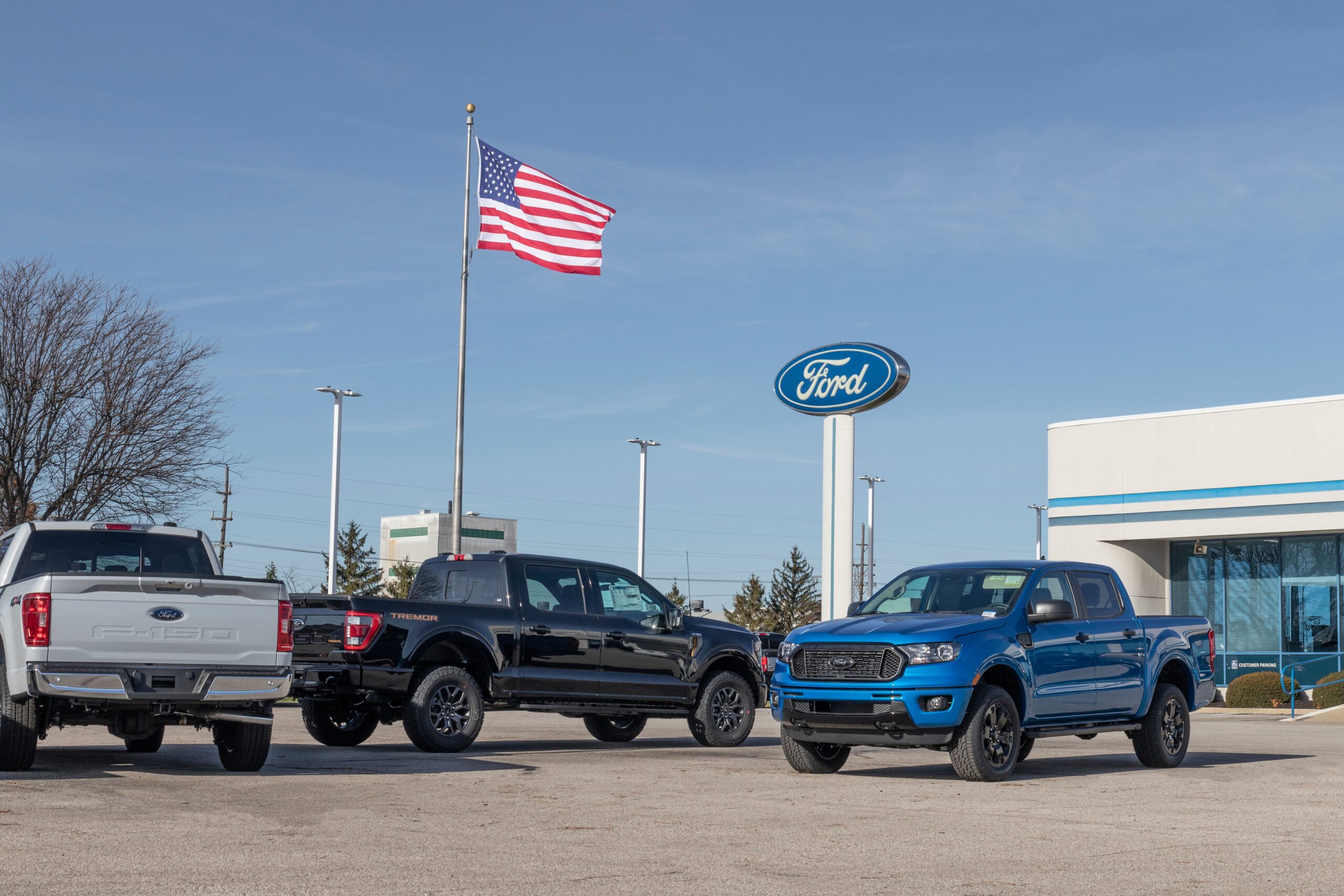
    Ford electric pickup truck 2025 affordable EV model
    Ford aims to produce an affordable mid-sized electric pickup around $30,000, marking a turning point in the US EV market.

    They’re not alone. From Silicon Valley start-ups to Japanese icons, the game to conquer America’s EV market is on. It’s a challenge powered by technology, demand from consumers, and government encouragement—and it is changing the way Americans think about getting behind the wheel.

    A Market in Motion

    The U.S. market for electrified and electric vehicles is solidly underway—no longer experimental:

    According to Autos Innovate, in Q1 2025 EVs—including BEVs, PHEVs, and fuel-cell electric vehicles—accounted for 9.6% of new light-duty vehicle sales. That’s down from 10.9% in Q4 2024, yet still reflects a 0.3 percentage-point gain year-over-year. Meanwhile, overall light-duty sales rose 6%, and EV volume grew by about 9% (~30,500 vehicles) compared to Q1 2024.

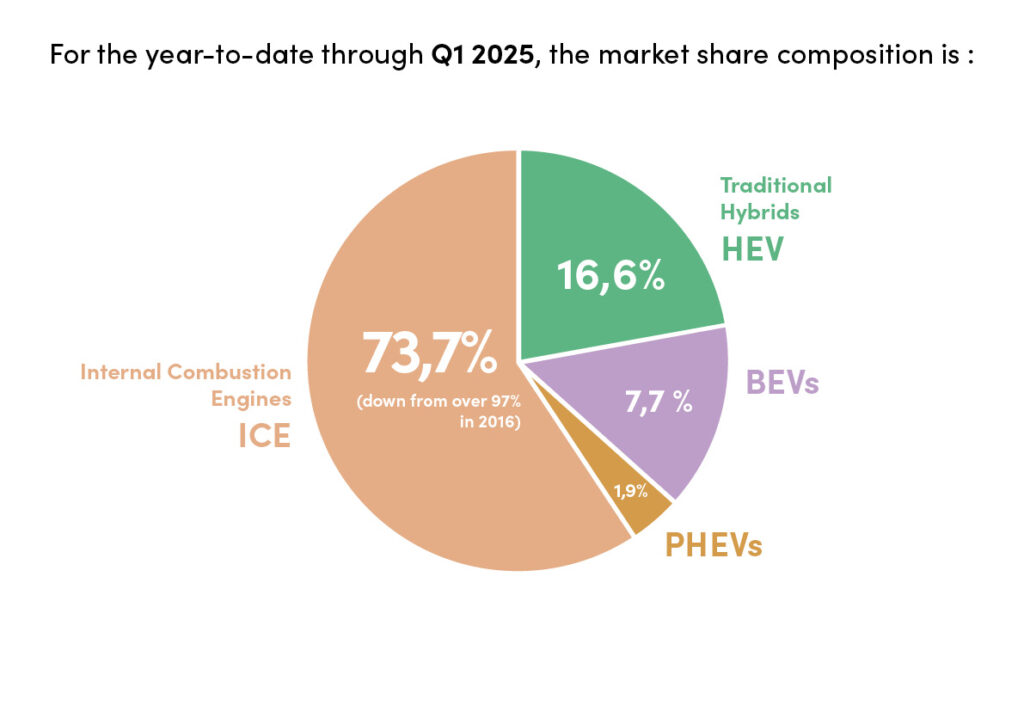
    This change in powertrain mix shows the way the dominance of the ICE market is gradually being replaced by several forms of electrified mobility.

    The Drive to Affordability

    For years, the biggest obstacle to EV adoption was cost. Now, car manufacturers are getting serious about reducing prices:

    • Ford aims to produce a mid-sized electric pickup around $30,000 by bringing back the Model T spirit through affordability (as reported by Vox and Investors).
    • New entrants like Michigan-based Slate Auto are constructing modularity-based electric trucks whose base prices will come in under $27,500—again flipping the script on availability.
    Tesla charging station with solar roof in Las Vegas, Nevada, USA, October 10, 2021.
    Tesla charging station in Las Vegas, a key part of the growing US EV market infrastructure.

    Power, Luxury, and Performance

    Affordability isn’t the only story. At the luxury end:

    Lucid Motors is getting ready to debut the Lucid Gravity, an electric SUV positioned as a high-performance vehicle statement—good for about 828 hp, powered by a 123 kWh battery, and offering 450 miles of range.

    Tesla, though still dominant, encounters tougher competition as incumbents such as Ford, GM, and Hyundai—and an increasingly vibrant startup ecosystem—are stepping up their EV initiatives.

    Model-Level Highlights
    (U.S. Top Sellers H1 2025)

    ModelSales (first half of 2025, United States)
    TESLA MODEL Y• Q1 2025: Approximately 64,051 units sold 
    • Q2 2025: Estimated 90,949 units sold 
    • Total H1 Estimate: ~155,000 units
    TESLA MODEL 3• Q1 2025: Around 52,520 units
    (Q2H1 figures not separately disclosed, but Model Y maintained strong dominance in H1 overall.)
    CHEVROLET EQUINOX EV• Q1 2025: 10,329 units sold in the U.S. 
    • Q2 2025: 17,420 units sold 
    • Total H1: ~27,749 units
    FORD MUSTANG MACH-E• Q1 2025: 11,607 units sold 
    (No explicit Q2 data – total H1 likely slightly higher.)
    HONDA PROLOGUE• Q1 2025: 9,561 units
    HYUNDAI IONIQ 5• Q1 2025: 8,611 units sold
    FORD F-150 LIGHTNING• Q1 2025: 7,187 units sold
    BMW i4• Q1 2025: 7,125 units
    TESLA CYBERTRUCK• Q1 2025: 6,406 units sold
  • Tesla Superchargers: at the heart of fast charging

    Tesla Superchargers: at the heart of fast charging

    Tesla, a multinational company founded in 2003 by a group of engineers and led by Elon Musk, was founded with the ambition of moving the world towards a more sustainable way of travelling. A leader in electromobility, Tesla has not stopped at building high-performance 100% electric vehicles: the company has also created a fast-charging network that has become emblematic: Superchargers.

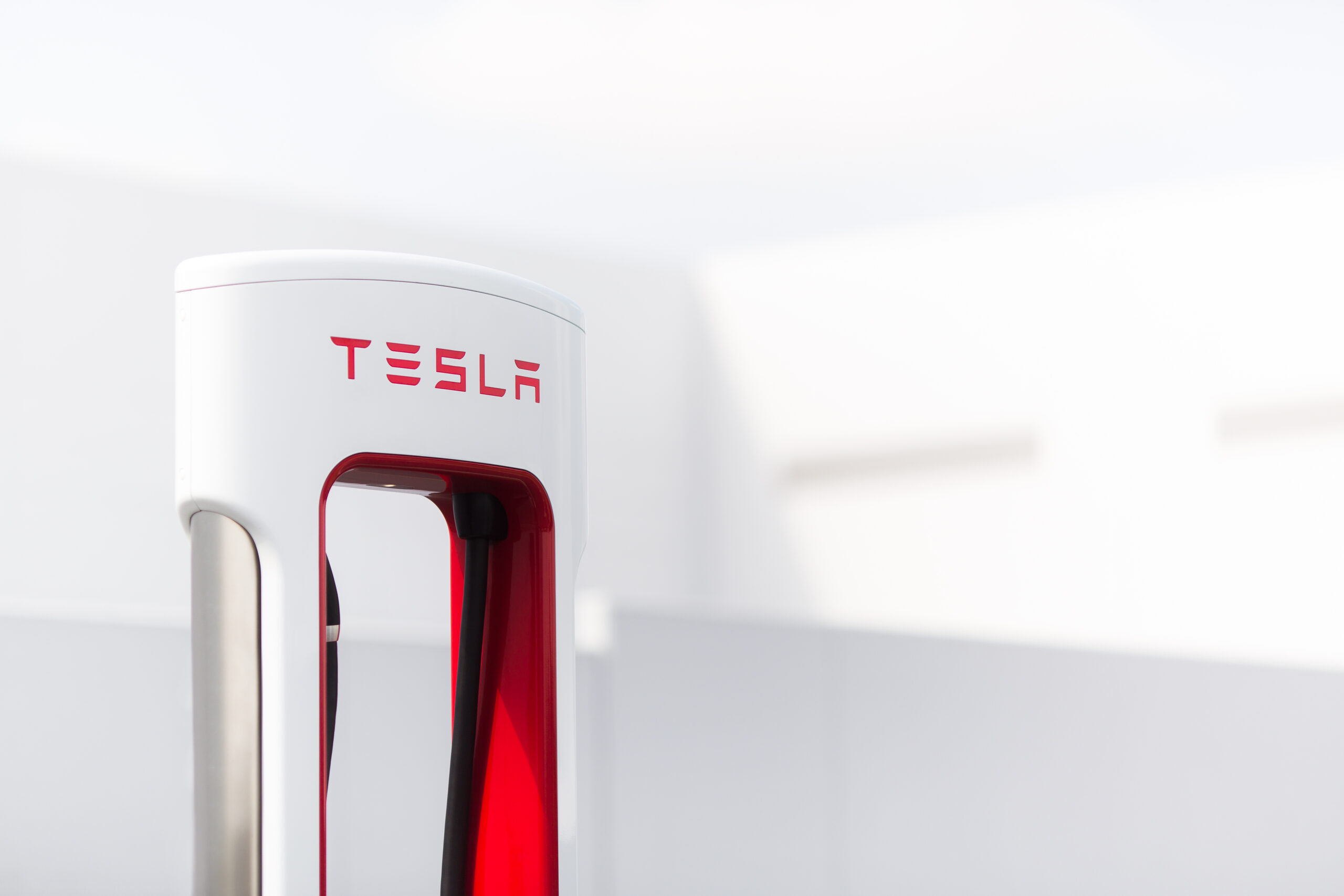
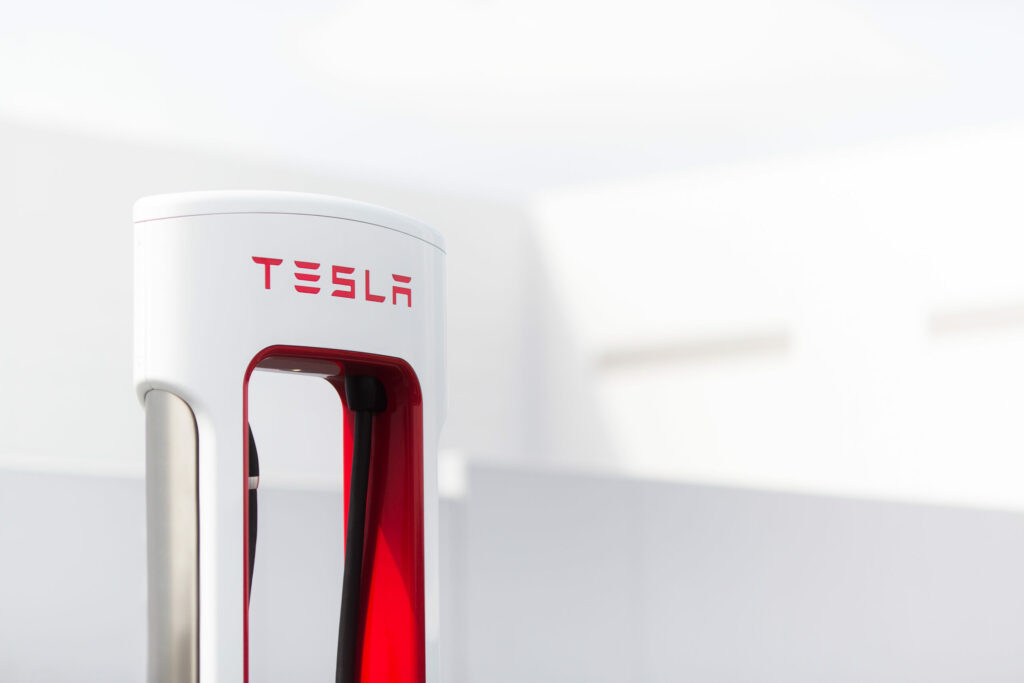
    Close-up of a Tesla Supercharger station in operation
    Zoom in on a Tesla Supercharger, the symbol of fast, intuitive charging. (Credit: Tesla)

    The mission of Tesla Superchargers

    Eliminate the fear of running out of battery power, reduce the recharging time for electric cars (EVs), and thus enable motorists to travel long distances without constraint. Launched in 2012, initially in the United States, the Supercharger network has expanded at breakneck speed to keep pace with the growing popularity of electromobility. These ultra-fast recharging stations can recover hundreds of kilometres of range in just a few minutes – a major advance that has made a significant contribution to the democratisation of the electric vehicle.

    Constantly improving recharging technology

    Superchargers have come a long way since their launch. While the first versions were already capable of quickly recharging an electric car, with a power of up to 150 kilowatts, Tesla has taken things a step further in 2019 with the V3 Superchargers.

    This third generation offers much higher performance: a maximum power of 250 kW per vehicle, with no sharing between the charging points, enabling much more efficient recharging, even when several cars are connected simultaneously. In concrete terms, a vehicle can recover up to 120 kilometres of range in just 5 minutes, and reach 80% of its battery in less than 25 minutes, depending on the weather conditions and the model.

    Since 2021, this charging solution is no longer exclusive to Tesla: electric vehicles of any brand can benefit from it, via the Tesla app.

    More recently, Tesla began installing an even faster version, called V4, capable of delivering up to 500 kW. This new generation of charging points will be available from the third quarter of 2025, and will be used to recharge powerful vehicles (Cybertruck, as well as certain Hyundai, Porsche and Kia models, etc.). The new charging points are also designed to accommodate the technologies of tomorrow, such as two-way charging (V2G – Vehicle-to-Grid), which will enable vehicles to return electricity to the grid when needed. However, current vehicles, whether Tesla or not, are limited to a charging capacity of 250 kW and will not yet be able to take advantage of this maximum power.

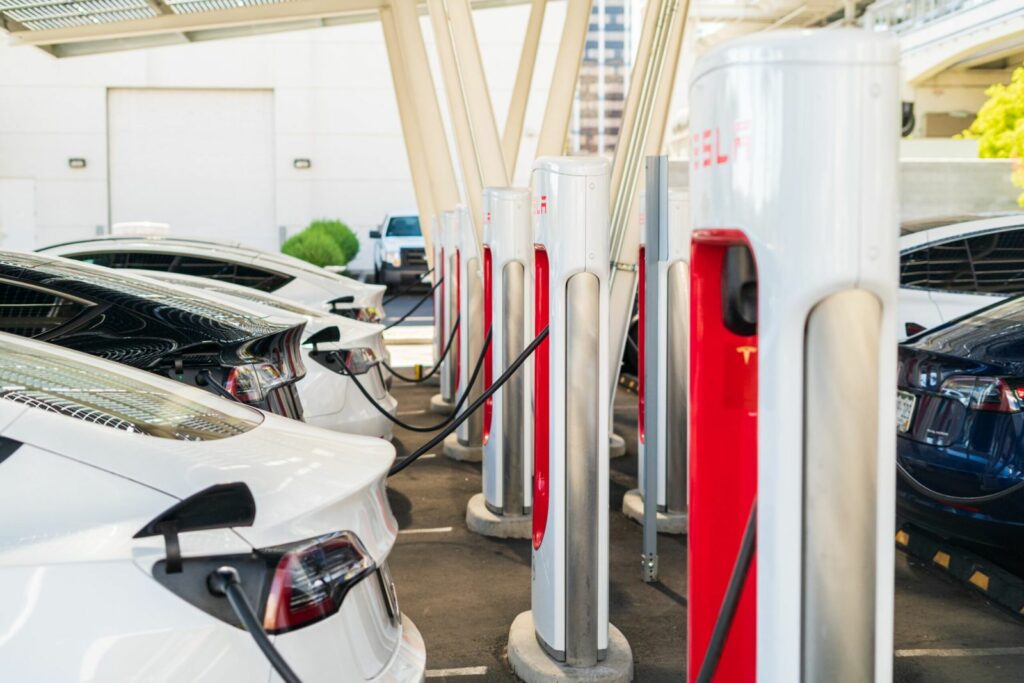
    Tesla Supercharger stations installed in an urban car park
    Several Tesla charging points installed in a car park accessible to the public. (Credit: Tesla)

    Massive international deployment

    Since their launch, the deployment of these charging solutions has been impressive: by the end of the first quarter of 2025, Tesla had more than 60,000 Superchargers at over 6,000 stations worldwide. This network covers North America, Europe, Asia and certain strategic areas in Africa, the Middle East and Oceania.

    This dense network represents one of the largest ultra-fast charging networks in the world, and above all one of the most reliable, with an availability rate of over 99%.

    France is not to be outdone

    France, a pioneer of electromobility in Europe, is no exception to the trend. France benefits from a particularly well-developed Tesla network. In May 2025, the network of Tesla Superchargers in France exceeded 3,000 fast-charging stations, spread across some 180 locations across the country.

    With a high concentration along major motorway routes (A6, A10, A7, A1, etc.), but also in shopping centres and suburban areas, these stations are strategically located, making it easier for motorists to access recharging facilities.

    Simplified use

    What sets Tesla Superchargers apart, beyond their performance, is their ease of use, designed from the outset to be fluid, intuitive and almost invisible. For Tesla owners, all they have to do is park, plug the cable into their vehicle… and that’s it. No badge, no bank card, no application to manipulate: the vehicle is identified automatically and billing is linked directly to the user account.

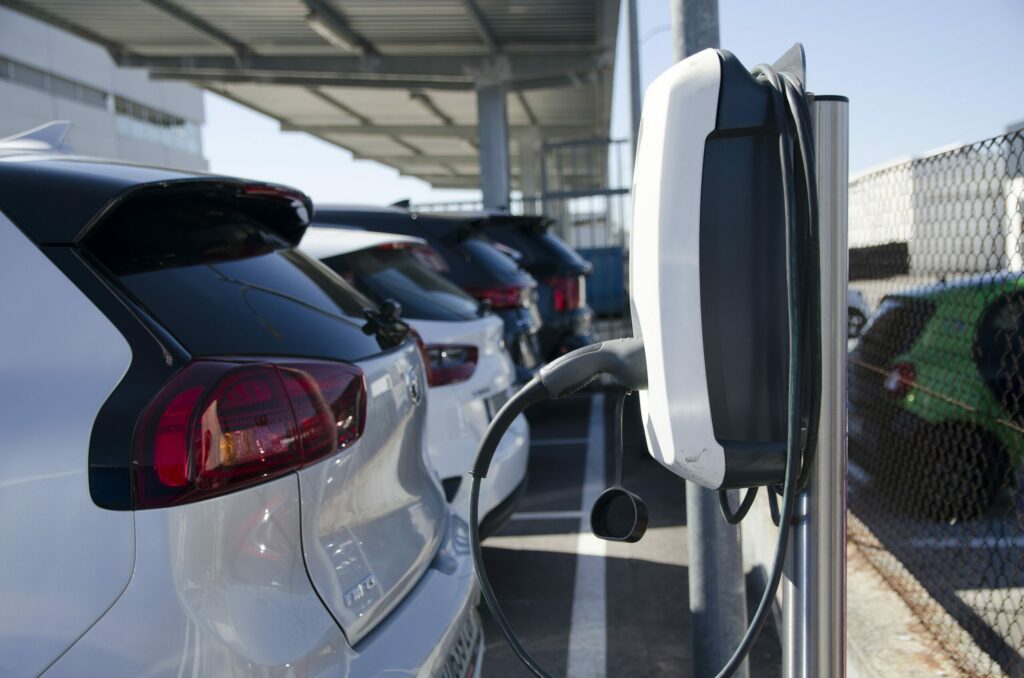
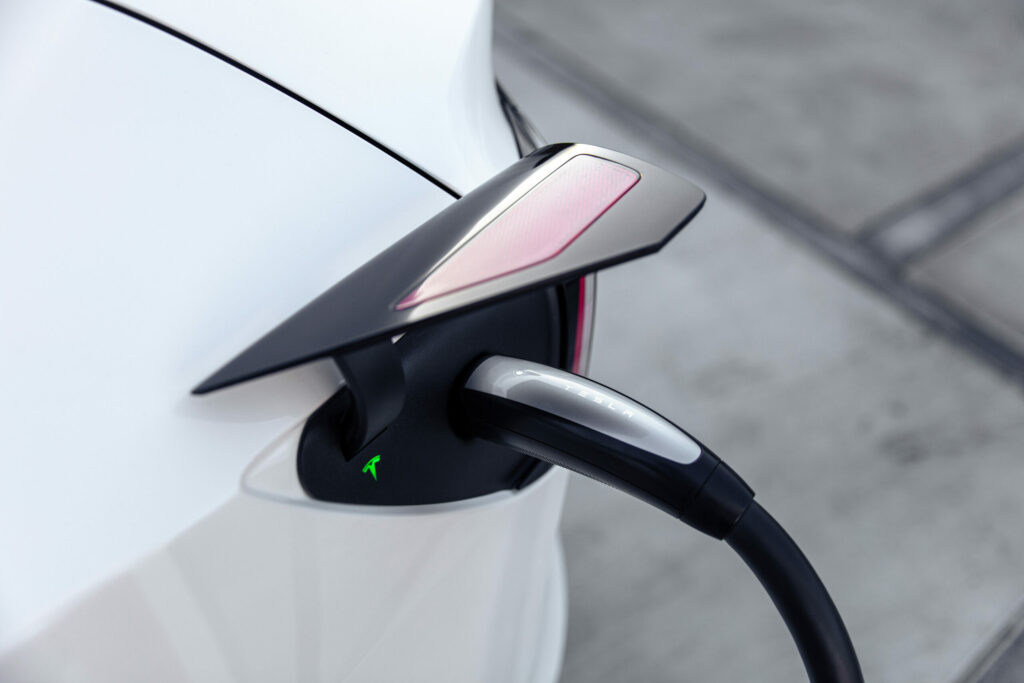
    Tesla Supercharger cable connected to a recharging electric car
    Close-up of the Tesla charging cable connected to an electric car (Credit: Tesla)

    Even for drivers of electric vehicles of other makes, the experience remains seamless via the Tesla app, which enables users to locate a charging point, check its availability in real time and launch a charging session in just a few clicks. Payment is made simply by credit card registered in the app, with rates adjusted according to whether the user recharges on a one-off basis or opts for a monthly subscription. It’s a seamless process that makes recharging a pleasant experience, without the smells or the noise.

    Towards an electric future

    Tesla Superchargers embody more than just a recharging network: they illustrate an ecosystem that has been thought through in its entirety, where every detail is at the service of a fluid, rapid and accessible energy transition. Through this global deployment and ease of use, Tesla is redefining what electric mobility should be: not an alternative, but a matter of course.

  • Focus on… California

    Focus on… California

    As the birthplace of the Zero-Emission Vehicle, California has turned electromobility into a genuine state policy, contributing to almost a third of electric vehicle sales in the United States, despite having only 10% of the population. But this full-scale laboratory for electric mobility still faces a number of challenges…

    Credit: Tim Mossholder

    California, a pioneer in electromobility, has never stopped making electric cars (EVs) one of its priorities. And that goes back a long way! As early as 1990, the Golden State enacted the “Zero-Emission Vehicle” mandate, imposing clean vehicle quotas on manufacturers wishing to sell in the state, which have been steadily increasing ever since. California has been imposing strict rules on manufacturers for 35 years. Most recently, the Advanced Clean Cars II programme definitively introduced a ban on sales of new, non-electrified cars from 2035. This injunction has been adopted by some fifteen other American states, proving that California is indeed the driving force behind electromobility across the Atlantic.

    A host of benefits and opportunities

    California is giving itself the means to achieve its electromobility targets. Until 2023, the Clean Vehicle Rebate Project enabled the most modest households to reduce their bill by $7,500 for the purchase of electric vehicles. Although this scheme is no longer in effect, it has made a significant contribution to the electrification of the state over the dozen years it has been in existence. Since 2019, the Clean Cars 4 All programme has offered up to $9,500 to help low-income households get rid of their old, polluting vehicles. Added to this is a federal tax credit of up to $7,500. Finally, there’s a detail that’s particularly important when you consider the infernal traffic of Los Angeles: electric car owners can use the dedicated car-sharing lanes free of charge. As a result, by 2024, more than one in four car registrations in California was electric, well above the national average (8%).

    In response to growing demand, and taking advantage of a favourable administrative environment, a whole eco-mobile ecosystem is flourishing. Tesla, of course, is still at the top, but more and more competitors are emerging. Large, well-established groups such as Ford, General Motors and Toyota are taking more and more market share, and new 100% electric carmakers are looking to take their share of the cake. This is the case of Rivian, which, even though it is based in Michigan, the cradle of the automobile in the USA, chose Los Angeles in 2018 to present its first models.

    And carmakers aren’t the only ones thriving under the sun of the El Dorado State. Tech giants Apple and Alphabet, among others, as well as a whole host of start-ups dedicated to batteries, recharging and operating systems, have taken up residence between San Diego and Los Angeles, creating more than 70,000 jobs in the process since 2020.

    Credit: Anastasiya Badun

    The white gold rush

    California is undoubtedly the epicentre of electromobility in the United States and, despite the boom in Europe and, above all, China, it continues to set the standard in the field, particularly when it comes to innovation. But not everything is perfect in La La Land. California’s recharging infrastructure is spread mainly along the coast, leaving the interior dry. And despite the abundance of structures in the major coastal urban areas, this is not enough to avoid long queues in front of the charging points because of the overloaded traffic.

    Finally, and this is certainly the thorniest issue, California, like the rest of the country, is dependent on lithium imports for battery manufacture. And with the trade war looming, it’s a safe bet that the USA will have to rely on local mining. California is home to the Salton Sea, a recently discovered deposit whose subsoil could be used to manufacture 375 million electric cars! At the beginning of the year, the courts gave the go-ahead for the site to be mined, and after the gold rush, California is now preparing to become the scene of the rush for lithium, the white gold of the electric transition…

    Finally, and this is perhaps the biggest sword of Damocles hanging over the head of Californian electromobility: a possible political U-turn hostile to environmental standards, aligned with the ‘petrolophile’ ideas of President Donald Trump, could put the brakes on the momentum underway. Indeed, the occupant of the White House is already threatening to abolish tax credits and funding for the development of recharging infrastructure. His instability and recurrent changes of direction are cause for concern, but the machine is already well under way and it’s hard to see how California could turn back the clock after 35 years of developing electromobility…

    Main Californian laws and measures on zero-emission vehicles :

    1990 – ZEV Mandate
    Progressive imposition of zero-emission vehicle sales quotas for all manufacturers operating in California.

    2002 – Pavley Law
    First time a state has regulated CO2 emissions from passenger cars. Will serve as the basis for Corporate Average Fuel Economy (CAFE) standards nationwide.

    2021 – California Clean Fleet Program
    Grants and loans with the goal of rapidly electrifying public truck and bus fleets.

    2022 – Advanced Clean Cars II
    From 2035, 100% of new vehicle sales must be electric cars or plug-in hybrids with at least 50 km of electric range.

    ● 2024 – Climate Accountability Package

    Obligation for large companies to declare their CO2 emissions, including those linked to car fleets.