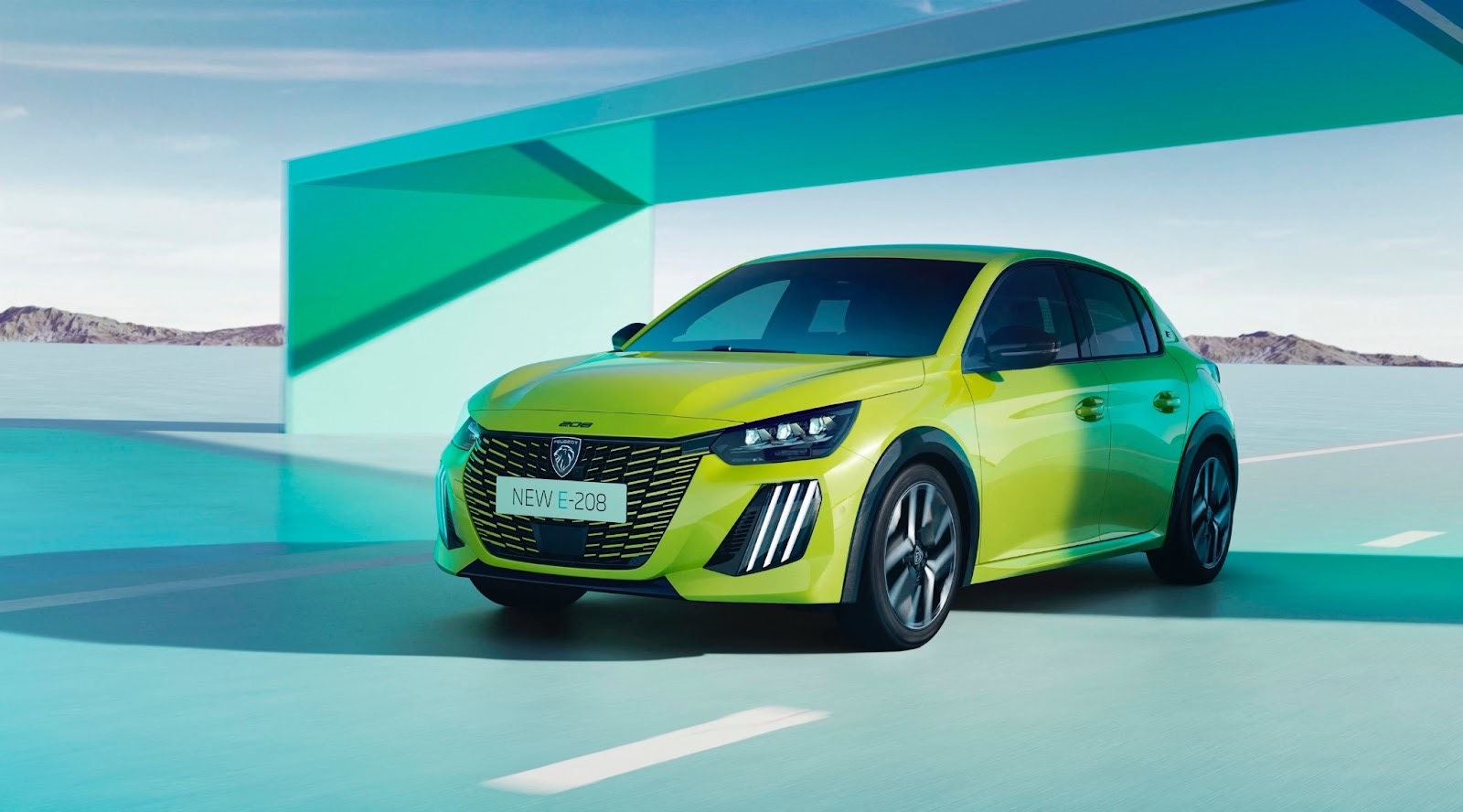
Category: Expertise

  • Climate Plan 2030: the European Union wants to transform energy, industry and behaviour

    Climate Plan 2030: the European Union wants to transform energy, industry and behaviour

    By 2030, the European Union is undertaking an unprecedented transformation of its energy and industrial model. New targets, massive acceleration of renewables, drastic consumption reductions, climate diplomacy… The 2030 plan outlines an ambitious but demanding path to make Europe the first carbon-neutral continent.

    2030 with a green planet symbolising the ecological transition
    Symbol of the ecological transition and sustainable development by 2030.

    Targets raised

    Since 2023, the EU has adopted a series of legislative revisions to “reduce net greenhouse gas emissions by at least 55% by 2030.” This target, included in the Green Deal, sets a clear direction: accelerate the transition across all sectors, from energy to transport and industry. This ambition relies on a strengthened governance system, designed to “ensure planning, monitoring, and reporting” of progress toward European targets and those of the Paris Agreement (2015). Oversight thus becomes more transparent and demanding for member states.

    Energy efficiency is at the heart of the plan. According to the directive, effective from 2023, the goal is a reduction of 11.7% in final energy consumption compared to 2020 projections. This target represents 763 Mtoe (million tonnes of oil equivalent) in final energy and 992.5 Mtoe in primary energy. The EU also stresses that “the benefits of energy savings must outweigh the costs” associated with necessary renovations and adjustments, underlining the social and economic importance of the transition.

    To achieve this -11.7%, several levers become mandatory. First, an annual reduction of 1.9% in overall public sector consumption, accompanied by a requirement to renovate 3% of public buildings each year. Second, member states must reach an average energy savings rate of 1.49% per year between 2024 and 2030, nearly double the previous period (0.8%). This unprecedented pace will affect key sectors: building, industry, and mobility.

    The EU now sets “at least 42.5%” renewable energy in the energy mix by 2030, with an ambition to reach 45%. To measure acceleration, Europe recalls that the share of renewables was only 23% in 2022, and the previous 2030 target was set at 32% in 2018. This represents a doubling of the effort in less than a decade.

    European Commission in Brussels
    Headquarters of the European Commission in Brussels, responsible for proposing and implementing EU policies and laws. (Credit: Christian Creutz)

    A critical international citizen mobilization

    Contrary to common belief, the shift toward renewables enjoys strong support. The Commission cites a 2025 Eurobarometer survey showing that “88% of citizens support the increased development of renewable energy.” This social support is a key factor for the success of European policies, especially in sensitive sectors: renovation, mobility, and renewable infrastructure.

    A major innovation of the 2030 plan is the explicit integration of human behavior. The 2025 launch of the Energy Behaviour Forum illustrates this shift. The goal: understand and transform daily energy use. From October 2025 to February 2026, a European program will enable local authorities to “design projects that induce behavioral change and save energy.”

    This aspect, often absent from energy policies, becomes central: a sustainable transition no longer relies solely on technology, but also on the adoption of new practices. The EU thus focuses on systemic change, combining technical innovations and social transformations.

    The European Union extends its strategy beyond its borders. At COP28, it launched, with over 130 global leaders, a Global Pledge on Renewables and Energy Efficiency aimed at tripling global renewable capacity and doubling energy efficiency rates by 2030. Without this international mobilization, “the 1.5°C trajectory will be compromised,” and current policies lead to a 3°C warming according to the Global Energy and Climate Outlook 2022.

    Modern motorway seen from above
    European motorway illustrating the challenges of mobility and reducing CO₂ emissions in transport.

    Towards a circular economy and a just transition

    Beyond energy, the 2030 plan fits into a broader vision: reduce pressure on resources, enhance circularity, and combat biodiversity loss. The Commission notes that “material consumption is expected to double within 40 years” and that this exploitation accounts for “over 90% of biodiversity loss and water stress.” This systemic approach shows that the European transition no longer concerns only energy but the entire economic model.

    The 2030 plan marks a historic turning point: Europe sets clear, binding targets supported by an assertive diplomacy. But the path will be demanding: renovate, electrify, produce cleaner, consume less, and support citizens through these changes. The key takeaway is that the transition can no longer be technocratic: it must be collective. Success requires combining investments, technologies, new habits, and strengthened governance. A titanic challenge, but above all, an opportunity to sustainably rethink our relationship with energy and resources.

  • What are Europe’s most popular Chinese New Energy Vehicles?

    What are Europe’s most popular Chinese New Energy Vehicles?

    China has a name for its fast-growing and competitive cars. The NEVs, or New Energy Vehicles, are what the Chinese government considers a key element in their race to dominate the global auto industry. They include not only the pure electric cars (BEV) but also the plug-in hybrid cars (PHEV), extended range (EREV), and hybrids (HEV).

    MG4 electric car in Europe 2025, front view, showcasing sleek design
    The MG4, one of Europe’s top-selling Chinese New Energy Vehicles in H1 2025.

    Their combined sales represented 53% of the new passenger car sales in China in H1 2025. The consumers in China bought 3.29 million BEVs, 1.49 million PHEVs, 537,000 EREVs, and 474,000 HEVs. How many of these models are available in Europe and how popular are they?

    BEVs

    Despite the tariffs imposed by the European Commission, the Chinese BEVs are still popular in Europe. The ranking for H1 2025 was led by the MG4 with 14,494 units, down by 56% vs H1 2024. It is one of the big casualties of the tariffs and the rise of BYD products. In fact, the second most popular Chinese BEV in Europe was the BYD Seal, up by 130% to 9,433 units. It was followed by another BYD – the Sealion 7, with 7,797 units. The top 10 was completed by the BYD Dolphin (7,701 units), BYD Atto 3 (7,033), Leapmotor T03 (5,918), Xpeng G6 (5,616), MG ZS (4,109), BYD Seal U (3,775), and MG5 (2,938 units).

    PHEVs

    While the Chinese BEV demand increased by 31% in H1 2025, the volumes for the Chinese PHEVs increased by 544% compared to H1 2024. This powertrain is becoming their way to offset the tariffs imposed on their BEVs. The ranking was led by the BYD Seal U with 29,223 units and Europe’s third top-selling PHEV, only behind the Volkswagen Tiguan and Volvo XC60. It was followed by the MG HS with 11,677 units, and the Jaecoo J7 with 9,938 units. The following positions were occupied by the Lynk & Co 01 (4,270 units), Omoda 9 (1,164), DFSK E5 (1,162), GWM Wey 05 (548), Ebro S700 (407), Ebro S800 (229), and GWM Wey 03 (199).

    HEVs and EREVs

    The offer of hybrid and extended-range Chinese cars is still very limited. However, they are also making progress here. The MG ZS on its full hybrid version registered 38,445 units between January and June, becoming the region’s 6th top-selling HEV. The MG3 followed with 21,998 units, and Europe’s third best-selling hybrid B-hatchback behind the Toyota Yaris and Renault Clio. The top 5 was completed by the MG HS (216 units), Haval Jolion (96), and the Dongfeng T5 (83 units). The Leapmotor C10 was the only EREV available in Europe with 1,059 units.

  • The “5C Battery”: what does this term really mean?

    The “5C Battery”: what does this term really mean?

    The “5C battery” is a type of battery that can be charged or discharged very quickly. This number indicates the maximum speed at which it can operate without being damaged. Understanding this term helps you to use it correctly and choose the right battery for your needs.

    XPENG 5C lithium battery for rapid charging and discharging
    A 5C battery is capable of charging and discharging very quickly, making it ideal for intensive use. (Credit: XPENG)

    What is the “5C”?

    The “C” of a battery is a simple way of measuring its rate of charge or discharge in relation to its total capacity. If a battery is rated 1C, this means that it can be completely discharged in one hour with a current equivalent to its rated capacity. A battery rated 5C can be discharged or refilled in just 12 minutes, because it accepts five times as much current.

    This provides a lot of energy very quickly, but increases the heat generated and wear and tear on the battery if it is used too often at this speed. Not all batteries are designed to withstand a 5C rate, so it’s essential to be familiar with its characteristics before using it. The C-rate, and in particular the 5C, not only reflects the speed, it also influences the available power, safety and lifespan of the battery, which is crucial for intensive or critical applications.

    What’s it for?

    A 5C battery is useful in situations where a lot of power is needed quickly. Powerful electric tools, such as professional drills or saws, often need a lot of energy in a short space of time, which justifies the use of 5C-capable batteries. Electric vehicles and some emergency systems also use these batteries to provide immediate power when needed. This prevents loss of performance or interruptions in the operation of the appliance or vehicle.

    However, it is important to bear in mind that frequent use of a battery at full speed can reduce its life and increase the risk of overheating, especially if thermal management is inadequate. 5C batteries therefore offer a balance between performance and instantaneous power, but only if they are used correctly and within the limits laid down by the manufacturer.

    Xpeng G6 electric car side view
    The Xpeng G6, a high-performance electric vehicle combining range and power thanks to its advanced batteries. (Credit: XPENG)

    Precautions to be taken

    Even if a battery is designed for a 5C rate, it should not be used at this rate all the time. Excessive use at full speed can generate a lot of heat and accelerate the degradation of internal materials, reducing its life. It is advisable to follow the manufacturer’s instructions, check for the presence of a battery management system, known as a BMS, which limits excessive charging and discharging, and ensure that the temperature remains within safe limits.

    The BMS helps to protect the battery and optimise its life by monitoring current and temperature, which is essential when using a battery with a high C-rate. Users should also understand that even a 5C battery has limits and that daily use should not always push its maximum capacity to the limit.

    Advantages and disadvantages

    The main advantage of a 5C battery is its ability to supply or receive a lot of energy in a very short time, which is crucial for professional, sports or emergency applications. It also provides greater responsiveness and can prevent downtime or loss of performance. On the other hand, the disadvantages are related to the heat generated, faster wear and tear if used incorrectly, and the need for effective protection systems. So you always need to balance power requirements with the desired life of the battery. For domestic or undemanding use, a lower rate may be preferable to preserve the battery.

    To sum up, a 5C battery is one that can charge or discharge very quickly, making it ideal for intensive use or applications where immediate power is essential. It offers a major performance advantage, but requires certain precautions to be taken to avoid overheating and premature wear. Understanding the C-rate, and 5C in particular, means you can choose the right battery, anticipate its limits and use the power available in complete safety. A 5C battery is fast and powerful, but it must be used intelligently to ensure it lasts a long time and remains safe.

  • The multiverse of the Chinese car brands

    The multiverse of the Chinese car brands

    The auto industry as we know it is a relatively young one. With around 120 years old, it has remained the same over the last 50 years with the American, European, and later the Japanese and Korean makers expanding it globally.

    Positioning Pyramid of Chinese Car Brands
    This pyramid shows the 109 Chinese car brands ranked by market positioning, from low-cost and old-tech brands to luxury and high-tech brands experiencing rapid growth. (Credit: Felipe Munoz)

    However, during the last 5 years, this status quo has been dramatically changed. The rise of China to become the world’s second-largest economy is also having a big impact in the automotive industry. For 30 years, they worked together with the Western firms and learnt from them. Today, many of them have matched their foreign partners. The student beat the teacher.

    Chinese car brands booming

    As of October 2025, there are more than 100 passenger car brands from China. That’s more than the total combined brands from Europe (57), USA (14), Japan (14), Korea (4). With more than 24 million units sold last year, China is a huge market where many brands can play. But they are not all the same.

    The old-tech or low-cost brands are those whose vehicles feature old platforms, usually from old models from Western brands. They target the entry-level segments with very low prices, mainly for tier 3 cities and the countryside. They include brands for China only like Hengrun, Pocco, Vi Auto, and some others available outside China like SWM, ZX Auto, JMC, and BAW.

    The mainstream brands that I split in three groups: entry, mainstream, and super. This is where most of the brands are positioned considering the average income of the consumers in China. They start with brands like JAC (276 units registered in Europe in Jan-Aug/25), Forthing (2,360 units), and many others. Then there are the mainstream ones like BAIC (3,379 units), Chery (410 units), Jaecoo (26,600 units), MG (196,324 units, or 2.3% market share), or Geely (1,388 units). The upper-mainstream brands include some like Jetour, Omoda (27,726 units), Lynk & Co (6,216 units), and BYD, which has registered 95,346 units in Europe in Jan-Aug 2025, or 1.1% market share.

    Then there are the semi-premium brands like Voyah (378 units), Zeekr (2,569 units), and Xpeng (10,913 units). The premium ones include Denza, Stelato, MHero, and Yuanhang.

    They are out-positioned by the High-tech brands or the fast-growing EV start-ups: Xiaomi, Luxeed, Nio, Avatr, Aito, Li Auto. From them, only Nio is available in Europe, where it has registered 593 units since January.

    And finally, there are the luxury brands, which at the moment are composed of only three brands: the Golden Sunflower subbrand from Hongqi, BYD’s Yang Wang, and JAC’s Maextro. Plenty of choices for a massive market and an aggressive global expansion plan.

  • Electric vs gas car: the real cost over 1 week, 1 month, 1 year… and 10 years

    Electric vs gas car: the real cost over 1 week, 1 month, 1 year… and 10 years

    Buying an electric car is a significant cost for the wallet, often between €35,000 and €40,000 for an average model. But in the long term, what are the real savings? Between fuel, maintenance and public subsidies, how much will you really save by opting for an electric car rather than a combustion engine?

    Duel between petrol pump and electric car charging point
    The confrontation between the petrol pump and the electric terminal: which wins out in terms of savings and comfort?

    The choice between an electric car and a petrol or diesel car is not always a question of ecology. For many drivers, it’s more a question of money. An electric car generally costs between €35,000 and €40,000 to buy, compared with €15,000 to €30,000 for a combustion engine car. The difference is significant. But in the long term, electric cars can be cheaper thanks to savings on fuel, maintenance and the financial aid available.

    To better understand, let’s imagine a concrete example: a person drives 300 km a week.

    • With a petrol car, it consumes around 7 litres of petrol per 100 km.
    • With an electric car, it uses 17 kWh per 100 km.

    It should be noted that this data can change depending on a number of factors: the weight of the vehicle chosen, speed, driving style, ambient temperature and road typography.

    Petrol costs around €1.70 per litre, and electricity €0.20 per kWh.

    Over a week: the first signs of savings

    In the short term, the differences may seem insignificant. Over a week, a combustion-powered car costs approximately €36 in fuel to cover 300 km, compared with just €10 for an electric car. Even if the difference seems small over a week, it already shows a clear advantage for the electric car: it costs much less to fill up, and you don’t have to recharge as often as a combustion car.

    Beyond the cost, the electric car also brings real comfort to everyday life. It offers the peace of mind that many motorists are looking for. No need to keep track of fluctuating petrol prices or make detours to the service station. Recharging can be done in the comfort of your own home, at night or while you’re at work. It saves you time and the stress of repeated fill-ups. What’s more, driving is often quieter and smoother, making journeys more pleasant and less tiring.

    Woman charging her electric car at home
    Charging your electric car at home: practical, economical and stress-free (Credit: Ross Helen)

    Over one month: a confirmed advantage

    If you multiply these figures by four weeks, the energy bill rises to 144 euros for a combustion engine, compared with just 40 euros for an electric car. The monthly saving is therefore around 104 euros.

    This amount, which may seem modest over a short period, takes on a whole new dimension when projected over a whole year. Over twelve months, the savings become significant: they can offset some of the expenses associated with vehicle maintenance, insurance or even certain unforeseen costs. For long-distance drivers, this financial advantage is even greater, because the further you drive, the wider the gap between electric and petrol vehicles.

    Another point not to be overlooked is recharging. Electric car owners often benefit from preferential rates, whether for charging at home – particularly at night, when electricity prices fall – or at certain public charging points. Depending on the region, the energy supplier or promotional offers, these costs can fall even further. The result is that, over time, the difference in budget between you and a combustion-powered vehicle becomes more and more marked.

    Over one year: concrete results

    Over a full year, the figures become significant: €1,728 for a combustion car, compared with €480 for an electric car, giving an annual saving of around €1,248.

    This difference is not limited to fuel. Electric vehicles generally cost less to maintain: there are no regular oil changes, fewer mechanical parts to break down, and a mechanically simpler engine. Some studies estimate that the annual maintenance costs for an electric car can be 30-50% lower than for a combustion engine. Over ten years, this represents several thousand euros in additional savings.

    In practice, over the years, the total cost of an electric car can become equal to or even lower than that of a combustion-powered car. The savings come from fuel, maintenance and sometimes financial assistance. For those who drive a lot every year, these savings can quickly become significant.

    Over 10 years: the advantage becomes obvious

    If we project these calculations over 10 years, the cost of fuel alone rises to 17,280 euros for combustion engines, compared with just 4,800 euros for electric cars. Total savings therefore exceed €12,400, which more than makes up for the higher initial investment.

    But the long-term benefits go beyond fuel economy. Reduced maintenance, ecological bonuses and easier resale in a market that is moving towards electric cars reinforce these benefits. Conversely, combustion-powered cars can lose value more quickly, especially in areas with increasing restrictions on polluting vehicles.

    With rising fuel prices, electric cars are becoming even more attractive in the long term. Over ten years, every kilometre driven represents a real saving, on top of the gains already made thanks to reduced maintenance and possible grants.

    Plugging in a cable to charge an electric car
    Plugging in your electric car at home takes just a few minutes. It can save you up to €1,248 on fuel costs in a year compared with a combustion car. (Credit: Drazen Zigic).

    Beyond the figures: factors to consider

    If we consider fuel and maintenance alone, the advantage of electric cars is already clear. But other factors reinforce this logic:

    • Changes in urban regulations: many towns and cities are gradually banning the most polluting internal combustion vehicles. This can not only reduce their resale value, but also limit their access to certain areas.
    • Insurance costs: some insurers offer preferential rates for electric vehicles. This is due to a generally more cautious driving profile and the presence of advanced safety technologies. It reduces the risk for the insurer.
    • Environmental impact: although this is an indirect argument, it remains very important for many motorists. What’s more, choosing an electric car often allows you to benefit from tax incentives, environmental bonuses or other financial aid, making it even more attractive from an economic point of view.

    In the short term, the savings associated with electric cars may seem modest. But they quickly become tangible over a year and truly significant over ten years. The higher initial cost is more than offset by the savings on fuel and maintenance, while providing real environmental benefits. For regular drivers or those who cover long distances, going electric is therefore becoming an increasingly logical choice, both financially and environmentally.

  • A Chinese car was Europe’s second best-selling plug-in hybrid in August

    A Chinese car was Europe’s second best-selling plug-in hybrid in August

    Shocking news for the European new car market. Last month, a Chinese car occupied the second position in the plug-in hybrid (PHEV) new registrations ranking, confirming the rapid growth that some of these companies, like BYD, are having across the region.

    Side profile of the BYD Seal U plug-in hybrid SUV
    The BYD Seal U, now Europe’s second best-selling PHEV in August. (Credit: BYD)

    The data revealed by JATO Dynamics indicates that the BYD Seal U with its plug-in hybrid powertrain registered 3,918 units during the month in 28 European markets. This total puts this Chinese SUV in the second position in the PHEV ranking, only behind the German-made Volkswagen Tiguan with 4,485 units.

    What is even more interesting is that year-to-date volumes also put the Tiguan and Seal U in first and second positions, but with a higher growth rate for the latter. By the end of August, the Volkswagen was ahead of the BYD by almost 3,200 units, meaning that we could see the latter outselling the former by the year-end.

    Not only BYD

    The incredible progress made by Chinese manufacturers in Europe does not stop at BYD. August’s top 10 included two other models coming from this country. At the 7th position there is the Jaecoo J7 from Chery Group, and at the 9th position there is the MG HS from SAIC Group.

    These are remarkable results posted by these three Chinese makers. They confirm their latest move to face the tariffs on their electric cars by increasing their presence in other alternative fuel segments like the PHEVs and HEVs (full hybrids). In fact, most of the growth posted by the Chinese car brands this year has been driven by these two powertrains and not so much by the BEVs.

    Between January and August of this year, the BEVs represented 30% of the Chinese car brands’ sales against 38% from PHEV and HEV combined.

    The other models from the PHEVs top 10 in August

    Behind the Tiguan and Seal U, there was the Volvo XC60 with 3,378 units. It was followed by the Ford Kuga with 3,023 units, and the Toyota RAV4 with 2,856 units. The sixth position was occupied by the BMW X1 which registered 2,724 units. Its bigger brother, the BMW X3, registered 2,387 units at 8th position, while the Hyundai Tucson completed the top 10 with 2,221 units.

    Among them, the BYD Seal U was the most dependent on this powertrain, with its PHEV version accounting for 86% of its total registrations during the month. It was followed by Volvo XC60 (75%), and the Jaecoo J7 (72%).

  • Can mobility really be green?

    Can mobility really be green?

    Spoiler: no. For example, a car, even an electric one, is by definition an object that has to be manufactured and then supplied with energy, so cars and transport in general will never be 100% eco-friendly. But solutions do exist to reduce the environmental impact of cars as much as possible.

    While the electric motor is a prerequisite for the ‘green’ car, there are other solutions at the design stage, as well as in use, that would enable the car to reduce its impact on the planet even further. ECO MOTORS NEWS spoke to Aurélien Bigo, an independent researcher, member of the Energy and Prosperity Chair and former ADEME employee, whose thesis dealt with the subject of transport and the challenge of the energy transition. The right person to enlighten us on the subject.

    Greening the car from the design stage

    Even before it leaves the factory, a car has already polluted enormously. This is especially true of electric cars. Although they pollute much less than internal combustion engines during their life cycle, their manufacture has a much greater negative impact, so they have to make up for their carbon debt over the kilometres (around 30,000 kilometres). But there are some good habits to adopt at the design stage that could help reduce this gap.

    Electric Porsche Macan being assembled at the Leipzig plant
    Production of the electric Macan at the Porsche plant in Leipzig, illustrating the growing popularity of electromobility.
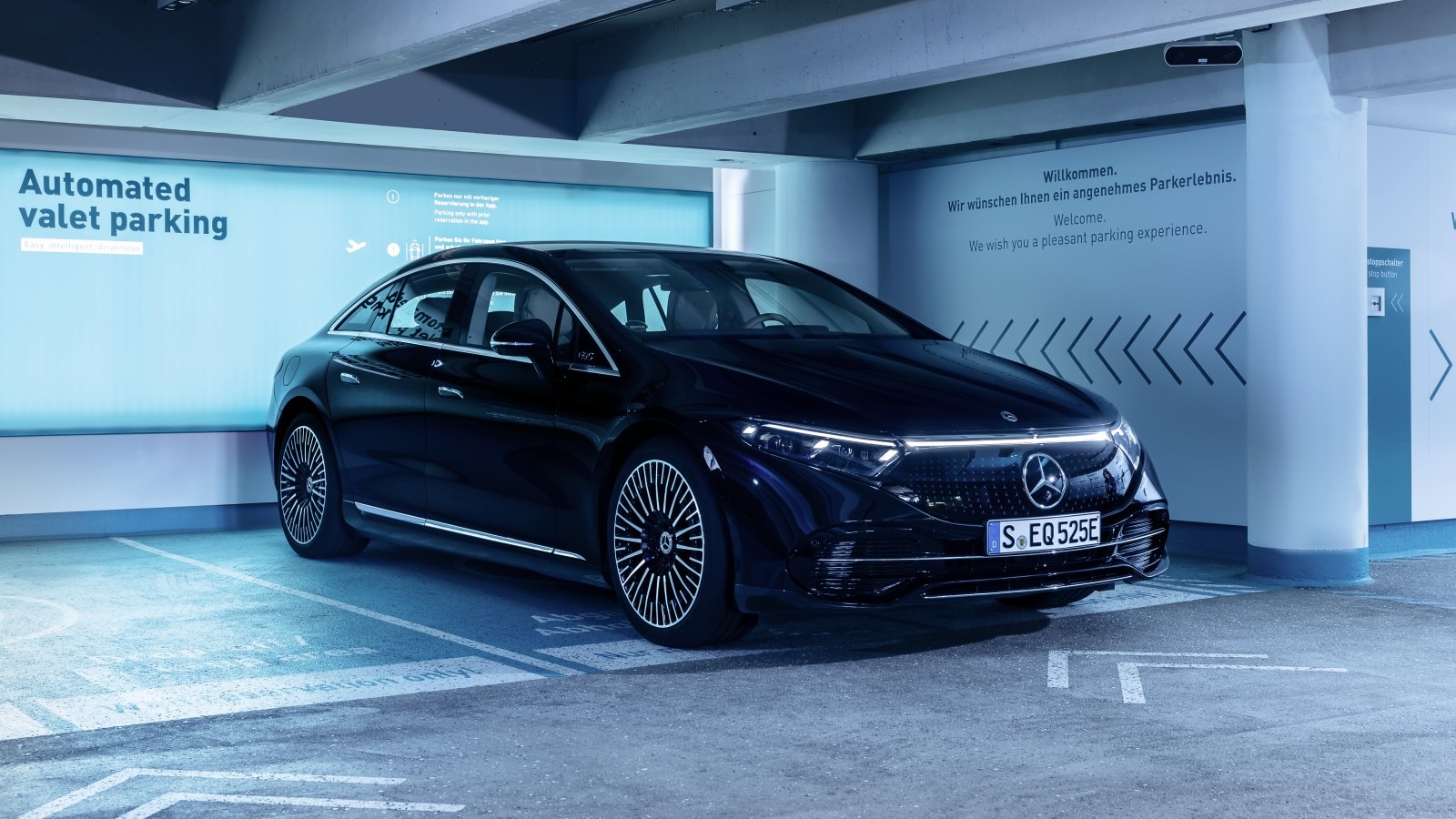
    First, there’s the question of weight. According to Aurélien Bigo, “the lighter a vehicle is, the fewer emissions it generates, and the smaller its battery can be, which limits its impact“. The researcher therefore recommends that “batteries should be sized according to the range required for everyday journeys rather than very long distances” in order to reduce their size and the use of resources needed to manufacture them. In the same vein, it will be necessary to optimise batteries in order to reduce the quantity of materials required per kWh.

    Aurélien Bigo also points out that it is essential to extend the lifespan of vehicles, in particular through repairs, but also “by maintaining use despite the gradual decline in battery capacity“. Making a car last is essential because, in France, electricity is already low in carbon, so, as the researcher explains, “the main impact of a car comes from its manufacture, and it must be amortised over as long a period as possible“.

    While the manufacture of an electric car is the first thing we think of when we talk about its environmental impact, we also need to consider the question of recharging. At the design stage, it may be worthwhile to democratise the integration of vehicle-to-grid (V2G) and vehicle-to-home (V2H) technologies, which allow the car to return energy to the grid or act as a generator for the home, respectively. Over and above the savings made by the owner, this also helps to limit stress on the grid and limit consumption.

    The five levers of the National Low Carbon Strategy

    Aurélien Bigo outlines the five levers identified by the National Low Carbon Strategy(SNBC) to reduce the environmental impact of transport. And because things are well done, they are listed in ascending order of difficulty of implementation.

    The first is simply to drive less. This means reducing the number of kilometres travelled on a daily basis, by increasing the availability of public transport, but also “by bringing the places where people live, work and receive services closer together“.

    Then there is the modal shift: giving priority to walking, cycling and public transport. While Aurélien Bigo acknowledges that this lever is easier to activate “in dense areas than in rural areas“, he is not losing hope in the development of soft mobility in rural areas. The development of car-sharing, another of the five levers, could also be a step in this direction.

    The fourth lever directly concerns ECO MOTORS NEWS, since it involves improving energy efficiency through more fuel-efficient vehicles and the electrification of the vehicle fleet. Finally, the fifth is quite simply to decarbonise energy, by replacing oil with less carbon-intensive energies, including electricity.

    According to Aurélien Bigo, these levers are complementary: “some require more social and territorial transformations, but offer the greatest reductions in emissions. Others require fewer changes to lifestyles, but reduce the overall impact less significantly”. The key, then, is to strike the right balance in order to achieve the goal of truly environmentally-friendly mobility.

  • Despite its sales drop, the Tesla Model Y is still Europe’s most popular BEV

    Despite its sales drop, the Tesla Model Y is still Europe’s most popular BEV

    A big part of the reason why Tesla is facing trouble nowadays is the Model Y. It is the  brand’s most popular product and yet it is recording big sales drops across Europe. The  increasing competition, its old age, and the facelift introduced in Q1 2025 are all  contributing to a 34% drop on its registrations through July 2025.  

    Nevertheless, this compact to midsize SUV was still the region’s top-selling pure electric  vehicle. The data from JATO Dynamics indicates that between January and July Tesla  registered almost 74,500 units of the Model Y. This is considerably lower than the  112,100 units registered during the first seven months of 2024, but enough to put it in  the top spot in the BEV sales ranking by models.  

    The result is even more remarkable after seeing the strong growth posted by the  following models in the ranking. The data shows three Volkswagens at the second,  third, and fourth positions, with all of them posting double- and triple-digit growth. The  Volkswagen ID.4 increased its volumes by 35% and yet it was almost 28,000 units  behind the Model Y.

    Volkswagen IDs products’ increases came at the expense of a lower position of the  Tesla Model 3, which was outsold by the Volkswagen ID.7. In January-July 2024, the  Model 3 was Europe’s second most popular BEV, falling to the 5th position this year. This  Tesla is already 9 years old.

    The other winners

    The Skoda Elroq was the most successful recent BEV launch in Europe with almost  43,000 units, at 6th position. It was followed by the also recently introduced Kia EV3 with  40,900 units, and the new Renault 5 with 39,900 units. None of them were available a  year earlier. They are proving to be successful within the small BEV world. The top 10  was completed by the Skoda Enyaq with 38,900 units, and the BMW iX1 with 37,800  units.  

    Further down the list the Audi Q6 e-tron at 11th position registered 28,900 units, while  Citroen registered 24,900 units of the electric C3, becoming the top-selling BEV from  Stellantis occupying the 16th position in the BEV ranking. Ford seems to have finally  taken off with the Explorer EV with 22,500 units, outselling others like the Renault  Scenic (20,900 units), Hyundai Kona (19,900 units), and the Kia Niro (5,900).  

    In contast, the initially successful Volvo EX30 has lost ground with its volumes down by  43% (partly affected by the tariffs on Chinese BEVs), as well as its bigger brother the  EX40, down by 37%. Another Chinese BEV to drop dramatically was the MG4 (-54%).  Stellantis saw mixed results as the Peugeot 3008 was up by 156% to 12,900 units while the volumes of the Peugeot 2008, Fiat/Abarth 500, and Peugeot 208, fell by 19%, 49%,  and 57%, respectively.

  • Volkswagen Group is the big winner from Tesla’s drop

    Volkswagen Group is the big winner from Tesla’s drop

    Tesla continues to face big issues. It seems like everything that could go wrong went indeed like that, and at the same time. First it was Elon Musk’s risky public involvement in politics. Then it came the model changeover for the Tesla Model Y. All these happened while the competition from China and Europe, and even USA, Japan, and Korea, started to catch up rapidly.

    Tesla electric cars on European streets 2025
    Tesla struggles in Europe as competitors gain BEV market share

    Elon Musk’s Risks and Tesla’s Decline

    Although it is hard to tell how good or bad his bet on Donald Trump’s campaign did to his companies, when you participate in politics you’re taking a clear position. This might have split the opinion around him and therefore around his cars. As his role within the new government became clear, the company was in the process of updating its top-selling product – the Model Y. Any update, facelift, or new generation takes time and usually has an initial negative impact on sales. 

    Meanwhile other players were catching up. In Europe it was mainly the case of the Volkswagen Group, the region’s largest carmaker. According to data from JATO Dynamics, the German maker increased its market share within the BEV (Battery Electric Vehicle) market from 18.9% in January-July 2024 to 28.6% in January-July 2025. That’s an increase of almost 10 percentage points!

    Volkswagen Group’s Rise in the European BEV Market

    In fact, Volkswagen’s solid position is now looking better than its market share in the overall European passenger car market (including all powertrains). During the first seven months of this year, the German manufacturer posted a 26.7% share. 

    Volkswagen cars with logo in Europe 2025 BEV market
    Volkswagen Group expands its BEV lineup in Europe, overtaking Tesla

    In contrast, Tesla reduced its market share in the BEV segment by 7.8 percentage points from 16.4% in 2024 to 8.6% this year. It was the biggest loser in Europe. The updated Model Y is taking longer to take off in terms of sales, and the rest of the lineup is getting old. 

    There is a big gap in terms of the size of the BEV lineup and its age in Europe between Tesla and Volkswagen Group. The former only offers two models for the region with an average age of 8 years old (counted between the date of the official reveal and September 2025). In contrast, the Volkswagen group currently sells 21 different models across its many brands with an average age of 3.3 years old. 

    However, it was Ford the carmaker to post the highest BEV share within its own sales. In Jan-Jul 2024, only 4.4% of its sales in the region corresponded to BEVs. One year later, they represented 14.1%. Volkswagen Group and Hyundai-Kia also posted big increases. On the other hand, BYD saw its BEVs with a lower share within its own sales as it has introduced several plug-in hybrid models throughout the year. 

    BEVs have still big challenges ahead. In the meantime, big changes are happening.

  • IAA Mobility 2025: Munich at the centre of the world of electric mobility

    IAA Mobility 2025: Munich at the centre of the world of electric mobility

    The IAA Mobility 2025 show opens in Munich in a climate of change and uncertainty for the automotive industry. But with technological innovations, new European models and an offensive by Asian manufacturers, the event gives us grounds for optimism.

    The IAA Mobility 2025, which takes place in Munich from 9 to 14 September 2025, confirms its status as the global platform for mobility. ECO MOTORS NEWS is already on site, having opened its doors to the press on September 8. At today’s press conference, the organisers and some of the 740 exhibitors from 95 countries highlighted innovations in electric and electrified mobility. Taking place both in the heart of the exhibition centre and in the city, this 2025 edition is set to be the most ‘general public’ yet also the most international. More than half of the exhibitors are non-German.
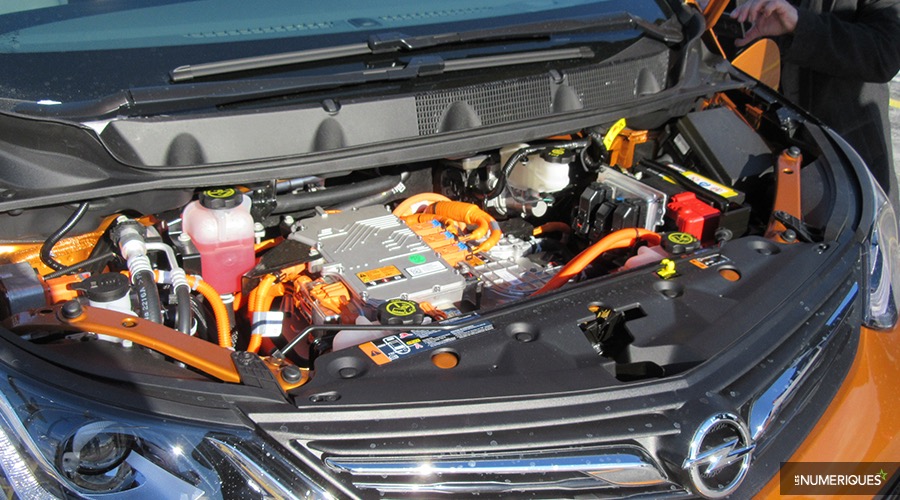
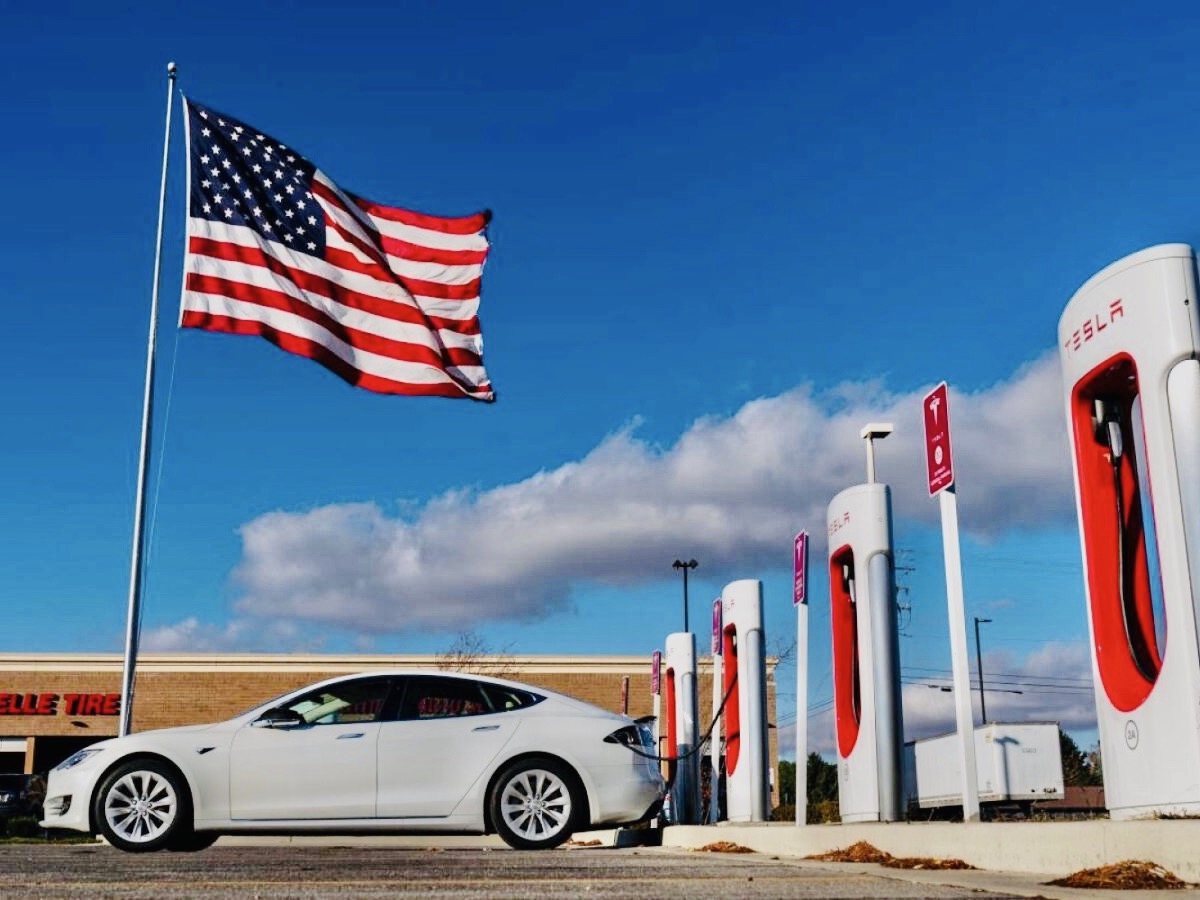
    Volkswagen, BMW and Mercedes reign supreme, Opel creates a surprise at the Munich Motor Show

    The IAA Mobility 2025 in Munich has opened its doors to manufacturers from all over the world, but it’s still the German brands that are taking the lion’s share. Leading the way was Volkswagen, which unveiled no fewer than four new electric models in its ‘Open Space’ area, accessible to the public in the city centre. Also from Volkswagen, but this time within the group, Skoda unveiled the Epiq, a small electric SUV expected to cost under €25,000. It further strengthens the VW group’s position in the highly sought-after entry-level electric segment. A little less ‘affordable’, Porsche chose Munich to present the 911 Turbo S equipped with a new hybridisation system (we’re not talking about a Prius, admittedly, but still!) as well as an electric version of the Cayenne, equipped with an innovative wireless recharging system. These two new products show that Porsche has not given up: the brand intends to preserve its DNA while making the transition to a more energy-efficient car.

    porsche 911 turbo S hybrid munich motor show 2025
    Credit: Porsche

    While the Volkswagen Group, the world leader, was inevitably eagerly awaited on its home turf, it was a German manufacturer, but from the Stellantis Group, Opel, which created the biggest surprise. Opel caused a sensation at the IAA Mobility 2025 with two eye-catching new products: the new Mokka GSE, a sporty electric version of its compact SUV, and above all the Corsa GSE Vision Gran Turismo concept car. Futuristic, pop-coloured and sharp, it seems to point to future design changes at Opel.

    concept car Corsa GSE munich motor show
    Credit: Stellantis

    Mercedes, for its part, presented the new 100% electric GLC, equipped with EQ technology and embodying the new phase of its “Sensual Purity” design philosophy. Last but not least, BMW caused a sensation with the launch of the iX3, the first model on the new ‘Neue Klasse’ electric platform, which promises a range in excess of 800 km and the possibility of recovering up to 370 km of range in just ten minutes. Available on the Old Continent from spring 2026, it is expected to cost around €69,000. Enough to stop the Chinese competition?
    bmw ix3 electric car
    Credit: BMW

    Chinese and Turks attack the European market

    Chinese manufacturers are making a big impression at Munich. Whether it’s Leapmotor with its B05, which is due to go into production in Spain by the end of 2026, ready to take on the Megane E-Tech and the Volkswagen ID.3, or Xpeng with its P7+, with a price/performance ratio that could well shake Tesla and maybe even… Mercedes!

    xpeng p7+ chinese electric saloon iaa mobility show
    Credit: Xpeng

    On the borders of Europe, there’s a young brand that’s determined to make its mark in the sun, starting with Germany. Togg, Turkey’s first national manufacturer and only 7 years old, has announced the arrival in Germany of its two models, the T10X SUV and the T10F saloon, whose BMW-inspired design could catch the eye of German drivers. And Togg’s survival depends on it. According to Reuters, the Turkish manufacturer would need 200,000 sales a year to be profitable, and its domestic market, although showing very decent results (30,000 units sold in 2024), is not enough. Germany is therefore, first and foremost, a strategic market to conquer, but also the ideal gateway for conquering other European markets.

    Autonomous driving, from fantasy to reality

    It’s not just hardware that’s on show in Munich. The IAA Mobility also welcomes exhibitors specialising in software, particularly for autonomous driving. Or rather, ‘driving aids’. More than 200 vehicles will be on display for visitors to get a real feel for the latest developments in these technologies, which are as fascinating as they are frightening! QCraft, for its part, is not afraid of anything. Quite the contrary, in fact. The Beijing-based company, which specialises in autonomous navigation solutions, has announced the opening of its European headquarters in Germany – which explains its presence in Munich – as well as a strategic partnership with American giant Qualcomm. Sounds promising!

    Optimism at IAA Mobility Munich 2025

    While the skies over Munich are not all rosy when it comes to electric mobility and even the automotive sector in general – Volkswagen’s Oliver Blume claims that US customs duties have cost the group billions and forced it to review its international policy, and Jean-Philippe Imparato of Stellantis is backtracking on all-electricity by 2030 – the 2025 edition of the IAA Mobility is nonetheless full of fine promises. With more affordable vehicles, new recharging technologies, autonomous driving, Chinese companies planning to produce in Europe and even the sporty Porsche 911, there’s plenty to be optimistic about.