Category: Expertise

  • Governments or businesses, who is boosting the installation of charging points?

    Governments or businesses, who is boosting the installation of charging points?

    It’s a subject at the heart of every debate on the energy transition: the massive installation of charging points for electric vehicles. While the figures are quite good and growing steadily, another question arises: who is really driving this development? Companies, governments or both?

    As the energy transition gathers pace, the race to install charging points for electric vehicles is becoming a major strategic issue. But behind the relatively rapid growth of the network lies a mix of policies, business initiatives and, in some cases, public-private partnerships.

    Installation of recharging points: public authorities get in touch…

    In many countries, political will has served as a trigger. The European Union, in particular, has set itself ambitious targets for the energy transition, led by a ban on the sale of new combustion-powered cars from 2035. The Member States have followed suit, with a host of plans to support electric mobility. France, for example, has introduced financial assistance for the installation of charging points, including the “Advenir” bonus for apartment dwellers.

    Governments are also using legislation to encourage the installation of charging points. In some countries, new buildings, public car parks and shopping centres are required to have a percentage of spaces equipped with charging points. In Europe, the obligation to install charging points in new or renovated buildings stems from the 2021 EPBD directive. The directive requires residential buildings to be pre-equipped – i.e. to anticipate the future installation of charging points – and non-residential buildings to install charging points for as few as 10 parking spaces.

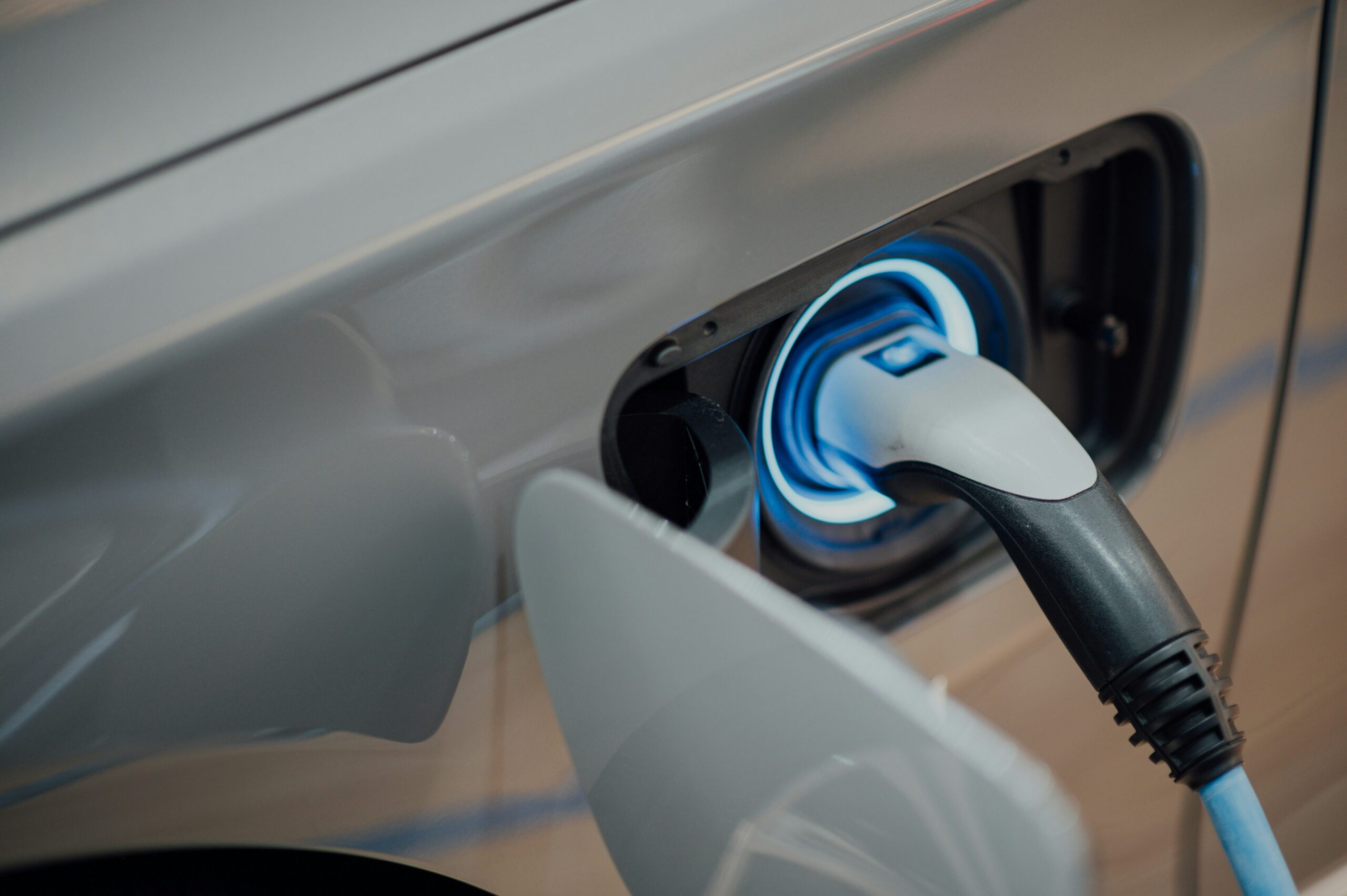
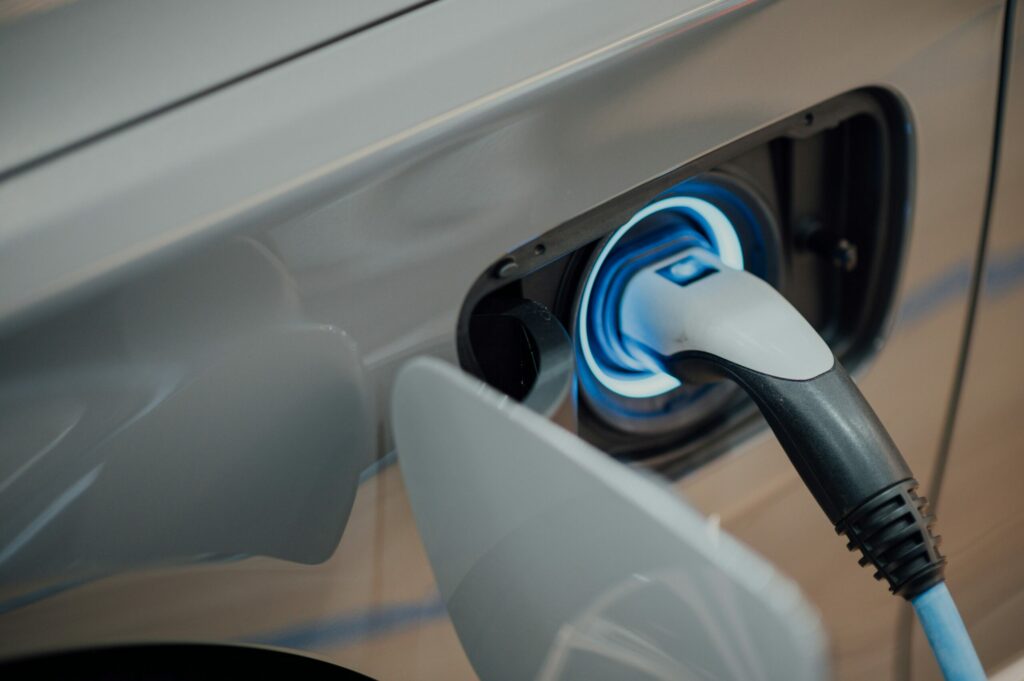
    installation of europe motorway charging points
    Credit: Pexels Bruggi

    But some countries, such as France, the Netherlands, Germany and the UK, are not content to follow these rules and have decided to go one step further. For example, France and Germany require up to 100% pre-equipment in new residential car parks, while the Netherlands and the UK systematically require bollards in new commercial and residential buildings. But it’s not just about making it compulsory. At the same time, public investment remains massive: in Germany in particular, a €6.3 billion plan has been committed up to 2026 to support the development of recharging infrastructures.

    … And the private sector is stepping on the accelerator

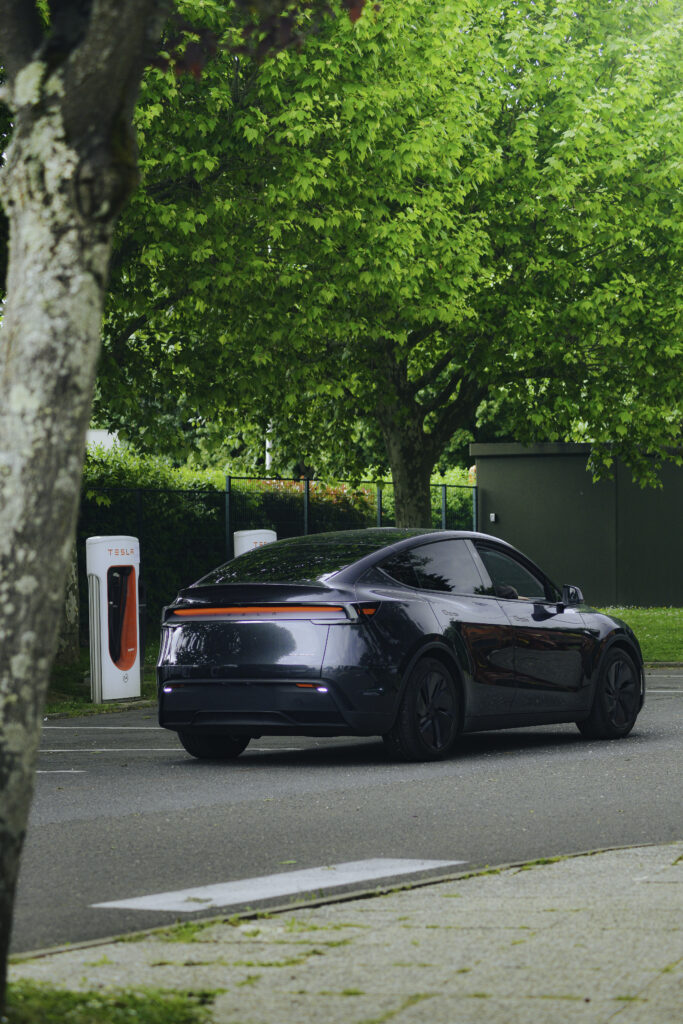
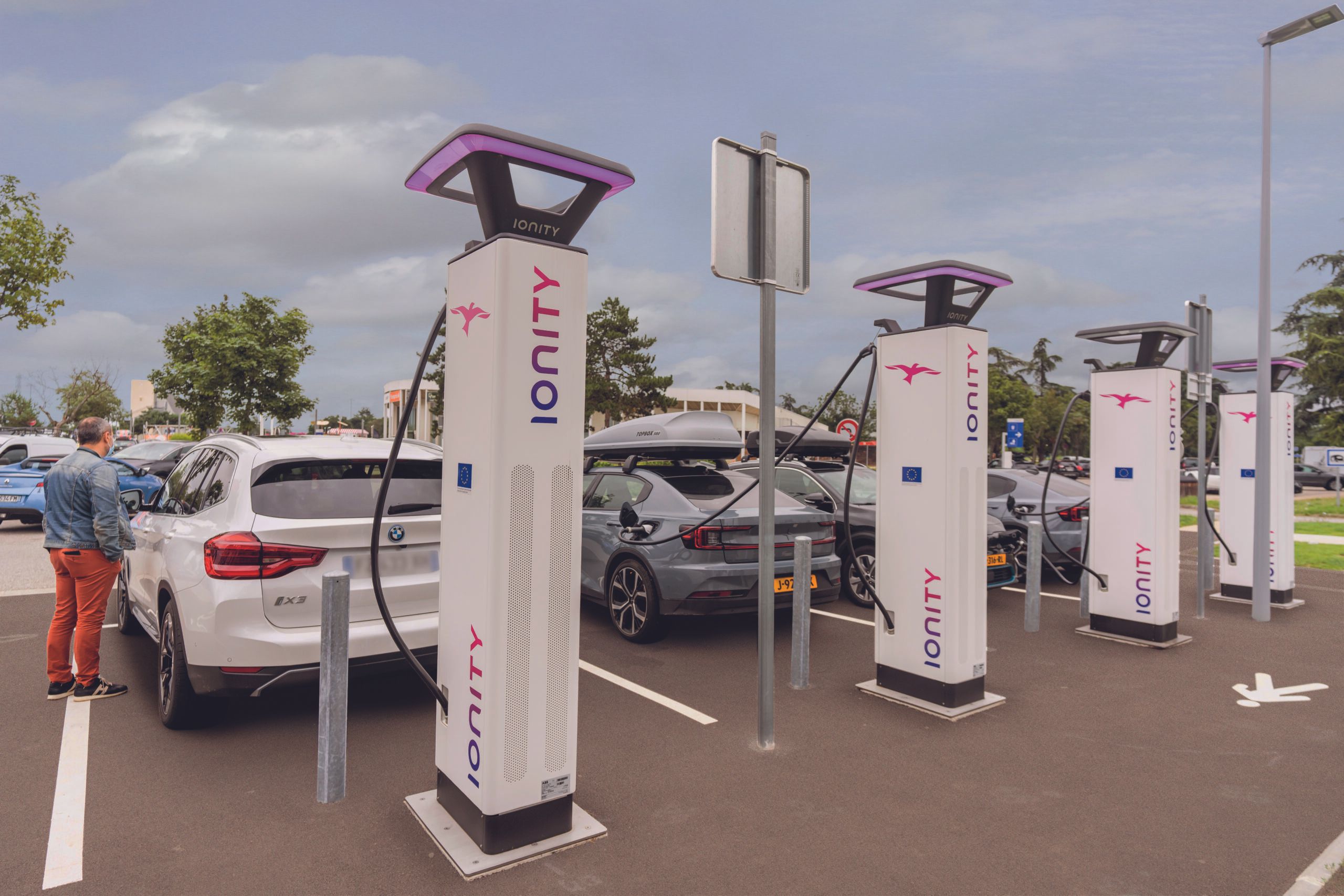
    While governments provide the impetus, it is often companies that are responsible for the actual deployment of charging points. From Tesla and Fastned to Ionity, Allego and TotalEnergies, the major players in the private energy sector have been investing in the deployment of charging point networks for several years now, buoyed by the government’s ambitions mentioned above. For the moment, they are located mainly on major roads, in major cities and in large shopping areas. These charging points promise a return on investment that will keep pace with the increase in the number of electric cars on the road, and are therefore highly attractive to these multinationals.

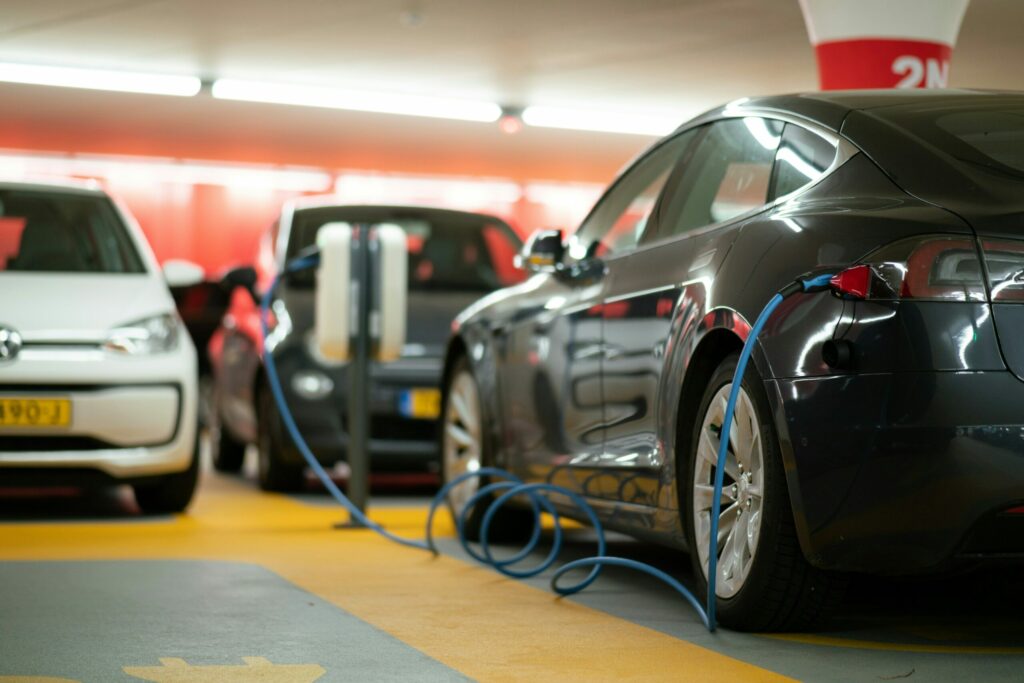
    installation of car park charging points
    Credit: Pexels Jakubzerdzicki

    In rural areas, less densely populated towns and secondary roads, which are seen as less profitable in the short or even medium term, public-private partnerships are on the increase. In several European countries, they are playing a key role in developing charging stations in these still forgotten areas. In France, the government provides up to 50% of the funding for some private projects via ADEME, while in Germany, the Deutschlandnetz programme provides massive subsidies for fast-charging stations operated by private-sector operators. The United Kingdom, with its LEVI programme, also supports local authorities working in partnership with private operators. The Netherlands, meanwhile, has introduced regional tenders that enable companies to part-finance the installation and operation of recharging stations. These projects enable companies to secure long-term market share and public authorities to achieve their objectives.

    Finally, in the residential and tertiary sectors, start-ups and SMEs are also taking a growing share of the market. Some companies see the installation of bollards as a natural diversification of their business, as do energy companies and public works firms. This is particularly true of Sungrow, a photovoltaic specialist that launched a subsidiary dedicated to charging stations around ten years ago.

    States and companies car pool on the installation of charging points

    The current dynamic is therefore based on an interaction between public incentives and private strategies. When governments push for the adoption of electric vehicles, they are obliged, in turn, to encourage the installation of charging stations. And companies see this as an attractive financial lever and are investing to make sure they don’t miss out.

    And while everyone’s priorities are not always aligned (the private sector favours profitable installations, while the public authorities seek to guarantee the widest possible coverage), co-financing is a good way of encouraging companies to invest in less attractive installations, which are crucial to convincing as many people as possible to switch to electric power.

    In some countries, such as the Netherlands mentioned above, the success of electric mobility (more than a third of electric cars in the fleet) is based on the balance between an incentive-based legislative and fiscal framework and early investment by local companies. An example worth following!

  • Summer 100% electric: stress-free recharging on France’s motorways

    Summer 100% electric: stress-free recharging on France’s motorways

    Summer holidays are approaching, and for more and more motorists, they’ll be at the wheel of an electric vehicle. While the driving comfort and silence of an electric car may be appealing, one question remains: how do you manage recharging on the road when you’re on holiday? On French motorways, particularly those in the VINCI network, the infrastructure is ready. You just need to know how to deal with it. Here’s a practical article to help you travel with a clear head, with insights from Olivier Granier, Director of Commercial Installations at VINCI Autoroutes.

    Credit: Cyril Crespeau
    Credit: Cyril Crespeau


    A charging point every 80 km: a promise kept

    The good news is that recharging on the motorway is no longer a headache. On major routes such as the A7, A10, A61 and A75, among others, all service areas are now equipped with fast-charging stations. VINCI Autoroutes, which manages more than 4,400 km of the network, has already equipped 100% of its service areas, i.e. more than 300 recharging stations and 90% coverage of ultra-fast charging points.

    We have embarked on a vast programme of equipment from 2020, in partnership with the major operators in the sector, to respond to the increase in the number of electric vehicles, particularly during the summer period “, explains Olivier Granier. The objective that the French group had set itself has been achieved: to offer a station every 80 kilometres or less on the network, to guarantee peace of mind on long-distance journeys.

    A wide range of partners and a user experience at the heart of the system

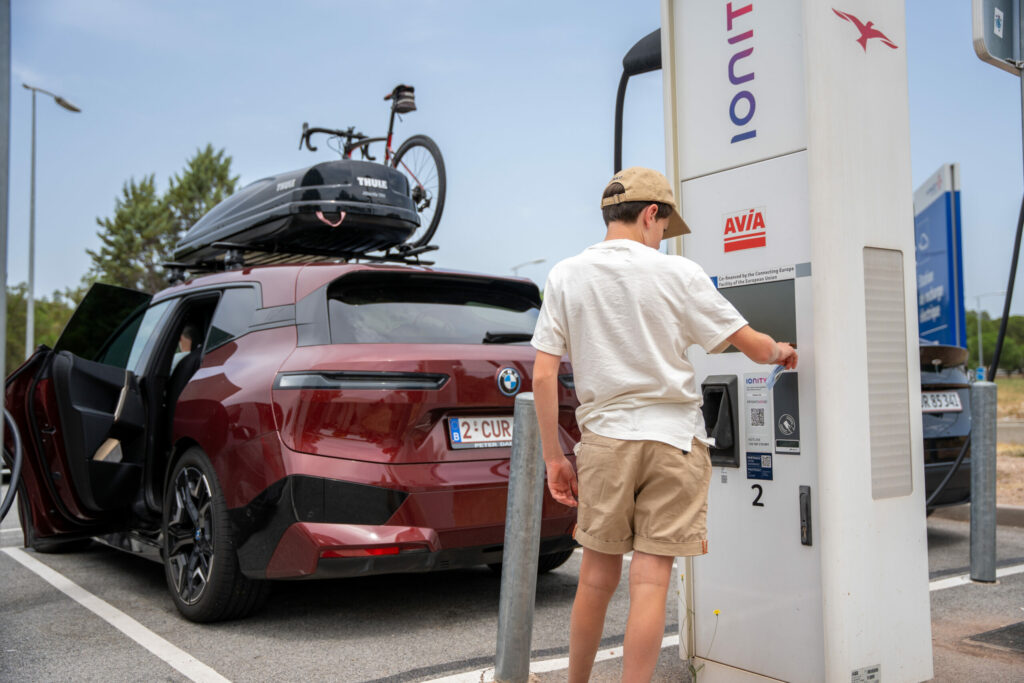
    The chargepoints installed generally recharge 80% of the battery in less than 30 minutes. Some stations offer up to 16 simultaneous charge points, and the diversity of operators present – Ionity, TotalEnergies, Fastned, Driveco, Tesla, etc. – ensures good interoperability, whatever the vehicle model.

    But technical performance is not the only concern of those involved in recharging: the user experience is even more important. To facilitate this transition and help EV drivers with the recharging process, VINCI Autoroutes has launched Operation Gilets Bleus, a summer initiative that mobilises its staff on the ground to help, inform and ensure the safety of drivers at service areas during major holiday periods.

    Credit: Jacques Wisdorff
    Credit: Jacques Wisdorff


    Simplified payment and digital tools to the rescue

    This convenience extends to payment, because today you don’t need to be an expert to recharge on the motorway. Most chargepoints accept payment by credit card or QR code. You can also use the operators’ mobile applications or multi-network badges such as Chargemap or Shell Recharge. In terms of digital services, the Ulys application developed by VINCI Autoroutes helps users on their journeys on French motorways. ” Our application allows drivers to locate charging points, check their availability in real time, and plan their itinerary to include recharging breaks ,” explains Olivier Granier.

    Anticipate to avoid peaks in visitor numbers

    During the summer, some service areas can be very busy, especially on Saturdays known as “black Saturdays”. VINCI Autoroutes is aware of this, and steps up its technical surveillance and maintenance operations at this time of year. ” We have put in place centralised supervision and teams mobilised 24 hours a day, particularly for major departures ,” says Olivier Granier.

    His advice to motorists: don’t wait until the last minute to recharge. So plan your stops in advance, recharge as soon as your range falls below 30%, and regularly check the status of charging points on specialist applications. It’s better to plan a stop at an area a little earlier in the journey than to risk waiting in the middle of the heat.

    VINCI AUTOROUTES; Ulys; Montpellier; Telepeage


    The motorway is ready, now it’s up to you to get organised

    The coverage of the network, the diversity of operators, the digital tools and the comfort offered at the rest areas make the electric car a credible option for holidays. The key is to plan ahead. Recharging should be incorporated into your journey as a useful and enjoyable break, rather than a constraint. This summer, go away connected, go away serene.

  • The 4 electric car engines you need to know

    The 4 electric car engines you need to know

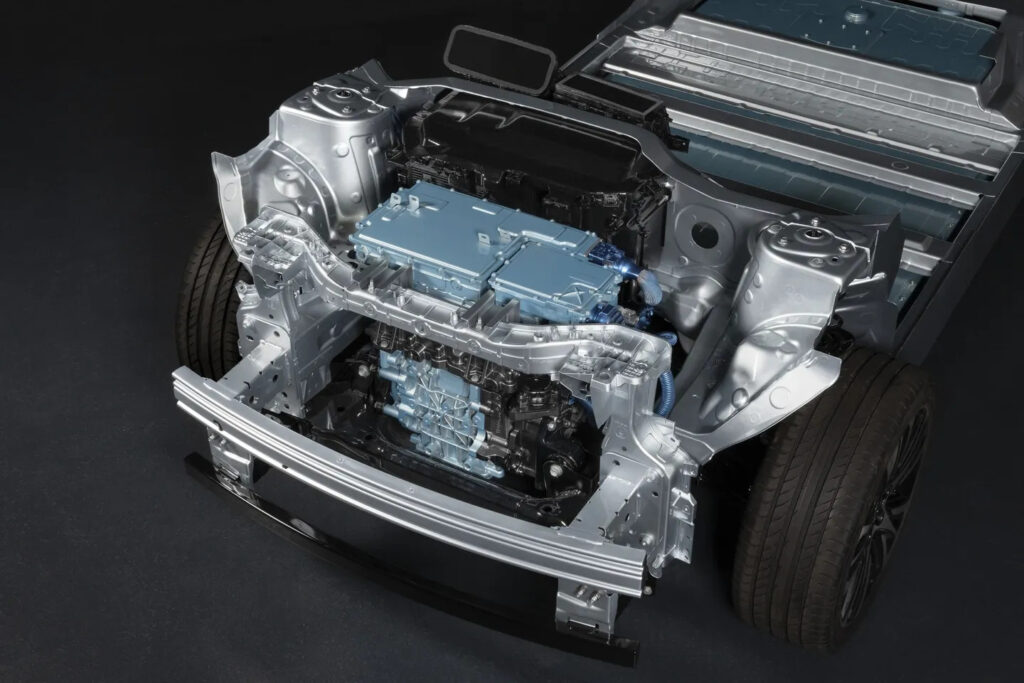
    Often relegated to the bottom of the specification sheet, electric car motors are of crucial importance in terms of economy, performance and industrialisation.

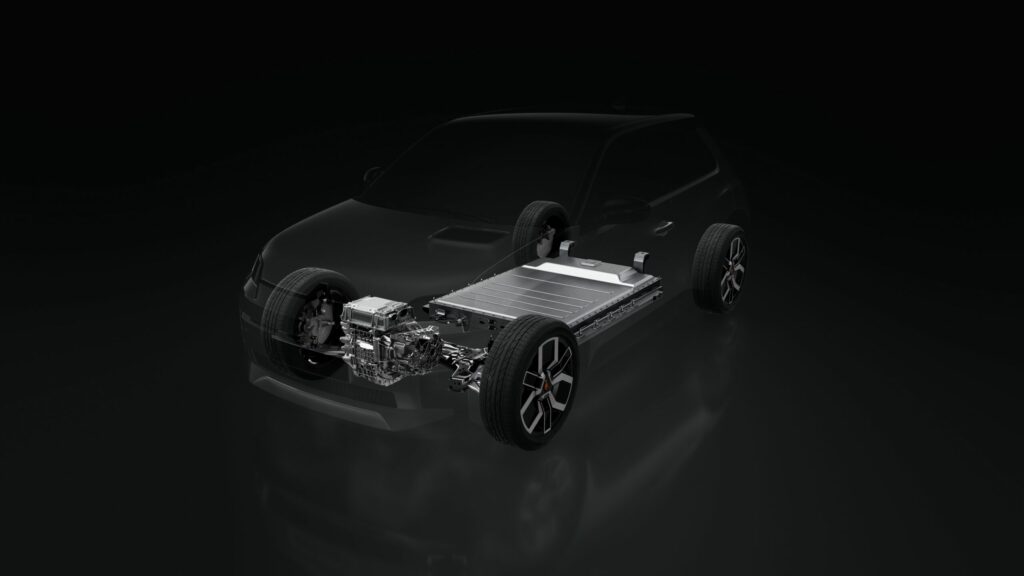
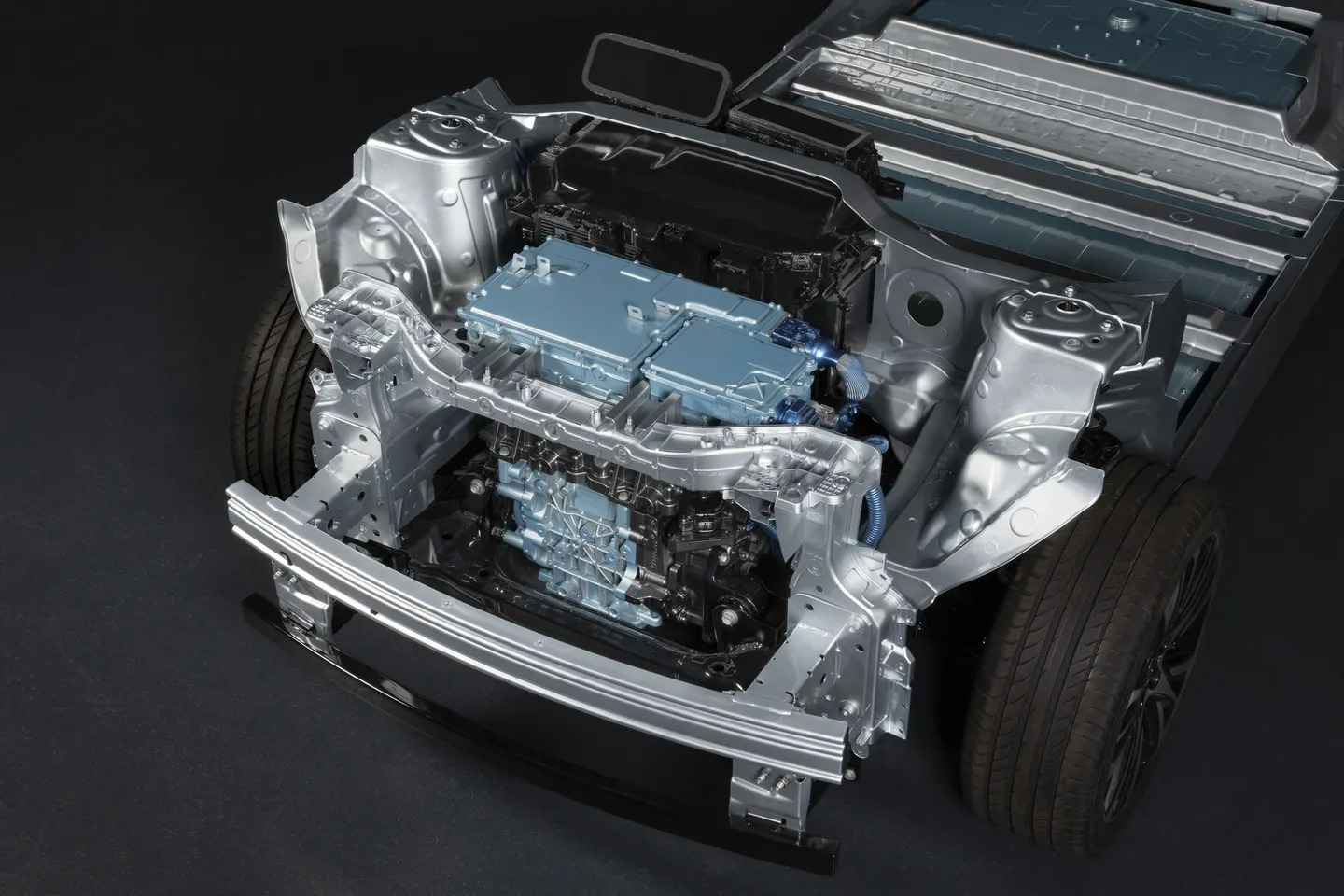
    When we talk about electric cars, the first thing we talk about is range. Unlike the world of internal combustion vehicles, where cylinders are omnipresent and sometimes more famous than the cars themselves, like the V12 Bizzarini and other ‘in-line sixes’, when it comes to watts, engines are generally relegated to the background and it sometimes seems as though there is only one type of engine for all electric cars. In fact, the opposite is true! Whether already produced on a large scale, present in niche models or still in the gestation stage, there are several types of electric car motor, of which the following are the main ones.

    electric car motors
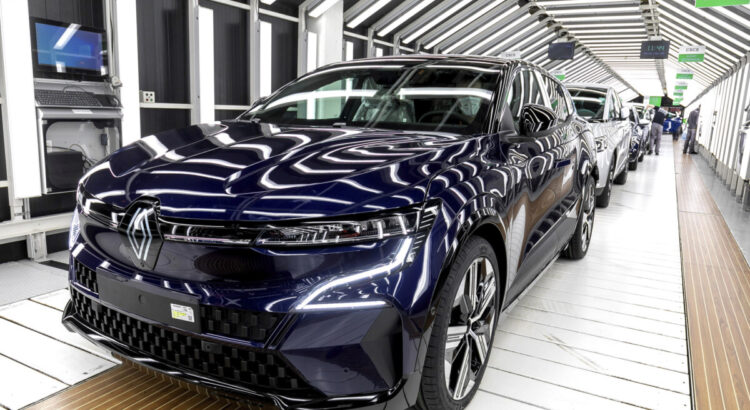
    Credit: Renault Group

    Permanent magnet synchronous (PMSM) electric car motors

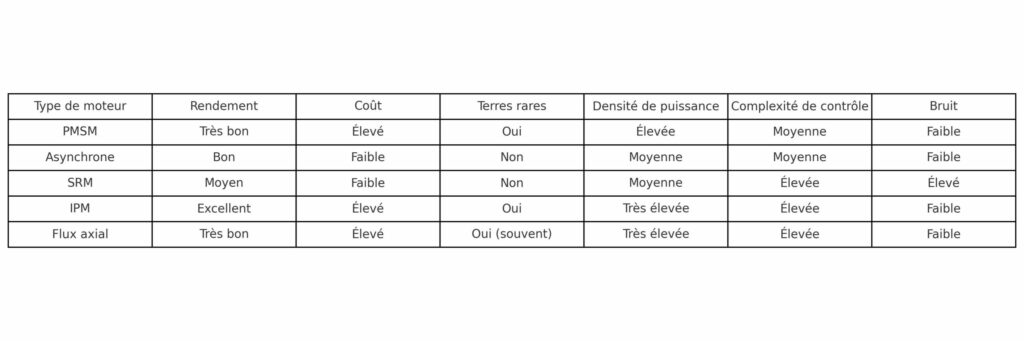
    Widely used in electric cars, the PMSM motor works thanks to magnets containing neodymium, a rare earth, which, placed in the rotor (the rotating part), rotate according to the magnetic field generated by the stator (the fixed part). It is highly efficient, with energy yields well in excess of 90%, making it ideally suited to the automotive industry. If we add to this the fact that it is very compact and fairly light, this makes it, despite its relatively high cost due to raw materials, the motor of choice for many well-known models such as the Nissan Leaf or the Toyota Prius hybrid.

    The asynchronous motor

    Here, there are no magnets in the rotor. To put it very simply, the stator produces a magnetic field whose energy is transmitted to the rotor. The rotor in turn produces a magnetic field. The two fields, like a wrestler facing a boxer in an octagon, will then confront each other and make the rotor turn. Without permanent magnets, the induction motor is cheaper to produce than the PMSM. It is also more robust thanks to its simpler structure, and less sensitive to heat despite an average energy efficiency of just under 90%. Induction motors are found in Tesla Model S and X vehicles.

    The variable reluctance synchronous motor or SRM

    Here’s the SRM: no permanent magnets, no windings, no critical raw materials such as rare earths, just gears on the rotor and stator that create movement by aligning themselves. Inexpensive to manufacture, durable and capable of handling a lot of torque at low revs (ideal for an electric car). However, it is not very widespread and, for the moment, it is mainly the subject of research by start-ups. Why is this? For one thing, it’s noisier than its counterparts. But that’s not its only drawback. It’s also electronically controlled, which adds a whole host of data to integrate, making it complex to manage.

    Axial-flow electric car motors

    This is the motor that could well change the face of the world. Here, unlike in radial flux motors, the movement of the magnetic field is parallel to the axis of rotation. In other words, axial flux motors are flat and therefore more compact, while retaining their efficiency. This architecture also makes it easier to cool the motor, thereby increasing its performance. Today, these motors are still too expensive to manufacture for large-scale deployment, but manufacturers are nonetheless paying close attention to developments in this technology. The latest example is Mercedes’ acquisition of the British company YASA, which specialises in axial-flow engines.

    Summary :

  • France 2035: what will electric cars look like?

    France 2035: what will electric cars look like?

    As France prepares to ban the sale of new combustion-powered cars from 2035, the electric car is gradually establishing itself as the mainstay of tomorrow’s mobility.

    By 2035, as announced by the French Ministry of Ecological Transition, all new cars in France will be electric, because it will be forbidden to sell combustion-powered cars. In 10 years’ time, the face of France will have changed radically. More autonomous, more intelligent, more connected, the car of the future promises a major transformation in usage.

    Autonomy boosted tenfold by technology

    Fears about range, long considered to be the main obstacle to the adoption of electric cars, could be lifted in the next decade. A Blue Solutions gigafactory is planned in France to produce solid batteries with a range of up to 1,000 kilometres and recharge times of 20 minutes. These batteries, which have an energy density 30% to 40% greater than current lithium-ion cells, should be in large-scale production by 2030.

    In terms of infrastructure, France expects to see a marked acceleration: according to ADEME, more than 400,000 public charging points will be deployed by 2030, compared with around 120,000 today. In addition, players such as Renault and Stellantis believe that ultra-fast charging technologies will enable 80% of the battery to be recovered in less than ten minutes in the medium term.

    view paris car traffic france 2035 electric car
    Credit: Ante Samarzija

    Artificial intelligence at the wheel

    The real revolution is likely to come from on-board intelligence. According to a study published in March 2025 by European researchers, level 4 or 5 autonomous vehicles could account for a significant proportion of new vehicle registrations in Europe by 2035. These vehicles would be capable of travelling without human intervention under certain conditions, transforming the driving experience.

    In France, companies are already working on systems incorporating cameras, lidars and artificial intelligence capable of managing driving in complex urban environments. According to IFP Énergies Nouvelles, these systems will learn to anticipate road behaviour, adapt to the user’s driving style and optimise journeys in real time.

    France 2035, an electric car that’s always connected

    In 2035, the car will also be a mobile digital terminal. Thanks to 5G – or even 6G – networks, vehicles will be in constant communication with their environment: other cars, road infrastructure, the user’s home, etc. This connectivity will enable remote software updates, seamless interaction with connected objects in the home, and even the integration of voice assistants. This connectivity will enable remote software updates, seamless interaction with connected objects in the home, and the integration of ultra-personalised voice assistants.

    The Software République project, launched by Renault with Atos, Dassault Systèmes, STMicroelectronics and Thales, illustrates this trend towards a car that becomes a digital service: users will be able to manage their diary, calls, entertainment and even home automation from their dashboard.

    A technological… and social revolution

    But this revolution also poses human challenges. According to the France 2030 report presented by the government, major efforts will have to be made to support this transition: support for the purchase of electric vehicles, training in automated driving, and retraining for jobs in the automotive industry. The issue of digital inclusion and access to technology for all will also be at the heart of the debate.

    In ten years’ time, the car will no longer be a simple mechanical object. It will become an intelligent, connected space, integrated into our lifestyles and infrastructures. Provided that this development remains at the service of sustainable, accessible and equitable mobility.

  • Electric scooters and motorbikes: between green dreams and practical problems

    Electric scooters and motorbikes: between green dreams and practical problems

    Like the car industry, the motorbike industry needs to reinvent itself before 2035. Electric scooters and motorbikes are gradually making their way into our towns and cities, appealing as much to city dwellers concerned about their carbon footprint as to enthusiasts of new technologies. But before taking the plunge, consumers need to ask themselves a number of crucial questions…
    Credit: Zero Motor Cycles

    Given the small size of the battery, will it last long enough to get you from home to work? Where, when and how do you recharge? Are you eligible for government subsidies? Are the charging points different from those for electric cars? And many more besides… All these (legitimate) questions are concerns that put the brakes on the purchase of an electric scooter or motorbike.

    Basile Delaruelle, a Parisian student and owner of an electric scooter, experiences this on a daily basis: ” I can make a round trip between my home and my school, but really not much more… On the second return journey, i.e. once I’ve covered around twenty kilometres, I often find myself below 20%, and the scooter automatically slows down “. This weariness is well reflected in the market for these two-wheelers over the past two years…

    To put this into context, over the period 2019-2022, the market is seeing a significant increase in sales, due to several factors:

    ● The growing restrictions of the ZFEs (Low Emission Zones),

    ● Government subsidies for the purchase of electric scooters,

    ● The boom in home deliveries (mainly during the COVID-19 period, with Deliveroo, UberEats, etc.).

    All these changes have pushed companies and individuals alike to seize the opportunity of this EV. The result: in 2022, 50,992 registrations in France, representing a market that is 71.1% up on 2021 (according to the Solly Azar – AAA Data Observatory).

    Credit: Pink Mobility

    However, since 2023, the trend has been reversed… This year, the market for electric two-wheelers has fallen by 16%. And this trend has not improved since…

    A number of factors are holding back the adoption of EVs by users. Two-wheelers are coming up against an increasing number of much more flexible alternatives. Electrically-assisted bicycles and scooters, for example, do not require a licence, so the target audience is much wider. Basile confirms the practical complexity of this EV: “ On my electric scooter, I have to take the battery apart every evening to recharge it at home. It’s a real hassle, especially if you don’t have a garage. What’s more, these batteries are relatively portable: ” They’re heavy… When you’re on the move all day, carrying your battery around under your arm isn’t really practical.

    However, with ecological constraints, anti-pollution regulations and rising fuel prices, by 2025 electric scooters are an imperative choice, but one that needs to be carefully negotiated. However, even if it’s a good deal, it’s still essential to find out exactly what you need and what your budget is before buying an electric scooter or motorbike…

    Which licence for which vehicle?

    For thermal two-wheelers, the rule was quite simple:

    ● 50CC engine = AM licence (former BSR)

    ● 125CC engine = A1 licence (or “125 licence”) or B licence + “125 training”.

    ● +125CC engine (and more powerful) : A licence

    With the arrival of electric scooters, motorbikes and maxi-scoots, the concept of engine capacity is changing:

    50CC equivalent: scooters with a power rating of around 4 kW, max speed 45 km/h (Accessible with AM / BSR licence)

    125CC equivalent: scooters with a power rating of between 4 kW and 11 kW, capable of speeds in excess of 45 km/h (Accessible with A1 licence or Permis B + “Formation 125”)

    Maxi-scooters and electric motorbikes (power between 11 kW and 35 kW): Requires an A2 licence, accessible from the age of 18, with a theory and practical test.

    Credit: Tarform Motor Cylce


    Ultra-efficient models, a category ≥ 35 kW

    Some 100% electric maxi-scooters, like the BMW CE-04, have very specific ambitions. In 2014, BMW launched its ‘C-Evolution’ range with a clear objective: to compete with market benchmarks such as Yamaha’s T-Max and Honda’s Forza, which are widely acclaimed for their sportsbike-like performance.

    To offset this decline in the electric two-wheeler market, some companies, such as Zero Motorcycles, are slashing prices on certain models. You can expect discounts of up to €6,000, depending on the model and year of manufacture. The discounts apply to the whole range, from the 125 CC equivalent to the most powerful models.

    The aim is to make these motorbikes more accessible, attract more people and help the market move towards electric two-wheelers.

    At a time when cities are looking to move away from internal combustion, these EVs represent credible alternatives. But the choice needs to mature, between technical constraints and financial incentives.

  • How does the electric nature of a car influence its design?

    How does the electric nature of a car influence its design?

    Electrification is leading us to rethink the way we look at cars, not only in terms of fuel consumption, driving and technology, but also in terms of design. A car may still look like a car (for the time being), but there are increasingly significant differences between internal combustion engines and electric cars in this respect.

    At the beginning of the electric car boom, manufacturers were generally content to affix a blue or green badge somewhere on the bodywork to get the message across that the car was electric, usually when there was a perfect copy of the internal combustion version. This was a way of saving money. But in recent years, with the advent of 100% electric models, EVs have become increasingly recognisable, and not just because of the silence of their engines.

    No internal combustion engine, more freedom

    It’s no secret that an electric motor takes up much less space than a combustion engine. It frees up space under the bonnet, of course, but also under the car: no exhaust system, no clutch, that’s a lot of space. Once this
    Once that big thorn had been removed, the designers were able to reduce the length of the bonnet, lower the front end and enlarge the passenger compartment. In addition to the disappearance of the engine block, the ‘skateboard’ platform – a flat chassis incorporating the batteries and axles – has also become widespread. Here again, thanks to a flat floor, it is possible to gain space inside while lengthening the wheelbase without compromising the harmony of the lines. The profile of electric cars thus becomes more fluid, almost monobloc. We all remember the first time we saw a Tesla Model 3, that strange feeling of knowing it’s a car, but not really being able to explain why it doesn’t make the same impression on us as the one next door…

    Credit: Tesla

    A revamped front end

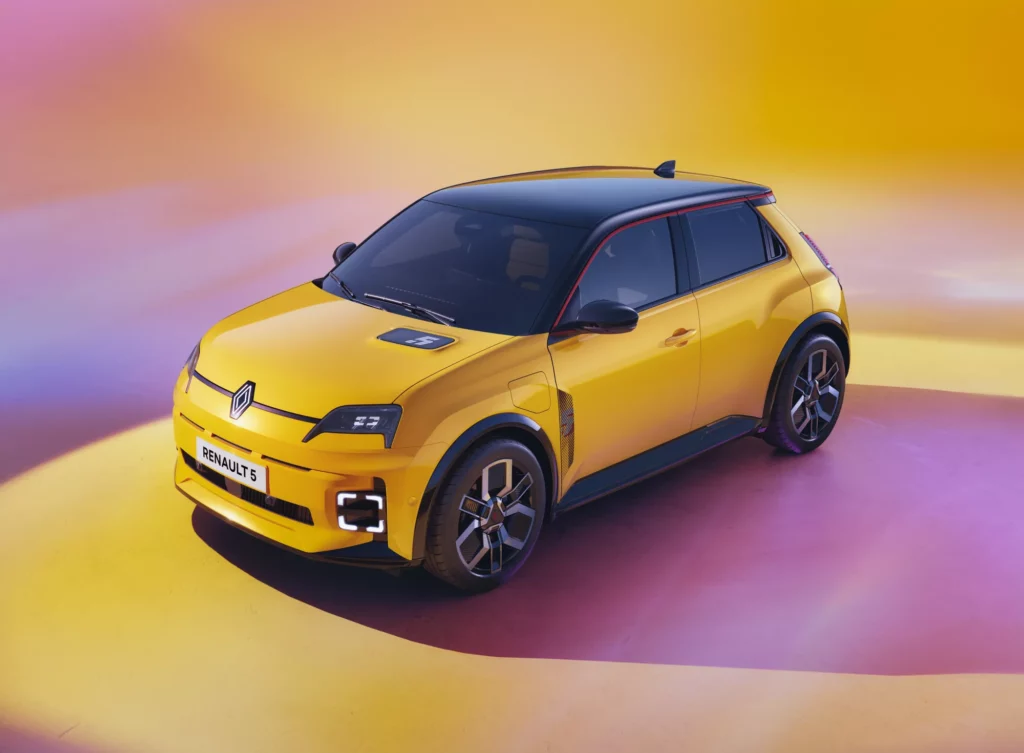
    The grille is one of the most iconic features of an internal combustion engine car. Often used to identify a make or model, their main function is to let air into the engine block to cool it. An electric car needs little or no air. This means that designers can come up with sleeker faces and play around with light signatures. We’ve seen this recently with the Hyundai Ioniq 5 and the Renault 5 E-Tech, among others, which take on a futuristic style tinged with digital technology.

    Credit: Renault

    The thorny issue of aerodynamics

    Aerodynamics is one of the reasons why an electric car still looks a lot like a combustion engine car: because, if it works, there’s no reason to shake things up too much. But the issue of reducing drag is even more crucial for EVs, because range depends on it – perhaps the most famous brake on the mass electrification of the car fleet. As a result, the lines of electric cars are simpler, tauter and, in short, sharper. Handles are flush, rims are solid and even, on some models like the Honda E, rear-view mirrors are replaced by cameras.

    Reinventing the interior

    The cabin has also benefited from the switch to electric power. With the disappearance of the ‘central tunnel’, seating arrangements are freer and there is more space for passengers, but also for electronics. So there’s no need to condense everything and, little by little, digital technology is replacing physical controls and the screens are getting bigger and bigger. Of course, it was Tesla, the pioneer of the electric car, who launched this movement of minimalism mixed with technology and large volumes. Since then, it has become the norm for all manufacturers, but we are not immune to the arrival of models that go against this trend and take advantage of the space offered by electric cars to integrate as many components as possible into the cabin, turning it into a real living room on wheels.

    Between new beginnings, conservatism and a clean slate

    Car design is the clearest message that brands send to consumers. It is therefore partly thanks to design that we know more about a manufacturer’s intentions with regard to its electric ambitions. Some manufacturers, such as Hyundai, Kia, Renault and Volvo, among others, are taking advantage of the switch to electric vehicles to completely rethink their design vocabulary, without throwing away several decades of history and visual identity. You can recognise the brand name, but you can feel the change of era. Other brands, such as Porsche with its Taycan, Maserati with its Grecale Folgore or Peugeot with its e-208, remain very close to their design heritage, which means they can avoid upsetting their customers too much. So the changes are being made gradually, first to the cabin and then, as the restyling progresses, to the bodywork. It’s a dilemma that only concerns established carmakers! The new Chinese giants have started from scratch and, without the weight of a strong visual identity on their shoulders, they have been able to let loose with their design and create new codes. With Xpeng and its ultra-fine light signature, BYD and its shark-like front end, and Nio and its pure lines, we are witnessing a small revolution. Jaguar’s recent example and the uproar caused by the presentation of its radical Type 00 are proof of this.

    Credit: Jaguar

    In short, car design has always been a question of balance, whether in terms of lines or volumes, but there is also a marketing balance to be respected by the brands, which will have to take advantage of the freedom offered by electric cars, but without shocking customers who are very used to classic design, which has been anchored in the collective imagination for a century…

  • Charging stations: what’s the current state of deployment in your region?

    Charging stations: what’s the current state of deployment in your region?

    As electric mobility gains ground, the question of recharging infrastructure becomes central. Recharging your vehicle should no longer be a constraint, but a formality, accessible throughout the country.

    France currently has more than 163,000 charging points open to the public, spread across all its regions. Behind this figure lies a genuine transition effort, led by both public and private players to support the growth of electric vehicles.

    This map, published by the Association nationale pour le développement de la mobilité électrique (AVERE), shows the number of charging points open to the public, region by region. Its role is to inform users about the current momentum, driven by a shared desire to guarantee fair access to recharging and to support motorists in this transition.

    As part of this energy transition, the government has set a target of 200,000 charging points by 2026, and 400,000 by 2030, including at least 50,000 fast-charging points. This is a major ambition, designed to meet the growing demand for infrastructure for electric vehicles.

    IRVE Barometer
    IRVE Barometer – AVERE FRANCE
  • The French market for electric cars without a licence: a revolution in the making

    The French market for electric cars without a licence: a revolution in the making

    With more than 30,000 registrations in 2024, France will account for almost 50% of licence-free car sales in the European market.

    Long marginalised, these no-licence cars (VSPs) are enjoying a second lease of life in France, thanks in particular to electrification and modern communication aimed at attracting (very) young drivers – from the age of 14! – but also city-dwellers keen to reduce their environmental impact and make their cars more practical. With the ecological transition playing an increasingly important role in the minds of the French, and city traffic becoming more and more difficult for conventional combustion-powered vehicles, electric MPVs are an extremely attractive alternative.

    black electric no-licence car

    Why are electric licence-free cars so popular in France?

    Electric MPVs are continuing to win market share from their combustion-powered rivals, as well as from ‘conventional’ cars, because they appear to be a natural response to many of today’s problems. For example, the ever-increasing cost of a driving licence, which for more and more urban dwellers is no longer as useful as it once was, and the spread of populations, which means that people living in more isolated areas are choosing the car at an ever younger age, are the two main factors behind the overpopulation of PSVs in France.

    But we can also add to this the lower speed limits in town (a licence-free car is limited to 45 km/h), the elimination of parking spaces and the increasing costs associated with the use of a conventional car (insurance is generally less expensive and roadworthiness tests are less frequent).

    Finally, the electric version cuts the bill even further by reducing maintenance and fuel costs. To sum up: a licence-free car is full of advantages for an ever-growing proportion of the French population… and its electric version is even more advantageous!

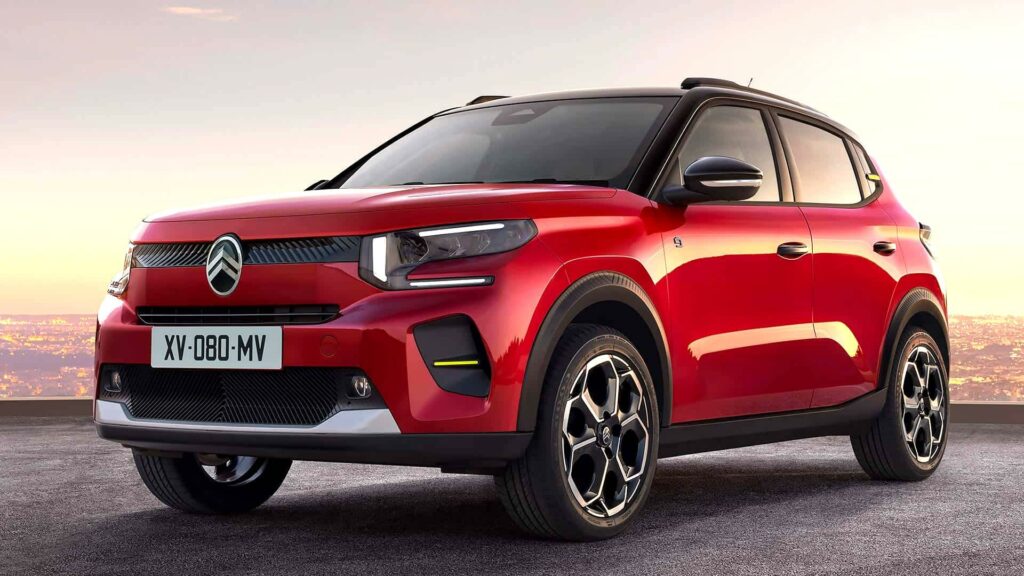
    red electric car

    Incumbents vs. traditional builders: beneficial emulation

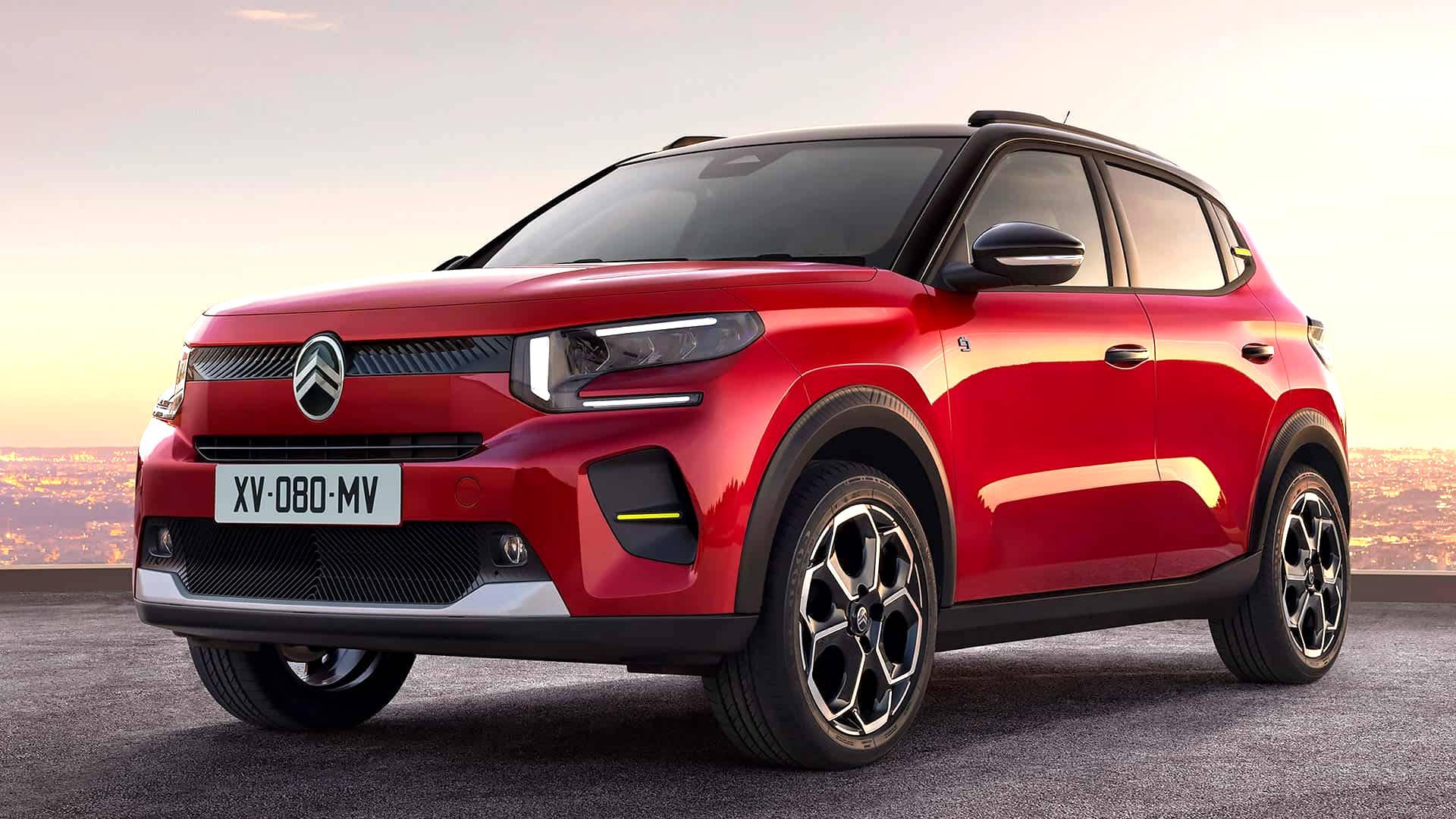
    Historically dominated by combustion engines, the French PSV market seems to be moving slowly but surely towards electric power. The boom of the Citroën Ami, launched in 2020, has had a lot to do with this, with more than 65,000 units sold in 5 years. It has recently been joined by another small electric no-licence car from a major manufacturer, the Fiat Topolino. These two models have enabled their manufacturers to take second and fourth place respectively in the rankings of the biggest sellers of licence-free cars in France in 2024.

    All this in the face of players who are already well established and, above all, specialised. Pioneers who are not giving up, however, since the leader, Aixam, has added a 100% electric range, as has Ligier which, after seeing Citroën overtake it, was only a few thousand sales away from seeing Fiat do the same! The fact remains, and this is good news for everyone, that sales of the four brands mentioned have risen sharply between 2023 and 2024. This competition is good for a market that was once considered old-fashioned, as it has encouraged the Stellantis giants to invest in innovation around this soft mobility that they had sidelined for too long, and also the traditional players to speed up their electrification. All this while glamorising electric PSVs with marketing campaigns!

    In the space of just a few years, licence-free cars have gone from being a “punishment for those who lose their licence” to a highly desirable form of soft mobility. And in this market, it’s a case of give and take: on the one hand, electric cars have given a boost to the PSV, and on the other, the growth of the PSV means that the French car fleet can be electrified more quickly.

    Top 4 PSV manufacturers in France (2024)
    1- Aixam / 10,771 sales / Growth of 8.7% / Combined heat and power / 33.9% of the market
    2- Citroën / 9,267 sales / Growth of 4.2% / All electric / 29.3% of the market
    3- Ligier / 5,869 sales / 8.4% growth / combustion and electric / 18.5% of the market
    4- Fiat / 4,567 sales / First year / All electric / 14.3% of the market
    ( Voltandgo figures)

  • French public transport: where will electric vehicles fit in tomorrow?

    French public transport: where will electric vehicles fit in tomorrow?

    In the face of the climate emergency and the need to decarbonise mobility, France is speeding up the transition to cleaner public transport. From one end of the country to the other, from metropolises to rural areas, projects are accelerating in favour of electric transport. An overview of a major transformation.

    Credit: RATP
    Credit: RATP

    Île-de-France on the front line

    The Paris region is at the heart of the energy transition in the public transport sector. With its ambitious ” Bus2025 ” programme, RATP plans to convert all of its 25 operational centres to electric and biomethane engines by the end of 2025. Eventually, 1,000 electric buses and 1,300 buses running on renewable gas will be on the roads in Paris and its inner suburbs. This project should make it possible to halve CO₂ emissions linked to bus traffic. It is part of RATP’s overall objective to reduce its greenhouse gas emissions by 50%.

    At the same time, Île-de-France Mobilités is continuing to extend the transport network, with metro line 14 reaching Villejuif-Gustave Roussy station in early 2025. The launch of the Tzen 4 bus line, replacing line 402 between Viry-Châtillon and Corbeil-Essonnes, is also planned. Tzen 4 is a world first: it will be the first 24-metre bi-articulated bus, 100% electric, with ground recharging in less than five minutes.

    Electric cars are gaining ground in major cities

    In France’s major cities, electric vehicles are playing an increasingly visible role in urban transport networks.

    Lyon is planning a far-reaching transformation of its network, with the integration of electric vehicles into the future unified TCL network from September 2025. The city is also adapting its infrastructure to accommodate new electric buses and test pilot lines on the outskirts.

    In Bordeaux, the deployment of express bus lines is based in part on electric vehicles, with the first service scheduled for 2025. The already electrified tramway lines are also being extended (lines E and F), strengthening the non-polluting offer in the city.

    In Marseille, the “Marseille en Grand” plan includes electrified BRTs (Bus à Haut Niveau de Service). Line B4, due to enter service in 2025, will operate with an all-electric fleet. The city also plans to integrate more electric buses into its RTM network.

    The northern districts will have a high service level bus by early 2025
    Credit: B4 BRT public consultation file

    In the regions: major projects

    Looking beyond the metropolises, France intends to strengthen inter-urban and peri-urban mobility via the Regional Metropolitan Express Services (SERM), a concept inspired by the RER in the Paris region. Fifteen projects have been approved, covering cities such as Strasbourg, Lille, Nantes and Grenoble. These SERMs combine trains, express coaches, safe cycle paths and unified pricing to facilitate access to clean mobility.

    Urban and interurban logistics are also concerned: 972 charging points for electric HGVs have been deployed in depots, and 24 public charging stations for HGVs opened on 1 January 2025. These infrastructures are strategic for supporting the decarbonisation of freight.

    Electricity grid: an essential link

    The widespread use of electricity raises the question of energy infrastructure. RTE, the operator of the public electricity transmission network, is planning massive investment between now and 2040. The aim is clear: to adapt the network to support the growth in electric mobility, while guaranteeing the reliability of supply.

    A still fragile transition

    While the momentum is there, the transition is still fraught with obstacles. The cost of the projects, the slowness of certain local consultations and the problems of maintenance or training in the new technologies are sometimes holding back the momentum. Social acceptability, particularly in rural areas or areas with poor access, remains a major challenge.

    France is well and truly engaged in a profound transformation of its public transport system. While the major cities are playing a leading role, the widespread use of electric mobility will also depend on regional planning, infrastructure and the collective ability to make this transition a lever for cohesion and sustainable development.

  • Sungrow, a solar energy giant reinventing fast charging

    Sungrow, a solar energy giant reinventing fast charging

    During the DriveToZero trade show at Porte de Versailles on 4 and 5 June, ECO MOTORS NEWS had the opportunity to meet Robert von Wahl, EV Charging Europe Director at Sungrow, one of the world leaders in renewable energies, which decided ten years ago to put its expertise at the service of electric vehicle charging.

    Credit: Sungrow - DriveToZero
    Credit: Sungrow – DriveToZero

    Electric mobility is, of course, all about the hardware – the vehicles themselves – and the software – the on-board software and technologies – as well as recharging. And with recharging comes a host of issues to be resolved, whether in terms of the energy used and its storage, management of the power delivered or the surface area occupied by charging points in recharging stations, car parks, bus and lorry depots, etc. Some companies are already well ahead of the game in these areas. This is particularly true of Sungrow, the Chinese giant and world leader in power conversion, which was founded in 1997 on the renewable energy market, focusing on photovoltaic (PV) inverters. In the mid-2010s, anticipating the coming boom in electric mobility, the group set up a branch dedicated to recharging, with Robert von Wahl as European Director. At DriveToZero, Robert von Wahl took the time to explain the company’s strategy, illustrating the current challenges facing players in the market and the solutions needed to meet them.

    Satellite recharging… on the cow floor!

    In order to solve the problem of the lack of space in charging stations, whether public or private, while offering power for fast charging, Sungrow has developed what it calls “satellite charging”, which has nothing to do with the conquest of space. Sungrow has developed what it calls “satellite charging”, which has nothing to do with the conquest of space. As Robert von Wahl explains, these systems ” separate the power supply from the charging point itself. A single power cabinet can therefore supply several satellite charging points spread across a site”. This configuration is particularly well suited to ” bus depots or logistics hubs where space is limited and several vehicles need to be recharged simultaneously “, he adds. As well as saving space, this architecture reduces infrastructure costs, limits connections and offers greater flexibility in adapting the network to the changing needs of the vehicle fleet.

    Credit: Sungrow - DriveToZero
    Credit: Sungrow – DriveToZero

    Modularity and efficiency are essential for companies that make intensive use of their charging points. Sungrow’s catalogue now includes several of these ultra-fast chargers, which can intelligently distribute the power of the power cabinet (480 kW) between several vehicles connected simultaneously. So, taking the example of a lorry depot, it is possible to deliver less energy to the vehicle that you know won’t be setting off again until the next day and, from the same charging point, deliver sufficient energy to another vehicle so that it can set off again within the next two hours.

    ESS + PV + DC = future?

    Don’t understand the equation? Don’t panic. Before we met Sungrow at the show, it was all a blur to us too! ESS stands for storage solutions, PV for inverters that convert solar energy and DC for direct current, often used to refer to fast recharging. And, according to Robert von Wahl, ” by integrating energy storage, photovoltaics and DC charging, we obtain a complete energy management solution ” that enables batteries to be charged during off-peak periods thanks to solar energy, and then to supply vehicles during peak demand periods. It’s a way, he continues, of ” reducing the costs associated with hourly grid tariffs, relieving the load on the grid, and guaranteeing locally produced, green energy “. While having the necessary know-how and experience to offer this ‘all-in-one’ solution in-house, as Sungrow does, is still not widespread on the market, our visit to the DriveToZero show showed us that many start-ups and companies are increasingly thinking about this more global approach.

    European challenges

    Although Europe is making good progress, it is still marked by regional disparities. ” Europe is making rapid progress, but there are still significant imbalances between countries ,” says Robert von Wahl. According to him, in France, efforts have been made, mainly in urban areas, but the density of rapid charging points is still insufficient at national level on the motorway networks. The main reason, noted by many players in the sector, is the electrical capacity available in certain areas, particularly commercial areas. ” In these areas, the grid connection is often limited. It is difficult to supply several ultra-fast charging points without significant investment,” he points out. Furthermore, standardisation of protocols and interoperability between operators remain crucial issues. Sungrow, for its part, is responding with customisable, ‘intelligent’ solutions that are compatible with a wide range of configurations, both geographical and technical, but there is still a considerable amount of work to be done in the field.

    Credit: SUNGROW HQ
    Credit: SUNGROW HQ

    The advantage that the Chinese group has over its competitors – in addition to 25 years of world leadership in energy conversion – is the experience it has acquired in its home country, which is ahead of Europe when it comes to recharging infrastructures. Our ambition is to become a key player in the electrification of transport in Europe”, says von Wahl, “and to achieve this, the company relies on modular products that can be adapted to local standards, and invests in R&D on European soil “. Indeed, the company has set up its R&D department in Amsterdam, the Netherlands, a strategic hub for the development of electromobility on the Old Continent.

    This strategy is accompanied by industrial partnerships with local players, as well as with universities and public authorities, in order to ” simplify the large-scale deployment of intelligent charging infrastructure “, concludes Robert von Wahl. By combining solar energy, intelligent storage and ultra-fast charging in a complete, compact architecture, Sungrow is positioning itself as a key player in the energy transition, and if the many start-ups we met at DriveToZero are anything to go by, it could well become a benchmark in the years to come.