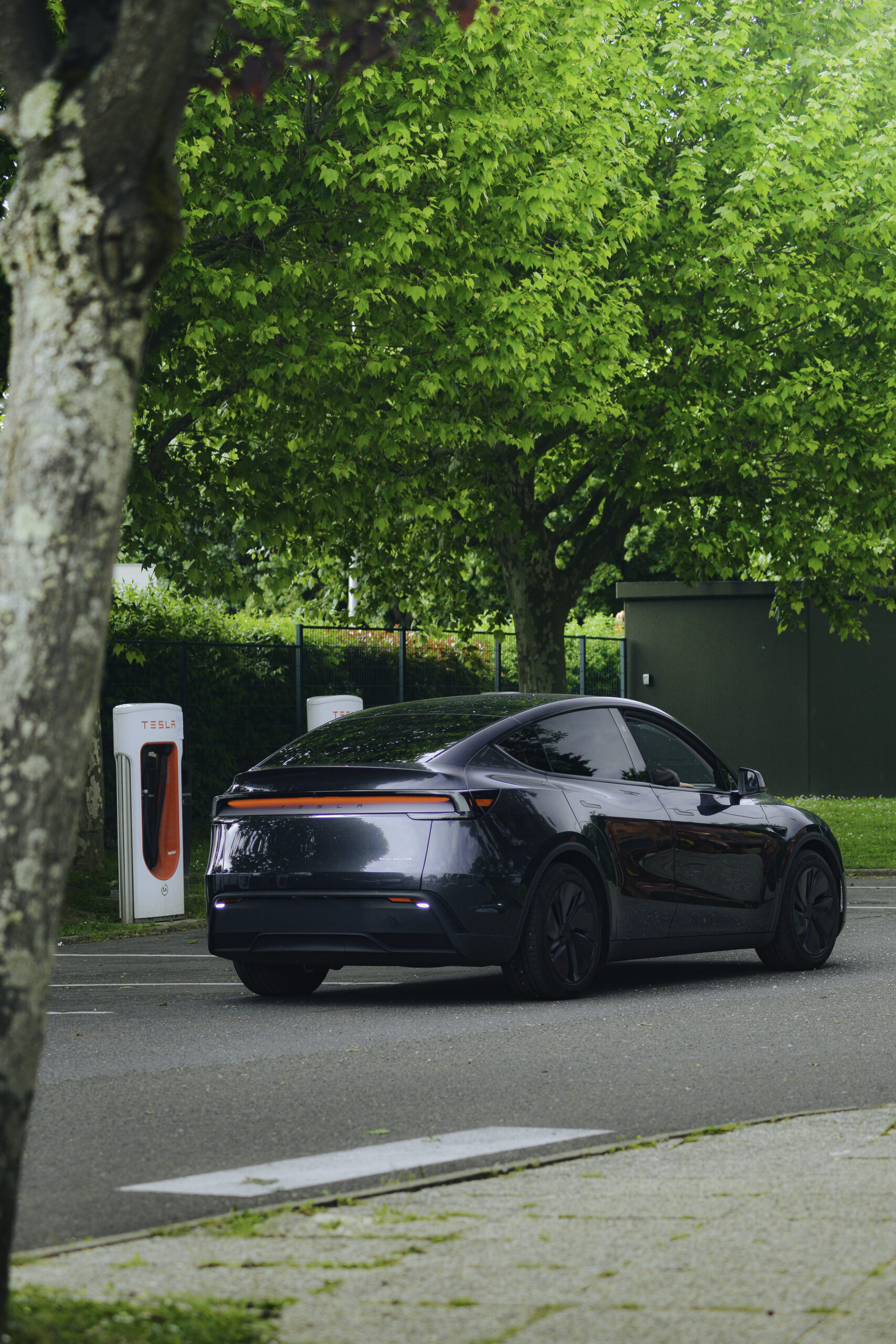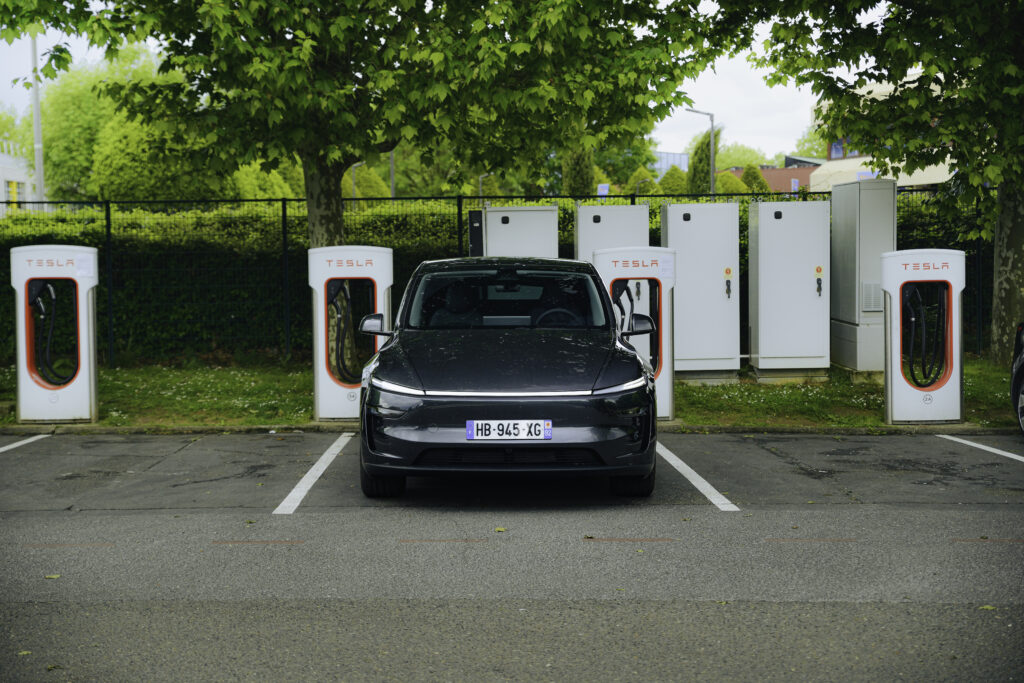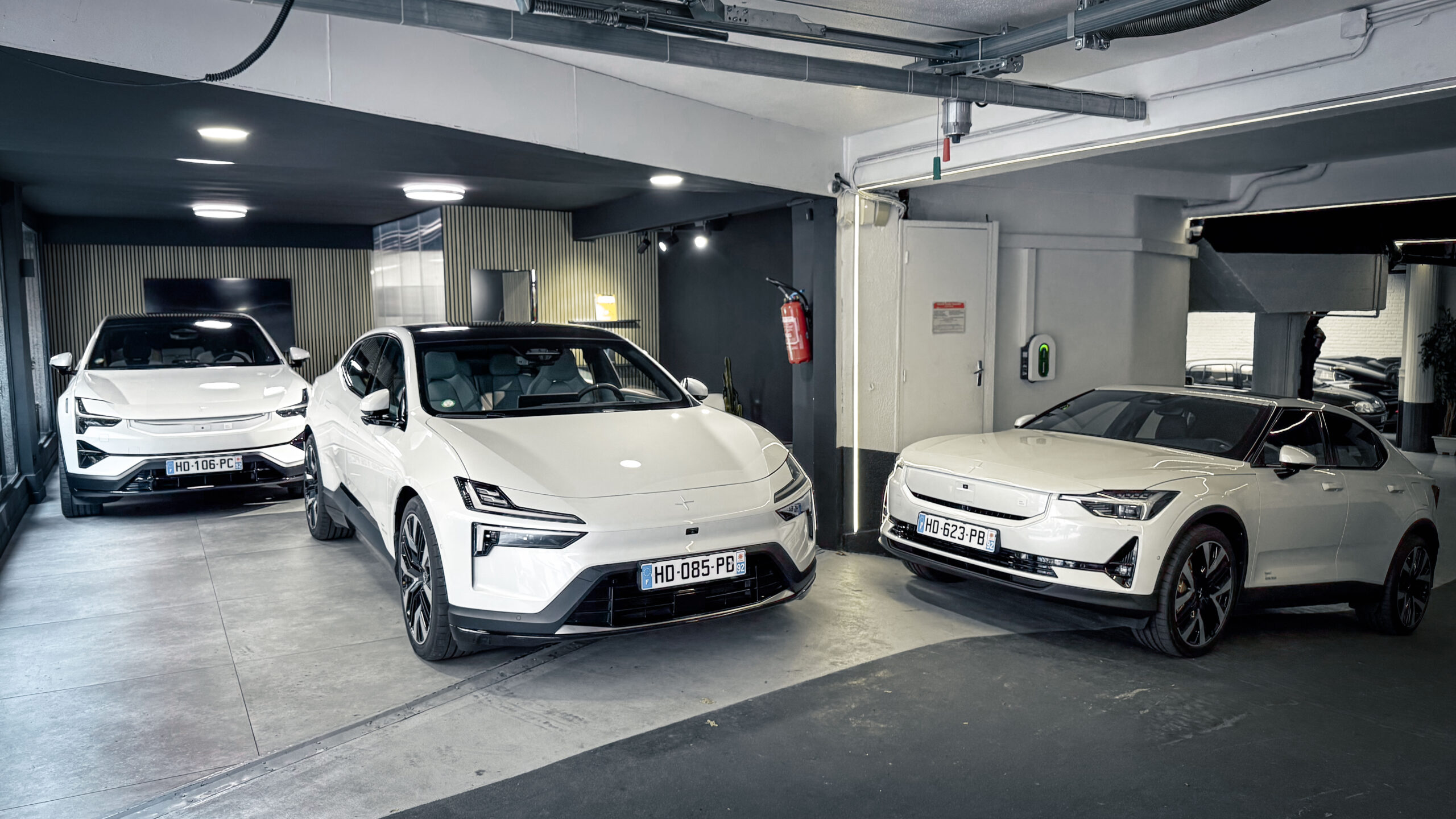
ECO MOTORS NEWS took the three Polestar models – soberly named 2, 3 and 4 – for a triple test drive to find out who they are designed for and what they are used for.
Polestar is a Swedish brand, spearheading the Volvo Group’s premium electric range. In 2020, it will hit the market with its first production model, the Polestar 2. But it would be a long time before it arrived in France, because of a legal imbroglio with a famous French brand that thought the Polestar logo looked too much like the chevrons. So it was in June 2025 that the firm from the cold finally put down its wheels in France. But a lot has happened in 5 years! Since the release of the Polestar 2, models 3 and 4 have appeared in the catalogue, and they too are available here. The story was too good for ECO MOTORS NEWS to pass up, so we decided to test not one but all three Polestar models! This is an opportunity to draw up a comparison based on our feelings and sensations behind the wheel of these top-of-the-range electric nuggets which, for the time of our test, swapped the Arctic Circle for the cobbles of Paris, the ring road and the woods that dot the inner suburbs. It’s worth noting that the models we tested are all equipped with the Performance Pack and the Long range Dual motor, the most premium configuration.
Polestar 2, the urban car that’s out of the ordinary
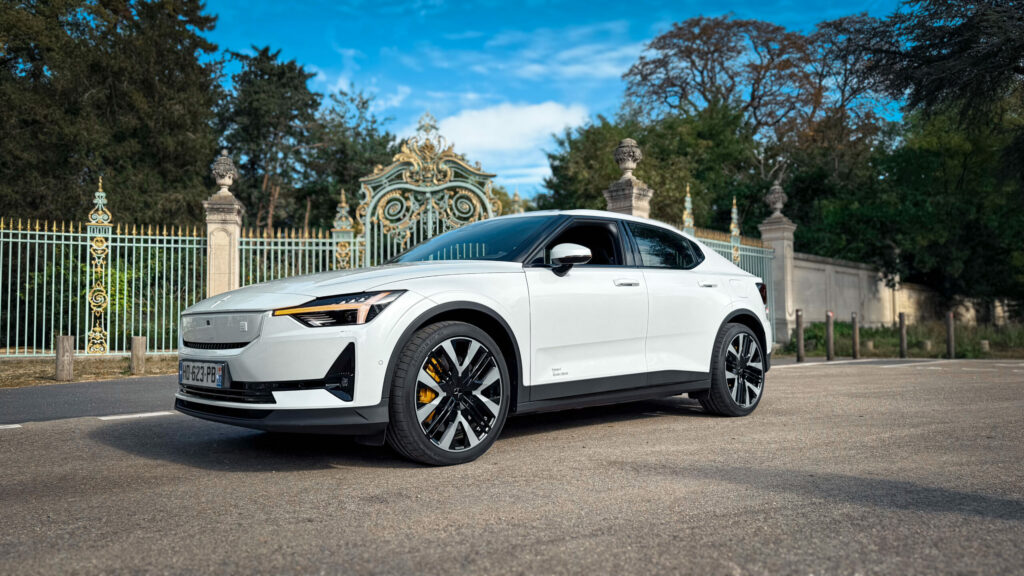
The brand’s inaugural production model, Polestar had the onerous task of conveying the brand’s philosophy from the outset: comfort, safety, premium quality and driving pleasure. And it does just that, with 476bhp and 740Nm of torque, more than enough to get you out of tricky situations in town – when you’re coming out of a roundabout or in the wrong lane – and of course on the motorway. Because even if this is not its basic mission, we have no doubt that this Polestar 2 will have no trouble swallowing up the kilometres, with a claimed range of 568 km that is not so far off the reality of our test, despite several greedy accelerations and decelerations.
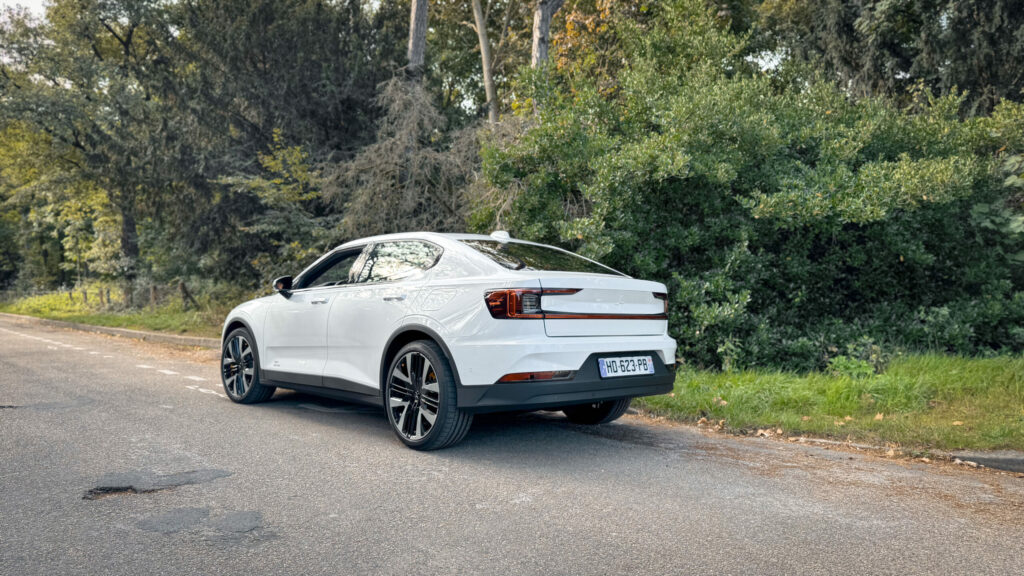
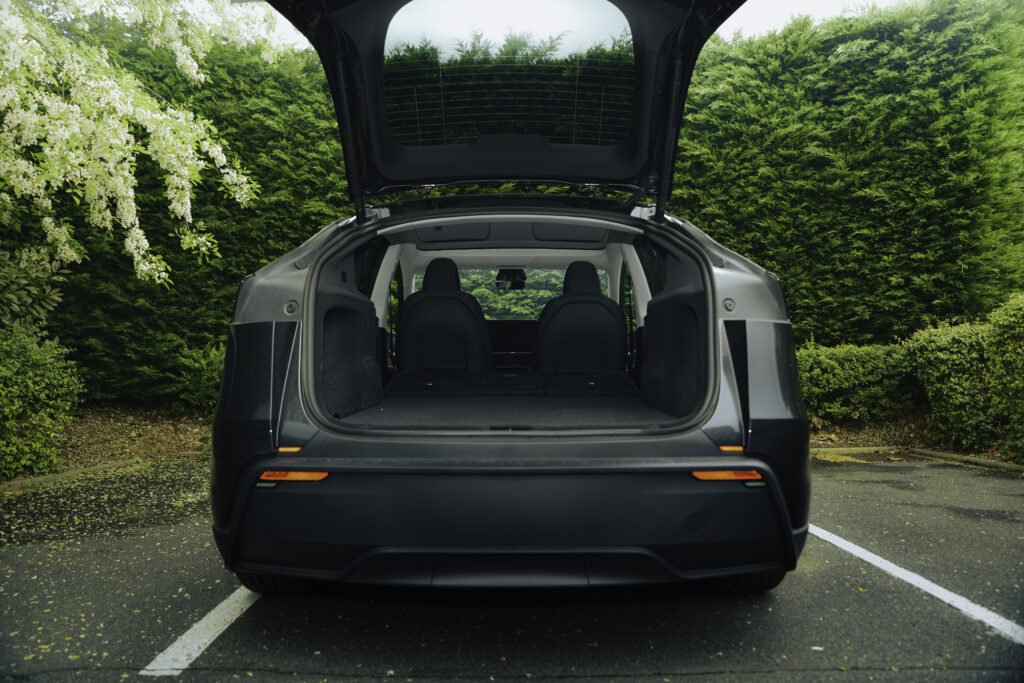
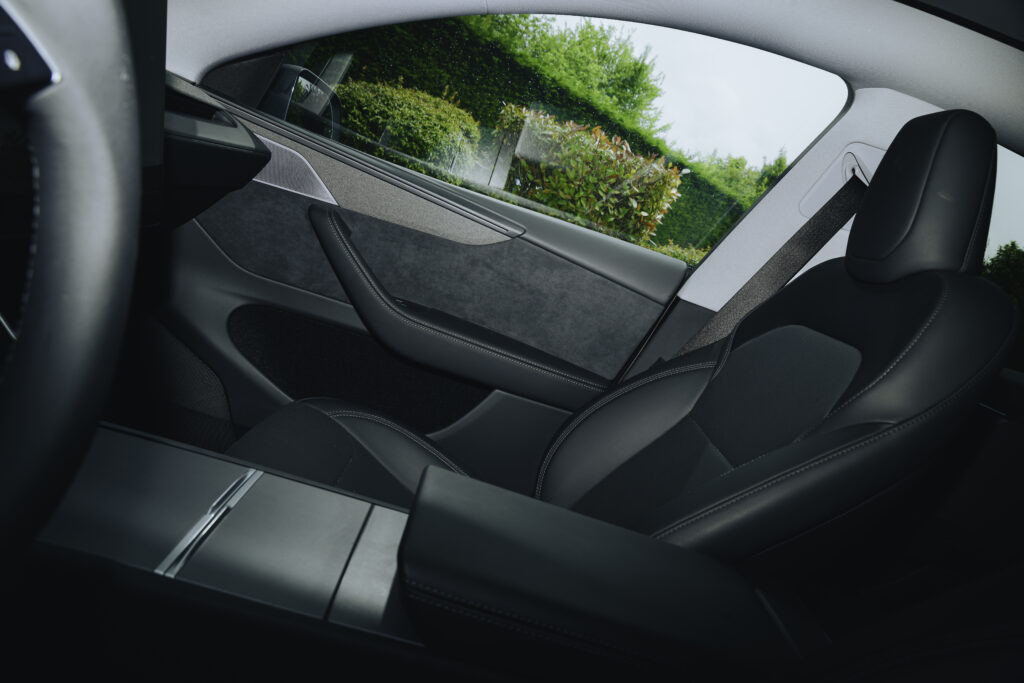
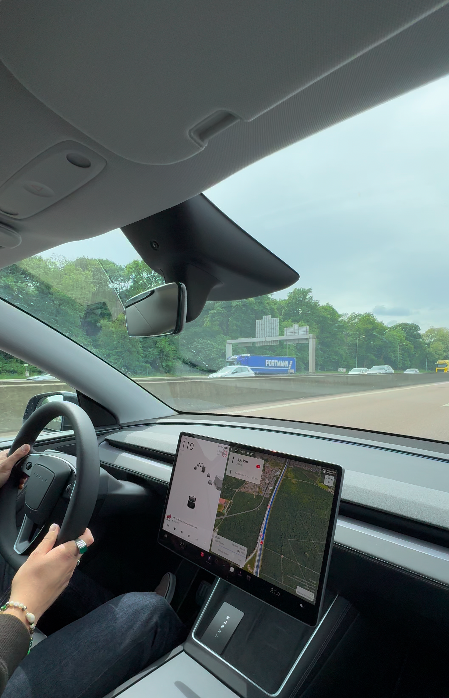
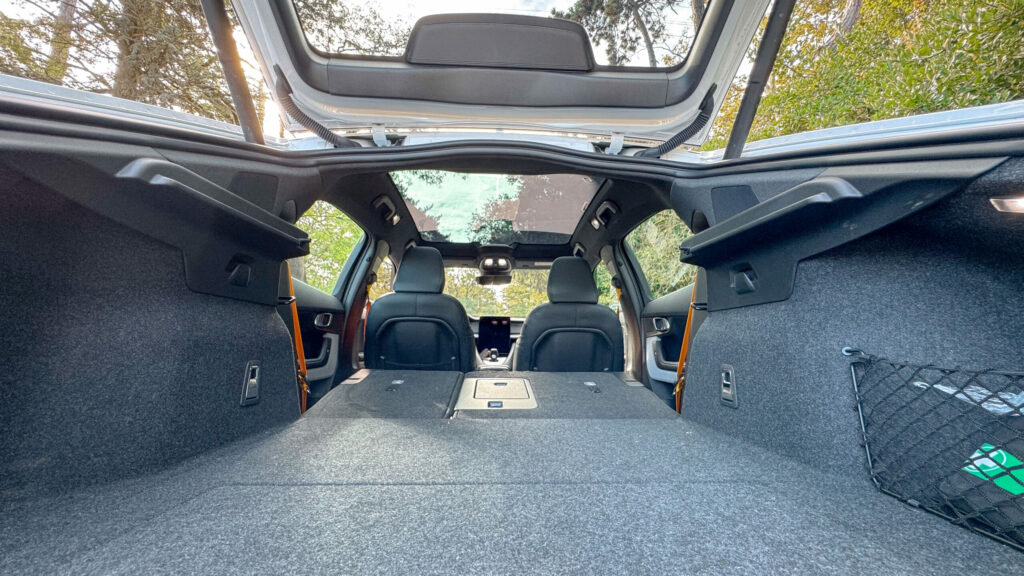
Even so, the target audience is urban: city dwellers who want a ‘small’ saloon – 4.6 metres long – for their daily commute, but with enough room to take the family away for the weekend. Once again, the promise is kept. There’s plenty of room in the front and rear seats, as well as in the boot, which boasts 407 litres with the seats up and 1,097 litres with the seats down. The cabin is uncluttered, and the 11-inch vertical screen is big enough to manage everything without a problem, but blends in well enough not to get in the way. It lets you adjust almost everything in the vehicle, offering several options at a time. For our part, we really liked being able to tighten up the feel of the steering wheel or select a less lively ‘One Pedal’ mode.
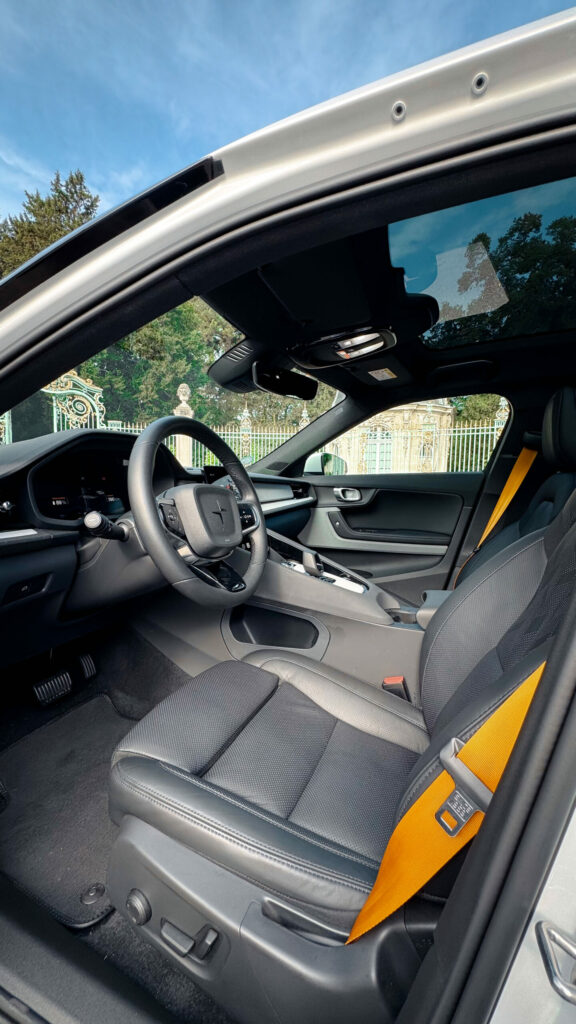
The centre pillar, which is rather bulky, may please those who appreciate the ‘cocoon’ aspect for the driver, but we found that it made us a little less comfortable. In fact, that was one of the downsides of our test drive: the upholstery is a little stiff and you can feel it after several hours’ driving. Finally, the turning circle of 11.5 m, while not ridiculous, can sometimes be a little tight for a city car. All this is compensated for by the ‘slow speed’ mode which, particularly during manoeuvres, proves very useful in limiting unintentional excessive acceleration when starting off (available on all Polestar models).
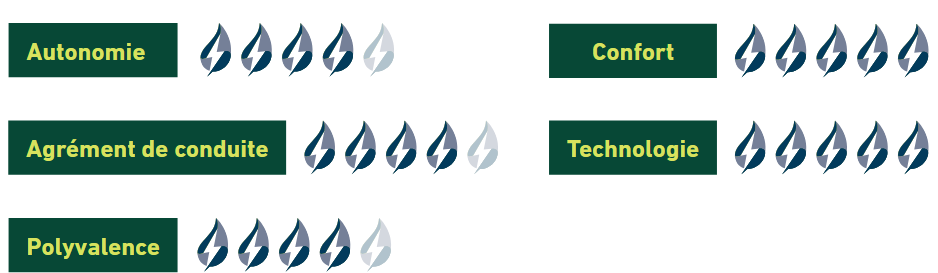
In brief:
As the entry-level model in Polestar’s range (starting at €46,900), the Polestar 2 inevitably suffers a little in comparison with the other models in the catalogue. But if we look at its competitors in the city saloon market, it offers one of the best value for money. Above all, the 2 is practical, ultra-customisable, a real pleasure to drive and slips along quite nicely between boulevards and main roads.
Technical data (model tested) :
- Transmission: all-wheel drive (Dual Motor)
- Power: 350 kW / 476 bhp
- Torque: 740 Nm
- 0-100 km/h: 4.2 s
- Maximum speed: 205 km/h
- Towing capacity: up to 1,500 kg
- Battery: 400 V lithium-ion, 82 kWh capacity
- WLTP range: 568 km
- Fast charge up to 205 kW: 10% – 80% in 28 min
- Length: 4,606 mm
- Width including mirrors: 1,985 mm
- Height: 1,473 mm
- Wheelbase: 2,735 mm
- Wheels : Performance 20″ wheels
- Price: €63,300
Polestar 3, the (very) top-of-the-range SUV
Spoiler alert: this is our favourite model. It’s also the most expensive. It’s only a short step from saying that we at ECO MOTORS NEWS have expensive tastes. And one step is all it took for us to fall under the spell of this sleek SUV. Even before we put our foot down, we loved the elegant design, with its razor-sharp lines and voluptuous curves. The killer detail? The spoiler on the bonnet, “for aerodynamics”, we’re told by Polestar. Aerodynamic or show-off, it doesn’t matter, it’s very pretty and that’s good enough for us.
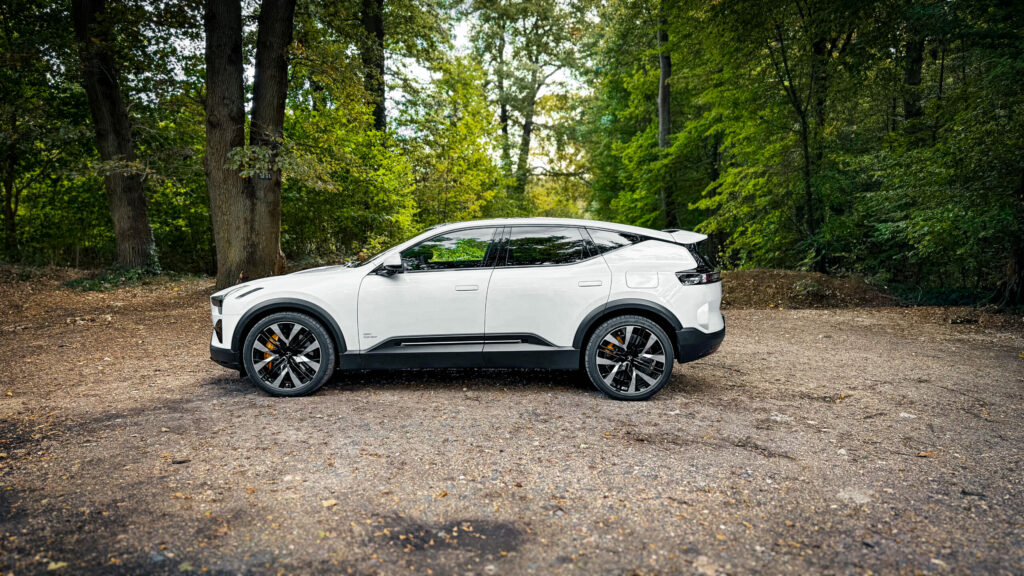
Let’s get behind the wheel. For once, we’ll start with the drawbacks. Or rather, the downside, in the singular: range. We’re told that the SUV has a WLTP range of 563 km, and after just one hour’s city driving, a bit of national highway driving and some acceleration to see what it’s made of, the SUV had already lost more than 5% of its battery. Admittedly, this would give us a range of between 480 and 500 km, so not too far off the advertised figure, but on the motorway, it could drop even further…
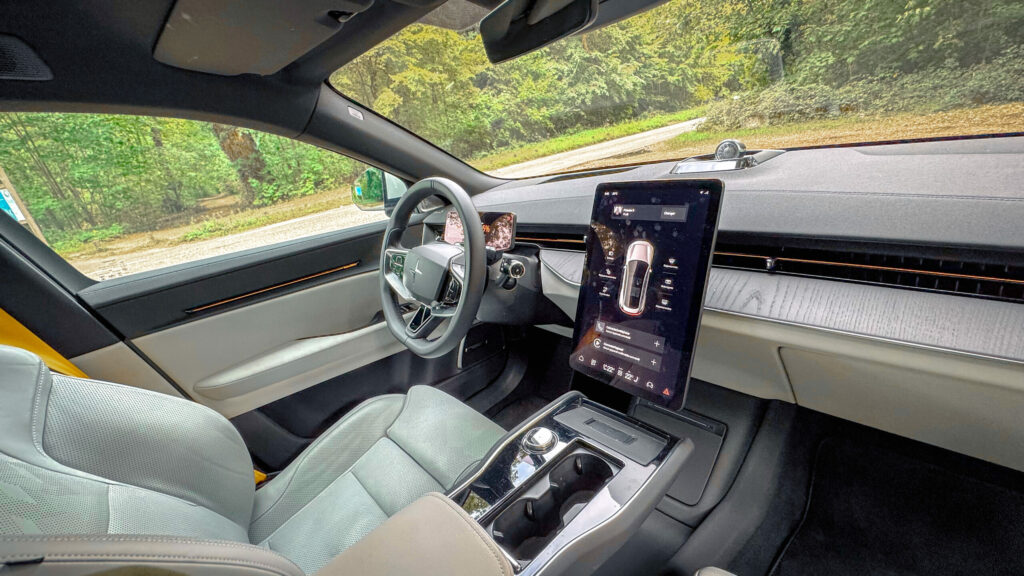
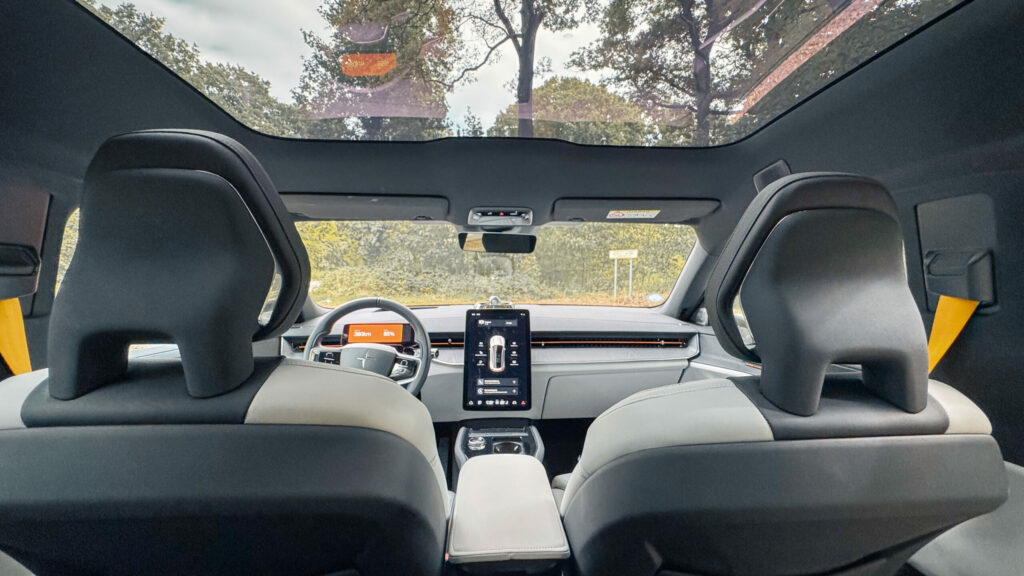
So much for the negative. Now for the positive: everything else. Inside, as on other models from the brand, everything is adjustable and customisable from the central screen. The bonus here is a Bowers & Wilkins audio system – of the highest order – and dozens of options for personalising your experience. By choosing studio mode, it was as if Johnny Cash was in the car with us. Amazing. And if he was really in the back seat, he would certainly have pointed out that he had plenty of legroom! In terms of comfort, it’s 10/10, particularly the quality of the seats, the ergonomics, and the lower, less imposing centre column, which opens up the cabin a little.
It feels much lighter than its 2.6 tonnes, and its large dimensions – almost 5 metres long and more than 2 metres wide, including the rear-view mirrors – are not noticeable when you’re driving, apart from the advantages of the interior space.
In brief:
It’s the most expensive, but it’s not the most powerful, nor the most compact, nor the one with the longest range. So why is it our favourite? For its versatility, for one thing, its comfort, its driving pleasure – without exaggerating, I felt more rested after driving it – and a more than adequate power output of 517 bhp and 910 Nm of torque. In short, it does everything (very) well. Special mention must go to the Bowers & Wilkins audio system, which is a real favourite. The ideal family SUV?
Technical data (model tested) :
- Transmission: all-wheel drive
- Power: 380 kW / 517 bhp
- Torque: 910 Nm
- 0-100 km/h: 4.7 s
- Maximum speed: 210 km/h
- Towing capacity: up to 2,200 kg
- Battery: 400 V lithium-ion, 111 kWh capacity
- WLTP range: 563 km
- Fast charge up to 205 kW: 10% – 80% in 30 min
- Length: 4,900 mm
- Width including mirrors: 2,120 mm
- Height: 1,614 mm
- Wheelbase: 2,985 mm
- Wheels: 22″ Performance
- Price: €91,800 inc.
Polestar 4, the powerful sports coupé
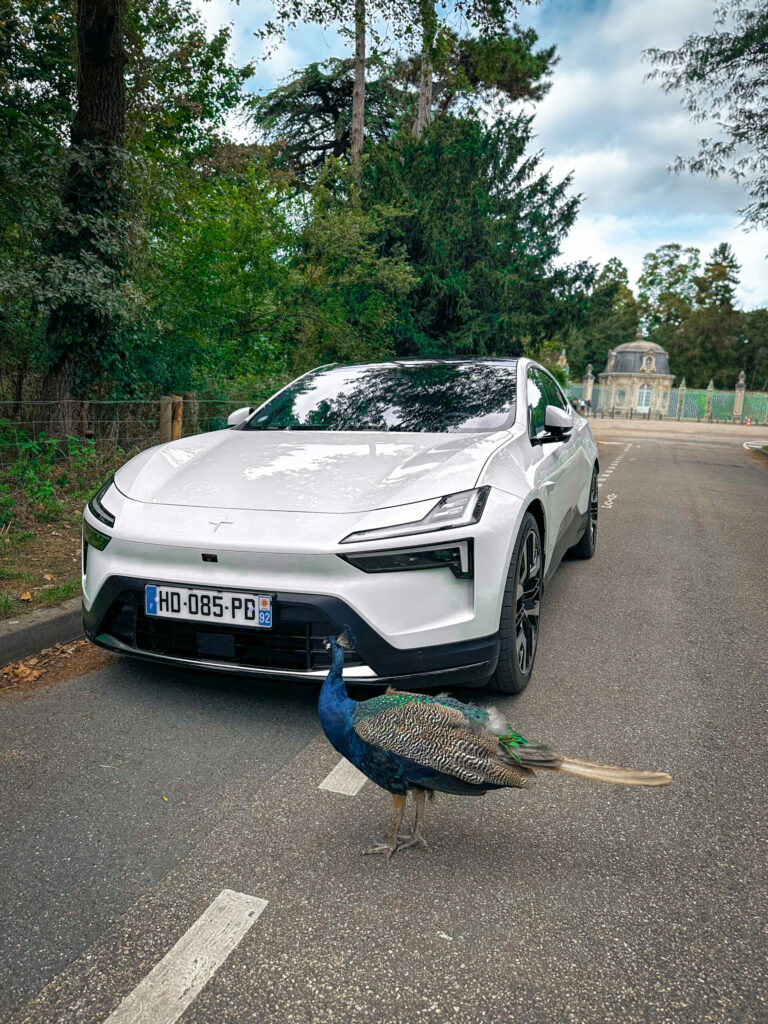
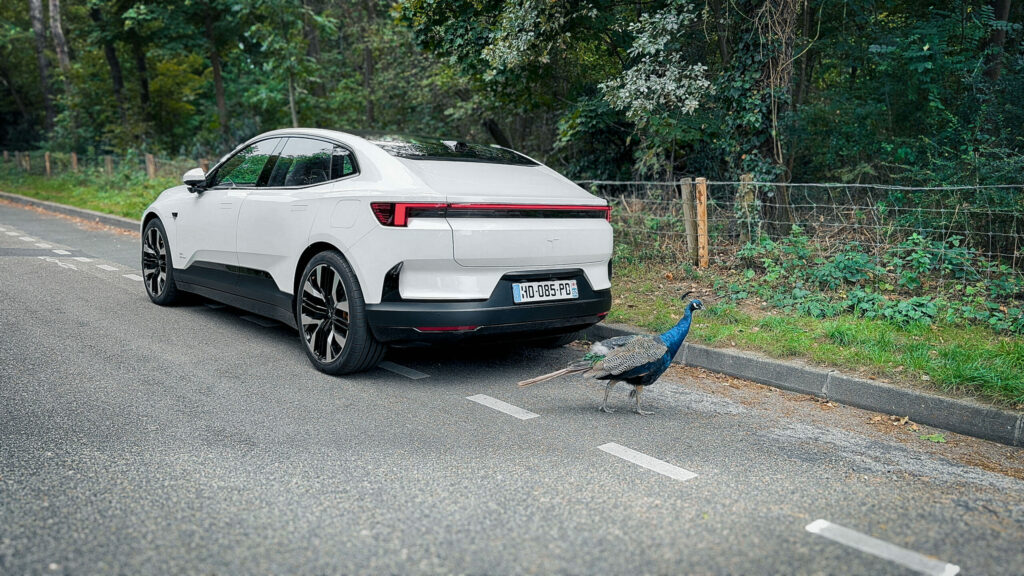
The 4 is the latest addition to the Polestar catalogue, while we wait for the Polestar 5. According to the brand, it’s a large SUV coupé, but visually it looks more like a family saloon. It’s a family car because, at 2.14 m wide and 4.84 m long, it’s a handsome baby with plenty of room in the back, despite a plunging roof that can shave the heads of even the tallest passengers. Above all, it’s the most powerful of the three models at our disposal, putting out 544bhp. And that’s what we liked best about our test drive: standing up from a standing start. In sport mode, you take off, you soar, and a 0-100 kph time of less than four seconds really puts butterflies in your stomach.
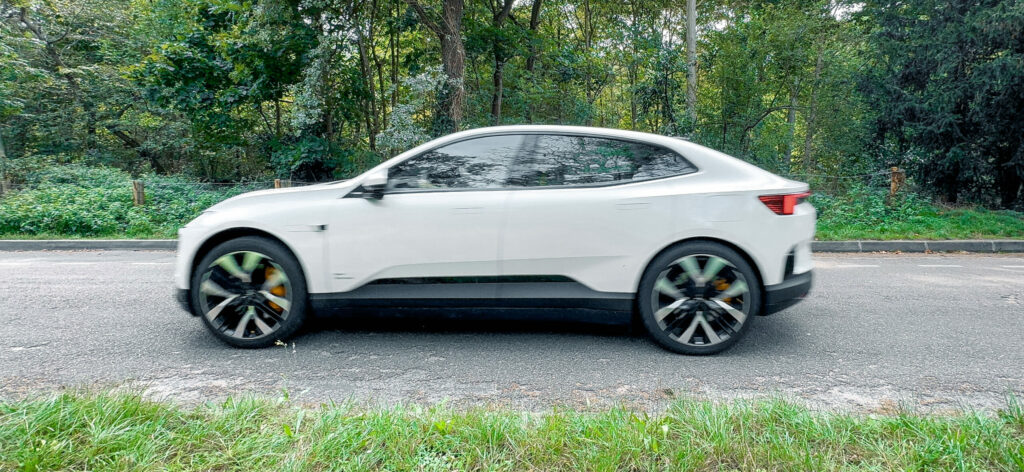
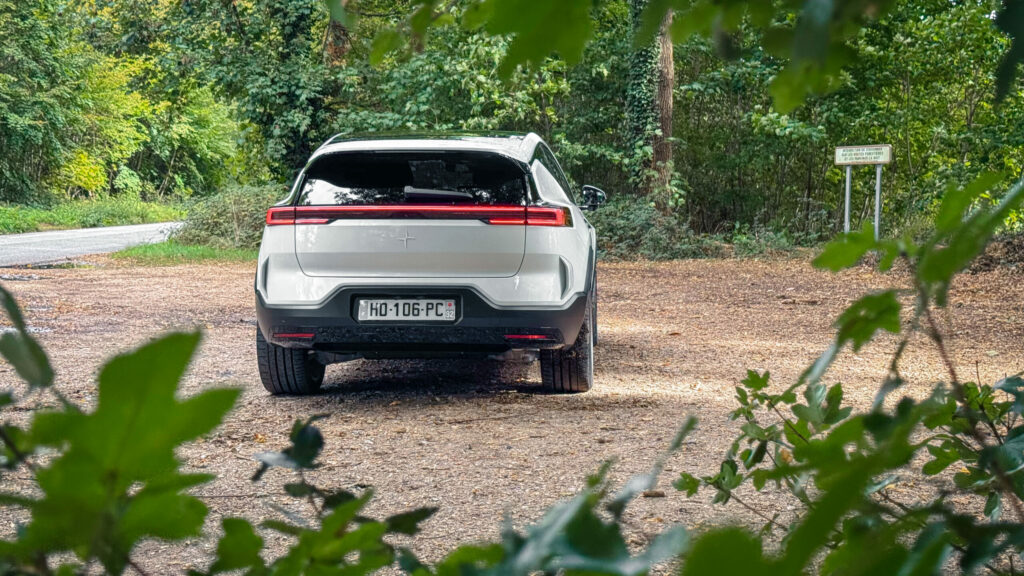
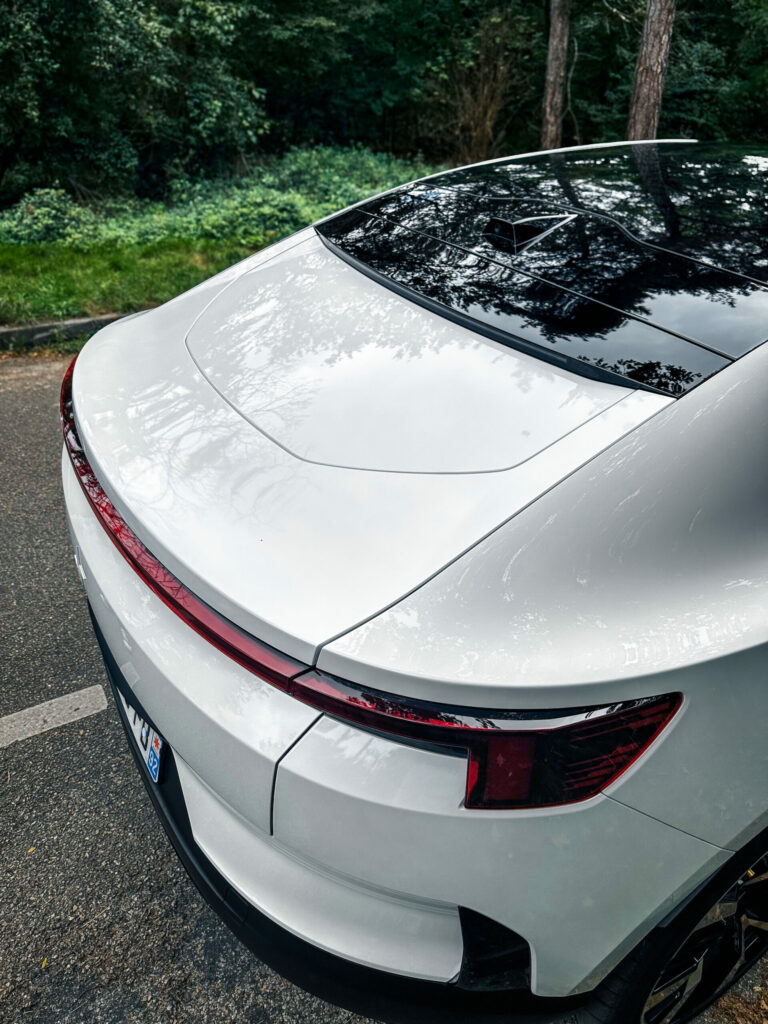
The exterior design is classic, very Volvo in spirit: sleek, elegant, simple and effective. That is, until you go round the corner and find yourself ‘up the arse’ of the car. No rear window! Instead, there’s a camera that sends the image back to the screen that serves as the rear-view mirror. It’s a bit confusing at first, but you get used to it, and then you love it.
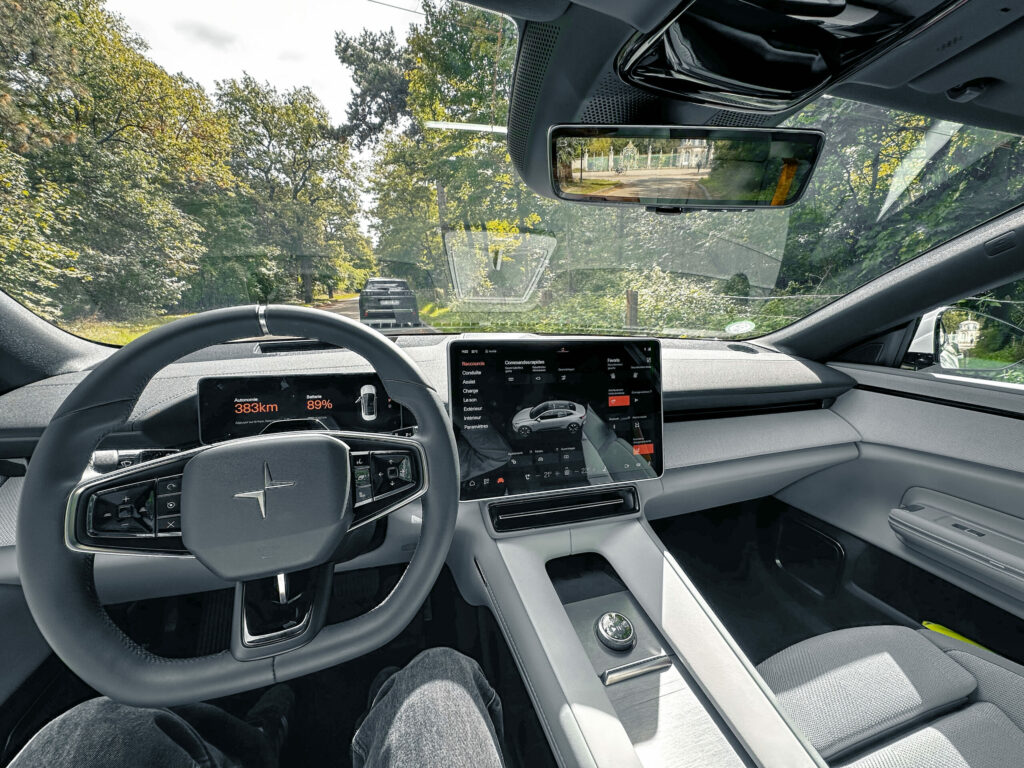
The screens are another strong point of the Polestar 4. The central 15.4-inch screen is horizontal and imposing, but doesn’t interfere with driving or concentration. The screen on the dashboard blends in perfectly with the cockpit, and the head-up display is superbly legible. Comfort is high, as are the premium materials, many of which are recycled – a welcome nod to the environment.
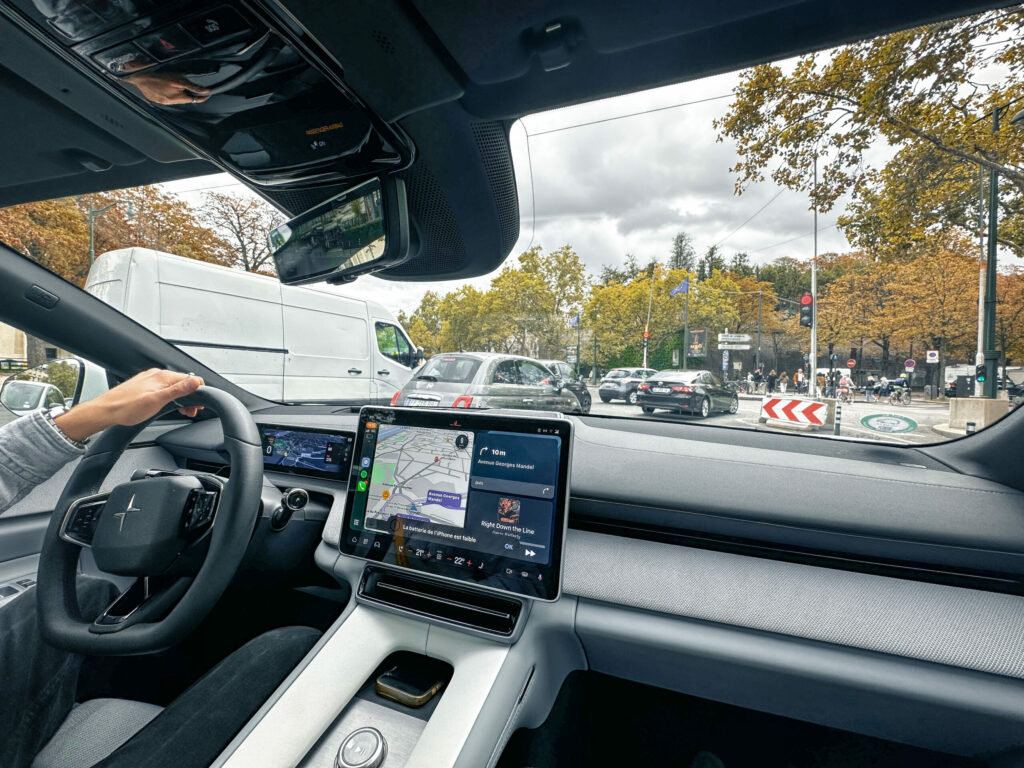
The pleasant surprise is the 11.64 m turning circle. That may sound like a lot, but it’s a lot less than the 12.13 m of the Tesla Model Y 2025, for example, and it means you won’t have the drops on your forehead when entering a car park. Add to that a battery of 360° cameras and driving aids (also present on other models, but particularly practical on this beautiful beast that is the Polestar 4), and you’d almost forget its XXL dimensions.
And we say ‘almost’, because in reality, 2.13 m wide is a lot. And that’s one of our downsides, as it inevitably reduces practicality a little. Another negative point is visibility. Nothing dangerous, but the structure of the car takes up a lot of space, particularly to the left of the driver, forcing him or her to do a bit of gymnastics in certain situations.
In brief:
The Polestar 4 is the missing link between the Polestar 2 city saloon and the Polestar 3 family SUV. With a little of both worlds, this SUV coupé/large saloon will appeal to fans of power, comfort and technology. But it will also appeal to consumers who want to stand out from the crowd by owning a car that is one of a kind and, let’s not forget, without a rear window!
Technical data (model tested) :
- Transmission: all-wheel drive
- Power: 400 kW / 544 bhp
- Torque: 686 Nm
- 0-100 km/h: 3.8 s
- Maximum speed: 200 km/h
- Towing capacity: up to 2,000 kg
- Battery: 400 V lithium-ion, capacity 100 kWh (110 cells)
- WLTP range: 590 km
- Rapid recharge up to 200 kW: 10% – 80% in 30 min
- Length: 4,840 mm
- Width including mirrors: 2,139 mm
- Height: 1,534 mm
- Wheelbase: 2,999 mm
- Wheels: 22″ Performance
- Price: €79,300 inc.