Category: Panorama

  • Electromobility in Dubai: an ecosystem taking off

    Electromobility in Dubai: an ecosystem taking off

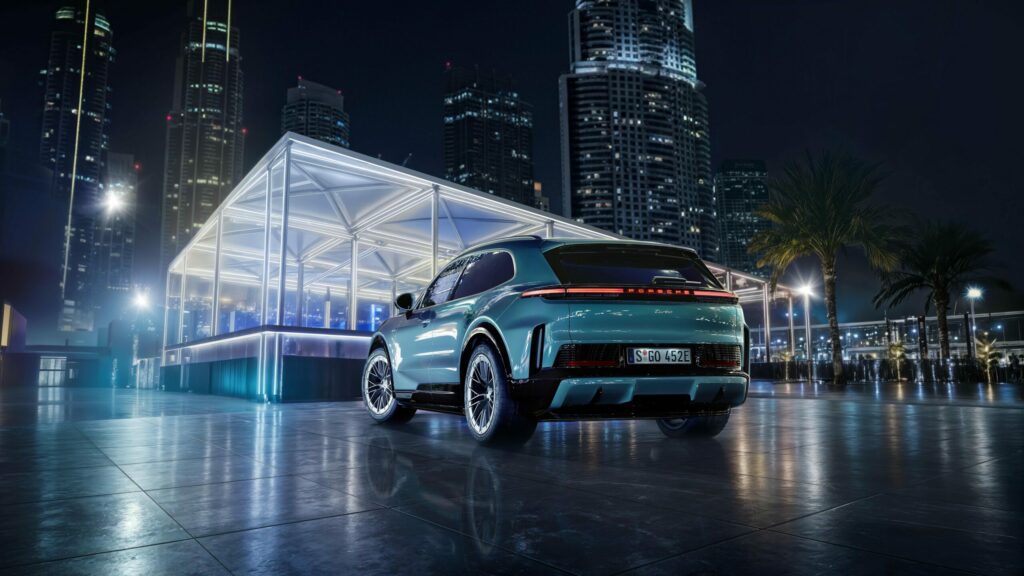
    Electric Porsche SUV in Dubai  Credit: Porsche.

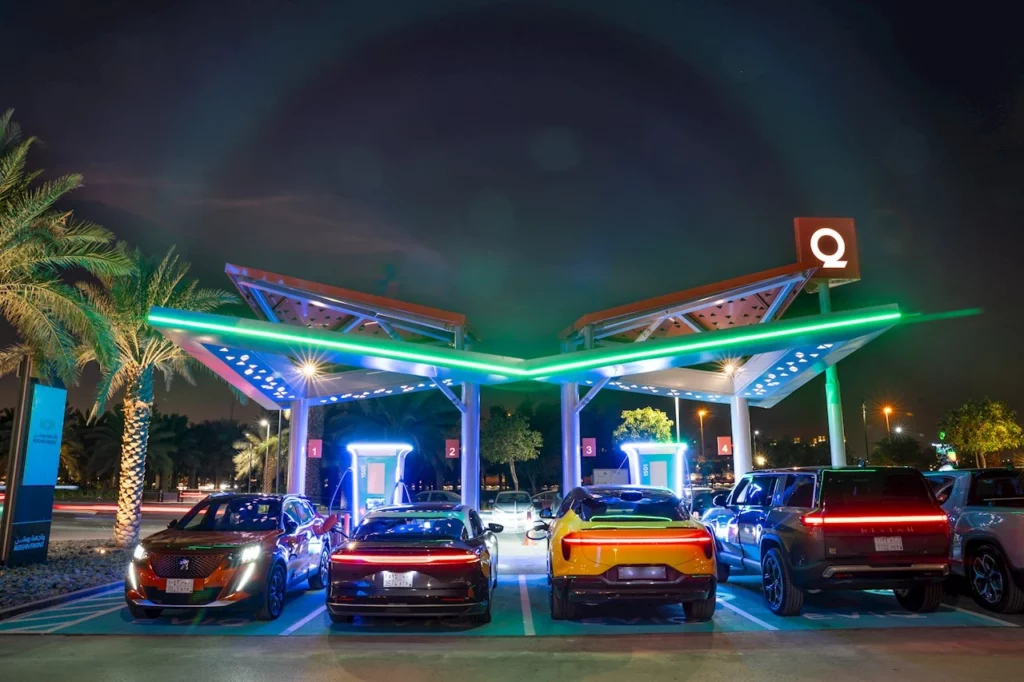
    The Emirate of Dubai is establishing itself as a major regional player in electromobility in the Middle East. Backed by a proactive political strategy and rapid infrastructure deployment, Dubai is attempting to chart its course toward carbon neutrality by 2050. However, this transition faces challenges posed by the desert climate and a market still dominated by combustion engine vehicles.

    A clear political ambition

    Dubai is part of the United Arab Emirates’ overall strategy, the “Clean Energy Strategy 2050,” which aims to achieve carbon neutrality by 2050. To this end, government authorities, primarily the Dubai Electricity and Water Authority (DEWA) and the Roads and Transport Authority (RTA), launched the “Green Mobility Strategy 2030” in 2015 with the “EV Green Charger” program.

    The stated objective is clear: to adopt cleaner mobility in private and public transportation. The RTA aims to completely eliminate emissions from its transport network by 2050, including the gradual conversion of buses, taxis, and public fleets to electric or hydrogen power. This strong political commitment places the city nicknamed the “Tiger of the Gulf” among the most influential territories in the Gulf in terms of electromobility.

    A rapidly growing fleet

    In Dubai, the number of electric vehicles continues to rise. At the end of 2022, Dubai had 15,100 electric vehicles. By the end of 2023, this number had climbed to 25,929 vehicles, representing a 72% increase in one year. By the end of the first half of 2025, Dubai is expected to have more than 40,600 EVs out of a total fleet of ~2.5 million vehicles. These figures are certainly on the rise, but they seem low when you consider that
    484,223 vehicles (all types combined) were registered in Dubai in 2024, according to figures from the UAE Ministry of Interior.

    This rapid growth reflects a market that is clearly moving towards electric vehicles, driven by public policy, infrastructure, and growing user interest. The United Arab Emirates as a whole is not limited to 100% electric vehicles: more than 147,000 electric vehicles were registered in 2023, a figure that is also on the rise.

    A study by PwC Middle East indicates that electric vehicles will account for 15% of new sales in the Emirates by 2030, and 25% by 2035. For Dubai, the goal is to reach 42,000 electric cars by 2030. This is certainly an ambitious goal, but the market is showing strong annual growth of +30% between 2022 and 2028.

    Tesla dominates, the Chinese are coming

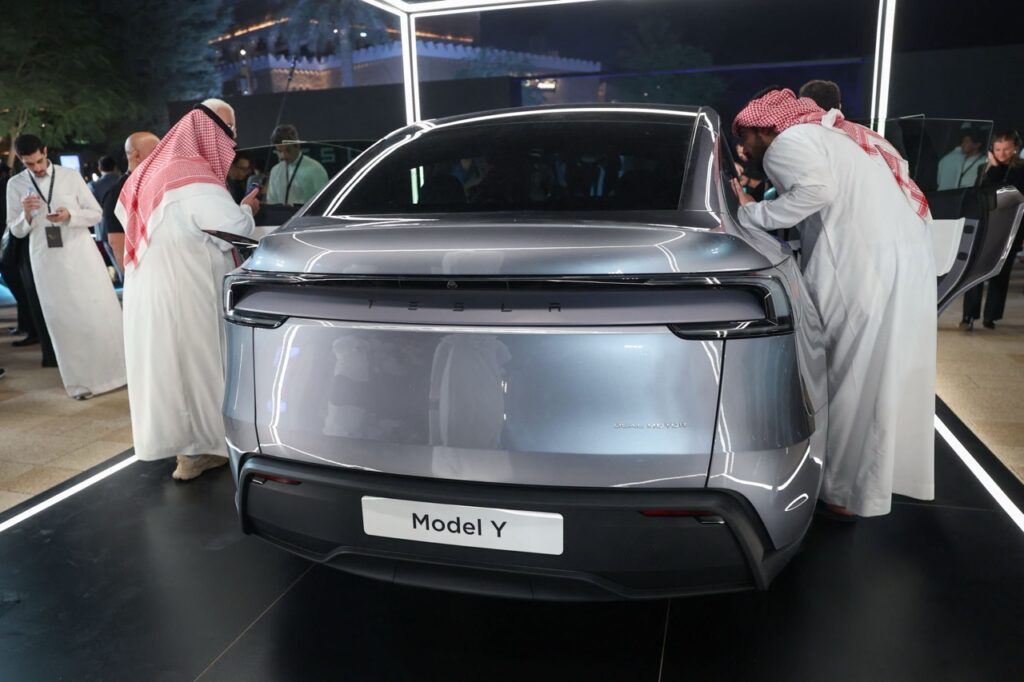
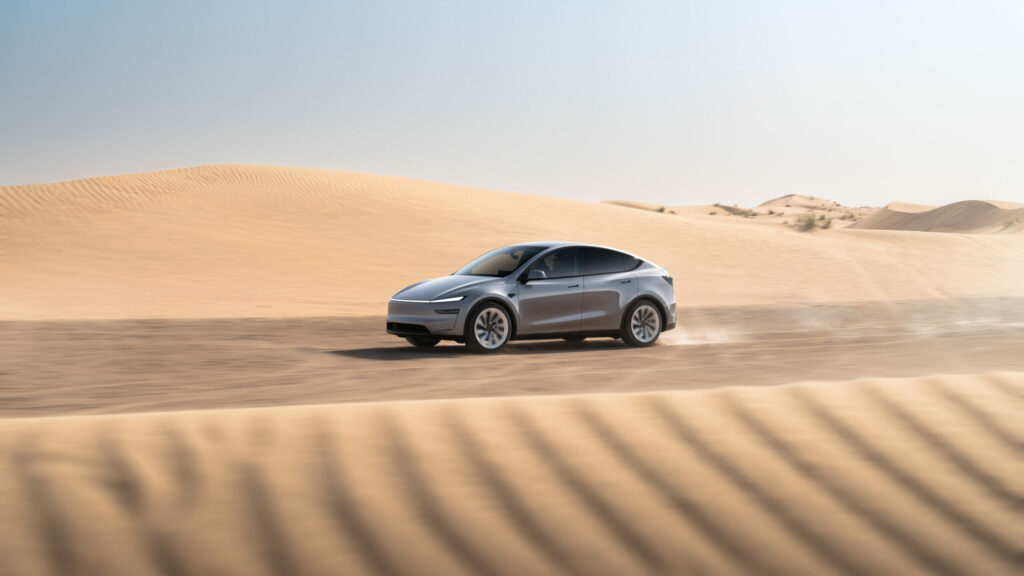
    As everywhere else in the world, the giant EV manufacturers are battling it out to sell the most cars. Tesla still reigns supreme in this game, with 43% of the electric vehicle market share in the Emirates at the beginning of 2025. The Model Y retains its top spot in Dubai.

    Tesla Model Y, the best-selling model in 2025.

    But as everywhere else, Chinese competition is gaining momentum. BYD, Geely, Chery, MG, Jetour, Nio, and Haval have established themselves in the Gulf country with the same ambition: to offer motorists affordable models. And it’s working: internet searches for Chinese electric vehicles have increased by 64%. For example, global leader BYD offers the Atto 3, a compact SUV starting at 149,900 dirhams (around €37,000), and the Seal. These models are adapted to the desert climate with better thermal management, the menus are adapted and delivered in Arabic, and, as always, they offer competitive range.

    A rapidly expanding charging network

    Of course, zero emissions and an increase in low-carbon vehicles mean charging infrastructure. With this in mind, the EV Green Charger program (Dubai’s first public charging infrastructure for electric vehicles) was launched in 2015. While it had only 14 users and a few charging stations when it started, by the end of 2025 there were 1,270 EV Green Charger stations available in Dubai. The goal for 2030 is 10,000 public charging stations.

    DEWA, the organization that manages and deploys the EV Green Charger program in Dubai, offers attractive rates to encourage the population to switch to electric vehicles. The government organization offers a charging rate of 29 fils per kilowatt-hour (€0.075), as well as free charging to encourage adoption.

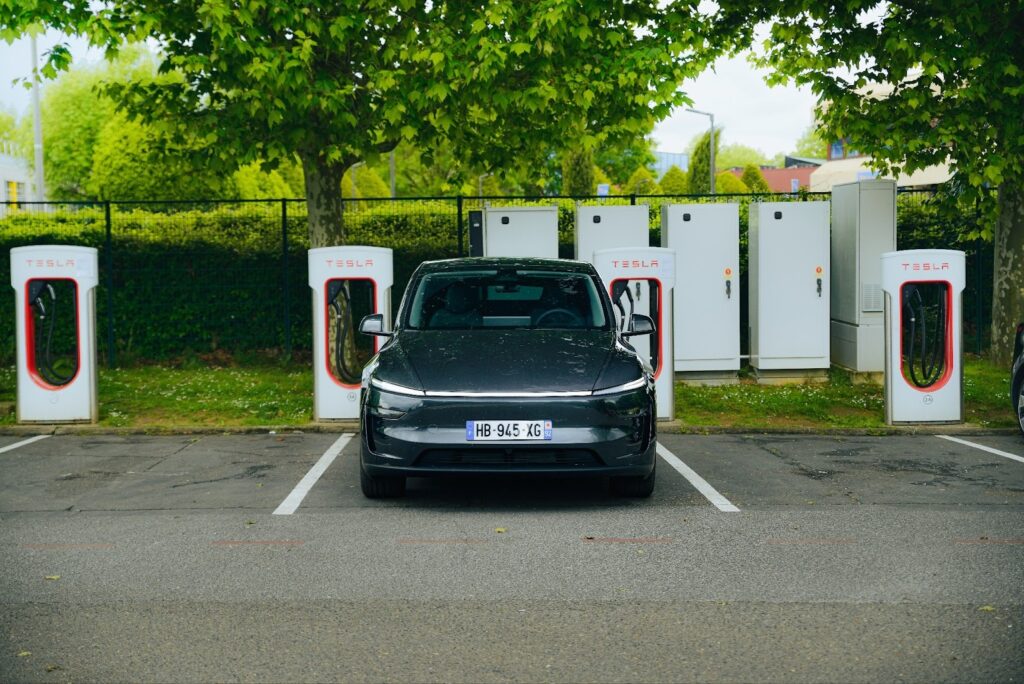
    The American giant TESLA is also present with its Supercharger network, which has more than 20 stations in the Emirates.

    The conversion of public transport

    While private individuals are gradually adopting electric vehicles, the RTA is preparing to convert its public fleets, a major technical challenge in the desert. That is why, in June 2025, the RTA signed a 1.1 billion dirham ($270 million) agreement to purchase 637 new buses, including 40 fully electric buses, the largest order ever placed in the Emirates.

    These Chinese buses, manufactured by Zhongtong, are designed for Gulf conditions and will be delivered between late 2025 and early 2026. They are responsibly produced, as they comply with European “Euro 6” standards. This huge purchase is not a leap into the unknown, as in April 2025, the same organization (RTA) launched a test of a Volvo bus. With a 470 kWh battery offering a range of 370 kilometers, it convinced local authorities that electric mobility is suitable for all types of transportation.

    A major technical challenge: climate

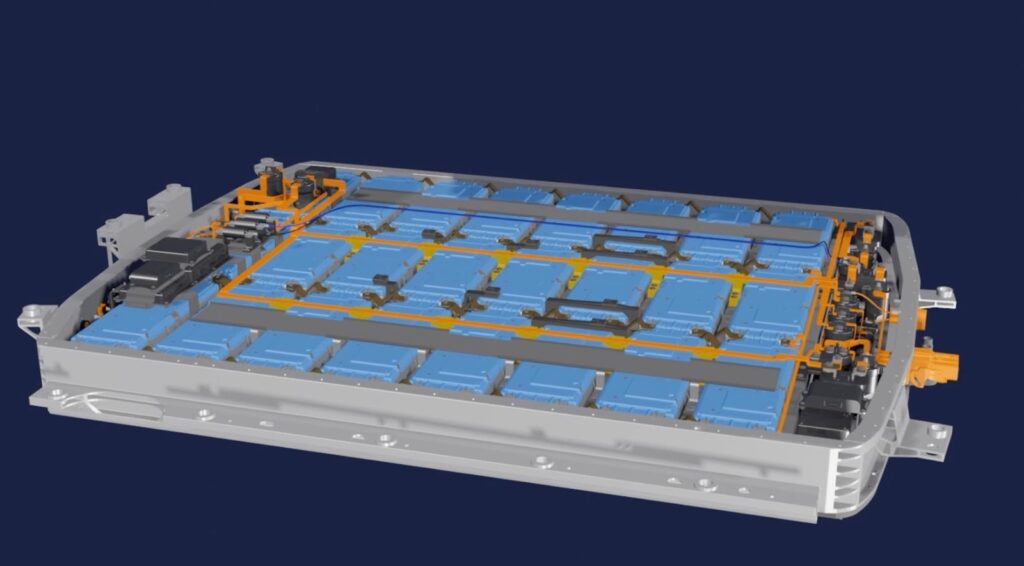
    Gulf countries experience high temperatures in summer, with readings sometimes exceeding 95°F. As we know, these harsh conditions put lithium-ion batteries to the test. Thermal management is crucial to prevent premature degradation or reduced range, which could discourage drivers. Tests show that some vehicles lose 10% of their range in extreme heat. Even though concrete solutions are slow to emerge, manufacturers are committed to enabling drivers around the world to switch to cleaner four-wheeled transportation. This is the case, for example, with BYD, whose Blade battery limits this loss to 5%.

    View of Dubai at night.

    In the coming years, solid-state batteries are expected to become more widespread. They are resistant to high temperatures and more chemically stable, but their production is limited and they are likely to be used in high-end EVs over the next five years.

    For electric buses, continuous air conditioning consumes a lot of energy, so the RTA tests each model and favors the most resistant vehicles.

    Attractive incentives

    With the goal of achieving carbon neutrality by 2050, the Dubai government has introduced several incentives:

    • Free parking: Electric vehicle owners benefit from free parking spaces in many public areas.
    • Fee exemptions: Reduced registration fees and exemption from tolls on certain roads.
    • Subsidized charging: controlled charging rates and periods of free charging.
    • Priority lanes: access to reserved lanes to facilitate traffic flow.

    These measures, combined with a relatively clean electricity mix, largely supplied by imports from neighboring countries and a growing share of local renewable energy, enable electric vehicles to have a carbon footprint well below the regional average.

    A burgeoning local industry

    On the local industry side, M Glory Holding Group launched what is billed as the first electric vehicle production plant in the Emirates in 2022, located in Dubai Industrial City. The plant has an ambitious capacity of up to 55,000 electric vehicles per year. These are encouraging figures for Dubai, although in reality, the situation is less clear-cut, as since 2023, no public data on production, sales, etc. has been released by the company.

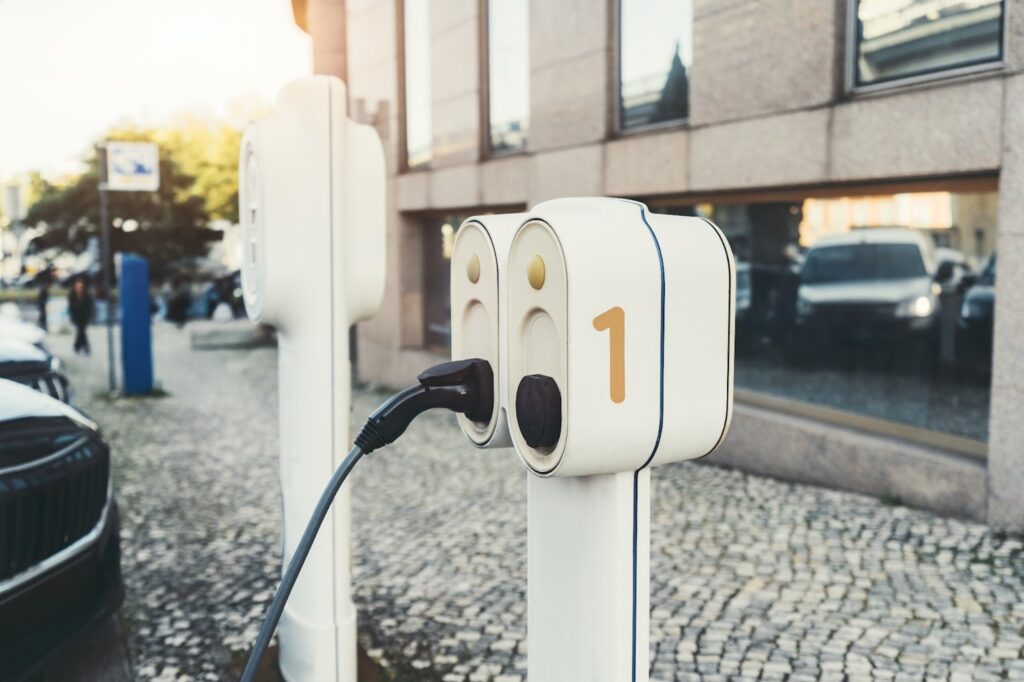
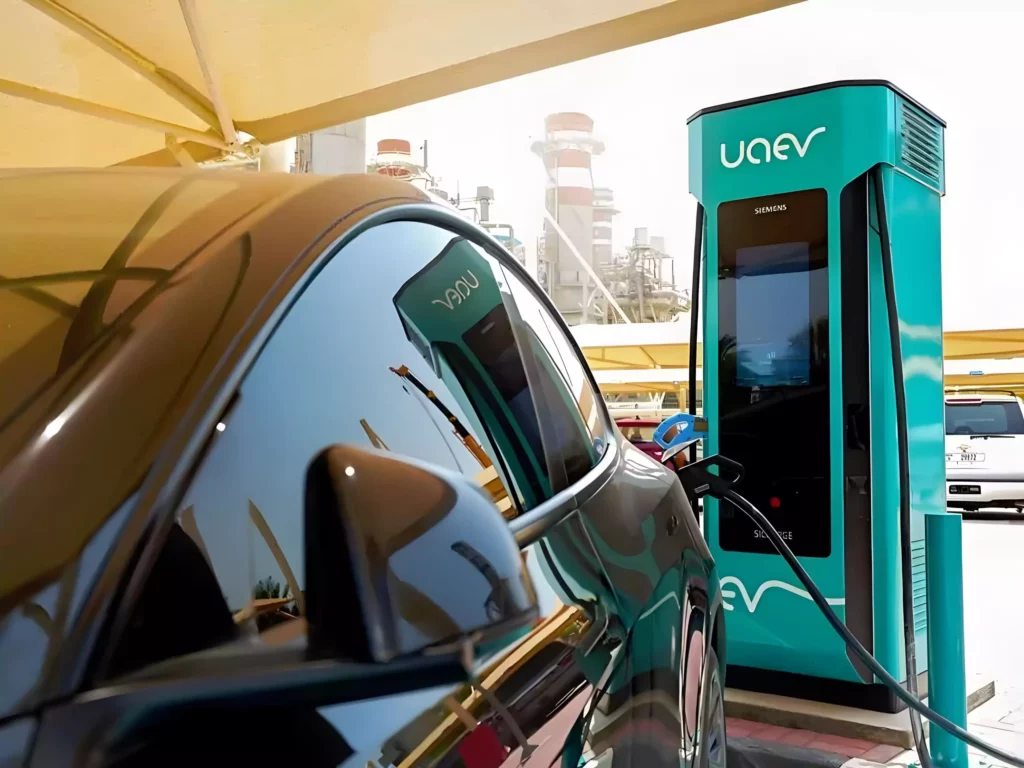
    In terms of charging infrastructure, local companies are developing. UAEV, an EV infrastructure company, obtained its license as an independent charging station operator in Dubai in October 2024, giving it the right to operate public charging stations autonomously. Since then, the company has been fully active and is collaborating with several companies and local authorities.

    UAEV charging station.
Credit: UAEV.

    Major distributors such as Al-Futtaim play a key role in distributing brands such as BYD, Tesla, and other international manufacturers, contributing to the democratization of electric vehicles in the emirate.

    But while a few local players are developing to support this transition, the market remains largely dominated by international distributors and importers. The role of local companies remains limited, focusing more on assembly and infrastructure development than on the mass production of electric models.

    The challenges ahead

    Despite rapid progress in the electrified mobility ecosystem, several obstacles remain: The still small share of electric vehicles: despite strong growth, electric vehicles still represent a minority share of the total vehicle fleet in the emirate. The road to maturity for electromobility remains long.

    Purchase cost: even with incentives, electric vehicles remain more expensive than their combustion engine equivalents, limiting access to these vehicles, even the most affordable ones.

    Accelerated battery wear: the hot climate accelerates battery degradation, reducing their lifespan and increasing maintenance costs.

    Dependence on robust infrastructure: the continued expansion of the charging network remains essential to remove barriers to adoption, particularly for long journeys and interurban travel.

    A region taking flight

    Dubai is no longer in the experimental stage. The city is positioning itself as a spearhead for carbon-free mobility in the Gulf thanks to a proactive strategy, rapid infrastructure deployment, and growing adoption, although still too modest.

    However, the city is working on this transition: incentives, conversion of public fleets, and planning towards 2050 are essential levers for democratizing this means of transportation.

    However, the city is working on this transition: incentives, the conversion of public fleets, and planning for 2050 are essential levers for democratizing this means of transportation.

    Dubai is a fertile ground for electromobility: strong growth potential, political support, and a need for innovation to adapt electromobility to the local context. Despite the natural difficulties linked to climatic conditions in particular, the path forward has been laid out.

  • The forward march of Tesla’s robotaxis

    The forward march of Tesla’s robotaxis

    Demand is exploding and waiting times are getting longer in Austin, one of the two cities where the service is in place, along with San Francisco. In response, Tesla plans to double its fleet of robot taxis from next month, according to founder Elon Musk’s announcement on X. This significant increase confirms Austin’s central role in Tesla’s roll-out strategy, which aims to turn the city into a showcase for its autonomous technology launched last June.

    Outside view of Tesla robotaxi in service in Austin
    Exterior view of a Tesla robotaxi used in pilot areas such as Austin and San Francisco (Credit: Tesla)

    A service still under development

    The American billionaire claims that the fleet of robot taxis in Austin, Texas, should “roughly double in the next month”. He did not give a precise figure, but his statement confirms the strong pressure on the service since its launch. Many users report having to wait a long time for a ride, with some citing unavailability in the evenings or at peak times. These reports show that current capacity is no longer sufficient.

    The service currently operates in two areas: Austin and the San Francisco Bay Area. Tesla presents its vehicles as robotaxis, but they still operate with a safety driver at the wheel. The authorities point out that Tesla cannot charge for an autonomous taxi service and that the current framework remains that of a VTC service using advanced driver assistance, but not legally recognised fully autonomous driving. This supervision remains essential until the software is deemed totally reliable in all situations. However, Tesla is promising rapid progress towards more complete autonomy. It says it wants to remove Safety Drivers from large areas of Austin by the end of the year, which would be a major turning point for Tesla.

    Interior of a Tesla robotaxi seen from the rear seat
    View from the back seat of a Tesla robotaxi, showing the modern interior and the central screen used for the service. (Credit: Tesla)

    A geographical and technological ambition

    It also plans to extend the service to eight or ten major US metropolitan areas. Tesla has just obtained a licence to operate a VTC service in Arizona. This authorisation paves the way for an extension of the robotaxi beyond Texas and California. The company could test larger areas and different road environments in order to validate the robustness of its system. This new testing ground promises to be the first step in a wider national roll-out.

    This ambition marks a turning point for Tesla, which has long been trying to fulfil its promise of making the robotaxi a core activity in its business model. The carmaker is also repositioning part of its technical resources towards improving its FSD (Full Self-Driving) software, which has become a strategic priority. Musk regularly describes autonomy as “the real edge” of Tesla’s future. If Tesla manages to accelerate at this rate, Austin could become the first full-scale laboratory for a truly operational autonomous service. But success will also depend on two key factors: the ability of the software to handle complex scenarios and the speed with which regulators grant the necessary authorisations. It remains to be seen whether technology and regulation will move fast enough to keep pace with this highly ambitious timetable.

  • French Overseas Territories: electrical challenges at the ends of the earth

    French Overseas Territories: electrical challenges at the ends of the earth

    At a time when countries are developing their energy transitions for transport, are France’s overseas territories, which are often overlooked in major national plans, being left behind when it comes to electromobility? Logistical challenges, a unique energy mix, ambitions that are sometimes thwarted: territory by territory, let’s find out where electromobility stands off the French mainland in 2025.

    Electric car on a mountain road surrounded by dense vegetation.
    An electric car drives along a mountain road in the middle of nature, illustrating sustainable mobility in green landscapes.

    La Réunion

    Réunion is the leader in electromobility in the French overseas territories, with the highest penetration rate. With a total of 6,005 new vehicles sold in the first quarter of 2025, the island is down 8.4% on last year. The same applies to electrified vehicles: 742 electric vehicles sold, a fall of 32.1%.

    In these figures, BEVs account for 631 units (10.5% market share), while PHEVs represent 111 units (1.8% market share). These declines are largely due to the abolition of the local tax exemption and higher prices.

    It also has the highest density of charging points (462 public points), supported by local operators such as EZDrive. The region has a high overall electrification rate (49.9%), but remains highly sensitive to economic and political uncertainties.

    Martinique

    By 2025, the region will have 211 public charging points, a figure that is rising but still insufficient to support motorists. They are deployed by various operators: EZDrive, VoltDom and TotalEnergies, who offer competitive average tariffs.

    The market for electric vehicles remains modest (4.9% market share in 2024).

    There are several reasons for this low penetration:

    • A road network that consumes a lot of energy (steep gradients, almost constant air conditioning);
    • a limited range of models that are not always adapted to local constraints ;
    • a tense economic and social context.

    Guadeloupe

    Guadeloupe has more than 184 public charging points, a number that is still low but growing steadily, supported by players such as gmob, EZDrive and TotalEnergies.

    Renault Zoe plugged into an electric charging point.
    A Renault Zoe recharges at a charging point, illustrating the boom in electric vehicles in the French overseas territories.

    In terms of sales, the results are encouraging: despite an overall decline in the passenger car market (-6.1% in 2024), the share of electric vehicles is between 5 and 6%, representing an increase of around 20%.

    As well as cars, electromobility is also making headway on two-wheeled vehicles: in recent years, the majority of mopeds sold have been electric.

    EDF Guadeloupe has also launched the D.R.I.V.E. project, an experiment designed to measure the benefits of photovoltaic shading dedicated to recharging, with intelligent control to favour hours of sunshine.

    French Guiana

    Despite having the largest territory in French overseas territories, electromobility in French Guiana is struggling to take off. The public network has just 30 charging points, making it the least equipped territory. This shortfall is a major obstacle, and the market share of BEVs remains below 3%.

    Paradoxically, French Guiana is one of the most advanced regions in terms of carbon-free electricity production, thanks to the Petit-Saut dam and its hydroelectric potential, which covers almost 70% of electricity needs.

    Mayotte

    Probably the most troubled territory, Mayotte suffers from a very fragile economy. The car market is in crisis, with a 12.6% fall in second-hand cars by 2024, and a low penetration of pure electric cars (just over 3%).

    Despite this, the rate of hybrid electrification is high (30.2% by 2022). The transition is underway, but is severely hampered by local economic constraints.

    Data on infrastructure is non-existent: this lack of public information means that the region is significantly behind the times.

    New Caledonia

    In 2022, New Caledonia adopted an Energy Transition Plan (STENC 2) with a clear objective: 18,500 electric vehicles by 2030. The territory has already made progress: around 1,000 EVs are on the road, there are some forty charging points (Hivy network), and the first 150 kW hypercharging point was inaugurated in 2025.

    Local aid also supports the transition:

    • bonus of 600,000 CFP francs (around €5,030) for the purchase of an EV;
    • preferential electricity tariff for charging points: 8 francs/kWh during the day and 20 francs/kWh at night (compared with 34.96 francs for the standard tariff).

    However, the transition is still being held back by cultural (strong attachment to 4×4 vehicles), economic and political factors.

    BYD Seal U on a coastal road by the sea.
    The BYD Seal U drives along a coastal road in the sunshine, a typical landscape found in many overseas territories. (Credit: BYD Guyane)

    French Polynesia

    The market is still in its infancy, with only 2 to 3% electric cars and around 150 sold each year.
    Unlike New Caledonia, Polynesia offers no significant subsidies, which is holding back adoption.

    Scaling up is limited by the almost non-existent infrastructure, particularly in view of the very recent authorisation (2024) to install chargeable charging stations of more than 3 kW.

    Saint-Barthélemy & Saint-Martin

    In these areas, electromobility is still a niche mode of transport, at the top end of the market: the transition is mainly being made by importing luxury models, often hybrids. Public charging points are rare, and local support is virtually non-existent.

    Other overseas territories

    In Saint-Pierre-et-Miquelon and Wallis and Futuna, markets are marginal or non-existent. With no recorded infrastructure and a low population density, the entire market depends on imports, with demand remaining very low.

    Integration into national policies

    France has been encouraging electromobility for years, particularly through public subsidies. But while national schemes (ecological bonuses, social leasing) are theoretically open to the French overseas departments and territories, their application is proving complex.

    The government has increased the bonus for the DROMs by €1,000, up to a maximum of €8,000 depending on resources. However, the conversion bonus has been abolished for private individuals since December 2024.

    A €500 tax credit for the installation of a home charging point has been extended until 2027. The ADVENIR ZNI programme, set up by ADEME, finances up to €2,160 per charging point in non-interconnected zones. In particular, it encourages solar charging to avoid peaks in consumption.

    However, these aids are not always as successful as expected: high logistical costs, import prices, lack of take-back structures, low terminal density and local tax policies limit their impact.

    Solar charging stations for electric cars in a car park in Martinique.
    Solar recharging stations in Martinique, an example of innovative solutions adapted to the energy realities of overseas France. (Credit: Terre Solaire)

    Cross-cutting challenges and strengths

    The overseas territories present an energy paradox: heavy dependence on fossil fuels, but considerable renewable potential (sun, wind, hydroelectricity).

    Their status as non-interconnected zones means that the cost of electricity production can be up to ten times higher than in mainland France.
    This context complicates the emergence of sustainable electromobility, where optimising recharging and coordination with local energies are essential.

    There are also socio-economic constraints (poverty, high prices, unsuitable models) and the intensive use of air conditioning, which consumes a lot of battery power. However, the short distances between islands are an advantage: they make them natural laboratories for the energy transition, particularly through mini-grids, solar shading and intelligent management of recharging.

    Conclusion

    While La Réunion is leading the way, with a penetration rate in excess of 10%, the transition remains very uneven across France’s overseas territories. Martinique, Guadeloupe, French Guiana and Mayotte are lagging behind, while New Caledonia and Polynesia have ambitions despite a still limited market.

    There is real integration with the aid available in mainland France, but their effectiveness requires differentiated support and wider access to recharging. The decade 2025-2035 will be decisive: the challenge is clear – to make the overseas territories major levers for sustainable mobility.

  • Electromobility in Canada: a thwarted transition

    Electromobility in Canada: a thwarted transition

    Canada’s ambitions are among the highest in the world, with a target of 100% zero-emission vehicle sales by 2035. But by 2025, the reality on the ground is quite different: sales of electric vehicles are plummeting, the infrastructure is struggling to keep up and the government incentives that boosted the market have abruptly disappeared.

    Electric vehicle on a mountain road in Canada
    An electric vehicle drives along a Canadian mountain road, illustrating the challenges of autonomy in cold, isolated terrain.

    Stable car market, but electric cars in freefall

    The Canadian car market is relatively stable, with around 159,000 vehicles sold in October 2025, down 1.8% on October 2024. A slight drop, but over the first nine months of the year, Canada sold almost 1.45 million units, up 5.9% on the same period last year. So the overall market is in good shape, but unfortunately these figures mask a much bleaker reality for the electric mobility sector.

    Zero emission vehicles (ZEVs) are having a catastrophic year in 2025. In the second quarter, their market share fell to 9.2%, compared with 9.7% in the first quarter. What is even more striking is that in June 2025, 14,090 zero-emission vehicles were sold, representing a significant fall of 35.2% compared with June 2024. Over the first six months of 2025, the figure was the same: 79,476 electric vehicles were sold, a fall of 29.8% compared with the same period in 2024. This spectacular fall is mainly due to the end of subsidies.

    The end of incentives: a major blow

    As explained above, the country’s objective for the energy transition in transport is ambitious. To achieve a drastic increase in the uptake of EVs, the government has had to introduce budgetary incentives. The federal iZEV (Incentives for Zero-Emission Vehicles) programme, launched in May 2019, offered up to CAD 5,000 in rebates for the purchase of a new electric vehicle. This scheme enabled more than 185,000 Canadians to switch to electric vehicles.

    But in January 2025, the government announced the suspension of the programme, having exhausted its budget. This decision had an immediate effect: sales of BEVs fell by 57% between the fourth quarter of 2024 and the first quarter of 2025. Plug-in hybrids are not to be outdone either, with sales down 44% over the same period.

    Quebec, the historic powerhouse of electromobility in Canada (strong financial incentives, high EV adoption rates and a well-developed recharging network), also suspended its provincial incentives in February and March 2025. In that province, Tesla registrations fell from 5,097 vehicles in the fourth quarter of 2024 to just 524 in the first quarter of 2025, a staggering 90% drop. Despite this, Canadian provinces have autonomy over certain policies, and Quebec was able to relaunch the “Roulez Vert” incentive programme on 1 April 2025, giving Quebecers up to $4,000 CAD in assistance towards the purchase of an electrified vehicle.

    These figures reflect our dependence on public subsidies and reveal the fragility of the Canadian market: when subsidies stop, sales immediately plummet.

    Hybrids: the big winners in 2025

    This drastic fall in sales has benefited conventional hybrid vehicles, which have managed to hold their own. For the first time in 2025, they have overtaken zero-emission vehicles in terms of market share. In the second quarter, conventional hybrids accounted for 12.9% of sales, compared with 9.2% for all ZEVs.

    This shift is due to a number of factors common to other countries: electric vehicles are considered too expensive by motorists, and there are still too few recharging facilities in Canada. Hybrids appear to be a compromise.

    Map of Canada showing electric vehicle charging stations
    Map showing the location of public charging stations and the uneven distribution of the network across Canada (Credit: electricautonomy.ca).

    An inadequate recharging network

    Canada had around 33,767 public charging points spread across 12,955 stations in March 2025, an increase of 24.2% on the previous year. This is encouraging progress, but it falls far short of what is needed, because with its 39 million inhabitants and vast territory of almost 10 million km², Canada suffers from a dispersed geographical coverage, making long-distance journeys more difficult for electric vehicle users.

    By way of comparison, France has over 163,000 points for 67 million inhabitants, spread over “only” 551,000 km².

    According to a study by Dunsky Energy and Climate, Canada would need 100,520 charging points to achieve its targets. In 2021, the same firm estimated that the country would need 52,000 charging points by 2025. So the development gap is definitely there.

    Regional disparities are marked. Most of the infrastructure is concentrated in British Columbia and Quebec. The Atlantic provinces, the Prairies and Northern Canada remain largely under-equipped.

    Tesla’s Supercharger network remains the largest in the country. In 2025, Tesla opened up its charging stations to vehicles from other brands. Promising initiatives are emerging: in February 2025, the Australian company Jolt received 194 million dollars to install up to 1,500 chargers in urban centres.
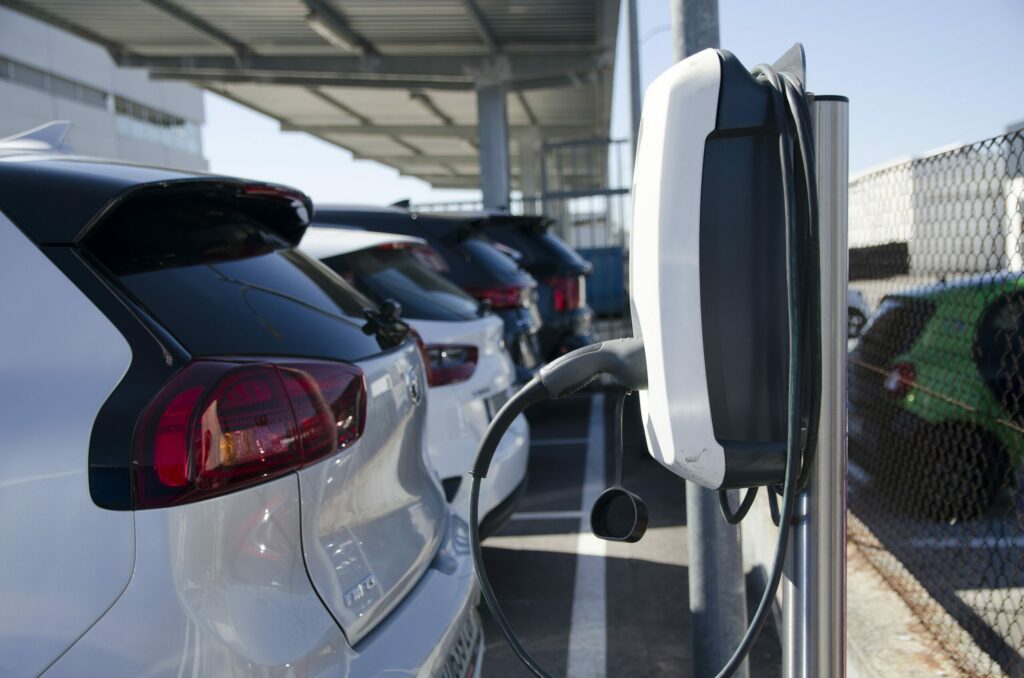
    General Motors dethrones Tesla

    This year has also seen a major change in terms of manufacturer supremacy: General Motors has become the leading seller of electric vehicles in Canada, dethroning Tesla. GM has an expanded portfolio of 13 electric models, divided between Chevrolet, Cadillac and GMC.

    Tesla, which held almost 50% of the electric vehicle market share at the start of 2022, accounted for just 10% in April 2025. This fall can be explained by the arrival of new competitors on the market.

    Tesla car parked in a Vancouver street
    A Tesla photographed in Vancouver, a symbol of the recent decline in sales despite the manufacturer’s strong presence in Canada.

    Key Canadian players

    Canada is gradually developing its EV industrial chain:

    • Lion Électrique, a Quebec manufacturer of electric buses and trucks, plans to have more than 1,400 vehicles on the road by 2025.
    • DANA TM4, also based in Quebec, designs and produces electric motors for buses, trucks and industrial vehicles in Canada and abroad.
    • Electrify Canada, a network of ultra-fast charging stations, is rolling out its infrastructure in several provinces, but is still limited in relation to needs.
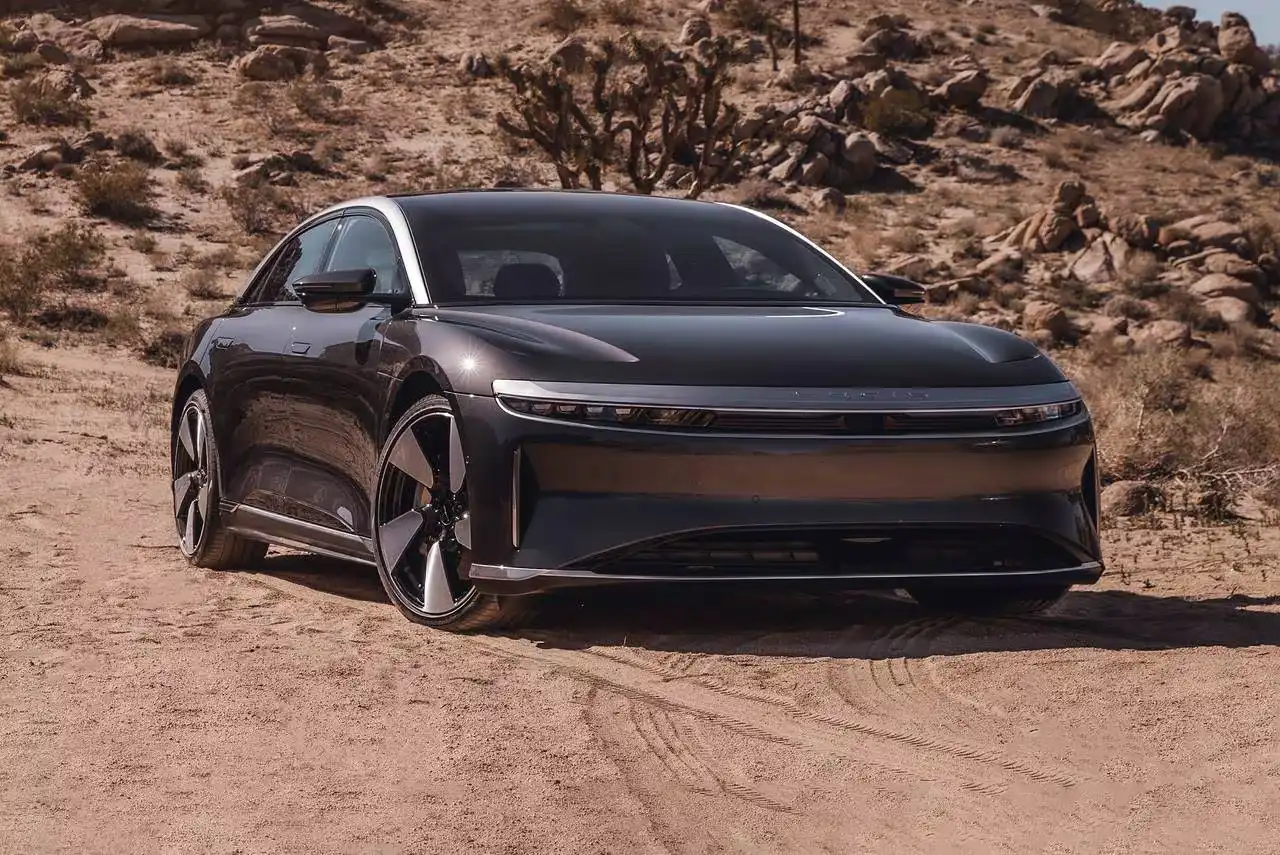
    These players exist and are growing, but their market share remains modest, and no local player dominates the national EV market.
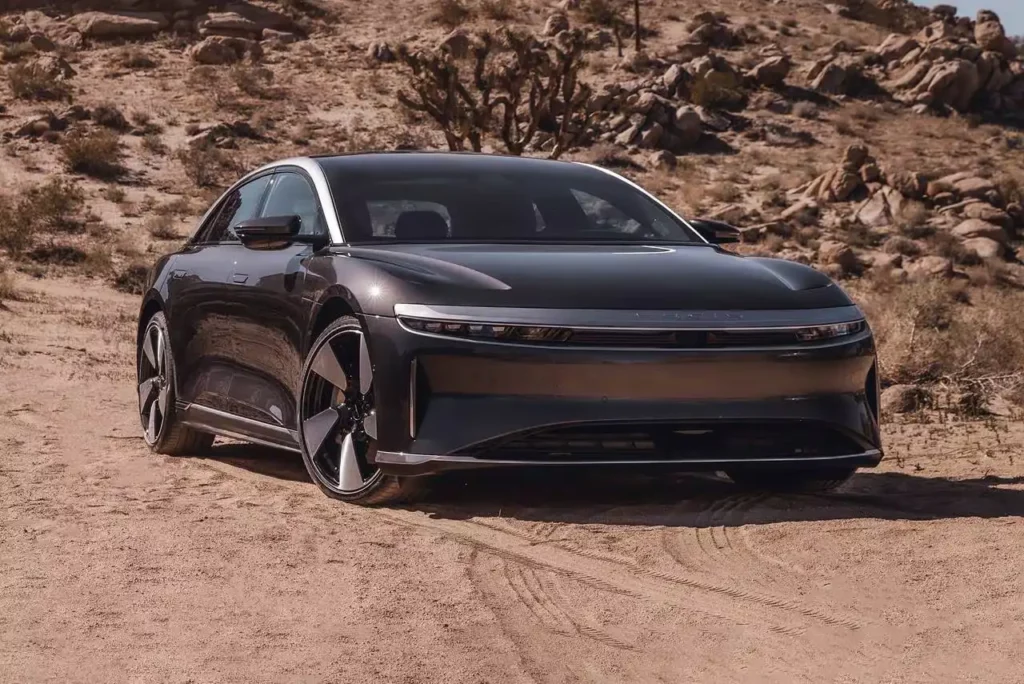
    The 2035 mandate: an unrealistic objective

    With a view to validating its transport energy transition targets, the Canadian government had previously imposed progressive sales targets on manufacturers: 20% VZE by 2026, 60% by 2030 and 100% by 2035. But in September 2025, the government suspended the targets for the 2026 model year. Prime Minister Mark Carney justified this pause by the need to give manufacturers “flexibility”.

    Quebec, for its part, has adjusted its targets: in September 2025, the government replaced the objective of 100% zero-emission vehicle sales by 2035 with a target of 90%, now including plug-in hybrids, a decision it justifies as a pragmatic compromise in view of the “North American realities” of the market.

    The question now is: how can Canada hope to achieve 100% electric sales in 2035 when it is struggling to exceed 10% in 2025?

    Snow-covered charging point for electric vehicles
    A charging point covered in snow, illustrating the impact of harsh winters on the use of electric vehicles in Canada.

    Structural challenges persist

    Canada faces a number of major obstacles:

    • Purchase price: without subsidies, electric vehicles remain out of reach for many Canadians. While in Europe several entry-level models are available for less than €25,000, and China has some of the most affordable electric vehicles in the world, Canada has a much more limited range. The cheapest models start at around $30,000 CAD (around €19,000). Despite this equivalent price level, the choice of genuinely accessible vehicles remains limited, reinforcing the idea that, without government support, electric vehicles will remain difficult to access for a large proportion of Canadian households.
    • Climatic conditions: harsh winters reduce battery life by 20-40%, a challenge for manufacturers and motorists alike, who have to adapt to these demanding and restrictive regional conditions. With such a well-developed recharging network, the adoption of EVs is complicated.
    • Regional disparities: this vast territory is not developed on the same scale. While British Columbia and Quebec have electric vehicle market shares of 11.8% or more, Ontario, Alberta and the Atlantic provinces are lagging far behind, particularly in terms of recharging infrastructure.
    • Attachment to pick-ups: Canada is one of the countries with the highest proportion of vans and pick-ups in the world. But electric pick-ups are expensive, and their range drops sharply in winter or when towing. For many Canadians, the current electric range does not meet their real needs (towing, long distances, outdoor work).

    Canada, an ambitious but limited country

    In 2025, Canada will embody the contradictions of the electricity transition. With some of the most ambitious regulations in the world, the country is lagging behind Europe and China.

    Yet Canada has considerable assets: huge reserves of critical minerals, an established automotive industry and a relatively clean electricity mix. But these assets will not be enough. Without a clear strategy, massive investment in infrastructure and stable incentives, Canada runs the risk of seeing its 2035 ambitions unfulfilled. Canada’s electric transition is currently on hold.

  • Electromobility in Italy: a two-speed transition

    Electromobility in Italy: a two-speed transition

    Italy is moving towards electrification, but progress remains slow and uneven. While hybrids largely dominate the market, 100% electric vehicles are still struggling to gain mass acceptance, despite various support schemes.

    Tesla Model Y - electric cars in the mountains
    The Tesla Model Y will still be the best-selling electric car in Italy in 2025. (Credit: Tesla)

    A declining car market

    Overall, the Italian new car market recorded 125,826 registrations in October 2025, down 0.6% on the same month last year. For the first ten months of the year, the total stands at 1,293,366 units, down 2.7% on 2024.UNRAE forecasts that the number of registrations will close the year 2025 at around 1,520,000, down 2.5% on 2024. For 2026, projections anticipate a very slight recovery of 1.3%, but the market would still be almost 20% below the levels of six years ago.

    Hybrids: the undisputed champions of the Italian market

    Italy is the most ‘hybrid’ country in Europe. In October 2025, hybrid vehicles accounted for 45.5% of the market, confirming a trend that has been in place for several years. Over the first ten months of 2025, the share of hybrid vehicles stood at 44.7%. By way of comparison, over the same period in 2024, hybrids accounted for 39.9% of the market.

    This dominance of hybrids can be explained by a number of factors: an electric recharging network that is still inadequate, purchase prices that are more affordable than pure electrics, and a certain cultural reluctance to completely abandon the internal combustion engine in a country where the traditional car is still deeply entrenched.

    Pure electrics: modest growth

    All-electric vehicles (BEVs) accounted for 5.0% of the market in October 2025, down slightly from 5.6% in September, but up from 4.0% in October 2024. In the first nine months of 2025, BEVs totalled 61,249 registrations, up 26.5% on 2024. Compared with the rest of the vehicle fleet, these figures give 100% electric vehicles a 5.2% share of the market in the current year.

    This growth, while real, puts Italy well behind the European average. By way of comparison, the European Union’s market share for BEVs was around 15% over the same period. A survey by Istituto Piepoli for the ECO-Festival of Sustainable Mobility & Smart Cities in September 2025 shows that 59% of Italians say they are not interested in buying an EV in the coming year.

    Although the data on the best-selling 100% electric models from January to October 2025 is partial, from January to April the best-selling models remain the same as last year: the Tesla Model Y dominates the market, followed by the Fiat 500e, the symbol of electric “Made in Italy”, then the Dacia Spring, the MG4 and the Renault Megane E-Tech. Combined with plug-in hybrids, electrified vehicles with external charging (BEV + PHEV) will account for 12.7% of the market in October 2025.

    Fiat 500e - Italian electric city car
    The Fiat 500e is the embodiment of electric ‘Made in Italy’ and remains a benchmark in its segment. (Credit: Fiat)

    An unconvincing aid strategy

    To encourage people to switch to electric cars, the Italian government has been offering a series of purchase subsidies since 2021. These schemes are often one-off and massive, but they are also, and above all, characterised by chronic instability.

    The latest scheme is the spectacular October 2025 support programme. The first grants, launched in 2021, offered up to €8,000 for the purchase of a new electric vehicle, which could be combined with a scrappage bonus, subject to income conditions. Two years later, in 2023, the amounts were reduced and the eligibility criteria tightened.

    A support scheme that failed to deliver, leading to a slowdown in sales. The year 2024 saw a drastic reduction in the funds allocated, prompting strong criticism from manufacturers and industry associations.

    Faced with this setback, in 2025 the government reactivated an ambitious incentive plan, supported by European funds, culminating in the October programme. This latest aid programme saw no less than €597 million released thanks to the European recovery plan. How does it work? Up to €11,000 for households with an ISEE < €30,000, subject to strict conditions. The results are convincing: in less than 24 hours, more than 55,000 vouchers were distributed, depleting the funds.

    Thanks to this plan, certain vehicles such as the Dacia Spring or the Leapmotor T03 have become accessible for less than €5,000, a record in Europe. It was a lightning success that highlighted the limitations of the Italian model: a prolonged waiting period on the part of Italians, rapid saturation of schemes and uncertainty for market players. To date, no structural reform has been announced to stabilise this aid, which continues to operate in fits and starts.

    A recharging network that is still inadequate

    Italy will have around 65,000 public charging points by 2025, according to a study by Motus-E, and no less than 22% of them will be fast charging points (over 50 kW). For a country of its size, with a road network of almost 500,000 km, Italy is below the European average in terms of the density of public charging points.

    Regional disparities are also marked: more than 60% of the network is concentrated in the north of the country (Lombardy, Emilia-Romagna, Veneto), while the south remains largely under-equipped.

    To offset this, the National Recovery Plan (PNRR), partly financed by European funds, provides for the installation of 21,000 additional public charging points by 2026. However, the installation of charging points on motorways, which is crucial for a country with frequent inter-regional travel, has been slow to materialise.

    The main player in the Italian recharging market is Enel X Way, a subsidiary of Italian energy giant Enel. The group alone has developed more than 16,000 charging points, and is also building charging hubs for business fleets and certified green energy charging points. An obvious choice for a country where around 40% of electricity production already comes from renewable sources (solar, hydro, wind).

    EV charging point in Italy - public network
    The Italian recharging network is still being developed, but with significant regional disparities.

    Stellantis: a major player in the Italian automotive industry

    The Stellantis Group is the driving force behind the automotive industry. In October 2025, the group registered 33,721 vehicles, up 5.01% on October 2024.

    Fiat, the Group’s flagship brand, continues to drive the market with the Fiat 500e, the first 100% electric model to be produced by Stellantis in Italy. It is maintaining its presence in the market, but faces increasingly aggressive Chinese competition in the affordable electric city car segment.

    Italy produces locally: the Mirafiori plant in Turin, historically a symbol of the Italian car industry, has been transformed into a centre dedicated to electric vehicles and battery production. An industry that is doing well, enabling manufacturers to plan new models: the electric Fiat Panda and the Alfa Romeo Milano should see the light of day in 2026.

    Structural challenges persist

    Like every country involved in this transition, Italy faces a number of major obstacles:

    • Purchase price: despite temporary subsidies, electric vehicles are still considerably more expensive than their combustion or hybrid equivalents.
    • Dependence on public subsidies: when subsidies stop, sales immediately plummet.
    • Regional inequalities: the north, which is richer and has better infrastructure, is adopting electricity more quickly than the south.
    • Cultural reticence: Ferrari, Lamborghini and Maserati are the embodiment of thermal automotive excellence, and attachment to the traditional engine remains strong, even though these brands are developing more and more electrified vehicles.

    Outlook: a slow transition

    UNRAE believes that the next few months should see an increase in the market share of BEVs thanks to registrations linked to the October subsidies. But as the past has shown, this increase will be temporary, and there is a risk of a further slowdown once the effect of the subsidies has worn off.

    The government’s target is to have 6 million electrified vehicles (BEV + PHEV + HEV) on the road by 2030. While hybrids will probably continue to dominate in the medium term, pure electrics are expected to grow thanks to a gradual fall in prices, improved infrastructure and European regulatory constraints.

    A country in transition…

    Italy is embodying the automotive transition at its own pace: hybrids dominate and have prepared the ground, pure electrics are making slow but steady progress, and infrastructure is developing unevenly. The country is not a leader in European electromobility, nor is it seeking to be. It is following a unique path, adapted to its geographical, economic and cultural constraints.

    But this strategy carries a risk: that of accumulating a backlog that will be difficult to make up when European regulatory pressure increases.

  • Focus on Luxembourg, a major electric ambition

    Focus on Luxembourg, a major electric ambition

    Luxembourg may not be a giant, but it is one of Europe’s most advanced electromobility regions. In just a few years, the Grand Duchy has built up a clear strategy: to increase the density of its recharging network and support private individuals and businesses.

    Main building of GRIDX Luxembourg, automotive innovation centre
    The GRIDX headquarters in Luxembourg, a centre dedicated to electric mobility and premium automotive experiences. (Credit: GRIDX)

    A rapidly electrifying car fleet

    Growth is surely the word that best defines the situation of Luxembourg’s electric car fleet. If we look at the figures for the last three years, the upward trend is palpable. In 2022, electric vehicles still represented only 3.4% of the Luxembourg car fleet. A year later, that share had almost doubled to around 6.5%, according to the Ministry of Mobility. By the end of 2024, Luxembourg had more than 32,000 100% electric vehicles on the road, representing almost 7% of the national car fleet.

    With the addition of plug-in hybrids, more than one in ten vehicles on the road in the country is now electrified. This growth shows no sign of stopping, and the proof is in the pudding: in the first half of the year, electric cars accounted for around 26% of new registrations, more than a quarter. This pace is reassuring for the authorities, given that the government’s target, set out in the National Energy and Climate Plan (PNEC), is to have 49% of vehicles electrified by 2030. This is a clear ambition for a small country where distances are short and domestic recharging habits are already well established.

    An exemplary recharging network

    Luxembourg now has one of the highest densities of charging points in Europe. According to data from ACEA (the European Automobile Manufacturers’ Association), the Grand Duchy is one of Europe’s leading countries in terms of the density of charging points for electric vehicles in relation to its surface area. Second in the rankings, with an average of 34.5 charging points every 100 kilometres, sandwiched between the two giants of electromobility: the Netherlands (47.5 points/100 km) and Germany (19.4 points/100 km). By way of comparison, France comes tenth with 4.1 charging points per 100 km.

    The country owes this high density and ranking to its “Chargy” public charging network, launched in 2017, which has more than 666 charging stations spread across the country (one charging station represents two charging points, so 1,332 charging points available). At the same time, “SuperChargy” is deploying fast and ultra-fast charging points on major routes, particularly along motorways and in strategic urban areas. But since 16 June, Chargy has been in the private sector. Luxembourg’s Minister for the Economy, SMEs, Energy and Tourism signed a decree awarding the public service concession for the operation of the national infrastructure of public charging points for electric vehicles to a private player: the charge@lux consortium, made up of Electris, Cube4T8 and Socom. The aim of this change is to harmonise charges, improve maintenance and ensure uniform coverage of the country. In total, there are now almost 3,000 public charging points, a figure that is up by more than 20% compared with 2023. This powerful and effective network means that any Luxembourger can be close to a public charging point.

    But action to improve access to recharging is not limited to government initiatives. The country’s strength lies in the innovation of its local authorities. Case in point: in Esch-sur-Alzette, the country’s second-largest town, the “Sudstroum Slow Charge” project has been launched. The idea is to recharge electric vehicles directly from public lampposts… a first in Luxembourg.

    Electric vehicle charging points
    Row of electric vehicles charging stations on the background of blue sky.

    Focus on GridX: a driving force for innovation in electromobility in Luxembourg

    True to the spirit of this country that never ceases to innovate, the GridX project was inaugurated on 18 September 2025 in Wickrange. Designed by the Giorgetti group, this unprecedented complex of almost 42,000 m² is intended to be Europe’s first “multi-experience” destination, combining commerce, gastronomy, hotels, culture and, above all, mobility. Featuring a unique car gallery, where prestigious brands such as Alpine, Bentley and Ducati can be seen all year round, this brand-new space is presented as “a museum or temple of mobility”.

    In fact, beyond the car gallery, this venue is a veritable cluster dedicated to the automobile, with concierge services, driving simulators and a partnership with Turin’s MAUTO museum. Although GRIDX is not exclusively dedicated to electric vehicles, its space and its focus on electrified mobility make it a relevant player in the sector.
    – Its spaces offer the public a physical showcase for brands in the electric mobility sector, but also serve as a permanent showroom for premium manufacturers. A real plus point for this sector, which needs to raise its profile with the general public.
    – It creates a point of convergence between charging services, premium vehicles and the customer experience, which can facilitate the integration of charging points, infrastructure solutions or premium fleets.
    – Thanks to its “mobility + lifestyle + business” concept, GRIDX can accommodate players in electromobility (start-ups, suppliers, equipment manufacturers).

    GridX Luxembourg’s scale and innovative character make it much more than just a shopping centre. It is a symbol of automotive renewal, a showcase for innovation and further proof that Luxembourg continues to think big when it comes to the future and sustainable mobility.

    Distributors present

    To meet government requirements for electrified cars and ever-increasing customer demand, car distributors and dealerships have had to adapt. At the 2025 edition of the Autofestival show, which brings together car distributors in Luxembourg, it was reported that around 90 dealerships were taking part, proof that electromobility now occupies a central place in the market.

    These include Losch Luxembourg, Car Avenue and the Autosphère group, three key players on the Luxembourg automotive scene.
    – Losch Luxembourg, official importer of Volkswagen Group brands (Volkswagen, Audi, Škoda, SEAT/CUPRA, Porsche, etc.), is the national leader in the sector. A major investor in electric mobility, it offers a wide range of 100% electric and rechargeable hybrid vehicles.
    – Car Avenue, which operates in Luxembourg, France, Belgium and Germany, distributes brands such as Mercedes-Benz, Smart, Peugeot and Opel. The electric range has also been greatly expanded, offering most of the models in vogue.
    – The French group Autosphère is now present on the Luxembourg market, representing a number of generalist and premium brands. It promotes green mobility by offering electric and rechargeable hybrid vehicles.

    Traditional companies that, in just a few years, have reinvented themselves to become key players in the transition to electric mobility.

    Couple signing the contract to buy an electric car
    Happy beautiful couple is choosing a new car at dealership. Blurred background

    A policy with a thirst for progress

    For more than a decade, the Luxembourg government has been actively supporting the energy transition. Individuals benefit from purchase subsidies of up to €6,000 for the purchase of a new electric vehicle, while the installation of a home charging point is subsidised up to 50% of the total cost, up to a maximum of €1,650. The government is also maintaining partial tax exemptions for company fleets. In 2025, a €30.5 million European investment programme has been allocated to Luxembourg to strengthen public infrastructure and support the deployment of fast charging stations in suburban areas.

    A favourable energy model

    The ambition for a cleaner everyday life is also facilitated by the fact that the country benefits from a low-carbon electricity mix, supplied largely by imports from neighbouring countries (France, Germany) and by a growing proportion of local renewable energies. This configuration means that the carbon footprint of electric vehicles is well below the European average. In fact, according to a study by Klima-Agence, the carbon footprint of an electric vehicle in Luxembourg is 70 g CO₂/km over a 200,000 km lifecycle. Compared with the European average, estimated at between 90 and 120 g CO₂/km depending on the country’s energy mix, Luxembourg is at the top end of the scale. The authorities are working to make recharging even greener, thanks in particular to their partner Encevo and its subsidiaries, Luxembourg’s benchmark energy group, to gradually supply the charging points with 100% green electricity.

    Anticipating challenges

    Luxembourg, small in size but big in terms of its transition, is not exempt from the challenges that affect other regions. Indeed, as with its neighbours, the electrification of heavy goods vehicles and commercial vehicles remains on the sidelines. To take this complex new step, we need to develop appropriate infrastructure and electrify heavy goods vehicles. Heavy commercial vehicles (HGVs + LCVs) are responsible for more than 25% of road transport emissions in Luxembourg. Another challenge is to modernise charging points in the face of the proliferation of fast charging points. A study by the Ministry of Energy has already identified the urban areas that should be upgraded as a priority. Finally, the same observation applies as in the rest of Europe: although the cost of using an electric vehicle is advantageous, its purchase price is still high, which is still holding back some motorists from taking the plunge, despite existing incentives.

    A country with great ambitions

    By focusing on coherence and planning, Luxembourg’s figures show that a small country can be more advanced than a large one. The country has managed to make the most of its territory with a model based on the development of recharging infrastructures, clear financial incentives thanks to state aid, and clean energy. With a steadily growing market, France’s border neighbour is one of the most successful examples of electromobility in Europe.

  • The Future of EVs in the United States: Production, Infrastructure, and Policy

    The Future of EVs in the United States: Production, Infrastructure, and Policy

    The US EV market is entering a decisive decade, driven by innovation in production. Expanding charging infrastructure and evolving policies will shape the future of mobility.

    Reinventing the Factory Floor

    Manufacturing is changing rapidly:

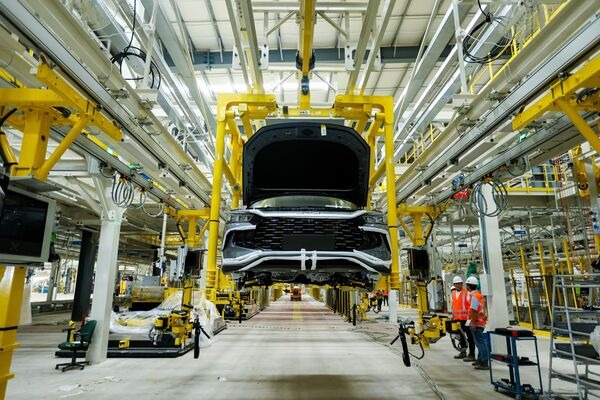
    • For instance, Ford’s three-branch tree flexible assembly system—building front, rear, and battery modules separately before final assembly—is able to reduce production time and part usage by 20%. That streamlining is valued due to emerging threats from low-cost, large-scale Chinese production.
    • In addition, aside from assembly, U.S. automakers are solidifying local EV supply chains, utilizing Inflation Reduction Act benefits and investing in facilities that produce minerals and batteries.

    Tesla charging station with solar roof in Kettleman City, CA.
    Tesla charging station in Las Vegas, a key part of the growing US EV market infrastructure. (Credit: Sheila Fitzgerald)

    Charging Ahead: Infrastructure Expands

    Even the best EVs depend on robust charging networks:

    EV registrations have surged, but charging infrastructure is lagging. In Q1 2025, approximately 42 new EVs were registered for every one new public charging port added, according to Autos Innovate.

    Meanwhile, the great majority of mainstream producers have committed to Tesla’s North American Charging Standard (NACS) standard. From 2025 onward, all-new vehicles will roll off the factory NACS-capable. This gives Tesla’s Superchargers network access that is essentially as simple as refueling a typical ICE vehicle.

    Meanwhile, federal and local investments continue to add public charging stations, particularly on highways and city corridors.

    Policy Crossroads

    Policy remains a critical inflection point:

    The $7,500 federal EV tax credit, once a cornerstone of EV affordability, is slated to expire on September 30, 2025. This will happen unless it is renewed.

    Therefore, this impending deadline is prompting automakers to ramp up pre-expiration sales or pivot to leasing strategies (Reported by Vox and Investors).

    Despite federal uncertainty, states like California are pushing aggressive timelines to phase out gas-powered vehicle sales by 2035.

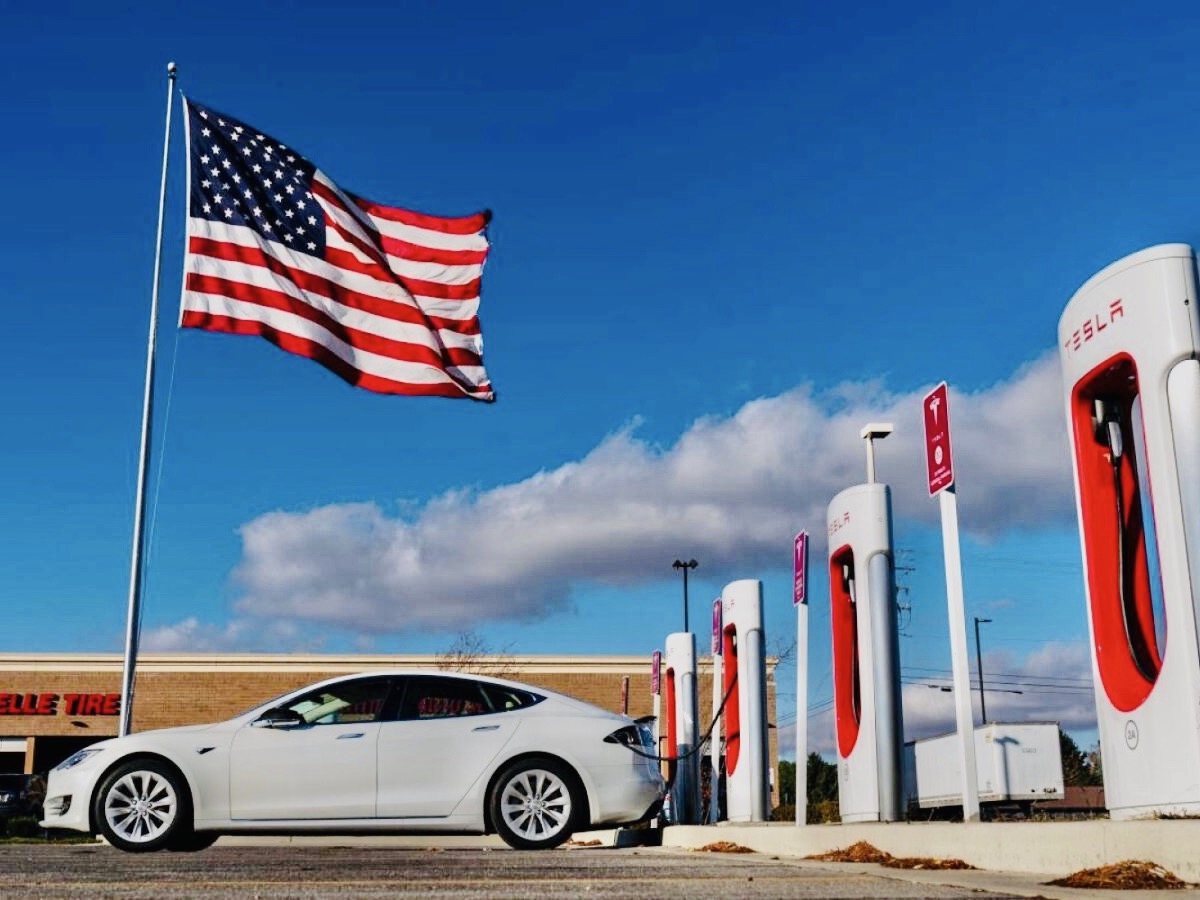
    Electric vehicles parked in front of American flags, representing the US EV market.
    Electric vehicles in front of American flags, highlighting growth and adoption trends in the US EV market.

    The Road to 2030

    Looking ahead: Analysts project EVs may account for one in every four new vehicles sold in the U.S. by 2030. This growth would happen on the strength of continued innovations in battery technology, durable supply chains, and steady policy backing.

    In fact, market estimations position the U.S. EV market size was estimated at around $131.3 billion in 2024 and is projected to grow to $139.6 billion by 2025. By 2034, it is expected to jump to $439 billion, representing a 13.6% CAGR (according to Global Market Insights Inc.).

  • The Rise of Electric Vehicles in the United States: Market, Models, and Innovations

    The Rise of Electric Vehicles in the United States: Market, Models, and Innovations

    It is a sweltering summer afternoon in Detroit when Ford engineers are secretly getting ready what is described by the executives as the company’s “Model T moment.” Their assignment is neither to assemble another vehicle, but to redefine an entire industry. With an electric pickup truck costing around $30,000 on the cards and billions in fresh investment, Ford is counting on affordability and scale to drag the EV from the sidelines of invention into the very heart of American living, marking a pivotal step in the US EV market.

    Ford electric pickup truck 2025 affordable EV model
    Ford aims to produce an affordable mid-sized electric pickup around $30,000, marking a turning point in the US EV market.

    They’re not alone. From Silicon Valley start-ups to Japanese icons, the game to conquer America’s EV market is on. It’s a challenge powered by technology, demand from consumers, and government encouragement—and it is changing the way Americans think about getting behind the wheel.

    A Market in Motion

    The U.S. market for electrified and electric vehicles is solidly underway—no longer experimental:

    According to Autos Innovate, in Q1 2025 EVs—including BEVs, PHEVs, and fuel-cell electric vehicles—accounted for 9.6% of new light-duty vehicle sales. That’s down from 10.9% in Q4 2024, yet still reflects a 0.3 percentage-point gain year-over-year. Meanwhile, overall light-duty sales rose 6%, and EV volume grew by about 9% (~30,500 vehicles) compared to Q1 2024.

    This change in powertrain mix shows the way the dominance of the ICE market is gradually being replaced by several forms of electrified mobility.

    The Drive to Affordability

    For years, the biggest obstacle to EV adoption was cost. Now, car manufacturers are getting serious about reducing prices:

    • Ford aims to produce a mid-sized electric pickup around $30,000 by bringing back the Model T spirit through affordability (as reported by Vox and Investors).
    • New entrants like Michigan-based Slate Auto are constructing modularity-based electric trucks whose base prices will come in under $27,500—again flipping the script on availability.
    Tesla charging station with solar roof in Las Vegas, Nevada, USA, October 10, 2021.
    Tesla charging station in Las Vegas, a key part of the growing US EV market infrastructure.

    Power, Luxury, and Performance

    Affordability isn’t the only story. At the luxury end:

    Lucid Motors is getting ready to debut the Lucid Gravity, an electric SUV positioned as a high-performance vehicle statement—good for about 828 hp, powered by a 123 kWh battery, and offering 450 miles of range.

    Tesla, though still dominant, encounters tougher competition as incumbents such as Ford, GM, and Hyundai—and an increasingly vibrant startup ecosystem—are stepping up their EV initiatives.

    Model-Level Highlights
    (U.S. Top Sellers H1 2025)

    ModelSales (first half of 2025, United States)
    TESLA MODEL Y• Q1 2025: Approximately 64,051 units sold 
    • Q2 2025: Estimated 90,949 units sold 
    • Total H1 Estimate: ~155,000 units
    TESLA MODEL 3• Q1 2025: Around 52,520 units
    (Q2H1 figures not separately disclosed, but Model Y maintained strong dominance in H1 overall.)
    CHEVROLET EQUINOX EV• Q1 2025: 10,329 units sold in the U.S. 
    • Q2 2025: 17,420 units sold 
    • Total H1: ~27,749 units
    FORD MUSTANG MACH-E• Q1 2025: 11,607 units sold 
    (No explicit Q2 data – total H1 likely slightly higher.)
    HONDA PROLOGUE• Q1 2025: 9,561 units
    HYUNDAI IONIQ 5• Q1 2025: 8,611 units sold
    FORD F-150 LIGHTNING• Q1 2025: 7,187 units sold
    BMW i4• Q1 2025: 7,125 units
    TESLA CYBERTRUCK• Q1 2025: 6,406 units sold
  • French electromobility in 2025: between innovations and challenges

    French electromobility in 2025: between innovations and challenges

    As we enter 2025, the French automotive industry is stepping up its efforts to adapt to the energy transition. Between technological advances, the development of recharging infrastructures and regulatory changes, the electromobility landscape is undergoing major transformations.

    Young man charging his electric car, a symbol of sustainable urban electromobility.
    Young man recharging his electric car, reflecting the roll-out of recharging infrastructure in France.

    Since January, French manufacturers such as Renault and Stellantis have continued to invest in the development of high-performance, affordable electric vehicles. Renault, a European leader in electric cars, is continuing to invest in V2G technology. This technology enables energy to be redistributed on the electricity grid (Vehicle to Grid). It can also power electrical appliances (Vehicle to Load). Renault continues to invest in research and development to further improve its technologies and meet the challenges of the energy transition.

    Stellantis, for its part, is developing modular platforms dedicated to electric vehicles. The aim is to diversify its offering while keeping production costs under control. This automotive group is one of France’s leading innovators. It is France’s leading patent filer, with 1,289 patents registered in 2024. These figures come from the rankings announced by the Institut National de la Propriété Industrielle (INPI).

    This year, Vinci Autoroutes is also testing an “electric motorway” capable of recharging vehicles by induction on a two-kilometre stretch of the A10 near Paris. This project, led by Vinci Autoroutes in collaboration with Gustave-Eiffel University and industrialist Hutchinson since 2023, aims to test the energy efficiency of this innovative technology. The device is buried a few centimetres beneath the carriageway. It could reduce the number of stops required for recharging. It could also reduce the size of the batteries needed, thereby contributing to the decarbonisation of transport, particularly for heavy goods vehicles.

    A fast-expanding recharging network

    The rollout of charging infrastructure is gathering pace in France. From 1ᵉʳ January 2025, new obligations require car parks in buildings open to the public to be equipped with charging points, in accordance with the provisions of the French Mobility Orientation Act (LOM). Non-residential buildings with more than 20 parking spaces must now install charging points for electric vehicles, with at least 5% of spaces equipped, including spaces for people with reduced mobility. This should satisfy electric motorists: “This is a necessary change to support the transition to electric mobility. The lack of charging points was a major obstacle for many drivers. With these new requirements, it will finally be easier to recharge your vehicle on a daily basis”, explains Thomas, a resident of the Paris region.

    A white semi-trailer truck driving along a mountain road at sunset, a symbol of transport and electromobility.
    Freight transport and electromobility: an electric truck travelling on an Alpine road, illustrating high-performance, sustainable electric vehicles.

    Accessibility of charging in condominiums

    Similar measures have been put in place in condominiums to facilitate access to recharging for residents. According to the fourth IRVE Barometer published by Avere-France, AFOR and Enedis, more than 10,000 condominiums are now equipped with charging stations. In addition, 33,880 condominiums have validated their plans to install charging infrastructure. These initiatives are designed to encourage the adoption of electric cars. They improve the accessibility and convenience of recharging. They also address concerns about range and infrastructure.

    “Thanks to these measures, I can finally recharge my car in my car park. Before, I had to leave my car more than ten minutes from home, which was very tiring. I went to great lengths to ensure that we could have these recharging facilities,” says a delighted Laura, who owns an electric car. Although the figures are rising, the deployment of charging infrastructure is struggling to keep pace with the growth in the electric vehicle market. According to the barometer, there are 269,000 apartment blocks with car parks in France, but only 3.94% of them currently have a collective recharging solution.

    Changing financial incentives

    On the regulatory front, the French government plans to cut support for the purchase of electric vehicles by a third by 2025. The budget will be cut from €1.5 billion to €1 billion. On 2 December 2024, the conversion allowance was abolished. This bonus provided aid for the purchase of a less polluting vehicle by scrapping an old car. This reduction is explained by the falling cost of electric vehicles and their growing market share. As a result, the need for subsidies has been reduced.

    The remaining funds will be prioritised for low-income households to ensure a fairer transition.

    The government is stepping up penalties on vehicles with high CO₂ emissions, lowering emission thresholds to 113g CO₂/km in 2025, then to 106g in 2026 and 99g in 2027. These measures are designed to encourage the adoption of cleaner vehicles and accelerate the transition to sustainable mobility.

    A sector still facing challenges

    The year 2025 marks a turning point for the French automotive sector. Industry players are focusing on sustainability, safety and innovation. However, challenges remain. They concern the affordability of electric vehicles, the densification of recharging infrastructures and the management of the environmental impact of battery production and recycling.

    Research is continuing into alternative technologies, such as solid batteries and hydrogen. These innovations aim to improve range and reduce the sector’s carbon footprint. The industry will also need to be structured to ensure that batteries are more recyclable. It will also have to minimise their environmental impact throughout their life cycle.

    Collaboration between public authorities, manufacturers and consumers will be key to overcoming these obstacles. It will help to position France as a leader in electromobility in Europe.

  • Profile of electric car owners in France

    Profile of electric car owners in France

    As the electric car market is still relatively new and growing rapidly, it is of interest to consultancies and pollsters, who are constantly publishing studies on the subject which, when aggregated, produce a profile of the typical electric car owner in France.

    Man driving an electric car in France, seen from behind
    A discreet portrait of an electric car owner in France, behind the wheel of his vehicle. (Credit: Michael Kahn)

    We know that they are men (nearly 70% of owners), private individuals, aged between 46 and 48 according to the studies (much younger than those with combustion engines, whose buyers of new cars are approaching sixty), mostly city dwellers, who invest in new cars. Technophiles, they generally have a charging point at home – a figure that rises to 90% for house owners – and, despite comfortable incomes, they tend to go for the most affordable models, which they acquire by leasing. Finally, in the first few months of 2025, French electric vehicle owners were more inclined to buy… French! In fact, the top 10 electric cars sold in France in recent months include six models from French manufacturers.

    The main motivations

    For this typical buyer and all the others, the decision to go electric is the result of a number of factors. The first is, of course, consumers’ growing ecological awareness. Reducing their carbon footprint (in use) and making their own contribution to curbing climate change are the main reasons for considering the purchase of an electric car, particularly among younger people, which explains why the average age of electric vehicle owners is lower than that of internal combustion customers. But this is not the only argument in favour of ‘watted’ cars. While the average purchase price of an electric car is always higher than that of a combustion engine, the running costs are lower, maintenance is less frequent and more expensive, and it is possible to benefit from state aid to reduce the bill. Add to this the numerous financing options, from long-term leasing (LLD) to leasing with an option to purchase (LOA), and the wallet can manage without too much damage. The new generation, for whom the car seems to be primarily a utility object rather than a collector’s item, seems more inclined to lease their vehicle and to change it more often than their elders.

    In the same vein, shifting gears after rattling the rev counter, listening to the hum of a V8 and changing the oil, filters and spark plugs in the garage on Sundays is a little less thrilling for these new buyers, who prefer a vehicle that is quiet, easy to drive and packed with technology.

    Car park full of electric cars in France
    A mass of electric vehicles in a car park in France, reflecting the widespread adoption of electric cars.

    Persistent obstacles

    But let’s not kid ourselves. If the electric car market is growing rapidly, it’s mainly because it started from scratch and has been boosted by various political measures, both in France and in the European Union. Consumers are still faced with a number of obstacles to the purchase of an electric car, the most important of which is range. This is the number one concern for more than 80% of French people, even though on average they only drive around fifty kilometres a day. In addition to this – slightly exaggerated – fear of a breakdown, there’s the worry of not being able to find charging points. With 160,000 charging points spread across the country, France is not lagging behind, and is even aiming for 400,000 by 2030. By way of comparison, there are only 10,000 service stations in the whole country! But the argument is still valid, particularly for people living in rural areas who often have no choice but to install a charging point at home, given the long distances between charging stations.

    Finally, although we mentioned above that electric cars can be interesting from a financial point of view, money is still a barrier for most households. This can be explained by the fact that the second-hand market for electric cars is still very small. Logical, given that a French owner keeps his or her electric vehicle for an average of 5 years before selling it on, and that a large number of these vehicles in the French fleet have been on the road for less than 5 years… There are grounds for optimism.

    Towards democratisation?

    All the lights are green for the democratisation of electric cars (and electric mobility in general) in France and Europe. Carmakers have switched, are switching or are planning to switch to 100% electric cars, from the most mass-market to the most luxurious, driven by the desire to change things, to attract new, younger consumers who are concerned about the environment, but above all by the local policies imposed on them. In 2035, quite simply, it will be forbidden to sell new combustion-powered vehicles. And 10 years is the minimum time needed to ensure that the transition is complete by then.

    The ambitions for infrastructure dedicated to recharging electric vehicles are very high, but so far in France, one target after another has been met, giving us confidence for the future. The same goes for innovations to extend the range of electric vehicles, battery recycling and battery manufacture – all areas of uncertainty and concern for French consumers that should become clearer over the next few years. The main question is whether, by 2035, the sketch we drew up in the introduction will be any different from that of 2025? Not for sure, but if there is a real democratisation of electric mobility, it will be much more complex to establish!