Category: News

  • Energy revolution in Formula 1: the new rules for 2026

    Energy revolution in Formula 1: the new rules for 2026

    From 2026, Formula 1 will undergo a major transformation with the introduction of new regulations focusing on electrification, sustainability and safety. These changes are designed to make the sport more efficient, more environmentally friendly and more spectacular.

    Spectators and track during a Formula 1 Grand Prix, atmosphere and action on the circuit.
    The public attend a Formula 1 Grand Prix, an event that attracts thousands of spectators every year and contributes to the international reputation of motor sport.

    Redesigned hybrid power unit

    The new regulations retain the 1.6-litre V6 turbo engine, but do away with the MGU-H. It has been replaced by a more powerful MGU-K, capable of generating up to 350 kW – a threefold increase in electrical power compared with the current generation. Each car will thus be able to produce more than 1,000 horsepower while reducing its fuel consumption to 70 kg per Grand Prix, compared with 100 kg in 2020.

    100% sustainable fuel

    All engines will run exclusively on 100% sustainable fuels. These fuels are produced from non-food sources, municipal waste or even captured from the atmosphere. This initiative is part of Formula 1’s aim to become carbon neutral by 2030.

    The 2026 cars will be 30 kg lighter, with a minimum weight of 768 kg. The width will be reduced by 10 cm and the length by 20 cm. This reduction is intended to improve handling and make overtaking easier.

    Active aerodynamics for more spectacle

    Drag reduction systems (DRS) will be replaced by active front and rear wings. Drivers will have a manual mode to temporarily increase electric power, making overtaking easier.

    The structure of the single-seaters will be strengthened, with stricter safety tests. High-voltage electrical components will be integrated into the safety cell, reducing the risks in the event of an accident.

    Arrival of new manufacturers

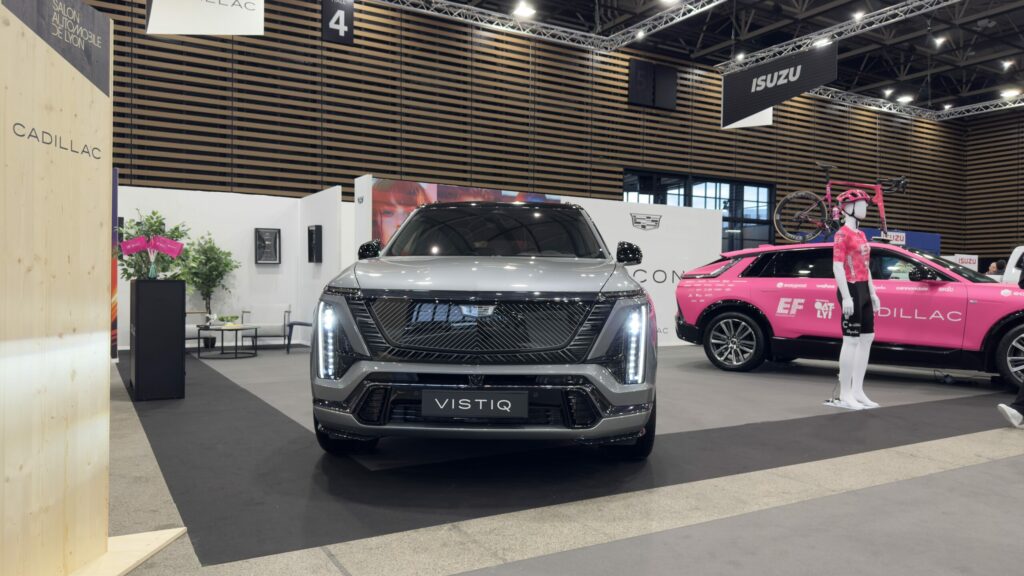
    Audi, Honda, Ford and General Motors are joining the competition. Audi has acquired the Sauber team, while GM will take part under the Cadillac brand, which is still looking for its star driver.

  • United States: the courts force Washington to release $5 billion for electric charging stations

    United States: the courts force Washington to release $5 billion for electric charging stations

    In June, a federal judge forced the Trump administration to release funds for the NEVI programme, which had been frozen since February. This plan, adopted under Joe Biden, provides for five billion euros over five years to install fast-charging stations.

    Donald Trump announces the release of funds for NEVI electric charging stations in the United States
    Donald Trump presents new NEVI guidelines for electric charging stations

    The Department of Transportation announced new rules in August, simplifying procedures but removing several obligations. States can now access the funding, including California and New York. The changes could speed up deployment, but they also radically alter the programme’s initial framework.

    Freeze suspended by the courts

    In February 2025, the Trump administration suspended the national NEVI (National Electric Vehicle Infrastructure) programme. Several states went to court, claiming that the freeze violated the law passed by Congress. In June, a federal judge in Washington ordered the freeze lifted. The injunction allowed more than fourteen states to access the frozen funding.

    New federal directives

    In August, the Department of Transportation (DOT), headed by Sean Duffy, published an “Interim Final Guidance“. This document removes several obligations imposed under the previous administration. The following are no longer required: the siting of a proportion of kiosks in rural, disadvantaged or underserved areas, consumer protections, emergency evacuation plans, environmental criteria, clauses aimed at small minority or women-owned businesses, as well as safety and training standards for installers.

    A market under pressure

    Uncertainties linked to the financing freeze had weighed on the electric vehicle market. LG Energy Solutions reported a slowdown in demand for batteries. In July 2025, the average price of electric vehicles in the US fell by 2.2%. Tesla reduced its prices in anticipation of the scheduled end of the $7,500 federal credit, scheduled for 30 September 2025.

  • Renault and Geely team up for new electrified SUVs outside Europe

    Renault and Geely team up for new electrified SUVs outside Europe

    Renault and Geely are strengthening their industrial cooperation. The French carmaker will use the Chinese group’s GEA platform. The aim is to produce electric and rechargeable hybrid SUVs. These models will be developed in China, but will also be destined for other markets. South-East Asia and Latin America are the priority targets.

    Renault and Geely have formalised their partnership to develop new electric and hybrid SUVs for markets outside Europe.
    Renault and Geely are joining forces to design electric and hybrid SUVs for Asia and Latin America.

    A new platform for Renault

    Geely’s GEA platform, already in use in China, will be shared with a foreign manufacturer for the first time. Renault will be responsible for the exterior design, while the technical aspects will be based on solutions already tried and tested by Geely. The aim is to reduce development costs and enable new models to be launched more quickly.

    The SUVs will be manufactured in China but will not be driven on European roads. They will be aimed primarily at South-East Asia and Latin America, where Renault has a solid sales network. Geely will also be able to take advantage of this local presence to accelerate its expansion.

    An already fruitful cooperation

    Renault is already marketing the Grand Koleos in South Korea. This SUV is based on a Geely platform, and its results have been encouraging. Geely also owns 34% of Renault Korea Motors and a minority stake in Renault Brazil.

    Renault has access to a new generation of technology while limiting its investments. For its part, Geely is able to cross Chinese borders more quickly thanks to its partner’s local experience. However, projects for Europe remain totally independent of this collaboration.

  • San Antonio: the return of electric vehicles for cleaner air

    San Antonio: the return of electric vehicles for cleaner air

    Once a symbol of the decline of oil, San Antonio is becoming a pioneer in electric mobility. Electric vehicles reduce pollution, urban heat and harmful emissions, while gaining in popularity with residents and businesses alike.

    Fast-charging stations for electric vehicles in the United States, with an expanding network from 2020.
    US network of fast-charging stations for electric vehicles, with more than 500 sites operational by 2020.

    Electric vehicles, a forgotten past

    Around 1900, electric cars were already outperforming petrol models, but they were soon eclipsed, explains the San Antonio Express-News. At the time, starting a petrol car required a lot of force and could cause serious injury to drivers. The invention of the electric starter in 1912 and the low cost of petrol made internal combustion cars popular.

    Oil dependency revealed

    The oil crisis of 1973-1974 demonstrated the fragility of America’s dependence on oil. San Antonio was at the centre of the modern concept of “peak oil”, thanks to geologist M. King Hubbert in 1956. Although shale oil has extended the fossil age, the conversation is now focused on sustainability and public health.

    Burning fossil fuels worsens climate change and degrades air quality. San Antonio and Bexar County violate federal air quality standards because of automobile emissions. Thermal cars also generate heat, accentuating the heat island effect in streets and neighbourhoods.

    The rise of electric vehicles

    Electric vehicles account for almost 10% of sales in the United States and emit no tailpipe pollution. They are more energy efficient, reduce waste heat and improve local air quality. Batteries are improving, prices are falling, and the recharging infrastructure is gradually developing in San Antonio.

    Growing adoption by residents and businesses

    According to the San Antonio Express-News, many residents are already opting for electric vehicles, and businesses are adopting fully electric fleets. The city is committed to electrifying its vehicles through the Climate Action & Adaptation Plan. CPS Energy is supporting this transition with subsidies and an expanded public charging network.

    Electric buses for VIA Metropolitan Transit and the San Antonio Independent School District reduce maintenance costs. This transition is also helping to improve air quality and reduce urban heat. In this way, San Antonio is becoming a pioneer, promoting electric mobility and the long-term health of its residents.

  • Zeekr 9X: the plug-in hybrid SUV with record batteries but limited efficiency

    Zeekr 9X: the plug-in hybrid SUV with record batteries but limited efficiency

    The Zeekr 9X, China’s plug-in hybrid SUV, stands out for its luxurious design and its exceptional power of over 1,300 bhp. Its record-breaking 70 kWh battery promises a long range, but its weight limits its real efficiency.

    Zeekr 9X plug-in hybrid SUV front view with luxurious design
    The Zeekr 9X, China’s plug-in hybrid SUV, boasts record batteries and a luxurious design inspired by large saloons.

    Luxurious design inspired by large saloons

    The Zeekr 9X is an eye-catcher with a design reminiscent of a Rolls-Royce, but it’s 100% Chinese. This hybrid SUV is 5.2 metres long, 2 metres wide and 1.82 metres high. Its 3.2-metre wheelbase maximises passenger space and comfort.

    Gigantic batteries for a world record

    The Zeekr 9X has a 55.1 or 70 kWh CATL battery, the largest ever fitted to a plug-in hybrid. It provides a maximum range of 302 km according to the CLTC cycle, or around 250 km according to the WLTP standard. Thanks to its 900 V and 420 kW architecture, the vehicle can be recharged from 20% to 80% in just nine minutes.

    Impressive power and performance

    Under the bonnet, a 2-litre internal combustion engine develops 275 bhp with a thermal efficiency of 46%. Three electric motors add their power for a total of 1,381 bhp. So, despite weighing in at over three tonnes, the SUV reaches 100 km/h in just 3.1 seconds.

    Questionable effectiveness

    Despite its huge batteries, electric range is limited by the vehicle’s weight and size. According to a conservative conversion of the CLTC cycle to a European standard, the Zeekr 9X’s range could be around 250 km. This puts it closer to massive vehicles like the Hummer EV than to energy-efficient models.

    Availability and prices

    The Zeekr 9X can already be pre-ordered in China for between €72,000 and €108,000. Its arrival in Europe remains uncertain, but the launch is scheduled for the third quarter of this year. With its blend of luxury, power and limited range, this record-breaking hybrid SUV has divided electric enthusiasts.

  • Electric cars: a record summer on French roads

    Electric cars: a record summer on French roads

    This summer, charging points were used more than ever in France. According to Avere-France, activity rose sharply in July 2025. The data confirms that electric cars have taken centre stage among holidaymakers. With charging sessions on the rise, record consumption and a reliable network, all the indicators are green.

    Woman using a charging point to recharge her electric car, illustrating intelligent technologies and lifestyle comfort.
    A driver charges her electric vehicle at a public charging point, a symbol of the boom in electric cars.

    Figures that reassure drivers

    In July 2025, each chargepoint recorded an average of 29.5 charging sessions, compared with 16.9 a year earlier. This rise can also be explained by a 22% increase in the number of chargepoints across the country. Powerdot also noted a 92% increase in usage over the first weekend in August, confirming that electric vehicles are being used more and more during the holidays.

    Sharp rise in energy consumption

    Total consumption at charge points in France is estimated at 109 GWh in July, compared with less than 60 GWh in September 2024. This figure clearly illustrates the growth in the number of zero-emission cars on French roads, and confirms the growing popularity of electric vehicles during the summer months.

    According to Avere-France, 70% of charging points were available 99% of the time in July. What’s more, immediate access remains stable at 95%, enabling drivers to plug in as soon as they arrive.

    An expanding but uneven network

    France now has 174,574 stations, an average of 259 per 100,000 inhabitants. However, their distribution varies greatly: the Île-de-France region dominates with 6,893 stations, while French Guiana has just 30. This territorial inequality shows that some regions remain less well served despite the general extension of the network.

    The majority of charging points are installed in shops (44%), followed by car parks (28%) and on roads (16%). In terms of power, 47% deliver between 7.4 and 22 kW, while 32% offer less than 7.4 kW. Lastly, very high-power charging points, in excess of 150 kW, account for 11% of the network. Of these, 9% deliver between 150 and 350 kW, while 2% deliver 350 kW or more, mainly on motorways and in commercial car parks.

  • Ford invests $2 billion to produce electric vehicles in Kentucky

    Ford invests $2 billion to produce electric vehicles in Kentucky

    American carmaker Ford is transforming its Louisville plant to launch affordable, high-performance electric vehicles. The aim of this strategy is to strengthen its position in the face of global competition.

    View of the Ford assembly plant in Louisville, Kentucky, photographed on 11 August 2025.
    The Louisville plant is preparing to produce the next Ford electric vehicles. (Credit: AP Photo/Darron Cummings)

    A historic transformation for the Louisville plant

    After 70 years of producing petrol cars, the plant will be converted to produce electric vehicles. CEO Jim Farley has described the project as a “Model T moment” for the company. According to him, this transformation will change the way vehicles are designed and built in the United States.

    The electric pick-up will be the star of the new range

    The first vehicle to be produced will be a four-door mid-size pick-up, scheduled for 2027. It will offer enough space for five adults and performance close to that of an EcoBoost Mustang. Cheaper batteries will be sourced from Ford’s Michigan plant, reducing costs.

    Faster, cheaper production

    The new universal platform will enable several models to be produced from a single base. Ford is announcing 20% fewer parts, 25% fewer fasteners and 40% fewer workstations. The plant will adopt an ‘assembly tree’ with three simultaneous lines, replacing the traditional long conveyor. This will cut assembly time by 15%, while maintaining quality and performance.

    Ford CEO Jim Farley speaks at the Louisville, Kentucky assembly plant on 11 August 2025.
    CEO Jim Farley presents Ford’s electric vehicle strategy at the Louisville plant. (Credit: AP Photo/Darron Cummings)

    Massive investment to secure jobs

    The $2 billion investment will guarantee 2,200 hourly jobs in Louisville. Combined with the Michigan battery plant, Ford anticipates nearly 4,000 direct jobs and many indirect jobs. Kentucky Governor Andy Beshear hailed the project as a reinforcement of the 100-year partnership with Ford.

    Ford faces international competition

    Chinese manufacturers are expanding rapidly with affordable electric vehicles. However, Farley says Ford is focused on a profitable and sustainable business, not volume. In his view, the new pick-up will offer a better solution than what is available in China.

    A risky but strategic ambition

    The CEO acknowledges that the project involves risks, recalling past failures in the sector. However, Ford wants to break the cycle of losses and create affordable vehicles that are popular in the United States. The company is counting on innovation and the modernisation of its production lines to guarantee competitiveness and profitability.

    Ford is banking on the standardisation of platforms to produce several electric models on a large scale. Reducing the number of parts and optimising assembly lines will help to cut costs. In this way, the brand hopes to offer a vehicle that is affordable, profitable and competitive with international models.

  • Chevrolet shatters the range record with its Silverado EV electric pick-up truck

    Chevrolet shatters the range record with its Silverado EV electric pick-up truck

    Chevrolet has set a new world range record with its Silverado EV electric pick-up, covering 1,704 km on a single charge. A feat achieved under ultra-optimised driving conditions that are difficult to reproduce in everyday life.

    Chevrolet Silverado EV electric long-distance, record range of 1704 km on a single charge
    The Chevrolet Silverado EV electric pick-up has broken a world range record, covering 1,704 km without recharging. (Credit: Chevrolet)

    A technical feat in extreme conditions

    The test was conducted by General Motors engineers on open roads near the Milford test centre in Michigan. What’s more, the Silverado EV Max Range has a giant 205 kWh battery, twice the capacity of a Tesla Model S. To beat the record, the average speed remained between 32 and 40 km/h, a far cry from everyday use. The tyres were inflated to maximum pressure and the alignment was optimised to reduce rolling resistance. The spare wheel was also removed and the body covered with a cover to improve overall aerodynamics. The air conditioning remained switched off, and no passengers were seated for most of the journey.

    A much more modest official autonomy

    On the market, the Max Range version claims an official range of around 740 km, according to the homologation results. This figure, already high, falls to around a third of the record in real traffic conditions. During the test, average fuel consumption was just 12 kWh/100 km, a remarkable score for a vehicle weighing 3.8 tonnes. By comparison, some electric saloon cars achieve this level at normal speed, but with a much lower weight and a more aerodynamic profile.

    A symbolic record

    Above all, this challenge shows the major impact of ultra-optimised driving on the range of electric vehicles. However, under normal conditions, it is impossible to hope to reproduce this figure without sacrificing speed, comfort and payload. Chevrolet concluded the event by using the Silverado to power a 3D printer making the record trophy.

  • On the road for the holidays, motorists are more aware of electric cars

    On the road for the holidays, motorists are more aware of electric cars

    A summer campaign is informing holidaymakers about the advantages of electric mobility. Free educational kits are being distributed on motorways.

    Family on holiday near a wind farm with their electric car
    A family enjoying a holiday near wind turbines with their electric car.

    A national operation supported by Avere-France

    The CEE Advenir Formations programme is launching a campaign at the main motorway service areas from 8 August 2025. The aim is to take advantage of summer traffic to reach as many motorists on holiday as possible. The campaign already took place at Whitsun with 32,000 kits distributed. It will return in August with a similar format and a presence every weekend.

    Fun learning kits

    Each kit contains two brochures explaining electric mobility. A family quiz card game invites you to test your knowledge. A simulator shows the ecological and economic benefits of electric vehicles. The fun format makes it easy to tackle a technical subject in an accessible way.

    A measurable impact on motorists

    According to the ROOLE media, a survey of 529 people carried out in June confirms the effectiveness of the approach. 40% of those surveyed were already using an electric vehicle before the operation. 85% said they had learned new information thanks to the kit they had received. Over 90% said that their perception of electric vehicles had changed for the better.

    Distribution dates and locations

    • From 8 to 10 August: Sorgues, Narbonne Vinassan Nord, Saint Léger Est, Sainte Victoire.
    • From 15 to 17 August: Montélimar Est, La Riviera Française, Ambrussum Nord, Béziers Montblanc Nord.
    • From 22 to 24 August: Saint Rambert d’Albon Est, Vidauban Sud, Corbières Sud
    • From 29 to 31 August: Mornas les Adrets, Toulouse Sud, Poitou Charentes Nord.
  • 4 kWh/100 km: the incredible gamble of a Normandy start-up

    4 kWh/100 km: the incredible gamble of a Normandy start-up

    500 km of range and a recharge in ten minutes. A start-up from Normandy is aiming to revolutionise electric mobility with a ground-breaking prototype.

    LINE electric car from FacteurDix, 500 km range and consumption of 4 kWh/100 km
    LINE, the electric prototype designed by FacteurDix, promises record autonomy and energy efficiency (Credit: FacteurDix).

    A response to the energy consumption of cars

    In France, cars account for 30% of national energy consumption. Marc Guillemaud and Aurélien Roulleaux Dugage, two engineers from Normandy, want to change this equation. They founded FacteurDix in 2024 in Saint-Romain-de-Colbosc, near Le Havre. Their aim: to reduce the energy consumption of an electric vehicle by a factor of ten. The result: LINE, an aerodynamic, lightweight and ultra-efficient three-wheeler.

    A sober design

    LINE weighs less than 500 kg, thanks to composite materials from the boating and aeronautical industries. Its teardrop profile reduces air resistance and optimises efficiency. With a reduced frontal area, it achieves a drag coefficient of 0.28 m². By comparison, the best Tesla is 0.51 m². This design delivers record fuel consumption of 4 kWh/100 km.

    Performance worthy of a classic road car

    LINE reaches speeds of 165 km/h and offers a WLTP range of over 500 km. It recharges from 20% to 80% in ten minutes using a 100 kW charging point. This performance means it can be driven on the motorway at 130 km/h for two to three hours.

    Despite its small size, the car is still very safe, with airbags, ESP and ABS. The engine is compact and light, with torque close to that of a Lotus Elise.

    An ambitious industrial project

    The prototype is being built by Faster in Plaisir (Yvelines), a specialist in experimental vehicles. FacteurDix expects the vehicle to be approved in 2027, before going into production. Ten examples will initially be offered to investors and ambassadors. Between 2028 and 2029, the aim is to produce 500 vehicles a year. From 2030, production could reach 10,000 units a year.

    An assertive positioning

    The target price has been set at around €30,000. The start-up is targeting a public that is aware of climate issues and looking for something original. LINE could also be attractive as a second car or for professional fleets. FacteurDix aims to become a Mission Company by 2026. The company is committed to reparability, sustainability and local job creation.