Category: News

  • EPZs abolished: a black week for French ecology…

    EPZs abolished: a black week for French ecology…

    It was a decision that sent shockwaves through the environmental community: low-emission zones (ZFE) were abolished by the National Assembly on Wednesday 28 May 2025. This measure, designed to limit pollution in large conurbations, was buried as part of the bill to simplify economic life.
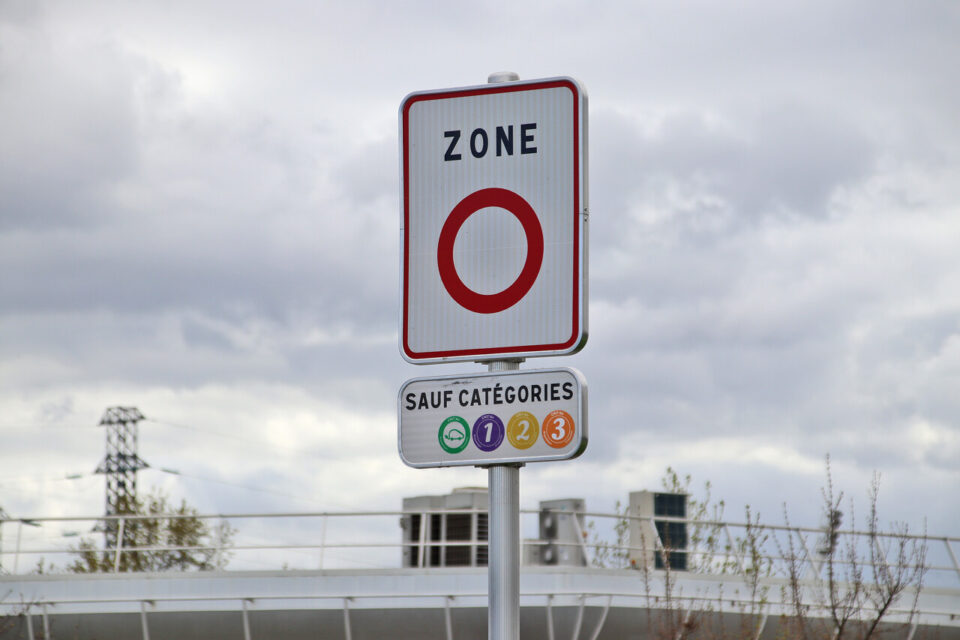
    Credit: Guillaume Laurens / Actu Toulouse

    An unlikely political resonance

    Initially, it was the Rassemblement National (RN) that launched the offensive against the ZFEs, in the name of “freedom of movement” for all vehicles, regardless of their Crit’Air sticker… But this crusade on behalf of cars has found an unexpected echo even in the ranks opposed to the far right. On the left of the political spectrum, La France insoumise (LFI) also voted to abolish these zones, denouncing a socially unfair measure. According to the Insoumis, the EPZs primarily penalise low-income workers who depend on their vehicles to get to work or, quite simply, to do their job (in certain sectors of activity).

    Dejection for the Greens…

    Marine Tondelier, national secretary of Europe Écologie Les Verts (EELV), had this to say about the decision, which she described as a “dramatic turning point”. On her X account (formerly Twitter), she expressed her indignation: ” This is the worst week for ecology in a long time. She points the finger at a motley majority, ranging from the RN to LFI, via a few Macronist MPs, who voted to abolish the EPZs, adopted by 98 votes to 51.

    A step backwards for the environment?

    The abolition of the EPZs is part of a wider trend to question environmental policies, which are often criticised for being technocratic or out of touch with social issues. The political signal, however, is unequivocal: in the midst of a climate crisis, France is choosing to ease an ecological constraint in the name of economic accessibility, even if it means compromising the long-term dynamic initiated several years ago.

    Ironically, however, these zones were supported by President Emmanuel Macron and implemented under the government of Édouard Philippe. In 2022, our Head of State announced, following his re-election: ” The policy I will pursue over the next five years will be ecological or it won’t be. ” Three years on, the ecological course set by the presidential party raises questions.
  • Emmanuel Macron in Douai for the launch of the Gigafactory-AESC

    Emmanuel Macron in Douai for the launch of the Gigafactory-AESC

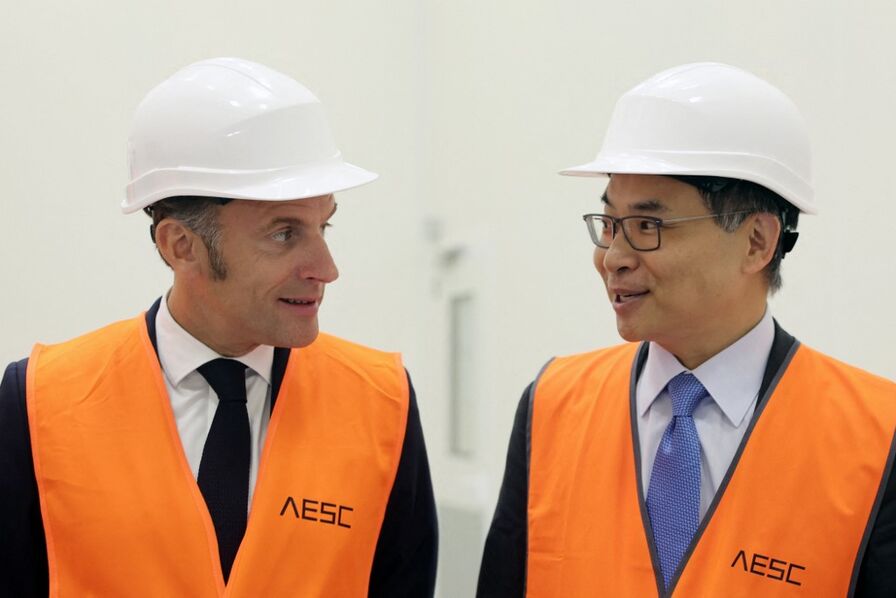
    On Tuesday 3 June, Emmanuel Macron visited Douai to inaugurate the AESC Gigafactory, a huge factory specialising in the production of batteries for electric cars. The Gigafactory, developed in partnership with the Chinese group Envision AESC, is part of the Renault ElectriCity industrial cluster, dedicated to 100% electric vehicles.

    Designed to produce batteries for the new Renault electric range, this “gigafactory” will eventually produce an annual energy capacity of between 24 and 30 GWh… By way of comparison, that’s enough to power an average town of 5,000 inhabitants for a year. In reality, this new “Gigafactory” alone will supply batteries for around 200,000 electric cars a year by 2030. It will produce batteries for Renault’s reinvented iconic models, such as the R5 and the future electric R4.

    Credit: Teresa SUAREZ

    A national industrial and ecological ambition

    The inauguration of the AESC Gigafactory in Douai is part of a wider strategy of reindustrialisation and energy transition called “Renault ElectriCity”, with a total investment of almost €2 billion, including €1.3 billion for the Douai plant alone.

    Launched in 2021, this project brings together three strategic sites in Hauts-de-France: Douai, Maubeuge and Ruitz, with the ambition of making the region the centre of gravity for electric cars in Europe. The aim of the project is to produce up to 400,000 electric vehicles a year at the three production plants, and to relocate some of the manufacturing to France. “Renault ElectriCity” aims to create a complete ecosystem, from battery manufacture to final vehicle assembly, with the support of key partners such as Envision AESC.

    This inauguration marks a further step forward for Renault, which is affirming its determination to make Hauts-de-France the nerve centre of its 100% electric ecosystem, as part of its “Renaulution” transformation strategy. These initiatives illustrate the drive to strengthen France’s industrial sovereignty, with the aim of reducing its dependence on imported Asian batteries.

    On the financial side, the European Commission has authorised €48 million in aid to support the construction of this lithium-ion battery plant, underlining its importance to France’s economic development and competitiveness in this field. The Douai site alone is expected to create more than 1,000 jobs by 2030.

    Credit: Maxpp

    A major socio-economic impact

    In Douai, Emmanuel Macron also stressed the importance of initiatives of this kind for the economic revitalisation of the region, which has historically suffered from industrial decline. The Head of State even went so far as to say: ” There’s no need to be fatalistic or gloomy. Times are tough, but what you are embodying here today shows that ecology and the economy can go hand in hand if we invest, if we have a long-term strategy and consistency.

    Credit: Ludovic Marin