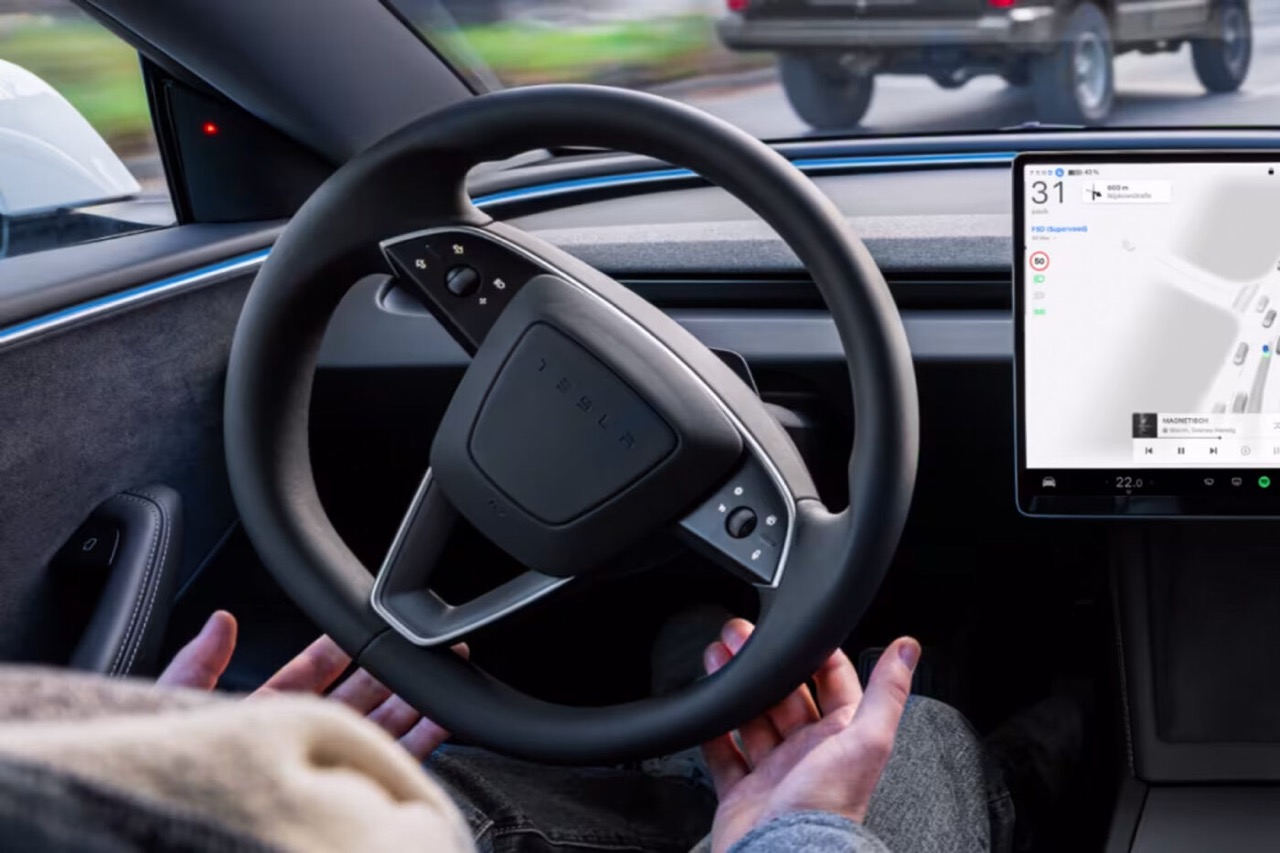
Since 1 December, Tesla has been transforming 10 of its French centres into autonomous driving showcases, managed by FSD (Full Self-Driving) in “supervised” mode. Until 31 December 2025, curious onlookers will be able to discover this technology, which is still banned in Europe.
Source : Tesla
Tesla FSD: the technology that challenges European roads
This autonomous ride through French cities is possible thanks to a technology that the American firm has been developing for over 9 years. In 2025, the most recent high-performance version is v14, based on the “vision only” approach: eight high-resolution cameras and a powerful on-board computer analyse the environment in real time via a neural network. The big innovation is that this motor intelligence does not use radar.
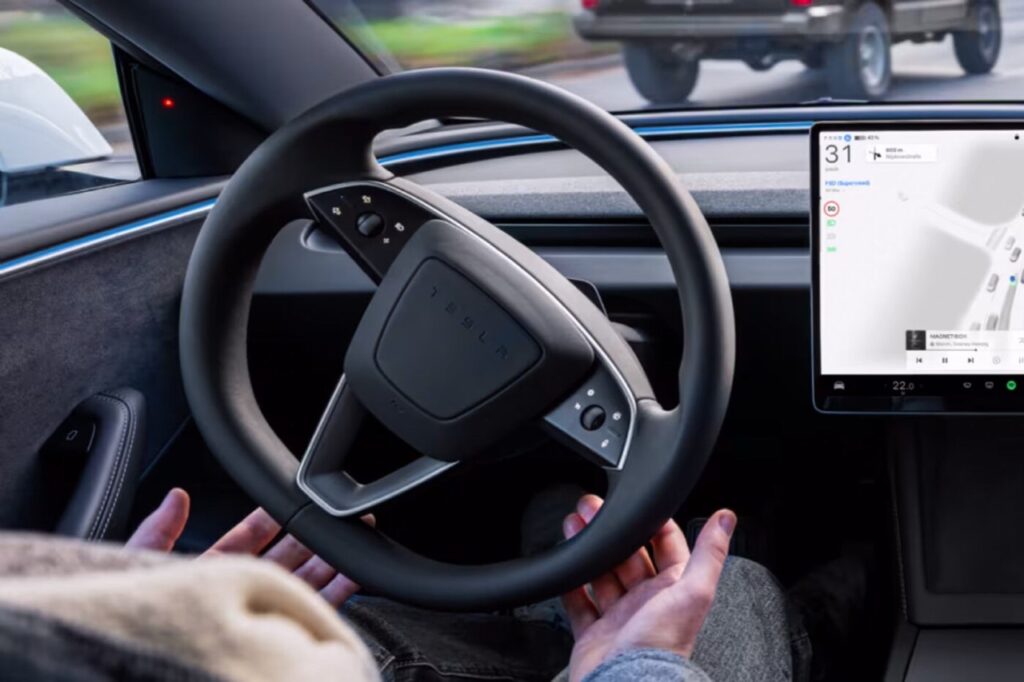
In practical terms, to get from trip A to trip B, the driver enters a destination via the screen, which generates an itinerary with suggested lane changes, motorway exits and bends. The FSD follows this route, selecting the right forks and adjusting in real time (detours, road closures). The system therefore manages steering, acceleration, braking, lane changes, intersections and pedestrians, mimicking human decisions based on billions of kilometres accumulated in the United States.
However, it remains classified as level 2 according to the SAE (Society of Automotive Engineers) classification of automation levels, which ranges from 0 to 5. It requires constant human supervision, with the driver remaining legally responsible.
Where can you test the SDF as a passenger?
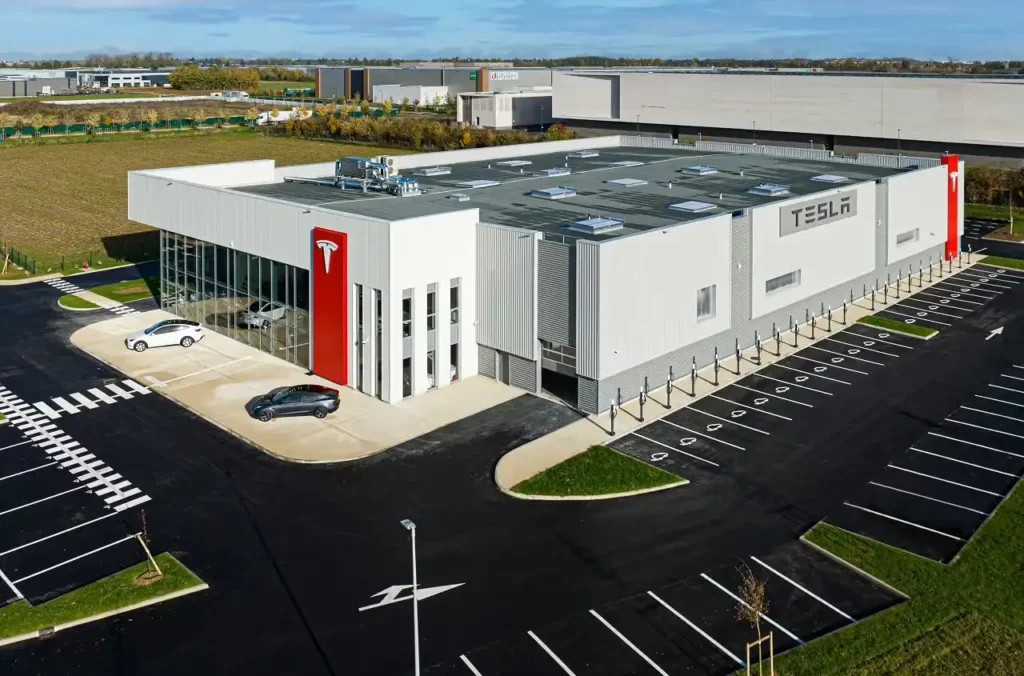
It’s the announcement of the end of the year: Tesla is opening its centres from 1 to 31 December 2025 for supervised test drives in France. In all, more than 10 Tesla Centres across France will be open to the more curious. Nantes, Bordeaux, Paris-Est, Lille, Cannes, Toulouse, Marseille, Strasbourg, Paris-Nord and Lyon-Est: these are the locations selected by Elon Musk’s brand.
Source : Tesla val d’europe
Registrations can be made via the Tesla France website, in limited time slots, with an employee at the wheel for the entire duration. The scheme will run in Europe (Italy and Germany) until 31 March 2026.
A typical test route
With the aim of proving that this technology, which makes drivers reluctant, is effective and reliable, each session reproduces a home-work journey. The car will drive through dense urban areas, roundabouts and the ring road, but will also wander along suburban roads and high-traffic areas to test stressful everyday scenarios. The FSD will be piloting these stages alone (insertions, priorities, pedestrian crossings), under immediate supervision. It is expected to take around 20-30 minutes around the Tesla Centre.
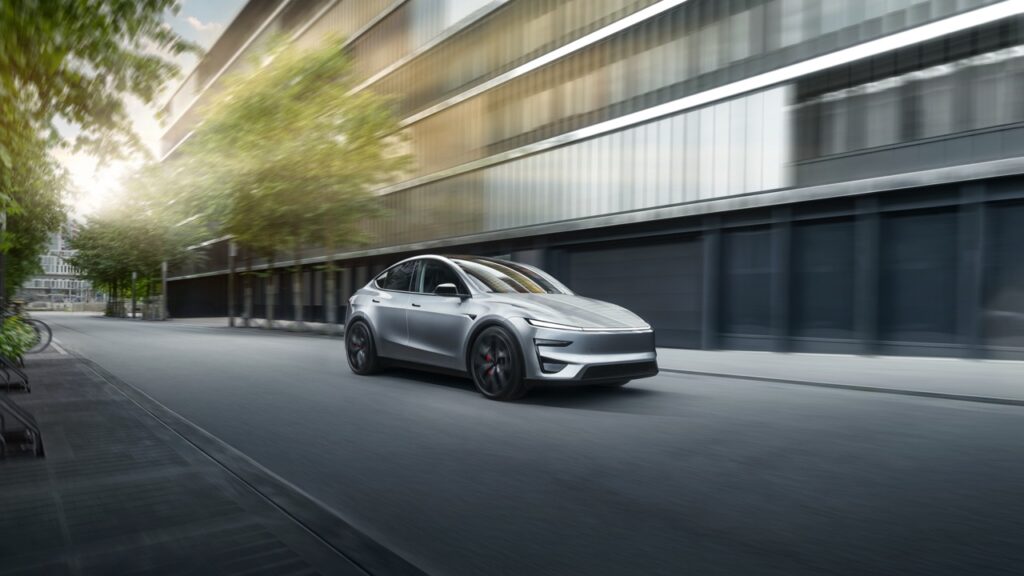
Source : Tesla
When will this be authorised?
In France and Europe, full approval for customer use is based on the DCAS/UNECE R171 phase 3 regulation. This regulation, which recently came into force on 22 September 2024, authorises lane changes and manoeuvres initiated by the system under human supervision.
At present, no European territory has authorised this technology. Nevertheless, Tesla is trying to convince the RDW, which is the independent Dutch authority for all motorised vehicles. The American brand is targeting February 2026 in the Netherlands and hopes to extend the technology to other countries in late 2026/early 2027. Elon Musk is lobbying hard, criticising the “obsolete” rules, despite a number of changes (e.g. France banning “fully autonomous” advertising).
For everyone, these journeys offer a unique opportunity to observe technology on our roads, in the face of our markings, our signage and our very European way of driving. All of which will fuel the debate on the real role that autonomous driving will play in tomorrow’s electrified mobility.
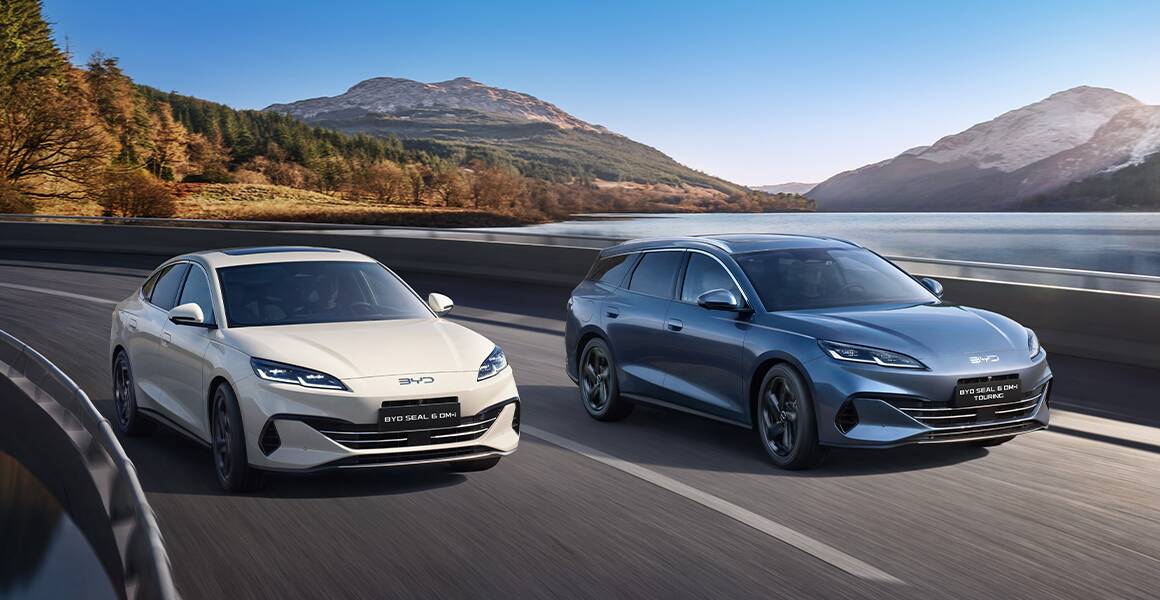
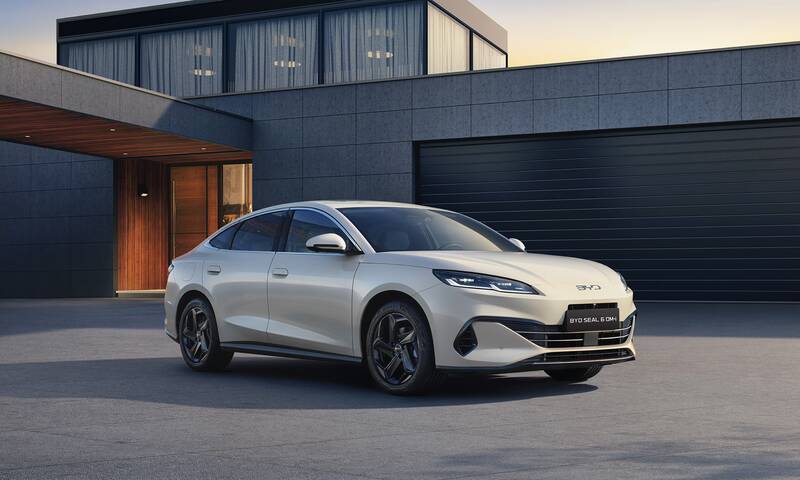
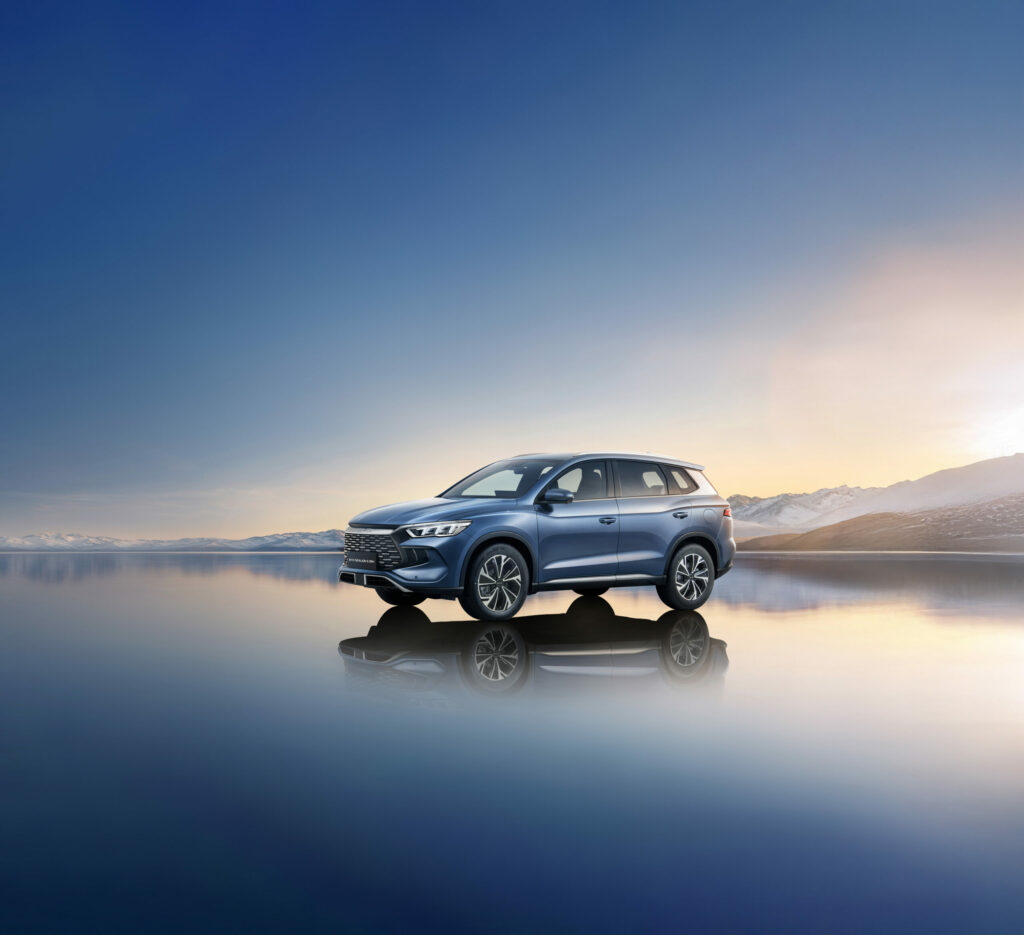
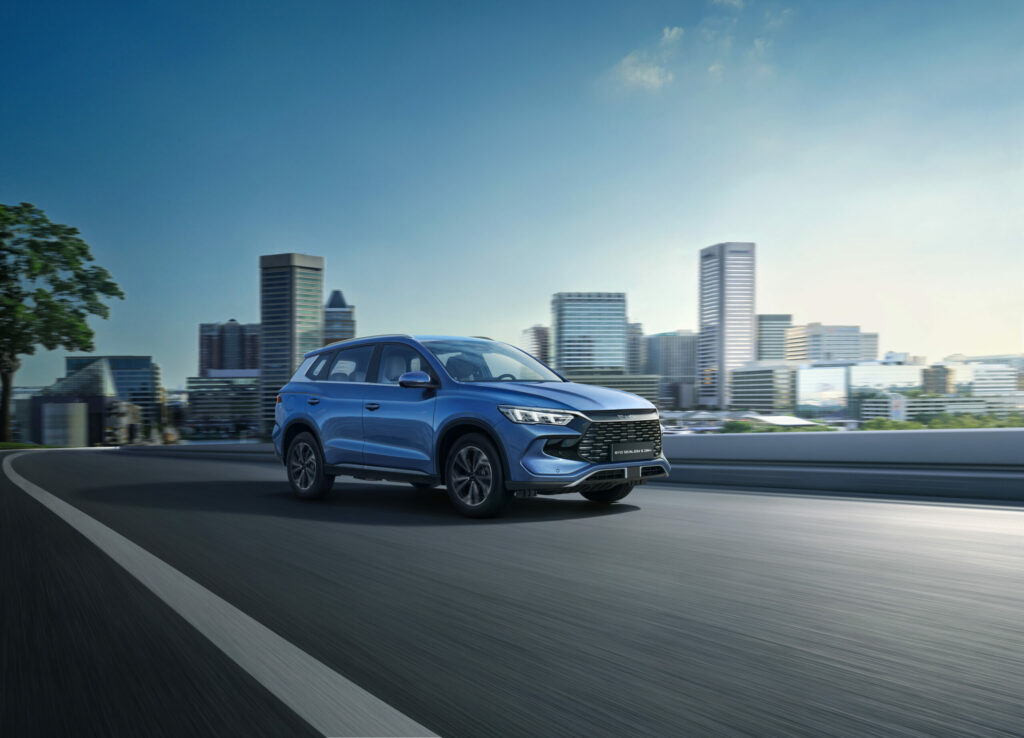
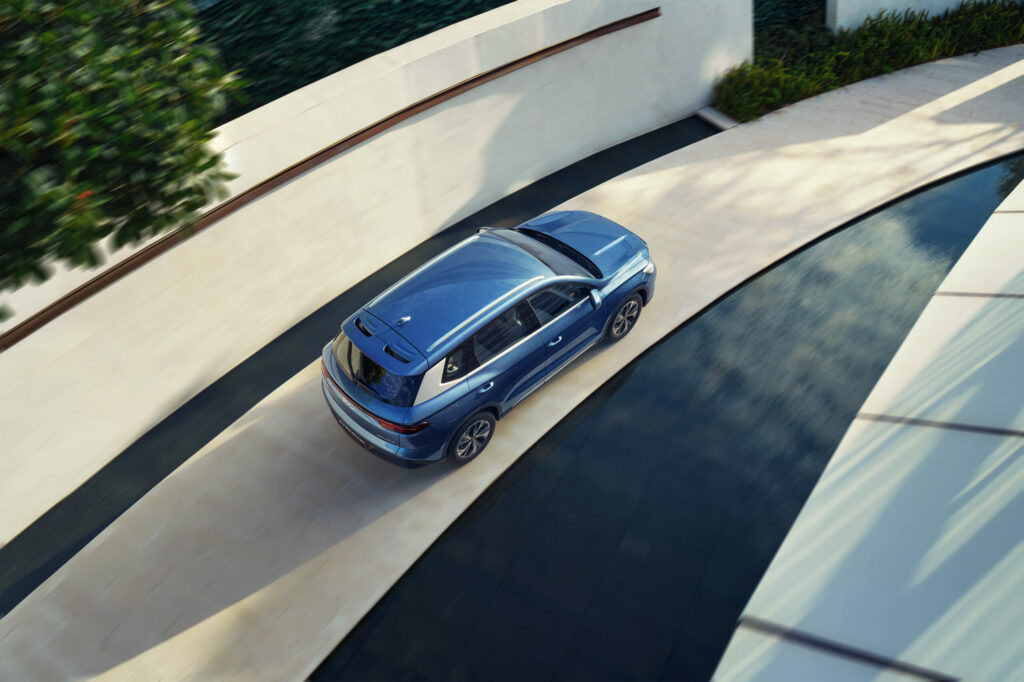
The new BYD SEAL 6 DM-i is winning over the European market with its exemplary safety. The saloon and estate versions have been awarded five stars thanks to their consistent performance. These hybrid models confirm BYD’s ambitions in strategic family segments.
The BYD SEAL 6 DM-i saloon and estate drive on the road, combining performance and safety. (Credit: BYD)
Results boost BYD’s credibility in Europe
Both SEAL 6 DM-i models scored top marks in the Euro NCAP tests, underlining their rigorous design and the manufacturer’s technological maturity. This result reflects in-depth work on the vehicle’s structure, particularly in side impacts, where the saloon scored maximum points. This performance rewards development work focused on structural strength and energy management during complex impacts.
Adult occupant protection reaches 92%, a score rarely achieved in this category. The manufacturer is thus demonstrating its ability to offer safety solutions adapted to the constraints of the modern road. This high score is reassuring for drivers looking for a vehicle capable of offering safe and comfortable journeys, even over long distances.
One of the best levels of child protection in its category
Child protection performance reaches 90%, thanks to exemplary results in frontal offset and side impact tests. This level reflects BYD ‘s focus on family safety, an essential element in a market where this criterion strongly influences purchases. Fastening systems, seat configuration and crash force management have been optimised to ensure maximum safety.
This performance strengthens the position of the SEAL 6 DM-i among families who want to combine autonomy, technology and protection. The European market, which is highly sensitive to these criteria, is seeing the arrival of two models capable of competing with the best references in the segment.
Overall safety praised by Euro NCAP
The other two categories assessed by Euro NCAP also scored very well. Protection of vulnerable road users reached 84%, demonstrating the finesse of the sensors and the effectiveness of the exterior surveillance systems. These systems enable rapid detection of pedestrians and cyclists, reducing the risks in dense urban environments.
Driver assistance systems scored 85%, reflecting the quality of the technologies on board. Euro NCAP describes these systems as excellent, in particular because of their precision and consistency in real-life situations. This recognition is a major asset for BYD, which is banking on software innovation to stand out in an industry in the throes of transition.
The SEAL 6 DM-i, with up to 105 km of 100% electric range and a combined range of 1,505 km (Credit: BYD)
Recognition as part of a sustainable dynamic
The SEAL 6 DM-i becomes the ninth BYD car to be awarded five stars since the brand’s arrival in Europe at the end of 2022. This new distinction adds to the success of a range that has consistently won top marks in safety assessments. The Chinese firm is thus demonstrating a rare consistency in its approach, enabling it to rapidly win the confidence of consumers.
Previous award-winning models such as the DOLPHIN, the ATTO 3 and the SEAL U DM-i have further enhanced this reputation. BYD is now established as a major player in the electric and hybrid market. These results demonstrate a strategy focused on reliability and transparency, two essential elements for winning over customers in Europe.
A stronger position
Since their launch in September, the SEAL 6 DM-i and SEAL 6 DM-i TOURING have won over a wide range of customers thanks to their range and versatility. Super Hybrid technology enables long distances to be covered using an efficient combination of battery and combustion engine, an advantage appreciated in regions where recharging facilities are limited. This hybrid solution also makes it possible to reduce overall fuel consumption, which meets drivers’ ecological and economic expectations.
The saloon version offers up to 105 km in electric mode, while the Touring version reaches 100 km, a remarkable performance for this type of powertrain. The combined range is well in excess of current standards, with 1,505 km for the saloon and 1,350 km for the estate. These figures allow drivers to plan their journeys without constraint, while enjoying a smooth, silent drive.
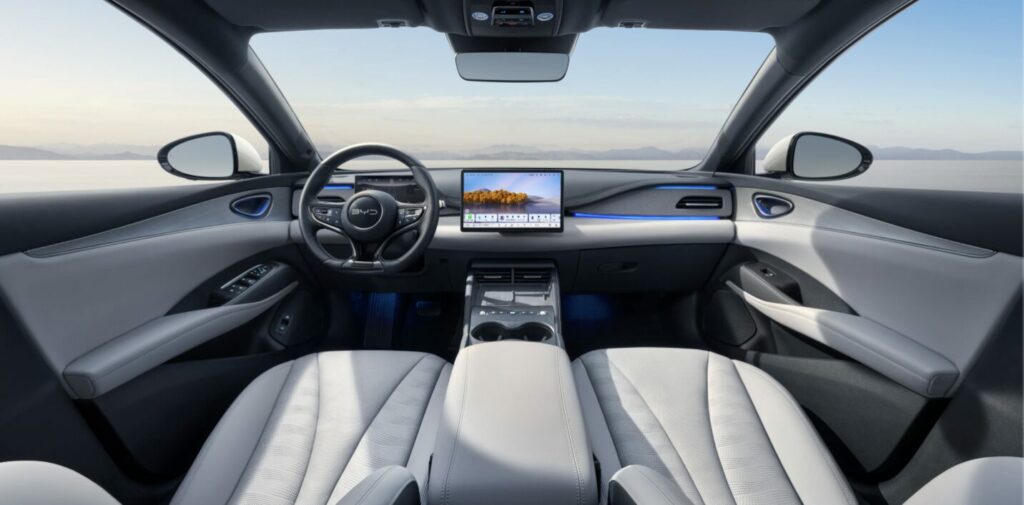
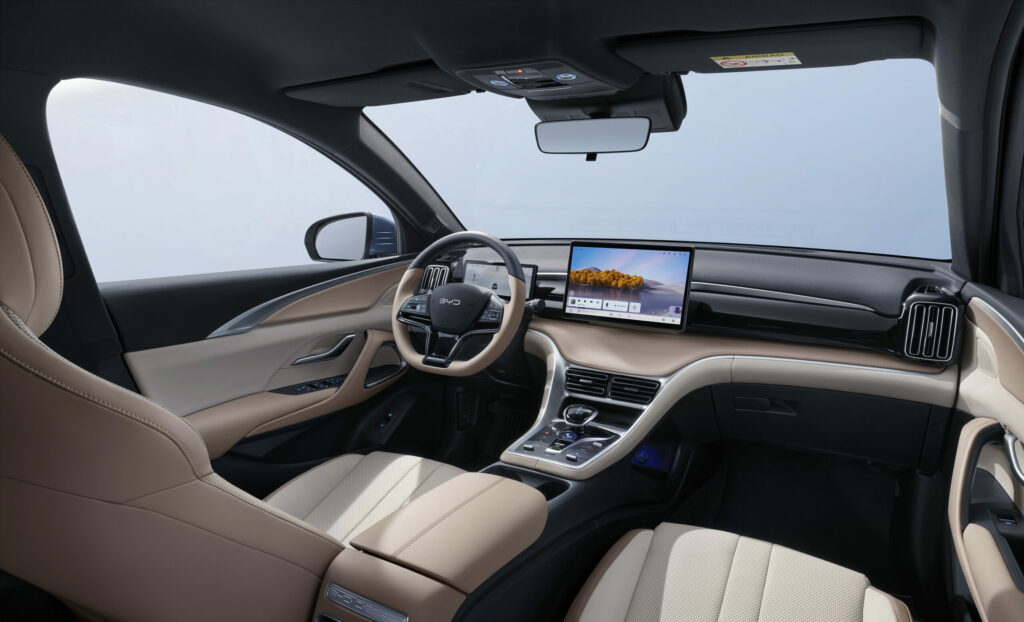
The spacious, connected interior of the SEAL 6 DM-i with touchscreen and on-board technologies. (Credit: BYD)
A user experience enhanced by practical technologies
Both models incorporate iconic BYD features such as Vehicle-to-Load. This technology makes it possible to power external devices, a feature much appreciated during business trips or outdoor activities. It illustrates BYD’s commitment to offering vehicles that are versatile and suitable for multiple uses.
The 12.8″ or 15.6″ infotainment touchscreens provide fluid, intuitive navigation. Access to the vehicle via smartphone using the NFC card simplifies everyday life for users. These innovations add to the overall appeal of both models, and complete an already solid offering in terms of safety and autonomy.
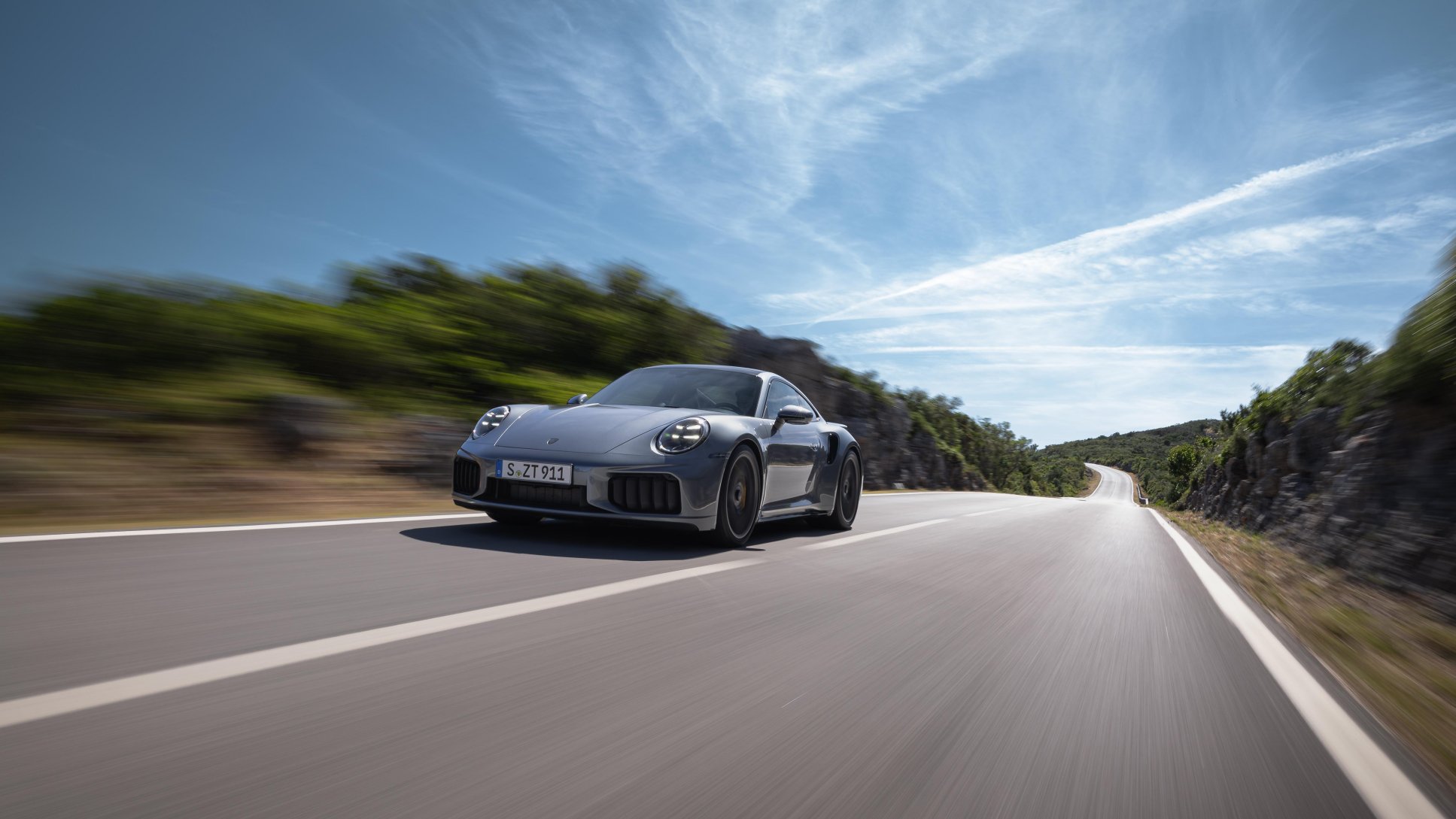
The Porsche 911 will never have a charging socket, at least not with current technology. Despite years of research, the brand considers the option too complex. Between technical constraints, architectural limitations and historical philosophy, plug-in hybrids just don’t fit with the 911.
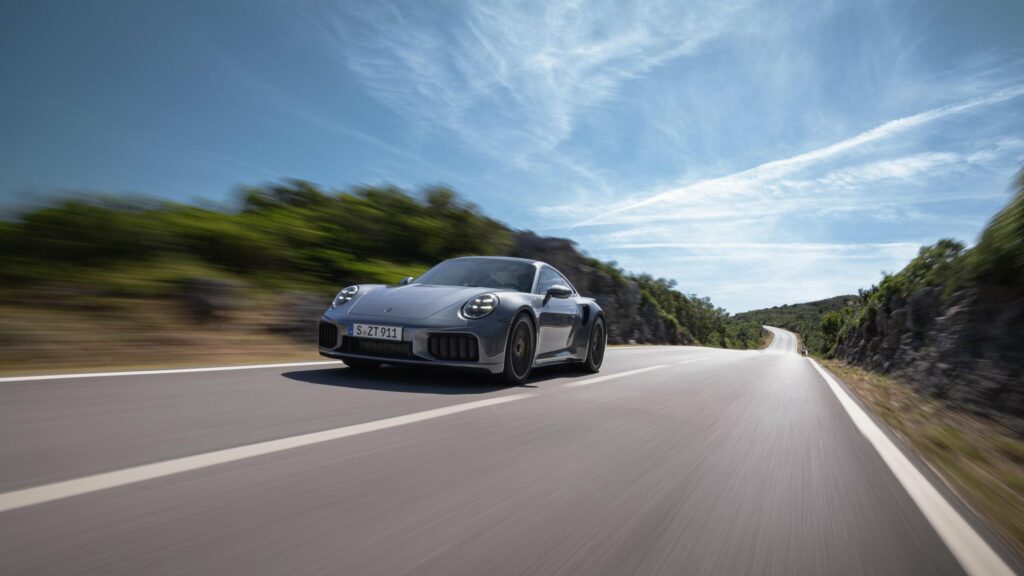
The Porsche 911 Turbo S T-Hybrid, the latest high-performance evolution of the famous Flat-6. (Credit: Porsche)
Porsche ‘s announcement puts an end to a debate that has agitated the community for almost a decade. Engineers have spent years modelling a 911 plug-in hybrid, without ever coming up with a satisfactory solution. The car would have to be extensively modified, which the brand categorically refuses to do. Preserving the DNA of this iconic model has become the top priority in the face of electrification pressures.
Architecture too unusual to accommodate a charging point
The Porsche 911 has a unique platform that determines its legendary balance. Each component is placed with extreme precision to ensure exemplary roadholding. According to Frank Moser, who is responsible for the 911 and 718 models, integrating a rechargeable hybrid system would mean upsetting this fragile whole. He reminds us that the 911 must not become more imposing, because its design is based on meticulous proportions.
To install a larger battery, a powerful electric motor, an on-board charger and specific electronics, the entire rear of the car would have to be redesigned. This would change the weight distribution and alter the original architecture. Porsche has always refused to cross this red line. The 911 is a model that evolves slowly, with targeted adjustments rather than a structural revolution. For decades, its concept has been based on a balance between sportiness, efficiency and tradition. To change its proportions would be tantamount to creating a different car that would bear the same name without sharing its essence.
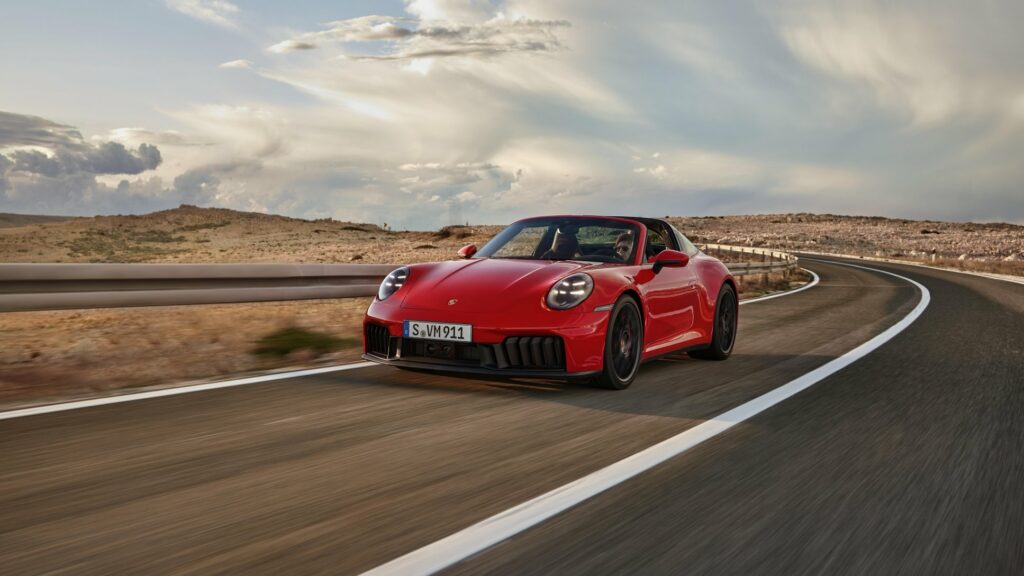
The 911 GTS inaugurates T-Hybrid technology, integrated without compromising on size (Credit: Porsche).
The failure of a long-studied project
Porsche did not rule out the idea of a plug-in hybrid 911 from the outset. The technical teams explored this avenue as early as the launch of the 992 generation. Former chief engineer August Achleitner even mentioned the possibility, drawing on experience gained with the Cayenne, Panamera and 918 Spyder. However, as the tests progressed, the engineers realised that the operation involved too many compromises.
Even to offer three or four kilometres of electric range, hundreds of kilos of batteries and equipment would have had to be added. This would have made the model heavier, wider and less agile. In the end, Porsche decided that this transformation was not compatible with the philosophy of the 911. The expectations of customers, accustomed to a car that is responsive and connected to the road, also weighed in the decision. A silent 911 in electric mode, which would be heavier and less responsive, would run the risk of failing to win over its most loyal customers.
T-Hybrid, a compromise accepted by engineers
Faced with these constraints, Porsche has developed another type of electrification. The T-Hybrid system introduced on the latest 911s, notably the GTS and Turbo S, does not allow the car to be driven in electric mode. It does, however, deliver a significant gain in power and eliminates turbo lag. The ingenuity of the system lies in its meticulous integration. The 400-volt high-voltage battery is exactly the same size as the old 12-volt battery. It is positioned in the same place, so there is no need to modify the technical package.
No changes have been made to the weight distribution or available volume. This system works like a very advanced light hybrid. It provides additional breathing space for the Flat-6 while respecting the historical constraints of the model. For Porsche, this is the maximum acceptable. The presence of an axial electric motor, which is more compact and lighter than a conventional motor, further enhances the efficiency of the system without compromising the car’s agility.
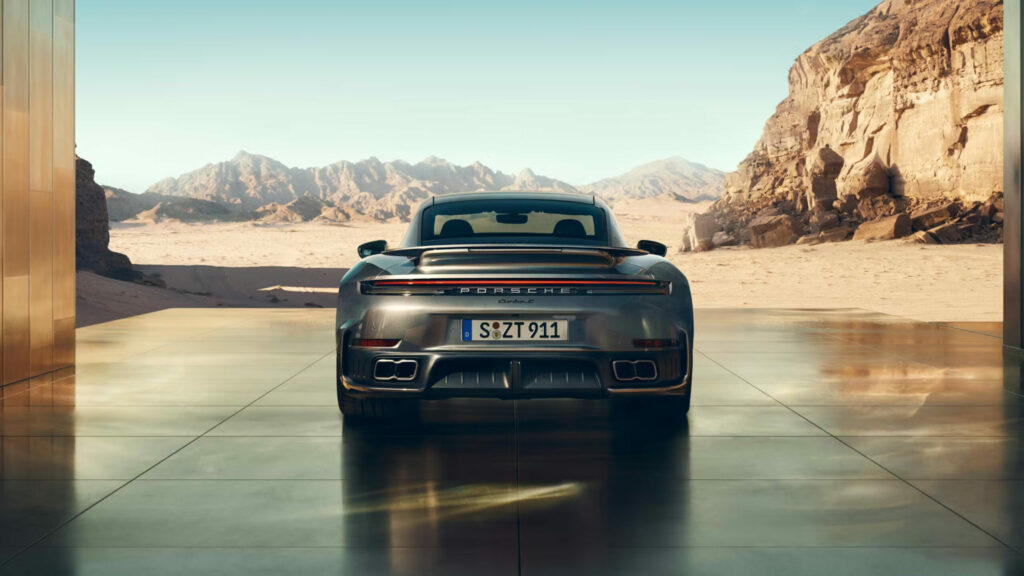
The iconic rear silhouette of the 911, unchanged despite technological advances (Credit: Porsche)
A strategy guided by the future… and by prudence
Porsche is keeping a close eye on developments in battery technology. The brand believes that more compact batteries could reopen the debate in the future. However, there are no concrete developments to suggest that rechargeable hybrids will be available in the next few years. For the time being, the 911 must remain faithful to its architecture and historical identity. Porsche prefers to take things one step at a time rather than give in to a technological trend that could harm its most legendary model.
In the meantime, the next Porsche to offer full electric drive will be the 718, scheduled for 2027. The challenge will be to keep weight down while respecting the sporting philosophy of the Boxster and Cayman. As for the 911, it will continue on its way thanks to measured electrification, as illustrated by the recent 711bhp Turbo S T-Hybrid. The brand from Stuttgart never says never, but it knows that the 911 must remain a 911. It is this loyalty that explains the definitive abandonment of the plug-in hybrid, at least for this technological generation.
Norway has just made a major shift in world motoring history. The Nordic country now has more electric cars than diesel models on its roads. This revolution comes against a backdrop of record sales and decisive tax changes.
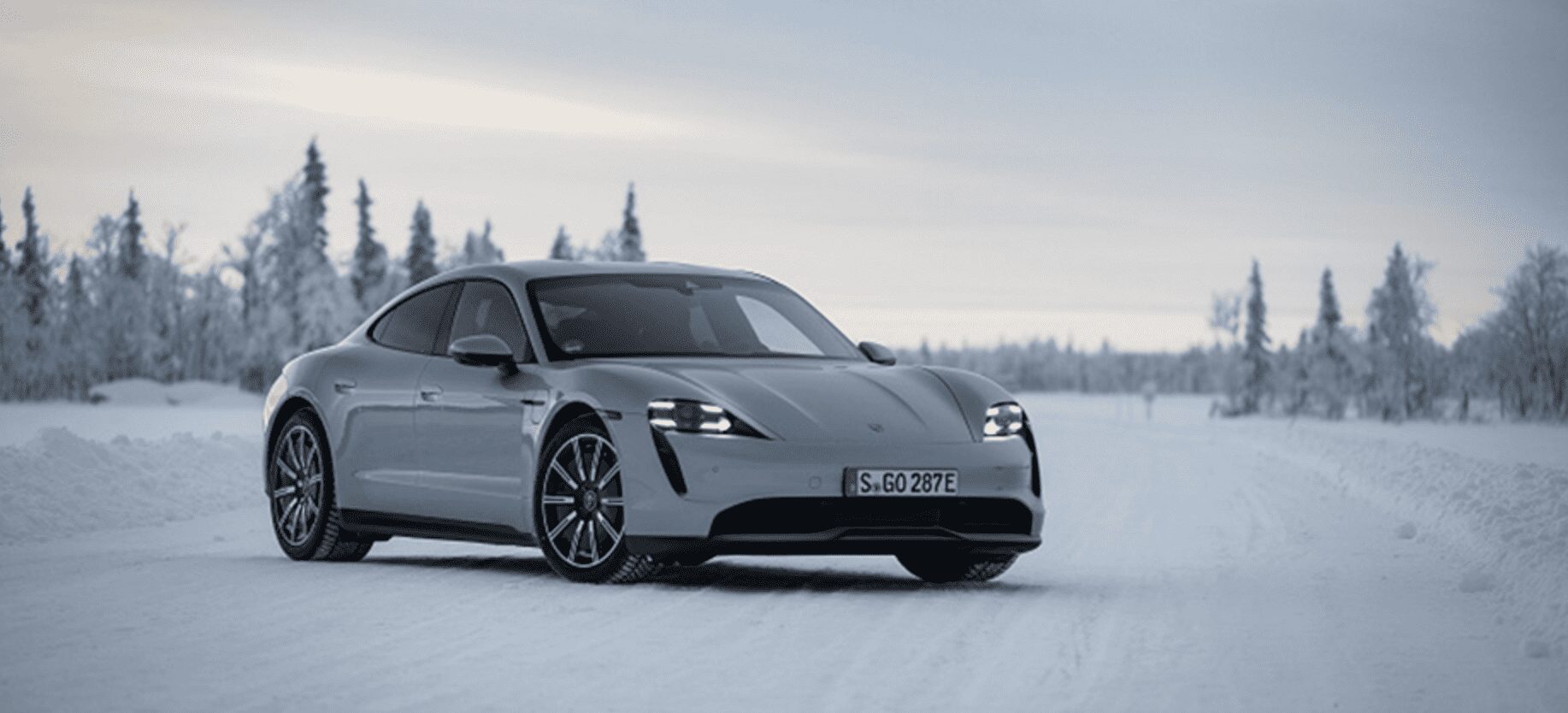
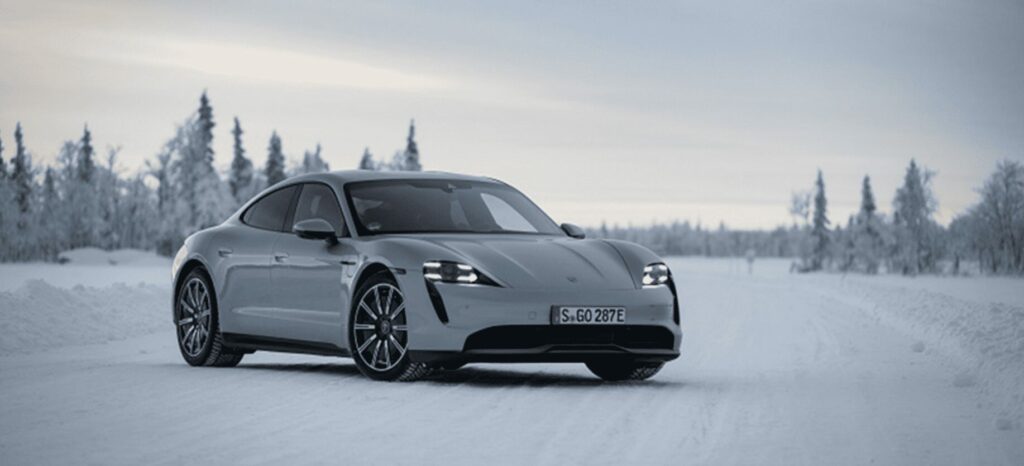
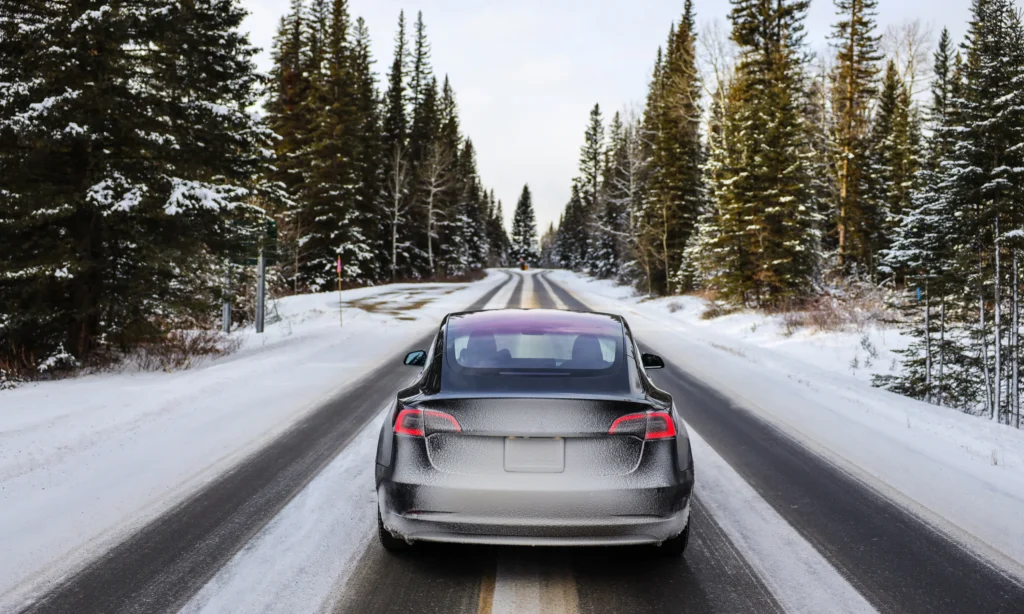
An electric car on a snow-covered road in Norway.
The figures published confirm a spectacular advance. The authorities and specialist associations are hailing a turning point that has been years in coming. However, this success is also based on a paradox linked to the country’s large hydrocarbon production.
A world first that marks a turning point for the automotive industry
Norway has become the first country in the world where electric cars outnumber diesel models. TheNorwegian Electric Vehicle Association counts 918,000 electric cars on the road, slightly more than diesel-powered vehicles. This symbolic milestone comes on top of another major one, as petrol models had already been overtaken by electric cars in mid-September. According to Christina Bu, General Secretary of the association, this development confirms the effectiveness of the policy pursued for several years. She also points out that the complete absence of VAT on electric vehicles will be maintained until 2027, thanks to a hard-fought political compromise.
This progress is based on a powerful policy of incentives, which has become a pillar of the national strategy. Electric vehicles benefit from a VAT exemption of 25% up to €42,500, which greatly reduces their purchase cost. The government wanted to abolish these benefits more quickly, but a political agreement has pushed back the deadline to 2028, with an intermediate stage in 2027. The prospect of tougher tax rules is providing a major boost to car purchases. Sales of electric cars have rocketed in recent weeks, confirming a trend that is already well established in the country.
An almost totally electrified car market
Norway has been recording almost 100% electric vehicle registrations for several months now. In November 2025, the country even reached a near-perfect level, with 97.6% electric vehicles out of 19,899 registrations. This figure represents an all-time record in terms of both volume and proportion. The contrast is striking, given that petrol, diesel and hybrid vehicles now account for only a marginal share of the market. This performance reflects a combination of factors, including end-of-year promotions and concerns about tax reform in 2026.
Tesla occupies a dominant position in this very dynamic market. The American manufacturer sold 6,215 vehicles in November, accounting for more than 31% of the month’s sales. It is ahead of Volkswagen, Volvo and BMW, who complete a podium largely dominated by electric models. Tesla also retained its top spot for the year as a whole, with more than 28,600 units sold. Despite the difficulties encountered in several European countries, the brand is enjoying considerable brand loyalty in Norway, and demand remains buoyant.
Close-up of the wheels of an electric car on a snow-covered road.
A transition made possible by oil revenues
Yet the Norwegian paradox remains visible. The country remains Europe’s leading producer of oil and natural gas, excluding Russia. This wealth of energy largely finances ambitious policies to support electric mobility. The immense revenues from hydrocarbons make it possible to offer tax incentives that are difficult to replicate elsewhere. However, this situation raises a number of questions. Norway is seeking to reconcile its role as a major producer of fossil fuels with a national strategy focused on reducing emissions.
This contrast also reflects the limits of a model based on the redistribution of oil revenues. The country is moving towards complete electrification of its car fleet, but continues to export hydrocarbons that are responsible for global warming. This contradiction regularly fuels political debate. However, the results achieved in the automotive sector demonstrate the country’s determination to reduce domestic emissions. The authorities have stated their ambition to become a world model for sustainable mobility.
An acceleration before a stricter fiscal future
The VAT reform debate is having a major impact on recent purchases. Many Norwegians are anticipating the tax changes expected in 2026. According to Geir Inge Stokke, head of the Norwegian Road Information Council, there is considerable concern about the planned increase in VAT. Motorists prefer to buy now to take advantage of current benefits. Carmakers are also benefiting from this trend. End-of-year promotions and a favourable economic climate are boosting demand.
The coming months will be closely scrutinised. Analysts are wondering whether the country can break the records already set. December sales could confirm this exceptional trend, or mark the beginning of a stabilisation. The deadline of 2028, when VAT exemptions are due to be abolished once and for all, will be a decisive step for the market. How consumers react to these changes will probably define the sector’s new trajectory.
An electric car backfires through a snow-covered forest.
A transformation that inspires but remains unique
Norway’s success is attracting international attention, but it is difficult to replicate. Few countries have the same financial resources or such a solid political consensus on the ecological transition. Norway benefits from a dense network of terminals, a powerful fiscal framework and a population that is highly aware of climate issues. The combination of these factors has produced exceptional results. Other nations are watching this development with interest, but have to deal with different economic realities.
Norway continues to lead the way in sustainable mobility. With electric vehicles now in the majority and sales almost entirely electrified, the country has confirmed its status as a world pioneer. This spectacular trajectory underlines the importance of public policy in the adoption of new technologies. It also shows that a massive transition remains possible when all the players are moving in the same direction.
American luxury is now electric. With the Optiq, Cadillac is hitting hard and proving that Detroit has got the message right: the future of motoring, even premium motoring, is battery-powered. This 100% electric compact SUV will arrive in Europe in early 2026, and is set to shake up the market for affordable top-of-the-range electric SUVs.
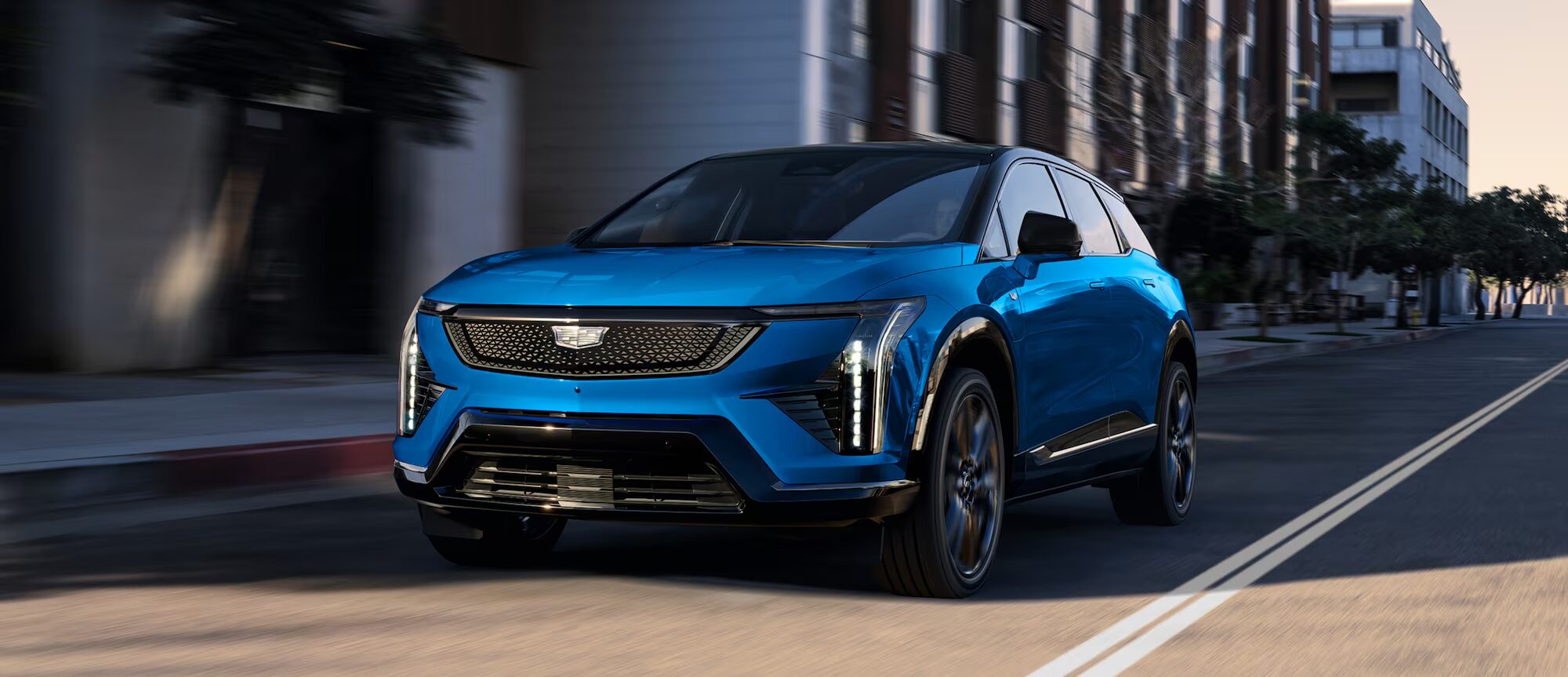
A city-side view of the Cadillac Optiq . Sources: CadillacEurope
Affordable top-of-the-range electric SUVs
Historically, the American firm, which is part of the GMC group, is the emblematic brand of American luxury, often associated with the elite and prestige cars. In terms of performance too, it’s in the brand’s DNA to produce high-flying vehicles, and the Optiq is no exception to the rule. Under the bonnet, it features two electric motors with all-wheel drive (AWD as standard), developing 304 bhp and 480 Nm of torque. That’s enough to accelerate from 0 to 100 kph in 6.3 seconds, despite weighing 2,355 kg, and to climb to a maximum speed of 184 kph (restricted speed). On paper, these statistics are not impressive, but they are more than enough for everyday use.
In terms of range, Cadillac has announced 425 km on the WLTP cycle, thanks to a 75 kWh battery. This puts the Optiq in the mid-range of its segment. Fast DC recharging is also included, making it an indispensable asset for long journeys.
The Optiq recently received top marks (5/5) in Euro NCAP’s rigorous safety and crash tests. This reflects the reliability of the American model in terms of impact protection and reliable accident avoidance equipment. Cadillac is thus reassuring Europeans that the model is safe and ready to take to the roads.
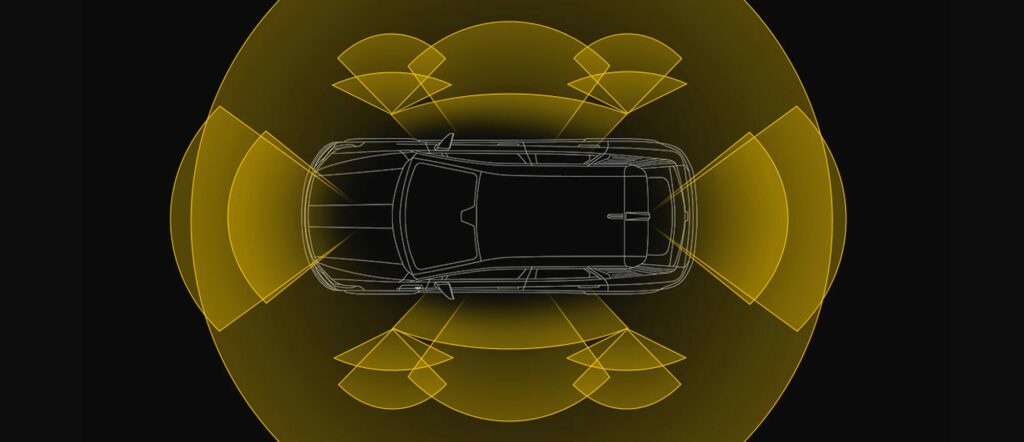
Diagram of the radars all around the car. Sources: CadillacEurope
Design, Cadillac’s real playground
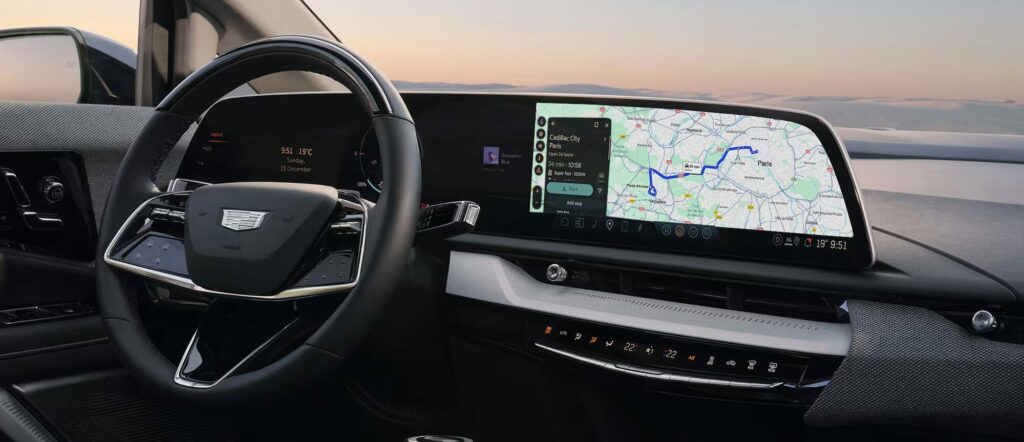
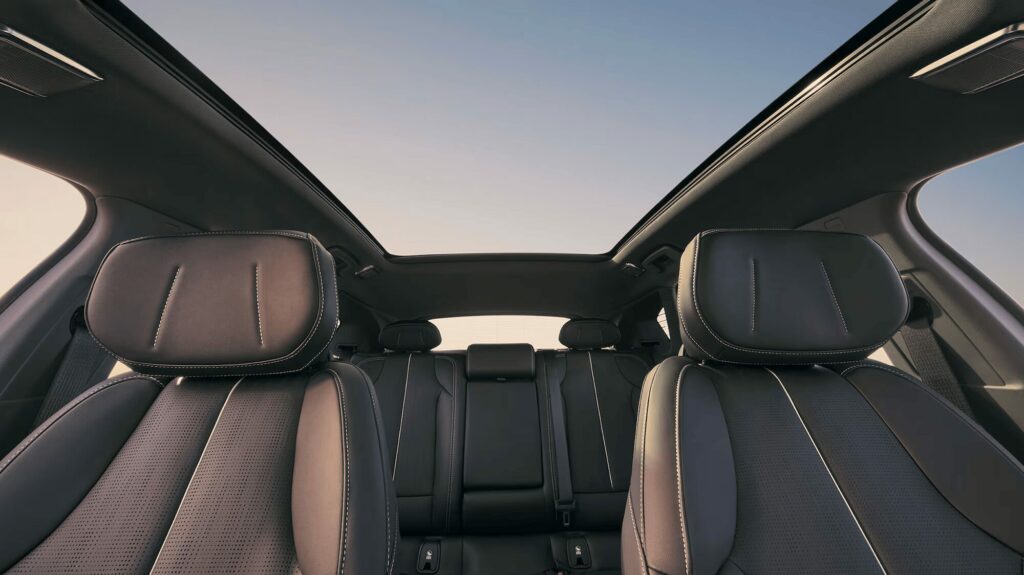
As explained earlier, it’s in the design department that Cadillac applies its expertise. Inside, the standard panoramic sunroof, ventilated front seats and meticulous finish all exude premium. On the driver’s side, the 33-inch curved screen is an immediate eye-catcher, and the Dolby Atmos audio system promises an immersive sound experience.
The dashboard and its large GPS screen Sources: CadillacEurope
At the rear, as with any SUV, there are three real seats. With a length of 4.82 metres and a wheelbase of almost 3 metres, there’s plenty of space. The boot is also substantial, with a capacity of 744 litres when the rear seats are up, ideal for stowing bulky luggage or equipment.
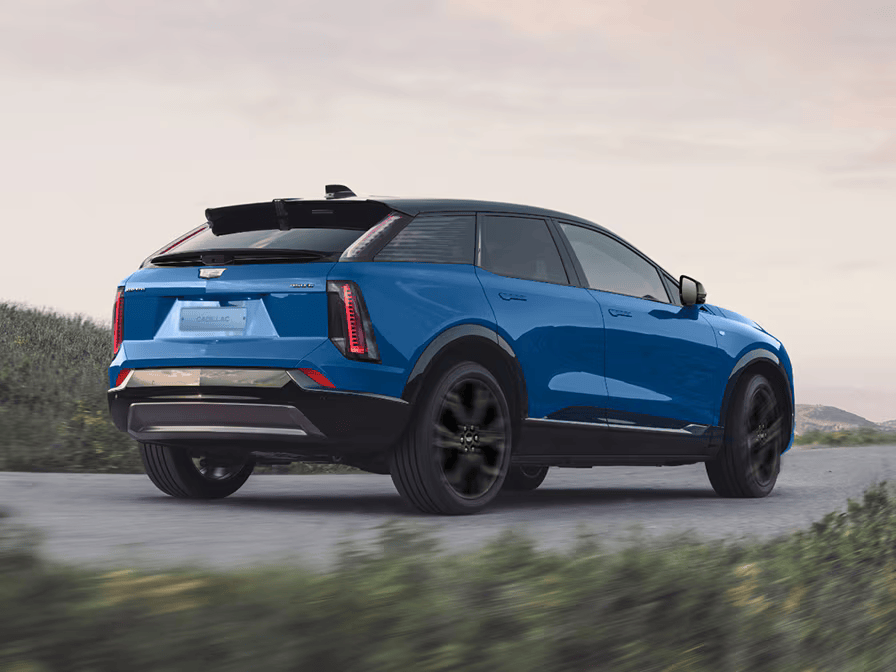
In the collective ideal, when we think of Cadillac, we think of big, massive vehicles. Here, with the Optiq, the exterior design is more compact and focuses on a dynamic silhouette, with flowing lines that taper slightly towards the rear. Two trim levels will be available: ‘Premium Luxury’ and ‘Premium Sport’. The 21-inch wheels, crystal black grille and slimline LED lights complete a package that leaves no doubt as to the vehicle’s luxury positioning. This is particularly noteworthy given that the Optiq is positioned in the ‘premium compact’ segment without any obvious loss of quality.
View of the sky through the glass roof. Sources: CadillacEurope
Who is it for? Who?
The advantage of the Optiq is that Cadillac is aiming wide: city dwellers looking for a quiet, manoeuvrable electric SUV, small families looking for a well-balanced vehicle for day-to-day use, and anyone who wants premium without going down the more expensive ultra-luxury route, even though it will cost just under €70,000 to buy.
With its contained dimensions (4.82 m in length, 1.64 m in external height and 2.13 m in width, offering comfortable interior space but which can be awkward in city driving), it avoids the ‘American behemoth’ syndrome while retaining the brand’s comfortable DNA.
What this means for Europe
Since 15 October 2025, orders have been open in Europe, and the launch is not without significance: it shows that American carmakers are finally adapting their electric models to European expectations (reasonable size, urban use, versatility).
The rear of the blue Cadillac Optiq SUV on the road. Sources: CadillacEurope
The launch is not without significance: it shows that American manufacturers are finally adapting their electric models to European expectations (reasonable size, urban use, versatility).
For consumers, this is excellent news. More choice in the premium-accessible segment, more competition, and above all, proof that the electrification of fleets will not just take place in Europe or Asia, but that the United States, one of the world’s greatest industrial powers, is still in the game.
The questions that remain
On paper, the dossier looks attractive, but a number of points still need to be verified on the ground. The WLTP range of 425 km is all well and good in theory, but what will be the reality in real European conditions? Will availability in French dealerships live up to expectations? Will Europeans be interested in this brand, which is well known but underdeveloped in Europe? And above all, will the reliability and after-sales service be up to scratch, especially for a brand that is still relatively unknown in Europe?
The Optiq is a perfect example of the transition that is taking place: the historic brands, even the premium/luxury brands, are moving towards electric vehicles with intelligence and adaptability. It remains to be seen whether Cadillac will succeed in its European venture.
Diesel, once king of the European market, is in unprecedented decline. Plug-in hybrids have just overtaken it. This change marks a major step forward for the European car industry.
Plug-in hybrids: 9.1% of new car sales in Europe in 2025.
A historic turning point for diesel
Ten years ago, more than one in two new vehicles in Europe ran on diesel. Today, that share has fallen to just 8%. In October 2025, rechargeable hybrids will account for 9.4% of the market, relegating diesel to fourth place. This development symbolises the end of an era when diesel dominated the roads.
Dieselgate accelerated this fall. Since 2017, petrol has regained the lead, followed by conventional hybrids in 2021, then electric vehicles in 2022. Plug-in hybrids are now the bronze medal. Buyers and manufacturers are adapting to this new reality.
Multiple factors behind the decline
There are several reasons for this fall. Firstly, the European Union’s strict anti-pollution standards have forced manufacturers to invest in electrification. Secondly, small urban diesel models have all but disappeared from the market.
What’s more, financial support and environmental bonuses clearly favour hybrid and electric engines. The planned ban on new combustion engines from 2035 is also encouraging customers and investors to abandon diesel. The combination of these factors makes a comeback unlikely.
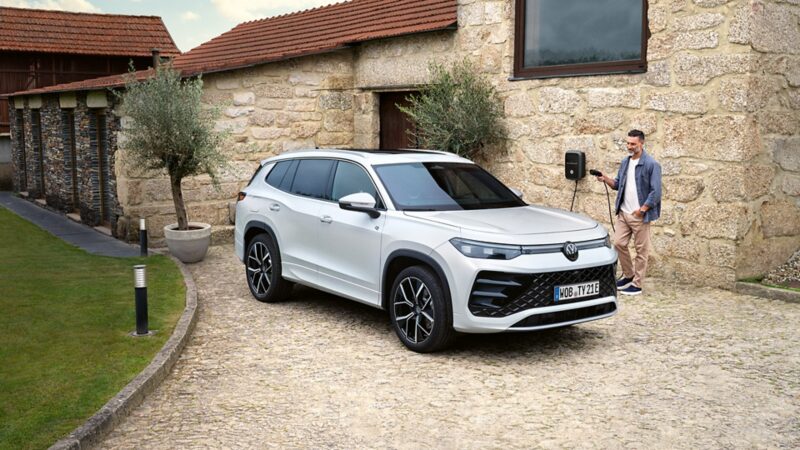
Volkswagen Tayron eHybrid, an example of a plug-in hybrid vehicle that is winning over European buyers. (Credit: Volkswagen)
The rise of hybrid and electric vehicles
By 2025, hybrids will dominate the European market, accounting for 34.7% of registrations. Petrol will account for 26.9%, while electric vehicles will account for 18.3%. This breakdown should change further with the arrival of more affordable electric vehicles.
Renault and Volkswagen are actively preparing for this transition. Renault is unveiling its electric Twingo, while Volkswagen is planning the ID.Polo in 2026 and the ID.Every1 in 2027. The influx of competitive Chinese models should also speed up the adoption of electrified vehicles.
New car sales up sharply
In October 2025, more than 916,000 new vehicles were sold in the European Union, an increase of 5.8% compared with October 2024. This increase is being driven by hybrids and electric cars, which are growing in popularity month by month.
Plug-in hybrids now account for 9.1% of registrations, compared with 7% a year ago. Electric cars are also continuing to make progress, with a market share of 16.4% over ten months, although this is still insufficient to meet the 2035 targets.
Significant differences between manufacturers
Volkswagen remains the leader with 264,069 sales in October and 2.478 million over ten months. Stellantis was slightly up in October, but down for the year as a whole. Renault, on the other hand, posted a solid increase of 10% over the month and 7% over ten months, accounting for over 11% of the market.
Tesla continues to decline sharply, with a fall of almost 48% in October and 39% over ten months, confirming the American manufacturer’s difficulty in keeping up with the European dynamic. These figures reflect a market in the throes of transformation, where electrification is now dictating the rules.
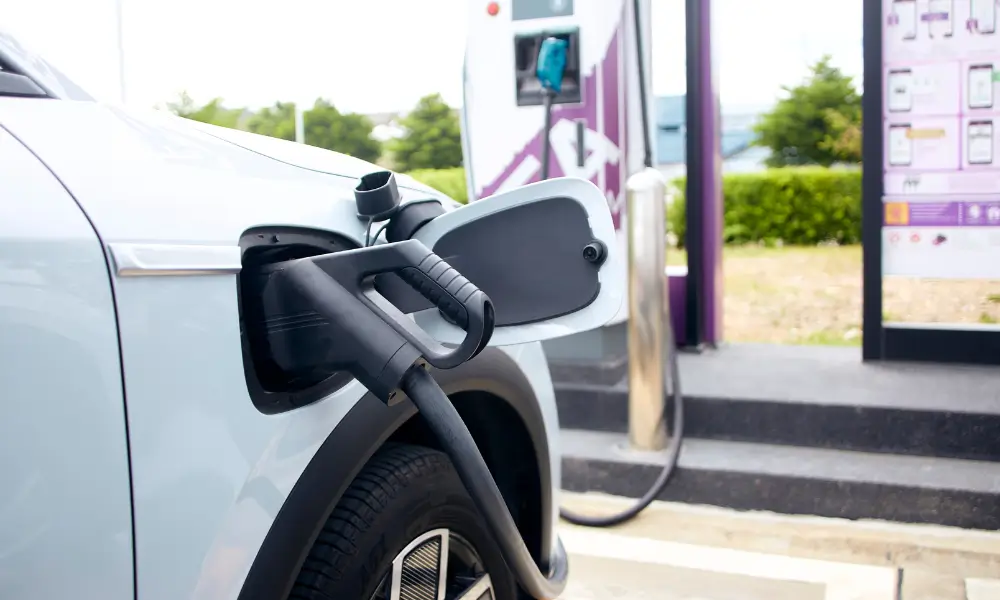
Recharging electric cars, with a 16.4% share of the European market by 2025.
Towards a 100% electrified Europe?
Diesel dominance is a thing of the past. Plug-in hybrids and electric vehicles are shaping the future of the European car. Sales and technological innovations show a clear trend towards mass electrification.
By 2035, Europe could no longer be selling any new combustion-powered vehicles. This rapid and sustained transition illustrates Europe’s determination to reduce emissions and promote more sustainable mobility. Diesel, once a staple, is now a thing of the past on the continent’s roads.
Are 100% electric vehicles set to conquer European dealerships for good in 2026? After a year 2025 marked by record registrations in several countries, such as the Netherlands with over 40% market share for BEVs in October, manufacturers are stepping up their electrification strategy. Next year will see the arrival of at least forty new flagship models, covering all segments. This wave comes at a time when ultra-fast charging points (400 kW) are becoming more widely available in Europe, and when French public subsidies are stable, supporting mass adoption.
Electric city cars: democratisation at a shock price for the city
The number of electric cars in our towns and cities is likely to explode next year as more and more affordable models become available:
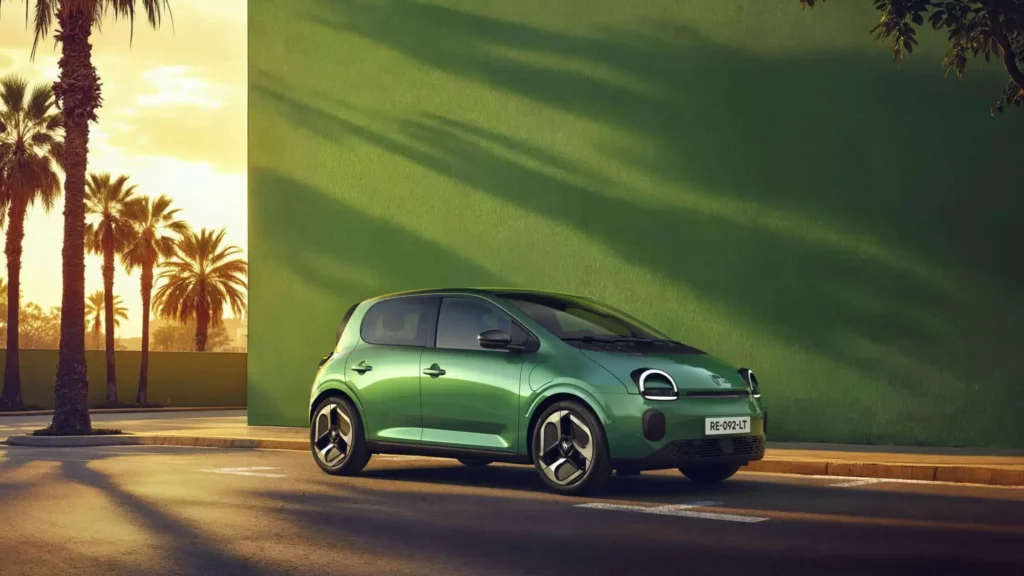
Green Renault Twingo E-Tech. credit : Renault
• In France, Renault is launching the iconic Twingo E-Tech in spring 2026. It will be able to cover a total of 300 km according to WLTP tests, and will be equipped with a 113 bhp engine for a price of €19,990.
• Even more affordable, Dacia is fighting back with its new-generation Spring (225 km range for €16,900), with enhanced battery and connectivity.
• From next year, Citroën will position the ë-C3 as a potential best-seller, with a range of 320 km at a price of €19,900, 113 bhp under the bonnet and a 100 kW recharge.
• The Renault 5 E-Tech follows logically (410 km, €24,990), taking on the retro charisma of the iconic 5.
• Volkswagen, too, is aiming to make its mark in the rankings of the biggest sellers. And with the ID.2 (estimated 600 km, ~€28,000), the European manufacturer has every chance of being successful.
• 2026 will also see the return of Peugeot, which this year presented its electric e-208 GTi, a ‘bombshell’ heir to the 205 GTI with over 200 bhp and a 0-100 km/h time of less than 7 seconds.
SUVs and crossovers: the family offre explodes in volume and range
Electric SUVs are dominating expectations, with ever-greater ranges. In fact, some models can cover as much as 700 km at really attractive prices.
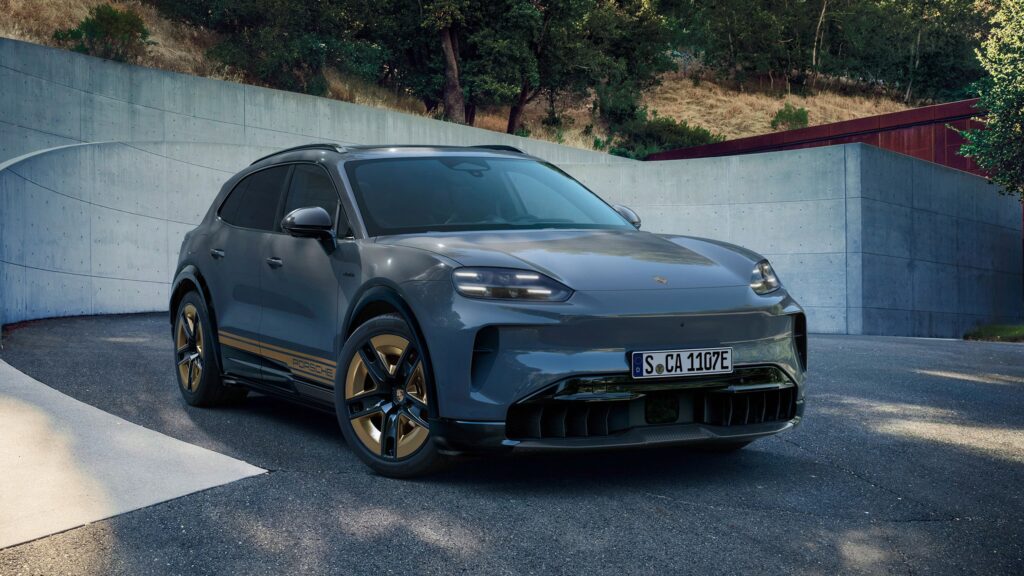
Porsche Macan Electric grey. Credit: Porsche
• Skoda opens the ball with the Elroq, which claims 573 km WLTP from just €33,430. This spacious crossover is based on the MEB platform, and is a more affordable sibling of Volkswagen’s ID.4.
• Mini Aceman brings British fun to the compact segment, with an estimated entry price of around €34,000, a range of around 400 km WLTP and an electric motor producing around 180 bhp.
• On the Chinese side, of course, there will be plenty of new models: BYD and its Atto 2 and Sealion 7, among others, but also Zeekr and its premium 7X, are aiming for unbeatable value for money.
• Crossover = adventure, so Suzuki eVitara, co-developed with Toyota, will see the light of day in 2026 and will target urban adventurers with a minimum range of 450 km.
• At the top end of the range, Germany’s Mercedes will be deploying a veritable armada with the electric GLC EQ and GLA, expected from early 2026. They will boast a range of over 550 km, between 200 and 300 bhp depending on the version, and an ultra-fast 400 kW recharging capacity.
• Hyundai Ioniq 9 (7 seats, 600+ km) and Mitsubishi compact SUV (on Nissan platform) complete the Japanese offer.
• Next year’s absolute star? Perhaps it’s the 100% electric Range Rover: over 700 km WLTP, up to 1,000 bhp and still luxurious materials and comfort. Pricing will be in the region of €150,000.
• But watch out, Porsche is responding with the electric Cayenne, which can also be equipped with an electric motor producing more than 1,000 bhp and achieving a 0-100mph time of 3s according to tests carried out by the German manufacturer. True to the brand’s philosophy, it will combine luxury and sportiness.
These electric behemoths meet the needs of French families, where SUVs account for 50% of new car registrations.
Hatchbacks and station wagons: premium electrics for long journeys
Electric saloons are making their mark for professionals and long-distance drivers looking for comfort and efficiency at every level.
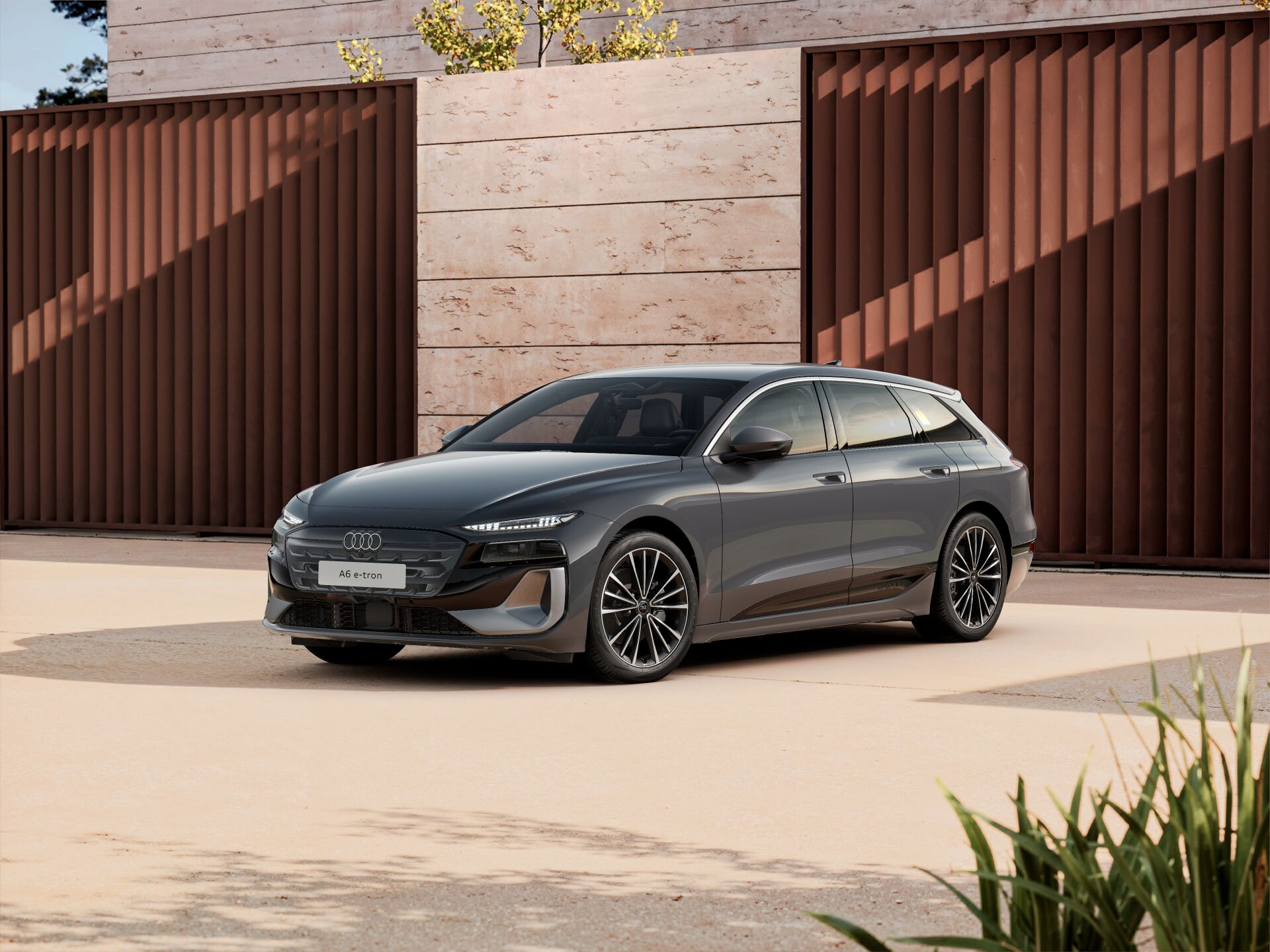
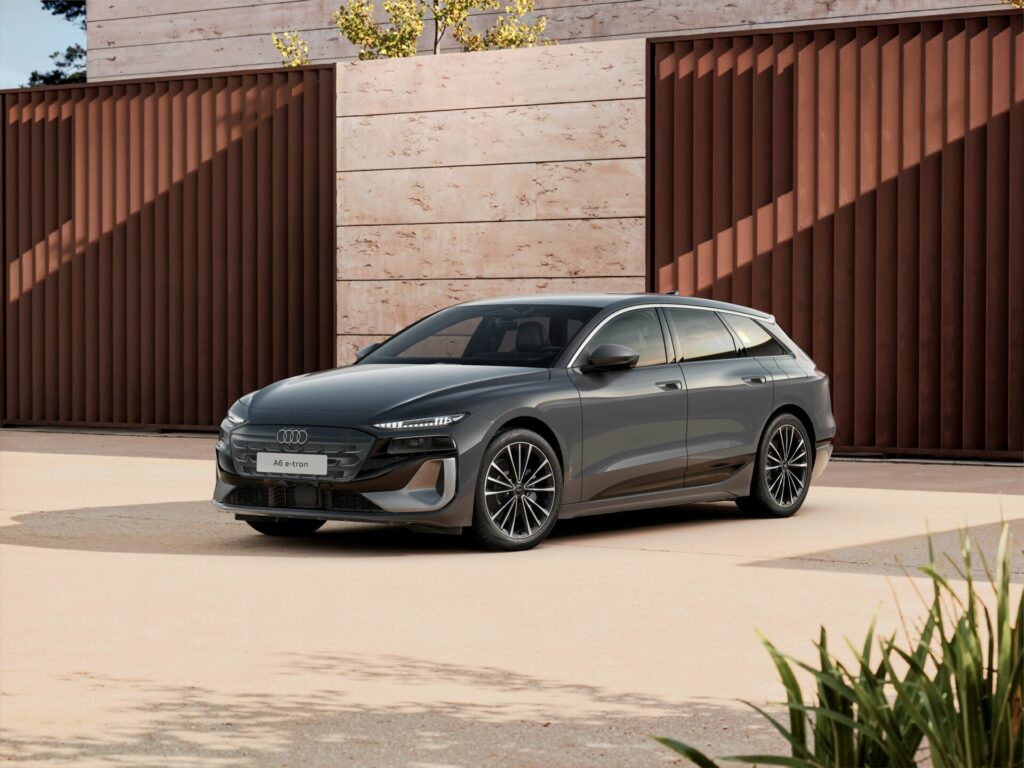
Audi A6 e-tron Avant 100% electric luxury estate Credit: Audi
• The electric Mercedes CLA Shooting Brake is aiming for a range record of almost 791 km WLTP, supported by an ultra-aerodynamic design (Cx less than 0.23) and the integration of new-generation Hyperscreen technology, offering a panoramic and customisable digital experience, according to the manufacturer.
• Still in Germany, BMW and its new-generation iX3 promise up to 800 km of range thanks to the latest-generation batteries, more than 300 bhp and ultra-fast 400 kW recharging.
• Next year, Audi will launch the A6 e-tron, based on the PPE platform. It will offer a range of around 700 km, combined with an engine that can exceed 400 bhp and a top-of-the-range cabin featuring the XXL Virtual Cockpit, designed for long journeys and premium comfort.
• The Hyundai Ioniq 3 is a premium compact aimed at the top end of the range, with a more accessible price tag, a range of around 500 km, a 200 bhp engine and refined interior architecture inspired by Hyundai’s ‘Living Space’ concepts.
• The Volvo ES90, a large, refined Swedish saloon, is aimed at the premium family, with a range approaching 600 km, power of up to 350 bhp depending on the version and a minimalist Scandinavian interior combining natural materials and on-board Google technologies.
• The Kia EV4 completes the Korean range with a range of around 625 km, an angular design inspired by the EV4 concept, powertrains ranging from 170 to 230 bhp, and an aggressive price positioning to compete with European electric saloons.
These models, with their solid batteries and OTA software, are turning motorways into conquered territory, just as France is rolling out its network of ultra-fast charging points.
Sports cars and hypercars: electric excitement without compromise
Electricity is making its presence felt among enthusiasts. Like every year, the leading manufacturers are making a splash with their eagerly-awaited releases.
• One of the great things to look forward to in 2026 in the automotive world is the arrival of the first hypercar from one of, if not the most iconic manufacturers in automotive history. Ferrari has announced that 2026 will see the launch of its first 100% electric supercar, the Elletrica. The performance? More than 1,000 bhp, 0 to 100 km/h in less than 2 seconds. It will feature F1-inspired active aerodynamics and an innovative thermal management system. Of course, its design is faithful to the Ferrari idiom, and its price is expected to be well over €500,000.
• For its part, Alpine is relaunching the electric A110, which is light (1,200 kg), agile and purely French. With an engine delivering around 300 bhp, a 0 to 100 km/h time of less than 4 seconds, a range of around 400 km WLTP and an ultra-agile chassis.
Market context: why 2026 changes everything
This offensive comes at an ideal time. In France, BEVs are approaching 25% of the monthly market, supported by subsidies (€4,000-7,000 bonus) and a network of 100,000 public charging points. The Netherlands is leading the way with 40% BEV, thanks to a dense network and stable incentives – a model for Europe. Faced with competition from China (BYD, MG, Zeekr), Europeans are reacting with aggressive pricing and sovereign technology (French gigafactories). The result: electric vehicles will increase from 20% to 35% of sales by 2026, boosted by the gradual end of pure combustion engines in 2035.
These new products are not just a catalogue: they embody accessible, high-performance and integrated sustainable mobility. For professionals and private customers alike, 2026 marks the end of excuses, with a plethora of choices aligned with climate and economic challenges. ECO MOTORS NEWS will be following these launches closely, with test drives to back them up.
A new plug-in hybrid SUV is arriving on the market with a clear ambition. BYD wants to appeal to families looking for greater efficiency and versatility. The SEALION 5 DM-i combines space, technology and sobriety with an attractive launch offer.
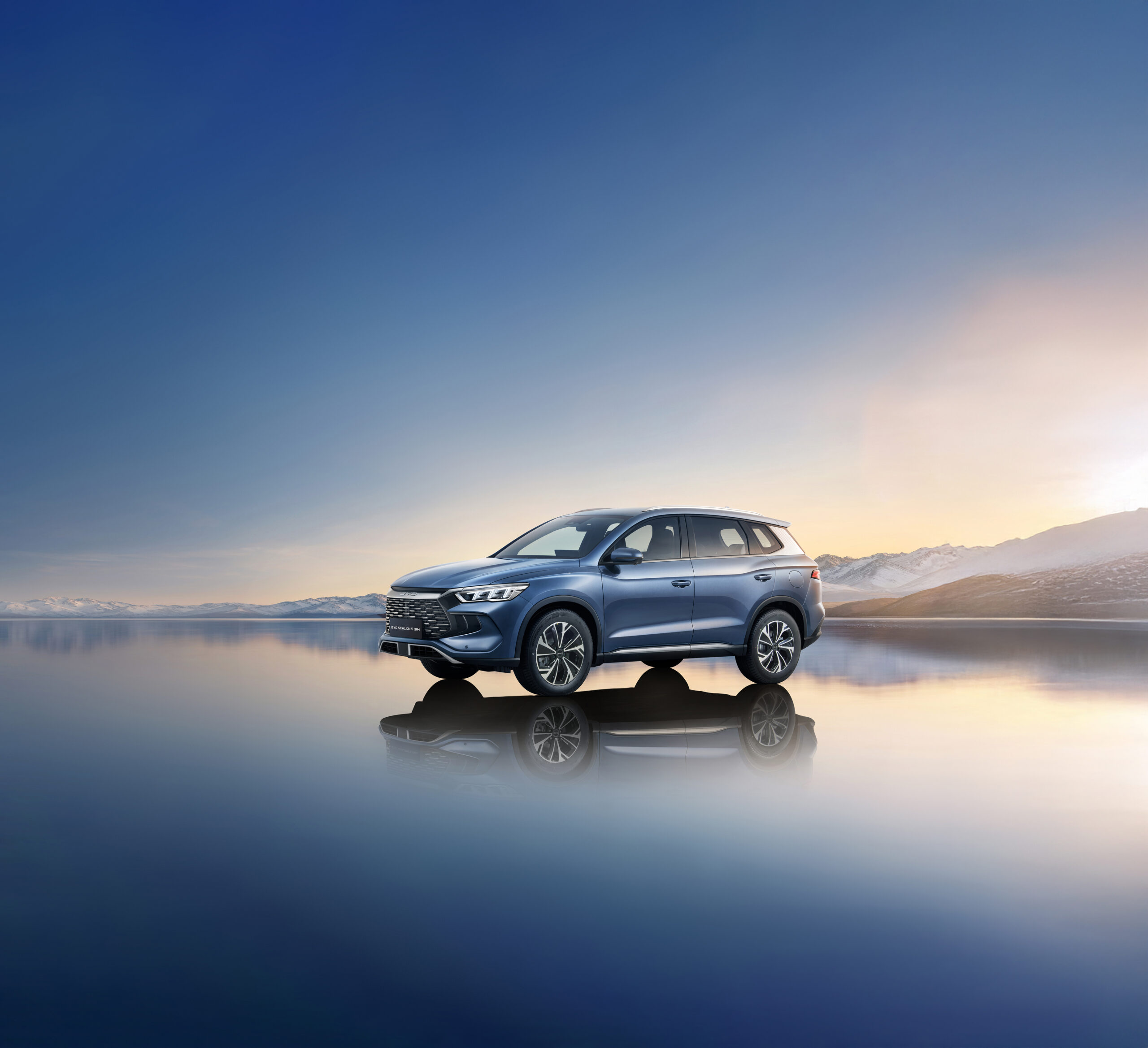
Side view of the BYD SEALION 5 DM-i, combining style and habitability for families. (Credit: BYD)
An SUV designed for modern families
The launch of the SEALION 5 DM-i marks an important milestone for BYD, as the brand aims to offer a credible alternative to conventional combustion-powered models. Thanks to its optimised architecture and long wheelbase, it offers remarkable interior space that is precisely what families want.
In addition, Super Hybrid technology with DM aims to reduce daily expenditure while ensuring a high level of autonomy. This approach combines comfort, practicality and low running costs. In addition, the vehicle is based on the Blade battery and the Xiaoyun petrol engine, two key elements in BYD’s technological offering. These innovations are accompanied by modern features such as NFC access via smartphone and the Vehicle-to-Load function, which can power external devices. These features make the model even more attractive to drivers looking for versatility.
An exterior design that combines style and utility
The SEALION 5 DM-i boasts an assertive silhouette that combines clean lines and muscular surfaces. Its front end stands out thanks to the full LED headlamps and a sculpted grille that visually widens the vehicle. This styling choice gives the car a dynamic presence without compromising its overall sobriety.
Next, the flanks feature sleek lower panels and a contrasting D-pillar. This approach creates a floating roof effect that adds a more premium feel. At the rear, the light strip runs across the entire width, reinforcing the SUV’s modern identity. This light signature, combined with the integrated spoiler, improves aerodynamics while providing an elegant finish. Finally, the generous dimensions ensure that the interior volume is among the best in the segment.
Close-up of the BYD SEALION 5 DM-i, revealing the design details and meticulous finish of the hybrid SUV (Credit: BYD)
A cabin inspired by nature
Inside, the SEALION 5 DM-i features flowing lines and a light atmosphere. The two central screens structure the dashboard and enhance ergonomics. In addition, the 12.8-inch interface features a comprehensive infotainment system with voice commands, integrated connectivity and OTA updates. This technological approach makes for intuitive everyday use.
What’s more, three-finger gestures make it easy to adjust heating or ventilation. This ergonomic choice improves safety by reducing distractions. On-board space is also generous, allowing five adults to travel in comfort. The boot offers 463 litres, and the modular design means that the car can be folded 40/60 to give a total of 1,410 litres. The Design trim adds a motorised tailgate to make loading easier. Last but not least, the standard V2L function opens up new uses, particularly when out and about, by powering appliances of up to 3.3 kW.
Super Hybrid technology
The DM-i system is based on intelligent management that favours electric driving. The petrol engine mainly powers the battery and the electric motor, ensuring that the car behaves like a 100% electric vehicle. As a result, the smoothness of the drive remains constant, even on long journeys. When power demand increases, the system can operate in parallel. This flexibility ensures a smooth transition between the two modes. With up to 86 km of electric range, the SEALION 5 DM-i can drastically reduce fuel consumption. What’s more, combined fuel consumption can be as low as 2.1 litres/100 km, a major advantage for cost-conscious drivers. The total range exceeds 1,000 km, allowing long journeys to be made without constraint.
BYD SEALION 5 DM-i dashboard with touchscreen and voice commands for a connected experience. (Credit: BYD)
Two finishes to suit different needs
The Comfort trim level uses a 12.96 kWh battery offering up to 62 km of electric range. It accelerates from 0 to 100 km/h in 7.7 seconds and reaches a top speed of 170 km/h. This version is aimed at users looking for a balance between price, efficiency and versatility.
Secondly, the Design trim level features an 18.3 kWh battery for an electric range of 86 km. Despite slightly different acceleration, it retains the same top speed. This version adds more advanced comfort and safety features. In both cases, the total power of 156 kW ensures smooth performance in all situations.
Enhanced safety
The SEALION 5 DM-i places safety at the heart of its comprehensive ADAS suite. As a result, the driver benefits from advanced assistance features such as lane keeping, blind spot detection and collision warning. The model also includes seven airbags and i-Size compatible ISOFIX mountings. This system is designed to protect families in all conditions. Finally, each trim level offers generous equipment. The Comfort version includes 18-inch wheels, LED headlights, electric seats and a full multimedia screen. The Design version adds premium technologies such as a 360° camera and wireless charger.
Top view of the BYD SEALION 5 DM-i, highlighting its compact design and elegant roof (Credit: BYD)
An attractive retail offering
BYD is offering the SEALION 5 DM-i from €30,990 in Comfort trim and €33,990 in Design trim. However, an introductory offer reduces these prices to €29,990 and €31,990 respectively. Leasing packages start at €329 per month, depending on the configuration chosen. Thanks to this positioning, the model is a competitive alternative to traditional combustion-powered SUVs.
On 25 November 2025 in Toronto, Toyota Canada officially presented the new generation of the Sienna. More than just a simple restyling, the Japanese brand intends to evolve this hybrid minivan to meet the needs of active families and road-trip enthusiasts.
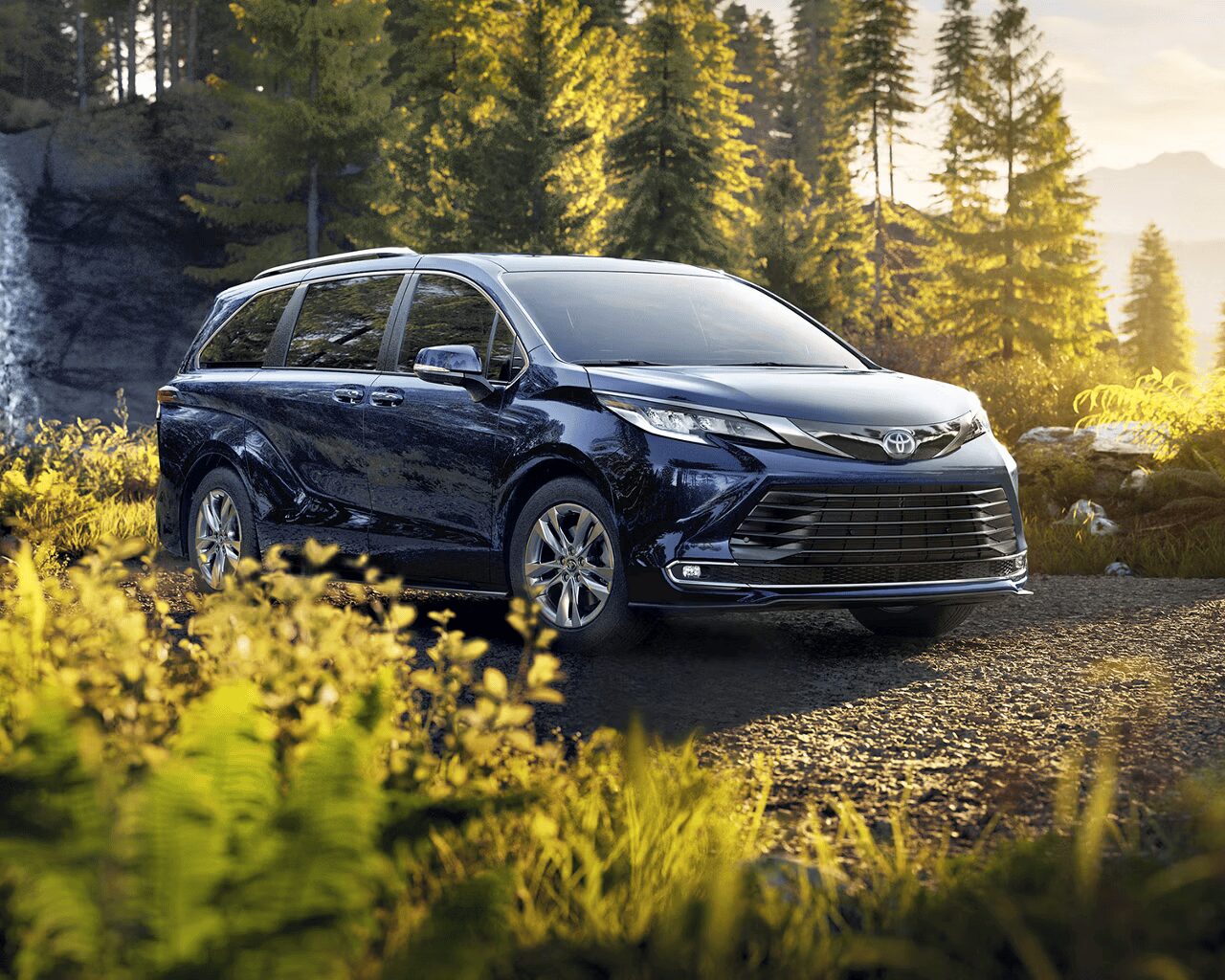
Exterior view of the Toyota Sienna parked on a logging road. credit:Toyota.ca
The Sienna 2026 was unveiled at an event organised by Toyota Canada. This launch comes as Toyota seeks to establish the Sienna as the benchmark hybrid minivan on the North American market, by enhancing its technologies, fuel efficiency and modularity to satisfy active families and drivers with a passion for road-trips.
A hybrid powertrain that focuses on balance
Contrary to some expectations, Toyota is still not going 100% electric on the 2026 Sienna. Instead, it retains its ‘full hybrid’ powertrain, with a petrol engine coupled to two electric motors, for a combined output of some 245 bhp. The e-CVT transmission still offers a choice between front-wheel drive and all-wheel drive. For this type of vehicle, it’s an unusual little extra that will make all the difference. Another positive point is its range, with an estimated range of over 1,000 km under normal driving conditions, no less. In the press release announcing this release, the manufacturer emphasised the balance between power, energy efficiency and versatility. An ideal mix for both city and road use.
A redesigned cabin for greater comfort and modularity
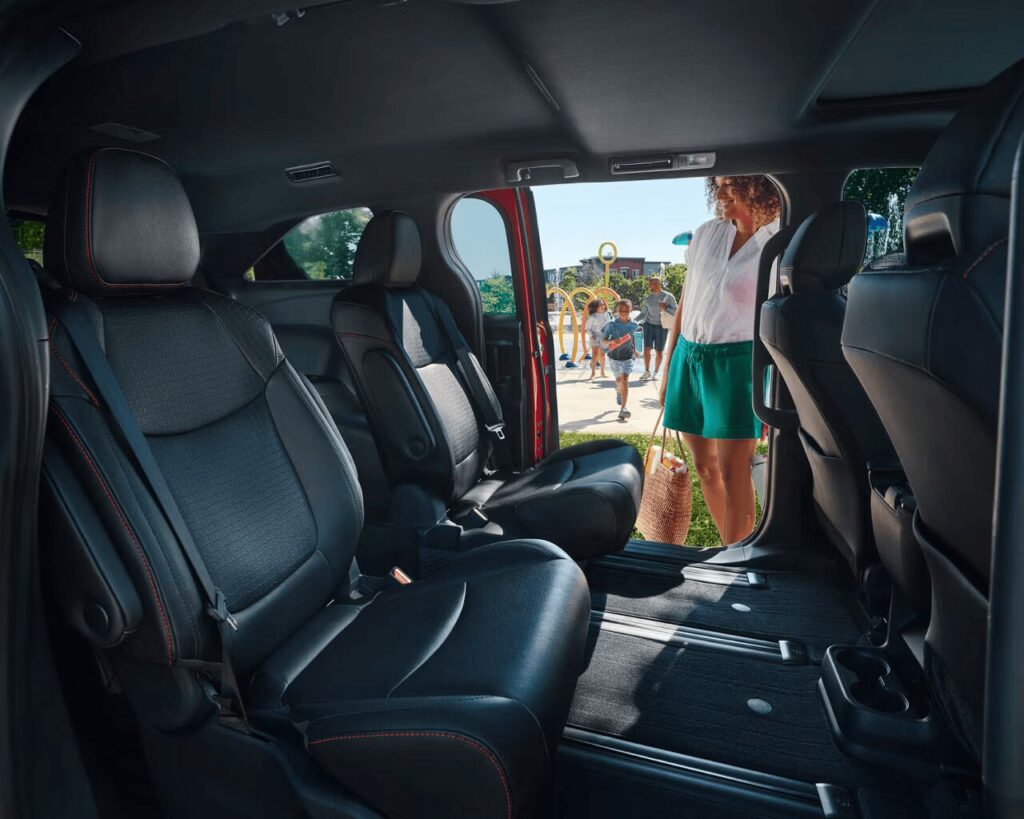
Inside, Toyota has reworked the interior with more refined materials and a layout designed with family life in mind. The maximum passenger capacity now extends to 8, with flexible configurations. For example, drivers will be able to install ‘captain’ seats (independent individual seats) in the second row. The driver’s seat can now be adjusted electrically, and the air conditioning is multi-zone, perfect for long journeys.
View of the Toyota Sienna second-row captain’s chairs with the side door open. credit:Toyota.ca
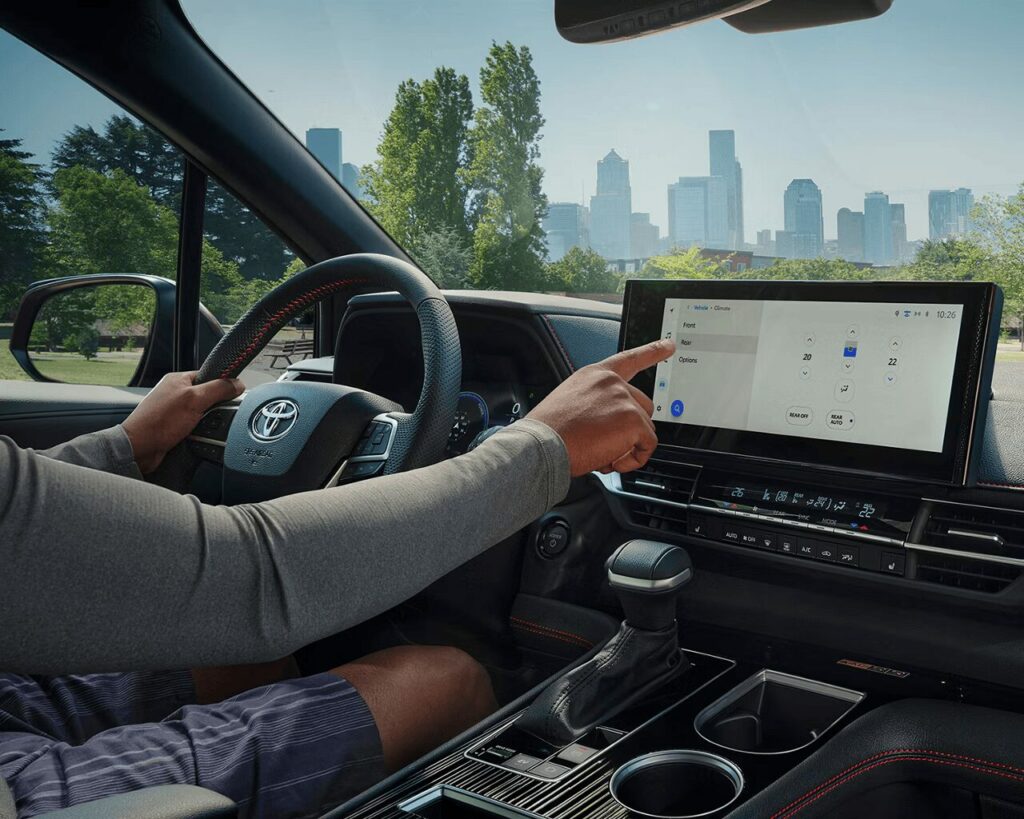
These changes are not confined to comfort, as the Sienna is also evolving technologically. The next version will feature a main touchscreen integrated into the dashboard, which will integrate the ‘Toyota Multimedia’ system, compatible with Apple CarPlay and Android Auto. In addition, although these are details, the 2026 Sienna will feature wireless charging for smartphones, a power-assisted tailgate and a self-dimming rear-view mirror with integrated garage door opener.
Driver using the Toyota Sienna’s central dashboard touchscreen. credit:Toyota.ca
Assertive exterior styling
Where this new hybrid minivan stands out from its competitors is clearly in its exterior appearance. At first glance, there’s no mistaking it: the Sienna is far from resembling conventional minivans. It now has more sculpted lines and a pronounced grille, in keeping with Toyota’s TNGA styling philosophy, which, as you will recall, is the Japanese brand’s modular platform that can accommodate small vehicles (city cars) right up to MPVs. The design of this minivan is more dynamic.
Who is this new Sienna made for?
The Sienna is in the top-of-the-range hybrid minivan segment, alongside the Kia Carnival Hybrid and the Honda Odyssey. With this model, Toyota is primarily targeting large families, regular long-distance travellers and those who don’t want to sacrifice anything in terms of comfort or technology. Toyota intends to confirm that, on the North American market, the Sienna is a benchmark in terms of hybrid minivans, and who knows, maybe one day it will make a comeback in Europe.
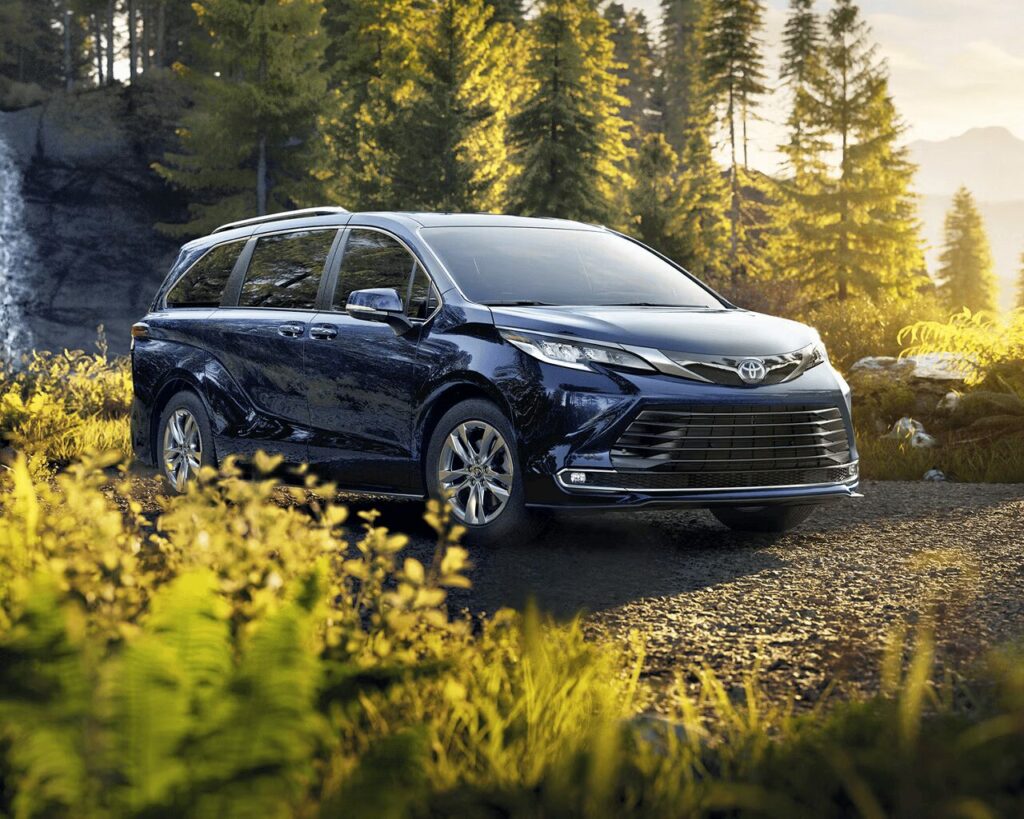
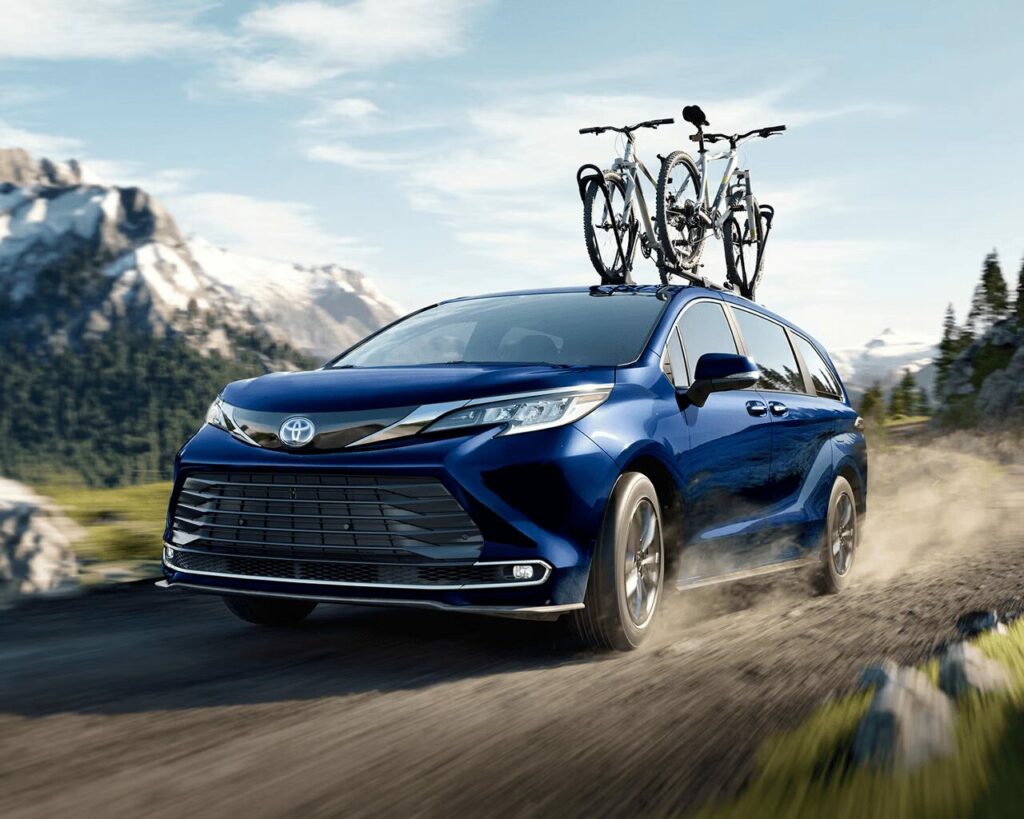
Toyota Sienna in motion on a gravel road with bicycles on the roof. credit:Toyota.ca
What better way to illustrate the brand’s commitment than with Robert Tsang, Vice President of Toyota Canada, who spoke at the unveiling of this future release:
“There’s a Sienna ready to help every Canadian live their best life. A promise of adventure, safety and everyday efficiency, while keeping an eye on the planet.
The SNCF is speeding up its energy transition by focusing on renewable electricity. Long-term renewable electricity purchase contracts (PPA) ensure a stable supply. The aim is to use 40-50% green electricity for train traction by 2030.
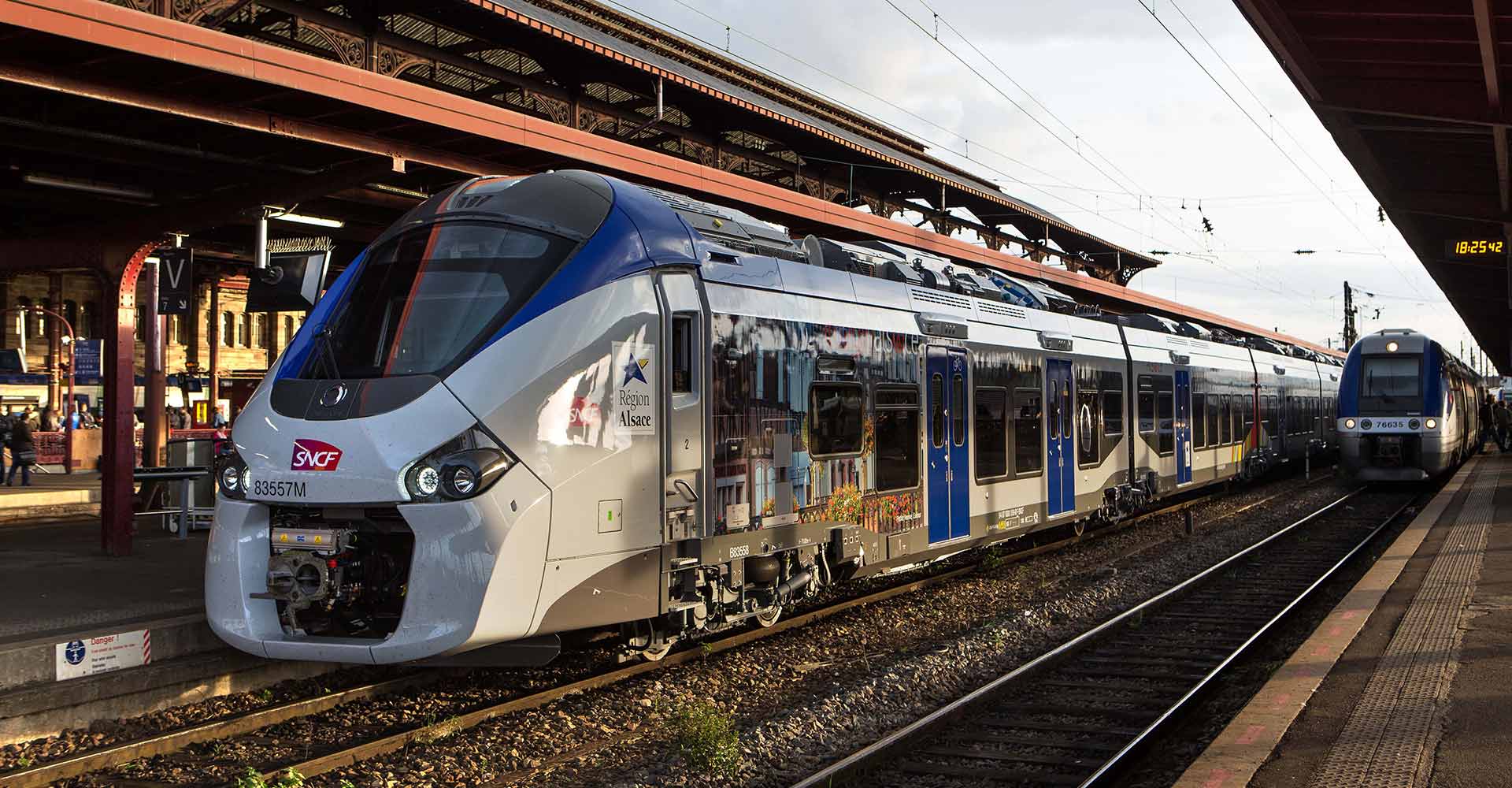
An SNCF train powered by green electricity from solar and wind power. (Credit: SNCF)
Sustainable partnerships for green energy
Since 2018, SNCF Energie has been piloting the “corporate PPA” programme to secure renewable electricity. These long-term contracts enable electricity from photovoltaic and wind power stations to be purchased directly. The aim is to achieve a 40-50% share of renewable energies in the electricity mix for trains, 20% of which will come from PPAs. This strategy also meets the expectations of the Autorités Organisatrices de la Mobilité (AOM).
The main contracts concern Neoen, France’s leading independent producer, which will supply 137 GWh per year from January 2026. The output will come from four solar farms: Romilly, Loirécopark, Champblanc and Labouheyre. This electricity covers the annual consumption of 11,000 Paris-Bordeaux TGV train journeys.
These contracts, which run for 20 to 25 years, provide security of supply and limit exposure to fluctuations in the electricity market. For Neoen, they provide a stable income, enabling investment in the maintenance and development of new power stations. For SNCF Voyageurs, these agreements guarantee a virtually fixed price and strengthen long-term energy competitiveness.
Wind power for low-carbon mobility
The Cheniers Énergies wind farm in the Marne region of France is an example of SNCF Energie’s commitment. Inaugurated in May 2025, it produces 93 GWh a year thanks to eight 180-metre wind turbines. This production is equivalent to the electricity consumed by more than 20,000 homes, and avoids 4,278 tonnes of CO2 every year.
The site will power the Paris-Strasbourg, Paris-Nancy and Strasbourg-Nantes TGV lines. The direct purchase contract signed with VALOREM for 25 years ensures the long-term future of this renewable energy. SNCF Voyageurs is thus continuing its proactive policy to reduce emissions and meet the requirements of the transport authorities.
Regional photovoltaic power stations complete the mix
In the Auvergne-Rhône-Alpes region, a 20-year contract with CVE will cover a quarter of the electricity consumed by regional TER trains. The Genêts power station, currently under construction in Domérat, will supply around 60 GWh a year from February 2027.
This initiative is part of SNCF Voyageurs’ strategy to achieve 40-50% renewable electricity in its mix by 2026. It also secures supply costs over the long term and reduces the carbon footprint of regional transport.
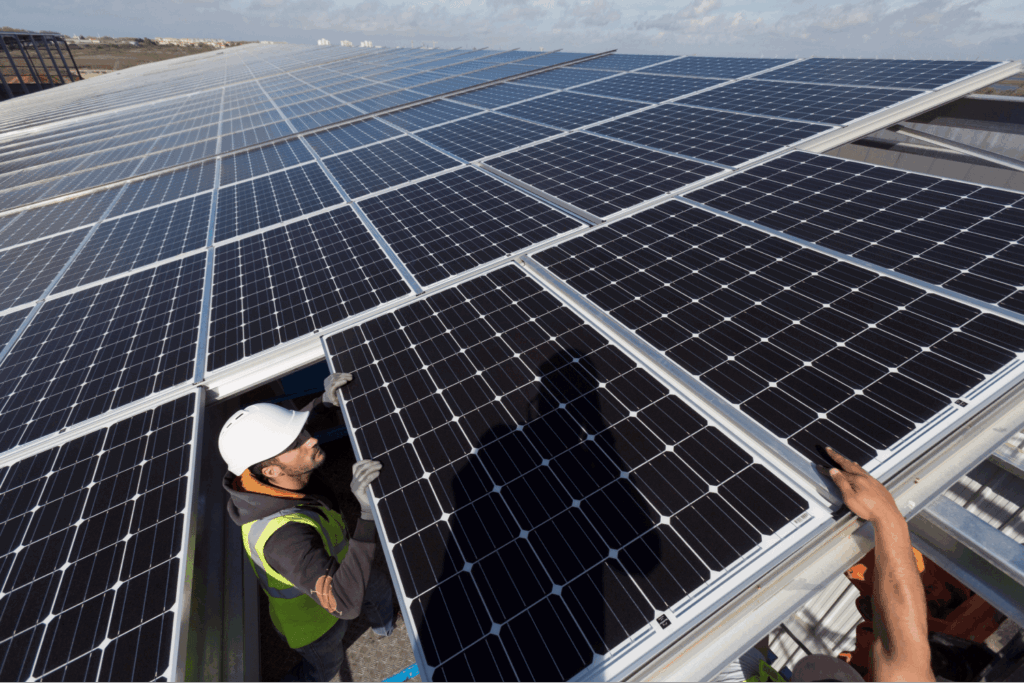
Solar panels supplying green electricity to the SNCF to reduce CO2 emissions. (Credit: CVE)
Structuring solutions for decarbonisation
SOLVEO Energies is also contributing to the effort with a wind farm in the Cher department, commissioned in May 2024. This site supplies 32.5 GWh per year to SNCF Energie, equivalent to the consumption of 6,780 homes. The 25-year agreement will save 35,000 tonnes of CO2.
These long-term contracts stabilise prices and guarantee a reliable supply. They are part of a global vision of energy transition, with solar and wind power becoming the pillars of low-carbon mobility. SNCF Voyageurs is thus consolidating its role as a responsible leader in rail transport in France.
A clear, quantified ambition
Today, SNCF Energie has contracted over 830 GWh via PPAs. The goal is to reach 1,100 GWh of renewable electricity by 2026. Partnerships with Neoen, CVE, VALOREM and SOLVEO illustrate the long-term strategy. These initiatives demonstrate that the energy transition can be reconciled with industrial performance and public service.
By integrating solar and wind power, the SNCF is reducing its emissions while securing its supply. It is meeting the expectations of the authorities and the general public. French trains are now moving to the rhythm of green electricity, symbolising more sustainable and responsible mobility.
This transition to green electricity illustrates SNCF’s determination to become an exemplary player in sustainable mobility. By combining innovation, solid partnerships and long-term planning, the company is showing that transport and respect for the environment can go hand in hand. Passengers, too, are becoming players in this energy revolution, travelling every day on trains powered by the sun and the wind, thus making a tangible contribution to reducing greenhouse gas emissions in France.