Author: Eva Pellerin

  • French public transport: where will electric vehicles fit in tomorrow?

    French public transport: where will electric vehicles fit in tomorrow?

    In the face of the climate emergency and the need to decarbonise mobility, France is speeding up the transition to cleaner public transport. From one end of the country to the other, from metropolises to rural areas, projects are accelerating in favour of electric transport. An overview of a major transformation.
    Credit: RATP
    Credit: RATP

    Île-de-France on the front line

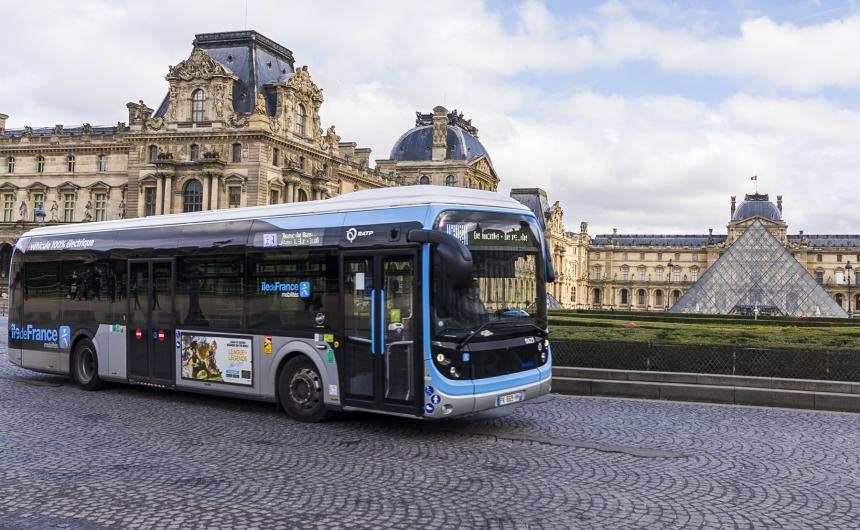
    The Paris region is at the heart of the energy transition in the public transport sector. With its ambitious ” Bus2025 ” programme, RATP plans to convert all of its 25 operational centres to electric and biomethane engines by the end of 2025. Eventually, 1,000 electric buses and 1,300 buses running on renewable gas will be on the roads in Paris and its inner suburbs. This project should make it possible to halve CO₂ emissions linked to bus traffic. It is part of RATP’s overall objective to reduce its greenhouse gas emissions by 50%.

    At the same time, Île-de-France Mobilités is continuing to extend the transport network, with metro line 14 reaching Villejuif-Gustave Roussy station in early 2025. The launch of the Tzen 4 bus line, replacing line 402 between Viry-Châtillon and Corbeil-Essonnes, is also planned. Tzen 4 is a world first: it will be the first 24-metre bi-articulated bus, 100% electric, with ground recharging in less than five minutes.

    Electric cars are gaining ground in major cities

    In France’s major cities, electric vehicles are playing an increasingly visible role in urban transport networks.

    Lyon is planning a far-reaching transformation of its network, with the integration of electric vehicles into the future unified TCL network from September 2025. The city is also adapting its infrastructure to accommodate new electric buses and test pilot lines on the outskirts.

    In Bordeaux, the deployment of express bus lines is based in part on electric vehicles, with the first service scheduled for 2025. The already electrified tramway lines are also being extended (lines E and F), strengthening the non-polluting offer in the city.

    In Marseille, the “Marseille en Grand” plan includes electrified BRTs (Bus à Haut Niveau de Service). Line B4, due to enter service in 2025, will operate with an all-electric fleet. The city also plans to integrate more electric buses into its RTM network.
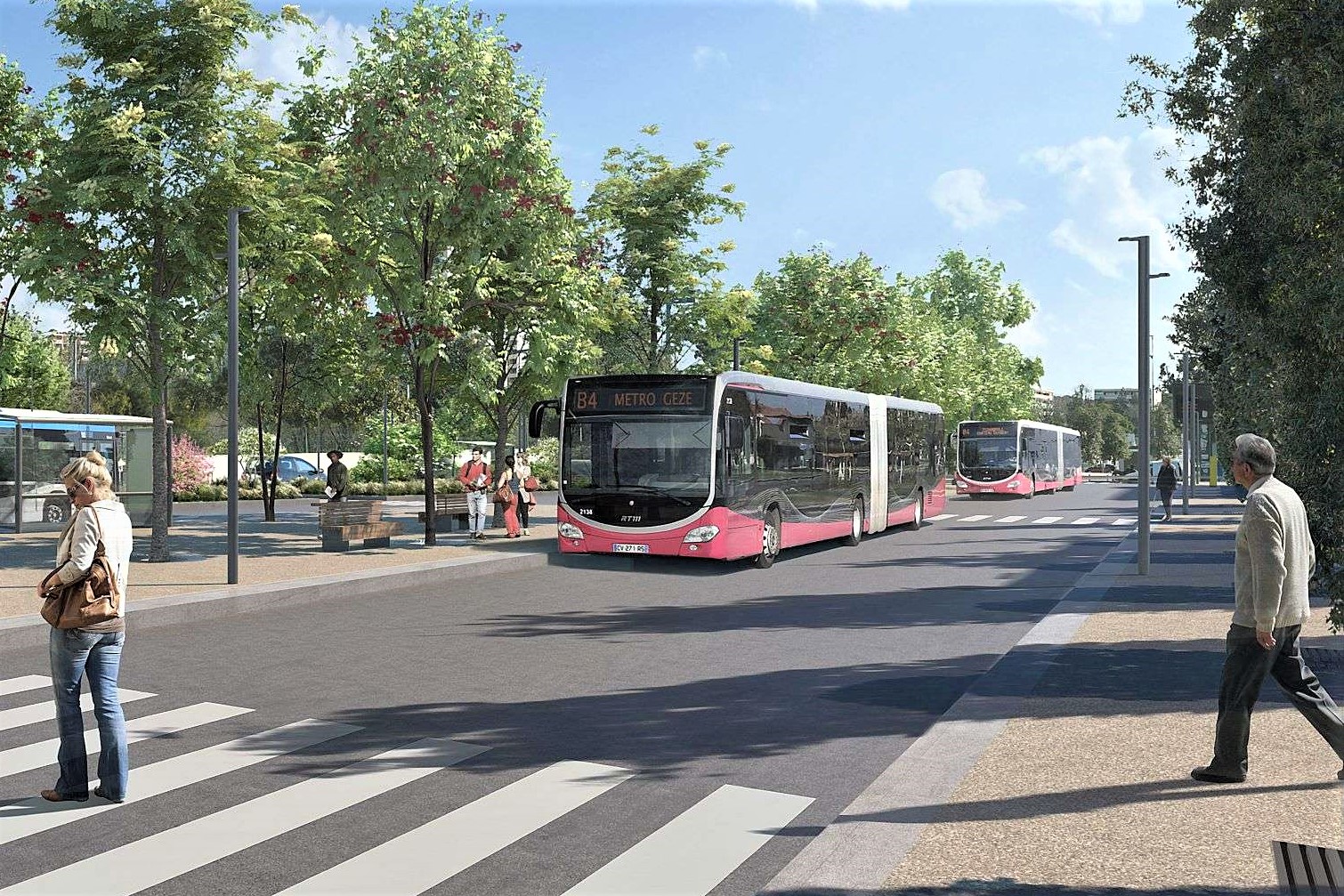
    The northern districts will have a high service level bus by early 2025
    Credit: B4 BRT public consultation file

    In the regions: major projects

    Looking beyond the metropolises, France intends to strengthen inter-urban and peri-urban mobility via the Regional Metropolitan Express Services (SERM), a concept inspired by the RER in the Paris region. Fifteen projects have been approved, covering cities such as Strasbourg, Lille, Nantes and Grenoble. These SERMs combine trains, express coaches, safe cycle paths and unified pricing to facilitate access to clean mobility.

    Urban and interurban logistics are also concerned: 972 charging points for electric HGVs have been deployed in depots, and 24 public charging stations for HGVs opened on 1 January 2025. These infrastructures are strategic for supporting the decarbonisation of freight.

    Electricity grid: an essential link

    The widespread use of electricity raises the question of energy infrastructure. RTE, the operator of the public electricity transmission network, is planning massive investment between now and 2040. The aim is clear: to adapt the network to support the growth in electric mobility, while guaranteeing the reliability of supply.

    A still fragile transition

    While the momentum is there, the transition is still fraught with obstacles. The cost of the projects, the slowness of certain local consultations and the problems of maintenance or training in the new technologies are sometimes holding back the momentum. Social acceptability, particularly in rural areas or areas with poor access, remains a major challenge.

    France is well and truly engaged in a profound transformation of its public transport system. While the major cities are playing a leading role, the widespread use of electric mobility will also depend on regional planning, infrastructure and the collective ability to make this transition a lever for cohesion and sustainable development.
  • The government wants to increase the ecological bonus and redirect its funding

    The government wants to increase the ecological bonus and redirect its funding

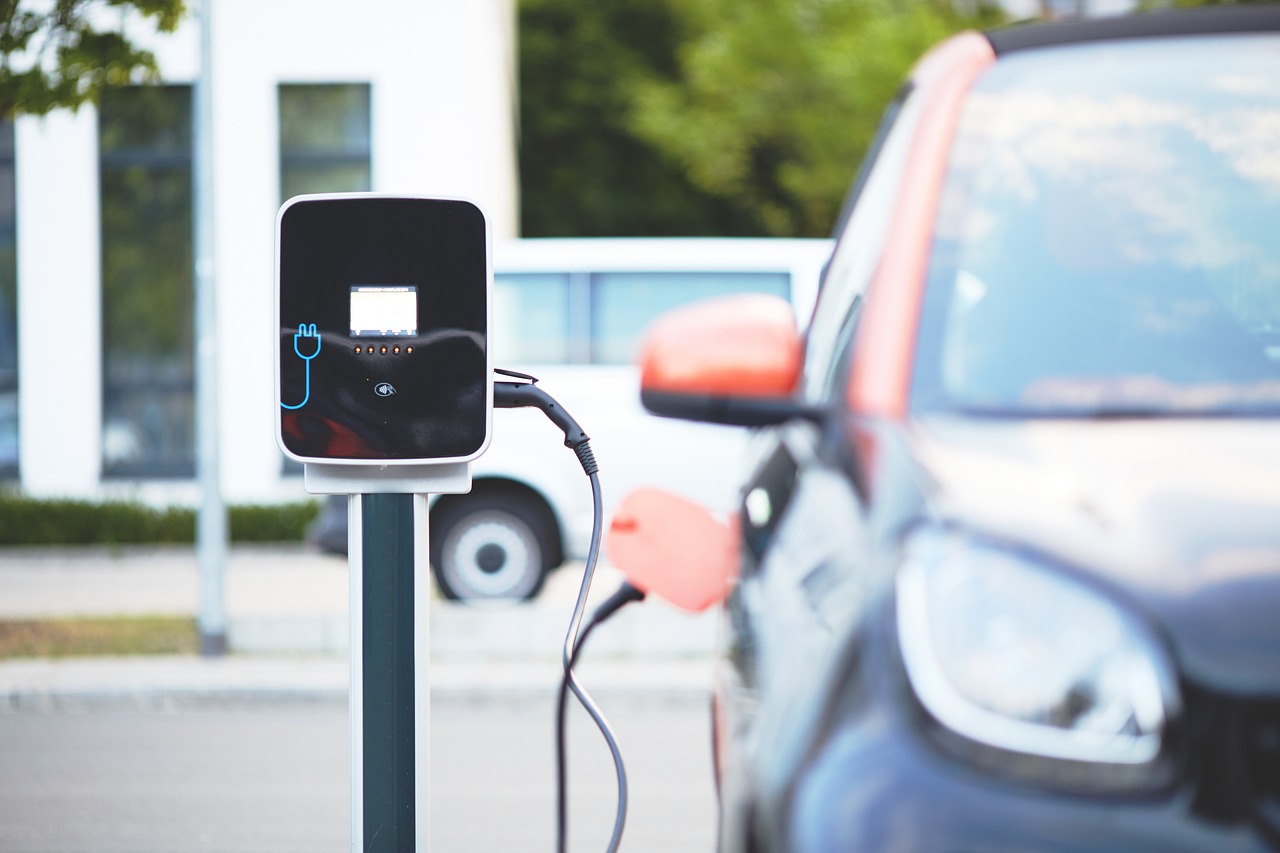
    The government plans to increase the amount of the ecological bonus for the purchase of electric vehicles, while introducing a new method of financing. This reform could come into force as early as 1 July 2025, according to a draft order to be presented to the Conseil supérieur de l’énergie on 17 June.

    credit: Pixabay – Andreas

    A bigger environmental bonus

    The amount of the ecological bonus, currently 4,000 euros for low-income households or those in “fuel poverty”, would be increased to 4,200 euros. For other households, the bonus would rise from €2,000 to €3,100, according to Les Echos. The aim of this increase is to make electric vehicles more accessible, at a time when the cost of these models remains a major obstacle for many households.

    The reform is also designed to speed up the decarbonisation of the car fleet, at a time when sales of electric vehicles are slowing down.

    One of the reasons for this reform is that the budget for the bonus for 2025 is almost fully committed. A new method of financing is therefore deemed necessary to guarantee the continuity of the scheme.

    Financing based on energy suppliers

    Rather than relying entirely on public finances for this support, the government would like to mobilise energy saving certificates (CEE). This mechanism obliges energy suppliers (such as EDF or TotalEnergies) to finance actions to reduce energy consumption in France.

    Until now, CEE has mainly been used to help people renovate their homes (by changing an old boiler or insulating a roof, for example). The government now wants the scheme to be used to fund support for electric cars, such as the bonus or social leasing.

    Each year, the CEE represents between 4 and 6 billion euros. The government wants to use some of this to help with the transition to electric cars, while continuing to support housing renovations.

    A decision on the ecological bonus expected in mid-June

    Not everyone is in favour of this strategic reorientation. Some players in the energy renovation sector fear that the funds allocated to work on housing, such as thermal insulation or the replacement of heating systems, will be reduced.

    The government, for its part, is defending a more balanced approach to the energy transition. It believes that reducing emissions in the transport sector should now be given the same priority as reducing emissions in the residential sector.

    The draft decree will be presented to the Conseil Supérieur de l’Energie on 17 June. If the text is adopted, the new eco-bonus rules will come into force on 1 July 2025.

  • “Cars are all about use” Interview with Jamy Gourmaud

    “Cars are all about use” Interview with Jamy Gourmaud

    He left his mark on an entire generation with C’est pas sorcier, and today continues to decipher the world around us with the same passion. From the Hotel M Social in Paris, Jamy Gourmaud spoke to ECO MOTORS NEWS about his vision of the electric car, the preconceived ideas that surround it, and the challenges of this transition.

    Image
    Credit: Philippe Matsas

    Who are you, Jamy Gourmaud?

    Jamy Gourmaud: I’m a journalist, more specifically
    . I like to say that I’m a go-between for those who know and those who want to know. My passion for knowledge began very early, when I was a teenager, with the desire to do this job. I was lucky enough to realise this childhood dream. Science came a little later, after my journalism studies and a few years spent covering social issues.
    C’est pas sorcier marked the beginning of this scientific adventure.

    What does the electric car mean to you, and how did you feel when you tested it?

    Jamy Gourmaud: Peace and quiet. That’s what comes to mind first, especially in town. Critics will say that it makes as much noise as any other car, but the noise comes mainly from the contact of the tyres with the road. I’ve had the opportunity to test several of them, first in C’est pas sorcier nearly 30 years ago, and more recently in Le Monde de Jamy. I like its flexibility, the fact that you don’t have to shift gears. It may not be what thrills driving enthusiasts, but it suits me just fine.

    Do you think the electric car is still poorly understood?

    Jamy Gourmaud: I think there are a lot of preconceived ideas, and fears that are unfounded. The first obstacle is often the question of range. You hear people say, “I can’t drive 1,000 km”, or “I’ll have to stop after 300 km and wait half an hour to recharge”. These concerns often stem from a lack of understanding of actual usage.

    What should be done to overcome this fear of autonomy?

    JG: First of all, you have to ask yourself the question: “How do I use my car? Mobility is all about usage. If I make mainly short journeys – as is the case for the majority of daily journeys – an electric car is more than sufficient. On average, a French driver only makes one or two journeys of more than 400 km a year, usually on holiday.

    What about recharge time?

    JG: You have to bear in mind that the batteries will be empty after about two hours’ driving. After two hours of driving, it’s advisable to stop and refuel. This is what road safety advises motorists to do: take a break every two hours. And if you count the time it takes to go to the toilet, have a coffee or a cigarette, the twenty minutes it takes to fill up the tank are soon gone.

    So education is still necessary?

    JG: Yes, you have to explain it, you have to get people to try it out. Before I tried an electric car, I was a bit sceptical myself. But once you’ve tested an electric car, you adopt it. People should be allowed to test drive one for a day or two.

    You recently published a video on the subject. What was your objective?

    JG: I wanted to talk about the concerns about range, but also the lack of understanding that exists around the distances claimed by manufacturers. Some people complain: “But on the motorway, I can’t do more than 250 km, whereas the manufacturer claims a range of 450 km”. The simple fact is that this range is calculated as an average of the distance covered in town, on the road and on the motorway.

    And what about the carbon footprint of electric vehicles?

    JG : There’s a common misconception that electric cars pollute as much as internal combustion vehicles, if not more. It’s true that when they leave the factory, their manufacture generates more CO2. But the difference is that this carbon debt ends there. An internal combustion vehicle continues to emit throughout its life cycle. At the end of its life, an electric car can produce between two and five times less CO2 than a combustion engine car.

    Ready to take the plunge yourself?

    JG: As it happens, it’s underway. First of all, I want to get to the end of the life cycle of my current vehicle. It’s also a question of budget. But yes, I’m getting there.