Author: Marceau Nio

  • WEG acquires Tupi Mob and turns to electric recharging

    WEG acquires Tupi Mob and turns to electric recharging

    On 16 October 2025, Brazilian electric motor giant WEG announced that it had acquired 54% of Tupi Mob (Tupinambá Energia), a start-up specialising in software for managing charging points. The deal was worth 38 million reals, or just over 6 million euros.

    This strategic investment shows that the future will lie as much in digital software and services as in pure vehicle components.
    Official WEG brand logo
    The logo of the Brazilian group WEG, a major player in electric motors and solutions. (Credit: WEG)

    WEG is already a recognised leader in the manufacture of electric motors in Latin America. But obviously, the takeover strategy is a carefully considered one. With this acquisition, the Brazilian company has changed scale and is now positioned in the complete recharging chain, offering both hardware and management software.

    It is also picking up a well-stocked customer base: a platform connected to more than 370,000 users and more than 1.3 million recharging sessions already carried out with Tupi Mob. All of which should keep the company going.

    A strategy that’s already going international

    This acquisition is by no means a local or isolated move. In a press release, WEG clearly states its ambitions:
    – To produce terminals locally, but for a global market.
    – To enter the European market in 2026.
    – Work on an ultra-powerful 1 MW charger, designed in particular for heavy goods vehicles.

    In other words, WEG is proving that Brazil doesn’t just want to keep up with global electromobility, it wants to be part of it, really.
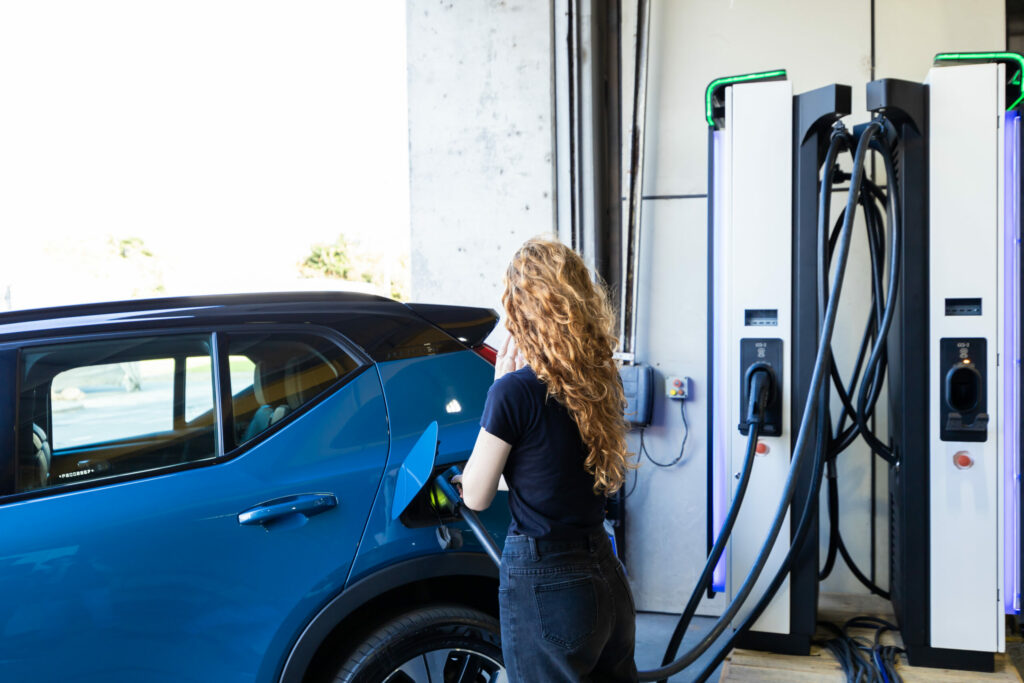
    WEG electric charging points
    Charging stations developed by WEG to support the transition to electric mobility (Credit: WEG)

    Europe must look to

    This takeover sends out an important signal: it is no longer enough to look only at what Asian countries or the United States are doing. From now on, the whole world wants to be among the leaders in this constantly evolving industry. Here, a non-European player is positioning itself in one of the most strategic segments of the energy transition: recharging infrastructure.

    What’s more, where Europe has often concentrated on developing batteries and creating new vehicles, it has sometimes neglected an essential part of electromobility, an essential building block: the development of software intelligence to hold an efficient recharging network.

    If we don’t master these building blocks, we run the risk of being technologically dependent on another country, once again.

    In conclusion

    By becoming the main owner of Tupi Mob, the Brazilian electric motor giant WEG is announcing a clear ambition: to do more than just make motors work, to get the whole electric mobility ecosystem up and running.

    This announcement comes at a time when the players are positioning themselves on the electromobility stage… but where their positions are not yet fixed.
  • “Charge as you Drive”: the motorway that recharges electric vehicles while you drive

    “Charge as you Drive”: the motorway that recharges electric vehicles while you drive

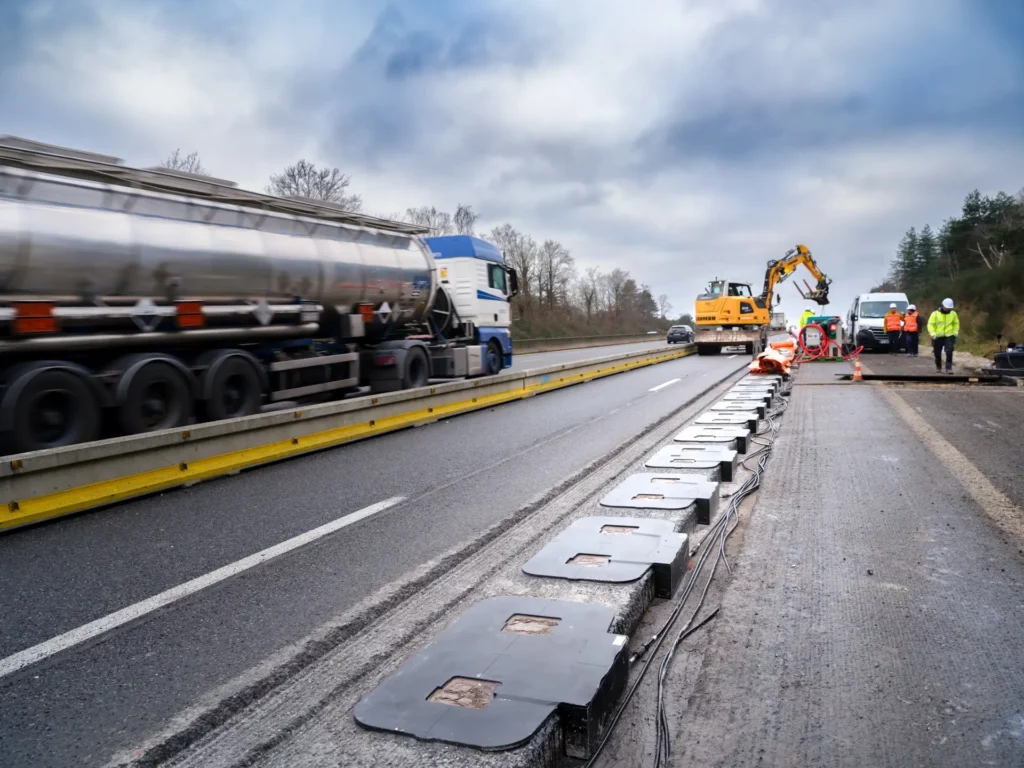
    On Wednesday 22 October 2025, an electric HGV was able to recharge by induction while driving on the A10 motorway thanks to the Charge as you Drive project, a technology that enables electric vehicles to be recharged directly while in motion. Already being trialled in other countries, this innovation could profoundly change the way we look at electric vehicles.

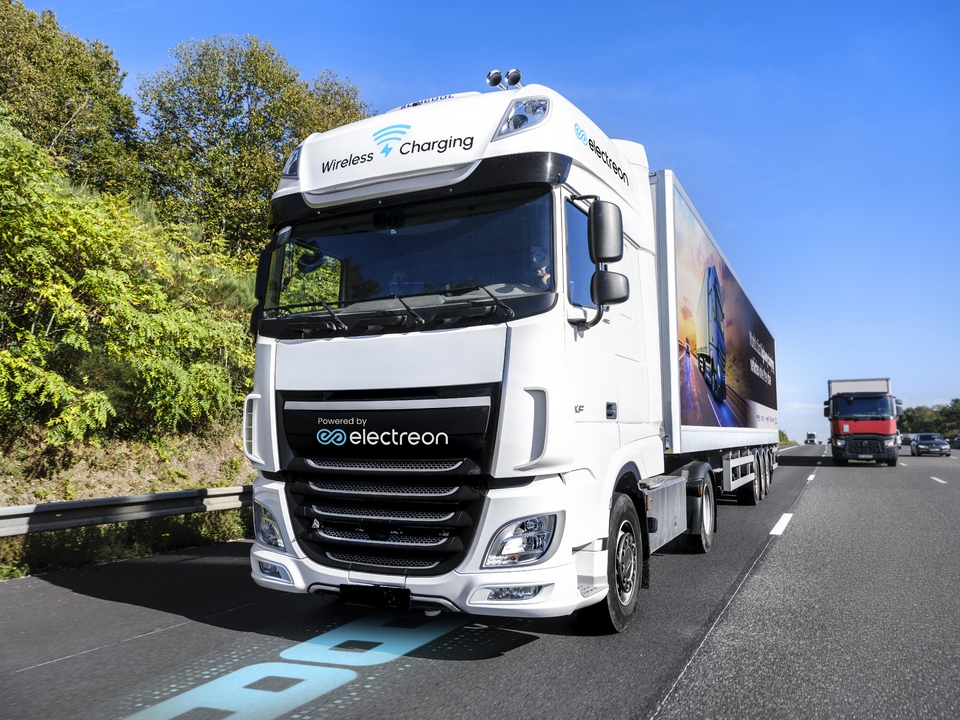
    electric truck charging by induction on the A10 motorway
    An electric HGV recharges while driving thanks to Charge as you Drive technology on the A10 motorway (Crédit : VINCI Autoroutes)

    Underground technology

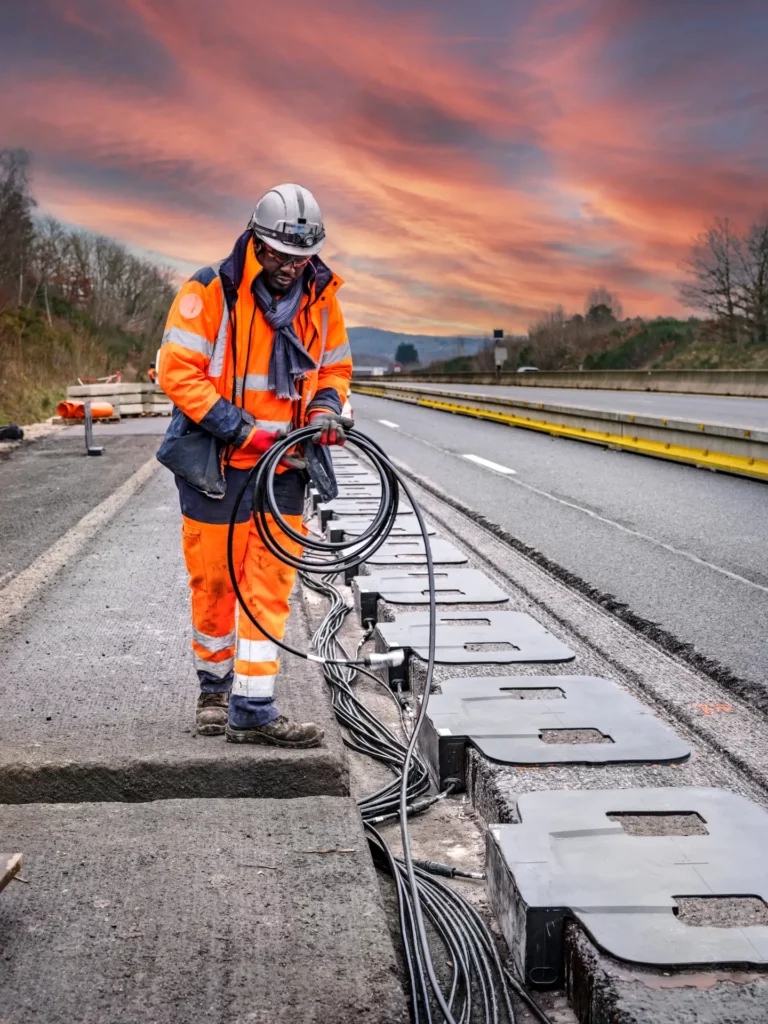
    Called Charge as you Drive, the project is based on a revolutionary principle: 900 copper coils have been installed under the road surface. Powered by the electricity grid, they generate an electromagnetic field capable of inductively transmitting energy to vehicles fitted with receivers. Thanks to this process, the car recharges as it drives along.

    The project is being tested on a 1.5-kilometre stretch of the A10. This test phase, involving four prototypes (HGV, bus, car and light commercial vehicle), should enable us to measure energy efficiency, safety and the possibility of integrating the system into traffic on a permanent basis.

    The latest tests are conclusive: the electricity has a maximum power of over 300 kW and an average power of over 200 kW. That’s enough for a heavy goods vehicle to recharge 1 kilometre in the same distance travelled, and 3 kilometres for a car.

    An alliance of players

    Led by Vinci Autoroutes, the project also brings together Electreon, VINCI Construction,Université Gustave Eiffel and Hutchinson.

    Once again, this cooperation illustrates the developments in the sector. Electromobility is attracting interest and large-scale projects are being developed day by day.

    technician installing induction charging cables on motorways
    A technician installs the cables under the roadway to enable electric vehicles to be recharged while driving. (Credit: Caroline Gasch)

    Why this changes everything

    This system could address several major obstacles to the adoption of electric vehicles:
    – Reduced range anxiety
    – Significant reduction in the time lost during “traditional” recharging
    – Accelerating the electrification of heavy goods vehicles, which are particularly concerned by long-distance journeys

    Road transport alone accounts for 95% of mobility in France and nearly a third of greenhouse gas emissions. According to a study carried out by Carbone 4 for VINCI Autoroutes, this technology would significantly reduce CO₂ emissions linked to goods transport.

    A project that follows the European dynamic

    This test is in line with European strategies to develop Electric Road Systems (ERS) on major roads. The busiest motorway sections are at the heart of European plans to decarbonise heavy transport.

    France joins other pioneering countries that are already demonstrating these technologies on the road, including Sweden, Germany and Italy.

    fitting out the A10 motorway for electric vehicle recharging
    The section of the A10 is being fitted out to accommodate the coils that will enable electric vehicles to be recharged while driving. (Credit: VINCI Autoroutes)

    Challenges to overcome

    It’s an ambitious innovation which, on paper, has everything it takes to develop on a larger scale. But there are still a number of challenges to overcome before it can become widespread:
    – Reducing installation costs, which are currently high.
    – Adapting electric vehicles to this technology so that they can all benefit from recharging.
    – Establishing a viable economic model for charging for energy in motion.

    An infrastructure that could become an energy source

    If the Charge as you Drive project sees the light of day and develops so that everyone can benefit from it. The motorway will become nothing more than a traffic lane. If the results are conclusive, the technology could help to free electric mobility from its current constraints once and for all.

  • China lodges a complaint with the WTO against India: the battle over electricity subsidies is launched

    China lodges a complaint with the WTO against India: the battle over electricity subsidies is launched

    On 15 October 2025, China officially lodged a complaint with the World Trade Organisation (WTO) against India. The reason: subsidies granted by New Delhi to Indian manufacturers of electric vehicles and to the battery industry, deemed to discriminate against foreign companies.

    World Trade Organisation in Geneva, headquarters of the WTO
    The WTO, based in Geneva, arbitrates international trade disputes. (Credit: Photo archives/REUTERS/Denis Balibouse)


    According to the Chinese Ministry of Commerce, the measures introduced by India as part of its PLI (Production Linked Incentive) Scheme excessively favour local manufacturers to the detriment of Chinese imports. Beijing considers that this aid violates world trade standards, including the principle of national treatment, and constitutes import substitution subsidies, which are explicitly prohibited under multilateral trade rules.

    China has therefore requested the opening of official consultations with the WTO (World Trade Organization), the first stage in a procedure that could last months or even years. In the meantime, China is calling on New Delhi to “rectify its practices”.

    An industrial and geopolitical showdown

    This trade dispute comes at a time when India too is aiming to become a global commercial hub for electric cars, in order to emancipate itself from Chinese domination. This is a strategic battle in which Beijing is determined to defend its national champions such as BYD, CATL and Xpeng, who are already facing restrictions in the United States and Europe.

    China was trying to increase sales of its vehicles in India, at a time when relations between the two Asian giants have just warmed up after five years of tensions due to the military stand-off in Eastern Ladakh.

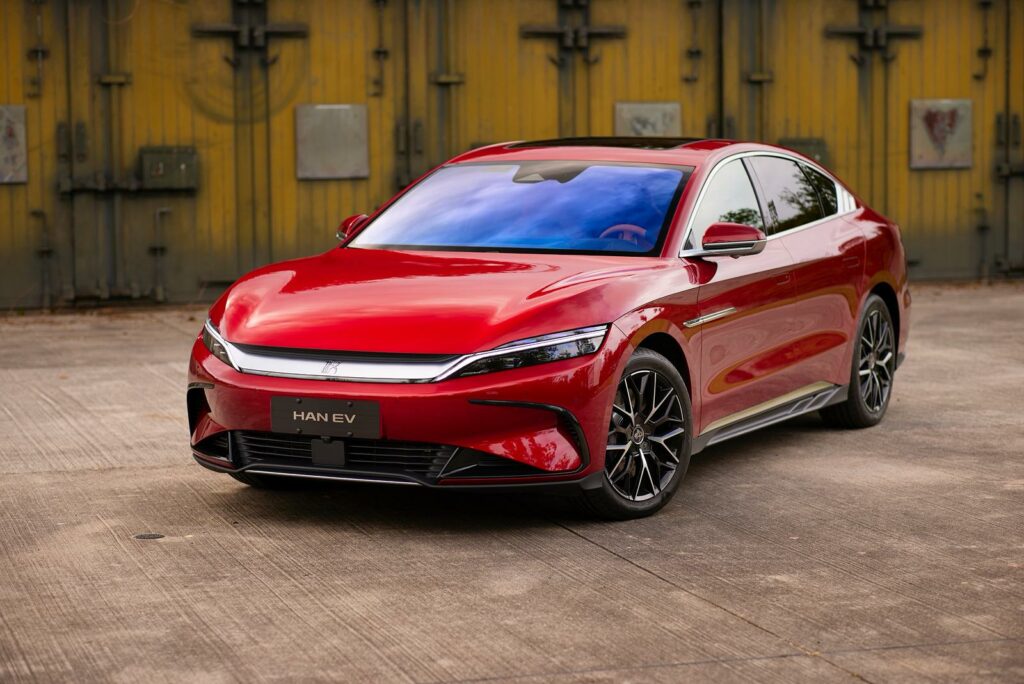
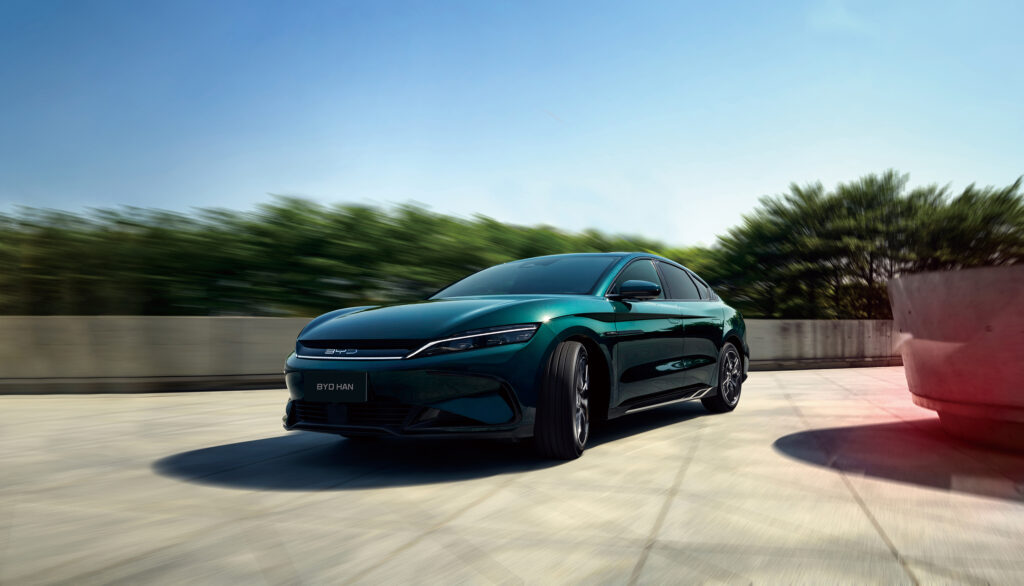
    BYD Han electric car
    The BYD Han, the flagship model of Chinese carmakers and a symbol of global competition in electromobility. (Credit: BYD)

    Electromobility, an industrial war

    This complaint illustrates one thing: competition in electromobility now extends far beyond carmakers, touching on raw materials, the battery ecosystem and industrial sovereignty. It can become conflictual and create tensions between different industrial policies.

    Electric globalisation under strain

    At a time when many countries and regions around the world are also stepping up their support for local production, China has filed similar claims against Turkey, Canada and the EU.

    The WTO, for its part, faces a new challenge: arbitrating an energy transition that is gradually becoming both economic and geopolitical.

  • Electromobility in France: the third quarter of 2025 marks a historic turning point

    Electromobility in France: the third quarter of 2025 marks a historic turning point

    For the first time, 100% electric vehicles are outstripping petrol combustion models in terms of registrations. Buoyed by record figures, the French market for electrified vehicles confirms a trend once thought impossible.

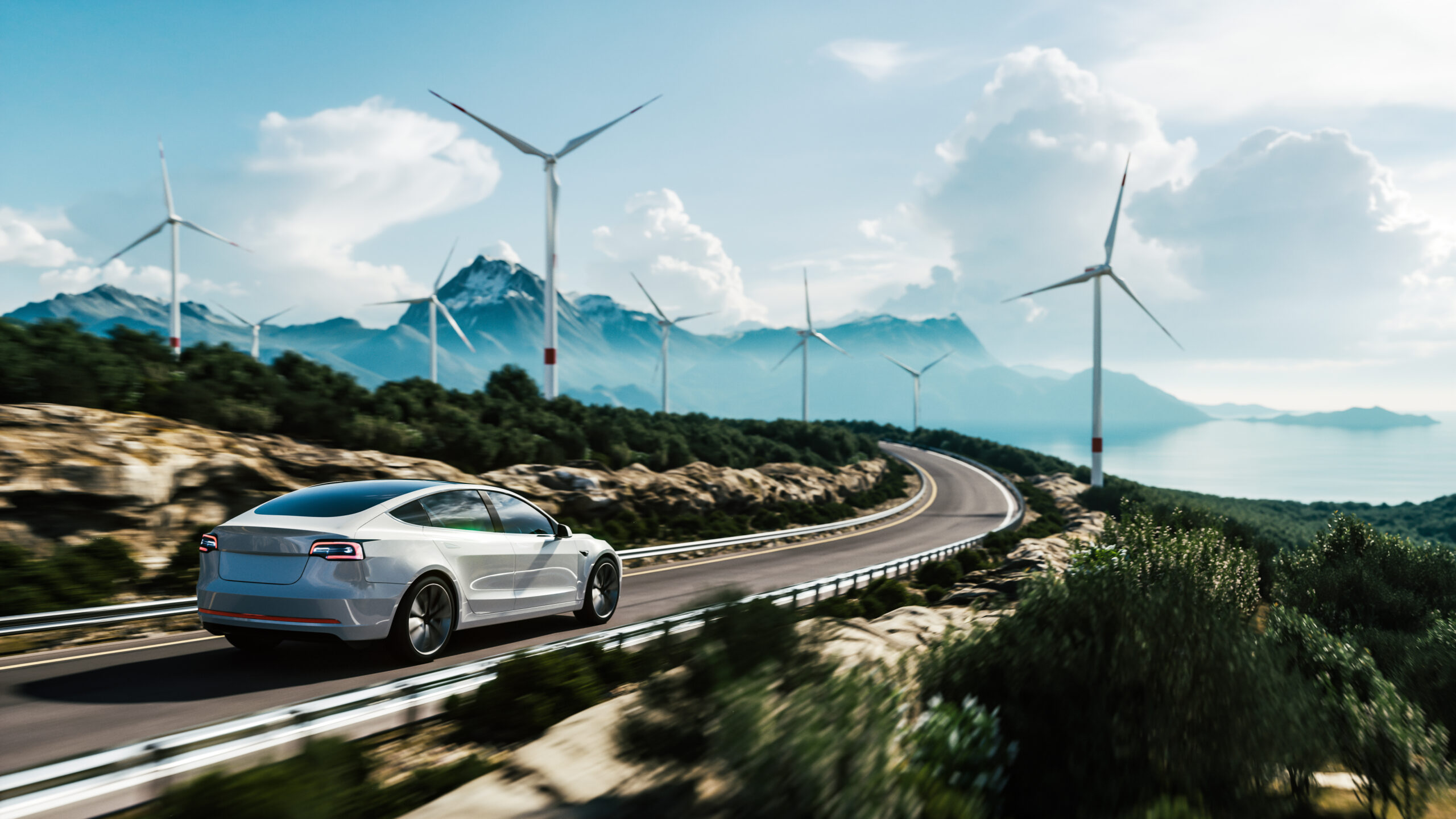
    Electric car driving in the mountains
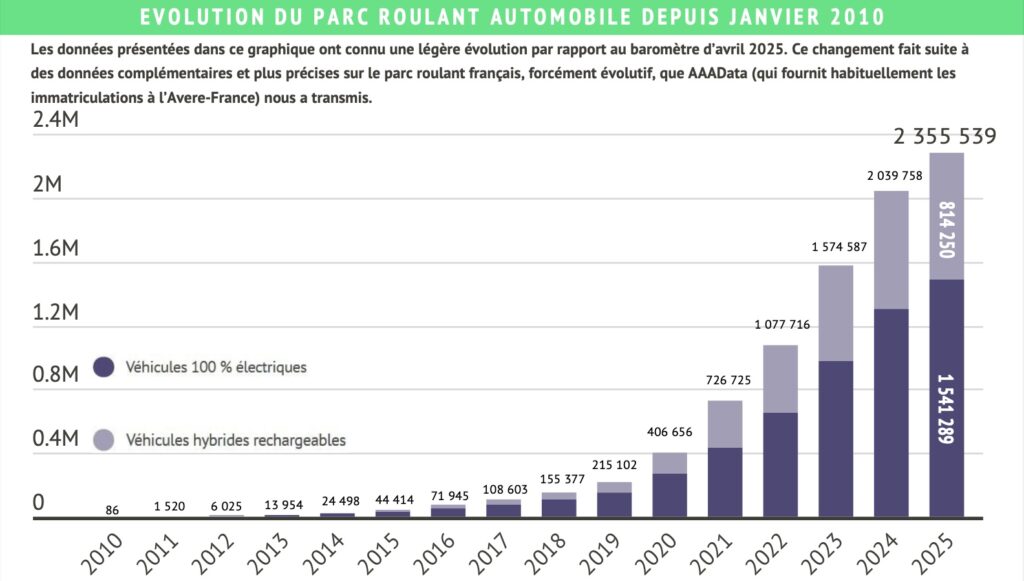
    The number of electrified vehicles on the road in France has exceeded 2 million, an all-time record for electric mobility.

    France speeds up and overtakes petrol for the first time

    “Electric mobility is off to a strong start this autumn, breaking two all-time records”, said Clément Molizon, General Delegate of Avere-France, in the monthly report on electric and plug-in hybrid vehicle registrations for September 2025 published by Avere-France and Colombus Consulting. And indeed, although long held back by reservations about costs and range, French electric mobility seems to have entered a new era. September 2025 saw the hierarchy of the automotive world change: for the first time, the number of registrations of 100% electric vehicles exceeded those of petrol models. According to the barometer published by Avere-France and Colombus Consulting, the market share of electrified vehicles has reached 26.5% (20.8% all-electric + 5.7% rechargeable hybrids). By way of comparison, the share of petrol combustion engines has fallen by 1.9 points to 19.8% of the market.

    Record figures

    This 26.5% market share represents 45,171 new electric and plug-in hybrid vehicles registered in September. An increase of 11.5% compared with the same period in 2024. It was also the best month of the year in terms of volume of registrations.

    100% electric vehicles are once again well represented. Registrations rose by 16.6%, with 35,456 units sold, while plug-in hybrids fell slightly (-3.9%, with 9,715 vehicles).

    Since 1 January, 315,766 electrified vehicles have been registered in France. Compared with the same period last year, the electrified car industry is ahead of the two previous years (2023: +6.2% and 2024: +20%).

    The momentum is particularly strong for 100% electric vehicles, whose market share has now exceeded the levels seen in 2023 and 2024 for three consecutive months.

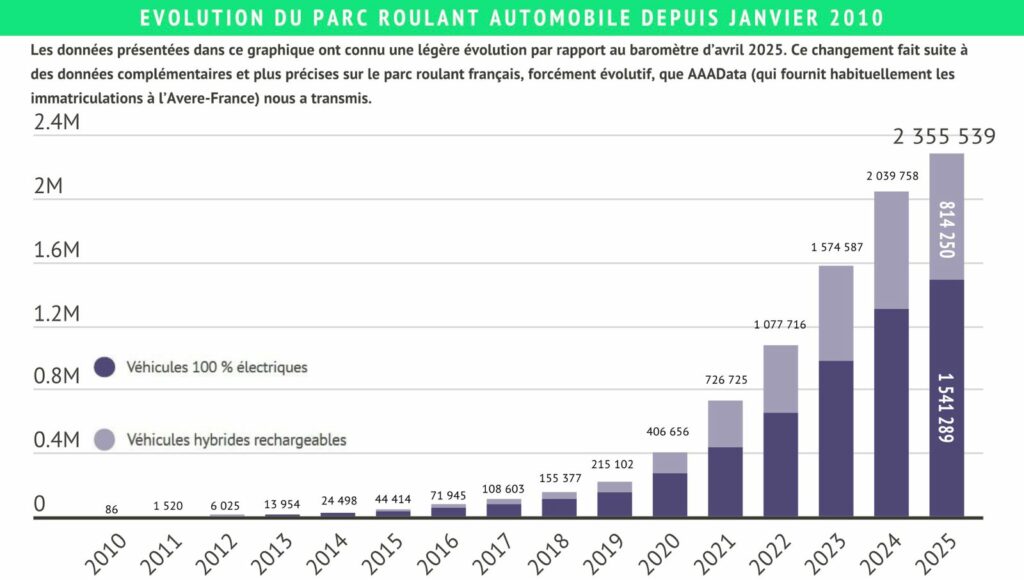
    Graph showing the growth of the electrified car fleet since 2010
    Number of electric and hybrid vehicles on the road in France since January 2010, according to Avere data (Credit: Avere-France)

    The return of private individuals and territorial dynamics

    And these figures come at a key time: the return of private individuals as buyers. During this period, private individuals accounted for 46% of electric vehicle buyers, compared with 54% for legal entities (companies, public authorities).

    This rebalancing is synonymous with the gradual return of households to the car market, even before social leasing has made a comeback.

    Regionally, Île-de-France leads the way with over 11,200 registrations, followed by Auvergne-Rhône-Alpes (5,466) and Hauts-de-France (4,115). The southern regions (Provence-Alpes-Côte d’Azur and Occitanie) confirm that the people of the south are also going electric, with almost 4,000 registrations each.

    The power of Tesla, Renault still a magnet

    Tesla continues to top the rankings with its Model Y, which remains the most-registered electric vehicle of the month with 4,845 units sold. Behind it, the Renault 5 confirms its commercial success since its launch (+133% compared with September 2024). The Mini sold 1,626 units, showing strong growth (+49%). In fourth place, the Peugeot 208, long a segment benchmark, is marking time (-17%), while the Citroën ë-C3 suffered a spectacular fall in September (-69%). The Dacia Spring, on the other hand, exploded (+145%), confirming that the market for affordable electric cars is finally catching on.

    In light commercial vehicles, the Renault Kangoo E-Tech was a big hit (up 373%), with 702 vehicles sold, a sign that French businesses are also going electric.

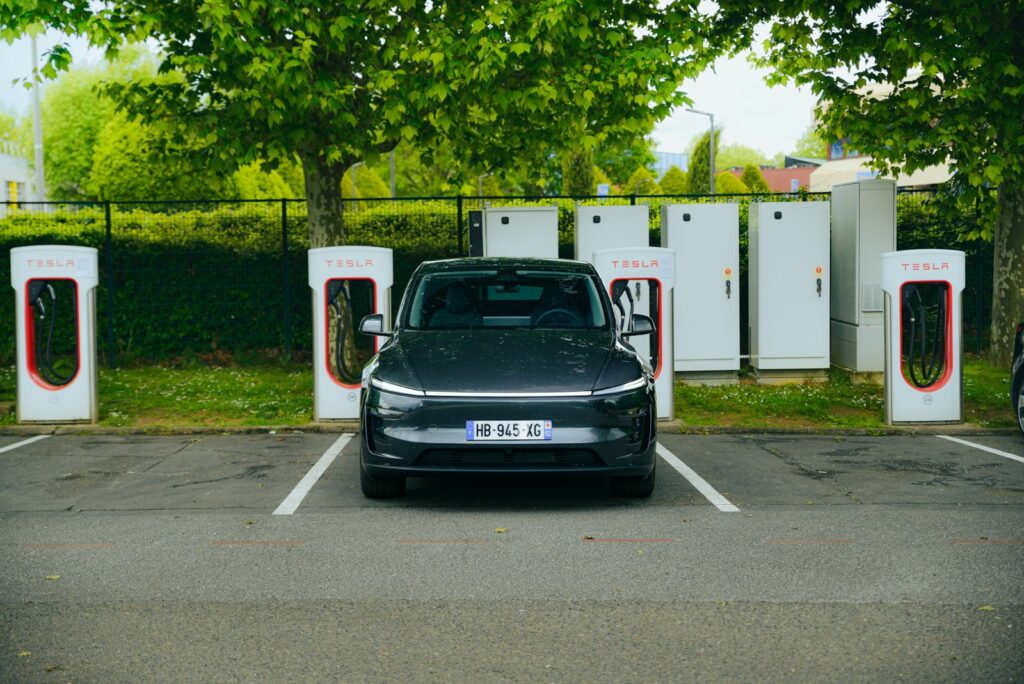
    Tesla Model Y electric front view
    The Tesla Model Y, one of the best-selling electric vehicles in France. (Credit: Mathis MIROUX)

    Infrastructure: steady progress

    Of course, what would electric cars be without recharging infrastructure? The upward trend in registrations is partly due to the fact that France is increasingly equipped with charging points. As of 31 August 2025, France had 177,180 public charging points, according to figures from the Ministry of Energy Transition and Avere-France. A number that ranks France as the 2ᵉ country in Europe with the most charging points, behind the Netherlands.

    Fast and ultra-fast stations are gaining ground, providing better coverage of major roads, even though some rural areas are still lagging behind. These figures are rising steadily, in line with the growing number of electrified vehicles on the road, now estimated at over 2 million.

    A confident third quarter

    The third quarter of 2025 confirms the strength of the French electromobility market.

    The momentum is being driven by the return of private customers, but also by the diversification of the range and the arrival on the market of electrified vehicles at affordable prices. Social leasing, which has been in place since the beginning of October, may well speed up the adoption of electrified vehicles in France.

    If the trend continues, 2025 will be remembered as the year when electric vehicles took over in France and carbon-free mobility ceased to be an exception.

  • TOGG T10F: The 100% made-in-Turkey electric vehicle as a presidential car

    TOGG T10F: The 100% made-in-Turkey electric vehicle as a presidential car

    While the electromobility sector continues to become increasingly competitive, more niche brands are struggling to make their mark. Such is the case of Turkish carmaker TOGG. So, to make a splash, the brand presented its brand new model to President Recep Tayyip Erdoğan at an official ceremony.

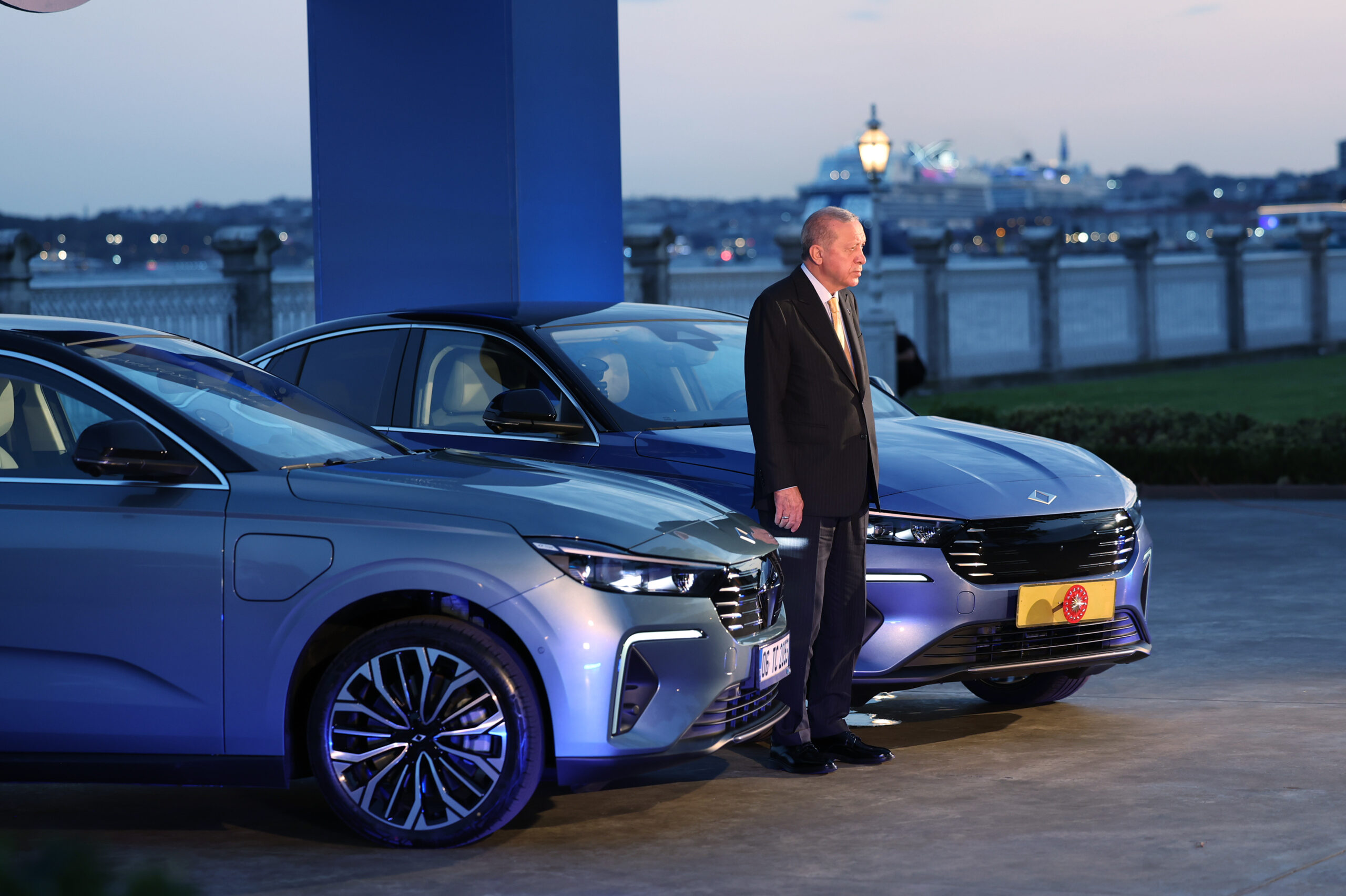
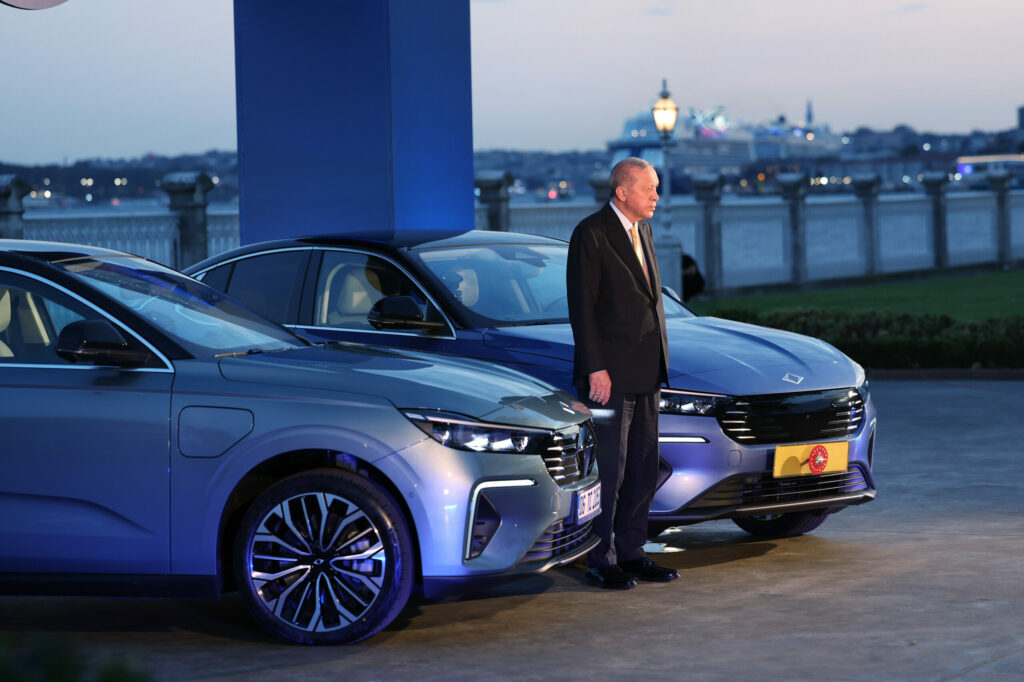
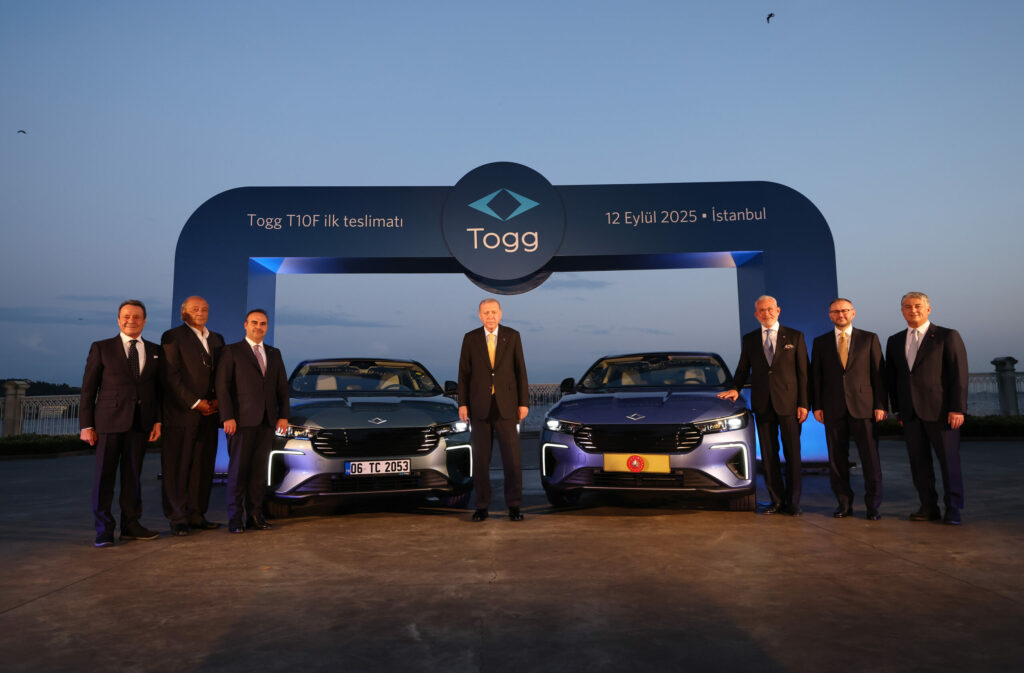
    Recep Tayyip Erdoğan in front of the TOGG T10F cars
    President Erdoğan inspects the TOGG T10F electric cars at the official ceremony in Istanbul (Credit)

    The high-profile event took place in Istanbul on 13 September 2025, at the Dolmabahçe Palace. Recep Tayyip Erdoğan, a fervent supporter of the TOGG project since its inception, was handed the keys to a T10F model. The latter, adorned with a red presidential plaque, is a 100% electric fastback designed and assembled in Turkey.

    In front of the cameras and government representatives, the Head of State hailed “a historic step for national industry”.

    This handover of the vehicle immediately sparked a flood of comment in the Turkish and international press: would Erdoğan now be driving exclusively in this national, electric vehicle? Nothing has been confirmed to date. But several clues suggest that this will be the case:

    • At the official handover to Erdoğan, the T10F was held at Dolmabahçe Palace, a highly symbolic venue used for important state announcements.
    • The event was covered by the public media (TRT, Anadolu Agency) and relayed by presidential communications, a rare occurrence for a simple industrial launch.
    • In the official images, the car bears a red presidential plate with the golden 16-star emblem, usually reserved for vehicles in the motorcade.

    All these clues suggest that this new version from the Turkish manufacturer is not just an industrial gift, but a vehicle destined to feature in the presidential fleet.

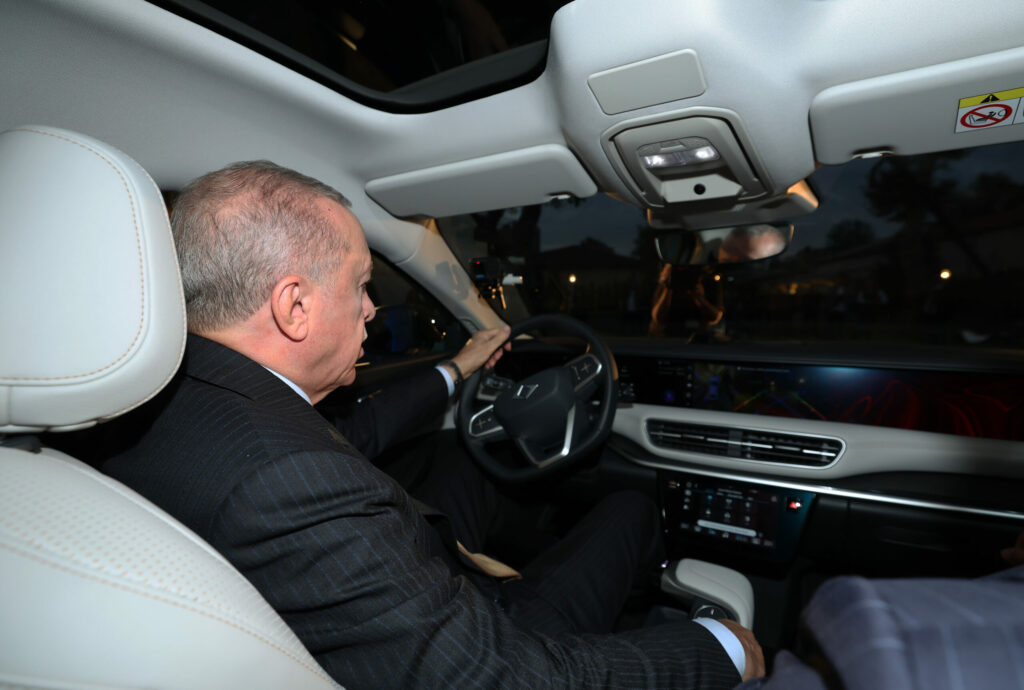
    Recep Tayyip Erdoğan driving the TOGG T10F
    President Erdoğan takes his place behind the wheel of the TOGG T10F, Turkey’s new electric car.

    A vehicle full of promise

    The vehicle in question, the TOGG T10F, is fitted with a 52.4 kWh battery with a range of 335 km in its standard version or 88.5 kWh for a range of 623 km in its long-range version. It takes 28 minutes to go from 20% to 80% battery. As for the powertrain, here too the Turkish brand is giving its customers a choice. The engine is the same for both the standard and long-range versions: 160 kW (218 bhp) for a 0 to 100 time of 7.2 seconds and a top speed of 172 km/h. And when you think of an electric car, you think of speed and responsiveness. That’s why the T10F is available in a sports version (AWD). Equipped with the same battery as the long-range version, its 320 kW motor develops 435 bhp and accelerates to 100 km/h in 4.4 seconds.

    In terms of equipment, it has nothing to envy of its internationally-renowned counterparts: sleek, futuristic design, an interior featuring a large panoramic touchscreen, a locally-developed operating system and full connectivity. Features that have earned the brand five stars in Euro NCAP tests. The brand is delighted with this certification, which is a sign of seriousness, placing the saloon in the big league alongside European and Asian manufacturers.

    The T10F has been available for pre-order in Turkey and Germany since the end of last month, with prices starting at €34,300 for the standard version and around €50,000 for the top-of-the-range version.

    Recep Tayyip Erdoğan and officials in front of the TOGG T10F
    President Erdoğan accompanied by officials in front of the T10F TOGGs on display in Istanbul.

    TOGG, betting on industrial independence

    Founded in 2018 at the instigation of the Turkish government, TOGG (Türkiye’nin Otomobili Girişim Grubu) was created by a consortium of several major national industrial groups, including Anadolu Group and Turkcell. The stated aim is very clear: to create a brand capable of competing with Tesla, BYD and Renault, while promoting “Made in Türkiye”.

    And to remain true to its ambitions, in 2022 the manufacturer inaugurated its ultra-modern plant at Gemlik, where the T10X and now the T10F models are produced.

    In the space of just a few years, TOGG has become a symbol of national pride, because the brand does not limit itself to car production. It innovates in the fields of EV batteries, recharging infrastructure and digital software for its vehicles. This diversity of technological activities has enabled the company to position itself as a regional industrial and technological hub.

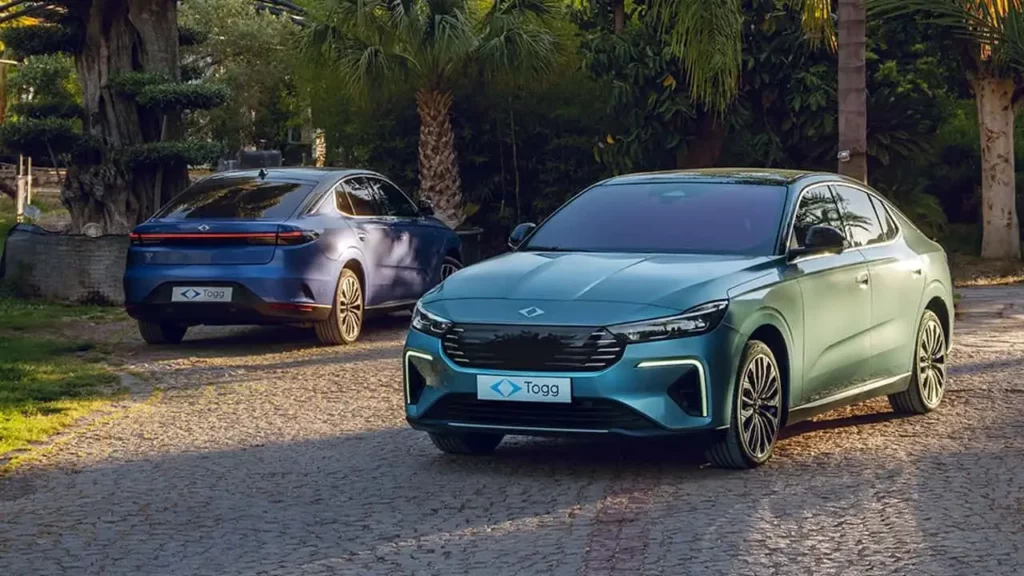
    Front view of the electric TOGG T10F
    A front view of the TOGG T10F, a Turkish electric car with a modern, futuristic design (Credit: TOGG).

    Politics as ambassador

    Inevitably, for a national brand, what better ambassador than its ultra-mediatised president? President Recep Tayyip Erdoğan, 71, confided his pride and joy to a crowd of journalists after taking the car for a spin to check out the little toy on offer.

    Presenting a vehicle in this very solemn setting demonstrates the President’s commitment to his country’s industries. Turkey’s head of communications, Burhanettin Duran, was also on hand, and Erdoğan’s reaction was not long in coming. He took to his Twitter account to add another layer of communication.

    He’s not the first political leader to show off an electric vehicle in public. In France, Emmanuel Macron recently received the new DS N°8 Présidentielle. This is a unique example made available to the Presidency before the commercial launch.

    These are major communication initiatives that highlight national innovations, in this case a locally-built vehicle. The aim is not only to enable these companies to compete with the world leaders, but also to enable the public to discover mobility solutions in the run-up to the European restrictions that will come into force in 2035.

  • EQUIP AUTO 2025: electromobility takes centre stage

    EQUIP AUTO 2025: electromobility takes centre stage

    EQUIP AUTO Paris has long been a meeting place for the automotive aftermarket and traditional mechanical innovations, but this year is different. The shift is clear: electric mobility is taking centre stage, to say the least. Between battery technologies, high-voltage maintenance and connected tools, the 2025 edition represents the advance of low-carbon mobility.

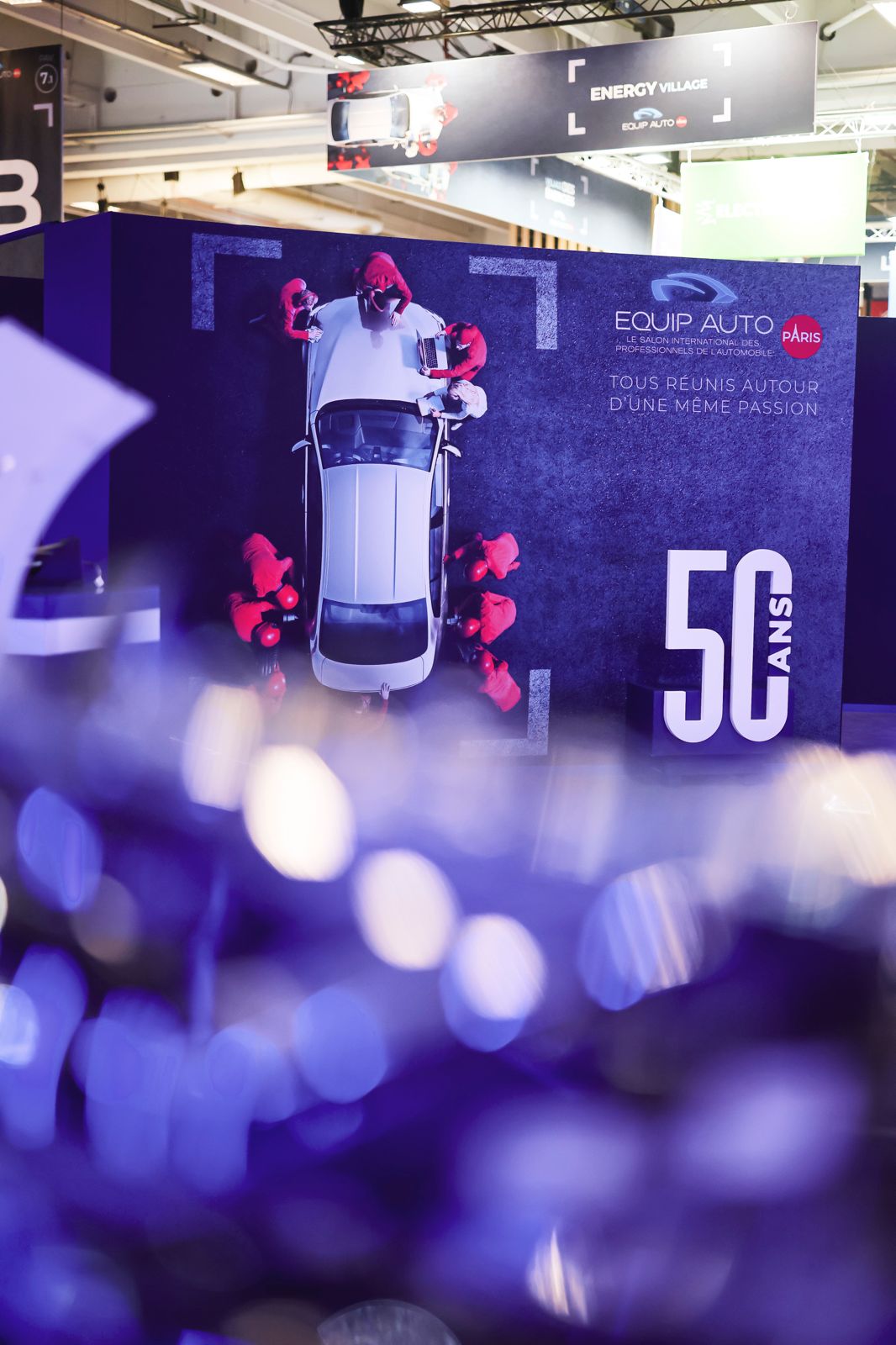
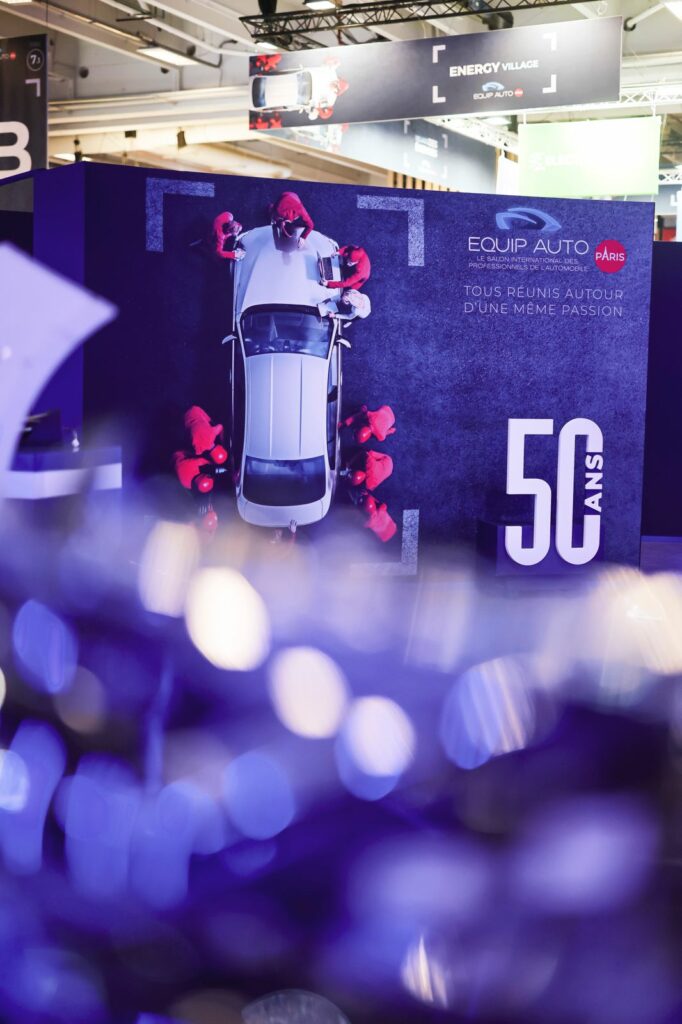
    Official EQUIP AUTO 2025 poster showcasing electromobility in Paris
    The official EQUIP AUTO 2025 poster symbolises the show’s move towards electric vehicles (Credit: EQUIP AUTO)

    50 years of a benchmark show

    Created in 1975, EQUIP AUTO brings together all the players in the automotive ecosystem. It includes manufacturers, equipment suppliers, distributors, repairers and start-ups. Held every two years, the event has evolved with the times to keep pace with changes in the market. It is now regarded as a major player in developments in the automotive world.

    For its 2025 edition, synonymous with its fiftieth anniversary, the show is expecting 100,000 professionals and will be bringing together 1,400 exhibitors and brands over an area of more than 100,000 m². The programme includes eight themed villages. These include energy management, retrofitting, connectivity and the rebuilding and recycling of parts. This is a first.

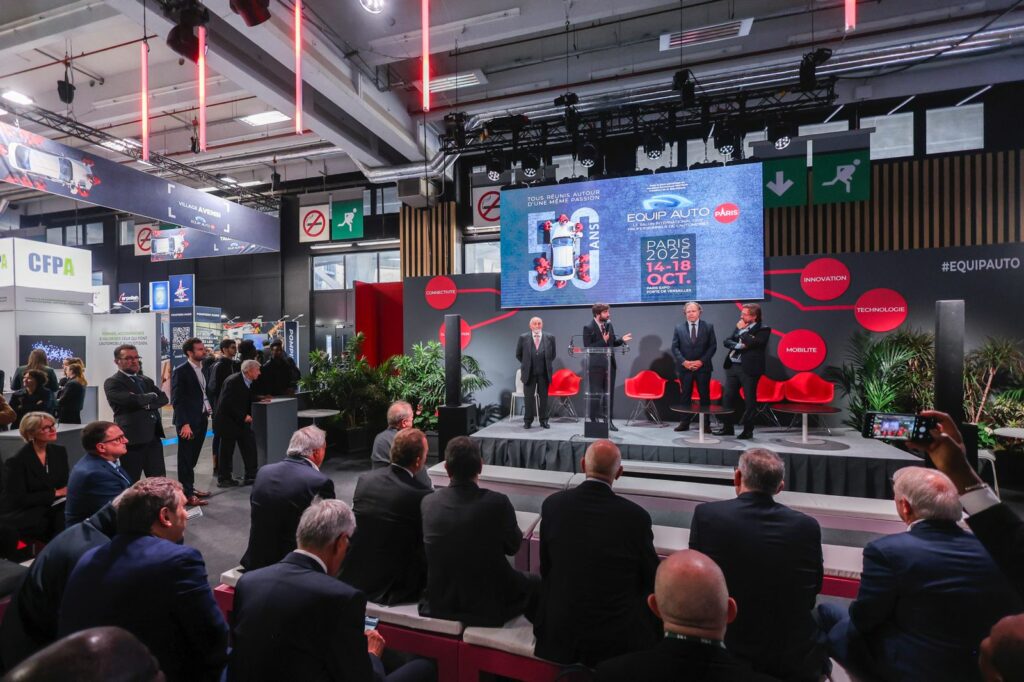
    Conference on electric mobility at EQUIP AUTO 2025
    Automotive industry experts discuss the future of electric mobility (Credit: EQUIP AUTO)

    2025: an electric edition

    As the official programme clearly shows, this year it’s electrified mobility that’s dominating the debates. From energy converters and charging stations to thermal management systems and diagnostic software for electric vehicles, electromobility technologies are everywhere.

    According to the organisers, more than 60% of the exhibitors at this year’s show will be presenting solutions related to electrified mobility. This is a record since the show’s inception. Major equipment manufacturers such as Valeo, Bosch and Mahle are also present, symbolising the significant changes taking place in the vehicle fleet.

    Valeo, symbol of an industry in transition

    Among the most prominent French exhibitors was Valeo, automotive supplier and leader in the aftermarket. The group was awarded the EQUIP AUTO 2025 Grand Prix International de l’Innovation Automobile for its remanufactured DQ250 dual wet clutch, intended for more than five million vehicles on the road in Europe.

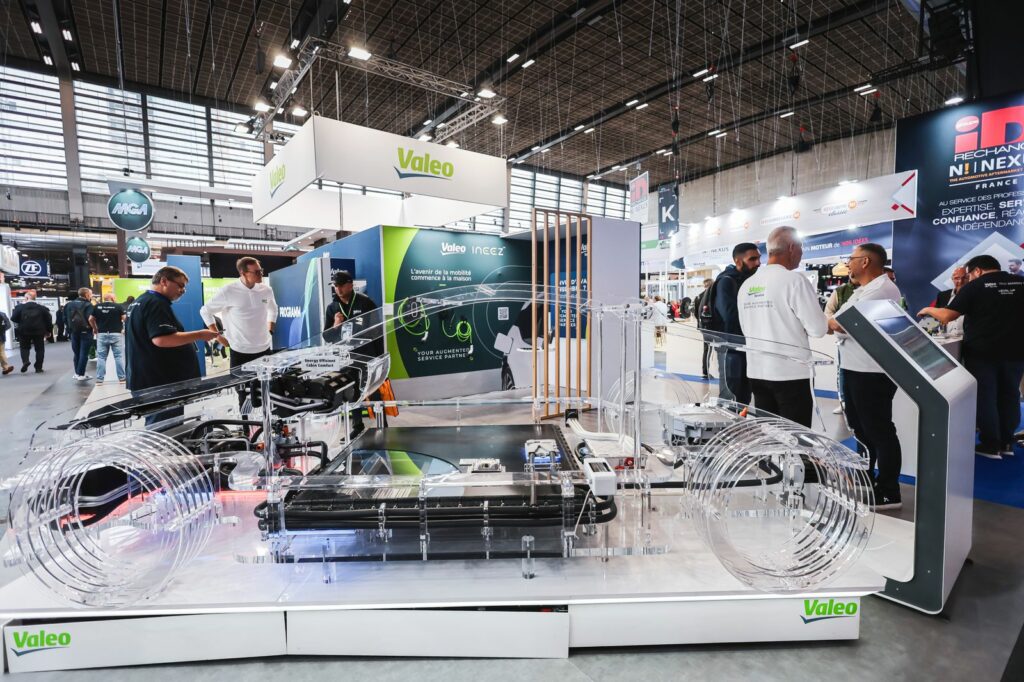
    At the same time, Valeo is presenting technical solutions directly linked to electromobility: thermal management systems for batteries and electric motors, as well as Ineez intelligent charging tools. The company is also focusing on training and technical support by setting up training platforms for technicians working on high-voltage vehicles.

    Valeo stand at EQUIP AUTO 2025
    Valeo stand presenting its innovations at EQUIP AUTO 2025. (Credit: EQUIP AUTO)

    A sector that is reinventing itself

    As well as technology, the entire automotive world is being reinvented. And automatically, players in the industry have to adapt, and fast. With the reduction in the number of mechanical parts, the almost ubiquitous use of digital technology and the rise of on-board software, traditional business models are being redefined.

    Some of the aftermarket SMEs present at the show are changing direction, such as SUSTAINera, a subsidiary of Stellantis, which has moved into battery reconditioning, Lormauto, which specialises in automotive retrofitting, Gruau for electric commercial vehicles, and LM Mobilité for light mobility.

    EQUIP AUTO has become the spotlight for this industry. The industry is seeking to stabilise itself in this period of perpetual change.

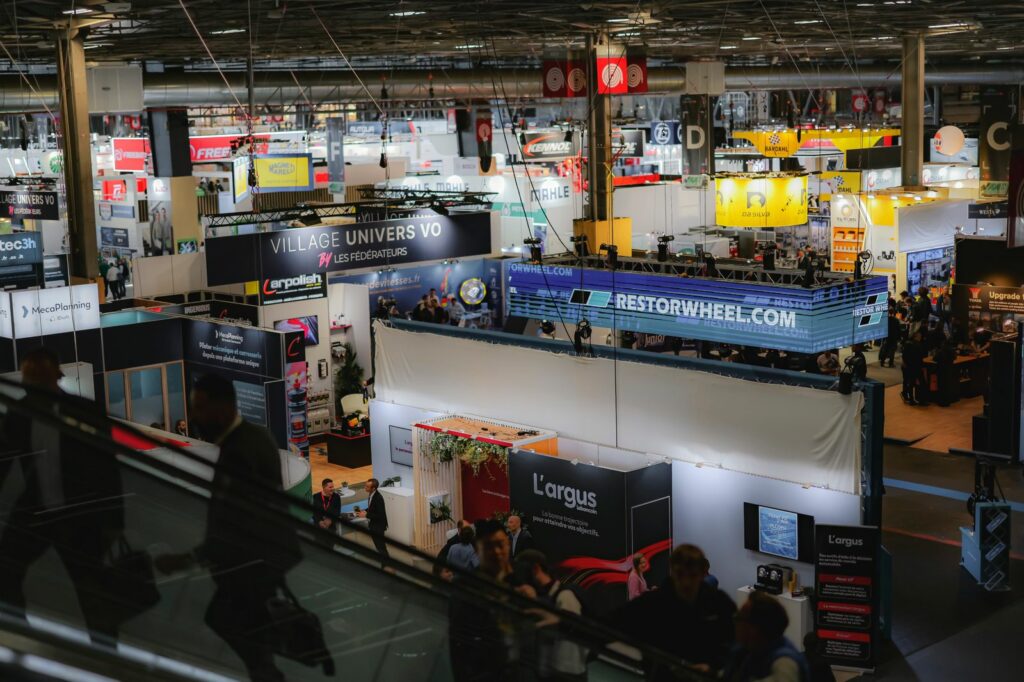
    Aerial view of the stands at EQUIP AUTO 2025 in Paris
    A panoramic view of the EQUIP AUTO 2025 exhibition halls dedicated to electromobility. (Credit: EQUIP AUTO)

    A showcase for French expertise

    This year’s show also highlights the national ecosystem. With stands from Verkor, Forsee Power and Stellantis, among others, France is well represented. It is showing that it intends to be a major industrial player in the transition to electricity.

    Through this high-profile event, our French manufacturers want to prove that the European momentum in terms of low-carbon mobility is no longer limited to Germany.

    A course that is becoming clear

    The fiftieth anniversary of EQUIP AUTO confirms a trend: the automotive industry is now organised around electric vehicles. Major equipment manufacturers and young innovative companies are all converging towards a common goal. To make mobility cleaner, more connected and more sustainable.

    Fifty years after its creation, EQUIP AUTO Paris bears witness to an industry undergoing a complete overhaul.

  • BYD targets Spain for its third European factory

    BYD targets Spain for its third European factory

    The Chinese automaker BYD is planning to establish its third European factory in Spain, according to sources close to the matter cited by Reuters. Spain is reportedly the favourite compared to other European candidates.

    Logo of Chinese car manufacturer BYD
    The BYD logo, symbol of the Chinese manufacturer’s global expansion in the electric vehicle sector.

    Strategic location

    According to Reuters, this future factory would complement those already planned in Hungary and Turkey, and aligns with the Chinese giant’s aim to establish a long-term production presence in Europe. The goal behind this strategy is clear: as in Brazil, BYD wants to manufacture vehicles locally for the European market, reducing additional costs, avoiding customs barriers, and adapting to European regulatory requirements.

    Why Spain?

    While BYD considered other countries such as Germany, a source close to the matter, along with BYD’s national director for Spain and Portugal, Alberto De Aza, recently explained to Reuters why Spain would be an ideal location for BYD’s expansion in Europe.

    • Spain has a qualified workforce of similar quality, but production costs are significantly lower than in France or Germany.
    • The country already has an efficient logistics network, with ports and infrastructure enabling rapid distribution across Europe and worldwide.
    • Since 2020, Spain has implemented an industrial policy supported by a €5 billion investment plan, according to Reuters, to attract electric mobility manufacturers.
    • Spain and China have established strong diplomatic relations. Last year, Spain abstained in an EU vote on tariffs for Chinese-made electric vehicles.
    • Most importantly, Spain’s energy is becoming increasingly “clean”, thanks to significant growth in solar and wind power.

    All these factors make Spain a serious contender for BYD’s next European base.

    BYD Han electric car
    The BYD Han, an example of the top-of-the-range electric vehicles produced by BYD for the international market. (Credit: BYD)

    A well-oiled global expansion strategy

    For over two years, BYD has been accelerating its global expansion. This includes Europe, where the company has a clear ambition: producing locally to strengthen its market share.

    Currently, Spain is under discussion, but BYD is already building a factory in Szeged, Hungary, which is set to begin production in 2026, and another factory will open in Turkey next year.

    BYD’s European presence is guided by several objectives: reducing import costs, design and delivery times, transportation risks, currency fluctuations, and trade barriers, especially amid stricter regulations and greater pressure in Europe. Establishing a base in Europe allows BYD to adapt more quickly to European standards and requirements.

    Reuters reports that BYD aims for the majority of its vehicles sold in Europe to be locally produced within three years.

    Growth to dominate

    Since its founding in 2003, the Chinese brand has grown exponentially. BYD has been selling vehicles in Europe since 2020. The figures speak for themselves, showing the company’s spectacular growth on the continent.

    • IEuropean sales have surged by 280% in the first eight months of 2025.
    • In April 2025, BYD even surpassed Tesla in European sales of 100% electric cars (7,231 units versus 7,165 according to JATO Dynamics).
    • In 2024, the brand sold nearly 57,000 vehicles in Europe, representing about 2.8% market share in the electric category.
    • In August 2025, EU registrations nearly tripled year-on-year, reaching over 9,000 units in a single month.

    These figures demonstrate how BYD could play a key role in Europe’s transition to fully electric vehicles by 2035.

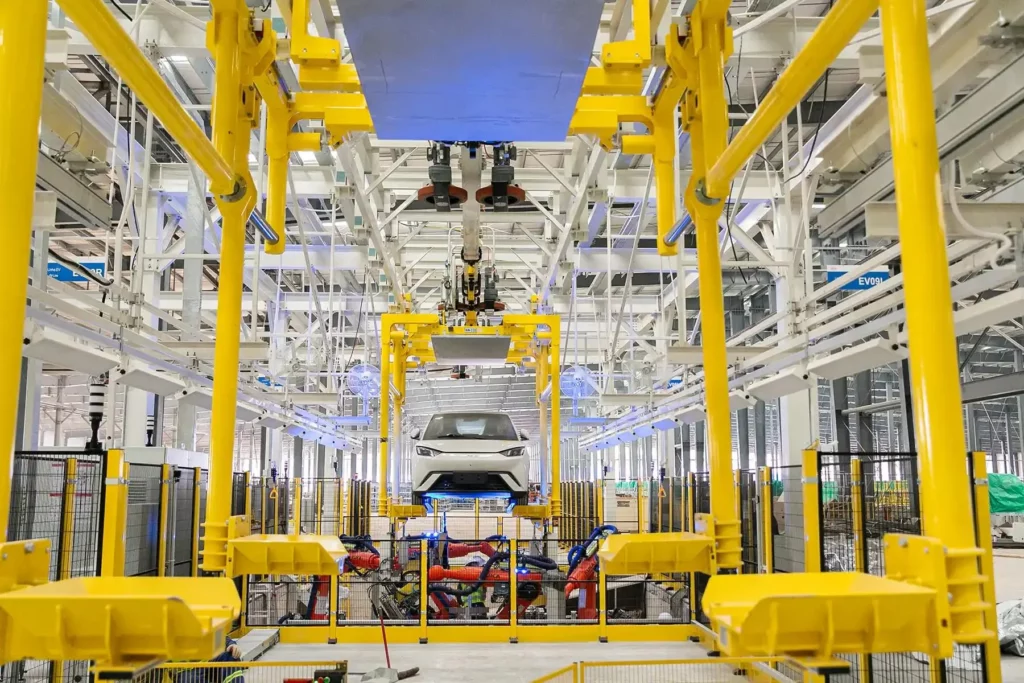
    BYD production plant
    One of BYD’s factories, a symbol of industrial expansion and local production in Europe.

    Another challenge for European automakers

    The arrival of this third factory would strengthen BYD’s presence against European giants already under pressure. Producing locally could also intensify competition in the SUV and family car segments. Indeed, the Chinese brand offers high-quality cars at highly competitive prices, while European brands struggle to provide affordable models.

    By establishing a base in Spain, BYD sends a strong signal to manufacturers, policymakers, and Europeans. This move shows the company’s long-term commitment to the European market. It remains to be seen whether European authorities will welcome this news given the current challenging trade environment.

  • Electromobility: what do the French think?

    Electromobility: what do the French think?

    As the boom in electrified vehicles intensifies, the question arises: what do the French really think? From curiosity and caution to expectations and reticence, let’s decipher these opinions through a number of recent studies and personal accounts.

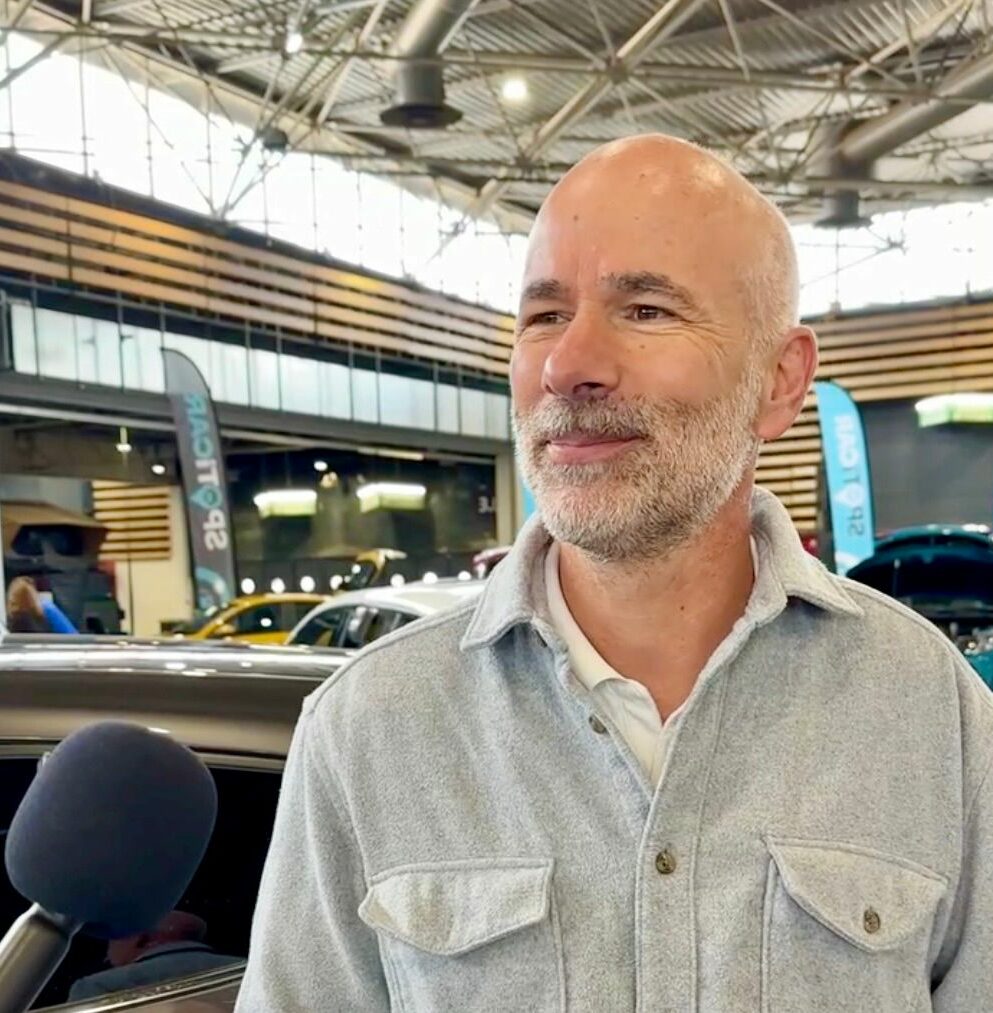
    Man interviewed at the Lyon Motor Show about electric vehicles
    A visitor to the Lyon Motor Show talks about his experiences and perceptions of electric cars (Credit: ECO MOTORS NEWS)

    241,054: that’s the number of electric vehicle registrations in 2025. These figures, from Avere-France, AAA Data and the PFA, mean that this range of vehicles will now account for 20.8% of the market and overtake petrol in terms of registrations for the first time. However, the adoption of electric vehicles is still very divisive. According to a survey by Ifop (Institut français d’opinion publique) for La Centrale, 37% of French people would be open to buying an electric vehicle in the medium to long term. This would be the case if the price were equivalent to that of a combustion engine car.

    Prejudices still too prevalent

    An Ifop study for the Roole media shows that the French are still too inclined to trust preconceived ideas. In fact, out of a sample of over 1,000 people, 57% said they were well-informed about electric cars. Among them, 86% thought that battery life was too limited, and 80% believed that electric cars were only for people who didn’t make long journeys. A surprisingly high figure, given that the average range of new vehicles is now over 430 km, according to Avere-France.

    For ECO MOTORS NEWS, we interviewed a number of motorists at the Lyon Motor Show. And on this subject, opinions differ…

    For Franck (47), a hybrid car will replace his EV:
    What bothered me was the car’s range. For long journeys, I was a bit worried. So I’m thinking of switching to a second-hand hybrid. I’ve reduced the budget because there’s no longer a government bonus on electricity.

    Conversely, Léo (25) puts things into perspective:
    Frankly, I’ve never been bothered – there are bollards just about everywhere now.

    Graph showing changes in the number of electric and internal combustion vehicles in France since 2010
    Changes in the French car fleet since 2010, with a growing proportion of electric vehicles. (Credit: Avere-France / AAA Data / PFA)

    An efficient network of charging stations

    For many French people, recharging an electric vehicle is still a headache: long queues, interminable recharging times, lack of accessible charging points… So many worries that put off potential buyers. In reality, however, the situation is far less dramatic than you might think.

    By 2025, France will have more than 160,000 public charging points, according to Avere-France and Gireve. This is an increase of almost 40% in just one year. The network has become denser throughout the country. 95% of charging points now have an availability rate of over 90%. We are therefore far from the image of an under-equipped country. However, the perception remains strong. According to an Ifop survey for Roole, 34% of French people still consider the network “insufficient.” Additionally, one in two doubts the reliability of public charging points.

    These concerns were echoed in the comments made at the show. Two rather curious young visitors said: ” I’m a bit sceptical about going electric; it’s good for short journeys, but if you think about recharging points, I have the impression that it’s still sometimes a problem for motorists.

    And yet, according to the latest Deloitte 2025 barometer, 63% of electric vehicle drivers recharge their batteries mainly at home. In other words, dependence on the public grid is much less than we might imagine, which makes some of the obstacles more psychological than practical.

    Price: a common barrier

    If there’s one point on which all the surveys agree, it’s the cost of buying one. According to the Ifop / Roole survey, 47% of French people cite price as the main barrier to buying an electric vehicle. And despite the ecological bonuses, the end of certain state subsidies in 2025 has accentuated the feeling of economic difficulty.

    Matthieu (24) explains:
    I’d love to go 100% electric, but it’s too expensive. I think the most sensible solution would be to take out a lease.

    He is not an isolated case. Another Deloitte study states that the majority still consider the initial investment “too high”. On the other hand, EV drivers who have already converted put things into perspective: 88% say they have reduced their overall expenditure thanks to lower energy costs and virtually no maintenance.

    Hybrids: the reassuring compromise

    Faced with these various obstacles, hybrids are often the gateway to electric vehicles. The 2025 Mobility Barometer (Arval / Ipsos) shows that 42% of French people now prefer hybrids when buying a new car. This observation is echoed in the field:
    “I’ m relatively happy with hybrids. I wouldn’t know about all-electric, I haven’t tested it yet “, confides Mehdi (26), a young entrepreneur who has come to canvass brands at the show.

    But the logic is not uniform. Jacques (65) and Ludovic (39) are two examples:
    I currently have a hybrid, but I’m here because I’ve just ordered a 100% electric car, the new BMW iX3. I’m interested in technology and new things; I’m a bit curious.

    I’m starting to switch to 100% electric, because the brands have evolved. I liked the hybrid, but today, fiscally, it’s still more interesting to switch to a 100% electric company car.

    Does this put a damper on driving pleasure?

    Obviously, you can’t talk about cars without talking about driving pleasure. And on this subject too, there are significant discrepancies between perception and reality. While studies confirm that almost one in two French people believe that “electric cars take the fun out of driving”, paradoxically 82% of EV users say the opposite: they find their vehicle more enjoyable and more efficient.

    The figures prove it: electromobility is making progress, but change – like the adaptation of attitudes – takes time. The network of charging points is expanding, range is increasing, running costs are falling… and yet fears persist, often more out of habit than experience.

  • Electromobility in Australia: September 2025 confirms the acceleration

    Electromobility in Australia: September 2025 confirms the acceleration

    Australia, the new player in the automotive transition…

    Long perceived as a country where the electromobility market lags behind Europe, China and the United States, Australia has seen a real acceleration in the adoption of electric mobility over the past two years. According to the monthly VFACTS report published by the FCAI (Federal Chamber of Automotive Industries) and the Electric Vehicle Council, September is a perfect illustration: more than 30% of new vehicle sales are now electrified (hybrid, plug-in hybrid or 100% electric).

    This figure, unthinkable just a few years ago, brings the country closer to the standards of pioneering markets such as Norway and the UK, even if the recharging infrastructure is still lagging behind outside the major cities.

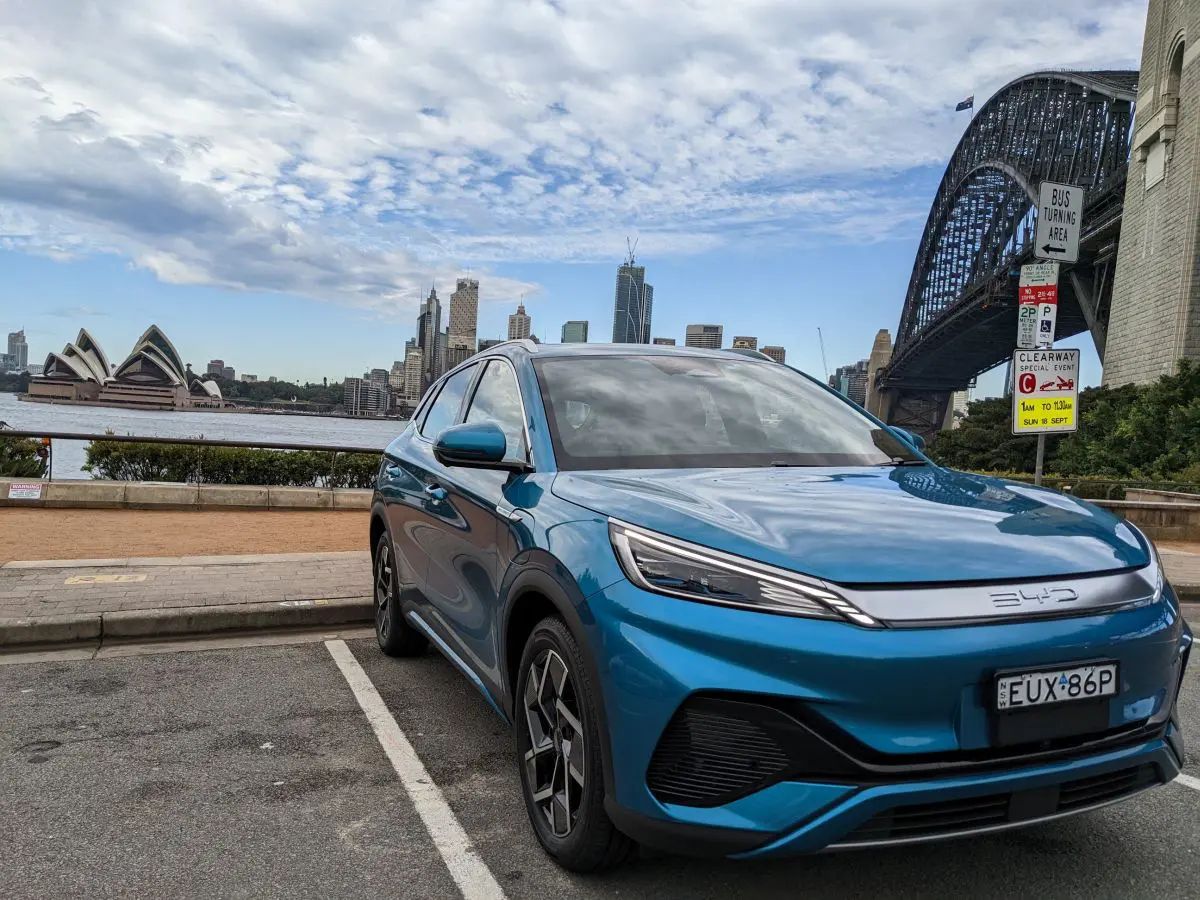
    Change is not just technological. It’s also cultural. In a country where the ute (utility vehicle) and the 4X4 are king, it’s true that seeing Tesla Model Ys, BYD Sealion 7s and even Chery Tiggo 4s in the top-selling vehicle rankings reflects a real shift in usage.

    Record figures

    In September 2025, 106,891 new vehicles were registered, up 7% on 2024. Since January, the market has sold a total of 938,959 vehicles, putting 2025 on track to surpass the previous all-time record (1,220,607 units).

    In a national context of inflation that is still perceptible, this dynamic performance can be explained by the overhaul of corporate fleets (+11.5%), the strength of the private customer channel and a revival in leasing (+8.5%). Conversely, government purchases fell by 13%.

    Geographically, Victoria and Western Australia are the main drivers of this growth.

    Manufacturers: Japanese dominance, Chinese breakthrough

    The car market is still dominated by Toyota, Ford, Kia, Mazda and Hyundai, but the real revolution is coming from China. In September, no fewer than four Chinese brands made it into the top 12 vehicle sellers: BYD, GWM, MG and Chery. And the least we can say is that their growth rates are staggering: +178% for BYD, +172% for Chery, +30.1% for GWM and +4.4% for MG.

    This growth is reflected in the appearance of three Chinese models in the top 10 best-selling vehicles in Australia, namely the Chery Tiggo 4 (6ᵉ), the BYD Sealion 7 (8ᵉ) and the GWM Haval Jolion (10ᵉ). They are therefore competing with local icons (Toyota HiLux, Ford Ranger, Isuzu D-Max). The Tesla Model Y, the third best-selling vehicle and number one SUV on the market, is a good illustration of this shift towards new preferences.

    This trend is not only reflected in sales figures, but also in import flows. Although Japan remains in first place as a country of origin of vehicles, with 26,590 units imported in September 2025, China, with 25,587 units, is now neck and neck. Thailand remains competitive with 20,996 vehicles imported in September 2025. China was ranked 3ᵉ in vehicle importing countries at mid-year with 102,938 deliveries, far behind Japan and its 187,078 deliveries. This evolving trend indicates that Beijing has a very strong chance of becoming Australia’s leading supplier of cars by the end of the year.

    Electrification: accelerated change

    The figures for the electrification of the Australian car fleet speak for themselves:

    12,076 battery electric vehicles (BEVs) sold in September, up 88% on September 2024.

    4,491 plug-in hybrids (PHEV), up 81% on September 2024.

    14,811 hybrids (HEV), a figure that confirms the role of this type of vehicle in this transition.

    In total, electrified vehicles will account for 30.5% of the market, while pure petrol will account for less than 40%. This is a rapid rise, given that by 2021, the share of BEVs will be no more than 2%.

    This growth can be explained by the increasing number of vehicles on offer, the fall in average prices and the visibility given to electric models. But it is also due to the aggressive strategy of Chinese manufacturers, who are filling a gap left by European brands that are hesitant, too expensive or too upmarket.

    A vigorous market, but under pressure

    There is every reason to believe that 2025 will be a record year for the Australian automotive industry. Yet beneath the surface, the situation is more fragile. All volume manufacturers are now resorting to massive discounting to clear their stocks, which is squeezing margins. Volume may be growing, but profitability remains under threat.

    This phenomenon is not unique to Australia: in Europe and the United States, the price war on electric cars – initiated by Tesla and followed by BYD – has forced most brands to reduce their margins in order to remain competitive.

    A month of change

    September 2025 marks a strategic turning point for the Australian car industry. SUVs and utes continue to dominate, but electrification is now establishing itself as a player in its own right and, above all, as the industry’s growth driver. The arrival in force of Chinese brands is accelerating this transformation and reshuffling the cards in a market historically dominated by Japan and Korea.

    These figures and facts confirm that Australia is no longer a market on the fringes of the global transition: it is becoming a country where tradition and modernity coexist.

  • XPeng: a promising third quarter

    XPeng: a promising third quarter

    The Chinese manufacturer has unveiled some impressive sales figures.

    XPeng has just published its vehicle sales report for September, marking the end of the third quarter of 2025. These figures confirm a trend that began a year ago: the brand is on the rise, gradually establishing itself as one of the major players in global electromobility. According to official figures released by the company, XPeng’s performance is well ahead of that seen in 2024.

    In September 2025, the manufacturer delivered no fewer than 41,581 vehicles, a drastic increase of almost 95% on the 21,052 units delivered in September 2024. Over the third quarter of 2025 as a whole, the volume of vehicles delivered reached 116,007 units, an increase of 149% compared with the 46,176 vehicles sold in the third quarter of last year. With these figures, combined with the good mid-year results, XPeng has more than 313,000 deliveries in the first nine months of 2025, more than triple the 98,000 units delivered from January to September 2024.

    Credit Xpeng

    Diversified geographical expansion

    While China remains XPeng’s biggest market, the dynamic is also changing internationally. From January to August 2025, the company delivered 24,702 vehicles outside China, representing growth of more than 137% compared with the same period in 2024. These figures can be explained in part by the development of international sales outlets: 275 sales outlets in 46 different countries, compared with around 150 in 2024.

    Geographically, Europe remains XPeng’s biggest buyer, followed by the Middle East and Asia. Latin America remains marginal, but initial export figures are beginning to emerge. A strategic expansion, at a time when the brand was still ultra-dependent on the Chinese market. This pattern is reminiscent of BYD, which has succeeded in establishing itself in Europe and the rest of the world, albeit with more modest volumes.

    Models driving growth

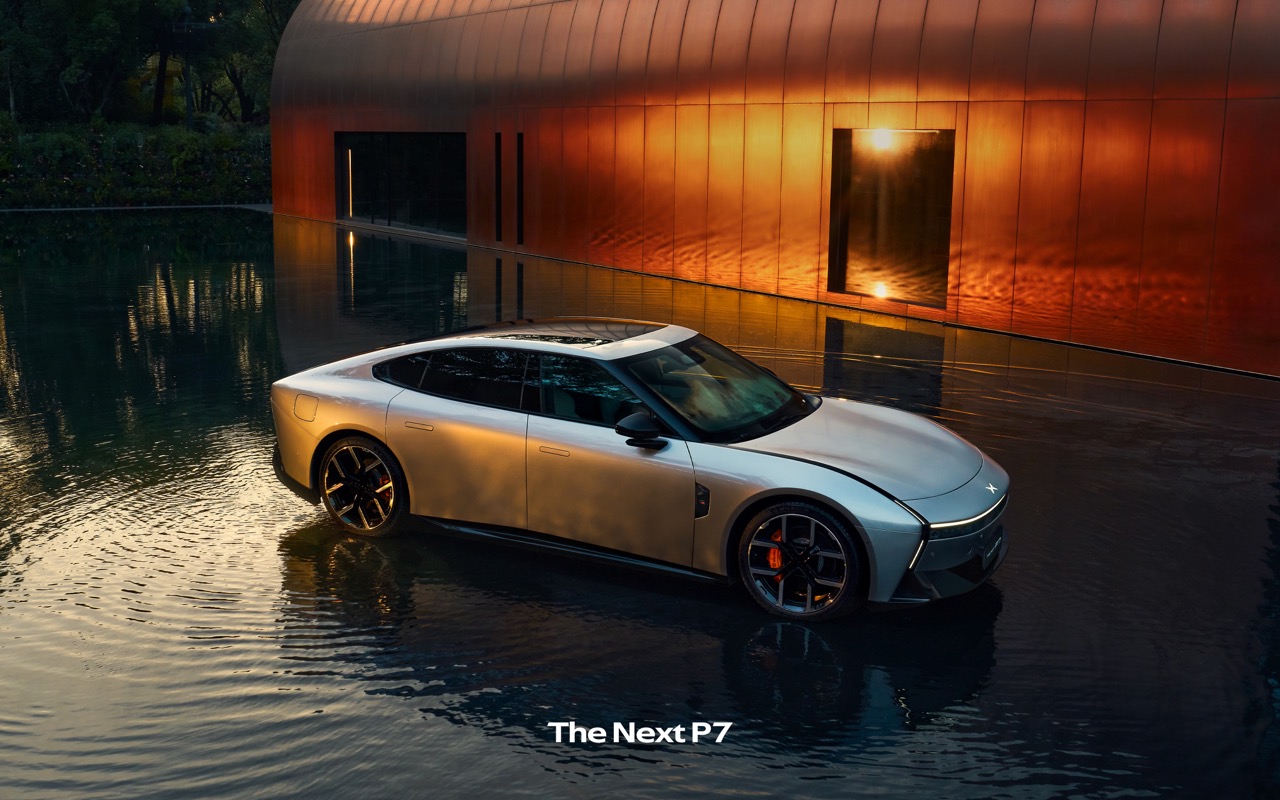
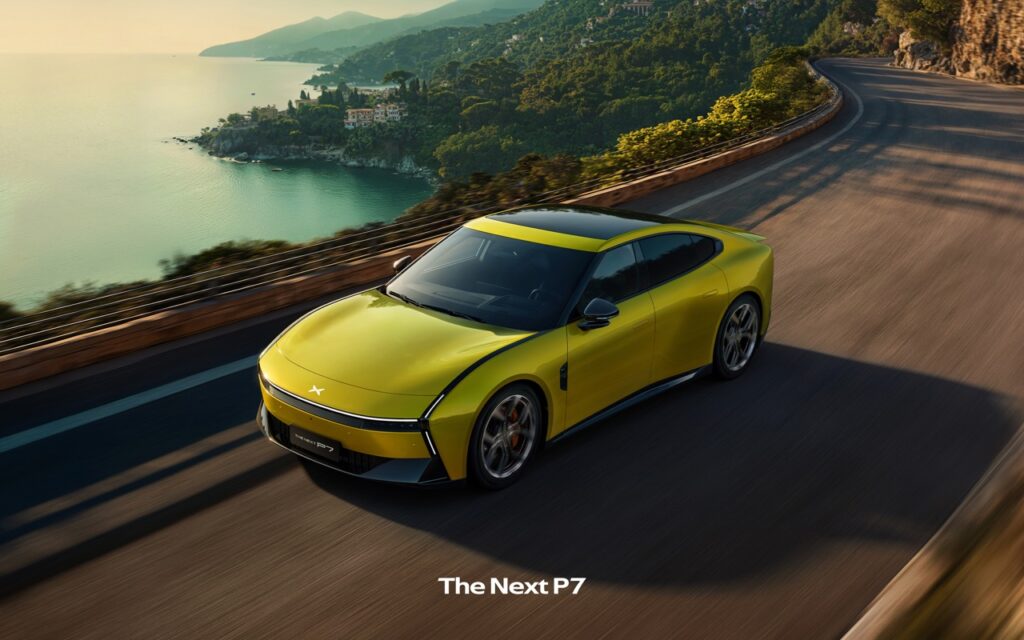
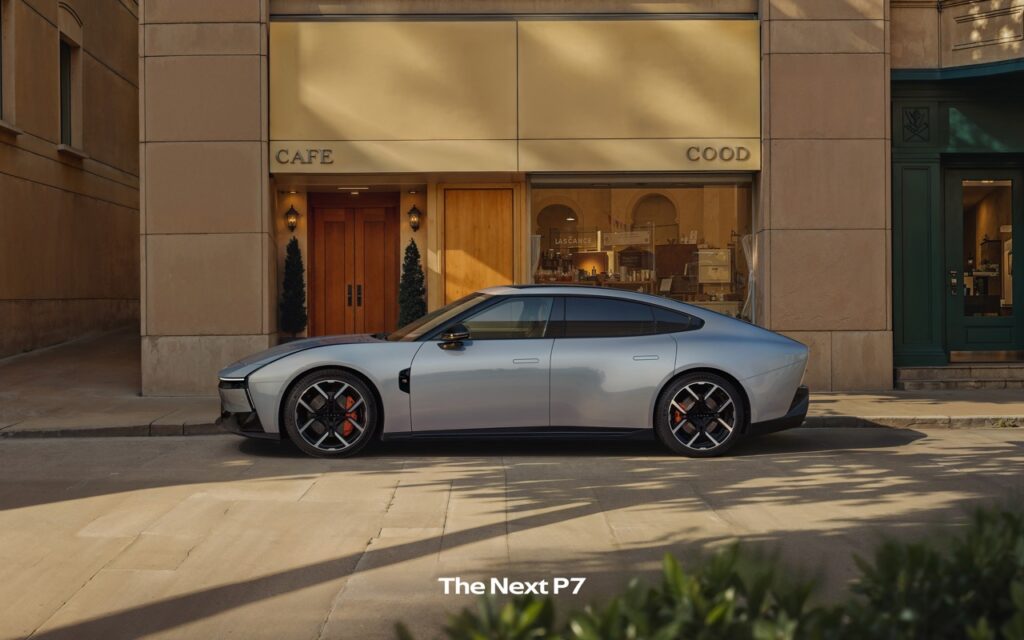
    Another factor behind this growth is the brand’s extensive catalogue. The Mona M03, a saloon designed to be accessible, has helped to broaden the customer base and rapidly generate volume. Its flagship model, the P7, meanwhile, has

    passed the milestone of selling the 10,000ᵉ unit of its new version. Finally, the brand is targeting the top end of the market with the cutting-edge technology provided by its G7 Ultra.

    Credit Xpeng

    Technology at the heart of the strategy

    As well as volumes, XPeng intends to distinguish itself through innovation. The manufacturer recently presented its proprietary “Turing AI” chip, designed to improve autonomous driving performance. This is a strategic advance that will enable it to reduce its dependence on external suppliers. At the same time, XPeng has entered into a partnership with Volkswagen to develop an ultra-fast recharging network of more than 20,000 charging points in China. These initiatives show that the brand is not just looking to sell more cars, but is also investing in infrastructure and on-board intelligence to establish itself as a key player in the mobility of the future.

    A manufacturer on the move

    The figures for September 2025 confirm that XPeng has reached a decisive stage. Its strategy of international expansion, broadening its range and increasing its industrial output mean that it is outperforming most of its Chinese competitors, with the exception of the now giant BYD.

    The company thus confirms the new wave of Chinese manufacturers: capable of innovation, penetrating diverse international markets and combining volume and technology, all at affordable prices. Having long been seen as a challenger, XPeng is now becoming a key player in the global automotive transition.