American EV manufacturer Rivian Automotive is going through a decisive moment. While the brand is focusing on its new compact SUV, due to be launched in the first half of 2026, it is currently facing serious financial strains.
The headquarters of Rivian Automotive, an American manufacturer of electric vehicles. (Credit: Rivian)
R2: a strategic model for Rivian
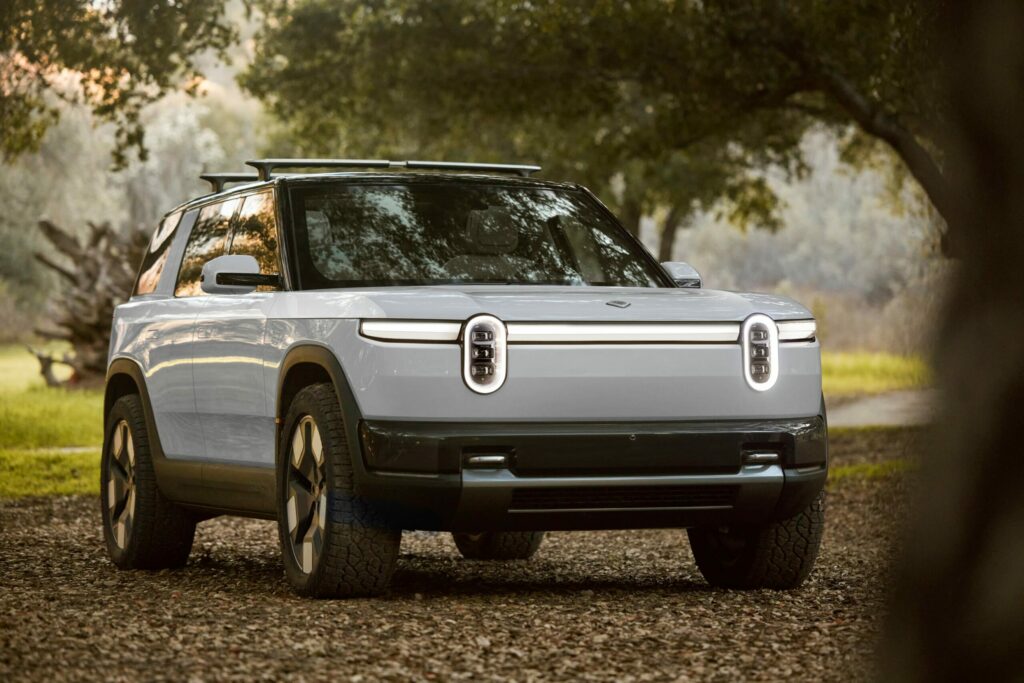
Unveiled over a year ago, the Rivian R2 and its 4.71 metre length are aimed directly at the mass-market electric SUV segment, in competition with the Tesla Model Y and the Ford Mustang Mach-E. The vehicle retains the Rivian DNA: a square, robust design inspired by the R1S and an outdoor philosophy faithful to the Californian brand.
In November 2025, the brand announced that development of the R2 was well advanced: prototypes are being assembled at the Normal factory in Illinois, and a little more is known about its technical specifications. Three configurations will be offered: single-engine, twin-engine and three-engine, each corresponding to a more or less affordable range. The announced range exceeds 480 km, for a price that should reach $45,000 in the United States, a strategic price for the brand that wants to widen its audience and thus reach more profitable production volumes.
CEO RJ Scaringe has confirmed that the first commercial version will be a well-equipped but affordable twin-engine Launch Edition, to maximise take-up from launch. The European version is not expected until 2027.
The Rivian R2 electric SUV is shown from the front, combining square design and robustness (Credit: Rivian).
A financially fragile company
Despite these advances, Rivian remains in the red. For 2025, the company is forecasting an operating loss of between 2 and 2.25 billion dollars, compared with an initial forecast of 1.7 to 1.9 billion. Sales are stagnating at around 50,000 vehicles a year, far short of the volumes needed to be profitable.
Even more worryingly, in October 2025 Rivian carried out a third wave of redundancies, cutting around 600 jobs, or 4.5% of the workforce, bringing the total annual cuts to more than 10%. These cuts come at a time when the company is having to adjust its workforce in the face of a weakened US EV market, linked in particular to the expiry of the $7,500 federal tax credit.
A controversial remuneration plan
While sales figures are nothing to write home about, on 7 November 2025 the board of directors announced, in a document sent to the U.S. Securities and Exchange Commission (SEC), a record remuneration package for CEO RJ Scaringe. According to Reuters, the sum allocated could reach an astronomical 4.6 billion dollars over ten years, a plan inspired by that of Elon Musk. The plan is conditional on ambitious objectives, namely to increase the share price to at least $40 from the current $15.22, and to meet the various financial targets set (profit, cash flow) over several years.
The announcement, which came just after the redundancies and against a backdrop of massive losses, drew criticism. While some see it as a necessary ambition to attract and retain the executive in his post, others feel that announcing this plan, which could bring in $4.6 billion for a single person, at such short notice, gives the Californian manufacturer an unfair and inconsistent image.
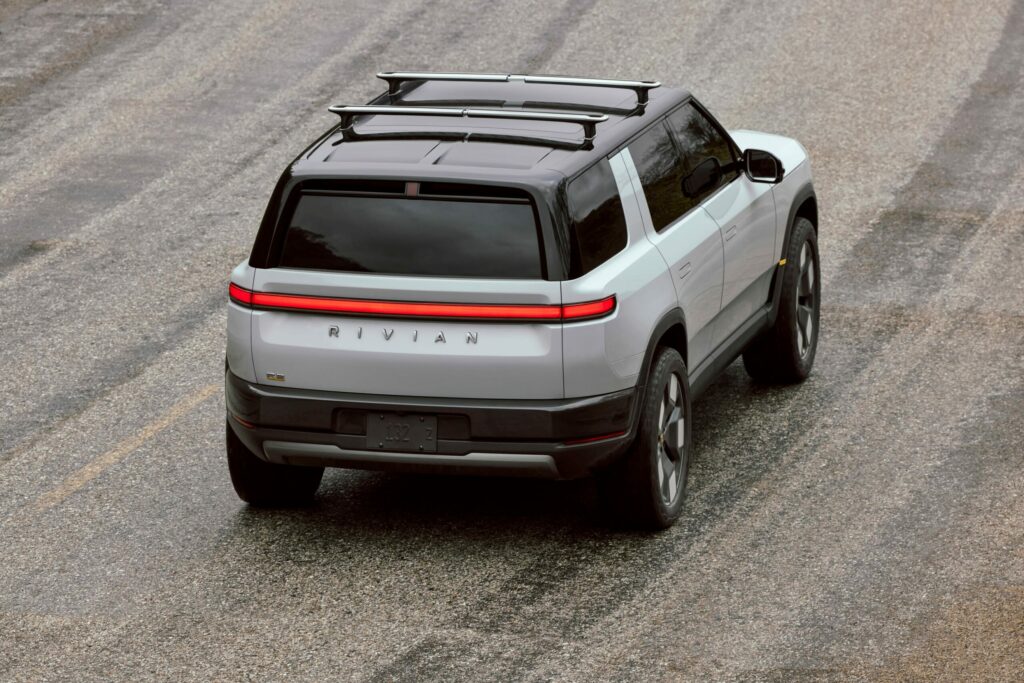
The Rivian R2 SUV photographed from behind, showing off its robust design and distinctive rear lights. (Credit: Rivian)
R2: a decisive test for Rivian
For the brand, the R2 is much more than a new model: its success will determine whether or not the brand can achieve significant volumes, reduce its losses and win over consumers in the face of fierce competition.
One thing is certain: with the announcement of the remuneration package for the CEO, RJ Scaringe will do everything in his power to ensure that Rivian Automotive remains a major player in the electromobility sector.
The Netherlands is spearheading electromobility in Europe, and has once again confirmed its pioneering role. In October 2025, 100% electric vehicles (BEVs) broke the 40% barrier in terms of market share of new car registrations, an all-time record for the country.
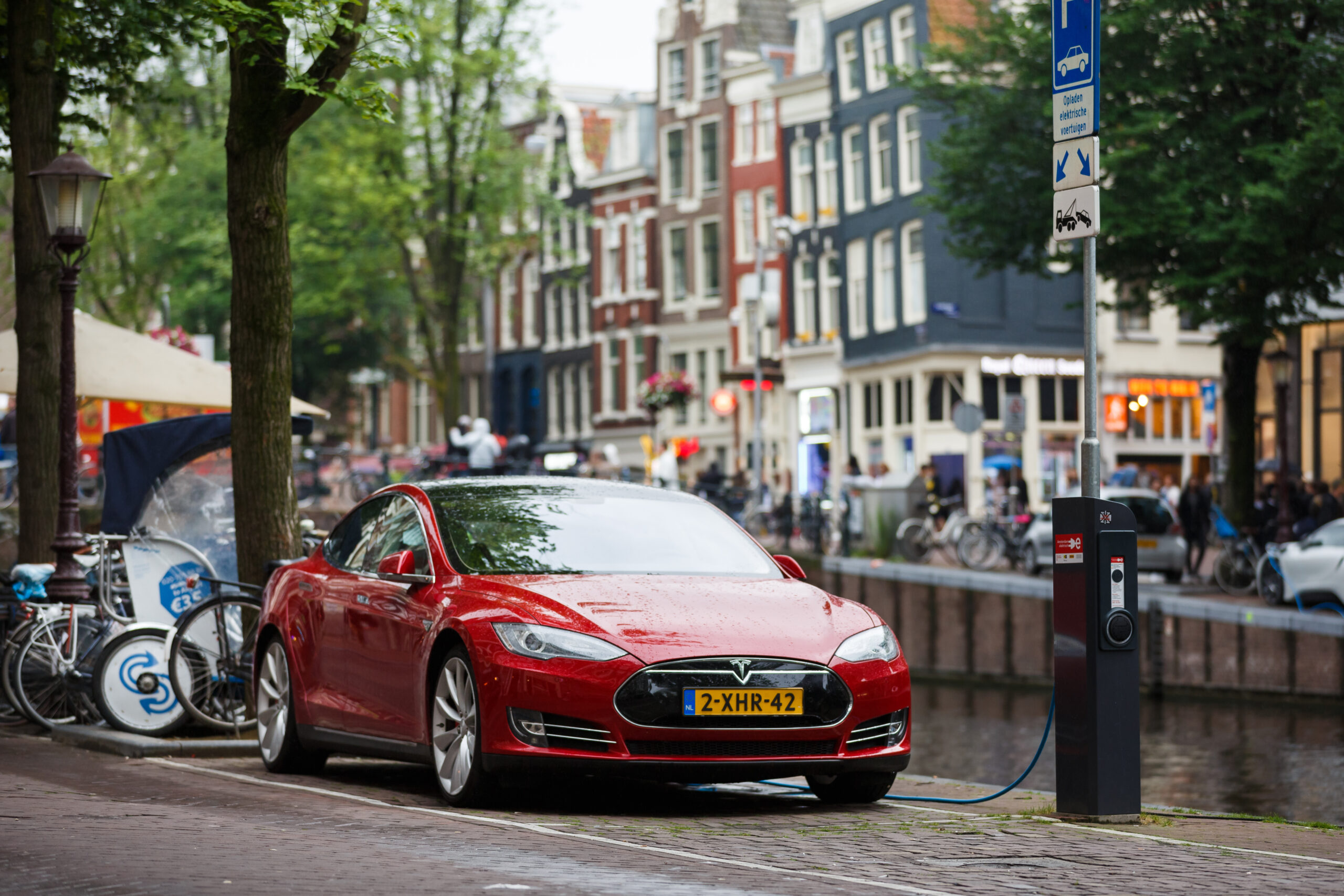
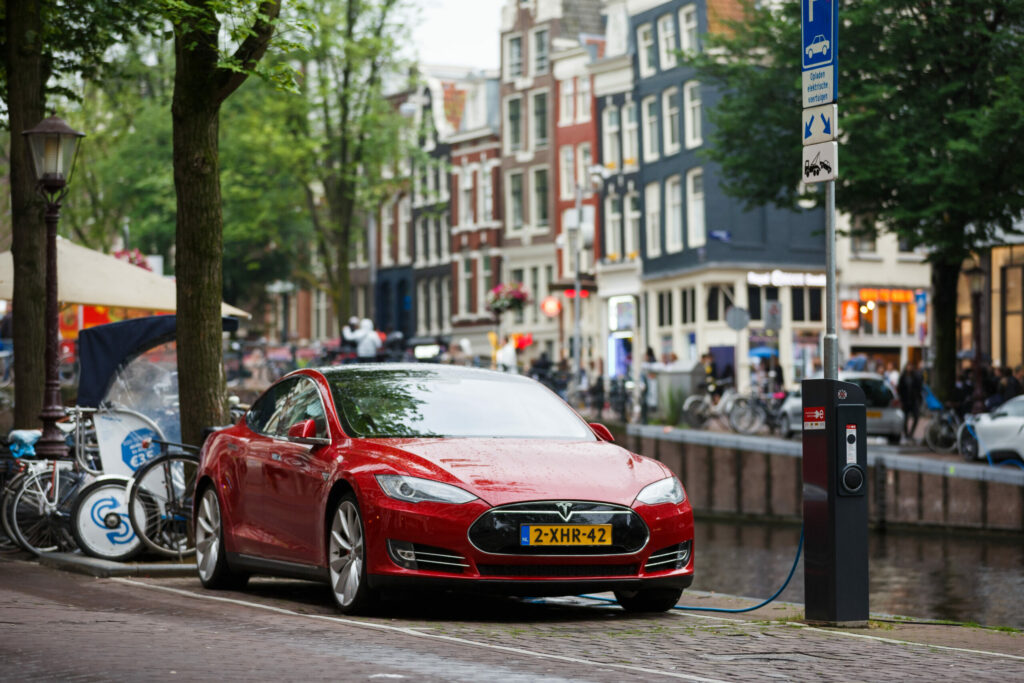
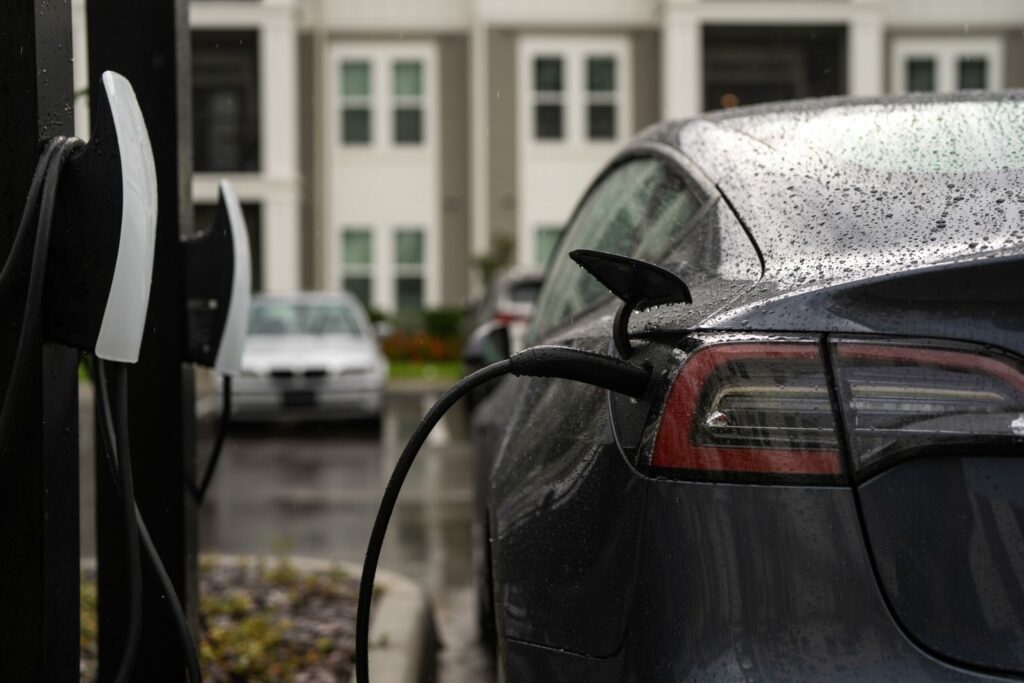
A Tesla charging at the water’s edge in Amsterdam, illustrating the Dutch charging infrastructure.
An all-time record for BEV
It’s a historic figure that is good news for the electrified car industry. Holland has become the first European country to increase the market share of electric vehicles to over 40% by October 2025. The country registered 13,968 BEVs in October 2025, corresponding to a market share of 40.2% of all new cars. This is a spectacular increase on the previous year, when BEVs accounted for only around 30% of the market.
This remarkable performance puts the Netherlands well above the European average, where BEVs generally account for 15% of the market. It illustrates that electromobility has become a tangible reality here, far exceeding the trend.
Why are the Netherlands ahead of the game?
There are several reasons for this rapid adoption:
Attractive financial incentives: the Netherlands has been offering support for the purchase of electric vehicles for a number of years, including direct subsidies, road tax exemptions and tax breaks for businesses. Unlike other countries where subsidies fluctuate or run out quickly, the Dutch system is stable and predictable, encouraging consumers to take the plunge without waiting for government assistance.
The country has one of the most developed recharging networks in Europe, with over 150,000 public recharging points available throughout the country. This accessibility reduces fears about autonomy.
A high level of environmental awareness: keen to use public transport, trams and bicycles, the Dutch are sensitive to climate issues and increasingly see electric vehicles as a responsible and modern choice.
Favourable regulations: local and national measures encourage electrification and, conversely, penalise combustion-powered cars, such as access restrictions for combustion-powered vehicles in certain urban areas.
Comparison with the rest of Europe
With a 40% market share for 100% electric vehicles, the Netherlands dominates a Europe where the situation is very different in other European countries. France is also enjoying a historic month, with the market share of 100% electric vehicles reaching 24.4%, while Germany is at 19.8%. Spain’s market share has risen significantly, to 12.3%, an increase of 119% over one year. Italy, meanwhile, is lagging behind, with a 5% market share.
These differences show that the Dutch success is based on a rare alignment between financial incentives, dense infrastructure and cultural adoption. Other European countries could draw inspiration from this model to accelerate their transition to zero-emission vehicles.
A key step for European electromobility
This all-time record shows that mass adoption of electric vehicles is possible when public policy, infrastructure and consumer behaviour are aligned. For the European automotive industry, the Netherlands is now a model to follow.
Italy is moving towards electrification, but progress remains slow and uneven. While hybrids largely dominate the market, 100% electric vehicles are still struggling to gain mass acceptance, despite various support schemes.
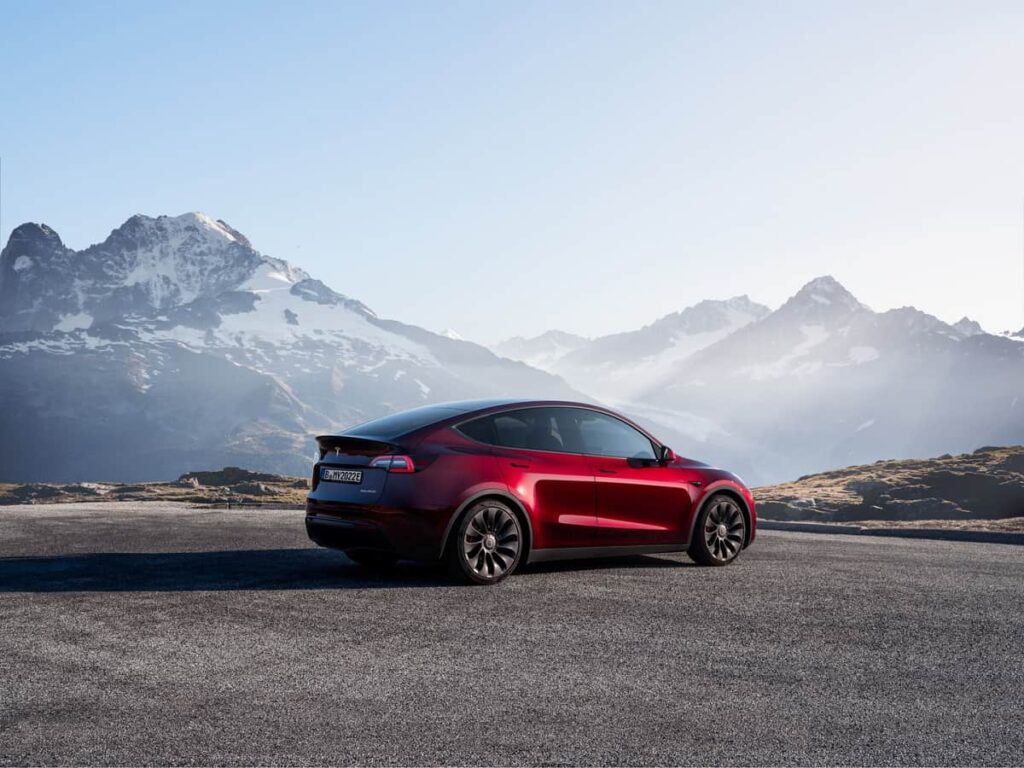
The Tesla Model Y will still be the best-selling electric car in Italy in 2025. (Credit: Tesla)
A declining car market
Overall, the Italian new car market recorded 125,826 registrations in October 2025, down 0.6% on the same month last year. For the first ten months of the year, the total stands at 1,293,366 units, down 2.7% on 2024.UNRAE forecasts that the number of registrations will close the year 2025 at around 1,520,000, down 2.5% on 2024. For 2026, projections anticipate a very slight recovery of 1.3%, but the market would still be almost 20% below the levels of six years ago.
Hybrids: the undisputed champions of the Italian market
Italy is the most ‘hybrid’ country in Europe. In October 2025, hybrid vehicles accounted for 45.5% of the market, confirming a trend that has been in place for several years. Over the first ten months of 2025, the share of hybrid vehicles stood at 44.7%. By way of comparison, over the same period in 2024, hybrids accounted for 39.9% of the market.
This dominance of hybrids can be explained by a number of factors: an electric recharging network that is still inadequate, purchase prices that are more affordable than pure electrics, and a certain cultural reluctance to completely abandon the internal combustion engine in a country where the traditional car is still deeply entrenched.
Pure electrics: modest growth
All-electric vehicles (BEVs) accounted for 5.0% of the market in October 2025, down slightly from 5.6% in September, but up from 4.0% in October 2024. In the first nine months of 2025, BEVs totalled 61,249 registrations, up 26.5% on 2024. Compared with the rest of the vehicle fleet, these figures give 100% electric vehicles a 5.2% share of the market in the current year.
This growth, while real, puts Italy well behind the European average. By way of comparison, the European Union’s market share for BEVs was around 15% over the same period. A survey by Istituto Piepoli for the ECO-Festival of Sustainable Mobility & Smart Cities in September 2025 shows that 59% of Italians say they are not interested in buying an EV in the coming year.
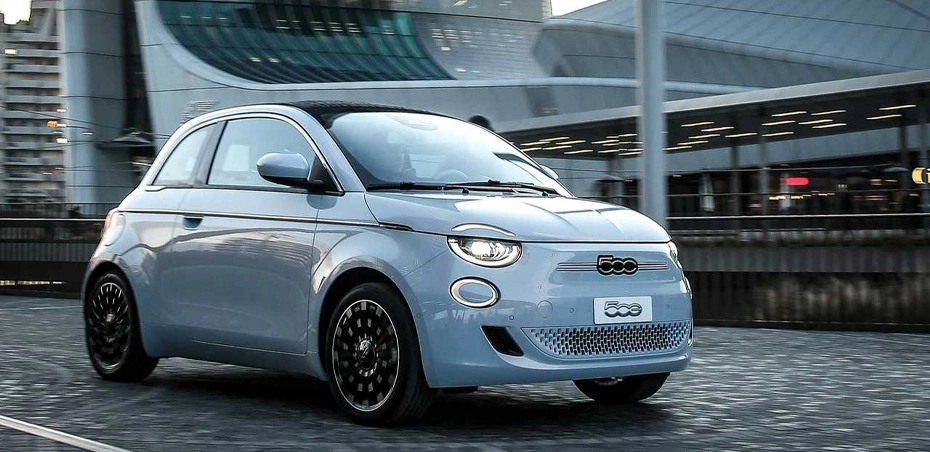
Although the data on the best-selling 100% electric models from January to October 2025 is partial, from January to April the best-selling models remain the same as last year: the Tesla Model Y dominates the market, followed by the Fiat 500e, the symbol of electric “Made in Italy”, then the Dacia Spring, the MG4 and the Renault Megane E-Tech. Combined with plug-in hybrids, electrified vehicles with external charging (BEV + PHEV) will account for 12.7% of the market in October 2025.
The Fiat 500e is the embodiment of electric ‘Made in Italy’ and remains a benchmark in its segment. (Credit: Fiat)
An unconvincing aid strategy
To encourage people to switch to electric cars, the Italian government has been offering a series of purchase subsidies since 2021. These schemes are often one-off and massive, but they are also, and above all, characterised by chronic instability.
The latest scheme is the spectacular October 2025 support programme. The first grants, launched in 2021, offered up to €8,000 for the purchase of a new electric vehicle, which could be combined with a scrappage bonus, subject to income conditions. Two years later, in 2023, the amounts were reduced and the eligibility criteria tightened.
A support scheme that failed to deliver, leading to a slowdown in sales. The year 2024 saw a drastic reduction in the funds allocated, prompting strong criticism from manufacturers and industry associations.
Faced with this setback, in 2025 the government reactivated an ambitious incentive plan, supported by European funds, culminating in the October programme. This latest aid programme saw no less than €597 million released thanks to the European recovery plan. How does it work? Up to €11,000 for households with an ISEE < €30,000, subject to strict conditions. The results are convincing: in less than 24 hours, more than 55,000 vouchers were distributed, depleting the funds.
Thanks to this plan, certain vehicles such as the Dacia Spring or the Leapmotor T03 have become accessible for less than €5,000, a record in Europe. It was a lightning success that highlighted the limitations of the Italian model: a prolonged waiting period on the part of Italians, rapid saturation of schemes and uncertainty for market players. To date, no structural reform has been announced to stabilise this aid, which continues to operate in fits and starts.
A recharging network that is still inadequate
Italy will have around 65,000 public charging points by 2025, according to a study by Motus-E, and no less than 22% of them will be fast charging points (over 50 kW). For a country of its size, with a road network of almost 500,000 km, Italy is below the European average in terms of the density of public charging points.
Regional disparities are also marked: more than 60% of the network is concentrated in the north of the country (Lombardy, Emilia-Romagna, Veneto), while the south remains largely under-equipped.
To offset this, the National Recovery Plan (PNRR), partly financed by European funds, provides for the installation of 21,000 additional public charging points by 2026. However, the installation of charging points on motorways, which is crucial for a country with frequent inter-regional travel, has been slow to materialise.
The main player in the Italian recharging market is Enel X Way, a subsidiary of Italian energy giant Enel. The group alone has developed more than 16,000 charging points, and is also building charging hubs for business fleets and certified green energy charging points. An obvious choice for a country where around 40% of electricity production already comes from renewable sources (solar, hydro, wind).
The Italian recharging network is still being developed, but with significant regional disparities.
Stellantis: a major player in the Italian automotive industry
The Stellantis Group is the driving force behind the automotive industry. In October 2025, the group registered 33,721 vehicles, up 5.01% on October 2024.
Fiat, the Group’s flagship brand, continues to drive the market with the Fiat 500e, the first 100% electric model to be produced by Stellantis in Italy. It is maintaining its presence in the market, but faces increasingly aggressive Chinese competition in the affordable electric city car segment.
Italy produces locally: the Mirafiori plant in Turin, historically a symbol of the Italian car industry, has been transformed into a centre dedicated to electric vehicles and battery production. An industry that is doing well, enabling manufacturers to plan new models: the electric Fiat Panda and the Alfa Romeo Milano should see the light of day in 2026.
Structural challenges persist
Like every country involved in this transition, Italy faces a number of major obstacles:
Purchase price: despite temporary subsidies, electric vehicles are still considerably more expensive than their combustion or hybrid equivalents.
Dependence on public subsidies: when subsidies stop, sales immediately plummet.
Regional inequalities: the north, which is richer and has better infrastructure, is adopting electricity more quickly than the south.
Cultural reticence: Ferrari, Lamborghini and Maserati are the embodiment of thermal automotive excellence, and attachment to the traditional engine remains strong, even though these brands are developing more and more electrified vehicles.
Outlook: a slow transition
UNRAE believes that the next few months should see an increase in the market share of BEVs thanks to registrations linked to the October subsidies. But as the past has shown, this increase will be temporary, and there is a risk of a further slowdown once the effect of the subsidies has worn off.
The government’s target is to have 6 million electrified vehicles (BEV + PHEV + HEV) on the road by 2030. While hybrids will probably continue to dominate in the medium term, pure electrics are expected to grow thanks to a gradual fall in prices, improved infrastructure and European regulatory constraints.
A country in transition…
Italy is embodying the automotive transition at its own pace: hybrids dominate and have prepared the ground, pure electrics are making slow but steady progress, and infrastructure is developing unevenly. The country is not a leader in European electromobility, nor is it seeking to be. It is following a unique path, adapted to its geographical, economic and cultural constraints.
But this strategy carries a risk: that of accumulating a backlog that will be difficult to make up when European regulatory pressure increases.
ECO MOTORS NEWS had the opportunity to try out two models from the brand’s new electric era: the Can-Am Origin 2025 and the Can-Am Pulse 2025. At the end of two comprehensive tests, find out more about the different features of these two-wheelers.
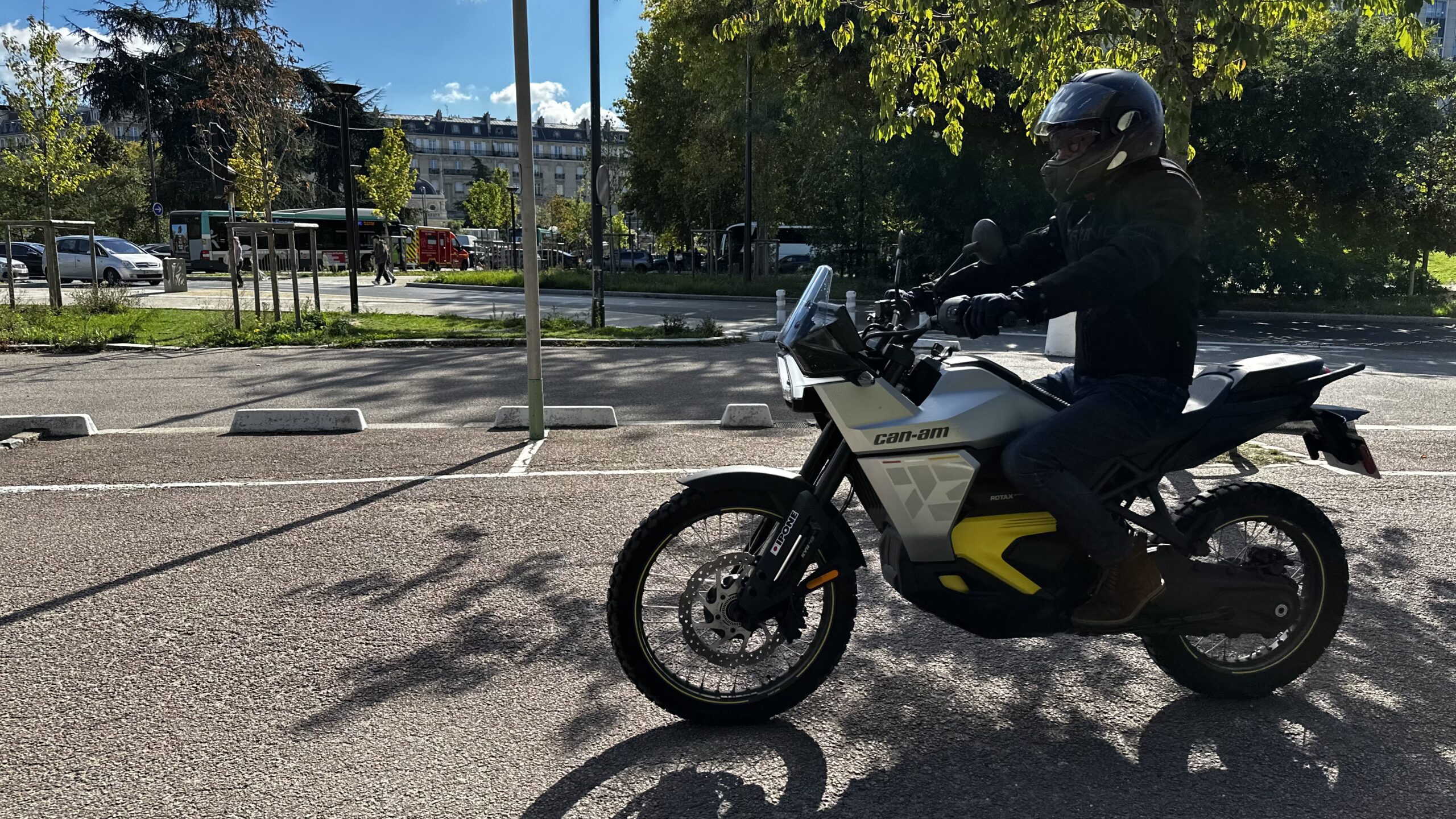
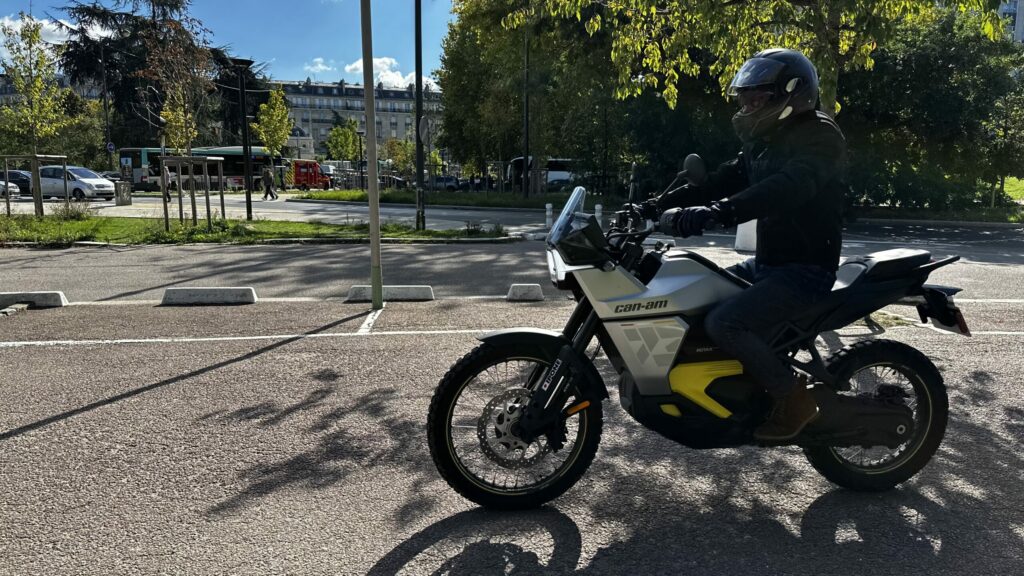
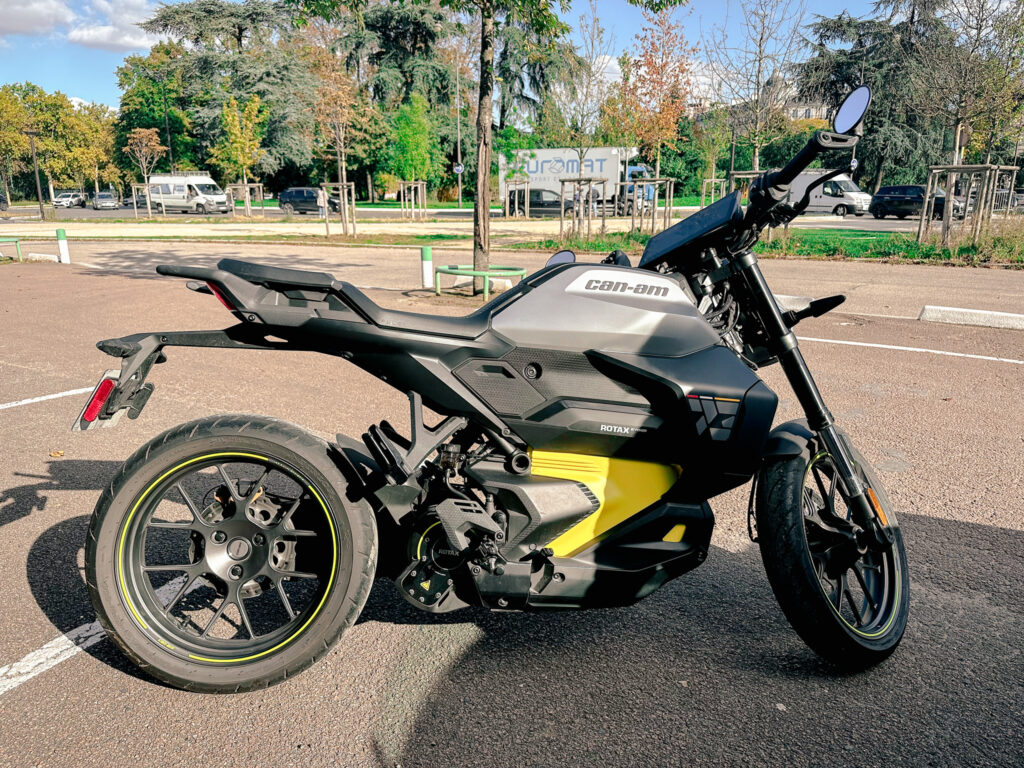
The Can-Am Pulse 2025 in action, seen from the side with the driver on an urban road. (Credit: Marceau NIO)
The Can-Am brand was born in the 1970s under the Bombardier banner, with motorbikes and off-road vehicles designed for competition. It established itself as a major player in enduro racing before losing ground to Japanese manufacturers.
It was from the 2000s onwards that the brand experienced a rebound. It continued to expand its catalogue, from traditional off-road two-wheelers to side-by-side bikes and three-wheelers designed for the road. Now Can-Am has turned its attention to electric two-wheelers. But it will be a while before we see them on the roads of France. So we decided to test not one, but two Can-Am models aimed at specific urban and suburban uses: the Origin, designed for versatility, and the Pulse, more focused on city use.
This is our chance to draw up a comparison based on what we feel at the wheel of these top-of-the-range electric machines, which have swapped Canada for the cobbles of Paris, the ring road and the main roads near the capital.
Can-Am Origin 2025
The first bike I tried out was the Origin, the electric trail model with a distinctive look. And from the very first moment, I quickly understood why Can-Am presents it as a versatile bike, suitable for the road but also, and above all, for off-road riding. Spiked wheels, a rugged silhouette, a dirt bike look… it has all the hallmarks of an enduro bike and celebrates the glorious years of the brand from across the Atlantic, hence the name ‘Origin’.
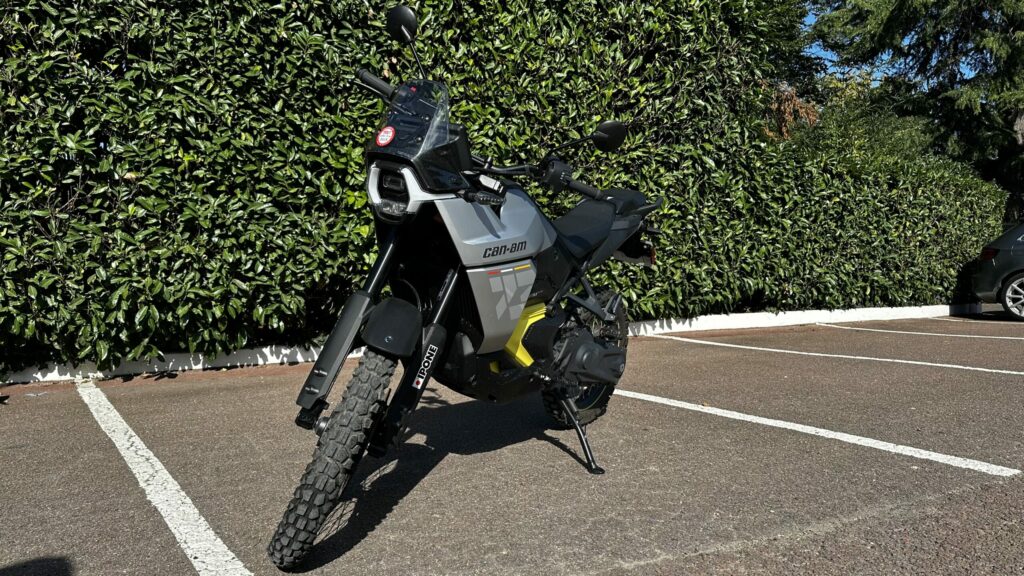
The Can-Am Origin 2025 seen from the front, highlighting its assertive trail style. (Credit: Marceau NIO)
Once I was settled in, the curved seat, which follows the shape of the frame, gave me a high and comfortable position, albeit a little narrow and firm for me. What you want with a bike of this size (2.2 metres long and 0.86 metres wide) is to be agile and easy to handle. And on this point, the manufacturer scores a point thanks to the positioning of the battery, integrated into the chassis. This lightened the overall weight of the car and improved its agility, enabling me to weave my way between cars with ease in the city and on the Paris ring road (which was very busy at the time).
In the same test environment, I still felt rather vulnerable to other road users, especially when I was driving between lanes, as the loaned model was not fitted with crash bars (although it was possible to include them). What also disappointed and bothered me was the absence of hazard warning lights… When driving between lanes and in a warning situation, this is annoying.
After the city and the Paris ring road, I took to the motorway. True to motorised electric vehicles, this Can-Am picks up speed immediately, and I had no trouble getting into the car. At 110 km/h, it remains stable, but protection against the wind is limited at this speed, as the windscreen fitted as standard on my bike was not large enough and did not protect me sufficiently.
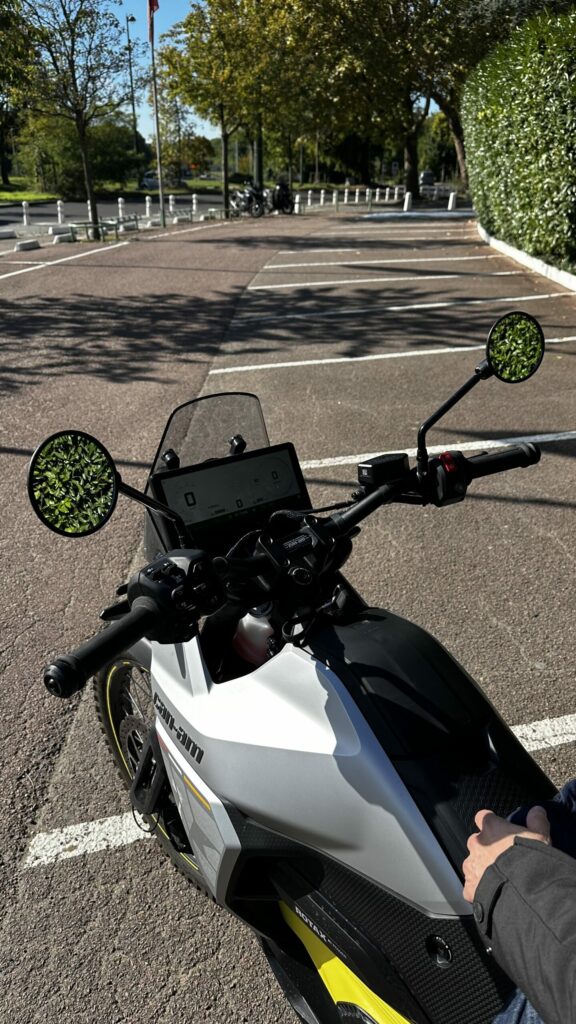
Can-Am Origin 2025 dashboard with touch screen and controls. (Credit: Marceau NIO)
In terms of powertrains, the test model is powered by the 35 kW (47 hp) ROTAX E-POWER engine, which delivers lively, almost too direct and brutal acceleration, with a 0 to 100 km/h time of 4.3 seconds. One of the most pleasing features, symbolic of electric vehicles, is the regenerative braking, which is particularly successful on this model. There’s also a nod to reverse gear, which is efficient and practical for parking in town. As for the range, it is claimed to be 145 km in town and 115 km in mixed use, values that are true to reality in the light of my test drive.
Vehicle information is displayed on a 10-inch touchscreen. Compatible with Apple CarPlay, its interface is clear and intuitive, the controls responsive and the ergonomics well thought out. This motorbike has a sober yet modern design and is made from quality materials. Personally, I wasn’t particularly impressed by its aesthetics. The design will appeal above all to those who prefer functionality to originality, because what it does, it does well.
Can-Am Pulse 2025
The second bike I took in my hands was the Pulse, and there was a change of scenery. Lower but more compact, it clearly adopts the codes of the urban roadster. Its design is more aggressive, and it blends more easily into the cityscape than its Origin sibling. From the first few metres, I could feel that the riding position was different: sportier, more compact, but also more welcoming, especially on longer journeys. The seat is well thought out, even if it’s still firm and too narrow for my liking.
Front view of the Can-Am Pulse 2025, a modern, urban design. (Credit: Marceau NIO)
In town, the Pulse is a pleasure to drive. What struck me once again was the liveliness of the electric motor. Handling is good, but it doesn’t perform as well as its companion, no doubt due to the different driving position. On paper, this model is faster than the Origin; in fact, the Pulse is faster, even though it’s equipped with the same 35 kW (47 hp) motor, with a 0 to 100 km/h time of 3.8 seconds, a difference made possible by its weight: 177 kg compared with 187 kg for the Origin!
On the ring road, overall, the Pulse offers the same driving quality but also the same shortcomings… Less agile than the Origin but still responsive, the Pulse remains at ease in tight spaces. This time round, I was less bothered by the absence of crash bars, probably because of the different driving position, but I’m not kidding myself: safety isn’t optimal. Acceleration is still too brutal for my liking, and there’s no middle ground, which can make the car difficult to handle when starting from a standstill. And like the Origin, there’s no possibility of activating the hazard warning lights (a real brake in my opinion). However, like the Origin, the regenerative brake is present, but it’s less linear than on the Origin. It takes a little getting used to, but it’s still effective and enjoyable. For this version of the Canadian brand, the advertised range is 160 km in town and 130 km in mixed use, and on my test drive, these figures seem consistent.
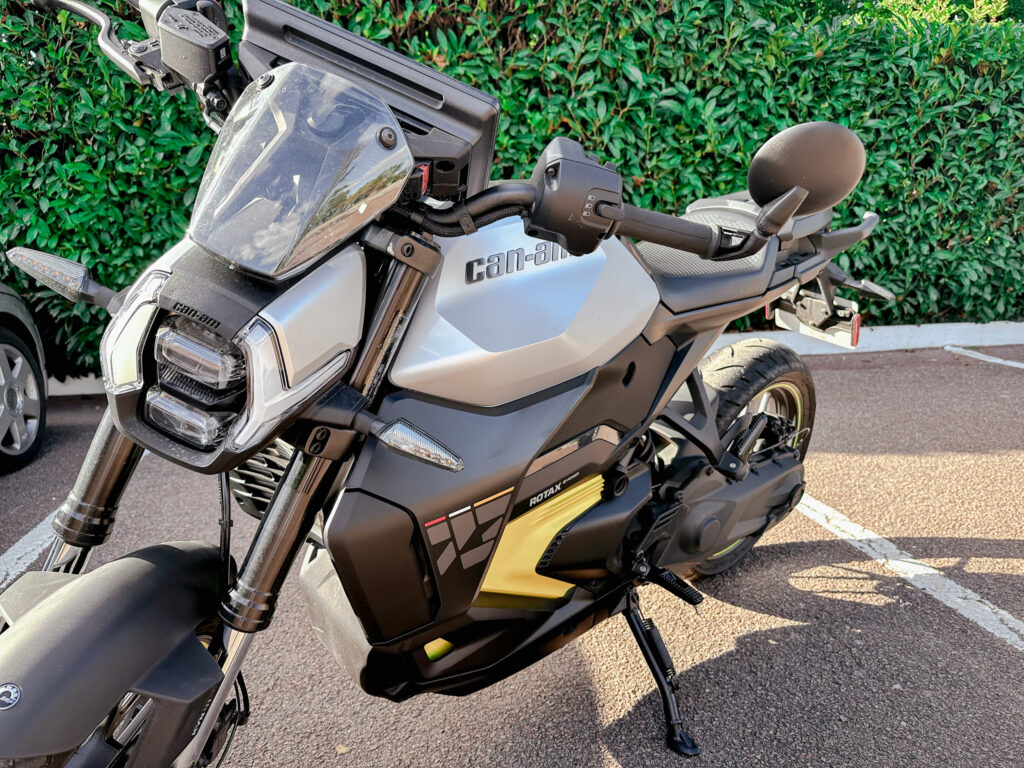
Rear side view of the Can-Am Pulse 2025, a compact, manoeuvrable design. (Credit: Marceau NIO)
I had the same impression on the motorway: immediate acceleration, pleasant and adapted to the speed, but it was very windy if I wasn’t in a fully reclined driving position. The absence of a windscreen (which is understandable given the design) is still palpable.
The 10.25-inch touchscreen is the same as on the Origin: clear, responsive, Apple CarPlay compatible and well integrated into the cockpit. The interface is more streamlined, in keeping with the spirit of the Pulse: simple, straightforward, with no frills.
From an aesthetic point of view, it plays the sober urban card. No flashy details, just a coherent, modern design that will appeal to those looking for a discreet but well-built motorbike. Personally, I find it a little lacking in visual character, despite the little touches of flashy yellow, but it makes up for it in efficiency.
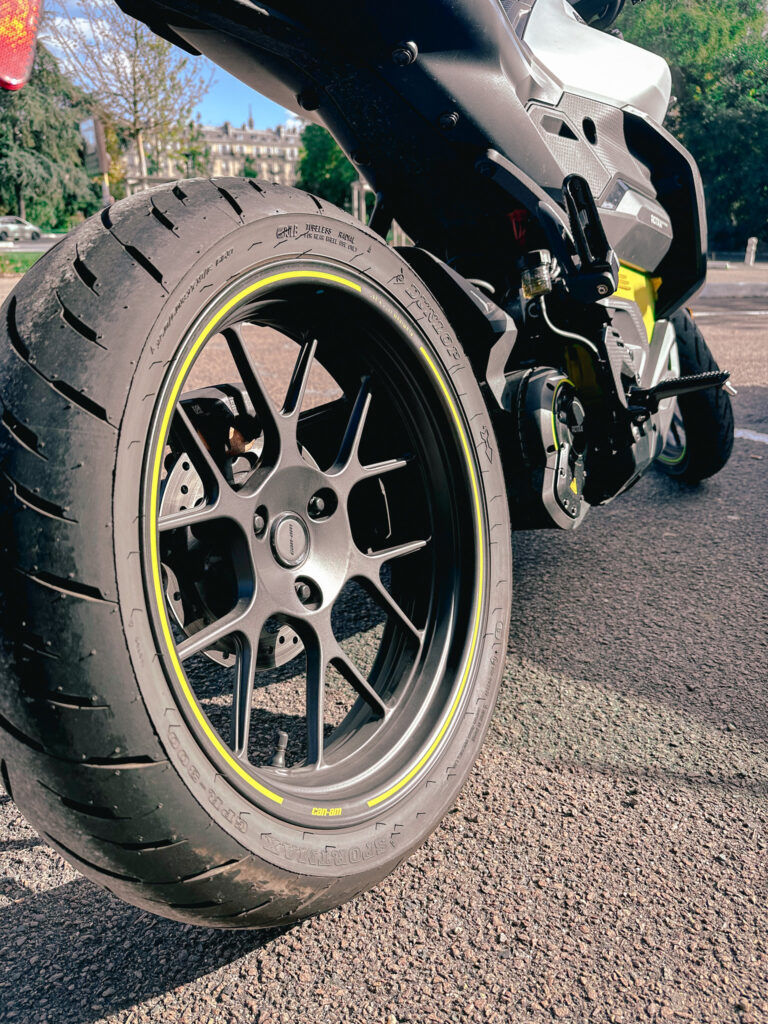
Detail of the rear wheel on the Can-Am Pulse 2025. (Credit: Marceau NIO)
In brief
At the end of these tests, it’s hard not to applaud the change of direction taken by Can-Am. With the Origin and Pulse, the Canadian brand is making a serious and credible entry into the electric two-wheeler market. The Origin seduces with its versatility and its electric trail temperament, capable of tackling the city as well as the open road, while the Pulse assumes a more urban positioning, compact and practical.
While not everything is perfect, particularly in terms of safety equipment and comfort, Can-Am is demonstrating that its historic expertise in powerful, robust vehicles can be successfully transposed to the world of zero-emission vehicles. However, the price of these models remains high, which may put off some potential buyers: the Origin starts at €13,799, while the Pulse starts at €12,999, prices that clearly position them in the premium segment.
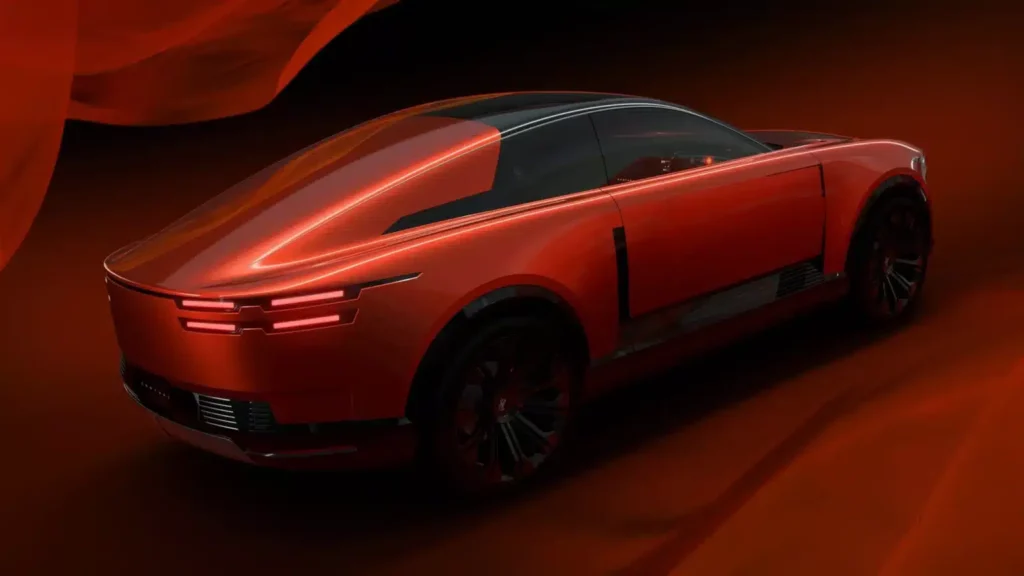
At the Japan Mobility Show 2025, local carmaker Toyota previewed its new ultra-premium concept car: the Toyota Century Coupé. Symbolising a new era for the Japanese manufacturer, Toyota intends to expand its range, but above all redefine its vision of automotive prestige. Century will go from being a government car to a brand in its own right, positioned above Lexus.
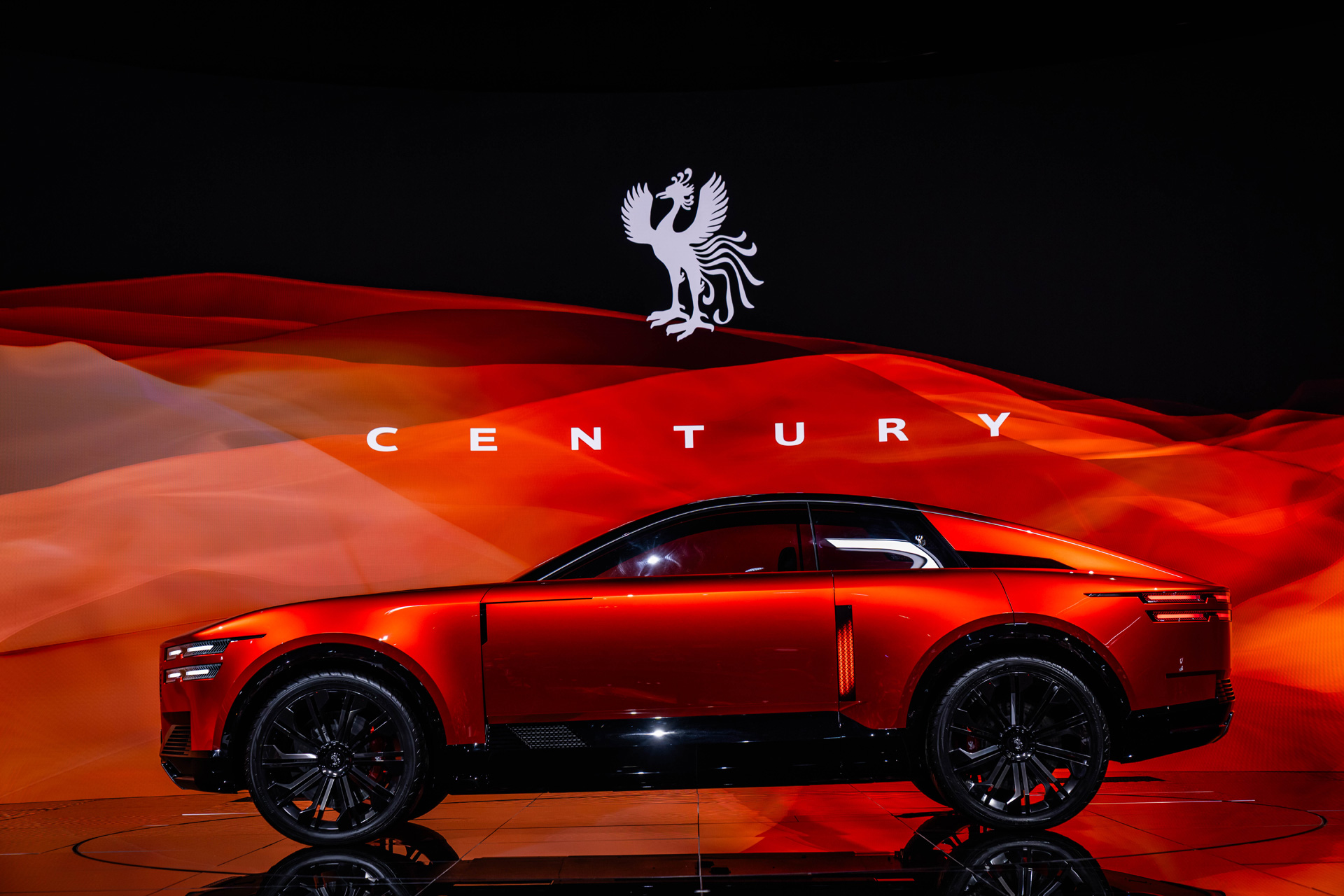
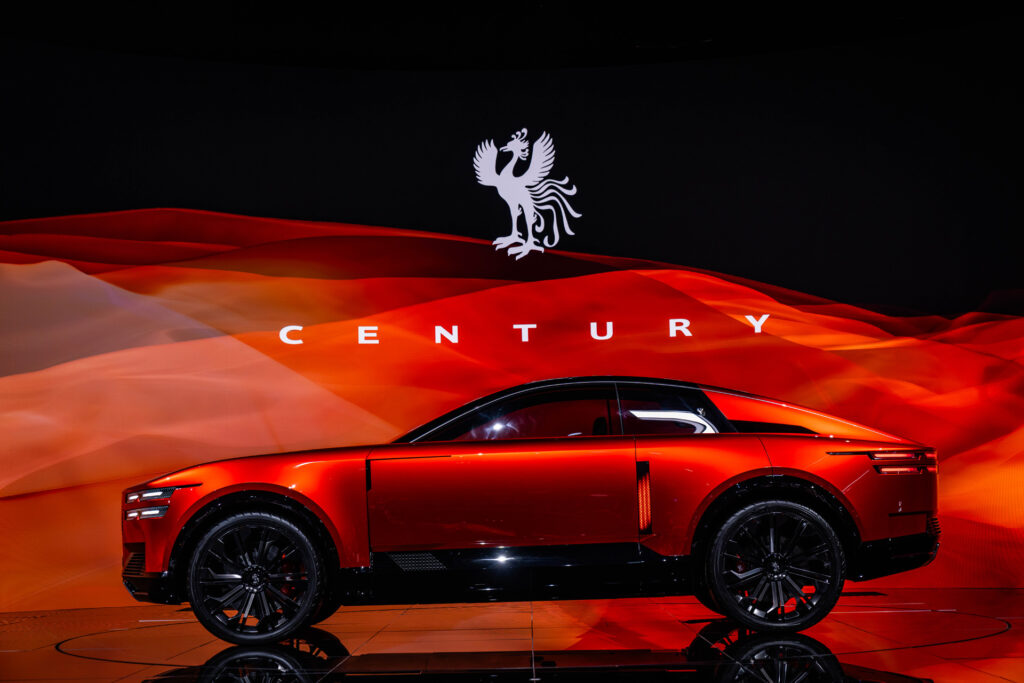
The Toyota Century Coupé is unveiled with a sleek, luxurious silhouette in Tokyo (Credit: Toyota)
A new era for Toyota prestige
Even before its official unveiling, Toyota Chairman Akio Toyoda had teased the arrival of a “car that would redefine the pinnacle of Japanese luxury”, foreshadowing a major transformation of the Century line. A few hours later, the promise took shape: the Century Coupé made its grand entrance on the Tokyo Motor Show stage. A sleek, sporty appearance that embodies a strategic turning point for the brand. Indeed, Century’s future entry into the market will probably enable Toyota to take on the giant Rolls-Royce and Bentley, dominators of the ultra-premium segment.
On 14 October 2025 in Tokyo, Akio Toyoda, President of Toyota Motor Corporation, announced that Century would become a brand in its own right, embodying “Japanese refinement in its purest form”. Now made up of three entities, the Japanese group assures that Lexus will retain its international top-of-the-range vocation.
Over fifty years of history
But Century isn’t a brand that just appeared out of nowhere. In fact, it’s a story that began in 1967, and for a long time embodied power and success in Japan. It served as a limousine for the leaders and the imperial family. Thirty years later, in 1997, the second version appeared and for two decades it remained the official government car. However, it was in 2018 that the Century took the electric turn by entering the hybrid era, while retaining its classic but recognisable silhouette. Finally, in 2023, the Century SUV was introduced, and this time it paved the way for an assertive diversification, more in tune with contemporary tastes.
Century Coupé, the concept car unveiled at the Japan Mobility Show 2025, is intended to be part of this continuity: it will not replace historic vehicles, but will reinvent the Japanese brand’s line of driving.
A sleek, luminous signature that marks a new identity for Century (Credit: Toyota).
An ultra-premium character
The first public showing of the Century Coupé at the Japan Mobility Show was marked by its radically new design. According to the manufacturer, this was achieved after more than 60 coats of hand-polished paint, symbolising the brand’s desire to produce not just a vehicle, but a work of art. This three-door prototype, measuring over 5.5 metres, combines the elegance of a large coupé with the presence of a luxury SUV.
The front features the emblematic grille adorned with the golden Century badge, while the rear is distinguished by a minimalist light signature, with no rear window according to first impressions. The doors are sliding and split into two sections to allow access to both the front and rear.
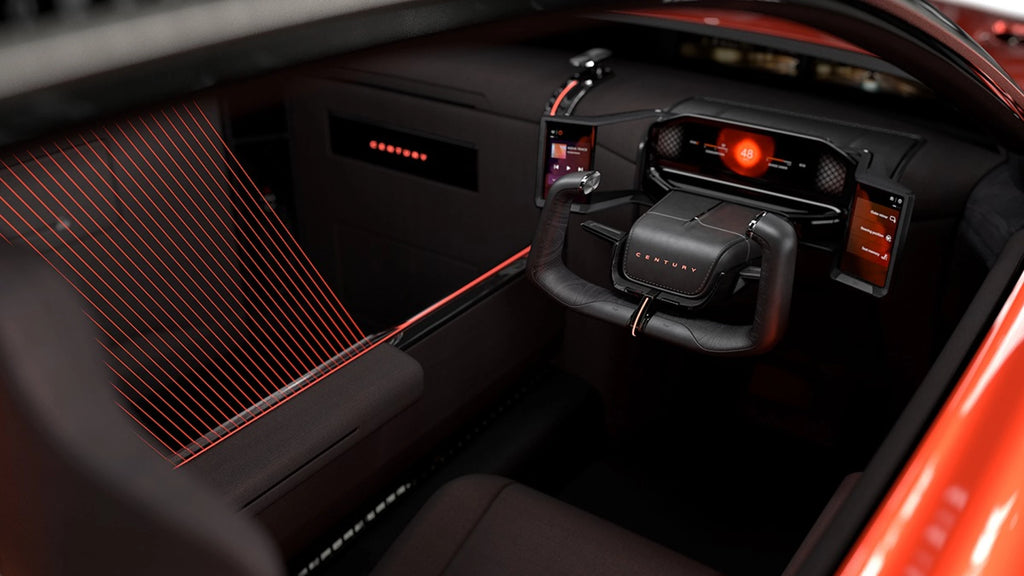
Inside, the vehicle’s uniqueness is obvious: only two seats, with a large rear seat dedicated to comfort, in keeping with the chauffeur-driven tradition. The materials chosen confirm the brand’s ultra-premium orientation: precious woods, Nishijin-ori brocade, Wajima lacquer… Every detail is hand-crafted. The driving position remains sleek and resolutely technological, with a yoke-type steering wheel and several digital screens, while the rear passenger benefits from a luxurious, wide-open space. However, Toyota is talking about expanding the Century brand and aiming for global ultra-luxury, which suggests that there could eventually be a marketed version with 4 or 5 seats.
An ultra-premium cabin, designed for comfort and innovation. (Credit: Toyota)
An unknown engine, but a vehicle to choose from
While the vehicle’s appearance has been unveiled, Toyota is keeping a low profile when it comes to the concept car’s performance. Hybrid or 100% electric? It’s impossible to say which engine will be chosen. What is certain is that the Century Coupé inaugurates the ‘One of One’ philosophy, specific to the new Century brand: each model can be customised down to the smallest detail, from the paintwork to the interior materials, according to the customer’s wishes.
Luxury according to Toyota
With the Century Coupé concept car, Toyota is sending out a clear message: Japanese luxury will soon no longer have to hide behind the standards of ultra-premium leaders Rolls-Royce or Bentley. Toyota Motor Corporation and its president Akio Toyoda are asserting their own style and, through this first public appearance, they intend to preserve their history in order to rise to the top of the world motoring world.
On 28 October 2025, BMW Group announced the launch of an EV battery recycling programme in Australia, in partnership with local company EcoBatt. This is a major step forward in the sustainable management of electric vehicle batteries.
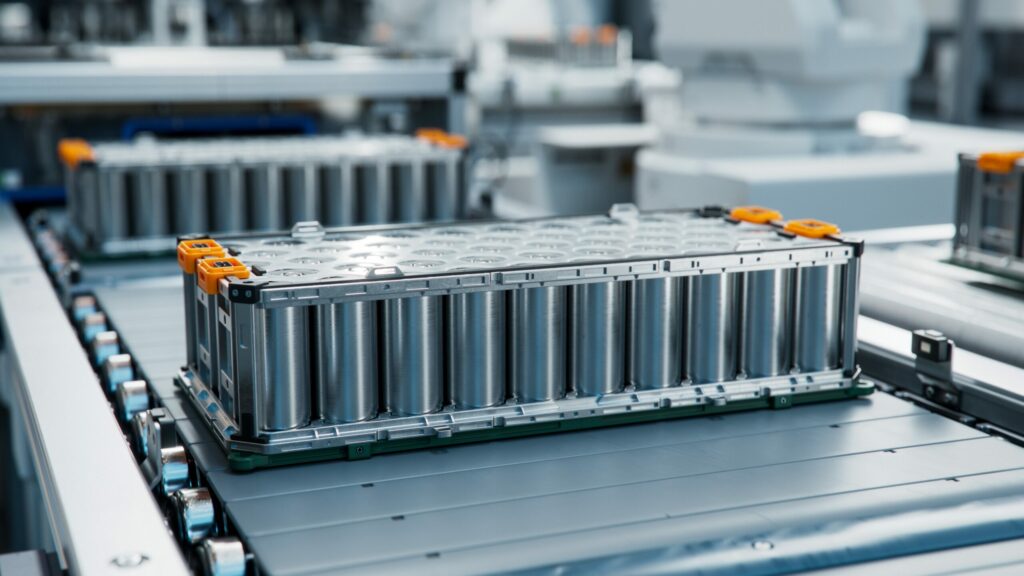
High-voltage battery used in electric vehicles. (Credit: BMW)
A concrete partnership between BMW and EcoBatt
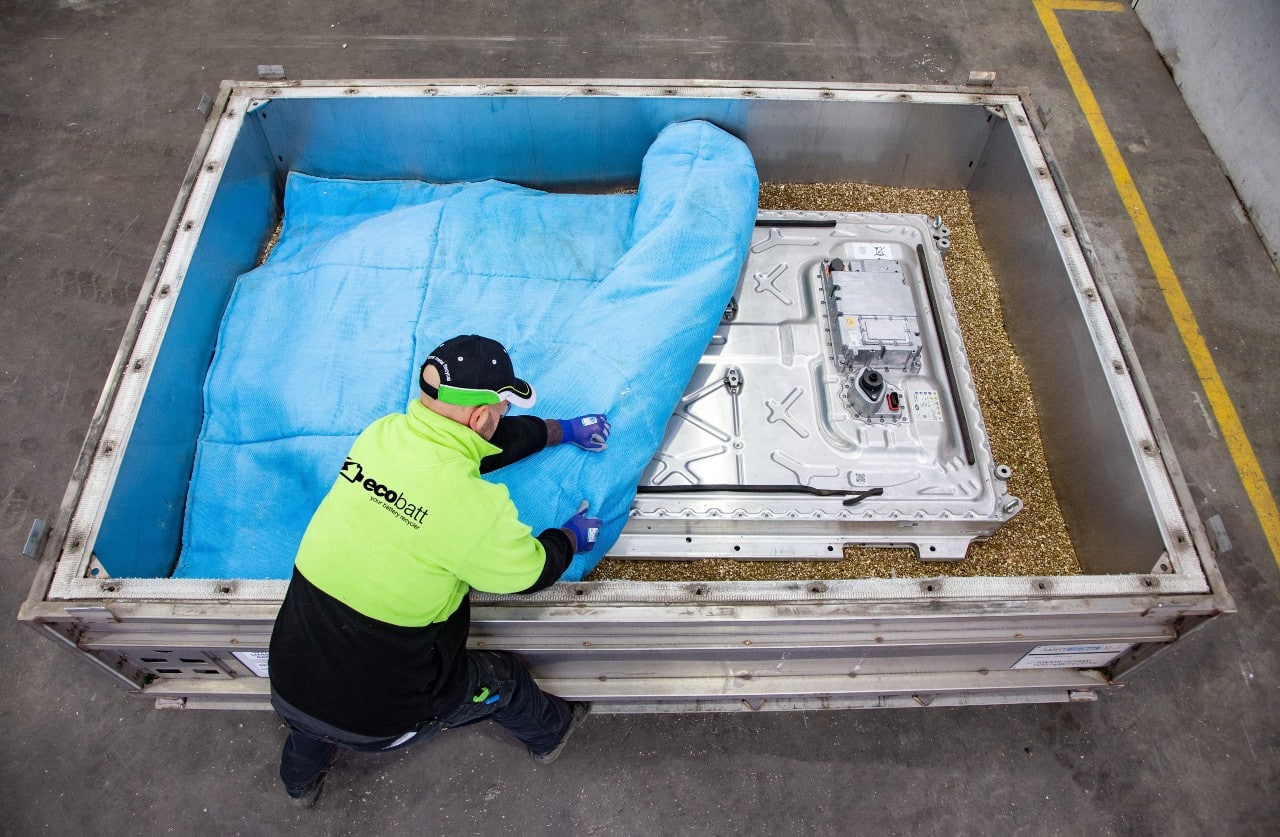
The essence of the project is based on the new BIDS (Battery-in-Device Shredding) plant, inaugurated last September and located in Campbellfield. This plant, the first in the world capable of shredding batteries integrated into devices, is capable of processing up to 5,000 tonnes of batteries a year.
The German carmaker and EcoBatt have joined forces to give a second life to end-of-life or damaged batteries from BMW and Mini electric models. Collected via the BMW dealer network, the process recovers over 90% of the critical materials: lithium, cobalt, nickel, manganese and graphite. Once these metals have been purified, they can be re-injected into the manufacture of new batteries, closing the life cycle loop.
Why this partnership?
The global battery market is facing growing demand and supply tensions over rare metals. By developing a high-performance recycling chain, BMW aims to anticipate a possible rise in costs and reduce its dependence on external supplies.
But that’s not the only reason. The electromobility sector is distinguished by its ever cleaner ethos. And in this game, manufacturers are pulling out all the stops. In this sense, the German brand wants to stand out from its premium rivals (Tesla, Mercedes, Porsche) by positioning itself as a responsible player, capable of combining performance with environmental awareness.
Lithium, an essential metal in electric car batteries. (Credit: Libby March)
Battery recycling, a virtuous process
It’s no secret that producing a new battery is the most energy-intensive stage in the life cycle of an electric vehicle. Extracting lithium, cobalt or nickel involves costly and polluting mining processes, often located thousands of kilometres from the assembly sites.
To drastically reduce the carbon footprint of the electrical industry, the recycling stage is welcome. In fact, reusing metals extracted from a first life enables the CO₂ emissions linked to the manufacture of a new battery to be divided by two to three. Rare metals are also put under less pressure.
In practical terms, the process begins by completely discharging the batteries, before dismantling and mechanically crushing them. The result is a black powder called “black mass”, a material rich in precious metals. It is then refined to extract the metals and other usable elements, which are then returned to the production lines. According to BMW, over 90% of metals (cobalt, nickel, lithium) can be recovered and reused in this way.
BMW, a pioneer in recycling
This is not the manufacturer’s first attempt at battery recycling. In Germany, the company has a long-term partnership with SK tes to recover rare metals (cobalt, nickel, lithium) from used batteries. As with the Australian project, the materials are reintegrated into the supply chain to produce new batteries.
BMW has had its own recycling centre for 30 years. Many vehicles are recycled there every year. The brand is also working with universities to develop new methods for recycling electric vehicle batteries.
Lithium, an essential metal in electric car batteries. (Credit: Libby March)
A rapidly expanding Australian market
According to an official study by the University of Technology Sydney (UTS), commissioned by the Battery Stewardship Council (BSC): by 2030, there will be 600,000 tonnes of batteries in electric vehicles sold in Australia. By 2040, this figure will rise to more than 2.5 million tonnes, then to 4.1 million tonnes by 2050.
This exponential growth makes recycling a strategic sector as much as an ecological issue. BMW is therefore positioning itself in this fast-changing market, destined to become crucial in the circular economy of electric mobility.
In a sector still dominated by the race for autonomy and power, BMW is also banking on a sector that is set to grow: the second life of our batteries. It remains to be seen whether these technologies will be enough to drastically reduce the costly extraction of rare metals.
Luxembourg may not be a giant, but it is one of Europe’s most advanced electromobility regions. In just a few years, the Grand Duchy has built up a clear strategy: to increase the density of its recharging network and support private individuals and businesses.
The GRIDX headquarters in Luxembourg, a centre dedicated to electric mobility and premium automotive experiences. (Credit: GRIDX)
A rapidly electrifying car fleet
Growth is surely the word that best defines the situation of Luxembourg’s electric car fleet. If we look at the figures for the last three years, the upward trend is palpable. In 2022, electric vehicles still represented only 3.4% of the Luxembourg car fleet. A year later, that share had almost doubled to around 6.5%, according to the Ministry of Mobility. By the end of 2024, Luxembourg had more than 32,000 100% electric vehicles on the road, representing almost 7% of the national car fleet.
With the addition of plug-in hybrids, more than one in ten vehicles on the road in the country is now electrified. This growth shows no sign of stopping, and the proof is in the pudding: in the first half of the year, electric cars accounted for around 26% of new registrations, more than a quarter. This pace is reassuring for the authorities, given that the government’s target, set out in the National Energy and Climate Plan (PNEC), is to have 49% of vehicles electrified by 2030. This is a clear ambition for a small country where distances are short and domestic recharging habits are already well established.
An exemplary recharging network
Luxembourg now has one of the highest densities of charging points in Europe. According to data from ACEA (the European Automobile Manufacturers’ Association), the Grand Duchy is one of Europe’s leading countries in terms of the density of charging points for electric vehicles in relation to its surface area. Second in the rankings, with an average of 34.5 charging points every 100 kilometres, sandwiched between the two giants of electromobility: the Netherlands (47.5 points/100 km) and Germany (19.4 points/100 km). By way of comparison, France comes tenth with 4.1 charging points per 100 km.
The country owes this high density and ranking to its “Chargy” public charging network, launched in 2017, which has more than 666 charging stations spread across the country (one charging station represents two charging points, so 1,332 charging points available). At the same time, “SuperChargy” is deploying fast and ultra-fast charging points on major routes, particularly along motorways and in strategic urban areas. But since 16 June, Chargy has been in the private sector. Luxembourg’s Minister for the Economy, SMEs, Energy and Tourism signed a decree awarding the public service concession for the operation of the national infrastructure of public charging points for electric vehicles to a private player: the charge@lux consortium, made up of Electris, Cube4T8 and Socom. The aim of this change is to harmonise charges, improve maintenance and ensure uniform coverage of the country. In total, there are now almost 3,000 public charging points, a figure that is up by more than 20% compared with 2023. This powerful and effective network means that any Luxembourger can be close to a public charging point.
But action to improve access to recharging is not limited to government initiatives. The country’s strength lies in the innovation of its local authorities. Case in point: in Esch-sur-Alzette, the country’s second-largest town, the “Sudstroum Slow Charge” project has been launched. The idea is to recharge electric vehicles directly from public lampposts… a first in Luxembourg.
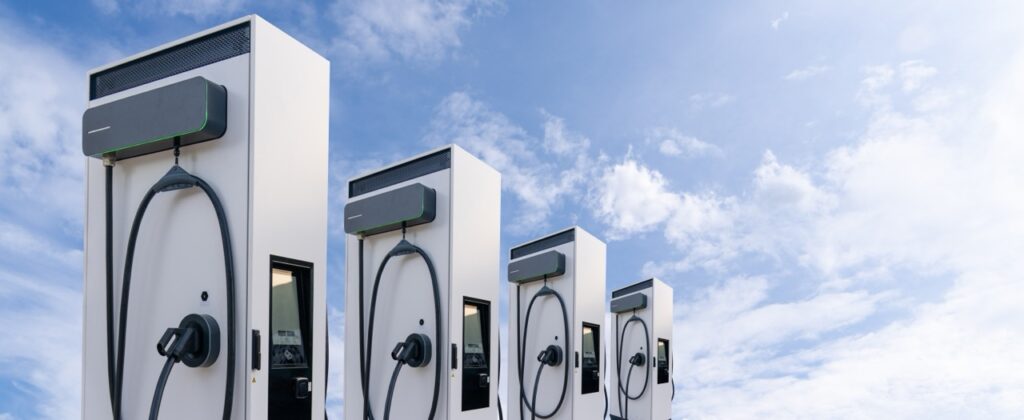
Row of electric vehicles charging stations on the background of blue sky.
Focus on GridX: a driving force for innovation in electromobility in Luxembourg
True to the spirit of this country that never ceases to innovate, the GridX project was inaugurated on 18 September 2025 in Wickrange. Designed by the Giorgetti group, this unprecedented complex of almost 42,000 m² is intended to be Europe’s first “multi-experience” destination, combining commerce, gastronomy, hotels, culture and, above all, mobility. Featuring a unique car gallery, where prestigious brands such as Alpine, Bentley and Ducati can be seen all year round, this brand-new space is presented as “a museum or temple of mobility”.
In fact, beyond the car gallery, this venue is a veritable cluster dedicated to the automobile, with concierge services, driving simulators and a partnership with Turin’s MAUTO museum. Although GRIDX is not exclusively dedicated to electric vehicles, its space and its focus on electrified mobility make it a relevant player in the sector. – Its spaces offer the public a physical showcase for brands in the electric mobility sector, but also serve as a permanent showroom for premium manufacturers. A real plus point for this sector, which needs to raise its profile with the general public. – It creates a point of convergence between charging services, premium vehicles and the customer experience, which can facilitate the integration of charging points, infrastructure solutions or premium fleets. – Thanks to its “mobility + lifestyle + business” concept, GRIDX can accommodate players in electromobility (start-ups, suppliers, equipment manufacturers).
GridX Luxembourg’s scale and innovative character make it much more than just a shopping centre. It is a symbol of automotive renewal, a showcase for innovation and further proof that Luxembourg continues to think big when it comes to the future and sustainable mobility.
Distributors present
To meet government requirements for electrified cars and ever-increasing customer demand, car distributors and dealerships have had to adapt. At the 2025 edition of the Autofestival show, which brings together car distributors in Luxembourg, it was reported that around 90 dealerships were taking part, proof that electromobility now occupies a central place in the market.
These include Losch Luxembourg, Car Avenue and the Autosphère group, three key players on the Luxembourg automotive scene. – Losch Luxembourg, official importer of Volkswagen Group brands (Volkswagen, Audi, Škoda, SEAT/CUPRA, Porsche, etc.), is the national leader in the sector. A major investor in electric mobility, it offers a wide range of 100% electric and rechargeable hybrid vehicles. – Car Avenue, which operates in Luxembourg, France, Belgium and Germany, distributes brands such as Mercedes-Benz, Smart, Peugeot and Opel. The electric range has also been greatly expanded, offering most of the models in vogue. – The French group Autosphère is now present on the Luxembourg market, representing a number of generalist and premium brands. It promotes green mobility by offering electric and rechargeable hybrid vehicles.
Traditional companies that, in just a few years, have reinvented themselves to become key players in the transition to electric mobility.
Happy beautiful couple is choosing a new car at dealership. Blurred background
A policy with a thirst for progress
For more than a decade, the Luxembourg government has been actively supporting the energy transition. Individuals benefit from purchase subsidies of up to €6,000 for the purchase of a new electric vehicle, while the installation of a home charging point is subsidised up to 50% of the total cost, up to a maximum of €1,650. The government is also maintaining partial tax exemptions for company fleets. In 2025, a €30.5 million European investment programme has been allocated to Luxembourg to strengthen public infrastructure and support the deployment of fast charging stations in suburban areas.
A favourable energy model
The ambition for a cleaner everyday life is also facilitated by the fact that the country benefits from a low-carbon electricity mix, supplied largely by imports from neighbouring countries (France, Germany) and by a growing proportion of local renewable energies. This configuration means that the carbon footprint of electric vehicles is well below the European average. In fact, according to a study by Klima-Agence, the carbon footprint of an electric vehicle in Luxembourg is 70 g CO₂/km over a 200,000 km lifecycle. Compared with the European average, estimated at between 90 and 120 g CO₂/km depending on the country’s energy mix, Luxembourg is at the top end of the scale. The authorities are working to make recharging even greener, thanks in particular to their partner Encevo and its subsidiaries, Luxembourg’s benchmark energy group, to gradually supply the charging points with 100% green electricity.
Anticipating challenges
Luxembourg, small in size but big in terms of its transition, is not exempt from the challenges that affect other regions. Indeed, as with its neighbours, the electrification of heavy goods vehicles and commercial vehicles remains on the sidelines. To take this complex new step, we need to develop appropriate infrastructure and electrify heavy goods vehicles. Heavy commercial vehicles (HGVs + LCVs) are responsible for more than 25% of road transport emissions in Luxembourg. Another challenge is to modernise charging points in the face of the proliferation of fast charging points. A study by the Ministry of Energy has already identified the urban areas that should be upgraded as a priority. Finally, the same observation applies as in the rest of Europe: although the cost of using an electric vehicle is advantageous, its purchase price is still high, which is still holding back some motorists from taking the plunge, despite existing incentives.
A country with great ambitions
By focusing on coherence and planning, Luxembourg’s figures show that a small country can be more advanced than a large one. The country has managed to make the most of its territory with a model based on the development of recharging infrastructures, clear financial incentives thanks to state aid, and clean energy. With a steadily growing market, France’s border neighbour is one of the most successful examples of electromobility in Europe.
On 28 October 2025, Reuters announced that China had made a major strategic decision: new energy vehicles (NEVs) (electric, plug-in hybrids, hydrogen fuel cells) are no longer included among the strategic industries in its five-year plan for the period 2026-2030. This sends out a strong signal in a country that has until now placed NEVs at the heart of its industrial policy.
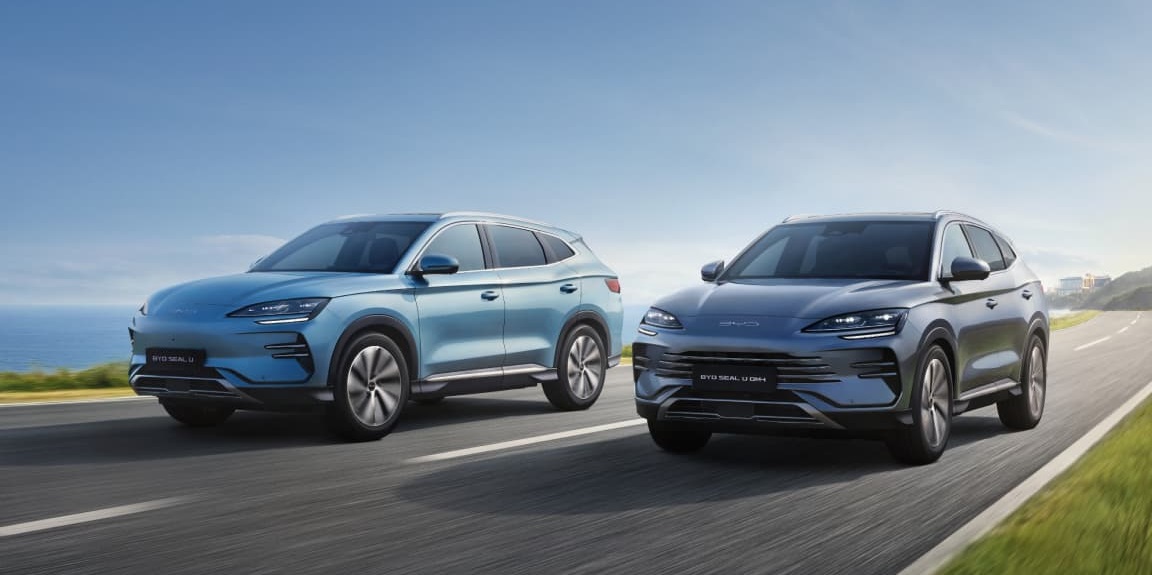
The two BYD Seal U vehicles illustrate BYD’s growing presence in the Chinese electric vehicle market. (Credit: BYD)
Why was this decision voted through?
For more than a decade, China has given massive support to the electrified vehicle industry, with purchase subsidies, support for research and development, tax exemptions, infrastructure development, etc. A policy choice that has borne fruit, as China has become the world’s largest EV market and is driven by major export ambitions.
So why the decision not to include new energy vehicles as a strategic industry? Firstly, because the Chinese EV industry is in a situation of industrial overcapacity. In other words, the sector has more production capacity than is being sold or demanded. This is because China has many factories and too many competing brands. Reuters refers to this as “grappling with oversupply”: competition has squeezed manufacturers’ margins and made it more difficult to pursue a sales model based solely on volume. Even more telling, according to data from Jato Dynamics, 93 of the 169 manufacturers operating in China have market shares of less than 0.1%.
The Chinese government seems to consider that the NEV sector is now sufficiently ‘mature’ to rely more on market forces than on massive, ongoing state support.
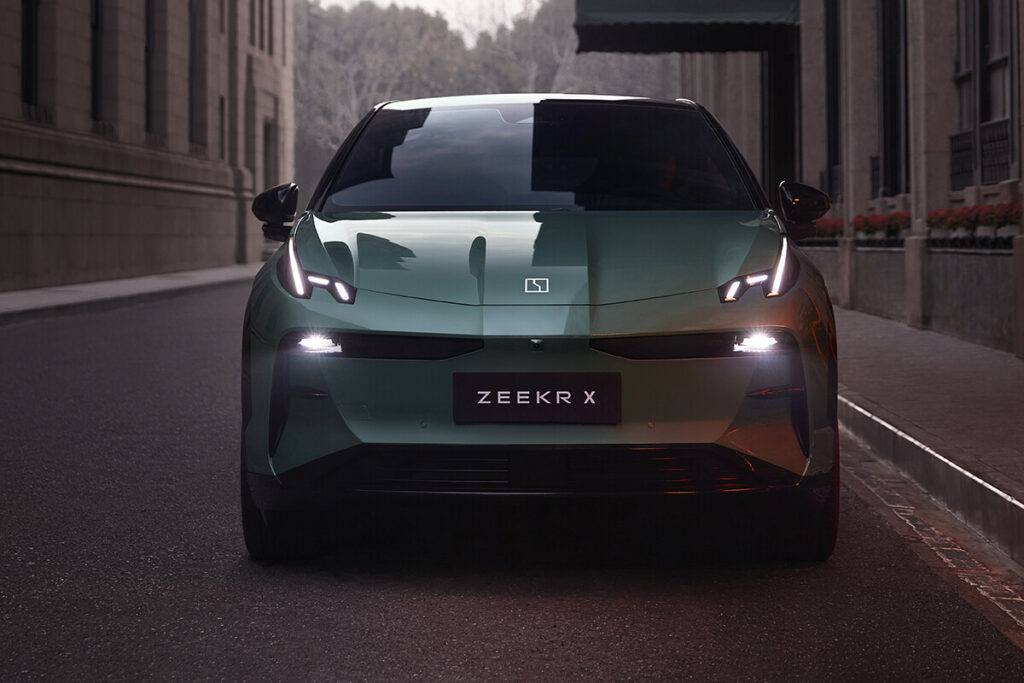
The Zeekr X compact electric SUV embodies Geely’s top-of-the-range strategy in the NEV market.
(Credit: Zeekr)
The five-year plan probably prefers to give a boost to other less mainstream but equally strategic sectors, such as quantum technology, bio-manufacturing, hydrogen and nuclear fusion. So the decision not to classify new energy vehicles as a “strategic industry” does not mean total disinterest, but marks a transition towards a model in which the market should be more self-regulating.
What will this mean for the industry?
Obviously, less direct support from the State means that players in the sector have to adapt:
Smaller manufacturers with little long-term reliability will be forced to merge, to withdraw or to be bought out by more powerful groups, which will be at an advantage.
Since the domestic market appears to be saturated for the moment, Chinese manufacturers will have to focus more on foreign markets (Europe, Asia, Latin America) to maintain their growth. To do this, they will have to differentiate their products (technology, quality, service) and not just enter the low-price war.
The sector will have to review its industrial strategy, since the “volume + subsidy” growth model is showing its limits. The choice of quality, innovation and connected services is becoming more obvious.
As the EV industry brings together a multitude of players to develop, these other ‘related’ sectors will also be involved (suppliers of batteries, modules, software).
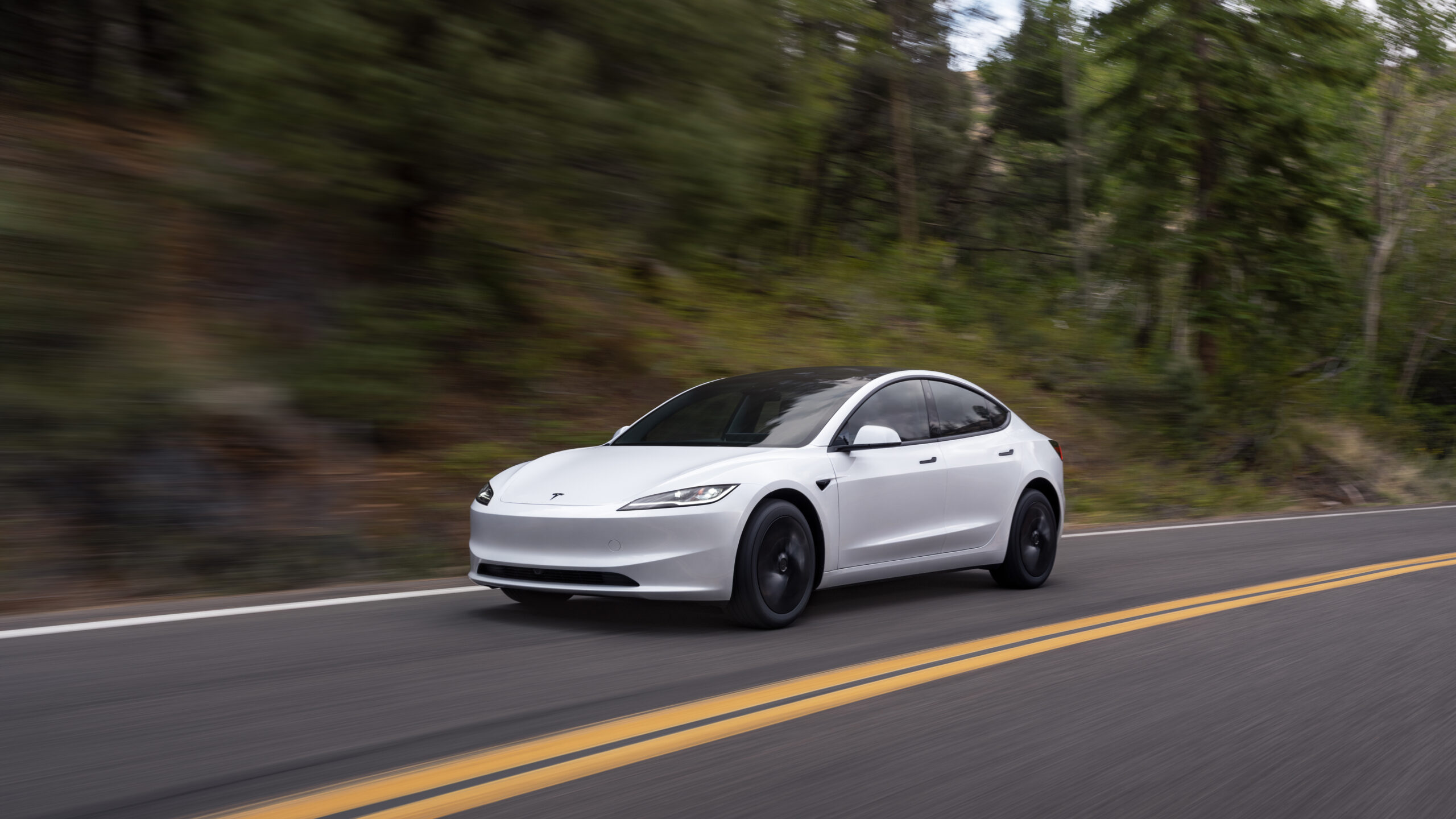
The Tesla Model 3 remains one of the most popular foreign models on the Chinese electric vehicle market. (Credit: Tesla)
A look back at China’s historic support
Sensing that the EV market would rapidly become a global one, China has contributed financially to the development of its industry. As early as 2009, it was subsidising projects to support the purchase of electric vehicles and plug-in hybrids, as well as demonstrations of these technologies in a number of pilot cities.
Shortly afterwards, the national subsidy programme for NEVs was officially launched: by the end of 2015, the central government had already spent 33.4 billion yuan (around €4.3 billion).
Direct purchase subsidies, tax exemptions, quotas, investment in recharging infrastructure: these are all ways of boosting NEVs.
However, at the end of the 2020s/beginning of 2025, support was gradually reduced or withdrawn: for example, the national purchase subsidy programme officially ended at the end of 2022. China accepts that the sector is maturing and that the State is taking a step backwards.
Conclusion
The fact that China is removing NEVs from its status as a “strategic” industry in the next five-year plan is a symbolic choice for the global electromobility industry. This does not mean the end of EVs in China, but it does mark a turning point: the players must now prove their viability on their own and adapt.
NIO has just announced a new milestone: its battery-swap services have exceeded 90,000,000 cumulative operations. Announced on X by NIO CEO William Li, this milestone was reached on 26 October 2025.
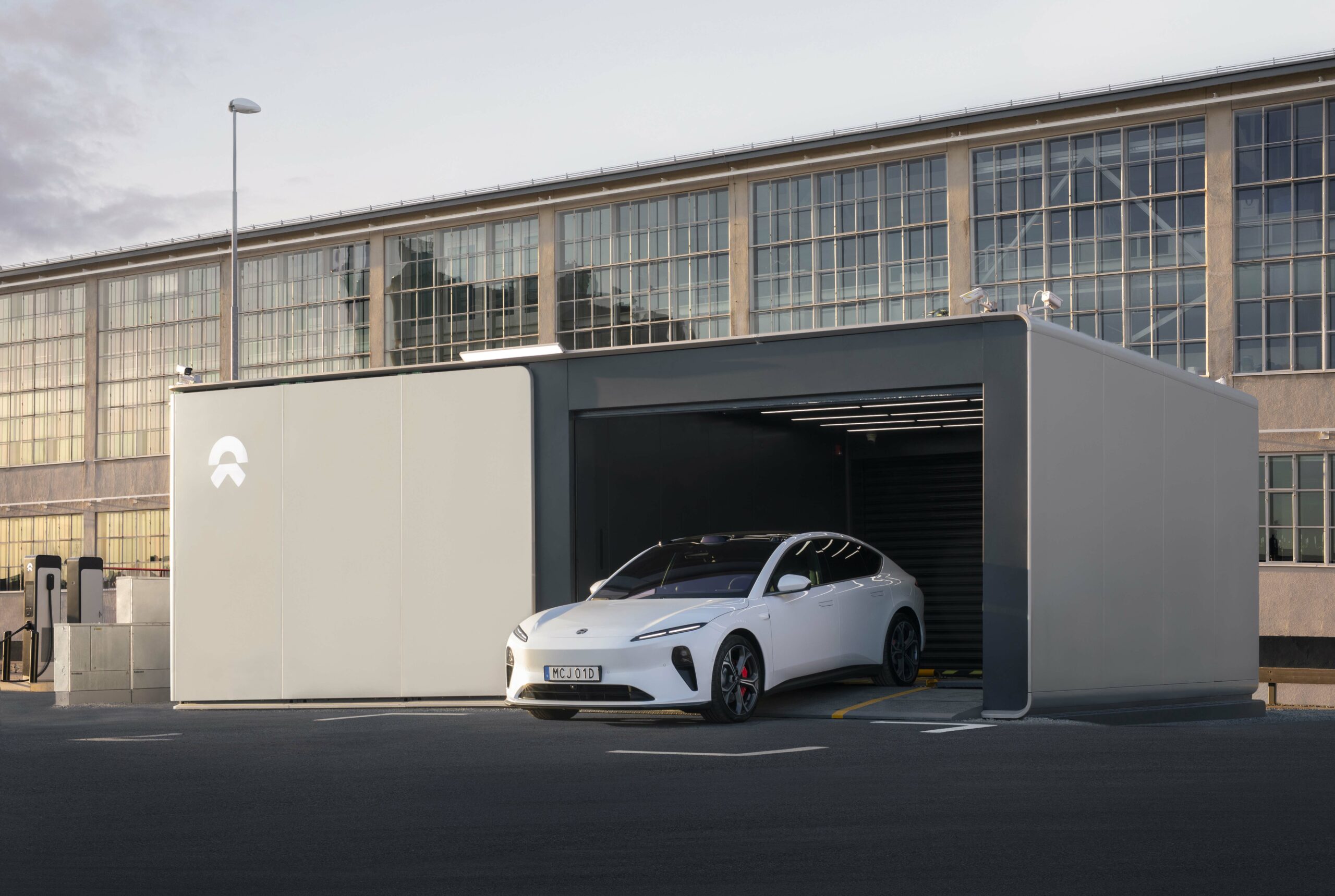
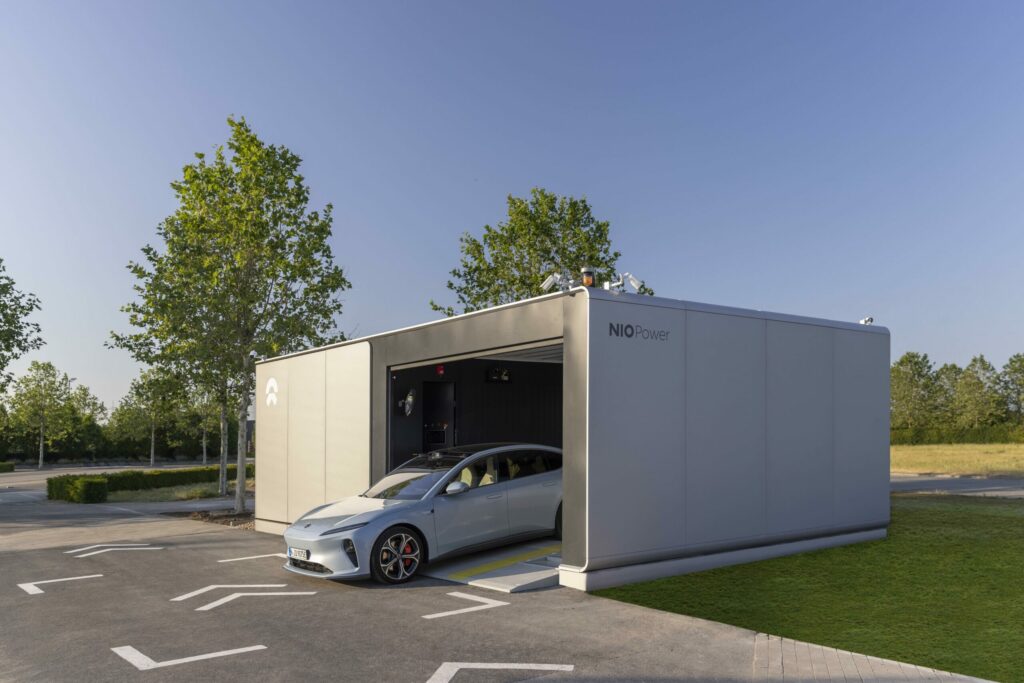
A NIO electric car emerges from the automatic battery exchange station. (Credit: NIO)
What is a battery exchange?
Battery swap involves replacing the discharged battery of an electric vehicle with a battery that has already been charged at a dedicated station, rather than waiting for the battery to recharge at a charging point. The aim is to avoid EV (electric vehicle) drivers having to wait for their battery to recharge at “conventional” charging points. Battery Swap Stations are designed for the automatic removal and installation of EV batteries. The operation is almost entirely automated. Some users report that, from arrival at the station to departure, the whole process takes less than 10 minutes. This includes checking and invoicing.
Why is this a major milestone?
The figure of 90 million battery exchanges shows that this is an effective service on a large scale. It is convincing electric vehicle drivers. To understand the dynamics of the NIO project, it is interesting to refer to William Li’s post on X. Between the 80 millionth exchange and the 90 millionth exchange, only 100 days elapsed. If we compare this to the first 10 million, achieved in over four years, the growth is impressive. According to the Chinese manufacturer, the battery exchange service now carries out an average of 100,000 exchanges a day worldwide.
Thrilled to share that we just hit the 90,000,000th battery swap at 22:53:25 on October 26, 2025 (UTC+8)!🚀 It took 1,506 days to get from the first battery swap to 10,000,000th, and only 100 days to go from 80,000,000th to 90,000,000th! Huge thanks to every user's support, let's… pic.twitter.com/wQUftXWkFs
Just over a year ago, in June 2024, there were 2,432 stations. This number has now risen to more than 3,445 stations. China’s electric car ambitions can also be measured with NIO: there are more than 1,000 battery exchange stations along the country’s motorways. For once, the number one objective is to export and dominate world markets, including Europe. To achieve this, the company has set up a number of exchange stations on the Old Continent.
NIO, a complete company
NIO is a Chinese company, founded in 2014 and based in Shanghai. It stands out for its versatility in electric mobility. Its network of battery swap stations (“Power Swap Stations”) makes it one of the global market leaders. Its innovative “Battery-as-a-Service” model also contributes to this position. This strategy has several levers: speed of use, reduced range anxiety and differentiation. NIO offers a complete ecosystem. It includes its top-of-the-range electric vehicles, domestic and public recharging services, as well as software and connected solutions for its users.
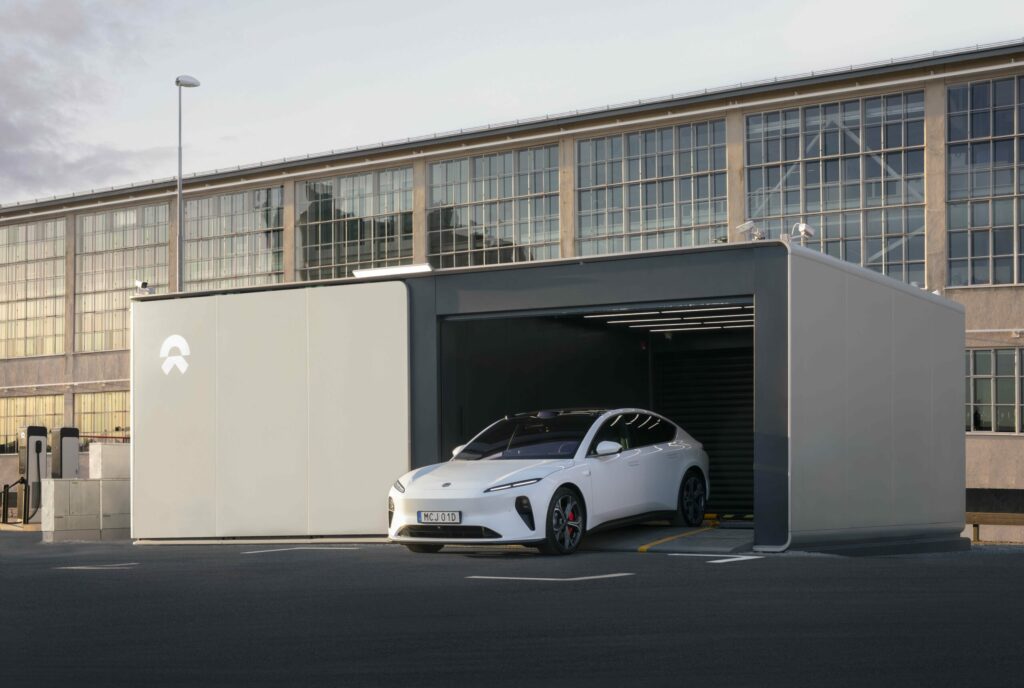
A NIO vehicle leaves the battery exchange station, ready for the road (Credit: NIO)
An innovative but demanding model
However, this system requires significant investment: construction of automated stations, logistical management of batteries and maintenance. These constraints mean that the model is easier to deploy for a manufacturer with significant financial and operational resources.
To date, the cumulative electricity exchanged via these services amounts to around 4.75 billion kWh, equivalent to the annual consumption of around 2.37 million homes. These figures testify to the scale of the infrastructure, but they must be qualified: this is a network concentrated mainly in China, not a uniform daily performance on a global scale.
90 million batteries exchanged, a figure that shows that NIO does not limit itself to producing top-of-the-range electric vehicles: its “Battery-as-a-Service” model and its network of automated stations enable it to offer a complete ecosystem for its users. With its battery-swap system, NIO is proving that it is possible to drastically reduce recharging time and reassure drivers about range. An approach that could well redefine the driving experience of electric vehicles, especially on long journeys.
It’s coming soon: Porsche’s iconic SUV is being transformed into an ultra-efficient 100% electric vehicle. Called the Cayenne Electric, it will be launched in the coming weeks, according to the latest press release from the manufacturer.
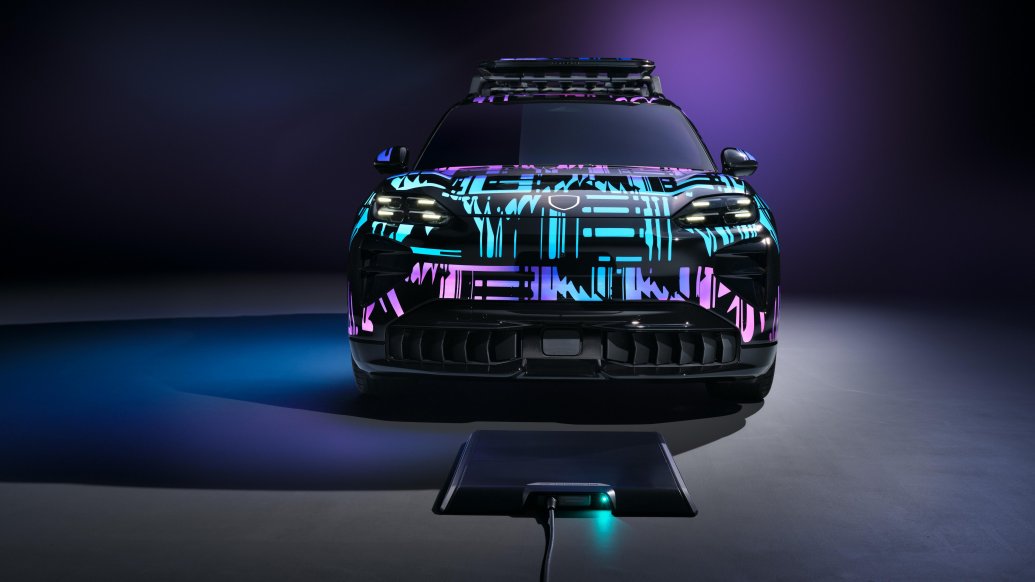
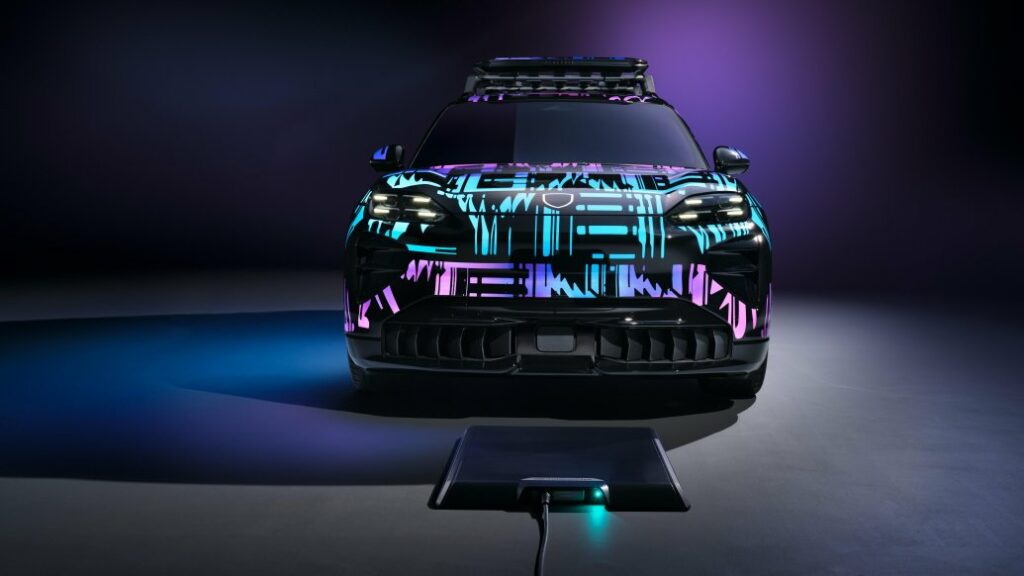
The Porsche Cayenne Electric boasts an assertive, dynamic front-end design in keeping with the sporting spirit of the brand (Credit: Porsche).
Following on from the Macan Electric, Porsche is continuing its transformation towards an entirely zero-emission range. The Cayenne, an emblematic model launched in 2002, is in turn becoming the representative of a transition to top-of-the-range electromobility.
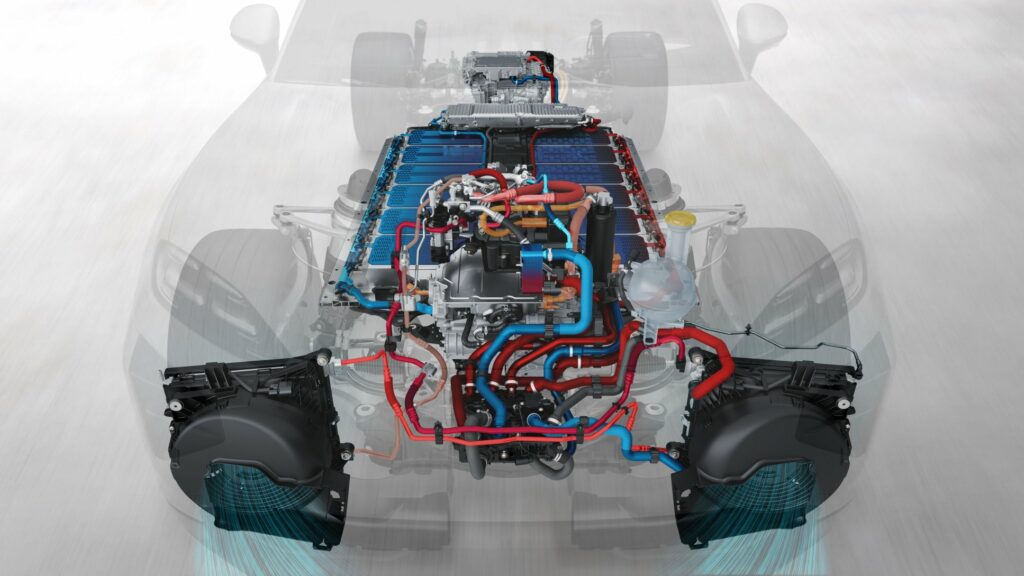
This new press release, published on 23 October 2025, provides technical confirmations that will increase the expectations of car lovers. Porsche tells us that the vehicle’s battery has a gross capacity of 113 kWh. And what sets it apart is that it is not just a module housed in the floor. It is a load-bearing element of the chassis. This integration into the structure improves the vehicle’s rigidity and lowers its centre of gravity, essential elements for the SUV’s technical performance.
The thermal management system is also well thought out. The press release mentions double-sided cooling (above and below the battery). There’s also a new predictive thermal management system that takes account of driving conditions, driving style and traffic to anticipate thermal requirements. Porsche’s idea is to optimise efficiency, range and performance, whatever the conditions of use.
The 113 kWh structural battery enhances chassis rigidity and improves the Cayenne Electric’s centre of gravity. (Credit: porsche)
Performance and real-life use
The future of recharging is already here, and from 2026 Porsche will be offering a wireless inductive recharging system on board the Cayenne Electric. This system works via a floor plate, installed in a garage for example, on which the vehicle is automatically positioned using sensors and cameras. To charge, the vehicle lowers itself slightly to reduce the gap between itself and the plate, allowing inductive coupling over a few centimetres. The advertised power is 11 kW in alternating current, with an efficiency of around 90%, comparable to a domestic wall-mounted charging point.
One of the great challenges for manufacturers is to offer a powerful battery with a short recharge time. And in this respect, the Cayenne Electric promises to be effective: – In terms of range, the vehicle is claimed to offer up to 600 km. Tests on prototypes have shown that at a constant speed of between 110 and 115 km/h, a prototype covered around 568 km with only 2% of the charge remaining. – As for recharging, the manufacturer has announced a maximum DC power of up to 400 kW, which would allow very rapid recharging, i.e. going from 10% to 80% of the battery in less than 16 minutes. Another statistic that might be more telling: a recovery of around 300 km of range in 10 minutes, no less.
Porsche is all about speed, performance and sportiness. For its most powerful model (Turbo in particular), the German marque is promising a top speed of around 250 km/h.
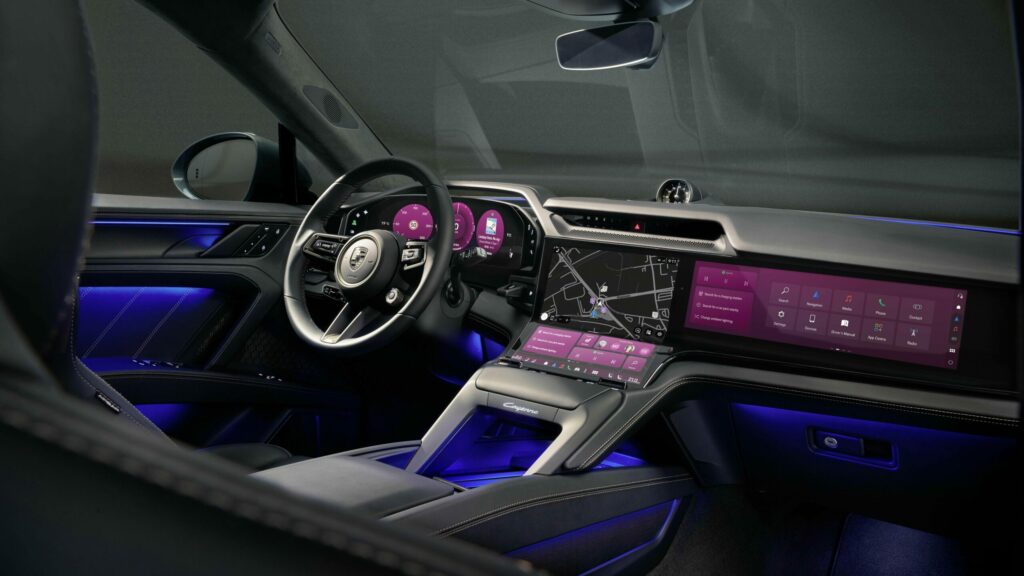
A futuristic cabin with curved screen, head-up display and top-of-the-range comfort. (Credit: Porsche)
A top-of-the-range interior
The interior of the Cayenne Electric is all about digital technology. A large curved screen is the main feature of the cabin. The manufacturer claims that it is the largest ever used in a Porsche vehicle. It is complemented by a dedicated screen for the front passenger and an augmented reality head-up display.
And of course, with this type of vehicle, there are plenty of options: electric rear seats, surface heating function, panoramic roof with progressive blackout.
Release date still unknown
No precise date has been announced. But according to the latest information, the commercial launch should take place in a few weeks’ time, which suggests a production launch or arrival in certain markets at the end of 2025.
Other specialist sources predict availability in 2026.