Author: Anthony Mall

  • The Future of EVs in the United States: Production, Infrastructure, and Policy

    The Future of EVs in the United States: Production, Infrastructure, and Policy

    The US EV market is entering a decisive decade, driven by innovation in production. Expanding charging infrastructure and evolving policies will shape the future of mobility.

    Reinventing the Factory Floor

    Manufacturing is changing rapidly:

    • For instance, Ford’s three-branch tree flexible assembly system—building front, rear, and battery modules separately before final assembly—is able to reduce production time and part usage by 20%. That streamlining is valued due to emerging threats from low-cost, large-scale Chinese production.
    • In addition, aside from assembly, U.S. automakers are solidifying local EV supply chains, utilizing Inflation Reduction Act benefits and investing in facilities that produce minerals and batteries.
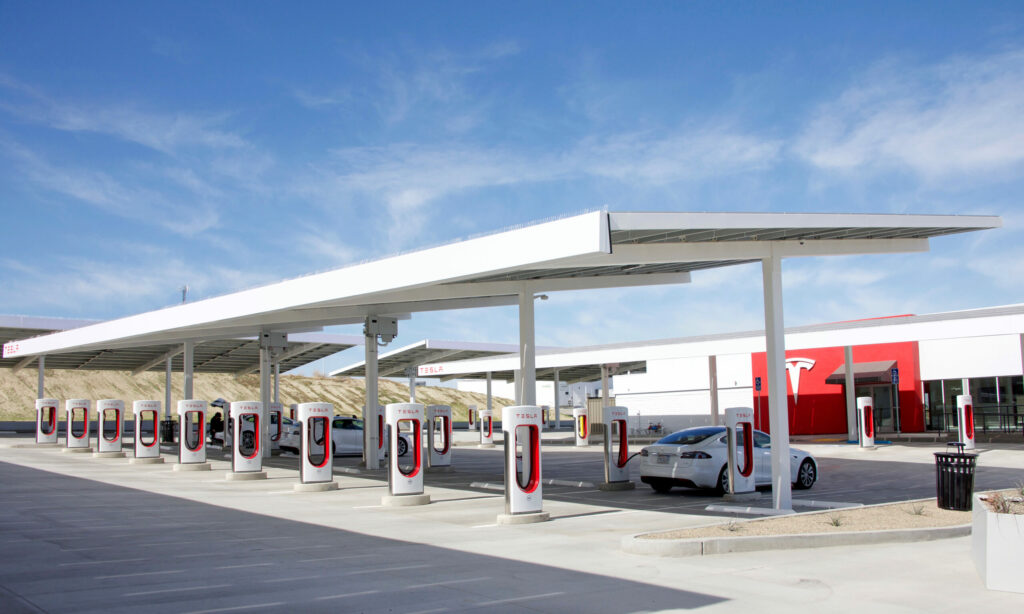
    Tesla charging station with solar roof in Kettleman City, CA.
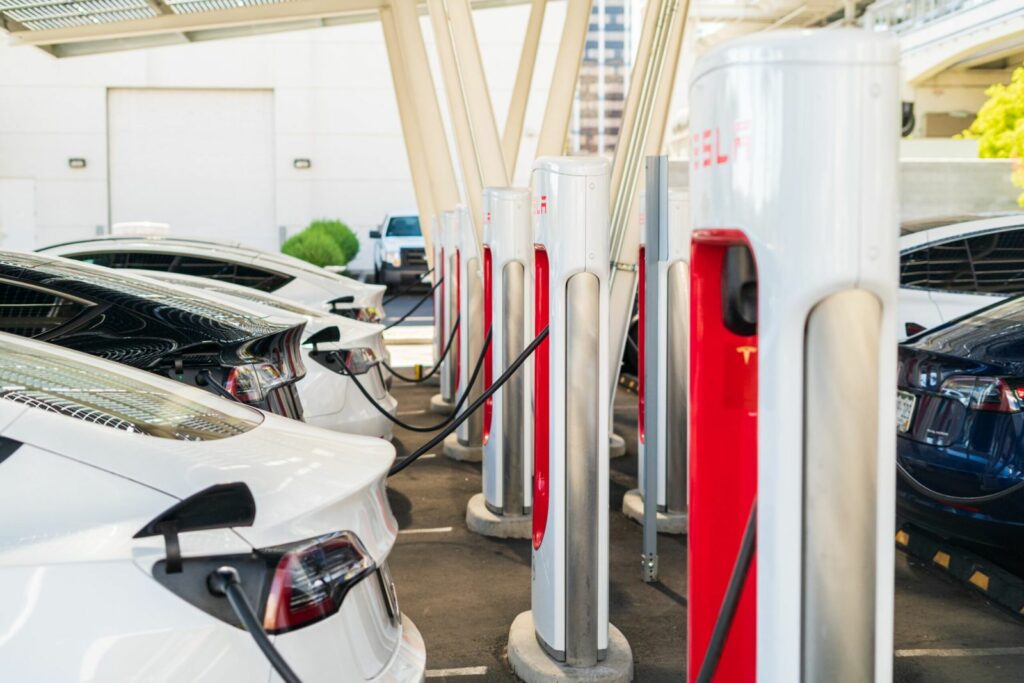
    Tesla charging station in Las Vegas, a key part of the growing US EV market infrastructure. (Credit: Sheila Fitzgerald)

    Charging Ahead: Infrastructure Expands

    Even the best EVs depend on robust charging networks:

    EV registrations have surged, but charging infrastructure is lagging. In Q1 2025, approximately 42 new EVs were registered for every one new public charging port added, according to Autos Innovate.

    Meanwhile, the great majority of mainstream producers have committed to Tesla’s North American Charging Standard (NACS) standard. From 2025 onward, all-new vehicles will roll off the factory NACS-capable. This gives Tesla’s Superchargers network access that is essentially as simple as refueling a typical ICE vehicle.

    Meanwhile, federal and local investments continue to add public charging stations, particularly on highways and city corridors.

    Policy Crossroads

    Policy remains a critical inflection point:

    The $7,500 federal EV tax credit, once a cornerstone of EV affordability, is slated to expire on September 30, 2025. This will happen unless it is renewed.

    Therefore, this impending deadline is prompting automakers to ramp up pre-expiration sales or pivot to leasing strategies (Reported by Vox and Investors).

    Despite federal uncertainty, states like California are pushing aggressive timelines to phase out gas-powered vehicle sales by 2035.

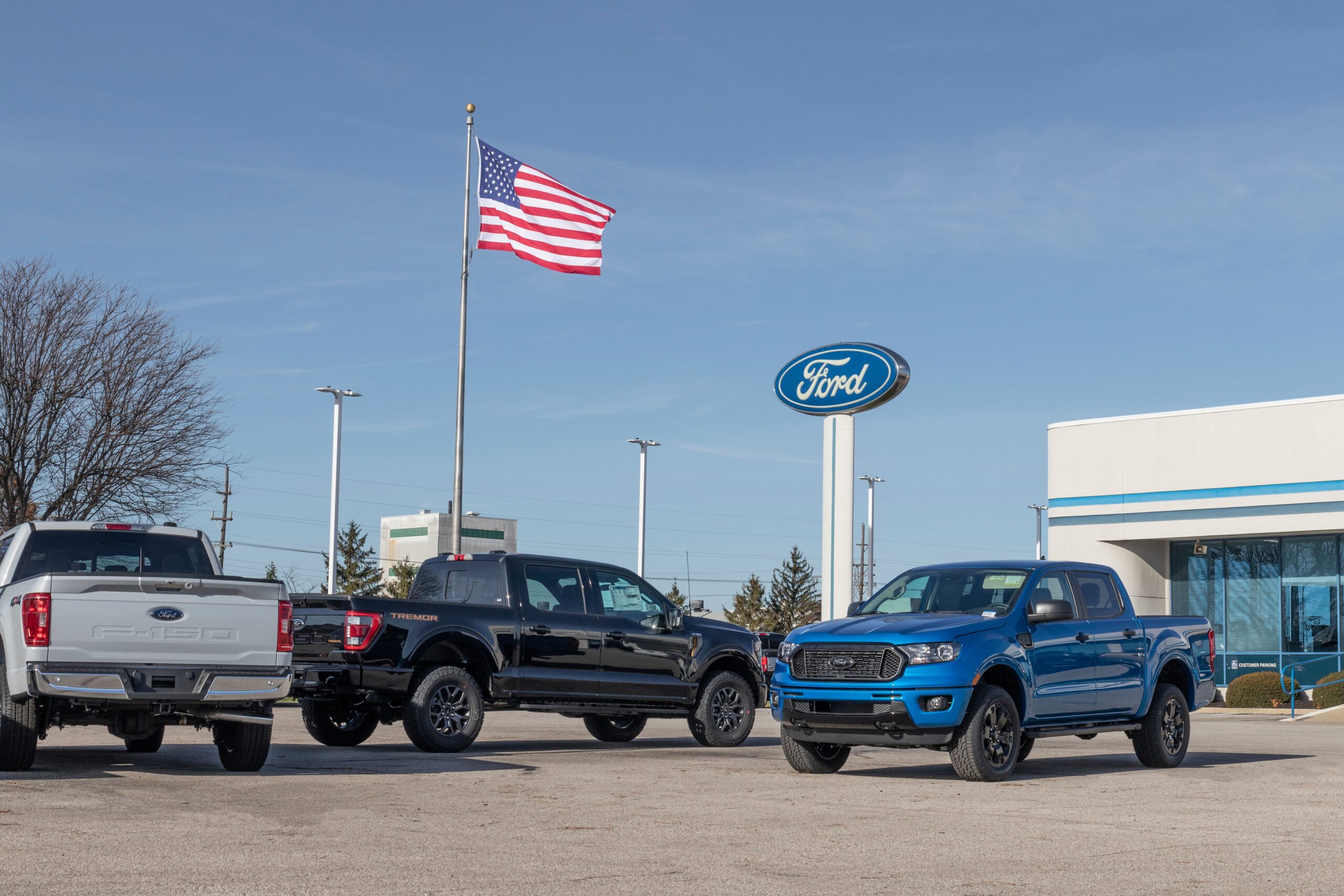
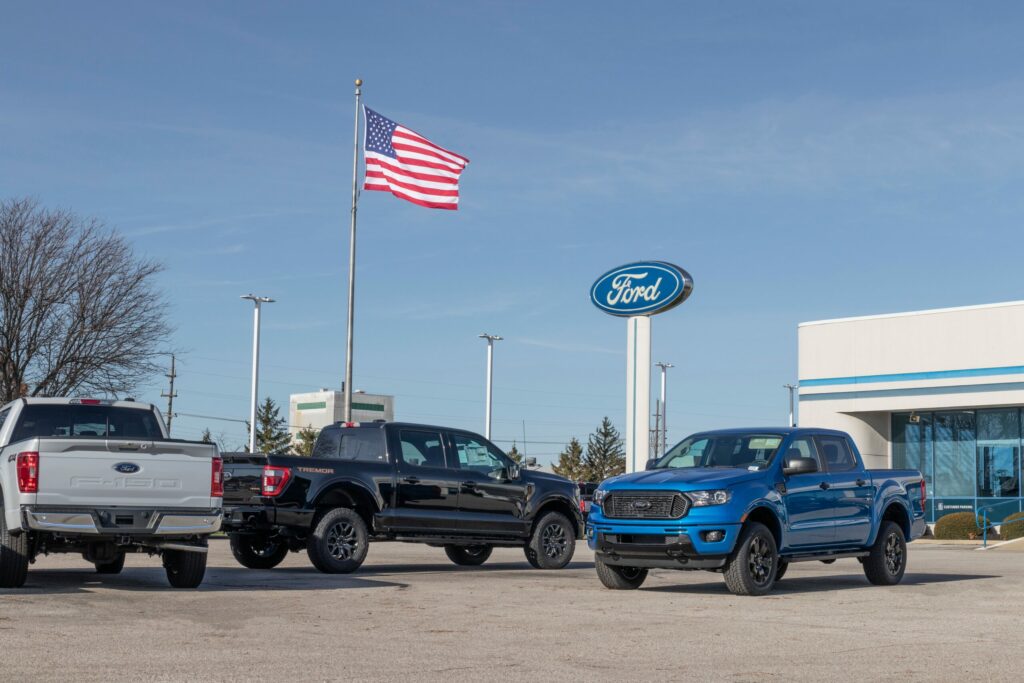
    Electric vehicles parked in front of American flags, representing the US EV market.
    Electric vehicles in front of American flags, highlighting growth and adoption trends in the US EV market.

    The Road to 2030

    Looking ahead: Analysts project EVs may account for one in every four new vehicles sold in the U.S. by 2030. This growth would happen on the strength of continued innovations in battery technology, durable supply chains, and steady policy backing.

    In fact, market estimations position the U.S. EV market size was estimated at around $131.3 billion in 2024 and is projected to grow to $139.6 billion by 2025. By 2034, it is expected to jump to $439 billion, representing a 13.6% CAGR (according to Global Market Insights Inc.).
  • The Rise of Electric Vehicles in the United States: Market, Models, and Innovations

    The Rise of Electric Vehicles in the United States: Market, Models, and Innovations

    It is a sweltering summer afternoon in Detroit when Ford engineers are secretly getting ready what is described by the executives as the company’s “Model T moment.” Their assignment is neither to assemble another vehicle, but to redefine an entire industry. With an electric pickup truck costing around $30,000 on the cards and billions in fresh investment, Ford is counting on affordability and scale to drag the EV from the sidelines of invention into the very heart of American living, marking a pivotal step in the US EV market.

    Ford electric pickup truck 2025 affordable EV model
    Ford aims to produce an affordable mid-sized electric pickup around $30,000, marking a turning point in the US EV market.

    They’re not alone. From Silicon Valley start-ups to Japanese icons, the game to conquer America’s EV market is on. It’s a challenge powered by technology, demand from consumers, and government encouragement—and it is changing the way Americans think about getting behind the wheel.

    A Market in Motion

    The U.S. market for electrified and electric vehicles is solidly underway—no longer experimental:

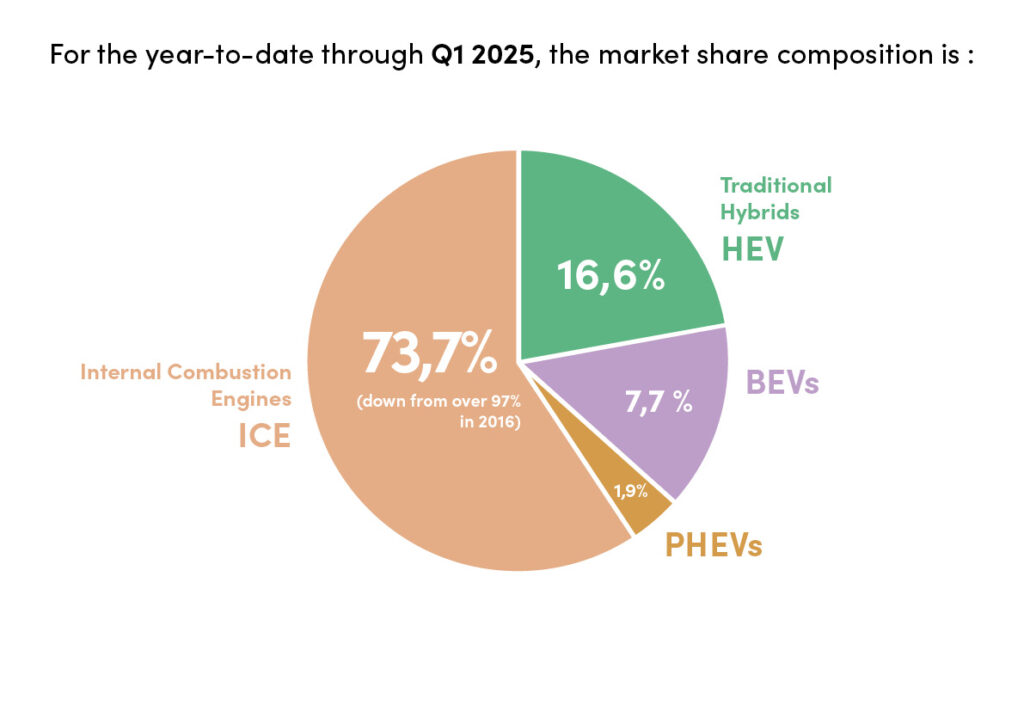
    According to Autos Innovate, in Q1 2025 EVs—including BEVs, PHEVs, and fuel-cell electric vehicles—accounted for 9.6% of new light-duty vehicle sales. That’s down from 10.9% in Q4 2024, yet still reflects a 0.3 percentage-point gain year-over-year. Meanwhile, overall light-duty sales rose 6%, and EV volume grew by about 9% (~30,500 vehicles) compared to Q1 2024.

    This change in powertrain mix shows the way the dominance of the ICE market is gradually being replaced by several forms of electrified mobility.

    The Drive to Affordability

    For years, the biggest obstacle to EV adoption was cost. Now, car manufacturers are getting serious about reducing prices:

    • Ford aims to produce a mid-sized electric pickup around $30,000 by bringing back the Model T spirit through affordability (as reported by Vox and Investors).
    • New entrants like Michigan-based Slate Auto are constructing modularity-based electric trucks whose base prices will come in under $27,500—again flipping the script on availability.
    Tesla charging station with solar roof in Las Vegas, Nevada, USA, October 10, 2021.
    Tesla charging station in Las Vegas, a key part of the growing US EV market infrastructure.

    Power, Luxury, and Performance

    Affordability isn’t the only story. At the luxury end:

    Lucid Motors is getting ready to debut the Lucid Gravity, an electric SUV positioned as a high-performance vehicle statement—good for about 828 hp, powered by a 123 kWh battery, and offering 450 miles of range.

    Tesla, though still dominant, encounters tougher competition as incumbents such as Ford, GM, and Hyundai—and an increasingly vibrant startup ecosystem—are stepping up their EV initiatives.

    Model-Level Highlights
    (U.S. Top Sellers H1 2025)

    ModelSales (first half of 2025, United States)
    TESLA MODEL Y• Q1 2025: Approximately 64,051 units sold 
    • Q2 2025: Estimated 90,949 units sold 
    • Total H1 Estimate: ~155,000 units
    TESLA MODEL 3• Q1 2025: Around 52,520 units
    (Q2H1 figures not separately disclosed, but Model Y maintained strong dominance in H1 overall.)
    CHEVROLET EQUINOX EV• Q1 2025: 10,329 units sold in the U.S. 
    • Q2 2025: 17,420 units sold 
    • Total H1: ~27,749 units
    FORD MUSTANG MACH-E• Q1 2025: 11,607 units sold 
    (No explicit Q2 data – total H1 likely slightly higher.)
    HONDA PROLOGUE• Q1 2025: 9,561 units
    HYUNDAI IONIQ 5• Q1 2025: 8,611 units sold
    FORD F-150 LIGHTNING• Q1 2025: 7,187 units sold
    BMW i4• Q1 2025: 7,125 units
    TESLA CYBERTRUCK• Q1 2025: 6,406 units sold