Category: France

  • The French market for electric cars without a licence: a revolution in the making

    The French market for electric cars without a licence: a revolution in the making

    With more than 30,000 registrations in 2024, France will account for almost 50% of licence-free car sales in the European market.

    Long marginalised, these no-licence cars (VSPs) are enjoying a second lease of life in France, thanks in particular to electrification and modern communication aimed at attracting (very) young drivers – from the age of 14! – but also city-dwellers keen to reduce their environmental impact and make their cars more practical. With the ecological transition playing an increasingly important role in the minds of the French, and city traffic becoming more and more difficult for conventional combustion-powered vehicles, electric MPVs are an extremely attractive alternative.
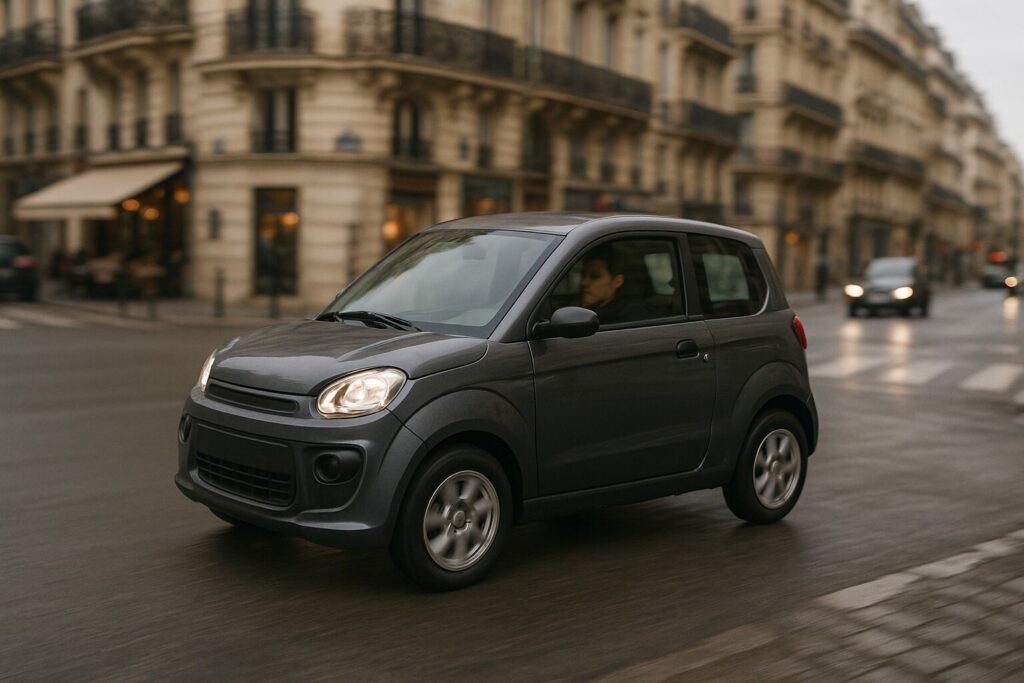
    black electric no-licence car

    Why are electric licence-free cars so popular in France?

    Electric MPVs are continuing to win market share from their combustion-powered rivals, as well as from ‘conventional’ cars, because they appear to be a natural response to many of today’s problems. For example, the ever-increasing cost of a driving licence, which for more and more urban dwellers is no longer as useful as it once was, and the spread of populations, which means that people living in more isolated areas are choosing the car at an ever younger age, are the two main factors behind the overpopulation of PSVs in France.

    But we can also add to this the lower speed limits in town (a licence-free car is limited to 45 km/h), the elimination of parking spaces and the increasing costs associated with the use of a conventional car (insurance is generally less expensive and roadworthiness tests are less frequent).

    Finally, the electric version cuts the bill even further by reducing maintenance and fuel costs. To sum up: a licence-free car is full of advantages for an ever-growing proportion of the French population… and its electric version is even more advantageous!
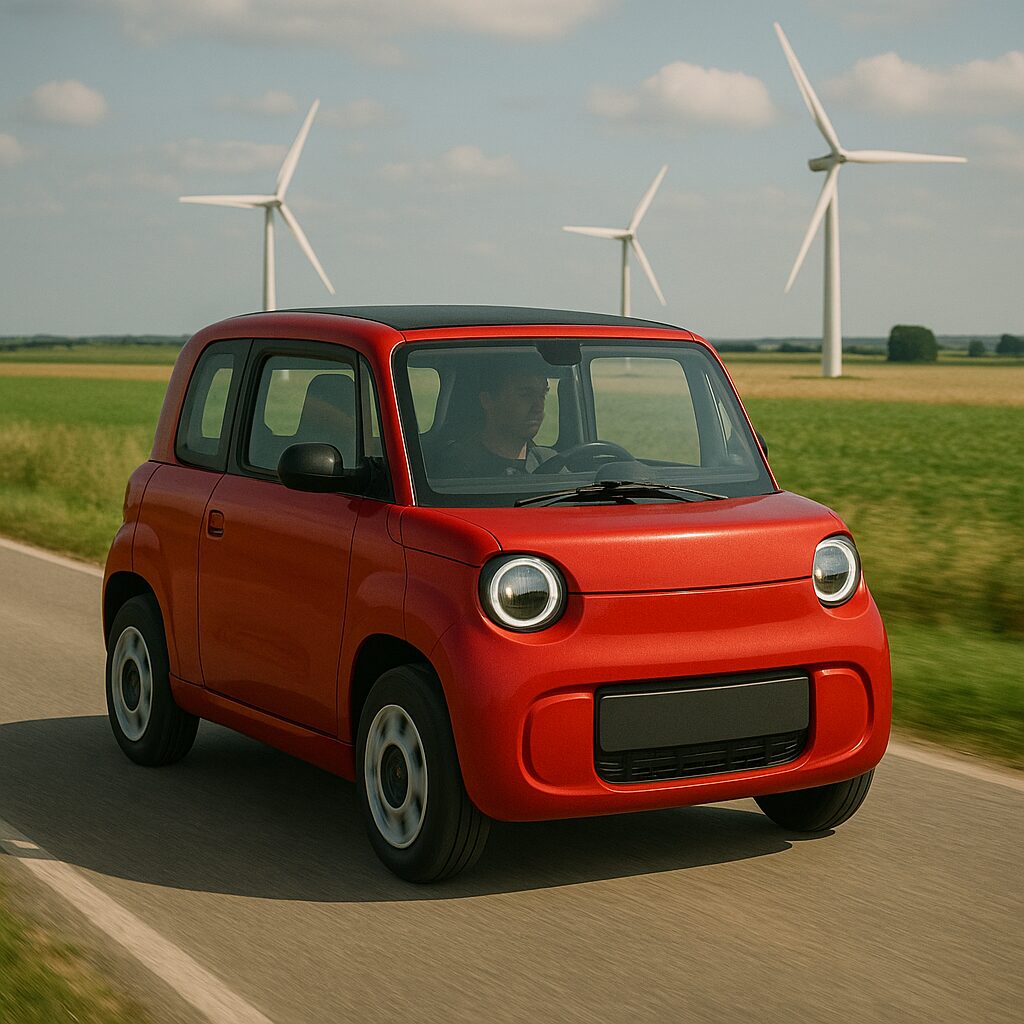
    red electric car

    Incumbents vs. traditional builders: beneficial emulation

    Historically dominated by combustion engines, the French PSV market seems to be moving slowly but surely towards electric power. The boom of the Citroën Ami, launched in 2020, has had a lot to do with this, with more than 65,000 units sold in 5 years. It has recently been joined by another small electric no-licence car from a major manufacturer, the Fiat Topolino. These two models have enabled their manufacturers to take second and fourth place respectively in the rankings of the biggest sellers of licence-free cars in France in 2024.

    All this in the face of players who are already well established and, above all, specialised. Pioneers who are not giving up, however, since the leader, Aixam, has added a 100% electric range, as has Ligier which, after seeing Citroën overtake it, was only a few thousand sales away from seeing Fiat do the same! The fact remains, and this is good news for everyone, that sales of the four brands mentioned have risen sharply between 2023 and 2024. This competition is good for a market that was once considered old-fashioned, as it has encouraged the Stellantis giants to invest in innovation around this soft mobility that they had sidelined for too long, and also the traditional players to speed up their electrification. All this while glamorising electric PSVs with marketing campaigns!

    In the space of just a few years, licence-free cars have gone from being a “punishment for those who lose their licence” to a highly desirable form of soft mobility. And in this market, it’s a case of give and take: on the one hand, electric cars have given a boost to the PSV, and on the other, the growth of the PSV means that the French car fleet can be electrified more quickly.

    Top 4 PSV manufacturers in France (2024)
    1- Aixam / 10,771 sales / Growth of 8.7% / Combined heat and power / 33.9% of the market
    2- Citroën / 9,267 sales / Growth of 4.2% / All electric / 29.3% of the market
    3- Ligier / 5,869 sales / 8.4% growth / combustion and electric / 18.5% of the market
    4- Fiat / 4,567 sales / First year / All electric / 14.3% of the market
    ( Voltandgo figures)
  • French public transport: where will electric vehicles fit in tomorrow?

    French public transport: where will electric vehicles fit in tomorrow?

    In the face of the climate emergency and the need to decarbonise mobility, France is speeding up the transition to cleaner public transport. From one end of the country to the other, from metropolises to rural areas, projects are accelerating in favour of electric transport. An overview of a major transformation.

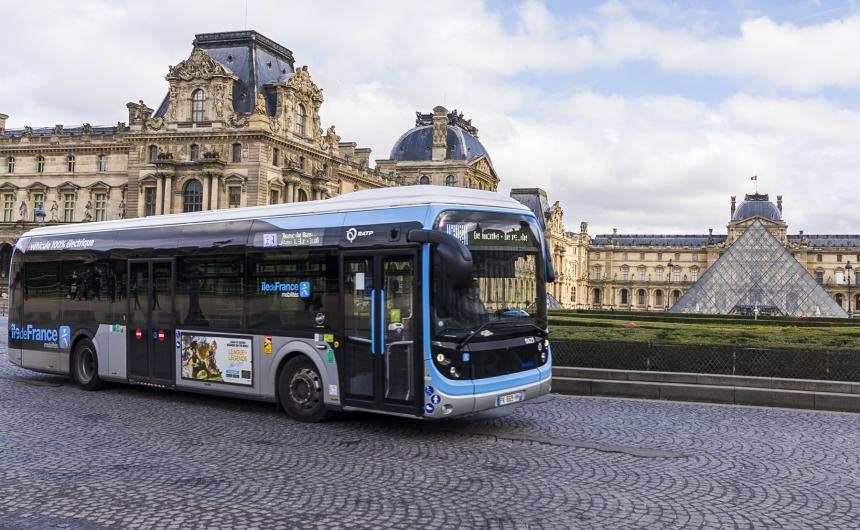
    Credit: RATP
    Credit: RATP

    Île-de-France on the front line

    The Paris region is at the heart of the energy transition in the public transport sector. With its ambitious ” Bus2025 ” programme, RATP plans to convert all of its 25 operational centres to electric and biomethane engines by the end of 2025. Eventually, 1,000 electric buses and 1,300 buses running on renewable gas will be on the roads in Paris and its inner suburbs. This project should make it possible to halve CO₂ emissions linked to bus traffic. It is part of RATP’s overall objective to reduce its greenhouse gas emissions by 50%.

    At the same time, Île-de-France Mobilités is continuing to extend the transport network, with metro line 14 reaching Villejuif-Gustave Roussy station in early 2025. The launch of the Tzen 4 bus line, replacing line 402 between Viry-Châtillon and Corbeil-Essonnes, is also planned. Tzen 4 is a world first: it will be the first 24-metre bi-articulated bus, 100% electric, with ground recharging in less than five minutes.

    Electric cars are gaining ground in major cities

    In France’s major cities, electric vehicles are playing an increasingly visible role in urban transport networks.

    Lyon is planning a far-reaching transformation of its network, with the integration of electric vehicles into the future unified TCL network from September 2025. The city is also adapting its infrastructure to accommodate new electric buses and test pilot lines on the outskirts.

    In Bordeaux, the deployment of express bus lines is based in part on electric vehicles, with the first service scheduled for 2025. The already electrified tramway lines are also being extended (lines E and F), strengthening the non-polluting offer in the city.

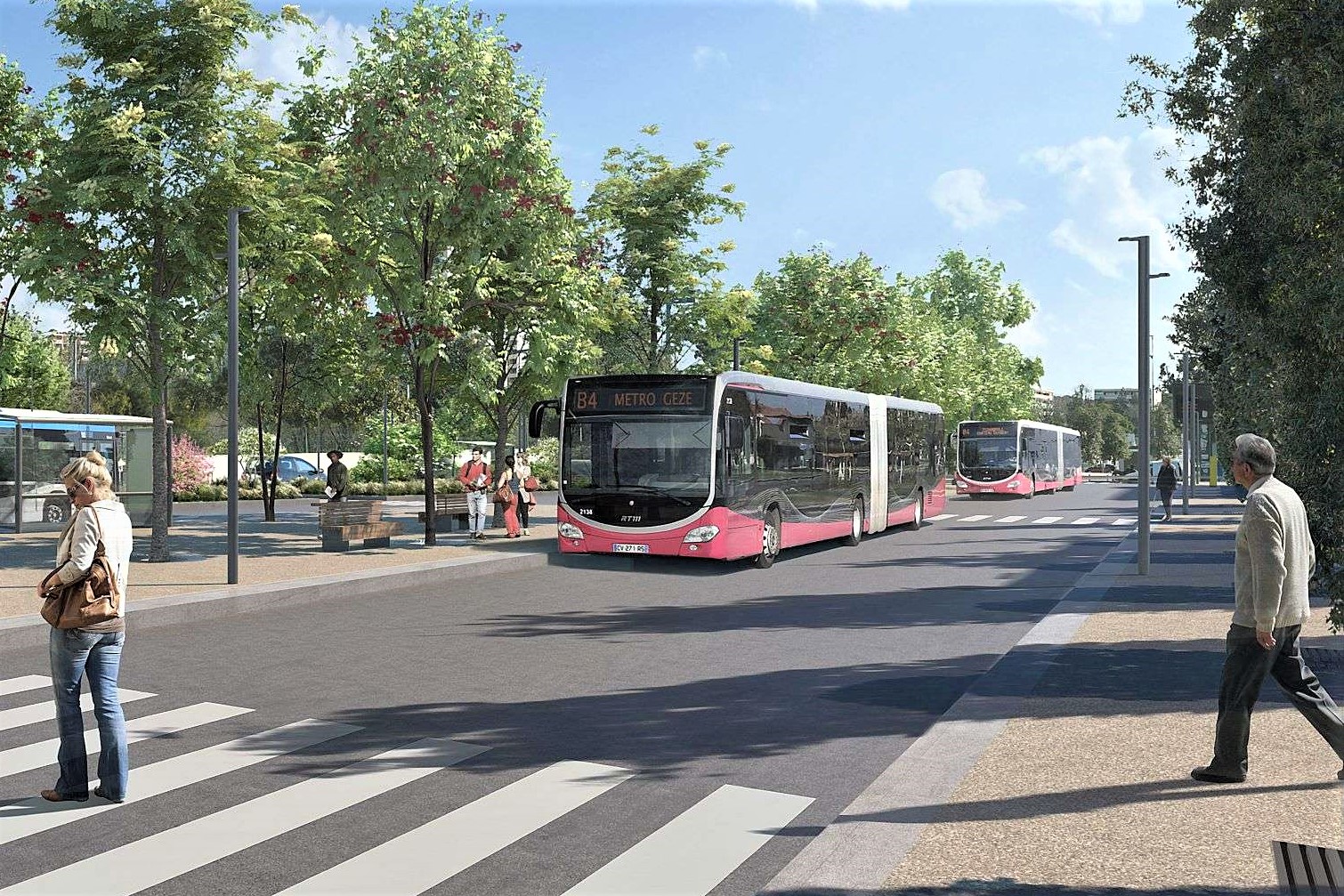
    In Marseille, the “Marseille en Grand” plan includes electrified BRTs (Bus à Haut Niveau de Service). Line B4, due to enter service in 2025, will operate with an all-electric fleet. The city also plans to integrate more electric buses into its RTM network.

    The northern districts will have a high service level bus by early 2025
    Credit: B4 BRT public consultation file

    In the regions: major projects

    Looking beyond the metropolises, France intends to strengthen inter-urban and peri-urban mobility via the Regional Metropolitan Express Services (SERM), a concept inspired by the RER in the Paris region. Fifteen projects have been approved, covering cities such as Strasbourg, Lille, Nantes and Grenoble. These SERMs combine trains, express coaches, safe cycle paths and unified pricing to facilitate access to clean mobility.

    Urban and interurban logistics are also concerned: 972 charging points for electric HGVs have been deployed in depots, and 24 public charging stations for HGVs opened on 1 January 2025. These infrastructures are strategic for supporting the decarbonisation of freight.

    Electricity grid: an essential link

    The widespread use of electricity raises the question of energy infrastructure. RTE, the operator of the public electricity transmission network, is planning massive investment between now and 2040. The aim is clear: to adapt the network to support the growth in electric mobility, while guaranteeing the reliability of supply.

    A still fragile transition

    While the momentum is there, the transition is still fraught with obstacles. The cost of the projects, the slowness of certain local consultations and the problems of maintenance or training in the new technologies are sometimes holding back the momentum. Social acceptability, particularly in rural areas or areas with poor access, remains a major challenge.

    France is well and truly engaged in a profound transformation of its public transport system. While the major cities are playing a leading role, the widespread use of electric mobility will also depend on regional planning, infrastructure and the collective ability to make this transition a lever for cohesion and sustainable development.