
Category: France

  • French Overseas Territories: electrical challenges at the ends of the earth

    French Overseas Territories: electrical challenges at the ends of the earth

    At a time when countries are developing their energy transitions for transport, are France’s overseas territories, which are often overlooked in major national plans, being left behind when it comes to electromobility? Logistical challenges, a unique energy mix, ambitions that are sometimes thwarted: territory by territory, let’s find out where electromobility stands off the French mainland in 2025.

    Electric car on a mountain road surrounded by dense vegetation.
    An electric car drives along a mountain road in the middle of nature, illustrating sustainable mobility in green landscapes.

    La Réunion

    Réunion is the leader in electromobility in the French overseas territories, with the highest penetration rate. With a total of 6,005 new vehicles sold in the first quarter of 2025, the island is down 8.4% on last year. The same applies to electrified vehicles: 742 electric vehicles sold, a fall of 32.1%.

    In these figures, BEVs account for 631 units (10.5% market share), while PHEVs represent 111 units (1.8% market share). These declines are largely due to the abolition of the local tax exemption and higher prices.

    It also has the highest density of charging points (462 public points), supported by local operators such as EZDrive. The region has a high overall electrification rate (49.9%), but remains highly sensitive to economic and political uncertainties.

    Martinique

    By 2025, the region will have 211 public charging points, a figure that is rising but still insufficient to support motorists. They are deployed by various operators: EZDrive, VoltDom and TotalEnergies, who offer competitive average tariffs.

    The market for electric vehicles remains modest (4.9% market share in 2024).

    There are several reasons for this low penetration:

    • A road network that consumes a lot of energy (steep gradients, almost constant air conditioning);
    • a limited range of models that are not always adapted to local constraints ;
    • a tense economic and social context.

    Guadeloupe

    Guadeloupe has more than 184 public charging points, a number that is still low but growing steadily, supported by players such as gmob, EZDrive and TotalEnergies.
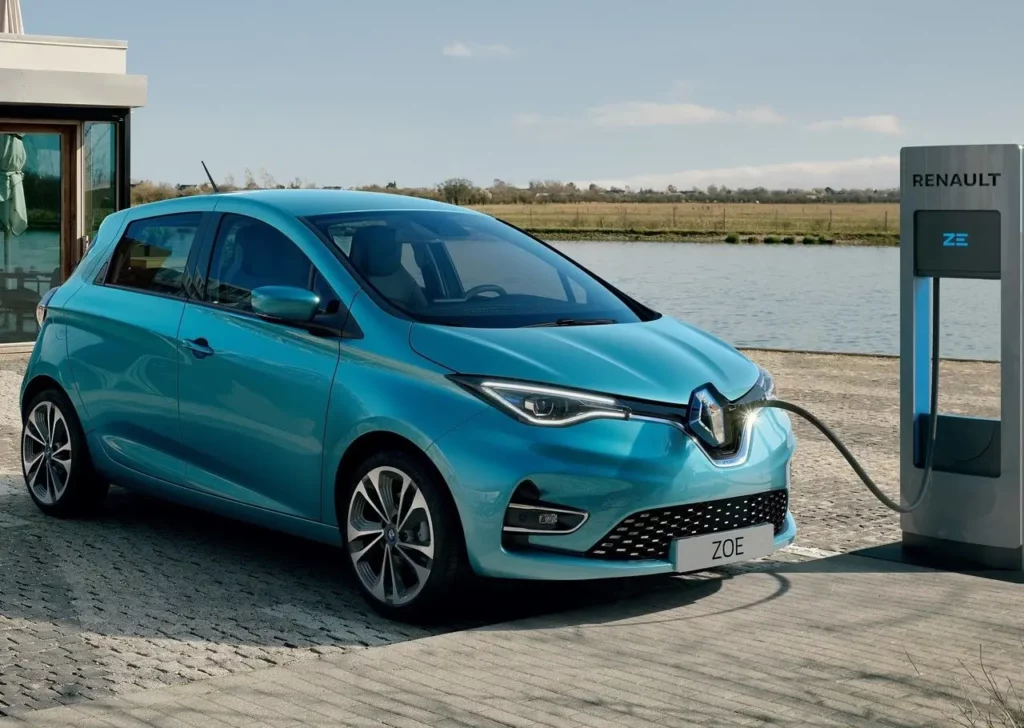
    Renault Zoe plugged into an electric charging point.
    A Renault Zoe recharges at a charging point, illustrating the boom in electric vehicles in the French overseas territories.

    In terms of sales, the results are encouraging: despite an overall decline in the passenger car market (-6.1% in 2024), the share of electric vehicles is between 5 and 6%, representing an increase of around 20%.

    As well as cars, electromobility is also making headway on two-wheeled vehicles: in recent years, the majority of mopeds sold have been electric.

    EDF Guadeloupe has also launched the D.R.I.V.E. project, an experiment designed to measure the benefits of photovoltaic shading dedicated to recharging, with intelligent control to favour hours of sunshine.

    French Guiana

    Despite having the largest territory in French overseas territories, electromobility in French Guiana is struggling to take off. The public network has just 30 charging points, making it the least equipped territory. This shortfall is a major obstacle, and the market share of BEVs remains below 3%.

    Paradoxically, French Guiana is one of the most advanced regions in terms of carbon-free electricity production, thanks to the Petit-Saut dam and its hydroelectric potential, which covers almost 70% of electricity needs.

    Mayotte

    Probably the most troubled territory, Mayotte suffers from a very fragile economy. The car market is in crisis, with a 12.6% fall in second-hand cars by 2024, and a low penetration of pure electric cars (just over 3%).

    Despite this, the rate of hybrid electrification is high (30.2% by 2022). The transition is underway, but is severely hampered by local economic constraints.

    Data on infrastructure is non-existent: this lack of public information means that the region is significantly behind the times.

    New Caledonia

    In 2022, New Caledonia adopted an Energy Transition Plan (STENC 2) with a clear objective: 18,500 electric vehicles by 2030. The territory has already made progress: around 1,000 EVs are on the road, there are some forty charging points (Hivy network), and the first 150 kW hypercharging point was inaugurated in 2025.

    Local aid also supports the transition:

    • bonus of 600,000 CFP francs (around €5,030) for the purchase of an EV;
    • preferential electricity tariff for charging points: 8 francs/kWh during the day and 20 francs/kWh at night (compared with 34.96 francs for the standard tariff).

    However, the transition is still being held back by cultural (strong attachment to 4×4 vehicles), economic and political factors.

    BYD Seal U on a coastal road by the sea.
    The BYD Seal U drives along a coastal road in the sunshine, a typical landscape found in many overseas territories. (Credit: BYD Guyane)

    French Polynesia

    The market is still in its infancy, with only 2 to 3% electric cars and around 150 sold each year.
    Unlike New Caledonia, Polynesia offers no significant subsidies, which is holding back adoption.

    Scaling up is limited by the almost non-existent infrastructure, particularly in view of the very recent authorisation (2024) to install chargeable charging stations of more than 3 kW.

    Saint-Barthélemy & Saint-Martin

    In these areas, electromobility is still a niche mode of transport, at the top end of the market: the transition is mainly being made by importing luxury models, often hybrids. Public charging points are rare, and local support is virtually non-existent.

    Other overseas territories

    In Saint-Pierre-et-Miquelon and Wallis and Futuna, markets are marginal or non-existent. With no recorded infrastructure and a low population density, the entire market depends on imports, with demand remaining very low.

    Integration into national policies

    France has been encouraging electromobility for years, particularly through public subsidies. But while national schemes (ecological bonuses, social leasing) are theoretically open to the French overseas departments and territories, their application is proving complex.

    The government has increased the bonus for the DROMs by €1,000, up to a maximum of €8,000 depending on resources. However, the conversion bonus has been abolished for private individuals since December 2024.

    A €500 tax credit for the installation of a home charging point has been extended until 2027. The ADVENIR ZNI programme, set up by ADEME, finances up to €2,160 per charging point in non-interconnected zones. In particular, it encourages solar charging to avoid peaks in consumption.

    However, these aids are not always as successful as expected: high logistical costs, import prices, lack of take-back structures, low terminal density and local tax policies limit their impact.
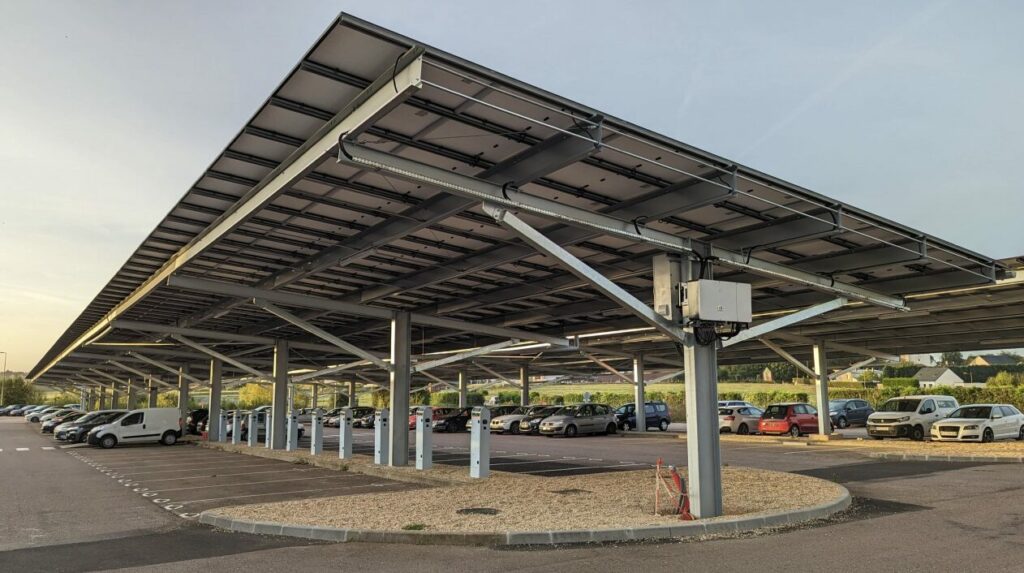
    Solar charging stations for electric cars in a car park in Martinique.
    Solar recharging stations in Martinique, an example of innovative solutions adapted to the energy realities of overseas France. (Credit: Terre Solaire)

    Cross-cutting challenges and strengths

    The overseas territories present an energy paradox: heavy dependence on fossil fuels, but considerable renewable potential (sun, wind, hydroelectricity).

    Their status as non-interconnected zones means that the cost of electricity production can be up to ten times higher than in mainland France.
    This context complicates the emergence of sustainable electromobility, where optimising recharging and coordination with local energies are essential.

    There are also socio-economic constraints (poverty, high prices, unsuitable models) and the intensive use of air conditioning, which consumes a lot of battery power. However, the short distances between islands are an advantage: they make them natural laboratories for the energy transition, particularly through mini-grids, solar shading and intelligent management of recharging.

    Conclusion

    While La Réunion is leading the way, with a penetration rate in excess of 10%, the transition remains very uneven across France’s overseas territories. Martinique, Guadeloupe, French Guiana and Mayotte are lagging behind, while New Caledonia and Polynesia have ambitions despite a still limited market.

    There is real integration with the aid available in mainland France, but their effectiveness requires differentiated support and wider access to recharging. The decade 2025-2035 will be decisive: the challenge is clear – to make the overseas territories major levers for sustainable mobility.
  • French electromobility in 2025: between innovations and challenges

    French electromobility in 2025: between innovations and challenges

    As we enter 2025, the French automotive industry is stepping up its efforts to adapt to the energy transition. Between technological advances, the development of recharging infrastructures and regulatory changes, the electromobility landscape is undergoing major transformations.

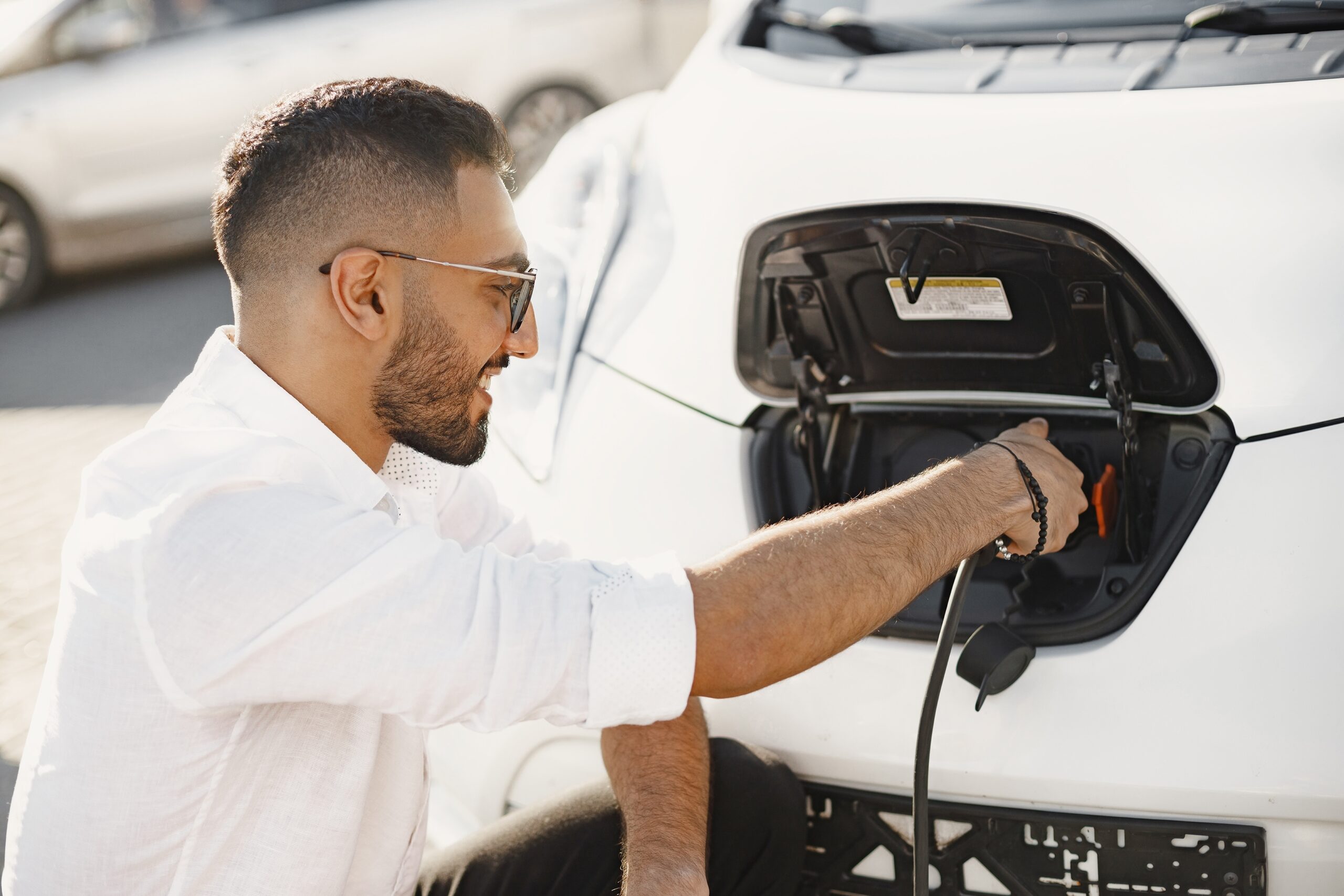
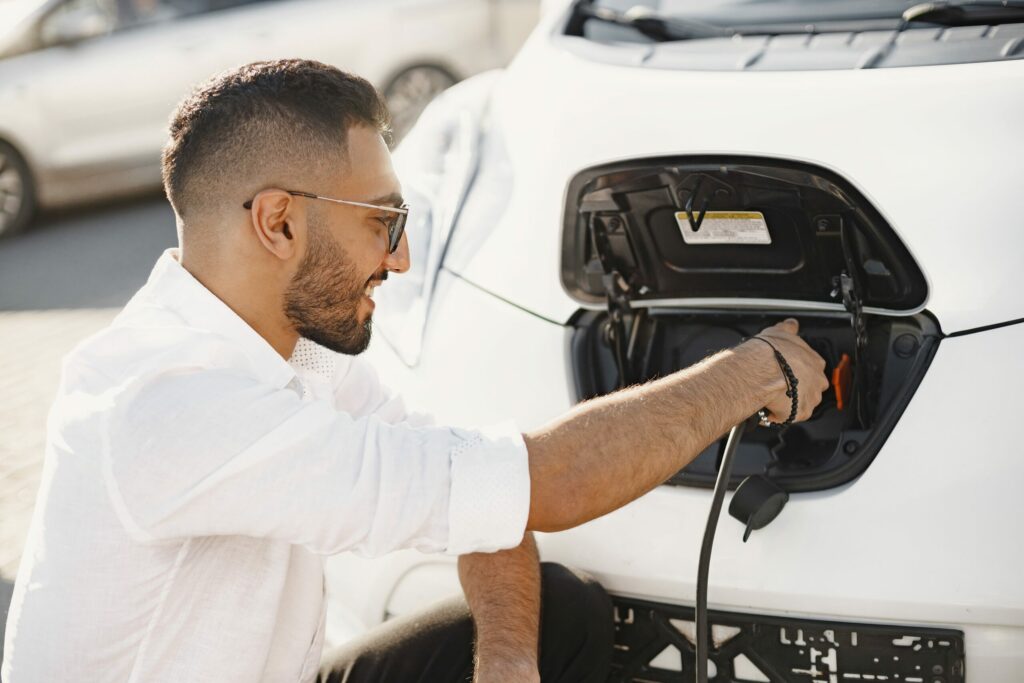
    Young man charging his electric car, a symbol of sustainable urban electromobility.
    Young man recharging his electric car, reflecting the roll-out of recharging infrastructure in France.

    Since January, French manufacturers such as Renault and Stellantis have continued to invest in the development of high-performance, affordable electric vehicles. Renault, a European leader in electric cars, is continuing to invest in V2G technology. This technology enables energy to be redistributed on the electricity grid (Vehicle to Grid). It can also power electrical appliances (Vehicle to Load). Renault continues to invest in research and development to further improve its technologies and meet the challenges of the energy transition.

    Stellantis, for its part, is developing modular platforms dedicated to electric vehicles. The aim is to diversify its offering while keeping production costs under control. This automotive group is one of France’s leading innovators. It is France’s leading patent filer, with 1,289 patents registered in 2024. These figures come from the rankings announced by the Institut National de la Propriété Industrielle (INPI).

    This year, Vinci Autoroutes is also testing an “electric motorway” capable of recharging vehicles by induction on a two-kilometre stretch of the A10 near Paris. This project, led by Vinci Autoroutes in collaboration with Gustave-Eiffel University and industrialist Hutchinson since 2023, aims to test the energy efficiency of this innovative technology. The device is buried a few centimetres beneath the carriageway. It could reduce the number of stops required for recharging. It could also reduce the size of the batteries needed, thereby contributing to the decarbonisation of transport, particularly for heavy goods vehicles.

    A fast-expanding recharging network

    The rollout of charging infrastructure is gathering pace in France. From 1ᵉʳ January 2025, new obligations require car parks in buildings open to the public to be equipped with charging points, in accordance with the provisions of the French Mobility Orientation Act (LOM). Non-residential buildings with more than 20 parking spaces must now install charging points for electric vehicles, with at least 5% of spaces equipped, including spaces for people with reduced mobility. This should satisfy electric motorists: “This is a necessary change to support the transition to electric mobility. The lack of charging points was a major obstacle for many drivers. With these new requirements, it will finally be easier to recharge your vehicle on a daily basis”, explains Thomas, a resident of the Paris region.

    A white semi-trailer truck driving along a mountain road at sunset, a symbol of transport and electromobility.
    Freight transport and electromobility: an electric truck travelling on an Alpine road, illustrating high-performance, sustainable electric vehicles.

    Accessibility of charging in condominiums

    Similar measures have been put in place in condominiums to facilitate access to recharging for residents. According to the fourth IRVE Barometer published by Avere-France, AFOR and Enedis, more than 10,000 condominiums are now equipped with charging stations. In addition, 33,880 condominiums have validated their plans to install charging infrastructure. These initiatives are designed to encourage the adoption of electric cars. They improve the accessibility and convenience of recharging. They also address concerns about range and infrastructure.

    “Thanks to these measures, I can finally recharge my car in my car park. Before, I had to leave my car more than ten minutes from home, which was very tiring. I went to great lengths to ensure that we could have these recharging facilities,” says a delighted Laura, who owns an electric car. Although the figures are rising, the deployment of charging infrastructure is struggling to keep pace with the growth in the electric vehicle market. According to the barometer, there are 269,000 apartment blocks with car parks in France, but only 3.94% of them currently have a collective recharging solution.

    Changing financial incentives

    On the regulatory front, the French government plans to cut support for the purchase of electric vehicles by a third by 2025. The budget will be cut from €1.5 billion to €1 billion. On 2 December 2024, the conversion allowance was abolished. This bonus provided aid for the purchase of a less polluting vehicle by scrapping an old car. This reduction is explained by the falling cost of electric vehicles and their growing market share. As a result, the need for subsidies has been reduced.

    The remaining funds will be prioritised for low-income households to ensure a fairer transition.

    The government is stepping up penalties on vehicles with high CO₂ emissions, lowering emission thresholds to 113g CO₂/km in 2025, then to 106g in 2026 and 99g in 2027. These measures are designed to encourage the adoption of cleaner vehicles and accelerate the transition to sustainable mobility.
    A sector still facing challenges

    The year 2025 marks a turning point for the French automotive sector. Industry players are focusing on sustainability, safety and innovation. However, challenges remain. They concern the affordability of electric vehicles, the densification of recharging infrastructures and the management of the environmental impact of battery production and recycling.

    Research is continuing into alternative technologies, such as solid batteries and hydrogen. These innovations aim to improve range and reduce the sector’s carbon footprint. The industry will also need to be structured to ensure that batteries are more recyclable. It will also have to minimise their environmental impact throughout their life cycle.

    Collaboration between public authorities, manufacturers and consumers will be key to overcoming these obstacles. It will help to position France as a leader in electromobility in Europe.

  • Profile of electric car owners in France

    Profile of electric car owners in France

    As the electric car market is still relatively new and growing rapidly, it is of interest to consultancies and pollsters, who are constantly publishing studies on the subject which, when aggregated, produce a profile of the typical electric car owner in France.

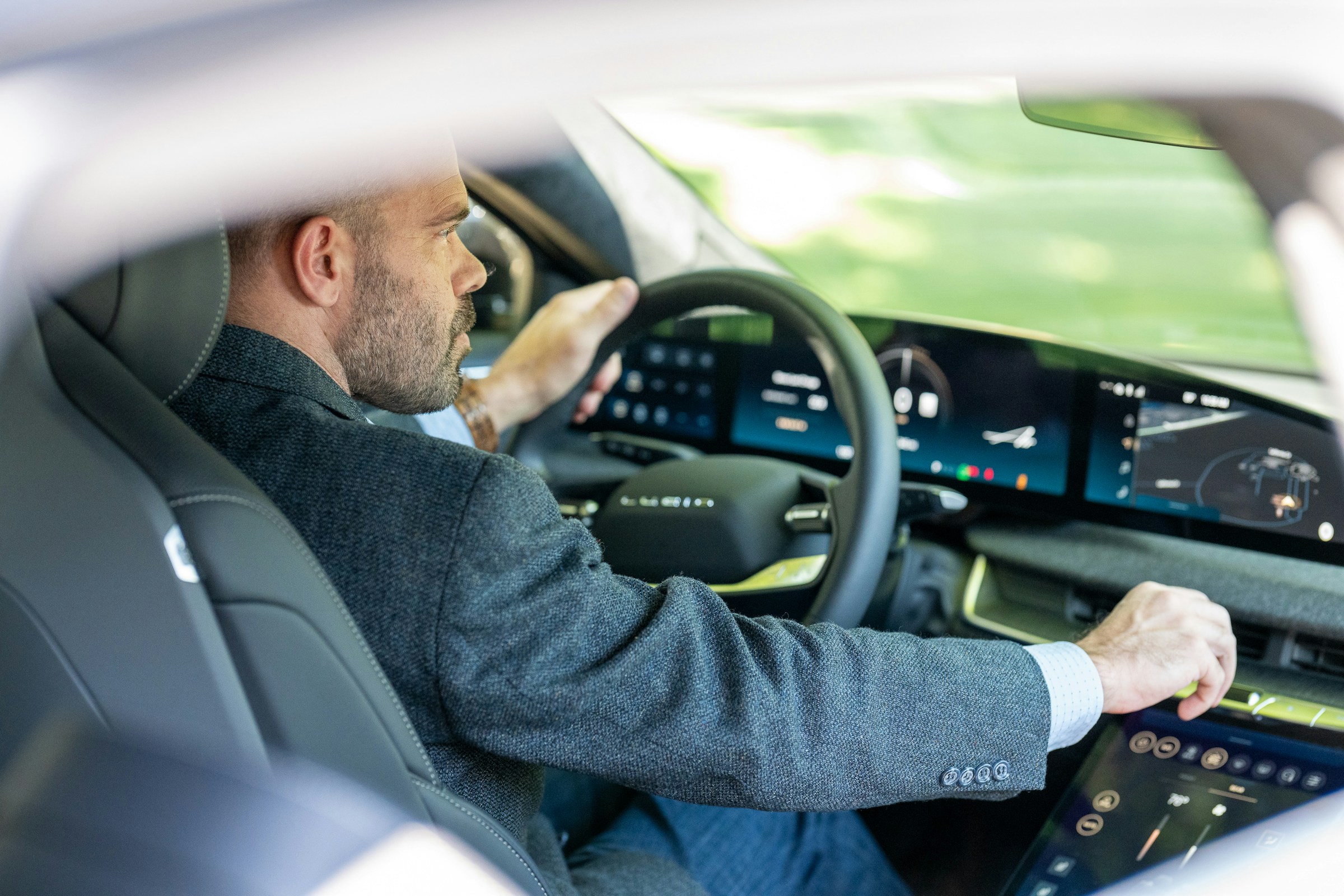
    Man driving an electric car in France, seen from behind
    A discreet portrait of an electric car owner in France, behind the wheel of his vehicle. (Credit: Michael Kahn)

    We know that they are men (nearly 70% of owners), private individuals, aged between 46 and 48 according to the studies (much younger than those with combustion engines, whose buyers of new cars are approaching sixty), mostly city dwellers, who invest in new cars. Technophiles, they generally have a charging point at home – a figure that rises to 90% for house owners – and, despite comfortable incomes, they tend to go for the most affordable models, which they acquire by leasing. Finally, in the first few months of 2025, French electric vehicle owners were more inclined to buy… French! In fact, the top 10 electric cars sold in France in recent months include six models from French manufacturers.

    The main motivations

    For this typical buyer and all the others, the decision to go electric is the result of a number of factors. The first is, of course, consumers’ growing ecological awareness. Reducing their carbon footprint (in use) and making their own contribution to curbing climate change are the main reasons for considering the purchase of an electric car, particularly among younger people, which explains why the average age of electric vehicle owners is lower than that of internal combustion customers. But this is not the only argument in favour of ‘watted’ cars. While the average purchase price of an electric car is always higher than that of a combustion engine, the running costs are lower, maintenance is less frequent and more expensive, and it is possible to benefit from state aid to reduce the bill. Add to this the numerous financing options, from long-term leasing (LLD) to leasing with an option to purchase (LOA), and the wallet can manage without too much damage. The new generation, for whom the car seems to be primarily a utility object rather than a collector’s item, seems more inclined to lease their vehicle and to change it more often than their elders.

    In the same vein, shifting gears after rattling the rev counter, listening to the hum of a V8 and changing the oil, filters and spark plugs in the garage on Sundays is a little less thrilling for these new buyers, who prefer a vehicle that is quiet, easy to drive and packed with technology.

    Car park full of electric cars in France
    A mass of electric vehicles in a car park in France, reflecting the widespread adoption of electric cars.

    Persistent obstacles

    But let’s not kid ourselves. If the electric car market is growing rapidly, it’s mainly because it started from scratch and has been boosted by various political measures, both in France and in the European Union. Consumers are still faced with a number of obstacles to the purchase of an electric car, the most important of which is range. This is the number one concern for more than 80% of French people, even though on average they only drive around fifty kilometres a day. In addition to this – slightly exaggerated – fear of a breakdown, there’s the worry of not being able to find charging points. With 160,000 charging points spread across the country, France is not lagging behind, and is even aiming for 400,000 by 2030. By way of comparison, there are only 10,000 service stations in the whole country! But the argument is still valid, particularly for people living in rural areas who often have no choice but to install a charging point at home, given the long distances between charging stations.

    Finally, although we mentioned above that electric cars can be interesting from a financial point of view, money is still a barrier for most households. This can be explained by the fact that the second-hand market for electric cars is still very small. Logical, given that a French owner keeps his or her electric vehicle for an average of 5 years before selling it on, and that a large number of these vehicles in the French fleet have been on the road for less than 5 years… There are grounds for optimism.

    Towards democratisation?

    All the lights are green for the democratisation of electric cars (and electric mobility in general) in France and Europe. Carmakers have switched, are switching or are planning to switch to 100% electric cars, from the most mass-market to the most luxurious, driven by the desire to change things, to attract new, younger consumers who are concerned about the environment, but above all by the local policies imposed on them. In 2035, quite simply, it will be forbidden to sell new combustion-powered vehicles. And 10 years is the minimum time needed to ensure that the transition is complete by then.

    The ambitions for infrastructure dedicated to recharging electric vehicles are very high, but so far in France, one target after another has been met, giving us confidence for the future. The same goes for innovations to extend the range of electric vehicles, battery recycling and battery manufacture – all areas of uncertainty and concern for French consumers that should become clearer over the next few years. The main question is whether, by 2035, the sketch we drew up in the introduction will be any different from that of 2025? Not for sure, but if there is a real democratisation of electric mobility, it will be much more complex to establish!

  • The French electricity industry faces the challenge of global competition

    The French electricity industry faces the challenge of global competition

    France is banking on electric vehicles to secure its industrial and environmental future. In 2024, production of electric vehicles jumped by 68%, driven by iconic models such as the Renault 5 electric and the Peugeot e-3008. But in a market dominated by China and the United States, the French industry must redouble its efforts to remain competitive. Between innovation, relocation and economic pressure, the French electric vehicle industry is at a turning point.

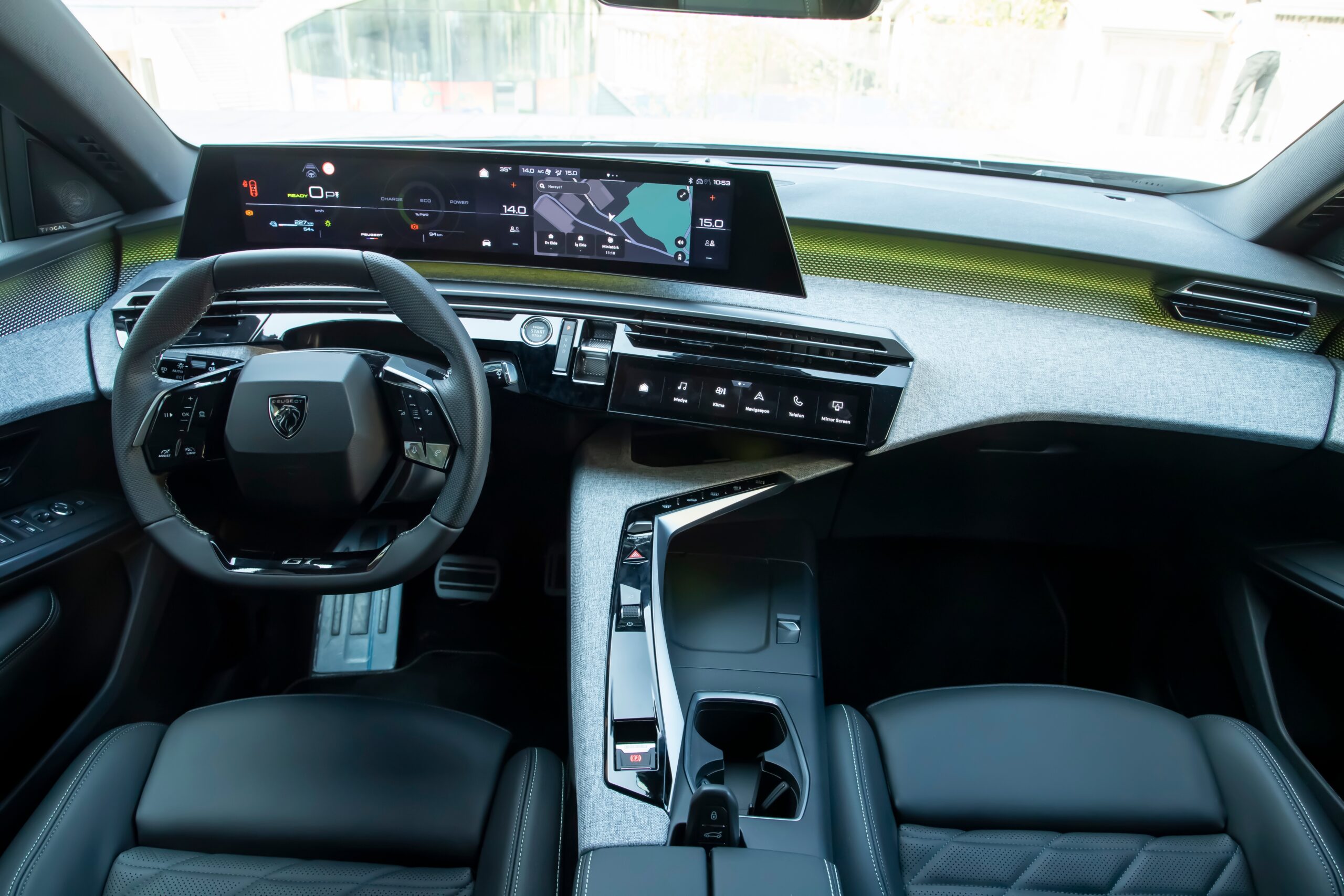
    Peugeot e-3008, compact electric SUV with luxurious interior
    Peugeot e-3008, a 100% electric SUV with a neat, modern interior design

    The French government has set an ambitious target of 800,000 electric vehicle sales per year by 2027, up from around 300,000 in 2023. This will be accompanied by accelerated development of charging infrastructure, with a target of 400,000 charging points installed by 2030. To encourage consumers to take the plunge, schemes such as the ecological bonus and social leasing at 100 euros a month have been introduced. However, these incentives are gradually being reduced, a sign that the market needs to become more self-sufficient.

    At the same time, French carmakers are investing massively to offer vehicles that are more efficient, more autonomous and more accessible to a wider customer base. However, there are still many challenges to be overcome, such as the still high purchase price, the cost of batteries, uncertainties over critical materials, and the resistance of some consumers to new powertrains.

    Strategic investment for greater autonomy

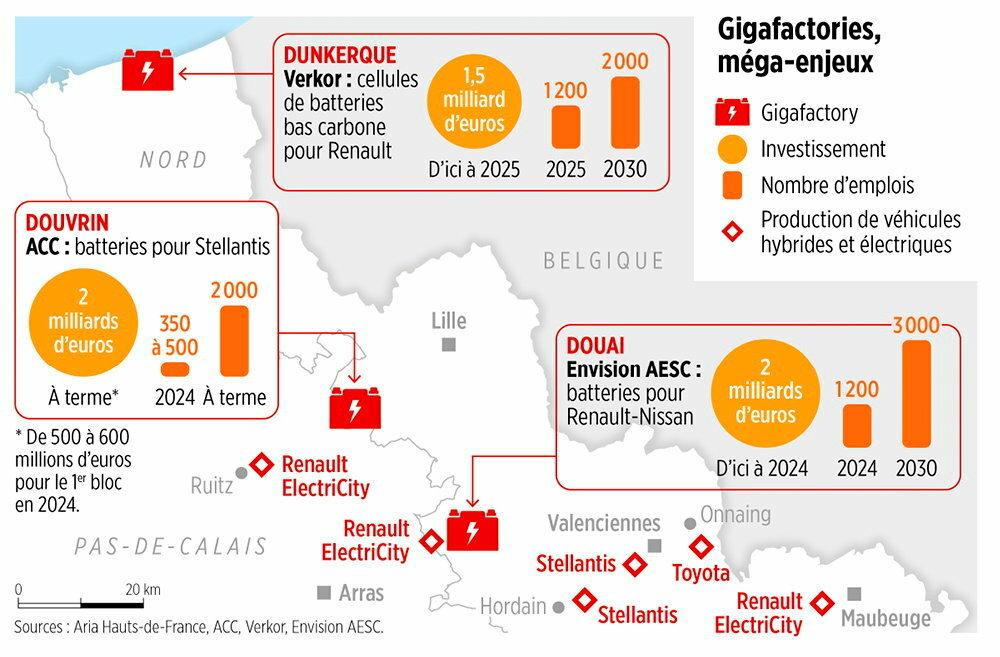
    Faced with Europe’s dependence on Asian imports of batteries and rare materials, France has embarked on a policy of industrial sovereignty. Several gigafactories are currently under construction, notably in the north of the country, with the aim of producing batteries locally and reducing logistical and environmental costs. In Dunkirk, a Franco-Chinese partnership between Orano (formerly Areva) and XTC New Energy Materials, announced in December 2024, plans to manufacture battery components. This €1.5 billion ambition, conceived as part of the NEOMAT project, raises both hopes and questions about technological dependence on China.

    Map of France showing the locations of future electric battery gigafactories
    Map showing the sites planned for future gigafactories producing electric batteries in France

    Raw materials are also a major issue. The energy transition depends to a large extent on rare metals such as lithium, cobalt and nickel, the extraction of which is highly concentrated in a few countries, particularly in South America and Africa. To secure these resources, France and Europe are seeking to diversify their supplies and invest in projects to recycle used batteries.

    Fierce international competition

    While electromobility in France is making progress, it faces intense competition. Tesla, with its plant in Berlin, is flooding the European market and dominating sales with its Model Y, which has become the benchmark electric SUV thanks to its range, performance and ultra-developed recharging network. This local presence enables Elon Musk’s brand to avoid customs duties and speed up deliveries in Europe, strengthening its dominant position.

    China, meanwhile, despite French restrictions on aid for vehicles produced outside Europe, is making its mark with brands such as BYD and MG Motors. These manufacturers are banking on very competitive prices and advanced technologies, particularly in terms of batteries and energy efficiency. BYD, which develops its own lithium-iron-phosphate (LFP) batteries, enjoys a strategic advantage by reducing its production costs and offering high-performance models at attractive prices. Blade Battery technology currently offers capacities of 61.44 kWh and 80.64 kWh, giving a range of between 433 and 552 kilometres according to the European WLTP homologation cycle. Chinese-controlled MG Motors is also attracting interest with its well-equipped, affordable vehicles, increasing the pressure on European manufacturers who are struggling to compete in the entry and mid-range segment.

    The French industry is seeking to distinguish itself through the quality of its vehicles and their integration into a national energy ecosystem. The government is supporting this approach through the France 2030 plan, which aims to produce two million electric vehicles a year in France by 2030, by mastering cutting-edge technologies such as electric motors and batteries. Producing more affordable vehicles is one of the major challenges. Several projects aim to develop models costing less than €20,000, while guaranteeing satisfactory range and durability. For example, Renault plans to market an electric version of the Twingo in 2026 at a price of less than €20,000.

    Public charging station for electric cars in car park
    Public recharging station facilitating the mobility of electric cars in urban areas.

    A key role for public policy

    To support the industry while speeding up the ecological transition, subsidies for the purchase of electric vehicles will be gradually reduced, from €1.5 billion to €1 billion by 2025. At the same time, stricter taxes on internal combustion vehicles are being introduced to encourage consumers to switch to electric vehicles.

    France is investing in battery recycling to limit its environmental impact and reduce its dependence on imports of rare metals. Companies such as Verkor and Northvolt are developing innovative solutions to recover lithium, cobalt and nickel, reintegrating these materials into new batteries.

    By focusing on the circular economy, the aim is to secure supply, reduce the carbon footprint and strengthen industrial autonomy. These initiatives are part of a wider strategy to make electric mobility more sustainable and competitive.

    Making the transition more accessible

    The development of electromobility in France must not be at the expense of accessibility for low-income households. Developing a range of low-cost vehicles and extending the recharging network, including in rural areas, are priorities. Electric vehicles must also be integrated into a broader framework of sustainable mobility, including car-sharing and improved public transport.

    Another major challenge lies in training professionals and adapting infrastructures. The installation of charging points needs to be accelerated in condominiums and public spaces, while garages and technicians need to be trained in the specific features of electric vehicles to support their widespread deployment.

    The next few years will be crucial in determining whether France succeeds in establishing itself as a major player in electric vehicles in Europe. With strategic investment, an ambitious industrial policy and a focus on consumer needs, the French automotive industry has a card to play in this global transition.

  • Assessment and challenges for France as the electricity transition gathers pace

    Assessment and challenges for France as the electricity transition gathers pace

    The transition to electric mobility is no longer a prospect: it’s a reality that is being forced upon manufacturers, consumers and governments alike. In France, the market for electric vehicles (EVs) is growing at a steady pace. But a crucial question remains: is France ready, in terms of infrastructure, to keep pace with this upheaval? And can it compete with the leaders in Europe and Asia in terms of industrial competitiveness and innovation?

    Electric charging point in France installed in a public car park
    Electric vehicle charging station installed in an urban area.

    The challenge of recharging: between promise and reality

    The deployment of charging points is one of the sinews of war. The 155,000 charging points announced for the end of 2024 mark a 31% increase in one year. But the fact that the 100,000 mark has been passed belatedly, more than two years late, reveals the structural difficulties we are encountering.

    Although France is one of the three best-equipped countries in Europe, this dynamic masks major regional disparities. Nearly 80% of charging points are concentrated in major cities, leaving rural areas in an electrical desert. The Cour des Comptes warns that unequal access to the IRVE (Infrastructure de Recharge de Véhicule Électrique – Electric Vehicle Charging Infrastructure) is limiting user confidence and slowing down the transition. It also points to the “difficulty of achieving a balanced network tailored to the real needs of users”, due to the fact that “the areas, generally urban, with the most IRVEs are also those with the largest electric vehicle fleets”.

    The business model for public charging points is a cause for concern, with high installation costs (up to €50,000 per rapid charging point), irregular usage rates and a reluctance on the part of operators to invest without a guaranteed return. In many medium-sized towns, there are fewer than 10 charging points per 100,000 inhabitants. In contrast, the Netherlands and Germany have a denser network, supported by strong public policies.

    Another critical point is the power of the charging points installed. While the number of charging points is increasing, the proportion of so-called “fast” charging points (over 150 kW) remains in the minority. To convince motorists who are reluctant to switch to electric vehicles, the ability to recharge quickly on long journeys is a key argument.

    As well as geographical disparities, there are a number of challenges weighing on the economic viability of players in the sector: soaring energy costs, adjustments to public subsidies and fluctuations in the electric vehicle market. All of these factors undermine the business models currently being developed.

    In this still shifting context, the IRVE sector is in a maturing phase. To ensure that it flourishes, a level playing field needs to be established, encouraging both innovation and private investment.

    France at a crossroads

    The development of infrastructure does not rely solely on public investment, but on the mobilisation of the industrial and energy ecosystem. France benefits from a low-carbon energy mix, a still solid automotive industry and committed players.

    But a number of obstacles remain. The first is administrative: projects slowed down by red tape, delays in connection or local blockages. Progress has been made via the“France Relance ” and“France 2030” plans, but implementation remains uneven.

    The second challenge is economic: in low-traffic areas, the profitability of resorts is uncertain, and operators are reluctant to invest where subsidies are decreasing.

    Finally, the reliability of the kiosks remains a problem. Some areas have an availability rate of less than 80%, fuelling public mistrust.

    Industrial competitiveness: the battle for batteries

    Behind the questions of charging points and bonuses, another battle is being waged: that of the industry. And it focuses on a central element: the battery.

    Electric car connected to a charging point in France
    An electric car being charged at a public charging point, a symbol of the energy transition.

    Without it, it will be impossible to capture the added value of the electric vehicle. Long absent from this segment, France has reacted. At Douvrin, in Pas-de-Calais, the first production lines of ACC (a joint venture between Stellantis, TotalEnergies and Mercedes-Benz) have opened. Other projects follow: Verkor in Dunkirk in the Nord region, with the support of Renault, and Taiwanese company ProLogium, which has also chosen northern France as the location for one of its plants. These projects represent an investment of several billion euros. And the objective is clear: to produce hundreds of thousands of batteries every year by the end of the decade.

    These “gigafactories” embody a desire for a change of scale and sovereignty, in the face of Asian domination. They are also seeking to secure supplies in the event of geopolitical tensions. But everything remains to be built: know-how, value chains and, above all, access to raw materials such as lithium and cobalt, which are often mined far away and under questionable conditions.

    Train, adapt, don’t suffer

    The switch to electric power is transforming the entire industry. No more pistons, less oil. More electronics, less mechanics.

    According to theObservatoire de la Métallurgie, more than 100,000 jobs could be affected between now and 2035, not eliminated but reconfigured. The risk is that the transition will leave some employees by the wayside.

    There are schemes in place: regional training courses, specialised apprentice training centres, in-house retraining. But the challenge is colossal. Training a battery technician or software engineer doesn’t happen overnight.

    And the tensions are already visible. In the gigafactories, recruiters are short of profiles ready to respond to the increase in power.

    Several electric cars parked in an urban street in France
    Electric cars parked in a street, illustrating the growing popularity of electric mobility in urban areas.

    A global race, a European response

    France is not alone. It is part of a multi-level game in which Europe is trying to defend its positions against well-armed giants. China, which is ahead at every stage – extraction, refining, recycling – dominates the chain. The United States, with its Inflation Reduction Act (IRA), is banking on massive aid to relocate its green industry.

    Europe is moving forward in stages: Green Pact, calls for projects, subsidies. But its response is often too slow and too fragmented. France is campaigning for a European industrial strategy based on innovation, moving upmarket and cooperation. Alliances with Germany and Spain will be crucial to the emergence of champions.

    Because beyond the standards and investment plans, it’s a question of sovereignty: producing your own vehicles, batteries and software. Not relying on another continent to run our cars.

    A pivotal moment

    The transition to electric cars is underway. Manufacturers are speeding up, sales are following suit and public opinion is changing. But behind the shop window, a profound transformation is taking place: an industrial fabric that needs to be rebuilt.

    It’s a race against time. There is no guarantee that it will be won. But it is vital for the competitiveness of the French automotive industry, for jobs, and to avoid becoming a mere consumer of imported technologies.

  • The French electric vehicle fleet: a government-led transition

    The French electric vehicle fleet: a government-led transition

    France has embarked on a profound transition in its mobility model, with the ambition of converting its entire vehicle fleet to electric power by 2035. While this change is often presented as an unavoidable necessity, in reality it brings with it a host of technical, social and industrial challenges that few countries have fully grasped. Behind the official announcements highlighting the mass adoption of electric vehicles by the French, the situation is actually more nuanced, with cultural reluctance, sometimes contradictory political choices and constant strategic adjustments on the part of manufacturers.

    Electric cars in France as part of the national energy transition strategy
    France wants to convert its car fleet to electric vehicles by 2035, despite a number of challenges.

    This dossier offers a detailed and critical analysis of public policies on electric vehicles, highlighting the many factors that influence government decisions. Although these choices are often justified by ecological imperatives, in reality they respond to wider issues, combining geopolitical, economic and industrial considerations, sometimes in tension with each other. Despite visible progress in terms of market share, this transition still faces major structural obstacles that are likely to limit its real impact, including on the environment.

    A transition with multiple and complex motivations

    The climate argument is often put forward, but it is not enough on its own to explain the choices made in terms of the automotive transition. Admittedly, transport accounts for around 30% of CO₂ emissions in France, but presenting the electric vehicle as a single, unavoidable solution raises a number of questions. Recent research, in particular that of the International Energy Agency in 2023, reminds us that the environmental impact of an electric vehicle depends on the country’s energy mix and its entire life cycle.

    In France, where the majority of electricity comes from nuclear sources, the environmental argument is still relevant. However, it tends to overshadow other decisive considerations. According to figures from the Ministry of Ecological Transition for 2023, the country’s heavy dependence on oil imports – almost 99% of the crude oil consumed in France is imported – makes electrification a strategic lever for reducing energy vulnerability and the trade deficit. Recent spikes in fuel prices have underlined the urgency of this issue in a country where the car remains a mainstay of daily life.

    The industrial battle: preserving a key sector of the French economy

    Behind all the talk of a “just transition” and positive ecology, the very future of the French car industry is at stake. Domestic manufacturers, starting with Renault, have been slow to embrace the electric revolution, leaving the field wide open to Tesla and Chinese brands such as BYD and MG, which have taken a significant lead.

    Since 2020, the French government has injected almost €7 billion, according to figures from the Cour des Comptes, to support both households and the sales of French groups. The decision to exclude vehicles produced outside the EU from the ecological bonus from January 2024 is a good illustration of the industrial stakes involved. Officially justified by the need to reduce the carbon footprint of shipping, this measure is designed to protect European manufacturers from the competitive pressure of more affordable Chinese models.

    Ambitious public policies with contrasting effects

    The bonus-malus system: between administrative complexity and inconsistencies

    The French system is based on a pile of tax measures that have become difficult to understand. The ecological bonus has been reduced to €4,000 for low-income households, compared with €7,000 previously, and the conversion bonus has been abolished. On top of this, local aid varies from region to region, with eligibility criteria that change regularly, creating instability and confusion.

    In addition to this complexity, there are some perverse effects: the ecological penalty, which has been capped at €70,000 since March 2025, penalises large families and professionals who need spacious vehicles. The bonus, meanwhile, excludes vehicles costing more than €47,000, limiting access to premium models for the upper middle classes.

    Low Emission Zones: a social time bomb

    The widespread introduction of Low Emission Zones (LEZ) in 45 major cities is fuelling tensions. While there is a consensus on the need to reduce pollution, the way in which they are applied raises issues of fairness. According to the Observatoire des Inégalités (March 2024), a modest household in the inner suburbs of Paris could have to invest three years’ median salary in a compliant vehicle.

    The solutions on offer – public transport, cycling – are often unsuitable. For travelling professionals (tradesmen, carers, etc.), doing without a car is unrealistic. This measure risks deepening the divide between well-equipped city centres and outlying areas that are still dependent on the car.

    Low-emission zones: a social challenge in France's electricity transition
    Low Emission Zones are causing social tensions in outlying areas.(Credit: Gile Michel/SIPA)

    Commercial and professional vehicles: the big losers in the transition

    The debate on the automotive transition continues to focus on private cars, even though commercial vehicles, which account for almost 60% of the vehicle fleet, are essential to the local economy. However, current electric models are struggling to meet needs: they have insufficient range once charged, take too long to recharge, and are prohibitively expensive for small businesses.

    The bonus for commercial vehicles has been abolished, and local grants are largely inadequate. As a result, many small businesses are caught between the diesel ban and the lack of viable electric options.

    A widening generational and territorial divide

    The transition to electric vehicles is reinforcing inequalities. For older people living in poorly served areas, the car is still essential, but EVs are a source of anxiety: autonomy, recharging, new uses. Young working people in rural areas, meanwhile, are faced with a dilemma: keeping an old internal combustion vehicle or going into debt for a second-hand EV with uncertain range. This double divide highlights the as yet unresolved social and territorial challenges of the transition.

    Towards a more balanced and realistic transition?

    Faced with growing tensions, a more balanced approach is needed to avoid mass rejection. A number of levers can be envisaged:

    • Creation of an independent observatory for EV prices and charging services to ensure transparency and combat abuse;
    • Condition public aid on sobriety criteria (weight, autonomy, carbon footprint) to avoid supporting oversized models;
    • Redirecting investment towards suitable alternatives: public transport in rural areas, organised car-pooling, utility bicycles, etc;
    • Introduction of a moratorium on EPZs in areas where there are no credible alternatives, to give infrastructure time to develop.
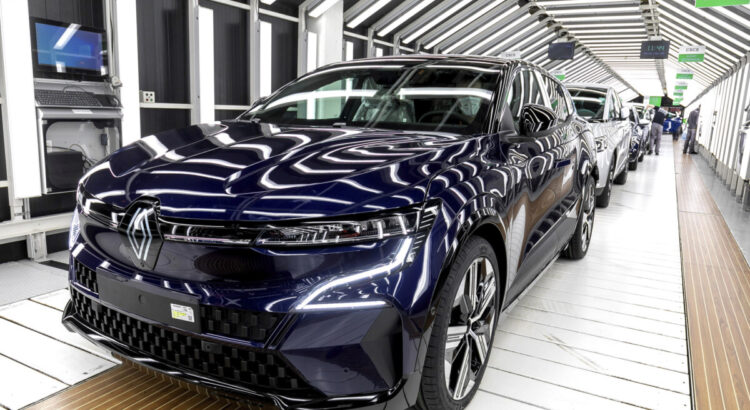
    Electric car production plant in France, a symbol of industrial transition
    The French car industry is adapting to the growing popularity of electric vehicles. (Credit: Renault)

    A challenge to be readjusted for a successful transition

    In conclusion, while the policy of electrifying the car fleet reflects an undeniable environmental ambition, it suffers from a lack of adaptation to social and territorial realities. By favouring a technocratic approach, decision-makers have underestimated the cultural obstacles, disparities and economic constraints faced by millions of French people.

    The success of this transition will depend on a rebalancing of policies, greater consideration of actual usage and, above all, a global rethink of our relationship with mobility. Without this, there is a great risk that long-lasting resistance will emerge, compromising the very commitment to sustainable mobility.
  • The state of electric vehicles in France: an analysis of the automotive market in figures

    The state of electric vehicles in France: an analysis of the automotive market in figures

    Electric vehicles (EVs) are playing an increasingly important role in the French automotive landscape. In 2024, according to government figures, 100% electric cars will account for 16.8% of sales, confirming a stabilisation after strong growth between 2020 and 2023. The market is marking a shift in manufacturers’ positions, with popular segments evolving and a transition towards electrification.

    After strong growth, sales of electric vehicles will fall by 2.7%, from 303,900 units in 2023 to 295,600 in 2024. Their market share remains stable at 16.8%, compared with 16.7% the previous year. Sales of plug-in hybrids followed the same trend, with 147,100 registrations, a fall of 9.6%. At the same time, combustion engines continued to decline. Diesel dropped to 7.2% of sales, while petrol fell by 37%, now accounting for 30.2% of the market. Diesel hybrids are becoming marginal, accounting for just 0.8% of sales (down from 1.2%). Conversely, the non-rechargeable petrol hybrid is growing strongly, becoming the best-selling engine in France.

    Alternative energies (natural gas/LPG) are stagnating at 3.2% of the market. This shows a decline in traditional combustion engines, stagnation in new energies, and an increase in conventional hybrids as a transitional solution.

    The best-selling electric cars in France in 2024: a reshaping of the market

    The stabilisation after several years of sustained growth marks a repositioning of the dominant brands and a renewal of the popular models.

    Tesla on the wane, Renault on the rise

    For a long time the undisputed leader, Tesla is seeing its sales decline. The Tesla Model Y, although still in the lead with 28,576 units sold in 2024, is down 23% on 2023. Its other model, the Tesla Model 3, is down by 52.7%. This drop is partly due to the arrival of French competitors that are more accessible and better suited to consumer expectations.

    Credit: Mathis Miroux

    Conversely, Renault is taking advantage of this momentum to become the market leader for electric vehicles in France. The Peugeot e-208 confirmed its success, with 23,602 units sold. The Renault Megane E-Tech held up well, with a total of 16,800 registrations. The manufacturer has attracted interest with a number of eagerly awaited new models. The recently launched Renault 5 E-Tech recorded 9,973 registrations, while the Renault Scénic E-Tech made its mark with 8,953 units sold in its first year.

    Electric SUVs are also enjoying great success. The Peugeot e-2008 is up 95.1% with 8,944 sales, while the BMW iX1 is up 135.9% with 8,940 units sold.

    On the other hand, some iconic models are experiencing a decline. This is the case of the Fiat 500e, which fell by 33% to 16,153 units sold, losing ground to more recent alternatives.

    A market dominated by Renault, Tesla and Peugeot

    Renault is now the leading manufacturer of electric vehicles in France, with a market share of 16.9%, up 2.3 points. Tesla is down to 15.8%, while Peugeot is up 1.1 points to 14.7%. Volkswagen and BMW continue to battle for market share, with 9.2% and 7.1% of registrations respectively.

    The year 2024 marks a turning point for the electric vehicle market in France, with a transition to a more diversified market. Tesla is losing its influence to French manufacturers who have adapted their range to consumer needs. Renault is emerging as the leader, with an attractive range and a well-established network.

    Sales trends also point to a diversification of consumer choices. As the market enters a phase of consolidation, the battle between manufacturers is set to intensify in the years ahead, with the arrival of new innovations and ever more competitive models.

    Credit: Renault 5

    Electric cars on the road

    By the end of 2024, France had nearly two million electric and plug-in hybrid vehicles on the road, according to the national association for the development of electric mobility, Avere-France, of which 1.3 million were 100% electric.

    France is Europe’s third-largest market for electric vehicles, behind the UK, with 382,000 registrations in 2024, and Germany, with 381,000. Electric vehicles account for around 15% of European sales, compared with 16.8% in France.

    Price and profitability of electric vehicles

    The average price of a new electric vehicle in the first half of 2024 is €43,000. This is down on 2022, when it was €45,000, but up slightly on 2023, when it was €42,000.

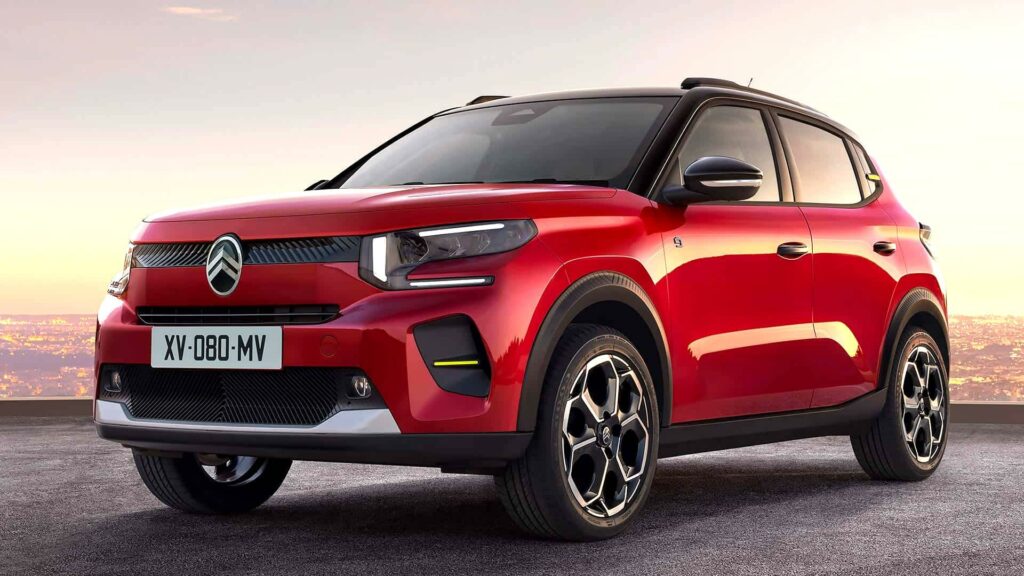
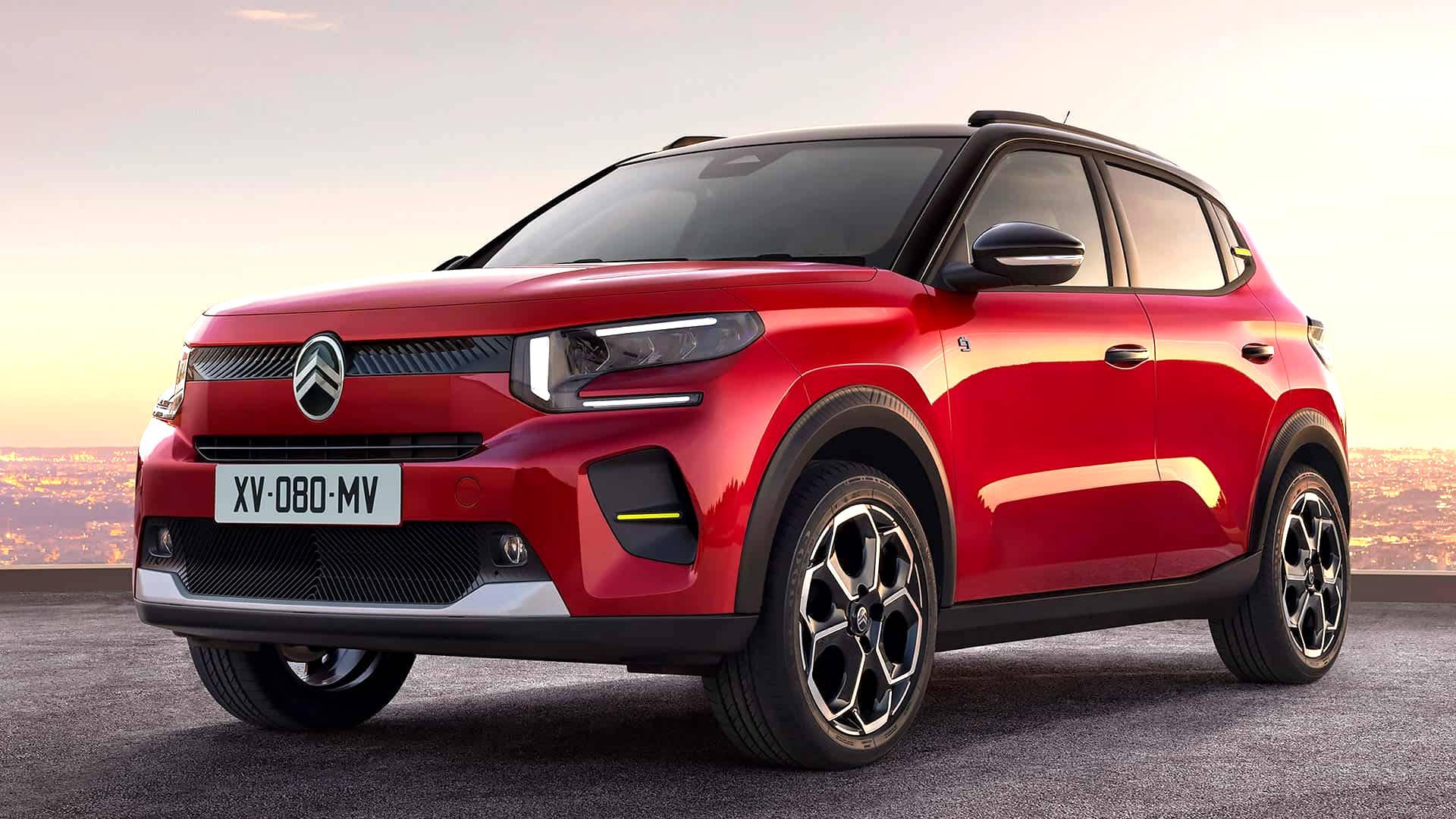
    However, some affordable models can reduce the initial investment. The Dacia Spring is available from €16,900, while the Leapmotor T03 has an entry price of €17,900. The Citroën ë-C3 starts at €23,000, while the Renault Twingo E-Tech starts at around €22,900.

    In comparison, an average petrol vehicle will cost around €27,000 in 2024, compared with over €28,000 a year earlier. The price of diesel vehicles, meanwhile, has risen, reaching €40,000 in 2024, compared with €38,000 in 2023, according to data from AAAData.

    Credit: Citroën

    Despite the gradual narrowing of the gap, electric vehicles are still between 30% and 40% more expensive to buy than their internal combustion equivalents.

    In 2019, France had around 30 different electric vehicle models on the market, according to data from Avere-France and the CCFA (Comité des Constructeurs Français d’Automobiles). By 2024, this figure had exploded to more than 120 models available on the French market, according to consolidated data from Avere-France and the Plateforme Automobile (PFA).

    So, despite a still high purchase price, the range is diversifying, contributing to accelerated adoption.

    Autonomy and diversity

    The range of electric vehicles continues to improve, although disparities remain. In 2024, entry-level models such as the Dacia Spring and the Fiat 500e offer a range of 220 to 320 kilometres, while top-of-the-range models such as the Tesla Model Y can exceed 500 kilometres on a single charge.

    The number of models available has also risen sharply, contributing to a more rapid uptake of electric vehicles.

    The year 2024 marks a transition for the electric vehicle market in France, with sales stabilising after a period of strong growth. The market is diversifying, with more affordable models, improved range and strong demand for electric SUVs. While the purchase price remains a major obstacle, the market dynamic remains geared towards increasing electrification of the French car fleet.

  • Electrified aircraft: France enters the fray

    Electrified aircraft: France enters the fray

    Aircraft are regularly at the centre of controversy over climate change and greenhouse gas emissions. So it’s only natural that the aeronautics industry, like the car industry before it, should be thinking about electrification (except that you don’t fly a 40-tonne steel monster like you do a city car).

    At the heart of this relatively young market, which is set for exponential growth and is booming internationally, are a number of French players, both large groups and young start-ups, determined to make France a pioneer in electric aviation, just as it was a pioneer in thermal aviation.

    The promise of French electric aircraft

    In France, while Airbus has been active in the electrified aeronautics sector since the early 2000s, the most successful projects are to be found among start-ups. Aura Aero is one of the country’s most successful start-ups.

    Based in Toulouse, the epicentre of aviation in Europe, this start-up flew its two-seater Integral E aircraft for the first time in December 2024. As its name suggests, the aircraft is powered by a 100% electric motor. A part supplied by a giant of the global aeronautics industry, the French group Safran. Called Engineus, it is the first electric aircraft engine in the world to receive certification from a major agency, the European Union Aviation Safety Agency (EASA), enabling it to go into series production.

    Admittedly, the Integral E only offers between 1 h and 1 h 30 of autonomy, but it can be recharged in 30 minutes, so it can be used for regional round trips, or simply for training future pilots. And this is just the beginning for Aura Aero, which, alongside the Integral E, has also developed the ERA, capable of carrying 19 passengers, again for regional routes. Equipped with a hybrid engine, it should make its first flights in 2026.

    airplane-electric-aura-aero-integral-e.jpg
    Credit: Aura Areo

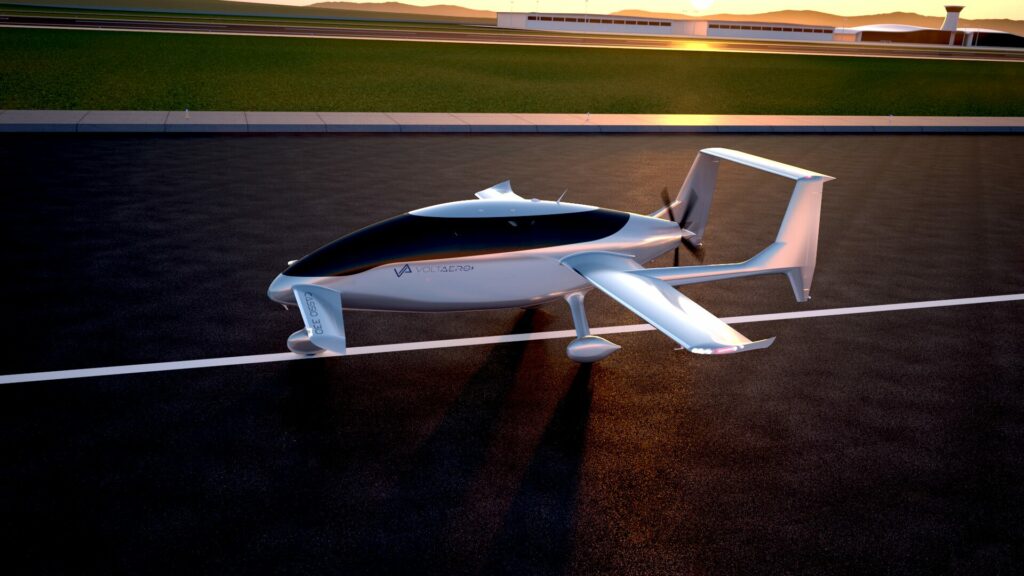
    All these projects have been made possible by the injection of 95 million euros of European funds, proof that the “zero emission” aircraft is not just a fantasy, but a serious project supported by the institutions themselves. Aura Aero is not the only French company to illustrate the country’s ambitions for the electrification of aviation, since VoltAero is developing, from its HQ in Charente-Maritime, an aircraft called the Cassio 330, equipped with hybrid engines and scheduled for launch in 2026.

    This is already attracting interest from investors, including the American company AltiSky, which has injected more than two million dollars into the French company as part of a partnership that will see the construction of a VoltAero plant in the United States to conquer the North American market, which is keen on these inter-regional solutions.

    Credit: VoltAero

    A worldwide craze for electric aviation

    Of course, France is not alone in this booming market. While the international market is currently worth around ten billion dollars, the most optimistic forecasts suggest that electrified aeronautics could reach 70 billion dollars in annual revenues by 2034, with double-digit growth every year.

    Ambitious projects are springing up all over the world. From Canada, where Harbour Air is retrofitting old planes with hybrid engines (the milestone of 100 flights was recently passed), to the UK, where ZeroAvia is making rapid progress on hydrogen, with a series of test flights and fund-raising events, and Sweden, where we are expecting the first test flight of a 30-seat hybrid plane from Heart Aerospace.

    What about China? Unsurprisingly, CATL, the world leader in the market for batteries for electric vehicles, is spearheading the drive for electric-powered aircraft. In 2024, the group announced that its partnership with Chinese manufacturer Comac had given rise to a 4-tonne, 19-seater aircraft capable of flying 500 kilometres on electric power. There’s no doubt about it, the leading country for electric cars is determined to hold its own in the aviation market.

    Credit : ZeroAvia
  • France 2035: what will electric cars look like?

    France 2035: what will electric cars look like?

    As France prepares to ban the sale of new combustion-powered cars from 2035, the electric car is gradually establishing itself as the mainstay of tomorrow’s mobility.

    By 2035, as announced by the French Ministry of Ecological Transition, all new cars in France will be electric, because it will be forbidden to sell combustion-powered cars. In 10 years’ time, the face of France will have changed radically. More autonomous, more intelligent, more connected, the car of the future promises a major transformation in usage.

    Autonomy boosted tenfold by technology

    Fears about range, long considered to be the main obstacle to the adoption of electric cars, could be lifted in the next decade. A Blue Solutions gigafactory is planned in France to produce solid batteries with a range of up to 1,000 kilometres and recharge times of 20 minutes. These batteries, which have an energy density 30% to 40% greater than current lithium-ion cells, should be in large-scale production by 2030.

    In terms of infrastructure, France expects to see a marked acceleration: according to ADEME, more than 400,000 public charging points will be deployed by 2030, compared with around 120,000 today. In addition, players such as Renault and Stellantis believe that ultra-fast charging technologies will enable 80% of the battery to be recovered in less than ten minutes in the medium term.

    view paris car traffic france 2035 electric car
    Credit: Ante Samarzija

    Artificial intelligence at the wheel

    The real revolution is likely to come from on-board intelligence. According to a study published in March 2025 by European researchers, level 4 or 5 autonomous vehicles could account for a significant proportion of new vehicle registrations in Europe by 2035. These vehicles would be capable of travelling without human intervention under certain conditions, transforming the driving experience.

    In France, companies are already working on systems incorporating cameras, lidars and artificial intelligence capable of managing driving in complex urban environments. According to IFP Énergies Nouvelles, these systems will learn to anticipate road behaviour, adapt to the user’s driving style and optimise journeys in real time.

    France 2035, an electric car that’s always connected

    In 2035, the car will also be a mobile digital terminal. Thanks to 5G – or even 6G – networks, vehicles will be in constant communication with their environment: other cars, road infrastructure, the user’s home, etc. This connectivity will enable remote software updates, seamless interaction with connected objects in the home, and even the integration of voice assistants. This connectivity will enable remote software updates, seamless interaction with connected objects in the home, and the integration of ultra-personalised voice assistants.

    The Software République project, launched by Renault with Atos, Dassault Systèmes, STMicroelectronics and Thales, illustrates this trend towards a car that becomes a digital service: users will be able to manage their diary, calls, entertainment and even home automation from their dashboard.

    A technological… and social revolution

    But this revolution also poses human challenges. According to the France 2030 report presented by the government, major efforts will have to be made to support this transition: support for the purchase of electric vehicles, training in automated driving, and retraining for jobs in the automotive industry. The issue of digital inclusion and access to technology for all will also be at the heart of the debate.

    In ten years’ time, the car will no longer be a simple mechanical object. It will become an intelligent, connected space, integrated into our lifestyles and infrastructures. Provided that this development remains at the service of sustainable, accessible and equitable mobility.

  • When France rhymes with innovation

    When France rhymes with innovation

    France’s entrepreneurial fabric is rich in nuggets dedicated to electric mobility. Here’s a closer look at 15 of them, covering a wide range of fields from car manufacturing to recharging solutions.
    Manufacturing and retrofitting

    Circle

    Founded in 2019
    Based in Paris

    Circle is working on the development of miniature electric cars equipped with removable batteries and manufactured in modular factories, as well as scooters and scooters. The ultimate aim is to create a range of vehicles dedicated to car-sharing.

    Gazelle Tech

    Founded in 2014
    Based in Gironde

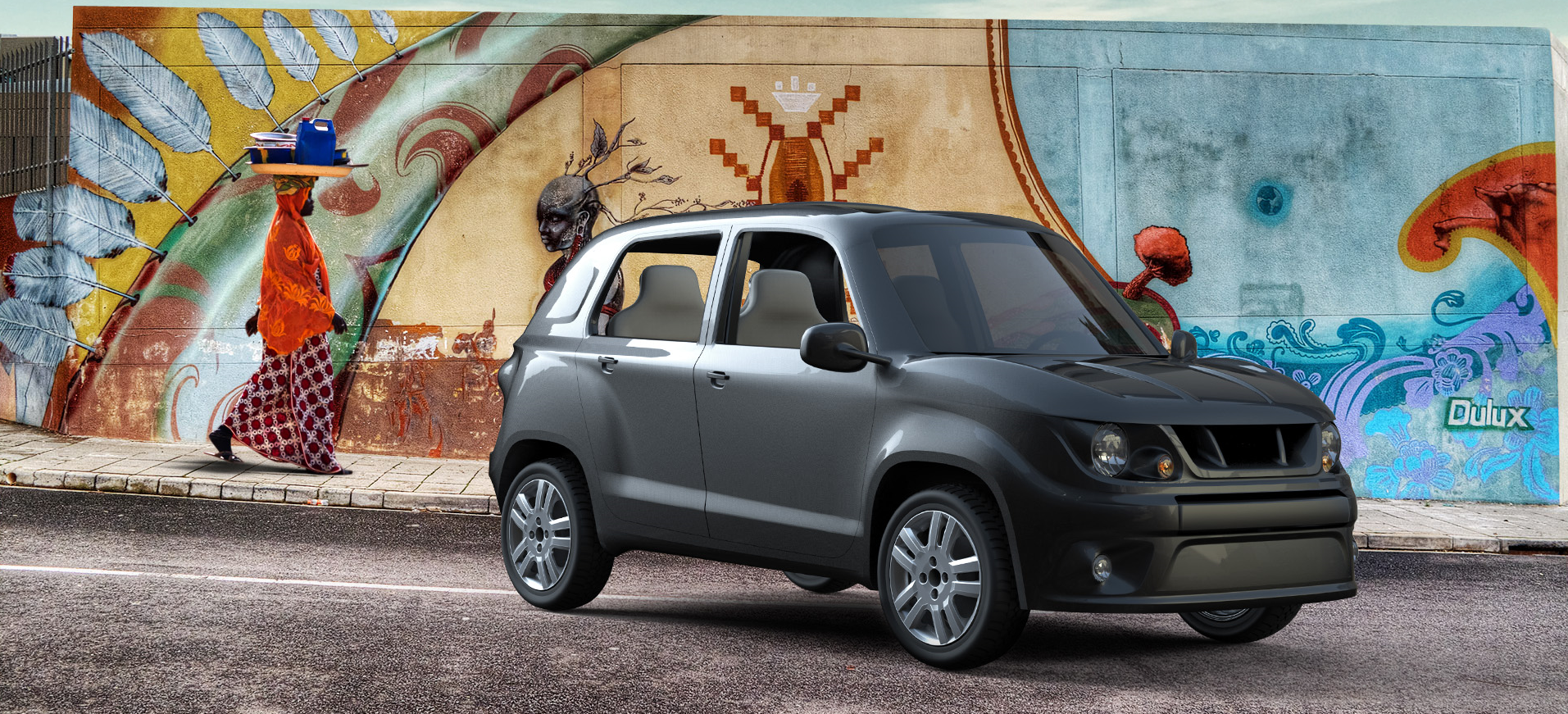
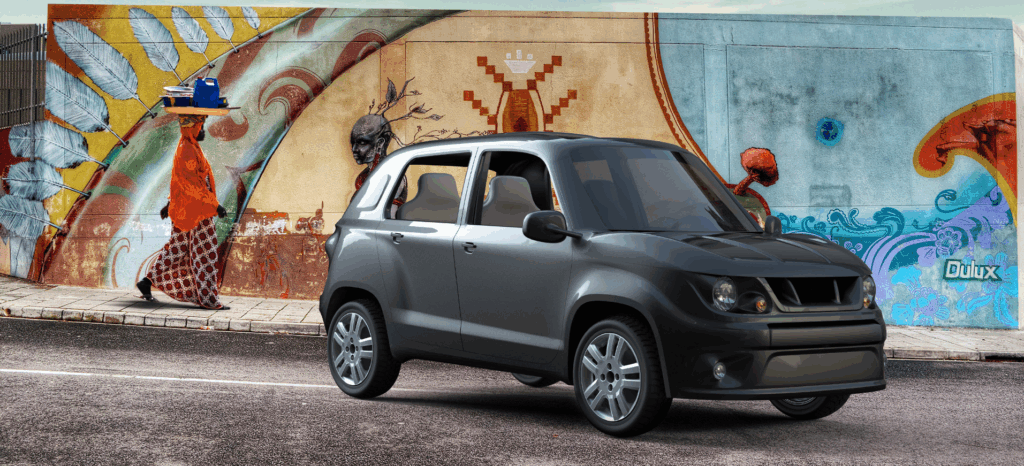
    Gazelle Tech is a young car manufacturer that makes lightweight electric cars using a patented composite material containing, among other things, fibreglass. The first production model, with a range of 180 km, could be available as early as 2025.

    Kate

    Founded in 2022
    Based in Deux-Sèvres

    In a takeover in 2023, Kate took over the business of Nosmoke, a manufacturer that produced electric and revamped versions of the iconic Mini Moke beach car. Production continues to this day.

    Qinomic

    Founded in 2021
    Based in Bouches-du-Rhône

    In a very short space of time, Qinomic has succeeded in making a name for itself in the world of retrofitting, focusing primarily on the electrification of fleets of combustion-powered commercial vehicles. In 2023, this should attract the attention of the giant Stellantis, with whom it is associated.

    Credit: Gazelle

    Batteries and motors

    Mecaware

    Founded in 2020
    Based in the Rhône

    In 2023, Mecaware raised €40m to enable it to open its first plant and industrialise its recycling technology, which consists of extracting so-called “critical” metals from used batteries in order to recycle them and then re-inject them into the battery production cycle.

    Nawah

    Founded in 2013
    Based in Bouches-du-Rhône

    Nawah is working on the manufacture of carbon nanotube supercapacitor batteries capable of being recharged to 80% as quickly as filling up with petrol (or almost). All that remains now is to find the funding to go into production.

    Verkor

    Founded in 2020
    Based in Isère

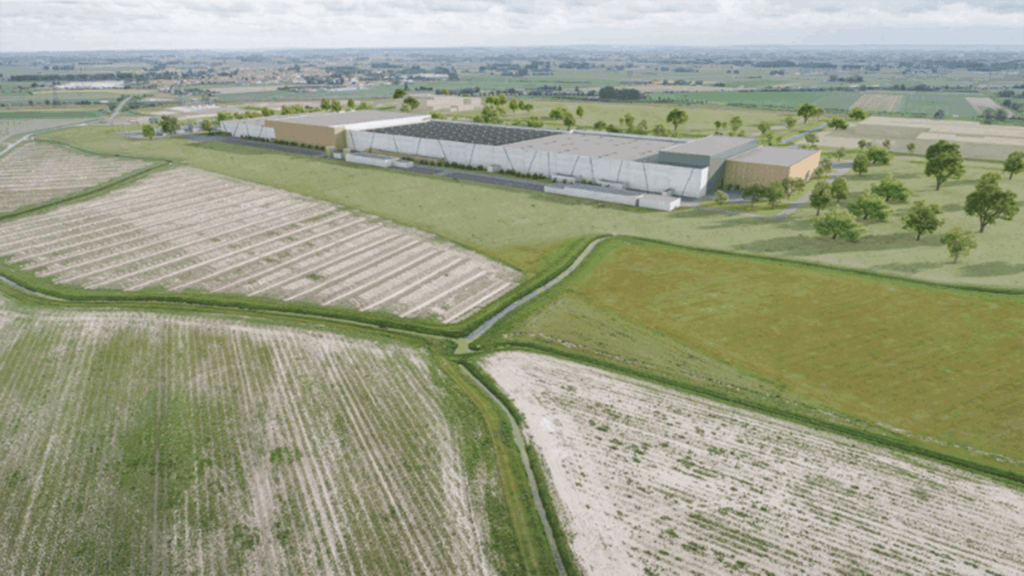
    Verkor aims to produce lithium-ion batteries in France, with the support of Renault, among others, and massive investment: €2 billion in several rounds of financing. Its gigafactory, based in Dunkirk, will be fully operational by 2026.

    VoltR

    Founded in 2022
    Based in Maine-et-Loire

    VoltR is a company specialising in the reconditioning of batteries. It recently signed a partnership with electric scooter giant Lime to recycle its batteries, and is working to diversify its business to process other types of battery.

    Whylot

    Founded in 2011
    Based in Lot

    Whylot is an engine manufacturer that produces smaller, more efficient electric motors for the automotive market. Renault has signed a partnership agreement with the Lot-based company to support its industrialisation development.

    Credit: Verkor

    Refilling and distribution

    Beev

    Founded in 2020
    Based in Seine-Saint-Denis

    Beev offers both private individuals and businesses a turnkey solution for their switch to electric vehicles. The choice of vehicle, the installation of a charging point, the paperwork – it’s all taken care of!

    Bump

    Founded in 2021
    Based in Paris

    Bump installs fast-charging stations at the foot of offices, in supermarket car parks and bus depots, in addition to offering its own subscription card. The company has raised 180 million euros in 2022.

    Driveco

    Founded in 2010
    Based in Paris

    Driveco, for its part, specialises in solar-powered charging points. By 2023, it had passed the 10,000 mark and has since opened offices in Spain, Belgium and Italy.

    Electra

    Founded in 2020
    Based in Paris

    Europe is also on the menu for Electra, which is developing fast-charging stations in city centres. In 2023, it raised €304 million to expand its network: the company is aiming to have 15,000 stations on the Old Continent by 2030, compared with 1,500 by 2024.

    Mob-Energy

    Founded in 2018
    Based in the Rhône

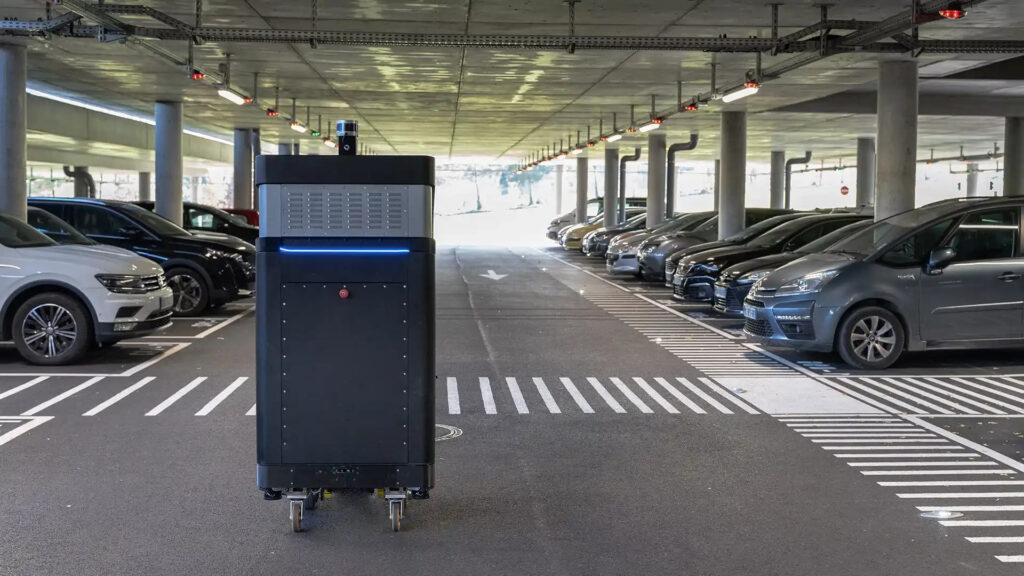
    Mob-Energy has come up with Charles: an autonomous charging robot. It stores energy using batteries recycled from its base, then moves from vehicle to vehicle using modules that can be plugged in after parking.

    Zeplug

    Founded in 2014
    Based in Paris

    Zeplug offers to help co-owners install and manage their charging points. Demand is growing, and the Paris-based company is well ahead of the game, having raised €240 million in 2022 to accelerate its expansion across Europe.

    Credit: Mob Energy