Category: Interviews

  • “True luxury means enduring in a changing world”: the JLR Group’s adaptation to electromobility

    “True luxury means enduring in a changing world”: the JLR Group’s adaptation to electromobility

    At a time when the automotive industry is undergoing one of the biggest transformations in its history, driven by environmental regulations, Jaguar Land Rover (JLR) is charting an electrified course while retaining its DNA.

    In an exclusive interview, Léo Lubrano, Head of Press & PR France at JLR, talks to us about the British group’s vision, dilemmas and ambitions.
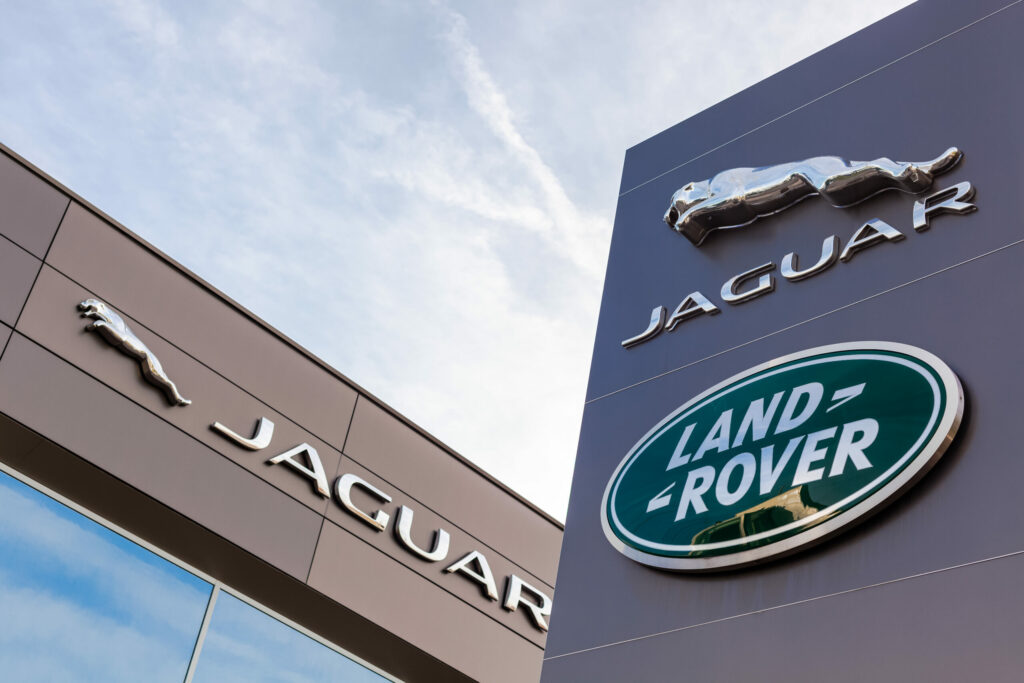
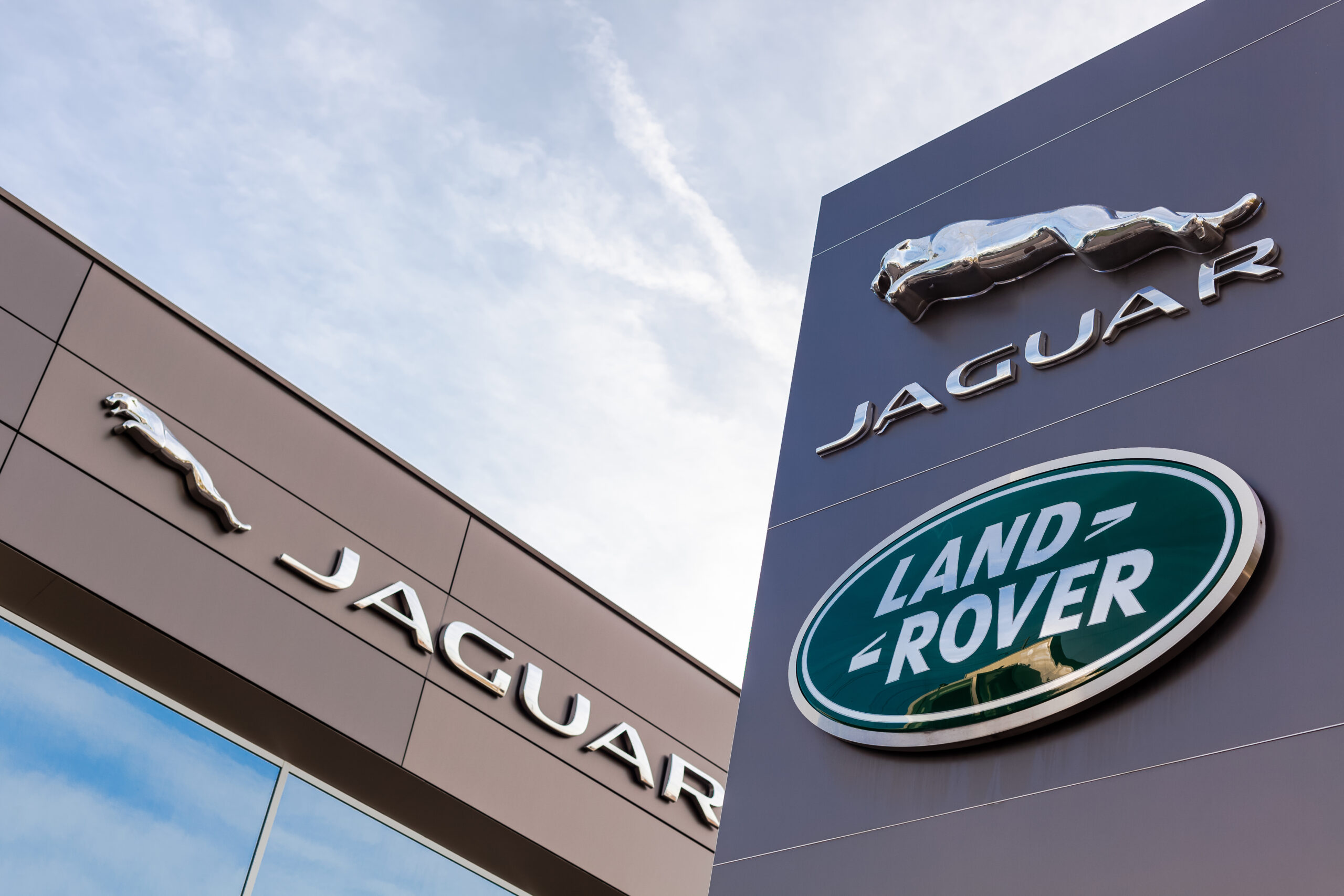
    Jaguar and Land Rover logos side by side
    The JLR Group’s two flagship brands, Jaguar and Land Rover

    JLR, a complete luxury brand

    Born in 2013 from the union of two icons of British motoring, Jaguar and Land Rover(JLR) has built on a heritage of luxury and automotive prestige.

    Jaguar stands for elegance, sportiness and exceptional motoring performance, while Land Rover, parent company of Range Rover, Defender and Discovery, embodies ruggedness, adventure and world-renowned off-road expertise, becoming over the decades synonymous with refinement and absolute comfort.

    “The Group’s objective is really to create a universe for each brand. They each have their own universe, always guided by strong ambitions for robustness, elegance and purity of line, in order to target the luxury segment of the automotive sector.”

    Jaguar is now the embodiment of modern, assertive luxury, guided by the logic of ‘copy nothing’ (vehicles that are seen nowhere else and that break the mould). Jaguar is completely renewing itself with a 100% electric range.

    At Range Rover, “we really cultivate luxury, elegance, charisma and pure lines. To achieve this, we explore the alpine, nautical and design worlds.

    “The Defender, on the other hand, embodies the values of robustness, adventurousness and adventure. We’re putting more emphasis on what we call top luxury. It’s still a JLR Group brand, but this time it’s developed around the adjectives that have made the brand’s reputation: surpassing oneself and taking on new challenges.

    Finally, Discovery retains its role as a versatile, top-of-the-range family SUV with a focus on travel.

    A long-term vision

    In order to meet European standards for the electrification of vehicle fleets, the British group has had to adapt and transform its models. The first of the Group’s brands to become 100% electric is Jaguar: “While our aim is to make this change as smoothly as possible, with Jaguar it has been much more radical. We have decided to relaunch the brand by producing vehicles powered solely by electric motors from 2026.

    Jaguar is therefore completely changing its vision, embodied by the Jaguar Type 00, which will be the symbol of the brand’s renewal. “It will serve as a template for future vehicles to be released, the first of which will be the 100% electric 4-door GT Coupé.”
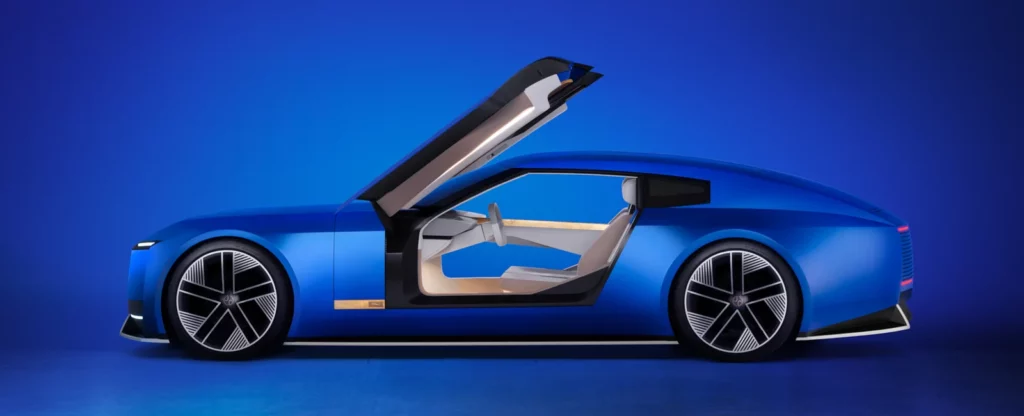
    Jaguar Type 00 100% electric
    The Jaguar Type 00, symbol of the brand’s 100% electric revival (Credit: Jaguar)

    For the other brands in the JLR Group, the change will come in stages: “Apart from Jaguar, the first zero-emission vehicle will be the 100% electric Range Rover, which will come out in 2026. And then the EV range will gradually follow for all the brands”.

    This is a clear, progressive policy for a group with clear ambitions: “The Group’s objective is to achieve zero carbon emissions for all its activities by 2039, including production. This fundamental transition therefore involves our ability to increase our electricity production, with the first solar projects starting up at JLR’s production centres in Gaydon, Haywood and Wolverhampton. Above all, we are maintaining our production capacity by refurbishing our factories.

    As Mr Lubrano explains, JLR’s intention is not to make this transition abrupt, but to take the time to produce ultra-luxurious vehicles: “We have to adapt to the laws in terms of fleet electrification, but our aim is to produce efficient cars because one of the primary characteristics of our vehicles, whether for Defender, Range Rover, Discovery or Jaguar, is to make ultra-high-performance vehicles.”

    Beyond the performance aspect, another of the brand’s strong personality traits is the comfort found in Range Rover, and with the entry into the range of 100% electric vehicles, this comfort will only increase: “This electrification will go in the direction of additional comfort. So for us, the message of transition to the brand’s regular customers is easy to deliver. All these facts mean that we have nothing to deny, quite the contrary. Going electric will be a real advantage for Range Rover. We’ll be able to go even further in creating this cocoon, this real living room on wheels.

    Scepticism soon forgotten

    The switch to electric vehicles means an entire ecosystem has been turned upside down. While manufacturers are having to adapt, so too are customers and consumers – a change that could have upset them.

    The JLR Group brings together a number of the world’s iconic automotive brands. Jaguar, a century-old brand that has built its reputation as an engine manufacturer with the Le Mans 24 Hours, among others, faces a real challenge in maintaining the confidence of the brand’s fans.

    “The announcement of the 100% electric car was greeted with a little scepticism, but that’s to be expected because the change has been radical. The launch of the Type 00 at the beginning of the year at Place Vendôme in Paris gave us the opportunity to invite loyal customers and journalists to explain why and how we got to this point and why we succeeded in creating this vehicle. If people were sceptical, after hearing the reasons for the change, they were completely unanimous that this is a spectacular vehicle that breaks the mould, but is true to the philosophy of Jaguar and its founder William Lyons.”
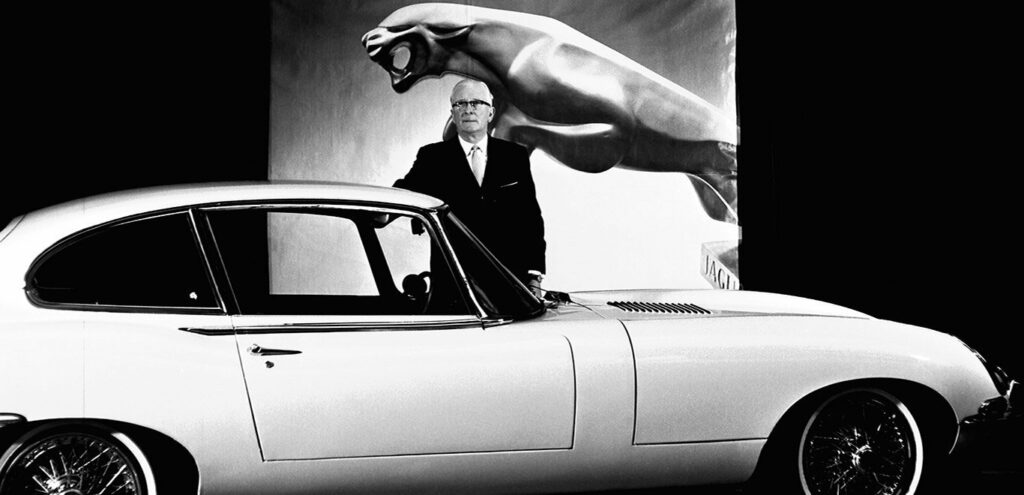
    William Lyons founder of Jaguar with the Jaguar logo in the background
    William Lyons, founder of Jaguar, icon of British automotive elegance

    As for the Group’s other vehicles, while the transition to 100% electric vehicles is not yet complete, Léo Lubrano is not worried about how they will be received by the public. For him, it’s going to happen quite naturally “because one of the brand’s hallmarks is comfort and the living-room-on-wheels aspect, so it’s going to be quite simple to build around that”. I’m convinced that this transition will take a few years, and that’s normal.

    Revised sales targets

    This change in approach has led to a rethink of the British brand’s sales targets. “For the last few years, there has been growth, so obviously the aim is to keep up the momentum. The year 2025 is a bit special for the luxury car sector at the moment.

    Indeed, the global economic context (economic slowdown, high inflation and high interest rates) is putting off purchases by luxury customers, a tense situation for a sector that is not immune.

    For the JLR Group, there are a number of factors that make it impossible to draw any conclusions about sales figures: “In addition to this national and international context, there was a cyber-incident that we suffered in September, when production lines were interrupted. Obviously, this had a direct impact on sales, so for us it’s difficult to draw any interpretable sales results from it.”

    Despite the difficulties faced by the entire automotive sector, Jaguar Land Rover explains that its sales ambitions have been rethought in the light of the brand’s clear desire to establish itself in the luxury segment of the sector:

    “Since the launch of the Reimagine strategy, production volume has been reduced, especially initially, in order to move upmarket. The quality of our vehicles has improved, with purer materials and increasingly high-performance equipment; conversely, production volume has fallen slightly to move away from the premium vehicle segment and closer to the world of luxury”.

    “For the coming year, we know it’s going to be a year of transition. Sales are going to follow, thanks to our iconic models, which are proving highly successful. One of the Group’s strong characteristics is resilience, and when we look back at past events, we always manage to generate growth. True luxury is to endure in a changing world.
  • “Electric performance is above all the joy of driving” Didier Malga

    “Electric performance is above all the joy of driving” Didier Malga

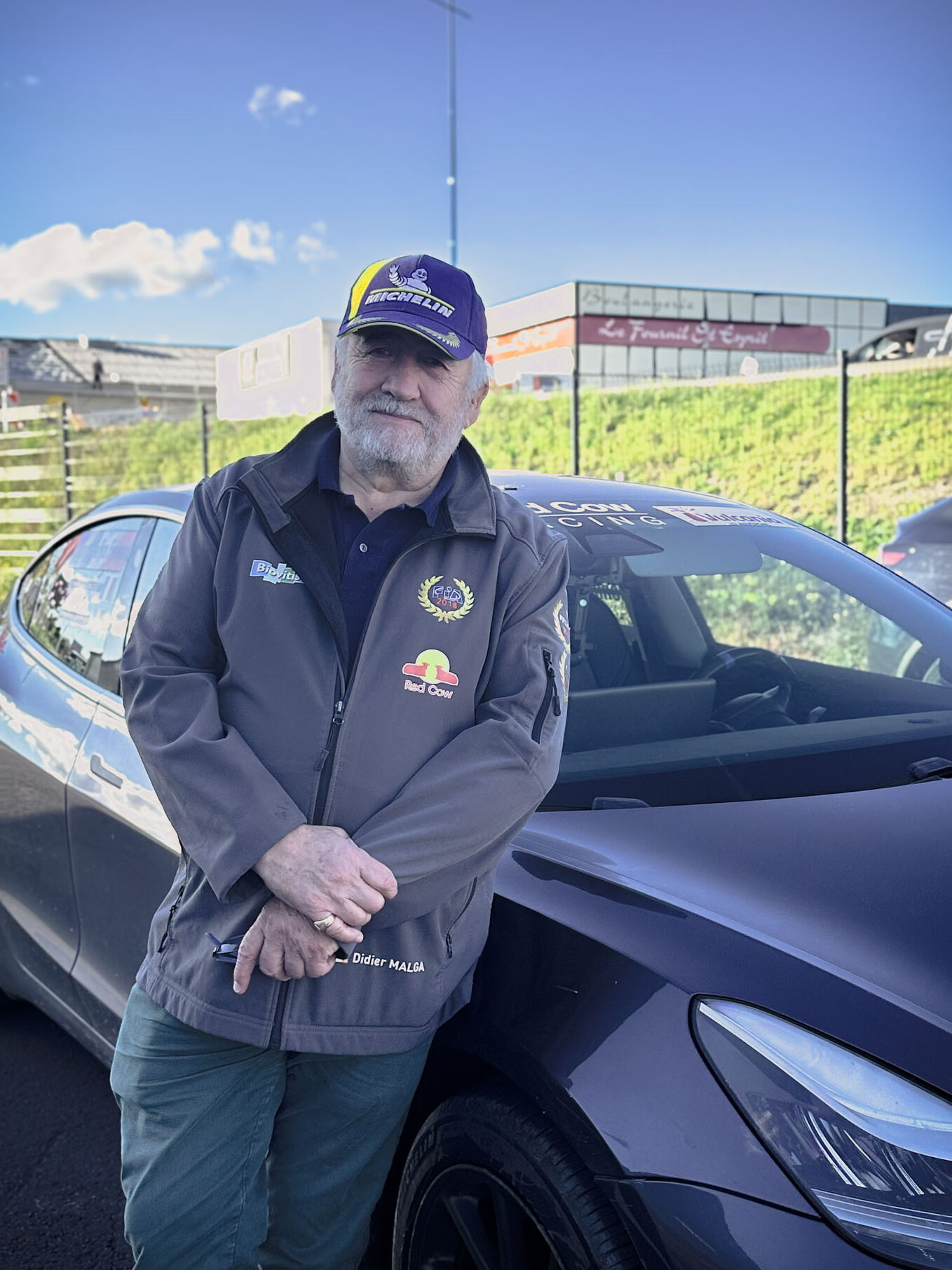
    Didier Malga is a passionate motorsport driver, specialising in electric and hydrogen vehicles. After competing in regional rallies, he discovered new energy vehicles in 2015. He quickly established himself as a leading figure in electric rallying, becoming a world champion in his first season. He is now behind the creation of the French round of the World Championship of Énergies Nouvelles rallies, which will take place in Auvergne-Rhône-Alpes in June 2026.

    Didier Malga electric rally driver
    Didier Malga, world electric rally champion and organiser of the 2026 French round. (Credit: Eva Pellerin)

    Can you tell us about your motorsport background?
    Didier Malga: II started very young with regional tarmac rallies, driven by passion. I competed for several years before pausing to focus on my professional and family life. I returned in the late 2000s, initially with historic vehicles, including 1970s sports cars, and then, by chance, entered the field of new energy vehicles in 2015.

    We discovered this discipline during our participation in the E-Rallye Monte-Carlo, on the suggestion of the Automobile Club of Monaco, alongside my co-driver. At the time, the “alternative energy” category was very broad: electric, hydrogen, E85, biofuels… We competed with a 208 GTI running on E85 and finished fifth. The following year, with a Tesla, we finished third, then won in 2017. This victory allowed us to enter the World Championship, where we became champions in our very first season.

    Since then, we have continued our involvement, despite seasons complicated by crew availability and the pandemic. This led us to focus on the French Championship and the creation of our French round, to provide a true driving force for electric motorsport in France.

    What attracts you to electric rallying?
    D.M. : What appealed to me most was the novelty and the sense of discovery. Electric vehicles behave very differently, with a low centre of gravity, instant acceleration, and exceptional handling. It’s a real pleasure to drive, even managing powers from 400 to 700 horsepower.

    Didier Malga's Tesla for the electric rally
    Didier Malga’s Tesla ready for the rally, complete with official stickers and sponsors (Credit: Eva Pellerin)

    In addition, organising it is much simpler: no heavy support is needed as in combustion engines, maintenance is minimal, and budgets are more accessible. This also attracts financial partners, drawn to the innovation and modern image of the discipline.

    We regularly run driving experiences and electric driving coaching to show participants that these vehicles are not only environmentally friendly, but also high-performing and fun to drive.

    What is the future of electric motorsport in your view?
    D.M.: The future is clear and irreversible. Two main drivers are pushing it forward: public health and climate. Over 40,000 deaths in France each year are linked to fine particles, making the energy transition inevitable.

    Electric motorsport plays an educational role: it demonstrates performance and driving pleasure, encouraging the public to adopt electric mobility faster and in a positive way. It is a tangible catalyst for change.

    The E-Rallye Auvergne Rhône-Alpes in June 2026: what is it?
    D.M. : After competing internationally, we positioned ourselves to create the French round of the World Championship — which didn’t exist until now. After years of administrative work and organising a first test in late September 2025 with an FIA observer, our event is finally part of the FIA calendar.

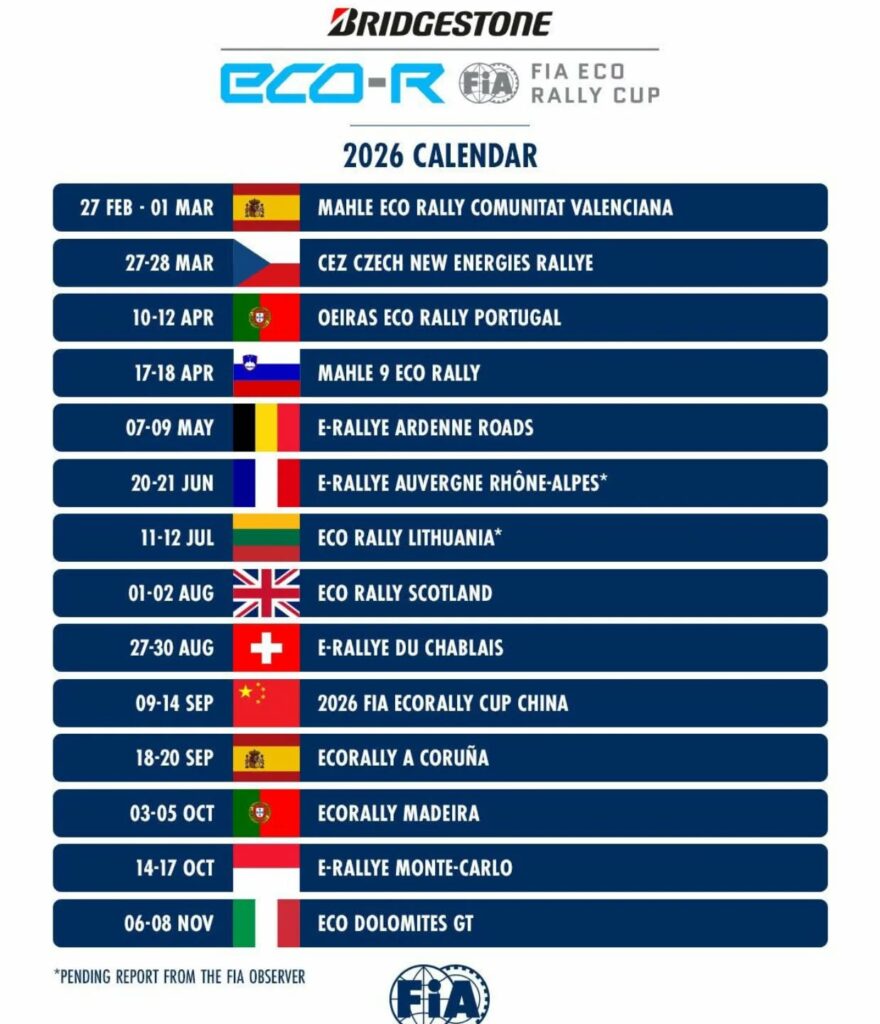
    This French round, taking place from 19–21 June 2026, is designed as a true showcase for electric motorsport in France. It will bring together world championship drivers and attract new participants, who can later feed into a future French Championship.

    The goal is to make the event sustainable, showcase the discipline to the public, and encourage both professionals and enthusiasts to embrace electric mobility.

    FIA New Energy Rally Calendar 2026
    The official 2026 FIA New Energies Championship calendar. (Credit: FIA)

    Why did you choose Auvergne-Rhône-Alpes for the French round?
    D.M. : It’s our region, and the route crosses a wide variety of landscapes, from the Alps to the volcanoes of Auvergne, creating an exciting “raid” dimension for participants. Support from the regional council has been crucial, and the route highlights the geographical and tourist richness of the area.

    What are your long-term goals for electric rallying in France?
    D.M.: To secure and develop the French round, with organisation comparable to the largest international events. We also want to energise electric motorsport across France, including rallies, circuits, and endurance racing.

    Advances in batteries and range will soon allow 12- or 24-hour races on circuits, day and night. We are also considering integrating circuit stages into rallies, as is already done for combustion vehicles, to enrich the sporting experience.

    Can you tell us about the association created for this round?
    D.M.: We created the “E-Rallye Auvergne-Rhône-Alpes” association, stemming from our teams Red Cow Racing and Green Motion, to manage organisation, communication, and finances autonomously. This ensures the event’s longevity and development, keeping its budgets and activities separate from our other operations.

    FIA and Michelin logos on Didier Malga's car
    The FIA and Michelin logos on Didier Malga’s competition car. (Credit: Eva Pellerin)

    Is France behind Europe in electric motorsport?
    D.M. : Not really. France already has four world champions in various electric disciplines: Jean-Éric Vergne in Formula E, Adrien Tambay in ETCR, Sébastien Loeb in Extreme E, and myself in electric rallying. While the daily energy transition is slower, we are ahead in e-motorsport. These successes should be used to promote the discipline and electric mobility to the public.

    Any final words?
    D.M. : Electric mobility is all about simplicity and enjoyment: less fatigue, minimal maintenance, no fuel, incredible sensations. Range is improving quickly, allowing very long distances without constraint. It’s a modern, accessible, innovative, and exciting sport, showing that the energy transition can be both high-performance and fun.

  • Can mobility really be green?

    Can mobility really be green?

    Spoiler: no. For example, a car, even an electric one, is by definition an object that has to be manufactured and then supplied with energy, so cars and transport in general will never be 100% eco-friendly. But solutions do exist to reduce the environmental impact of cars as much as possible.

    While the electric motor is a prerequisite for the ‘green’ car, there are other solutions at the design stage, as well as in use, that would enable the car to reduce its impact on the planet even further. ECO MOTORS NEWS spoke to Aurélien Bigo, an independent researcher, member of the Energy and Prosperity Chair and former ADEME employee, whose thesis dealt with the subject of transport and the challenge of the energy transition. The right person to enlighten us on the subject.

    Greening the car from the design stage

    Even before it leaves the factory, a car has already polluted enormously. This is especially true of electric cars. Although they pollute much less than internal combustion engines during their life cycle, their manufacture has a much greater negative impact, so they have to make up for their carbon debt over the kilometres (around 30,000 kilometres). But there are some good habits to adopt at the design stage that could help reduce this gap.

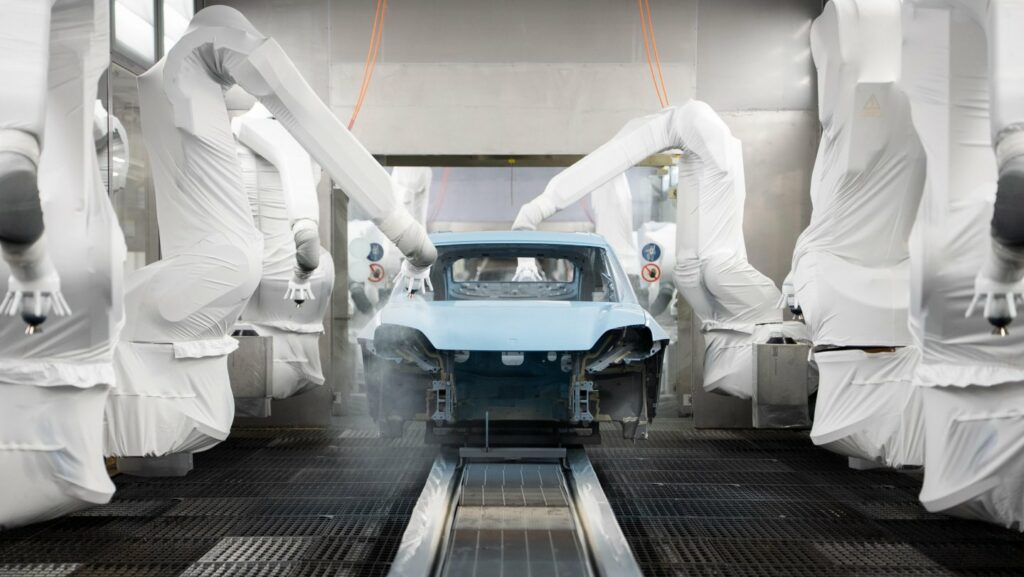
    Electric Porsche Macan being assembled at the Leipzig plant
    Production of the electric Macan at the Porsche plant in Leipzig, illustrating the growing popularity of electromobility.

    First, there’s the question of weight. According to Aurélien Bigo, “the lighter a vehicle is, the fewer emissions it generates, and the smaller its battery can be, which limits its impact“. The researcher therefore recommends that “batteries should be sized according to the range required for everyday journeys rather than very long distances” in order to reduce their size and the use of resources needed to manufacture them. In the same vein, it will be necessary to optimise batteries in order to reduce the quantity of materials required per kWh.

    Aurélien Bigo also points out that it is essential to extend the lifespan of vehicles, in particular through repairs, but also “by maintaining use despite the gradual decline in battery capacity“. Making a car last is essential because, in France, electricity is already low in carbon, so, as the researcher explains, “the main impact of a car comes from its manufacture, and it must be amortised over as long a period as possible“.

    While the manufacture of an electric car is the first thing we think of when we talk about its environmental impact, we also need to consider the question of recharging. At the design stage, it may be worthwhile to democratise the integration of vehicle-to-grid (V2G) and vehicle-to-home (V2H) technologies, which allow the car to return energy to the grid or act as a generator for the home, respectively. Over and above the savings made by the owner, this also helps to limit stress on the grid and limit consumption.

    The five levers of the National Low Carbon Strategy

    Aurélien Bigo outlines the five levers identified by the National Low Carbon Strategy(SNBC) to reduce the environmental impact of transport. And because things are well done, they are listed in ascending order of difficulty of implementation.

    The first is simply to drive less. This means reducing the number of kilometres travelled on a daily basis, by increasing the availability of public transport, but also “by bringing the places where people live, work and receive services closer together“.

    Then there is the modal shift: giving priority to walking, cycling and public transport. While Aurélien Bigo acknowledges that this lever is easier to activate “in dense areas than in rural areas“, he is not losing hope in the development of soft mobility in rural areas. The development of car-sharing, another of the five levers, could also be a step in this direction.

    The fourth lever directly concerns ECO MOTORS NEWS, since it involves improving energy efficiency through more fuel-efficient vehicles and the electrification of the vehicle fleet. Finally, the fifth is quite simply to decarbonise energy, by replacing oil with less carbon-intensive energies, including electricity.

    According to Aurélien Bigo, these levers are complementary: “some require more social and territorial transformations, but offer the greatest reductions in emissions. Others require fewer changes to lifestyles, but reduce the overall impact less significantly”. The key, then, is to strike the right balance in order to achieve the goal of truly environmentally-friendly mobility.

  • Devinci, “at the crossroads of art and the automobile”.

    Devinci, “at the crossroads of art and the automobile”.

    The editorial team had the opportunity to meet the Devinci teams on their stand at the Lyon Motor Show, to find out more about this real UFO of French car manufacturing.

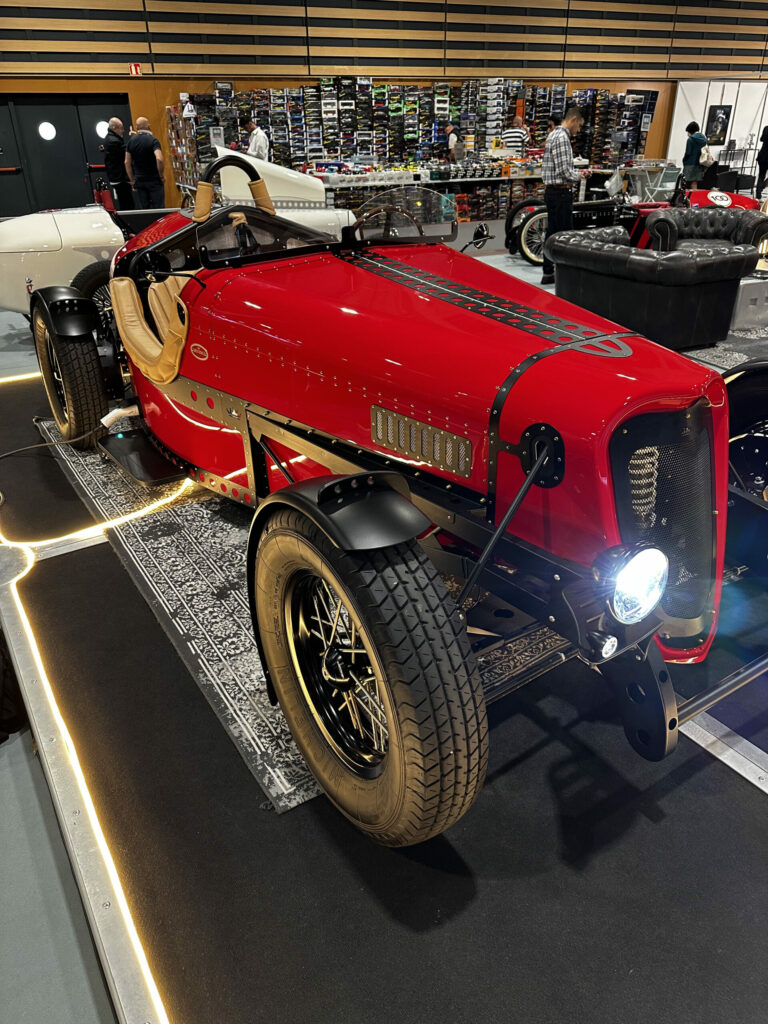
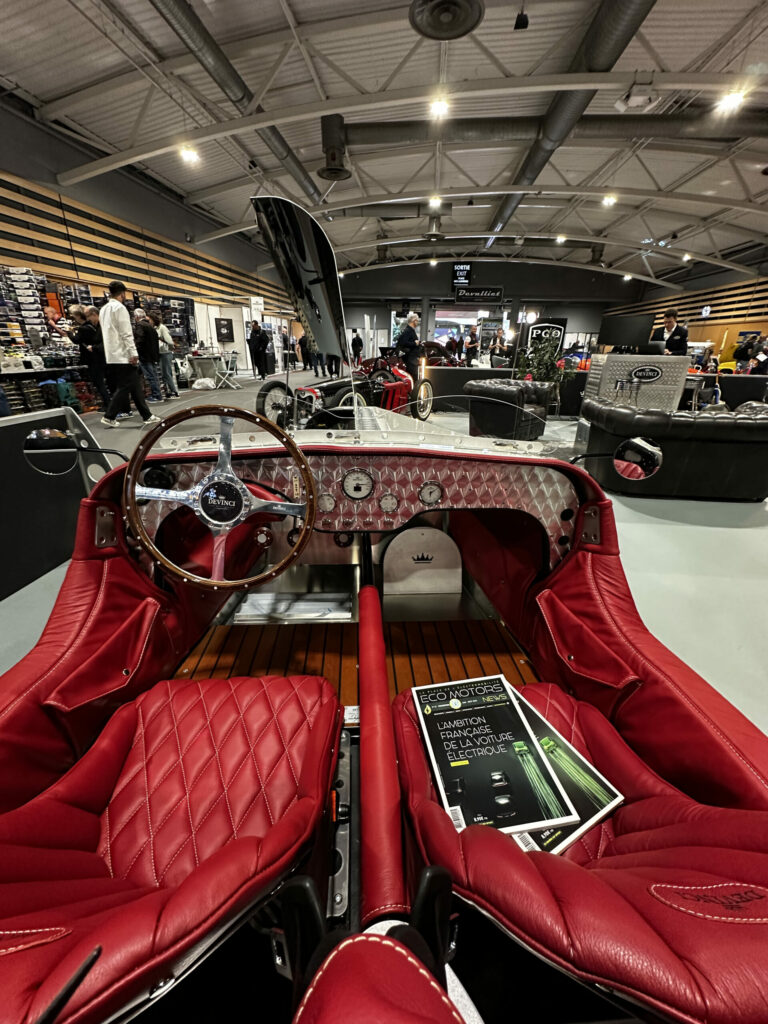
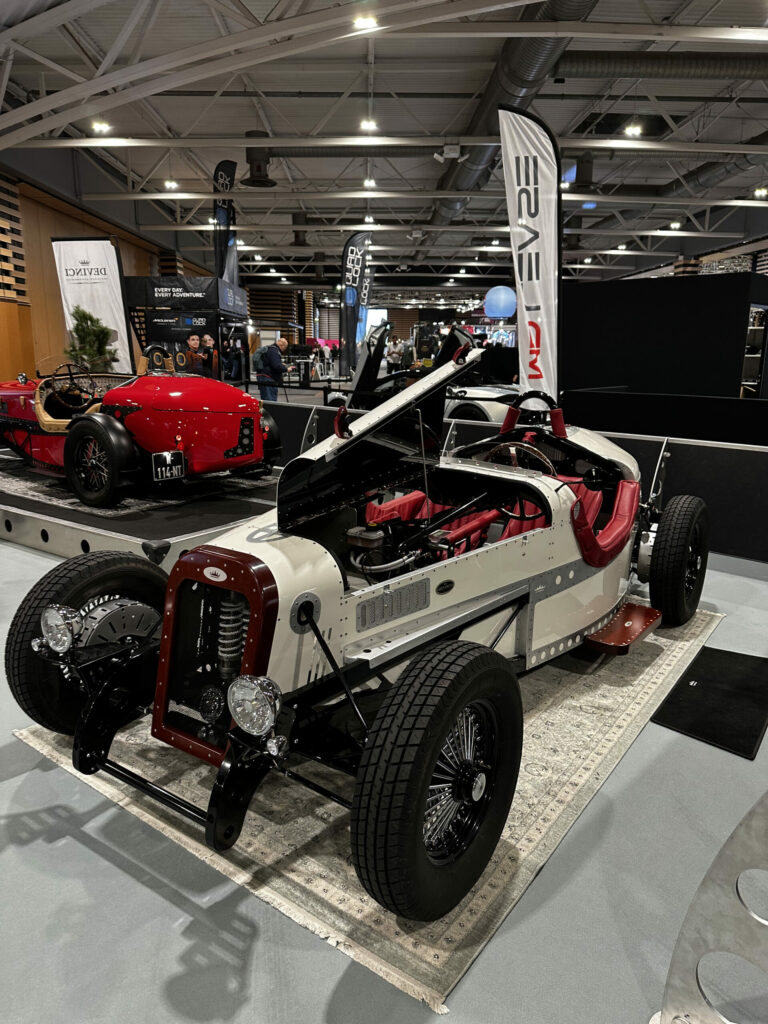
    As we wandered the aisles of the Lyon 2025 Motor Show, our eyes fell on a stand that stood out from the rest, that of Devinci. Cars with the racing style of the 30s and 40s, but powered by 100% electric motors, obviously speak to us at ECO MOTORS NEWS. But Jonathan Rouanet, the French manufacturer’s Sales Director, stops us dead in our tracks: the cars are designed and assembled in their workshop at St-Sulpice-la-Pointe in the Tarn region, using parts made by craftsmen, usually in the region and more rarely in the rest of France. Only the electric motors come from abroad, but from neighbouring countries (Germany, Italy). And the batteries? French, but incorporating imported cells. All these details pique our curiosity a little more, and we took some of Mr Rouanet’s time to tell us a little more about Devinci.

    devinci retro electric car made in france
    Credit: ECO MOTORS NEWS

    And we start by taking a step back in time. The brand was created in 2017 by its founder Jean-Philippe Dayraut, a designer and racing driver. Named Devinci, in a nod to the great Leonardo, “acomplete artist and engineer, a visionary inventor and creator of timeless works” with whom the company “shares this vision of know-how that is both technical and artistic” according to Jonathan Rouanet, it presented its first prototypes, the D417s, at the 2018 Rétromobile show. These first cars were “deliberately simple, with leaf spring front suspension, front and rear drum brakes, proportions inspired by the 1930s and a range of around 140 km“. The result? 30 orders! In the industry, for a niche manufacturer just starting out, that’s what we call a hit.

    Devinci, objet d’art and… marketing tool

    In 2019, Devinci inaugurated its current line-up, comprising four finishes of the same model, improved each year: Brigitte (40 examples), Adèle (10 examples), Marianne (10 examples) and Eugénie (5 examples, one for each continent), priced at €58,000, €75,000, €150,000 and €200,000 respectively (excluding tax). This is an important point, because although Jonathan Rouanet doesn’t identify a typical customer – “my youngest customer is in her twenties, my oldest is in her eighties” – he does note that, in addition to “car collectors and lovers of art or beautiful objects, who don’t necessarily own other cars“, most owners of Devinci models are “company directors who use the vehicle as a marketing tool, for example for estate agencies or 5-star hotels“. In fact, he claims that, more than just cars, Brigitte, Marianne, Adèle and Eugénie serve above all to transcribe values and convey a message more effectively than with more traditional means of communication. And that’s thanks to its positioning.

    devinci car interior
    Credit: ECO MOTORS NEWS

    We are positioned in a completely atypical niche, at the crossroads of several worlds: art and the automobile, industry and craftsmanship, the ancient and the modern“. The result is a real car, thanks to the founder’s “solid experience in motor racing – Formula Renault 3.5, Super Touring, rallies such as the Dakar“, but with the look of a rolling, chic, vintage work of art, all powered by modern electric power. The brand has already delivered its cars to some twenty countries around the world, and generates more than half its sales abroad.

    Big ambitions

    And there’s no end in sight for this “continuous and permanent improvement” manufacturer, which has just presented a new front end for its Eugénie model, as well as new Italian engines reserved for the top-of-the-range versions. As Jonathan Rouanet sums up, “each change is an opportunity for a new homologation“, but always with the same ambition: “Tocontinue to promote French excellence on the border between art and the automobile“. And it seemed to work at the Lyon 2025 Motor Show, as the Devinci stand was packed with people, all intrigued by these vehicles that were as anachronistic as they were desirable – further proof, if any were needed, that electric can go hand in hand with chic.

    wooden grille devinci car
    The wooden grille is a perfect illustration of the brand’s retro, artisanal, technical and industrial identity. Credit: ECO MOTORS NEWS
  • “From audit to charging stations: supporting electric mobility from A to Z” E-Mobility Expert

    “From audit to charging stations: supporting electric mobility from A to Z” E-Mobility Expert

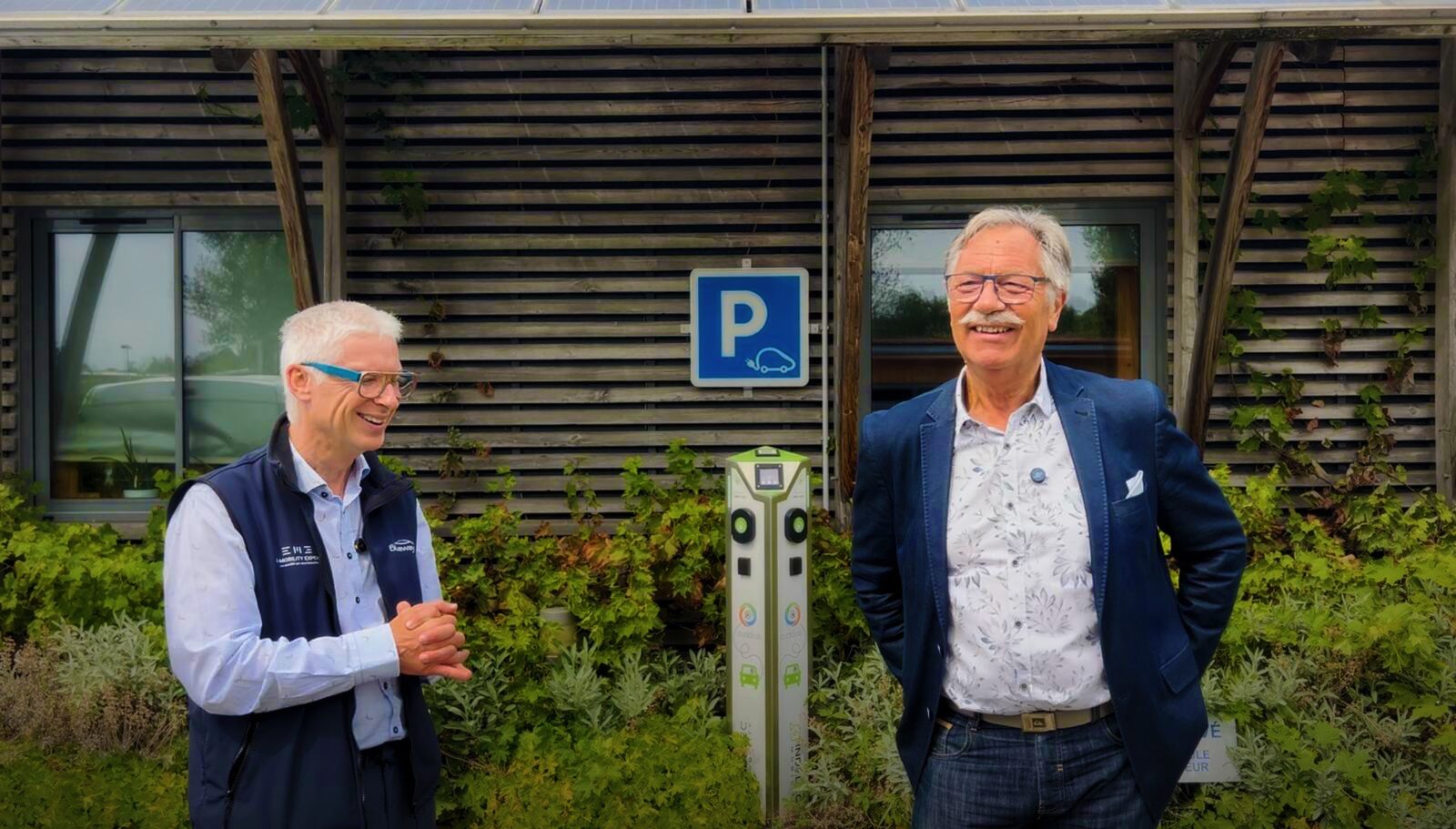
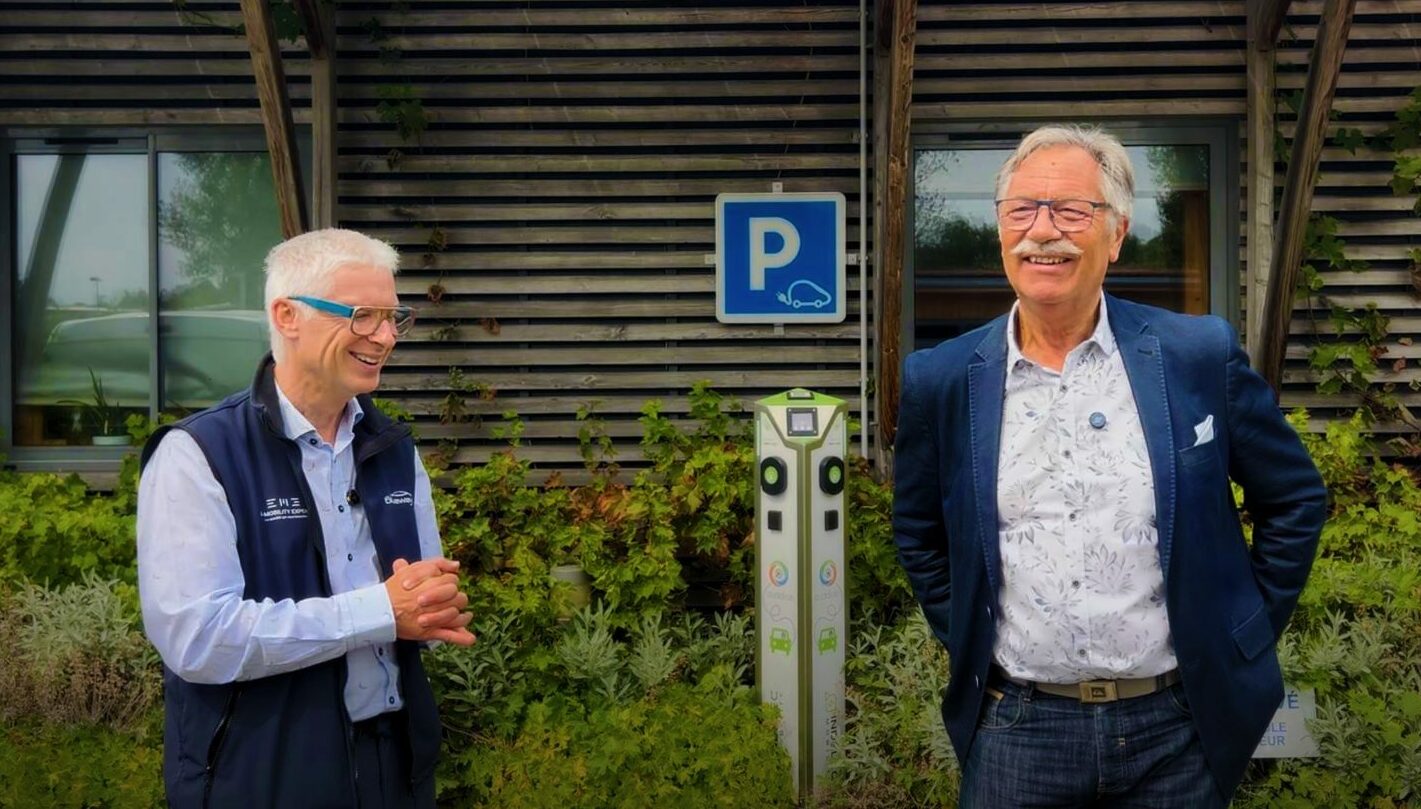
    Interview with Jean-Luc Coupez and Daniel Kovacs, founders of E-Mobility Expert

    Created in 2021, E-Mobility Expert is a consultancy dedicated to electromobility. Its ambition is to guide companies through the transition, from CSR analysis to the practical deployment of charging stations and sustainable mobility solutions. Meet its two passionate directors: Jean-Luc Coupez, founder, and Daniel Kovacs, associate general manager.

    Credit: Eva Pellerin

    Can you introduce yourself in a few words?
    Jean-Luc Coupez: I’m the founder of E-Mobility Expert, a consultancy specialising in the world of electric mobility. After more than 15 years in the electric mobility sector, I wanted to continue to contribute by embarking on this new adventure after my retirement.

    Daniel Kovacs: I’m a consultant in electromobility and recharging infrastructures. One year later, I joined Jean-Luc with the desire to bring a global and agile vision.

    How did the E-Mobility Expert adventure come about?
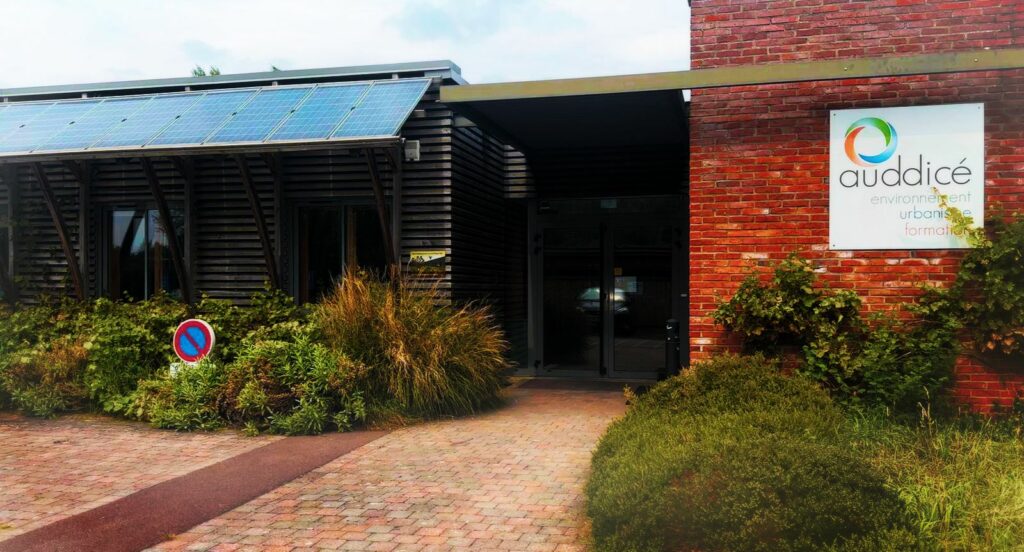
    Jean-Luc Coupez: I launched the company in 2021, with the idea of broadening the technical approach to include a CSR and sustainable development dimension. The partnership with the Auddicé group enabled us to bring in this expertise.

    Daniel Kovacs: For me, it was an opportunity to move from a large group to a more flexible structure, while retaining a real sense of rigour. Three years on, the gamble has paid off: we have the responsiveness of a small team and the solidity of a group.

    What sets you apart in the market?
    JL.C: Experience. I took part in the first interministerial working groups that led to the European Type 2 standard, and then to the Combo CCS for fast recharging.

    Our expertise covers both the technical side – developing, installing and upgrading bollards – and the regulatory side – helping foreign manufacturers to comply with French regulations.

    Why did you join the Auddicé group?
    JL.C: Because it allows us to offer comprehensive support. With Auddicé, we carry out carbon audits, travel plans, analysis of usage… right through to implementation and training. We are currently the only company in France that can follow a company from A to Z.

    Credit: Eva Pellerin

    The demonstrator: all recharging solutions combined

    You’ve installed a demonstrator on your site. What does it involve?
    D.K: We’ve transformed our car park (30 spaces) into a showcase for recharging solutions:

    • Slow charging points for daily charging
    • Normal terminals (7 to 22 kW) for half a day
    • Fast charging points (25 kW) for recharging in two hours

    In all, 14 terminals – more than enough to showcase the full range of technologies. It’s unique in France.

    JL.C.: We’ve also worked on education: explanatory panels, QR codes, fun training courses like our “charging stations aperitif”, which raises awareness of good usage practices.

    How do your customers react to this demonstrator?
    D.K: With surprise and curiosity. Few have seen so many solutions grouped together in one place. It triggers discussions, ideas and often projects. As for our staff, they have taken to the tool perfectly.

    Did you also think about cycling?
    D.K : Absolutely. Low-carbon mobility starts with walking and cycling. We have created a garage equipped for electric bikes, with recharging points and a repair workshop, as well as an inflation station, open to all employees.

    “Electric vehicles will undoubtedly be a bridge to other technologies such as hydrogen or new generations of batteries.

    Showcasing electric mobility for all uses

    What user profiles are you targeting?
    D.K: Company employees, visitors and customers, but also staff from other agencies. The idea is to show a variety of uses, with several makes of kiosk and several real-life scenarios.

    What do you see as the main obstacles to the electrification of fleets?
    D.K: The first is range. Employees are worried:“Will I make it through the day?” The answer depends on the right choice of vehicle and battery. Then there are the issues of recharging: on site, when out and about, and at home.

    JL.C : On the business side, the challenge is also to correctly size the infrastructure: number of terminals, power, possible integration of photovoltaics or storage, software control… All this needs to be optimised.

    How do you see electric mobility evolving in the future?
    D.K.: We’re at a turning point. Batteries will become faster to recharge, rather than more autonomous. Induction will develop, as it has for telephones. And electric vehicles will serve as a bridge to other technologies such as hydrogen.

    JL.C : Our role will be to help companies make the right choices, because once a solution is adopted, it’s a long-term commitment. We help them compare costs, take advantage of subsidies and build tailor-made solutions.

  • “Polestar 4 is the safest vehicle on the market” Stéphane Le Guével, CEO of Polestar France

    “Polestar 4 is the safest vehicle on the market” Stéphane Le Guével, CEO of Polestar France

    After a career with PSA and Stellantis, Stéphane Le Guével has taken over as head of Polestar France, a 100% electric Swedish brand that has made performance, design and technological innovation its cornerstones.

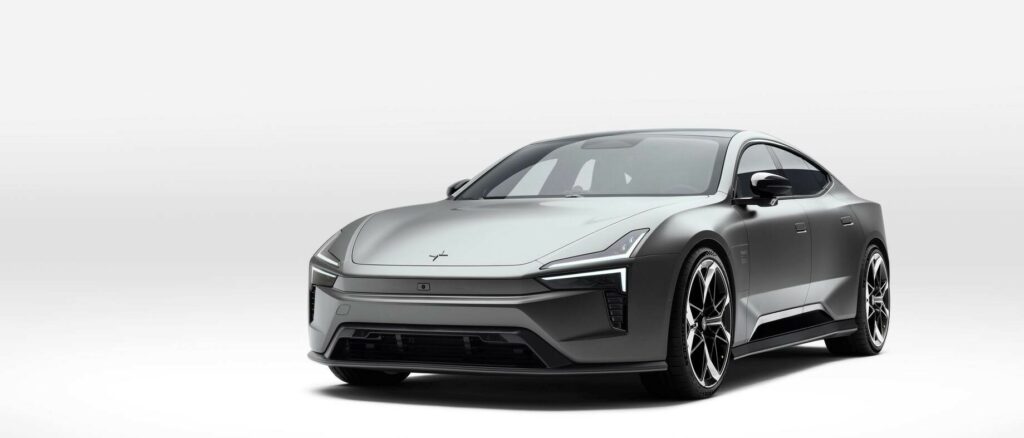
    ECO MOTORS NEWS had the chance to attend the presentation of the brand’s new spearhead, a saloon named Polestar 5, at the IAA Mobility show in Munich. The editorial team had the opportunity to ask Stéphane Le Guével, Polestar‘s Managing Director, to share with us his vision of the market, the manufacturer’s ambitions, and what drives him personally in this new era of the automobile.

    The Polestar 5, just presented at the Munich Motor Show.
    The Polestar 5, just presented at the Munich Motor Show. Credit: Polestar

    Who are you, Stéphane Le Guével?
    Stéphane Le Guével: I’ve been an automotive professional for almost 35 years. I spent most of my career with PSA and then Stellantis, managing brands in various countries. Today, I’m at the head of Polestar France, which we’ve just officially launched after several years of legal wrangling.

    portrait stephane le guevel polestar france
    Credit: Polestar

    What motivated you to join Polestar?
    Stéphane Le Guével: I wanted to turn over a new leaf. Polestar is a young brand, but it’s in line with all the major changes in the automotive industry: electrification, digitalisation, online sales and a new customer relationship. It brings together everything that makes up the future of the industry. It’s an exciting field for someone who wants to contribute to these transformations from the inside.

    Polestar has just arrived in France. Why now?
    Stéphane Le Guével: There was a legal dispute surrounding the logo, which prevented us from launching the brand earlier. As soon as this constraint was lifted, we decided to launch in France. The market is mature, the demand is there, and it’s my country, so I know the issues very well. It was a bit of a no-brainer for me to embark on this adventure.

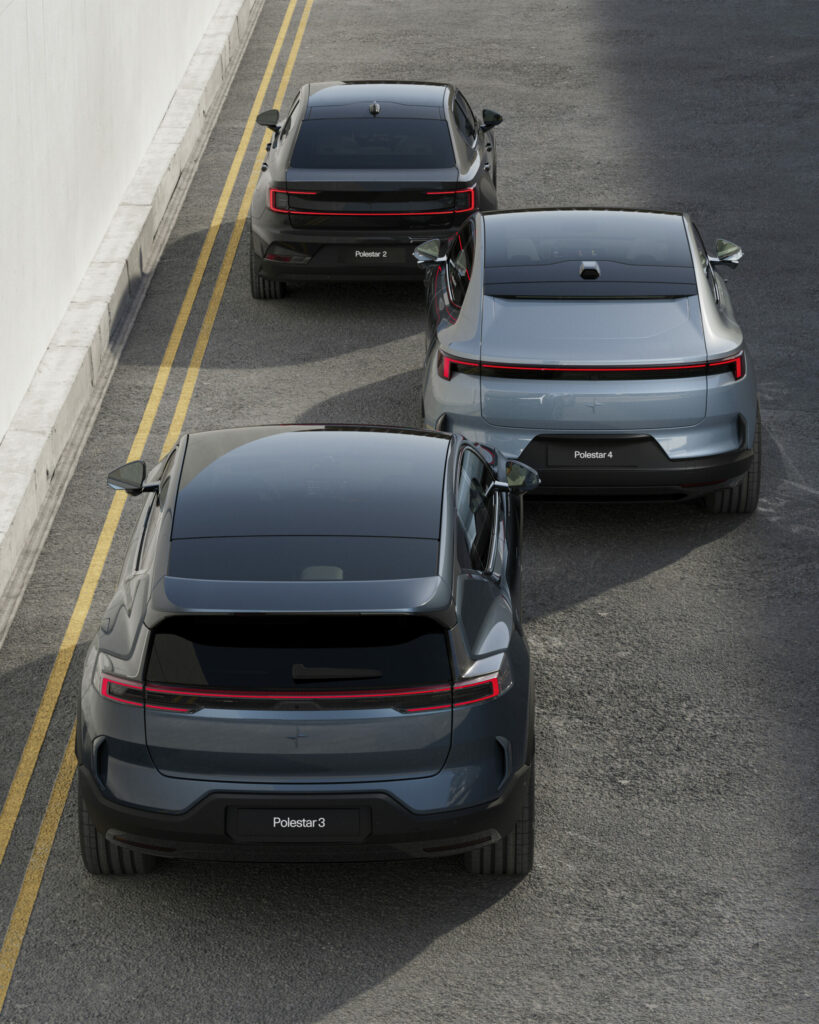
    line up polestar 2025
    Credit: Polestar

    Polestar stands out for its positioning. How is it different?
    Stéphane Le Guével: There are three pillars that set us apart. Firstly, performance: Polestar comes from the racing world, like AMG for Mercedes or M for BMW. It’s in our DNA. Then there’s the design: sleek, Scandinavian, with a real eye for aesthetics. Lastly, technology: we were the first to integrate Google Automotive Services, and we are constantly innovating, as on the Polestar 4, which abandons the rear window in favour of a high-definition camera.

    “Polestar is a 100% electric global brand.”

    How has the brand been received by the French public?
    SLG: Excellent. Unlike other new entrants, Polestar is already well known throughout Europe. The brand was already well known. In France, there was an expectation. All that was needed was for customers to finally be able to order their cars.

    Is Polestar an environmentally committed brand?
    SLG: Absolutely. Our objective is ambitious: a climate-neutral car by 2030, and a climate-neutral company by 2040. It’s a total commitment, across the entire value chain: recycled materials, production using renewable energy, and annual publication of our progress. Transparency is a core value for us. And we invite our competitors to do the same.

    Is 100% online distribution enough?
    SLG: When we started out, we relied heavily on online sales. But customers want to see, touch and try things out. Today, we combine direct sales with a physical network of agents. Customers are invoiced by Polestar, but they can discover the cars in our ‘Spaces’, our showrooms, and have their cars serviced in the Volvo network. This is a real strength.

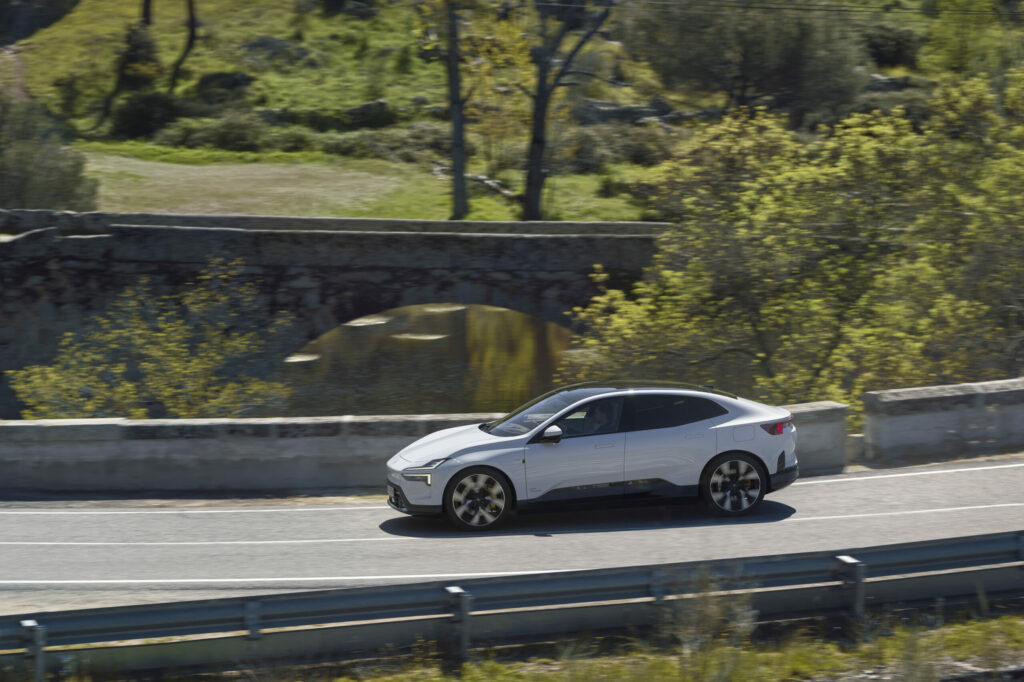
    Polestar 4
    Credit: Polestar

    Is France ready for electric cars?
    SLG: It’s making progress, but it’s not Norway yet. There’s a lot of confusion among consumers, particularly about range and cost. The real uses are not well known. People need education and clarity. That’s where the specialist media have an important role to play.

    “Polestar 4 is certainly the safest vehicle on the market.”

    How would you define Polestar’s mission?
    SLG: To speed up the transition to environmentally-friendly mobility without sacrificing driving pleasure. Performance is part of our identity. And thanks to Volvo’s heritage, our cars are among the safest on the market. You can enjoy clean driving.

    How do you personally feel at the wheel of a Polestar?
    SLG: I like the simplicity. It’s a bit like switching to the latest smartphone: sleek, fluid, with no unnecessary buttons. And behind all that simplicity, there’s 520 horsepower. It’s rare to find such a balance between design, comfort, safety and driving pleasure.

  • “Electric cars are not a niche market” Pascal Hureau, Chairman of FFAUVE

    “Electric cars are not a niche market” Pascal Hureau, Chairman of FFAUVE

    Pascal Hureau, President of the Fédération Française des Associations d’Utilisateurs de Véhicules Electriques (FFAUVE) – an association formed in 2019 from the merger of several electric car owners’ associations – is a tireless campaigner for an accessible, pragmatic and user-centred energy transition. At a time when the electric car market is at a turning point, he talks to ECO MOTORS NEWS about his commitment, the current obstacles to the electrification of the car fleet and his vision of an electrified France by 2035.

    Portrait of Pascal Hureau, Chairman of the FFAUVE, campaigner for electric mobility in France
    Pascal Hureau, Chairman of the Fédération Française des Associations d’Utilisateurs de Véhicules Électriques (FFAUVE). (Credit: DR)

    What is the FFAUVE?
    Pascal Hureau: First of all, it’s not a car club! It’s the only association in France that represents electric vehicle users. We defend their interests, a bit like the UFC Que Choisir for electromobility. We have the advantage of being a federation of regional associations, which means we can keep in touch with the realities on the ground.

    What made you decide to go electric?
    Pascal Hureau: In a word: pleasure. The pleasure of driving, the silence, the comfort. As we often say at FFAUVE, if you try an electric car, you’ll love it! Of course, I also wanted to reduce my environmental impact: I was fed up with burning fossil fuels. Then, finally, with an electric vehicle, you gain real autonomy, you can recharge at home or elsewhere, without having to rely on a service station.

    But there’s still a big step to be taken between adopting electric cars and committing oneself as you’re doing…
    Pascal Hureau:
    I’ve developed a passion for the subject. The range of vehicles on offer has grown, but demand has yet to mature, so I’ve been looking for a way to participate in the rise of the electric car: supporting this transition, informing, defending and proposing. And that’s what we’re doing at FFAUVE.

    You are also active politically as deputy mayor of Montrouge, in the Paris region.
    PH:
    Yes, I am deputy mayor for digital transition, e-administration and European relations, but for a long time I was responsible for roads and urban development. I initiated the installation of the town’s first charging points, and today Montrouge is one of the best-equipped towns in the inner suburbs of Paris.

    On a national scale, what is your assessment of the coverage of charging points?
    PH:
    We’ve almost reached 160,000 charging points accessible in public spaces. There’s been a real boom in shops, supermarket car parks, cinemas and so on. Motorway service areas are 100% covered. In reality, it’s mainly condominiums that are lagging behind: just 10-15% are equipped. That’s another of our missions, to help these co-ownerships install charging points in their car parks.

    “It’s vital to combat misinformation”.

    In your opinion, what are the current obstacles to more widespread adoption of electric cars by the French?
    PH: The price of vehicles is still too high for some people, especially those living in blocks of flats. This goes some way to explaining why there are so few recharging points in large housing estates… But the fear of autonomy is receding. Coverage is good and new technologies mean that recharging can be done very quickly. And we have to get away from the fantasy that we sometimes wait longer at the pump than at a fast-charging point. At least, that’s what we saw over the long Easter weekend. One thing is certain, we have to stop thinking that electric cars will be a niche market: they are the future of the motor industry.

    There are also misunderstandings about the charging ecosystem…
    PH: Yes, it’s a big issue. There have been too many cards, too many systems. We need to move towards “plug and charge“, as Tesla is doing. Alliances like the SPARK Alliance are working in this direction. Simplicity is the key: bankcard or automatic authentication.

    “We must not give up on the end of fossil-fired power in 2035”.

    What are the FFAUVE’s plans for 2025?
    PH:
    First of all, we are going to publish a new version of our white paper – which can be downloaded directly from our website – and launch a specific guide for local authorities with a view to the 2026 municipal elections. We will also be stepping up our fight against misinformation, sometimes spread by influential media. We recently won a complaint to the Autorité de régulation de la communication audiovisuelle et numérique (ARCOM). Finally, the FFAUVE will continue to work with dealers to ensure that they are better trained to sell electric cars.

    Finally, what do you think France will look like in 2035, in terms of electric cars?
    PH: Electric vehicles at the same price as combustion engines. Electric charging points everywhere. A rich second-hand market, thanks in particular to corporate fleets. More versatile and affordable models. And a stable, non-punitive, clear industrial policy that we stick to. The deadline is clear: 2035, the end of new combustion engines. And that’s something we must not give up!

  • “Making electric cars as affordable and practical as internal combustion” Maxime Bayon de Noyer (Ampere)

    “Making electric cars as affordable and practical as internal combustion” Maxime Bayon de Noyer (Ampere)

    Ampere, the Renault Group’s European specialist in intelligent electric vehicles, plays a key role in the Group’s innovation strategy. Maxime Bayon de Noyer, Senior Vice President, Technologies & Upstream Projects, explains the priorities, the main areas of research and the challenges facing the next generation of electric vehicles.

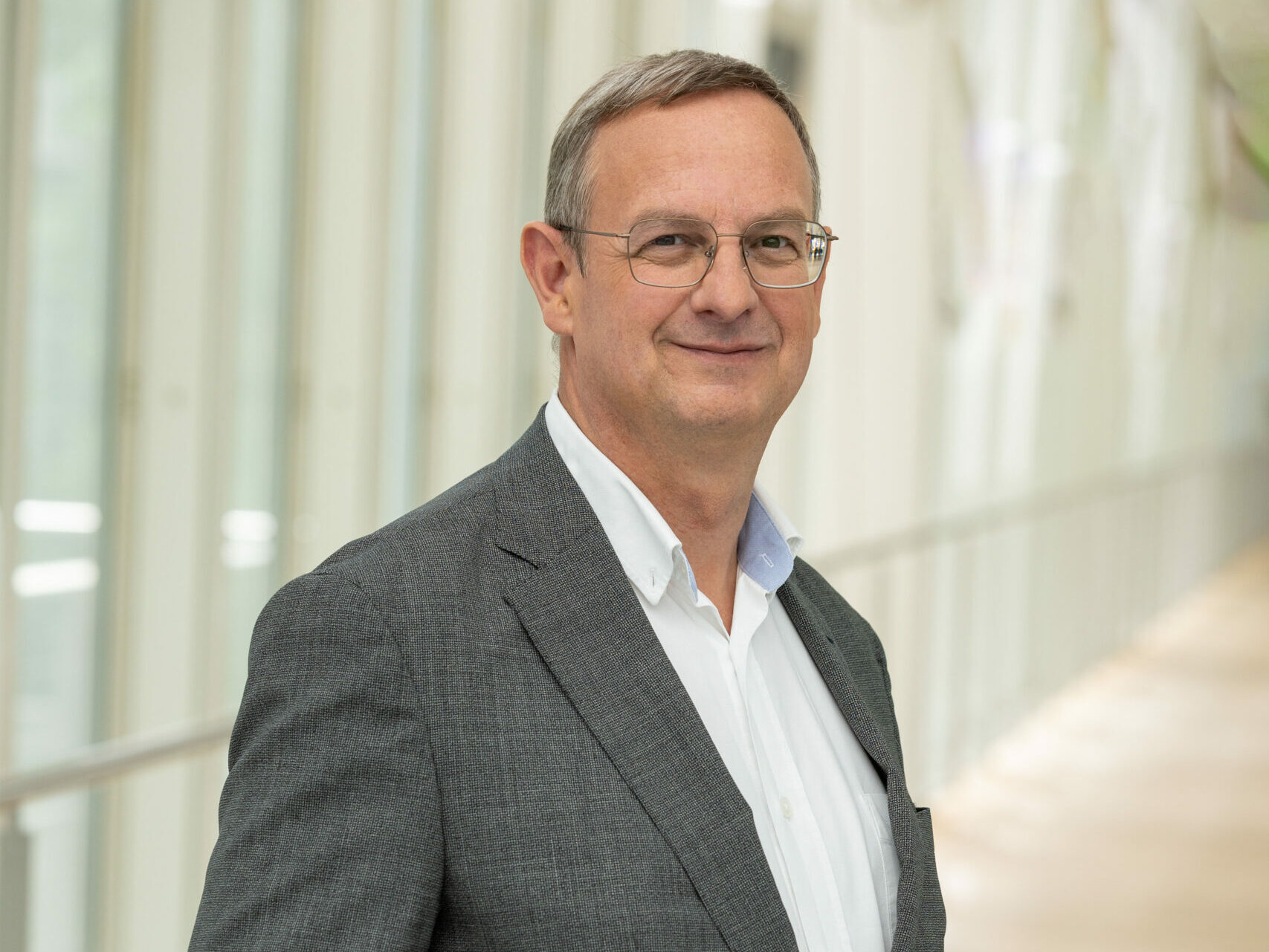
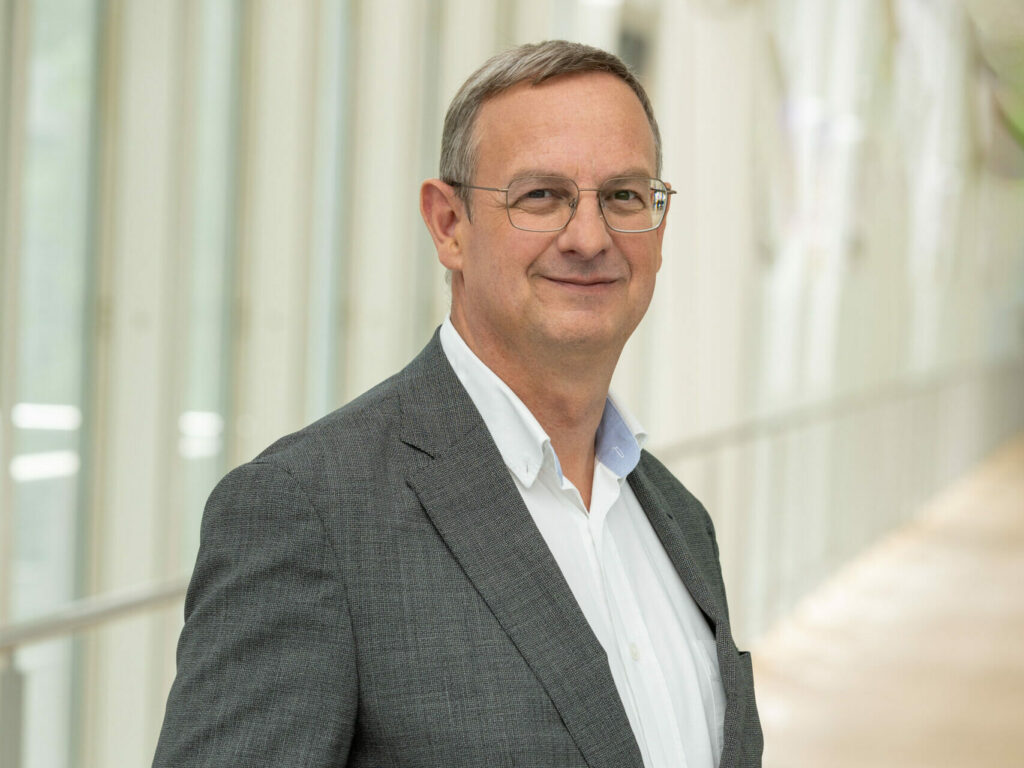
    Portrait of Maxime Bayon de Noyer, Technologies Director at Ampere Renault
    Maxime Bayon de Noyer, in charge of technology projects at Ampere – Renault Group.


    What is Ampere’s role in the Renault galaxy, and what is your role within Ampere?
    Maxime Bayon de Noyer
    : Ampere is a tech player serving the Renault Group, developing electric vehicles (EVs) under the Renault brand and injecting EV technologies and software for other brands (Alpine, Nissan, Mitsubishi…). Ampere’s aim is to make electric vehicles accessible to as many people as possible in Europe. My role is to manage ‘upstream’ technological projects, in other words… upstream of development! We’re involved from the research phase right through to the handover to the production development teams.

    What are your current priorities in terms of innovation?
    Maxime Bayon de Noyer
    : In order to democratise the EV in Europe, we need to lower costs and maximise usage. So, to reduce the cost of batteries, we’re working on the materials used and looking at new chemistries. As for electric motors, Renault Group is a pioneer in magnetless wound-rotor motors, which do not use rare earths (notably with Zoé). At Ampere, we are pursuing and improving this technology in our next generations of motors, to make them more efficient by, for example, reducing losses during energy transfer.


    MBN:
    In the short term, we are going to introduce LFP (Lithium Iron Phosphate) chemistry into our batteries, then in the medium term, we are studying a cobalt-free chemistry, which will have the energy density of NMC (Nickel Manganese Cobalt) but with the cost and tolerance of LFP. Finally, 10 years from now, we will be proposing an even more efficient chemistry based on lithium metal. The aim is to offer increasingly efficient batteries at lower cost.

    What do you think will be the next major technological revolution in the automotive industry?
    MBN: For me, the revolution will come from a change in usage. The aim is an efficient electric car, with fast, optimised and stable recharging, whatever the season or type of road. And all this with an electric vehicle at the same price as a combustion-powered vehicle.

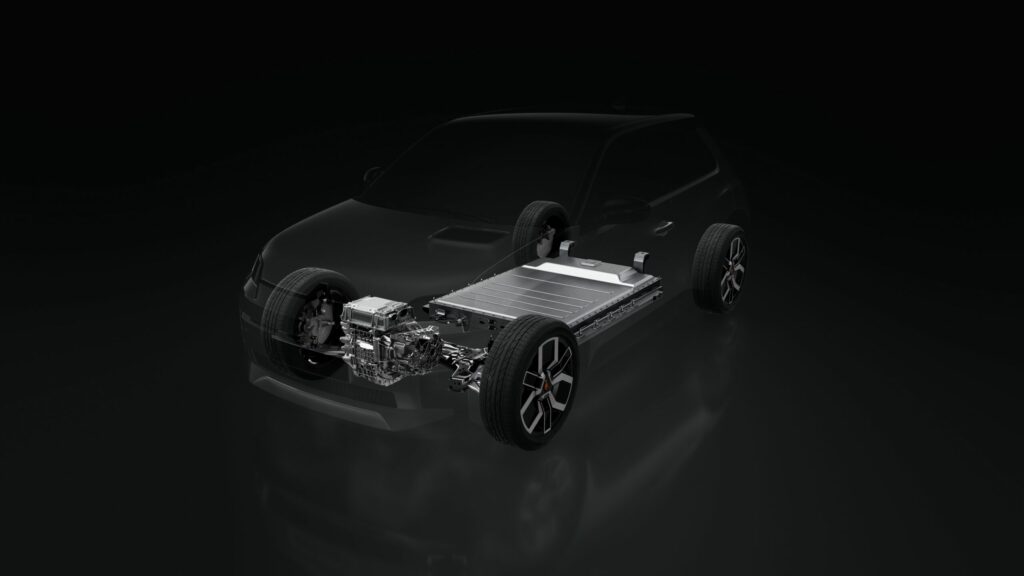
    Magnetless electric motor for the new Renault 5 developed by Ampere
    The Renault 5’s engine, developed by Ampere, relies on rare-earth-free efficiency.

    The R5 introduced two-way charging to the Renault catalogue. What’s in it for the consumer?
    MBN:
    In V2L (Vehicle to Load), bi-directional recharging means you can use your car as a generator and therefore a mobile power socket, and in V2G (Vehicle-To-Grid), when the vehicle is parked, it can feed energy back into the grid, like a mini power station. This re-injected energy is invaluable during periods of high demand: it stabilises the network, prevents power cuts… and can be sold on, generating income for the user. Finally, in V2H (Vehicle to Home), which will be available in 2026, the vehicle can power the home in the same way as a mobile solar panel. This means, for example, that the energy stored in the battery can be used during peak hours to reduce the bill. The system is controlled by AI and always maintains the autonomy required for travel.

    Any other innovations you can share with us?
    MBN: Some are still confidential, but we are currently working on the renewal of our C segment (compact hatchbacks and three-bodies), with a new engine offering very good performance on the motorway. This breakthrough has been made possible by an innovative platform, enabling a ground-breaking design and overall optimisation. At Ampere, our ambition is clear: to make electric cars as affordable, desirable and practical as internal combustion. And this is not science fiction.

    A final word on China: are they really 10 years ahead of us?
    MBN: They have a head start, but we’re still fully in the race. Our strength lies in our in-depth knowledge of the French and European markets, acquired over the years. This expertise gives us a strategic advantage, because we understand exactly what our customers want and need. At the same time, we remain humble in the face of their efficiency, organisation and speed. It’s with this in mind that we remain vigilant and have opened an office in Shanghai, in order to better observe and anticipate market developments.

  • Summer 100% electric: stress-free recharging on France’s motorways

    Summer 100% electric: stress-free recharging on France’s motorways

    Summer holidays are approaching, and for more and more motorists, they’ll be at the wheel of an electric vehicle. While the driving comfort and silence of an electric car may be appealing, one question remains: how do you manage recharging on the road when you’re on holiday? On French motorways, particularly those in the VINCI network, the infrastructure is ready. You just need to know how to deal with it. Here’s a practical article to help you travel with a clear head, with insights from Olivier Granier, Director of Commercial Installations at VINCI Autoroutes.

    Credit: Cyril Crespeau
    Credit: Cyril Crespeau


    A charging point every 80 km: a promise kept

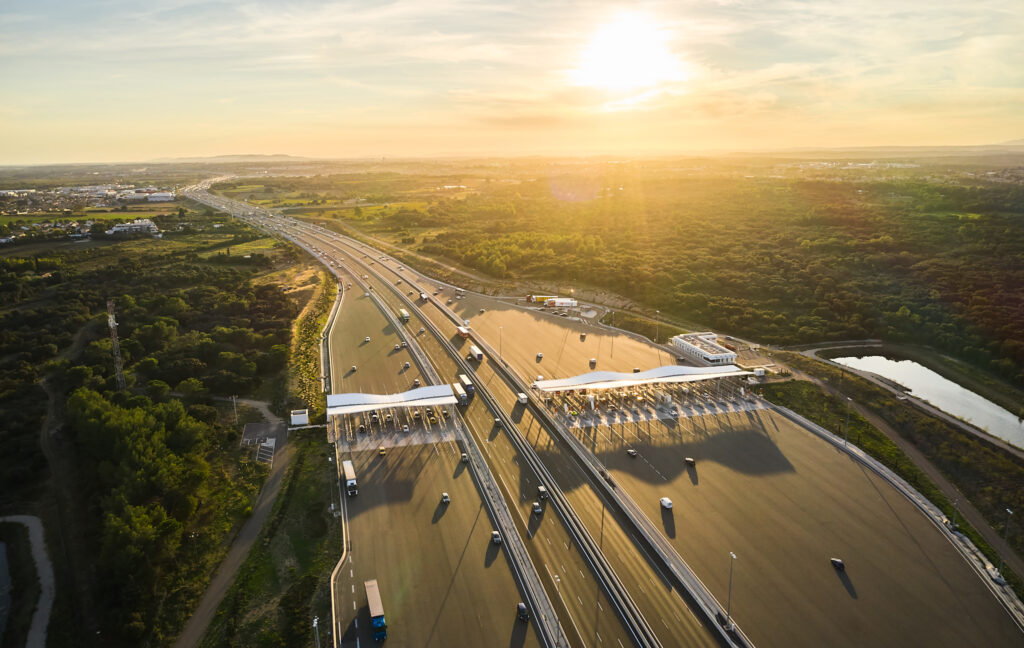
    The good news is that recharging on the motorway is no longer a headache. On major routes such as the A7, A10, A61 and A75, among others, all service areas are now equipped with fast-charging stations. VINCI Autoroutes, which manages more than 4,400 km of the network, has already equipped 100% of its service areas, i.e. more than 300 recharging stations and 90% coverage of ultra-fast charging points.

    We have embarked on a vast programme of equipment from 2020, in partnership with the major operators in the sector, to respond to the increase in the number of electric vehicles, particularly during the summer period “, explains Olivier Granier. The objective that the French group had set itself has been achieved: to offer a station every 80 kilometres or less on the network, to guarantee peace of mind on long-distance journeys.

    A wide range of partners and a user experience at the heart of the system

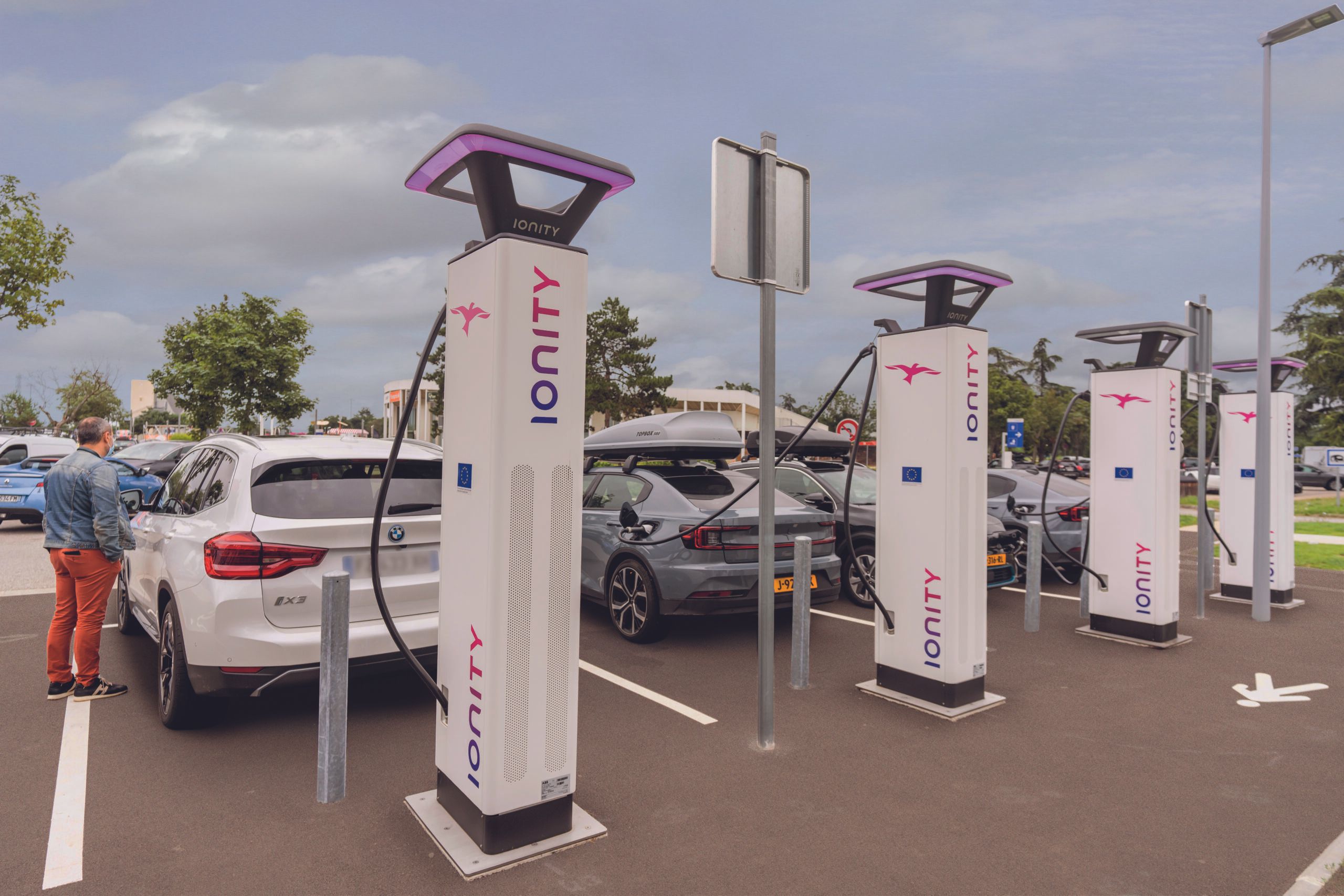
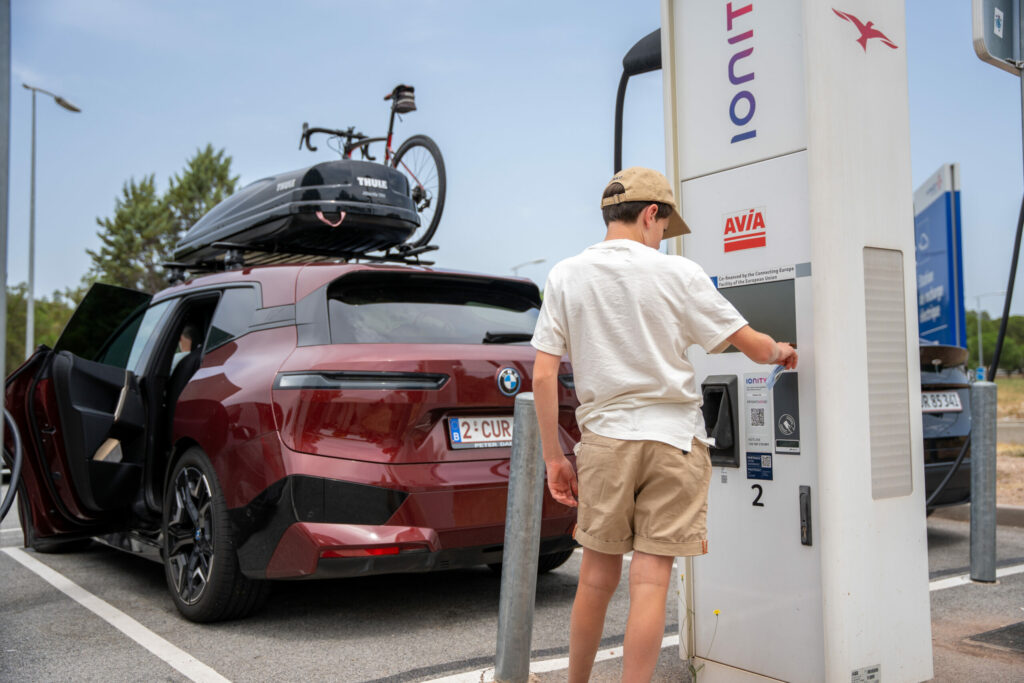
    The chargepoints installed generally recharge 80% of the battery in less than 30 minutes. Some stations offer up to 16 simultaneous charge points, and the diversity of operators present – Ionity, TotalEnergies, Fastned, Driveco, Tesla, etc. – ensures good interoperability, whatever the vehicle model.

    But technical performance is not the only concern of those involved in recharging: the user experience is even more important. To facilitate this transition and help EV drivers with the recharging process, VINCI Autoroutes has launched Operation Gilets Bleus, a summer initiative that mobilises its staff on the ground to help, inform and ensure the safety of drivers at service areas during major holiday periods.

    Credit: Jacques Wisdorff
    Credit: Jacques Wisdorff


    Simplified payment and digital tools to the rescue

    This convenience extends to payment, because today you don’t need to be an expert to recharge on the motorway. Most chargepoints accept payment by credit card or QR code. You can also use the operators’ mobile applications or multi-network badges such as Chargemap or Shell Recharge. In terms of digital services, the Ulys application developed by VINCI Autoroutes helps users on their journeys on French motorways. ” Our application allows drivers to locate charging points, check their availability in real time, and plan their itinerary to include recharging breaks ,” explains Olivier Granier.

    Anticipate to avoid peaks in visitor numbers

    During the summer, some service areas can be very busy, especially on Saturdays known as “black Saturdays”. VINCI Autoroutes is aware of this, and steps up its technical surveillance and maintenance operations at this time of year. ” We have put in place centralised supervision and teams mobilised 24 hours a day, particularly for major departures ,” says Olivier Granier.

    His advice to motorists: don’t wait until the last minute to recharge. So plan your stops in advance, recharge as soon as your range falls below 30%, and regularly check the status of charging points on specialist applications. It’s better to plan a stop at an area a little earlier in the journey than to risk waiting in the middle of the heat.

    VINCI AUTOROUTES; Ulys; Montpellier; Telepeage


    The motorway is ready, now it’s up to you to get organised

    The coverage of the network, the diversity of operators, the digital tools and the comfort offered at the rest areas make the electric car a credible option for holidays. The key is to plan ahead. Recharging should be incorporated into your journey as a useful and enjoyable break, rather than a constraint. This summer, go away connected, go away serene.

  • “Total autonomy will never exist” Luc Julia, Chief Scientific Officer at Renault

    “Total autonomy will never exist” Luc Julia, Chief Scientific Officer at Renault

    Luc Julia, an artificial intelligence (AI) engineer, has been working in this field for over 40 years, 32 of them spent in Silicon Valley.

    As Chief Scientific Officer at Renault, Luc Julia is putting his expertise at the service of the company’s digital transformation, integrating AI at all levels of production and in vehicles. In this interview, he shares his vision of AI in the automotive industry, its impact on electromobility, its safety challenges and its prospects for the future.

    “Artificial intelligence is a tool, we’re the ones holding the stick”.

    How is AI transforming Renault today, both in production and in vehicles?
    Luc Julia : At Renault, my role as Chief Scientific Officer is to put AI into practice throughout the company. Obviously, this applies to cars, with clear objectives: to improve safety, reduce accidents and make vehicles more intuitive and more pleasant to use. But beyond cars, we are integrating AI into factories and other areas of the company. This means that teams, whether they are workers or office staff, can work more efficiently using these new technologies.

    Is AI a reliable tool for improving cyber security, particularly in the automotive sector?
    Luc Julia:
    Cyber security is a race. AI plays a key role. On the one hand, it helps us to detect and correct errors, but on the other, it can also be used by malicious actors to bypass our defences. The important thing is to understand these tools and not to panic. AI needs to be used with discernment, just as it can be an asset in detecting threats. It’s a race in which you have to be constantly vigilant.

    Vehicle autonomy: how do you see the future of autonomous cars?
    Luc Julia: I think that total autonomy for vehicles (level 5) will never happen. I don’t think it’s realistic. However, cars are becoming increasingly autonomous in specific contexts. They can see better than we can, brake more effectively, and are capable of performing many tasks better than humans in particular conditions. Nevertheless, human assistance will still be necessary, even in a future where cars are largely autonomous. Partial autonomy is a positive development, particularly in terms of enhancing safety and improving the driving experience.

    luc julia artificial intelligence
    Credit: Yves Forestier

    How do you see the automotive industry evolving over the next 5 to 10 years?
    Luc Julia: Cars will become safer and safer, and we will be able to enjoy a more comfortable and connected environment. One of the major developments will be the possibility of doing something other than driving, thanks to connectivity and AI technologies. Autonomous cars, even if only partially, will open up new possibilities, and innovative services will be offered on board, transforming the way we interact with our vehicles.

    “I don’t support the use of fossil fuels.

    Can AI be considered a gadget or is it already a real asset in modern vehicles?
    Luc Julia: There are technologies that are absolutely not gadgets. Driving aids, which have been around for over 10 years, have proved that they save lives. Entertainment systems also provide valuable services. They are not gadgets, but essential features that make driving more enjoyable and safer.

    What do you think of the idea of harmonising technological innovation with digital restraint in connected cars?
    Luc Julia: One of the good things for vehicles is that many technologies are handled locally, directly in the car. This makes them more economical in terms of energy consumption, because not everything goes through the cloud. This is an advantage over systems based on remote servers, which consume a lot of energy. There are also opportunities for cars to generate their own energy, for example via solar panels or through braking, making them even more autonomous and sustainable.

    And personally, do you use an electric car?
    Luc Julia: Yes, I’ve been driving electric cars for over 10 years in the United States. What I particularly like is the acceleration, which is a real pleasure, even if I’m careful. And then there’s the convenience of not having to go to the petrol pump. The fact that you can recharge your car at home really makes life easier, especially here in the United States where the infrastructure is fairly well developed. I wouldn’t go back to internal combustion for these two reasons, and I don’t support the use of fossil fuels.