Category: Testimonials

  • Taxi and VTC drivers’ perspectives on 100% electric vehicles

    Taxi and VTC drivers’ perspectives on 100% electric vehicles

    ECO MOTORS NEWS interviewed eight taxi and private hire (VTC) drivers who operate fully electric vehicles to find out what they think of the experience — and what their passengers think too! We also asked each of them how likely they are to ever go back to a combustion engine.
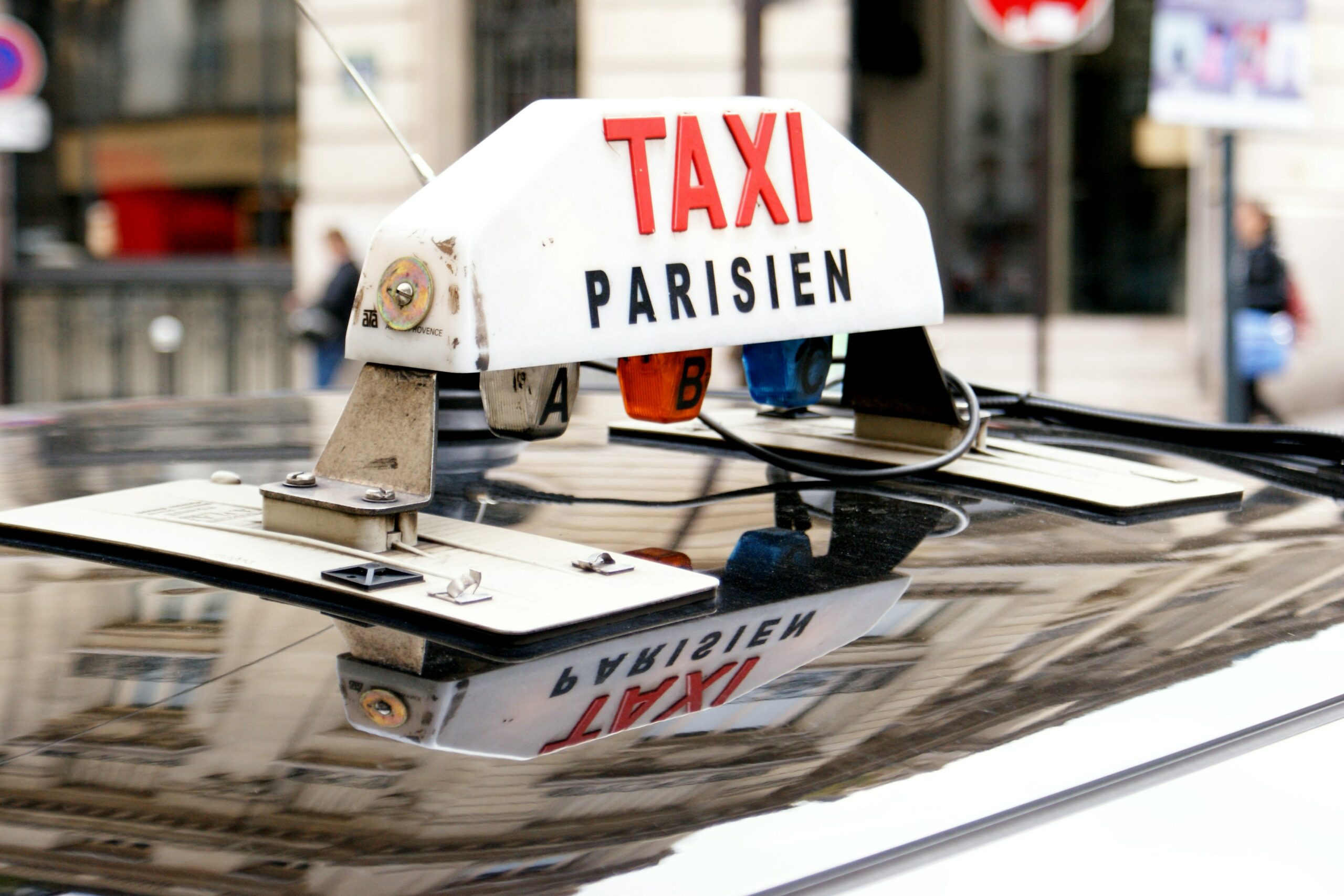
    Electric Parisian taxi - illuminated sign on the roof of a vehicle
    Illuminated “Taxi Parisien” sign on the roof of an electric taxi in the streets of Paris. (Credit: Diego Fernandez)

    Ali. Île-de-France.*

    As a VTC driver, I switched to 100% electric mainly to save on fuel and maintenance costs. On a daily basis, I notice that younger passengers react positively to this type of engine, while older passengers pay less attention. The driving silence is the advantage I appreciate most, as it significantly improves comfort. However, range remains a weak point for me, especially during long working days.
    Probability of returning to combustion: 0%.

    Bruno. Île-de-France.

    I’m not an environmental activist, but I switched to electric after falling in love with a Hyundai model that is only available in electric. Ultra-fast charging, essential for my busy work schedule, was a decisive factor in my choice. I find that while some clients are initially reluctant, a simple explanation — particularly about my daily 600 km with just one recharge in the middle of the day — is often enough to convince them of the electric vehicle’s reliability. I appreciate the comfort, especially the silence, as well as the savings. The main difference with my old petrol cars is the slight change in work organisation, which I adapted to quickly.
    Probability of returning to combustion: 0%.

    Christophe. Nouvelle-Aquitaine.

    I switched to electric for economic reasons. My clients are generally satisfied with the experience, and they particularly enjoy the silence on board. Unfortunately, managing the various charging cards and the lack of clarity in pricing can sometimes complicate my daily routine.
    Probability of returning to thermal: 0%.
    David. Provence-Alpes-Côte d’Azur.

    Switching to electric happened naturally, motivated by the driving comfort and savings on fuel and maintenance. My clients do not make any particular remarks; it’s already become normal. I mainly appreciate the reduced running costs. However, the range could still be improved to better meet the demands of the job.
    Probability of returning to thermal: 0%.

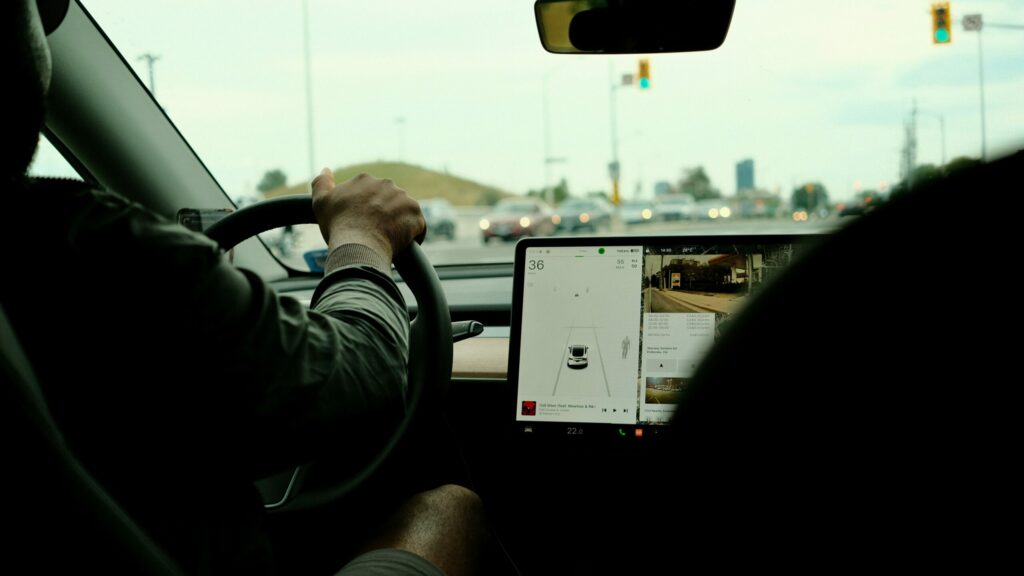
    Taxi driver in a Tesla - view from the back seat
    In an electric Tesla: a VTC driver at the wheel, seen from the back seat. (Credit: Fujiphilm)

    Karim. Centre-Val de Loire.

    I chose to try a 100% electric car out of curiosity. However, I notice a certain hesitation among my clients, often unconvinced by this type of engine, particularly due to the lack of range and longer charging times compared to refuelling with petrol. Personally, I do not find any major advantages in daily use, but rather some drawbacks: limited range, charging stations sometimes hard to locate or out of service, and high purchase cost of the vehicle.
    Probability of returning to internal combustion: 70%.

    Nathalie. Provence-Alpes-Côte d’Azur.

    I switched to electric to save on fuel costs. I estimate that two-thirds of my clients are convinced by electric after a journey with me. The low running costs, far below petrol, and savings on maintenance are definite advantages, as is the driving comfort. However, the range is sometimes insufficient to cover a full day without recharging, and some colleagues have encountered difficulties when reselling their electric vehicle.
    Probability of returning to combustion engines: 0%.

    Pascal. Île-de-France.

    I am a taxi driver and chose a 100% electric car mainly for the reduction in cost per kilometre, but before making the switch, I waited for manufacturers to make progress in terms of range. Overall, my clients are satisfied, but some fear having to stop during the journey to recharge… mostly a psychological concern. Personally, I love the driving comfort, especially thanks to the single pedal and reduced noise, which helps reduce fatigue at the wheel. The main challenge remains managing range and charging times.
    Probability of returning to combustion engines: 0%.

    Samir. Hauts-de-France.

    I benefited from a year of free charging and a 0% loan for the purchase of an electric vehicle, so I didn’t hesitate for long! (laughs) My clients particularly appreciate the calm on board, which makes for a more pleasant journey, and personally, I feel more relaxed at the wheel. I see absolutely no drawbacks to electric.
    Probability of returning to combustion engines: 0%.


    *Names and regions changed for reasons of confidentiality
  • Electromobility: what do the French think?

    Electromobility: what do the French think?

    As the boom in electrified vehicles intensifies, the question arises: what do the French really think? From curiosity and caution to expectations and reticence, let’s decipher these opinions through a number of recent studies and personal accounts.

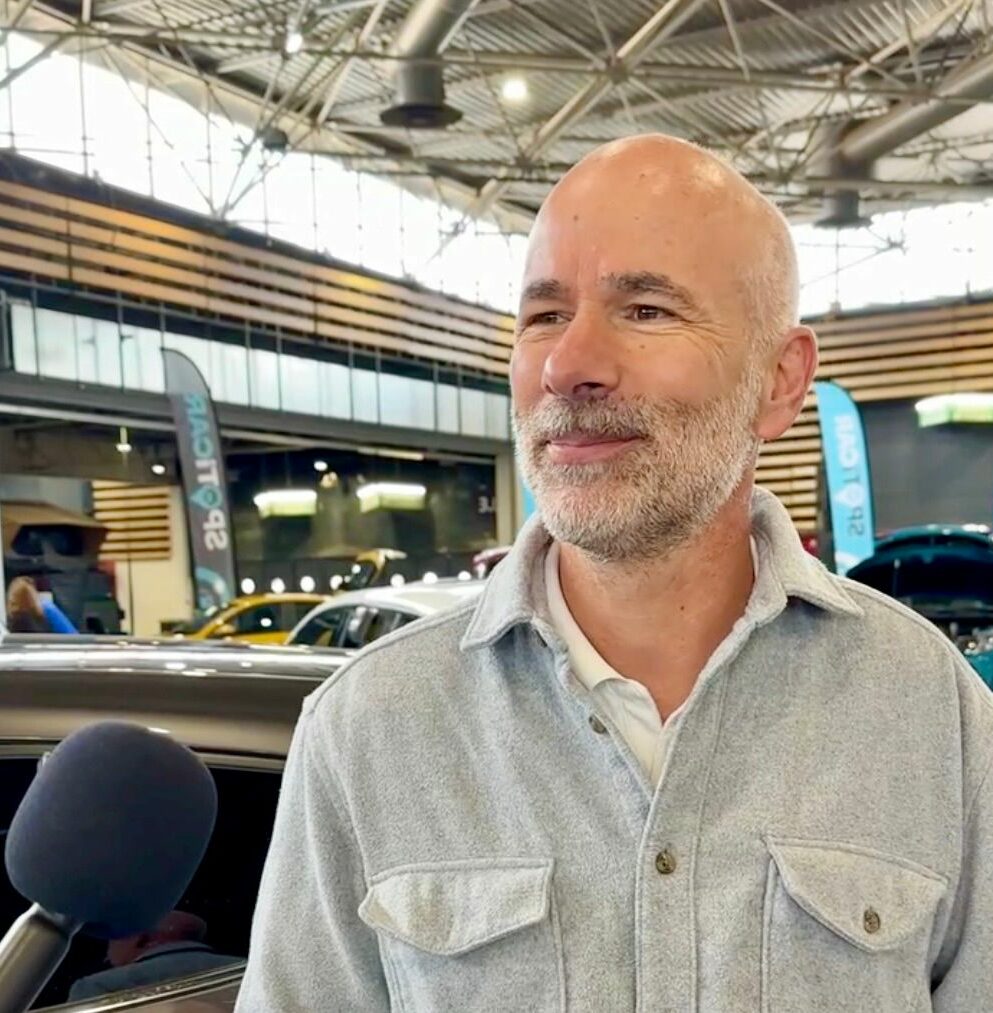
    Man interviewed at the Lyon Motor Show about electric vehicles
    A visitor to the Lyon Motor Show talks about his experiences and perceptions of electric cars (Credit: ECO MOTORS NEWS)

    241,054: that’s the number of electric vehicle registrations in 2025. These figures, from Avere-France, AAA Data and the PFA, mean that this range of vehicles will now account for 20.8% of the market and overtake petrol in terms of registrations for the first time. However, the adoption of electric vehicles is still very divisive. According to a survey by Ifop (Institut français d’opinion publique) for La Centrale, 37% of French people would be open to buying an electric vehicle in the medium to long term. This would be the case if the price were equivalent to that of a combustion engine car.

    Prejudices still too prevalent

    An Ifop study for the Roole media shows that the French are still too inclined to trust preconceived ideas. In fact, out of a sample of over 1,000 people, 57% said they were well-informed about electric cars. Among them, 86% thought that battery life was too limited, and 80% believed that electric cars were only for people who didn’t make long journeys. A surprisingly high figure, given that the average range of new vehicles is now over 430 km, according to Avere-France.

    For ECO MOTORS NEWS, we interviewed a number of motorists at the Lyon Motor Show. And on this subject, opinions differ…

    For Franck (47), a hybrid car will replace his EV:
    What bothered me was the car’s range. For long journeys, I was a bit worried. So I’m thinking of switching to a second-hand hybrid. I’ve reduced the budget because there’s no longer a government bonus on electricity.

    Conversely, Léo (25) puts things into perspective:
    Frankly, I’ve never been bothered – there are bollards just about everywhere now.

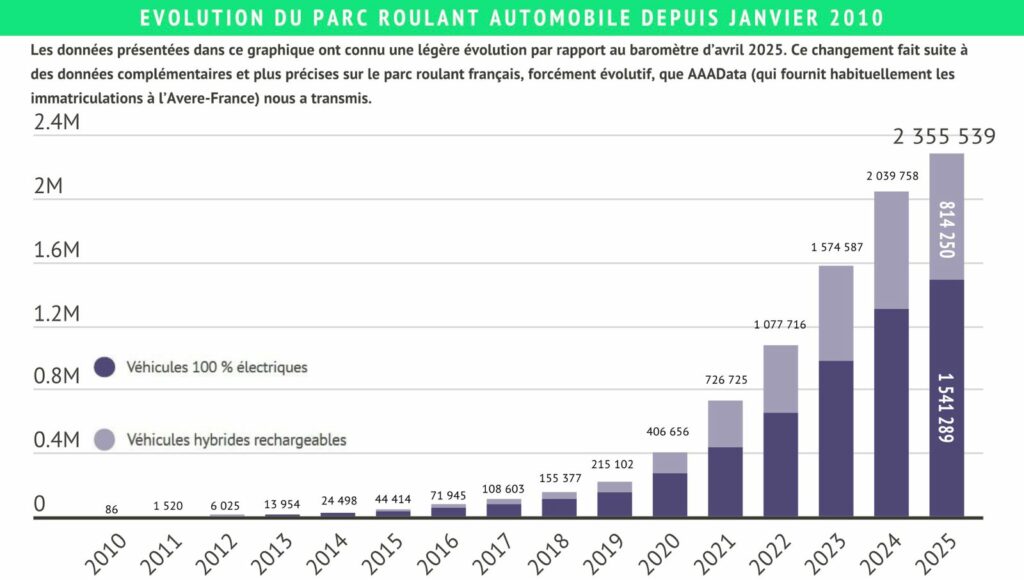
    Graph showing changes in the number of electric and internal combustion vehicles in France since 2010
    Changes in the French car fleet since 2010, with a growing proportion of electric vehicles. (Credit: Avere-France / AAA Data / PFA)

    An efficient network of charging stations

    For many French people, recharging an electric vehicle is still a headache: long queues, interminable recharging times, lack of accessible charging points… So many worries that put off potential buyers. In reality, however, the situation is far less dramatic than you might think.

    By 2025, France will have more than 160,000 public charging points, according to Avere-France and Gireve. This is an increase of almost 40% in just one year. The network has become denser throughout the country. 95% of charging points now have an availability rate of over 90%. We are therefore far from the image of an under-equipped country. However, the perception remains strong. According to an Ifop survey for Roole, 34% of French people still consider the network “insufficient.” Additionally, one in two doubts the reliability of public charging points.

    These concerns were echoed in the comments made at the show. Two rather curious young visitors said: ” I’m a bit sceptical about going electric; it’s good for short journeys, but if you think about recharging points, I have the impression that it’s still sometimes a problem for motorists.

    And yet, according to the latest Deloitte 2025 barometer, 63% of electric vehicle drivers recharge their batteries mainly at home. In other words, dependence on the public grid is much less than we might imagine, which makes some of the obstacles more psychological than practical.

    Price: a common barrier

    If there’s one point on which all the surveys agree, it’s the cost of buying one. According to the Ifop / Roole survey, 47% of French people cite price as the main barrier to buying an electric vehicle. And despite the ecological bonuses, the end of certain state subsidies in 2025 has accentuated the feeling of economic difficulty.

    Matthieu (24) explains:
    I’d love to go 100% electric, but it’s too expensive. I think the most sensible solution would be to take out a lease.

    He is not an isolated case. Another Deloitte study states that the majority still consider the initial investment “too high”. On the other hand, EV drivers who have already converted put things into perspective: 88% say they have reduced their overall expenditure thanks to lower energy costs and virtually no maintenance.

    Hybrids: the reassuring compromise

    Faced with these various obstacles, hybrids are often the gateway to electric vehicles. The 2025 Mobility Barometer (Arval / Ipsos) shows that 42% of French people now prefer hybrids when buying a new car. This observation is echoed in the field:
    “I’ m relatively happy with hybrids. I wouldn’t know about all-electric, I haven’t tested it yet “, confides Mehdi (26), a young entrepreneur who has come to canvass brands at the show.

    But the logic is not uniform. Jacques (65) and Ludovic (39) are two examples:
    I currently have a hybrid, but I’m here because I’ve just ordered a 100% electric car, the new BMW iX3. I’m interested in technology and new things; I’m a bit curious.

    I’m starting to switch to 100% electric, because the brands have evolved. I liked the hybrid, but today, fiscally, it’s still more interesting to switch to a 100% electric company car.

    Does this put a damper on driving pleasure?

    Obviously, you can’t talk about cars without talking about driving pleasure. And on this subject too, there are significant discrepancies between perception and reality. While studies confirm that almost one in two French people believe that “electric cars take the fun out of driving”, paradoxically 82% of EV users say the opposite: they find their vehicle more enjoyable and more efficient.

    The figures prove it: electromobility is making progress, but change – like the adaptation of attitudes – takes time. The network of charging points is expanding, range is increasing, running costs are falling… and yet fears persist, often more out of habit than experience.

  • What consumers say

    What consumers say

    ECO MOTORS NEWS interviewed 5 electric car owners in order to gain a better and more concrete understanding of what motivates drivers to go electric and, above all… to stick with it! Although their answers sometimes differed, they all agreed that it took them no more than a few days to adapt to driving electric. We also asked each of them how likely they were to go back to combustion engines one day. So, do they regret their choice?

    Charles. Content creator (Weelyke) / Hyundai Ioniq 6 / Electric for over three years

    The thing that made me switch to electric was clearly the low running costs. Since then, I’ve come to appreciate the comfort, the quiet ride and the maximum torque that’s immediately available. The fact that I don’t have to go to service stations any more, with the recurring savings that that brings, is great too! On the other hand, it took me a while to learn about the specific ecosystem of electric mobility, to understand the different charging powers and to plan my stops accordingly.
    Probability of going back to combustion: 0%.

    Jordan. Chartered accountant / Volkswagen ID.7 / Electric for less than a year

    I received an attractive offer on an electric model and decided to take the plunge. There’s no vibration, it’s quiet, it picks up quickly, and it’s ready to go every morning after recharging at home… To be honest, I didn’t notice any disadvantages compared with my old internal combustion engine. And the transition has been easier than I imagined!
    Probability of returning to combustion: 0%.

    Quentin. Delivery driver / MG5 / Electric for over three years

    For me, the catalyst was the prospect of “driving for free thanks to the sun”. In fact, combining domestic photovoltaic panels with an electric car means converting solar energy into kilometres without the need for a checkout. On a daily basis, it’s the torque available at any speed without having to downshift, and therefore without jerking, that I appreciate most. The only thing I don’t like about the internal combustion engine? The smell of diesel! (laughs)
    Probability of returning to combustion: 0%.

    Sandrine. School teacher / MG4 / Electric for over a year

    I wanted to replace my economical city car, and compared with the models available in this category, the electric version offered the lowest running costs. Since then, I’ve noticed – as many electric car enthusiasts do – the savings per kilometre, both on the energy bill and on maintenance, which is also cheaper than on my small internal combustion car. The fact remains that with a real range of around 300 km, you still have to deal with multiple recharges on long journeys… I’m willing to make a compromise, because the financial aspect makes up for it, but, in my opinion, the internal combustion engine still has the advantage on very long journeys for the time being.
    Probability of going back to combustion: 0%.

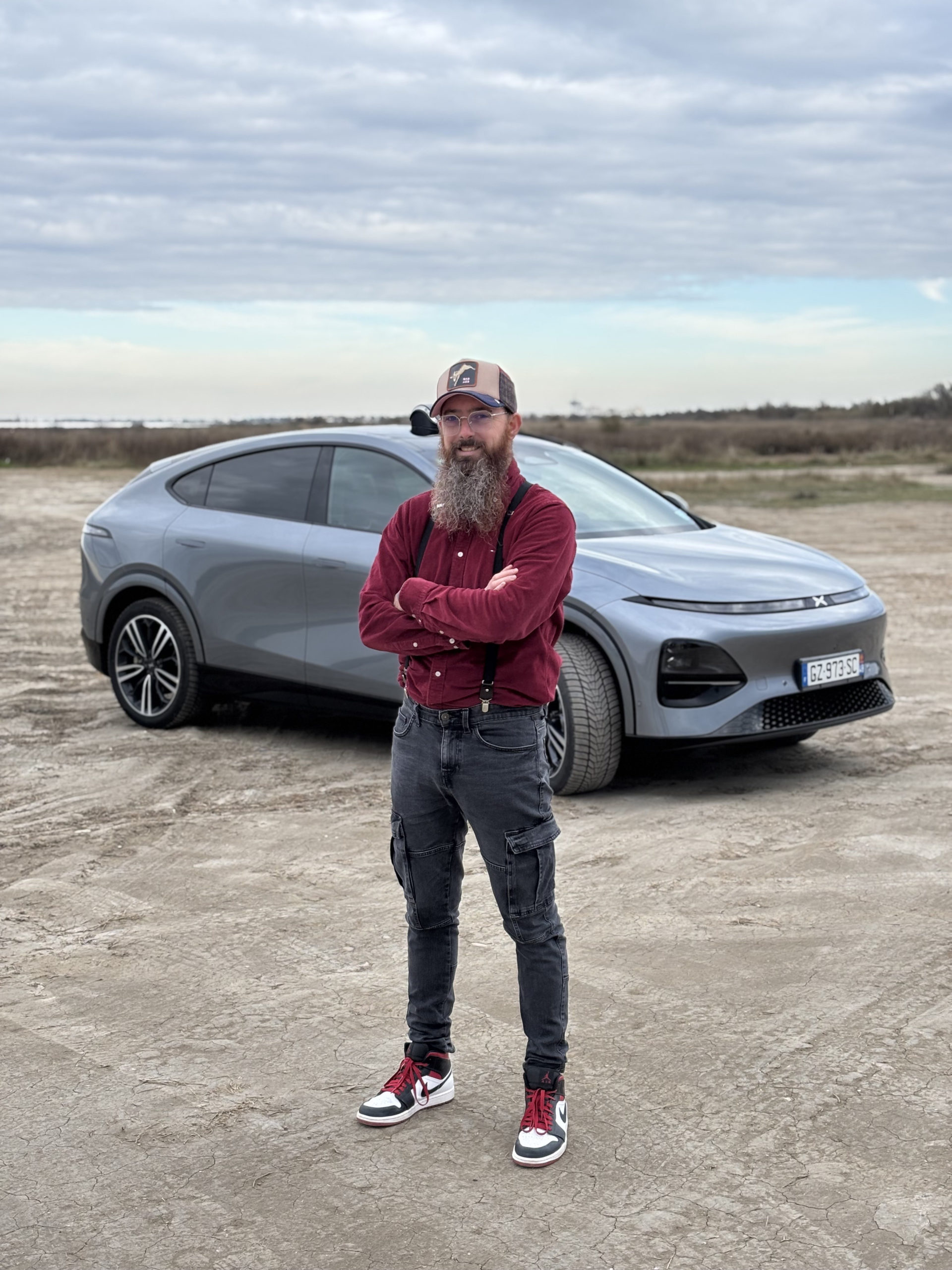
    Valentin. Taxi driver and content creator (TaxiEnVE) / XPENG G6 / Electric for over a year now

    As a taxi driver, the prospect of halving, or even two and a half times, the cost of running my vehicle was very appealing. Since I switched to electric vehicles, I’ve been able to confirm these savings on a daily basis. To be honest, I can see nothing but benefits in this transition. Financially, in terms of driving comfort and reliability, I have no regrets!
    Probability of going back to combustion: 0%.