

Our global tour of electric mobility continues, and today we’re looking at Taiwan. In 2025, the Taiwanese car market contracted by 6.4% to 399,194 registrations, whilst sales of electric vehicles fell by 17.3%. At the same time, however, the island is pressing ahead with its transition through government subsidies, strong support for electric scooters and a long-term strategy.

An automotive market under pressure
The Taiwanese market is currently experiencing a slowdown. After several years of recovery, vehicle sales stalled in 2025, falling by 6.4% year-on-year. Among the most popular manufacturers, Toyota remains well ahead with a 31.6% market share, far ahead of Lexus at 7.2%. CMC nevertheless performed well, climbing to third place with a 20.4% increase, whilst Volkswagen grew by 12.9% to reach ninth place.
As explained earlier, following several years of growth, the market contracted by 17.3% in 2025. Taiwan is therefore not experiencing pure acceleration, but rather a more mixed phase, in which the structural gains of electromobility coexist with a generally hesitant market.

The electric scooter: a real local workhorse
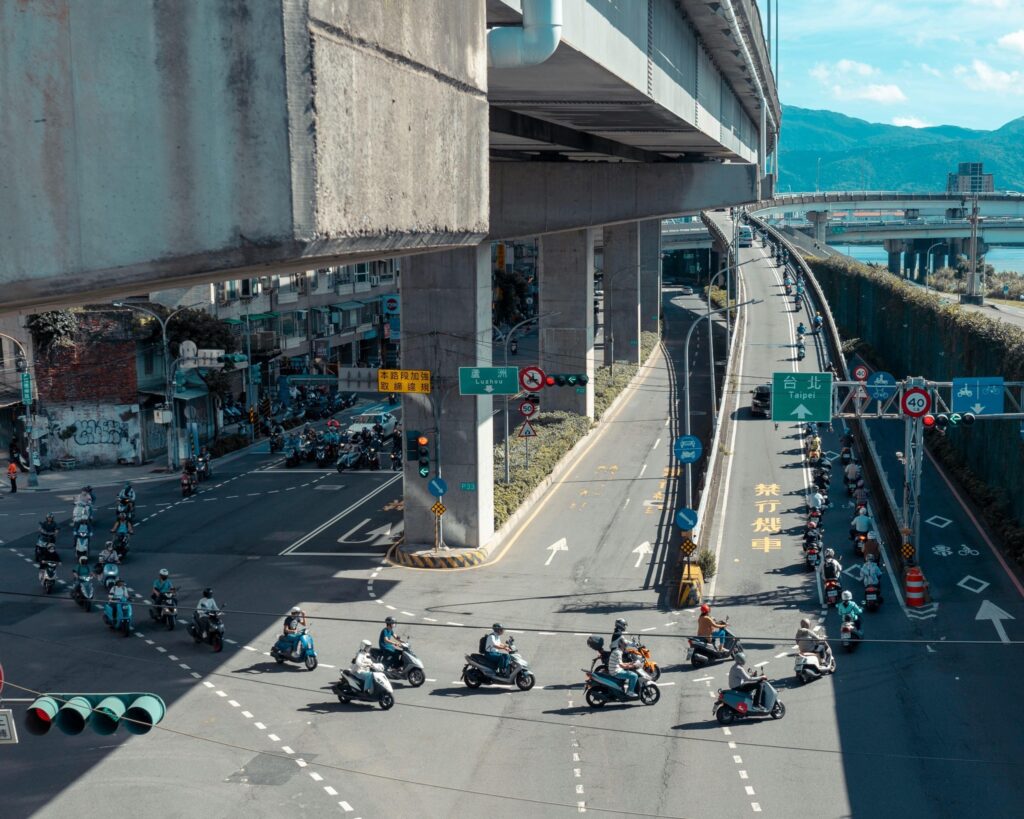
In Taiwan, electromobility cannot be understood without two-wheelers. In fact, this is where the country has built its most compelling model. Scooters are part of everyday life, urban traffic and the social fabric of the island. This is also why the transition to electric vehicles is taking a very distinctive form there, focusing on mass transport rather than just private cars.
The electric scooter support scheme is a good illustration of this approach. Over five years, the government has allocated TWD 7.2 billion to this policy (approximately €205–215 million), increasing the fleet from 110,000 to 610,000 electric scooters. Purchase subsidies range from 5,100 to 7,000 TWD, with an additional 1,000 TWD for trading in an old petrol-powered scooter. The message is clear: it is not just about making the fleet greener, but about making the transition economically viable for as many people as possible.
A highly structured public policy
Taiwan has chosen to support the transition through very concrete measures. Since 2022, the scheme to replace older vehicles has resulted in 124,798 replacements, with a cumulative reduction of 529,212 metric tonnes of CO2 equivalent by the end of 2025. This approach to replacement is particularly noteworthy, as it directly tackles the fleet of the most polluting vehicles rather than relying solely on new car sales.
The government is also supporting this strategy through tax measures. The exemption from purchase tax for electric vehicles has been extended until 31 December 2030. This sends an important signal: Taiwan’s transition is not intended to be a passing fad, but a lasting transformation. The government has also set long-term targets, including the gradual electrification of public buses by 2030 and the planned end to sales of petrol-powered motorcycles in 2035, followed by petrol-powered cars in 2040.
These facts clearly show that this country possesses a level of consistency that many markets have yet to achieve. The subsidies are not isolated measures; they form part of a broader strategy to modernise practices and reduce emissions.

An infrastructure that is already well established
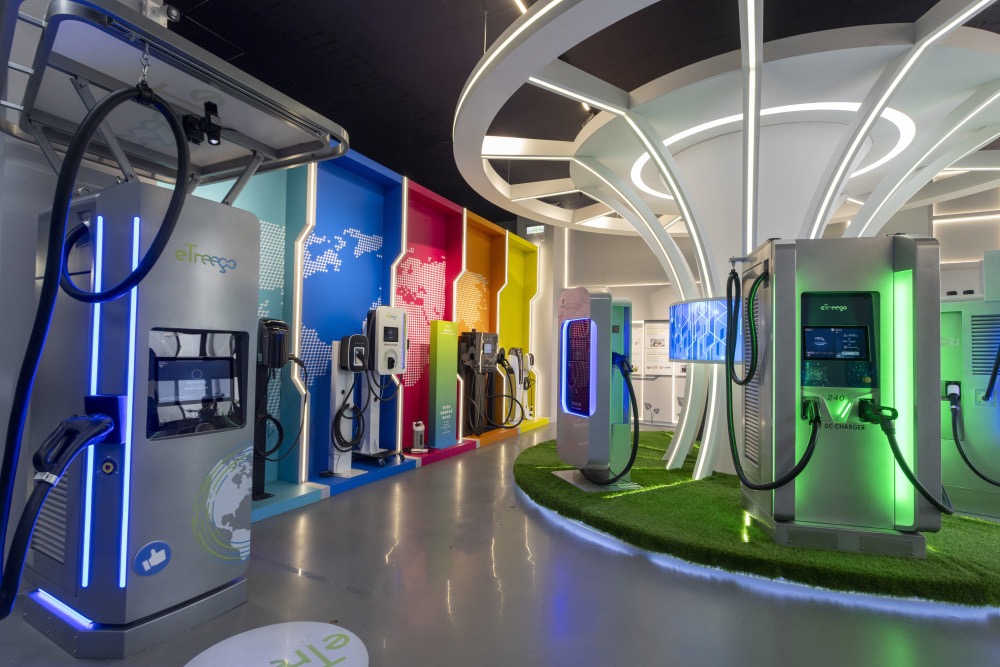
So, naturally, electric vehicles go hand in hand with charging infrastructure. In this regard, the country is not starting from scratch when it comes to charging. By 2022, Taiwan already had 1,399 charging stations and 4,380 charging points. Whilst these figures are a few years old, they show that the island already had a solid foundation in place to support the rise of electric vehicles.
This is a key point, as charging remains one of the main barriers to adoption. In Taiwan, the situation is favourable because the high population density makes the installation and use of charging infrastructure more feasible. The country has therefore been able to achieve a more tangible transition, driven by both the public authorities and industry players.
Tangible results, but still limited
Progress is being made, and it is measurable. By the end of February 2025, the number of electric cars in Taiwan had reached 99,980, representing a 65% increase year-on-year. This accounts for 1.3% of the total vehicle fleet. The figure is far from insignificant, but it also shows that electric cars are still in the minority in the overall picture.
In other words, Taiwan is making progress, but the transition remains incomplete. The country has laid solid foundations, introduced effective incentives and found a particularly effective model for scooters. Electric cars, however, have not yet entered a phase of dominance or even widespread adoption.
This is where the contrast becomes interesting. Taiwan is neither a ‘lagging’ market nor a ‘booming’ market. It is a market undergoing a structured transition, where progress is real but where momentum still depends heavily on the broader economic climate.
Energy: the real fundamental constraint
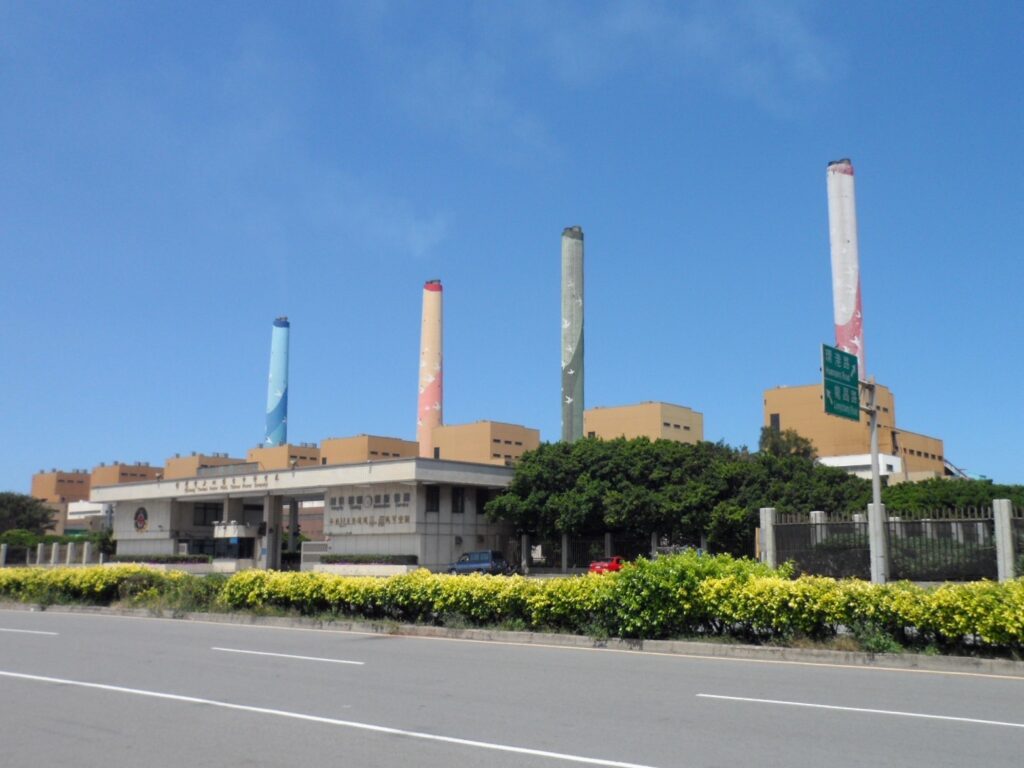
The main obstacle remains energy-related. Taiwan remains heavily reliant on fossil fuels for its electricity generation. In 2024, 83.16% of electricity generation came from fossil fuels, compared with 11.55% from renewables and 4.22% from nuclear power. This fact completely changes the picture regarding electric mobility: an electric car only makes full environmental sense if the electricity powering it is also decarbonised.
This is undoubtedly the most significant challenge facing Taiwan. The island wants to electrify its energy use, but remains trapped in an energy mix that is still heavily reliant on carbon. The transition to electric vehicles cannot therefore be separated from the national electrification strategy.
Structural barriers that remain very much in place
In Taiwan, the transition to electric vehicles is progressing, but it remains hampered by a number of very real constraints. The first obstacle is economic: the car market contracted in 2025, and the electric vehicle segment also declined, demonstrating that electromobility still relies heavily on public support to remain attractive. The second is energy-related: as long as electricity continues to be generated predominantly from fossil fuels, the electric car cannot be presented as a fully carbon-free solution.
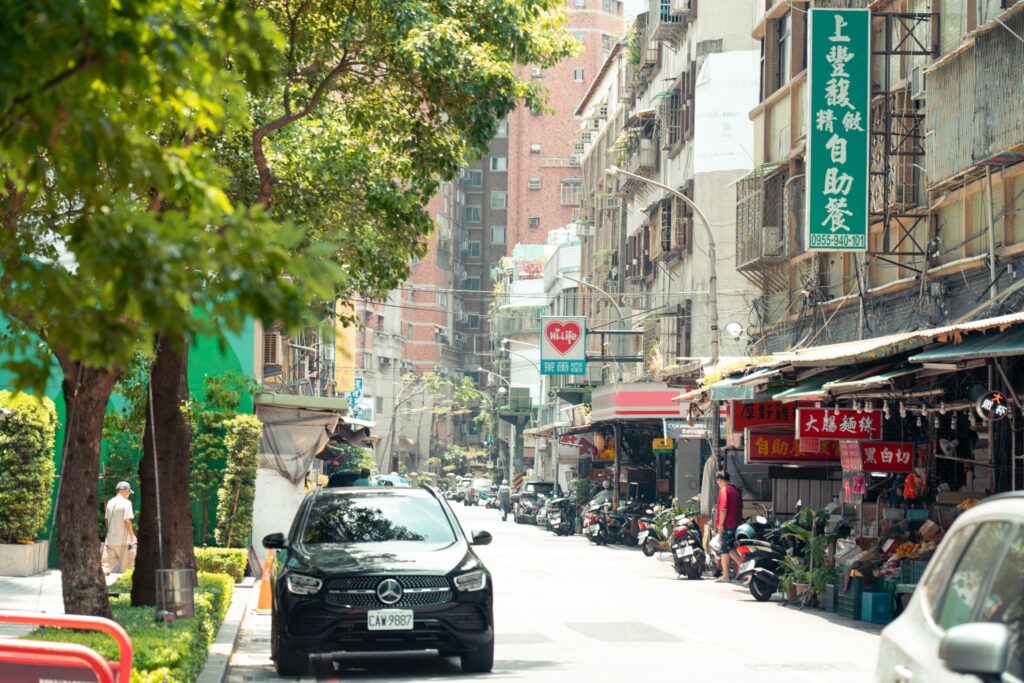
Added to this is the very layout of the territory. Taiwan is densely populated and urbanised, with little space available in cities to easily install charging points, particularly in apartment blocks and residential car parks. Roads, heavy traffic and the already dominant role of scooters also limit the growth of electric cars, which must carve out a place for themselves in an environment that is already very constrained.
The climate adds a further layer of difficulty. Heat, humidity, heavy rain and typhoons necessitate robust infrastructure and resilient transport systems, which in turn reinforces the need for a reliable and well-distributed charging network. In other words, Taiwan’s transition is well underway, but it is progressing within a framework where cost, energy, geography and everyday habits continue to slow its pace.
Local players who are already well established
Electric mobility in Taiwan is underpinned by a well-established industrial ecosystem, with a number of key players covering the entire value chain.
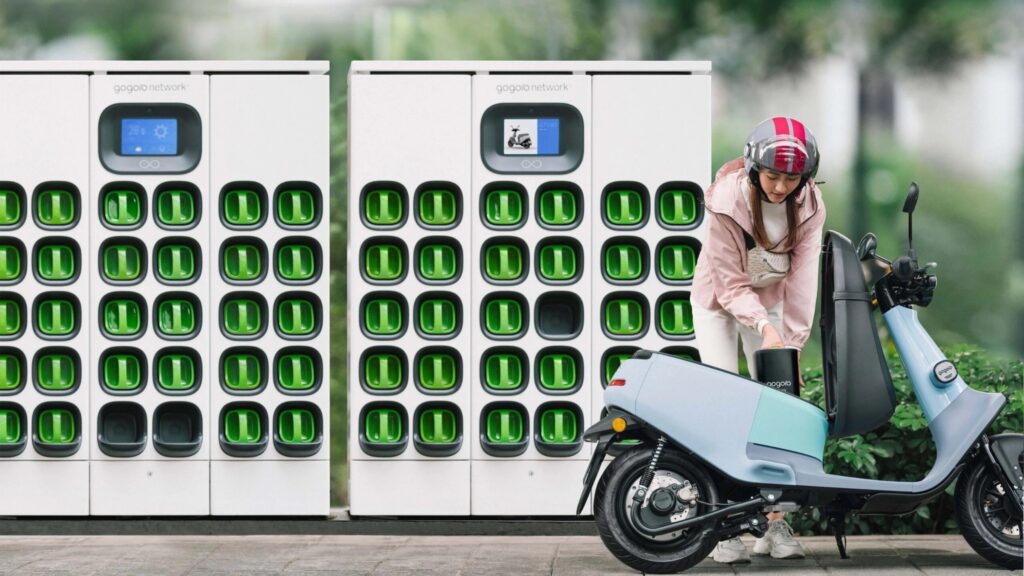
The most iconic example remains Gogoro. Founded in 2011, the company has revolutionised urban mobility with its electric scooters, but above all with its system of interchangeable batteries. In practical terms, users do not need to recharge: they swap their battery in a matter of seconds at one of the numerous stations in the extensive network. This model has removed one of the main barriers to electric vehicles and largely explains the success of electric two-wheelers on the island.
In the automotive sector, Taiwan is seeking to establish an industry cluster with Foxtron, a joint venture between Foxconn, a global electronics giant, and Yulon Motor, a long-standing player in the local automotive industry. The aim is to design electric vehicle platforms and manufacture them for other brands, with a strong focus on exports.
In the two-wheeler sector, Kymco remains a major player. Historically specialising in petrol-powered scooters, the manufacturer is now developing its own electric solutions, adopting a different approach to Gogoro’s, particularly when it comes to charging. Furthermore, brands such as Yamaha and Aeon rely directly on Gogoro’s technology, which reinforces its status as an industry standard.
Finally, a whole network of local companies is involved in the core technological components: batteries, power electronics and semiconductors. Taiwan benefits here from its long-standing expertise in electronics, which enables it to play a key role at the upstream end of the value chain, even though these players are less visible to the general public.
Conclusion
Ultimately, Taiwan illustrates a genuine yet still constrained transition. In 2025, the car market contracted by 6.4%, and sales of electric vehicles fell by 17.3%, demonstrating that electromobility remains closely linked to overall market trends.
At the same time, the growth of the electric vehicle fleet and, above all, the massive success of electric scooters show that the transition is well underway, albeit in a way that is tailored to local conditions and focuses more on two-wheelers than on private cars.
Nevertheless, several limitations remain: an energy mix that is still heavily reliant on fossil fuels, a fragile automotive market, and significant urban constraints. In other words, Taiwan is making progress, but without any major breakthroughs. The transition is structured and coherent, but still dependent on economic and energy factors that are holding back its acceleration.