Author: Mariama Benrabia

  • Electric Cars: France vs China, Germany, and the United States

    Electric Cars: France vs China, Germany, and the United States

    A Global Revolution at Different Speeds

    The transition to electric cars knows no borders, but nations approach this shift with varying energy, strategies, and goals. In France, electrification of the vehicle fleet is progressing, driven by public incentives, growing demand, and gradual engagement from automakers. But in this global race, the question remains: can France keep pace with giants like China, the undisputed leader in electromobility, Germany, methodical and powerful, or the United States, recently energized by massive investment plans?

    The global market is evolving rapidly. According to the International Energy Agency (IEA), electric vehicle (EV) sales grew by over 25% in 2024, reaching 17.1 million units—nearly one in four cars worldwide. British consultancy Rho Motion predicts sales could rise another 17% in 2025, surpassing 20 million units. China alone absorbs almost two-thirds of the market. Meanwhile, Europe struggles to keep pace amid industrial, social, and environmental challenges, while the U.S. has strategically turn toward industrial and energy sovereignty.

    In this landscape, France brings its strengths and ambitions, but also its vulnerabilities. To understand its position, we must observe how other major players are progressing—in factories, on roads, in batteries, and in public policies.

    France: Progress Underway but Still Fragile
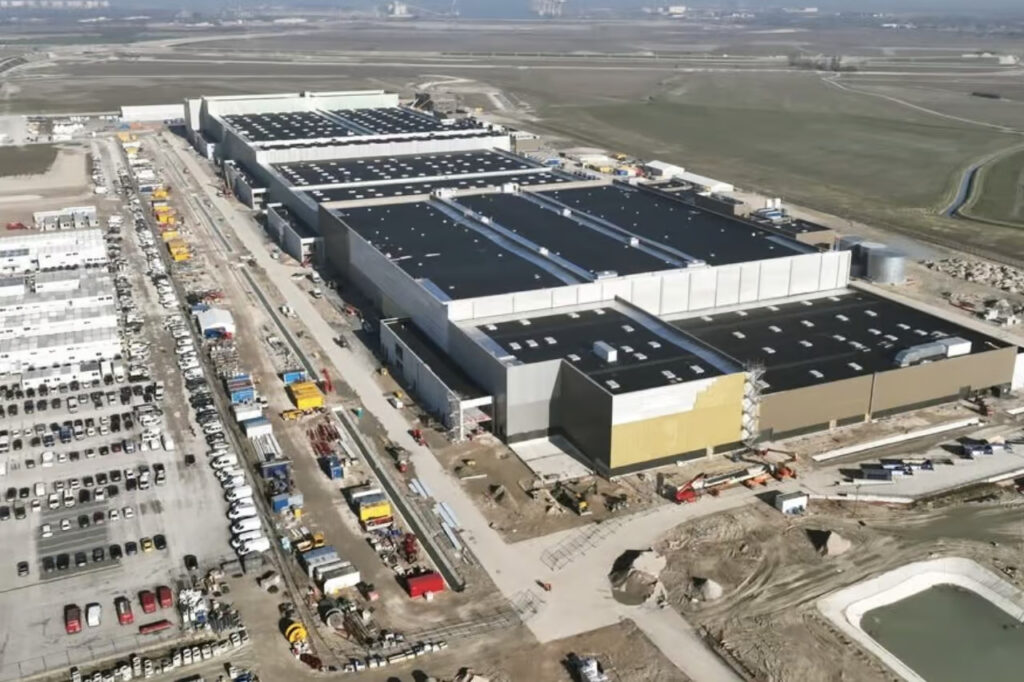
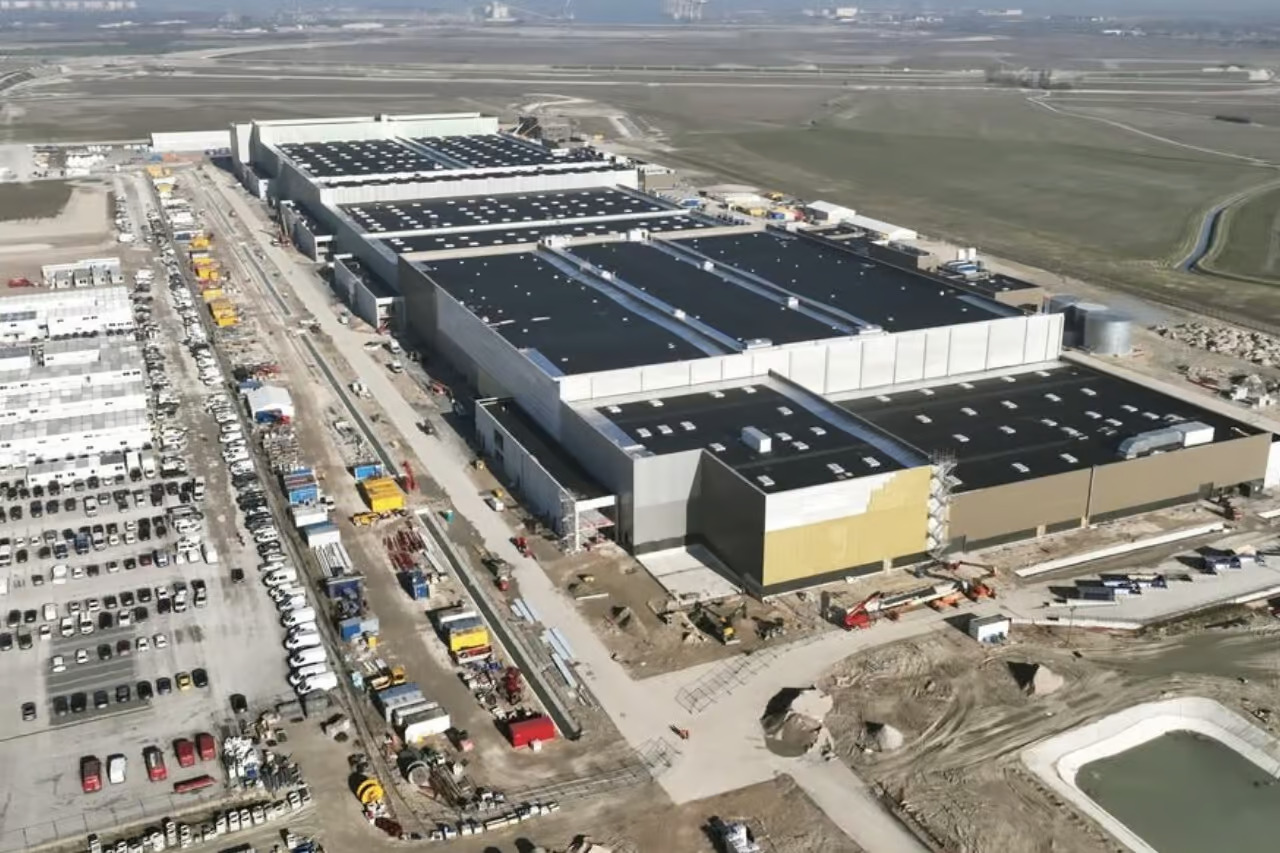
    Verkor electric battery factory under construction in France
    Verkor’s battery gigafactory in France, part of Europe’s push for EV and energy sovereignty.

    In 2024, one in five new cars sold in France was electric. This steady rise is supported by incentives like the ecological bonus, low-emission zones (ZFE), and the 2035 ban on new combustion vehicle sales. Renault, Peugeot, and Citroën have multiplied their announcements, firmly setting the course.

    Renault emerged as the hybrid leader in France in 2024, with 118,591 units sold and a 24.7% market share. On the fully electric front, Renault registered 55,309 units, a 37.5% increase, holding 17.4% of the market.

    Yet, challenges remain. The range of 100% French electric models is limited, particularly for entry-level vehicles. Charging infrastructure, though strengthened with over 155,000 stations installed, remains unevenly distributed. The industrial apparatus is reorganizing around sites like Douvrin, Flins, and Douai, but must further accelerate.

    On batteries, France is trying to catch up. Dependence on Asia remains high, though three gigafactories (ACC, Verkor, ProLogium) are under construction. However, ProLogium has delayed its launch to 2028. France is progressing but is not yet a leader, seeking its model between ecological ambition, industrial competitiveness, and social acceptance.

    China: The Electric Giant

    China is the undisputed champion. Early political will, massive subsidies, and an unparalleled industrial network have propelled it forward. In 2024, nearly two-thirds of global EV sales were in China, with a 40% year-on-year growth. According to the China Passenger Car Association (CPCA), China sold 10.9 million hybrid or electric models—a record representing almost half of all vehicles sold nationally.

    Local manufacturers like BYD, NIO, Xpeng, and Li Auto dominate. BYD even surpassed Tesla in both sales and revenue ($107.2 billion vs. $97.7 billion). Chinese brands master the full value chain—from battery to embedded software—while CATL supplies much of the world’s batteries.
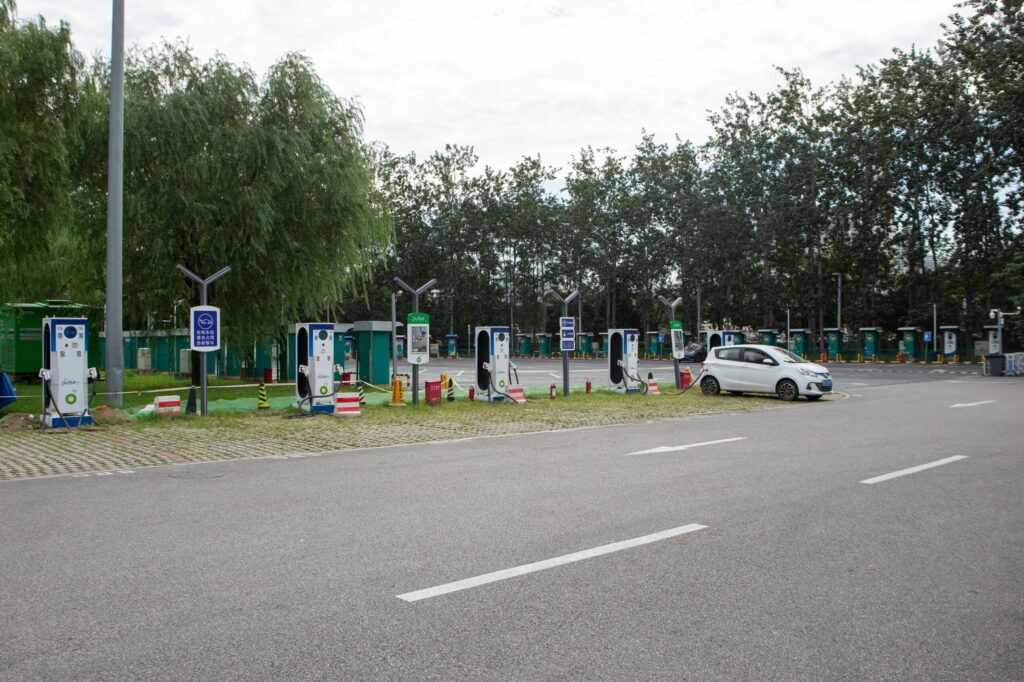
    EV charging at a large-scale power station in Beijing, China
    China continues expanding its EV charging network, with over 12 million stations by the end of 2024.

    Charging infrastructure is booming, with 12.82 million charging points by end-2024. According to the China Electric Vehicle Charging Infrastructure Promotion Alliance (EVCIPA), public chargers rose 49% year-on-year, with one charging point for every 2.7 EVs. China plans to add 73,000 new stations and over 1 million public chargers in 2025.

    This expansion supports rapid market growth: in 2024, new energy vehicles (NEVs) made up 40.9% of new car sales. At this pace, 50% could be reached by 2025. Yet, this dominance stirs tensions: the U.S. and EU accuse China of unfair practices and are imposing trade barriers that may intensify.

    Germany: The Industrial Method

    Germany was not the fastest to embrace EVs, but advanced rigorously. Major automakers (Volkswagen, Mercedes-Benz, BMW) reoriented post-Dieselgate, investing heavily in electrification. Volkswagen alone invested over €100 billion in EV production.

    Germany also focuses on industrial sovereignty, with several battery factories underway and partnerships with France (ACC) and Sweden (Northvolt, which recently filed for bankruptcy).

    Its charging network expands rapidly thanks to initiatives like Ionity. However, the German EV market shows signs of slowdown. The end of public subsidies led to an 18% drop in new EV registrations in 2024. Exports to China and the U.S. struggle.
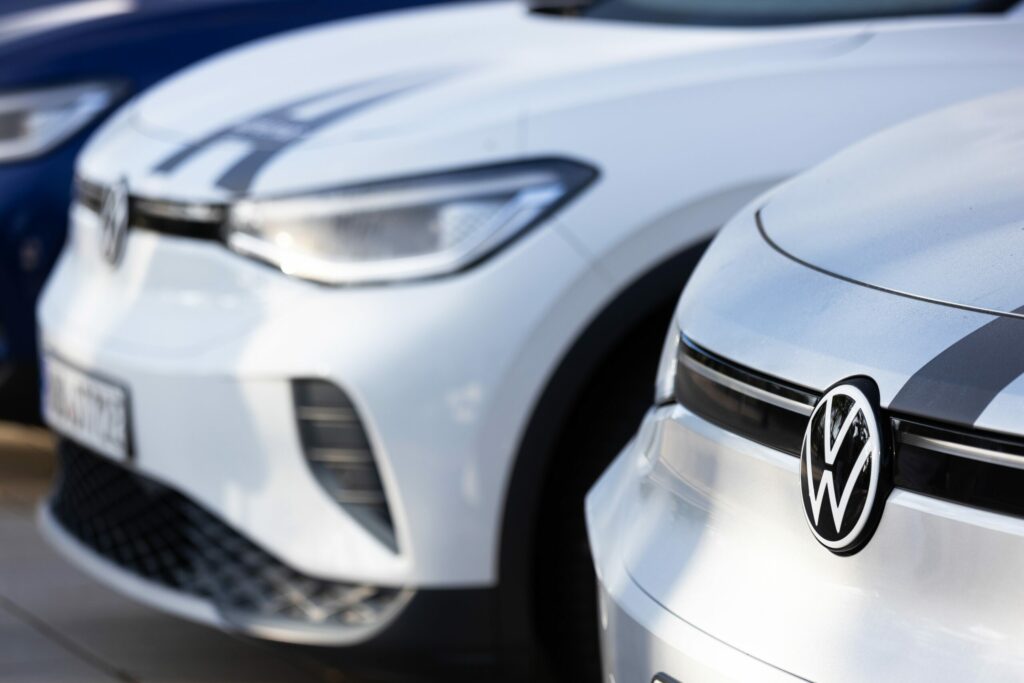
    Line of Volkswagen EVs at Wolfsburg production facility in Germany
    Volkswagen EVs ready for delivery from the Wolfsburg factory, the heart of Germany’s auto industry.

    Overproduction now exceeds demand, creating wage pressures, job cuts, and factory closure fears. German unions push for a “fair” transition to avoid massive layoffs. Industry morale is low, similar to pandemic levels. Still, some observers remain optimistic. According to them, the temporary slump could lower EV prices, which might boost demand and benefit consumers.

    United States: Biden’s Electric Shock

    Long behind, the U.S. is back in the game thanks to the 2022 Inflation Reduction Act (IRA), a $369 billion investment plan favouring domestically made EVs and batteries.

    Tesla remains the U.S. flagship, far ahead of Ford, GM, and Rivian, though they are catching up. In 2024, 1.2 million EVs were sold—a 49% increase from 2023—with EVs now making up 7.6% of new car sales.

    Tesla’s Supercharger network continues to expand, now open to other brands. The main challenge remains infrastructure, particularly in rural areas, and adoption varies greatly between states. California leads with more electric chargers than gas stations. According to Governor Gavin Newsom, California had 178,549 charging units by 2024—almost 50% more than gas stations.
    Tesla Motors dealership sign in Southern Nevada
    Tesla showroom in Las Vegas, part of the EV giant’s expanding U.S. network.

    However, political shifts could threaten momentum: a new Trump administration could slow EV adoption. In many regions, like the Midwest and South, combustion engines still dominate.

    Culturally, large electric SUVs top sales, while compact models lag. In 2024, according to Kelley Blue Book, the average EV price was $50,789, though prices are gradually falling thanks to Tesla’s cuts and government incentives.
  • Assessment and challenges for France as the electricity transition gathers pace

    Assessment and challenges for France as the electricity transition gathers pace

    The transition to electric mobility is no longer a prospect: it’s a reality that is being forced upon manufacturers, consumers and governments alike. In France, the market for electric vehicles (EVs) is growing at a steady pace. But a crucial question remains: is France ready, in terms of infrastructure, to keep pace with this upheaval? And can it compete with the leaders in Europe and Asia in terms of industrial competitiveness and innovation?

    Electric charging point in France installed in a public car park
    Electric vehicle charging station installed in an urban area.

    The challenge of recharging: between promise and reality

    The deployment of charging points is one of the sinews of war. The 155,000 charging points announced for the end of 2024 mark a 31% increase in one year. But the fact that the 100,000 mark has been passed belatedly, more than two years late, reveals the structural difficulties we are encountering.

    Although France is one of the three best-equipped countries in Europe, this dynamic masks major regional disparities. Nearly 80% of charging points are concentrated in major cities, leaving rural areas in an electrical desert. The Cour des Comptes warns that unequal access to the IRVE (Infrastructure de Recharge de Véhicule Électrique – Electric Vehicle Charging Infrastructure) is limiting user confidence and slowing down the transition. It also points to the “difficulty of achieving a balanced network tailored to the real needs of users”, due to the fact that “the areas, generally urban, with the most IRVEs are also those with the largest electric vehicle fleets”.

    The business model for public charging points is a cause for concern, with high installation costs (up to €50,000 per rapid charging point), irregular usage rates and a reluctance on the part of operators to invest without a guaranteed return. In many medium-sized towns, there are fewer than 10 charging points per 100,000 inhabitants. In contrast, the Netherlands and Germany have a denser network, supported by strong public policies.

    Another critical point is the power of the charging points installed. While the number of charging points is increasing, the proportion of so-called “fast” charging points (over 150 kW) remains in the minority. To convince motorists who are reluctant to switch to electric vehicles, the ability to recharge quickly on long journeys is a key argument.

    As well as geographical disparities, there are a number of challenges weighing on the economic viability of players in the sector: soaring energy costs, adjustments to public subsidies and fluctuations in the electric vehicle market. All of these factors undermine the business models currently being developed.

    In this still shifting context, the IRVE sector is in a maturing phase. To ensure that it flourishes, a level playing field needs to be established, encouraging both innovation and private investment.

    France at a crossroads

    The development of infrastructure does not rely solely on public investment, but on the mobilisation of the industrial and energy ecosystem. France benefits from a low-carbon energy mix, a still solid automotive industry and committed players.

    But a number of obstacles remain. The first is administrative: projects slowed down by red tape, delays in connection or local blockages. Progress has been made via the“France Relance ” and“France 2030” plans, but implementation remains uneven.

    The second challenge is economic: in low-traffic areas, the profitability of resorts is uncertain, and operators are reluctant to invest where subsidies are decreasing.

    Finally, the reliability of the kiosks remains a problem. Some areas have an availability rate of less than 80%, fuelling public mistrust.

    Industrial competitiveness: the battle for batteries

    Behind the questions of charging points and bonuses, another battle is being waged: that of the industry. And it focuses on a central element: the battery.

    Electric car connected to a charging point in France
    An electric car being charged at a public charging point, a symbol of the energy transition.

    Without it, it will be impossible to capture the added value of the electric vehicle. Long absent from this segment, France has reacted. At Douvrin, in Pas-de-Calais, the first production lines of ACC (a joint venture between Stellantis, TotalEnergies and Mercedes-Benz) have opened. Other projects follow: Verkor in Dunkirk in the Nord region, with the support of Renault, and Taiwanese company ProLogium, which has also chosen northern France as the location for one of its plants. These projects represent an investment of several billion euros. And the objective is clear: to produce hundreds of thousands of batteries every year by the end of the decade.

    These “gigafactories” embody a desire for a change of scale and sovereignty, in the face of Asian domination. They are also seeking to secure supplies in the event of geopolitical tensions. But everything remains to be built: know-how, value chains and, above all, access to raw materials such as lithium and cobalt, which are often mined far away and under questionable conditions.

    Train, adapt, don’t suffer

    The switch to electric power is transforming the entire industry. No more pistons, less oil. More electronics, less mechanics.

    According to theObservatoire de la Métallurgie, more than 100,000 jobs could be affected between now and 2035, not eliminated but reconfigured. The risk is that the transition will leave some employees by the wayside.

    There are schemes in place: regional training courses, specialised apprentice training centres, in-house retraining. But the challenge is colossal. Training a battery technician or software engineer doesn’t happen overnight.

    And the tensions are already visible. In the gigafactories, recruiters are short of profiles ready to respond to the increase in power.

    Several electric cars parked in an urban street in France
    Electric cars parked in a street, illustrating the growing popularity of electric mobility in urban areas.

    A global race, a European response

    France is not alone. It is part of a multi-level game in which Europe is trying to defend its positions against well-armed giants. China, which is ahead at every stage – extraction, refining, recycling – dominates the chain. The United States, with its Inflation Reduction Act (IRA), is banking on massive aid to relocate its green industry.

    Europe is moving forward in stages: Green Pact, calls for projects, subsidies. But its response is often too slow and too fragmented. France is campaigning for a European industrial strategy based on innovation, moving upmarket and cooperation. Alliances with Germany and Spain will be crucial to the emergence of champions.

    Because beyond the standards and investment plans, it’s a question of sovereignty: producing your own vehicles, batteries and software. Not relying on another continent to run our cars.

    A pivotal moment

    The transition to electric cars is underway. Manufacturers are speeding up, sales are following suit and public opinion is changing. But behind the shop window, a profound transformation is taking place: an industrial fabric that needs to be rebuilt.

    It’s a race against time. There is no guarantee that it will be won. But it is vital for the competitiveness of the French automotive industry, for jobs, and to avoid becoming a mere consumer of imported technologies.

  • The French electric vehicle fleet: a government-led transition

    The French electric vehicle fleet: a government-led transition

    France has embarked on a profound transition in its mobility model, with the ambition of converting its entire vehicle fleet to electric power by 2035. While this change is often presented as an unavoidable necessity, in reality it brings with it a host of technical, social and industrial challenges that few countries have fully grasped. Behind the official announcements highlighting the mass adoption of electric vehicles by the French, the situation is actually more nuanced, with cultural reluctance, sometimes contradictory political choices and constant strategic adjustments on the part of manufacturers.

    Electric cars in France as part of the national energy transition strategy
    France wants to convert its car fleet to electric vehicles by 2035, despite a number of challenges.

    This dossier offers a detailed and critical analysis of public policies on electric vehicles, highlighting the many factors that influence government decisions. Although these choices are often justified by ecological imperatives, in reality they respond to wider issues, combining geopolitical, economic and industrial considerations, sometimes in tension with each other. Despite visible progress in terms of market share, this transition still faces major structural obstacles that are likely to limit its real impact, including on the environment.

    A transition with multiple and complex motivations

    The climate argument is often put forward, but it is not enough on its own to explain the choices made in terms of the automotive transition. Admittedly, transport accounts for around 30% of CO₂ emissions in France, but presenting the electric vehicle as a single, unavoidable solution raises a number of questions. Recent research, in particular that of the International Energy Agency in 2023, reminds us that the environmental impact of an electric vehicle depends on the country’s energy mix and its entire life cycle.

    In France, where the majority of electricity comes from nuclear sources, the environmental argument is still relevant. However, it tends to overshadow other decisive considerations. According to figures from the Ministry of Ecological Transition for 2023, the country’s heavy dependence on oil imports – almost 99% of the crude oil consumed in France is imported – makes electrification a strategic lever for reducing energy vulnerability and the trade deficit. Recent spikes in fuel prices have underlined the urgency of this issue in a country where the car remains a mainstay of daily life.

    The industrial battle: preserving a key sector of the French economy

    Behind all the talk of a “just transition” and positive ecology, the very future of the French car industry is at stake. Domestic manufacturers, starting with Renault, have been slow to embrace the electric revolution, leaving the field wide open to Tesla and Chinese brands such as BYD and MG, which have taken a significant lead.

    Since 2020, the French government has injected almost €7 billion, according to figures from the Cour des Comptes, to support both households and the sales of French groups. The decision to exclude vehicles produced outside the EU from the ecological bonus from January 2024 is a good illustration of the industrial stakes involved. Officially justified by the need to reduce the carbon footprint of shipping, this measure is designed to protect European manufacturers from the competitive pressure of more affordable Chinese models.

    Ambitious public policies with contrasting effects

    The bonus-malus system: between administrative complexity and inconsistencies

    The French system is based on a pile of tax measures that have become difficult to understand. The ecological bonus has been reduced to €4,000 for low-income households, compared with €7,000 previously, and the conversion bonus has been abolished. On top of this, local aid varies from region to region, with eligibility criteria that change regularly, creating instability and confusion.

    In addition to this complexity, there are some perverse effects: the ecological penalty, which has been capped at €70,000 since March 2025, penalises large families and professionals who need spacious vehicles. The bonus, meanwhile, excludes vehicles costing more than €47,000, limiting access to premium models for the upper middle classes.

    Low Emission Zones: a social time bomb

    The widespread introduction of Low Emission Zones (LEZ) in 45 major cities is fuelling tensions. While there is a consensus on the need to reduce pollution, the way in which they are applied raises issues of fairness. According to the Observatoire des Inégalités (March 2024), a modest household in the inner suburbs of Paris could have to invest three years’ median salary in a compliant vehicle.

    The solutions on offer – public transport, cycling – are often unsuitable. For travelling professionals (tradesmen, carers, etc.), doing without a car is unrealistic. This measure risks deepening the divide between well-equipped city centres and outlying areas that are still dependent on the car.

    Low-emission zones: a social challenge in France's electricity transition
    Low Emission Zones are causing social tensions in outlying areas.(Credit: Gile Michel/SIPA)

    Commercial and professional vehicles: the big losers in the transition

    The debate on the automotive transition continues to focus on private cars, even though commercial vehicles, which account for almost 60% of the vehicle fleet, are essential to the local economy. However, current electric models are struggling to meet needs: they have insufficient range once charged, take too long to recharge, and are prohibitively expensive for small businesses.

    The bonus for commercial vehicles has been abolished, and local grants are largely inadequate. As a result, many small businesses are caught between the diesel ban and the lack of viable electric options.

    A widening generational and territorial divide

    The transition to electric vehicles is reinforcing inequalities. For older people living in poorly served areas, the car is still essential, but EVs are a source of anxiety: autonomy, recharging, new uses. Young working people in rural areas, meanwhile, are faced with a dilemma: keeping an old internal combustion vehicle or going into debt for a second-hand EV with uncertain range. This double divide highlights the as yet unresolved social and territorial challenges of the transition.

    Towards a more balanced and realistic transition?

    Faced with growing tensions, a more balanced approach is needed to avoid mass rejection. A number of levers can be envisaged:

    • Creation of an independent observatory for EV prices and charging services to ensure transparency and combat abuse;
    • Condition public aid on sobriety criteria (weight, autonomy, carbon footprint) to avoid supporting oversized models;
    • Redirecting investment towards suitable alternatives: public transport in rural areas, organised car-pooling, utility bicycles, etc;
    • Introduction of a moratorium on EPZs in areas where there are no credible alternatives, to give infrastructure time to develop.
    Electric car production plant in France, a symbol of industrial transition
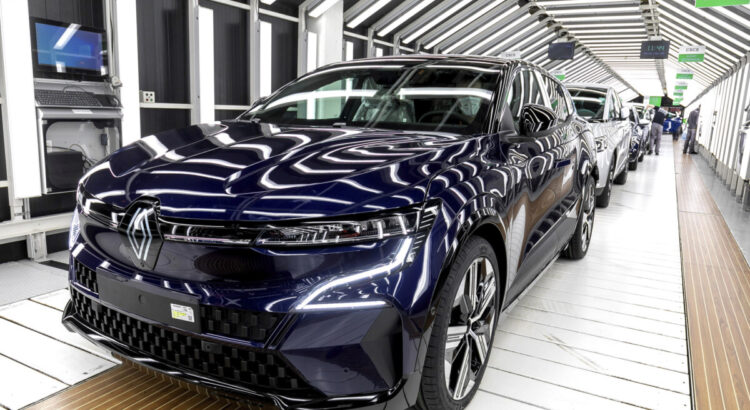
    The French car industry is adapting to the growing popularity of electric vehicles. (Credit: Renault)

    A challenge to be readjusted for a successful transition

    In conclusion, while the policy of electrifying the car fleet reflects an undeniable environmental ambition, it suffers from a lack of adaptation to social and territorial realities. By favouring a technocratic approach, decision-makers have underestimated the cultural obstacles, disparities and economic constraints faced by millions of French people.

    The success of this transition will depend on a rebalancing of policies, greater consideration of actual usage and, above all, a global rethink of our relationship with mobility. Without this, there is a great risk that long-lasting resistance will emerge, compromising the very commitment to sustainable mobility.

  • The state of electric vehicles in France: an analysis of the automotive market in figures

    The state of electric vehicles in France: an analysis of the automotive market in figures

    Electric vehicles (EVs) are playing an increasingly important role in the French automotive landscape. In 2024, according to government figures, 100% electric cars will account for 16.8% of sales, confirming a stabilisation after strong growth between 2020 and 2023. The market is marking a shift in manufacturers’ positions, with popular segments evolving and a transition towards electrification.

    After strong growth, sales of electric vehicles will fall by 2.7%, from 303,900 units in 2023 to 295,600 in 2024. Their market share remains stable at 16.8%, compared with 16.7% the previous year. Sales of plug-in hybrids followed the same trend, with 147,100 registrations, a fall of 9.6%. At the same time, combustion engines continued to decline. Diesel dropped to 7.2% of sales, while petrol fell by 37%, now accounting for 30.2% of the market. Diesel hybrids are becoming marginal, accounting for just 0.8% of sales (down from 1.2%). Conversely, the non-rechargeable petrol hybrid is growing strongly, becoming the best-selling engine in France.

    Alternative energies (natural gas/LPG) are stagnating at 3.2% of the market. This shows a decline in traditional combustion engines, stagnation in new energies, and an increase in conventional hybrids as a transitional solution.

    The best-selling electric cars in France in 2024: a reshaping of the market

    The stabilisation after several years of sustained growth marks a repositioning of the dominant brands and a renewal of the popular models.

    Tesla on the wane, Renault on the rise

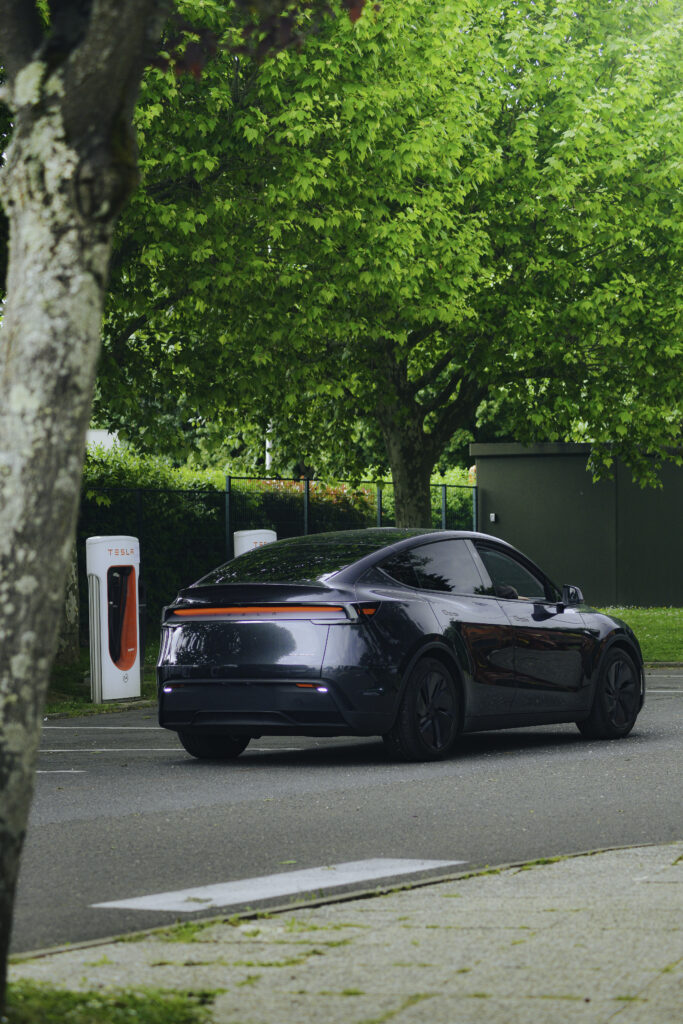
    For a long time the undisputed leader, Tesla is seeing its sales decline. The Tesla Model Y, although still in the lead with 28,576 units sold in 2024, is down 23% on 2023. Its other model, the Tesla Model 3, is down by 52.7%. This drop is partly due to the arrival of French competitors that are more accessible and better suited to consumer expectations.

    Credit: Mathis Miroux

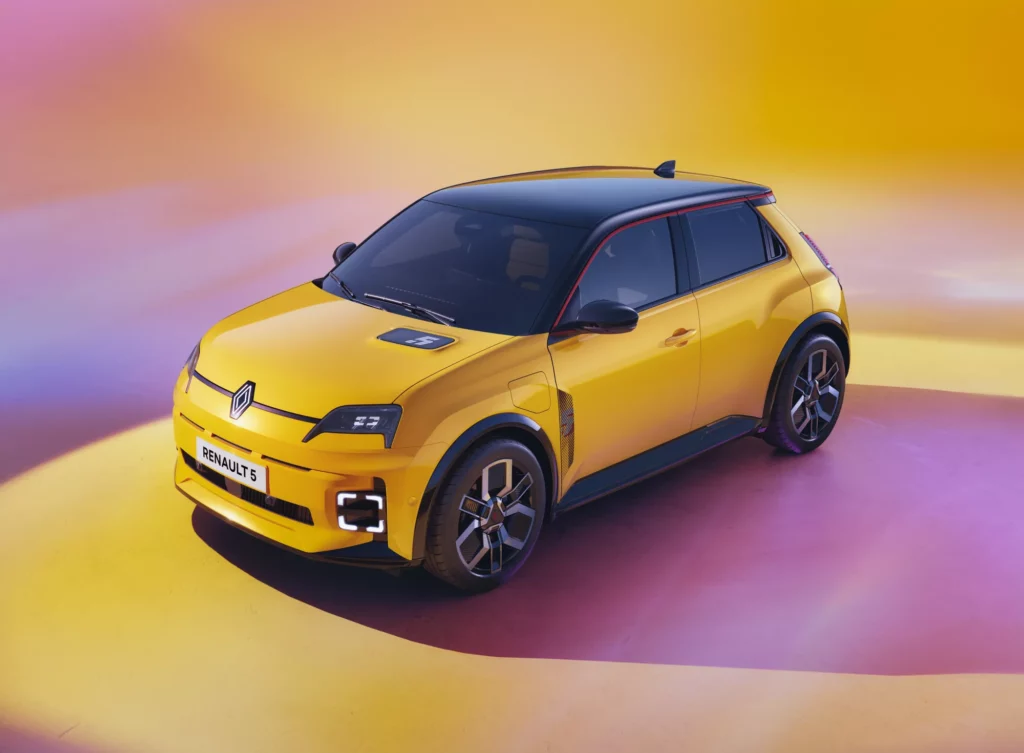
    Conversely, Renault is taking advantage of this momentum to become the market leader for electric vehicles in France. The Peugeot e-208 confirmed its success, with 23,602 units sold. The Renault Megane E-Tech held up well, with a total of 16,800 registrations. The manufacturer has attracted interest with a number of eagerly awaited new models. The recently launched Renault 5 E-Tech recorded 9,973 registrations, while the Renault Scénic E-Tech made its mark with 8,953 units sold in its first year.

    Electric SUVs are also enjoying great success. The Peugeot e-2008 is up 95.1% with 8,944 sales, while the BMW iX1 is up 135.9% with 8,940 units sold.

    On the other hand, some iconic models are experiencing a decline. This is the case of the Fiat 500e, which fell by 33% to 16,153 units sold, losing ground to more recent alternatives.

    A market dominated by Renault, Tesla and Peugeot

    Renault is now the leading manufacturer of electric vehicles in France, with a market share of 16.9%, up 2.3 points. Tesla is down to 15.8%, while Peugeot is up 1.1 points to 14.7%. Volkswagen and BMW continue to battle for market share, with 9.2% and 7.1% of registrations respectively.

    The year 2024 marks a turning point for the electric vehicle market in France, with a transition to a more diversified market. Tesla is losing its influence to French manufacturers who have adapted their range to consumer needs. Renault is emerging as the leader, with an attractive range and a well-established network.

    Sales trends also point to a diversification of consumer choices. As the market enters a phase of consolidation, the battle between manufacturers is set to intensify in the years ahead, with the arrival of new innovations and ever more competitive models.

    Credit: Renault 5

    Electric cars on the road

    By the end of 2024, France had nearly two million electric and plug-in hybrid vehicles on the road, according to the national association for the development of electric mobility, Avere-France, of which 1.3 million were 100% electric.

    France is Europe’s third-largest market for electric vehicles, behind the UK, with 382,000 registrations in 2024, and Germany, with 381,000. Electric vehicles account for around 15% of European sales, compared with 16.8% in France.

    Price and profitability of electric vehicles

    The average price of a new electric vehicle in the first half of 2024 is €43,000. This is down on 2022, when it was €45,000, but up slightly on 2023, when it was €42,000.

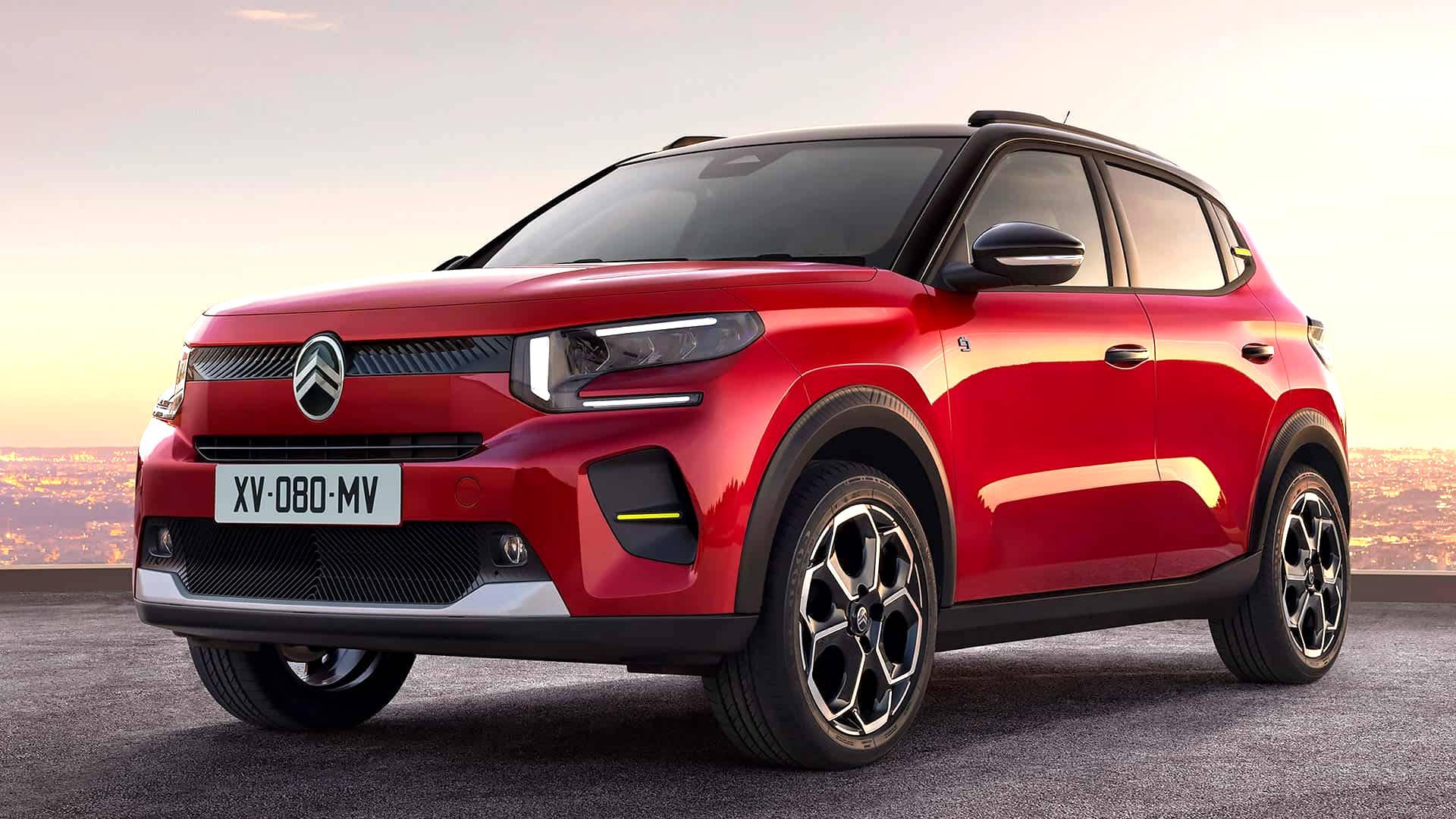
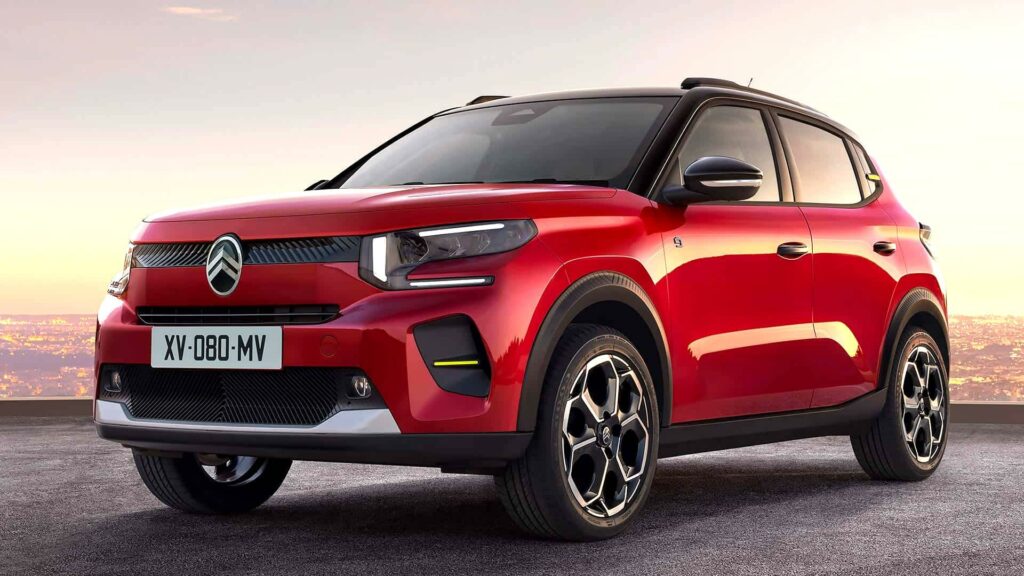
    However, some affordable models can reduce the initial investment. The Dacia Spring is available from €16,900, while the Leapmotor T03 has an entry price of €17,900. The Citroën ë-C3 starts at €23,000, while the Renault Twingo E-Tech starts at around €22,900.

    In comparison, an average petrol vehicle will cost around €27,000 in 2024, compared with over €28,000 a year earlier. The price of diesel vehicles, meanwhile, has risen, reaching €40,000 in 2024, compared with €38,000 in 2023, according to data from AAAData.

    Credit: Citroën

    Despite the gradual narrowing of the gap, electric vehicles are still between 30% and 40% more expensive to buy than their internal combustion equivalents.

    In 2019, France had around 30 different electric vehicle models on the market, according to data from Avere-France and the CCFA (Comité des Constructeurs Français d’Automobiles). By 2024, this figure had exploded to more than 120 models available on the French market, according to consolidated data from Avere-France and the Plateforme Automobile (PFA).

    So, despite a still high purchase price, the range is diversifying, contributing to accelerated adoption.

    Autonomy and diversity

    The range of electric vehicles continues to improve, although disparities remain. In 2024, entry-level models such as the Dacia Spring and the Fiat 500e offer a range of 220 to 320 kilometres, while top-of-the-range models such as the Tesla Model Y can exceed 500 kilometres on a single charge.

    The number of models available has also risen sharply, contributing to a more rapid uptake of electric vehicles.

    The year 2024 marks a transition for the electric vehicle market in France, with sales stabilising after a period of strong growth. The market is diversifying, with more affordable models, improved range and strong demand for electric SUVs. While the purchase price remains a major obstacle, the market dynamic remains geared towards increasing electrification of the French car fleet.