Author: Felipe MUNOZ

  • How regulation is undermining the European automotive industry and strengthening the Chinese one

    How regulation is undermining the European automotive industry and strengthening the Chinese one

    While Europe struggles with increasingly restrictive regulations, China continues to rise thanks to a more pragmatic approach to the energy transition. This contrast perfectly illustrates the way in which the two major automotive powers are approaching the transformation of the sector: on the one hand, highly prescriptive regulation; on the other, an assertive industrial strategy.
    The global automotive industry is currently undergoing one of the most profound changes in its history. The transition to cleaner energies for transport, the development of new technologies and international trade tensions are now the three major challenges facing the sector. After more than a century dominated by the internal combustion engine, the way cars are designed, produced and used is changing radically.

    When regulation becomes a driving force… or a brake

    The European Union and China share a common objective: to significantly reduce their greenhouse gas emissions over the coming decades. But the method differs profoundly.

    On the European side, the EU is legally committed to achieving climate neutrality by 2050. To this end, it plans to reduce net greenhouse gas emissions by at least 55% by 2030, compared with 1990 levels. To achieve this, Brussels is counting in particular on a massive acceleration in the adoption of electric vehicles.

    However, this transition is based on a particularly strict regulatory framework. Manufacturers who fail to meet the emissions targets set by the EU must pay heavy financial penalties. In practice, this regulatory pressure is forcing carmakers to invest billions of euros in zero-emission technologies, with no guarantee that consumer demand will keep pace.
    At the same time, these companies are gradually being encouraged to reduce the production of internal combustion vehicles, which are still their main source of revenue.

    China’s industrial strategy

    China is also pursuing ambitious climate targets. Beijing is aiming for carbon neutrality by 2060, and is planning a gradual reduction in emissions from its economy as a whole from their expected peak in the next few years.
    To achieve these targets, the country is placing a strong emphasis on the development of NEVs (New Energy Vehicles), a category that includes electric, plug-in hybrid and hydrogen vehicles. In the long term, this strategy could reduce emissions from private cars by more than 90%.

    The fundamental difference lies in the place accorded to the automotive industry in the national economic strategy. In China, new-energy vehicles are seen as a major vector for growth and industrial sovereignty.

    The Chinese authorities know that they do not have the same competitive advantage as Western manufacturers in the field of internal combustion engines. However, the transition to low-carbon technologies represents a strategic opportunity to reshuffle the deck.
    source : Anadolu Agency via AFP

    That’s why central and local government are deploying a massive arsenal of subsidies, tax incentives and support programmes to accompany the development of their manufacturers.

    A more constrained transition in Europe

    In Europe, public aid also exists, but the regulations are based above all on a system of constraints and penalties. Manufacturers are speeding up their electrification plans mainly to avoid fines for exceeding emissions limits.

    Against this backdrop, European regulations appear to be less of a support lever than an additional pressure factor for the industry. Between colossal investments, uncertainties about demand and growing international competition, European carmakers today have to make their energy transition in a particularly complex environment.
  • What are Europe’s most popular Chinese New Energy Vehicles?

    What are Europe’s most popular Chinese New Energy Vehicles?

    China has a name for its fast-growing and competitive cars. The NEVs, or New Energy Vehicles, are what the Chinese government considers a key element in their race to dominate the global auto industry. They include not only the pure electric cars (BEV) but also the plug-in hybrid cars (PHEV), extended range (EREV), and hybrids (HEV).

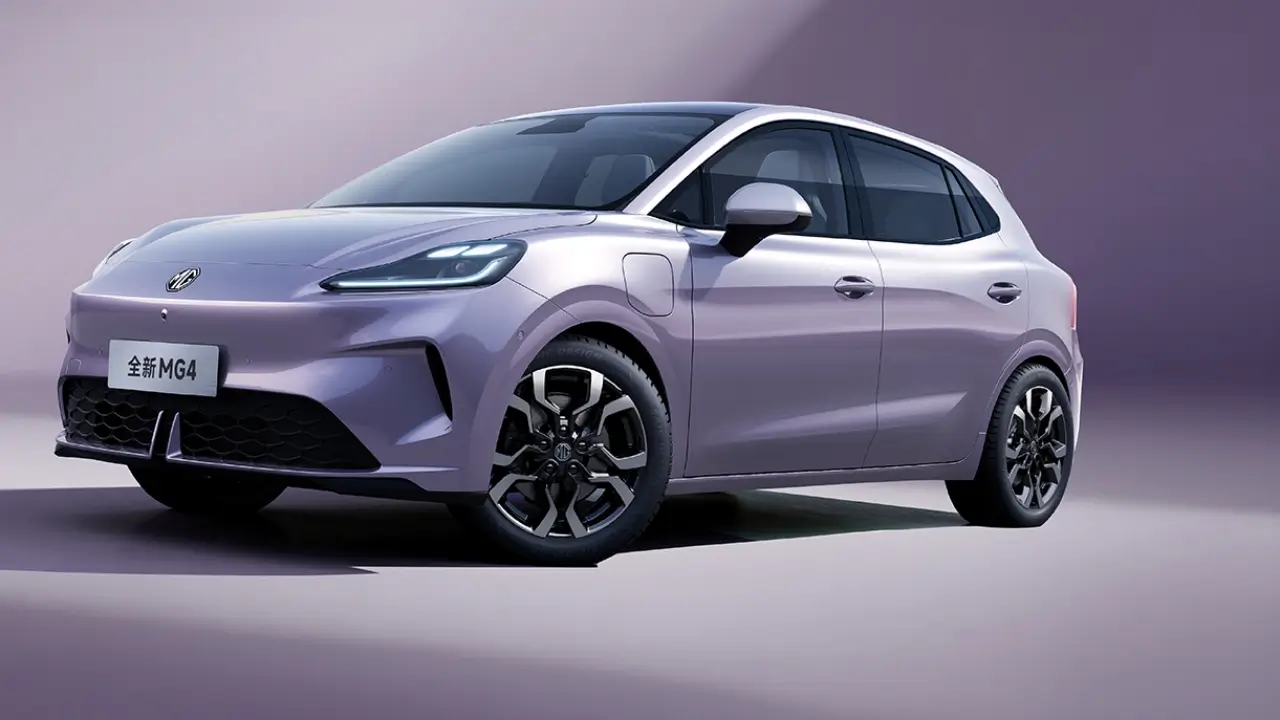
    MG4 electric car in Europe 2025, front view, showcasing sleek design
    The MG4, one of Europe’s top-selling Chinese New Energy Vehicles in H1 2025.

    Their combined sales represented 53% of the new passenger car sales in China in H1 2025. The consumers in China bought 3.29 million BEVs, 1.49 million PHEVs, 537,000 EREVs, and 474,000 HEVs. How many of these models are available in Europe and how popular are they?

    BEVs

    Despite the tariffs imposed by the European Commission, the Chinese BEVs are still popular in Europe. The ranking for H1 2025 was led by the MG4 with 14,494 units, down by 56% vs H1 2024. It is one of the big casualties of the tariffs and the rise of BYD products. In fact, the second most popular Chinese BEV in Europe was the BYD Seal, up by 130% to 9,433 units. It was followed by another BYD – the Sealion 7, with 7,797 units. The top 10 was completed by the BYD Dolphin (7,701 units), BYD Atto 3 (7,033), Leapmotor T03 (5,918), Xpeng G6 (5,616), MG ZS (4,109), BYD Seal U (3,775), and MG5 (2,938 units).

    PHEVs

    While the Chinese BEV demand increased by 31% in H1 2025, the volumes for the Chinese PHEVs increased by 544% compared to H1 2024. This powertrain is becoming their way to offset the tariffs imposed on their BEVs. The ranking was led by the BYD Seal U with 29,223 units and Europe’s third top-selling PHEV, only behind the Volkswagen Tiguan and Volvo XC60. It was followed by the MG HS with 11,677 units, and the Jaecoo J7 with 9,938 units. The following positions were occupied by the Lynk & Co 01 (4,270 units), Omoda 9 (1,164), DFSK E5 (1,162), GWM Wey 05 (548), Ebro S700 (407), Ebro S800 (229), and GWM Wey 03 (199).

    HEVs and EREVs

    The offer of hybrid and extended-range Chinese cars is still very limited. However, they are also making progress here. The MG ZS on its full hybrid version registered 38,445 units between January and June, becoming the region’s 6th top-selling HEV. The MG3 followed with 21,998 units, and Europe’s third best-selling hybrid B-hatchback behind the Toyota Yaris and Renault Clio. The top 5 was completed by the MG HS (216 units), Haval Jolion (96), and the Dongfeng T5 (83 units). The Leapmotor C10 was the only EREV available in Europe with 1,059 units.

  • The multiverse of the Chinese car brands

    The multiverse of the Chinese car brands

    The auto industry as we know it is a relatively young one. With around 120 years old, it has remained the same over the last 50 years with the American, European, and later the Japanese and Korean makers expanding it globally.

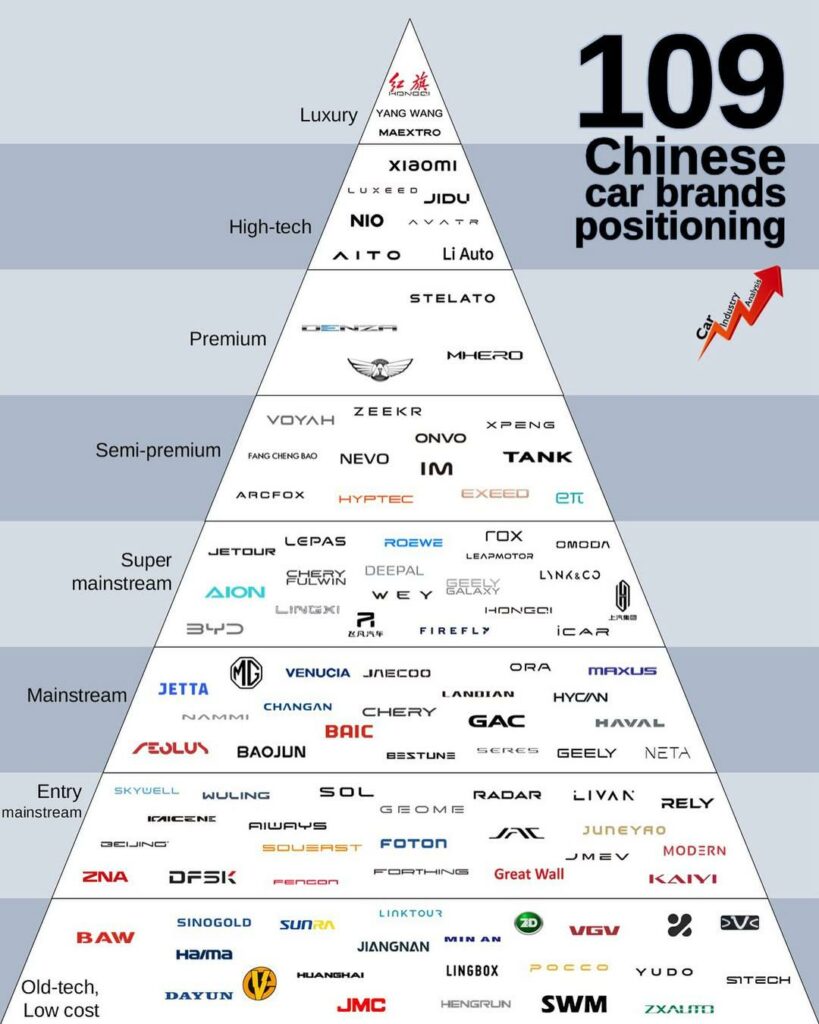
    Positioning Pyramid of Chinese Car Brands
    This pyramid shows the 109 Chinese car brands ranked by market positioning, from low-cost and old-tech brands to luxury and high-tech brands experiencing rapid growth. (Credit: Felipe Munoz)

    However, during the last 5 years, this status quo has been dramatically changed. The rise of China to become the world’s second-largest economy is also having a big impact in the automotive industry. For 30 years, they worked together with the Western firms and learnt from them. Today, many of them have matched their foreign partners. The student beat the teacher.

    Chinese car brands booming

    As of October 2025, there are more than 100 passenger car brands from China. That’s more than the total combined brands from Europe (57), USA (14), Japan (14), Korea (4). With more than 24 million units sold last year, China is a huge market where many brands can play. But they are not all the same.

    The old-tech or low-cost brands are those whose vehicles feature old platforms, usually from old models from Western brands. They target the entry-level segments with very low prices, mainly for tier 3 cities and the countryside. They include brands for China only like Hengrun, Pocco, Vi Auto, and some others available outside China like SWM, ZX Auto, JMC, and BAW.

    The mainstream brands that I split in three groups: entry, mainstream, and super. This is where most of the brands are positioned considering the average income of the consumers in China. They start with brands like JAC (276 units registered in Europe in Jan-Aug/25), Forthing (2,360 units), and many others. Then there are the mainstream ones like BAIC (3,379 units), Chery (410 units), Jaecoo (26,600 units), MG (196,324 units, or 2.3% market share), or Geely (1,388 units). The upper-mainstream brands include some like Jetour, Omoda (27,726 units), Lynk & Co (6,216 units), and BYD, which has registered 95,346 units in Europe in Jan-Aug 2025, or 1.1% market share.

    Then there are the semi-premium brands like Voyah (378 units), Zeekr (2,569 units), and Xpeng (10,913 units). The premium ones include Denza, Stelato, MHero, and Yuanhang.

    They are out-positioned by the High-tech brands or the fast-growing EV start-ups: Xiaomi, Luxeed, Nio, Avatr, Aito, Li Auto. From them, only Nio is available in Europe, where it has registered 593 units since January.

    And finally, there are the luxury brands, which at the moment are composed of only three brands: the Golden Sunflower subbrand from Hongqi, BYD’s Yang Wang, and JAC’s Maextro. Plenty of choices for a massive market and an aggressive global expansion plan.

  • A Chinese car was Europe’s second best-selling plug-in hybrid in August

    A Chinese car was Europe’s second best-selling plug-in hybrid in August

    Shocking news for the European new car market. Last month, a Chinese car occupied the second position in the plug-in hybrid (PHEV) new registrations ranking, confirming the rapid growth that some of these companies, like BYD, are having across the region.

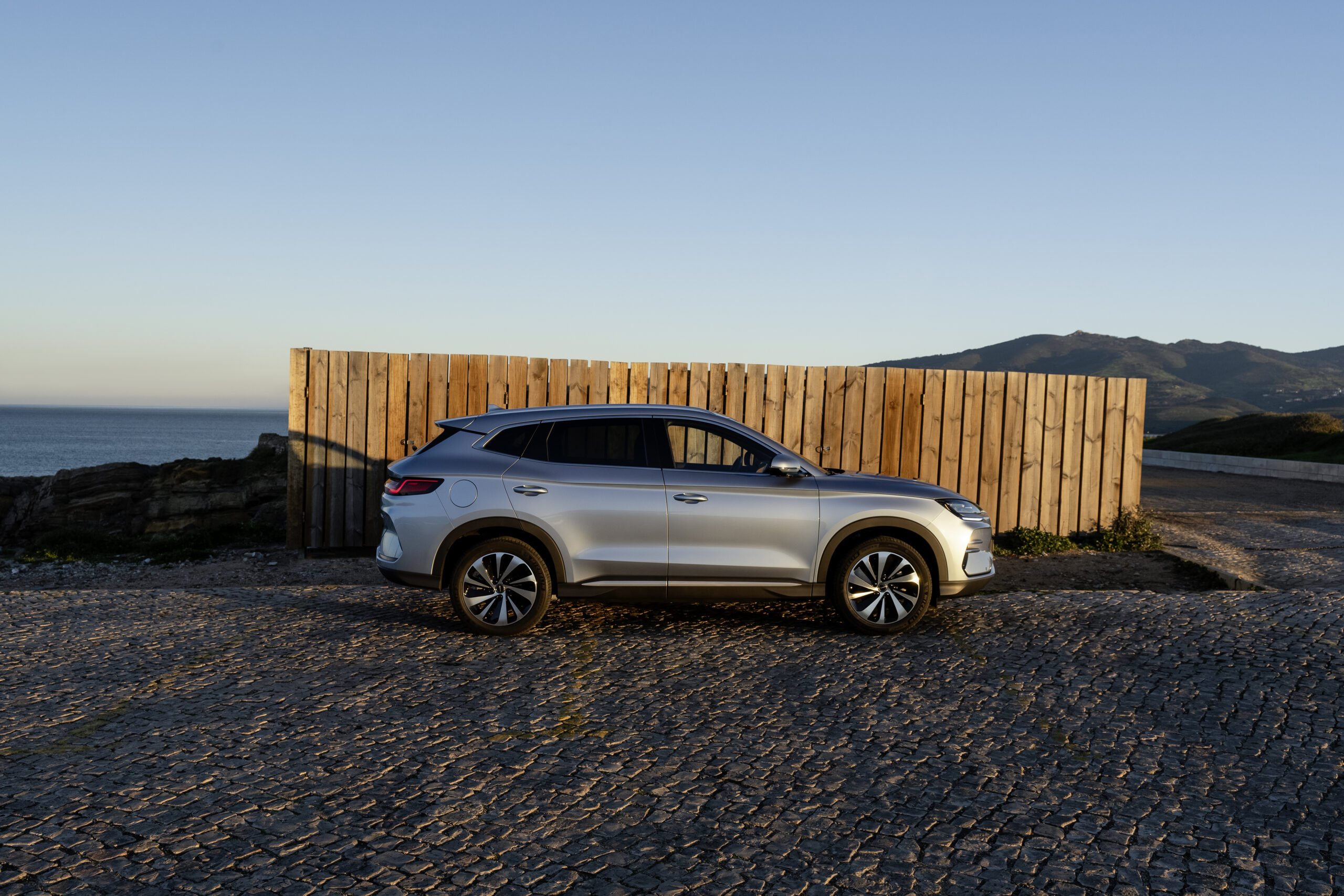
    Side profile of the BYD Seal U plug-in hybrid SUV
    The BYD Seal U, now Europe’s second best-selling PHEV in August. (Credit: BYD)

    The data revealed by JATO Dynamics indicates that the BYD Seal U with its plug-in hybrid powertrain registered 3,918 units during the month in 28 European markets. This total puts this Chinese SUV in the second position in the PHEV ranking, only behind the German-made Volkswagen Tiguan with 4,485 units.

    What is even more interesting is that year-to-date volumes also put the Tiguan and Seal U in first and second positions, but with a higher growth rate for the latter. By the end of August, the Volkswagen was ahead of the BYD by almost 3,200 units, meaning that we could see the latter outselling the former by the year-end.

    Not only BYD

    The incredible progress made by Chinese manufacturers in Europe does not stop at BYD. August’s top 10 included two other models coming from this country. At the 7th position there is the Jaecoo J7 from Chery Group, and at the 9th position there is the MG HS from SAIC Group.

    These are remarkable results posted by these three Chinese makers. They confirm their latest move to face the tariffs on their electric cars by increasing their presence in other alternative fuel segments like the PHEVs and HEVs (full hybrids). In fact, most of the growth posted by the Chinese car brands this year has been driven by these two powertrains and not so much by the BEVs.

    Between January and August of this year, the BEVs represented 30% of the Chinese car brands’ sales against 38% from PHEV and HEV combined.

    The other models from the PHEVs top 10 in August

    Behind the Tiguan and Seal U, there was the Volvo XC60 with 3,378 units. It was followed by the Ford Kuga with 3,023 units, and the Toyota RAV4 with 2,856 units. The sixth position was occupied by the BMW X1 which registered 2,724 units. Its bigger brother, the BMW X3, registered 2,387 units at 8th position, while the Hyundai Tucson completed the top 10 with 2,221 units.

    Among them, the BYD Seal U was the most dependent on this powertrain, with its PHEV version accounting for 86% of its total registrations during the month. It was followed by Volvo XC60 (75%), and the Jaecoo J7 (72%).

  • Despite its sales drop, the Tesla Model Y is still Europe’s most popular BEV

    Despite its sales drop, the Tesla Model Y is still Europe’s most popular BEV

    A big part of the reason why Tesla is facing trouble nowadays is the Model Y. It is the  brand’s most popular product and yet it is recording big sales drops across Europe. The  increasing competition, its old age, and the facelift introduced in Q1 2025 are all  contributing to a 34% drop on its registrations through July 2025.  

    Nevertheless, this compact to midsize SUV was still the region’s top-selling pure electric  vehicle. The data from JATO Dynamics indicates that between January and July Tesla  registered almost 74,500 units of the Model Y. This is considerably lower than the  112,100 units registered during the first seven months of 2024, but enough to put it in  the top spot in the BEV sales ranking by models.  

    The result is even more remarkable after seeing the strong growth posted by the  following models in the ranking. The data shows three Volkswagens at the second,  third, and fourth positions, with all of them posting double- and triple-digit growth. The  Volkswagen ID.4 increased its volumes by 35% and yet it was almost 28,000 units  behind the Model Y.

    Volkswagen IDs products’ increases came at the expense of a lower position of the  Tesla Model 3, which was outsold by the Volkswagen ID.7. In January-July 2024, the  Model 3 was Europe’s second most popular BEV, falling to the 5th position this year. This  Tesla is already 9 years old.

    The other winners

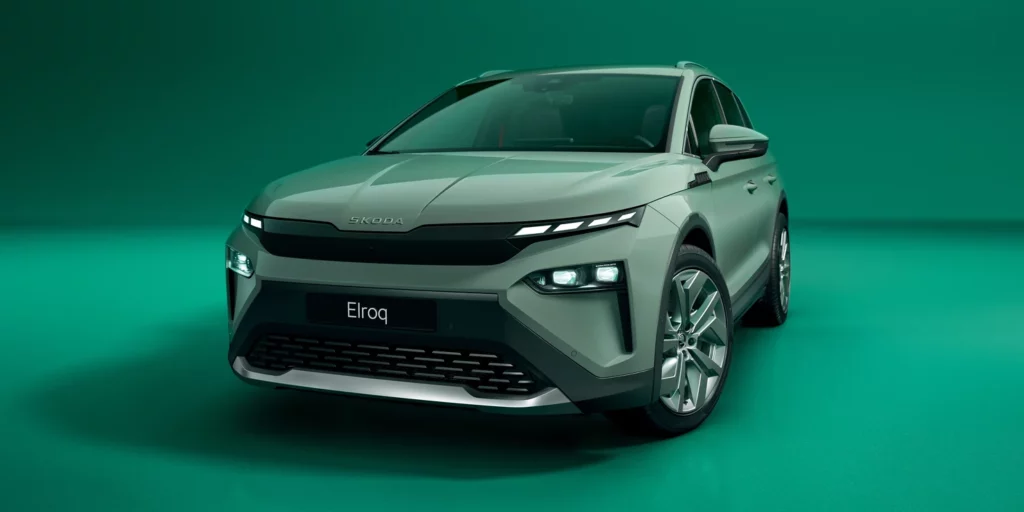
    The Skoda Elroq was the most successful recent BEV launch in Europe with almost  43,000 units, at 6th position. It was followed by the also recently introduced Kia EV3 with  40,900 units, and the new Renault 5 with 39,900 units. None of them were available a  year earlier. They are proving to be successful within the small BEV world. The top 10  was completed by the Skoda Enyaq with 38,900 units, and the BMW iX1 with 37,800  units.  

    Further down the list the Audi Q6 e-tron at 11th position registered 28,900 units, while  Citroen registered 24,900 units of the electric C3, becoming the top-selling BEV from  Stellantis occupying the 16th position in the BEV ranking. Ford seems to have finally  taken off with the Explorer EV with 22,500 units, outselling others like the Renault  Scenic (20,900 units), Hyundai Kona (19,900 units), and the Kia Niro (5,900).  

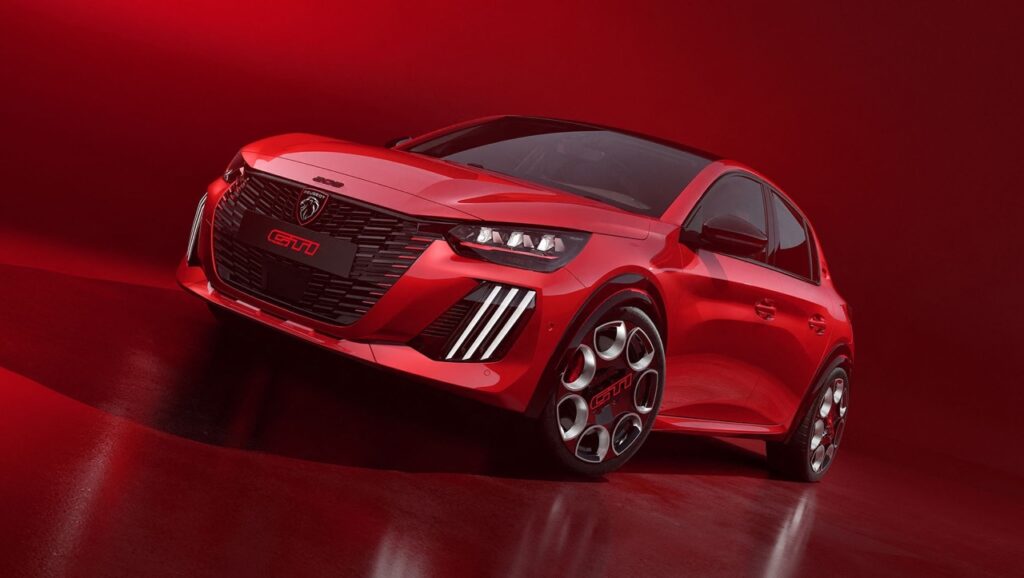
    In contast, the initially successful Volvo EX30 has lost ground with its volumes down by  43% (partly affected by the tariffs on Chinese BEVs), as well as its bigger brother the  EX40, down by 37%. Another Chinese BEV to drop dramatically was the MG4 (-54%).  Stellantis saw mixed results as the Peugeot 3008 was up by 156% to 12,900 units while the volumes of the Peugeot 2008, Fiat/Abarth 500, and Peugeot 208, fell by 19%, 49%,  and 57%, respectively.

  • Volkswagen Group is the big winner from Tesla’s drop

    Volkswagen Group is the big winner from Tesla’s drop

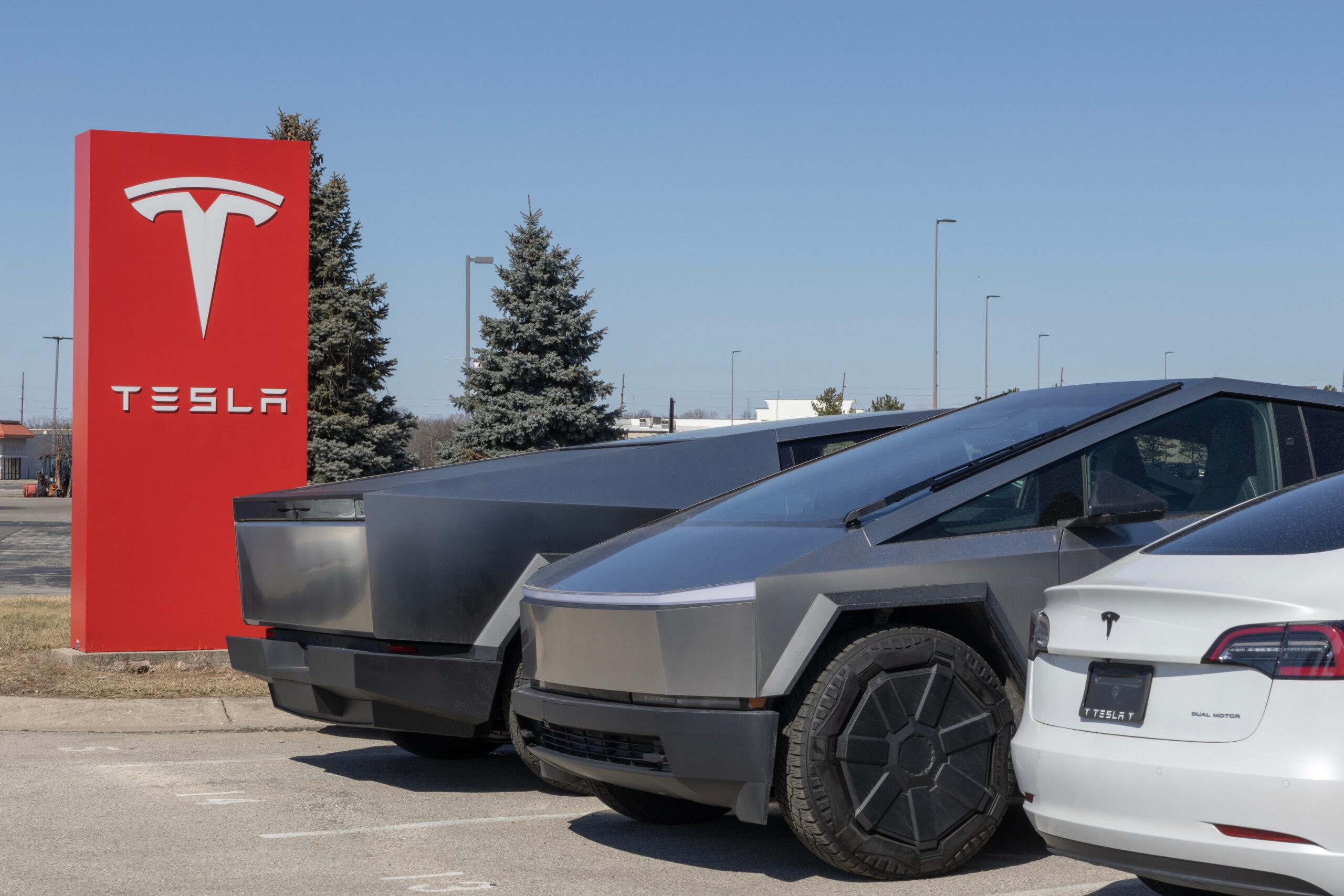
    Tesla continues to face big issues. It seems like everything that could go wrong went indeed like that, and at the same time. First it was Elon Musk’s risky public involvement in politics. Then it came the model changeover for the Tesla Model Y. All these happened while the competition from China and Europe, and even USA, Japan, and Korea, started to catch up rapidly.

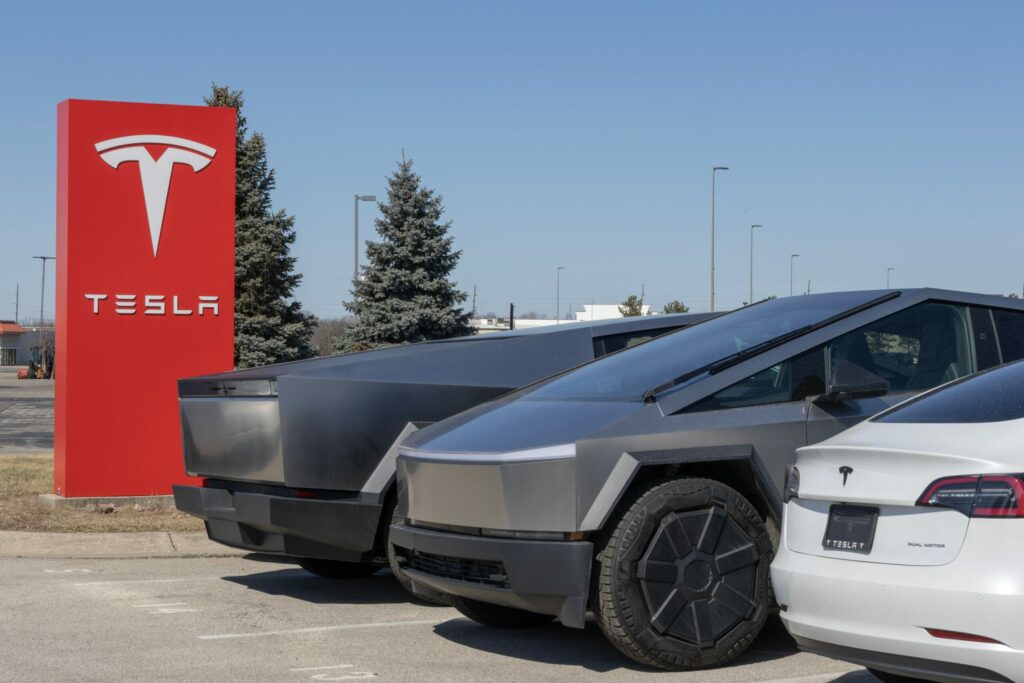
    Tesla electric cars on European streets 2025
    Tesla struggles in Europe as competitors gain BEV market share

    Elon Musk’s Risks and Tesla’s Decline

    Although it is hard to tell how good or bad his bet on Donald Trump’s campaign did to his companies, when you participate in politics you’re taking a clear position. This might have split the opinion around him and therefore around his cars. As his role within the new government became clear, the company was in the process of updating its top-selling product – the Model Y. Any update, facelift, or new generation takes time and usually has an initial negative impact on sales. 

    Meanwhile other players were catching up. In Europe it was mainly the case of the Volkswagen Group, the region’s largest carmaker. According to data from JATO Dynamics, the German maker increased its market share within the BEV (Battery Electric Vehicle) market from 18.9% in January-July 2024 to 28.6% in January-July 2025. That’s an increase of almost 10 percentage points!

    Volkswagen Group’s Rise in the European BEV Market

    In fact, Volkswagen’s solid position is now looking better than its market share in the overall European passenger car market (including all powertrains). During the first seven months of this year, the German manufacturer posted a 26.7% share. 

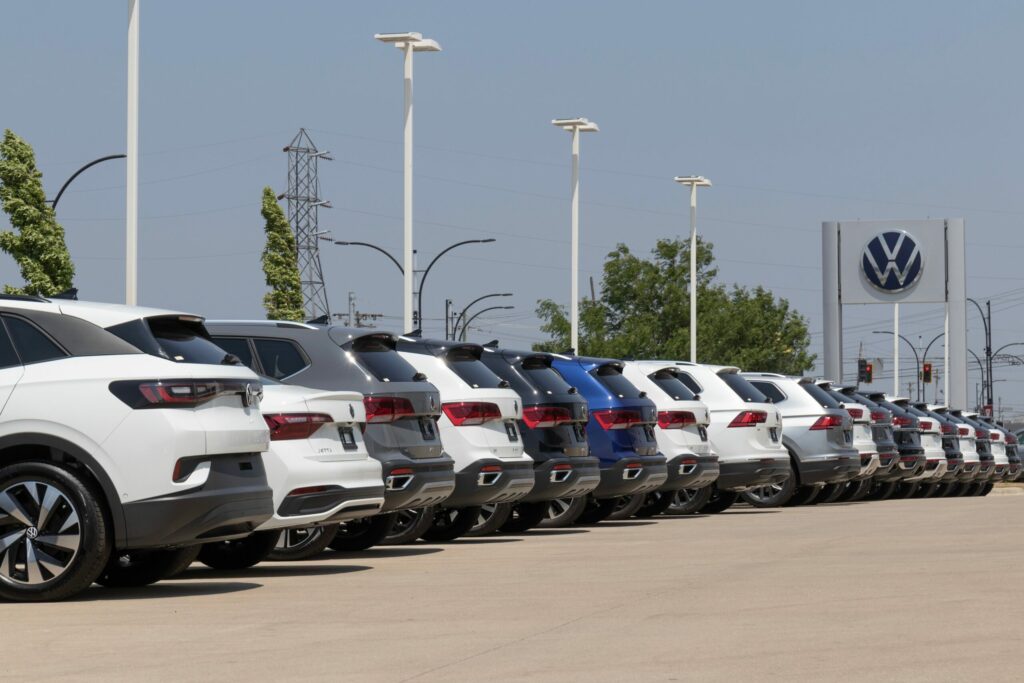
    Volkswagen cars with logo in Europe 2025 BEV market
    Volkswagen Group expands its BEV lineup in Europe, overtaking Tesla

    In contrast, Tesla reduced its market share in the BEV segment by 7.8 percentage points from 16.4% in 2024 to 8.6% this year. It was the biggest loser in Europe. The updated Model Y is taking longer to take off in terms of sales, and the rest of the lineup is getting old. 

    There is a big gap in terms of the size of the BEV lineup and its age in Europe between Tesla and Volkswagen Group. The former only offers two models for the region with an average age of 8 years old (counted between the date of the official reveal and September 2025). In contrast, the Volkswagen group currently sells 21 different models across its many brands with an average age of 3.3 years old. 

    However, it was Ford the carmaker to post the highest BEV share within its own sales. In Jan-Jul 2024, only 4.4% of its sales in the region corresponded to BEVs. One year later, they represented 14.1%. Volkswagen Group and Hyundai-Kia also posted big increases. On the other hand, BYD saw its BEVs with a lower share within its own sales as it has introduced several plug-in hybrid models throughout the year. 

    BEVs have still big challenges ahead. In the meantime, big changes are happening.